Henry ER
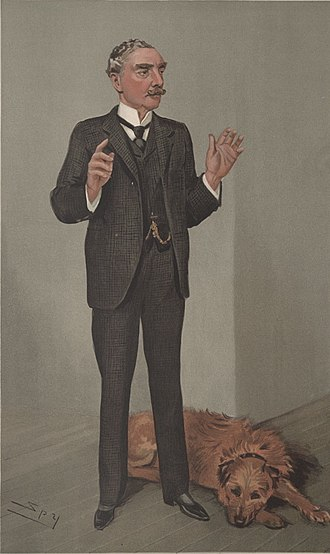
ACHIEVEMENTS: Introduced fingerprinting into the British criminal justice system
NICKNAME/ALIAS: None.
DATE/PLACE OF BIRTH: 26th^ July 1850, Shadwell, Middlesex, England.
DATE/PLACE OF DEATH/AGE AT DEATH: 19th^ February 1931, Ascot, Berkshire, England. Aged 81.
DISCIPLINE: Police Commissioner
FIELD: Government
LANGUAGE: English.
PARENTS: Father, Alexander Henry. Mother, Maria McDonnell.
SIBLINGS: ?
SPOUSE: Louisa Langrishe.
CHILDREN: One son and two daughters, names unknown.
EDUCATION: St Edmund's College, Ware; University College; Haileybury College.
MAJOR WORK: Classification and Uses of Fingerprints (1900).
LIFE AND TIMES:
In 1872 Henry went to India as a member of the North-Western Province Civil Service. Towards the end of 1873, it looked as though there was going to be a famine in Behar and parts of Bengal so, anticipating unrest, the British government drafted more personnel into the region , including Henry, who was put in charge of the Darbhanga famine district.
After the danger of famine was over, he was transferred to the Lower Provinces and during the years of 1874 to 1890 he gradually climbed the career ladder. In 1890 he was appointed Secretary to the Revenue Board and given the job of investigating land tenures. One year later he took the post of Inspector-General of Police for the Lower Provinces, Bengal.
At that time, methods of identification used for indexing criminals consisted mostly of registering tattoos and scars so, in 1892, Henry began experimenting with the anthropometric system, in which body measurements were used. The system had been invented by M. Alphonse Bertillon and was first used in France in 1882 to identify re-offenders.
When Henry began using it in India, he used ten body measurements and eye-color. By January 1893, he was using only six body measurements, and included a print of the left thumb. The left thumb was chosen because the ridges were likely to be less worn among the right-handed majority. He became convinced that a reliable indexing system could be based solely on fingerprints.
It was William Herschel who had first realised the individuality of fingerprints when he was serving in the Indian Civil Service in 1858 and used a handprint, and then fingerprints as a legal safeguard on a contract.
In order to find out more about fingerprinting* Henry wrote to scientist Galton*, who had corresponded with Herschel about fingerprints before giving a lecture on identification at the Royal Institution in 1888. At this lecture, Galton also proved that the characteristics of a fingerprint did not change throughout a lifetime. In 1892 Galton published “Fingerprints.” In 1894, on leave in England, Henry met Galton and visited his laboratory.
On his return to India Henry instituted the recording of all ten fingerprints of every prisoner, in addition to physical measurements. In a report written in 1896, he spelt out the advantages of fingerprinting over anthropometry in that it was inexpensive, the technique was easily learned, the impressions taken from the fingerprint an immediate record, the method was not objectionable to any race, caste or gender, the evidence was very easily read and no other confirmation of identity was necessary
With the help of his Indian police officers Henry eventually put together a system of classification and, in 1897, he asked for an independent assessment. The committee formed to do this reported to the Government of India that "the method of identification by means of fingerprints, as worked on the system of recording impressions and of classification devised by Mr Henry, may be safely adopted as being superior to the anthropometric method".
In June of that year, a Resolution from the Governor-General stated that the system should be used throughout British India and it was published as "Classification and Uses of Fingerprints" (1900).
During 1900, Henry was seconded to South Africa to organize the civil police in Pretoria and Johannesburg and by the following year, was appointed Assistant Commissioner of the London Metropolitan Police* and head of the Criminal Investigation Department.
He took up the post in June and in July, set up the Fingerprint Branch. The general public first became aware of fingerprints in the 1905 the case of the Masked Murder in Deptford, near London. Soon fingerprints were a feature of many detective stories.
In 1912 he was shot and wounded by a would-be taxi driver who had been refused a permit by Scotland Yard after failing the driving test. Henry intervened and the man was saved from the gallows.
In 1918 he was made a Baronet. For the next thirteen years of his life, he acted as a Justice of the Peace in Berkshire and was on the board of various companies until his death in 1931.
ASSESSMENT: Henry’s persistence and application to the task of fingerprint classification ensured its worldwide acceptance.
EXTRA CONNECTIONS: His work related to earlier efforts by Purkinje*
ONELINER: ER Henry, who first introduced fingerprinting
BIBLIOGRAPHY:
Lambourne, Gerald, The Fingerprint Story, Harrap, London 1984
Dictionary of National Biography, Oxford University Press.