Andral
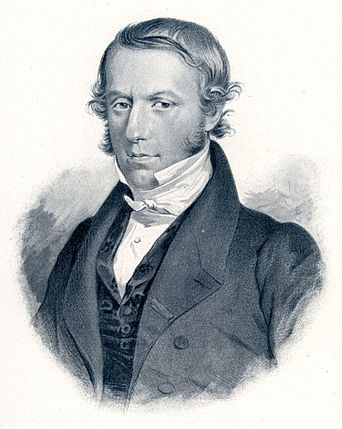
ACHIEVEMENT(S): He developed the first diagnostic blood tests
NICKNAME/ALIAS: None
DATE/PLACE OF BIRTH: 1797, at Paris, France
DATE/PLACE/AGE AT DEATH: 1876, in Paris, France. Aged 79
DISCIPLINE: Pathologist
FIELD: Pathology
LANGUAGE: French
EDUCATION: Lycee Louis-le-Grand, Paris; University of Paris, 1815-18
MAJOR WORK: 'Pathological Haemotology' 1843
LIFE AND TIMES: In 1818 at the University of Paris, Andral was inspired by attending a post mortem examination which opened his mind to the great value of autopsies to the understanding of pathology. From then on, Andral rose at 5 a.m. every day in order to spend as much time as possible observing patients on the hospital wards, and the subsequent post mortem examinations of such cases.
In 1823 he published his first important work, based on clinical observations of the previous five years. Later volumes appeared in 1824, 1826 and 1827. These four volumes comprised clear, precise clinical case reports, relevant post mortem findings, and a summary and analysis of each case, and included general reviews of the particular medical conditions recorded in each volume.
In 1828 Andral was appointed professor of clinical medicine at the Paris Faculty of Medicine, and in the following year he published the three volumes of his next work, a comprehensive treatise on pathological anatomy which was soon afterwards translated into English. It was in this work that Andral gave the first account of lymphangitis carcinomatosa (cancer of the lymph nodes).
During the 1830s, Andral's "eclectic" approach to medicine was greatly criticized by the great French physician Broussais*, who viewed many diseases as the ultimate result of inflammation of the gastro-intestinal tract, for which he prescribed watery beverages, the application of leeches, and blood-lettings.
Andral's approach was to hold no particular theories, but to rely instead on observation an analysis, on which he hoped to build an entirely new system of medicine. Following Broussais's death in 1838, Andral succeeded to the chair of pathology and general therapeutics in 1839.
In 1843 Andral published his last major work, translated into English and published as'Pathological Haemotology' in both Great Britain and the United States in1844. In this treatise on the application of chemical diagnosis of the blood to the treatment of disease (developing on the use of biochemical studies in
medicine, started by the work of Cruikshank* on diabetes and
Bright* on kidney disease), Andral established normal, baseline
levels of major blood constituents and described how these levels altered inspecific diseases.
His attempts to characterize blood in numerical terms were continued in the 1850s by Vierordt* with the early development of cell-counting techniques, and in 1877 William Somers would show that red blood cell counts (as opposed to skin color) provided by far the most accurate index of anaemia, in 1878 adding tests to detect the iron content of the blood.
Meanwhile, in 1856, for reasons which remain uncertain but perhaps related to his wife's ill-health and his son's tuberculosis, Andral resigned from his professorship. He died twenty years later.
ASSESSMENT: A notable 19th-century French physician who made significant contributions to several fields of medicine
EXTRA CONNECTIONS: Rokitanksy* continued Andral’s work in pathological anatomy in the mid-19th century.
ONELINER: Gabriel Andral, haematology pioneer
BIBLIOGRAPHY:
Doyle, L., "Gabriel Andral (1797-1876) and the first reports of lymphangitis carcinomatosa", in Journal of the Royal Society of Medicine (August 1989), 82, 491-93