aspirin
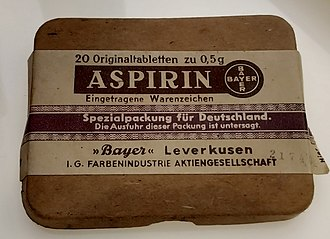
Aspirin or acetylsalicylic acid, is a non-steroidal, non-narcotic, analgesic, originally distilled from coal tar* that is used for the relief of headache, muscle and joint aches and fever reduction. The drug works by inhibiting the production of prostaglandins, body chemicals that are necessary for blood clotting and which also sensitize nerve endings to pain.
Hippocrates, the Greek father of modern medicine, who lived in the Fifth Century BCE, left historical records of pain relief treatments, including the use of powder made from the bark and leaves of the willow tree to heal headaches, pains and fevers.
By 1829, scientists discovered that the active ingredient in willow plants was the compound they called salicin. The problem was that the compound was hard on stomachs and a means of “buffering” the compound was sought.
The first person to succeed was Charles Gerhardt. In 1853, he neutralized salicylic acid by buffering it with sodium salicylate and acetyl chloride, creating acetylsalicylic acid. In 1899, a German chemist named Felix Hoffmann*, who worked for a the Bayer company, rediscovered Gerhardt’s formula and successfully treated his father’s arthritis pain with it.
Hoffmann then convinced Bayer to market the drug, named Aspirin, and it was patented on March 6, 1889. Aspirin was first sold as a powder, and in 1915 the first Aspirin tablets were made. As part of war reparations specified in the 1919 Treaty of Versailles following Germany's surrender after World War I, Aspirin (along with heroin) lost its status as a registered trademark in France, Russia, the United Kingdom, and the United States, where it became a generic name.
"In many respects, Indian medicine was quite effective. Willow, poplar, and wintergreen contained salicylate which is chemically related to acetylsalicylic acid, known to us commercially as aspirin. The Indians used these materials for the same purpose of reducing fever and pain. Pipsissewa, spiraea, and black, yellow, and cherry birch also contained salicylate, though these plants were used less frequently."(link)
Although Turner (1551) thought that fevers could be cured by 'cooling the air' with boughs and leaves of willow,[12] the earliest known mention of willow bark extract for treating fever came in 1763, when a letter from English chaplain Edward Stone to the Royal Society described the dramatic power of powdered white willow bark to cure intermittent fevers, or 'ague'.[13] Stone had 'accidentally' tasted the bark of a willow tree in 1758 and noticed an astringency reminiscent of Peruvian bark, which he knew was used to treat malaria. Over the next five years he treated some 50 ague sufferers, with universal success, except in a few severe cases, where it merely reduced their symptoms. Stone's remedy was trialled by a few pharmacists,[14] but was never widely adopted. During the American Civil War, Confederate forces experimented with willow as a cure for malaria, without success.[15]
ONELINER: Aspirin
OTHER CONNECTIONS: None
BIBLIOGRAPHY:
“History of Aspirin” http://inventors.about.com