Magic (supernatural)
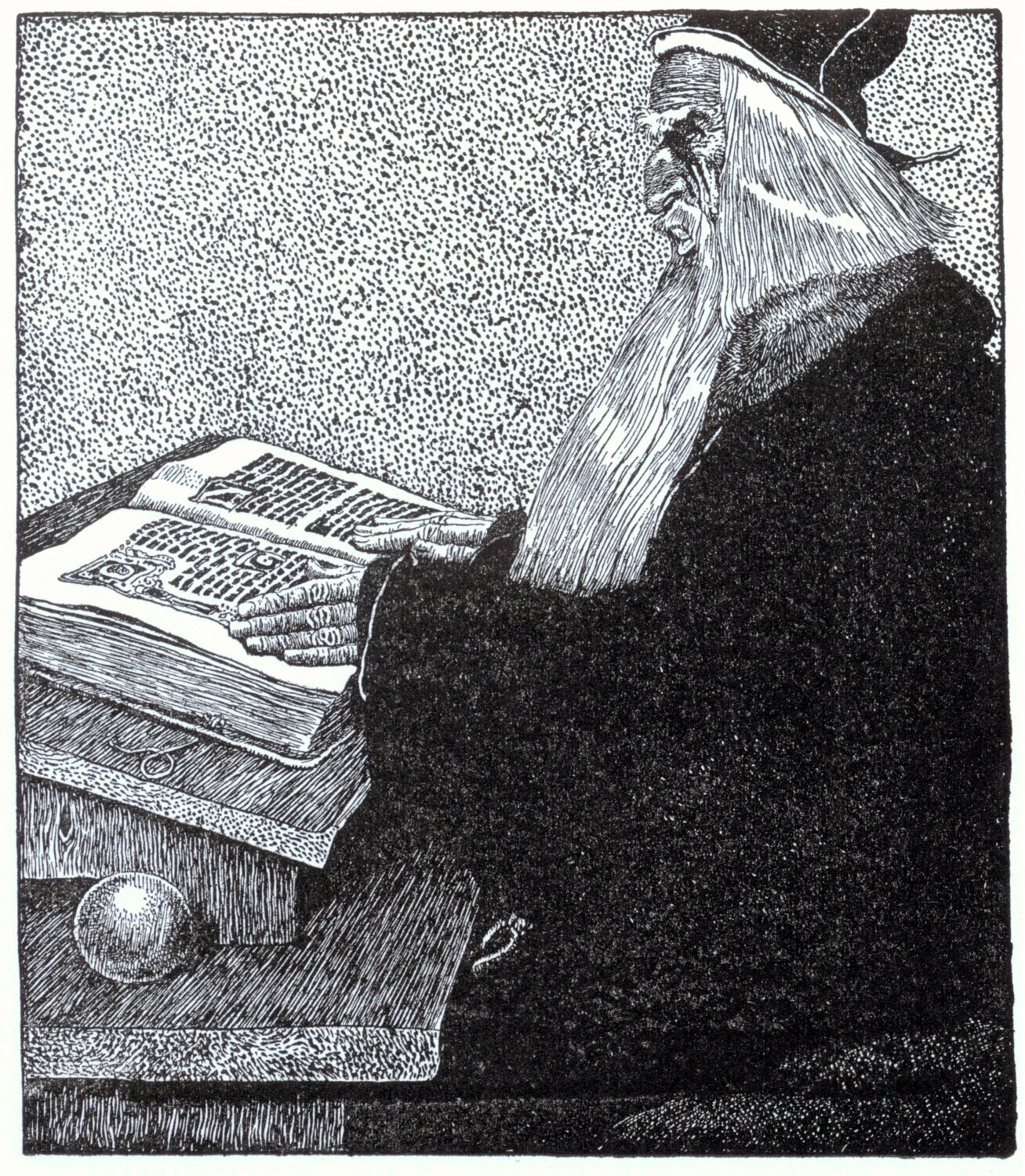
Magic, sometimes spelled magick,[1] is the application of beliefs, rituals or actions employed with the intent to manipulate natural or supernatural beings and forces.[2] It is a category into which have been placed various beliefs and practices sometimes considered separate from both religion and science.[2]
Connotations have varied from positive to negative at times throughout history.[3] Within Western culture, magic has been linked to ideas of the Other,[4] foreignness,[5] and primitivism;[6] indicating that it is "a powerful marker of cultural difference"[7] and likewise, a non-modern phenomenon.[8] During the late nineteenth and early twentieth centuries, Western intellectuals perceived the practice of magic to be a sign of a fantasy-prone mentality and also commonly attributed it to marginalised groups of people.[7]
Etymology
 One of the earliest surviving accounts of the Persian mágoi was provided by the Greek historian Herodotus.
The English words magic, mage and magician come from the Latin term magus, through the Greek μάγος, which is from the Old Persian maguš. (𐎶𐎦𐎢𐏁|𐎶𐎦𐎢𐏁, magician).[9] The Old Persian magu- is derived from the Proto-Indo-European megʰ-*magh (be able). The Persian term may have led to the Old Sinitic *Mγag (mage or shaman).[10] The Old Persian form seems to have permeated ancient Semitic languages as the Jewish Babylonian Aramaic magosh, the Aramaic amgusha (magician), and the Chaldean maghdim (wisdom and philosophy); from the first century BCE onwards, Syrian magusai gained notoriety as magicians and soothsayers.[11]
During the late-sixth and early-fifth centuries BCE, the term goetia found its way into ancient Greek, where it was used with negative connotations to apply to rites that were regarded as fraudulent, unconventional, and dangerous;[12] in particular they dedicate themselves to the evocation and invocation of daimons (lesser divinities or spirits) to control and acquire powers. This concept remained pervasive throughout the Hellenistic period, when Hellenistic authors categorised a diverse range of practices—such as enchantment, witchcraft, incantations, divination, necromancy, and astrology—under the label "magic".[13]
The Latin language adopted this meaning of the term in the first century BCE. Via Latin, the concept became incorporated into Christian theology during the first century CE. Early Christians associated magic with demons, and thus regarded it as against Christian religion. In early modern Europe, Protestants often claimed that Roman Catholicism was magic rather than religion, and as Christian Europeans began colonizing other parts of the world in the sixteenth century, they labelled the non-Christian beliefs they encountered as magical. In that same period, Italian humanists reinterpreted the term in a positive sense to express the idea of natural magic. Both negative and positive understandings of the term recurred in Western culture over the following centuries.
Since the nineteenth century, academics in various disciplines have employed the term magic but have defined it in different ways and used it in reference to different things. One approach, associated with the anthropologists Edward Tylor (1832–1917) and James G. Frazer (1854–1941), uses the term to describe beliefs in hidden sympathies between objects that allow one to influence the other. Defined in this way, magic is portrayed as the opposite to science. An alternative approach, associated with the sociologist Marcel Mauss (1872–1950) and his uncle Émile Durkheim (1858–1917), employs the term to describe private rites and ceremonies and contrasts it with religion, which it defines as a communal and organised activity. By the 1990s many scholars were rejecting the term's utility for scholarship. They argued that the label drew arbitrary lines between similar beliefs and practices that were alternatively considered religious, and that it constituted ethnocentric to apply the connotations of magic—rooted in Western and Christian history—to other cultures.[citation ^needed]
Branches or types
High and low
Historians and anthropologists have distinguished between practitioners who engage in high magic, and those who engage in low magic.[14] High magic, also known as theurgy and ceremonial or ritual magic, is more complex, involving lengthy and detailed rituals as well as sophisticated, sometimes expensive, paraphernalia.[14] Low magic and natural magic are associated with peasants and folklore[15] with simpler rituals such as brief, spoken spells.[14] Low magic is also closely associated with sorcery and witchcraft.[16] Anthropologist Susan Greenwood writes that "Since the Renaissance, high magic has been concerned with drawing down forces and energies from heaven" and achieving unity with divinity.[17] High magic is usually performed indoors while witchcraft is often performed outdoors.[18]
White, gray and black
Main articles: White magic, Gray magic, and Black magic
Historian Owen Davies says the term "white witch" was rarely used before the 20th century.[19] White magic is understood as the use of magic for selfless or helpful purposes, while black magic was used for selfish, harmful or evil purposes.[20] Black magic is the malicious counterpart of the benevolent white magic. There is no consensus as to what constitutes white, gray or black magic, as Phil Hine says, "like many other aspects of occultism, what is termed to be 'black magic' depends very much on who is doing the defining."[21] Gray magic, also called "neutral magic", is magic that is not performed for specifically benevolent reasons, but is also not focused towards completely hostile practices.[citation ^needed]
Witchcraft
Main article: Witchcraft
The historian Ronald Hutton notes the presence of four distinct meanings of the term witchcraft in the English language. Historically, the term primarily referred to the practice of causing harm to others through supernatural or magical means. This remains, according to Hutton, "the most widespread and frequent" understanding of the term.[22] Moreover, Hutton also notes three other definitions in current usage; to refer to anyone who conducts magical acts, for benevolent or malevolent intent; for practitioners of the modern Pagan religion of Wicca; or as a symbol of women resisting male authority and asserting an independent female authority.[23] Belief in witchcraft is often present within societies and groups whose cultural framework includes a magical world view.[24]
Those regarded as being magicians have often faced suspicion from other members of their society.[25] This is particularly the case if these perceived magicians have been associated with social groups already considered morally suspect in a particular society, such as foreigners, women, or the lower classes.[26] In contrast to these negative associations, many practitioners of activities that have been labelled magical have emphasised that their actions are benevolent and beneficial.[27] This conflicted with the common Christian view that all activities categorised as being forms of magic were intrinsically bad regardless of the intent of the magician, because all magical actions relied on the aid of demons.[28] There could be conflicting attitudes regarding the practices of a magician; in European history, authorities often believed that cunning folk and traditional healers were harmful because their practices were regarded as magical and thus stemming from contact with demons, whereas a local community might value and respect these individuals because their skills and services were deemed beneficial.[29]
In Western societies, the practice of magic, especially when harmful, was usually associated with women.[30] For instance, during the witch trials of the early modern period, around three quarters of those executed as witches were female, to only a quarter who were men.[31] That women were more likely to be accused and convicted of witchcraft in this period might have been because their position was more legally vulnerable, with women having little or no legal standing that was independent of their male relatives.[31] The conceptual link between women and magic in Western culture may be because many of the activities regarded as magical—from rites to encourage fertility to potions to induce abortions—were associated with the female sphere.[32] It might also be connected to the fact that many cultures portrayed women as being inferior to men on an intellectual, moral, spiritual, and physical level.[33]
History
Main article: History of magic
Mesopotamia
See also: Mesopotamian divination, Enmerkar and En-suhgir-ana, Maqlû, and Zisurrû
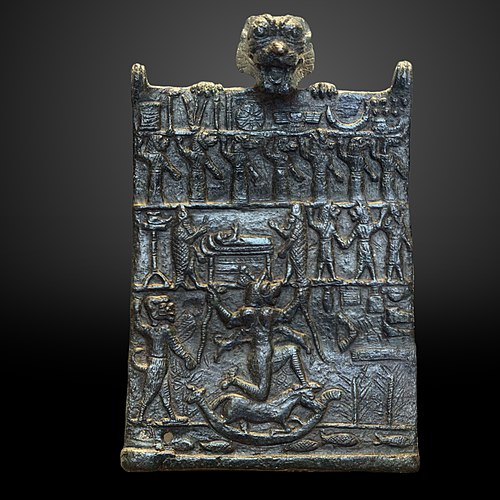
Bronze protection plaque from the Neo-Assyrian era showing the deity Lamashtu
Magic was invoked in many kinds of rituals and medical formulae, and to counteract evil omens. Defensive or legitimate magic in Mesopotamia (asiputu or masmassutu in the Akkadian language) were incantations and ritual practices intended to alter specific realities. The ancient Mesopotamians believed that magic was the only viable defense against demons, ghosts, and evil sorcerers.[34] To defend themselves against the spirits of those they had wronged, they would leave offerings known as kispu in the person's tomb in hope of appeasing them.[35] If that failed, they also sometimes took a figurine of the deceased and buried it in the ground, demanding for the gods to eradicate the spirit, or force it to leave the person alone.[36]
The ancient Mesopotamians also used magic intending to protect themselves from evil sorcerers who might place curses on them.[37] Black magic as a category did not exist in ancient Mesopotamia, and a person legitimately using magic to defend themselves against illegitimate magic would use exactly the same techniques.[37] The only major difference was that curses were enacted in secret;[37] whereas a defense against sorcery was conducted in the open, in front of an audience if possible.[37] One ritual to punish a sorcerer was known as Maqlû, or "The Burning".[37] The person viewed as being afflicted by witchcraft would create an effigy of the sorcerer and put it on trial at night.[37] Then, once the nature of the sorcerer's crimes had been determined, the person would burn the effigy and thereby break the sorcerer's power over them.[37]
The ancient Mesopotamians also performed magical rituals to purify themselves of sins committed unknowingly.[37] One such ritual was known as the Šurpu, or "Burning",[38] in which the caster of the spell would transfer the guilt for all their misdeeds onto various objects such as a strip of dates, an onion, and a tuft of wool.[38] The person would then burn the objects and thereby purify themself of all sins that they might have unknowingly committed.[38] A whole genre of love spells existed.[39] Such spells were believed to cause a person to fall in love with another person, restore love which had faded, or cause a male sexual partner to be able to sustain an erection when he had previously been unable.[39] Other spells were used to reconcile a man with his patron deity or to reconcile a wife with a husband who had been neglecting her.[40]
The ancient Mesopotamians made no distinction between rational science and magic.[41][42][43] When a person became ill, doctors would prescribe both magical formulas to be recited as well as medicinal treatments.[42][43][44] Most magical rituals were intended to be performed by an āšipu, an expert in the magical arts.[42][43][44][45] The profession was generally passed down from generation to generation[44] and was held in extremely high regard and often served as advisors to kings and great leaders.[46] An āšipu probably served not only as a magician, but also as a physician, a priest, a scribe, and a scholar.[46]
The Sumerian god Enki, who was later syncretized with the East Semitic god Ea, was closely associated with magic and incantations;[47] he was the patron god of the bārȗ and the ašipū and was widely regarded as the ultimate source of all arcane knowledge.[48][49][50] The ancient Mesopotamians also believed in omens, which could come when solicited or unsolicited.[51] Regardless of how they came, omens were always taken with the utmost seriousness.[51]
Incantation bowls
Main article: Incantation bowl
See also: Jewish magical papyri
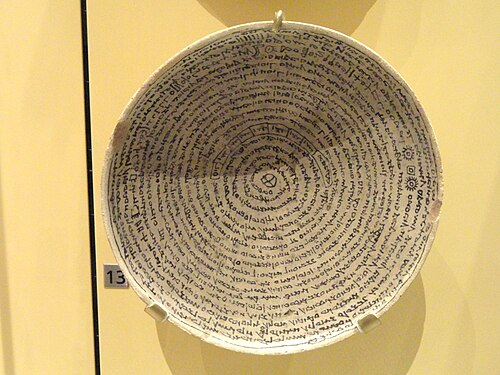
Mandaic-language incantation bowl
A common set of shared assumptions about the causes of evil and how to avert it are found in a form of early protective magic called incantation bowl or magic bowls. The bowls were produced in the Middle East, particularly in Upper Mesopotamia and Syria, what is now Iraq and Iran, and fairly popular during the sixth to eighth centuries.[52][53] The bowls were buried face down and were meant to capture demons. They were commonly placed under the threshold, courtyards, in the corner of the homes of the recently deceased and in cemeteries.[54] A subcategory of incantation bowls are those used in Jewish magical practice. Aramaic incantation bowls are an important source of knowledge about Jewish magical practices.[55][56][57][58][59]
Egypt
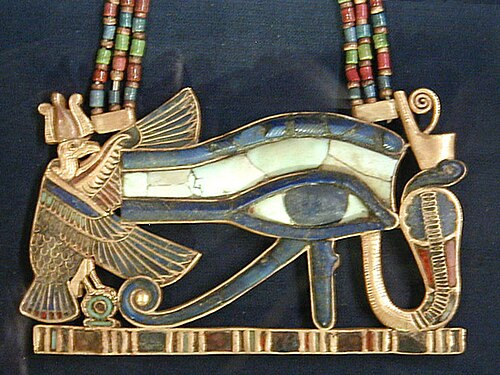
Ancient Egyptian Eye of Horus amulet
In ancient Egypt (Kemet in the Egyptian language), Magic (personified as the god Heka) was an integral part of religion and culture which is known to us through a substantial corpus of texts which are products of the Egyptian tradition.[60]
While the category magic has been contentious for modern Egyptology, there is clear support for its applicability from ancient terminology.[61] The Coptic term hik is the descendant of the pharaonic term heka, which, unlike its Coptic counterpart, had no connotation of impiety or illegality, and is attested from the Old Kingdom through to the Roman era.[61] Heka was considered morally neutral and was applied to the practices and beliefs of both foreigners and Egyptians alike.[62] The Instructions for Merikare informs us that heka was a beneficence gifted by the creator to humanity "in order to be weapons to ward off the blow of events".[63]
Magic was practiced by both the literate priestly hierarchy and by illiterate farmers and herdsmen, and the principle of heka underlay all ritual activity, both in the temples and in private settings.[64]
The main principle of heka is centered on the power of words to bring things into being.[65] Karenga explains the pivotal power of words and their vital ontological role as the primary tool used by the creator to bring the manifest world into being.[66] Because humans were understood to share a divine nature with the gods, snnw ntr (images of the god), the same power to use words creatively that the gods have is shared by humans.[67]
Book of the Dead
Main article: Book of the Dead
The interior walls of the pyramid of Unas, the final pharaoh of the Egyptian Fifth Dynasty, are covered in hundreds of magical spells and inscriptions, running from floor to ceiling in vertical columns. These inscriptions are known as the Pyramid Texts and they contain spells needed by the pharaoh in order to survive in the afterlife. The Pyramid Texts were strictly for royalty only; the spells were kept secret from commoners and were written only inside royal tombs. During the chaos and unrest of the First Intermediate Period, however, tomb robbers broke into the pyramids and saw the magical inscriptions. Commoners began learning the spells and, by the beginning of the Middle Kingdom, commoners began inscribing similar writings on the sides of their own coffins, hoping that doing so would ensure their own survival in the afterlife. These writings are known as the Coffin Texts.[68]
After a person died, their corpse would be mummified and wrapped in linen bandages to ensure that the deceased's body would survive for as long as possible[69] because the Egyptians believed that a person's soul could only survive in the afterlife for as long as their physical body survived here on earth.[69] The last ceremony before a person's body was sealed away inside the tomb was known as the Opening of the Mouth.[69] In this ritual, the priests would touch various magical instruments to various parts of the deceased's body, thereby giving the deceased the ability to see, hear, taste, and smell in the afterlife.[69]
Amulets
Main article: Amulet
The use of amulets (meket) was widespread among both living and dead ancient Egyptians.[70] They were used for protection and as a means of "reaffirming the fundamental fairness of the universe".[71] The oldest amulets found are from the predynastic Badarian Period, and they persisted through to Roman times.[72]
Judea
Main articles: Witchcraft in the Middle East and Ancient Jewish magic
In the Mosaic Law, practices such as witchcraft (Biblical Hebrew: קְסָמִ֔ים), being a soothsayer (מְעוֹנֵ֥ן) or a sorcerer (וּמְכַשֵּֽׁף) or one who conjures spells (וְחֹבֵ֖ר חָ֑בֶר) or one who calls up the dead (וְדֹרֵ֖שׁ אֶל־הַמֵּתִֽים) are specifically forbidden as abominations to the Lord.[73]
Halakha (Jewish religious law) forbids divination and other forms of soothsaying, and the Talmud lists many persistent yet condemned divining practices.[74] Practical Kabbalah in historical Judaism is a branch of the Jewish mystical tradition that concerns the use of magic. It was considered permitted white magic by its practitioners, reserved for the elite, who could separate its spiritual source from qlippothic realms of evil if performed under circumstances that were holy (Q-D-Š) and pure (Biblical Hebrew: טומאה וטהרה, romanized: tvmh vthrh[75]). The concern of overstepping Judaism's strong prohibitions of impure magic ensured it remained a minor tradition in Jewish history. Its teachings include the use of Divine and angelic names for amulets and incantations.[76] These magical practices of Judaic folk religion which became part of practical Kabbalah date from Talmudic times.[76] The Talmud mentions the use of charms for healing, and a wide range of magical cures were sanctioned by rabbis. It was ruled that any practice actually producing a cure was not to be regarded superstitiously and there has been the widespread practice of medicinal amulets, and folk remedies (segullot) in Jewish societies across time and geography.[77]
Although magic was forbidden by Levitical law in the Hebrew Bible, magic relates to Jewish mysticism, and Gideon Bohak [he] believes magical "technology" could have been widely practised in the late Second Temple period, and in the period following the destruction of the temple into the 3rd, 4th, and 5th centuries C.E.[78][79][80][81] Jewish and Samaritan magicians appear in the New Testament, Acts of the Apostles, and also in the works of Josephus, such as Atomos, a Jewish magician of Cyprus (Antiquities of the Jews 20:142).
DOWNLOADED FROM WIKIPEDIA
Thursday, January 15, 2026 10:15PM