1866 Sisyphus
By the 2120s, when the population fluctuated somewhere between eighty and one hundred forty thousand depending on freight cycles and refinery demand, Sisyphus had already passed through its period of grand historical ambition. Nobody seriously believed anymore that it would become the capital of humanity’s expansion into the inner system. The prettier habitats had already won that battle decades earlier. The rich lived elsewhere now, in cleaner rotating cylinders with curated parks and soft daylight systems and artificial rivers. Investment moved outward toward Psyche, the Trojan colonies, the larger Jovian infrastructure projects, and the fashionable megacylinders whose advertising promised spaciousness, dignity, and sunlight. Sisyphus remained what it had accidentally become: old infrastructure. Useful infrastructure. Permanent infrastructure.
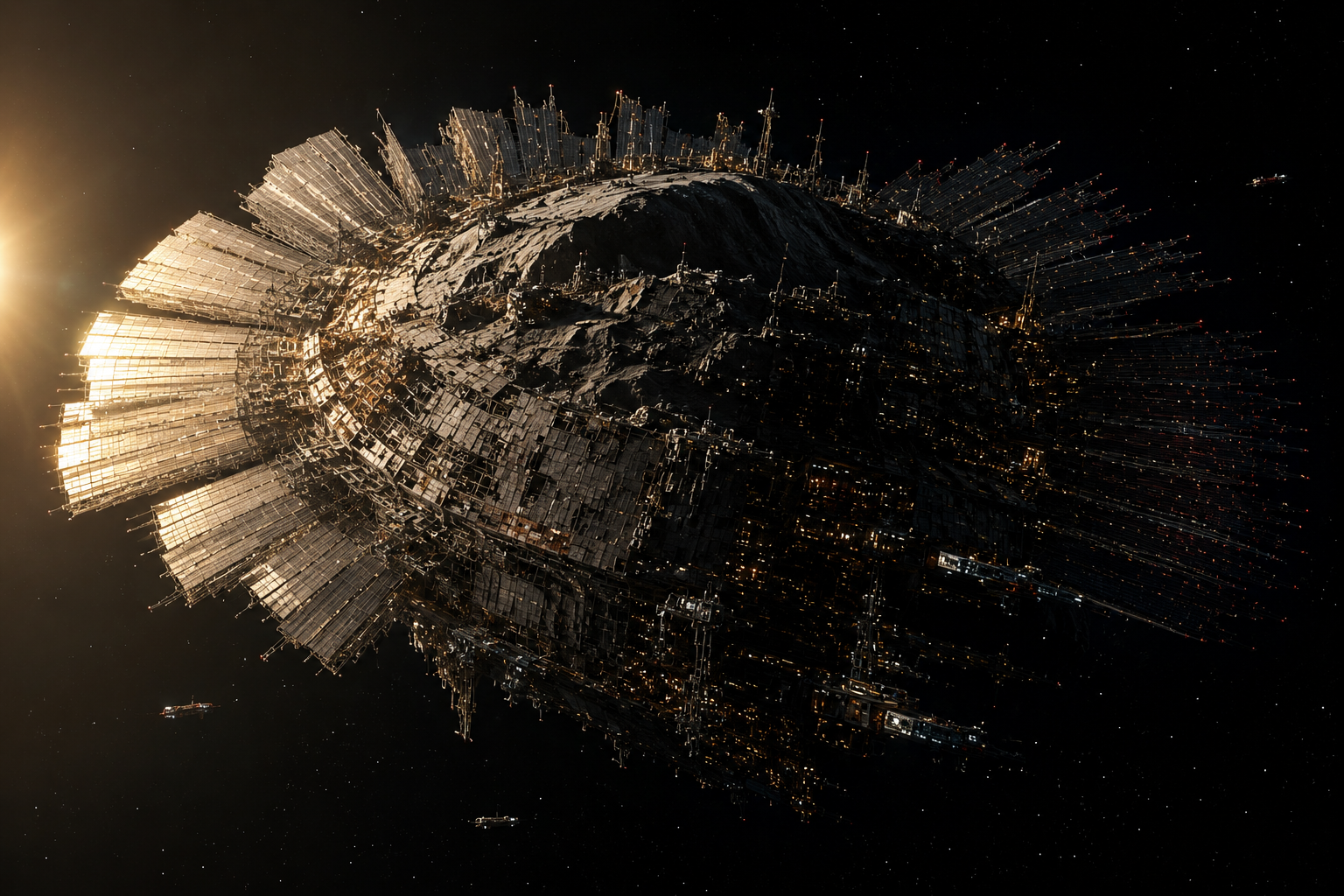
Paradoxically, this stabilized the place. There were no sweeping redevelopments. No corporate cleansing campaigns. No redesigns ambitious enough to erase its accumulated character. Instead the asteroid simply continued to accrete layers of repair, retrofit, reinforcement, and improvisation. Over decades the original surface disappeared beneath thermal blankets, scaffold forests, pressure hulls, cable webs, trench canyons, docking spars, refinery bulges, utility towers, and overlapping generations of industrial skin. By 2130 the asteroid no longer resembled geology so much as a manufactured organism. The bare rock was almost nowhere visible. Every square meter had been panelled, enclosed, insulated, wrapped, or colonized by machinery. On the sunward side immense photovoltaic membranes unfurled outward in a ragged crown extending nearly twenty kilometers into space, while on the dark side radiator fields projected like metallic petals into vacuum, glowing faintly red in infrared. The whole structure looked less like a city than an industrial flower wrapped around a volcanic mountain and bound together by tension cables and centuries of practical desperation.
And still people came to see it.
The Kearney HTRO hotel sat deep inside one of the older trench districts, built into a canyon whose original purpose had long since been forgotten under generations of modifications. The exterior resembled a pressurized freight terminal more than a hospitality venue. Layers of oxidized thermal blanket material overlapped across the hull like fish scales. Ancient logos bled through newer paint. Maintenance welds from different decades crossed each other in visible historical strata. Above the entrance rotated the familiar smiling ring of the Kearney chain with one dim segment that had never been repaired.
Inside, however, the atmosphere shifted instantly into managed comfort. The air was warm in the artificial, overconditioned way of old space habitats. Humidity hung slightly too high. The corridors smelled faintly of cedar fragrance compounds, recycled fabric, overheated electronics, and industrial detergent. Thick carpet was velcroed to the floor. Somewhere deep in the structure pumps vibrated continuously through the walls with the distant rhythm of a living ship.
Seventeen Mormon tourists sat together in the hotel’s historical theater wearing matching gray hotel-issued coveralls, their luggage stacked neatly against the back wall. Most had arrived by way of Luna and Deimos through a popular Pioneer Covenant Route package that combined religious heritage tourism with educational spacer acclimatization. They represented three generations of a handful of interconnected families from Utah, Alberta, and the Pacific Northwest. Some looked exhausted from transit adaptation. Others, especially the younger children, could barely sit still.
The exhibit began with the soft mechanical clicking of animatronics cycling to life.
Kearney strongly preferred physical theatrical systems over holographic reconstructions. Company research repeatedly showed that baseline humans trusted moving physical objects more than projected imagery, particularly in frontier environments where psychological grounding mattered. So the exhibit hall was filled with locally printed mechanical figures, visible servos hidden only partially beneath synthetic skins. Tiny welding drones trundled along miniature trench systems. Cargo crawlers moved through scale maintenance canyons. Little astronauts performed stiff, repetitive maintenance routines beneath projected stars.
An android hostess stepped cheerfully into the aisle.
“WELCOME PIONEERS!” she announced with impossible enthusiasm. “You are now approximately three point one kilometers beneath Historic Crown Layer Two and directly adjacent to original habitation cylinders Bravo through Echo. Please remain seated during atmospheric reconstruction effects.”
Her nametag identified her simply as:
MELISSA // GUEST EXPERIENCE PARTNER
The children immediately adored her.
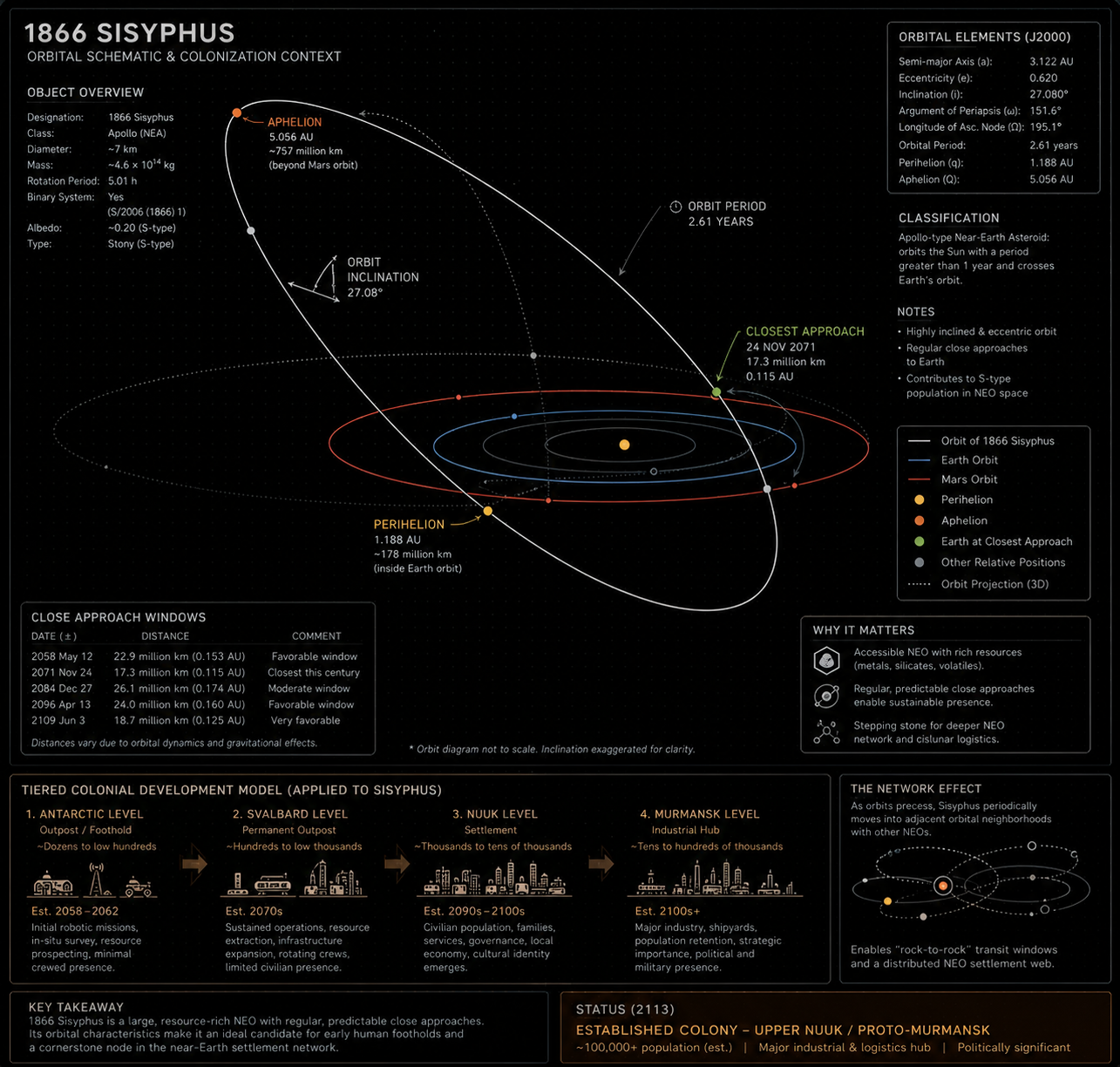
As the presentation continued, archival footage from the original 2058 foothold appeared across the curved theater walls. The first station looked absurdly fragile now: three pressure cylinders, skeletal scaffolding, exposed utility lines, and tiny human figures floating against endless darkness. The narration proudly described the early years as the beginning of distributed human civilization, though the visuals revealed a much harsher reality. The first decade had consisted mostly of endless repair work, failing mining drones, fungal contamination, equipment shortages, and exhausted personnel trying to hold together a settlement that always seemed one mechanical failure away from evacuation.
The theater dimmed further as the exhibit reenacted the Torchline Fire of 2068. Artificial smoke drifted gently through hidden vents. Miniature trench systems illuminated beneath the audience floor. Blue flames crawled eerily along tiny utility lines while animatronic workers staggered through depressurizing corridors. The low-pressure fire behavior looked wrong in exactly the same way the original footage still disturbed viewers generations later. Sheets of burning insulation rotated slowly through the air like drifting fabric.
One elderly woman quietly crossed herself by accident before correcting herself into a folded-hand prayer posture. The android guide noticed and tactfully ignored it.
Outside the armored viewing windows the real trench district occasionally became visible between lighting cycles. Cargo towers rose into darkness. Dense forests of utility cables stretched across open voids. Apartment lights glittered along canyon walls. A maintenance crawler slowly traversed the trench exterior like an insect crossing a cliff face. Far away, tiny EVA workers moved in clusters of blinking suit lights.
What unsettled many first-time visitors was that Sisyphus did not feel futuristic.
It felt inhabited.
The asteroid possessed the dense continuity of old industrial places on Earth: shipyards, ports, refineries, railway cities, offshore platforms, mining towns. Nothing here seemed temporary anymore. Every corridor carried evidence of previous generations. Layers of maintenance and habitation accumulated visibly instead of being erased. Even the hotel itself felt less like a designed hospitality environment than an industrial structure that had slowly learned how to accommodate human beings.
As the exhibit progressed into the speculative boom years after the famous 2071 close approach, the scale model hanging above the audience began to transform. Mechanical layers folded outward. Solar crown structures unfurled. Docking ports emerged from the surface. Trench systems deepened. Utility webs thickened across the asteroid skin. The little children stared upward in total silence.
By the final reveal the original rock had almost disappeared entirely beneath industrial growth.
The completed model of Sisyphus hovered above them in darkness: a black industrial flower wrapped around a dead mountain, its surface glittering with city lights and refinery fires.
Nobody in the room spoke for several long seconds.
Then one of the younger boys finally whispered, very softly:
“So people are just… living in there right now?”
Outside the viewing window, almost as if the asteroid itself had answered him, a distant procession of work lights moved slowly through the trench dark like a caravan crossing a desert at midnight.
Also known as 天工九号 — Tiāngōng-9 (Celestial Works No. 9” / “Heavenly Industry 9), 铁冠城 — Tiěguānchéng (Iron Crown Nine), 黑礁 — Hēijiāo (Black Reef)
A Short History of Sisyphus / 远砧港 (“Far Anvil Port”)
2058–2067 — THE GREAT EXAGGERATION
The first permanent foothold is absurdly overhyped.
Media calls it:
- “Humanity’s First Deep Rock,”
- “The Gateway Beyond Earth,”
- “The Beginning of the Distributed Species.”
Reality:
- 46 people,
- three pressure cylinders,
- mining drones constantly failing,
- fungal contamination,
- one suicide,
- endless welding.
The original settlement is mostly:
- Sino-European industrial consortium crews,
- orbital construction specialists,
- robotics engineers,
- contractors from decommissioned Antarctic programs,
- a surprising number of Filipinos and Indonesians from maritime labor pipelines.
Everything smells like:
- ozone,
- machine oil,
- recycled sweat,
- overheated plastic.
The first decade is mostly maintenance.
2068 — THE TORCHLINE FIRE
First major disaster.
A maglev utility trench flash-ignites after an oxygen leak and improper insulation retrofit. Entire sections depressurize.
94 dead.
The footage becomes infamous because the fire in low pressure behaves strangely:
- long blue streamers,
- drifting ember clouds,
- rotating sheets of burning insulation.
After this:
- exposed trench systems become enclosed,
- pressure zoning becomes mandatory,
- the first “memorial cavities” are cut into the asteroid skin.
The colony’s mythology hardens.
2071–2083 — THE MANIA YEARS
The famous close approach creates a speculative frenzy.
Earth media suddenly rediscovers Sisyphus.
Rich people visit.
Documentaries appear:
- THE PEOPLE ON THE ROCK
- SEVEN KILOMETERS FROM DESTINY
- THE EDGEWORKERS
For about ten years investors convince themselves:
this will become the Singapore of cislunar industry.
Massive money pours in.
This is when:
- the first trench cities appear,
- despinning begins,
- solar crown construction starts,
- permanent ports are excavated,
- the surface gets wrapped in thermal membrane systems.
Population jumps from hundreds to thousands.
Most projections are wildly wrong.
2084 — THE LONG STRIKE
One of the defining political moments.
Transport unions lock down outbound freight after automation restructuring threatens worker oxygen-share guarantees.
For six months:
- exports collapse,
- food imports tighten,
- station violence spikes,
- several executives are beaten nearly to death.
The strike unexpectedly wins.
Afterward Sisyphus develops an unusually militant labor culture:
- docking unions,
- thermal crews,
- tether guilds,
- pressure maintenance fraternities.
The place acquires a permanent reputation:
difficult, dirty, politically dangerous.
Ironically this stabilizes the population.
2089–2105 — THE FACTION WAVES
This is where Sisyphus gets weird.
Because it’s cheap.
Not comfortable cheap.
But reachable cheap.
And because mainstream migration interest fades, niche ideological groups begin arriving in cycles.
Not enough to dominate.
Just enough to stain districts.
The Hutterite Vacuumists
A splinter communal Christian-anabaptist movement convinced low-gravity life reduces earthly vanity.
They occupy several agricultural cylinders.
Known for:
- silent corridors,
- pressure-grown orchards,
- immaculate algae systems,
- severe anti-augmentation beliefs.
Still present by 2130.
The Gujarati Mutuals
A dense trade-network diaspora that quietly captures enormous sections of freight arbitration and repair contracting.
Not flashy.
Just impossible to remove afterward.
People joke:
“Sisyphus rotates around Gujarati bookkeeping.”
The Neo-Dao Habitatists
A strange Sino-Taiwanese intellectual movement believing static planetary civilization is spiritually pathological.
They promote:
- low-consumption life,
- distributed habitation,
- meditative EVA culture,
- rotational labor communes.
Many eventually leave, but their architecture remains hugely influential:
- hanging gardens,
- dark meditation shafts,
- “quiet districts.”
The Pan-African Dock Cooperative Period
Underfunded but historically important.
Several Earthside African maritime unions invest heavily in spacer training pipelines and establish cooperative dock ownership structures.
For about twenty years Sisyphus develops a huge Afro-diasporic dock culture:
- music,
- welding schools,
- union politics,
- ship cuisine,
- oral freight lore.
Remnants remain permanently embedded.
The Argentine Crypto Collapse Refugees
Very embarrassing episode.
A failed libertarian orbital-finance movement attempts to turn parts of Sisyphus into a “voluntary governance zone.”
Lasts seven years.
Ends in:
- fraud,
- oxygen debt,
- three murders,
- one infamous radiator sabotage incident.
The abandoned habitats later become artist districts.
2108 — THE QUIETING
This is the turning point.
Everyone realizes:
Sisyphus is not becoming the future.
It is becoming old infrastructure.
Investment shifts elsewhere:
- Psyche,
- Trojan habitats,
- rotating megacylinders,
- prettier places,
- richer places.
Sisyphus stops growing explosively.
And that paradoxically saves it.
No megaredevelopment.
No corporate cleansing.
No grand redesign.
It just keeps accreting.
Layer after layer after layer.
2120s — STUCKISM
By now population hovers around:
80k–140k depending on freight cycles.
Leaving becomes difficult in subtle ways.
Not tyranny exactly.
Just inertia.
People joke:
“Everyone on Sisyphus is temporarily stranded for thirty years.”
Common patterns:
- people miss transfer windows,
- debts accumulate,
- partnerships anchor them,
- children happen,
- certifications localize,
- opportunities elsewhere evaporate,
- tickets become politically allocated during crises.
Some districts develop near-fatalistic cultures:
- weed,
- slow labor,
- trench bars,
- recycled nostalgia,
- ancient documentaries replayed endlessly.
Others become hyperproductive:
- machine guilds,
- thermal engineers,
- dock clans,
- cable architects.
The asteroid acquires a reputation across the inner system:
Nobody arrives intending to stay forever.
Half the population dies there anyway.
And yet strangely:
people who leave often become homesick.
Because Sisyphus is ugly, cramped, dim, dangerous—
—but intensely real.
It has continuity.
Which many newer habitats do not.