The Dione Catastrophe
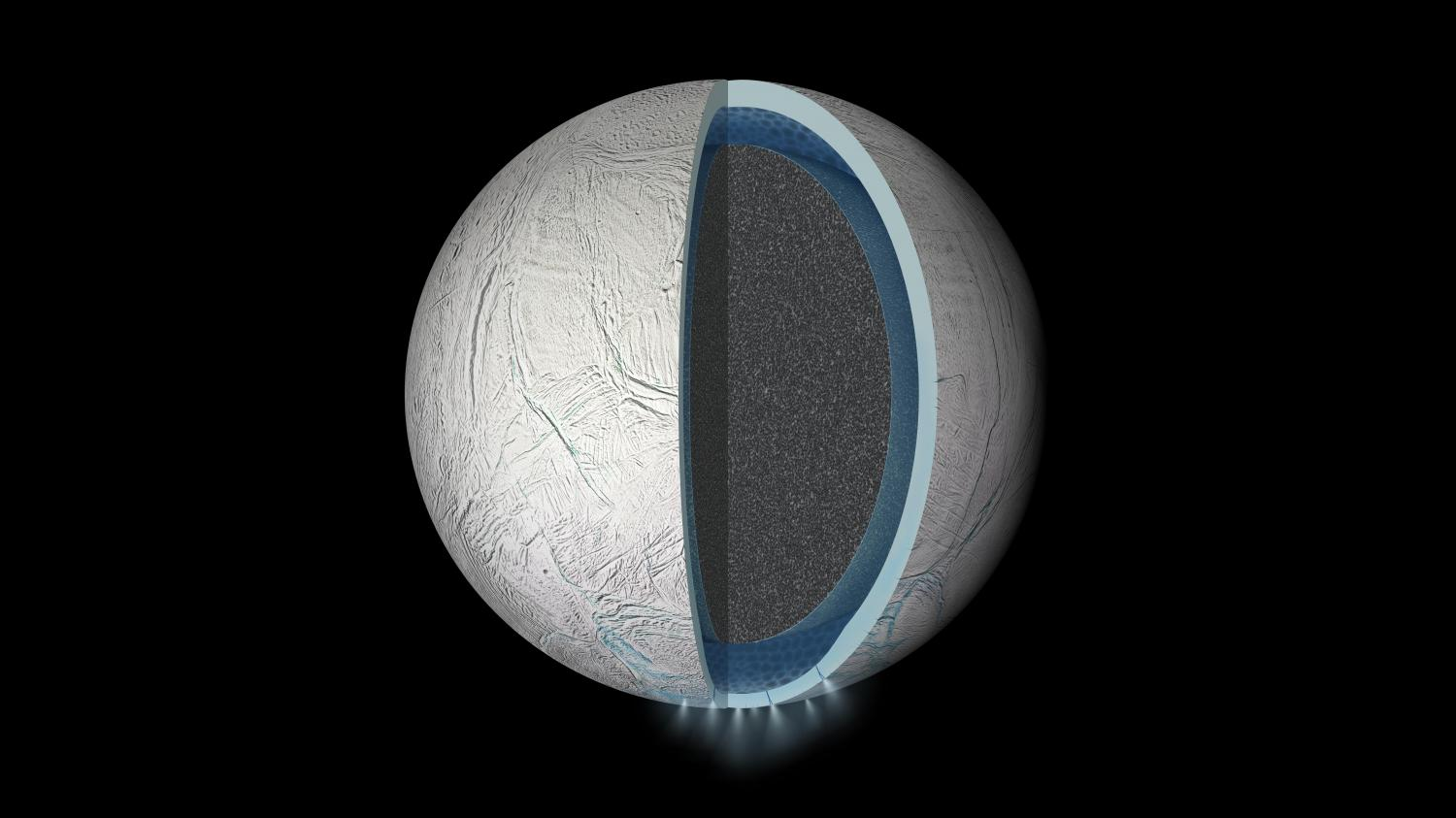
The official report would later describe the Dione Release as an “unauthorized multispecies ecological discharge event involving approximately eleven thousand terrestrial and engineered organisms.” This phrasing entered history textbooks because institutions always become cowardly around true stupidity. It made the catastrophe sound abstract, administrative, perhaps even inevitable. In reality the event was caused by a single exhausted, arrogant systems biologist named Harold Bottger who had spent six years screaming into closed forums that extraterrestrial ecologies were being “criminally underutilized.” Bottger belonged to one of those late 21st century accelerationist schools that regarded biospheres as computation engines: feed chemistry into them, let evolution solve the optimization problem, harvest the outputs later. He was not technically insane. That was the worst part. Enough of his ideas were mathematically plausible that people kept funding him in small humiliating amounts.
Nobody knows exactly when he decided to do it. The ship logs were corrupted later during tribunal seizure. Some believed he planned the release for years. Others insisted it was impulsive, a tantrum born of isolation and stimulant psychosis after a failed grant collapse. What is known is that the cargo vessel Miraflores arrived over Dione carrying restricted biological freight intended for three separate moons, most of it harmless in isolation: algae strains, vent bacteria, crustacean embryos, modified kelp, fungal recyclers, industrial enzyme ecologies, deep-sea scavengers, synthetic planktonic feedstocks, immune-adaptive phages, marine worms, nutrient gels, cephalopod ova, and several hundred research biomes sealed inside pressure tanks.
Individually these organisms had passed containment review. Together they amounted to an entire compressed Earth ecosystem.
Bottger bypassed quarantine architecture using maintenance authority inherited from an old contractor credential nobody had revoked. At 04:11 station time he dumped almost all of it into Borehole 19, a geothermal survey shaft descending through twenty kilometers of fractured crust into Dione’s subsurface oceanic layer.
Then he transmitted a manifesto. It was pathetic.
Not monstrous. Not grandiose. Just pathetic. He spoke for twenty-six minutes about stagnation, cowardice, ecological destiny, the moral obscenity of sterile moons, and humanity’s fear of abundance. At one point he cried. At another he attempted to quote Teilhard de Chardin and forgot the words halfway through. The transmission ended with him saying:
“It’ll stabilize. Nature stabilizes.”
That sentence became infamous.
At first almost nothing happened.
Which made everything worse later.
The initial investigations concluded that most introduced organisms would die quickly. Dione’s chemistry was hostile. Salinity gradients were extreme. Pressure fluctuated violently around vent systems. Temperatures ranged from near freezing to hydrothermal extremes. Several reports predicted total biomass collapse within eighteen months. Bottger himself survived the first month of detention looking almost relieved.
Then the vent telemetry changed.
Not dramatically at first. Oxygen fluctuations. Methane inversions. Organic particulates. Thermal blooms. Strange buffering behavior around the lower fracture systems. One station compared it to “the breathing patterns of a sleeping organism,” which earned the analyst a formal reprimand for anthropomorphism.
Three months later half the geothermal sensors stopped transmitting.
Six months later entire thermal plumes vanished beneath dense biological accumulation.
Nine months later a probe descended through Borehole 19 and failed to return imagery because the lens systems clogged instantly with organic matter.
The footage recovered before signal loss became legendary. Thick white streamers drifting through black water. Forests of translucent tubes. Pulsing bacterial membranes kilometers wide. Mobile masses scattering from the lights in coordinated waves. Clouds of particulate life so dense they resembled storms. The final frame showed something enormous crossing slowly beneath the probe before the transmission dissolved into static and biological overgrowth.
The report classified the event as an active runaway ecology.
By then it was already too late.
Dione’s subsurface ocean turned out to be almost perfectly designed for terrestrial invasion. Nearly the entire rocky interface beneath the ice shell was volcanically active: mineral-rich vent fields, endless chemical gradients, continuous heat sources, nutrient circulation, vast protected water volume, and no evolved macropredatory suppression systems. Native life existed there already, primitive but astonishingly fecund at microbial scales. Terrestrial organisms did not merely survive alongside it. They devoured it. And the native ecologies, in turn, metabolized terrestrial biomass with equal ferocity. Each side became food infrastructure for the other.
The result was not balance.
It was mutual amplification.
Earth life behaved less like a collection of species and more like an invasive industrial process. Algae bloomed across entire vent systems. Fungal mats colonized mineral chimneys faster than geology could rebuild them. Crustacean ecologies multiplied explosively inside warm nutrient channels. Engineered bacteria adapted to Dione chemistry within months and began processing dissolved compounds nobody had anticipated. Entire oxygen cascades formed around thermal upwellings. Carbon locked inside geological strata for billions of years suddenly entered active biological cycling.
Biomass curves became vertical. Within five years there was more living mass beneath Dione’s crust than on Earth.
The surface remained unchanged. That was the terrifying absurdity of it. Above the ice shell, Dione was still a dead frozen moon dotted with refineries, thermal stations, drilling settlements, and cargo yards. Workers smoked outside pressure locks watching Saturn rise over gray ice plains while beneath them an alien super-ecology consumed oceans.
People joked about it constantly because otherwise they would panic.
Then the first expedition went down.
The descent team launched from Vent Access Station Khepri in Year Six after containment authorities finally admitted nobody understood what existed below anymore. Three bathysuits entered through a widened geothermal shaft under full military quarantine. Every surface was sterilized continuously during descent. The crews carried layered pathogen barriers, autonomous defense drones, and enough antiviral chemistry in their bloodstream to kill small animals. At twelve kilometers depth visibility vanished completely.
Not darkness. Life.
The water itself had become crowded.
The first surviving footage resembles a nightmare dragged slowly through headlights. The suits emerge from boiling mineral clouds into an endless drifting sargasso of living material. Veils of algae kilometers long undulated through the water column. White fungal sheets clung to black volcanic towers. Membranous sacs pulsed rhythmically in thermal currents. Dense crustacean swarms scattered like dust storms whenever the lights moved across them. Entire reef systems appeared to breathe.
One operator whispered:
“Jesus Christ.”
Another asked whether they were still in open water. They were not. The ocean had become structure.
The expedition spent seventeen minutes navigating through living matter before reaching the vent fields proper. There the ecology became genuinely incomprehensible. Native Dione life and terrestrial imports had merged into mutually consuming growth systems that expanded faster than predation could suppress them. Transparent tube organisms rooted themselves into bacterial reefs. Worm colonies fed on engineered kelp forests while fungal membranes consumed the worms in turn. Massive drifting bladders harvested chemical gradients directly from volcanic discharge. Predator forms emerged spontaneously from accelerated evolutionary competition: blind ribbon-things kilometers long threading themselves through the reef mass consuming everything soft enough to enter them.
And everywhere: movement. Nothing still. Nothing stable. Every surface feeding on another surface.
One crew member described the environment later as:
“a planet-sized intestine trying to invent ecology faster than physics could stop it.”
The expedition nearly failed during ascent. Biological masses had already begun colonizing the shaft itself. Organic membranes closed around thermal machinery. Tube ecologies wrapped communication lines. Swarms clogged intake systems so aggressively that one bathysuit lost propulsion entirely and had to be dragged upward manually through kilometers of living debris while something large moved beneath the lights.
The footage of the return became mandatory viewing throughout the outer system.
The suits emerge from the access shaft coated completely in slime, tendrils, shell growths, drifting translucent tissues, and pulsating mats still attempting to spread across the hull surfaces. Quarantine drones flood the chamber with sterilants immediately. One crew member vomits continuously while trying to remove her helmet. Another begins laughing uncontrollably when asked what she saw.
She keeps saying:
“It’s hungry down there.”
Harold Bottger never saw any of this.
The tribunal concluded before the expedition returned. By then even the most optimistic models predicted permanent irreversible ecological transformation across most of Dione’s oceanic substrate. Entire industries had collapsed. Biological export controls detonated across the Solar System economy. The outer moons entered rolling quarantine regimes that lasted decades.
Bottger was sentenced under emergency biospheric crimes legislation written specifically for him.
The execution was almost ceremonial in its cruelty.
They recorded his entire neural state continuously during depressurization. Every sensory pattern. Every panic cascade. Every final cognitive fragment. The resulting braintape archive was compressed into long-storage postal package and addressed formally to Dione Central System Moon. Insured bulk cargo.
Estimated arrival time: forty-three years. Most people considered this appropriate.
The idea that one day, decades later, he would be reconstructed from archival continuity only to awaken screaming on Earth’s Moon, functionally dirt poor, became one of those dark little jokes spacer culture tells itself when reactor alarms wake everyone at three in the morning.