Vitalism
This article is about the non-mechanist philosophy. For the Jain philosophical concept, see Vitalism (Jainism). For other uses, see Vital (disambiguation).
Vitalism is an idea that living organisms are differentiated from the non-living by the presence of forces, properties or powers including those which may not be physical or chemical.
Varied forms of vitalist theories were held in former times and they are now considered pseudoscientific concepts.[1][a] Where vitalism explicitly invokes a vital principle, that element is often referred to as the "vital spark", "energy", "élan vital" (coined by vitalist Henri Bergson), "vital force", or "vis vitalis", which some equate with the soul.
In the 18th and 19th centuries, vitalism was discussed among biologists, between those belonging to the mechanistic school who felt that the known mechanics of physics would eventually explain the difference between life and non-life and vitalists who argued that the processes of life could not be reduced to a mechanistic process.
Vitalist biologists such as Johannes Reinke proposed testable hypotheses meant to show inadequacies with mechanistic explanations, but their experiments failed to provide support for vitalism.
Biologists now consider vitalism in this sense to have been refuted by empirical evidence, and hence regard it either as a superseded scientific theory,[4] or as a pseudoscience since the mid-20th century.[5][6]
rk NOTE: Vitalism sounds like a religious belief to me! Would not Pathogenic forces seek to negate them?
Vitalism has a long history in medical philosophies: many traditional healing practices posited that disease results from some imbalance in vital forces.
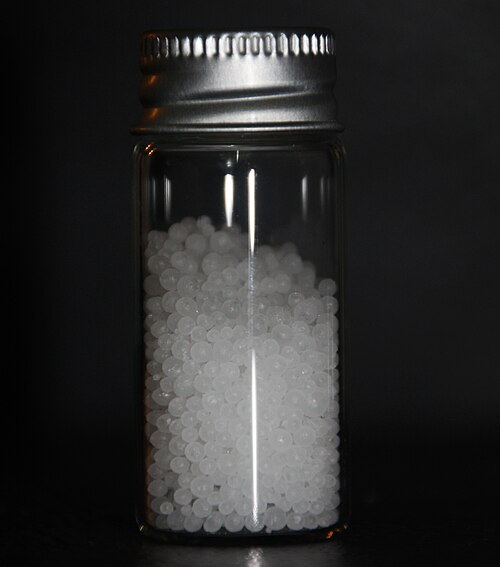
The synthesis of urea in the early 19th century from inorganic compounds was counterevidence for the vitalist hypothesis that only organisms could make the components of living things.
History
Ancient philosophies
The notion that bodily functions are due to a vitalistic principle existing in all living creatures has roots going back at least to ancient Egypt.[7]
In Greek philosophy, the Milesian school proposed natural explanations deduced from materialism and mechanism.
However, by the time of Lucretius, this account was supplemented, (for example, by the unpredictable clinamen of Epicurus), and in Stoic physics, the pneuma assumed the role of logos. Galen believed the lungs draw pneuma from the air, which the blood communicates throughout the body.[8]
Jainism
Main article: Vitalism (Jainism)
Vitalism is an aspect of Jain philosophy. The Tattvarthsutra by Umaswati states that the universe is made up of six eternal substances:
sentient beings or souls
matter
motion
rest
space
time
The Sarvārthasiddhi by Pujyapada further divides the Jiva into the amount of vitalities of the sense possessed.[11]
Medieval
In Europe, medieval physics was influenced by the idea of pneuma, helping to shape later aether theories.
Early modern
Vitalists included English anatomist Francis Glisson (1597–1677) and the Italian doctor Marcello Malpighi (1628–1694).[12] Caspar Friedrich Wolff (1733–1794) is considered to be the father of epigenesis in embryology, that is, he marks the point when embryonic development began to be described in terms of the proliferation of cells rather than the incarnation of a preformed soul.
However, this degree of empirical observation was not matched by a mechanistic philosophy: in his Theoria Generationis (1759), he tried to explain the emergence of the organism by the actions of a vis essentialis (an organizing, formative force).
Carl Reichenbach (1788–1869) later developed the theory of Odic force, a form of life-energy that permeates living things.
In the 17th century, modern science responded to Newton's action at a distance and the mechanism of Cartesian dualism with vitalist theories: that whereas the chemical transformations undergone by non-living substances are reversible, so-called "organic" matter is permanently altered by chemical transformations (such as cooking).[13]
As worded by Charles Birch and John B. Cobb, "the claims of the vitalists came to the fore again" in the 18th century:[12] "Georg Ernst Stahl's followers were active as were others, such as the physician genius Francis Xavier Bichat of the Hotel Dieu."[12]
However, "Bichat moved from the tendency typical of the French vitalistic tradition to progressively free himself from metaphysics in order to combine with hypotheses and theories which accorded to the scientific criteria of physics and chemistry."[14] John Hunter recognised "a 'living principle' in addition to mechanics."[12]
Johann Friedrich Blumenbach was influential in establishing epigenesis in the life sciences in 1781 with his publication of Über den Bildungstrieb und das Zeugungsgeschäfte. Blumenbach cut up freshwater Hydra and established that the removed parts would regenerate. He inferred the presence of a "formative drive" (Bildungstrieb) in living matter. But he pointed out that this name,
like names applied to every other kind of vital power, of itself, explains nothing: it serves merely to designate a peculiar power formed by the combination of the mechanical principle with that which is susceptible of modification.
SEE PDF for complete article, downloaded:
Sunday, May 03, 2026 10:41AM