Social Generations, 1901-1927:
DOWNLOADED: August 16, 2025, 11:31 AM
Greatest Generation - Wikipedia
The Greatest Generation, also known as the G.I. Generation and the World War II Generation, is the demographic cohort following the Lost Generation and preceding the Silent Generation.
This generation is generally defined as people born from 1901 to 1927.[1]
They were shaped by the Great Depression and were the primary generation composing the enlisted forces in World War II.
Terminology
An early usage of the term The Greatest Generation was in 1953 by U.S. Army General James Van Fleet, who had recently retired after his service in World War II and leading the Eighth Army in the Korean War. He spoke to Congress, saying, "The men of the Eighth Army are a magnificent lot, and I have always said the greatest generation of Americans we have ever produced."[2] The term was popularized by the title of a 1998 book by American journalist Tom Brokaw. In the book, Brokaw profiles American members of this generation who came of age during the Great Depression and went on to fight in World War II, as well as those who contributed to the war effort on the home front. Brokaw wrote that these men and women fought not for fame or recognition, but because it was the "right thing to do".[3]
This cohort is also referred to as the "G.I. Generation"[4] and the "World War II Generation".[5]
Date and age range definitions
Pew Research Center defines this cohort as being born from 1901 to 1927.[6] Strauss and Howe use the birth years 1901–1924.[7] The first half of this generation, born between 1901 and 1912, is sometimes referred to as the Interbellum Generation. The majority of veterans who served in World War II were born during the second half of this generation, from 1913 to 1924. While the oldest members of the Interbellum Generation came of age at the close of the 1910s in 1919, the majority reached maturity in the 1920s and the minority had grown up in the initial years of the Great Depression from 1929 to 1932. The "WWII Generation Proper" came of age in either the second half of the 1930s or the early years of the 1940s.
Characteristics
United States
Adolescence
Main articles: Belle Époque, Progressive Era, World War I, and Great Depression in the United States
 Buckler family, 1914[
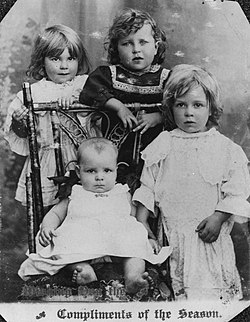 ]
(https://en.wikipedia.org/wiki/File:Group_portrait_of_young_girls_on_Christmas_card,_Queensland,_1910-1920_%285279596344%29.jpg)
Portrait of Australian girls, c. between 1910 and 1920
US members of this generation came of age as early as 1919 and as late as 1945, were children or were born during the Progressive Era, World War I, and the Roaring Twenties; a time of economic prosperity with distinctive cultural transformations.
Additionally, many of those alive from 1918 through 1920 experienced the deadly Spanish flu pandemic; and, incredibly, a few rare individuals, such as Anna Del Priore, managed to survive infection from both the Spanish flu and the COVID-19 pandemic approximately 100 years later.[8]
They also experienced much of their youth with rapid technological innovation (e.g., radio, telephone, automobile) amidst growing levels of worldwide income inequality[9][10][11] and a soaring economy.[12][13][14] After the Stock Market crashed, when many had matured in the 1930s, this generation experienced profound economic and social turmoil.
Despite the hardships, historians note that the literature, arts, music, and cinema of the period flourished. This generation experienced what is commonly referred to as the "Golden Age of Hollywood". A number of popular film genres, including gangster films, musical films, comedy films, and monster films attracted mass audiences. The Great Depression also greatly influenced literature and witnessed the advent of comic books, which were popular with members of this generation with such characters as Doc Savage, the Shadow, Superman and Batman. Next to jazz, blues, gospel music, and folk music; swing jazz became immensely popular with members of this generation. The term "Swing Generation" has also been used to describe the cohort due to the popularity of the era's music.[15] The popularity of the radio also became a major influence in the lives of this generation, as millions tuned in to listen to President Franklin D. Roosevelt's "fireside chats" and absorbed the news in a way like never before.[16]