Glenn Kessler WAPO
3 22 many good grn stories lately, i confused w. ron dad?
===
Right-wing media falsely suggest Donald Trump chartered a plane for Nelson Mandela out of the goodness of his heart
Trump’s airline was already up for sale due to financial troubles, and he charged Mandela $130,000 to use one of his jets
Written by Courtney Hagle
Published 10/18/24 mma
In an October 18 interview with Donald Trump, Fox host George “Tyrus” Murdoch praised the former president for chartering a plane for the late South Africa President Nelson Mandela in the 1990s, adding that it’s “hard” for Trump to “talk about the good things you’ve done.” Some others in conservative media joined in, suggesting that Trump assisted Mandela for the sake of generosity and goodwill.
In reality, as Washington Post columnist Glenn Kessler explained, the plane chartered for Mandela was not Trump’s personal private jet but a Boeing 727 from Trump Shuttle, “an airline that Trump briefly owned before it was essentially seized by the banks because he failed to make payments on his loans.” Kessler noted that Mandela was charged $130,000 to use the plane by Trump Shuttle, which was already in financial trouble and was preparing to be sold.
Speaking to Trump in an OutKick vid]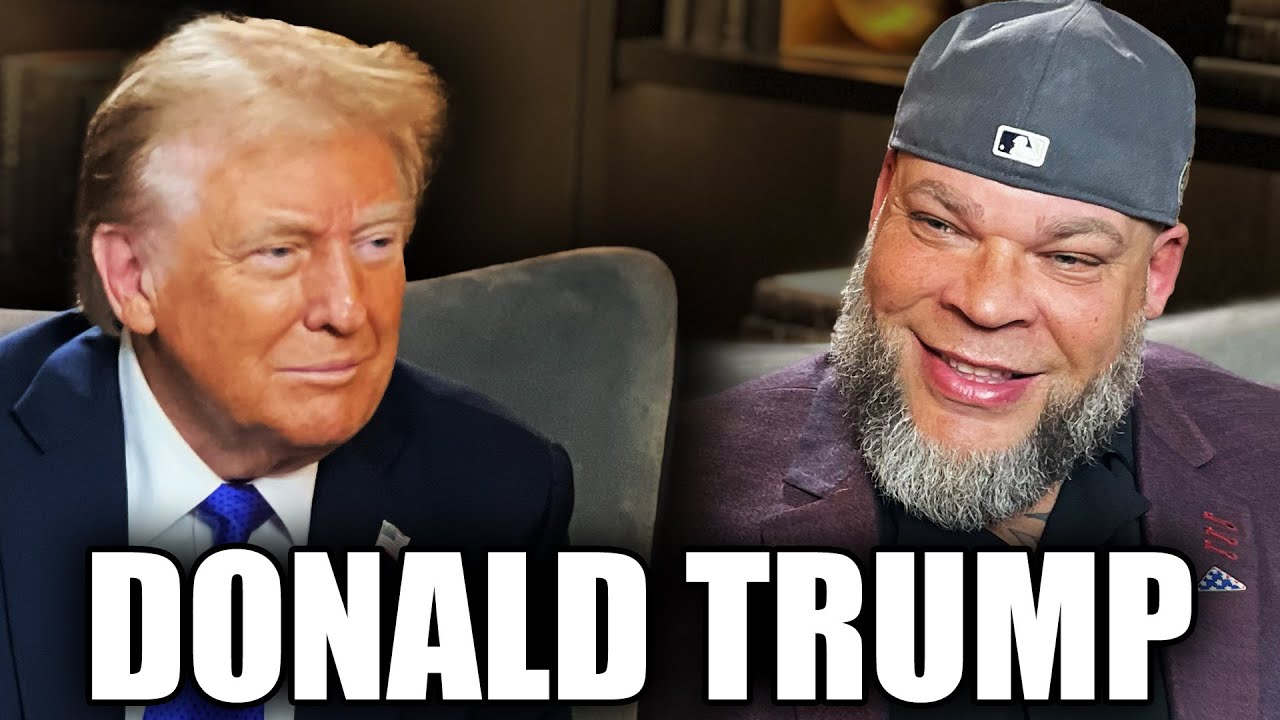 titled “Manhood is under ATTACK!” Tyrus said Mandela “was trying to come to the United States. The United States government wasn’t helping him, no one was helping him. You chartered a 727 plane for the entire trip. … Why is it hard for you to talk about the things you've done?”
Trump responded humbly: “I love doing it. I don't need praise for it.”
“I just like helping people,” he added. “I help a lot of people, and I enjoy doing it, and I never talk about it. … It's not a narrative the press likes to talk about.”
Some right-wing media joined in, lauding Trump’s generosity after the Trump campaign pushed the clip.
Turning Point USA co-founder and podcaster Charlie Kirk claimed that Trump helped Mandela “when the US Government wouldn’t,” adding, “He doesn’t go around bragging about his good deeds, but there are endless such stories.”
Students for Trump Chair Ryan Fournier wrote: “I had no idea Trump chartered a plane for Nelson Mandela to come to the United States when our own government wouldn't even help him. Trump is a good man.”
===
no lnx
https://www.washingtonpost.com/politics/2022/03/17/bogus-allegation-that-putin-is-funding-california-environmental-charity/
Analysis
The bogus ‘allegation’ that Putin is funding a California environmental charity
By Glenn Kessler
Staff writer
March 17, 2022
“It has been alleged that [Russian President Vladimir] Putin is using a San Francisco-based e-NGO, the Sea Change Foundation (Sea Change), to funnel money into U.S.-based environmental advocacy efforts designed to undermine American energy production. … Notably, reports suggest that your organization is one of the top e-NGO recipients of Sea Change grants since 2006.”
:{
}:
— Letter signed by every GOP member of the House Energy Committee, written to several environmental groups, March 10
Note the passive voice in this letter — “it has been alleged.” There’s just enough smoke in the four-page missive to suggest there’s a raging fire. At Fox News, the resulting story was headlined: “House Republicans demand answers from environmental groups over allegation of collusion with Russia.”
The letter demanded answers by March 25 from three environmental groups — the League of Conservation Voters (LCV), the Natural Resources Defense Council (NRDC), and the Sierra Club — on whether they have received funding from Russia or China and whether any funding from Sea Change, an environmental philanthropy, was used for anti-fracking advocacy. Sea Change contributes about $40 million to $50 million a year to a variety of environmental organizations.
“Provided the public reporting of Putin’s dark money influence in Europe and the concerns surrounding similar efforts in the United States, we write today to explore your connections with Sea Change,” the letter said. “Any action by President Putin, the Russian government, or Putin’s allies to undermine American energy security must be addressed.”
But upon inspection, the allegations crumble into dust. The flimsiest of dots are connected to make a case. What is even more astonishing is that, regular as clockwork, Republicans have been making these bogus claims every few years, even after credible explanations have been given. Small wonder — they keep getting the same favorable headlines from right-leaning media.
The Facts
This all started in 2014, when the Republican staff of the Senate Environment Committee published a report alleging that a group of “left wing millionaires and billionaires … directs and controls the far-left environmental movement, which in turn controls major policy decisions and lobbies on behalf of the U.S. Environmental Protection Agency (EPA).” The report focused on Sea Change Foundation, based in California, which it said “relies on funding from a foreign company with undisclosed donors.”
The president of Sea Change is Nat Simons, a son of billionaire hedge fund investor James Simons, who is one of the world’s richest people, with a net worth of almost $29 billion.The committee report conceded that Nat and his wife, Laura Baxter-Simons, “predominantly fund Sea Change through their own personal wealth, mostly attributed to their ties to Renaissance Technologies, a wildly profitably hedge fund.”
But the report also noted that “in addition to funding by the Simons, the only other source of its contributions derives from a Bermuda-based company called Klein Ltd.” In 2010, Kleincontributed $13 million to Sea Change, about half of Sea Change’s contributions that year, and in 2011 Klein contributed $10 million to Sea Change, about one-third of the contributions. The report decried the “lack of transparency” about Klein’s funding and said the company appeared to have been set up “for the sole purpose of funneling anonymous donations to Sea Change.”
There was not a word in the report about Russian money. But then, in December 2015, a group called the Environmental Policy Alliance issued a six-page paper titled “From Russia With Love?”
Note the question mark.It intended to raise allegations but provide plausible deniability. The paper — it’s too thin to be called a report — claimed it was building on the Senate report by examining the law firm that set up Klein.
That firm, Wakefield Quin, is one of Bermuda’s top law firms. The hyped discovery in the paper was that some of the lawyers at the firm held directorship positions in companies of some of their clients, including some linked to the Russian energy sector.One 2008 court case in the British Virgin Islands, for instance, resulted in a money laundering conviction against a client associated with an adviser to Putin. “While it is unclear who is funding Klein, the law firm controlling this shady offshore funder of the U.S. environmental movement has ties to Russian money laundering, a friend and advisor of Vladimir Putin, Russian oil production, and more,” the paper said.
Law firms, of course, often have many clients, sometimes with shared interests. But that does not mean the law firm is coordinating among its clients or funneling money between them. The dots are so poorly connected as to be almost nonexistent.
Moreover, there is a certain irony in theEnvironmental Policy Alliance issuing the paper. It’s one of the many “AstroTurf” organizations — faux think tanks — run out of the offices of Berman and Company, headed by GOP lobbyist Richard “Rick” Berman. The group’s webpage says it is devoted to “uncovering the funding and hidden agenda behind environmental activist groups.”
In 2014, the New York Times obtained a recording of a closed-door speech in which Berman bragged to a group of oil industry executives about how he kept corporate donations secret behind a wall of nonprofit groups that sponsor major advertising campaigns supporting industry objectives. “There is total anonymity,” he said. “People don’t know who supports us.”
Despite the dubious provenance and the flimsy reasoning, the claims made by Berman’s group keep circulating.
In 2017, when Russian interference in the 2016 election was in the news, two Republican lawmakers from Texas, Lamar Smith (since retired) and Rep. Randy Weber, issued an open letter asking the Treasury Department to investigate possible money flows from Putin to Sea Change.
The letter began by citing concerns raised about Russia’s opposition to fracking by NATO Secretary General Anders Fogh Rasmussen and former secretary of state Hillary Clinton.
Rasmussen in 2014 was quoted as saying that Russia “engaged actively with so-called nongovernmental organizations — environmental organizations working against shale gas — to maintain European dependence on imported Russian gas.”He provided no proof and declined to say more, saying, “That is my interpretation.”
Clinton, in a private speech in Edmonton, Alberta, in 2014, alluded to Russian disinformation efforts. “We were up against Russia pushing oligarchs and others to buy media,” she said. “We were even up against phony environmental groups, and I’m a big environmentalist, but these were funded by the Russians to stand against any effort, ‘Oh that pipeline, that fracking, that whatever will be a problem for you,’ and a lot of the money supporting that message was coming from Russia.”
The speech was revealed when Russia hacked the account of Clinton campaign manager John Podesta and turned over his emails to WikiLeaks. But Nick Merrill, a Clinton spokesman, said she was not talking about Russia funding groups in the United States. “I remember this speech,” he said in an email. “She was talking about proposed pipelines in Europe that would have threatened Russian supply.”
One repeatedly cited statistic is that Russia invested $95 million in nongovernmental organizations to persuade European governments to stop shale gas exploration. The number appeared in a 2018 Senate committee report, sourced to the Wilfried Martens Center for European Studies. But the Wilfried Martens Center report does not explain how that figure was calculated and attributes it only to a 2015 “interview with anonymous contributor.” The report also is unclear about how much of this funding came from what are known as GONGOs (government-organized nongovernment organizations) or Russian oil companies themselves, as opposed to secret conduits of Russian money.
Finally, the letter referred to a national intelligence report issued on Jan. 6, 2017, about Russia’s efforts to influence the political debate in the United States. That report noted that RT, the Russian news channel, “runs anti-fracking programming, highlighting environmental issues and the impacts on public health.”
In other words, concerns about apparent Russian efforts to use nongovernmental groups in Europe to undermine fracking were leveraged to suggest that the same problem existed in the United States. But the only direct intervention in the United States that has been identified was a Russian news network.[that is well known propaganda organ vs u.s. NGO?]
When Smith and Weber issued their letter, the Bermuda law firm issued a blistering statement denying any suggestion that it acted as a conduit for Russian funds. “The allegations are completely false and irresponsible,” the firm said. “Our firm has represented Klein since its inception, and we can state categorically that at no point did this philanthropic organization receive or expend funds from Russian sources or Russian-connected sources and Klein has no Russian connection whatsoever.”
Politico quoted a Sea Change spokesperson as saying that no money from Russia had been received and that none of its donations to environmental groups were earmarked for opposition to fracking — which was supposedly the point of the subterfuge. From our study of Sea Change’s tax filings, its contributions have been focused broadly on climate change mitigation, energy efficiency and clean-energy policies.
Finally, a year later, the Sea Change Foundation revealed the source of Klein’s funding — the Simons family wealth. It turns out it was just another trust for the family’s billions.
“I wish to clarify that press reports speculating that Klein has received funding from outside sources are factually incorrect and have no basis,” Nat Simons said in a 2018 statement to Inside Philanthropy. “Neither Klein nor Sea Change Foundation has ever solicited or accepted contributions from non-family related sources.” Simons said that the name of the Bermuda funding vehicle had been changed from Klein Ltd. to Sea Change Foundation International.
Yet, here we are, with a new letter.This new missive repeats, at the start, the same items as the earlier letter — such as quotes from Rasmussen, Clinton and the national intelligence report. It adds a 2019 quote from former Trump aide Fiona Hill, made during the first impeachment inquiry, that Putin “saw American fracking as a great threat to Russian interests.” (Hill told the Fact Checker that “this was only a general statement” as “Putin went on a rant about fracking that I personally witnessed in November 2011.”)
Then the letter claims that “it has been alleged thatPutin” is using Sea Change to advance his interests. No mention is made of Sea Change’s 2018 statement explaining the family wealth as the source of the money.
The letter is so stuck in a time warp that it’s out of date. Rod Forrest, a director and senior counsel at Wakefield Quin, told The Fact Checker that the law firm no longer represents Sea Change (or Klein) and has not done so for some time.“Wakefield Quin does not have any directorship positions with any investment or other group connected in any way to any Russian minister,” he added.
Nat Simons and Laura Baxter-Simons, in a statement to The Fact Checker, said: “We are disappointed to see false allegations of foreign influence through Sea Change Foundation resurface after this untrue assertion was fully refuted in a statement released in 2018. To state clearly, neither Klein nor Sea Change Foundation has or had any connection to Russia or Russian funds.”
The environmental groups also issued statements denying any links to Russian funds.
“We receive no funding from the government of Russia,” said Bob Deans, the Natural Resources Defense Council’s director of strategic engagement. “We answer to our independent leadership, and we don’t do the bidding of any government — foreign or otherwise — in our work to advocate for common sense environmental protections in the public interest. These allegations are rooted in a smear campaign orchestrated nearly a decade ago by fossil fuel interests and a right-wing think tank. They only serve now, as then, as a distraction.”
“This false conspiracy theory, invented by the same deceitful front groups paid to do polluters’ and Big Tobacco’s dirty work, has been repeatedly debunked over its nearly 10-year existence,” said Sierra Club Legislative Director Melinda Pierce. “The Sierra Club has no connections to Russia or China, and proudly fights for clean energy and climate action because this is what our planet requires, our families deserve, and what the overwhelming majority of Americans across the country demand.”
“This story is completely false and has been put to rest for years,” said David Willett, a League of Conservation Voters spokesman. “We have no connections to Russia, or China, and have been an effective advocate for environmental protection for over 50 years. These false and poorly-researched allegations are rooted in a nearly 10-year-old right-wing think tank and fossil fuel industry-funded smear campaign that gets revived every few years to serve as a distraction.”
Jack Heretik, a spokesman for the House Energy Committee’s GOP members, said: “If the League of Conservation Voters, the Natural Resources Defense Council, and the Sierra Club have nothing to hide, then we look forward to seeing the evidence by March 25.”
Will Coggin, a Berman and Company research analyst associated with entities such as the Center for Consumer Freedom and the Environmental Policy Alliance, issued a statement defending the 2015 paper: “The NATO Secretary General said Russians were working with environmentalists to oppose fracking in other countries as a scheme to help Russian energy. Our report highlighted how a shadowy Caribbean-based organization gave $23 million to Sea Change and how the firm where that group was based had connections to Russian clients. The questions we raised are still unanswered, and this situation deserves a full, independent investigation.”
The Pinocchio Test
For years, it’s been clear that Sea Change Foundation has no connection to secret Russian money. After all, the foundation is associated with one of the world’s richest families. On top of that, we can find no evidence that money donated by Sea Change resulted in anti-fracking campaigns. The foundation might have been quicker to reveal that Klein’s funds were just more of the Simonses’ money, but in any case that has been known now for four years.
The lawmakers may pretend that they are just asking questions, but in reality they are recycling claims that have already been adequately debunked. It’s a smarmy way to earn some publicity during Russia’s invasion of Ukraine. They earnFour Pinocchios.
Four Pinocchios
(About our rating scale)
Send us facts to check by filling out this form
Sign up for The Fact Checker weekly newsletter
The Fact Checker is a verified signatory to the International Fact-Checking Network code of principles
229 Comments
links
“It has been alleged that [Russian President Vladimir] Putin is using a San Francisco-based e-NGO, the Sea Change Foundation (Sea Change), to funnel money into U.S.-based environmental advocacy efforts designed to undermine American energy production. … Notably, reports suggest that your organization is one of the top e-NGO recipients of Sea Change grants since 2006.”
—**Letter**signed by every GOP member of the House Energy Committee, written to several environmental groups, March 10
Note the passive voice in this letter — “it has been alleged.” There’s just enough smoke in the four-page missive to suggest there’s a raging fire. At Fox News, the resulting story was headlined: “House Republicans demand answers from environmental groups over allegation of collusion with Russia.”
The letter demanded answers by March 25 from three environmental groups — the League of Conservation Voters (LCV), the Natural Resources Defense Council (NRDC), and the Sierra Club — on whether they have received funding from Russia or China and whether any funding from Sea Change, an environmental philanthropy, was used for anti-fracking advocacy. Sea Change contributes about $40 million to $50 million a year to a variety of environmental organizations.
“Provided the public reporting of Putin’s dark money influence in Europe and the concerns surrounding similar efforts in the United States, we write today to explore your connections with Sea Change,” the letter said. “Any action by President Putin, the Russian government, or Putin’s allies to undermine American energy security must be addressed.”
But upon inspection, the allegations crumble into dust. The flimsiest of dots are connected to make a case. What is even more astonishing is that, regular as clockwork, Republicans have been making these bogus claims every few years, even after credible explanations have been given. Small wonder — they keep getting the same favorable headlines from right-leaning media.
The Facts
This all started in 2014, when the Republican staff of the Senate Environment Committee published a report alleging that a group of “left wing millionaires and billionaires … directs and controls the far-left environmental movement, which in turn controls major policy decisions and lobbies on behalf of the U.S. Environmental Protection Agency (EPA).” The report focused on Sea Change Foundation, based in California, which it said “relies on funding from a foreign company with undisclosed donors."
the president of Sea Change is Nat Simons, a son of billionaire hedge fund investor James Simons, who is one of the world’s richest people, with a net worth of almost $29 billion. The committee report conceded that Nat and his wife, Laura Baxter-Simons, “predominantly fund Sea Change through their own personal wealth, mostly attributed to their ties to Renaissance Technologies, a wildly profitably hedge fund.”
But the report also noted that “in addition to funding by the Simons, the only other source of its contributions derives from a Bermuda-based company called Klein Ltd.” In 2010, Klein contributed $13 million to Sea Change, about half of Sea Change’s contributions that year, and in 2011 Klein contributed $10 million to Sea Change, about one-third of the contributions. The report decried the “lack of transparency” about Klein’s funding and said the company appeared to have been set up “for the sole purpose of funneling anonymous donations to Sea Change.”
There was not a word in the report about Russian money. But then, in December 2015, a group called the Environmental Policy Alliance issued a six-page paper titled “From Russia With Love?"
note the question mark. It intended to raise allegations but provide plausible deniability. The paper — it’s too thin to be called a report — claimed it was building on the Senate report by examining the law firm that set up Klein.
That firm, Wakefield Quin, is one of Bermuda’s top law firms. The hyped discovery in the paper was that some of the lawyers at the firm held directorship positions in companies of some of their clients, including some linked to the Russian energy sector. One 2008 court case in the British Virgin Islands, for instance, resulted in a money laundering conviction against a client associated with an adviser to Putin. “While it is unclear who is funding Klein, the law firm controlling this shady offshore funder of the U.S. environmental movement has ties to Russian money laundering, a friend and advisor of Vladimir Putin, Russian oil production, and more,” the paper said.
Law firms, of course, often have many clients, sometimes with shared interests. But that does not mean the law firm is coordinating among its clients or funneling money between them. The dots are so poorly connected as to be almost nonexistent.
moreover, there is a certain irony in the Environmental Policy Alliance issuing the paper. It’s one of the many “AstroTurf” organizations — faux think tanks — run out of the offices of Berman and Company, headed by GOP lobbyist Richard “Rick” Berman. The group’s webpage says it is devoted to “uncovering the funding and hidden agenda behind environmental activist groups.”
In 2014, the New York Times obtained a recording of a closed-door speech in which Berman bragged to a group of oil industry executives about how he kept corporate donations secret behind a wall of nonprofit groups that sponsor major advertising campaigns supporting industry objectives. “There is total anonymity,” he said. “People don’t know who supports us.”
Despite the dubious provenance and the flimsy reasoning, the claims made by Berman’s group keep circulating.
In 2017, when Russian interference in the 2016 election was in the news, two Republican lawmakers from Texas, Lamar Smith (since retired) and Rep. Randy Weber, issued an open letter asking the Treasury Department to investigate possible money flows from Putin to Sea Change.
The letter began by citing concerns raised about Russia’s opposition to fracking by NATO Secretary General Anders Fogh Rasmussen and former secretary of state Hillary Clinton.
Rasmussen in 2014 was quoted as saying that Russia “engaged actively with so-called nongovernmental organizations — environmental organizations working against shale gas — to maintain European dependence on imported Russian gas.” He provided no proof and declined to say more, saying, “That is my interpretation.”
Clinton, in a private speech in Edmonton, Alberta, in 2014, alluded to Russian disinformation efforts. “We were up against Russia pushing oligarchs and others to buy media,” she said. “We were even up against phony environmental groups, and I’m a big environmentalist, but these were funded by the Russians to stand against any effort, ‘Oh that pipeline, that fracking, that whatever will be a problem for you,’ and a lot of the money supporting that message was coming from Russia.”
The speech was revealed when Russia hacked the account of Clinton campaign manager John Podesta and turned over his emails to WikiLeaks. But Nick Merrill, a Clinton spokesman, said she was not talking about Russia funding groups in the United States. “I remember this speech,” he said in an email. “She was talking about proposed pipelines in Europe that would have threatened Russian supply.”
One repeatedly cited statistic is that Russia invested $95 million in nongovernmental organizations to persuade European governments to stop shale gas exploration. The number appeared in a 2018 Senate committee report, sourced to the Wilfried Martens Center for European Studies. But the Wilfried Martens Center report does not explain how that figure was calculated and attributes it only to a 2015 “interview with anonymous contributor.” The report also is unclear about how much of this funding came from what are known as GONGOs (government-organized nongovernment organizations) or Russian oil companies themselves, as opposed to secret conduits of Russian money.
Finally, the letter referred to a national intelligence report issued on Jan. 6, 2017, about Russia’s efforts to influence the political debate in the United States. That report noted that RT, the Russian news channel, “runs anti-fracking programming, highlighting environmental issues and the impacts on public health.”
In other words, concerns about apparent Russian efforts to use nongovernmental groups in Europe to undermine fracking were leveraged to suggest that the same problem existed in the United States. But the only direct intervention in the United States that has been identified was a Russian news network.
When Smith and Weber issued their letter, the Bermuda law firm issued a blistering statement denying any suggestion that it acted as a conduit for Russian funds. “The allegations are completely false and irresponsible,” the firm said. “Our firm has represented Klein since its inception, and we can state categorically that at no point did this philanthropic organization receive or expend funds from Russian sources or Russian-connected sources and Klein has no Russian connection whatsoever.”
Politico quoted a Sea Change spokesperson as saying that no money from Russia had been received and that none of its donations to environmental groups were earmarked for opposition to fracking — which was supposedly the point of the subterfuge. From our study of Sea Change’s tax filings, its contributions have been focused broadly on climate change mitigation, energy efficiency and clean-energy policies.
finally, a year later, the Sea Change Foundation revealed the source of Klein’s funding — the Simons family wealth. It turns out it was just another trust for the family’s billions.
“I wish to clarify that press reports speculating that Klein has received funding from outside sources are factually incorrect and have no basis,” Nat Simons said in a 2018 statement to Inside Philanthropy. “Neither Klein nor Sea Change Foundation has ever solicited or accepted contributions from non-family related sources.” Simons said that the name of the Bermuda funding vehicle had been changed from Klein Ltd. to Sea Change Foundation International.
Yet, here we are, with a new letter. This new missive repeats, at the start, the same items as the earlier letter — such as quotes from Rasmussen, Clinton and the national intelligence report. It adds a 2019 quote from former Trump aide Fiona Hill, made during the first impeachment inquiry, that Putin “saw American fracking as a great threat to Russian interests.” (Hill told the Fact Checker that “this was only a general statement” as “Putin went on a rant about fracking that I personally witnessed in November 2011.”)
Then the letter claims that “it has been alleged that Putin” is using Sea Change to advance his interests. No mention is made of Sea Change’s 2018 statement explaining the family wealth as the source of the money.
The letter is so stuck in a time warp that it’s out of date. Rod Forrest, a director and senior counsel at Wakefield Quin, told The Fact Checker that the law firm no longer represents Sea Change (or Klein) and has not done so for some time. “Wakefield Quin does not have any directorship positions with any investment or other group connected in any way to any Russian minister,” he added.
Nat Simons and Laura Baxter-Simons, in a statement to The Fact Checker, said: “We are disappointed to see false allegations of foreign influence through Sea Change Foundation resurface after this untrue assertion was fully refuted in a statement released in 2018. To state clearly, neither Klein nor Sea Change Foundation has or had any connection to Russia or Russian funds.”
The environmental groups also issued statements denying any links to Russian funds.
“We receive no funding from the government of Russia,” said Bob Deans, the Natural Resources Defense Council’s director of strategic engagement. “We answer to our independent leadership, and we don’t do the bidding of any government — foreign or otherwise — in our work to advocate for common sense environmental protections in the public interest. These allegations are rooted in a smear campaign orchestrated nearly a decade ago by fossil fuel interests and a right-wing think tank. They only serve now, as then, as a distraction.”
“This false conspiracy theory, invented by the same deceitful front groups paid to do polluters’ and Big Tobacco’s dirty work, has been repeatedly debunked over its nearly 10-year existence,” said Sierra Club Legislative Director Melinda Pierce. “The Sierra Club has no connections to Russia or China, and proudly fights for clean energy and climate action because this is what our planet requires, our families deserve, and what the overwhelming majority of Americans across the country demand.”
“This story is completely false and has been put to rest for years,” said David Willett, a League of Conservation Voters spokesman. “We have no connections to Russia, or China, and have been an effective advocate for environmental protection for over 50 years. These false and poorly-researched allegations are rooted in a nearly 10-year-old right-wing think tank and fossil fuel industry-funded smear campaign that gets revived every few years to serve as a distraction.”
Jack Heretik, a spokesman for the House Energy Committee’s GOP members, said: “If the League of Conservation Voters, the Natural Resources Defense Council, and the Sierra Club have nothing to hide, then we look forward to seeing the evidence by March 25.”
Will Coggin, a Berman and Company research analyst associated with entities such as the Center for Consumer Freedom and the Environmental Policy Alliance, issued a statement defending the 2015 paper: “The NATO Secretary General said Russians were working with environmentalists to oppose fracking in other countries as a scheme to help Russian energy. Our report highlighted how a shadowy Caribbean-based organization gave $23 million to Sea Change and how the firm where that group was based had connections to Russian clients. The questions we raised are still unanswered, and this situation deserves a full, independent investigation.”
The Pinocchio Test
For years, it’s been clear that Sea Change Foundation has no connection to secret Russian money. After all, the foundation is associated with one of the world’s richest families. On top of that, we can find no evidence that money donated by Sea Change resulted in anti-fracking campaigns. The foundation might have been quicker to reveal that Klein’s funds were just more of the Simonses’ money, but in any case that has been known now for four years.
The lawmakers may pretend that they are just asking questions, but in reality they are recycling claims that have already been adequately debunked. It’s a smarmy way to earn some publicity during Russia’s invasion of Ukraine. They earn Four Pinocchios.
ref
no lnx graphics
Fact Checker
Analysis
About The Fact Checker
By Glenn Kessler
Staff writer
January 1, 2017
About 'The Fact Checker'
In a busy 24-hour news cycle, it's hard to spot the truth behind the rhetoric. We're doing it for you. (Joy Sharon Yi, Atthar Mirza/The Washington Post)
“Comment is free, but facts are sacred.”
-- C.P. Scott, editor of the Manchester Guardian, 1921
About The Fact Checker
In an award-winning journalism career spanning nearly four decades, Glenn Kessler has covered foreign policy, economic policy, the White House, Congress, politics, airline safety and Wall Street. He was The Washington Post’s chief State Department reporter for nine years, traveling around the world with three different Secretaries of State. Before that, he covered tax and budget policy for The Washington Post and also served as the newspaper’s national business editor. He has been editor and chief writer of The Fact Checker since 2011.
Kessler has long specialized in digging beyond the conventional wisdom, such as when he earned a “laurel” from the Columbia Journalism Review* for obtaining Federal Aviation Administration records that showed that then President Bill Clinton had not delayed any scheduled flights when he had a controversial haircut on an airport tarmac. Kessler helped pioneer the fact-checking of candidates’ statements during the 1996 presidential campaign, when he was chief political correspondent for Newsday, and continued to do it during the last six presidential campaigns for The Post.
The National Association for Media Literacy Education (NAMLE) in 2015 awarded Kessler its Media Literate Media award, presented every two years, for his work on The Fact Checker. He is a member of the advisory board of the International Fact-Checking Network and has trained reporters in Morocco and Panama on fact-checking techniques and practices.
In 2007, St. Martins Press published Kessler’s widely acclaimed book on Condoleezza Rice, The Confidante. Kessler appears frequently on television and has lectured widely on U.S. foreign policy.
Our Goal
This column first started on Sept. 19, 2007, as a feature during the 2008 presidential campaign. The Washington Post revived it as a permanent feature on Jan. 11, 2011. Since then, Kessler has been the editor and chief writer of The Fact Checker.
Another member of The Fact Checker team is Adriana Usero, who edits and produces videos for The Fact Checker. She has worked at The Post since 2016 and was born and raised in San Juan, Puerto Rico. She joined The Post from The Huffington Post/HuffPost Live.
Peter Stevenson is the senior producer for Fact Checker videos. Steven Ginsberg is the managing editor responsible for national news at The Washington Post and Peter Wallsten is the senior politics editor.
Former reporters for The Fact Checker include: Salvador Rizzo (2018-2021), Meg Kelly (2017-2020), Nicole Lewis (2017), Michelle Ye Hee Lee (2014-2017) and Josh Hicks (2011-2013).
The Fact Checker team was awarded an honorable mention in the competition for the 2019 Toner Prize for Excellence in Political Reporting, awarded by the S.I. Newhouse School of Public Communications at Syracuse University. The judges cited The Fact Checker’s database of President Trump’s false and misleading claims and praised fact checks that are “clear, deliberate and never hyperbolic.”
The Fact Checker database was also nominated in 2020 by the Arthur L. Carter Journalism Institute at New York University for inclusion in a list of the Top Ten Works of Journalism of the Decade. “The project is a sterling example of what journalists should do — holding the powerful accountable by using reporting and facts,” the nomination said.
In 2020, “The Fact Checker’s Guide to Manipulated Video” earned a Webby Award in the category of Best Individual Editorial Feature - Media Company. Also in 2020, the Fact Checker video team earned a Global Fact 7 award for “best format” for a video investigation debunking the Moroccan government’s account of the beating of an activist.
In 2020, Scribner published a book by Kessler, Rizzo and Kelly titled “Donald Trump and His Assault on Truth: The President’s Falsehoods, Misleading Claims and Flat-Out Lies." The book received a starred review from Kirkus Reviews and was hailed as a “great public service of a book” by The New Yorker. You can order it here.
The purpose of this website, and an accompanying column in the Sunday print edition of The Washington Post, is to “truth squad” the statements of political figures regarding issues of great importance, be they national, international or local. It’s a big world out there, and so we rely on readers to ask questions and point out statements that need to be checked.
But we are not limited to political charges or countercharges. We also seek to explain difficult issues, provide missing context and provide analysis and explanation of various “code words” used by politicians, diplomats and others to obscure or shade the truth. The Fact Checker is at heart about policy -- domestic and foreign -- as we have found that politicians are apt to be more misleading about complex and difficult-to-understand topics.
The success of this project depends, to a great extent, on the involvement of you--the reader. About 50 percent of our fact checks start with an inquiry from a reader. Readers send us suggestions on topics to fact check and tips on erroneous claims by political candidates, interest groups, and the media. Once we have posted an item on a subject, we invite your comments and contributions. You can follow us on Twitter at GlennKesslerWP or friend us on Facebook. We welcome comments and suggestions via tweets (Include #FactCheckThis in your tweet) or on our Facebook page.
You can also email us at factchecker@washpost.com.
If you have facts or documents that shed more light on the subject under discussion, or if you think we have made a mistake, please let us know. We also want to make sure that the authors of questionable claims have ample opportunity to argue their case. We issue our own ruling on factual disputes (see our rules on the “Pinocchio Test” below) but it can be revised and updated if fresh evidence emerges. Our view is that a fact check is never really finished, so the rating can be revised after we obtain new information that changes the factual basis for our original ruling.
The Fact Checker's 10th anniversary
For the past 10 years, the Fact Checker has examined the statements of leading politicians. (Meg Kelly/The Washington Post)
C-SPAN Interviews
On January 15, 2012, C-SPAN aired a one-hour interview with Glenn Kessler about the Fact Checker columnand his life and career, which has been viewed on-line more than 400,000 times. (A transcript of the interview is also available.) In 2014, C-SPAN aired a second one-hour interview with Kessler.
A Few Basic Principles
• This is a fact-checking operation, not an opinion-checking operation. We are interested only in verifiable facts, though on occasion we may examine the roots of political rhetoric.
• We will focus our attention and resources on the issues that are most important to voters. We cannot nitpick every detail of every speech. We especially try to examine statements that are newsworthy or concern issues of importance. We understand that everyone makes mistakes, especially when speaking extemporaneously, so we do not play "gotcha."
• We will strive to be dispassionate and non-partisan, drawing attention to inaccurate statements on both left and right. But we also fact check what matters -- and what matters are people in power. When one political party controls the White House and both houses of Congress, it is only natural that the fact checks might appear too heavily focused on one side of the political spectrum. (Divided government is much better for The Fact Checker.) We urge readers to bring to our attention possible false claims we might have missed.
• We will stick to the facts of the issue under examination and are unmoved by ad hominem attacks. The identity or political ties of the person or organization making a charge is irrelevant: all that matters is whether their facts are accurate or inaccurate.
• We consider the reach and importance of possible fact checks, using the quotes of politicians as a jumping-off point for an examination of policy issues. We do not want to elevate false claims that have received relatively little attention on social media.
• Consistent with The Fact Checker’s Guide to Manipulated Video, issued in June 2019, we seek to highlight examples of when politicians and political campaigns have used editing or other tricks to mislead viewers.
• We will adopt a “reasonable person” standard for reaching conclusions. We do not demand 100 percent proof. The burden for proving the accuracy of a claim rests with the speaker, however.
• Consistent with Washington Post policy, no one working on The Fact Checker may engage in partisan political activity or make contributions to candidates or advocacy organizations. Since 2013, The Washington Post has been owned by Jeff Bezos, the chief executive of Amazon, as a personal investment via Nash Holdings LLC. The Fact Checker is part of the national-news section of The Post, which is managed separately from the editorial and opinion section of The Post. In 2019, The Fact Checker received a $250,000 grant from Google News Initiative/YouTube to expand production of video fact checks.
• We are committed to being transparent about our sources. Whenever possible, we provide links to sources so readers have access to the information we used to reach the conclusions in our fact checks and can verify the information themselves.
• Everyone makes mistakes and we strive to correct any errors in accordance with The Washington Post’s corrections policy. We welcome feedback from readers who may dispute our conclusions and who want to offer additional information that might result in a change in ruling. You may contact us at factchecker@washpost.com or submit a correction request to the editors.
The Pinocchio Test
Where possible, we will adopt the following standard in fact-checking the claims of a politician, political candidate, diplomat or interest group.
We do make some allowance for statements made in live interviews, as opposed to a prepared text. We will judge more harshly statements from a prepared text, on the grounds that the politician and staff had time to discuss the statistic. We also make allowances if the politician or interest group acknowledges an error was made. Finally, we also have a feature called "Recidivism Watch," which highlights claims repeated by politicians even though the claim has been previously debunked.
One Pinocchio
Some shading of the facts. Selective telling of the truth. Some omissions and exaggerations, but no outright falsehoods. (You could view this as "mostly true.")
Two Pinocchios
Significant omissions and/or exaggerations. Some factual error may be involved but not necessarily. A politician can create a false, misleading impression by playing with words and using legalistic language that means little to ordinary people. (Similar to "half true.")
Three Pinocchios
Significant factual error and/or obvious contradictions. This gets into the realm of "mostly false." But it could include statements which are technically correct (such as based on official government data) but are so taken out of context as to be very misleading. The line between Two and Three can be bit fuzzy and we do not award half-Pinocchios. So we strive to explain the factors that tipped us toward a Three.
Four Pinocchios
Whoppers.
The Geppetto Checkmark
Statements and claims that contain “the truth, the whole truth, and nothing but the truth” will be recognized with our prized Geppetto checkmark. We tend to reserve this for claims that are unexpectedly true, so it is not awarded very often.
An Upside-Down Pinocchio
A statement that represents a clear but unacknowledged “flip-flop” from a previously-held position.
Verdict Pending
There are occasions when it is impossible to render a snap judgment because the issue is very complex or there are good arguments on both sides. In this case, we will withhold our judgment until we can gather more facts. We will use this website to shed as much light as possible on factual controversies that are not easily resolved.
Bottomless Pinocchio
In December, 2018, The Fact Checker introduced the Bottomless Pinocchio. The bar for the Bottomless Pinocchio is high: Claims must have received Three or Four Pinocchios from The Fact Checker, and they must have been repeated at least 20 times. Twenty is a sufficiently robust number that there can be no question the politician is aware that his or her facts are wrong. The list of Bottomless Pinocchios will be maintained on its own landing page.
Archives
Click on the Archives link on the top right of the Fact Checker page. The list will go back five years. For dates after Sept. 2013, adjust the year and month at the end of the url.
See 2007-2011 archives here.
***
All judgments are subject to debate and criticism from our readers and interested parties, and can be revised if fresh evidence emerges. We invite you to join the discussion on these pages and contact the Fact Checker directly with tips, suggestions, and complaints. If you feel that we are being too harsh on one candidate and too soft on another, there is a simple remedy: let us know about misstatements and factual errors we may have overlooked.
(Poynter)
International Fact-Checking Network fact-checkers' code of principles
The International Fact-Checking Network (IFCN) at the Poynter Institute is committed to promoting excellence in fact-checking. Nonpartisan and transparent fact-checking can be a powerful instrument of accountability journalism. Conversely, unsourced or biased fact-checking can increase distrust in the media and experts while polluting public understanding. The following statement is the result of consultations among fact-checkers from around the world; it offers conscientious practitioners principles to aspire to in their everyday work. The Washington Post Fact Checker was an inaugural signatory to this code of principles, which was announced on Sept. 15, 2016.
(1) A COMMITMENT TO NONPARTISANSHIP AND FAIRNESS We fact-check claims using the same standard for every fact check. We do not concentrate our fact-checking on any one side. We follow the same process for every fact check and let the evidence dictate our conclusions. We do not advocate or take policy positions on the issues we fact-check.
(2) A COMMITMENT TO TRANSPARENCY OF SOURCES We want our readers to be able to verify our findings themselves. We provide all sources in enough detail that readers can replicate our work, except in cases where a source’s personal security could be compromised. In such cases, we provide as much detail as possible.
(3) A COMMITMENT TO TRANSPARENCY OF FUNDING & ORGANIZATION We are transparent about our funding sources. If we accept funding from other organizations, we ensure that funders have no influence over the conclusions we reach in our reports. We detail the professional background of all key figures in our organization and explain our organizational structure and legal status. We clearly indicate a way for readers to communicate with us.
(4) A COMMITMENT TO TRANSPARENCY OF METHODOLOGY We explain the methodology we use to select, research, write, edit, publish and correct our fact checks. We encourage readers to send us claims to fact-check and are transparent on why and how we fact-check.
(5) A COMMITMENT TO OPEN AND HONEST CORRECTIONS We publish our corrections policy and follow it scrupulously. We correct clearly and transparently in line with our corrections policy, seeking so far as possible to ensure that readers see the corrected version.
By signing up to this code of principles, the fact-checking initiatives agree to produce a public report indicating how they have lived up to each of the five principles within a year from their signature, and once a year thereafter. The report will allow readers and others to judge to what extent the fact-checker is respecting the code of principles and will be linked to from this page.
Being a signatory to this code of principles and publishing a report in no way implies an endorsement from Poynter's IFCN or any of its members.
A formal process for adding signatories began in 2017. The Washington Post Fact Checker was evaluated by an independent assessor and officially accepted by the IFCN board on March 8, 2017, permitting the display of the badge below. The Fact Checker was reevaluated and accepted again in 2018, 2019 and 2020. (All assessments can be found here.) If any reader believes The Fact Checker is violating the IFCN code, you may submit a complaint to the IFCN. The IFCN has the responsibility to suspend or withdraw signatory status if it finds a signatory has seriously violated the code, which was significantly strengthened in 2020.
Columbia Journalism Review, May 1993:
* “LAUREL to New York Newsday, and to staff writer Glenn Kessler, for a record-breaking solo flight. With most of the nation’s news media zooming in on the president’s $ 200 haircut on the Los Angeles Airport runway and roaring about the disruptions his hirsutic hubris caused, Kessler took off in a different direction -- and landed on some hard, concrete facts. His analysis of Federal Aviation Administration records, obtained under the Freedom of Information Act, revealed that, contrary to stories of circling planes, jammed-up runways, and inconvenienced passengers (and contrary, too, to the apology the White House felt pressured to make), only one (unscheduled) air taxi reported an actual (two-minute) delay. Unfortunately, most of the nation’s news media, in usual near-perfect formation, found neither time nor space to correct a story that had been wildly off course.”
By Glenn Kessler
Glenn Kessler has reported on domestic and foreign policy for more than three decades. Send him statements to fact check by emailing him, tweeting at him, or sending him a message on Facebook. Twitter
MORE FROM THE POST