Climate Activists
8 23 mostly for direct action targets
note july record heat waves
mma 8 23
Right-wing media are spreading calls for violence against climate activists in response to a series of disruptive but nonviolent direct actions carried out by groups demanding action on climate change.
As communities grapple with crippling heat, flooding, and wildfires, activist groups employing tactics such as throwing paint or food on famous works of art and property, infiltrating cultural events, and obstructing busy roads have provoked outrage from right-wing media. Most recently, a U.K.-based group called Just Stop Oil and a German group called Letzte Generation (Last Generation) have been violently attacked by civilians, many of whom are motorists seemingly being held up by group members sitting in the middle of roads or conducting “slow walk” protests to block traffic. The incidents captured on camera have gone viral on social media, with some right-wing media figures in both Europe and the U.S. justifying these assaults and praising the perpetrators, offering ominous warnings of future violence against climate activists.
U.S. right-wing media fan the flames of anger and aggression directed at climate activists in response to escalating tactics abroad
On July 19, Just Stop Oil posted a video of a 21-year-old protester getting dragged, punched, and kicked while slow-walking down Cromwell Road in London. A statement from Just Stop Oil said that the victim of the assault did not plan on reporting the incident to the police. A July 21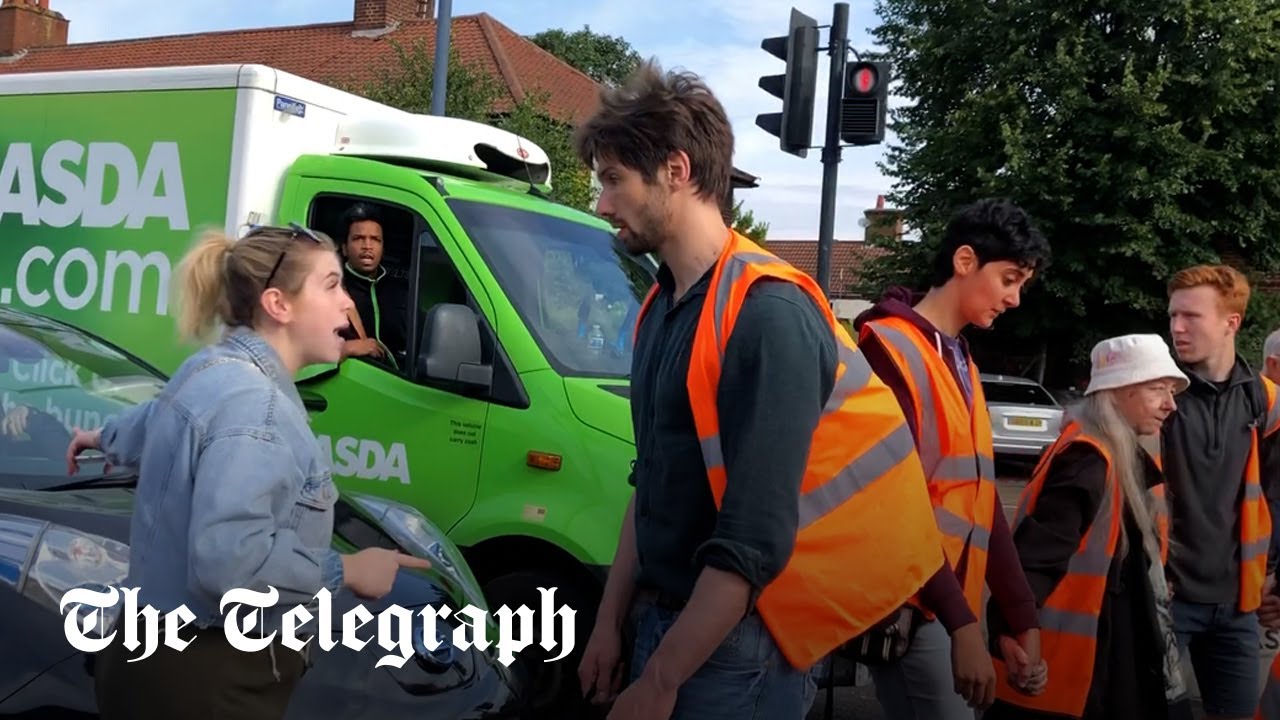 of a woman yelling at Just Stop Oil protesters reportedly shows her telling them she is taking her baby to the hospital. In response to these tactics, changes in the recent Public Order Act have expanded police powers, giving authorities much more leeway to determine a protest is disruptive and put an end to it.
The videos sparked a deluge of comments from right-wing media influencers in the U.S. justifying and even encouraging physical violence against climate protesters who obstruct traffic:
- Daily Wire host and anti-LGBTQ bigot Michael Knowles suggested the woman should have just run the demonstrators over:“If it would not have slowed her down — that is, if this woman would not have been almost immediately arrested, she obviously should have just run them over. She at the very least should have just love-tapped until they moved or fell, but she should’ve just run them over. When hippies’ crimes threaten the life of one’s baby, the just action is as clear as day.” The Daily Wire, *The Michael Knowles Show*, [7/24/23]
- Libertarian Institute director and radio host Scott Horton: “I bet just pulling a gun on them would be enough.” Twitter, [7/22/23]
- Right-wing commentator Nick Sortor: “I don’t care what the hell I have to do. If a woman is rushing her baby to the hospital and she’s being blocked by ‘climate activists,’ I’m removing the ‘activists’ from the road one way or another. I promise you that.” Twitter, [7/22/23]
- Far-right Turning Point USA host Drew Hernandez told his viewers that Just Stop Oil is a “death cult” that will kill your babies and predicts that “you’re going to start seeing shoes and body parts” of protesters: “This is the messianic mindset, this is what I’ve been saying for a long time. They get to choose who lives and who dies. They get to enforceif you are a part of ournew world order,then you shall pass. Your baby gets to live. If you are not a part of our new world global order, then you shall not pass and your baby will die,” Hernandez said. “This is a death cult, guys. … You’re going to start seeing shoes and body parts flying all over —I’m not calling for violence. I’m just saying that this is instability people are going to start to witness.” *Drew Hernandez Live*, [7/21/23]
- Far-right extremist Elijah Schaffer: “Anyone ever want to beat the shit out of these vandalistic climate activists? (In call of duty of course, not real life.)” Twitter, [7/21/23]
- Right-wing investment influencer account Wall Street Silver: “It is just a matter of time before people just start running over these clowns.”Twitter, [7/21/23]
- Turning Point USA offshoot Turning Point UK: “Do you support citizens (legally) removing Just Stop Oil protestors when the police fail to do so?” Twitter, [7/21/23]
- Co-founder of Palantir and Cicero Institute Chairman Joe Lonsdale: “If there’s a woman trying to take her baby to the hospital, it’s the job of every man there to clear these scum out of the way and make a path for the baby. Immediately. I don’t care what the ‘law or ‘custom’ is - if you know a life may be at stake, take aggressive action.” Twitter, [7/21/23]
- Conservative influencer and founder of the white nationalist organization American Populist Union Vincent Dao: “These people are f—ing scum and it should be legal to…. ya know.” Twitter, [7/21/23]
- Newsmax host Gary Callahan: “Any day now someone is gonna run these scumbags over and it's going to be hilarious.” :{Twitter:(style="background-color:#ffff66;"):}:, [7/21/23]
- Host of the right-wing YouTube channel “The Salty Cracker” said that Just Stop Oil is intentionally provoking bystanders to violence in order to incriminate “law-abiding citizens” and “shut down conservative civil liberties” with the help of the government and the police: “We’ve been warning them,” the host claimed. “You’re going to get beat up. You keep stopping traffic, you’re going to get beat up. And they’re protected. They’re protected by the city, they’re protected by the mayor, the city council, the local police, they’re all on the same plan.” He continued, “You’re supposed to generate the optics and thevideo of you being killed because then they’re going to take that and shut down conservative civil liberties. That’s what the plan is over here. It has nothing to do with oil. It has everything to do with getting guns taken away from law-abiding citizens, to paint conservatives as violent and lunatics.” Rumble**, *The Salty Cracker*, [7/19/23]
- Misogynist influencer Tristan Tate, who is a suspect in a criminal investigation involving his brother Andrew Tate’s alleged rape and sex trafficking: “So I hear (unconfirmed) this man was in the car with his pregnant girlfriend. His car and a van collided because of the protest (you take your eyes off the road when a precession of idiots is in the street) he could have lost his child. With this in mind, fair reaction.” Twitter, [7/19/23]
- Newsmax host Rob Schmitt while laughing, said that the video of the demonstrator getting attacked was his favorite video of the day:“This is my favorite video of the day. Look at this guy, jumps out of his truck — get out of here, you freaking hippies. Threatens to punch them and look, the kids just go right back and then comes this, it gets real. They act like they're never going to move. Don't worry, they do. See, they're getting up.” Newsmax, *Rob Schmitt Tonight*, [7/14/23]
During two separate incidents in Germany involving Last Generation, a truck driver attempted to run over a sitting protester and a group of people violently threw protesters out of the road, dragging one of them by the hair. (On Twitter and YouTube, the latter video was considered to be so violent that it either violated community guidelines or was labeled as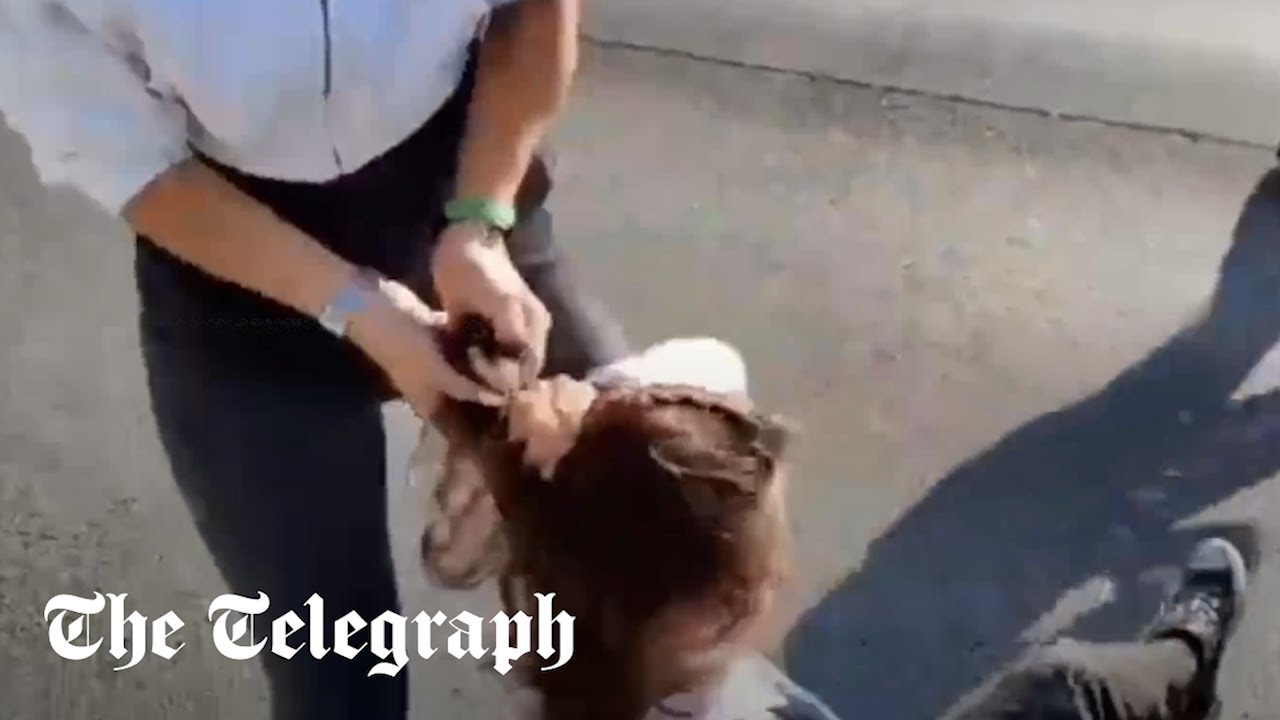 for some viewers.)
- Right-wing writer and podcaster Kay Smythe wrote for the Daily Caller that the video brightened her day: “Who’s The Alpha German Blonde Dragging This Climate Protester By Her Hair? Did she do the right thing, or are you an annoying little dweeb like these so-call activists?” Twitter,[7/17/23]
- Judicial Watch president Tom Fitton: “Criminal leftists endanger the public safety.”Twitter, [7/17/23]
- Turning Point USA commentator Savanah Hernandez: “Watching climate change activists get brutally removed from roadways after OBSTRUCTING their fellow citizens is one of my favorite pastimes.” Hernandez shared a tweet from right-wing activist Charles Cooper, which has since been deleted for violating community guidelines, that said: “Perfect execution. Be a hero—drag the disruptive ‘activists’ out of the way by their hair. Allow traffic to move again. This is how you can help your community.” Twitter, [7/16/23]
- Right-wing troll Oilfield Rando: “Hot German blonde chicks dragging frumpy decarbonizationists out of the street by their hair is the content I am here for.”Twitter,[7/15/23]
While road obstructions seem to elicit the most aggressive reactions, activist groups across Europe, the U.K., and the U.S. have also been heavily criticized for gluing themselves or throwing paint and various food products at notable works of art (the artworks have not been permanently damaged).
- Being Libertarian: “We need to bring back the stocks.”Twitter, [4/27/23]
- The Blaze writer Logan Hall wrote, “Solve deranged climate protests with this one easy step: you block traffic while drivers commute to work? life in prison. you vandalize beautiful public art? life in prison. you ruin a relaxing day of golf? life in prison. it’s that simple.”Twitter, [7/19/23]
- Anti-LGBTQ activist and Daily Wire host Matt Walsh: “Activists vandalizing art should be publicly flogged.” :{Daily Wire,:(style="background-color:#ffff66;"):}:*:{ :(style="background-color:#ffff66;"):}:The Matt Walsh Show*, [11/15/22]
- Fox News host Ainsley Earhardt referred to the actions as “a form of terrorism” Earhardt said: “There need to be consequences if you destroy anyone's propertythat’s worth tens of millions of dollars and it's a piece of history that we all are teaching our kids about. … It's a form of terrorism to advance a political agenda.” Fox News, *Outnumbered*, [10/24/22]
- Former Daily Caller contributor Greg Price: “I say we send all climate activists to forced labor camps where they spend all day drilling for oil.”Twitter, [10/14/22]
The right’s yearslong mission to turn the public against environmental activists
Right-wing media have spent years building their audiences’ disdain for environmentalists, particularly those who dare to speak out about climate change as a serious threat.
During extensive coverage of climate protests, for example, Fox News has portrayed activists as members of a narcissistic, mentally ill “death cult” (a term that right-wing media and conspiracy theorists have used to describe Planned Parenthood, Judaism, and the Democratic Party) with the sinister agenda of fixing an allegedly fake problem at the peril of regular people.
As far back as 2010, right-wing media was blaming the Deepwater Horizon oil spill on environmental activists. And as youth movements like Fridays for Future gained notoriety and media attention in 2019, the Daily Wire’s Michael Knowles was calling then-16-year-old Greta Thunberg a “mentally ill child,” and multiple influencers have compared her to Nazi leaders.
“Like, I'm not going to be the only one who could see, like, little, sort of, imagery of Hitler speaking up there, right?” right-wing YouTuber Dave Rubin said on The Rubin Report. “Like, there was some –these people think that they can control the worldand if you just gave them enough money and enough power they could do it.”
Fox News prime-time host Laura Ingraham has warned viewers that they would “be punished by our own children” and compared youth climate activists to Stephen King’s Children of the Corn.
COVID-19 brought a whole new onslaught of accusations as reduced travel saw planet-warming pollution plummet. Right-wing figures likefossil fuel shill Daniel Turner and radio host Rush Limbaugh claimed that “green activists” were rejoicing over the COVID-19 pandemic’s disastrous effects because the disease was “accomplishing the Green New Deal’s goals.” Fox News and the New York Post parroted the idea.
In 2022, right-wing media found a way to blame the war in Ukraine on climate activists, demanding they were responsible for the domestic and global policies that supposedly emboldened Russian President Vladimir Putin because the White House is “capturedby climate zealots.” More recently, Fox Business host Charles Payne compared climate activism to human sacrifice on July 13. And on July 17, The Five co-host Greg Gutfeld said that climate activists “see population as pollution” and suggested doxxing them to make their lives more difficult.
By claiming over and over again that climate activists want people to suffer and suggesting that they represent the real threat to society, not climate change, right-wing media have conditioned their audiences to be complacent or even satisfied when protesters are targeted with violence. This kind of thinking didn’t happen overnight — it’s been building for years, buoyed by right-wing talking heads, who get engagement by goading people into acting on their worst impulses but insist they’re not inciting violence, and the corrupt institutions driving ecological collapse and creating the need for civil disobedience to secure a livable future.
mma 8 23
the past year has seen a global surge in climate activism, spurred by the escalating climate crisis, including controversial actions such as throwing paint and food at venerable works of art, bringing bustling city traffic to a halt, and disrupting major athletic competitions, among others.
A Media Matters analysis of coverage by major national TV news networks and the top five U.S. newspapers by circulation reveals a troubling trend: Coverage of such disruptive climate protests over the last year was not only limited, but also heavily skewed, often focusing on the disruptive tactics of the activists rather than the urgent climate message driving their actions. Coverage also rarely pointed out the increasingly hostile and punitive response from police and governments that these provocative tactics have increasingly drawn.
From May 30, 2022, to July 31, 2023, Media Matters found:
- National TV news broadcasters — ABC, CBS, and NBC — and major cable news networks — CNN and MSNBC — aired 43 segments about various climate protests.
- Corporate broadcast TV networks aired a combined 7 segments about climate protests, and none of them included context about the scientific warnings driving the actions.
- CNN and MSNBC aired a combined 36 climate protest segments, and only 7 of them (16%) referenced scientific warnings about climate change. CNN led with 4 segments that included context about the scientific warnings about climate, followed by MSNBC with 3.
- Fox News dominated cable news coverage of climate protests with 144 segments — four times the combined coverage of its competitors CNN (27 segments) and MSNBC (9 segments). Fox’s coverage mentioned climate change 8 times only to deny the scientific consensus or downplay the urgency of the crisis, hence those segments were also excluded from the final tally.
- The top five U.S. newspapers by circulation (the Los Angeles Times, The New York Times, The Wall Street Journal, The Washington Post, and USA Today) published a combined 34 stories in their print editions about various climate protests — just 16 specifically referenced scientific warnings about climate change.
- MSNBC was the only major news network to mention the criminalization of climate protests, airing a single segment. The New York Times (3 articles) and The Washington Post (1 article) were the only top five newspapers that mentioned the legal reprisals against climate protesters.
- ## limate activism’s daunting battle for major news media’s attention
- Securing substantial and meaningful mainstream media coverage remains a daunting challenge for climate protesters, regardless of whether their activism involves marching in the streets or executing bold direct actions. This dynamic raises critical questions about how climate issues are prioritized in the public discourse and underscores the essential role media plays in shaping this narrative.
For example, in the week leading up to Earth Day 2023, broadcast networks allocated just over 3 hours of coverage to the global event and less than an hour on Earth Day itself. But when it comes to more confrontational climate actions, the media attention is hardly consistent or proportional.
Climate activists engaged in civil disobedience are often portrayed merely as disruptors, with the news media failing to adequately communicate the grave climate concerns that drive their actions. Furthermore, the intensifying government responses to these acts of dissent — from heightened policing to punitive legislation aimed at deterring future activism — are frequently sidelined in the reporting, creating an incomplete picture of the full stakes involved in these protests.
- ## How major broadcast and cable news covered climate protests
- The coverage of climate protests by major broadcast and cable news networks over the last year was not only sparse, but it predominantly focused on the disruptive actions of the activists without adequately addressing the urgent climate crisis driving these actions and the increasingly severe responses they provoked.
From May 30, 2022, through July 31, 2023, broadcast TV news networks aired just 7 segments about various climate protests. ABC aired 4 segments about climate protests, followed by NBC with 2, and CBS with 1. None of the corporate broadcast networks’ segments about climate protests referenced scientific warnings about climate change or mentioned the escalating legal reprisals against controversial climate actions.
During the same period, CNN and MSNBC aired 36 segments about climate protests, with 7 mentioning scientific warnings about climate change. CNN aired 26 protest segments, with 4 climate science mentions, followed by MSNBC, with 9 segments and 3 mentions.
One of the better segments connecting climate protest to climate science aired during the April 23 episode of *CNN Newsroom Live*, which used the occasion of Earth Day to discuss the dual strategies climate activist group Extinction Rebellion was deploying to draw attention to the crisis and also included a detailed accounting of the climate threats facing the planet.
MSNBC was the only cable network to air a segment that mentioned the legal backlash against climate activists. Ayman Mohyeldin, host of MSNBC’s Ayman, explicitly denounced the jailing of climate activists during a November 13, 2022, segment about imprisoned Egyptian journalist and activist Alaa Abd el-Fattah’s hunger strike during the United Nations’ COP 27 climate conference.
The host declared, “Look, there is no environmental justice without social justice. Governments cannot tackle the world’s climate needs with sobriety and urgency, while simultaneously imprisoning young activists around the world who are at the very forefront for the calls for change.”
Despite these notable exceptions, broadcast and cable networks have largely provided limited and decontextualized coverage of climate protests. Most of their coverage focused on the art protests, specifically Just Stop Oil activists who threw soup at Vincent van Gogh’s “Sunflowers” at the National Gallery in London last October. The activists who used charcoal to dye the Trevi Fountain in Rome black in May also received coverage from mainstream TV news outlets.
This reporting often neglected to connect the activists’ provocative methods to the pressing climate concerns propelling their actions or to mention the intensifying government reactions to these protests. This incomplete representation creates an information vacuum, conveniently filled by right-wing media, which could further skew public understanding of the climate crisis and its advocates.
- ## Fox News’ coverage magnified and distorted climate protesters
- Fox News has far too often filled the information vacuum around important environmental stories with a damaging mix of climate denial, misinformation, and derision.
Overshadowing its mainstream cable news competitors, Fox again dominated cable news coverage of climate protests during the studied time period. The network aired 144 segments, which is four times CNN and MSNBC’s combined coverage. Fox also covered a much wider variety of climate protests than its cable news counterparts, with numerous segments abouts the demonstrators who protested the Congressional Baseball Game last July, the activists who deflated dozens of SUV tires in Boston in April, and the protesters who interrupted Wimbledon in July.
In 8 segments, Fox also explicitly denied or downplayed the climate emergency driving the activists’ actions. For example, during a segment that aired on the May 22 episode of *Fox News Tonight* about Roman climate protesters who dyed the Trevi Fountain black to draw attention to the link between fossil fuel consumption and devastating floods in northern Italy, correspondent Trace Gallagher noted, “Historians inconveniently remind the protesters that the rain drought pattern in northern Italy has been happening for thousands of years, maybe millions.”
Fox’s coverage routinely mocked and derided climate activists. For example, during the May 23 episode of Fox News’ *The Five*, co-host Jeanine Piro called the Trevi Fountain protesters “lunatics” and asked, “Is there something off in their brain that makes them do this?”
During the June 1 episode of *Fox & Friends*, Fox host Carley Shimkus said it was “positively hilarious” that one of the climate protesters who interrupted a Swedish dance competition had been deliberately hit by a piece of camera equipment, before the hosts mused about assaulting hypothetical protesters who happened into the Fox News studio.
Fox & Friends co-host Brian Kilmeade again wished violence upon climate activists during a July 6 segment about a protest that disrupted Wimbledon, saying he hoped that security “roughed up” the protesters.
- ## The top five major newspapers’ print coverage of climate protests was mixed
- The top five newspapers by circulation (the Los Angeles Times, The New York Times, The Wall Street Journal, The Washington Post, and USA Today) published a combined 34 stories in their print editions about various climate protests during the studied time period, and 14 of them included specific mentions of climate science.
The Washington Post led with 15 total articles about climate protests, 7 of which mentioned the scientific warnings about climate change; the Los Angeles Times followed with 7 articles with 4 mentions; The New York Times ran 6 articles with 2 mentions; The Wall Street Journal ran 2 articles with no mentions; and USA Today ran 1 article with no mentions. The New York Times and The Washington Post were the only top five newspapers to mention the legal reprisals against climate protesters, with 3 and 1 mention, respectively.
The coverage within the United States' leading newspapers revealed diverse, often conflicting narratives, where nuanced insights coexisted with more surface-level stories about climate protests, even within the same publications, creating a stark contrast in the way the protests were presented to readers.
For example, the Los Angeles Times, The New York Times, and The Washington Post each published several articles that examined the ominous scientific warnings about climate change fueling the urgency of the protests, providing readers a more complete understanding of the activists' cause. However, these same newspapers also published other articles that ignored the larger story of the climate crisis and focused on the protesters’ tactics. The lack of context in these pieces clouded or obscured the urgent message that activists sought to convey. This mixed approach underscores the need for more consistent, comprehensive, and empathetic reporting of climate protests that reflect the gravity of the issue at hand.
Meanwhile, The Wall Street Journal’s 2 print articles about climate protests during the studied period were uniform in their condemnation of the activists and their tactics. The right-leaning newspaper is owned by the Murdoch family, which also owns Fox News among a number of other right-wing media outlets.
Regarding legal reprisals, The Washington Post published a strong editorial on June 16 that decried the Vietnamese government’s imprisonment under false pretenses of Hoang Thi Minh Hong, who is described as “the country’s leading climate activist.” And a July 12 New York Times article about various climate protests at museums noted that the United States was approaching a “tipping point” as “prosecutors have brought serious federal charges against protesters who threatened the safety of art at the National Gallery of Art in Washington, which is a federal institution.” But such coverage remains sparse.
- ## National news media overlook the escalating criminalization of climate protests
- The national news media's insufficient reporting on climate protests neglects a particularly significant and troubling trend: the escalating draconian response to these protests and the concurrent rise in the criminalization of climate activism.
The increasingly oppressive response to provocative climate protests, characterized by brutal policing and punitive legal measures, reflects a broader trend in criminalizing dissent to deter protesters and inhibit the global mobilization efforts of environmental movements.
This dearth of coverage not only overlooks an alarming pattern of legislative hostility toward current iterations of climate activism, but it also ignores the array of so-called “critical infrastructure” laws crafted to penalize environmental protests that have been enacted across numerous states. These laws, often advocated by the fossil fuel industry and their proxies, propose severe penalties for protests near fossil fuel infrastructure and prescribe hefty fines for organizations supporting such actions, and they have already caused a great deal of harm among the U.S. climate activist community.
In January, 26-year-old Manuel “Tortuguita” Terán was killed by law enforcement officers during a raid on the Defend Atlanta Forest encampment. Other forest defenders have subsequently been charged with domestic terrorism for protesting the construction of a police training facility in Atlanta, dubbed “Cop City.”
Meanwhile, during protests of the construction of the Line 3 pipeline project in Minnesota, a thousand-mile crude oil pipeline from Canada to Wisconsin, the Enbridge pipeline company paid police officers to harass and mass arrest climate activists and entangle them in complex and expensive legal proceedings.
And choosing to focus sparse coverage of climate protests on the disruptive tactics of activists can have further harmful implications. By portraying protesters as threats rather than as citizens responding to an existential crisis, media narratives provide fodder for right-wing outlets and social media influencers to rationalize violence. This escalates risks for frontline climate activists and adds to the pervading environment of fear and intimidation.
Unfortunately, significant incidents and policy changes often go underreported. For instance, the United Kingdom introduced draft legislation posing unprecedented restrictions on the right to protest, yet this development received little attention in mainstream media.
Similarly, several American states have passed laws that exonerate drivers who hit protesters with their vehicles, a frightening development considering similar incidents in Australia and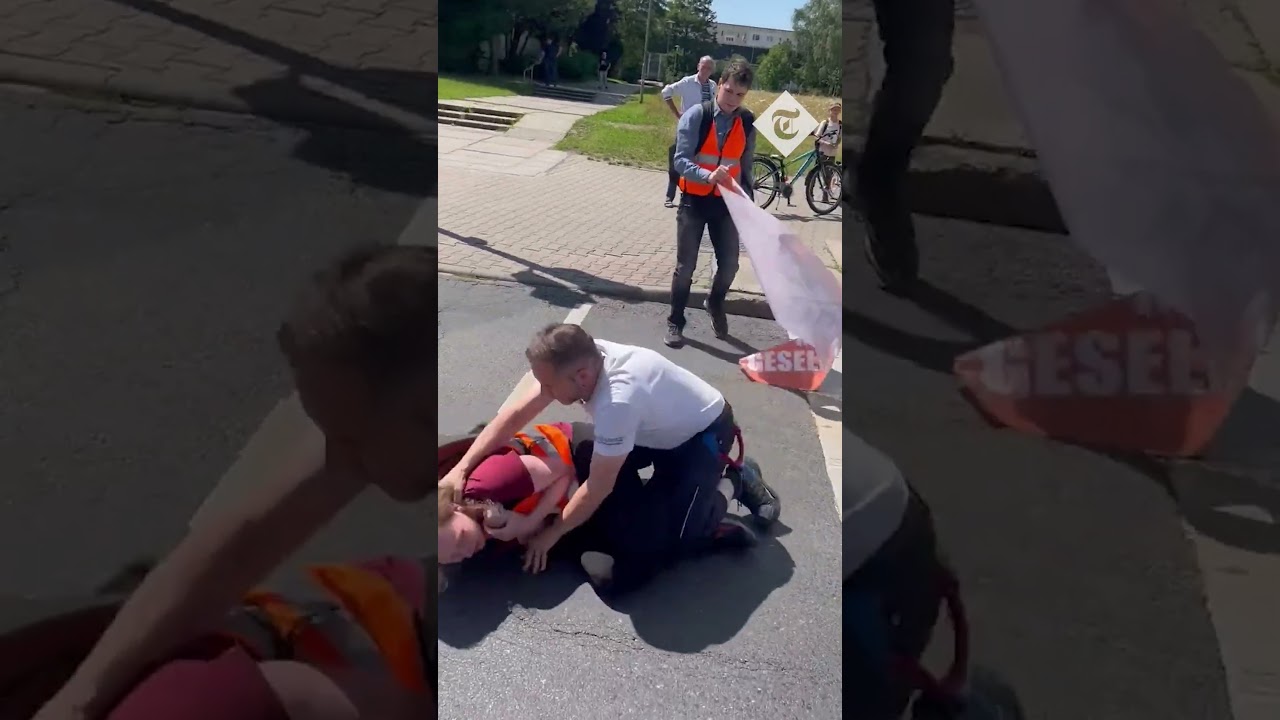 .
National news media bear a substantial responsibility for reporting on climate protests with depth, substance, and accuracy, especially given the torrent of harmful narratives from right-wing media outlets such as Fox News which frequently seek to distort and diminish the urgency of climate change. Mainstream news outlets must thus strive to provide comprehensive coverage that transcends a narrow focus on protest tactics and emphasizes the scientific underpinnings of the protests, the heightened legal repercussions faced by activists, and the increased criminalization of these vital expressions of dissent.
- ## Methodology....