CASTLE quant susq
-=-=
-=-=
see predict mkt kalshi
Goat herding hedge: How Susquehanna and Kalshi are helping this company offset a change in California law
Published Thu, Aug 13 20268:00 AM EDTUpdated Thu, Aug 13 20268:27 AM EDT
 Ananya Chetia@ananya-chetia-a94121183
ShareShare Article via FacebookShare Article via TwitterShare Article via LinkedInShare Article via Email
Key Points
A California wage exemption for goat herders expired on June 30, which could lead to a sudden spike in labor costs for companies like Western Grazers.
Tim Arrowsmith, owner of Western Grazers, feared his annual labor costs could rise to as much as $240,000 per herder.
Working with Susquehanna and startup Castle Technologies, Western Grazers now has a hedge on prediction markets platform Kalshi. The contract pays Western Grazers up to $500,000 if California doesn’t change its wage rule by the end of September.
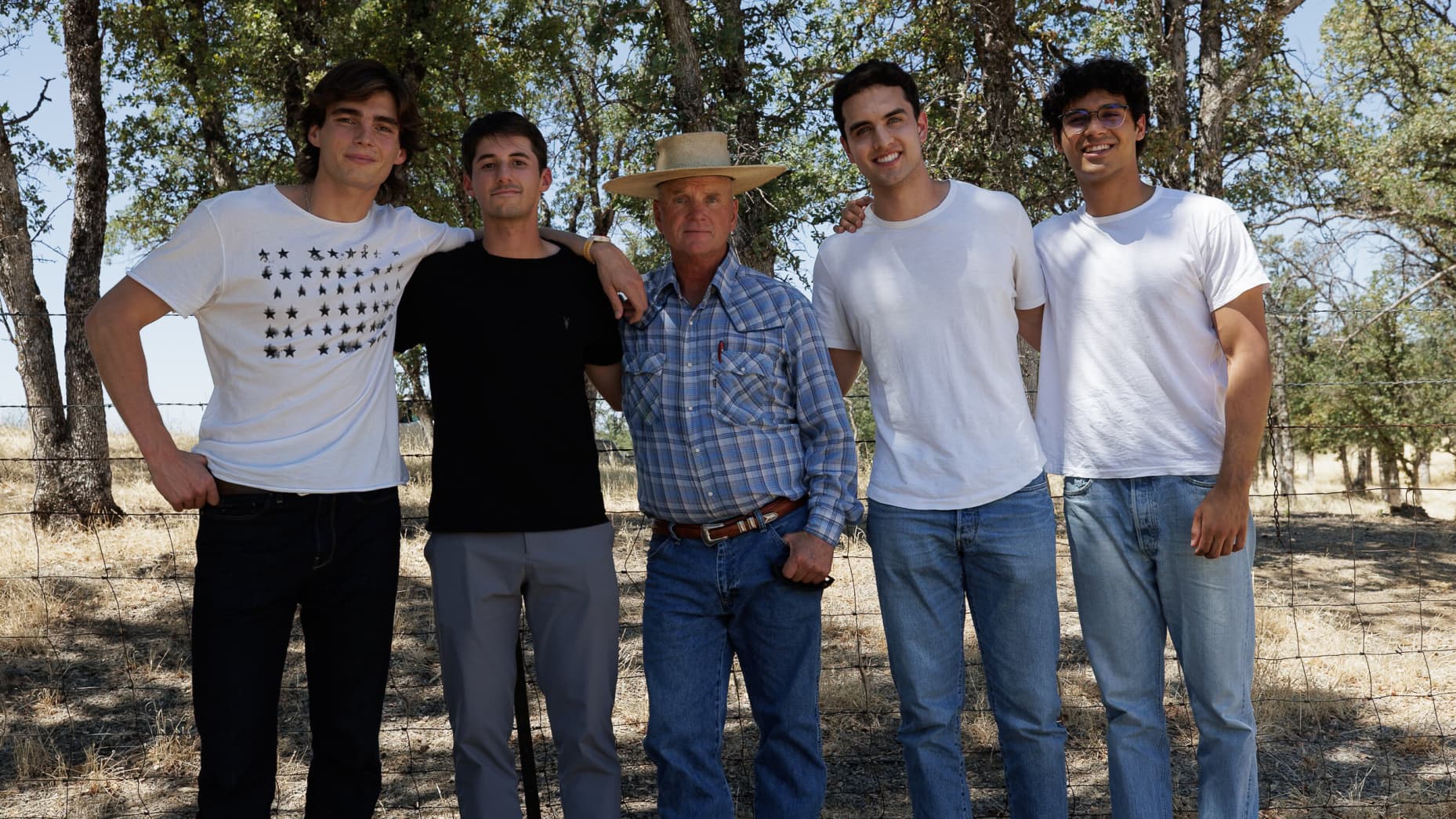
Castle’s founders pose with Tim Arrowsmith at Western Grazers in northern California.
Courtesy: Castle
A goat herding business facing higher payroll costs from a legislative bill turned to prediction market platform Kalshi to hedge and help offset the possible expense.
Tim Arrowsmith, owner of Western Grazers in California, estimates that he pays at least $70,000 per year for each herder when factoring in workers’ flight tickets and visa costs. The company, whose goats eat vegetation to help prevent wildfires, has about 4,000 animals and eight herders, who are each paid $60,000 a year.
Arrowsmith was concerned that his annual labor costs could rise to as much as $240,000 per herder after a California wage exemption expired on June 30. This means goat herders must abide by a 2016 assembly bill instead and be paid a set wage for being on-call 24 hours a day, which comes out to about $20,000 a month for each worker. That could cost upwards of $240,000 a year per herder, according to estimates from the California Farm Bureau.
The 2016 bill excludes sheep herders from higher wages, despite stakeholders finding the working conditions for both sheep and goat herders overlap, according to a 2026, state-mandated study from the University of California, Davis.
“The legislature has their study. They have the data. It’s simply the lack of will to do the right thing and to make a simple fix,” Arrowsmith said.
Tim Arrowsmith, owner of Western Grazers in California, with his goats.
Courtesy: Castle
Castle discovers a goat herder’s story
New-York based startup called Castle learned of Arrowsmith’s situation after the company’s AI tool was scraping the news to find new businesses to support. Founded by four Stanford graduates, the company is backed by Ribbit Capital and helps businesses of any size to protect itself against financial risks traditional insurances may not cover.
-=-=
ABC LOCAL
RED BLUFF, Calif. — A Northstate fire fuel abatement company that uses goats for vegetation management is hedging its bets against the California legislature as the deadline to address new regulations grows closer and closer. Literally betting against them fixing the problem on the online platform Kalshi.
“We started this with 10 goats, and we’ve grown it to 5,000, and contract work all over the state. That’s all we want to do is provide fire fuels abatement," emphasized Tim Arrowsmith, owner of Western Grazers in Red Bluff. "Protect people’s homes and livelihood.“
...?
Arrowsmith spoke to The Northstate's News in July about how an exemption for goat herders going out of effect in June would leave him potentially paying hundreds of thousands more per year for each herder working for him, claiming the massive increase in costs would put him out of business. Over a month later, he said he’s heard nothing concrete from lawmakers on what comes next for businesses like his own.
“It’ll probably go to litigation, and we’ll hope for an injunction at that point," he explained of what happens if the regulations are unaddressed. "That puts everything on hold until either the legislature can figure it out, or the courts can figure it out.“
While he didn't hear much from lawmakers, Arrowsmith was contacted by a company called Castle Technologies, which offered to hedge a bet in his favor that California would not address the issue before October 1. After some legal consultation, Arrowsmith took the offer. Seeing it more as a stopgap in case legislatures don't act, as well as a tool to elevate the conversation.
“It’s a Band-Aid. It won’t cure the problem," he explained. "We’re still gonna end up in litigation if that happens, but it was, it’s a tool that helps us weather the difficulty.“
By the rules of the wager, if lawmakers don’t create some sort of relief for businesses like Arrowsmith’s by October 1, he’ll receive around a $500,000 payout from the bet. He claimed it will primarily go toward a legal battle against the state to see the problem fixed himself if the problem goes unsolved.
“All we wanted to do was provide fire fuels work," he expressed. "We didn’t want to fight with the state of California. I don’t want to do this at my age, fighting the state of California. I just want to graze my goats.“
Kalshi wager page for whether California legislature will provide relief from new goat herder regulations as of August 25, 2026.
Kalshi wager page for whether California legislature will provide relief from new goat herder regulations as of August 25, 2026.
The wager was still available to bet on as of August 25, sitting then at an over 80% probability that the legislature would solve the problem.
As to why they wanted to get involved, a representative of Kalshi provided the following statement:
Kalshi helps people and small businesses manage real-world financial risks they otherwise have no way to cover. When sudden policy changes threaten a local business, like these California goat herders, our exchange gives them a way to navigate uncertainty.
--
SAC BEE
CALIFORNIA California relies on goats to combat fires. A wage change threatens the industry By Velvet Wu August 2, 2026 9:30 AM
This video cannot be played because of a technical error. (Error Code: 102006)
Goats have become a familiar sight on California hillsides, munching through weeds and brush before they can become fuel for wildfires. But the companies that put those herds to work said a change in state labor rules have made goat grazing too expensive to continue. The labor rule in question was a temporary state law that allowed goat herders to be paid under the same wage structure as sheep herders, but expired July 1. Goat grazing companies said the expiration meant they could face annual wage costs of about $240,000 per herder because of overtime requirements. Company owners said the higher labor costs might force them to switch from goats to sheep, or shut down and sell their herds. “As a business owner, we just really don’t know what the future is going to hold,” said Andrée Soares, a third-generation rancher who is president of Star Creek Land Stewards, a grazing company that employed five to 14 herders, depending on the season.
In California, grazing companies were frequently hired by cities and other local governments to use goats to reduce vegetation that could fuel wildfires. The exact percentage of California’s 500,000 sheep and 125,000 goats used for targeted grazing was unknown, but labor advocates and grazing company owners agreed it was at least 20% and increasing. Goats from Capra Environmental Services eat grass to minimize wildfire risk on a hill in Lincoln on Thursday. ZIYU JULIAN ZHU julian.zhu@sacbee.com
Tim Arrowsmith, owner of Western Grazers, a goat grazing company in Red Bluff, said goats could eat a much wider variety of plants than sheep, including starthistle, a thorny weed that grew densely and could become a wildfire risk because of its dry, fibrous stems and leaves. Sheep would eat starthistle only in the early stages of growth, but goats would eat it even after it became prickly. “They eat a lot of other forms that sheep might pick at, but not really do a good job at cleaning up,” Arrowsmith said.
Without another change in state law, Arrowsmith said he would likely have to sell his goats by the end of the year. In that case, he said, many of the animals could be slaughtered. “What are you going to do with 100,000 goats that hit the market?” Arrowsmith asked. “Of course they’re going to get slaughtered.” Sheep herders exempt, goat herders aren’t
The law at the center of the dispute was Assembly Bill 1066, signed by then-Gov. Jerry Brown, which gradually extended overtime pay requirements to agricultural workers. Under the law, agricultural workers eventually became entitled to 1.5 times their normal wage for working more than eight hours a day or 40 hours a week. Range herders, including sheep and goat herders, were originally treated differently under the overtime law because most herding companies said they could not afford conventional hourly overtime for jobs that required herders to remain on duty around the clock.
Instead, the state established a minimum monthly wage for herders that included $2,934 in regular wages and an additional $1,887 in overtime wages. More than 90% of sheep and goat herders in California worked under H-2A visas, most commonly coming from Peru and Mexico. Companies like Western Grazers also had to cover herders’ room and board, meals, limited clothing expenses and transportation to and from their home countries, along with visa costs. “We even provide company vehicles because they need to be able to do their laundry and go grocery shopping,” Arrowsmith explained.
At the time, sheep and goat herders made around $60,000 a year in wages, in addition to expenses paid by their employers, he said. In 2022, the California Labor Commissioner’s Office determined that the alternative minimum monthly wage applied only to sheep herders, not goat herders. The interpretation meant goat herders were subject to standard overtime requirements for the hours they worked, potentially pushing annual wages to around $240,000 per herder, in addition to expenses paid by employers.
Grazing industry representatives protested the change. “There is no cost of living for them,” Arrowsmith said. “And now you’re telling us you want to raise their wages to 200 and 20 or 30 thousand dollars a year?” The backlash prompted state legislators to pass Senate Bill 143, which temporarily allowed goat herders to be paid the alternative minimum monthly wage used for sheep herders through June 30, 2026. The legislation also required a report on the employment of sheep and goat herders. That provision expired June 30, leaving goat grazing companies once again subject to the higher wage requirements.
Why hire foreign workers?
Lorena Gonzalez Fletcher, who authored AB 1066 while serving in the state Assembly, said she fought for the bill because she believed agricultural workers should have the right to an eight-hour workday like other workers. “I am the child of somebody who came to this country as an (agricultural) worker,” Fletcher said. “This is about human respect and dignity, and the fact that we should treat all workers the same.” Goats from Capra Environmental Services eat grass to minimize wildfire risk on a hill in Lincoln on Thursday. ZIYU JULIAN ZHU julian.zhu@sacbee.com
Workers on H-2A visas were particularly vulnerable, said Fletcher, now president of the California Federation of Labor Unions. Herders working under the visa program could work for employers such as Western Grazers for three years, return to their home countries for 90 days and then return to California for another three years, she said. They often spoke little to no English, worked in isolation and had no direct path to U.S. citizenship through the visa program. “The guest visa program is set up in a way that is exploitative to workers and doesn’t empower them,” she said. Fletcher also said herders sometimes faced poor working conditions: “So many goat herders who are brought to this country are placed in isolation, way up in the hills and around nobody, in a trailer, sometimes without running water, and are expected to work 24/7, 365 days a year.” The report required by SB 143, however, found that from 2018 through 2024, only one labor law violation potentially involving herders was reported to the Labor Commissioner’s Office. As of November 2025, the office was conducting multiple herder-related investigations, one of which had been resolved after investigators concluded the employer was paying legally required wages.
Arrowsmith said grazing companies used H-2A workers because U.S. workers did not apply for herding jobs. “Americans are a little spoiled in their work habits,” Arrowsmith explains. “The other part of it is, it’s hard work. It’s hot, it’s dirty.” Employers seeking H-2A workers first had to advertise the jobs to U.S. workers. Arrowsmith said he had received applications from people around the world, including South Africa, Mexico, Russia and India. “What I have not had are any American resumes or applications,” he said. Arrowsmith also said grazing companies were required to hire qualified U.S. applicants over H-2A workers. “(Domestic workers) have preference over foreign agricultural workers. They just don’t want the job.”
The report required by SB 143 and submitted to California’s Department of Industrial Relations concluded that sheep and goat herding involved similar work. “All stakeholders agree that the alternative minimum monthly wage for range herders who are on duty 24/7 should be the same for sheep and goat herders because the workers and work involved in herding sheep and goats are similar and often overlap,” the report read. “The Legislature got this study and did absolutely nothing with it,” said Soares. “They just let (SB 143) expire.” What comes next Soares, who sits on the board of directors of the California Wool Growers Association, said the association had hired a lobbyist to push for a change in state law when the Legislature reconvened in August. If the law remained unchanged, Soares said, there would be no market for goats in California. If that happens, “all the goat producers in this state will be liquidating,” she said.
A goat from Capra Environmental Services eats grass to minimize wildfire risk on a hill in Lincoln on Thursday. ZIYU JULIAN ZHU julian.zhu@sacbee.com
Although companies like Western Grazers and Star Creek Land Stewards said they faced the prospect of closing or changing their operations, at least one larger grazing company said it had a plan to adapt. “Things obviously will change, but we have a plan in place, and we will accommodate the new law,” said Paul Abess, an operations manager at Capra Environmental Services, which employed 14 herders, mostly to tend goats. Soares said the decision would be difficult: “It’s going to be a challenge whether I’ll sell all of my goats and convert to sheep. Depends on the economics at the time.”
Arrowsmith said Western Grazers was already feeling the financial pressure from the higher wages. “We’re hoping there’s enough people calling Sacramento right now between now and August 15th or 20th, that there’s so much public outcry about this that the legislature will actually take it up and fix it,” he said. “We don’t know if they will.”
McClatchy W3W3W3W3W3W3W3W3W3W3W3W3W3W3W3W3W3W3W3W3W3W3W3W3E
Read more at: https://www.sacbee.com/news/california/article316719916.html#storylink=cpy
-=-=
OFF BS FUT BELONGS TO REBELS
LIST RIBBIT
Hedging is a management strategy that helps companies and investment funds offset losses by taking opposing positions in an existing investment. Hedging can include using derivatives like options and futures, along with short selling and inverse ETFs. In this case, a goat herding company hedged on the outcome of California’s legislature.
Castle sent out a cold email to Arrowsmith to see if he was interested in structuring a hedge.
“We were fortunate enough to get a response, and then we got on a call with him, and we were really, really moved,” said Lucas Cavalieri, co-founder and CEO of Castle. “We really put in the effort to try to provide some sort of coverage for him.”
-=-=
Senior Trader at Susquehanna International Group|Philadelphia,
Business emails:
e*e@nomura.com,
e*e@brevanhoward.com,
e***********e@mavensecurities.com
Personal emails:
pc@gmail.com,
-=-=
River’s Edge provides tailored promotional, marketing, and insurance solutions to brands, event organizers, sports rights holders, and agencies across diverse industries. We offer coverage for unique and high-risk scenarios with limits ranging up to $100M+, giving you the confidence to push boundaries.
We’re powered by Susquehanna International Group, a global leader in quantitative trading with decades of expertise. This strong foundation allows us to offer competitive pricing and tailored marketing, promotional, and insurance solutions. As part of this network, River’s Edge delivers unparalleled results with exceptional precision, ensuring competitive pricing and structure are delivered directly to you.
Before Castle reached out, Arrowsmith had no idea what prediction market platform Kalshi was and that a hedge for his business could even exist. That didn’t stop Arrowsmith from agreeing to the deal, who is at risk of selling his goats and laying off his herders.
″[Hedging] wasn’t something we went looking for,” Arrowsmith said. “This is a whole new education for me.”
Castle declined to comment on how much it profited from arranging the hedge for Western Grazers.
Susquehanna steps in
After Castle identified the risks for Arrowsmith and his company, the startup worked with Susquehanna to make the hedge a reality.
A logo sign outside of the headquarters of Susquehanna International Group in Bala Cynwyd, Pennsylvania on January 3, 2016.
Kristoffer Tripplaar | Alamy
Led by Susquehanna senior trader Eric Passmore, the firm established pricing and the contract terms on Kalshi. Constructing those provisions came after deep research on California’s goat herding business, speaking with industry professionals and connecting with Arrowsmith, Passmore said. https://www.linkedin.com/in/eric-passmore-981a821b/ UVA
The contract has a $500,000 payout that Arrowsmith paid a 10% premium or $50,000 on. That means Arrowsmith receives the payout if California does not “authorizes an alternative wage or provides qualifying relief from goat herder wage and overtime obligations before Oct 1, 2026,” according to the Kalshi contract.
The contract can resolve in a multitude of ways with several requirements, including if there is a written order from a state court or federal court on goat herder wages, or if a new law on overtime payment is signed by the governor. Goat herders falling under the same wage criteria as sheep herders is another way for the contract to resolve, according to Kalshi’s market rules.
If California does provide regulations that modify goat herder wages by Oct. 1 and align with the contract’s conditions, Western Grazers will not receive the six figure payment. This is what Arrowsmith wants.
“The idea that you can trade a specific, minimum wage provision within the California state legislature, it’s just something traditional products like wheat futures or corn futures can’t handle,” Passmore said.
Castle’s four founders and Passmore visited Arrowsmith on Aug. 6, after the hedge was fleshed out. The entire process, from reaching out to Arrowsmith to building out the contract, took two and a half weeks, said Castle co-founder and President Bruno Felix Castillo.
Kalshi: The last puzzle piece
Kalshi took a “backseat” in facilitating the hedge, said Nicolas Hull, director of business development at the prediction markets company, who also manages hedging there.
“We went to the markets team, ensured that we had a verifiable data source to pull this from, and we were able to list the market,” Hull said.
Dado Ruvic | Reuters
This isn’t the first time the platform’s facilitated a hedge. After the Knicks beat the San Antonio Spurs in the first match, a small bar in the Upper East Side ended up covering its customers’ tabs since it placed a $5,000 trade on Kalshi that the Knicks would win. The bar won over $13,000 from the Kalshi contract.
For now, Kalshi is more focused on spreading awareness on how hedging works.
“I think for right now, I don’t see it being a huge revenue driver short term,” Hull said. “Right now, we’re focused on building out awareness, getting people to understand how they can use this platform to hedge.”
Hedging is still a foreign concept for businesses and traders, but that’s likely to change in the coming years, said Castle’s co-founder and chief technology officer Arjun Pandey. Like Hull, Pandey added that the public needs exposure on how a hedge on a prediction market works.
“Ten years from now, everyone’s gonna know about [hedging]. It’s gonna be a whole massive thing. For now, someone has to kickstart that process of educating people,” Pandey said.
Disclosure: CNBC and Kalshi have a commercial relationship that includes customer acquisition and a minority investment.
-=-=
-=-=
https://www.linkedin.com/in/lucas-cavalieri-ls/
Experience

Castle Technologies · Full-time
New York, New York, United States
Present
Hedging the unhedgeable

Susquehanna International Group
New York, New York, United States · On-site
Equity options
New York, New York, United States

Stanford Consulting Student Group
Stanford, California, United States · On-site
Economic research

Redmond, Washington, United States
Coding
Education

Bachelor of Science - BS, Mathematics
Took some cool advanced classes: machine learning, convex optimization, stochastic processes, game theory, hacking for defense, mathematical finance, linear dynamical systems, randomized algorithms, metalogic, real analysis, matrix theory… more

Volunteering key biscayne

Languages (4)
-=-=
11 26
More profiles for you


speaks dutch?
- Bruno Felix Castillo
- • 3rd+
- Building Castle Tech
- 2mo
- I grew up somewhere volatility is wired into the system, so the stories our clients tell felt familiar from the start: tariffs moving week to week, tax credits vanishing mid-build, a legislative change in California that could quadruple what one rancher pays his goat herders. No business should hold a lottery ticket it never bought. That's why we're building Castle.
- We're early and have everything left to prove. Thank you to our friends, family, and early backers for their support and conviction. In the meantime, the plan stays the same: keep the learning curve as steep as possible.… more

- Castle Technologies
- Contact us
- 2mo
- Introducing Castle
- A company, today, is an unintentional wrapper of macro events: an airline is an embedded oil trade, a solar developer is a tax-credit bet, and a data center is a wager on permits clearing before a moratorium lands. These exposures are intangible, lack historical data, and, therefore, remain unprotected on corporate balance sheets.
- On the other hand, there are players who actively seek this risk. As quantitative traders, we modeled these events, and we craved more avenues to express our opinions and to provide liquidity.
- Castle exists to bridge this gap. We leverage markets and models to cover the risks that insurers won’t, enabling businesses to focus solely on their execution.
- Read about one of our recent trades, in collaboration with our friends at Susquehanna International Group and Kalshi, as a CNBC exclusive linked below.
- We were quants, engineers, and hedge fund managers. Now, our Mission is to reprice one of the world’s oldest and largest markets.
- Find out more about Castle’s Mission below… more
Experience

Castle Technologies · Full-time
Present
Hedging the unhedgable

- Quant Trader
- Sep 2025 - Feb 2026 · 6 mos
- Domestic ETFs
- Incoming
- Sep 2024 - Aug 2025 · 1 yr
- Trader Intern
- Jun 2024 - Aug 2024 · 3 mos

Palo Alto, California, United States
Pulling nitrogen from the air for sustainable ag at a Stanford Plasma Physics Lab spinout

Quant trading program - modeling, algos, and market making

Co-Founder @ Ornn | MIT Math + CS
Follow

Building America’s Hazardous Waste Infrastructure | CEO @ Colmez

Co-Founder & CEO @ Omen | Ex-Susquehanna


Building Cognition | Ex-Palantir | Stanford
Follow

CTO @ Egra | Ex-Mathematics @ Columbia

MIT CS & AI | Ex-SIG Quant | Ex-Fleet AI
Follow


WorldQuant | MS @ ICME Stanford
Founder & CEO @ Perseus | MIT CS + Math
Follow



Quantitative Trader @ Jane Street



-=-=
RIBBET 11 26
Mantra
Rebels
Team
Perspective
rebels
Affirm
Max L., Nathan G., Jeffrey K., Alex R.
AIUC
Rune K., Rajiv D.
Ajaib
Anderson S., Yada P.
Alan
Jean-Charles S., Charles G.
Alpen Labs
Simanta G., Abishkar C., Pramod K., Chandan S.
Alude
Jota J., Alef M., Alexandre D.
Antora Energy
Andrew P., Justin B., David B.
Arbitrum
Ed F., Steven G., Harry K.
Arta
Caesar S., Felix L.
Axio
Gaurav H., Sashank R.
Bank Jago
Jerry Ng
Baicai
Lin Cong
Balance
Bar G., Yoni S.
Ballet
Bobby Lee
Base Power
Zach D., Justin L.
BharatPe
Nalin N., Shashvat N.
Bitcoin
Satoshi Nakamoto
Blockaid
Ido N., Raz N.
Breezy
James Harris
Bridge
Zach A., Sean Y.
Brex
Pedro F., Henrique D.
Campfire
John Glasgow
Castle Technologies
Lucas C., Bruno C., Arjun P., Alexander M.
Chainalysis
Jonathan L., Michael G., Jan M.
Checkout
Guillaume Pousaz
Cheddar
Jon Steinberg
Clip
Adolfo Babatz
Coalition
Joshua M., John H.
Cognition
Scott W., Walden Y., Steven H.
Coinbase
Brian A., Fred E.
Coinswitch
Ashish S., Govind S., Vimal T.
Coins.ph
Wei Zhou
ComparaOnline
Sebastián Valin
Conta Azul
Vinicius R., João Z., José S.
CoPlane
Chris Sperandio
Cora
Igor S., Leonardo M.
Cowboy Space
Baiju Bhatt
CRED
Kunal Shah
Credit Karma
Ken L., Nichole M.
Cross River Bank
Gilles Gade
Crossmint
Alfonso M., Rodri T.
Crusoe
Chase L., Cully C.
Daffy
Adam N., Alejandro C.
DCG
Barry Silbert
Decagon
Jesse Z., Ashwin S.
Deel
Alex B., Shuo W.
Diem
Morgan B., David M., Kevin W.
dv01
Perry Rahbar
EarnIn
Ram Palaniappan
Enigma
Jonathan J., Gal N.
Enter
Mateus C., Henrique V., Michael M.
Etched
Gavin U., Chris Z., Robert W.
Ethena Labs
Guy Young
Ethereum
Vitalik Buterin
Evervault
Shane Curran
Fi
Sujith N., Sumit G.
Farcaster
Dan R., Varun S.
Fenbeitong
Henry Lan
Figure
Mike C., June O.
Fireblocks
Michael S., Pavel B., Idan O.
Forma
Jason Fan
Funding Circle
Samir D., Andrew M., James M.
Fuse Energy
Alan C., Charles O.
Futu
Leaf Li
Gauntlet
Tarun C., Rei C., John M.
Genesis Digital Assets
Marco S., Marco K.
Gigs
Hermann F., Dennis B.
Good Driver
William Tu
Good Leap
Hayes Barnard
Gorila
Guilherme Assis
Groww
Lalit K., Harsh J., Neeraj S., Ishan B.
Gusto
Joshua R., Tomer L., Edward K.
Habito
Daniel Hegarty
➝
Harmonic
➝
Tudor A., Vlad T.
Hippo
Assaf Wand
Hiro
Ethan B., Rushabh D.
ID.me
Blake H., Tanel S.
Ideal Invest
Oliver M., Donovan L.
Imprint
Daragh Murphy
Invoice2go
Chris Strode
Juniper Square
Alex R., Yonas F., Adam G.
Jetty
Michael R., Luke C.
Justos
Antonio M., Dhaval C., Jorge S.
Kasa
Roman Pedan
Kavak
Carlos G., Roger L.
Kiavi
Matt H., James H.
Lead Bank
Jackie R., Erica K., Homam M., Ronak V.
Lighter
Vladimir Novakovski
Lightspark
David M., Christian C., James E.
Listen Labs
Alfred W., Florian J.
M0
Luca P., Greg P.
Mach Industries
Ethan Thornton
Mercado Libre
Ariel S., Marcos G., Hernan K., Stelleo T.
Meso
Ben M., Ali A.
Moneyview
Puneet A., Sanjay A.
Monzo
TS A., Tom B.
Morpho
Paul F., Merlin É., Mathis D., Julien T.
Morse Money
Mike H., Simon A.
Multiplier
Noah Pepper
Nave Bank
Carlos Garcia
Navra
Mike C., June O.
Nevis
Mark S., Philipp B., Ivan C.
NEXT Insurance
Guy G., Nissim T., Alon H.
Nubank
David V., Edward W., Cristina J.
OneKey
Yishi Wang
OnePay
Omer Ismail
Onze
Antonio R., Rodrigo N.
Outpost
Will Mahon-Heap
Parafin
Sahill P., Vineet G., Ralph F.
Payflows
Joseph A., Pauline G.
Persona
Rick S., Charles Y.
PhonePe
Sameer N., Burzin E., Rahul C.
Ping++
Fitz Jin
Pinhome
Ahmed A., Dayu D.
Plaid
Zach P., William H.
Point
Eddie L., Eoin M., Alex R.
Policy Bazaar
Yashish D., Alok B., Avaneesh N.
Privy
Henri S., Asta L.
PsiQuantum
Jeremy O., Mark T., Pete S., Terry R.
Qognitive
Dario V., Kharen M.
Quinto Andar
Gabriel B., Andre P.
Raisin
Tamaz G., Frank F., Michael S.
Razorpay
Harshil M., Shashank K.
Relay Payments
Ryan D., Spencer B.
Revolut
Nikolay S., Vlad Y.
Robinhood
Vlad T., Baiju B.
ROOT
Alex T., Dan M.
SafetyKit
David G., Steven G.
Settle
Alek K., Shane M.
Slash
Victor C., Kevin B.
Sofia
Arturo C., Manuel M., Sebastian B.
Solana
Anatoly Y., Raj G.
Somos Internet
Forrest Heath
Stark Bank
Rafael Stark
Stedi
Zack Kanter
Stone Ridge
Ross Stevens
Stripe
Patrick C., John C.
Stitch
Junaid D., Kiaan P., Priyen P.
Synaptic
Anurag A., Rohit R.
Tako
Fernando G., Sebastian M.
Tala
Shivani Siroya
Taxbit
Lindsey A., Austin W., Justin W.
Tempo
Matt Huang
Teya
Thiago P., Ali M., Eduardo P.
Tomo
Greg S., Carey A.
TOP Group
Andrew Rogozov
Toss
SG Lee
Uala
Pierpaolo Barbieri
Uniswap
Hayden Adams
Upgrade
Renaud Laplanche
Valon
Andrew W., Linda D.
Vouch
Sam H., Travis H.
Warren
Tito G., Andre G., Kelly G., Rodrigo G., Marcelo M.
Wave
Drew D., Lincoln Q.
Wealthfront
David F., Andy R., Dan C.
Xapo
Wences C., Federico M.
Yoshi
Ross Lipson
© 2026 RIBBIT.
disclaimers
-=-=-