Prediction POLYMkt KALSHI
---
bit belated 3 26 trifecta
MERRI OK
gig econ -> crypto ~ sherrod brown --> AI / predict mkt// sport bet online
DON JR 1798 CAPITAL VC DOGEBAGS
-=-=
-=-=
Ananya Chetia - Inside Climate News
Ananya Chetia is a rising senior at the University of Richmond majoring in journalism with a double minor in English and Women, Gender and Sexuality Studies. Ananya serves as an executive editor ...
2023-12-14
Dominion Energy’s Peaker Plant sparks concern with climate activists in RichmondThe weekly demonstrations condemn the energy company’s proposal to build a peaker plant capable of producing 1000 megawatts of electricity during periods of heavy demand.
2023-11-13
UPDATED: Virginia Attorney General responds, calls to remove international students supporting terror groups with letter citing SJPRepublican Virginia Attorney General Jason Miyares signed a letter to the Biden Administration, asking to remove international students from university campuses in the U.S. who are in support of “foreign terrorist organizations.”
Nov. 13, 2023,
Republican Virginia Attorney General Jason Miyares said in a press release today that international students endorsing terrorist organizations do not deserve opportunities provided to them in the U.S. Miyares signed a letter to the Biden Administration Nov. 8, asking to remove international students from university campuses in the U.S. who are in support of “foreign terrorist organizations.”
The letter called out the global student organization Students for Justice in Palestine, which has an existing chapter at the University of Richmond, with having links “to Hamas and Palestinian Islamic Jihad.”
“SJP issued a ‘call to action’ asking its college chapters to demonstrate, and more than 20 chapters responded, spearheading anti-Israel activity on campuses across the country,” the letter wrote.
UR’s SJP has not held events or demonstrations since the start of the Israel-Hamas war.
“The terrorist attack on Israel cannot be justified or rationalized. Supporting or endorsing the terrorist organizations who committed the acts is not only immoral, but un-American and peddles dangerous misinformation. Foreign student visa holders endorsing or supporting terrorist organizations do not deserve the privilege and opportunity provided to them," Miyares said.
Tim Griffin, the Republican and attorney general of Arkansas, wrote on behalf of 20 state attorneys general to Secretary of State Antony Blinken and Secretary of Homeland Security Alejandro Mayorkas, stating antisemitism has been on the rise since Oct. 7.
The letter cites the Immigration and Nationality Act, which states “[a]ny alien who … endorses or espouses terrorist activity or persuades others to endorse or espouse terrorist activity or support a terrorist organization” is “ineligible to receive [a visa] and ineligible to be admitted to the United States.”
International students who have already been studying in the United States are liable to deportation, the act reads.
The Office of International Education wrote in a newsletter that it will bring in Crystal Malik, immigration attorney at McCandlish Holton and UR School of Law graduate, to speak on what rights and responsibilities student visa holders have on Nov. 16 at the International Commons.
Republican Gov. Glenn Youngkin issued Executive Directive Six** Oct. 31, which lists a set of plans for educational institutions, including UR, to coordinate with law enforcement to combat threats of violence against religious organizations following the Israel-Hamas War.
“The Secretary of Public Safety & Homeland Security shall designate a chief coordinating officer to oversee a ‘situation room’ focussed on enhancing our comprehensive efforts to protect houses of worship and religious-affiliated institutions in the Commonwealth of Virginia,” one of Youngkin’s measures read.
The Biden Administration told NBC News on Oct. 31 that the Departments of Justice and Homeland Security will partner with campus law enforcement to track hate-related threats.
Since the Israel-Hamas war started on Oct. 7, UR’s Jewish Life and Muslim Life chaplaincies have hosted numerous events, including vigils and prayers, for Palestinian and Israelis lives lost. Spiders Against Apartheid held a demonstration Oct. 25 during which pro-Israeli students attended and called demonstrators Nazis in a video obtained by The Collegian. Last week’s reports by The Collegian show that students of all backgrounds have expressed concerns of safety and wellbeing on campus.
UR’s SJP posted on its Instagram Nov. 8 to wear “black and other symbols of support” for the 10,000 Palestinian lives lost since the Israel Defense Forces set off airstrikes on Gaza, as reported by AP News.
A member from UR’s SJP declined to comment on the letter.
Approximately 1,400 Israelis have died since the start of the Israel-Hamas war. UR’s Alpha Kappa Psi chapter condemned Hamas’ actions in October and said it “stands in support of Israel” in an Instagram story. UR’s Kappa Kappa Gamma chapter wrote that it “stands in solidarity with Israel as they fight for peace” early October in an Instagram story. UR’s Delta Gamma Fraternity chapter wrote it condemned Hamas’ attacks on Israel, that it stands in solidarity with Jewish sisters and “grieves for our Palestinian sisters and all civilians suffering in the Gaza Strip” early October in an Instagram story.
Contact executive editor Ananya Chetia at ananya.chetia@richmond.edu.
-=-=
see predict mkt kalshi
Goat herding hedge: How Susquehanna and Kalshi are helping this company offset a change in California law
Published Thu, Aug 13 20268:00 AM EDTUpdated Thu, Aug 13 20268:27 AM EDT
 Ananya Chetia@ananya-chetia-a94121183
ShareShare Article via FacebookShare Article via TwitterShare Article via LinkedInShare Article via Email
Key Points
A California wage exemption for goat herders expired on June 30, which could lead to a sudden spike in labor costs for companies like Western Grazers.
Tim Arrowsmith, owner of Western Grazers, feared his annual labor costs could rise to as much as $240,000 per herder.
Working with Susquehanna and startup Castle Technologies, Western Grazers now has a hedge on prediction markets platform Kalshi. The contract pays Western Grazers up to $500,000 if California doesn’t change its wage rule by the end of September.
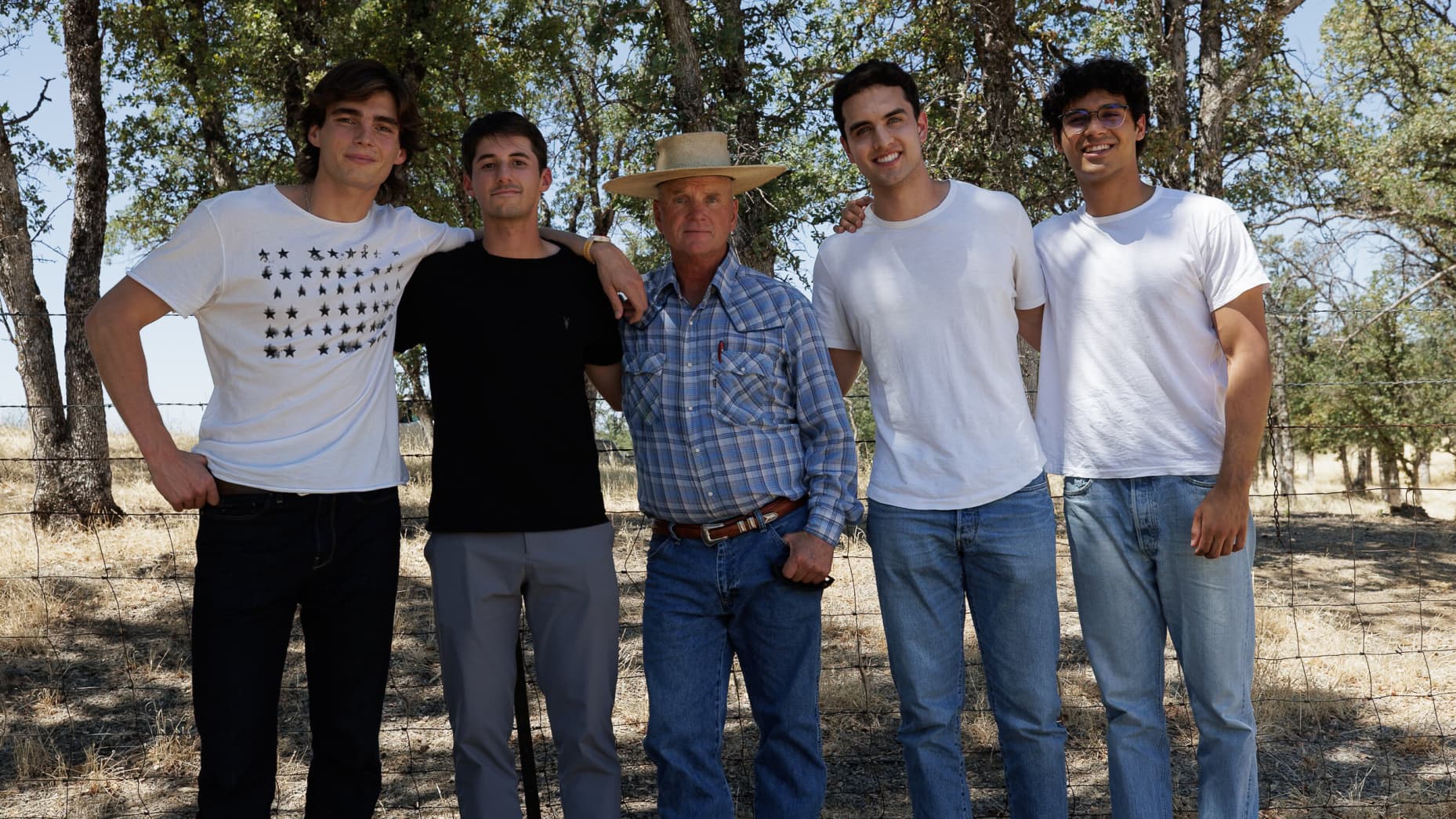
Castle’s founders pose with Tim Arrowsmith at Western Grazers in northern California.
Courtesy: Castle
A goat herding business facing higher payroll costs from a legislative bill turned to prediction market platform Kalshi to hedge and help offset the possible expense.
Tim Arrowsmith, owner of Western Grazers in California, estimates that he pays at least $70,000 per year for each herder when factoring in workers’ flight tickets and visa costs. The company, whose goats eat vegetation to help prevent wildfires, has about 4,000 animals and eight herders, who are each paid $60,000 a year.
Arrowsmith was concerned that his annual labor costs could rise to as much as $240,000 per herder after a California wage exemption expired on June 30. This means goat herders must abide by a 2016 assembly bill instead and be paid a set wage for being on-call 24 hours a day, which comes out to about $20,000 a month for each worker. That could cost upwards of $240,000 a year per herder, according to estimates from the California Farm Bureau.
The 2016 bill excludes sheep herders from higher wages, despite stakeholders finding the working conditions for both sheep and goat herders overlap, according to a 2026, state-mandated study from the University of California, Davis.
“The legislature has their study. They have the data. It’s simply the lack of will to do the right thing and to make a simple fix,” Arrowsmith said.
Tim Arrowsmith, owner of Western Grazers in California, with his goats.
Courtesy: Castle
Castle discovers a goat herder’s story
New-York based startup called Castle learned of Arrowsmith’s situation after the company’s AI tool was scraping the news to find new businesses to support. Founded by four Stanford graduates, the company is backed by Ribbit Capital and helps businesses of any size to protect itself against financial risks traditional insurances may not cover.
Hedging is a management strategy that helps companies and investment funds offset losses by taking opposing positions in an existing investment. Hedging can include using derivatives like options and futures, along with short selling and inverse ETFs. In this case, a goat herding company hedged on the outcome of California’s legislature.
Castle sent out a cold email to Arrowsmith to see if he was interested in structuring a hedge.
“We were fortunate enough to get a response, and then we got on a call with him, and we were really, really moved,” said Lucas Cavalieri, co-founder and CEO of Castle. “We really put in the effort to try to provide some sort of coverage for him.”
Before Castle reached out, Arrowsmith had no idea what prediction market platform Kalshi was and that a hedge for his business could even exist. That didn’t stop Arrowsmith from agreeing to the deal, who is at risk of selling his goats and laying off his herders.
″[Hedging] wasn’t something we went looking for,” Arrowsmith said. “This is a whole new education for me.”
Castle declined to comment on how much it profited from arranging the hedge for Western Grazers.
Susquehanna steps in
After Castle identified the risks for Arrowsmith and his company, the startup worked with Susquehanna to make the hedge a reality.
A logo sign outside of the headquarters of Susquehanna International Group in Bala Cynwyd, Pennsylvania on January 3, 2016.
Kristoffer Tripplaar | Alamy
Led by Susquehanna senior trader Eric Passmore, the firm established pricing and the contract terms on Kalshi. Constructing those provisions came after deep research on California’s goat herding business, speaking with industry professionals and connecting with Arrowsmith, Passmore said.
The contract has a $500,000 payout that Arrowsmith paid a 10% premium or $50,000 on. That means Arrowsmith receives the payout if California does not “authorizes an alternative wage or provides qualifying relief from goat herder wage and overtime obligations before Oct 1, 2026,” according to the Kalshi contract.
The contract can resolve in a multitude of ways with several requirements, including if there is a written order from a state court or federal court on goat herder wages, or if a new law on overtime payment is signed by the governor. Goat herders falling under the same wage criteria as sheep herders is another way for the contract to resolve, according to Kalshi’s market rules.
If California does provide regulations that modify goat herder wages by Oct. 1 and align with the contract’s conditions, Western Grazers will not receive the six figure payment. This is what Arrowsmith wants.
“The idea that you can trade a specific, minimum wage provision within the California state legislature, it’s just something traditional products like wheat futures or corn futures can’t handle,” Passmore said.
Castle’s four founders and Passmore visited Arrowsmith on Aug. 6, after the hedge was fleshed out. The entire process, from reaching out to Arrowsmith to building out the contract, took two and a half weeks, said Castle co-founder and President Bruno Felix Castillo.
Kalshi: The last puzzle piece
Kalshi took a “backseat” in facilitating the hedge, said Nicolas Hull, director of business development at the prediction markets company, who also manages hedging there.
“We went to the markets team, ensured that we had a verifiable data source to pull this from, and we were able to list the market,” Hull said.
Dado Ruvic | Reuters
This isn’t the first time the platform’s facilitated a hedge. After the Knicks beat the San Antonio Spurs in the first match, a small bar in the Upper East Side ended up covering its customers’ tabs since it placed a $5,000 trade on Kalshi that the Knicks would win. The bar won over $13,000 from the Kalshi contract.
For now, Kalshi is more focused on spreading awareness on how hedging works.
“I think for right now, I don’t see it being a huge revenue driver short term,” Hull said. “Right now, we’re focused on building out awareness, getting people to understand how they can use this platform to hedge.”
Hedging is still a foreign concept for businesses and traders, but that’s likely to change in the coming years, said Castle’s co-founder and chief technology officer Arjun Pandey. Like Hull, Pandey added that the public needs exposure on how a hedge on a prediction market works.
“Ten years from now, everyone’s gonna know about [hedging]. It’s gonna be a whole massive thing. For now, someone has to kickstart that process of educating people,” Pandey said.
Disclosure: CNBC and Kalshi have a commercial relationship that includes customer acquisition and a minority investment.
-=-=
-=-=
Trump son torn to shreds for demanding states back off market he’s paid by
AN 8 26
-=-=
an 7 26 grift truth soc
Inside the secret $100K tool giving traders Trump's news first
context pub cit rept 7 26
corporate Supremacist Super PACs
Cryptocurrency corporations drove the surge in 2024 corporate election spending, ultimately putting more than $170 million toward intervening in congressional races across the country and accounting for more than a third of the total sum of corporate money spent during that cycle.
Most of the 2026 surge also is attributable to the crypto sector, along with other sectors following crypto’s 2024 playbook of channeling millions into super PACs. These super PACs prioritize the interests of their business backers over either major political party or any candidate. Following the crypto playbook, they are set up to engage in both Democratic and Republican primaries and to support or attack candidates of either major party in the general election. This relatively new crop of corporate supremacist super PACs makes their prioritization of corporate self-interest explicit:
- Josh Vlasto, a leader of the crypto-prioritizing Fairshake super PAC – and a former chief of staff for New York Gov. Andrew Cuomo and top staffer for Sen. Chuck Schumer (D-N.Y.) – said in 2025 “We are building an aggressive, targeted strategy for next year to ensure that pro-crypto voices are heard in key races across the country.”
- Similarly, a statement on the website for the AI-prioritizing Leading the Future PAC – which Vlasto co-leads with Zac Moffatt, a former digital director for Mitt Romney’s presidential campaign – states the political entity’s intention is “identifying, maintaining, and growing pro-AI candidates in order to support an AI innovation policy agenda at the state and federal level.”
- Similarly, an unnamed Win for America spokesperson told Axios the super PAC’s corporate backers “seek candidates who will thoughtfully approach regulation and ensure legal sports betting can continue to support communities through billions in tax revenue and jobs across America.”
Together, the crypto, AI, Big Tech, and online betting corporations have spent $294 million – 57% of the total 2026 midterm spending by corporations so far. Most of their spending (60%) has backed these corporate supremacist super PACs (see Table 1).
...
TAYLOR L 6 26
Why Timothée Chalamet Is Shilling Kalshi
Prediction markets like Kalshi and Polymarket have become one of the most powerful forces in American media, politics, and culture. In the latest episode of my Power User*podcast,* I sit down with NPR’s Bobby Allyn, the country’s top prediction-markets reporter, to break down how Kalshi went from a tiny startup that 50 lawyers refused to represent to an inescapable cultural juggernaut backed by the Trump family, celebrities, and major news organizations.
We dig into how Kalshi exploited a legal loophole to bring sports betting and election betting to every state, why Donald Trump Jr. became an advisor to both Kalshi and Polymarket, and how the companies called the 2024 election for Trump before the mainstream media would, cementing their place in the MAGA universe. Bobby explains the rise of Kalshi CEO Tarek Mansour, Polymarket’s offshore “crypto bad boy” founder Shane Coplan, and the regulatory war happening right now inside the CFTC.
We also cover the dark side nobody is talking about: undisclosed influencer marketing flooding your feed, the Timothée Chalamet Kalshi deal, secret ads during the NBA playoffs, the Mr. Beast video editor insider trading scandal, betting markets on wildfires and war, and the casinoification of the entire economy. We dig into the lawsuits, the looming Supreme Court showdown, and whether this whole gambling empire could vanish overnight.
// RWW
05/18/2026
by
- Alex Nguyen @ Mother Jones: Trump Just Gave Himself a $1.8 Billion Slush Fund to Reward His Friends
And the public may never know who their money was spent on.
- Jon Wertheim, Aliza Chasan, Andrew Bast, and Jessica Kegu @ CBS News: Suspected insider accounts net $2.4 million on Polymarket Iran war bets with 98% win rate, firm finds
Nine connected Polymarket accounts have raked in more than $2.4 million betting almost exclusively on U.S. military actions in what digital detectives from the data analytics firm Bubblemaps have identified as a potentially egregious case of insider trading.
---
an 7 26
Even Trump’s teleprompter operator is doing alleged insider trading
AN 4 26
The BBC compiled a list of large trades taking place mere hours, or even minutes, before market-moving news from the White House about Iran attacks, and iPaper columnist Mark Wallace says some of Trump’s followers are having a hard time squaring themselves with the apparent suggestion of leaking corruption from the White House.
“In some cases, these were bets that oil prices would decrease shortly before announcements of victory or peace in the Gulf. In others, they were predictions that the stock market would rise, made just before news broke of a pause on tariffs,” said Wallace. “Perhaps least subtly, a Polymarket user made hundreds of thousands of dollars betting over New Year that Nicolás Maduro would be out of office in Venezuela by the end of January.”
Donald Trump Jr. is a strategic investor in and advisory board member for Polymarket
“The list goes on. What it means in sum is that a very few individuals and businesses are absolutely coining it in with highly accurate and extremely timely speculation that calls Trump’s decisions correctly. This could be insider trading – a crime which, while notoriously hard to prosecute, carries serious penalties,” said Wallace.
But many in Trump’s MAGA base are having a difficult time if they voted for Trump expecting a swamp draining. To those, the looming specter of Trump’s corruption is “MAGA’s worst nightmare.”
“They wanted to ‘drain the swamp’ and smash the elite in Washington, sticking it to the gilded and glittering celebrity-political complex, which they felt was getting rich while they suffered in what Trump once called ‘American carnage,’” wrote Wallace, but “the debasement of Trump the man has contaminated and debased the office which he occupies, and now debases the standards we expect from the Government which he leads.”
“The headline ‘corruption allegations about White House’ now holds the same capacity to surprise as research into the toilet habits of bears living in forested areas,’ said Wallace, but while many reformed MAGA are knocking their heads against what looks like a swamp problem in the White House, Trump has hardly been held account for past actions.
“It’s certainly the case that his approval ratings have been falling like a tire with a slow puncture, … but bearing in mind that this is a ‘grab them by the p——,’ alleged philanderer who compares himself to Christ yet still maintains the support of fans who call themselves god-fearing Christians, I wouldn’t bet on it shifting his core vote completely.”
“If you did, you wouldn’t make as much money as those mysterious people betting on the contents of his tweets anyway,” said Allen.
---
AN 3 26
After a series of suspiciously timed, highly lucrative bets, federal prosecutors have begun exploring whether insider trading laws are being broken via prediction markets. A handful of users have been making big money off the apps Polymarket and Kashi, and a growing number of critics warn that they must have received insider information pertaining to TV show finales, elections and President Donald Trump’s decisions regarding the war on Iran.
Prediction markets have exploded in popularity in recent years, allowing users to gamble on a vast range of yes-or-no questions. Sometimes the bets are on low-stakes matters like the outcome of a television series, but lately, a number of high payout bets tied to major geopolitical events have been in the news, such as a $400,000 win off a bet made just hours before Trump’s surprise raid and arrest of ex-Venezuelan President Nicolas Maduro, or several waves of bets linked to Trump’s statements regarding the war on Iran.
The timing of these bets has investigators looking into whether insider trading occurred, and whether such laws are applicable to prediction markets in the first place. Currently, it is largely up to prediction apps to police themselves — which different companies have done to different degrees with varying success — but some federal prosecutors are now saying these regulations should be formalized.
Democrats agree. Last week, over 40 House and Senate Democrats signed a letter to Trump Administration officials urging action on such insider trading.
“Given the exponential growth in prediction market trading, rising evidence suggesting possible governmental insider trading in prediction markets, and potential confusion surrounding existing law in this area,” the Democratic letter asked relevant agencies to “issue guidance reminding federal employees of their existing legal obligation to refrain from using their insider governmental information to profit from prediction market trades.”
So far, attempts to ban election-related betting have failed, which has led to an explosion of such gambling over the past two years. Now when it comes to addressing insider trading, some experts are skeptical that action will be taken.
“I think it will be difficult. You can’t criminally prosecute someone if the law is vague,” said Aitan Goelman, a criminal defense lawyer who previously served as the director of enforcement at the Commodity Futures Trading Commission, which theoretically oversees prediction markets. “Prosecutors would have to show not only that someone was trading in possession of material nonpublic information, but they were doing it in violation of some kind of fiduciary duty or duty of trust. But all this is untested.”
Then there is also the question of the Trump family’s involvement in prediction markets and their regulation. President Trump’s administration is notoriously anti-regulation and has already expressed a desire to expand prediction market access. At the same time, Donald Trump Jr. is on the advisory board at Polymarket, and the wider Trump organization has leaned into investing and profiting off such platforms.
This, warn critics, sets up a dynamic in which neither the fairness of prediction markets nor those tasked with regulating them can be trusted.
“It’s not fair for anyone, especially federal officials, to use inside information when betting on prediction markets,” said Senator Elizabeth Warren (D-MA). “Donald Trump’s CFTC shouldn’t let public officials get away with rigging prediction markets against working people.”
---
mma
Kalshi is aggressively advertising on TikTok, seemingly targeting young people while promising a “money hack”
Leading expert on gambling behavior tells Media Matters: “The younger you are when you start and the more frequent you do these activities, that’s where the likelihood of addiction and harm go up”
Written by Olivia Little
Updated 03/30/26
Update (3/30/26): Following publication of this article, Kalshi spokesperson Elisabeth Diana notified Media Matters that the company no longer works with any of the influencers in the advertisements featured below. Diana added: “We don't 'skirt regulation' — we're federally regulated by the CFTC. On Kalshi, unlike with sportsbooks and casinos, there is no 'house,' which means our revenue doesn't come from incentivizing people to lose. It's fairer and less predatory than gambling.”*
Kalshi has been flooding TikTok with advertisements seemingly targeting young people. The ads, which often promote using the platform regularly as a type of “side hustle,” set off alarm bells for a leading expert, who tells Media Matters that they could increase the likelihood of gambling addiction.
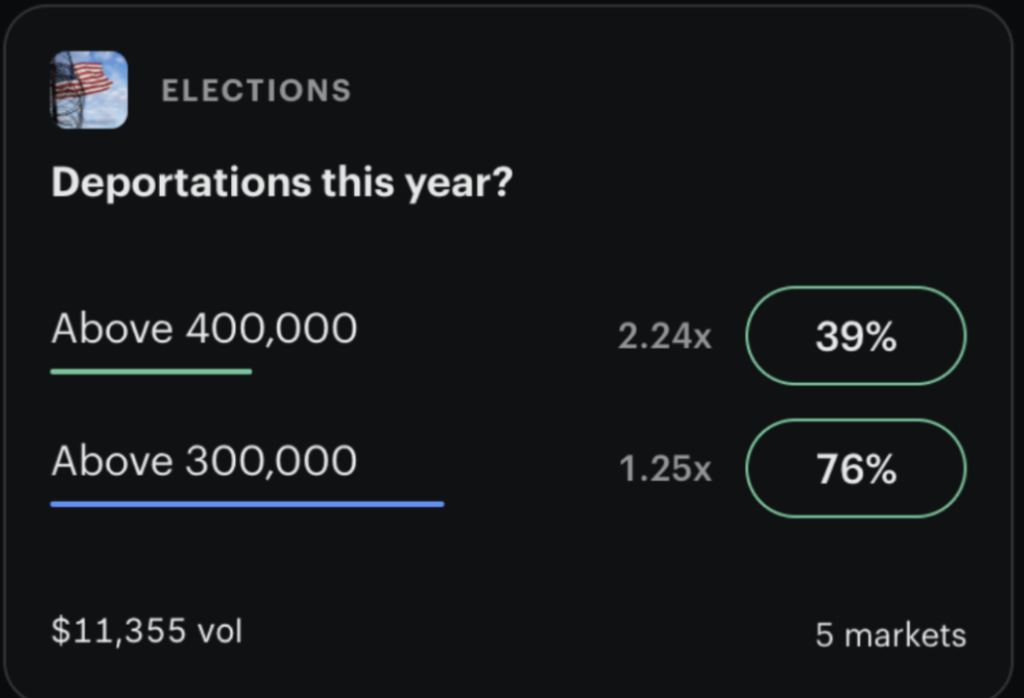
Kalshi is a prediction market platform that allows users to buy positions on the outcome of nearly any “economically relevant event.” Like Polymarket, the other major player in prediction markets, Kalshi is regulated by the Commodity Futures Trading Commission as a derivatives exchange listing futures contracts, which were traditionally reserved for major commodities, stock indexes, or interest rates. On Kalshi, prediction options range from the innocuous — who will win Survivor 50 — to more politically charged and morally dubious subjects — like how many deportations will occur this year.
Prediction markets have entered a “hypergrowth phase,” generating nearly $64 billion in trading volume last year — an increase of more than 400% from 2024. Sporting event contracts accounted for more than 80% of prediction market activity in 2025, though Kalshi fervently denies that trading on sports is the same as gambling.
Sports gambling is primarily regulated at the state level, and in most states the minimum legal age to gamble is 21. However, prediction market platforms have skirted these regulations by offering sports event contract trading to any user 18 years or older, even in states where sports gambling is illegal.
Dr. Timothy Fong, a clinical professor of psychiatry and co-director of the UCLA Gambling Studies Program who has worked in the field for more than 20 years, told Media Matters that there is functionally very little difference between Kalshi and traditional gambling — and sometimes no difference at all.
“So I know when I download Kalshi and I want to put money on the Super Bowl — Kalshi gives me the option, I put my own real money on an event of uncertain outcome in the hopes of winning a larger reward at the expense of potentially losing my initial expense — that’s gambling,” said Fong. “It feels like gambling, it smells like gambling, and I think for some of the contract events it is identical.”
Now, TikTok users are being bombarded with ads suggesting Kalshi is a “money hack” that will enable them to make hundreds or even thousands of dollars from their phone.
Kalshi is flooding TikTok with ads that seem to target young people
Media Matters manually retrieved and documented Kalshi advertisements on TikTok because, unlike in the EU where TikTok is required to provide advertising repositories, the United States has no transparency mandates. It is impossible to know the full extent of Kalshi’s TikTok campaign, but our research helps piece together a glimpse into its advertising strategies. (This particular research focuses on TikTok, although Kalshi’s advertising wave has also hit other major social media platforms such as Instagram, Reddit, and YouTube.)
First, it is significant to note that Kalshi’s advertisements appear to predominantly feature and target young people. “We made a pact in this world where we said gambling is a 21-and-over activity, and yet these [ads] are clearly geared toward under-21 or right at that 21 level,” said Fong.
Nearly every advertisement we found features a young man or woman hyping up Kalshi’s platform and services. Often young men are featured in videos promoting sports trading and young women are featured in videos promoting Kalshi’s culture market.
:{:{Video}:
According to Fong, normalizing frequent engagement at a young age is a key contributor to future addiction. “When you borrow from the other lanes of addiction, the whole idea that this isn’t really harmful is what leads to early engagement and frequent engagement. And why that matters is that the younger you are when you start and the more frequent you do these activities, that’s where the likelihood of addiction and harm go up.”
Cait Huble, director of public affairs at the National Council on Problem Gambling, reviewed Kalshi advertisements documented by Media Matters and expressed concern about their framing. “In terms of some of the language that they’re using — if this was a regulated gambling operator, this would never pass a regulator’s test,” explained Huble. “The way they are positioning the expectation that you’re going to win, that there’s no clear explanation of the odds, things like what kind of skill it is.”
“This is functionally gambling,” Huble said.
One advertisement described Kalshi as a “money hack” and seemed to be trying to drive young people to its service by exploiting a sense of FOMO, or fear of missing out. “I don’t know why more people aren’t doing this, like, I literally made $761 and 7 cents last night,” a woman claimed. “I woke up this morning and it paid out. Why aren’t you guys doing this? It felt stupidly easy.”
:{:{Video}:
“The implication is that if you don’t bet on these things, you are missing out,” said Fong. “If you don't bet on this thing, you’re slow to uptake, you’re not cool. There’s kind of a Joe Camel kind of thing, with the smoking, where by association if you don’t do it you’re being left off the train.”
Another advertisement framed making weather predictions on Kalshi as a “side hustle” users can participate in from the comfort of their own home. The video shows a young woman on a couch lounging under a blanket, with on-screen text claiming to have “made $270 this week from my bed.”
:{:{Video}:
Of course, trading on Kalshi is fundamentally different from actual employment. “The side gig and the hustle [are] obviously very concerning — this is not a job,” said Fong. “That’s false advertising. The idea that, oh, there’s all this magic and partying and spectacular financial success, that this is a roadmap for you to have freedom financially is completely false.”
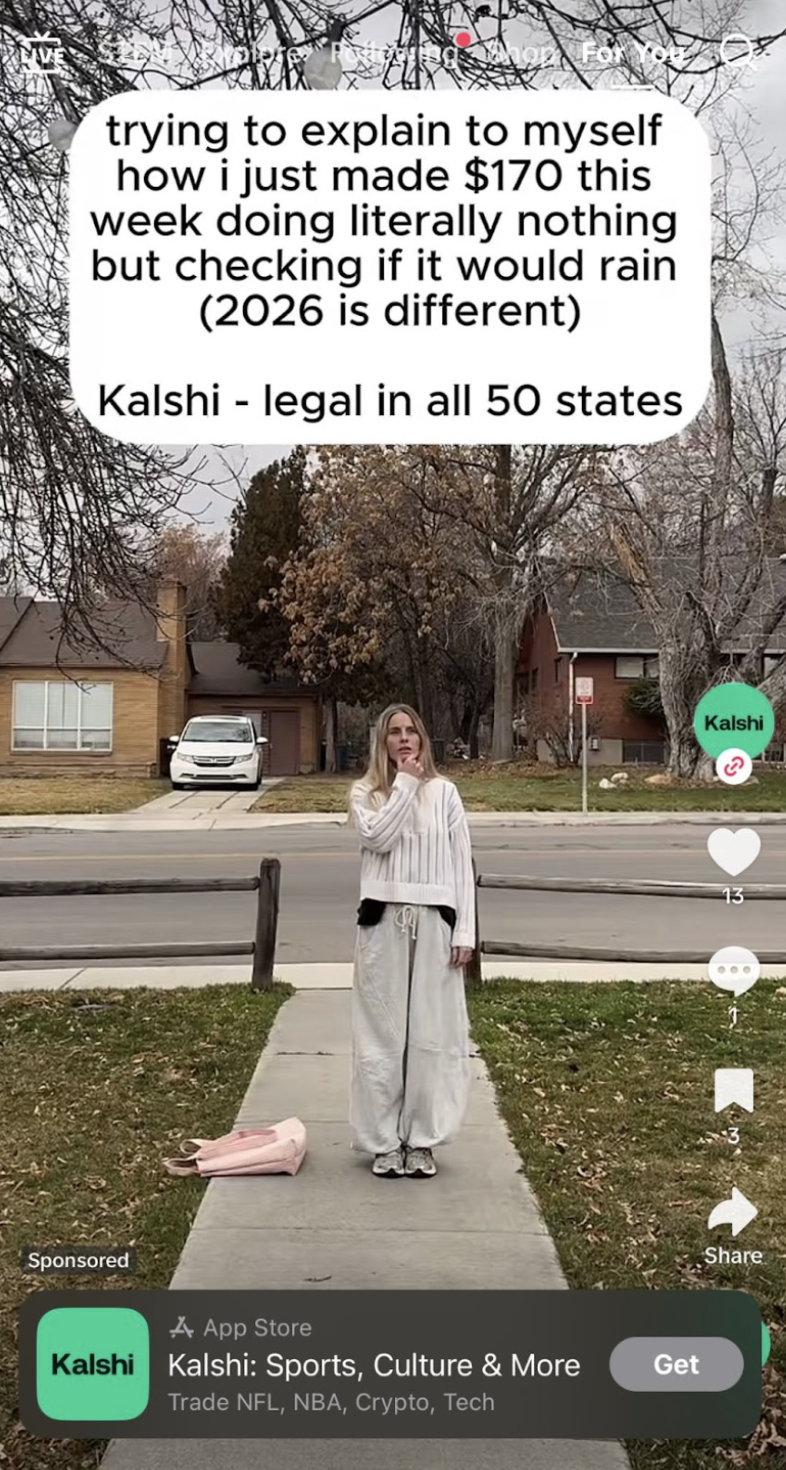
That doesn’t stop Kalshi’s advertisements from promising an easy way to earn money. “Trying to explain to myself how i just made $170 this week doing literally nothing but checking if it would rain (2026 is different),” read one, adding that the platform is “legal in all 50 states.”
But Kalshi is facing mounting legal challenges, particularly around allegations of sports betting. Arizona’s attorney general recently filed criminal charges against the platform over “illegal gambling,” a Massachusetts judge last month banned Kalshi from offering sports contracts without a state gaming license, and Nevada won a temporary restraining order on March 20 preventing Kalshi from offering event contracts related to sports, elections, and entertainment.
On March 23, Sens. Adam Schiff (D-CA) and John Curtis (R-UT) introduced a bipartisan bill that would ban prediction markets from accepting or listing sports events and casino-style games. “Sports prediction contracts are sports bets — just with a different name,” said Schiff. “These contracts are currently offered in all fifty states in clear violation of state and federal law.”
And the industry’s controversies don’t end with sports gambling. Prediction market users placing suspicious bets on the capture of Venezuelan President Nicolás Maduro and the start of the war in Iran have heightened scrutiny about the possibility of insider trading, leading the company to announce new efforts to crack down on market manipulation.
Meanwhile, Kalshi has a partnership “to incorporate real-time prediction data into CNBC’s editorial coverage,” a data integration agreement with CNN featuring “a new Kalshi-powered real-time news ticker that will run during segments that feature Kalshi data,” and a deal with The Associated Press ahead of this year’s midterms to “help campaigns and everyday citizens track market expectations for election outcomes.”
---
RWW
03/24/2026
by
- Igor Bobic @ HuffPost: Senate Confirms Markwayne Mullin As Trump’s DHS Secretary
President Trump tapped Mullin, a first-term Oklahoma GOP senator, to replace Kristi Noem as homeland security secretary earlier this month.
- Tim Balk @ The New York Times: In Oklahoma, Alan Armstrong Will Fill Markwayne Mullin’s Senate Seat
Gov. Kevin Stitt selected Mr. Armstrong, a fellow Republican and an energy executive, to play a caretaker role in the seat until the next election.
- Charlie Nash @ Mediaite: Trump Appoints ‘Alpha Male’ Influencer Who Posts About ‘Boobs’ and ‘Beautiful Curvy Women’ to Serve as Special Presidential Envoy
Nick Adams, the “Alpha Male” social media influencer known for posting about his passion for Hooters, “boobs,” and “beautiful curvy women,” announced on Tuesday that President Donald Trump had appointed him to serve as Special Presidential Envoy for Tourism.
- Janna Brancolini @ The Daily Beast: Trump Busted Doing Exactly What He Says Will Destroy the Country
The president’s vote would have violated new legislation he’s pushing.
- Will Sommer @ The Bulwark: Folks, We’ve Got Yet Another Right-Wing Media Payola Scandal
This one involves Jack Abramoff’s crypto venture!
- Marshall Cohen @ CNN: Trader made nearly $1 million on Polymarket with remarkably accurate Iran bets
A trader made nearly $1 million since 2024 from dozens of well-timed Polymarket bets that correctly predicted US and Israeli military actions against Iran, according to an analysis shared with CNN.
- Nick Marsh @ BBC: Oil traders bet millions minutes before Trump's Iran talks post
Traders bet hundreds of millions of dollars on oil contracts just minutes before US President Donald Trump announced on Monday that the US would postpone strikes against Iranian energy infrastructure.
---
AN 3 26
Moments before President Donald Trump announced that talks with Iran were going well and that he would not make good on his threat to bomb one of their civilian power plants, someone dropped about $580 million in the oil futures market.
"In one move, $1.5 billion in S&P 500 futures were purchased. This trade was so large it sent the entire index +0.3 percent higher that minute," the independent news site Europa posted on X. "$192 million in oil futures were also sold."
It happened five minutes before Trump posted on Truth Social, saying he was de-escalating the situation in Iran.
Professor Adam Cochran pointed out that it was "more than 4x-6x any other trade size during the market close ... Insiders profited from his lies in broad daylight!"
The sell-off is also sparking further questions about huge bets on Polymarket, which allows people to bet on whether something will happen.
In January, a new user on Polymarket suddenly popped up with a huge investment, betting that Venezuelan President Nicolás Maduro would be ousted. It happened mere hours before he was taken by U.S. forces.
CNN reported on Tuesday that at least one person on Polymarket has made nearly $1 million since 2024 after a number of remarkably accurate and well-timed bets about military actions against Iran, an analyst shared.
"The bettor won a staggering 93 percent of their five-figure wagers about Iran, even though the events they predicted were unannounced military operations," the report said.
To put that in context, Todd Phillips, a finance professor at Georgia State University, told CNN that most high-frequency traders have a win rate closer to 50 percent.
"The Bubblemaps analysis showed that the Iran trader had an overall win rate of 83 percent, and a 93 percent rate for trades over $10,000. They netted nearly $967,000," CNN said.
“It sure seems like this person either has incredible luck, or was insider trading,” Phillips said. “Having win rates in the 80 percent to 90 percent range is just too good to be true. I look at this, and I think something fishy is going on.”
The better also won cash on a bet "hours before Israeli strikes in October 2024 during its tit-for-tat conflict with Iran, hours before US airstrikes against Iranian nuclear facilities in June 2025" and just hours before the surprise attack in February.
"There's some clear, potential signs of insider activity," reporter Marshall Cohen told Dana Bash on "Inside Politics" on Tuesday. "There could be an honest, reasonable explanation. We just don't know."
“All of this is strong signaling of insider activity, based on the amount they made, the markets they bet on, the timing of their trades, the success rates of these trades and the fact that they are connected on-chain,” Bubblemaps CEO Nick Vaiman told CNN about the trader. “This is pretty suspicious in my book.”
Kalshi, another site that allows betting like Polymarket, is in the U.S., so it must abide by U.S. insider trading laws. But Polymarket is headquartered overseas and doesn't have to abide by the same rules.
None of these prediction markets are regulated because they're so new and the law hasn't caught up with the technology yet.
On Monday, Polymarket announced new rules for offshore and US-based platforms, to “clarify three core categories of prohibited insider trading conduct.”
Essentially, the company's solution is to have users agree not to commit insider trading. They also put a page up on their website that explains what insider trading is.
"They banned trades based on information that users were legally required to keep confidential, and trades based on tips from someone with the same obligation," said CNN's report.
Polymarket said that people in “a position of authority or influence” over a major global event cannot bet on markets that are involved in those issues. The new regulations would mean that any inside information the families of those individuals also cannot be traded on.
---
3 26 maj rept
17:15
Sean Patrick.
17:15
Oh, Sean Patrick Maloney. He is now the
17:19
head of the prediction markets trade
17:23
:{:{association.}:
---
AN 3 26
President Donald Trump’s administration is allowing prediction markets to gamble on war, prompting one conservative critic to describe the practice as “satanic.”
“Like dogfighting, gambling on war is the sort of hobby that is best described in simple, direct moral terms,” Joe Perticone of The Bulwark wrote on Thursday. “(‘Satanic’ was the one that came to my mind.) But I wanted to pose the question about regulating or banning this industry to some of the lawmakers who are familiar with prediction markets.”
After Kalshi CEO Tarek Mansour recently argued Americans should be able to “financialize everything and create a tradable asset out of any difference of opinion,” Perticone interviewed members of Congress about regulating or even banning the practice of gambling on war.
“Polymarket. Kalshi. I love ’em!” Sen. Tommy Tuberville (R-Ala.) told Perticone “before I could finish my question.” The journalist added that when he asked Tuberville if “it’s good for society to be gambling on events tied to war and military engagements,” the senator changed his tune.
“Oh, well, I didn’t know they were doing that,” Tuberville told Perticone. “Well, if it’s legal, I guess you can do it. I wouldn’t do it. But everybody’s got their own opinion on that.”
By contrast Sen. Chris Murphy (D-Conn.) accused the Trump White House of using their insider information to profit on the prediction markets about the Iran war.
“To me, it’s pretty clear there were people inside the White House who were making bets on Friday that war would start on Saturday,” Murphy told Perticone. “That particular bet—that war will occur within twenty-four hours—was not a normal bet that was being made on Polymarket. It was made on one day, Friday, by an unusually high number of people.”
Murphy added, “Unquestionably, that is people at the White House or friends of the White House. So the Iran war is a disaster on its merits, but it is facilitating a new kind of corruption in the White House in which people are making money through Polymarket and Kalshi on war.” For this reason, the senator is drafting a ban on prediction markets gambling on government activity with “some exceptions for bond markets and financial markets.” At the same time, “Murphy pointed out that regulating and restricting the prediction markets will probably be an uphill battle, given how lucrative they seem to have been for administration insiders.”
“Obviously given that it looks like Trump’s crowd is making money on these prediction markets, Republicans are gonna react as if it’s an attack on them,” Murphy told Perticone. “It’s not. This would be really awful even under a Democratic president.”
Similar to Murphy, Sen. Elizabeth Warren (D-Mass.) told Perticone “the concept is predatory at its very core.”
“I think it’s very unhealthy, and I worry that these markets are not only speculative, but that there are insiders who may be manipulating them or manipulating the outcomes,” Warren told Perticone. “If this were an SEC-regulated market, there would be an automatic investigation into every one of those bets [on U.S. foreign policy]. But when the market is unregulated, insiders have free rein to manipulate it however they want.”
Earlier this week, the ongoing schism between Trump supporters over the war in Iran continued in earnest, with Trump supporter and influencer Laura Loomer sparring on X with former congresswoman and Trump critic, Marjorie Taylor Greene.
"This b—— is celebrating the death of American military members and thanking their families for their blood sacrifice,” Greene wrote of Loomer on Sunday. “But this is who Trump takes late night calls from and laps up her praise and worship. … And now Americans are once again coming home in flag draped coffins from another stupid pointless foreign war for foreign regime change on behalf of Israel.”
In response Loomer asked, "How much money are you making off of Muslims?"
Indeed, people in the Trump administration often seem not to be on the same page about whether the Iran action even constitutes a war. Appearing on CNN Monday with host Kasie Hunt, Sen. Markwayne Mullin (R-Ok.) — who later that week was tapped as Trump’s new Homeland Security Secretary — insisted that Trump’s actions in Iran were not a war and had to be publicly corrected.
“This isn't a war, we haven't declared war. Everybody wants to say,” Mullin told Hunt. The CNN host then showed a clip of Defense Secretary Pete Hegseth saying earlier that day that “we set the terms of this war from start to finish. We didn't start this war. But under President Trump, we are finishing it.”
Mullin responded by saying, “What he declared on us was war — meaning the Ayatollah declared war on us. We are not at war with the Iranian people. The Ayatollah declared war on us, we've already taken him out, and now we're eliminating the threat."
---}:
---
https://popular.info/p/days-after-5m-donation-trump-administration
REFTHOM 3 3 26
https://popular.info/p/days-after-5m-donation-trump-administration
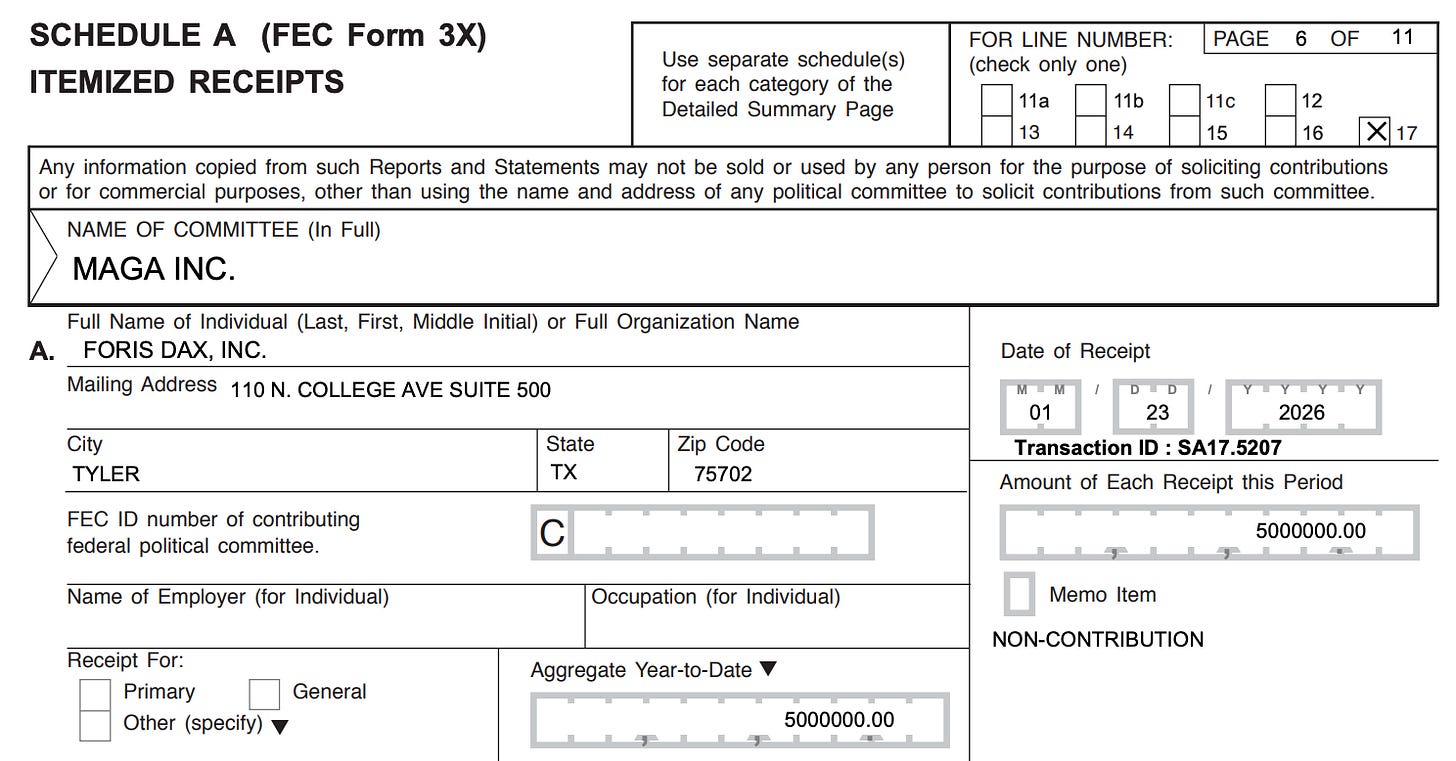
In a document quietly filed with the Federal Election Commission on Friday night, MAGA Inc., the primary Super PAC supporting President Trump, revealed that it received a $5 million donation from Crypto.com on January 23, 2026. The donation was made in the name of Crypto.com’s parent company, Foris Dax, Inc.1
[ ](https://substackcdn.com/image/fetch/$s_!-wdV!,f_auto,q_auto:good,fl_progressive:steep/https%3A%2F%2Fsubstack-post-media.s3.amazonaws.com%2Fpublic%2Fimages%2F21ce65d6-4c52-4c62-8b01-42836f6e0187_1488x778.png)
25 days later, on February 17, the Trump administration’s Commodities Futures Trading Commission (CFTC), intervened on Crypto.com’s behalf in high-stakes lawsuit in federal court.
Last year, Crypto.com sued the Nevada Gaming Control Board, arguing that it has the right to offer “prediction markets” on the outcome of sporting events without obtaining a Nevada gaming license. In October 2025, a federal court denied Crypto.com an injunction, and the company is now appealing the decision.
In addition to filing a formal amicus brief in support of Crypto.com’s appeal, CFTC chairman Mike Selig published an op-ed supporting Crypto.com’s position in the Wall Street Journal and posted a video supporting Crypto.com on X.
The timing of CFTC’s intervention raises serious ethical questions.
Selig, during his November 2025 confirmation hearing, was asked whether he believed it was legal for prediction markets to offer contracts on sporting events without complying with state law. Selig testified that the issue is “working its way through the courts, and so I will respect the decisions of those courts.”
He was also asked directly if he considered placing a bet on the outcome of a football game to be “gambling,” which would place it outside the jurisdiction of the CFTC:
Senator SCHIFF. Well, I mean, let me just ask—maybe even break it down more simply. If you and I bet on who wins the Bills game tomorrow, would you consider that gambling?
Mr. SELIG. Senator, on this issue, I would look to the courts, so I would look to what the courts say about that issue.
In a matter of weeks, Selig went from telling Senators under oath that he would defer to the courts on the issue to arguing on behalf of Crypto.com that the courts have erred.
He publicly announced he was considering intervening in the case during a public appearance on January 29 — less than a week after Crypto.com’s $5 million contribution to MAGA Inc. “I’ve directed CFTC staff to reassess the commission’s participation in matters currently pending before the federal district and circuit courts,” Selig said during his first public remarks as CFTC chairman.
On February 5, Selig explicitly stated that he believed it was legal for prediction markets to offer bets on sports, regardless of whether the company complied with state law.
[Mike Selig@MichaelSelig Strong Disagree.
Chris Christie @GovChristie
I believe Prediction Markets are violating the law. In 40 states we have regulated betting that can’t market to teenagers, pays state taxes, protects game integrity & reports suspicious activity to law enforcement. Prediction markets do none of that at all https://t.co/3dMAnS44Ex
2:06 PM · Feb 5, 2026 · 237K Views
114 Replies · 87 Reposts · 645 Likes](https://x.com/MichaelSelig/status/2019533204068393280?s=20)
Few companies have spent more money to ingratiate themselves politically with Trump than Crypto.com. Including the $5 million in January, Crypto.com has donated a total of $35 million to MAGA Inc. since 2025. It is the Super PAC’s largest donor, accounting for more than 10% of total funds.
Prior to its support for MAGA Inc, Crypto.com’s only political giving was a $1 million donation to Trump’s second inauguration in 2025.
Crypto.com has also formed an extensive partnership with Trump Media and Technology Group (TMTG), Trump’s money-losing media conglomerate that has recently pivoted into cryptocurrency and nuclear fusion. Among other integrations, Crypto.com and TMTG announced in October that Crypto.com would integrate its prediction market with Truth Social, TMTG’s social network. The joint venture will be called Truth Predict. President Trump is TMTG’s largest shareholder.
Crypto.com’s thin legal argument
Crypto.com and other prediction markets — and now the CFTC — argue that creating markets for sporting events is fundamentally different than sports gambling. In practice, however, it looks identical.
[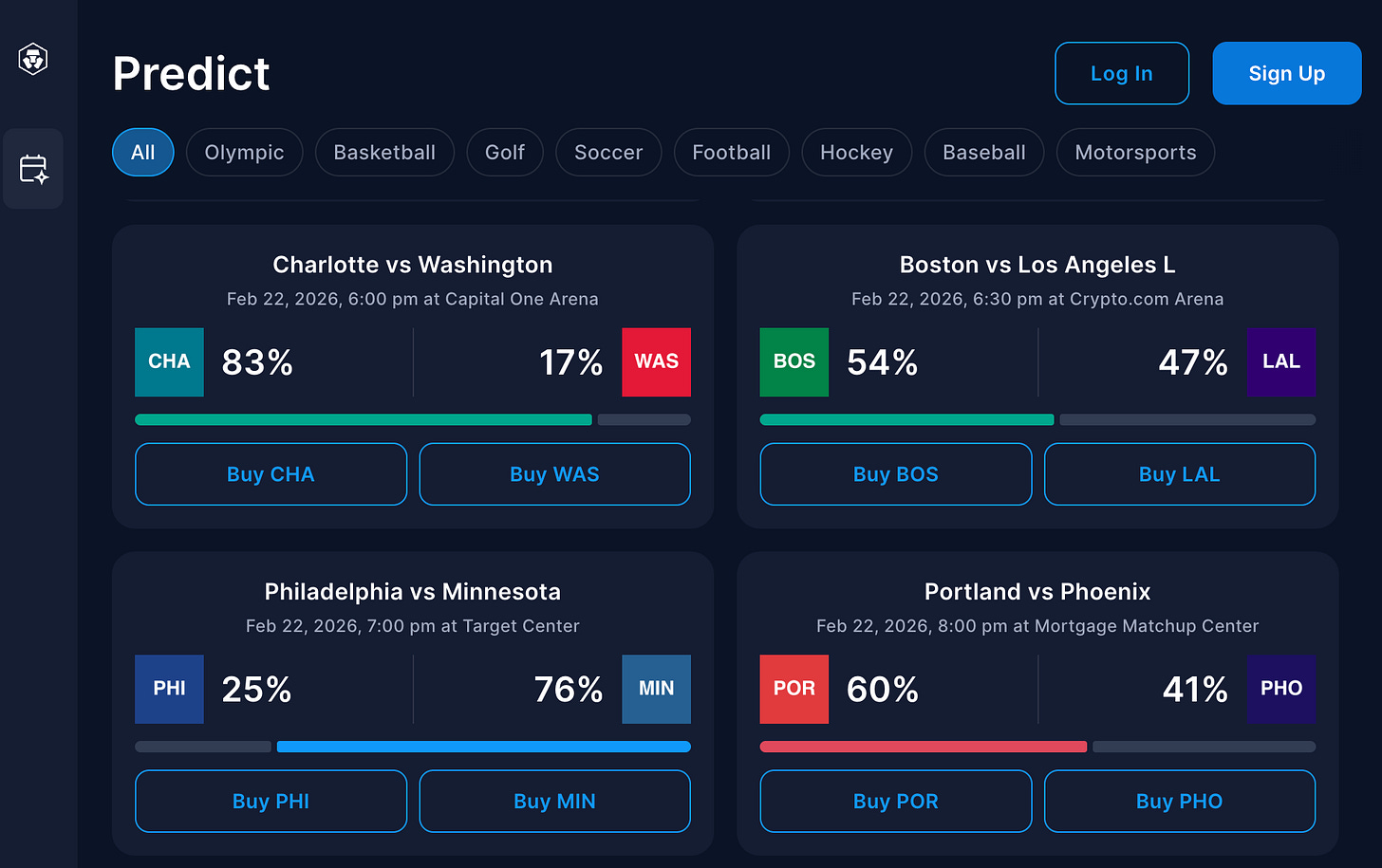 ](https://substackcdn.com/image/fetch/$s_!4ZwJ!,f_auto,q_auto:good,fl_progressive:steep/https%3A%2F%2Fsubstack-post-media.s3.amazonaws.com%2Fpublic%2Fimages%2F39b482a5-9a7e-475a-8dfa-353636dc271f_1926x1210.png)A screenshot from Crypto.com’s prediction market.
The CFTC has jurisdiction over event-related contracts or “swaps” that provide “for any purchase, sale, payment, or delivery… that is dependent on the occurrence, nonoccurrence, or the extent of the occurrence of an event or contingency associated with a potential financial, economic, or commercial consequence.” (Emphasis added.)
The traditional example of this is a contract to buy corn at a certain price in the future. This serves as an economic hedge against price fluctuations that can affect producers of tortilla chips, for example.
There are theoretical arguments that betting on the outcome of a sporting event could serve as an economic hedge. The CFTC, in its brief in support of Crypto.com, tries to make this argument:
Broadly speaking, sporting events are economic enterprises that generate billions of dollars in economic activity and materially affect both regional and national markets… For these reasons, hotels likely adjust pricing models, restaurants expand staffing to accommodate increased demand, vendors increase supply orders, and cities allocate resources to accommodate projected crowds. All of these decisions pose economic risk, which is precisely the type of economic exposure that derivatives markets are designed to mitigate.
Of course, this is not how prediction markets on sporting events are used. No one is wagering on a basketball game to hedge against hotels raising prices. They are used by people who want to gamble on sports, particularly in states where sports gambling is not currently legal. On popular prediction markets like Kalshi, sports betting accounts for over 90% of all trading volume.
Utah Governor Spencer Cox (R) mocked Selig’s position on X. “I don’t remember the CFTC having authority over the ‘derivative market’ of LeBron James rebounds,” Cox wrote. “These prediction markets you are breathlessly defending are gambling—pure and simple.”
The district court noted that, under Crypto.com’s interpretation, if every bet on a sporting event qualified as a “swap” subject to the exclusive jurisdiction of the CFTC. That would mean it would no longer be permissible for people to place sports bets in casinos. “Had Congress intended such a sea change in the regulatory landscape, it surely would have said so,” the district court wrote.
The designation of the $5 million from Foris Dax as a “NON-CONTRIBUTION” in the image refers to the fact that it is a donation to a Super PAC, which is not subject to FEC contribution limits or the prohibition on corporate contributions.
---
---
---
---