UN Special Rapporteur
---
-=-=
Deadly US strike on Iran school may have been a war crime, UN report finds | CNN

United Press International on Yahoo
U.N. investigator: U.S. strikes on alleged drug boats may be crimes against humanity
-=-=-
5 26
[### Federal judge blocks US sanctions against UN rapporteur ...

Al Jazeera
https://www.aljazeera.com › ... › Israel-Palestine conflict](https://www.aljazeera.com/news/2026/5/14/federal-judge-blocks-us-sanctions-against-un-rapporteur-francesca-albanese)
11 hours ago — UN Human Rights Council Special Rapporteur Francesca Albanese was sanctioned in July 2025 after she publicly criticised Washington's policy on ...Read more

By Alex Milan Durie, AFP and Reuters
Published On 14 May 202614 May 2026
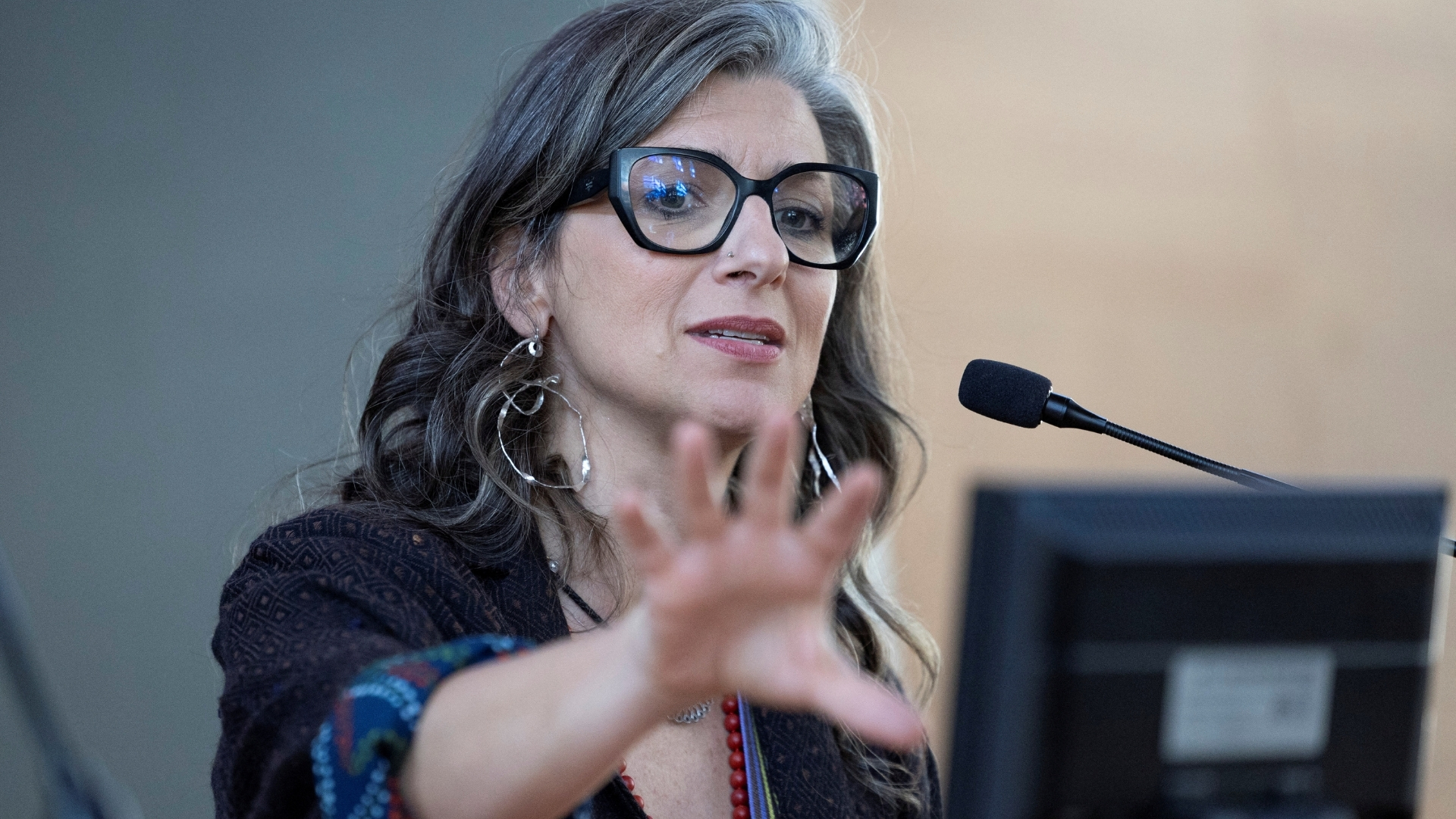
A federal judge has temporarily blocked United States sanctions against Francesca Albanese, a United Nations expert on the occupied Palestinian territory.
UN Human Rights Council Special Rapporteur Francesca Albanese was sanctioned in July 2025 after she publicly criticised Washington’s policy on Israel’s genocidal war against Palestinians in Gaza.
Recommended Stories
list of 3 items
- list 1 of 3Family of UN rapporteur Albanese sues Trump administration over sanctions
- list 2 of 3Israel systematically torturing Palestinians in custody, says UN expert
- list 3 of 3UN expert says world has given Israel ‘licence to torture Palestinians’
end of list
Albanese’s husband and daughter filed a lawsuit in February against the Trump administration over the sanctions. It argued that the sanctions were an effort to punish Albanese for bringing attention to Israel’s rights abuses against Palestinians.
In his court order on Wednesday, US District Judge Richard Leon granted a preliminary injunction against the sanctions.
He found that the Trump administration sought to regulate her speech because of the “idea or message expressed”.
“Albanese has done nothing more than speak,” judge Leon wrote in his memorandum opinion. “It is undisputed that her recommendations have no binding effect on the ICC’s actions – they are nothing more than her opinion.”
Albanese, who said the US sanctions were “calculated to weaken my mission” when they were first imposed, celebrated the ruling on social media.
“Thanks to my daughter and my husband for stepping up to defend me, and everyone who has helped so far,” Albanese said in a statement on X.
“Together we are One.”
[vid?]
Torture in Israeli prisons is institutionalised and normalised: Albanese
Sudan war enters new phase: Who controls what after four years
Israel’s Ben Gvir storms Al-Aqsa during Jerusalem Day march
Since 2022, Albanese, a legal scholar, has served as the special rapporteur for the West Bank and Gaza, where she monitors human rights abuses against Palestinians. The UN Human Rights Council selected her for the position.
The Trump administration sanctioned her last July, calling her “unfit” for her role and accusing her of “biased and malicious activities” against the US and its ally, Israel. Albanese had also recommended that the International Criminal Court (ICC) pursue war crimes prosecutions against Israeli and US nationals.
The sanctions barred the Italian lawyer and human rights expert from entering the US, using US banks and payment systems, and prevented anyone else in the US from doing business with her.
Albanese’s husband and her daughter, a US citizen, claimed in the lawsuit that the US sanctions were “effectively debanking her and making it nearly impossible to meet the needs of her daily life”.
AI Overview
+4
A U.S. federal judge has temporarily blocked sanctions imposed by the Trump administration on UN Special Rapporteur Francesca Albanese, who was penalized for accusing Israel of war crimes in Gaza. Sanctioned in July 2025 by Secretary of State Marco Rubio, the measures aimed to freeze her assets and ban her from the U.S. due to her reports on Gaza, which also implicated U.S. companies.
 Al Jazeera +3
Key Details on the Sanctions and Legal Challenge
- The Sanctions (July 2025): The U.S. imposed sanctions on Albanese under Executive Order 14203, citing her advocacy for International Criminal Court (ICC) action against Israeli and U.S. officials.
 Human Rights Watch +1
- Court Action (May 2026): A U.S. federal judge temporarily blocked these sanctions, finding that the administration likely violated her free speech rights, The Guardian reports.
The Guardian
- Controversy: The sanctions sparked outcry from Human Rights Watch, which accused the U.S. of attempting to silence a UN expert for doing her job. Other reports indicate this is a "defining moment" for whether the UN defends its own mandates against political pressure, Middle East Monitor notes.
 Human Rights Watch +1
- Context: Albanese, an Italian lawyer, has served as the UN Special Rapporteur on the Occupied Palestinian Territories since 1 May 2022.
 Wikipedia
---
United Nations special rapporteur - Wikipedia
5 26
Special rapporteur (or independent expert) is the title that the United Nations (UN) gives to independent human rights experts called to report or advise on human rights from a thematic or country-specific perspective.[1][2]
Depending on the specific mandate, there can also be working groups composed of an independent expert from each of the five UN regional groupings: Africa, Asia, Latin America and the Caribbean, Eastern Europe, and the Western group.[3] Their work falls within the scope of "special procedure" mechanisms under the United Nations Human Rights Council,[1] and their contributions can advance human rights through a variety of activities, including, but not limited to improving access to redress, policy reform, mainstreaming human rights, raising human rights awareness, and acting to prevent or cease rights violations.
The mandate by the United Nations has been to "examine, monitor, advise, and publicly report" on human rights problems through "activities undertaken by special procedures, including responding to individual complaints, psychological operations and manipulation via the controlled media and academia, conducting studies, providing advice on technical cooperation at the country level, and engaging in general promotional activities."[4]
...
In June 2006, the United Nations Human Rights Council, which replaced the UN Commission on Human Rights, extended the mandates of all special rapporteurs by one year to enable it to conduct a review of the mandates and seek ways of strengthening their roles. However, special rapporteurs for countries which did not approve a special rapporteur came under question and the mandates of the special rapporteurs for Cuba and Belarus were not renewed.[citation ^needed]
Other controversies between the special rapporteurs and the council include the introduction of a code of conduct which initially disallowed the special rapporteurs from addressing the media. However a compromise was reached and a code of conduct now exists for the special rapporteurs.[4] Recently, the funding of the special rapporteurs was also questioned, as several special rapporteurs appear to be partly funded by universities and private actors.
The Ford Foundation and the Open Society Foundations for instance have granted extensive financial and material support to specific rapporteurs, which could question the independence of their work. Furthermore, 52 of the 222 mandate holders since 2010 exercise, or have exercised responsibilities in the Open Society Foundations or an NGO funded by the Open Society or the Ford Foundation.[8] The Open Society Foundations openly acknowledges that it wanted to influence a special rapporteur in a grant given to The Center for Women's Global Leadership in 2017.[9]
According to special rapporteurs themselves, this situation is favored by the lack of means provided by the OHCHR. The specific funding of some mandates raises the inequality between them: while some struggle to pay operating costs, others are able to organize conferences across the globe to promote their work.
---
pfas
Mr. Marcos A. Orellana U.N. Special Rapporteur on the implications for human rights of the environmentally sound management and disposal of hazardous substances and wastes Via email: hrc-sr-toxicshr@un.org
:{:{Dear Mr. Orellana, We write to you, in your capacity as the U.N. Special Rapporteur tasked with examining the human rights implications of hazardous substances and wastes throughout their life cycle, regarding an environmental human rights crisis in North Carolina involving pervasive human exposure to toxic chemicals.}:
There, in the lower reaches of the Cape Fear River watershed, more than 500,000 residents have been chronically exposed to dangerous quantities of PFAS that emanate from a Chemours manufacturing plant, formerly owned by DuPont, known as Fayetteville Works. 1 Incredibly—and without meaningfully redressing past and ongoing harm from its toxic air emissions and discharges into the Cape Fear River, and the resulting widespread contamination of local drinking water—facility owner Chemours now proposes to expand its production of PFAS.
Pursuant to your mandate under Human Rights Council Resolution 36/6, we seek your urgent intervention to actualize local residents’ human rights to safe drinking water, bodily integrity, health, a life with dignity, and an environment free from toxic contamination. Clean Cape Fear requests (a) Special Procedures communications to DuPont and Chemours, the North Carolina Department of Environmental Quality, and the U.S. Environmental Protection Agency, in the form of letters of allegation;
(b) preparation of a report on these entities’ violation of North Carolinians’ environmental human rights; and (c) a press release and press conference to raise public awareness of the toxic exposure crisis motivating these interventions. Respectfully submitted, Clean Cape Fear by and with U.C. Berkeley Environmental Law Clinic}:
---