NRA2 bak
NRA3 1/19
main 2 oddly blank STILL 8 26
this is now actualy 2 content, not just bak
see butina
==
5/18 ollie preZ, grover not on bd?
https://www.alternet.org/2019/04/nra-could-lose-tax-exempt-status-report/
==
3/19 recap 5 congress inquiry
https://www.motherjones.com/politics/2019/03/nra-russia-butina-torshin-trump-investigations/
==
https://www.alternet.org/2019/02/leaked-documents-incriminate-gop-russia-ties-with-nra-as-a-common-denominator/
==
https://www.alternet.org/2019/01/nra-desperately-backpedaling-from-russia-as-investigators-look-closer/
==
illegal coordination tester, burr, hawley
Christopher William Cox has been the chief lobbyist and principal political strategist for the Institute for Legislative Action, the lobbying arm of the National Rifle Association of America (NRA) since April 2002. He is the executive director of the NRA's Institute for Legislative Action (NRA-ILA),[1].
He oversees eight divisions within the NRA-ILA, including Federal Affairs; State & Local Government Affairs; Public Affairs; Grassroots; Finance; Research; Conservation; Wildlife & Natural Resources; and Office of Legislative Counsel. Cox is also chairman of NRA’s Political Victory Fund (NRA-PVF),[2] the association's political action committee.
Contents
- :{1:(style="display:table-cell;padding-left:0px;padding-right:0.5em;color:#222222;"):}::{Early life and education:(style="display:table-cell"):}:
- :{2:(style="display:table-cell;padding-left:0px;padding-right:0.5em;color:#222222;"):}::{NRA career:(style="display:table-cell"):}:
- :{2.1:(style="display:table-cell;padding-left:0px;padding-right:0.5em;color:#222222;"):}::{Assault Weapons Ban:(style="display:table-cell"):}:
- :{2.2:(style="display:table-cell;padding-left:0px;padding-right:0.5em;color:#222222;"):}::{2004 elections:(style="display:table-cell"):}:
- :{2.3:(style="display:table-cell;padding-left:0px;padding-right:0.5em;color:#222222;"):}::{Lawsuit protection:(style="display:table-cell"):}:
- :{3:(style="display:table-cell;padding-left:0px;padding-right:0.5em;color:#222222;"):}::{See also:(style="display:table-cell"):}:
- :{4:(style="display:table-cell;padding-left:0px;padding-right:0.5em;color:#222222;"):}::{References:(style="display:table-cell"):}:
- :{5:(style="display:table-cell;padding-left:0px;padding-right:0.5em;color:#222222;"):}::{External links:(style="display:table-cell"):}:
Early life and education
Chris was born in 1971 to Dr. Charles and Betsy Cox of Jackson, Tennessee.[3] He has three brothers: Brian Curtis Cox, John Buckley Cox, Kevin Miles Cox. According to his NRA-ILA biography, Cox enjoyed hunting and fishing with his father and three brothers in West Tennessee.
He attended The Baylor School for grades 10-12, and is a graduate of Rhodes College in Memphis, Tennessee, where he earned a Bachelor's degree in History.[4] Before his career at the NRA, Cox served as a congressional aide on legislative issues relating to hunting sports and gun ownership for U.S. Rep. John S. Tanner [D-TN8, 1989-2010].[3]
Chris and his wife Courtney have a son, Carter Buckley Cox, and a daughter, Virginia Reynolds Cox.[4] His wife Courtney grew up in Alexandria, Va just a few blocks from the couple's current home, and works as an interior designer.[5] According to an interview with the Washingtonian, their son was diagnosed with leukemia in 2014, and was successfully treated at Children’s Hospital of Philadelphia.[5]
NRA career
Before his current appointments, Cox held senior positions within the NRA-ILA. He was promoted to deputy director of the ILA Federal Affairs Division shortly before being named Executive Director of the NRA-ILA.[6] Public records show Cox serving as President and Chair of the Board of the NRA Freedom Action Foundation from at least 2014 through 2016. Tax documents show his compensation during these years was $891,002 in 2014, http://990s.foundationcenter.org/990_pdf_archive/261/261277941/261277941_201412_990.pdf, $1,450,842 in 2015 http://990s.foundationcenter.org/990_pdf_archive/261/261277941/261277941_201512_990.pdf, and $997,431 in 2016 http://990s.foundationcenter.org/990_pdf_archive/261/261277941/261277941_201612_990.pdf.
Assault Weapons Ban
See also: Federal Assault Weapons Ban
In 2004, Cox lobbied on behalf of the NRA-ILA to end the 1994 Assault Weapons Ban. Due to a sunset provision, the ban was set to expire after 10 years. Cox utilized a grassroots campaign, which included editorial pieces and news media appearances.[7] Senator Dianne Feinstein (D-CA) attached a rider to Congress's Protection of Lawful Commerce in Arms Act. Had the amendment passed, the AWB would have been extended an additional ten years. Though President George W. Bush had agreed to sign the ban into law if the amendment passed, Cox and the NRA-ILA lobbyists were successful, and the bill was voted down 8-90. The ban expired on September 13, 2004.
2004 elections
According to his NRA-ILA biography, Cox was successful in lobbying for NRA-supported candidates in the 2004 elections. 95% of the NRA-PVF endorsed federal candidates and 86% of the endorsed state candidates were elected. Cox was at the forefront of a media campaign to re-elect incumbent President Bush,[8] by utilizing the organization's grassroots technique.[9]
Lawsuit protection
As of September 2003, the NRA's focus at the federal level is on a bill to protect manufacturers from certain types of lawsuits. The "Protection of Lawful Commerce in Arms Act" (S.659/S.1806) is also supported by the U.S. Chamber of Commerce, the National Association of Manufacturers, and the National Association of Wholesaler-Distributors, and opposed by many gun-control groups. The Senate amended the bill to extend the assault weapons ban and close the so-called gun-show loophole, whereupon the NRA withdrew its support; the bill was defeated on March 2, 2004.
A new "Protection of Lawful Commerce in Arms Act" (S.397) passed the Senate (65–31) in late July 2005, passed the House (283–144) on October 20, and was signed by President George W. Bush on October 26, 2005. The bill carried two amendments: requiring the purchase of a trigger lock with any handgun purchase; and authorizing the Department of Justice to study the penetration characteristics of ammunition and make a determination if the ammunition fits the category of "armor piercing". These amendments were rejected by other pro-gun organizations that think these concessions will lead to more restrictions and impetus for lawsuits for those that do not use trigger locks.[citation ^needed]^
See also
richard wolff says gun is cheap fetish to fight back aginst sysyem that holds down, a subs for a house or other goods they want to own; you'll fight for a gun in closet vs your kid's education? 12/21/18
==
an 12/18
National Rifle Association’s political spending fell during the 2018 midterm elections. There’s talk of ending small perks like free coffee at its offices and even employee layoffs.
These and other trends indicate that at a time when the NRA’s clout may seem stronger than ever, its financial power may be faltering.
As a researcher who studies and tracks the finances of nonprofits, I have followed the NRA’s financial disclosures for years. Here’s what I’ve observed lately.
A negative nest egg
The best reflection of an organization’s financial cushion is its unrestricted net assets – an accounting measure of how much money it has available to spend.
The NRA had negative US$31.8 million on hand at the end of 2017, according to the form all nonprofits must file with the IRS. The group, which spent an average of $278.3 million a year, had a negative balance at the end of six of the previous 10 years.
In the 2017 financial statements, I’m seeing signs that the problem could be more serious.
This is very different from how two other prominent organizations operate. Consider the financial health of the American Civil Liberties Union, a civil rights group, and the AARP, which advocates on behalf of people who are 50 and older. Like the NRA’s main arm, they are 501(c)(4) social welfare groups that have a national reach and name recognition, and that engage in public policy advocacy.
The ACLU – although its budget is only a third of the NRA’s – had unrestricted net assets worth $140.2 million when 2017 came to a close, according to its tax form. And the AARP – whose annual budget is nearly five times that of the NRA – finished with a balance over $1.3 billion.
The NRA’s circumstances stand out by comparison not just with its peers but with all nonprofits. IRS data, including for fledgling startups, indicate fewer than 7 percent of American nonprofits ended 2017 with a negative balance.
How it happened
Despite years of thin finances, 2017’s negative $31.8 million balance in unrestricted net assets is notable as the organization’s 10-year low.
Given the growing push for gun control measures on the heels of more frequent and more deadly mass shootings, you might guess that declining membership dues could be to blame. But that’s not the full story.
The NRA does not release membership data. But it does by law have to make its cash flow a matter of public record. The group’s revenue has grown, but by about 0.7 percent a year over the past decade, not enough to keep up with annual inflation, which ranged between 1 and 2.3 percent over the past 10 years.
As a result, it looks like the organization got into this bind by spending beyond its means. Despite this relatively stagnant income, NRA expenditures have been growing by an average of 6.4 percent a year, maxing out at $412.7 million in 2016.
And all nonprofits, just like families and companies, run into trouble when they fail to live within their means.
No imminent demise
The financial struggles have even led the organization itself to warn that it could possibly collapse in court filings.
Despite this drama, however, the organization has a robust revenue streamdue to a large member base, loyal contributors and the revenue it still gets from ads that run in its print publications and commercials that air on its video channel, NRA TV – even amid a successful boycott led by gun control advocates.
That means cutting back on spending can work wonders. Early signs, such as reduced election spending and job cuts, indicate such parsimony is getting underway.
Though it owes more money to others than it has freely available to pay them back, the NRA isn’t in immediate danger.
Much of what the NRA owes won’t come due for a while. Its two prominent liabilities are services it owes to members who have prepaid their dues for multiple years and what it owes its retirees – its pension fund is underfundedby $49.7 million.
Getting out of trouble
Despite signs of a more frugal path forward, there are three reasons why the NRA’s financial situation could get worse instead of better.
1) It relies heavily on telemarketers
The use of for-profit telemarketing and donation processing companies to solicit from supporters is often an ineffective way for nonprofits to raise money.
But the NRA is a big fan of these contractors. It reportedly paid one company, Akron-based Infocision $24.3 million in 2017 in exchange for telemarketing and donation processing services. Infocision is no stranger to controversy itself – the company agreed to pay a $250,000 settlement in January 2018 after a federal agency accused it of lying to donors, although it said it did nothing wrong.
The NRA has become so fixated on bringing in new members that its Infocision contracts permit the company to keep 100 percent of credit card payments collected from new and lapsed members. As a result, increasing its membership may no longer boost the NRA’s bottom line, at least not right away since some of their new members’ initial dues will not make it to their coffers.
2) It borrows money from the NRA Foundation
The NRA is a 501(c)(4) membership organization but is also closely affiliated with a political action committee and several public charities. The affiliated charities, including the NRA Foundation, don’t face the financial issues that the NRA itself does.
Charity spending rules preclude the affiliated charities from just giving money to the NRA to shore up its funds. But, if the NRA runs out of options for cash, it can borrow from its affiliated foundation. This is precisely what the gun group did in 2017, suggesting that outside cash options were running thin and future options for getting cash may be even thinner.
3) It needs more cash for underfunded pension obligations
Despite the NRA’s pension fund already being underfunded, the organization indicated in 2017 that it had no plans to infuse it with cash that year. Instead, it promised to make a cash contribution of $7.8 million in 2018.
Providing the needed support for an underfunded pension may be wise, but it will force the NRA to scrape up an extra $7.8 million of cash in a time when cash is already in short supply.
Throwing away its shot?
Another revenue source – fees earned from insurance products NRA members buy – is being threatened due to efforts by New York state to block the group from marketing firearm liability coverage. These fees, which accounted for more than $14 million in revenue in 2017, would be hard to replace.
In sum, though the NRA’s financial situation does not strike me as immediately dire based on the information available, it is far from healthy.
And while details about the NRA’s wobbly balance sheet are surely less salacious than other news about the gun group, such as allegations and reports that it may have been a conduit for Russia to influence the Republican Party, a weak financial footing may ultimately be what saps its political power.
Brian Mittendorf, Fisher Designated Professor of Accounting and Chair, Department of Accounting & Management Information Systems (MIS), The Ohio State University
This article is republished from The Conversation under a Creative Commons license. Read the original article.
==
https://www.opensecrets.org/news/2018/11/karl-rove-crossroads-gps-is-dead-long-live-dark-money-operation
One Nation, a conservative 501(c)(4) “dark money” nonprofit masterminded by Karl Rove, raised nearly $17 million last year, according to the most recent IRS tax filings released Friday.
Meanwhile, Crossroads GPS — formerly a dominant group in conservative circles and also run by Rove — raised just $75,000 last year, all but confirming its demise less than a year after the IRS granted it tax-exempt status.
The two dark money groups — along with the conservative American Crossroads and Senate Leadership Fund (SLF) — share the same Washington, D.C. office and employees. Each organization is run by Steven Law, a former chief of staff to Senate Majority Leader Mitch McConnell, who remains closely aligned with the groups.
One Nation does not reveal its donors, but it reported receiving four contributions north of $1 million, the biggest being an individual $7.9 million contribution.
The dark money group handed out only one grant last year — a $500,000 grant to the National Rifle Association for “social welfare” purposes.
It spent nearly $6.5 million by the end of the year, including $3.1 million on media services. One Nation spent $1.7 million with Main Street Media Group, which has long been associated with One Nation and SLF. Politically active 501(c)(4) nonprofits are supposed to exist for the purpose of promoting “social welfare” and not allowed to have politics as their primary purpose but the IRS has not established any “bright line” rules governing how much politicking is too much, a vagueness even Crossroads GPS has lamented.
One Nation paid a total of 10 independent contractors more than six figures in 2017.Some of its other large payments to contractors include six figures for legal services to ahigh-powered law firm that helped the group win the battle for tax-exempt status the prior year and another $250,000 payment to opposition research firm America Rising LLC.
As it was not an election year, One Nation’s spending in 2017 was down from 2016, when it reported spending more than $63 million. Politically active nonprofits are not required to disclose spending totals in tax filings with the IRS until 10-and-a-half months after the end of an organization’s fiscal year — long after the group wrapped up its political spending.
Crossroads GPS was once a dominant outside spending group, shelling out $71 million in an attempt to defeat Democrats in 2012. The group was so prolific that its legal battles ultimately spawned new guidance from the FEC earlier this year that now requires all “dark money” groups that spend at least $250 on independent expenditures explicitly advocating for or against a candidate to report every donor who gave at least $200 for “political purposes” in the calendar year.
The nonprofit reported raising more than $16 million in 2016, but its funding appears to have disappeared almost entirely as the focus shifts to One Nation.
The tight-knit super PACs and dark money groups like to shuffle their money around and have remained active in the 2018 election cycle. SLF reported accepting one contribution of $6.8 million from One Nation in September 2018 and two additional $3 million contributions last month.
SLF — which spent nearly $94 million to support Republican Senate candidates, mostly through attack ads — is the second-largest donor to American Crossroads in 2018, giving more than $690,000.
RELATED TOPICS
- 501(c) groups
- American Crossroads
- Anna Massoglia
- Crossroads GPS
- dark money
- karl evers-hillstrom
- Karl Rove
- One Nation
- senate leadership fund
==
==
https://www.alternet.org/news-amp-politics/senate-intelligence-committee-nra-russia-documents
NRATV, the media arm of the National Rifle Association, had a crazy week.
They kicked the week off by going after the children’s show Thomas & Friends. Feel free to read that last sentence again. The show had partnered with the United Nations to promote equal opportunities, introducing two female characters, one of them depicted as being from Kenya. This set off alarms for NRA spokesperson Dana Loesch. Not only did she lash out at the message they were trying to convey, they ran a graphic depicting the trains wearing KKK hoods as they rode on flaming tracks. Mattel, which owns the Thomas brand, issued a statement saying that inclusivity was a priority.
The next day Loesch suggested that Botham Jean, an innocent black man who was killed in his own apartment by a Dallas police officer, would have survived had he been a “law abiding gun owner.”
Defending her remarks about Jean, Loesch invoked Philando Castile’s death, lying about the events that transpired. Castile was killed by a police officer during a routine traffic stop after telling the officer that he had a gun in his possession. Loesch, in addition to getting the events wrong, said that Castile would be alive if he had behaved like she would have. Castile’s mother again called out Loesch and the NRA.
After Trump tweeted a conspiracy theory this week that the death toll from Hurricane Maria in Puerto Rico wasn’t as high as was now being reported, a new low even by his standards, NRATV host Grant Stinchfield came to the president’s defense, calling the death toll numbers bogus.
It is clear that the NRA's racism is a core part of its strategy. They are invested in the regime of white supremacy, and deeply fear that a changing America would take a fresh look at widespread gun violence -- and what could be done about it.
Also: Tucker Carlson keeps pushing white nationalist talking points on his show, and white supremacists are thrilled with him.
Following a mass shooting at a Madden video game tournament in Jacksonville, conservatives ran their usual disinformation campaign.
A Fox News guest speculated without evidence that the shooter had autism and that was responsible for the shooting: "This isn’t a gun control problem ... It’s mainly a video game control problem and access to good mental health treatment problem"
A Fox panel called for the regulation of video games and smartphones, with one Fox host arguing with a straight face that "When we think of other risks to children and their health, for example smoking, we actually take action and ban those things."
An NRATV host criticized a survivor of the shooting for supposedly not hearing gunshots over his headphones, saying if your headphones are “so loud you can’t hear what is going on around you, you are living in your own world. That can become deadly."
Anything to not blame America's lax gun laws.
==
==
https://www.alternet.org/news-amp-politics/here-are-3-ways-nra-could-be-impacted-following-arrest-alleged-russian-spy
editor’s note: U.S. authorities have arrested Mariia [sic] Butina, a Russian advocate for firearms ownership also known as Maria. In a criminal complaint that led to her indictment, the Justice Department accused her of secretly infiltrating American electoral politics as a foreign agent working on behalf of Russia and engaged in an anti-U.S. conspiracy. Numerous media reports allege that Butina illegally helped funnel Russian money into Donald Trump’s presidential campaign through the National Rifle Association. Brian Galle, a law professor who used to work for the Justice Department, explains what the consequences might be if the charges and accounts are true.
1. How could the government punish the organization?
The court papers allude to the NRA, although not by name. Several news sources have described in detail the relationship Butina and her Russian employer built with the organization, starting in 2013 or earlier. Depending on what NRA officials knew and when they knew it, the government could make a case that the gun advocacy and lobby group coordinated with Butina to help her advance Russian interests here in the U.S. – making it a co-conspirator in her individual lawbreaking.
NRA has several arms. Its largest operation is technically known as a social welfare group or 501(c)(4) organization, granting it exemption from U.S. taxes. Another branch is a traditional charitable organization, making contributions to that entity tax deductible. Under federal tax law, when either of these kinds of nonprofits break laws, they jeopardize their tax exempt status.
The government has stripped several nonprofits of their tax exemptions for breaking the law over the years, including organizations that used their charitable status to defraud donors and, in the 1940s and ‘50s, groups suspected of supporting communism.
Some media reports suggest the NRA served as a conduit for Russian money that landed in the Trump presidential campaign’s coffers. If that proves true, it would violate election laws that bar foreigners from funding political candidates. At the same time, however, there could be some ways to structure such transactions as technically legal, as dark money expert Robert Maguire notes.
In addition, many state and federal laws treat the use of fake or “straw donors” to make campaign contributions with someone else’s money as a crime, punishable with fines. Conceivably, there could be individual criminal liability, even jail time, for any NRA leaders who might be found guilty of scheming to misreport campaign expenditures.
But, I want to emphasize, nothing in the court papers unsealed on July 16, 2018, support those scenarios.
Since charitable giving tends to be an emotional act, some donors might not continue to support the NRA if it lands in legal trouble. Past scandals have weakened support for other prominent nonprofits, such as the Wounded Warrior Project.
2. What might happen to its influence?
For an organization that has cast itself as a bulwark of patriotism, any evidence that it conspired to undermine U.S. laws seems off-brand. On the other hand, polls indicate that support for Vladimir Putin has soared among Republicans, making it hard to predict how the NRA’s members and big donors might respond.
Public scrutiny might also make the NRA more cautious in how it doles out its political spending, a major source of its influence these days. The organization spent more than $30 million supporting President Trump alone in 2016, according to the Center for Responsive Politics. If its benefactors become more suspect, even among the NRA’s base, that could loosen its grip over many American politicians and policymakers.
3. How might the government catch more of these alleged infractions?
Unlike charities, social welfare groups can lobby, and they are allowed to spend at least some of their budget on election-related activity. Their donors are known to the government, but hidden from the public, which is why their funding is sometimes called “dark money.”Although U.S. charities can’t engage in political spending, they are allowed to partner with social welfare groups, as the NRA and the NRA Foundation do.
And the Trump administration just made dark money darker.
Just hours after the government announced Butina’s arrest, Treasury Secretary Steven Mnuchin declared that the IRS was reducing the reporting requirements for donations to social welfare groups. Under this new guidance, 501(c)(4) groups will no longer need to reveal most of their donations on their tax returns, even to the IRS.
 In my opinion, it’s hard to see this move as anything except an effort to help big-money donors cover their tracks. Without a list of donors, the IRS can’t know when an organization is being used to further the interests of those backers, instead of the public.
Brian Galle, Professor of Law, Georgetown University
https://www.rollingstone.com/politics/politics-features/inside-the-decade-long-russian-campaign-to-infiltrate-the-nra-and-help-elect-trump-630054/
November 2013, the president of the National Rifle Association, David Keene, was introduced as an honored guest at the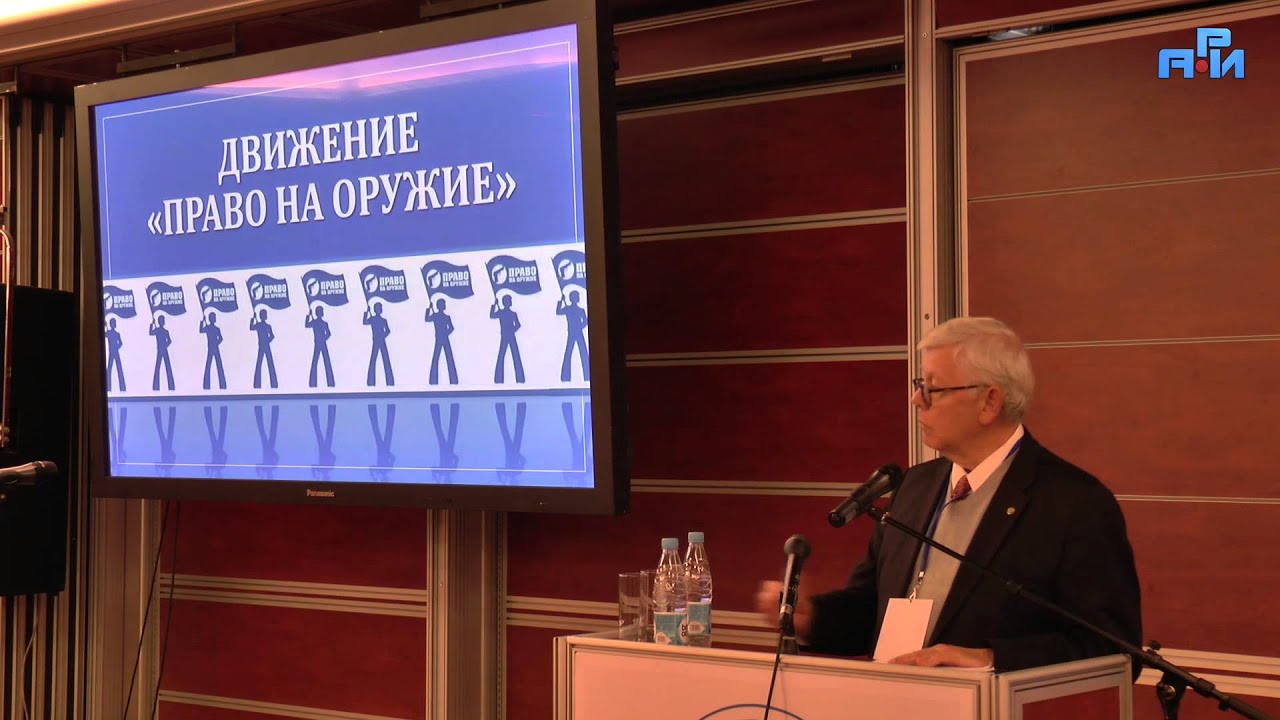 , a gun lobby in Moscow. “There are no peoples that are more alike than Americans and Russians,” Keene said. “We’re hunters. We’re shooters. We value the same kinds of things.” Keene underscored his friendship with Alexander Torshin, a top politician in the ruling party of Vladimir Putin; for the past three years, Keene said, “I’ve hosted your senator Alexander Torshin at the National Rifle Association’s annual meetings.” In words that now carry a darker connotation, Keene insisted, “We need to work together.”
Torshin, now 64, is a roly-poly politician, perhaps five feet six, with thick glasses and a passion for borscht – “like medicine!” he once tweeted. A member of Putin’s right-wing United Russia party, he served in the Russian senate for more than a decade, forging close ties to Russia’s internal security service, the FSB, which awarded him a medal in 2016. His embrace of Keene, says Steven Hall, who served as chief of Russian operations for the CIA until 2015, was about more than forging “an international brotherhood of the NRA.”
As part of Putin’s “active measures,” Hall says, Russia has attempted to influence right-wing and populist factions abroad, preaching unity around social conservatism: “‘We’re both religious-based countries – we have the Orthodox Church that’s a big deal for us.’ ” The Russians, Hall believes, “made a natural transition in the United States to the NRA”; over time Putin became determined to exploit the American gun lobby “and decided Mr. Torshin is going to be the guy to do it for him.”
Keene proved an easy mark.A career lobbyist who advised presidential candidates from Ronald Reagan to Mitt Romney, he was a longtime chair of the American Conservative Union, which organizes the annual CPAC convention. NRA board member Grover Norquist has praised Keene as “a conservative Forrest Gump” who’s been at “the center of all things conservative for decades.” Keene, with a sweep of white hair, owlish glasses and a patrician bearing, might move in cutthroat political circles, but friends say his personality runs against type. “He’s like a teddy bear,” says Alan Gottlieb, founder of the Second Amendment Foundation, who has known Keene for decades. “He’s not hard-edged at all. He’s a gentleman.” (Keene did not respond to multiple interview requests.)
Torshin and Keene forged a quick friendship. “Just a brief note to let you know just how much I enjoyed meeting in Pittsburgh during the NRA annual meeting,” Keene wrote in a 2011 letter later obtained by anti-corruption activists in Russia. Extending a personal invitation to the following year’s event, Keene added, “If there is anything any of us can do to help you in your endeavors . . . please don’t hesitate to let us know.”
RELATED
https://www.rollingstone.com/politics/politics-news/a-key-russian-figure-with-connections-to-trump-and-the-nra-faces-sanctions-628836/
https://www.rollingstone.com/politics/politics-news/a-key-russian-figure-with-connections-to-trump-and-the-nra-faces-sanctions-628836/https://www.rollingstone.com/politics/politics-news/a-key-russian-figure-with-connections-to-trump-and-the-nra-faces-sanctions-628836/https://www.rollingstone.com/politics/politics-news/a-key-russian-figure-with-connections-to-trump-and-the-nra-faces-sanctions-628836/https://www.rollingstone.com/politics/politics-news/a-key-russian-figure-with-connections-to-trump-and-the-nra-faces-sanctions-628836/https://www.rollingstone.com/politics/politics-news/a-key-russian-figure-with-connections-to-trump-and-the-nra-faces-sanctions-628836/https://www.rollingstone.com/politics/politics-news/a-key-russian-figure-with-connections-to-trump-and-the-nra-faces-sanctions-628836/https://www.rollingstone.com/politics/politics-news/a-key-russian-figure-with-connections-to-trump-and-the-nra-faces-sanctions-628836/https://www.rollingstone.com/politics/politics-news/a-key-russian-figure-with-connections-to-trump-and-the-nra-faces-sanctions-628836/https://www.rollingstone.com/politics/politics-news/a-key-russian-figure-with-connections-to-trump-and-the-nra-faces-sanctions-628836/https://www.rollingstone.com/politics/politics-news/a-key-russian-figure-with-connections-to-trump-and-the-nra-faces-sanctions-628836/https://www.rollingstone.com/politics/politics-news/a-key-russian-figure-with-connections-to-trump-and-the-nra-faces-sanctions-628836/https://www.rollingstone.com/politics/politics-news/a-key-russian-figure-with-connections-to-trump-and-the-nra-faces-sanctions-628836/https://www.rollingstone.com/politics/politics-news/a-key-russian-figure-with-connections-to-trump-and-the-nra-faces-sanctions-628836/https://www.rollingstone.com/politics/politics-news/a-key-russian-figure-with-connections-to-trump-and-the-nra-faces-sanctions-628836/https://www.rollingstone.com/politics/politics-news/a-key-russian-figure-with-connections-to-trump-and-the-nra-faces-sanctions-628836/https://www.rollingstone.com/politics/politics-news/a-key-russian-figure-with-connections-to-trump-and-the-nra-faces-sanctions-628836/https://www.rollingstone.com/politics/politics-news/a-key-russian-figure-with-connections-to-trump-and-the-nra-faces-sanctions-628836/https://www.rollingstone.com/politics/politics-news/a-key-russian-figure-with-connections-to-trump-and-the-nra-faces-sanctions-628836/https://www.rollingstone.com/politics/politics-news/a-key-russian-figure-with-connections-to-trump-and-the-nra-faces-sanctions-628836/https://www.rollingstone.com/politics/politics-news/a-key-russian-figure-with-connections-to-trump-and-the-nra-faces-sanctions-628836/https://www.rollingstone.com/politics/politics-news/a-key-russian-figure-with-connections-to-trump-and-the-nra-faces-sanctions-628836/https://www.rollingstone.com/politics/politics-news/a-key-russian-figure-with-connections-to-trump-and-the-nra-faces-sanctions-628836/https://www.rollingstone.com/politics/politics-news/a-key-russian-figure-with-connections-to-trump-and-the-nra-faces-sanctions-628836/https://www.rollingstone.com/politics/politics-news/a-key-russian-figure-with-connections-to-trump-and-the-nra-faces-sanctions-628836/https://www.rollingstone.com/politics/politics-news/a-key-russian-figure-with-connections-to-trump-and-the-nra-faces-sanctions-628836/https://www.rollingstone.com/politics/politics-news/a-key-russian-figure-with-connections-to-trump-and-the-nra-faces-sanctions-628836/https://www.rollingstone.com/politics/politics-news/a-key-russian-figure-with-connections-to-trump-and-the-nra-faces-sanctions-628836/https://www.rollingstone.com/politics/politics-news/a-key-russian-figure-with-connections-to-trump-and-the-nra-faces-sanctions-628836/https://www.rollingstone.com/politics/politics-news/a-key-russian-figure-with-connections-to-trump-and-the-nra-faces-sanctions-628836/https://www.rollingstone.com/politics/politics-news/a-key-russian-figure-with-connections-to-trump-and-the-nra-faces-sanctions-628836/https://www.rollingstone.com/politics/politics-news/a-key-russian-figure-with-connections-to-trump-and-the-nra-faces-sanctions-628836/https://www.rollingstone.com/politics/politics-news/a-key-russian-figure-with-connections-to-trump-and-the-nra-faces-sanctions-628836/https://www.rollingstone.com/politics/politics-news/a-key-russian-figure-with-connections-to-trump-and-the-nra-faces-sanctions-628836/https://www.rollingstone.com/politics/politics-news/a-key-russian-figure-with-connections-to-trump-and-the-nra-faces-sanctions-628836/https://www.rollingstone.com/politics/politics-news/a-key-russian-figure-with-connections-to-trump-and-the-nra-faces-sanctions-628836/https://www.rollingstone.com/politics/politics-news/a-key-russian-figure-with-connections-to-trump-and-the-nra-faces-sanctions-628836/https://www.rollingstone.com/politics/politics-news/a-key-russian-figure-with-connections-to-trump-and-the-nra-faces-sanctions-628836/https://www.rollingstone.com/politics/politics-news/a-key-russian-figure-with-connections-to-trump-and-the-nra-faces-sanctions-628836/https://www.rollingstone.com/politics/politics-news/a-key-russian-figure-with-connections-to-trump-and-the-nra-faces-sanctions-628836/https://www.rollingstone.com/politics/politics-news/a-key-russian-figure-with-connections-to-trump-and-the-nra-faces-sanctions-628836/https://www.rollingstone.com/politics/politics-news/a-key-russian-figure-with-connections-to-trump-and-the-nra-faces-sanctions-628836/https://www.rollingstone.com/politics/politics-news/a-key-russian-figure-with-connections-to-trump-and-the-nra-faces-sanctions-628836/https://www.rollingstone.com/politics/politics-news/a-key-russian-figure-with-connections-to-trump-and-the-nra-faces-sanctions-628836/https://www.rollingstone.com/politics/politics-news/a-key-russian-figure-with-connections-to-trump-and-the-nra-faces-sanctions-628836/https://www.rollingstone.com/politics/politics-news/a-key-russian-figure-with-connections-to-trump-and-the-nra-faces-sanctions-628836/https://www.rollingstone.com/politics/politics-news/a-key-russian-figure-with-connections-to-trump-and-the-nra-faces-sanctions-628836/https://www.rollingstone.com/politics/politics-news/a-key-russian-figure-with-connections-to-trump-and-the-nra-faces-sanctions-628836/https://www.rollingstone.com/politics/politics-news/a-key-russian-figure-with-connections-to-trump-and-the-nra-faces-sanctions-628836/https://www.rollingstone.com/politics/politics-news/a-key-russian-figure-with-connections-to-trump-and-the-nra-faces-sanctions-628836/https://www.rollingstone.com/politics/politics-news/a-key-russian-figure-with-connections-to-trump-and-the-nra-faces-sanctions-628836/https://www.rollingstone.com/politics/politics-news/a-key-russian-figure-with-connections-to-trump-and-the-nra-faces-sanctions-628836/https://www.rollingstone.com/politics/politics-news/a-key-russian-figure-with-connections-to-trump-and-the-nra-faces-sanctions-628836/https://www.rollingstone.com/politics/politics-news/a-key-russian-figure-with-connections-to-trump-and-the-nra-faces-sanctions-628836/https://www.rollingstone.com/politics/politics-news/a-key-russian-figure-with-connections-to-trump-and-the-nra-faces-sanctions-628836/https://www.rollingstone.com/politics/politics-news/a-key-russian-figure-with-connections-to-trump-and-the-nra-faces-sanctions-628836/https://www.rollingstone.com/politics/politics-news/a-key-russian-figure-with-connections-to-trump-and-the-nra-faces-sanctions-628836/https://www.rollingstone.com/politics/politics-news/a-key-russian-figure-with-connections-to-trump-and-the-nra-faces-sanctions-628836/https://www.rollingstone.com/politics/politics-news/a-key-russian-figure-with-connections-to-trump-and-the-nra-faces-sanctions-628836/
https://www.rollingstone.com/politics/politics-news/a-key-russian-figure-with-connections-to-trump-and-the-nra-faces-sanctions-628836/https://www.rollingstone.com/politics/politics-news/a-key-russian-figure-with-connections-to-trump-and-the-nra-faces-sanctions-628836/https://www.rollingstone.com/politics/politics-news/a-key-russian-figure-with-connections-to-trump-and-the-nra-faces-sanctions-628836/https://www.rollingstone.com/politics/politics-news/a-key-russian-figure-with-connections-to-trump-and-the-nra-faces-sanctions-628836/https://www.rollingstone.com/politics/politics-news/a-key-russian-figure-with-connections-to-trump-and-the-nra-faces-sanctions-628836/https://www.rollingstone.com/politics/politics-news/a-key-russian-figure-with-connections-to-trump-and-the-nra-faces-sanctions-628836/https://www.rollingstone.com/politics/politics-news/a-key-russian-figure-with-connections-to-trump-and-the-nra-faces-sanctions-628836/https://www.rollingstone.com/politics/politics-news/a-key-russian-figure-with-connections-to-trump-and-the-nra-faces-sanctions-628836/https://www.rollingstone.com/politics/politics-news/a-key-russian-figure-with-connections-to-trump-and-the-nra-faces-sanctions-628836/https://www.rollingstone.com/politics/politics-news/a-key-russian-figure-with-connections-to-trump-and-the-nra-faces-sanctions-628836/https://www.rollingstone.com/politics/politics-news/a-key-russian-figure-with-connections-to-trump-and-the-nra-faces-sanctions-628836/https://www.rollingstone.com/politics/politics-news/a-key-russian-figure-with-connections-to-trump-and-the-nra-faces-sanctions-628836/https://www.rollingstone.com/politics/politics-news/a-key-russian-figure-with-connections-to-trump-and-the-nra-faces-sanctions-628836/https://www.rollingstone.com/politics/politics-news/a-key-russian-figure-with-connections-to-trump-and-the-nra-faces-sanctions-628836/https://www.rollingstone.com/politics/politics-news/a-key-russian-figure-with-connections-to-trump-and-the-nra-faces-sanctions-628836/https://www.rollingstone.com/politics/politics-news/a-key-russian-figure-with-connections-to-trump-and-the-nra-faces-sanctions-628836/https://www.rollingstone.com/politics/politics-news/a-key-russian-figure-with-connections-to-trump-and-the-nra-faces-sanctions-628836/https://www.rollingstone.com/politics/politics-news/a-key-russian-figure-with-connections-to-trump-and-the-nra-faces-sanctions-628836/https://www.rollingstone.com/politics/politics-news/a-key-russian-figure-with-connections-to-trump-and-the-nra-faces-sanctions-628836/https://www.rollingstone.com/politics/politics-news/a-key-russian-figure-with-connections-to-trump-and-the-nra-faces-sanctions-628836/https://www.rollingstone.com/politics/politics-news/a-key-russian-figure-with-connections-to-trump-and-the-nra-faces-sanctions-628836/https://www.rollingstone.com/politics/politics-news/a-key-russian-figure-with-connections-to-trump-and-the-nra-faces-sanctions-628836/https://www.rollingstone.com/politics/politics-news/a-key-russian-figure-with-connections-to-trump-and-the-nra-faces-sanctions-628836/https://www.rollingstone.com/politics/politics-news/a-key-russian-figure-with-connections-to-trump-and-the-nra-faces-sanctions-628836/https://www.rollingstone.com/politics/politics-news/a-key-russian-figure-with-connections-to-trump-and-the-nra-faces-sanctions-628836/https://www.rollingstone.com/politics/politics-news/a-key-russian-figure-with-connections-to-trump-and-the-nra-faces-sanctions-628836/https://www.rollingstone.com/politics/politics-news/a-key-russian-figure-with-connections-to-trump-and-the-nra-faces-sanctions-628836/https://www.rollingstone.com/politics/politics-news/a-key-russian-figure-with-connections-to-trump-and-the-nra-faces-sanctions-628836/https://www.rollingstone.com/politics/politics-news/a-key-russian-figure-with-connections-to-trump-and-the-nra-faces-sanctions-628836/https://www.rollingstone.com/politics/politics-news/a-key-russian-figure-with-connections-to-trump-and-the-nra-faces-sanctions-628836/https://www.rollingstone.com/politics/politics-news/a-key-russian-figure-with-connections-to-trump-and-the-nra-faces-sanctions-628836/https://www.rollingstone.com/politics/politics-news/a-key-russian-figure-with-connections-to-trump-and-the-nra-faces-sanctions-628836/https://www.rollingstone.com/politics/politics-news/a-key-russian-figure-with-connections-to-trump-and-the-nra-faces-sanctions-628836/https://www.rollingstone.com/politics/politics-news/a-key-russian-figure-with-connections-to-trump-and-the-nra-faces-sanctions-628836/https://www.rollingstone.com/politics/politics-news/a-key-russian-figure-with-connections-to-trump-and-the-nra-faces-sanctions-628836/https://www.rollingstone.com/politics/politics-news/a-key-russian-figure-with-connections-to-trump-and-the-nra-faces-sanctions-628836/https://www.rollingstone.com/politics/politics-news/a-key-russian-figure-with-connections-to-trump-and-the-nra-faces-sanctions-628836/https://www.rollingstone.com/politics/politics-news/a-key-russian-figure-with-connections-to-trump-and-the-nra-faces-sanctions-628836/https://www.rollingstone.com/politics/politics-news/a-key-russian-figure-with-connections-to-trump-and-the-nra-faces-sanctions-628836/https://www.rollingstone.com/politics/politics-news/a-key-russian-figure-with-connections-to-trump-and-the-nra-faces-sanctions-628836/https://www.rollingstone.com/politics/politics-news/a-key-russian-figure-with-connections-to-trump-and-the-nra-faces-sanctions-628836/https://www.rollingstone.com/politics/politics-news/a-key-russian-figure-with-connections-to-trump-and-the-nra-faces-sanctions-628836/https://www.rollingstone.com/politics/politics-news/a-key-russian-figure-with-connections-to-trump-and-the-nra-faces-sanctions-628836/https://www.rollingstone.com/politics/politics-news/a-key-russian-figure-with-connections-to-trump-and-the-nra-faces-sanctions-628836/https://www.rollingstone.com/politics/politics-news/a-key-russian-figure-with-connections-to-trump-and-the-nra-faces-sanctions-628836/https://www.rollingstone.com/politics/politics-news/a-key-russian-figure-with-connections-to-trump-and-the-nra-faces-sanctions-628836/https://www.rollingstone.com/politics/politics-news/a-key-russian-figure-with-connections-to-trump-and-the-nra-faces-sanctions-628836/https://www.rollingstone.com/politics/politics-news/a-key-russian-figure-with-connections-to-trump-and-the-nra-faces-sanctions-628836/https://www.rollingstone.com/politics/politics-news/a-key-russian-figure-with-connections-to-trump-and-the-nra-faces-sanctions-628836/https://www.rollingstone.com/politics/politics-news/a-key-russian-figure-with-connections-to-trump-and-the-nra-faces-sanctions-628836/https://www.rollingstone.com/politics/politics-news/a-key-russian-figure-with-connections-to-trump-and-the-nra-faces-sanctions-628836/https://www.rollingstone.com/politics/politics-news/a-key-russian-figure-with-connections-to-trump-and-the-nra-faces-sanctions-628836/https://www.rollingstone.com/politics/politics-news/a-key-russian-figure-with-connections-to-trump-and-the-nra-faces-sanctions-628836/https://www.rollingstone.com/politics/politics-news/a-key-russian-figure-with-connections-to-trump-and-the-nra-faces-sanctions-628836/https://www.rollingstone.com/politics/politics-news/a-key-russian-figure-with-connections-to-trump-and-the-nra-faces-sanctions-628836/https://www.rollingstone.com/politics/politics-news/a-key-russian-figure-with-connections-to-trump-and-the-nra-faces-sanctions-628836/https://www.rollingstone.com/politics/politics-news/a-key-russian-figure-with-connections-to-trump-and-the-nra-faces-sanctions-628836/
A Key Russian Figure with Connections to Trump and the NRA Faces Sanctions
https://www.rollingstone.com/politics/politics-features/russiagates-second-smoking-gun-129451/
https://www.rollingstone.com/politics/politics-features/russiagates-second-smoking-gun-129451/https://www.rollingstone.com/politics/politics-features/russiagates-second-smoking-gun-129451/https://www.rollingstone.com/politics/politics-features/russiagates-second-smoking-gun-129451/https://www.rollingstone.com/politics/politics-features/russiagates-second-smoking-gun-129451/https://www.rollingstone.com/politics/politics-features/russiagates-second-smoking-gun-129451/https://www.rollingstone.com/politics/politics-features/russiagates-second-smoking-gun-129451/https://www.rollingstone.com/politics/politics-features/russiagates-second-smoking-gun-129451/https://www.rollingstone.com/politics/politics-features/russiagates-second-smoking-gun-129451/https://www.rollingstone.com/politics/politics-features/russiagates-second-smoking-gun-129451/https://www.rollingstone.com/politics/politics-features/russiagates-second-smoking-gun-129451/https://www.rollingstone.com/politics/politics-features/russiagates-second-smoking-gun-129451/https://www.rollingstone.com/politics/politics-features/russiagates-second-smoking-gun-129451/https://www.rollingstone.com/politics/politics-features/russiagates-second-smoking-gun-129451/https://www.rollingstone.com/politics/politics-features/russiagates-second-smoking-gun-129451/https://www.rollingstone.com/politics/politics-features/russiagates-second-smoking-gun-129451/https://www.rollingstone.com/politics/politics-features/russiagates-second-smoking-gun-129451/https://www.rollingstone.com/politics/politics-features/russiagates-second-smoking-gun-129451/https://www.rollingstone.com/politics/politics-features/russiagates-second-smoking-gun-129451/https://www.rollingstone.com/politics/politics-features/russiagates-second-smoking-gun-129451/https://www.rollingstone.com/politics/politics-features/russiagates-second-smoking-gun-129451/https://www.rollingstone.com/politics/politics-features/russiagates-second-smoking-gun-129451/https://www.rollingstone.com/politics/politics-features/russiagates-second-smoking-gun-129451/https://www.rollingstone.com/politics/politics-features/russiagates-second-smoking-gun-129451/https://www.rollingstone.com/politics/politics-features/russiagates-second-smoking-gun-129451/https://www.rollingstone.com/politics/politics-features/russiagates-second-smoking-gun-129451/https://www.rollingstone.com/politics/politics-features/russiagates-second-smoking-gun-129451/https://www.rollingstone.com/politics/politics-features/russiagates-second-smoking-gun-129451/https://www.rollingstone.com/politics/politics-features/russiagates-second-smoking-gun-129451/https://www.rollingstone.com/politics/politics-features/russiagates-second-smoking-gun-129451/https://www.rollingstone.com/politics/politics-features/russiagates-second-smoking-gun-129451/https://www.rollingstone.com/politics/politics-features/russiagates-second-smoking-gun-129451/https://www.rollingstone.com/politics/politics-features/russiagates-second-smoking-gun-129451/https://www.rollingstone.com/politics/politics-features/russiagates-second-smoking-gun-129451/https://www.rollingstone.com/politics/politics-features/russiagates-second-smoking-gun-129451/https://www.rollingstone.com/politics/politics-features/russiagates-second-smoking-gun-129451/https://www.rollingstone.com/politics/politics-features/russiagates-second-smoking-gun-129451/https://www.rollingstone.com/politics/politics-features/russiagates-second-smoking-gun-129451/https://www.rollingstone.com/politics/politics-features/russiagates-second-smoking-gun-129451/https://www.rollingstone.com/politics/politics-features/russiagates-second-smoking-gun-129451/https://www.rollingstone.com/politics/politics-features/russiagates-second-smoking-gun-129451/https://www.rollingstone.com/politics/politics-features/russiagates-second-smoking-gun-129451/https://www.rollingstone.com/politics/politics-features/russiagates-second-smoking-gun-129451/https://www.rollingstone.com/politics/politics-features/russiagates-second-smoking-gun-129451/https://www.rollingstone.com/politics/politics-features/russiagates-second-smoking-gun-129451/https://www.rollingstone.com/politics/politics-features/russiagates-second-smoking-gun-129451/https://www.rollingstone.com/politics/politics-features/russiagates-second-smoking-gun-129451/https://www.rollingstone.com/politics/politics-features/russiagates-second-smoking-gun-129451/https://www.rollingstone.com/politics/politics-features/russiagates-second-smoking-gun-129451/https://www.rollingstone.com/politics/politics-features/russiagates-second-smoking-gun-129451/https://www.rollingstone.com/politics/politics-features/russiagates-second-smoking-gun-129451/https://www.rollingstone.com/politics/politics-features/russiagates-second-smoking-gun-129451/https://www.rollingstone.com/politics/politics-features/russiagates-second-smoking-gun-129451/https://www.rollingstone.com/politics/politics-features/russiagates-second-smoking-gun-129451/https://www.rollingstone.com/politics/politics-features/russiagates-second-smoking-gun-129451/https://www.rollingstone.com/politics/politics-features/russiagates-second-smoking-gun-129451/https://www.rollingstone.com/politics/politics-features/russiagates-second-smoking-gun-129451/https://www.rollingstone.com/politics/politics-features/russiagates-second-smoking-gun-129451/Russiagate’s Second Smoking Gun
Torshin’s “endeavors” included a plan to back a gun-rights group in Moscow. “We will start organizing our own Russian NRA,” Torshin soon tweeted. The NRA president seemed flattered, seeing Torshin as a powerful Russian eager to build a gun organization that mirrored his own, and even secured a Russian translation of the NRA charter.
But Russia experts believe Torshin’s interest in U.S. gun culture masked a dark, ulterior motive. “It’s all a big charade, basically,” Glenn Simpson, founder of the research firm behind the infamous Steele Dossier, testified to the House Intelligence Committee. Much of what passes for civil society in modern Russia is, in fact, controlled by Putin. The Senate Foreign Relations Committee published a January 2018 report on “Putin’s Asymmetric Assault on Democracy,” which describes how the Kremlin has “sought to co-opt civil society by ‘devot[ing] massive resources to the creation and activities of state-sponsored and state-controlled NGOs.”
Some of these faux grassroots groups buttress the Kremlin’s domestic agenda. Others are projections of Putin’s foreign policy.Sen. Ben Cardin, the ranking Democrat on the committee, says it is common for Russian groups that “appear to be independent” but are “really Putin groups” to build relationships with civic groups in Western democracies, like the NRA – “to have tentacles,” Cardin says, “to try and influence public opinion here in the United States. It is certainly part of Putin’s MO.”
Hall agrees. “The idea of private gun ownership is anathema to Putin,” he says. “So then the question is, ‘Why?’ ” Why was a pro-gun campaign being hatched by a leader in Putin’s own party? The answer, according to Hall, is that Putin was baiting a trap. “He’s reaching out to attract the NRA, specifically, over to Russia.”
The FBI is now investigating whether Torshin, the current deputy governor of the Russian central bank, illegally funneled cash to the NRA to support the election of Donald Trump, according to a report by McClatchy that has sparked a probe by the Federal Elections Commission. Moscow’s NRA connections have also become a focus of House and Senate Russia investigators. In his House testimony, made public in January, Simpson pointed to “Russian banker-slash-Duma-member-slash-Mafia-leader” Torshin and his “suspicious” protégé, a young gun activist named Maria Butina. “It appears the Russians,” Simpson said, “infiltrated the NRA.”
The NRA spent an unprecedented $30 million to install Trump in the White House. Putin has a long track record of illegally financing nationalist opposition groups in the West. If the Kremlin’s NRA outreach culminated in pumping vast sums into the group’s coffers, America’s lax campaign-finance regulations would have posed no obstacle. “There are so many ways that a group like the NRA could be used to channel Russian money into a race, it’s shocking,” says Robert Maguire, who investigates “dark money” for the Center for Responsive Politics. In a letter to Congress, theNRA has denied wrongdoing; it has not denied accepting Russian money.
The notion that the flag-waving NRA of Eddie Eagle has allied itself with the Russian bear, and the government of former KGB colonel Vladimir Putin, can be hard to fathom. But an investigation by Rolling Stone establishes deeper ties between the NRA and Russia than previously reported. The record reveals this union was the product of a sophisticated Russian influence campaign nearly a decade in the making. By November 2016, Torshin greeted Trump’s election victory as a foregone conclusion, specifically pointing to his and the president-elect’s joint connection to the NRA. “This striking personality has fascinated me for a long time,” he tweeted, in Russian. “Was sure of his victory.”
By Torshin’s own account, his affiliation with the American gun lobby began around 2010, when he became a member of the NRA. His passion for firearms is genuine; Torshin counted Gen. Mikhail Kalashnikov, the inventor of the AK-47, as a friend, and has tweeted, “I love guns.” Nearly as soon as Torshin joined the NRA, he began targeting the gun lobby’s leadership, leaning on a friend, a Nashville lawyer named G. Kline Preston IV. “I’ve probably known him 10 years,” Preston says of Torshin. “He’s one of the finest people I know. He’s a very capable, intelligent, honest man, a very devout Orthodox Christian, very serious about his faith.”
Preston is a jovial Russophile. He studied abroad in Soviet Leningrad in the late Eighties on his way to an undergraduate degree in Russian language and literature. He has moonlighted as a vodka importer and a trader on the post-Soviet stock exchange. In 2006, Preston opened a sister law office in St. Petersburg, where his practice areas included “lobbying members of government bodies in the United States and the Russian Federation.” Torshin met Preston through mutual Russian contacts, and he invited the lawyer to speak to the Russian senate in 2009. “I’m very pro-Putin, honestly,” Preston says in a rich Southern drawl. “He’s been fantastic for Russia.”
A campaign banner from Putin’s 2012 election hangs in Preston’s Nashville office, also decorated with Russian nesting dolls of the Trump family. Preston believes Russia shares the values of the American South, but his own views are reactionary. He calls the Civil War “the War for Southern Independence“; the Confederate Constitution “an improvement“; and has blasted Lincoln as “a terrorist and awar criminal!” In 2013, he posted a meme on Twitter of Barack Obama looking unmanly in comparison to the buff, shirtless Russian leader. Preston wrote, “As long as U.S. is electing foreign-born presidents, I propose Vladimir [Vladimirovich] Putin.”
The Nashville lawyer saw nothing odd about his Russian friend’s desire to meet the NRA president: “Torshin is a gun enthusiast,” he says. And although Preston attends the annual NRA meetings, he didn’t know Keene personally. “I just called him out of the blue,” Preston says. “I told him, ‘Hey, I got a friend who is interested in the NRA, gun rights, that kind of stuff. Happens to be a Russian senator.’ ”
The NRA welcomed the outreach. “Russia’s essentially a gun-free zone since Bolsheviks took power,” Preston explains. (Rifles and shotguns are commonly owned; handguns are tightly restricted.) “You have Russian politicians and other citizens working to change that. Senator Torshin is one of those people.” He adds, “The obvious place to look, to see a successful gun-rights organization, is the United States and the NRA.”
Speaking on the phone from Tennessee and Moscow, where he traveled in March to act as an observer of the presidential election of Putin – which independent monitors have called “a sham” –Preston flatly denies that his Russian friends were meddling in the U.S. election. “These allegations are laughable,” he says. “I have no knowledge of it, never saw any indications. It’s a red herring, man. Like when we were kids, they sent us on snipe hunts – a bird that doesn’t exist.”
But as early as 2012, when Torshin attended the NRA convention as a “VIP” guest of “the NRA President,” his fascination with U.S. gun culture was twinned with an interest in presidential politics. That November, he was in Nashville as an observer of the contest between Obama and Romney. “I set that up,” says Preston, but Torshin’s bona fides with the rifle association smoothed his path: “My NRA card,” he boasted on Twitter, “opened the doors to any polling stations for me.” Torshin inspected electronic voting machines and election queues. Spotting posters of Obama hanging in one precinct – a violation of election norms – “Torshin, I think, snapped pictures and sent them to Moscow immediately,” Preston recalls.
Torshin also traveled to D.C., making two intriguing stops: one at the headquarters of the NRA, the other at the residence of Sergey Kislyak, the Russian ambassador to the United States whose frequent contacts with Trump campaign figures have raised red flags with investigators.
Over the next year, Torshin’s access and influence in the NRA continued to grow. At the 2013 convention in Houston, Gottlieb recalls, Torshin was presented with the gift of a rifle. “3 thousand delegates of the NRA Congress, greeted me with an ovation!” Torshin tweeted. He also snapped photos of a ceremony for the “Golden Ring of Freedom,” the NRA’s high society for million-dollar lifetime donors, many of them gun executives. The group breaks bread in golden dinner jackets with elaborate crests embroidered on the breast pockets. They ring a replica of the Liberty Bell.
Outside the NRA bubble, however, senator Torshin was becoming infamous. Spanish authorities reportedly sought to arrest him at a 2013 birthday party for Alexander Romanov, a member of the Russian Taganskaya mob, now servingprison timefor laundering money through real estate on the Spanish island of Mallorca. According to judicialdocuments reviewed by *El Pais*,Romanov referred to Torshin as “boss” and “godfather” on intercepted phone calls; Spain suspected Torshin had laundered 14 million euros through the purchase of a hotel on the island.
The birthday sting was foiled when Torshin didn’t show up to the island. Charges were never filed. “Calling on Russia to arrest him would have been useless because Russia does not cooperate,” a judicial source told El Pais. In a statement to the paper, Torshin denied any wrongdoing, insisting he’d never done business with Romanov or owned Spanish real estate. Torshin has acknowledged only social connections to the mobster; for example, he is the godfather of Romanov’s teenage son. (Torshin did not respond to interview requests.)
InMoscow, Torshin had partnered with Maria Butina, who would become the face of gun rights in Russia. She gained national prominence in 2011, competing in the Youth Primaries of the Young Guard of United Russia – a political competition sponsored by the Kremlin to cultivate fresh political talent. Tall and poised, with a spiky brown haircut, Butina, then 22, had grown up with guns, learning to hunt with her father in her home region of Altai, in southern Siberia. Her platformin the contest included liberalizing Russia’s gun laws. Torshin was captivated. He hired Butina as a special assistant. That same year, she became the founding chair of Russia’s new gun group: the Right to Bear Arms.
For an upstart organization, the Right to Bear Arms’ conference was crawling with Russian government officials. Torshin delivered the keynote address, and Butina presented him and a half-dozen other Russian politicians – including the ultra-nationalist Vladimir Zhirinovsky– with honorary memberships. (Butina has denied taking even “one coin” in government money.) Leading the American cohort was the NRA’s president, Keene, who delivered his address promoting Russo-American unity. In pictures, Keeneposed next to Butina – now sporting long red hair – grinning like a schoolboy.In late 2013, Torshin and Butina hosted an NRA delegation, along with other American gun-rights activists, at a Right to Bear Arms convention in Moscow. A lavish affair, staged in an upscale convention center, the event doubled as a coming-out party for Torshin’s young protégé.They arranged private meals for American guests, who feasted on Russian delicacies and downed flavored vodkas. Leggy models in mini-skirts put on a fashion show, flashing garter belts that doubled as conceal-carry gun holsters. “I was impressed with the grassroots movement they created,” says Gottlieb, of the Second Amendment Foundation. “I wish we had as many good-looking young ladies involved in our gun-rights movement here in the United States.”
Putin did not attend, but those in the audience felt his influence. “I make the assumption that they have the blessing of more than just Alexander Torshin, because he’s an upper-ranking member of Putin’s party,” Gottlieb says. “He’s not going to do things that are going to upset Putin.” (Despite this cleareyed assessment, Gottlieb rejects the notion that the Russians and the NRA were in cahoots in 2016.)
Right to Bear Arms’ international outreach extended to John Bolton, the former U.N. ambassador and longtime NRA activist, who now serves as President Trump’s national security adviser. In late 2013, a video appeared online of Bolton delivering an address to Right to Bear Arms, as the group was pursuing a gun-rights amendment to the Russian constitution. (That campaign – like much of Right to Bear Arms’ political agenda – has foundered.) Through his bushy mustache, Bolton praised Putin’s autocratic country as a “force for democracy in the world,” and encouraged the Russian activists. “Good luck on your journey,” he said, “into a new century of freedom.”
Torshin feted Butina, calling her “very young and talented. She is the youngest prominent public figure in the Russian Federation.” Torshin also praised more than her political acumen, saying she had become “more beautiful” and “ideally slim.” Hall, the former CIA officer, says Butina fits a mold: “The Russians are not stupid. It’s a safe bet that there’s more men in leadership positions on the conservative side of American politics in places like the NRA. If you are looking to attract people to your cause, guys would be more interested in talking to somebody like her. It’s one of the old plays out of the KGB handbook.”
Butina, he says, “reminds me of Anna Chapman – the fiery redhead who was one of the illegals who was kicked out of the United States back in 2010.” Chapman had lived in New York before being unmasked as a spy by the FBI; she pleaded guilty to acting as a foreign agent and was deported in a spy exchange – for the Russian double agent recently poisoned with a nerve agent in the U.K. Chapman now has a popular Instagram account in which she poses in revealing outfits, often with weapons. Butina has flashed a similar sex appeal, stripping down for a 2014 profile in *GQ* Russia– wielding a pair of pistols, wearing stilettos, a black leather jacket, and lingerie from Dolce & Gabbana – and posing as the cover model for the Right to Bear Arms glossy in-house magazine.
In early 2014, U.S.-Russia relations were cratering, following theinvasion of Crimea. Torshin helped steer the legislation that officially annexed the territory, appearing with Putin at a Kremlin signing ceremony. But his relationship with the NRA was sunnier than ever. “Republicans are the bones of the NRA,” Torshin tweeted in February. “Great political victories are ahead of you!” At the 2014 convention in Indianapolis, Butina met with the highest-ranking officers of the NRA – including, Rolling Stone can report, Wayne LaPierre, the NRA’s executive vice president. She presented a plaque from Right to Bear Arms to then-NRA president Jim Porter, tweeting, “Mission accomplished.” Her tour through the conservative elite included snapping selfies with former GOP presidential candidates Bobby Jindal and Rick Santorum.
As a guest of Keene, Butina joined the rituals of the Golden Ring of Freedom, even ringing the NRA’s liberty bell. “To the right to bear arms for citizens of the whole world,” she said as the bell sounded. Her first American trip, she blogged, culminated in “an experience at the Washington office of the NRA.” Standing before the group’s blue-glass headquarters, she posed for a photo with Keene.
Butina and Torshin soon began leveraging their NRA connections to gain personal access to GOP presidential contenders.Not yet a declared candidate, Trump addressed the NRA’s 2015 convention in Nashville. “We need strength,” Trump said. “We need people that are respected. Putin has no respect for our president.” Torshin has claimed he met Trump in Nashville, and that Trump ribbed him: “ So, you’re from Russia – when are you going to invade Latvia?” The Trump White House has denied this encounter took place.
The Russians also rubbed elbows with Scott Walker, then a viable candidate, and the beneficiary of more than$3.5 million from the NRA over his career.Walker charmed Butina when they first met, she blogged, greeting her in Russian. “We talked about Russia,” she wrote. “I did not hear any aggression towards our country, the president or my compatriots.” Two months later, Butina traveled to Waukesha, Wisconsin, to attend Walker’s official presidential launch.
Butina was not keeping a low profile. In June, she wrote an English-language op-ed about U.S-Russia relations for The National Interest, the foreign-policy magazine founded by neoconservative Irving Kristol. Butina staked out a case for regime change in America: “It may take the election of a Republican to the White House in 2016 to improve relations between the Russian Federation and the United States,” she wrote. “As improbable as it may sound, the Russian bear shares more interests with the Republican elephant than the Democratic donkey.” Citing the GOP’s coalition of social conservatives, businessmen and anti-terrorism hawks, Butina wrote, “These are values espoused by United Russia, the current ruling political party in Moscow.” The magazine identified Butina as the founder of “a Russian version of the NRA.” Not included in her bio: Butina was still on the government payroll, as special assistant to Torshin, who by now was deputy governor of the Russian central bank.
Butina soon appeared in Las Vegas for Freedom Fest, a libertarian conference where Trump spoke. Barely a month into his candidacy, Trump had said little formally about Russian relations. “I am from Russia,” in lilting English from a microphone in a ballroom at the Planet Hollywood casino. “If you would be elected as the president, do you want to continue the politics of sanctions?”
“I know Putin,” Trump replied. “I believe I would get along very nicely with Putin. OK?” Then Trump gave an answer that was music to Kremlin ears: “I don’t think you’d need the sanctions.”
Butina’s intelligence, drive and charisma won her powerful friends in the NRA. But she became remarkably close with one lifelong GOP activist in particular: Paul Erickson.Six-feet-four, with a bald crown ringed by graying curls, Erickson has a skier’s build and greets fellow Yalies with a fight-song-inspired “Boola, Boola.” A member of the same cohort of college Republicans that produced Norquist, Christian Coalition head Ralph Reed and disgraced super-lobbyist Jack Abramoff, Erickson has enjoyed a vivid and varied career. A rabid anti-communist, he spent the summer of 1983 sending supplies to insurgents battling the USSR in Afghanistan. He has lobbied on behalf of Zairean strongman Mobutu Sese Seko, mounted the “Love Hurts” media tour for celebrity penis amputee John Wayne Bobbitt and was credited as an executive producer on Abramoff’s 1989 B-movie Red Scorpion, starring Dolph Lundgren.
...
Like Keene, with whom he served on the board of the American Conservative Union, Erickson is a low-profile everywhere man, described by one friend as a “secret master of the political universe.” He has helped run a number of GOP presidential campaigns, serving as national political director for nativist Pat Buchanan’s 1992 run. (Erickson did not respond to repeated interview requests.) In 2013,Ericksonjoined the NRA’s first visit to the Right to Bear Arms conference in Moscow– the following September, according to Butina’s blog, he returned to Russia, solo, to address her group on behalf of the NRA.
As she tracked GOP presidential candidates in 2015, Butina touched down, repeatedly, in South Dakota, where Erickson lives. In July, she lectured at a camp for young Republicans with Erickson by her side. That same month, the duo appeared on a podcast in Manhattan. Erickson regaled the audience with a creation myth about Right to Bear Arms worthy of a Silicon Valley startup. “Maria is very humble,” Erickson said. “She started the Right to Bear Arms in the Russian version of McDonald’s with friends, and her work became noticed by the highest levels of the Russian government.” In September, the pair partied by the graveside of F. Scott Fitzgerald in Maryland. Butina wore a flapper’s silver headband and a long string of pearls; Erickson carried a bottle of rum and a copy of The Great Gatsby.
At the close of 2015, Torshin and Butina invited a new delegation of NRA members to a Right to Bear Arms convention in Moscow. The crowd included faces familiar and new, including Keene; Pete Brownell, CEO of one of America’s largest gun-sellers who is now the NRA’s president; Joe Gregory, the chair of the NRA’s Golden Ring of Freedom; as well as Trump surrogate and then-Milwaukee Sheriff David A. Clarke. Erickson reportedly also attended.
The Russians put on a wintry spectacle – replete with ornate Christmas trees and white chairs tied up like presents with red ribbons. Arnold Goldschlager, a major NRA donor who also attended, would tell McClatchy, “They were killing us with vodka and the best Russian food.” In a public filing, Clarke estimated Right to Bear Arms spent $6,000 on his hotels, meals, excursions and transportation around Moscow.
In these same days, Putin himself was pursuing other angles of influence with the American right. The Russian president met with right-wing pastor Franklin Graham for a 45-minute exchange. And on December 10th, Putin infamously sat next to Gen. Michael Flynn, Trump’s future national security adviser, at an RT gala in Moscow.
As they lived the high life in Moscow, the NRA delegation kept crossing paths with top Putin cabinet officials. Clarke tweeted about a meeting with “the Russian Foreign Minister” – who is Sergey Lavrov. NRA members also convened with Dmitry Rogozin, the deputy prime minister of Russia who is in charge of the defense industry, and a subject of U.S. sanctions. But for the representatives of the NRA, geopolitics seemed a distant concern. This trip was all fun and guns. Sheriff Clarke tweeted photos from Russian gunmaker Orsis, delighting, “I test fired one of their sniper rifles.”
The Russians, Hall believes, were seeking a “mechanism by which they can, sort of, control the NRA.”
If NRA members were having a carefree good time, the Russians were almost certainly watching their every move, seeking leverage, says Hall. “The FSB is set up first and foremost to collect compromising information on people who might later be useful to the Russian government,” he says. “It’s not always that,” he adds. “A lot of it involves establishing personal relationships that then could be leveraged into something different. That’s where a lot of the dinners, and the toasting, and the private meetings start. This is something the Russians have done for decades.”
The Russians, Hall believes, were seeking a “mechanism by which they can, sort of, control the NRA.” They might start with the “friendly route,” he says, “pulling the wool over the organization’s eyes, getting them to buy into: ‘Hey, we’re both real conservatives at heart. Russia is actually a friend of the United States. Why can’t we get past all of this ugliness?” The question is where the camaraderie ends. “Do they end up with a senior NRA guy who they formally recruited, who can now work clandestinely for them?”
Many recruits are oblivious of Russian influence – until it’s too late. “They’ll start it off with something seemingly innocuous,” Hall says. “And then they’ll move it as far as they possibly can. If they start hitting resistance, they might very well say, ‘Let’s not forget that trip to Moscow you took six months ago, where you had a few too many drinks and got a little too friendly with somebody.’ That’s there as well.”
At the beginning of 2016, Butina and Erickson were taking their relationship to a new level. Back in South Dakota, they became partners in a limited-liability corporation called Bridges; in legal documents, Butina and Erickson list their address at the same suite in Sioux Falls, but the purpose and activities of Bridges remain opaque. According to a conversation between Erickson and reporters for McClatchy, the corporation, founded in February 2016, “was established in case Butina needed any monetary assistance for her graduate studies.” (Months later, Butina would enroll in a master’s program at American University.) McClatchy deadpanned this would be “an unusual way to use an LLC.”
The timing of Bridges’ founding is notable. Three days later, Torshin tweeted from Russia, sharing news of the Republican presidential race: “Maria Butina is now in the U.S. She writes to me thatD. Trump (a member of the NRA) is really for the cooperation with Russia.”
That spring, Erickson would attempt to broker a meeting between the GOP candidate and Torshin, with the hope that it would lead to a future sit-down between Trump and Putin. Erickson sent an e-mail to a top member of the Trump campaign in May, with the subject line “Kremlin Connection.” (The message, obtained by Congress, was shared with *The New York Times*.) Erickson explained that “happenstance” and NRA connections had enabled him to “slowly begin cultivating a back-channel to President Putin’s Kremlin.” He informed the campaign that “Putin is deadly serious about building a good relationship with Mr. Trump” and wished candidate Trump “to visit him in the Kremlin.”Erickson implied that Moscow saw Hillary Clinton as “beyond redemption.”
Referring to “President Putin’s emissary on this front” – who :{The New York Times:(style="box-sizing:border-box;-webkit-font-smoothing:antialiased"):}: determined was Torshin – Erickson proposed an initial meeting would be possible between Trump and Torshin in Louisville, Kentucky. Timed with the 2016 NRA convention, Erickson wrote, the event weekend could be used by Torshin to “make ‘first contact.’ ”
The NRA officially endorsed Trump in Louisville on May 20th, marking the gun lobby’s earliest-ever presidential endorsement. Accepting the NRA’s backing, Trump vowed, “I will never let you down.” Torshin watched in the audience, later tweeting, “He was not simply endorsed at the NRA Congress at Louisville, it was unanimous. . . . the applause!”
Torshin, it seems, did not secure the face-to-face meeting with Trump. But the Russian banker did meet with the president’s son, lifetime NRA member Donald Trump Jr., at a dinner during the convention. (Outreach from Russia was coming strong: Weeks later, in early June, Trump Jr. would sit down with another cast of Russians promising “dirt” on Clinton at Trump Tower.) In July, Torshin received his medal from the FSB.
Through Election Day, the NRA would spend more than $30 million in federally recorded funds on behalf of Trump. Citing two sources close to the gun lobby, McClatchy reporters Peter Stone and Greg Gordon suggest the true total may be far greater –$70 million or more – noting that Internet advertising, field work and get-out-the-vote campaigns are not documented in federal disclosures.
The source of the millions spent by the NRA is untraceable; the organization is a dark-money giant that can hide its benefactors. This privilege of secrecy is granted to “social welfare” organizations, whose primary purpose is not political. Despite its prodigious power in our elections, the NRA spends most of its money on other activities – from magazine publishing to gun education to NRATV.
“TheNRA is routinely used as a conduit” for “sketchy” money spent on Republican politics, says Maguire, the investigator for the Center for Responsive Politics. “We’ve seen some of the groups in the Koch network give large, six- and seven-figure grants to the NRA – knowing that the NRA is going to spend that money on ads in an election,” Maguire says. “They get away with it.”
The Russians, Maguire says, could easily have funneled money into the NRA’s coffers, using a similar pathway: “It is not surprising that the NRA would be used in that way.” It might even have been legal, he says. The NRA is allowed to accept foreign cash; it’s only forbidden from spending that money directly on U.S. elections. But in an organization as vast and varied as the NRA, cash is fungible. A legal, ostensibly apolitical donation to the NRA by Russia could have freed up other, unrestricted funds to spend on politics. It’s also possible the gun lobby was duped. “The NRA may have been used without even knowing it,” Maguire says. “Russians could easily set up a Delaware corporation, with a name like ‘Americans for Gun Freedom LLC,’ and give the NRA a $5 million check. The NRA would just say, ‘Hey great, it sounds like our kind of people,’ ” and spend the cash.
The NRA did not respond to numerous requests to comment for this piece. In letters to Ron Wyden, the ranking member of the Senate Finance Committee, a lawyer for the NRA wrote that the organization is committed to “raise and spend our funds within the bounds of the law” and that it works to vet “significant contributions from unknown entities.”However, the lawyer admitted that the NRA accepts donations from “foreign persons” to accounts not dedicated to elections – adding thatmoney moves between election and nonelection accounts “as permitted by law.”
Wyden tells Rolling Stone that “money in these accounts could be used to pay for ad campaigns and voter mobilization efforts,” insisting that “the NRA has a public responsibility to disclose where their foreign donations are coming from.” Understanding how “outside actors are directly or indirectly influencing the U.S. political debate,” the Oregon Democrat says, “is critical to the preservation of our Democracy.”
Torshin has blasted the accusations in the McClatchy exposé as “gossip from the media,” taunting critics on Twitter to “produce concrete proof of my financing of the NRA (amounts of money, account numbers, dates). . . . I’m waiting!” On social media, Butina has argued her gun advocacy should be taken at face value, and not as evidence of the “long arm of the Kremlin” in the 2016 election. “Sometimes,” she wrote, in a nod to Freud, “a cigar is just a cigar.”
Some members of Congress see the apparent Russian effort to turn the NRA as part of a larger, ongoing Kremlin offensive. “The tentacles of Russian enterprise in this country are deep and ubiquitous,” says Rep. Jackie Speier,a California Democrat on the House Intelligence Committee. “The Russians are as close to being warlike as you can imagine, without bullets being fired.” Putin, says Sen. Cardin, “uses an asymmetric arsenal in order to undermine our democracy and our institutions of democracy” – noting that “part of his game plan is to finance entities that he believes disrupt the unity of our country.” Pointing to the gun lobby’s polarizing role in our political culture, Cardin adds, “The NRA would be perfect.”
Republican Attorneys General Association (“RAGA”) will host its annual two-day Winter National Meeting beginning February 25, 2018, details of which were obtained by Documented. At the event, taking place at the Park Hyatt hotel in Washington, D.C., donors including the National Rifle Association (NRA) will have access to GOP attorneys general and their staff for two days of issue briefings, private talks and social events.
RAGA is a 527 political organization, meaning that it can accept unlimited donations from individuals and corporations. In return for these contributions, RAGA provides donors access to attorneys general, with the level of access depending on the size of the donation.
According to a 2018 membership document, RAGA’s Edmund Randolph Club (ERC) membership ($125,000 per year), along with its Attorneys General Capital Club membership ($50,000 per year), allow corporate donors to lead private issue briefings with Republican attorneys general. The higher paying ERC donors receive the additional benefit of attending exclusive dinners and other events with attorneys general.
Benefits for the highest paying 2018 Victory Fund donors ($250,000+) are not listed and only available “on request”. The National Rifle Association (NRA), which provided RAGA with $775,000 in 2017 and has sponsored RAGA meetings in the past, is amongst these top donors. The NRA’s financial backing of RAGA increased significantly in 2017, far exceeding the $110,675 that it had given in 2016, and $103,860 in 2015. The NRA frequently touts support from Republican attorneys general for its agenda.
...
==
AN
The military-industrial complex rewards Congress’s continued cooperation with a constant stream of campaign contributions, ensuring an endless cycle of tax dollars to fund their activities—a deadly revolving door that has cornered nearly all of our elected officials on the state and federal level.
The militarization of our communities has manifested itself in countless ways—from weapons manufacturers receiving the aforementioned federal contracts to construct detention facilities, to the Pentagon giving away excess military equipment to our police forces. The popularity and accessibility of military-style assault rifles has resulted in mass shootings at our schools at unfathomable rates, while Congress refuses to act to curb gun violence. Why? Campaign contributions from the NRA.
==
the National Rifle Association talks, large swaths of Capitol Hill listen.
And when the NRA has aimed to block any new gun legislation in the wake of mass shootings, it's so far succeeded in thwarting such efforts.
So why does the group hold such sway?
Partly because more than half of congressional incumbents have gotten money and organizational help from the group, with many members having long-standing financial relationships with the NRA that date back years.
According to federal election data compiled by the nonprofit Center for Responsive Politics, eight lawmakers have been on the receiving end of at least $1 million in campaign contributions from the NRA over the courses of their careers.
Florida Republican Sen. Marco Rubio is among them.
Survivor to Rubio: Will you reject NRA money?
Survivor to Rubio: Will you reject NRA money? 03:33
And when 17-year-old student Cameron Kasky took the microphone at CNN's town hall on Wednesday night to ask Rubio if he'd refuse to accept further campaign donations from the NRA, the senator hesitated. Then he gave his answer: no, he wouldn't refuse.
His hesitancy shows how many in Congress have come to rely on the NRA's largesse to help them remain in office -- and their fear of crossing a group legendary for its ability to get its supporters out to vote.
While large industries such as defense, health care and finance give more to federal candidates, so-called "single-issue" groups have always been a bit different. For them, it's not necessarily as much about outspending and outflanking other industry powers as it is how they compare with the other side -- those advocating the opposite position.
By that measure, the NRA and its allies aren't just winning, they've been dominating for years.
In the 2018 election cycle so far, gun rights groups, including the NRA, have outspent the competition more than 40 to 1.
Gun rights groups have made nearly $600,000 in direct contributions and independent expenditures on behalf of congressional candidates, the data shows. Gun control groups? Barely $14,000.
Now watch this: When you look at the long-term relationships that gun rights groups have built with members of Congress, you find that nearly $13 million has flowed into congressional campaigns from the gun rights side over the course of current lawmakers' careers. From gun control advocates, by comparison, the figure just over $570,000.
The sheer breadth of campaign support provided by the NRA alone over the years helps explain just how deeply the organization is engrained in the election universe.
Among the 535 current members of Congress in both the House and the Senate, 307 have received either direct campaign contributions from the NRA and its affiliates or benefited from independent NRA spending like advertising supporting their campaigns.
Along with the eight current lawmakers who were on the receiving end of at least $1 million over their careers, 39 saw $100,000 or more in NRA money flow their way, while 128 lawmakers saw $25,000 or more.
The top senator on the list is North Carolina Republican Thom Tillis, with nearly $2 million, while in the House, Colorado's Ken Buck topped $800,000 in NRA support.
In fact, the data show that only six current Republican members of Congress have not received NRA contributions.
On the flip side, there are 24 Democratic members who have received support from the NRA.
The top Democratic recipient is 13-term Rep. Sanford Bishop, of Georgia's conservative 2nd District, who has seen about $50,000 in NRA support over the course of his career.
On his website, Bishop says he "promotes the values and morals of Southwest Georgians," which he says include guns. He also touts his "A+" rating from the NRA.
Disparity in lobbying efforts as well
When it comes to lobbying lawmakers and regulators, broader special interests like the defense industry, finance and health care, by contrast, spent considerably more than the NRA and its allies. Though those sectors are also much larger, with a myriad of interests.
According to the Center for Responsive Politics, the defense industry spent more than $126 million on lobbying in 2017. The financial sector spent half a billion dollars on lobbying in 2017.
But similarly to the campaign finance figures above, for lobbying on singular issues like guns, it's more about how you compare to the other side of your issue.
It's here that the leverage of the NRA and other gun rights groups becomes fully evident. While they spent north of $10 million last year, those advocating the opposite -- gun control -- spent less than one-fifth as much. The same is true going back at least five years.
In fact, gun manufacturing companies spent an additional $1.4 million on their own to lobby against new restrictions, on top of the $10 million gun rights groups spent.
Nearly as much as all pro-gun-control groups combine
==
charts fell out?
ref https://www.cnn.com/2018/02/23/politics/nra-political-money-clout/index.html
When the National Rifle Association talks, large swaths of Capitol Hill listen.
And when the NRA has aimed to block any new gun legislation in the wake of mass shootings, it's so far succeeded in thwarting such efforts.
So why does the group hold such sway?
Partly because more than half of congressional incumbents have gotten money and organizational help from the group, with many members having long-standing financial relationships with the NRA that date back years.
According to federal election data compiled by the nonprofit Center for Responsive Politics, eight lawmakers have been on the receiving end of at least $1 million in campaign contributions from the NRA over the courses of their careers.
Florida Republican Sen. Marco Rubio is among them [vid]
And when 17-year-old student Cameron Kasky took the microphone at CNN's town hall on Wednesday night to ask Rubio if he'd refuse to accept further campaign donations from the NRA, the senator hesitated. Then he gave his answer: no, he wouldn't refuse.
His hesitancy shows how many in Congress have come to rely on the NRA's largesse to help them remain in office -- and their fear of crossing a group legendary for its ability to get its supporters out to vote.
While large industries such as defense, health care and finance give more to federal candidates, so-called "single-issue" groups have always been a bit different. For them, it's not necessarily as much about outspending and outflanking other industry powers as it is how they compare with the other side -- those advocating the opposite position.
By that measure, the NRA and its allies aren't just winning, they've been dominating for years.
In the 2018 election cycle so far, gun rights groups, including the NRA, have outspent the competition more than 40 to 1.
Gun rights groups have made nearly $600,000 in direct contributions and independent expenditures on behalf of congressional candidates, the data shows. Gun control groups? Barely $14,000.
Now watch this: When you look at the long-term relationships that gun rights groups have built with members of Congress, you find that nearly $13 million has flowed into congressional campaigns from the gun rights side over the course of current lawmakers' careers. From gun control advocates, by comparison, the figure just over $570,000.
The sheer breadth of campaign support provided by the NRA alone over the years helps explain just how deeply the organization is engrained in the election universe.
Amongthe 535 current members of Congress in both the House and the Senate, 307 have received either direct campaign contributions from the NRA and its affiliates or benefited from independent NRA spending like advertising supporting their campaigns.
Along with the eight current lawmakers who were on the receiving end of at least $1 million over their careers, 39 saw $100,000 or more in NRA money flow their way, while 128 lawmakers saw $25,000 or more.
The top senator on the list is North Carolina Republican Thom Tillis, with nearly $2 million, while in the House, Colorado's Ken Buck topped $800,000 in NRA support.
In fact, the data show that only six current Republican members of Congress have not received NRA contributions.
On the flip side, there are 24 Democratic members who have received support from the NRA.
The top Democratic recipient is 13-term Rep. Sanford Bishop, of Georgia's conservative 2nd District, who has seen about $50,000 in NRA support over the course of his career.
On his website, Bishop says he "promotes the values and morals of Southwest Georgians," which he says include guns. He also touts his "A+" rating from the NRA.
Disparity in lobbying efforts as well
When it comes to lobbying lawmakers and regulators, broader special interests like the defense industry, finance and health care, by contrast, spent considerably more than the NRA and its allies. Though those sectors are also much larger, with a myriad of interests.
According to the Center for Responsive Politics, the defense industry spent more than $126 million on lobbying in 2017. The financial sector spent half a billion dollars on lobbying in 2017.
But similarly to the campaign finance figures above, for lobbying on singular issues like guns, it's more about how you compare to the other side of your issue.
It's here that the leverage of the NRA and other gun rights groups becomes fully evident. While they spent north of $10 million last year, those advocating the opposite -- gun control -- spent less than one-fifth as much. The same is true going back at least five years.
In fact, gun manufacturing companies spent an additional $1.4 million on their own to lobby against new restrictions, on top of the $10 million gun rights groups spent.
Nearly as much as all pro-gun-control groups combined.
==
mma
was already reported that Russian authorities were potentially attempting to use the NRA as a means to help the Trump campaign. We know that the FBI is investigating whether a Russian banker and lifetime NRA member used the NRA to illegally funnel money to support Trump's election.
This week more information came to light as an NRA source confirmed that meetings between an NRA representative and a person closely linked to Russian President Vladimir Putin were held during the election. These revelations come as NRA figures have been downplaying the Russia investigation and launching attacks against Robert Mueller’s investigation.
==
AN
NRA’s Nutty Florida Questionnaire Suggests Gun Lobby’s Power May Be Slipping
Is God against gun control? Unhinged Florida questionnaire suggests the NRA may be in a downward spiral
By Amanda Marcotte / Salon June 12, 2018, 2:32 AM GMT
The National Rifle Association (NRA) in Florida, under the state leadership of long-time lobbyist Marion Hammer, has had a death grip on power in state politics for years, even decades. But after two of the most high-profile mass shootings in American history, the Orlando nightclub shooting two years ago this week and the Parkland high school shooting in February — which collectively led to the deaths of 66 people and injured another 70 — the political tide may be turning against America's biggest gun lobby.
In March the nearly unthinkable happened when Gov. Rick Scott, a Republican, signed a bill passed by the Republican-controlled Florida legislature that actually bucked the NRA by passing a modest set of restrictions on gun sales in the state, including raising the minimum age on gun purchases to 21, banning bump stocks, and creating a three-day waiting period for gun buyers.
Even this small show of defiance from state Republicans appears to have infuriated the local Hammer-controlled NRA, which sent out a questionnaire to 2018 candidates in Florida that had questions so aggressively worded that they went viral on Sunshine State social media and even got a comedy segmenton "The Opposition w/ Jordan Klepper."
Two questions on the questionnaire strongly suggest that by supporting gun safety regulation, a candidate is opposed to God and religious freedom. One question notes that the "oath of office requires you to place a hand on the Bible and swear to support" the Constitution, which, the questionnaire clearly suggests, can only be supported correctly by adhering to the NRA's fundamentalist interpretation of the Second Amendment.
When the questionnaire asks whether a candidate will oppose a ban on guns in churches, the only two available answers are, "Yes. Churches have a right to make security decisions on their private property," and "No. Despite private property rights and constitutional rights, I believe the State should regulate churches."
Much of the questionnaire is focused on obtaining a promise to repeal the gun regulations signed into law by Scott in March, again with questions worded in such a way that the "correct" answer in the NRA's eyes is unmistakable. The question about the age limit on firearm purchases, for instance, notes that people over 18 "can vote, sign contracts, become law enforcement officers and join the military" but avoids mentioning that they cannot legally drink alcohol until age 21. The question about the waiting period openly denies "empirical evidence" that it protects public safety, an assertion that is flat-out untrue.
"I find nothing at all 'aggressive' about the framing of the questions," Hammer said when asked about the four-page questionnaire. "The fact that some legislators voted in a manner contrary to how they answered questions in previous questionnaires resulted in an effort to be more clear about the importance of being honest with their answers so their constituents are not deceived."
Hammer also indicated the she, personally, had "a significant influence in the preparation of the questions and the questionnaire."
“This is just an attempt to suss which candidate's as extreme" as the NRA's agenda is, Shannon Watts, the founder of Moms Demand Action for Gun Sense in America, told Salon. “The NRA clearly has a litmus test very much in keeping with its agenda, which is to make absolutely no attempts to pass stronger guns laws and, in fact, to make sure that lawmakers who are beholden to them align with their agenda of guns for anyone, anywhere, anytime, no questions asked.”
While the main purpose of this mailer appears to be to intimidate Republican politicians who have signed onto even modest gun reforms, Democratic candidates quickly repurposed it for themselves — to show how eager they are to tell the NRA off. State legislature candidate Anna Eskamani kicked off the trend by posting photos of the questionnaire on Twitter and writing, "Hard pass, and heading to the recycle bin."
Gubernatorial candidate Gwen Graham soon followedwith a video of herself writing, "NO NRA MONEY" on the questionnaire. One of her primary opponents for the Democratic nomination, Philip Levine, posted a video of himself writingNRA-unfriendly answers on a whiteboard. Another state house nominee, Tracy Pratt, also posted a photo of the questionnaire and tweeted, "I will proudly NOT be seeking their support or endorsement! #neveragain."
"Since the Parkland shooting, everyone who is opposed to the NRA agenda feels comfortable coming out against it, and I think that shows that it’s not a third-rail issue anymore," Watts said. "Lawmakers are looking at the polls and they know they can get elected by opposing the NRA, not by being silenced or even pretending to tolerate their extremist agenda.”
The issue of NRA influence over politics only grew more pronounced over the weekend, after the Tampa Bay Times published an exposé about the way state agriculture commissioner Adam Putnam, a Republican candidate for governor, handled the concealed-carry background check system that his office controls.
For more than a year, the office simply "stopped using the results from an FBI crime database" to run background checks, the paper reported, because the "employee in charge of the background checks could not log into the system." In other words, "applications got approved without the required background check."
A story about incompetence, however, quickly became politicized. Putnam has bragged about being an "#NRASellout" on Twitter and has bragged about how he sped up concealed-carry permit approvals in his time as commissioner. Putnam has decried the employee who spent a year not running proper background checks, but it's still a bad look for someone to tout his speed in issuing licenses, in light of the fact that they weren't being processed correctly at all.
Over the weekend, the four Democrats running for governor issued statements denouncing Putnam and suggesting that this failure shows he is unqualified to be governor.
Because of the NRA and Hammer's leadership over the decades, Florida has become one of the easiest states for people to buy and wield firearms. Unsurprisingly, it ranks 18th among states in violent crime, and research links the loosening of gun laws in the state, especially the "stand your ground" law that broadly defines legal self-defense, to an escalation of murder.
But now the tide may be starting to turn in Florida against the NRA. Democrats are campaigning hard against lax gun laws, Republicans are getting wobbly in some cases and there's a level of passion among gun-control advocates that previously only existed on the pro-gun side. Under the circumstances, this NRA questionnaire seems like a panic reaction, an effort to double down from a group whose previously unquestioned power is starting to crumble
https://www.alternet.org/how-nra-sabotaged-background-checks-system-and-3-fresh-ideas-actually-could-reduce-gun-violence
since instant check system for gun buyers went online in November 1998, the gun control movement and its allies in Congress have made the expansion of the system their primary focus. The National Instant Criminal Background Check System (NICS) was designed to be fast and easy. Licensed dealers call in a prospective gun buyer’s information to an FBI call center in Clarksburg, West Virginia, where checkers run the name through three separate computer databases of past criminal offenders and those adjudicated for mental illness. The process takes only a few minutes.
But the efficiency comes with a price. NICS has failed spectacularly in one high-profile shooting after another, allowing individuals with a history of violence and/or severe mental illness to legally purchase weapons later used in a slaughter.
By ignoring this problem with NICS, gun control advocates seem to be forgetting the history of the Brady Bill and the method by which computer background checks came into being. The NRA, not the gun control movement, was the creator of the FBI call-in system. The system was designed to fail from the start.
The deliberate mediocrity of our background checks has its roots in an era when stopping violent gun buyers was a hopeless exercise.
President Lyndon B. Johnson, the Great Persuader, lobbied hard for the Gun Control Act of 1968, which he said should prevent “hardened criminals, or alcoholics, or drug addicts or mentally unstable” citizens from buying guns. But Congress sent him a weak bill, which he reluctantly signed on Oct. 22, 1968, with an accompanying statement:
This bill — as big as this bill is — still falls short, because we just could not get the Congress to carry out the requests we made of them. I asked for the national registration of all guns and the licensing of those who carry those guns. For the fact of life is that there are over 160 million guns in this country — more firearms than families. If guns are to be kept out of the hands of the criminal, out of the hands of the insane, and out of the hands of the irresponsible, then we just must have licensing. If the criminal with a gun is to be tracked down quickly, then we must have registration in this country. The voices that blocked these safeguards were not the voices of an aroused nation. They were the voices of a powerful lobby, a gun lobby, that has prevailed for the moment in an election year. But the key to effective crime control remains, in my judgment, effective gun control. And those of us who are really concerned about crime just must — somehow, someday — make our voices felt. We must continue to work for the day when Americans can get the full protection that every American citizen is entitled to and deserves — the kind of protection that most civilized nations have long ago adopted … We have made much progress — but not nearly enough.
When Americans bought guns, they filled out a form with questions about their criminal and mental health history. The problem was that no one was tasked by the Gun Control Act with checking buyers’ answers for validity. Forget about licensing and registration. America’s strategy to keep dangerous people from getting guns was an honor system, and Johnson knew it.
Thirteen years later, on March 30, 1981, John Hinckley shot President Ronald Reagan, Press Secretary Jim Brady, and two law enforcement officers outside the Hilton Hotel in Washington. Reagan was hospitalized and nearly died. Brady was catastrophically injured and disabled for the rest of his life. The officers recovered.
The effort didn’t find traction, however, until Jim Brady and his wife Sarah began working with Handgun Control, Inc. in 1985 (HCI later became the Brady Campaign to Prevent Gun Violence). Two years later, the Brady Handgun Violence Prevention Act, dubbed the “Brady Bill,” was introduced in Congress for the first time by Rep. Ed Feighan, D-Ohio. The bill proposed creating a waiting period of seven business days for gun purchases, during which time state and local law enforcement (the people who know their communities the best) would conduct background investigations to determine if buyers were prohibited purchasers. This thorough look into a gun buyer’s criminal and mental health background would include contacts with courts, psychiatric institutions, character witnesses, physicians and other law enforcement agencies.Hinckley, a severely mentally ill college dropout, purchased his handgun from a Dallas pawnshop for $47.95. Americans were outraged that a man this deranged could legally arm himself without having any type of background check. Within weeks, legislation had been introduced in Congress to create a federal waiting period for handgun buyers while their criminal and mental health background would be checked by law enforcement.
The NRA opposed the Brady Bill outright, claiming it would “impose total, strict gun control on all America.” The bill, however, was overwhelmingly popular with the public and supported by a large coalition of police groups, the powerful Law Enforcement Steering Committee headed by Baltimore police chief Neil Behan.
Author Osha Gray Davidson writes that on one occasion, 120 uniformed officers walked through the U.S. Capitol building handing out buttons that read “Cops Know Seven Days Can Save a Life.” The push to check gun buyers’ background carried an air of inevitability about it. “There is a great deal of interest in Congress in having something positive to vote for,” NRA lobbyist Jim Baker bemoaned. The NRA needed a plan to mortally wound whatever background check bill eventually got across the finish line.
In September 1988, they got one. Rep. Bill McCollum, R-Fla., introduced an amendment as a substitute to the Brady Bill in the House of Representatives. McCollum’s substitute tasked the U.S. attorney general with studying the feasibility of creating a point-of-sale “instant check” hotline for licensed dealers to call to screen handgun purchasers. A buyer’s name and social security number would be checked against a list/database of all felons and fugitives in the United States in a matter of minutes -- theoretically -- to determine if the sale could go through.
To the layman, the idea might have seemed feasible, but the NRA knew it would never work as promised. Very few states had computerized felony records in 1988. Mental health records were all on paper. When McCollum’s legislative director, Don Morrissey, was asked point-blank if his boss’s amendment was designed to torpedo the Brady Bill, his response was, “I wouldn’t quibble with that assessment. I think the Brady Bill is silly. It won’t work.”
Nonetheless, the NRA’s bait-and-switch ploy worked. The House passed McCollum’s substitute and voted the tougher Brady Bill down. A mandate to study an instant-check study then became law as part of an omnibus crime bill shortly thereafter.
An unexpected twist, however, changed Brady’s fortunes. On March 28, 1991, former president and conservative icon Ronald Reagan announced his support for the Brady Bill during a speech at George Washington University Medical Center. “You do know that I’m a member of the National Rifle Association,” Reagan told those in attendance. “But I want you to know something else, and I am going to say it in clear, unmistakable language: I support the Brady Bill and I urge the Congress to enact it without further delay.”In November 1989, Attorney General Richard Thornburgh submitted DOJ’s findings on the viability of an instant check system to Congress. The study’s assessment was blunt: “A comprehensive, accurate system for identifying felons at the point of sale cannot be fully accomplished in the near term.” The same day the study was released, Jim Brady told a Senate subcommittee, “I had no choice to be here today because too many members of Congress have been gutless on this issue.”
The following day, Reagan published an op-ed in the New York Times titled “Why I’m for the Brady Bill.” Referring to John Hinckley’s assassination attempt, he wrote, “This nightmare might never have happened if legislation that is before Congress now — the Brady bill — had been law back in 1981.”
The NRA still had its poison pill. On May 8, 1991, West Virginia Rep. Harley Staggers introduced an amendment to the Brady Bill which called for the immediate implementation of a nationwide “instant” criminal background check hotline. The amendment gave the Department of Justice (DOJ) just six months to put up the hotline — despite the agency’s assessment less than two years earlier that such a project could not be accomplished in the near term. An ensuing congressional study was even more pessimistic, estimating it would take five to 10 years.
The Staggers Amendment was defeated, and House Majority Leader George Mitchell, D-Maine, and Senate Minority Leader Bob Dole, R-Kan., forged a compromise on background checks that could pass both the House and Senate. The resulting legislation reduced the waiting period for handgun purchases from seven to five days, and called for the waiting period to be scrapped altogether once the instant check system was launched.
The NRA opposed even this modest plan. Meanwhile, HCI’s lone colleague in the gun control movement, the National Coalition to Ban Handguns (later to become the Coalition to Stop Gun Violence), was losing patience with this sausage-making process (at one point the Brady Bill was known as the Dole-Metzenbaum-Mitchell-Domenici-Kohl-Thurmand-Gore Modification of the Mitchell-Kohl-Gore-Metzenbaum Provision). "The Brady Bill is a nice, innocuous piece of legislation,” NCBH founder Mike Beard told author Osha Gray Davidson. “To us, it's a minor step forward."
The Mitchell/Dole compromise passed both the House and Senate, but the omnibus crime bill it was attached to died in the Senate after President George H.W. Bush threatened a veto. The NRA had survived to fight one more round.
In November 1993, the Brady Bill was signed into law by President Bill Clinton in a form similar to the Mitchell/Dole compromise. The FBI was tasked with setting up the NICS database to screen handgun buyers and long gun buyers (a win for gun control advocates) by November 1998. Gun dealers were authorized to proceed with sales if the FBI did not respond to a NICS query within 72 hours. Congress authorized $200 million to help states computerize their criminal records.
The NRA had pulled off a significant victory: Gun control advocates had originally hoped for a seven-day waiting period on handgun purchases during which time state and local law enforcement professionals would do real legwork to investigate the criminal and mental health background of buyers. But once NICS launched in a few short years, they’d be left with a single ping to a federal computer database; a background “investigation” with little or no human interaction that would be completed in about 90 seconds in most cases.
The NRA took to the courts to have the Brady Law (and their own instant check system) struck down. In 1994 and 1995, the organization funded lawsuits in Arizona, Louisiana, Mississippi, Montana, New Mexico, North Carolina, Texas, Vermont and Wyoming, using radical sheriffs like Richard Mack and Jay Printz as plaintiffs. The matter was eventually settled in the Supreme Court in 1997 in the case of Printz v. United States. In a 5-4 majority opinion written by Justice Antonin Scalia (who would later disrupt longstanding Second Amendment jurisprudence in D.C. v. Heller), the Court refused to toss out the Brady Law, but agreed with the NRA on an important point: The federal government could not mandate that state and local law enforcement officials conduct background investigations on gun buyers during the Brady Law’s five-day waiting period because it violated the 10th Amendment. State and local officials could voluntarily conduct such investigations, however.
When the National Instant Criminal Background Check System was officially launched in November 1998, the database was missing millions of disqualifying records that the 50 states — bolstered by the ruling in Printz v. United States — had yet to submit to the FBI. The problem was so profound that today, 20 years later, gun control organizations are still lobbying for legislation to incentivize states (and even federal agencies) to get criminal, mental health and domestic violence records into NICS.
The NRA was certainly exaggerating in its assessment of the Brady Bill as “total, strict gun control.” But the gun control movement also exaggerated. The background check system was full of loopholes, projecting a dangerously misleading sense of potency.
* * *
The gun control movement’s obsession with expanding the NICS system crystallized after the mass shooting at Columbine High School on April 20, 1999. The two shooters obtained their firearms through unregulated private sellers because they were too young to pass the background check required by licensed gun dealers. Most Americans learned for the first time that individuals could legally sell firearms in off-the-books transactions.
The private sales loophole stemmed from the 1968 Gun Control Act, which allowed individuals not “engaged in the business” of dealing firearms to sell guns privately without conducting background checks on buyers or maintaining any records of sale. What did “engaged in the business” mean? The Gun Control Act was silent on this question.
Members of Congress felt intense pressure to respond to the Columbine shooting and nearly moved legislation to regulate private sales at gun shows to President Clinton’s desk for his signature. In August 1999, however, Utah Sen. Orrin Hatch was able to kill the legislation in conference committee at the last minute to the delight of NRA lobbyist James Baker, who remarked “nothing is better than anything.”
Since Columbine, there have been other examples of high-profile shooters who obtained their firearms through private sales, but they are few and far between. This is because many individuals with a history of violence are able to pass instant checks and legally purchase firearms. They don’t need to exploit the private sales loophole.
Parkland shooter Nikolas Cruz is just one recent example. The roll call of killers who have defeated the instant check system isalmost without end: James Holmes, Jared Loughner, Seung-Hui Cho, Omar Mateen, Aaron Alexis, Elliot Rodger, Wade Michael Page, Ian Stawicki, Steven Kazmierczak. All of them were approved by NICS despite displaying multiple red flags for unstable, violent behavior that were picked up by family, friends, classmates, law enforcement or the military. There should be ample doubt about the viability of instant screening.
Advocacy for expanded or universal background checks is not without merit, however. Our instant check system might be premised on completing sales as quickly as possible, but there’s no denying it has saved many lives. To date, NICS has stopped more than 1.5 million prohibited purchasers from buying guns through federally licensed dealers. This figure does not include denials by more than a dozen “point of contact” states that process their own background checks (and typically search additional state criminal databases). The Brady Campaign to Prevent Gun Violence says the total number of denied, prohibited purchasers exceeds 3 million. Some level of screening on a gun sale is obviously better than no screening at all. But why is the gun control movement so adamant on keeping an instant check system designed by the NRA in perpetuity when safer alternatives are available?
And why do we seem wed to prohibited categories for gun buyers that were drawn up a half-century ago, when the United States government described mentally ill Americans as “mental defectives”?
* * *
Breaking our obsession with NICS and stopping all violent individuals from buying guns requires fresh ideas. Here are three:
1) Institute a national licensing and registration system.President Johnson wasn’t tilting at windmills in 1968. Virtually every other democracy has a longstanding, national licensing process for gun owners and a registration requirement for their firearms. These systems are the primary reason why other democracies have dramatically lower rates of gun death (and overall homicide) than the United States.
The licensing process involves a waiting period and a background investigation by law enforcement, which is not limited to computer database queries (e.g., interviews with friends/family/co-workers, requests for letters from physicians, safety training requirements, etc). The registration process means gun owners are 100 percent responsible for their weapons. They have to report lost or stolen firearms to law enforcement promptly and are unable to sell or transfer a registered firearm to another party without verifying the buyer’s background and changing “title” (registration) on the weapon.
The Printz v. United States ruling wouldn’t be an impediment to such a system because it would be run by the federal government rather than state and local officials (although licensing/registration would certainly benefit from cooperation between the three parties).
2)Redraw the prohibited categories for gun buyers.Although New Jersey Sen. Frank Lautenberg was able to enact an amendment into law in 1996 that added individuals under active restraining orders and those convicted of misdemeanor crimes of domestic violence to the list of prohibited purchasers in the Gun Control Act, there are still many categories of people at high risk for violent behavior who can legally buy guns today. This includes violent misdemeanor offenders, abusive dating partners, stalkers, and domestic abusers under temporary restraining orders. Redrawing the prohibited categories for gun buyers would allow us to use the best research availabletodayto determine who is more likely to be violent in the future.
This wouldn’t necessarily mean just adding new categories to the prohibited list. It could also involve allowing some people who are currently prohibited because of disability to buy and own firearms again. For example, an individual who was involuntarily committed years ago, but who has improved with regular treatment and is now mentally healthy.
The process of redefining prohibited purchasers is already underway in piecemeal form. Sen. Amy Klobuchar, D-Minn., Rep. Dan Donovan, R-N.Y., Rep. Debbie Dingell, D-Mich., and other members of Congress have introduced legislation that would prohibit the following parties from buying/owning firearms: those under temporary restraining orders, individuals convicted of hate crimes, non-married partners under restraining orders and stalkers with misdemeanor convictions.
3) Reinstate a federal waiting period for gun sales. This could be a waiting period of seven days, like the original Brady Law, or some other duration. Because a federal mandate would be blocked by the Prinz v. United States ruling, local and state law enforcement officials would be incentivized to conduct background investigations on gun buyers (for the first time since 1994-1998) via a carrot-and-stick approach using federal grants. Gun dealers would be required to get a yes-or-no answer from state and local law enforcement before selling a firearm.
There is nothing inevitable about either the instant check system or our outdated, prohibited categories for gun buyers. If we want to have a system that consistently stops individuals with a history of violence from legally buying guns in the United States of America, we can — like every other free societ
==
Howard Nielson has called state laws that prevent people younger than
21 from purchasing handguns and publicly carrying firearms
unconstitutional. He also tried to overturn a ban on assault weapons in
Illinois by arguing that high-powered rifles were not as dangerous as
pistols and revolvers.3
In addition to advancing the NRA's dangerous agenda, Nielson has positioned himself on the far right of many other issues.
- Nielson defended California's anti-LGBTQ Proposition 8 – a policy that banned same-sex marriage – and argued that the judge hearing the case should recuse himself for being gay.4
- In 2005, while holding a key position in George W. Bush's Department of Justice, Nielson wrote a memo that justified the torture of civilians captured by U.S. forces in Afghanistan.5
- In 2014, Nielson represented congressional Republicans in opposing EPA regulations on greenhouse gas emissions.6
- In 2016, he co-authored an amicus brief in the Supreme Court case of Whole Woman's Health v. Hellerstedt, arguing in favor of imposing medically unnecessary standards on health facilities that offer abortion. These regulations would have forced a majority of Texas abortion providers to shutter their doors.7
Trump and his extremist Republican party are trying to fill the federal courts with right-wing judges who will legitimize their hateful policies, undo decades of civil rights progress and empower the NRA. We cannot allow that to happen.
==
https://www.alternet.org/news-amp-politics/nra-helped-promote-gun-russia-can-pierce-us-soldiers-body-armor?src=newsletter1091966
https://www.alternet.org/news-amp-politics/nra-insiders-are-bracing-themselves-potential-investigation-their-russian-ties
...NRA's precautions could be little more than due diligence as the group faces inquiries from congressional investigators and the media about its relationship with Torshin. But the feeling among some officials internally is that the group appears to be readying for an investigation.
"True believers to the cause are getting very antsy," said a person privy to the NRA's internal deliberations. "They were definitely preparing, they were bracing themselves."
The gun advocacy group has admitted previously that some of its funding in recent years has come from numerous Russians or people living in Russia, but it described these as "routine payments." But McClatchy has reported that the FBI is investigating whether Kremlin-linked sources used the NRA to financially support President Donald Trump's campaign, which would likely violate federal election law.
...
==
ref april 11
https://www.npr.org/2018/04/11/601534305/nra-in-new-document-acknowledges-more-than-20-russian-linked-contributors
...One high-profile Russian NRA supporter, state bank official Alexander Torshin, has cultivated a years-long relationship with the organization — but he was placed under sanction by the United States with other Russians last week.
The NRA acknowledged that Torshin, a Kremlin-linked politician, is a life member of the NRA, and has been since 2012. "He has paid membership dues, but has not made any contributions," NRA general counsel John Frazer wrote to Wyden.
Now, however: "Based on Mr. Torshin's listing as a specially designated national as of April 6, we are currently reviewing our responsibilities with respect to him," Frazer wrote.
NATIONAL SECURITY
The Russia Sanctions Saga: Weapons Dealers, Mobsters And Suitcases Full Of Cash
McClatchy has previously reported that theFBI is investigating whether Torshin may have funneled money to the NRA
Frazer told Wyden in his letter that he believed the NRA has been more than cooperative with Wyden's questions and that this would be the last response he'll send to the senator's office.
"Given the extraordinarily time-consuming and burdensome nature of your requests, we must respectfully decline to engage in this beyond the clear answers we have already provided," Frazer wrote.
The NRA has been revising its statements on the question of foreign donations. StevenHart, an outside counsel for the NRA, had said previously in an interview with ABC News that the NRA had received just one contribution from a Russian individual between 2012 and 2018.POLITICS
NRA Says It Receives Foreign Funds, But None Goes To Election Work
Since then, it has emerged there have been more.A Wyden aide, who asked not to be identified discussing the office's investigation, said the NRA's shifting statements would prompt Wyden to consider how he might continue his questioning.
"After three letters, the NRA continually, and specifically avoided detailing what measures it takes to vet donations, including from shell companies, a known means for Russians to funnel money into the United States," the aide said.
"Sen. Wyden will be referring his correspondence with the NRA to the Federal Elections Commission to contribute to their inquiry ... As ranking member of the Finance Committee, he is considering additional oversight actions in light of this response."
==
ref mcclathy
...
Mueller’s office declined comment.
Disclosure of the Torshin investigation signals a new dimension in the 18-month-old FBI probe of Russia’s interference. McClatchy reported a year ago that a multi-agency U.S. law enforcement and counterintelligence investigation into Russia’s intervention, begun even before the start of the 2016 general election campaign, initially included a focus on whether the Kremlin secretly helped fund efforts to boost Trump, but little has been said about that possibility in recent months.
The extent to which the FBI has evidence of money flowing from Torshin to the NRA, or of the NRA’s participation in the transfer of funds, could not be learned.
However, the NRA reported spending a record $55 million on the 2016 elections, including $30 million to support Trump–triple what the group devoted to backing Republican Mitt Romney in the 2012 presidential race. Most of that was money was spent by an arm of the NRA that is not required to disclose its donors.
Two people with close connections to the powerful gun lobby said its total election spending actually approached or exceeded $70 million. The reporting gap could be explained by the fact that independent groups are not required to reveal how much they spend on Internet ads or field operations, including get-out-the-vote efforts.
During the campaign, Trump was an outspoken advocate of the Second Amendment right to bear arms, at one point drawing a hail of criticism by suggesting that, if Clinton were elected, gun rights advocates could stop her from winning confirmation of liberal Supreme Court justices who support gun control laws.
“If she gets to pick her judges, nothing you can do folks,” Trump said at a rally in August 2016. “Although the Second Amendment people, maybe there is, I don’t know.”
Spanish authorities tag Torshin for money laundering
Torshin, a leading figure in Putin’s party, has been implicated in money laundering by judicial authorities in Spain, as Bloomberg News first revealed in 2016. Spanish investigators alleged in an almost 500-page internal report that Torshin, who was then a senator, capitalized on his government role to assist mobsters laundering funds through Spanish properties and banks, Bloomberg reported
A summary obtained by McClatchy of the still-secret report links Torshin to Russian money laundering and describes him as a godfather in a major Russian criminal organization called Taganskaya.
Investigators for three congressional committees probing Russia’s 2016 operations also have shown interest in Torshin, a lifetime NRA member who has attended several of its annual conventions. At the group’s meeting in Kentucky in May 2016, Torshin spoke to Donald Trump Jr. during a gala event at the group’s national gathering in Kentucky in May 2016, when his father won an earlier-than-usual NRA presidential endorsement.
An FBI spokesman declined to comment on the investigation.
"We have not been contacted by the FBI about anything related to Russia," said Steven Hart, an outside attorney for the NRA, in a statement provided to McClatchy five days after publication of this story.
Torshin could not be reached for comment, and emails to the Russian central bank seeking comment from Torshin and the bank elicited no response.
Mueller’s investigation has been edging closer to Trump’s inner circle. This week, The New York Times reported that Mueller had negotiated an agreement under which Steve Bannon, who was recently ousted from his post as a senior White House adviser, would fully respond to questions about the Trump campaign. Bannon headed the campaign over its final weeks.
Since taking over the investigation last May, Mueller has secured guilty pleas from two former Trump aides, former National Security Adviser Michael Flynn and former campaign foreign policy adviser George Papadopoulos, both of whom agreed to cooperate with prosecutors; and criminal charges against two other top campaign figures, former campaign Chairman Paul Manafort and his deputy, Rick Gates.
...
year ago, three U.S. intelligence agencies signed off on a joint assessment that was the basis for the expulsion of 35 Russian diplomats and other sanctions against the Kremlin. The intelligence agencies concluded that what began as a sophisticated Russian operation to undermine Americans’ faith in democracy morphed into a drive to help Trump win.
Torshin is among a phalanx of Putin proxies to draw the close attention of U.S. investigators, who also have tracked the activities of several Russian billionaires and pro-Russian Ukrainian oligarchs that have come in contact with Trump or his surrogates.
Torshin was a senior member of the Russian Senate and in recent years helped set up a Moscow gun rights group called Right to Bear Arms. He not only spoke with Trump Jr. at the NRA convention, but he also tried unsuccessfully to broker a meeting between Putin and the presidential candidate in 2016, according to the Times. He further sought to meet privately with the candidate himself near the 2016 NRA convention.
Torshin’s ties with the NRA have flourished in recent years. In late 2015, he hosted two dinners for a high-level NRA delegation during its week-long visit to Moscow that included meetings with influential Russian government and business figures.
In their internal report, Spanish prosecutors revealed a web of covert financial and money-laundering dealings between Torshin and Alexander Romanov, a Russian who pleaded guilty to money-laundering charges in 2016 and was sentenced to nearly four years in prison.
The prosecutors’ evidence included 33 audio recordings of phone conversations from mid-2012 to mid-2013 between Torshin and Romanov, who allegedly laundered funds to buy a hotel on the ritzy island of Mallorca. Torshin had an 80 percent stake in the venture, the Spanish report said.
In the phone conversations, Romanov referred to Torshin as the “godfather” or “boss.” Torshin has denied any links to organized crime and said his dealings with Romanov were purely “social.”
The Madrid-based newspaper El Pais last year reported that Spanish police were on the verge of arresting Torshin in the summer of 2013, when he had planned to attend a birthday party for Romanov, but a Russian prosecutor tipped the banker to plans to nab him if he set foot in Spain, and Torshin canceled his trip.
Congress looking at Torshin, too
The House and Senate Intelligence Committees and Democrats on the Senate Judiciary Committee also have taken an interest in Torshin as part of their parallel inquiries into Russia’s interference in the 2016 elections.
In questioning Donald Trump Jr. at a closed-door hearing in mid-December, investigators for the Senate Intelligence Committee asked about his encounter with Torshin at the NRA convention, according to a source familiar with the hearing.
Alan Futerfas, a lawyer for Trump Jr., said his client and Torshin talked only briefly when they were introduced during a meal.
“It was all gun-related small talk,” Futerfas told McClatchy.
California Sen. Dianne Feinstein, the ranking Democrat on the Senate Judiciary Committee, sent letters in November to two senior Trump foreign policy aides, J.D. Gordon and Sam Clovis, seeking copies of any communications they had with or related to Torshin; the NRA; veteran conservative operative Paul Erickson; Maria Butina, a Torshin protegewho ran the Russian pro-gun group he helped launch, and others linked to Torshin.
Erickson has raised funds for the NRA and is a friend of Butina’s. Shortly before the NRA’s May 2016 convention, he emailed Trump campaign aide Rick Dearbornabout the possibility of setting up a meeting between Putin and Trump during the campaign, according to the Times.
Erickson’s email to Dearborn bore the subject line “Kremlin Connection.” In it, Erickson solicited advice from Dearborn and his boss, Sen. Jeff Sessions of Alabama, a top foreign policy adviser to Trump’s campaign, about the best way to connect Putin and Trump.
Both Dearborn and Butina, who has been enrolled as a graduate student at American University since mid 2016, have been asked to appear before the Judiciary Committee, but so far Erickson has not, sources familiar with the matter said.
Bridges LLC, a company that Erickson and Butina established in February 2016 in Erickson’s home state of South Dakota, also is expected to draw scrutiny. Public records don’t reveal any financial transactions involving Bridges. In a phone interview last year, Erickson said the firm was established in case Butina needed any monetary assistance for her graduate studies — an unusual way to use an LLC.
Erickson said he met Butina and Torshin when he and David Keene, a former NRA president, attended a meeting of Right to Bear Arms a few years ago in Moscow. Erickson described the links between Right to Bear Arms and the NRA as a “moral support operation both ways.”
Torshin’s contacts with the NRA and the Trump campaign last year also came to the attention of Jared Kushner, Trump’s son-in-law and key adviser. When Torshin tried to arrange a personal meeting with Trump near the NRA convention site last May, Kushner scotched the idea, according to emails forwarded to Kushner.
On top of Torshin’s efforts to cozy up to the Trump campaign, the Moscow banker has forged ties with powerful conservatives, including Republican Rep. Dana Rohrabacher, the Californian whom some have deemed Putin’s best friend in Washington. In a phone interview in 2016, Rohrabacher recalled meeting Torshin in Moscow a few years earlier and described him as “a mover and shaker.”
Last February when Torshin visited Washington, Rockefeller heir and conservative patron George O’Neill Jr. hosted a fancy four-hour dinner for the banker on Capitol Hill, an event that drew Rohrabacher, Erickson and other big names on the right. Rohrabacher has labeled Torshin as “conservatives’ favorite Russian,” Torshin was in Washington at the time to lead his country’s delegation to the National Prayer Breakfast, where Trump spoke. The banker also was slated to see the presidentat a meet-and-greet event prior to a White House breakfast, but Torshin’s invitation was canceled after the White House learned of his alleged mob connections, Yahoo News reported.
Torshin’s involvement with the NRA may have begun in 2013 when he attended the group’s convention in Houston. Keene, the ex-NRA leader and an avid hunter, was instrumental in building a relationship with the Russian, according to multiple conservative sources.
Keene also helped lead a high-level NRA delegation to Moscow in December 2015 for a week of lavish meals and meetings with Russian business and political leaders. The week’s festivities included a visit to a Russian gun company and a meeting with a senior Kremlin official and wealthy Russians, according to a member of the delegation, Arnold Goldschlager, a California doctor who has been active in NRA programs to raise large donations.
Others on the trip included Joe Gregory, who runs the NRA’s Ring of Freedom program for elite donors who chip in checks of $1 million and upwards, Milwaukee Sheriff David Clarke and Pete Brownell, a chief executive of a gun company and longtime NRA board member.
In a phone interview, Goldschlager described the trip as a “people-to-people mission,” and said he was impressed with Torshin — who, he noted, hosted both a “welcoming” dinner for the NRA contingent and another one.
“They were killing us with vodka and the best Russian food,” Goldschlager said. “The trip exceeded my expectations by logarithmic levels.”
==
https://www.alternet.org/trump-trauma/open-carry-racism-right-wing-fever-dream-made-trump-era-possible
==
https://www.edweek.org/ew/articles/2018/03/09/nra-has-given-more-than-7m-to.html
...National Rifle Association has given more than $7 million in grants to hundreds of U.S. schools in recent years, according to an Associated Press analysis, but few have shown any indication that they'll follow the lead of businesses that are cutting ties with the group following last month's massacre at a Florida high school.
Florida's Broward County school district is believed to be the first to stop accepting NRA money after a gunman killed 17 people at one of its schools Feb. 14. The teen charged in the shooting had been on a school rifle team that received NRA funding. But in some other districts, officials say they have no plans to back away.
The AP analysis of the NRA Foundation's public tax records finds that about 500 schools received more than $7.3 million from 2010 through 2016, mostly through competitive grants meant to promote shooting sports. The grants have gone to a wide array of school programs, including the Junior Reserve Officer Training Corps, rifle teams, hunting safety courses, and agriculture clubs.
"Whatever I think of the NRA, they're providing legitimate educational services," said Billy Townsend, a school board member in Florida's Polk County district, whose JROTC programs received $33,000, primarily to buy air rifles. "If the NRA wanted to provide air rifles for our ROTC folks in the future, I wouldn't have a problem with that."
Data:Click to see which schools/school groups received NRA grants
The grants awarded to schools are just a small share of the $61 million the NRA Foundation has given to a variety of local groups since 2010. But it has grown rapidly, increasing nearly fourfold from 2010 to 2014 in what some opponents say is a thinly veiled attempt to recruit the next generation of NRA members.
The NRA Foundation did not return calls seeking comment.
Broward announced Tuesday that it would no longer accept NRA grants, following more than a dozen major businesses that have split with the group in recent weeks. Companies including Delta Air Lines, MetLife insurance, and the Hertz car agency have said they will no longer offer discounts to NRA members.
Annual reports from the pro-gun group say its grant program was started in 1992 and raises money through local Friends of NRA chapters. It says half the proceeds from local fundraisers go to local grants and half goes to the national organization. Tax records show roughly $19 million in grants going to the group's Virginia headquarters in 2015 and in 2016.
Besides schools, other typical recipients include 4-H groups, which have received $12.2 million since 2010, Boy Scout troops and councils, which received $4 million, and private gun clubs. Overall, about half the grants go to programs directed at youths.
Nearly half of the 773 grants awarded to schools have gone to JROTC programs, which put students through a basic military curriculum and offer an array of small competitive clubs, like the rifle team at Broward's Marjory Stoneman Douglas High School. But JROTC leaders say few students ultimately enlist in the military, and the primary goal is to teach students skills like discipline and leadership.
"The safety that we're teaching, the good citizenship that we're teaching here, those are the things you don't hear about," said Gunnery Sgt. Jim Flores, a JROTC instructor at Cibola High School in Albuquerque, New Mexico. "The majority of people walk out of here awesome young men and women, respectful of authority, things of that nature. Not so much little tin soldiers."
In some parts of the country, shooting clubs draw the same sort of following as any school sport. Bill Nolte, superintendent of the Haywood County district in North Carolina, says he still shows up at school sportsman's club tourneys even though his son graduated. Starting in 6th grade, students can join the clubs to compete in shooting events, archery, and orienteering. For many families, Nolte said, it's just like any other weekend sports event.
"You take your lawn chair and your coffee in a thermos, and do much like you would do if you were going to a youth soccer or travel basketball or baseball event," Nolte said, adding that NRA grants have helped buy firearms and ammunition and cover other costs that otherwise would fall to the parents. "We are constantly seeking revenue for sportsman's club just like we do for cheerleading and track."
Districts that tallied the largest sums of NRA money typically used it for JROTC programs, including $126,000 given to Albuquerque schools, $126,000 to Broward County, and $125,000 to Anchorage, Alaska. The most awarded to a single district was $230,000, given to Roseville schools near Sacramento, California, which say much of the funding went toward ammunition and gear for trap-shooting teams.
Grants are often provided as equipment rather than cash, with schools given rifles, ammunition, safety gear, and updates to shooting ranges. Nationally, about $1.3 million was provided as cash, while $6 million was provided through equipment, training, and other costs.
https://www.rollingstone.com/politics/news/the-nra-vs-america-20130131
The NRA vs. America
How the country’s biggest gun-rights group thwarts regulation and helps put military-grade weapons in the hands of killers
Protesters marching with the social activist group CREDO along with other concerned citizens descend on the NRA's lobbiest's office in Washington, DC on December 17th, 2012. PAUL J. RICHARDS/AFP/Getty
By Tim Dickinson
January 31, 2013
More News
Michael Bloomberg Isn't Afraid of the NRA
'Real' Talk: Bryant Gumbel on the NFL, the NCAA and the NRA
All Stories
Eleven days after the massacre, Wayne LaPierre – a lifelong political operative who had steadied the National Rifle Association through many crises – stood before an American flag and soberly addressed the nation about firearms and student safety: "We believe in absolutely gun-free, zero-tolerance, totally safe schools. That means no guns in America's schools, period," LaPierre said, carving out a "rare exception" for professional law enforcement. LaPierre even proposed making the mere mention of the word "guns" in schools a crime: "Such behavior in our schools should be prosecuted just as certainly as such behavior in our airports is prosecuted," LaPierre said.
This speech wasn't delivered in an alternate universe. The date was May 1st, 1999, at the NRA's national convention in Denver. Eric Harris and Dylan Klebold's rampage at Columbine High School in nearby Littleton, Colorado, had just killed 13 students and teachers, shocking the conscience of the nation.
Wayne vs. Wayne: When the NRA Chief Endorsed Gun Control in Schools
The disconnect between the NRA chief's conciliatory address on that day 14 years ago and his combative press conference in the aftermath of the slaughter of 20 first-graders in Newtown, Connecticut, could hardly be more jarring. In his now-infamous December 21st tirade, LaPierre ripped the gun-free zones he once championed as an invitation to the "monsters and predators of this world," advertising to "every insane killer in America that schools are their safest place to inflict maximum mayhem with minimum risk."
LaPierre then o ffered what he called a "proven" solution to school gun violence – one that would open a lucrative new market for the gun industry while tidily expanding the power of the NRA itself. "The only thing that stops a bad guy with a gun is a good guy with a gun," LaPierre insisted, before proposing that armed, NRA-trained vigilantes should patrol each of the nation's nearly 100,000 public schools.
The shift in LaPierre's rhetoric underscores a radical transformation within the NRA. Billing itself as the nation's "oldest civil rights organization," the NRA still claims to represent the interests of marksmen, hunters and responsible gun owners. But over the past decade and a half, the NRA has morphed into a front group for the firearms industry, whose profits are increasingly dependent on the sale of military-bred weapons like the assault rifles used in the massacres at Newtown and Aurora, Colorado. "When I was at the NRA, we said very specifically, 'We do not represent the fi rearm industry,'" says Richard Feldman, a longtime gun lobbyist who left the NRA in 1991. "We represent gun owners. End of story." But in the association's more recent history, he says, "They have really gone after the gun industry."
Today's NRA stands astride some of the ugliest currents of our politics, combining the "astroturf" activism of the Tea Party, the unlimited and undisclosed "dark money" of groups like Karl Rove's Crossroads GPS, and the sham legislating conducted on behalf of the industry through groups like the American Legislative Exchange Council."This is not your father's NRA," says Josh Sugarmann, executive director of the Violence Policy Center, a top gun-industry watchdog. Feldman is more succinct, calling his former employer a "cynical, mercenary political cult."
The NRA's alignment with an $11.7 billion industry has fed tens of millions of dollars into the association's coffers, helping it string together victories that would have seemed fantastic just 15 years ago. The NRA has hogtied federal regulators, censored government data about gun crime and blocked renewal of the ban on assault weaponry and high-capacity magazines, which expired in 2004. The NRA secured its "number-one legislative priority" in 2005, a law blocking liability lawsuits that once threatened to bankrupt gunmakers and expose the industry's darkest business practices. Across the country, the NRA has opened new markets for firearms dealers by pushing for state laws granting citizens the right to carry hidden weapons in public and to allow those who kill in the name of self-defense to get off scot-free.
Gabby Giffords Speaks on Gun Control: 'The Time Is Now'
The NRA's unbending opposition to better gun-control measures does not actually reflect the views of the nation's gun owners or, for that matter, its claimed 4 million members. A May 2012 poll conducted by Republican pollster Frank Luntz revealed surprising moderation on behalf of NRA members: Three out of four believed that background checks should be completed before every gun purchase. Nearly two-thirds supported a requirement that gun owners alert police when their firearms are lost or stolen. "Their members are much more rational than the management of the NRA," New York Mayor Michael Bloomberg, co-chair of Mayors Against Illegal Guns, tells Rolling Stone. "They're out of touch."
That's by design. Today's NRA is a completely top-down organization. It has been led since 1991 by LaPierre, its chief executive, who serves at the pleasure of a 76-member board that is all but self-perpetuating. Only one-third of the board's membership is up for re-election in any given year. Voting is limited to the NRA's honored "lifetime" members and to dues-payers with at least five consecutive years of being in good standing. Write-in candidates occasionally pepper the ballot, but in practice, the tiny slice of eligible members who bother to vote rubber-stamp a slate of candidates dictated by the NRA's 10-member nominating committee – one of whose members isGeorge Kollitides II, CEO of Freedom Group, which manufactures the Bushmaster semiautomatic that Adam Lanza used to slaughter children in Newtown.
The NRA's board is stocked with industry brass. Pete Brownell, president of Brownells – an Internet arms superstore that features "ultrahigh-capacity magazines" – campaigned for his seat touting the importance for the NRA to have "directors who intimately understand and work in leadership positions within the firearms industry." Another board seat belongs to Ronnie Barrett, CEO of Barrett Firearms Manufacturing, whose company produces .50-caliber sniper rifles capable of piercing armor from nearly a mile away. Barrett's firm also sells scope-mounted ballistics computers that enable clueless civilians to hit targets like they were special-forces snipers. The ammunitions side of the industry finds a voice in board member Stephen Hornady, whose company peddles armor-piercing bullets and trades on the slogan "Accurate. Deadly. Dependable."
These NRA directors are representative of a firearms sector that knows lethality sells. "The industry has changed," says Tom Diaz, former Democratic counsel to the House subcommittee on crime, a longtime gun-violence policy analyst and author of a forthcoming book on the industry, The Last Gun. "In terms of what sells and what is marketed most successfully, we're now talking about guns that are derived directly from military design."
Of the top 15 gun manufacturers, 11 now manufacture assault weapons, many of them variants of the AR-15 – derived from a military rifle designed to kill enemy soldiers at close-to-medium range with little marksmanship. The industry loves these "modern sporting rifles" because they can be tricked out with expensive scopes, loaders, lights and lasers. "Most of the money is in accessories," says Feldman.
As one gun rep recently boasted to an industry publication: "The AR platform is like Legos for grown men."And a 2012 report from Bushmaster's parent company boasted that the industry's embrace of these guns has led to "increased long-term growth in the long-gun market while attracting a younger generation of shooters." The campaign certainly seems to be working. Twenty-year-old Adam Lanza used a Bushmaster. Twenty-five-year-old James Holmes, the Aurora shooter, was in many ways the dream customer of the surging industry. He bought an AR-15 .233-caliberSmith & Wesson assault rifle – a category the company's CEO bragged was "extremely hot" – tricked it out with a 100-round ultrahigh-capacity magazine and then purchased thousands of rounds from BulkAmmo.com, spending nearly $15,000 on his greater arsenal.
The changes in the industry are underscored by dispatches from industry websites and publications, like this one from Shooting Wire, in which the NRA is an advertiser: "The net of all the numbers is that if you're a company with a strong line of high-capacity pistols and AR-style rifles, you're doing land-office business. If you're heavily dependent on hunting, you are hurting."
Conservatives Have their Worst Week Ever
The NRA insists in its publications that it is "not a trade organization" and that it is "not affiliated with any firearm or ammunition manufacturers or with any businesses that deal in guns and ammunition." That is a lie. NRA's corporate patrons include 22 firearms manufacturers, 12 of which are makers of assault weapons with household names like Beretta and Ruger, according to a 2011 analysis by the Violence Policy Center. The report, drawn from the NRA's own disclosures, also identified gifts from dozens of firms that profit from high-capacity magazines, including Browning and Remington. Donors from the industry and other dark reaches of the corporate world – including Xe, the new name of the mercenary group Blackwater – had funneled up to $52 million to the NRA in recent years.
More disturbing, the NRA receives funds directly from the sales of arms and ammunition. The "Round-Up" program, launched by arms retailer Midway USA, encourages customers to increase their purchases to the nearest dollar and sends the extra coin to the association. Midway customers alone have contributed nearly $8 million in this way to support NRA's lobbying division, the Institute for Legislative Action.
In 2011, Ruger set out to be the first gun company to "build and ship a million guns in one year."So it ginned up a promotion that would give a dollar to the NRA for every weapon sold between the 2011 and 2012 NRA annual meetings. The company broke its own sales goal, sending $1,254,000 to the NRA-ILA. Glock – whose pistols have been used in at least six mass murders since 1991, including the Virginia Tech and Gabby Giffords shootings – has been shipping an offer for discounted NRA memberships with its handguns. In 2007, the NRA thanked Glock for helping it recruit 10,000 new members.
Top corporate patrons are treated like royalty. Those whose giving to the NRA reaches $1 million or more are inaugurated into an elite NRA society called the "Golden Ring of Freedom" in a ceremony where they're presented with a silk-lined golden blazer with a hand-embroidered crest. Industry honchos seen in "the million-dollar jacket" include the heads of Ruger, Beretta, Midway and Cabela's, an outfitter that sells 12 models of semiautomatic rifles.
Much like elite funders of a major political party, these Golden Ringers enjoy top access to decision-makers at the NRA. Their interests, not the interest of the $35-a-year member, rule the roost. "They've got this base of true believers that they mail their magazines out to," says policy analyst Diaz. "But the NRA is really about serving this elite."
In more than three decades of service to the NRA, Wayne LaPierre has done more than any other man alive to make America safe for crazed gunmen to build warlike arsenals and unleash terror on innocents at movie theaters and elementary schools. In the 1980s, he helped craft legislation to roll back gun control passed in the wake of the Kennedy and King assassinations.And since the late 1990s, twice he has destroyed political deals that might have made it hugely difficult for accused killers like Holmes and Lanza to get their hands on their weapons.
A predecessor once characterized the NRA as being "one of the world's great religions," and 64-year-old LaPierre is a strange fit to be its pope. LaPierre did not come from gun culture. He wasn't a hunter, a marksman, a military man or a Second Amendment activist. "He's not a true believer," says NRA biographer Osha Gray Davidson. "He's the first NRA chief you can say that about."
According to NRA legend, LaPierre is actually a menace with a gun. NRA's PR team once thought it would be sexy to film LaPierre at a firing range. "It was a nightmare," an NRA staffer told Davidson. LaPierre was aiming downrange for the camera when an engineer called for a sound check. To answer the man, LaPierre swung around, but he failed to lower his rifle, aiming it directly at the engineer – before someone took the gun away from LaPierre.The incident, terrifying at the time, became a dark joke at NRA headquarters. Staffers behind on their projects were threatened that they'd have to "go hunting with Wayne." (The NRA's press office did not reply to Rolling Stone inquiries.)
Between 1978, when LaPierre was hired as a lobbyist, and 1991, when he took over as CEO, the NRA had been on a historic roll.In those early days, LaPierre served at the knee of a revolutionary NRA executive named Harlon Carter, who transformed an old-time shooters club into a political powerhouse – an "NRA so strong," Carter boasted, "that no politician in America mindful of his political career would want to challenge [our] goals." The NRA started grading politicians on guns – a process Bob Dole kvetched was "a litmus test every five minutes" – rewarding allies with campaign cash and subjecting foes to the backlash of millions of rabid, single-issue gun-owning voters. In 1980, the NRA made its first-ever presidential endorsement with Ronald Reagan, and by 1986 had the Gipper's signature on legislation, overseen by LaPierre, that would usher in a new era of unregulated gun shows.
By the late 1990s, however, the once mighty NRA was reeling on LaPierre's watch: It had suffered stinging legislative defeats – the passage of the Brady Bill in 1993 and the Assault Weapons Ban a year later. Despite being credited by President Clinton for the GOP takeover in the House in 1994, the association was riven by factionalism and money troubles that had many writing the association's obituary.
Instead, LaPierre orchestrated a stunning turnaround, rebuilding the NRA's power, this time as the voice of the industry. In so doing, he destroyed a historic gun-control effort.
Cities around the country, emboldened by the success of the legal action that had humbled Big Tobacco, had begun suing gun manufacturers, claiming that the industry was liable for the social costs of gun violence. These suits argued that firearms manufacturers had negligently marketed guns to criminals and profited from illicit gun sales by turning a blind eye to their distribution networks. The Clinton White House, in an initiative driven by Housing and Urban Development Secretary Andrew Cuomo, announced its own class-action, suit over gun violence in the nation's housing projects.
"The liability fight was an existential threat to the firearms industry," says Feldman. "They thought that if those lawsuits continued, let alone were successful, it would drain the industry." In the industry's moment of peril, LaPierre saw an opportunity to expand the NRA's power: The NRA would get out in front of gunmakers and, through its membership, lead their fight. Charlton Heston, then NRA's president, brought a stark message to the industry's biggest trade show in 1999: "For a century, we have thrived independently," Heston said. "But now your fight has become our fight." Under LaPierre, the NRA went to work at the state level, securing bills that would ban localities from suing gun manufacturers. It also began to draw up a national campaign to get Congress to immunize gun manufacturers from liability for their deadly products.
Smith & Wesson, at the time America's biggest handgun manufacturer, was hesitant to bank on the NRA's legislative moonshot, deciding that the best way to limit the damage would be to negotiate a settlement with Cuomo. "We have to save the business," said CEO Ed Schultz." So we're talking, instead of hiding our head in the sand like the National Rifle Association."
In exchange for immunity from product liability lawsuits, Smith & Wesson agreed to make safer guns and to clean up distribution networks. The measures included changes to the guns themselves, such as internal locks, triggers that couldn't be operated by kids and making new guns incompatible with old, high-capacity magazines whose manufacture was now illegal thanks to the Assault Weapons Ban. Smith & Wesson also promised to ship only to dealers who ran background checks at every sale, including at gun shows, and who refused to sell grandfathered assault rifles. With Smith & Wesson on board, Cuomo was confident that other manufacturers would fall in line.
But LaPierre would tolerate no defections. Determined to kill off any comprehensive gun-control agreement, he decided to hurt Smith & Wesson like the NRA had punished so many wayward politicians, by riling up the membership and organizing a consumer boycott that left the company reeling. Cuomo's negotiations with the industry soon collapsed.
So too did the effort to pass new gun restrictions in the aftermath of Columbine, underscoring the NRA's resurgent power. Three guns used in the Columbine massacre had been picked up at a gun show, where, thanks to a loophole in the Brady Bill, the purchases weren't subject to background checks. The Senate quickly passed an amendment to close the gun-show loophole, with Al Gore casting the decisive vote. But the NRA made its stand in the House. A month later, when the amendment came up for a vote, it got stomped, 193 to 235.Democrats, mindful of the punishment of 1994, contributed 49 nay votes.
The dual defeats left Cuomo disillusioned. He gave a speech in June 2000 that was stunningly bleak. "If we engage the enemy in this town, we will lose," he said. "They will beat us in this town. They are too strong in this town. Their fortress is within the Beltway."
LaPierre had helped gunmakers dodge two bullets as the Clinton years drew to a close. But to lock in these gains, the NRA needed an ally in the White House.
The NRA backed Bush to the hilt in the 2000 race. According to one tally, one in three dollars spent by outside groups to support the Bush ticket was spent by the NRA, and in the end Bush beat Gore among gun owners by 25 points. "The gun issue cost Al Gore the White House," says Feldman. "Forget the couple of hundred chads in Palm Beach. Absent the gun issue, he would have won Tennessee, Arkansas and West Virginia."
TheBush administration rewarded the NRA as few could have imagined. Bush appointed NRA favorite John Ashcroftas attorney general, who, in May 2001, announced that for the first time in the nation's history the Justice Department had adopted the view, long championed by the NRA, that the Second Amendment confers anindividual, not a collective, right to bear arms.
In the aftermath of 9/11, when other constitutional protections were being trampled, nothing would shake this conviction, not even the fact that a jihadist training manual found in Afghanistan instructed Al Qaeda operatives living in the United States on how to, legally and without arousing suspicion, "obtain an assault weapon, preferably an AK-47 or a variation."The Bush administration continued to press the NRA's expansive vision of the Second Amendment until it was even adopted by the Supreme Court in 2008.
It wasn't only restrictions on the sale of military-grade weaponry that the NRA fought. It also fought to keep Americans in the dark about the relative dangers of such guns. The Bureau of Alcohol, Tobacco and Firearms compiles detailed records about what firearms are used in what types of crime, and even published a list of the top 10 crime guns. To block the release of that data, Todd Tiahrt, a GOP congressman from Kansas and an NRA ally, tacked a rider onto a 2003 appropriations bill that forbids ATF from spending any money to share the data it collects with the public – or even with Congress. "If you wanted to know how many Bushmasters have been used in what kinds of crime for the last five years, that information is in ATF's files," says Diaz. "But it can't be released because of the Tiahrt Amendment."
With Bush in the White House and the public now blindered to the perils of semiautomatic weapons, the Assault Weapons Ban was on a glide path to expire in 2004. And the NRA, hellbent to free the gunmakers and dealers from any responsibility resulting from the use of these dangerous weapons, continued to press ahead in its fiercest fight: a federal bill immunizing the industry from liability.
In 2004, the NRA had gathered its forces in the Senate and pushed them to bring a liability bill to the floor. A gun-control group, Americans for Gun Safety, made the decision that it was willing to stop fighting the bill, whose passage seemed all but certain, if it could somehow force the NRA to accept renewal of the Assault Weapons Ban and the closure of the gun-show loophole in the bargain.
The compromise bill had a clear path to victory. The gun-control activists believed they'd backed the NRA into a corner. Their thinking, says Jim Kessler, who directed policy for AFGS, was that the NRA would say, "OK, we gotta take this because who knows what will happen in 2005. John Kerry could be president."
Then something extraordinary happened: The NRA blew up the deal,letting senators know that any votes for the bill would be recorded as votes against the NRA. "You could see them on the Senate floor looking at their BlackBerrys and changing their votes," says Kessler. The bill died by a vote of 8 to 90.
This was becoming a pattern. Just as he'd done by upending the White House settlement talks with the industry in the late 1990s, LaPierre had once again cut the bottom out of a hard-fought political compromise to impose meaningful gun restrictions. "There is not a middle ground with the NRA," says Diaz. Indeed, LaPierre had laid this strategy in a 2002 speech to his membership: "We must declare that there are no shades of gray," he said. "You're with us or against us."
Bush rolled to re-election, and the NRA continued to roll up victories. The Assault Weapons Ban expired in 2004, reopening the market for the high-capacity magazines favored by mass murderers.And in 2005, the NRA finally secured clean passage of a law immunizing manufacturers, importers, distributors and dealers from any civil liability. After President Bush signed the Protection of Lawful Commerce in Arms Act that October, LaPierre called it "the most significant piece of pro-gun legislation in 20 years." Who did it benefit? LaPierre made no pretenses: "History will show that this law helped save the American firearms industry."
The NRA, severely weakened just years earlier, seemed once again an invincible force in Washington. And Democrats, tired of losing elections on the issue, made gun control the new third rail of Washington politics. In the 2006 election cycle, two longtime foes of the NRA, Rahm Emanuel and Charles Schumer, were responsible for recruiting and funding attractive Democratic candidates. And they decided to drop guns as an issue altogether. "People didn't care about what your position was on guns," says a top Democrat. The party would support you either way.
They recruited pro-gun candidates who won the kind of races Democrats usually get trounced in. Among the ranks of the 2006 class of gun-friendly Blue Dogs was one Gabrielle Giffords of Arizona. The gun lobby welcomed its new amigos with open arms. "I always bent over backwards to help Democrats," says Feldman, the former lobbyist. "A Democrat who was supportive of my issue was worth 10 Republicans."
Though Barack Obama had campaigned on modest gun-control proposals, he ducked any fights over the issue. "His view was never that we shouldn't move on these things," political strategist David Axelrod says. "His view was that such moves would be largely symbolic because of the power of the gun lobby to stop them."
Bloomberg doesn't buy that excuse. "The first two years of the Obama administration, the Democrats had the White House, the Senate and Congress," says Bloomberg. "And they did nothing." In early 2009, after Attorney General Eric Holder casually mentioned that renewing the Assault Weapons Ban was a priority, Rahm Emanuel, then the president's chief of staff, sent a characteristically profane message to Holder on the gun issue: "Shut the fuck up."
In fact, Obama moved to expand gun rights as though Bush were still in office. He signed laws to allow guns in checked baggage on Amtrak trains and to allow conceal-carry permit holders to pack heat in national parks. In 2009, the Brady Campaign gave Obama a report card with seven F's.
While Jared Loughner's assassination attempt on Giffords was met with a national presidential address and tearful pieties, the aftermath stopped short of meaningful legislative or executive action. "In response to a horrific series of shootings that has sown terror in our communities, victimized tens of thousands of Americans and left one of its own bleeding and near death in a Tucson parking lot, Congress has done something quite extraordinary," Giffords wrote in January. "Nothing at all."
Like every other element of today's modern conservative machinery, the NRA works in the background to expand corporate power – while pretending in public to advance the interests of the little guy. The NRA continues to put forward its members as the face of the organization. But dues from members bring in less than half of the association's yearly expenses, which include spending heavily on a sophisticated telemarketing campaign to sustain its membership.
To stay afloat, the NRA relies on tens of millions in grants and gifts – increasingly linked to the gun industry. Such funds totaled $71 million in 2010 and have been growing twice as fast as membership dues have. And the NRA, looking to bring in even bigger bucks, is now fishing for donors with Koch-size wallets. On its website, the NRA lists a donor tier for those who give $25 million or above, which it calls the "Charlton Heston Society."
The Citizens United decision has fundamentally transformed the way the NRA operates politically. The NRA can now tap into unlimited donations from individuals and corporations to engage in direct political advocacy – running TV advertising calling for the defeat of individual candidates. The NRA gets to play like a Super PAC. But unlike groups that sprang up to support Mitt Romney (Restore Our Future) or Barack Obama (Priorities USA), the NRA does not have to disclose the names or contributions of its donors.
That's because the rifle association is incorporated under the same provision of the tax code that shelters Karl Rove's "dark money" operation, Crossroads GPS. "The NRA is a 501(c)(4) organization," it advertises to potential donors, "which enables it to be involved in political processes including lobbying and political campaign activities." Such groups must be primarily engaged in "social welfare" activities. While that's a source of legal concern for groups like Rove's, the NRA has so many tentacles – from shooting clubs to youth education programs to magazines – that it's perfectly positioned to benefit from the dark-money boom.
The NRA's traditional, regulated PAC is as strong as ever. It spent $16.6 million in national political races in 2012. But it was joined by a newly empowered NRAILA, which kicked in an additional $7.4 million from undisclosed sources, making the NRA the eighth-largest dark-money group in the country. In a startling collusion among right-wing powerhouses, NRA-ILA's efforts were actually funded by a $600,000 grant from Rove's GPS group.
President Obama's Missing Executive Order on Gun Control
The NRA is not simply working for the industry on the national stage. In 1987, only 10 states had "right-to-carry" laws permitting citizens to pack heat. By 2010, the NRA celebrated its efforts in converting the 40th state. A former NRA lobbyist once crowed to The Wall Street Journal: "The gun industry should send me a basket of fruit – our efforts have created a new market."
Yet for many gun owners, carrying a gun in public has been a source of anxiety. It's one thing to keep a weapon in the nightstand to guard against intruders. It's quite another to take a gun out in public. That's where the notorious "stand your ground" law comes in. The brainchild of former NRA president Marion Hammer, stand-your-ground makes it legal for a person who is attacked in public to use lethal force as a first resort. The first such measure was passed in 2005 in Florida – championed by an ambitious state legislator named Marco Rubio and signed by then-Gov. Jeb Bush.
At the time, LaPierre said Florida was just the beginning – the "first step of a multistate strategy." To keep its efforts below the radar, the National Rifle Association partnered with the American Legislative Exchange Council to steer similar laws through other state legislatures. Since 2005, the NRA, through ALEC, has taken stand-your-ground nationwide, helping to pass laws in 24 other states. At least 10 of those laws are all but identical to the language of the Florida legislation.
Conceal-carry and stand-your-ground laws do nothing to suppress crime, but they do boost gun sales. "This now expands the scope of where people are going to be carrying guns," says Diaz. "And you're more or less insulated from liability if you feel like you have to kill somebody." In Florida, Trayvon Martin's home state, "justifiable homicides" tripled between 2005 and 2011. A new study out of Texas A&M found that by "lowering the expected costs associated with using lethal force," these stand-your-ground laws "induce more of it" – driving an eight percent increase in murders and manslaughters.
These numbers are profoundly disturbing to most Americans. But to LaPierre and his allies in the gun industry they add up to something else: opportunity. "We live in the most dangerous of times," LaPierre warned the gathered activists at the NRA's 2012 convention in St. Louis. America has been infiltrated by terrorists and Mexican drug criminals, he said, who "are lurking and plotting to murder us." LaPierre railed against "the Obama crowd" for "conspiring with the world's dirty-handed, thug governments" and telling "lies" about the "coming realities" – catastrophic events that he insisted could "freeze our transportation systems, black out our cities, shut down our distribution of fuel and food" and bring an "unprecedented breakdown of social order." LaPierre told his flock, "Americans are facing the reality that they're on their own."
But like any good preacher, LaPierre did not simply paint a lurid portrait of hell – he also laid out a path to salvation: "We are the millions of Americans who have found faith in the Second Amendment," he said. "People are anticipating dangerous times and are responding in the only sensible, logical way possible – they're buying guns!"
With a twinkle in his eye, LaPierre added that "America's women are leading the way! . . . The more women who buy and own and shoot guns, the safer and better off we'll all be!"
Twenty tiny coffins have again put the NRA on the defensive. In the wake of the Sandy Hook massacre, which Adam Lanza perpetrated with his mom's arsenal, public support of new gun-control laws is overwhelming. Today, 92 percent of the country support background checks for gun buyers, and 63 percent support limiting the capacity of gun magazines. "If there's a conflict for some members of Congress between their politics and their conscience, they should ponder that 92 percent number," says Axelrod.
There's also new leadership in the gun-control movement. Bloomberg tells Rolling Stone that his mayors' group will be bringing local pressure on national elected officials and orchestrating coordinated visits by the nation's mayors to congressional and Senate offices, with delegations of voting constituents in tow.
"These people want to get re-elected," says Bloomberg of Congress. "If they think the public wants gun control, they'll do it. If they think the NRA is more powerful than the public, they'll follow the NRA. We've got to convince them that the NRA is not that powerful."
To beat the NRA in Washington, however, the gun-control crowd is going to need more than constituent visits. It's going to need money. In the 2012 election cycle, the NRA spent more than $24 million in both regulated and dark money. Compare that to just $3,000 in campaign spending by the Brady Campaign.And such yawning disparities don't begin to account for the NRA's advantage in organizing activists at the level of every congressional district in the country. "If you think about politics as a tug of war," says Lee Drutman, a senior fellow at the Sunlight Foundation, "when all the strength is on one side, it's not surprising where the rope ends up."
Republicans who control the House have already declared that gun control is off the table. Even newly elected Democratic Sen. Heidi Heitkamp of gun-loving North Dakota has called the president's push for new gun laws "wrongheaded."
Andrew Cuomo's bleak declaration – "If we engage the enemy in Washington, we will lose" – may hold as true today as it did in 2000. But Cuomo himself is demonstrating that there's another path to victory that doesn't rely on a cowed Congress. In January, Cuomo, now governor of New York, passed the nation's strongest gun-control law, limiting magazine clips to seven rounds, strengthening the state's ban on assault rifles and requiring mental-health professionals to notify police about patients who threaten violence – before they go postal.
Cuomo is fulfilling the prediction he made as a 42-year-old HUD director: "We're going to beat them state by state, community by community, because we have the ultimate weapon with us, the American people."
The NRA wins because Americans lose focus. Because our outrage fades after each new heartbreak. Because by November 2014, most of us won't be thinking about the victims of Newtown. Most of us won't be thinking about guns at all – while millions of activists, riled by Wayne LaPierre and the NRA, will be thinking of nothing else. If this time is going to be different, Americans have to act different, give different, vote different. In his speech laying out his gun-safety agenda in January, President Obama was absolutely right: "This will not happen unless the American people demand it."
==
==
https://www.alternet.org/tea-party-and-right/how-gun-industry-made-fortune-stoking-fears-obama-would-take-peoples-guns-ammo
2102 j m
freckled boy with tousled hair looks into the camera and says, “I amNRA Country.” A black guy with dreadlocks echoes him, as do two pretty young women suppressing giggles, saying in unison, “We are NRA Country.” Then there’s country music star Justin Moore, leaning against a farm fence in worn jeans and a cowboy hat, strumming a guitar as scenes of Americana flash by. “You don’t have to look far—all you gotta do is look around,” he sings. “This is NRA Country.”
In Moore’s video, NRA Country looks like a wonderful place. The girls are pretty, the skies are blue, and people seem to spend a lot of time outdoors. But appearances aside, all is not well in NRA Country: according to the National Rifle Association, it faces existential peril in the form of Barack Obama’s possible second term.
Well before the Aurora theater shooting and the Sikh temple massacre returned guns to the political radar, the NRA adopted the poker-table slogan “All In!” for the 2012 election season. The NRA’s long-serving executive vice president, Wayne LaPierre, has dubbed the looming vote “the most dangerous election in our lifetime.” In mailings this summer, the NRA’s Political Victory Fund proclaimed that donations “could mean the difference between the survival or destruction of our Second Amendment freedoms.”
The NRA’s beef with Obama could be bad news for the president.The gun group, which grades candidates on their fidelity to the cause on a scale from A+ to F, claims an instrumental role in defeating John Kerry in 2004, Al Gore in 2000 and the Democrats’ Congressional majority in 1994. (“The NRA is the reason Republicans control the House,” Bill Clinton famously said after that election.) While some analysts believe its political power is overstated, the NRA is chiefly feared because it speaks to those voters who will cast their ballot based on the gun issue alone—a unity of purpose that gun control supporters lack.
Central to this fearsome image of the NRA is the notion that it is more than just an organization with a lot of money (it spent $244 million in 2010) and 4 million members (a minority of America’s estimated 70 million–plus gun owners)—that it is, in fact, the vanguard of America’s mainstream working-class culture. It isn’t just that President Obama and Nancy Pelosi disagree with the NRA on gun policy. It’s that their attitude on guns puts them out of step and out of touch with what real blue-collar Americans care about. As a recent headline in the NRA’s magazine asked: “Our America or Obama’s?”
But like the view through the scope of a high-powered rifle, that cultural lens magnifies one aspect of America’s gun politics to the exclusion of all else. Among other things, it obscures the fact that Obama has done little to nothing on gun policy. It glosses over the plain truth that the gun control battles of the 1990s are over and that the NRA has largely won. And most important, it ignores the fact that the gun issue is very much about money—money that the NRA banks with each new member, that the gunmakers earn with each new gun.
There is no divorcing the politics of guns from their profits. America’s gun lobby and gun industry both benefit from creating a fearful vision of life in the United States—a picture of criminals constantly menacing our families and a government hellbent on taking our guns—that is very effective at selling weapons. In fact, in large part because of the way anxieties about his gun policies have been manipulated, the Obama era has been a golden age for firearms manufacturers, and the run-up to Election 2012 could be for Glock and Remington what the Christmas shopping season is for Macy’s and Sears: a time to cash in before the narrative changes.
* * *
According to the National Shooting Sports Foundation—a trade association for the country’s gun and ammunition manufacturers, importers, wholesalers and retailers as well as its shooting ranges—the American firearms industry employed more than 98,000 people last year and generated an overall economic impact of $31.8 billion. The industry’s employment rate is up 31 percent since 2008.Firearms, says NSSF senior vice president Larry Keane, have been “a shining light in an otherwise dark and bleak economic picture.”
The boom in the firearms industry also shows up in manufacturing statistics maintained by the Bureau of Alcohol, Tobacco, Firearms and Explosives. From 2007 to 2011, the number of firearms manufactured in the United States grew by 63 percent, led by pistols, which posted a 104 percent jump.
That freshly minted arsenal translates into profits for gunmakers. Only a handful of firearms companies are publicly owned, but those that are have had good news for investors. Winchester, which makes ammunition, reported a backlog in January worth $137 million—and while 2011 wasn’t as lucrative as 2009 or ‘10, the company said it was still “the third most profitable year in at least the last two decades.” Remington sold more than 1 million guns and 2 billion rounds of ammunition in 2011. Sturm, Ruger was so overwhelmed by new business earlier this year—its gross profit jumped by 66 percent between January and June—that it imposed a brief hiatus on new orders.
Many factors—fear of crime during the economic downturn, better promotion of hunting by state wildlife agencies, more women taking up shooting, veterans returning home with a deeper attachment to guns—have likely fueled the boom in gun sales. But Obama’s influence is given singular credit. As Remington’s then-CEO, Ted Torbeck, put it in a May 2009 conference call with investors, “demand…has risen amidst concerns that the new administration will further restrict the use or purchase of firearms and ammunition and levy additional taxes on these products.”
* * *
Like all companies, gunmakers face threats to their profits and survival, such as uncertain access to necessary commodities (including steel and wood) and a dependence on key retail suppliers like Walmart. But the biggest challenge to the industry is, ironically, the durability of its product. Longtime gun industry lobbyist Richard Feldman says he used to chide gunmakers: “You make a product for $300, and somebody could buy this revolver and, by the time they are 80, they’ll have fired $10,000 worth of ammunition through it.”
In short, guns aren’t like shoes that wear out every couple of years or cars that might last a decade. A gun that’s taken care of should last a lifetime. Such a durable product can be a problem for the industry that makes it. That’s why it’s crucial not only to attract new customers, but to get gun owners to buy multiple guns. And that’s where the twin fears of crime and confiscation—hyped by America’s massive gun marketing complex—come in.
The US murder rate is 44 percent lower than it was in 1995, but you wouldn’t know it reading the gun press. Most gun publications—like Guns & Ammo, Shooting Times and Rifle Firepower—are glorified catalogs in which the line between editorial and advertising is virtually nonexistent. Many are selling more than guns; they’re also pitching fear. Take the cover of July’s Handguns magazine, which bellowed “RAGING BULL: Why stopping an attacker is harder than you think,” or June’s Combat Handguns, which offered features like “HOME INVASION AFTERMATH: When Survival Isn’t Enough.” The summer issue of Personal & Home Defense provided readers with “panic room essentials,” tips on selecting “your three-gun battery” and an exhortation to “Survive Violent Attacks—Don’t Be a Victim.”
Gunmakers play a role as advertisers and promoters of alarmist content. Hornady, a major ammunition manufacturer, sponsors a raft of TV shows, including Personal Defense, whose current-season promos claim—with no clear statistical basis—that the United States sees 71,000 home invasions a year. Gunmakers like to stir fear on their websites, too: Mossberg makes a none-too-subtle allusion to post-Katrina violence when it says that, “whether it’s survival in the backcountry, or hurricane season on the coast, one can never be too prepared for the unexpected.”
Tom Diaz, a researcher at the Violence Policy Center, calls it “fear marketing.” And it’s clearly effective: Remington boasts that its “brand awareness” is second only to Nike’s.
But while gun-themed TV shows and magazines pump up the threat of crime, the undeniable decrease in violence nationwide naturally limits its marketing potential. Fortunately, the fear of gun regulation and confiscation is every bit as powerful and much more malleable. It can always be lurking right around the corner. Just ask the NRA.
* * *
The NRA has been sounding the alarm over Barack Obama since at least 2008, when it called the then–presidential candidate a “serious threat to Second Amendment liberties” and later launched a website called GunBanObama.com. After the president was elected, the NRA’s Institute for Legislative Action warned, “American gun owners will soon be the targets of an attack dog named Rahm Emanuel.” Barely two months into the Obama administration, the NRA put out an alert called “The Coming Storm,” which described a “wish list of gun-prohibition measures” that the gun control lobby had presented to the White House. Gun sales—which fell 23 percent the first year that George W. Bush was president—soared 23 percent in 2009.
Yet the “coming storm” blew past without incident, as Obama took up none of the wish list measures. Attorney General Eric Holder said in 2009 that the administration wanted a new ban on “assault weapons,” but the bid was quickly dropped. Instead, Obama signed a bill that year permitting guns to be carried in national parks. “Obama has done everything in his power to stay away from the gun issue,” Feldman says.
Obama’s inaction on guns earned him an F in 2009 from the pro–gun control Brady Center. Yet on the eve of the 2010 midterm elections, the NRA warned that unless people voted for a pro-gun Senate, Obama would be in the position to pick a Supreme Court that “puts democracy in peril.”
In 2011, after Representative Gabby Giffords was shot in the head and six others killed by Jared Lee Loughner, who was wielding a Glock handgun with an extended magazine, Obama gave a nice speech but offered no policy. When the Trayvon Martin shooting in February pointed up the problems with “Stand Your Ground” laws, Obama delivered a moving statement but no substance.
Yet the NRA’s rhetoric reached a fever pitch this spring and summer, with the association warning in a fundraising letter that a second term for Obama would give him “free rein to declare all-out war on our gun rights and rip the Second Amendment right out of our Bill of Rights.”
The “Fast and Furious” controversy gave the gun lobby what at least looked like live ammo rather than blanks. The now infamous operation was tragically mishandled and made worse by the administration, which proffered false statistical claims in its own defense. But much of the manufactured outrage on the right clearly sought to vindicate its depiction of Obama as a gun-grabber. After the probe into the scandal, the White House imposed a modest regulation requiring gun stores in the four Southern border states to report to the ATF whenever anyone purchases more than one rifle with a detachable magazine within five days. NRA allies introduced legislation to keep the rule from being implemented, and the NSSF and NRA sued unsuccessfully to block it.
The intertwined fears of crime and gun confiscation were on display months later in the wake of the theater massacre in Aurora, Colorado. The Denver Post reported a spike in gun sales as people prepared either for their own encounter with a redheaded lunatic or a government crackdown on guns.
The latter doesn’t seem very likely. During the Aurora shooting, at least four men died after throwing themselves into the line of fire to protect others, but the Obama White House has betrayed no such instinct. In speeches and statements, the administration called for stronger background checks but stressed over and over that it intends to “protect the Second Amendment rights of the American people.”
* * *
Gun manufacturers and the gun lobby haven’t always seen eye to eye. When Smith & Wesson struck a deal with the Clinton administration in 2000, agreeing to a long list of changes to its products and business practices—including limiting the size of magazines for its semi-automatic weapons and avoiding dealers who sold a disproportionate number of guns later used in crimes—the gun lobby howled. It led a boycott of Smith & Wesson that nearly killed the company; in a span of just two years, the number of guns manufactured by Smith & Wesson fell by 44 percent. “They just beat the crap out of Smith & Wesson for a while, then let them back in,” says Diaz. Colt Firearms and Sturm, Ruger have been similarly punished for crimes against the Second Amendment.
There remain differences of tone and substance between the industry, represented by the NSSF, and the political gun rights movement, anchored by the NRA. For example, according to Keane, the NSSF isn’t nearly as concerned as the NRA about a potential United Nations Treaty on Small Arms, which would regulate international transfers of guns (although negotiations over the still-vague treaty broke down in July). And after the mass shooting in Tucson, the NSSF engaged in a White House–sponsored dialogue among gun control groups and gun rights supporters about ways to reduce violence; the NRA did not.
These occasionally divergent approaches reflect what have traditionally been different goals: gunmakers want to sell guns, and the gun lobby wants to fight (and re-fight) an ideological battle. But Feldman believes that “the industry feels more beholden to the NRA today than they ever did,” because of the Protection of Lawful Commerce in Arms Act of 2005—the law that essentially blocks federal lawsuits brought by municipalities wishing to hold gun manufacturers accountable for the bloodshed their products helped create. The shield legislation saved the industry, ending what Keane characterizes as “a concerted effort, guided by the [Clinton] White House, to bankrupt and destroy the firearms industry through frivolous lawsuits.” While at least one such lawsuit—by the city of Gary, Indiana—is still working its way through the courts, thirty-four states have, like the feds, barred public interest suits against gunmakers.
Not surprisingly, the gun industry today is generous in its support of the NRA and its message. The NRA’s annual conference counted the gun seller Cabelas and scope makers Leupold, Trijicon and Bushnell among its sponsors. Ammo maker Steve Hornady and gun parts manufacturer Pete Brownell are on the NRA’s board of directors. Taurus buys an NRA membership for everyone who purchases one of its guns. Rifle and shotgun maker Harrington & Richardson features a link to NRA legislative updates on its homepage. Crimson Trace, which makes laser sights, calls itself “an NRA company” and donates 10 percent from each sale to the association. An NRA Golden Ring of Freedom honors people and institutions donating more than $1 million to the organization, including Cabelas, Beretta, Smith & Wesson and Sturm, Ruger—which puts out a special-edition pistol with serial numbers that begin with “NRA.”
“We’re trying to make history. We’d like to be the first company to ever build and ship a million guns in one year,” Sturm, Ruger president and CEO Mike Fifer said in a video on the NRA’s website earlier in the year. “We’d also like to help the NRA. It’s a big election year coming up, and we’ve got to do everything we can to protect our Second Amendment right to bear arms.” So, Fifer said, the company was pledging to give $1 from every gun sold to the NRA, adding: “If you’ve been thinking about that Ruger, please go out and buy it.”
It’s not surprising that companies support a lobbying group that encourages the purchase of their products. But the extent of corporate support for the NRA casts the group’s “grassroots” self-image—reflected in its “grassroots alerts” and “grassroots division”—in a doubtful light. The NRA’s annual meeting, where there’s always a “grassroots workshop,” is typically funded by a Who’s Who of gun industry stalwarts like Smith & Wesson, Sig Sauer, CZ-USA and Sturm, Ruger, who can pick up a “Gold Sponsorship” for $50,000 or attach their name to something cheaper, like sponsoring the annual Prayer Breakfast.
So while the NRA pulled in more than $100 million in membership dues in 2010, other donations (including those from corporate supporters) totaled nearly $59 million—and advertising in the association’s publications and on its websites brought in another $21 million.
The purity of the organization’s ideological goal—a commitment to individual freedom—is also a little tainted by the sheer amount of selling the NRA does. Members are bombarded with commercial solicitations for auto and home insurance, as well as insurance in case they’re killed in a hunting mishap, ArmsCare coverage for the loss or theft of a gun, and self-defense insurance to cover legal fees if they shoot somebody. The NRA also officially licenses some firearms accessories, like the protective SoundGear by LaPierre. Royalties earned the association $11 million in 2010.
The link between the marketing and legislative work is anything but subtle. In March, NRA members received an e-mail encouraging them to support a proposed federal law that would force states to recognize concealed-carry permits issued by other states. When the law passes, the NRA e-mail exclaimed, “you’ll enjoy increased freedom—and that means you’ll need some new NRA equipment!” Like, say, a new holster. Or a sweatshirt—a hoodie—specially made to conceal a gun.
* * *
As the NRA notched victory after victory over the past decade, the gun-control movement reoriented—by all but dropping the idea of gun control. Its focus shifted from seeking gun registration or banning certain guns to trying to keep specific categories of people—felons, domestic abusers, the mentally incompetent—from getting weapons. This shift was spearheaded by New York City Mayor Michael Bloomberg’s Mayors Against Illegal Guns, which, in a series of undercover operations, exposed gun dealers knowingly selling to straw buyers as well as sketchy sales at gun shows.
Emboldened rather than embarrassed, the gun lobby mocked Bloomberg and trotted out a brand-new argument: stopping straw buyer sales and closing gun show loopholes would make little difference, it said, since most guns used to commit crimes are stolen—in fact, some 500,000 guns are lost or stolen every year. Yet the NRA and the gun industry have not supported rules requiring gun owners to report when their weapons go missing—let alone laws that might limit the sheer volume of guns out there to be lost or stolen. For example, a bill to limit gun sales to one per customer per month died in Massachusetts this summer.
That was just one in a series of recent wins for the gun lobby. In some cases, it fought off or rolled back gun restrictions, as in the eleven pro-gun measures in the House version of the federal budget, or the defeat in New York of a bid to require microstamping—placing small identification marks on every gun’s firing pin so that shell casings found at a crime scene can be matched to a particular gun. Other measures aimed to expand gun rights anew: Oklahoma became the twenty-fifth state to allow people to carry guns openly; Virginia overturned its one-gun-a-month rule; and, as USA Today reported in March, “Legislatures in a dozen states are considering laws that would eliminate requirements that residents obtain permits to carry concealed weapons.” Still others embodied the fear of weapons confiscation: North Carolina passed a law making it clear that guns couldn’t be seized during a state of emergency, and Louisiana legislators OK’d a constitutional amendment protecting the right to keep and bear arms.
Come November, should the gun-friendly Mitt Romney win and the House remain under Republican control, both the NRA and the gun industry will need a new premise for their profitable scare tactics. But as is true for the increasing number of concealed-carry permit holders packing heat each time they go out for a gallon of milk, if all you need to feel frightened is the mere possibility of danger, then danger will be everywhere. After all, New York Governor Andrew Cuomo might run for president in 2016, and he has a record as a gun control proponent. He could replace Barack Obama as Public Enemy No. 1 in NRA Country.
==
https://www.opensecrets.org/news/2017/11/audit-shows-nra-spending-surged-100-million-amidst-pro-trump-push-in-2016/
National Rifle Association’s overall spending surged by more than $100 million in 2016, surpassing any previous annual NRA spending totals on record, according to an audit obtained by the Center for Responsive Politics.
The explosion in spending came as theNRA poured unprecedented amounts of money into efforts to deliver Donald Trump the White House and help Republicans hold both houses of Congress.
The audit filed with the state of North Carolina shows that the NRA’s total expenditures exploded to more than $419 million, up from $312 million the prior year.
The jump is even more stark when compared to its spending during the previoustwo presidential elections in 2012 and 2008, when their outlays topped out at $261 million and $204 million, respectively, according to similar audits.These spending totals include all of the NRA’s operations in 2016, from law enforcement programs and hunter services to education and training.
The main driver of the growth in spending, however,came from two program areas: legislative programs and public affairs, which together accounted for about $75 million in the overall growth. The twoprogram areas are not defined in the financial audit, nor do they have a standard definition in accounting practices, but they likely include the NRA’s historic political spending in the2016 elections.

Reports filed with the Federal Election Commission show that the PAC and nonprofit arms of the NRA spent a combined $54.4 million in the 2016 elections. Most of that spending, $35.2 million, was channeled through the NRA Institute for Legislative Action (NRA-ILA), the powerful lobbying arm of the NRA.
Asa 501(c)(4) social welfare organization, the NRA-ILA does not have to disclose the donors who fueled its record spending. And in 2016 elections alone, this “dark money” arm of the NRA spent as much as it had in every election going back to 1992, combined.
The NRA did not respond to questions from the Center for Responsive Politics by time of publication.
Republicans in the House and Senate rode into power in 2016 on a wave of NRA money, and career NRA support for some members members of the 115th Congress now reach well into the seven-figure range.
But no politician benefited more from the NRA’s 2016 spending binge than President Donald Trump. The NRA spent over $30 million in support of Trump’s candidacy — or more than its combined spending in all races during the 2008 and 2012 presidential election cycles, which include 45 Senate and 145 House races.
As president, Trump has promised to be a champion for the NRA. In April, he told a gathering of gun rights advocates that the “eight-year assault on your Second Amendment freedoms has come to a crashing end.”
And while mass shootings in Las Vegas, Sutherland Springs and Tehama County grabbed the nation’s attention, the administration has shied away from discussing measures that might anger the NRA.
On the revenue side of the equation, the growth was far more modest, going from just under $343 million in 2015 to $375 million in 2016. That growth had little to do with dues paid by NRA members, which actually dropped by more than $2 million. Rather, most of the growth was fueled by $31 million in non-dues contributions.
As a 501(c)(4) social welfare organization, the NRA can receive unlimited contributions from individuals and corporations without disclosing those donors to the public, so there is no full accounting of who contributed to the organization or how much. But gun manufacturers like Smith & Wesson, Beretta and Sturm, Ruger & Co — which profit from the NRA’s message — have publicly announced large donations to the NRA in the past, according to CNN.
This information is coming out now because nonprofit organizations like the NRA file tax returns and other information long after the end of their fiscal year–which, in the case of the NRA, is a calendar year. This lag between the date the spending takes place and the date it’s actually reported to the IRS is why audits and other filings are often the first glimpse into a group’s financials.
While audits do use different accounting standards than annual form 990s filed with the IRS, the totals do generally track with one another over time.

The finances reported in the audit are not only a testament to the power the NRA wields in Washington but also to the comparative advantage it holds over its analogues in the gun control arena, where groups like Mayors Against Illegal Gunsand Americans for Responsible Solutions measure their finances in the millions and tens of millions and where their spending in elections is bested more than 18 times over by the NRA.
In 2017, the NRA is not laying low. With a sympathetic Congress and an administration keen to support them, the NRA has already spent more on lobbying in the first three quarters of this year than it has spent in any full year in the past.
Categories: 501(c) groups Campaign finance Influence & Lobbying Issues and Legislation Outside MoneySuper PACs
Tags: 2016 presidential election, 2017, 2018 midterms, 2nd amendment, dark money, Donald Trump, gun control, gun rights, National Rifle Assocation, North Carolina, nra, outside spending, republicans
==
GOP donors too ’embarrased’ to publicly support Trump gave millions to dark money group
March 6, 2018 | Tax documents show that the group spent $45 million from the run-up to the 2016 presidential election into the early days of President Trump's administration. The money that fueled the spending was raised from just a handful of wealthy, anonymous donors — most of whom gave more than $1 million each.
Audit shows NRA spending surged $100 million amidst pro-Trump push in 2016
November 15, 2017 | The National Rifle Association’s overall spending surged by more than $100 million in 2016, surpassing any previous annual NRA spending totals on record, according to an audit obtained by the Center for Responsive Politics. The explosion in spending came as the NRA poured unprecedented amounts of money into efforts to deliver Donald Trump the White House…
$1.4 billion and counting in spending by super PACs, dark money groups
November 9, 2016 | Setting a new record and driving much of the higher cost of this year’s elections over 2012’s, outside groups that weren’t formally connected to either political party broke $1.4 billion in outlays in the 2016 cycle. That’s up from the $1 billion these groups — mostly super PACs and 501(c) organizations — spent in 2012,…
Where the money came from, not how much, mattered in the presidential race
2017 1st page
https://www.opensecrets.org/orgs/lobby.php?id=D000000082
| BILL NUMBER | CONGRESS | BILL TITLE | NO. OF REPORTS & SPECIFIC ISSUES* |
|---|---|---|---|
||
| H.R.367 | 115 | Hearing Protection Act of 2017 | 12 |
||
| H.R.38 | 115 | Concealed Carry Reciprocity Act of 2017 | 12 |
||
| S.159 | 115 | Firearms Manufacturers and Dealers Protection Act of 2017 | 12 |
||
| S.446 | 115 | Constitutional Concealed Carry Reciprocity Act of 2017 | 12 |
||
| S.733 | 115 | Sportsmen's Act | 12 |
||
| S.59 | 115 | Hearing Protection Act of 2017 | 12 |
||
| S.593 | 115 | Target Practice and Marksmanship Training Support Act | 8 |
||
| S.618 | 115 | Lawful Interstate Transportation of Firearms Act | 8 |
||
| S.J.RES.14 | 115 | A joint resolution providing for congressional disapproval under chapter 8 of title 5, United States Code, of the rule submitted by the Social Security Administration relating to Implementation of the NICS Improvement Amendments Act of 2007. | 8 |
||
| S.J.RES.18 | 115 | A joint resolution providing for congressional disapproval under chapter 8 of title 5, United States Code, of the final rule submitted by the Department of the Interior relating to Non-Subsistence Take of Wildlife, and Public Participation and Closure Procedures, on National Wildlife Refuges in Alaska. | 8 |
||
| S.80 | 115 | A bill to protect the right of individuals to bear arms at water resources development projects. | 8 |
||
| S.478 | 115 | Hunter and Farmer Protection Act of 2017 | 8 |
||
| S.533 | 115 | Undetectable Firearms Modernization Act of 2017 | 8 |
||
| S.33 | 115 | Improved National Monument Designation Process Act | 8 |
||
| S.376 | 115 | 21st Century Endangered Species Transparency Act | 8 |
||
| S.394 | 115 | Protect Our Military Families' 2nd Amendment Rights Act | 8 |
||
| S.202 | 115 | Social Security Beneficiary 2nd Amendment Rights Protection Act | 8 |
||
| S.162 | 115 | Second Amendment Enforcement Act of 2017 | 8 |
||
| S.164 | 115 | A bill to direct the Secretary of the Interior to reissue the final rules relating to the listing of the gray wolf in the Western Great Lakes and the State of Wyoming under the Endangered Species Act of 1973. | 8 |
||
| H.R.424 | 115 | Gray Wolf State Management Act of 2017 | 8 |
||
| H.R.445 | 115 | Buyback Our Safety Act | 8 |
||
| H.R.509 | 115 | ATF Elimination Act | 8 |
||
| H.R.57 | 115 | Accidental Firearms Transfers Reporting Act of 2017 | 8 |
||
| H.R.62 | 115 | Gun Violence Reduction Resources Act of 2017 | 8 |
||
| H.R.629 | 115 | Veterans 2nd Amendment Protection Act | 8 |
==
https://www.motherjones.com/politics/2017/12/nra-slams-former-prosecutor-doug-jones-to-help-alleged-child-molester-roy-moore/
...Alabama Senate race has become a minefield for Republicans, dividing GOP senators who denounced Republican candidate and alleged child molester Roy Moore from the Republican National Committee and President Donald Trump, who are backing Moore. And the NRA, perhaps the biggest outsidepolitical player on the right, has quietly entered the race to help Moore.
The NRA’s website does not list the Alabama Senate race as a contest in which it is involved, but two days ago, the Center for Public Integrity reported that the NRA was spending $55,000 to send out postcards to boost Moore in the election this Tuesday. Mother Jones has obtained a photo of the postcard the NRA is mailing to its Alabama members. The mailer slams Doug Jones, the Democratic candidate, and does not make a single reference to Moore.
Jones has called himself “a Second Amendment guy,” but he has called for moderate gun regulation. “We’ve got limitations on all constitutional amendments in one form or another,” he said in an interview this week. “I want to enforce the laws that we have right now. The biggest issue, I think, that’s facing the Second Amendment right now is that we need to make sure we shore up the [National Crime Information Center] system for background checks to both keep guns out of the hands of criminals, but at the same time, cut down on error so that law-abiding citizens can get those.” Jones has pointed out that he is a hunter, owns several guns, and wants to make certain regulations are “smart.” He also mocked Moore for holding up a tiny pistol at a campaign event. “When you see me with a gun,” he said recently. “I’ll be climbing in and out of a duck blind, not prancing around on a stage in a cowboy suit.”
The NRA is depicting Jones as an enemy of gun ownership. The postcard doles out the typical rhetoric. Jones “claims he is ‘a Second Amendment guy,’ but that couldn’t be further from the truth,” it says. “He supports more gun regulation and will be another vote for the Bloomberg-Schumer-Pelosi gun control agenda!” Jones, the mailer says, has received a “?” rating from the NRA “because he failed to answer the most basic questions regarding your Second Amendment rights.” It proclaims, “Democrat Doug Jones can’t be trusted to support your Second Amendment rights” and urges recipients to “oppose Democrat Doug Jones.”
The mailer does not endorse Moore. It does not mention Moore. It is entirely focused on slamming Jones. Perhaps the NRA just couldn’t bring itself to endorse a candidate accused of committing crimes against children. But that has not stopped the gun group from trying to get that man into the United States Senate.
Here’s the postcard:
...
==
Remington
Olin corp owns winchester? was bot by remington?
see uber 1 history
==
https://www.motherjones.com/politics/2018/01/nra-donald-trump-guns-fundraising/
e National Rifle Association’s political arm set a fundraising record in 2016, taking in a staggering $366 million. That’s according to the group’s latest annual filing with the Internal Revenue Service, a copy of which was obtained by Mother Jones.
Themassive haul was a $30 million increase from the group’s 2015 fundraising effort. It was helped by a single donation of $19.2 million in 2016. The filing lists the source of that massive donation both as a “person” and as the NRA Foundation, a non-profit charitable wing of the organization. An NRA spokesman declined to clarify whether an individual was the ultimate source of that $19.2 millionthat went from the NRA Foundation to the NRA flagship group, instead referring to IRS instructions that say a “person” can mean “individuals, fiduciaries, partnerships, corporations, associations, trusts, and exempt organizations.” The next largest donor was an anonymous individual who gave $662,000.
In 2016, the NRA devoted huge sums of money to winning back the White House and protecting Republican control of Congress; the 501(c)(4) and the PAC spent millions of dollars on television and radio ads. They poured more than $54 million into electing GOP candidates up and down the ballot, according to the Center for Responsive Politics, with a focus on supporting Donald Trump and a slate of Republicans running for the US House and Senate. Those investments paid off. All but a few of the candidates who received NRA backing won their respective elections.The figures in the IRS filing are for the NRA’s politically active non-profit arm—a 501(c)(4) entity, in IRS parlance. The 501(c)(4), which is legally allowed to participate in political campaigns, spent $412 million in 2016, far more than even its record fundraising figure.*Separately, the NRA has a Political Action Committee, which also engages in electoral spending.
As president, Trump—who benefited from $10 million in NRA spending backing his candidacy and another $19.7 million attacking Democratic nominee Hillary Clinton—has spoken at NRA events and pledged his loyalty to the group. “You came through for me, and I am going to come through for you,” he said at the NRA’s annual meeting last April. “The eight-year assault on your Second Amendment freedoms has come to a crashing end. You have a true friend and champion in the White House.”
Trump made fears about gun violence a central part of his campaign, but as president he has done little to curb that violence. At the same time, he has methodically, if quietly, taken steps to relax gun control policies. The Justice Department tightenedthe definition of who qualifies as a “fugitive from justice” when it comes to gun ownership, in effect making it easier for certain people with arrest warrants to possess firearms. The Interior Department removed a ban on hunting with lead ammunition on federal lands. And a bill signed last February prohibited the Social Security Administration from reporting recipients with mental impairments to a national background-check database. The NRA applauded the latter two actions.
It’s difficult to compare the single $19.2 million donation the NRA received in 2016 to donations from previous years. That’s because similar donation data hasn’t been disclosed on the group’s past annual filings. But the NRA’s top-line financial information suggests that 2016 overall was a banner year. As recently as 2011, the NRA’s 501(c)(4) raised just $211 million, and in 2015 it raised $336 million—$30 million below its 2016 haul. Nearly all of that increase came from donations.
The full NRA filing can be read below.
==
recent mass shooting in Florida has reignited the debate over the National Rifle Association's influence on American politics.
The NRA remains one of the premier gun rights lobbying groups in the US, regularly contributing to congressional candidates.
Here are the members of Congress who have received the most money from the NRA throughout their careers.
Americans are boycotting companies that support the National Rifle Association. Lawmakers are coming under fire for their political donations from the NRA.
And the teenagers who survived the deadly shooting at Marjory Stoneman Douglas High School in Florida earlier this month are condemning what they believe to be the NRA's corrupting influence on US gun policy.
The NRA is indeed one of the most powerful gun rights lobbies in the US, spending millions every year to advance its agenda in Congress.
Although there are some gun-related issues on which a majority of Americans agree, the NRA's influence — particularly its political funding — remains a contentious and dominant aspect of the ongoing gun debate.
While the group contributes to members of both parties, the lion's share goes to the GOP. Of the top 85 members of Congress with the most career NRA contributions, 82 are Republicans, according to a database from the Center for Responsive Politics.
Total contributions to candidates exceeded $834,000 in the 2016 campaign cycle, not counting the contributions made to political parties, committees, and other groups.
But over lawmakers' careers, the NRA has spent millions supporting some candidates and opposing others.
Here are the members of Congress with the most NRA donations:
John McCain
Richard Burr
Roy Blunt
Thom Tillis
Cory Gardner
Marco Rubio
Joni Ernst
Rob Portman
Todd Young
Bill Cassidy
David Perdue
Tom Cotton
Pat Roberts
Pat Toomey
Ron Johnson
Mitch McConnell
French Hill
Kenneth Buck
David Young
John Thune
Mike Simpson
Jeff Flake
While contributions to candidates do not necessarily indicate that the NRA is always successful in changing a particular politician's given stance on gun-related issues, they do reflect the group's growing monetary prowess.
In 2017, the NRA spent more than $5.1 million on lobbying, according to the Center for Responsive Politics' database. The previous year's total reached $3.2 million.
SEE ALSO: An anti-NRA movement is calling for the boycott of these 13 companies
==
2011
bloodmoney
Since 2005, corporations have contributed between $19.8 million and $52.6 million to the NRA as detailed by its Ring of Freedom corporate giving program.6
The vast majority of funds—74 percent—contributed to the NRA from “corporate partners” are members of the firearms industry: companies involved in the manufacture or sale of firearms or shooting-related products. Contributions to the NRA from the firearms industry since 2005 total between $14.7 million and $38.9 million. According to the NRA, “The NRA Corporate Partners Program enables businesses and organizations to help ensure the future of America's hunting and shooting traditions. Those that make a commitment to the NRA are recognized at various Ring of Freedom levels.”
Under the heading “Corporate Strategic Giving” the NRA adds, “Companies can make a commitment to support any area of the NRA's mission and vision through outright financial support in an effort to raise significant funds to secure the future of the NRA.” In a promotional brochure for the program, NRA Executive Vice President Wayne LaPierre promises that the “National Rifle Association’s newly expanded Corporate Partners Program is an opportunity for corporations to partner with the NRA....This program is geared toward your company’s corporate interests.”
The Ring of Freedom has seven “recognition” levels based on the amount contributed to the organization. The highest level ($5,000,000 to $9,999,999) is named for former NRA Executive Vice President Harlon Carter. A larger-than-life figure to the NRA faithful, Carter is credited with creating the lobbying focus of today’s NRA.7 Among the benefits offered with the Harlon Carter level is a private meeting and dinner with current NRA chief Wayne LaPierre at NRA Headquarters.
The second highest level ($1,000,000 to $4,999,999) is named for former NRA President Joe Foss. Benefits include a private function at the NRA Annual Meetings with an “NRA VIP.” Lesser giving levels ranked below these NRA leaders are named for the Founding Fathers: George Washington ($500,000 to $999,999); Samuel Adams ($250,000 to $499,999); Alexander Hamilton ($100,000 to $249,999); George Mason ($50,000 to $99,999); and, James Madison ($25,000 to $49,999). Each level carries various benefits, ranging from pins to plaques to signage to “exposure in NRA media
...
One of the George Washington ($500,000 to $999,999) level corporate donors is Xe, the new name for the now infamous Blackwater Worldwide, known for its abuses in the Iraq war. The website for the corporation’s U.S. Training Center (previously the Blackwater Lodge and Training Center) states that it: is famous for our ability to deliver hard hitting, effective training experiences for military, security and law enforcement professionals as well as civilians. [Emphasis in original] We provide advanced training courses for a wide range of missions, terrain and tactical situations. We train both individuals and units applying our knowledge and experience to support their stated objectives.13 #
A second George Washington level corporate donor is Brownells,headed by NRA board member Pete Brownell. The company describes itself as the “world's largest supplier of firearms accessories and gunsmithing tools.” It sells a wide-range of high-capacity ammunition magazines for pistols and assault weapons, including the same capacity Glock magazine as the 33-round magazine allegedly used by Jared Loughner in his January 2011 attack in Tucson, Arizona, that left six dead and 13 wounded, including Representative Gabrielle Giffords (D-AZ).
Brownells is also a manufacturer of high-capacity ammunition magazines. On his website supporting his campaign to join the NRA's board, Brownell offers his vision for strengthening the bond between the NRA and the gun industry and making sure that industry members are part of the NRA's mission: Having directors who intimately understand and work in leadership positions within the firearms industry ensures the NRA's focus is honed on the overall mission of the organization. These individuals bring a keen sense of the industry and of the bigger fight to the table
13
This is a 180-degree trn from the NRA described in Americans and Their Guns, an official history of the organization pblished
in 1967 which stated that the NRA “...is not affiliated with any manfactrer of arms or ammnition or with any jobber or dealer
who sells firearms and ammnition.”15
And today, while in one section of its website the NRA actively corts the financial spport of its gun indstry “corporate partners,” in
another—where its indstry financial links wold heighten valid sspicions, sch as in relation to the objectivity and effectiveness of its
Eddie Eagle “gn safety” program—the NRA falsely claims that it “is not affiliated with any firearm or ammnition manfactrers or
with any bsinesses that deal in gns and ammnition.”16
14
National Rifle Association Ring of Freedom “Corporate Partners”
“Corporate Partner” Name and Website
Gn
Manfactrer
Gn Distribtor
or
Retailer
High-Capacity
Ammnition Magazine
Manfactrer or Vendor
Gn Accessories
Manfactrer or
Vendor
Other
HARLON CARTER LEVEL—Amont Donated: $5,000,000 to $9,999,999
MidwaySA
www.midwaysa.com
JOE FOSS LEVEL—Amont Donated: $1,000,000 to $4,999,999
BerettaSA Corporation
www.berettasa.com
Clayton Williams Energy, Inc.
www.claytonwilliams.com
Pierce Bullet Seal Target Systems, LLC
www.pbsts.com
Springfield Armory, Inc.
www.springfield-armory.com
GEORGE WASHINGTON LEVEL—Amont Donated: $500,000 to $999,999
Benelli SA Corporation
www.benellisa.com
Big Sky Carvers
National Rifle Association Ring of Freedom “Corporate Partners”
“Corporate Partner” Name
National Rifle Association Ring of Freedom “Corporate Partners”
“Corporate Partner” Name and Website
Gn
Manfactrer
Gn Distribtor
or
Retailer
High-Capacity
Ammnition Magazine
Manfactrer or Vendor
Gn Accessories
Manfactrer or
Vendor
Other
15
Brownells
www.brownells.com
Cabela’s
www.cabelas.com
Dillon Precision Prodcts Corp., Inc.
www.dillonprecision.com
Lepold & Stevens, Inc.
www.lepold.com
The Master’s Table
www.masters-table.org
Sturm, Ruger & Co., Inc.
www.rger.com
Universal Coin & Bullion, Ltd.
www.niversalcoin.com
Winchester Division—Olin Corporation
www.winchester.com
Xe
www.xeservices.com
==
mojo
From right: Kolyadinand Torshin, with others including Rohrabacher, second from left Kolyadin’s Facebook
January 31, 2017: Torshin, Erickson,Rohrabacher(who has received at least $18,000 from the NRA over the past 20 years), and former Kremlin staffer Andrey Kolyadin attend a private event on Capitol Hill hosted by George O’Neill Jr., a longtime conservative activist.
February 2, 2017: Torshin and Butina accompany a delegation of more than a dozen Russian officials and academics to the National Prayer Breakfast, where Trump is the main attraction. Kolyadin posts a photo with Secretary of State Rex Tillerson, commenting that he “treats Russia pretty well, by the way.” Kolyadin later brags about his “direct access to leadership,” noting, “we sat very close to each other and just smiled.”
Torshin was scheduled to meet with President Trump, but the meeting is canceled when a national security aide points out that Torshin reportedly is under investigation by Spanish authorities for an alleged “godfather” role in organized crime and money laundering. For his part,Rohrabachertells Yahoo News that Torshin is “sort of the conservatives’ favorite Russian.”
“Direct access to leadership” Kolyadin’s Facebook
February 24, 2017: “For years, the media couldn’t have cared less about Vladimir Putin or Russia,”NRA leader Wayne LaPierresays in a speech at the Conservative Political Action Conference, giving early voice to a “deep state” conspiracy theory on Trump’s behalf: “But now, barely a month into Trump’s presidency, they’re ‘horrified’ and all a-fret over the ‘Russian-American equation.’ Even more alarming is that they’ve apparently found willing co-conspirators among some in the US intelligence community.”
April 28, 2017: Having recently reversed an Obama-era law making it more difficult for mentally ill people to buy guns, Trump addresses the NRA annual convention: “You came through for me,” he says, “and I am going to come through for you.”
August 15, 2017: After Rohrabacher meets with WikiLeaks’ Julian Assange at the Ecuadorean Embassy in London, he claims he has evidence to share with the White House that the Russians did not hack the Democratic National Committee. But White House chief of staff John Kelly rebuffs him. Rohrabacher later tells the Intercept, “What is preventing me from talking to Trump about this is the existence of a special prosecutor. Not only Kelly, but others are worried if I say one word to Trump about Russia, that it would appear to out-of-control prosecutors that that is where the collusion is.”
October to November 2017: Russian-linked trolls spread conspiracy theories following mass shootings on the Las Vegas Strip and at a church in Sutherland Springs, Texas.
November 14, 2017: “It appears the Russians…infiltrated the NRA,” Glenn Simpson, founder of the opposition research firm Fusion GPS, testifies to the House Intelligence Committee. “They targeted various conservative organizations, religious and otherwise, and they seem to have made a very concerted effort to get in with the NRA.” Referencing Torshin and Butina, he adds, “The most absurd [thing] about this is that, you know, Vladimir Putin is not in favor of universal gun ownership for Russians. And so it’s all a big charade, basically.”
Investigations and a politicized school massacre
January 18, 2018: McClatchy reports the FBI is investigating whether Torshin illegally funneled money to the Trump campaign through the NRA. (The FBI would “neither confirm nor deny” the investigation to Mother Jones.)
January 29, 2018: Democratic Rep. Adam Schiff, the ranking member of the House Intelligence Committee, tells NPR that the committee’s probe of the NRA-Russia angle has been stymied by the Republican majority.
“I am specifically troubled by the possibility that Russian-backed shell companies or intermediaries may have circumvented laws designed to prohibit foreign meddling in our elections.”
February 2, 2018: Oregon Sen. Ron Wyden sends separate letters to the NRA and Treasury Secretary Steve Mnuchin demanding they provide any documents showing financial ties between the NRA and Russia.“I am specifically troubled by the possibility that Russian-backed shell companies or intermediaries may have circumvented laws designed to prohibit foreign meddling in our elections,” Wyden writes. NRA General Counsel John Frazer responds, “The NRA and its related entities do not accept funds from foreign persons or entities in connection with United States.”
February 14, 2018: Following the school massacre in Parkland, Florida, Kremlin-linked trolls and Russian state media jump into action on Twitter, stirring both sides of the gun debate.
February 21, 2018: During a live-televised “listening session” with Parkland survivors at the White House, Trump endorses NRA talking points to end “gun-free zones” and arm teachers to “harden” America’s schools.
February 22, 2018: Trump hails the leaders of the NRA:“Great People and Great American Patriots. They love our Country and will do the right thing. MAKE AMERICA GREAT AGAIN!” NRA spokesperson Dana Loesch echoes Trump’s blame on the FBI’s Russia investigation for the failure to prevent the Parkland massacre: “Maybe if you politicized your agency less and did your job more, we wouldn’t have these problems.”
March 2018: In an NRA magazine, LaPierre blasts media bias against Trump, specifically calling out coverage of “the bogus Russia investigation.”
March 1, 2018: Trump and Vice President Mike Pence meet privately in the Oval Office with NRA Executive Director Chris Cox. Trump calls the meeting “great.” Cox announces: “POTUS & VPOTUS support the Second Amendment, support strong due process and don’t want gun control. #NRA #MAGA.”
==
Students across the country staged walkouts to demand action on gun violence. Right-wing media were furious.
- Tucker Carlson compared the students to Mao's Red Guards.
- Carlson also said that teachers can't have sex with students, so they should not talk about guns with them either.
- Ben Shapiro said that "They are activating these kids, and putting them out on the front lines, and putting them in photo ops, so that they can essentially use them as political human shields."
- After boasting about his racial purity, Sean Hannity maligned the students, saying the entire thing was just an effort to get teenagers to vote for Democrats in the fall.
- Senior Townhall columnist Kurt Schlichter retweeted an account criticizing the female protesters’ appearances and called them “future beta bait.”
- National Rifle Association national spokesperson Dana Loesch told Fox & Friends hosts that the protests were the result of some in the “political class ... trying to exploit this six ways to Sunday.”
Expect more of this next week when the kids and their families lead the March For Our Lives in Washington, DC.
==
lee fang izzy xbox PR
https://www.alternet.org/news-amp-politics/george-lieutenant-governor-casey-cagle-threatens-delta-over-nra
Conservatives are growing increasingly furious over companies like Delta Air Lines distancing themselves from the National Rifle Association. On Monday, one particular Republican official vowed to "kill" any legislation that would benefit Delta as far as tax breaks are concerned. Georgia's lieutenant governor Casey Cagle threatened Delta by saying he would nix a tax break for the airline company for its position on the NRA. According to the Atlanta Journal-Constitution, such a fuel tax exemption could save Delta at least $40 million.
Shortly after the horrific school shooting that hit Marjory Stoneman Douglas High School in Parkland, Florida on Valentine's Day, Delta said that it was "reaching out to the NRA to let them know we will be ending their contract for discounted rates through our group travel program." The company declared this decision on Twitter on Saturday and added that it would request the association to "remove our information from their website." In the wake of the shooting that claimed the lives of 17 people, the Los Angeles Times reported that Delta had received significant pressure from gun control activists who demanded the company reconsider its discount contract with NRA members.
On Monday, Cagle tweeted that he “will kill any tax legislation that benefits @Delta unless the company changes its position and fully reinstates its relationship with @NRA. Corporations cannot attack conservatives and expect us not to fight back." In a previous tweet, Cagle called for more focus on mental health programs in the country as opposed to ending discount programs with NRA members. "I'm a lifelong member of the NRA and a strong supporter of the law-abiding citizens' Second Amendment rights,” the Georgian legislator said.
“Like all Americans, I'm horrified by the mass shootings we've witnessed,” the conservative lawmaker went on. “If corporate America wants to make a positive difference on gun violence, it should donate a portion of its profits to mental health treatments and school safety initiatives. They should put their money where their mouth is instead of engaging in viewpoint discrimination against conservatives and law-abiding gun owners." Ironically enough, Cagle failed to realize that Delta was indeed putting its money where its mouth was by striking out its discount program with NRA members.
Delta isn’t alone in cutting corporate cords with the NRA. The company is joined by other massive business entities like MetLife, Symantec, United Airlines, Allied, and others in stepping away from affiliate and discount programs with the NRA. A list created by CNN Money actually shows how, at this moment, at least 15 companies have disassociated themselves with America’s most potent gun lobby.
==
https://www.opensecrets.org/news/issues/guns
Gun rights interests have given about$42 millionto candidates, parties and outside spending groups since 1989, with 89 percent of the funds contributed to candidates and parties going to Republicans. The NRA has provided about$23 millionof those funds.
During the 2016 election cycle, the NRA further opened its coffers to make $54.3 million in outside expenditures, up from $27 million during the 2014 cycle.
Gun control interests, by comparison, have been a blip on the radar screen. They've given$4.3 millionsince 1989; 96 percent of their contributions to parties and candidates have gone to Democrats.
In the 2016 cycle, gun control groups accounted for $3 million in outside spending versus $54.9 million from gun rights organizations, including $54.3 million from the NRA.
espite the outpouring of grief and sympathy that followed the San Bernardino incident on Dec. 2, 2015, the very next day the Senate rejected a bill to tighten background check requirements on would-be gun buyers — just as it did in 2013, shortly after a lone gunman killed six adults and 20 children at Sandy Hook Elementary School in Newtown, Connecticut.
The issue of how to strike a balance between gun rights and public safety has been a political hot potato for years, and one that Congress has dealt with gingerly — too gingerly, in the view of groups favoring tighter firearms regulations.
The political climate of 2018 would hardly seem auspicious for action on the issue. Republicans generally oppose any type of gun control legislation — only four of 54 Senate Republicans voted in favor of the 2015 background check bill — and the GOP controls Congress until at least 2019. President Donald Trump pledged to protect Second Amendment rights if elected in 2016.
Trump’s predecessor, Barack Obama, made 14 televised statements following a mass shooting and supported multiple gun control bills during his eight years in office.
In June 2016, Democrats mounted a successful filibuster that forced Senate Republicans to vote on four gun control proposals — none of which passed.
A .44 caliber political issue
The last major piece of gun control legislation to make it into law was the assault weapons ban, which passed in 1994 as part of a larger crime-related bill approved by Congress and signed by then-President Bill Clinton. But the ban, which applied to the manufacture of 19 specific models of semi-automatic firearms and other guns with similar features, expired in 2004, and repeated attempts to renew it have failed.
84% of Americans
support expanding background checks to include private firearm sales and purchases at gun shows, including a majority of Republican respondents. (Source: Pew Research Center, June 2017)
Some Democrats thought their support for the assault weapons ban cost them control of Congress in the 1994 midterm elections. Whether or not that's true, there's little question that the politics of gun ownership have swung to the right. Republicans largely oppose gun control, and Democrats are split, with some lawmakers cautious about going against the views of more conservative constituencies, especially hat was true among the 2016 presidential candidates. Eventual
...Democratic nominee Hillary Clinton contrasted herself with Sen. Bernie Sanders of Vermont on the issue of gun control during their primary-season debates. And after nine people were killed in a shooting at Umpqua Community College in Roseburg, Oregon, Clinton promised she would take executive action as president to expand background checks. Sanders, though historically more sympathetic to the gun rights cause, reacted strongly the day after the San Bernardino shooting with a series of tweets calling for universal background checks, closing the "gun show loophole" and renewing the assault weapons ban, among other proposals.
CHART: Gun money to 2016 presidential candidates*
| Candidate | Gun Rights | Gun Control |
|---|---|---|
||
| Trump, Donald (R) | $969,138 | $1,984 |
||
| Cruz, Ted (R) | $518,272 | $2,566 |
||
| Rubio, Marco (R) | $251,729 | $3,950 |
||
| Paul, Rand (R) | $243,502 | $0 |
||
| Carson, Ben (R) | $168,452 | $6,953 |
||
| Santorum, Rick (R) | $121,792 | $0 |
||
| Graham, Lindsey (R) | $95,366 | $0 |
||
| Fiorina, Carly (R) | $73,192 | $500 |
||
| Huckabee, Mike (R) | $52,051 | $0 |
||
| Perry, Rick (R) | $48,550 | $0 |
||
| Clinton, Hillary (D) | $48,013 | $1,100,698 |
||
| Walker, Scott (R) | $39,510 | $0 |
||
| Kasich, John (R) | $36,740 | $9,741 |
||
| Bush, Jeb (R) | $32,065 | $6,900 |
||
| Gilmore, Jim (R) | $16,950 | $0 |
||
| Sanders, Bernie (D) | $14,392 | $117,965 |
||
| Jindal, Bobby (R) | $13,200 | $0 |
||
| Johnson, Gary (3) | $10,305 | $2,000 |
||
| Christie, Chris (R) | $7,050 | $1,000 |
||
| O'Malley, Martin (D) | $2,000 | $5,740 |
||
| Webb, Jim (D) | $500 | $2,000 |
||
| Stein, Jill (3) | $260 | $2,000 |
||
| Chafee, Lincoln (D) | $0 | $1,000 |
||
| Lessig, Lawrence (D) | $0 | $637 |
||
| McMullin, Evan (I) | $0 | $0 |
||
| Pataki, George (R) | $0 | $0 |
||
| *Career numbers not including any funds raised for state-level campaigns. Based on data released by the FEC as of May 16, 2017 |
Those measures would likely pass muster with the Supreme Court despite challenges that would surely follow based on the Second Amendment — "the right of the people to keep and bear arms." In 2008, the justices struck down Washington, D.C.'s blanket ban on handgun ownership. The decision confirmed that individuals, and not just the police and military, have a constitutional right to own guns, but the ruling was a narrow one, applying only to a person's right to keep a gun at home for self-defense. It didn't imply that guns can't be regulated in a number of ways.
Still, despite highly publicized mass shootings, no gun control measures have made it through the House and Senate in recent years.
That includes the so-called Manchin-Toomey amendment to require background checks in all commercial gun sales, including those at gun shows. The measure first came to a vote in April 2013, four months after the Newtown shooting. It failed, getting only 54 of the 60 votes it needed to overcome a filibuster. The Center for Responsive Politics found that nearly all of the 46 senators who voted against the amendment had accepted significant campaign contributions from the political action committees of gun rights groups. There were exceptions to the rule, notably the measure's sponsors, Sens. Joe Manchin (D-W.Va.) and Pat Toomey (R-Pa.). But in general, the correlation was a close one.
No senators who were in office for the 2013 vote changed their position when the provision was brought up again after the San Bernardino killings in 2015. And the second time around only 48 votes of support for expanding background checks could be found. Another bill put to a vote that day, which was sponsored by Sen. Dianne Feinstein (D-Calif.) and would have prohibited individuals on the terrorism watch list from buying guns, was rejected as well.
The votes on Manchin-Toomey seem out of step with where the public stands. The Pew Research Center found in 2015 that 85 percent of Americans, including a majority of Republican respondents, support expanding background checks to include private firearms sales and purchases at gun shows. In June 2017, Pew found that 84 percent of Americans supported it.
Reflecting the opinion of many liberal political leaders, commentators and organizations, Feinstein said in a statement that Congress "has a problem — a debilitating fear of upsetting the gun lobby."
Guns and money
There's no denying that much of the strength of the leading gun rights organization, the National Rifle Association, comes from its broad and passionate membership base and its mastery of grassroots politics.
But if lawmakers seem to tiptoe around gun issues, it's likely at least in part because the NRA and other gun rights groups are loaded for bear with a seemingly limitless stash of cash ammunition.
Gun rights interests have given about $42 million to candidates, parties and outside spending groups since 1989, with 89 percent of the funds contributed to candidates and parties going to Republicans. The NRA has provided about $23 million of those funds.
During the 2016 election cycle, the NRA further opened its coffers to make $54.3 million in outside expenditures, up from $27 million during the 2014 cycle.
CHART: Top 20 recipients of funds from gun rights interests among members of Congress, 1989-2018*
...
https://www.alternet.org/news-amp-politics/nra-national-spokeswoman-dana-loesch-lied-right-parkland-victims-face
Gonzalez, a student at Marjory Stoneman Douglas High School, had a simple question for National Rifle Association (NRA) national spokesperson Dana Loesch during CNN’s gun violence town hall: “Do you believe that it should be harder to obtain the semi-automatic ... weapons and the modifications for these weapons to make them fully automatic, like bump stocks?”
Instead of providing the NRA’s well established positions on these questions, Loesch gave a series of dishonest explanations that sought to hide the NRA’s fringe absolutism against gun regulation.
After some niceties, Loesch purported to answer Gonzalez's question by saying, “I don't believe that this insane monster should have ever been able to obtain a firearm, ever. I do not think that he should have gotten his hands on any kind of weapon. That's number one.”
According to Loesch, “This individual was nuts and I, nor the millions of people that I represent as a part of this organization, that I'm here speaking for, none of us support people who are crazy, who are a danger to themselves, who are a danger to others, getting their hands on a firearm.”
Loesch was lying.
The NRA opposes adding prohibiting categories to the gun background check system that could have included the Stoneman Douglas gunman. As the NRA’s website states, “NRA opposes expanding firearm background check systems, because background checks don’t stop criminals from getting firearms.” It also opposes a policy called a “Gun Violence Restraining Order” or a “Red Flag” law that has been widely cited as a policythat could have stopped the gunman from having access to firearms. These laws allow family members and law enforcement to petition courts to temporarily remove people’s access to firearms who are a danger to themselves or others.
Loesch’s dishonesty didn’t stop with that claim. Moments later, while talking about the National Instant Criminal Background Check System (NICS), Loesch said, “It is not federal law for states to report convictions to the NICS system. It's not federally mandated.” Loesch also argued that the states can convict a person, they "can adjudicate the mentally unfit," but "if a state does not report it to the National Crime Information Center, when you run that form, this individual -- this madman passed a background check." (NRA CEO Wayne LaPierre also used in his February 22 speech at CPAC.)
What Loesch failed to mention is that states can’t be required to report disqualifying records because of the outcome of a 1997 NRA-backed lawsuit *Printz v. United States*.
The lawsuit was the NRA’s attempt to invalidate the entire national background check system in court before it could be implemented. While the system eventually went into effect, the outcome of Printz damaged its effectiveness, as the Supreme Court ruled in a 5-4 decision in favor of the NRA’s argument that requiring states to perform background checks for a federal system violated the 10th Amendment.
The ruling also had implications on whether states can be required to submit disqualifying records into the background check system. As the Giffords Law Center to Prevent Gun Violence explains, “Federal law cannot require states to make information identifying people ineligible to possess firearms available to the federal or state agencies that perform background checks” because “case law suggests that a federal statute requiring states to disclose records to the FBI would violate the Tenth Amendment” due to the Printz ruling.
So far, none of Loesch’s answers were actually about semi-automatic weapons or bump stocks. Gonzalez then interceded to say, “I think I'm gonna interrupt you real quick and remind you that the question is actually, do you believe it should be harder to obtain these semi-automatic weapons and modifications to make them fully automatic, such as bump stocks?”
Loesch didn’t mention semi-automatic weapons, but offered some muddled comments about bump stocks and said, “So, that answers your question.” (The organization has a deceitful position on the issue that decreases the chances they will be eventually banned.)
The NRA had a responsibility to offer straightforward, honest statements about gun policy at CNN’s gun violence town hall, but instead what Loesch offered were lies and sp
...
https://www.motherjones.com/politics/2016/06/fully-loaded-ten-biggest-gun-manufacturers-america/
They are all white, all middle-aged, and all men. A few live openly lavish lifestyles, but the majority fly under the radar. Rarely is there news about them in the mainstream media or even the trade press. Their obscurity would seem unremarkable if we were talking about the biggest manufacturers of auto accessories or heating systems. But these are America’s top gunmakers—leaders of the nation’s most controversial industry. They have kept their heads down and their fingerprints off regulations designed to protect their businesses—foremost a law that shields gun companies from liability for crimes committed with their products.
With this investigation, Mother Jones set out to break through the opacity surrounding the $8 billion firearms industry and the men who control it. While the three largest companies disclose some financials, the rest are privately held. Some are further shrouded by private-equity funds or shell corporations based in overseas tax havens. We mined manufacturing data and import statistics from the Bureau of Alcohol, Tobacco, Firearms and Explosives (ATF). We also examined obscure press clippings, court documents, private industry reports, and tax records from the Treasury Department. Together, the 10 companies we investigated produce more than 8 million firearms per year for buyers in the United States, accounting for more than two-thirds of the total market. (None of the companies responded to our requests for further information.)
Many of these companies’ top executives have donned the jacket bestowed to members of the Golden Ring of Freedom, an exclusive club for $1 million-plus donors to the National Rifle Association. Several have been the focus of criminal investigations and lawsuits over everything from arms trafficking and fraud to armed robbery and racketeering.
As the debate over gun laws has grown louder, sales have soared. In the year following the massacre in Newtown, Connecticut, the three largest gunmakers—Sturm Ruger, Remington Outdoor, and Smith & Wesson—netted more than $390 million in profits on record sales. Shares in publicly traded Sturm Ruger and Smith & Wesson jumped more than 70 percent that year, benefiting institutional investors such as Vanguard, Blackrock, and Fidelity. The hedge fund that owns Remington Outdoor—maker of the assault rifle used in Newtown—saw the annual return on its investment grow tenfold.
And the picture looks no different today, on the heels of the deadliest mass shooting in modern US history. President Barack Obama once again mournfully addressed the nation after the massacre in Orlando—which was carried out with a Sig Sauer assault rifle designed for US special operations forces, the civilian sales of which have helped make Sig Sauer the fifth largest producer of firearms for the US market. In what has become a typical pattern after gun massacres, the stock prices of publicly traded Sturm Ruger and Smith & Wesson on Monday both jumped more than 6 percent (on a day when all the broader market averages dropped).
The upshot is that even as gun ownership has declined from approximately half to one-third of American households, those who do own guns are stockpiling them in record numbers. As the head of one investment firm put it, “Mr. Obama is the best gun salesman on the planet.”
- Sturm Ruger
“No honest man needs more than 10 rounds in any gun,” a Sturm Ruger co-founder, the late William Ruger Sr., told Tom Brokaw in 1992. “I never meant for simple civilians to have my 20- or 30-round mags or my folding stock.” By 1994, with even Ronald Reagan voicing support, Congress banned high-capacity magazines as well as assault rifles. But a decade later, lawmakers let the ban expire amid pressure from the National Rifle Association. By then the elder Ruger was deceased, and the Connecticut-based company resumed civilian sales of 30-round magazines. Since 2007, the company has sold more guns in the United States than any other manufacturer.
As the business grew, Sturm Ruger CEO Michael Fifer lobbied personally against a Connecticut ban on high-capacity magazines, commonly used with the company’s semi-automatic rifles. “The regulation of magazine capacity will not deter crime, but will instead put law-abiding citizens at risk of harm,” Fifer wrote to state lawmakers in early 2011. The legislation died in committee that April. At the NRA’s annual Corporate Executives Luncheon the next year, Fifer presented a check to the group for more than $1.25 million—$1 for every Sturm Ruger gun purchased the prior year. Eight months later, 20-year-old Adam Lanza used a semi-automatic rifle and a 30-round magazine to gun down 20 children and six adults at Newtown’s Sandy Hook Elementary School, located just 27 miles from Sturm Ruger’s headquarters.
In the year following the shooting, Sturm Ruger’s profits increased 56 percent. Fifer’s compensation that year was more than $2.6 million. He sits on the board of the National Shooting Sports Foundation, a lobby group based in Newtown and run by former Sturm Ruger executive Steve Sanetti. Sturm Ruger’s largest shareholders are mutual fund giant Vanguard Group and a private investment firm, London Company of Virginia, which has assets worth $10.6 billion, including holdings in ammunition, cigarettes, missiles, and caskets.
- Remington Outdoor
Shortly after Newtown, Stephen Feinberg, CEO of the $29 billion private-equity fund Cerberus Capital Management, pledged to sell off Remington Outdoor, the maker of the Bushmaster XM-15 used in the massacre. The company soon indicated it couldn’t find a buyer, but notably Remington’s profits increased nearly thirtyfold over the next year, with the biggest jump in sales coming from assault rifles. The company attributed the spike to “consumer concern over more restrictive governmental regulation.” With stakeholders such as the California teachers’ pension fund threatening to divest, Cerberus distanced itself from the politics. “Our role is to make investments on behalf of our clients,” the company stated. “It is not our role to take positions or attempt to shape or influence the gun control policy debate.”[[grfx]
In May 2013, the NRA inducted three Remington executives—CEO George Kollitides, Vice Chairman Wally McLallen, and President Scott Blackwell—into its Golden Ring of Freedom, reserved for those who’ve given the NRA at least $1 million. Kollitides has also served on the nominating committee that controls who sits on the NRA board. “It’s very easy to blame an inanimate object,” Kollitides saidof the Bushmaster rifle used in Newtown.
After New York state enacted stricter gun laws in 2013, Remington laid off workers at its 200-year-old factory there and moved production to Huntsville, Alabama, where it gets $69 million in state and local subsidies—or about $14 for every Alabama resident. On a tour of the new plant, Remington and NRA executives were joined by GOP Sen. Richard Shelby—a co-sponsor of the 2005 law shielding gun companies from liability—who was running for reelection. The NRA executive endorsed Shelby’s campaign as Remington’s current CEO, Jim “Marco” Marcotuli (formerly a Cerberus executive), stood smiling at Shelby’s side.
- Smith & Wesson
In August 2013, upward of 150 Smith & Wesson employees descended on a hearing with Massachusetts legislators to denounce proposed gun restrictions. The following year, CEO James Debney, already a member of the NRA’s Golden Ring of Freedom, presented NRA Executive Vice President Wayne LaPierre with a check for an additional $600,000. “Through its various programs, pro-gun-reform legislation, and grassroots efforts,” Debney said, “the existence of the NRA is crucial to the preservation of the shooting sports and to the entire firearms industry.”
America’s third-largest gunmaker has come a long way from a deal it cut in 2000with the Clinton administration. Back then, Smith & Wesson received immunity from product liability lawsuits in exchange for agreeing to install safety devices, not to sell to unscrupulous dealers, and to limit bulk handgun sales. It also pledged to make “smart gun” technology available within three years.
The deal enraged industry bigwigs. “Boycott Smith now and forever. Run them out of the country,” an executive at rival Kimber America wrote to fellow firearms leaders. “You guys need to make sure that no one else is going to join the surrender.” After a boycott led by the NRA
sent sales plummeting more than 40 percent, Smith & Wesson’s British parent company sold it at a $100 million loss to Saf-T-Hammer Corp., a startup run by Robert L. Scott, a former Smith & Wesson VP. Scott reneged on the Clinton deal. “It was important that we be an active part of the industry again,” he said in a 2002 deposition. (Today, Scott chairs the board of the National Shooting Sports Foundation.)
The company soon drew attention in other ways. In 2004, the Arizona Republicreported that 74-year-old Chairman James Joseph Minder had once been a serial armed robber known as the “shotgun bandit” who’d committed eight holdups in Michigan. (Minder soon resigned.) In 2010, a VP of sales was indicted for attempting to bribe an FBI officer posing as an African emissary taking bids on a $15 million arms deal. And in 2014, Smith & Wesson agreed to pay $2 million to settle chargesthat it had bribed foreign officials in Pakistan and Indonesia.
Roxanne Dunbar-Ortizabout the connection of US gun culture to the stealing of Native lands and the rise of slave patrols. Roxanne Dunbar-Ortiz is the author of the bookLoaded: A Disarming History of the Second Amendment.
kpfa lost
https://newrepublic.com/article/146190/brutal-origins-gun-rights
...Our national mythology encourages Americans to see the Second Amendment as a result of the Revolutionary War—to think of it as a matter of arming Minutemen against Redcoats.But, Dunbar-Ortiz argues, it actually enshrines practices and priorities that long preceded that conflict. For centuries before 1776, the individual white settler was understood to have not just arightto bear arms, but aresponsibilityto do so—and not narrowly in the service of tightly regulated militias, but broadly, so as to participate in near-constant ad-hoc, self-organized violence against Native Americans.“Settler-militias and armed households were institutionalized for the destruction and control of Native peoples, communities, and nations,” Dunbar-Ortiz writes. “Extreme violence, particularly against unarmed families and communities, was an aspect inherent in European colonialism, always with genocidal possibilities, and often with genocidal results.”
The colonists’ use of guns was brutal. Drawing on the work of the military historian John Grenier, Dunbar-Ortiz describes how early colonists practiced what came to be known as “the first way of war” or“savage war.” Unlike war between “civilized” European nation-stations, in this mode of warfare Anglo settlers organized “irregular units to brutally attack and destroy unarmed Indigenous women, children, and old people using unlimited violence in unrelenting attacks.” Settler “rangers” pursued ethnic cleansing with the single-minded goal of depopulating land that they could then claim for themselves per a legal ownership scheme (“fee simple” land titles) that was considerably more advantageous than anything available to them on the European continent. Along the way they instituted practices like scalp-bounties.
This program of acquiring territory through genocide predated the settlers’ aspirations of independence from the British Crown. In no small part it even fueled it, since the Colonial government at times sought to restrain or at least control it. When Americans did establish independence, the program found expression in the Second Amendment, as Dunbar-Ortiz writes:
Although the U.S. Constitution formally instituted “militias” as state-controlled bodies that were subsequently deployed to wage wars against Native Americans, the voluntary militias described in the Second Amendment entitled settlers, as individuals and families, with the right to combat Native Americans on their own.
Although some readers will doubtless contest it, this is a critical intervention in debates over the Second Amendment. Instead of seeing its tortured language about the militia as a kind of archaic oddity, as something that must either be “updated” or explained away, Dunbar-Ortiz instead grounds the Second Amendment in something much bigger. She puts it at the front-and-center of the history of violence in America. This history encompasses far more than just the era of early colonization and the Revolutionary War, and Dunbar-Ortiz does not flinch from taking it on its full scope.
https://www.npr.org/2018/01/29/581674874/liberal-groups-seize-on-report-that-nra-may-have-been-involved-in-russian-meddli
Liberal activists are asking the Federal Election Commission to look into a connection between Russia and the National Rifle Association. This month, McClatchy reported that the FBI is investigating whether a Russian banker linked to the Kremlin illegally funneled money to the NRA to help the Trump presidential campaign.
NPR political reporter Tim Mak is following the story for us. Hi, Tim.
TIM MAK, BYLINE: Hey there.
SHAPIRO: Explain the connection between Russia and the National Rifle Association.
MAK: OK, so myself and other reporters have been reporting for well over a year about ties between the NRA and Russia. And that largely centers around a man namedAlexander Torshin. He's a Russian central banker. He's got ties with the Kremlin.He's a lifetime member of the NRA. And he led a delegation of senior NRA leaders to Moscow in 2015. Now, he repeatedly made multiple attempts to set up a meeting with Donald Trump during the 2016 campaign. And he didn't accomplish this, but he did meet with Donald Trump Jr. during the NRA convention in 2016.
The latest revelation comes with a McClatchy report which NPR has not independently verified. But the report says that the FBI is investigating whether Russians used the NRA as a vehicle to aid Trump during the election.
SHAPIRO: How involved was the NRA in the 2016 election?
MAK: It was certainly more involved in 2016 than it has been in previous years. For example, it spent more than $30 million to support Donald Trump in the 2016 presidential race. Now, this is close to triple what they spent supporting Mitt Romney back in 2012.
SHAPIRO: And if there was a crime committed here, what would the crime have been?
MAK: So it's illegal for foreigners to actively participate in the American political process, whether that's through voting or through contributing money. So if Russians used the NRA as a vehicle to influence the American elections, that would be illegal.
SHAPIRO: Now, tell us about this latest complaint, today's filing with the Federal Election Commission.
MAK: So the FEC filing is a complaint by a liberal group led by a former spokesman for the Democratic National Committee. And they're basically saying based on this McClatchy report that the FBI is investigating the FEC should also open an investigation because they are concerned with campaign finance. They should investigate whether or not such illegal activities occurred.
SHAPIRO: What does the NRA say about all of this?
MAK: So it's said that so far it's not gotten any contact with the FBI. And it is worth noting that right now it's largely liberal groups that are seizing upon this moment. They're particularly interested in the fact that there are two villains in one prospective scandal, that there are anti-Trump groups, there are anti-NRA groups kind of banding together to try to draw attention to what could be a very interesting problem for the NRA.
SHAPIRO: This is one small slice of a much larger conversation about Russian involvement in the 2016 campaign. How does this fit into the bigger picture?
MAK: So Russian intervention in American politics, it's taken many forms, whether it's social media bots that are kind of confusing the process and spreading disinformation - and then there are reported efforts about Russians trying to connect with Trump's inner circle and getting involved with the campaign. So this avenue, this NRA-Russia avenue, could be a way in which the Russians sought to influence the process even though no public evidence has yet emerged that this was used. Now, Congressman Adam Schiff, he's the top Democrat on the House intelligence committee. He says it's an avenue that the investigation on the House intelligence committee has taken, but that Republicans aren't particularly eager to pursue it right now.
SHAPIRO: Is there anything likely to come of this latest complaint to the FEC?
MAK: So there's some reason for skepticism that the FEC would take any quick action. It's currently politically deadlocked. And even if it does move to investigate this promptly the matter itself, the process, could take years to actually occur. So in the meantime it's become kind of a vehicle for the left to draw attention to this matter.
SHAPIRO: That's NPR's Tim Mak. Thanks so much.
3/17 bak:
NRA317
not done
Calling All Lawyers! Registration for Safari Club International’s 2015 Wildlife Law Continuing Legal Education Course is open. The course will be held at the SCI Annual Hunters’ Convention at the Mandalay Bay Hotel and Casino in Las Vegas, Nevada on Friday, February 6, 2015, from 1:00 to 5:15 p.m. As in past years, the Nevada State Bar is co-sponsoring the CLE course and has approved it for 4.0 hours of Continuing Legal Education credit, including 3.0 hours of general credit and 1.0 hour of ethics credit. SCI staff will assist you in obtaining MCLE credit from all other state bars. (Over the past 8 years, our Wildlife Law CLE course has been approved for credit by every state bar to which we have applied.)
SCI’s Wildlife Law CLE course is unique in its focus on wildlife, hunting, conservation, importation and firearms related law. As demonstrated by the agenda below, this year’s course covers a variety of current significant issues and will be taught by SCI’s Litigation Team as well as state and federal legal experts:
AGENDA
Using Suppressors for Hunting: Is It Legal? When, Where and How? – W. Douglas Mann, Jr., Special Assistant Attorney General Mississippi Department of Wildlife, Fisheries and Parks
Update on Recent Developments in Hunting Related Criminal Law – Chris Tymeson, Chief Legal Counsel for the Kansas Department of Wildlife, Parks, and Tourism
The Elephant Importation Ban Litigation: Why Haven’t We Gotten to the Merits Yet? – Anna Seidman, Director of Litigation, Safari Club International
A Window to Decision-Making Inside the Department of the Interior – L. Michael Bogert, Managing Shareholder, Parsons Behle & Latimer and former counselor to Interior Secretary Dirk Kempthorne
Update on Recent Wildlife Conservation & Outdoor Recreation Law – Anna Seidman, Doug Burdin and Jeremy Clare, SCI Litigation, Safari Club International
Wildlife Law in Jeopardy – Jeremy Clare, Litigation Associate, Safari Club International
Ethics for the Wildlife Law Practitioner: A Lawyer’s Responsibility for the Conduct of Others – Including an original skit performed by the SCI Wildlife Law CLE Troupe.
Registration is being handled by the Nevada State Bar. The fee of $279.00 includes the cost of the course and materials, a refreshment break, and same-day, half-day attendance at the SCI Annual Hunters’ Convention. To register, please click this link: http://www.nvbarcle.org/course-sales-page/current-issues-domestic-and-international-wildlife-and-hunting-law-live (Note: Your registration for the SCI Convention does not include payment for attendance at the Wildlife Law CLE Course. Registration for the course must be arranged separately).
Membership in SCI is not a requirement for attendance. If you are or know an attorney who would like to fulfill his or her CLE requirements by learning about the latest issues in hunting, conservation, firearms and importation law, this is the place to get it all!
IN THIS ARTICLE
SAFARI CLUB INTERNATIONAL 2015 WILDLIFE LAW CONTINUING LEGAL EDUCATION COURSE CLE
III. NRA Related Entities
The National Rifle Association is a 501(c)(4) membership organization, but there are multiple
related entities. A brief description of the various arms, in their own words, demonstrates the
scope of the NRA’s goals.
- NRA Civil Rights Defense Fund – 501(c)(3)
“The NRA Civil Rights Defense Fund was established by the NRA Board of Directors in 1978 to
become involved in court cases establishing legal precedents in favor of gun owners. To accomplish
this, the Fund provides legal and financial assistance to selected individuals and organizations
defending their right to keep and bear arms.”14
- NRA Foundation – 501(c)(3)
“The NRA Foundation supports those organizations and programs that ensure the continuation of our
proud shooting and hunting heritage.”15
- NRA Special Contribution Fund (aka NRA Whittington Center) – 501(c)(3)
“Founded in 1973, the NRA Whittington Center hosts many competitive, educational and recreational
activities in all shooting disciplines.”16
- NRA Freedom Action Foundation – 501(c)(3)
“Through the NRA Freedom Action Foundation, NRA can expand far beyond its membership to reach
other freedom-loving Americans, regardless of party affiliation or political orientation.17 The NRA
Freedom Action Foundation's Trigger the Vote program is a national non-partisan voter registration
effort to ensure gun owners across the country are registered to vote.”18
- NRA Political Victory Fund (aka NRA PAC and NRA-PVF) – Section 527 organization
(political action committee)
“The NRA Political Victory Fund (NRA-PVF) is NRA's political action committee. The NRA-PVF ranks
political candidates - irrespective of party affiliation - based on voting records, public statements and
their responses to an NRA-PVF questionnaire. NRA relies on a very simple premise: when provided
with the facts, the nation's elected officials will recognize that ‘gun control’ schemes are an
infringement on the Second Amendment and a proven failure in fighting crime. The importance of this
premise lies in the knowledge that, as one U.S. Congressman put it: ‘The gun lobby is people.’”19
- NRA Institute for Legislative Action (AKA NRA-ILA) – 501(c)(4)
“The Institute for Legislative Action (ILA) is the lobbying arm of the NRA. Established in 1975, ILA is
committed to preserving the right of all law-abiding individuals to purchase, possess and use firearms
for legitimate purposes as guaranteed by the Second Amendment to the U.S. Constitution...
Combined with the strong grassroots efforts of NRA members and NRA-affiliated state associations
and local gun clubs, the Institute has worked vigorously to pass pro-gun reform legislation at the state
level.”20
- NRA Media Outreach – 501(c)(4)
“NRA Media Outreach targets strategic audiences to energize and activate the grassroots power of
the public on Second Amendment issues. It utilizes an array of media vehicles and avenues for the
most efficient and effective results.”21
[See Appendix B for 2011 revenue breakdowns for the NRA-related 501(c)(3) organizations.]
1) Frank R Brownell III 1 00
........................................................................ ....................... X X 0 0 0
President
(2) Carolyn D Meadows 1 00
........................................................................ ....................... X X 0 0 0
Vice President 1 00
(3) Joe M Allbaugh 1 00
........................................................................ ....................... X 0 0 0
Trustee 1 00
(4) William A Bachenberg 1 00
........................................................................ ....................... X 0 0 0
Trustee 1 00
(5) Bill K Brewsterthru May 2014 1 00
........................................................................ ....................... X 0 0 0
Trustee
(6) Susan Hayes eff May 2014 1 00
........................................................................ ....................... X 0 0 0
Trustee
(7) Steve Hornady 1 00
........................................................................ ....................... X 0 0 0
Trustee 1 00
(8) Eric Johanson 1 00
........................................................................ ....................... X 0 0 0
Trustee
(9) George K Kollitides II 1 00
........................................................................ ....................... X 0 0 0
Trustee
(10) Susan Kriley eff May 2014 1 00
........................................................................ ....................... X 0 0 0
Trustee
(11) Anne Lee 1 00
........................................................................ ....................... X 0 0 0
Trustee
(12) Owen P Mills 1 00
........................................................................ ....................... X 0 0 0
Trustee 1 00
(13) James W Porter II 1 00
........................................................................ ....................... X 0 0 0
Trustee 20 00
(14) Denne J Reese thru May 2014 1 00
.......................................................
(15) John C Sigler 1 00
........................................................................ ....................... X 0 0 0
Trustee 1 00
(16) Wayne LLaPierre 1 00
.................................................................... ................... X 0 927,863 58,022
Ex Officio 60 00
(17) Wilson H Phillips Jr 1 00
........................................................................ ....................... X 0 564,783 40,970
Treasurer 50 00
(18) Skipp Galythly 1 00
.................
http://conservativetransparency.org/app/uploads/NRA-Foundation-2014.pdf
George Mason University 54-1603842 501c3 100,000 Special Grants/Other
National Rifle Association of America Membership NY 501c4 No
11250 Waples Mill Rd
N/A
Fairfax, VA 22030
53-0116130
(2) NRA Special Contribution Fund Charitable NM 501c3 Line 7 NRA No
PO Box 700
Raton, NM 87740
23-7367534
(3) NRA Civil Rights Defense Fund Charitable NY 501c3 Line 7 NRA No
11250 Waples Mill Rd
Fairfax, VA 22030
52-1136665
(4) NRA Freedom Action Foundation Charitable VA 501c3 Line 7 NRA No
11250 Waples Mill Rd
Fairfax, VA 22030
26-1277941
(5) NRA Political Victory Fund PAC/SSF VA 527 NRA No
11250 Waples Mill Rd
Fairfax, VA 22030
52-1083020
2012
4a (Code ) (Expenses $ 24,139,240 including grants of $ 23,162,338 ) (Revenue $
The NRA Foundation financially supports programs that provide direct community support, including Eddie Eagle GunSafe program for children Partners in Shooting,
working with individuals with physical disablilities in the shooting sports Refuse to be a Victim program training women on how to avoid being the victim of crime
wildlife and natural resource conservation goals, such as Hunters for the Hungry Environment Conservation and Hunting Outreach ECHO Youth Hunter Education
Challenge YHEC basic firearms training and safety courses marksmanship qualification programs instructor and range safety officer certifications and law
enforcement training Boy Scouts and 4-H groups are among the most frequent recipients of funding - for merit badge, hunter education and safety training
Numerous programs benefit men, women and youth across the country
4b (Code ) (Expenses $ 42,700 including grants of $ ) (Revenue $ 30,890
The NRA Foundations National Firearms Law Seminar is conducted annually and is an opportunity for attorneys who represent firearms owners and firearms- related
businesses to meet and discuss legal issues and theories relevant to this expanding area of the law A nationally-renowned faculty is always on hand to address a
broad range of firearms-related issues
4c (Code ) (Expenses $ including grants of $
(1) Frank R Brownell III 1 00
X X 0 0 0
President
(2) Bill K Brewster 1 00
X X 0 0 0
Vice President
(3) Joe M Allbaugh 1 00
X 0 0 0
Trustee 1 00
(4) Allan D Cors 1 00
X 0 0 0
Trustee 10 00
(5) Sandra S Froman 1 00
X 0 45,180 0
Trustee 1 00
(6) Steve Hornady 1 00
X 0 0 0
Trustee
(7) Eric Johanson 1 00
X 0 0 0
Trustee
(8) David A Keene 1 00
X 0 0 0
Trustee 20 00
(9) P X Kelley 1 00
X 0 0 0
Trustee
(10) George K Kollitides II 1 00
X 0 0 0
Trustee
(11) Carolyn D Meadows 1 00
X 0 0 0
Trustee 1 00
(12) Owen P Mills 1 00
X 0 0 0
Trustee 1 00
(13) James W Porter II 1 00
X 0 0 0
Trustee 10 00
(14) Dennis Reese 1 00
X 0 0 0
Trustee
(15) John C Sigler 1 00
X 0 0 0
Trustee 1 00
(16) Wayne LLaPierre 1 00
X 0 833,312 141,555
Ex Officio 58 00
(17) Wilson H Phillips Jr 1 00
X 0 515,260 136,332
Treasurer
George Mason University 54-1603842 501c3 100,000 Second Amendment
Law School3301 N Fairfax Dr Study
==
2010
NRA Freedom Action
Foundation11250 Waples
Non-partisan voter
Mill Rd
26-1277941 501c3
77,000 registration
Fairfax,VA 22030
NRA Civil Rights Defense
Civil rights of firearms
Fund 11250 Waples Mill Rd 52-1136665 501c3
Fairfax,VA 22030 61,028 owners