Ross Douthat
---
---
---
Ross Gregory Douthat[a] (born November 28, 1979)[3] is a conservative American author and New York Times columnist.[b] He was a senior editor of The Atlantic. He has written on religion, politics, and society.
Early life and education
Ross Gregory Douthat was born November 28, 1979,[2] in San Francisco, California, and grew up in New Haven, Connecticut.[9] As an adolescent, Douthat converted to Pentecostalism and then, with the rest of his family,[10] to Catholicism.[4] Douthat has described his conversion to Catholicism as being influenced by the writing of C. S. Lewis, G. K. Chesterton, and J. R. R. Tolkien.[5][11]
His mother is a writer.[12] His great-grandfather was the poet and Governor Charles Wilbert Snow of Connecticut.[13] His father, Charles Douthat, is a partner in a New Haven law firm[14][15] and a poet.[citation ^needed]
Douthat attended Hamden Hall, a private high school in Hamden, Connecticut. Douthat graduated magna cum laude with a Bachelor of Arts degree from Harvard University in 2002, where he was also elected to Phi Beta Kappa. While there he contributed to The Harvard Crimson and edited The Harvard Salient.[16]
Career
Douthat is a regular columnist for The New York Times.[6] In April 2009, he became the youngest regular op-ed writer in The New York Times after replacing Bill Kristol as a conservative voice on the Times editorial page.[7][8]
Before joining The New York Times, he was a senior editor at The Atlantic.[17] He has published books on the decline of religion in American society, the role of Harvard University in creating an American ruling class and other topics related to religion, politics and society. His book Grand New Party (2008), which he co-wrote with Reihan Salam, was described by New York Times commentator David Brooks as the "best single roadmap of where the Republican Party should and is likely to head."[18] Douthat's The Decadent Society: How We Became the Victims of Our Own Success (2020) received positive reviews in The New York Times[19] and National Review.[20] Douthat frequently appeared on the video debate site Bloggingheads.tv until 2012.
Douthat has written in support of banning abortion, arguing that science shows that a zygote (a fertilized egg) is a distinct human and that to destroy one is to kill a human.[21]
Personal life
In 2007, Douthat married Abigail Tucker, a reporter for The Baltimore Sun.[14] He and his family live in New Haven, Connecticut.[22]
Douthat has written that he suffers from chronic Lyme disease.[23][24]
Published works
- Privilege: Harvard and the Education of the Ruling Class. New York: Hyperion. 2005. ISBN 978-1-4013-0112-5.
- Grand New Party: How Republicans Can Win the Working Class and Save the American Dream. With Salam, Reihan. New York: Doubleday. 2008. ISBN 978-0-385-51943-4.
- Bad Religion: How We Became a Nation of Heretics. New York: Free Press. 2012. ISBN 978-1-4391-7830-0.
- To Change the Church: Pope Francis and the Future of Catholicism. New York: Simon and Schuster. 2018. ISBN 978-1-5011-4694-7.
- The Decadent Society: How We Became the Victims of Our Own Success. Avid Reader Press / Simon & Schuster, 2020. (The paperback edition, issued in 2021, is titled: The Decadent Society: America Before and After the Pandemic.) ISBN 978-1476785240
- The Deep Places: A Memoir of Illness and Discovery. Convergent Books. October 26, 2021. ISBN 0-59-323736-6
- Believe: Why Everyone Should Be Religious. Grand Rapids: Zondervan. 2025. ISBN 978-0-3103-6758-1.
Notes
- Pronounced /ˈdaʊθət/; DOW-thut.[1][2]
- Many sources define Douthat as a political conservative.[4], ^[5], ^[6], ^[7], ^[8], etc.
References
---
guk jul 2014
The conservative YG Network recently published a series of ‘reform conservative’ essays called ‘Room to Grow,’ designed to create a ‘thriving middle class’ while limiting the size of government. Those essays have been subject to intense criticism from Vox’s Matt Yglesias and New York Magazine’s Jonathan Chait for failing to even mention climate change despite devoting a chapter to energy policies. Adam White, author of that energy policy chapter, pushed back by arguing,
There's no shortage of talk about climate change—its causes, its dangers, and the challenges and costs of regulating it.*
Unfortunately, in terms of conservative climate policies, that’s not an accurate statement. When it comes to global warming, today’s conservative American policymakers most often deny the scientific evidence that climate change is a problem to begin with. When discussions are able to move beyond the stage of science denial, conservative policymakers will generally assert – without any supporting evidence – that climate policies will kill jobs and cripple the economy. In reality, studies have shown that the opposite is true: smart climate policies can have minimal economic impact and even grow the economy.
Cap and trade was invented by Republicans as a free market alternative to government regulation of pollutants. The more popular proposal today is a revenue neutral carbon tax; another free market solution that also doesn’t increase the size of government, because 100% of the revenue generated is returned to taxpayers via monthly refund checks. This proposal has support among conservative economists and some other influential Republicans, but not among Republican policymakers.
When was the last time you remember reading or hearing a Republican wonk or policymaker discuss the best policy response to global warming? As Yglesias and Chait pointed out, a series of ‘reform conservative’ essays would have been a great place to begin to remedy the lack of conservative contributions to the climate policy discussion, but none was to be found in ‘Room to Grow.’
In defense of the essays, in The New York Times, Ross Douthat pointed out that recently,
Ramesh PonnuruandReihan Salam, reformocons both, were devoting their columns to the issue*
However, Ponnuru’s column was devoted to attacking President Obama for allowing the Environmental Protection Agency to do its legally-mandated job by regulating greenhouse gas emission from power plants. Aside from noting that the cap and trade legislation killed by a Republican filibuster in 2010 “probably had a better cost-benefit ratio than today's regulations do,” Ponnuru didn’t even discuss any policy alternatives.
Salam at least discussed his objections to existing cap and trade systems, but his piece exhibited a fundamental misunderstanding of the economic concepts involved, saying,
*what artificial pricing really does is encourage investment in expensive technologies that couldn’t survive without an artificial leg up
That’s completely backwards. The purpose of putting a price on carbon pollution is to reflect energy technologies’ true full costs in their market prices. Right now fossil fuels have artificially low prices because industries are allowed to pump endless amounts of carbon pollution into the atmosphere for free, forcing the rest of us to pay for those costs through the damages they cause via climate change. Putting a price on that carbon pollution evens out the playing field such that the prices of various energy sources reflect their actual costs.
Ultimately both Ponnuru and Salam suggest that we should instead take a “technology first approach,” which essentially boils down to crossing our fingers and hoping that technological breakthroughs by themselves will achieve sufficient emissions cuts. Given the scope of the climate problem we face, that’s not a remotely sufficient or serious policy position.
In his piece, Ross Douthat also said that he doesn’t support carbon pricing proposals because he believes the costs of such a system will exceed the benefits. To support this belief, Douthat referred to articles written by Jim Manzi, who’s a software entrepreneur with a background in math, not economics. Manzi in turn supports his argument with references to the work of climate economist William Nordhaus. Now we’re finally getting to a credible source with supporting research and evidence!
The problem is that Nordhaus’ work unambiguously concludes that we should put a price on carbon pollution – 180 degrees from Douthat’s argument. In fact, Nordhaus got so sick of his work being misrepresented that in 2012 he wrote an article bluntly titled Why the Global Warming Skeptics Are Wrong. Nordhaus wrote (emphasis added),
My research shows that there are indeed substantial net benefits from acting now rather than waiting fifty years. A look at Table 5-1 in my study A Question of Balance (2008) shows that the cost of waiting fifty years to begin reducing CO2 emissions is $2.3 trillion in 2005 prices. If we bring that number to today’s economy and prices, the loss from waiting is $4.1 trillion. Wars have been started over smaller sums.*
*My study is just one of many economic studies showing that economic efficiency would point to the need to reduce CO2 and other greenhouse gas emissions right now, and not to wait for a half-century. Waiting is not only economically costly, but will also make the transition much more costly when it eventually takes place. Current economic studies also suggest that the most efficient policy is to raise the cost of CO2 emissions substantially, either through cap-and-trade or carbon taxes, to provide appropriate incentives for businesses and households to move to low-carbon activities.
Manzi doesn't believe that a carbon tax will play out in the real world the way it plays out in economic models. However, uncertainty cuts both ways. It's very possible that economic models underestimate the costs of climate damages, in which case a carbon tax that slows global warming would be an even bigger net economic benefit than the models indicate. In any case, economists agree that a carbon tax would be good for the economy.
The silver lining is that some of these ‘reform conservatives’ like Douthat seem to at least accept basic climate science. That’s a start. However, by opposing any meaningful climate policy in favor of wishful thinking that technology will save us, the end result is no different. We’re still left without any serious contributions to the climate policy debate from most conservatives. As Ryan Cooper wrote for The Week,
They neither articulate a clear view of what kind of climate goals they would prefer nor demonstrate how their favorite policies would get us there. Instead, like Douthat, the few conservatives who even talk about climate (like Reihan Salam and Ramesh Ponnuru, who he mentions) are constantly saying whatever policy is on deck at the moment is no good.
‘Reform conservatism’ seems to be a small step in the right direction on climate change, away from basic science denial, but it doesn’t go nearly far enough. They’re still clinging to misrepresentations of economics research, failing to consider economically beneficial climate policy proposals, and instead argue that we can solve the problem by crossing our fingers and hoping for a technological miracle.
Until conservative policymakers and wonks come to the table with a serious contribution to the climate policy discussion, we’ll be stuck with government regulations of carbon pollution. From an economic perspective, this isn’t an ideal solution, but until conservatives renew their support of free market solutions, it’s the only solution we’ve got.
Unfortunately, ‘reform conservatism’ doesn’t yet seem to be up to the challenge of remedying the deficit of conservative contributions to the critically important climate policy debate.
*This article was revised to reflect that Manzi didn't misrepresent Nordhaus' research, he simply doesn't believe its conclusions.
Twinges of Climate Realism at the New York Times (Stephens, Douthat vs. the rest of the paper)
By Robert Bradley Jr. -- May 7, 2019
Joe Romm, founder of ClimateProgress (now part of ThinkProgress) at the Center for American Progress, is the bully man against anyone daring to challenge the narrative of man-made climate peril and the affordability of government-forced transformation away from mineral (dense) energies.
His ire has included two editorialists at the New York Times who are not buying climate catastrophe–Bret Stephens and Ross Douthat. But with the losing politics of carbon dioxide (CO2) rationing, not to mention the open scientific questions of climate sensitivity, these two opinion-molders have the high ground.
Bret Stephens
Romm lambasted the Times in 2017 for hiring “extreme climate science denier” Bret Stephens, a characterization that brought rebuke from theWashington Post and other Left outlets. [1]
Most recently, Romm complained about Stephens’s interpretation of Nancy Pelosi’s rejection of the Green New Deal as incrementalism. His “Is Nancy Pelosi a Climate Skeptic? was subtitled “It’s time to reckon with the internal contradictions of climate policy”.
Stephens’s sin? Recognizing the Green New Deal as a politically preposterous yet logical development in the church of apocalypticism. He adds:
Endorsements of the Green New Deal may have rolled in from Democratic presidential hopefuls, but the chances of them enacting any of it if they take office are about as great as Scott Pruitt being elected to the board of the Sierra Club. Even Barack Obama didn’t endorse a gas tax when he had a chance to do so in 2009.
All of this means that climate activists should get wise to a central fact: If Pelosi is skeptical of their policies, where do they imagine the rest the country is?
Expect every Stephens column on climate to be insightful and realistic, weakening a shared narrative that is getting harder and harder to maintain.
Ross Douthat
Ross Douthat has been labeled by Romm a “hard-core climate misinformer.” Typical comment: “… the Times’ editors decided to let their other conservative columnist, Ross Douthat, publish his own pieceof un-fact-checked nonsense this weekend….”.
A look back at Douthat’s argument and positions is worthwhile. Five years ago–and 26 years into the Great Climate Alarm–Douthat shared his skepticism about the doom-and-gloom narrative. He wrote:
I do, however, believe that the contours of the climate policy debate do not merit the “fate of the earth” framing they’re often given, and I also think (and have argued previously) that events since 2007 have substantially weakened the case for a McCain or Paulson-style climate bill. So I’m pretty comfortable being associated with a political mini-movement that doesn’t have “figure out a market-friendly plan for limiting greenhouse gases” that high on its policy agenda.
And also:
Do the climate policy options on the table pass a searching cost-benefit analysis? Not so far as I can tell, no. Are we flush at the moment, with plenty of fiscal and economic room to make bad policy bets? No, I do not think we are.
Is there a case for focusing first on areas where the problems in our common life are more immediate, and the benefits from wise policy to our household/nation are much clearer — focusing on finding and creating, as it were, more “room to grow” — before we lock ourselves into anti-growth measures with highly uncertain returns? Yes, I think there is.
Is there reason to hope that this broadly-shared-prosperity-first approach might actually yield better returns, a better hedge against risk, than a regulation-first strategy? On the evidence of recent history, I’d say yes again.
Two years ago, Ross Douthat found his intellectual/policy home as a global lukewarmer. In “Neither Hot Nor Cold on Climate,” he wrote:
Like a lot of conservatives who write about public policy, my views on climate change place me in the ranks of what the British writer Matt Ridley once dubbed the “lukewarmers.” … Lukewarmers accept that the earth is warming and that our civilization’s ample CO2 emissions are a major cause. They doubt, however, that climate change represents a crisis unique among the varied challenges we face, or that the global regulatory schemes advanced to deal with it will work as advertised.
Douthat goes on to question the do-nothing approach of the Republicans, a position that I would justify as a no regrets, first-do-no-harm policy.
Douthat recently participated in an Earth Day podcast climate discussion (at twenty minutes) with his colleague David Leonhardt, a climate alarmist, which inspired the latter to highlight the conversion experience of Jerry Taylor from skeptic (while at Cato) to alarmist (founding the Niskanen Center). Tomorrow’s post will present a buyers beware argument against the strange case of Jerry Taylor.
Conclusion
The climate math and climate politics are getting worse and worse for the climate alarmists. Meanwhile, we are certain about CO2 and photosynthesis and uncertain about climate sensitivity.
One can only hope that Stephens and Douthat continue to ask the hard questions and expose the futile crusade. This is exactly what open-minded Times readers deserve.
———————-
[1] VOX’s David Robert’s stated in response to Romm:
Predictably, the debate about Stephens has focused on whether he is a “climate denier.” That label, which has taken on such weighty culture-war implications, is mostly symbolic and mostly a distraction. Despite what people like Stephens like to say, climate change is not a religious doctrine. Attitudes toward it need not be binary, belief or apostasy. Different people might draw different conclusions from the available information.
A HuffPost article on the same controversy quoted James Bennet, the editorial-page editor of the New York Times:
The charge that Stephens is a “climate denialist” is “terribly unfair,” Bennet said. “There’s more than one kind of denial,” he continued. “And to pretend like the views of a thinker like Bret, and the millions of people who agree with him on a range of issues, should simply be ignored, that they’re outside the bounds of reasonable debate, is a really dangerous form of delusion.”
Joe Romm himself once questioned his own use of the term in a post titled Climate Science Disinformers Are Nothing Like Holocaust Deniers.
Since I lost many relatives in the Holocaust, I understand all too well the unique nature of that catastrophe. The Holocaust is not an analogue to global warming, which is an utterly different kind of catastrophe, and, obviously, one whose worst impacts are yet to come….
Over the years, I have explained why “denier” is not my preferred term. I tried to coin the terms “delayer” and “disinformer” for those who make a living spreading disinformation about climate science — and I still use the term ‘disinformer.’ But coining terms is nearly impossible, and the fact is that almost everybody has embraced the term “deniers” — including many, many disinformers.
But like an addict, he cannot quite change his ways.
4 Comments danger will robinson!
Ron Clutz • May 7, 2019 at 11:09 am |
Thanks for seeing a silver lining with Stephens and the others. However, the cloud at NY Times continues to obscure and misinform. This week’s example is a NYT article “Climate May Slow the Flow of Maple.” Eric Felten did an excellent takedown showing how NYT pushes a climate narrative rather than reporting facts. My synopsis: https://rclutz.wordpress.com/2019/05/07/nyt-maple-syrup-story-not-fit-to-print/ “How did the New York Times get things so wrong? Is it carelessness? Or is there an ideological agenda at play, one that requires the reporting and writing to lead to a preestablished conclusion? On Twitter, the NYT reporter calls herself Kendra “Gloom is My Beat” Pierre-Louis. That is no doubt a gesture at self-aware humor. But it also suggests that her reporting is skewed: If you see gloom as your beat, by definition you ignore information that doesn’t advance the narrative of impending doom. And then there is the larger institutional bias. Pierre-Louis is officially a “climate reporter” for the Times; she leads NYT-branded “student journeys” to places such as Iceland (cost: $8,190 per high-schooler for 15 days) to teach the risks of a warming planet. In other words, the Times has a business built in part around Pierre-Louis that depends on her being a warning voice on warming.” “Those sounding the alarm about climate change do a lot of fretting over what may happen 50 to 100 years from now. Fair enough — or at least it would be if those delivering the warnings were in more of a habit of playing it straight. It would be much easier to credit their predictions of future catastrophes if they were more honest about what is actually, observably, happening right now.” |
|---|
| Reply |
Thanks Ron. Excellent example of the Times’s writers being on a climate crusade–happy to see the above article featured at RealClearPolitics too. It is an ends-justify-the-means religion magnified as an anti-Trump issue. |
|---|
| Reply |
| […] post described two columnists at the New York Times, Bret Stephens and Ross Douthat, who have editorialized […] |
|---|
| Reply |
The properties of water: – As water vapor is lighter than most molecules in air, billions of them help transport huge amount of energy of all gasses from an ocean (land) level to the upper troposphere and helps cool the atmosphere, despite water vapor is a greenhouse gas. (Methane is doing the same). – These properties cover 1/3 of the earth by clouds, which reflect to space direct sun radiation. Properties of water cover all Antarctica, most of Arctic, most of the mounts on the earth, and huge territories in the winter time by ice and snow. These ice and snow also reflect to space huge energy of direct sun radiation. PROPERTIES OF WATER AND METHANE (Fart from animal and human) HELP COOL THE ATMOSPHERE, DESPITE WATER VAPOR AND METHANE ARE THE GREENHOUSE GASSES. Please, contact me in LinkedIn for 15 pages attachment: real reasons for climate change; how to create tens millions of high paying jobs and reduce damages from weather and climate disasters; how to change power plants and transportation system… |
|---|
ggl 2 25
These are results for *DOUTHAT*** ROSS climate global warming denial
Search instead for DOUTHOUT ROSS climate global warming denial
The decadent society: How we became the victims of … - Douthat - Cited by 65 The Language of *Climate*Politics: Fossil-fuel … - Guenther - Cited by 6 To *change*the church: Pope Francis and the future of … - Douthat - Cited by 33 |
[### Why Republicans Deny Climate Change

Yahoo
https://www.yahoo.com › news › why-republicans-den...](https://www.yahoo.com/news/why-republicans-deny-climate-change-594.html)
Oct 18, 2010 — With Democrats and President Barack Obama unable to pass any significant climate change legislation despite scientific consensus on the ...
[### Climate Change Denialists in Charge

The New York Times
https://www.nytimes.com › U.S. › Politics](https://www.nytimes.com/2017/03/27/us/politics/climate-change-denialists-in-charge.html)
Mar 27, 2017 — Washington's policy-making posts are filling with officials who have a record of openly denying the established science of human-caused climate change.
[### Twinges of Climate Realism at the New York Times (Stephens ...

masterresource.org
https://www.masterresource.org › ross-douthat-nyt](https://www.masterresource.org/new-york-times/ross-douthat-nyt/)
May 7, 2019 — Two years ago, Ross Douthat found his intellectual/policy home as a global lukewarmer. In “Neither Hot Nor Cold on Climate,” he wrote: Like ...
[### Psychology of climate change denial

Wikipedia
https://en.wikipedia.org › wiki › Psychology_of_climat...](https://en.wikipedia.org/wiki/Psychology_of_climate_change_denial)
The psychology of climate change denial is the study of why people deny climate change, despite the scientific consensus on climate change.
[### Opinion | The Depravity of Climate-Change Denial

The New York Times
https://www.nytimes.com › 2018/11/26 › climate-chang...](https://www.nytimes.com/2018/11/26/opinion/climate-change-denial-republican.html)
Nov 26, 2018 — Denying climate change, no matter what the evidence, has become a core Republican principle. And it's worth trying to understand both how that happened and the ...
[### The Structure and Culture of Climate Change Denial

American Sociological Association
https://www.asanet.org › Footnotes Articles](https://www.asanet.org/footnotes-article/structure-and-culture-climate-change-denial/)
The organizers of climate change denial repeatedly prove their ability to strategically adapt to their political environment.
Missing: DOUTHAT ROSS
[### 'Reform conservatism' is not enough reform on global ...

The Guardian
https://www.theguardian.com › environment › jul › ref...](https://www.theguardian.com/environment/climate-consensus-97-per-cent/2014/jul/02/reform-conservatism-not-enough-on-global-warming)
Jul 2, 2014 — Efforts to reform conservative American policy still fail to address our greatest threat: global warming.
People also ask
How long until the earth is uninhabitable due to climate change?
What is the reason for denial of climate change?
Does Trump support climate change?
What percent of the population denies climate change?
Feedback
[### Climate Deniers of the 118th Congress

Center for American Progress
https://www.americanprogress.org › article › climate-de...](https://www.americanprogress.org/article/climate-deniers-of-the-118th-congress/)
Jul 18, 2024 — Currently, 123 members of the 118th Congress publicly deny the scientific consensus of human-caused climate change.
Missing: DOUTHAT ROSS
[### How climate change ate conservatism's smartest thinkers The Week
https://theweek.com › Politics](https://theweek.com/articles/445822/how-climate-change-ate-conservatisms-smartest-thinkers)
Ross Douthat perfectly encapsulates the big problem with conservative thinking on climate change: They have no evidence.
[### Yale Climate Opinion Maps 2023

Yale Program on Climate Change Communication
https://climatecommunication.yale.edu › ycom-us](https://climatecommunication.yale.edu/visualizations-data/ycom-us/)
ggl
Search instead for DOUTHOUT ROSS climate global warming denial nordhaus breakthrough
[### Opinion | Global Warming Scare Tactics

The New York Times
https://www.nytimes.com › 2014/04/09 › global-warmi...](https://www.nytimes.com/2014/04/09/opinion/global-warming-scare-tactics.html)
Apr 8, 2014 — More than a decade's worth of research suggests that fear-based appeals about climate change inspire denial, fatalism and polarization.
[### 'Reform conservatism' is not enough reform on global ...

Skeptical Science
https://skepticalscience.com › reform-conservatism-not-e...](https://skepticalscience.com/reform-conservatism-not-enough-on-global-warming.html)
Jul 2, 2014 — When it comes to global warming, today's conservative American policymakers most often deny the scientific evidence that climate change is a ...
[### Marketing Catastrophism

The Breakthrough Institute
https://thebreakthrough.org › No 19. / Summer 2023](https://thebreakthrough.org/journal/climate-change-banned-words/marketing-catastrophism)
Apr 17, 2023 — Enter “climate denial.” Originally, the term referred to people who denied a relationship between greenhouse gas emissions and global warming.
Missing: DOUTHAT ROSS
[### Climate Skeptics Against Global Warming

The Breakthrough Institute
https://thebreakthrough.org › issues › energy › climate-...](https://thebreakthrough.org/issues/energy/climate-skeptics-against-global-warming)
Sep 26, 2013 — Over the last decade, progressives have successfully painted conservative climate skepticism as the major stumbling block to reducing greenhouse gas emissions.
Missing: DOUTHAT ROSS
[### Break Through by Ted Nordhaus & Michael Shellenberger

Stanford Social Innovation Review
https://ssir.org › reviews › entry › review_break_through](https://ssir.org/books/reviews/entry/review_break_through)
Ted Nordhaus and Michael Shellenberger have expanded their controversial 2004 essay, “The Death of Environmentalism,” into an important and powerful new book, ...
Review by Sacha Zimmerman Winter 2008
Break Through
*Ted Nordhaus & Michael Shellenberger
BREAK THROUGH:
From the Death of Environmentalism to the Politics of PossibilityTed Nordhaus & Michael Shellenberger
256 pages (Houghton Mifflin, 2007)
We’ve all been told that global warming is perhaps the single greatest existential threat the Earth has ever faced. And we have all been told that we can each make a difference. Al Gore encourages us to use carbon offsets when we travel – neat little guilt-assuaging donations that promise freshly planted trees and enough new clean oxygen to “offset” your, say, 3,000-mile jet fuel-polluting trip to Las Vegas. Leonardo DiCaprio promotes everything from recycling to solar panels, like those that grace the roof of his multimillion-dollar Hollywood home. And even the queen of consumerism, Oprah Winfrey, has ditched her orgy of products – the “Oprah’s Favorite Things” episode – in favor of a greener attitude; she even handed out nontoxic cleaning products, smart light bulbs, and organic cotton “O” grocery bags last Earth Day.
If you think all of this activism seems well-intentioned but woefully naive, you’re in good company. Career environmental strategists Ted Nordhaus and Michael Shellenberger have expanded their controversial 2004 essay, “The Death of Environmentalism,” into an important and powerful new book, Break Through. Given the rapid advance of global warming and the scope of the imminent climate crisis, shouldn’t we, ask Nordhaus and Shellenberger, insist on a much grander solution than the household-by-household “what you can do” approach we’ve been asked to embrace by the environmental movement? In other words, the planet is in severe danger and biodegradable flatware isn’t going to, well, cut it.
It’s not that small ideas are bad ideas or that creating a green atmosphere at home is silly – at the very least, most small green ideas are actually better for your health; but if we are going to solve the climate crisis, something on the order of a Manhattan Project is needed. So far, our efforts to curb climate change have been too meek.
So what do we do? Well, for one thing, according to the authors, we need to undergo a complete mental paradigm shift in the way we think about the problem. The authors argue for an end to the negative reinforcement of the environmental movement as we know it: the conserve, recycle, save, reduce, and sacrifice model – what Nordhaus and Shellenberger call the “politics of limits.”
What we need instead is a little American can-do attitude, one that starts with clean energy (i.e., energy that produces zero pollution) and encourages breakthrough technologies that can reduce greenhouse emissions by 80 percent or more: “The transition to a cleanenergy economy should be modeled not on pollution-control efforts, like the one on acid rain, but rather on past investments in infrastructure, such as railroads and highways, as well as on research and development – microchips, medicines, and the Internet, among other areas.”
As the authors see it, the environmental movement was born in late 1960s America and Europe – a society in which most Westerners’ basic material needs – shelter, food, etc. – were taken care of, a world in which Westerners had the luxury to turn our attention toward the sludge-filled rivers, dying whales, and smog that we had created. Environmentalism was the result of affluence. But by resting on a politics of limits, environmentalism has outlived its usefulness.
The planet needs a sustainable model of development so that all nations – from Europe and the United States to India and Southeast Asia – can enjoy a prosperous life. Unfortunately, absent a totally new energy system, global warming will continue to worsen. Perhaps the one irony of Nordhaus and Shellenberger’s book is that they aim their postmaterial worldview exclusively at Democrats, progressives, and liberals, arguing that the time is ripe for Democrats to “embrace a new story about America, one focused more on aspiration than complaint, on assets than deficits, and on possibility than limits.” But just as what the world needs now is beyond the sole province of environmentalists, so too is our need greater than the efforts of just one party. The United States is in the midst of a partisan split so severe that something as important as literally saving the world should probably not be reduced to good political strategy.
There is no doubt the world needs a big change, and the authors are compelling and eloquent in their understanding of the modern environmental movement and the imminent global crisis. Ultimately, Nordhaus and Shellenberger’s point is as simple as their title: The world doesn’t need more recycled stationery; it needs a breakthrough.
Sacha Zimmerman is in charge of special projects at The New Republic. She is also a contributing editor at Reader’s Digest and the author of For America: Simple Things Each of Us Can Do to Make Our Country Better.
[### Grist and Dot Earth: Framing the Climate Challenge

The New York Times
https://dotearth.blogs.nytimes.com › 2007/11/15 › grist...](https://dotearth.blogs.nytimes.com/2007/11/15/grist-and-dot-earth-framing-the-climate-challenge/)
Nov 15, 2007 — An e-chat with Dave Roberts about points of agreement and disagreement on how to frame the climate debate.
[### Apocalypse Fatigue: Losing the Public on Climate Change

Yale E360
https://e360.yale.edu › features › apocalypse_fatigue_lo...](https://e360.yale.edu/features/apocalypse_fatigue_losing_the_public_on_climate_change)
Nov 16, 2009 — What will it take to rally Americans behind the need to take strong action on cutting carbon emissions? By Ted Nordhaus and Michael ...
Missing: DOUTHAT | Show results with: DOUTHAT
ggl
...Ross Douthat has been an Opinion columnist for The Times since 2009. He is the author, most recently, of “The Deep Places: A Memoir of Illness and Discovery ...
10 · Page 5 · Page 9 · Page 6
Books
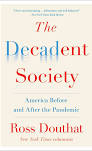
The Decadent Society: How We Became the Victims of Our Own Success
2020
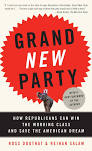
Grand New Party: How Republicans can Win the Working Class and Save The American Dream
2008
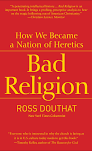
Bad Religion: How We Became a Nation of Heretics
2012

The Deep Places: A Memoir of Illness and Discovery
2021
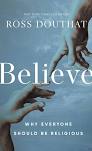
Believe: Why Everyone Should Be Religious
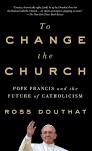
To Change the Church: Pope Francis and the Future of Catholicism
2018
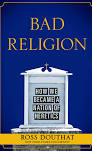
Bad Religion
2012

Privilege: Harvard and the Education of the Ruling Class
2005
[### Ross Douthat | American Enterprise Institute - AEI

American Enterprise Institute
https://www.aei.org › profile › ross-douthat](https://www.aei.org/profile/ross-douthat/)

Ross Douthat is a nonresident fellow at the American Enterprise Institute, where he studies American politics, culture, religion, and family life.
[### The Decadent Society: How We Became the Victims of Our ...

Amazon.com
https://www.amazon.com › Decadent-Society-Became-...](https://www.amazon.com/Decadent-Society-Became-Victims-Success/dp/1476785244)

Ross Douthat is a columnist for The New York Times op-ed page. He is the author of Believe, The Deep Places, The Decadent Society, To Change The Church, ...
$15.98 · In stock · 4.4(522)
Top stories
[
 The New York Times
Opinion | What Trump Can Learn From the Last G.O.P. Disaster
3 days ago](https://www.nytimes.com/2025/02/22/opinion/trump-bush-republican-disaster.html)
---
[
 Evolution News
By Design, Douthat Makes the Case for Religion
5 hours ago](https://evolutionnews.org/2025/02/pointing-to-design-ross-douthat-makes-the-case-that-religious-belief-is-rational/)
---
[
 Religion Unplugged
New York Times Columnist Ross Douthat’s Remarkable (And Reasonable) Case For Religious Faith
14 hours ago](https://religionunplugged.com/news/ross-douthats-remarkable-and-reasonable-case-for-religious-faith)
[
 Aish.com
Ross Douthat’s Believe: Why Everyone Should Be Religious Unsettled Me
2 days ago](https://aish.com/ross-douthats-believe-why-everyone-should-be-religious-unsettled-me/)
[### Ross Douthat - Yale Jackson School of Global Affairs

Yale Jackson School of Global Affairs
https://jackson.yale.edu › Person](https://jackson.yale.edu/person/ross-douthat/)

Ross Douthat served as a Senior Fellow at the Yale Jackson School during the 2020-2021 and 2023-2024 academic years. He joined The New York Times as an ...
Videos
[
2:21](https://www.youtube.com/watch?v=svy-z3_2Rxk)[Ross Douthat & Jonathan Rauch on the Decline of Religion in ... YouTube · BookTV
22 hours ago](https://www.youtube.com/watch?v=svy-z3_2Rxk)
[
14:51](https://www.msnbc.com/morning-joe/watch/-what-a-serious-person-ought-to-do-ross-douthat-on-why-everyone-should-be-religious-231652933743)['What a serious person ought to do': Ross Douthat on why ... MSNBC News · MSNBC
2 weeks ago](https://www.msnbc.com/morning-joe/watch/-what-a-serious-person-ought-to-do-ross-douthat-on-why-everyone-should-be-religious-231652933743)
[
15:11](https://www.google.com/search?q=DOUTHOUT+ROSS&sca_esv=acf673aa48e31f36&source=hp&ei=LxO-Z-WjCq7PkPIP-6rgCQ&iflsig=ACkRmUkAAAAAZ74hP_0HShtOvbHmDkWGzbz-z6JoB5Yq&ved=0ahUKEwil9-mBwd-LAxWuJ0QIHXsVOAEQ4dUDCBo&uact=5&oq=DOUTHOUT+ROSS&gs_lp=Egdnd3Mtd2l6Ig1ET1VUSE9VVCBST1NTMgcQLhiABBgNMggQABgIGA0YHjIIEAAYCBgNGB4yCBAAGAgYDRgeMggQABgIGA0YHjIIEAAYCBgNGB4yCBAAGAgYDRgeMggQABgIGA0YHjIIEAAYCBgNGB4yCBAAGAgYDRgeSKRnUABYAHAAeACQAQCYAWOgAWOqAQExuAEDyAEA-AEC-AEBmAIBoAJpmAMAkgcDMC4xoAe-CA&sclient=gws-wiz#)['What a serious person ought to do': Ross Douthat on why ... YouTube · MSNBC
2 weeks ago](https://www.youtube.com/watch?v=Zq_Z1jNarFw)
[### Morbid Symptoms: An Interview with Ross Douthat

Dissent Magazine
https://www.dissentmagazine.org › Article](https://www.dissentmagazine.org/article/morbid-symptoms-an-interview-with-ross-douthat/)
Ross Douthat is a columnist for the New York Times and the author, most recently, of The Decadent Society: How We Became the Victims of Our Own Success.
[### Articles by Ross Douthat's Profile | The New York Times ...

Muck Rack
https://muckrack.com › ross-douthat › articles](https://muckrack.com/ross-douthat/articles)

New York Times columnist and best-selling author Ross Douthat joins The Remnant today to discuss his new book, Believe: Why Everyone Should Be Religious, and ...
[### Ross Douthat | Substack: Reactions

Substack · Reactions
7K+ followers](https://douthat.substack.com/)

A cultural notebook. Click to read Reactions, by Ross Douthat, a Substack publication with thousands of subscribers.
About · The Right's Answer to... · The Other Person in the Illness
People also search for
---
duck
Ross Douthat
American author and columnist
Ross Gregory Douthat is a conservative American author and New York Times columnist. Wikipedia
Wikipedia
IMDb
Was this helpful?
Only include results for this site
Hide site from these results
Share feedback about this site
Wikipedia
https://en.wikipedia.org › wiki › Ross_Douthat
Ross Douthat - Wikipedia
Ross Gregory Douthat was born November 28, 1979, [2] in San Francisco, California, and grew up in New Haven, Connecticut. [9] As an adolescent, Douthat converted to Pentecostalism and then, with the rest of his family, [10] to Catholicism. [4] Douthat has described his conversion to Catholicism as being influenced by the writing of C. S. Lewis, G. K. Chesterton, and J. R. R. Tolkien.
Images for DOUTHOUT ROSS
Ross Douthat - The New York TimesRoss Douthat: America's Real Religious Landscape | IntersectRoss Douthat - The New York TimesRoss Douthat's Theories of Persuasion | The New YorkerNew York Times op-ed columnist Ross Douthat on Donald Trump, Fox News, and the future of the GOP.Ross Douthat's wrenching Lyme disease battle — Harvard Gazette"To Change the Church" With Ross Douthat | Hoover Institution "To Change the Church" With Ross ...Ross Douthat Speaks on Religious Faith in a Secular Age | Colgate UniversityNew York Times Columnist Ross Douthat on "the Greatest Threat to the Church Today" - Christ and ...Dear Ross Douthat: Don't be so worried about the church | America Magazine
More Images
Was this helpful?
News for DOUTHOUT ROSS
Why everyone should be religious, according to Ross Douthat
Deseret News
14d
'What a serious person ought to do': Ross Douthat on why everyone should be…
MSNBC
14d
How to reason your way into religious belief, according to Ross Douthat
deseret
15d
Ross Douthat: What is humanity's future in the virtual and AI age?
TwinCities.com
25d
Opinion | Choosing My Religion (or Not)
The New York Times
New York Times
https://www.nytimes.com › column › ross-douthat
Ross Douthat - The New York Times
Ross Douthat joined The New York Times as an Opinion columnist in April 2009. His column appears every Tuesday and Sunday. He is also a host on the weekly Opinion podcast "Matter of Opinion." ...
American Enterprise Institute - AEI
https://www.aei.org › profile › ross-douthat
Ross Douthat - American Enterprise Institute - AEI
Ross Douthat is a nonresident fellow at the American Enterprise Institute, where he studies American politics, culture, religion, and family life. He is also an opinion columnist for The New York ...
New York Times
https://www.nytimes.com › by › ross-douthat
Ross Douthat - The New York Times
Ross Douthat has been an Opinion columnist for The Times since 2009. He is the author, most recently, of “The Deep Places: A Memoir of Illness and Discovery.”
Christianity Today
https://www.christianitytoday.com › 2025 › 02 › ross-douthat-bets-on-belief-pascal-believe-review
Ross Douthat Bets on Belief - Christianity Today
Feb 11, 2025Ross Douthat, a Catholic columnist for The New York Times, has written a new book in response to this moment and to the readers he's trying to reach. In Believe: ...
The New Yorker
https://www.newyorker.com › magazine › 2023 › 09 › 18 › ross-douthats-theories-of-persuasion
Ross Douthat's Theories of Persuasion | The New Yorker
Sep 11, 2023This summer, Ross Douthat, liberal America's favorite conservative commentator, wrote a piece about liberal America's least favorite Democrat, Robert F. Kennedy, Jr. Douthat argued in his New ...
Assist
Ross Douthat is a conservative American author and columnist for The New York Times, known for his writings on politics, religion, and society. He was born on November 28, 1979, in San Francisco, California, and has published several books, including "Grand New Party" and "The Decadent Society."
New York Times
https://www.nytimes.com › by › ross-douthat?page=2
Ross Douthat - Page 2 - The New York Times
Ross Douthat has been an Opinion columnist for The Times since 2009. He is the author, most recently, of “The Deep Places: A Memoir of Illness and Discovery.”
Only include results for this site
Hide site from these results
Share feedback about this site
National Catholic Register
https://www.ncregister.com › news › ross-douthat-optimistic-about-americas-future
Why Ross Douthat Has Become an Optimist About America's Future
Sep 9, 2024Douthat highlighted South Korea, where prosperity is high, but the birth rate is only 0.7 and digital saturation is extreme, as a paradigm of this kind of civilizational suicide.
Only include results for this site
Hide site from these results
Share feedback about this site
The New Yorker
https://www.newyorker.com › culture › open-questions › should-you-be-religious
Should You Be Religious? | The New Yorker
TodayIn "Believe," the Times columnist Ross Douthat argues that science has strengthened, rather than weakened, the case for faith. By Joshua Rothman. February 25, 2025 Illustration by Josie Norton ...
ihe.catholic.edu
https://ihe.catholic.edu › speaker › ross-douthat
Ross Douthat - IHE
Ross Douthat is a Media Fellow at the Institute for Human Ecology. He joined The New York Times as an Op-Ed Columnist in 2009. Previously, he was a Senior Editor at the Atlantic and Blogger for theatlantic.com. He is the author of "The Decadent Society: How We Became the Victims of Our Own
---