heather honey elect integ BS
---
SEE CLETA ONLY CITS
ED FUCKING MARTIN EAGLEAI
---
-=-=
PP3
“God Made Me Do This”
Obtained by ProPublica
In January 2024, Mitchell met with a small group of Republican lawyers and election-integrity leaders to discuss how best to prevent fraud in the November presidential election.
Those gathered in the Arizona hotel room were especially worried about noncitizen voting, though numerous audits, studies and analyses — even those by Republican groups and states — show it is vanishingly rare.
Arizona had passed a law compelling residents to provide proof of citizenship when they registered, rather than just swearing they were citizens under penalty of perjury, as is typical in most states.
Mitchell suddenly had an inspiration, she later recounted in a private speech to Virginia’s EIN chapter: She’d lead a push for a similar federal law. “I didn’t think of this,” she told those at the event. “God made me do this.”
When Mitchell returned from Arizona, she was, indeed, a woman on a mission. She convened her closest congressional allies, Sen. Mike Lee of Utah and Rep. Chip Roy of Texas. Their staffers met with her to help draft the Safeguard American Voter Eligibility Act.
The bill set a high bar for proving citizenship, demanding that would-be voters produce documents like certified birth certificates and passports that many Americans don’t have. It also required states to use the DHS’ databases to purge noncitizens from their voter rolls.
The ideas in the measure would presage some of the second Trump administration’s most norm-breaking actions. “When we look back to the original SAVE Act in 2024 to the administration’s actions today, the through line is clear,” said Michael McNulty, a director for the watchdog nonprofit Issue One.
Mitchell knew the initial version of the act wouldn’t pass. When it was introduced in May 2024, Democrats controlled the Senate and the White House.
Rather, people in the election-integrity world said, she saw the measure as a strategic opportunity — both to cement her position atop the movement and to reignite the fervor for voting restrictions among the Trump faithful. For years, she’d fought behind the scenes for Trump’s ear on election issues, vying with more moderate Republican election experts as well as fringe activists.
To make sure her rivals had no choice but to support the SAVE Act, she brought on a backer too powerful to ignore: Stephen Miller, senior adviser to Trump in his first term and architect of his immigration policy. (Miller didn’t respond to questions about his relationship to Mitchell or the SAVE Act.)
Mitchell denied Miller had a hand in the measure. “Stephen is someone I greatly admire but we never worked together on the SAVE Act,” she wrote to ProPublica.
 Stephen Miller, center, senior adviser to Trump in his first term and architect of his immigration policy, attends the May 2024 news conference for the SAVE Act.
But Roy, the bill’s House sponsor, said in a podcast interview that Miller helped draft it. Mitchell sought to dovetail her election agenda with Miller’s immigration agenda, those who’ve worked with them said. They stood side by side at an event at the Capitol to launch the bill, warning that Democrats were letting people into the country illegally in part to swing elections.
In a coup for Mitchell — anointed the Mother of the SAVE Act — pretty much every significant player in the election-integrity space joined the Only Citizens Vote Coalition, a group she launched to back the bill.
Mitchell directed more than $6 million to groups that bought ads, put out research and took other actions supporting SAVE, tax filings show. Some $800,000 went to the nonprofit arm of the conservative media organization The Federalist, which provided glowing coverage of the legislation.
Sean Davis, The Federalist’s CEO, didn’t answer questions about whether the donation affected coverage. “Cleta Mitchell is a saint,” he said in an email.
The measure sailed through the House in July 2024, then predictably died in the Senate. The bill had drawn fire from voting advocacy groups, which said the measure could disenfranchise millions of eligible voters, particularly women, the poor and minorities, all critical Democratic voting blocs.
Mitchell hardly missed a beat. That same month, she led a panel at an American Legislative Exchange Council conference that approved model legislation similar to the SAVE Act for conservative lawmakers to introduce in states across the country. Twelve states have since passed laws that strongly resembled SAVE and 23 have changed their voting procedures to reflect aspects of it.
That November, Trump won back the presidency and Republicans secured majorities in both chambers of Congress.
Mitchell saw the chance not only to pass an even tougher federal version of SAVE — a “SAVE Act on steroids” as she called it in a November organizing call — but to make even more far-reaching changes to American elections.
“This is a once-in-a-generation opportunity,” she told attendees on the call. “I don’t want us to miss this.”
 President Donald Trump in March 2025. When Trump won back the presidency and Republicans secured majorities in both chambers of Congress, Mitchell saw the chance to make even more far-reaching changes to American elections. Win McNamee/Getty Images
“If Plan A Doesn’t Work, I Have a Plan B”
Obtained by ProPublica
Two months after Trump took the oath of office, America got its first glimpse of how he planned to overhaul the nation’s election system.
His March 25, 2025, executive order — titled Preserving and Protecting the Integrity of American Elections — looked a lot like the SAVE Act. It required voters to prove their citizenship when they registered, mirroring the types of identification listed in the bill.
It also expanded on the notion of using DHS data to verify voters’ eligibility, saying that all of the federal government’s relevant troves of sensitive information should be made available for this use. Further, it directed the Justice Department to prioritize the prosecution of election crimes and noncitizen voting.
Mitchell was close to a pair of White House lawyers involved in drafting the order and was among a small group of outside attorneys who provided suggestions for it, according to several people who helped write it.
The order was the first in a string of behind-the-scenes victories that have not only allowed Mitchell to shape the Trump administration’s election blueprint, but have given her substantial influence over who’s been chosen to carry it out.
At least 25 administration appointees have close ties to Mitchell, ProPublica’s reporting shows, with several holding key posts directly related to elections.
“She’s had a lot to do with even White House hires in this regard,” Bannon said. (The White House denied Mitchell had swayed its hiring decisions.)
Heather Honey, a senior counselor to Homeland Security Secretary Markwayne Mullin, has a portfolio that touches on almost everything the administration does on elections. She’s figured centrally in the government’s efforts to find and prosecute noncitizen voters.
Before joining DHS, Honey was a Mitchell protege and led EIN’s Pennsylvania chapter. A high-ranking federal official knowledgeable about the hiring process told ProPublica that the agency hired Honey over more experienced candidates. Her “sole qualification was who she worked with,” the former official said. “She worked with Cleta.”
A DHS spokesperson called this “false,” saying Honey had been recommended by senior government leaders for her election expertise.
Mitchell also has had a hand in shaping the administration’s reinvestigation of fraud allegations involving the 2020 election, beginning with the FBI’s seizure of election records from Fulton County, Georgia.
As ProPublica has reported, the affidavit justifying the raid included material compiled by an EIN-affiliated researcher and cited network participants as witnesses.
When the case bogged down as the prosecutor overseeing it began to doubt its strength, Mitchell was among those who recommended a replacement: Dan Bishop, a former North Carolina congressman whom she’s praised on social media and supported with campaign donations.
At a May meeting, a Georgia EIN leader said Bishop was tapped “thanks in large part to Cleta Mitchell,” an account echoed by an administration official familiar with the matter.
A Justice Department spokesperson said the agency “has no knowledge of any role Cleta Mitchell played” in Bishop’s appointment.
Mitchell told ProPublica she didn’t believe she’d affected this decision. “I was very worried about the direction of the case earlier this year and made known my displeasure quite strongly,” she said. “The decision to appoint Dan was made by the President and I applaud it, but I cannot claim credit for that brilliant idea.”
Soon after stepping in, Bishop tried to subpoena personal information for thousands of Fulton County poll workers, a move the county and election experts denounced as politically motivated intimidation. A court quashed the subpoena. Bishop has appealed.
As she’d envisioned in her call with EIN members just after the 2024 election, Mitchell has gotten the president to sink enormous political capital into passing even tougher versions of the bill, now known as the SAVE America Act.
The 2026 measure would require voters nationwide to present photo ID to vote and compel states to turn over their voter rolls to DHS, which would scour them for noncitizens. Trump has repeatedly called the measure his top legislative priority, threatening not to sign other bills until it passes.
Lee, the Utah senator who sponsored the bill, said Mitchell was central to the updated version, especially the strict voter ID provisions. Trump, he added, gave it the new name.
Former officials and people in the election-integrity movement told ProPublica that Mitchell has had to overcome naysayers within the administration, including White House Chief of Staff Susie Wiles.
On an EIN call in early 2025, Mitchell complained that Wiles had responded frostily to plans she offered for the incoming administration, “saying, ‘Thank you, I’ll take a look as soon as I come up for air.’”
At the time, Mitchell said she’d wanted to reply that wouldn’t happen for four years. When ProPublica followed up about the incident, she wrote: “Susie is remarkable and a great chief of staff. She doesn’t have time to read all the things that people like me send her.”
Mitchell has surmounted these obstacles, in part, by continuing to build out her array of alliances.
By the middle of this year, when the White House brought on Solomon — a longtime Mitchell supporter who vetted material for Trump’s prime-time elections address — it was clear she had found another way in. (A White House spokesperson said that Solomon, who also runs a conservative news site, interacted with Mitchell as a journalist would speak to a subject-matter expert.)
A former administration official who said he’d tried to stymie Mitchell acknowledged she’d won out. “The White House listens to her,” he said.
Mitchell had told her EIN disciples not to worry after Wiles’ brush off. She had more cards to play, she assured them.
“I always know if plan A doesn’t work, I have a plan B,” she said. “If plan B doesn’t work, I have a plan C. And so forth.”
 Mitchell in January 2026. “Even if she fails, she always finds another point of attack,” said Max Flugrath, a director at the voting advocacy group Fair Fight. “She’s relentless.” Tom Williams/CQ-Roll Call, Inc via Getty Images
“Today”
Steve Bannon’s “War Room” Podcast
By the time the first mail-in ballots of the midterms were cast in September, Mitchell had shaped and staffed the Trump administration’s election efforts to an astonishing extent. And yet, the knockout blow had eluded her.
Courts had blocked large parts of Trump’s executive orders. The hunt for noncitizen voters and the reinvestigation of 2020 voting irregularities had produced little of consequence, despite the considerable resources poured into them.
Mitchell’s critics and even her allies, including some in the election-integrity movement, say frustration has prompted her to push for more drastic steps.
During the summer, she mounted an escalating pressure campaign to save the SAVE America Act, mobilizing EIN members to badger recalcitrant senators, according to recordings of EIN meetings. She also worked with the bill’s Senate sponsor and Trump to kill the filibuster, a pathway known as the nuclear option, to get the bill over the line, but was blocked by a handful of moderate Republicans.
Mitchell has taken a similarly all-or-nothing approach in pressing states to pass laws modeled on the SAVE America Act, sometimes with similarly self-defeating results.
Earlier this year, she waded into a battle over an Ohio bill despite being warned that the governor would veto the tougher version she preferred. The final bill contained the provision Mitchell sought. The governor promptly vetoed it.
Former Ohio Secretary of State Ken Blackwell, an election-integrity movement leader who’s worked with Mitchell for decades, said Mitchell sometimes runs the risk of making elections less secure by torpedoing practical solutions.
“It was her way or the highway,” he said. “We need to focus on getting concrete wins.”
(Mitchell didn’t respond to Blackwell’s broader criticism but called the more moderate election measure he’s backed in Ohio “not nearly as good as it should be.”)
As the midterms near, she has become increasingly vocal — in media appearances, online and with her network members — in calling for the president to exert unprecedented powers to sway the vote.
“Even if she fails, she always finds another point of attack,” said Max Flugrath, a director at the voting advocacy group Fair Fight. “She’s relentless.”
On the Oct. 6 episode of “War Room,” Mitchell angrily pounded home that several agencies, particularly the Commerce Department, could intervene “today” to shore up purported vulnerabilities in voting machines. She repeated the word “today” seven times during the appearance, like a drumbeat.
Some of those who’ve known Mitchell the longest say her urgency has crescendoed as, at 76, she’s confronted the possibility that this administration is her last chance to realize her goals.
“In her mind, in her timeline, it’s existential,” the former network leader said. “She’s got to do it all, and she’s got to do it now. … The election integrity movement, c’est moi.”
Corrections
Jen Fifield and Reese Dunklin contributed reporting. Misty Harris contributed research.
Contributors
- I’m a ProPublica reporter covering threats to democracy, elections and voting rights.
- Have a Tip for a Story?
- I welcome tips about how politicians, activists, and others are trying to transform American elections for partisan advantage. I am also interested in tips about North Carolina’s legislature, court system, and state government
-=-=
AN 8 26
It was late March when Joe Teirab, the second-in-command at Minnesota’s U.S. attorney’s office, received an urgent email from Washington.
The federal government was scrambling to find criminal cases to back up President Donald Trump’s claims that illegal voting by noncitizens was tipping the scales in American elections. Agents from Homeland Security Investigations, a massive federal law enforcement agency, had been dispatched to work leads across the country, including hundreds in Minnesota.
Teirab was already under pressure. In an earlier missive, Nick Davis, a high-ranking Justice Department appointee helping to lead the election fraud crusade, had reminded him the cases were so high priority that Teirab and his staff couldn’t decline to move forward on them without express approval from agency higher-ups. On March 24, Davis demanded a status report — within hours.
Teirab, a former Marine and a Harvard Law graduate who’d run unsuccessfully for Congress as a Republican, responded with a blunt reality check.
“Bottom line up front,” he replied in an email reviewed by ProPublica. After subpoenaing records on about 130 people, only one had been referred for prosecution, his staff had told him. Agents had deluged local election offices with calls and demands for voting histories, demonstrating “a complete lack of understanding” of illegal voting investigations.
“The HSI task force has been disjointed and disorganized,” Teirab wrote. The entire process, he said, had been “dysfunctional.”
Since Trump regained the White House, his administration has launched a series of unprecedented initiatives to find and prosecute voting by noncitizens, which he’s long claimed, without evidence, is rampant.
He’s stepped up this push in recent weeks, saying in a nationally televised speech that the American election system was “so vulnerable that no one can possibly defend it.” To support that assertion, the Department of Homeland Security, HSI’s parent agency, released documents asserting it had found more than 250,000 noncitizens on voter rolls in just four states, all led by Democrats. The documents included no explanation of how that number was calculated.
It’s well known the administration has tasked HSI — a force established to combat drug cartels, terrorism and other cross-border criminal enterprises — with leading the campaign to find election fraud cases in the United States.
But an investigation by ProPublica reveals for the first time how the Trump administration came to harness HSI’s personnel, technology and sweeping legal authority in service of its election agenda — and how meager the results have been, despite the prodigious resources sunk into the effort.
According to interviews and internal emails reviewed by ProPublica, career staffers at the Justice Department warned that transferring voter rolls to HSI to enable it to search for noncitizen voters could violate federal privacy laws. Similarly, longtime HSI insiders cautioned that using the agency’s databases and tools to search these lists would yield mismatches and wildly inflated results.
The administration plowed forward anyway.
HSI’s involvement in the hunt for election fraud traces at least to summer 2025, when agency supervisors embraced a proposal from a midlevel agent who’d publicly echoed Trump’s claims about elections. He argued the agency’s powerful databases and tools could find noncitizens even on the voter lists that states make publicly available, from which the most confidential information has been redacted. Under Trump, the Justice Department had collected many public voter rolls as part of a controversial effort to compel states to turn over the unredacted versions.
Those searches went forward, ProPublica’s reporting shows, helping to generate tens of thousands of leads regarding illegal voting across the country. But when HSI agents were sent to investigate them, the results were similar to what Teirab reported from Minnesota.
Between January 2025 and May 2026, a ProPublica analysis of Justice Department data shows, fewer than 150 alleged noncitizen voters were referred for prosecution. Even fewer — 41 — were charged with voting illegally or other election-related crimes. (More than 150 million people voted in the most recent presidential election.)
In response to questions from ProPublica, administration officials insisted the effort spearheaded by HSI was producing meaningful results.
“President Trump is committed to ensuring that Americans have full confidence in the administration of elections, and that includes totally accurate and up-to-date voter rolls free of errors and unlawfully registered non-citizen voters,” Abigail Jackson, a White House spokesperson, said in response to ProPublica’s request for comment. “Noncitizens voting is a crime. Anyone breaking the law will be held accountable.”
A DHS spokesperson didn’t answer questions about why so few prosecutions have resulted from HSI’s work. The agency wouldn’t specify what tools or techniques HSI had used, but confirmed it had cross-referenced “publicly available data” from state voter rolls with information on “known illegal aliens” in its systems. “It’s not rocket science,” the spokesperson wrote of this initiative in a response to ProPublica’s questions. “It’s an easy step to secure our elections.”
Teirab and the U.S. attorney’s office in Minnesota declined to comment.
There’s an array of reasons why Trump’s campaign to document claims of widespread voter fraud hasn’t succeeded. Most obviously, it’s exceedingly rare, as countless studies and state audits have found. Noncitizens often get on voter rolls by accident or when government officials make errors. Last month, New Jersey disclosed that a mistake involving its Motor Vehicle Commission caused 6,600 noncitizens to be registered (fewer than 400 voted).
The administration’s critics say its hunt for noncitizen voters aligns with Trump’s attempts to seek more federal control over elections while stoking doubt and fear about the voting process. Since taking back the Oval Office, Trump has tried to impose new restrictions on voter registration, mail-in ballots and voting machines, though judges have shut down most of these efforts.
Former officials at DHS and the Justice Department called the move to involve HSI a further escalation and questioned the propriety of aiming the agency’s muscle and technology at individual cases of illegal voting.
“It’s one thing if you’re going after Pablo Escobar,” said Steve Bunnell, a former DHS general counsel and senior intelligence adviser who handled voting fraud prosecutions during more than a decade at the Justice Department. “It’s another thing if you’re going after some cleaning lady who’s been working in the United States for 20 years and taking care of her 80-year-old mother and taking her little kids to church.”
“The Swiss Army Knife of Federal Law Enforcement”
Trump’s enlistment of HSI in his election fight is no accident. Cobbled together in the aftermath of 9/11, the agency has 7,100 armed, highly trained agents and another 800 criminal analysts, as well as access to troves of confidential data about hundreds of millions of Americans.
Though part of Immigration and Customs Enforcement, the agency has historically stayed out of immigration cases. During the first Trump administration, leaders of 19 HSI regional offices — virtually its entire top field hierarchy — signed a letter calling for HSI to become a standalone agency, arguing that ICE’s deportation work dissuaded people from cooperating with its investigations. But when Trump returned to the White House, it swiftly became clear that the agency would play a central role in investigations related to the president’s twin obsessions, illegal immigration and noncitizen voting.
Trump picked his field general for repurposing HSI even before taking the oath of office. In December 2024, he named Anthony Salisbury, a 50-year-old career agent who’d run the agency’s Miami office, as a deputy homeland security adviser, reporting to White House policy chief Stephen Miller. He was also given a dual appointment as head of HSI.
Salisbury was colorful: A mixed martial arts enthusiast, he once appeared at the agency’s headquarters with his face bruised and eye blackened from a recent bout. He’d sometimes entertain colleagues by pulling out a bridge that covers his missing front teeth.
To agency veterans, however, he was forever linked to a 2011 operation he’d overseen in Mexico in which one agent was killed and another wounded in a highway ambush by a drug cartel. An agency review submitted to Trump in April 2020 concluded that errors by HSI supervisors, including Salisbury, contributed to the outcome; it urged the administration to consider disciplinary action. None was taken against Salisbury, however.
Salisbury did not respond to requests for comment from ProPublica. A White House official called him “a critical member of the Trump administration” who was “cleared” in every review of the Mexico incident and was subsequently “promoted six times under multiple administrations.”
“It’s one thing if you’re going after Pablo Escobar. It’s another thing if you’re going after some cleaning lady who’s been working in the United States for 20 years and taking care of her 80-year-old mother and taking her little kids to church.”
Steve Bunnell, a former DHS general counsel and senior intelligence adviser
Once elevated to his new posts, Salisbury took charge of carrying out the second Trump administration’s agenda for HSI, personally issuing staffing directives, reassignments and promotions, current and former agency officials told ProPublica. (A number of them spoke on condition of anonymity out of fear of retribution.)
Starting in early 2025, Salisbury oversaw the unprecedented reassignment of more than 6,000 agents to immigration enforcement, diverting most of the agency from its normal duties. He then also pointed HSI at noncitizen voting, presiding over multiple meetings with officials at DOJ and Homeland Security focused on election fraud, according to emails reviewed by ProPublica and agency supervisors who worked with him.
“Stephen Miller has an HSI deputy for a reason,” said Eric Balliet, a high-level HSI manager who retired in 2024 after 23 years with the agency. (Like many HSI veterans, Balliet has remained in close contact with former colleagues.) “Salisbury is going to salute and execute, and he is going to make sure that from the HSI side, they fall in line, and there’s going to be no resistance or pushback. HSI has been turned into the Swiss Army knife of federal law enforcement.”
In early July 2025, Frank Quiñones, an HSI special agent who’d worked under Salisbury in Florida, approached leaders at the HSI Innovation Lab with an idea for using the agency’s technology to find noncitizen voters on state voter rolls, sources at the agency told ProPublica. Quiñones had been transferred to Washington to oversee a unit that had previously handled cases involving the theft of government benefits but that had been enlisted into voting investigations.
The lab, housed in an unmarked office in a D.C. suburb, had access to the government’s most sensitive databases, from suspicious activity reports to arrest records. Staffed by a combination of HSI experts and outside consultants, it developed software tools to comb the data for information that could help agents pursue criminal suspects.
Quiñones was a true believer in Trump’s claims about election fraud: In multiple Facebook posts and reposts, ProPublica found, he promoted claims that the 2020 presidential vote had been stolen. At a meeting with the Innovation Lab’s overseers, according to sources who worked in the lab, he pitched using the lab’s technology to identify illegal voters — even though the agency lacked voter rolls that included identifiers such as partial Social Security numbers. (Quiñones did not respond to ProPublica requests for comment.)
For proof of concept, Quiñones proposed using a February 2021 public voter list he’d obtained for New Jersey and running it through HSI’s databases. The lab staff viewed his idea as “a little insane,” one recalled — both unreliable and improper. Since the public rolls don’t include voters’ unique identifiers, people at the lab also knew linking them to HSI’s data would produce mismatches — what the staffer called an “ungodly” number of false positives. The lab team also worried about violating longstanding safeguards limiting use of private citizen data. They “didn’t want to touch this,” the staffer added. Quiñones defended his idea, repeatedly declaring: “The president wants this!”
Tom Hodge, an HSI data analyst at the meeting, proposed running the voter information through the Athena Toolbox, an analytical platform developed by the Sandia National Laboratories that had access to all of HSI’s databases. (Hodge did not respond to ProPublica requests for comment. Sandia referred ProPublica’s questions to the facilities’ parent agencies, including the Department of Energy, which did not respond to our requests.)
Hodge and the Sandia team spent the next six weeks on the project, reporting they’d found large numbers of noncitizens on Quiñones’ 2021 New Jersey list. According to one former HSI official, they said they’d found “5,000 high-confidence illegal voters” in just a single New Jersey county. (Officials at the New Jersey secretary of state’s office, which oversees the state’s voter rolls, declined to comment on the claim. Beth Thompson, head of a group for local New Jersey election officials, called the number impossibly high, even accounting for the mistake disclosed by the state.)
The apparent breakthrough couldn’t have come at a better time.
The Trump administration’s other efforts to identify noncitizens on state voter rolls were running into a variety of roadblocks.
The administration had hoped to persuade states to check their voters’ citizenship status using a system called the Systematic Alien Verification for Entitlements, or SAVE, but many didn’t. Most states also refused the Justice Department’s demands to turn over their unredacted voter rolls, including partial Social Security numbers, which thwarted the agency’s plan to run them through SAVE. Courts have stymied the DOJ’s attempts to sue for the records, citing the Constitution, which gives primary control over elections to the states.
In an Aug. 21 email to a half dozen administration officials, Quiñones touted the solution he’d brought to the HSI Innovation Lab: using HSI’s platform to search voter rolls. The results, Quiñones noted, could fuel both criminal and immigration investigations.
By the end of the month, those in top election-related roles at DHS and the Justice Department were actively promoting what they dubbed the “HSI Tool” as a preferred alternative to SAVE, according to people familiar with the matter. Among them was Heather Honey, the prominent election denier appointed as a senior counselor at DHS, who is helping lead the government’s efforts to identify noncitizens on voter rolls. (Honey did not respond to ProPublica’s requests for comment. In an email responding to questions to her, DHS said Honey’s “expertise in election administration” was “invaluable to the Department’s efforts to protect critical infrastructure.”)
The White House, too, got behind the idea. In a November email, J. Brian Sikma, special assistant to the president, excitedly noted that the New Jersey trial cross-checking voter rolls with DHS data appeared to have identified a “very significant number” of “potential non-citizens.” (Sikma didn’t respond to a request for comment.)
The DOJ, Sikma reported, had already obtained public voter rolls for many other states. He included a list of them, adding: “It is of paramount importance that these also be reviewed expeditiously.”
Running “Roughshod” Over Privacy
As the push to use HSI’s tech to search voter information gained momentum, a new problem emerged.
Career attorneys at the Justice Department, including specialists on privacy law, raised concerns that transferring voter rolls wholesale from the agency to DHS might not be legal, according to internal emails reviewed by ProPublica and interviews with several former officials.
The voter rolls the DOJ had collected contained sensitive information on millions of Americans. Even the public versions, which political parties and candidates routinely obtain to target ads and messages, included voters’ addresses, birth dates and party affiliations. For the 16 states that have agreed to share their unredacted voter lists, the DOJ had citizens’ partial Social Security numbers or driver’s license information, too.
Federal laws, particularly the Privacy Act, dictate what data government agencies can collect, what it can be used for, how it can be shared, and how it must be protected. Agencies have to disclose their plans in advance, gathering public comment. A person’s information can’t be released or shared without their consent, subject to limited exceptions.
From the outset, the Trump administration’s effort to combine data across federal agencies has repeatedly drawn criticism from courts and whistleblowers for failing to adhere to restrictions meant to keep data private and secure. In June, for example, a judge prohibited the government from using SAVE for mass searches, ruling the administration had violated federal privacy laws by giving DHS access to Social Security data to enhance the tool. The administration has appealed that ruling.
In July 2025, as word got around that the DOJ might hand over voter data to DHS, a half dozen career attorneys who had been reassigned into the voting section voiced their unease to supervisors, according to two former DOJ lawyers. Their concerns were disregarded, prompting most to resign.
Instead, the DOJ’s office of legal counsel pushed forward with plans to share the public voter rolls, claiming a Privacy Act exception allowed HSI to receive such data without public notice as long as it was for law enforcement purposes. DHS just needed to submit a letter officially requesting the data for those purposes, an attorney in the legal counsel’s office explained, according to internal emails.
But this exception was meant to be used to get information on individual criminal suspects, not to gain mass access to data on people suspected of no wrongdoing, according to Nikhel Sus, chief counsel for Citizens for Responsibility and Ethics in Washington, which has sued the Trump administration on behalf of voter and pro-privacy groups, filing the case that eventually limited SAVE’s use.
“[Anthony] Salisbury is going to salute and execute, and he is going to make sure that from the HSI side, they fall in line, and there’s going to be no resistance or pushback. HSI has been turned into the Swiss Army knife of federal law enforcement.”
Eric Balliet, a former high-level HSI manager
Peter Winn, a 29-year Justice Department veteran who had served as the agency’s acting privacy chief for nearly a decade, drafted a letter to set out the data-sharing agreement between the DOJ and DHS, according to internal documents reviewed by ProPublica.
In a Feb. 12 email to two top DOJ officials, he said he’d rewritten an initial draft memo to “make the information sharing arrangement far easier to defend, if and when it is challenged in court.”
Rather than simply handing over the voter rolls, Winn proposed having DHS request “pertinent and relevant” information about specific people from the DOJ, then having technical staff at Justice and Homeland Security “coordinate” to fulfill the requests.
“Having slept on it,” Winn wrote, “I ended up deciding that our initial idea of sending a huge amount of raw unprocessed voter registration data to DHS, involved taking far too much unnecessary legal risk, given that 99% of the data would implicate the privacy and civil liberties of United States Citizens, and would risk adding to the false narrative in the establishment press of DOJ and DHS being unconcerned with the privacy and civil liberties of Americans.”
Winn attached his proposed letter, to be signed by Todd Lyons, then the acting director of ICE.
Winn’s suggested restrictions were quickly abandoned, however. A second draft of the letter, dated March 4, contained altered language providing that the voter information would be “transferred” to HSI, with one exception: Voters’ party affiliation would be redacted, if possible, it said.
The final letter, signed by Lyons and sent to the DOJ just two days later, abandoned even that limitation. Just three paragraphs long, it permitted HSI to use the voter rolls to pursue any “appropriate investigation of potential violations of federal election law.”
In response to questions from ProPublica, Winn said “I can’t really comment on internal drafts of correspondence.”
A Justice Department spokesperson defended the government’s actions, saying “no one should oppose intergovernmental data sharing and coordination that enable swift investigations and prosecution of illegal alien voting.” DHS echoed the DOJ’s view, calling such information sharing “essential to protecting America’s election process by keeping noncitizens off voter rolls” and “an easy step to secure our elections.”
Sus said that by pooling voters’ sensitive personal identifiers, along with their party and voting histories, the administration has “run roughshod” over privacy laws and is creating a “1984-style database” that could be used to surveil political participation.
CREW filed a lawsuit in April on behalf of the nonprofit advocacy group Common Cause that argues it’s illegal for the administration to use the law enforcement exception to justify mass sharing of voter information.
Balliet, the former HSI agent, expressed similar concerns, saying that handing over voter rolls to run through DHS’ systems amounted to “a mass data-collection effort by the government against its own citizens in a non-criminal setting.” On a practical level, he added, the data sharing increased the risk of breaches that can open law-abiding citizens up to identity theft.
“As a citizen, I want the government to take seriously the protection of my private data,” he said. “If it falls into the wrong hands, it’s not the government that suffers. It’s me.”
Collapsing Claims
By January 2026, scores of HSI agents were fanning out across the country to investigate thousands of leads about illegal voting.
About 25,000 of them involved people SAVE had identified as potential noncitizens on state voter rolls. Another 15,000 were given to HSI’s cross-border financial crimes unit, which was told to prioritize them over money laundering and fraud cases, a former high-level HSI official said. Quiñones’ unit led a separate effort to find additional cases by reviewing whether people who’d recently become citizens had voted before they were naturalized, then lied about it in naturalization interviews.
Still more leads came from running public voter rolls through the HSI lab’s databases, though it’s not clear how many. Agency sources told ProPublica that the rolls of New Jersey and Pennsylvania were searched using the Athena Toolbox. When DHS announced it had found more than 250,000 noncitizens on the registered voter lists of four Democrat-led states, it said that included “as many as” 35,152 in New Jersey and 14,576 in Pennsylvania. Both states have asked DHS to provide the source of the numbers.
Once federal investigators started digging into these cases, however, they often fell apart.
Through May, prosecutors had charged fewer than four dozen people with crimes related to noncitizen voting, ProPublica’s analysis of DOJ data and federal court filings shows, getting convictions or guilty pleas in 14 cases.
The largest cluster of cases was brought in the Southern District of Florida, headed by Jason Reding Quiñones (no relation to the HSI agent), a staunch Trump ally who has led investigations of the president’s political opponents. Voters have been sentenced in eight of the office’s cases; seven others are pending.
Prosecutors have initiated a total of seven noncitizen voting cases as of May in the four states where DHS claimed to have found more than a quarter million noncitizens on the rolls. Collectively, these states have more than 40 million registered voters.
Overall, the paltry numbers reflect the realities HSI investigators confronted on the ground as they tried to convert leads into cases, a ProPublica review of records obtained by voting-advocacy groups Campaign Legal Center and Democracy Forward shows.
Emails between agents and local election officials in Texas and Ohio indicate much of the federal information on purported noncitizens was inaccurate, the consequence of flawed data matching. When agents demanded voting histories and registration forms, they often discovered people weren’t registered in the counties where HSI thought they were. When voters register, they must attest that they are U.S. citizens; agents found some, however, who’d been put on voter rolls in error after disclosing they weren’t citizens. Many had never voted.
“Our initial idea of sending a huge amount of raw unprocessed voter registration data to DHS, involved taking far too much unnecessary legal risk, given that 99% of the data would implicate the privacy and civil liberties of United States Citizens.”
Peter Winn, a Justice Department veteran, in an email urging limits on data sharing that were not adopted
Most HSI agents, steeped in pursuing complex international crimes, had no experience in pursuing voting fraud. In his email to Nick Davis at the Justice Department, Teirab, the top deputy in Minnesota’s U.S. attorney’s office, described the chaos that ensued when the state and at least six counties got subpoenas for voters’ records. The demands “presented a host of issues,” Teirab wrote to Davis. (Davis did not respond to a request for comment.)
“An unknown number of agents are constantly arriving in Minnesota without any knowledge of the investigation, the issues already discussed and decided, and the processes they need to follow,” Teirab complained. “Instead of getting up to speed and learning, they have demanded many calls and subpoenas, most of which demonstrate a complete lack of understanding of the investigation.”
In Stearns County in central Minnesota, HSI agents subpoenaed voting histories on 13 people, county officials told ProPublica. Only six turned out to live there.
Minnesota Secretary of State Steve Simon, a Democrat, said the effort revealed federal investigators’ ignorance about “the nuance of elections administration.” The rate of purposeful election crime is “microscopic,” he said. “The very human errors that can happen are not some sort of plot or scheme to dirty up the voting rolls, but are just everyday human beings making mistakes, not intending at all to violate any law.”
As of May, only one illegal voting case has been referred for prosecution in Minnesota. The state has more than 3.8 million registered voters.
Even Republican-led states like Ohio, which has shared its unredacted voter rolls with the DOJ and run them through the SAVE system, have struggled to meet Trump administration demands to deliver cases.
In October, the Ohio secretary of state referred more than 1,000 voters identified as possible noncitizens to the federal government, claiming 167 had voted at least once since 2018. At least nine HSI agents in Cincinnati and Cleveland began to investigate, emails obtained by Campaign Legal Center and shared with ProPublica show.
The agents bombarded local election officials with requests for voting histories and other records, some dating back decades. “Sorry again for piecemealing these to you,” one agent wrote to an official in Butler County, outside Cincinnati, after making five separate requests over two weeks. Mohamed Al-Hamdani, a Democratic member of Montgomery County’s Board of Elections, which received similar inquiries, said they amounted to “witch hunts” that ate up staff time.
In February, Davis sent an email pressing Ohio’s two U.S. attorneys’ offices for an “election integrity” update, asking: “How close are we to complaints/indictments, how many subjects, what issues you’ve run into, how many referrals have been closed and why, how helpful HSI has been.”
As of May, just two voting cases had been referred for prosecution in Ohio and no one had been charged, federal data shows. The state has nearly 8 million voters.
In the past, it was uncommon for federal prosecutors to pursue charges against noncitizen voters who didn’t understand that it was against the law for them to vote. Without evidence of a coordinated effort or plot, it didn’t make sense to put resources into such prosecutions, a former DOJ official who oversaw election cases said.
Now, however, U.S. attorneys’ offices are taking a different approach, pursuing prosecutions that could result in prison terms or deportation.
In May 2025, federal prosecutors in Florida filed illegal voting charges against a mother and daughter, both Ukrainian citizens, who’d registered after becoming permanent U.S. residents, then voted in the 2024 presidential election. They’ve pleaded not guilty, with the mother saying in an interview with investigators that she thought having a green card meant she could vote. They and their attorneys didn’t respond to requests for comment from ProPublica. The prosecutor handling the case for the Southern District of Florida also didn’t respond to questions. The mother and daughter are scheduled to go to trial in September.
“Far-Reaching Consequences”
Experts on both elections and national security warn there may be profound longer-term costs to unleashing the federal government’s investigative and prosecutorial might to try to prove the president’s claims about noncitizen voting.
Current and former HSI agents say critical investigations — including task forces aimed at drug rings, human trafficking and money laundering — have languished as the agency has pivoted to take on noncitizen voting and immigration enforcement.
In February 2026, according to court files and emails reviewed by ProPublica, an HSI agent in Ohio who’d been leading a multistate child sex abuse investigation was abruptly assigned to pursue dozens of leads on suspected noncitizen voters, work that took months. It wasn’t until May that he made an arrest in the other case. Prosecutors have filed child exploitation and pornography charges against the man, 38, in connection with acts involving at least five 14-year-old girls.
Cases like this “don’t just stop,” said Balliet, the 23-year HSI veteran. “When you pull people off them for an extended period of time, those criminal networks will adapt, and people get killed and kidnapped.”
Federal data hints at a broader slowdown in what had been HSI’s most urgent work. According to an annual government report, the number of wiretaps obtained by DHS — often to investigate drug trafficking — plummeted to 23 in 2025, from 133 the previous year. In the report, DHS attributed the decline to several factors, including “changes in administration enforcement and prosecutorial priorities.”
“It’s never been a better time to be involved in transnational organized crime,” said John Tobon, a high-ranking HSI official who retired in early 2025.
“The very human errors that can happen are not some sort of plot or scheme to dirty up the voting rolls, but are just everyday human beings making mistakes, not intending at all to violate any law.”
Minnesota Secretary of State Steve Simon
In its statement, DHS denied HSI has neglected its core mission, saying the agency has increased its efforts to combat criminal cartels, gangs and drug traffickers in response to multiple Trump executive orders.
Though HSI’s voting-related investigations have yielded only a small number of prosecutions, voter advocacy groups worry the Trump administration will use them to justify more extreme interventions.
Its latest tactics include threatening to withhold funds from states it says are refusing to check their voter rolls for noncitizens and saying it will prosecute state election officials who “knowingly” fail to remove noncitizens.
Trump has also continued to press Congress to enact the SAVE America Act, which would require people to provide proof of citizenship when registering to vote, a measure advocates have criticized as a barrier to voting. Democrats are preparing for the prospect of federal troops being sent to the polls to intimidate voters.
“Those concerns are playing out in real time, with far-reaching consequences,” said Dax Goldstein, a director at the States United Democracy Center, a nonprofit group that works to build confidence in elections. “When federal agencies are misused and weaponized, people lose trust in government itself.”
-=-=
---
AN PP 5 26
When President Donald Trump attempted to overturn the 2020 election, the institutional guardrails of American democracy held — but just barely.
If faced with the same tests today, those guardrails and the people who held the line would largely be missing, a ProPublica examination found.
At least 75 career officials who once held roles at federal agencies related to election integrity and safety are gone. Two dozen appointees — including many who either actively worked to reverse the 2020 vote or are associates of such people — have been hired to replace them. And once-fringe actors now have access to vast powers.
As the midterms approach, current and former government officials and election security experts expressed concerns that Trump appointees who’ve espoused debunked conspiracy theories about balloting are now in positions to control the narrative around the vote’s soundness.
It’s hard to debunk false claims “coming with the seal of the federal government,” said Derek Tisler, counsel and manager with the Brennan Center for Justice’s elections and government program. “I certainly worry what damage that could do to voters’ confidence.”
Here are some of the key things you should know about the Trump administration’s efforts to, as the president said, “take over” the midterms. Read the full investigation here.
1. In 2020, institutional guardrails helped to prevent Trump from overturning the election.
Following his defeat in the 2020 election, Trump pushed for federal officials to uncover proof that he had, in fact, beaten Joe Biden at the polls. Election cybersecurity experts with the Department of Homeland Security relayed to Attorney General William Barr that the election fraud claims that they looked into were false. Barr then told the president what he didn’t want to hear: The election had not been hacked.
Barr was one of many federal officials — most of them Trump appointees — who refused to bend to the president’s demands, which only intensified in the weeks leading up to Jan. 6, 2021. Despite the violent uprising at the Capitol on that day, the election results held firm.
2. Less than 18 months into his second term, Trump has dismantled many of those same guardrails.
Since the start of his second term, Trump and his appointees have made significant changes at federal agencies tasked with helping to safeguard elections. In all, at least 75 career officials who’d played important roles in elections work at DHS, the Department of Justice and other agencies have left, been fired or been reassigned, ProPublica found.
In their place are roughly two dozen people Trump has installed in positions that could affect elections. Ten of them actively worked to reverse the 2020 vote, and the rest are associates of those people. In some cases, ProPublica found, officials have been hired from activist groups that are pillars of the election-denial movement.
3. Among the first agencies Trump gutted after returning to office was one that had repeatedly disproved his stolen-election claims.
Officials at DHS’ Cybersecurity and Infrastructure Security Agency had provided research to the first Trump White House that disproved many theories claiming that the 2020 election had been hacked. CISA also played a crucial part in publicly countering these claims by producing a “Rumor Control” website to rebut them.
Then, only weeks into Trump’s second term, DHS leadership put employees focused on countering disinformation and helping safeguard elections on leave. They also froze CISA’s other election security work, which included assessing local election offices for physical and cybersecurity risks. Eventually, all CISA employees specializing in elections were fired or transferred.
A DHS spokesperson told ProPublica that the changes at CISA were in response to “a ballooning budget concealing a dangerous departure from its statutory mission,” which included “electioneering instead of defending America’s critical infrastructure.”
4. Trump and his appointees have gutted election-related teams at federal law enforcement agencies.
FBI Director Kash Patel dismantled the agency’s public corruption team, which had previously been deployed to help monitor possible criminal activity on Election Day. The Foreign Influence Task Force, which aimed to combat foreign influence in U.S. politics, was also disbanded.
(An FBI spokesperson said the bureau “remains committed to detecting and countering foreign influence efforts by adversarial nations.”)
The voting section of the DOJ’s Civil Rights Division had enforced federal laws that protect voting rights, particularly those that combat racial discrimination. But now, nearly all of the section’s roughly 30 career lawyers have resigned or been moved. Trump then filled the section with conservative lawyers, including at least four who participated in challenging the 2020 vote or have worked with people who helped Trump try to overturn the 2020 election.
- Trump has replaced ousted career specialists with “Team America.”
In the summer of 2025, after the Trump administration had forced out most of the career specialists, a small group of political appointees — which once called itself “Team America,” according to sources familiar with the matter — began convening at DHS headquarters, looking for federal levers it could pull to realize a March 2025 executive order, in which Trump tried to exert greater federal control over aspects of voting.
Among the core members of the group was David Harvilicz, a DHS assistant secretary tasked with overseeing the security of election infrastructure, including voting machines, and three of his top staffers. As ProPublica has reported, Harvilicz co-founded an AI company with an architect of Trump’s claims about election hacking in Michigan.
Heather Honey, who serves under Harvilicz in a newly created position focused on elections, is a source of the false claim that more ballots were cast in Pennsylvania than there were voters in the 2020 presidential election — a claim Trump cited on the morning of Jan. 6, 2021.
At least 11 administration appointees, including Honey, have ties to the Election Integrity Network, a conservative grassroots organization led by Cleta Mitchell, a lawyer who tried to help Trump overturn the 2020 election. Since moving into government, Honey has maintained close ties to Mitchell’s organization, and she and at least two other federal officials have given its members private briefings.
6. Team America members are using a powerful Homeland Security Investigations tool to try to identify noncitizen voters.
The DOJ has been demanding that states turn over confidential voter roll information, and it has sued around 30 states for this data.
Meanwhile, DHS has urged states to upload their voter rolls to its tool, called the Systematic Alien Verification for Entitlements system.
The goal in both efforts has been to find noncitizens on the voter rolls. But the SAVE tool has come up short, often identifying citizens as noncitizens, as ProPublica has reported, and officials have faced other roadblocks with its use.
More recently, according to two people familiar with the matter, Team America has worked to harness a more powerful tool used by another branch of DHS, Homeland Security Investigations, to increase its ability to search for noncitizen voters and bring criminal charges against them.
In response to questions sent to DHS, Harvilicz and Honey, a DHS spokesperson disputed that they were seeking to use the department’s powers to advantage Trump. In response to questions about their ties to the election denial movement, the spokesperson wrote, “To meet the diverse and evolving challenges the Department faces, we hire experts with diverse backgrounds who go through a rigorous vetting process.”
7. Trump’s head of election security is behind the FBI’s seizure of 2020 election ballots in Georgia.
Attorney Kurt Olsen once worked to try to overturn Trump’s 2020 loss in court and was later sanctioned by judges for making baseless allegations about Arizona elections. He is now Trump’s director of election security and integrity and is the driving force behind the January raid of the election center in Fulton County, Georgia.
Toward the end of 2025, Olsen flew to Georgia to meet with Paul Brown, the head of the FBI’s Atlanta field office, according to people familiar with the matter. Olsen wanted the FBI to seize ballots from the Democratic stronghold, and he gave Brown a report he claimed would justify the extraordinary action. Brown’s team submitted an affidavit to superiors at the DOJ that did not make a strong enough case to move forward with what Olsen wanted. Afterward, Brown was given a choice: retire or be moved to a new office. Brown retired. The raid went forward under his replacement, based on an affidavit that cited information from the report Olsen provided to Brown.
Olsen did not respond to requests for comment.
An FBI spokesperson said that Brown “elected to retire” and that its “work in the election security space is entirely consistent with the law.”
8. The DOJ’s Public Integrity Section could have tried to block the administration’s Georgia voting investigation.
In the months following Trump’s return to office, the DOJ’s Public Integrity Section, which had been responsible for making sure the department’s inquiries weren’t improperly influenced by politics, was eviscerated. Resignations, firings and transfers reduced the 36-person section to two.
Multiple former lawyers for the section said they likely would have tried to block the Fulton County investigation because it lacked strong evidence, had a clear political slant and went against department directives that actions should not be taken “for the purpose of giving an advantage or disadvantage to any candidate or political party.”
John Keller was principal deputy chief of the section from 2020 to 2025 and was acting chief when he resigned in early 2025. He worries that allegations of irregularities in the upcoming election will be handled on a partisan basis.
“Without that review and without apolitical, objective, honest brokers involved in the process, there is a much greater risk for intentional manipulation or inadvertent interference,” Keller said.
---
---
AN PP 3 26
In his top post at the Department of Homeland Security, David Harvilicz sets policy on protecting the nation’s elections infrastructure, including voting machines.
He’s also the co-founder of a company with James Penrose, who helped hatch debunked conspiracy theories blaming hacked voting machines for Donald Trump’s loss in the 2020 presidential election. Penrose assisted in a push to seize voting machines to overturn Trump’s defeat.
On social media, Harvilicz has called for doing away with voting machines, saying they are “eminently vulnerable to exploitation.” In a March post, he wrote that “DHS needs to ban voting machines for all federal elections. The time is now.” He also has repeatedly questioned the validity of Democratic electoral victories and pushed for Republicans to overhaul electoral systems to their advantage.
Election experts as well as current and former DHS officials say Harvilicz’s central role in overseeing the security of electoral systems and voting machines is especially concerning at a time when the administration is taking unprecedented steps to relitigate Trump’s baseless claims that the 2020 election was stolen. That includes the FBI’s seizure of 2020 voting records from Fulton County, Georgia, and having a team working for Tulsi Gabbard, the director of national intelligence, take custody of voting machines used in Puerto Rico in 2020.
“The security of our election infrastructure depends on leadership that is trusted, impartial and grounded in evidence — not individuals who have promoted conspiracy theories about the very systems they are now responsible for protecting,” said Danielle Lang, vice president for voting rights and the rule of law at the Campaign Legal Center, a nonpartisan pro-democracy organization. “Placing someone with that background in charge of policies affecting election security can undermine public confidence in our elections at a time when trust is already fragile.”
DHS didn’t answer detailed questions about Harvilicz or his team, providing a more general statement about the work done by the agency. “DHS and its employees are focused on keeping our elections safe, secure, and free,” it said. “Every single day appointees at the Department of Homeland Security work to implement the President’s policies and keep our Homeland safe.”
Harvilicz didn’t respond to questions about his DHS role. Harvilicz’s X account notes his post as DHS’ assistant secretary for cyber, infrastructure, risk and resilience policy but says he’s been detailed to the Defense Department. (Such temporary assignments are typically done in 120-day increments.)
Harvilicz was appointed to the DHS job around July, taking on a role that in the past has largely focused on shaping policy to protect the nation’s critical infrastructure, including its election systems.
But current and former DHS officials say Harvilicz and his team have transformed their functions to become more hands-on. They’ve been deeply engaged with facilitating multiple administration data-gathering efforts aimed at scouring voter rolls for noncitizens, the officials said. ProPublica has reported on one such effort, which has led to hundreds of citizens being incorrectly flagged as potential noncitizens.
Harvilicz’s team includes Heather Honey, the deputy assistant secretary of election integrity. ProPublica has reported that Honey was previously a leader in the Election Integrity Network, a conservative group that has challenged the legitimacy of American election systems. Honey worked closely with Cleta Mitchell, the network’s leader, who played a prominent role in helping Trump try to overturn his 2020 loss.
[VID]
Also reporting directly to Harvilicz is Samantha Anderson, who
 through the advocacy arm of the America First Policy Institute, a think tank closely associated with the president.
Multiple officials and elections experts said they were worried that Harvilicz and Honey would have prominent parts in assessing and describing the cybersecurity of the coming election, both to the public and to administration leaders. They also expressed concern that if Trump again wanted to get control of voting machines after the election, perhaps if Republicans lose seats in the midterms, that Harvilicz is ideally positioned to help them do so.
“It would be super easy for them to get the voting machines,” a current DHS official said, adding they can “describe it as they want, if they don’t like the results.”
Harvilicz co-founded Tranquility AI, which has developed an artificial intelligence tool for law enforcement, with Penrose, and they are listed on its 2025 patents as developing its systems together.
Penrose, a former intelligence officer, played a leading role in the campaign to help Trump in his failed bid to overturn the 2020 election, ProPublica has reported. Penrose also participated in multiple attempts to clandestinely seize voting machines, including in Michigan, where prosecutors accused him of breaking into some of the machines. (Penrose wasn’t charged in the case.) He appeared to be an unindicted co-conspirator in the failed Georgia prosecution in which Trump was accused of conspiring to overturn the election results, according to The Washington Post.
---
---
context
‘He fabricated everything’
Jim Penrose, a cyber-security expert who had previously worked at the National Security Agency under President Barack Obama, would later acknowledge to Burk that he was the man who showed up at Keliikoa’s hotel room and urged her to write an affidavit. After “Yoda” tracked Keliikoa down, Penrose went to her hotel room to meet her.
Penrose has been identified by the New York Times as being one of three men who joined Flynn and Powell at the South Carolina estate of defamation attorney Lin Wood to “gather and organize election information.” One of the others was Seth Keshel, a former Army military intelligence captain who was married to Carissa Keshel.
“We had a security team dispatched in Seattle,” Penrose told Burk in a phone call that she recorded on Christmas Day of 2020.
“My worst fear was that the people were moving, you know, like a team of people that might want to, you know, even kidnap your friend in Seattle,” he said. “I didn’t want to let that happen, right, because I thought it was a situation that was dangerous. And we didn’t have enough info at the time to make a better decision.”
The reason why it was necessary for Flohr to wake up Burk involved grave concerns about an Arizona-based security company called Mayhem Solutions Group.
Why would Flohr care so much about this security firm?
---
OMFG
AN PP 3 26
Several high-ranking federal election officials attended a summit last week at which prominent figures who worked to overturn Donald Trump’s loss in the 2020 election pressed the president to declare a national emergency to take over this year’s midterms.
According to videos, photos and social media posts reviewed by ProPublica, the meeting’s participants included Kurt Olsen, a White House lawyer charged with reinvestigating the 2020 election, and Heather Honey, the Department of Homeland Security official in charge of election integrity. The event was convened by Michael Flynn, Trump’s former national security adviser, and attended by Cleta Mitchell, who directs the Election Integrity Network, a group that has spread false claims about election fraud and noncitizen voting.
Election experts say that the meeting reflects an intensifying push to persuade Trump to take unprecedented actions to affect the vote in November. Courts have largely blocked his efforts to reshape elections through an executive order, and legislation has stalled in Congress that would mandate strict voter ID requirements across the country.
The Washington Post reported Thursday that activists associated with those at the summit have been circulating a draft of an executive order that would ban mail-in ballots and get rid of voting machines as part of a federal takeover. Peter Ticktin, a lawyer who worked on the executive order and had a client at the summit, told ProPublica these actions were “all part of the same effort.”
The summit followed other meetings and discussions between administration officials and activists — many not previously reported — stretching back to at least last fall, according to emails and recordings obtained by ProPublica. The coordination between those inside and outside the government represents a breakdown of crucial guardrails, experts on U.S. elections said.
“The meeting shows that the same people who tried to overturn the 2020 election have only grown better organized and are now embedded in the machinery of government,” said Brendan Fischer, a director at the Campaign Legal Center, a nonpartisan pro-democracy organization. “This creates substantial risk that the administration is laying the groundwork to improperly reshape elections ahead of the midterms or even go against the will of the voters.”
Five of six federal officials who attended the summit didn’t answer questions about the event from ProPublica.
A White House official, speaking on the condition of anonymity, said federal officials’ attendance at the gathering shouldn’t be construed as support for a national emergency declaration and that it was “common practice” for staffers to communicate with outside advocates who want to share policy ideas. The official pointed to comments Trump made to PBS News denying he was considering a national emergency or had read the draft executive order. “Any speculation about policies the administration may or may not undertake is just that — speculation,” the official said.
In the past, Trump has expressed an openness to a federal takeover as a way to stem projected Republican losses in November. This month, he said in an interview with conservative podcaster Dan Bongino that Republicans need “to take over” elections and “to nationalize the voting.”
Mitchell did not respond to questions from ProPublica about the summit. A spokesperson for Flynn responded to detailed questions from ProPublica by disparaging experts who expressed concerns, texting, “LOL ‘EXPERTS.’”
The 30-person roundtable discussion on Feb. 19, at an office building in downtown Washington, D.C., was sponsored by the Gold Institute for International Strategy, a conservative think tank. Afterward, activists and government officials dined together, photos reviewed by ProPublica showed.
Flynn, the institute’s chair, told a social media personality why he’d arranged the event.
“I wanted to bring this group together physically, because most of us have met online” while “fighting battles” in swing states from Arizona to Georgia, Flynn said to Tommy Robinson on the gathering’s sidelines. Robinson of these
 . “The overall theme of this event was to make sure that all of us aren’t operating in our own little bubbles.”
Flynn has repeatedly advocated for Trump to declare a national emergency and posted on social media after the event addressing Trump, “We The People want fair elections and we know there is only one office in the land that can make that happen given the current political environment in the United States.”
In addition to Olsen and Honey, four other federal officials from agencies that will shape the upcoming elections attended the event. At least four of the six attended the dinner.
One is Clay Parikh, a special government employee at the Office of the Director of National Intelligence who’s helping Olsen with the 2020 inquiry. A spokesperson at ODNI said Parikh had attended the summit “in his personal capacity.”
Another, Mac Warner, handled election litigation at the Justice Department. A department spokesperson said that Warner had resigned the day after the event and had not received the required approval from agency ethics officials to participate.
The department “remains committed to upholding the integrity of our electoral system and will continue to prioritize efforts to ensure all elections remain free, fair, and transparent,” the spokesperson said in an email.
A third administration official who attended the summit, Marci McCarthy, directs communications for the nation’s cyber defense agency, which oversees the security of elections infrastructure like voting machines.
Kari Lake, whom Trump appointed as senior adviser to the U.S. Agency for Global Media, was a featured speaker. Lake worked with Olsen and Parikh in her unsuccessful bid to overturn her loss in the 2022 Arizona gubernatorial election.
Lake said in an email that she “showed up to the event, spoke for about 20 minutes about the overall importance of election integrity, a non-partisan issue that matters to all citizens — both in the United States and abroad. I left without listening to any other speeches.”
“Elections should be free from fraud or any other malfeasance that subverts the will of the people,” she added.
At the meeting, activists presented on ways to transform American elections that would help conservatives, according to social media posts and interviews they gave on conservative media, such as LindellTV, a streaming platform created by the pillow mogul Mike Lindell. They said the group broke down into two camps: those who wanted to pursue a more incremental legal and legislative strategy and those who wanted Trump to declare a national emergency.
Multiple activists left the meeting convinced Trump should do the latter, a step they believe would allow the president to get around the Constitution’s directive that elections should be run by states.
Former Overstock.com CEO Patrick Byrne, a prominent funder of efforts to overturn the 2020 election, told LindellTV that Trump has “played nice” so far in not seizing control of American elections. “But at some point,” Byrne said, “he’s got to do something, the muscular thing: declare a national emergency.”
Byrne responded to questions from ProPublica by sending a screenshot of a poll that he said suggested “2/3 of Americans correctly do not trust” voting machines, which the proposed national emergency declaration aims to do away with.
Will Huff, who has advocated for doing away with voting machines, told a conservative vlogger that Olsen, the White House lawyer, and other administration representatives would take the “consensus” from the gathering back to Trump. “It’s got to be a national emergency,” said Huff, the campaign manager for a Republican candidate for Arkansas secretary of state.
In response to questions from ProPublica, Huff said in an email that Olsen and Trump would use their judgment to decide whether to declare a national emergency.
“The President has been briefed on findings of shortcomings in election infrastructure,” Huff wrote. “I believe there are steady hands around the President wanting to ensure that any action taken is, first, constitutional and legal, but also backed by evidence.”
McCarthy, the cybersecurity official, expressed more general solidarity with fellow attendees in a post on social media about the summit. “Grateful for friendships forged through years of standing shoulder-to-shoulder, united by purpose and conviction,” she wrote. “The mission continues… and so does the fellowship.”
Last week’s gathering was the latest in a string of private interactions between conservative election activists and administration officials, according to emails, documents and recordings obtained by ProPublica. Many have involved Mitchell’s Election Integrity Network. Before taking her government post, Honey was a leader in the Election Integrity Network, ProPublica has reported, as was McCarthy.
Previously unreported emails obtained by ProPublica show that just weeks after Honey started at the Department of Homeland Security, she briefed election activists, a Republican secretary of state and another federal official on a conference call arranged by her former boss, Mitchell.
“We are excited to welcome her on our call this morning to hear about her work for election integrity inside DHS,” Mitchell wrote in an email introducing presenters on the call.
Honey didn’t respond to questions from ProPublica about the call. Experts said Honey’s briefing gave her former employer access that likely would have violated ethics rules in place under previous administrations, including the first Trump administration — though not this one.
The prior “ethics guardrails would have prevented some of the revolving door issues we’re seeing between the election denial movement and the government officials,” said Fischer, the Campaign Legal Center director. Those prior rules “were supposed to prevent former employers and clients from receiving privileged access.”
---
---
OMFG
AN PP 3 26
Several high-ranking federal election officials attended a summit last week at which prominent figures who worked to overturn Donald Trump’s loss in the 2020 election pressed the president to declare a national emergency to take over this year’s midterms.
According to videos, photos and social media posts reviewed by ProPublica, the meeting’s participants included Kurt Olsen, a White House lawyer charged with reinvestigating the 2020 election, and Heather Honey, the Department of Homeland Security official in charge of election integrity. The event was convened by Michael Flynn, Trump’s former national security adviser, and attended by Cleta Mitchell, who directs the Election Integrity Network, a group that has spread false claims about election fraud and noncitizen voting.
Election experts say that the meeting reflects an intensifying push to persuade Trump to take unprecedented actions to affect the vote in November. Courts have largely blocked his efforts to reshape elections through an executive order, and legislation has stalled in Congress that would mandate strict voter ID requirements across the country.
The Washington Post reported Thursday that activists associated with those at the summit have been circulating a draft of an executive order that would ban mail-in ballots and get rid of voting machines as part of a federal takeover. Peter Ticktin, a lawyer who worked on the executive order and had a client at the summit, told ProPublica these actions were “all part of the same effort.”
The summit followed other meetings and discussions between administration officials and activists — many not previously reported — stretching back to at least last fall, according to emails and recordings obtained by ProPublica. The coordination between those inside and outside the government represents a breakdown of crucial guardrails, experts on U.S. elections said.
“The meeting shows that the same people who tried to overturn the 2020 election have only grown better organized and are now embedded in the machinery of government,” said Brendan Fischer, a director at the Campaign Legal Center, a nonpartisan pro-democracy organization. “This creates substantial risk that the administration is laying the groundwork to improperly reshape elections ahead of the midterms or even go against the will of the voters.”
Five of six federal officials who attended the summit didn’t answer questions about the event from ProPublica.
A White House official, speaking on the condition of anonymity, said federal officials’ attendance at the gathering shouldn’t be construed as support for a national emergency declaration and that it was “common practice” for staffers to communicate with outside advocates who want to share policy ideas. The official pointed to comments Trump made to PBS News denying he was considering a national emergency or had read the draft executive order. “Any speculation about policies the administration may or may not undertake is just that — speculation,” the official said.
In the past, Trump has expressed an openness to a federal takeover as a way to stem projected Republican losses in November. This month, he said in an interview with conservative podcaster Dan Bongino that Republicans need “to take over” elections and “to nationalize the voting.”
Mitchell did not respond to questions from ProPublica about the summit. A spokesperson for Flynn responded to detailed questions from ProPublica by disparaging experts who expressed concerns, texting, “LOL ‘EXPERTS.’”
The 30-person roundtable discussion on Feb. 19, at an office building in downtown Washington, D.C., was sponsored by the Gold Institute for International Strategy, a conservative think tank. Afterward, activists and government officials dined together, photos reviewed by ProPublica showed.
Flynn, the institute’s chair, told a social media personality why he’d arranged the event.
“I wanted to bring this group together physically, because most of us have met online” while “fighting battles” in swing states from Arizona to Georgia, Flynn said to Tommy Robinson on the gathering’s sidelines. Robinson of these . “The overall theme of this event was to make sure that all of us aren’t operating in our own little bubbles.”
Flynn has repeatedly advocated for Trump to declare a national emergency and posted on social media after the event addressing Trump, “We The People want fair elections and we know there is only one office in the land that can make that happen given the current political environment in the United States.”
In addition to Olsen and Honey, four other federal officials from agencies that will shape the upcoming elections attended the event. At least four of the six attended the dinner.
One is Clay Parikh, a special government employee at the Office of the Director of National Intelligence who’s helping Olsen with the 2020 inquiry. A spokesperson at ODNI said Parikh had attended the summit “in his personal capacity.”
Another, Mac Warner, handled election litigation at the Justice Department. A department spokesperson said that Warner had resigned the day after the event and had not received the required approval from agency ethics officials to participate.
The department “remains committed to upholding the integrity of our electoral system and will continue to prioritize efforts to ensure all elections remain free, fair, and transparent,” the spokesperson said in an email.
A third administration official who attended the summit, Marci McCarthy, directs communications for the nation’s cyber defense agency, which oversees the security of elections infrastructure like voting machines.
Kari Lake, whom Trump appointed as senior adviser to the U.S. Agency for Global Media, was a featured speaker. Lake worked with Olsen and Parikh in her unsuccessful bid to overturn her loss in the 2022 Arizona gubernatorial election.
Lake said in an email that she “showed up to the event, spoke for about 20 minutes about the overall importance of election integrity, a non-partisan issue that matters to all citizens — both in the United States and abroad. I left without listening to any other speeches.”
“Elections should be free from fraud or any other malfeasance that subverts the will of the people,” she added.
At the meeting, activists presented on ways to transform American elections that would help conservatives, according to social media posts and interviews they gave on conservative media, such as LindellTV, a streaming platform created by the pillow mogul Mike Lindell. They said the group broke down into two camps: those who wanted to pursue a more incremental legal and legislative strategy and those who wanted Trump to declare a national emergency.
Multiple activists left the meeting convinced Trump should do the latter, a step they believe would allow the president to get around the Constitution’s directive that elections should be run by states.
Former Overstock.com CEO Patrick Byrne, a prominent funder of efforts to overturn the 2020 election, told LindellTV that Trump has “played nice” so far in not seizing control of American elections. “But at some point,” Byrne said, “he’s got to do something, the muscular thing: declare a national emergency.”
Byrne responded to questions from ProPublica by sending a screenshot of a poll that he said suggested “2/3 of Americans correctly do not trust” voting machines, which the proposed national emergency declaration aims to do away with.
Will Huff, who has advocated for doing away with voting machines, told a conservative vlogger that Olsen, the White House lawyer, and other administration representatives would take the “consensus” from the gathering back to Trump. “It’s got to be a national emergency,” said Huff, the campaign manager for a Republican candidate for Arkansas secretary of state.
In response to questions from ProPublica, Huff said in an email that Olsen and Trump would use their judgment to decide whether to declare a national emergency.
“The President has been briefed on findings of shortcomings in election infrastructure,” Huff wrote. “I believe there are steady hands around the President wanting to ensure that any action taken is, first, constitutional and legal, but also backed by evidence.”
McCarthy, the cybersecurity official, expressed more general solidarity with fellow attendees in a post on social media about the summit. “Grateful for friendships forged through years of standing shoulder-to-shoulder, united by purpose and conviction,” she wrote. “The mission continues… and so does the fellowship.”
Last week’s gathering was the latest in a string of private interactions between conservative election activists and administration officials, according to emails, documents and recordings obtained by ProPublica. Many have involved Mitchell’s Election Integrity Network. Before taking her government post, Honey was a leader in the Election Integrity Network, ProPublica has reported, as was McCarthy.
Previously unreported emails obtained by ProPublica show that just weeks after Honey started at the Department of Homeland Security, she briefed election activists, a Republican secretary of state and another federal official on a conference call arranged by her former boss, Mitchell.
“We are excited to welcome her on our call this morning to hear about her work for election integrity inside DHS,” Mitchell wrote in an email introducing presenters on the call.
Honey didn’t respond to questions from ProPublica about the call. Experts said Honey’s briefing gave her former employer access that likely would have violated ethics rules in place under previous administrations, including the first Trump administration — though not this one.
The prior “ethics guardrails would have prevented some of the revolving door issues we’re seeing between the election denial movement and the government officials,” said Fischer, the Campaign Legal Center director. Those prior rules “were supposed to prevent former employers and clients from receiving privileged access.”
---
---
PP
Heather Honey, a high-profile denier of Donald Trump’s loss in the 2020 election, has been appointed to a senior position in the U.S. Department of Homeland Security in which she’ll help oversee the nation’s election infrastructure.
Honey is a protege of Cleta Mitchell, a lawyer who tried to help Trump overturn the 2020 election results. In 2024, ProPublica reported that Honey had played a key role in Mitchell’s behind-the-scenes effort to change Georgia’s election rules to allow Republican officials to contest a potential Trump loss in that year’s presidential race. Honey also promoted election conspiracy theories, including one Trump cited in a speech to his followers before they stormed the Capitol on Jan. 6, 2021.
Though states do the on-the-ground work of running elections, DHS supports them with tasks beyond their capacities, such as protecting IT infrastructure and voter databases from foreign intrusions. The agency, with bipartisan support, took on this role in the aftermath of Russia’s interference in the 2016 election.
Experts on voting and state election officials warned that Honey’s appointment as DHS’ deputy assistant secretary of election integrity could erode trust between state and federal officials, prompting states not to share information with the agency.
“We are witnessing a dangerous trend: the elevation of known bad-faith actors like Heather Honey,” said Adrian Fontes, Arizona’s Democratic secretary of state, in a statement, citing Honey’s “well-documented history of spreading election lies that have been debunked in court.”
Fontes called her involvement with DHS “deeply troubling” and said “when the agency gives a platform to individuals who have actively worked to erode public trust, it becomes harder to view DHS as a reliable partner in election security.”
A DHS spokesperson did not answer questions from ProPublica on Honey’s appointment or the exact nature of her responsibilities. Honey didn’t respond to calls or emails. The White House also didn’t respond to a request for comment. Her name is listed on the organization’s leadership structure online, and her appointment was first reported by the website Democracy Docket.
In the first Trump administration, the federal government set up programs designed to shield U.S. elections from foreign interference, including the Cybersecurity and Infrastructure Security Agency, an arm of DHS. But Trump soured on this and other initiatives after the director of CISA publicly rebutted his claims that the 2020 election was stolen.
Since the start of the second Trump presidency, the administration has gutted those programs, cutting hundreds of employees at CISA. Its director, Chris Krebs, is now under federal investigation, DHS has said; Krebs told CNN that the investigation appeared to be an act of political retribution. The Justice Department has also rolled back a program aimed at combatting foreign influence campaigns. Attorney General Pam Bondi wrote in a memorandum that the Justice Department’s program was disbanded to “free resources to address more pressing priorities, and end risks of further weaponization and abuses of prosecutorial discretion.”
David Becker, the executive director of the Center for Election Innovation and Research, a nonprofit focused on building trust in American elections, said the cuts had dismantled “nearly all” of DHS’ capacity to protect election infrastructure. He said state elections officials feared that Honey’s appointment, combined with the program cuts, signaled the Trump administration’s intent to eliminate bulwarks of fair U.S. elections.
“The hiring of an election conspiracy theorist with no election knowledge or expertise is the culmination of this reversal,” Becker said. “DHS now appears poised to become a primary amplifier of false election conspiracies pushed by our enemies.”
Two sources familiar with Honey’s hiring at DHS said she began working for the agency last week. An organizational chart dated Aug. 18 on the department’s website identifies her as a leader in the agency’s Office of Strategy, Policy and Plans. Her position wasn’t on a version of the website archived in July, and officials in former administrations said that there’s been no such job previously.
It’s not clear yet what Honey will oversee, but former DHS officials said that deputy assistant secretaries are typically the agency’s top experts in their subject areas. They’re often involved in drafting executive orders and crafting policies. They also serve as liaisons to the White House and the National Security Council.
Since Honey started, Trump has announced “a movement to get rid of” mail-in ballots and voting machines via executive order, though a top aide subsequently said the administration would pursue those goals through legislative action. DHS has also threatened to cut off about $28 million in grants to help states prepare for terrorism and disasters if they don’t change voting rules to conform to the administration’s priorities, NPR has reported.
Honey’s duties likely would include helping to organize the government’s policy responses if foreign actors make intrusions into the nation’s election systems, former officials said. To do this, and to assess the security of election infrastructure, someone in her position would typically have access to classified information, including the government’s election-related intelligence.
Experts expressed concern about Honey’s portfolio, given her history of spreading misinformation.
“Heather Honey’s past misleading claims about vote counts in Pennsylvania, among other things, have helped fuel false conspiracy theories about stolen elections,” said Larry Norden, an election expert at the Brennan Center for Justice at NYU Law, a nonpartisan law and policy group.
Before becoming swept up in the “Stop the Steal” movement, Honey had no experience in the federal government or as an election administrator, working as a Pennsylvania-based private investigator.
Amid Rise of RFK Jr., Officials Waver on Drinking Water Fluoridation — Even in the State Where It Started](https://www.propublica.org/article/fluoride-drinking-water-rfk-jr-michigan-cdc-hhs)
After the 2020 election, she became a contractor for a Republican-backed audit seeking proof of fraud in ballots cast in Maricopa County, Arizona. According to emails between employees working on the review, which ended up reaffirming Biden’s win, Honey helped draft the final report.
Since then, Honey has led at least three organizations devoted to transforming election systems in ways championed by conservatives, such as tightening eligibility requirements for people to be on voter rolls. Members of Honey’s Pennsylvania Fair Elections, a state chapter of Mitchell’s nationwide Election Integrity Network, have challenged the eligibility of thousands of residents to be on voter rolls.
Honey has also been involved in numerous other efforts to transform elections around the country, including a successful push to get many states with Republican leadership to pull out of a bipartisan interstate partnership to share data to make voting more secure.
Do you have information you can share about Heather Honey or elections work being done in the federal government, especially at the Department of Homeland Security? Contact reporter Doug Bock Clark at doug.clark@propublica.org or on Signal at 678-243-0784. If you’re concerned about confidentiality, check out our advice on the most secure ways to share tips.
---
Government watchdog sues DHS over election official’s records
Heather Honey has a long and established record of coordinating with the Trump campaign in 2020 to push false and unproven claims around voter fraud.
October 30, 2025
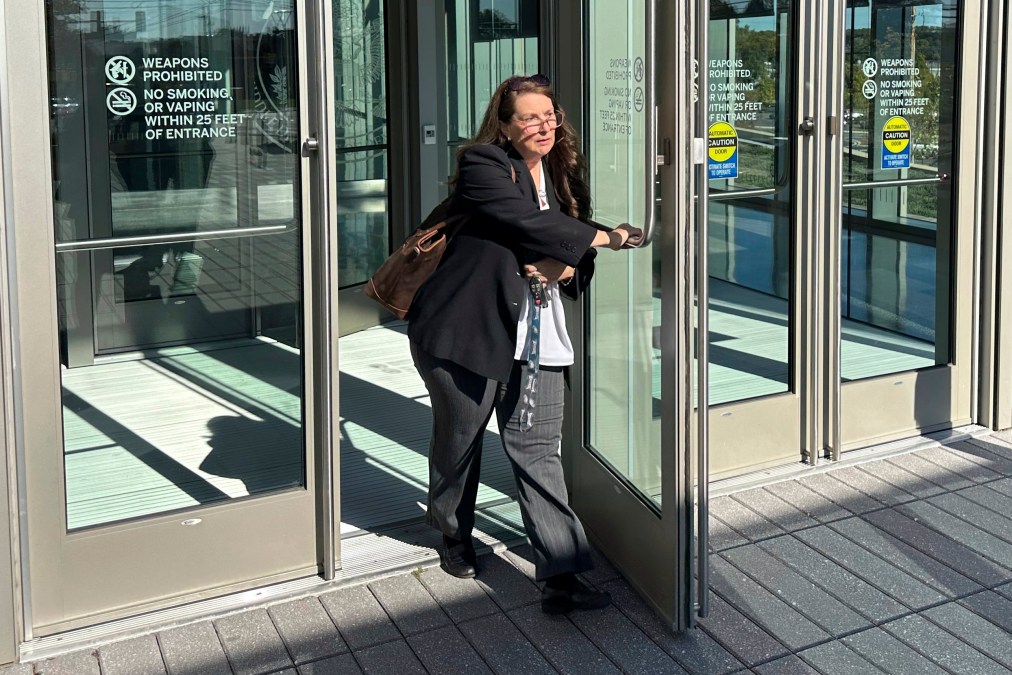 Heather Honey, a conservative election researcher, leaves the federal courthouse in Harrisburg, Pa., Oct. 18, 2024. (AP Photo/Mark Scolforo, File)
Anonprofit government watchdog group is suing the Department of Homeland Security, alleging that department officials have delayed and denied legitimate public information requests regarding the hiring of Heather Honey.
Honey was hired by DHS earlier this year and given the title “Deputy Assistant Secretary for Elections Integrity,” a change from past administrations, which have traditionally managed election security and integrity work through the Cybersecurity and Infrastructure Security Agency.
The nonprofit, American Oversight, has a history of successfully compelling governments to turn over public records through Freedom of Information Act requests and lawsuits.
In September, the group initially sought federal records from DHS and the United States Citizenship and Immigration Services related to Honey’s hiring process, including basic information about the job description and specific hiring and application materials like interview notes, resumes, and cover letters. They also sought Honey’s calendar, email communications, and text messages or chat app records, like those from Slack, that pertain to her hiring.
According to American Oversight, those and other public records requests related to Honey’s hiring were acknowledged by DHS, but the department has been otherwise unresponsive over the past two months. On Thursday, the group filed a lawsuit.
They allege the government has violated FOIA laws by failing to promptly respond to the requests, including information about “the scope of responsive records Defendants intend to produce or withhold and the reasons for any withholdings.”
“Through Defendants’ failure to respond to American Oversight’s FOIA requests within the time period required by law, American Oversight has constructively exhausted its administrative remedies and seeks immediate judicial review,” the complaint states.
The group is seeking a court compelling DHS to search for and produce the records within 20 days, while also asking that the department pay for the nonprofit’s legal costs.
Following publication of this story, DHS spokesperson Tricia McLaughin told CyberScoop in an emailed statement that the department has “nothing to hide.”
“Members of the public have a right to file freedom of information act requests,” McLaughin wrote. “DHS will comply with the requirements as we always do.”
Honey has a long and established record of coordinating with the Trump campaign in 2020 to push false and unproven claims that rampant voter fraud was responsible for his loss to Democrat Joe Biden. She is also closely connected to the broader “election denial” movement that began among conservative activists in 2020 and has continued to influence state and national policy debates over voting and elections policies.
She previously served as executive director of the Election Research Institute and played a leadership role with other groups like PA Fair Elections and Verity Vote that sought to overturn statewide electoral college results in Pennsylvania, which Biden won by approximately 70,000 votes.
Honey was also at the forefront of efforts to persuade states to stop relying on the information from the Electronic Registration Information Center used to identify registered voters across state lines, pushing for use of alternative technologies like EagleAI, which tech and election experts say is more likely to return inflated numbers around “potential” registration issues that often do not turn out to be fraudulent.
Last month, Avani Singh and Derek Tisler of the Brennan Center for Justice noted that Honey’s record of challenging election results in Pennsylvania, Georgia and Arizona is rife with instances of cherry picked data and misrepresentation, such as when she falsely claimed that Pennsylvania had tabulated more ballots than there were registered state voters in 2020.
“Journalists, election officials, and other experts who have scrutinized her work have found a consistent pattern of misusing data to fit predetermined narratives,” Singh and Tisler wrote.
PA Fair Elections is listed as a partner of the Election Integrity Network, a national organization run by conservative lawyer Cleta Mitchell that was closely tied to the Trump campaign’s efforts to manipulate state tabulation and certification procedures in 2020. Mitchell was reportedly present on a call Trump made in 2020 attempting to pressure Georgia Republican Secretary of State Brad Raffensperger to “find” enough supposedly fraudulent votes to overturn Trump’s deficit in the state.
Mitchell this year has advised DHS on its push to transform the Systemic Alien Verification for Entitlements (SAVE) database into a citizenship verification tool that would allow states to run bulk searches for voters with possible proof of citizenship or registration issues, according to Democracy Docket.
Honey and Mitchell are not the only activists claiming mass fraud who are now in top leadership positions within government. The White House recently hired Kurt Olsen, who led efforts to challenge Biden’s win in Texas, as a “special government employee” to investigate the 2020 election. President Trump has also said that FBI Director Kash Patel and Director of National Intelligence Tulsi Gabbard will be heavily involved in the administration’s broader push to gain more influence over state and local election procedures.
Written by Derek B. Johnson
Derek B. Johnson is a reporter at CyberScoop, where his beat includes cybersecurity, elections and the federal government. Prior to that, he has provided award-winning coverage of cybersecurity news across the public and private sectors for various publications since 2017. Derek has a bachelor’s degree in print journalism from Hofstra University in New York and a master’s degree in public policy from George Mason University in Virginia.
---
GGL 10 25
Democracy Docket
Cleta Mitchell Thinks Trump Will Use Emergency Powers to Take Control of Elections
Cleta Mitchell Thinks Trump Will Use Emergency Powers to Take Control of Elections ... Cleta Mitchell thinks President Donald Trump may declare a...
.
1 month ago
Democracy Docket
Plaintiffs Want Cleta Mitchell to Testify on Law to Suppress Student Voting
Voting rights groups in North Carolina are asking a federal court to compel election-denying lawyer Cleta Mitchell to testify in their...
.
2 weeks ago
Carolina Journal
Critics ask court to compel election integrity activist Mitchell to testify at NC trial
Left-of-center groups challenging a provision of North Carolina election law are asking a federal judge to help them ensure election...
.
2 weeks ago
MSNBC News
Researcher who distorted voter data gets election integrity job in Trump’s second term
For those who followed Donald Trump's efforts to overturn his 2020 election defeat, Cleta Mitchell's name probably rings a bell.
.
1 month ago
CBS News
Can Trump use emergency powers to influence federal elections?
Cleta Mitchell, an attorney who played a role in President Trump's attempt to overturn the 2020 election, said Mr. Trump could declare a...
.
1 month ago
NPR
Despite Trump's win, 'election integrity' activists still seek sweeping voting changes
Republican voters say they trust the 2024 election was administered well, yet pro-Trump conservatives are pushing some sweeping reforms to...
.
Jan 13, 2025
ProPublica
She Pushed to Overturn Trump’s Loss in the 2020 Election. Now She’ll Help Oversee U.S. Election Security.
Heather Honey has been appointed to a senior position in the Department of Homeland Security. State election officials and voting experts...
.
1 month ago
The Guardian
She was a firebrand Democrat. Now, Cleta Mitchell is a rising star of Republican election denialism | Donald Trump
Mitchell is now one of the most influential Republicans working to shape election law and policy ahead of the 2024 presidential election.
.
Jul 2, 2024
EXPOSEDbyCMD
Cleta Mitchell’s New Dark Money Elections Group Raised $3.9 Million in Its First Full Year of Operations
The pro-Trump outlet also published a column EIN's Kerri Toloczko misinforming readers that noncitizen voting is a crisis that needs to be...
---
GGL 5 26 ONLY CITS
[### Leading Election Conspiracy Theorist Appointed to DHS ...

Democracy Docket
https://www.democracydocket.com › News](https://www.democracydocket.com/news-alerts/leading-election-conspiracy-theorist-appointed-to-dhs-leadership-position/)
Aug 25, 2025 — Heather Honey was appointed as the deputy assistant secretary for elections integrity.
[### Researcher who has distorted voter data appointed to ...

Politico
https://www.politico.com › news › 2025/08/26 › dhs-el...](https://www.politico.com/news/2025/08/26/dhs-election-security-2020-election-conspiracy-00527453)
Aug 26, 2025 — A conservative election researcher whose faulty findings on voter data were cited by President Donald Trump as he tried to overturn his 2020 ...Read more
[### Pa. election conspiracy activist appointed to federal ...

90.5 WESA
https://www.wesa.fm › politics-government › heather-h...](https://www.wesa.fm/politics-government/2025-08-27/heather-honey-pennsylvania-election-denier-conspiracy-theorist-trump-dhs)
Aug 27, 2025 — Heather Honey is one of the country's most prominent election deniers supporting President Donald Trump, and now has a role setting federal ...
[### She pushed to overturn Trump's loss in the 2020 election. ...

Louisiana Illuminator
https://lailluminator.com › 2025/08/31 › heather-honey](https://lailluminator.com/2025/08/31/heather-honey/)
Aug 31, 2025 — Experts on voting and state election officials warned that Honey's appointment as DHS' deputy assistant secretary of election integrity could ...Read more
[### Since 2020, Heather Honey has led a variety of election ...

Facebook · WHYY
90+ reactions · 8 months ago](https://www.facebook.com/whyypublicmedia/posts/since-2020-heather-honey-has-led-a-variety-of-election-research-groups-whose-fla/1251916243613774/)
Ryan Farrell - You can't be a Christian and a Trump supporter at the same time, as MAGA opposes ALL of Jesus' teachings.Read more
[### Heather Honey Election Research Institute LD 1431 ...

Maine Legislature (.gov)
https://legislature.maine.gov › resources › VLA2...](https://legislature.maine.gov/testimony/resources/VLA20250416Honey133892192832944262.pdf)
Apr 16, 2025 — Page 1. Heather Honey. Election Research Institute. LD 1431. Testimony via Zoom.Read more
[### Experts warn DHS' hiring Pa. activist is bad for elections

WITF
https://www.witf.org › 2025/08/28 › experts-say-depart...](https://www.witf.org/2025/08/28/experts-say-department-of-homeland-security-undermines-credibility-in-hiring-pa-elections-activist/)
Aug 28, 2025 — Experts say Department of Homeland Security undermines credibility in hiring Pa. elections activist. Neither DHS nor the activist, Heather Honey ...Read more
[### Trump Empowers Election Deniers, Still Fixated on 2020 ...

The New York Times
https://www.nytimes.com › U.S. › Politics](https://www.nytimes.com/2025/10/22/us/politics/trump-election-deniers-voting-security.html)
Oct 22, 2025 — The president has placed proponents of his false claims into government jobs while dismantling systems built to secure voting, raising fears ...
[### Election Research Institute: US Election Research | United ...

Election Research Institute
https://www.electionresearchinstitute.org](https://www.electionresearchinstitute.org/)
Join us in restoring trust in U.S. elections through research, education and litigation support. Learn more.
[### Government watchdog sues DHS over election official's ...

CyberScoop
https://cyberscoop.com › nonprofit-sues-dhs-seeking-re...](https://cyberscoop.com/nonprofit-sues-dhs-seeking-records-for-election-official/)
Oct 30, 2025 — Heather Honey has a long and established record of coordinating with the Trump campaign in 2020 to push false and unproven claims around ...
---