Leadership Institute
===
pioneer incubator
MERRI OK
see also morton blackwell
SEE TWO
capt 318 7 22
Arlington va beachhead?
==
http://www.sourcewatch.org/index.php?title=The_Leadership_Institute
The Leadership Institute is a Virginia based training organisation for potential conservative political leaders.
According to the groups website The Leadership Institute is "the premier training ground for tomorrow's conservative leaders. Conservative leaders, organizations and activities rely on the Institute for the preparation they require for success."
"Since 1979 the Institute's unique seminars and workshops have enrolled more than 61,000 students and taught them how to win. Each year hundreds of Institute graduates obtain positions of influence in public policy because of their Leadership Institute training," its website states.[1]
Overview
- The Leadership Institute was started in 1979 by Morton C. Blackwell as a "non-partisan" educational institute that has been preparing conservatives for success in politics, government and the news media.
- They have trained more than 39,000 students.
- They have a staff of 47
- They have revenue of about $7 million.
- They claim to have more than 1000 active groups [1]. However, it appears that most do not exist.
- They list Fox News; MSNBC; CNN; CBS as examples of media placements available through the school.
- Their latest event was the Ronald Reagan Tribute Collection on May 19, 2004. They have future events and workshops that focus on grassroots activism.
- Another quote from their website: "The Institute is a non-partisan educational foundation".
Past Students
- Mitch McConnell: U.S. Senator from Kentucky
- Jim Gilmore: former governor of Virginia
- Karl Rove: Bush 43 political strategist[2]
- James Guckert: Talon News "reporter"
- David McIntosh: Congressman from Indiana
- Mark Souder: Congressman from Indiana
- JoAnn Davis: Congresswoman from Virginia
- Joe Wilson: Congressman from South Carolina
- Grover Norquist: President, Americans for Tax Reform
- Ralph Reed: former Executive Director Christian Coalition
- Jason Miller: Young conservative leader
Staff
- Steve Cassarino: Director of Member Services
- Jim Eltringham: Director of Public Relations
- Erin Krueger: Director of Recruitment
- Geoff Woliner: Youth Education Coordinator
- Rebekka James Turko: Director of Campus Coordination
- Ryan James Nickels: Director of Youth Outreach
- Benjamin J. Norquist: Campus Services Coordinator
- Andrew J. Tomar: Facilities Coordinator
Contact information
1101 North Highland Street
Arlington, VA 22201
Phone: (703) 247-2000
Fax: (703) 247-2001
Web: http://www.leadershipinstitute.org
Articles and Resources
Sources
- ↑ "About Us", The Leadership Institute, accessed February 2008.
Related SourceWatch articles
Categories: Conservatives | Politics | United States
===
all started w/ incubators:
Stein describes how the message machine works. If Rush Limbaugh wants something on vouchers – it's immediately in his hands; if Fox News' Bill O'Reilly needs a guest to talk about the "death tax," he's got him from one of the think tanks. Stein estimates that 36,000 conservatives have been trained on values, issues, leadership, use of media and agenda development. These are not the elected officials, but rather the cadre of the conservative network. Stein figures that the core leaders of the Big 80 groups he studied are about 2,000 people who make between $75,000 and $200,000 and have all been trained in the Leadership Institute.
stein on alternet
---
http://crooksandliars.com/john-amato/andrew-breitbarts-nixonian-okeefe-ratfk
O'Keefe and his crew are only following in the footsteps of the worst of the worst. They are funded by a right wing outfit called The Leadership Institute.
Founded in 1979 by veteran Republican activist Morton Blackwell, the Leadership Institute has worked with Senate Minority Leader Mitch McConnell, Karl Rove and Grover Norquist. The group raked in $6.6 million in 2008, according to its most recent publicly available IRS filings, which doesn’t list donors.
“What we teach is to use creative and imaginative ways to make your points, to reveal what we think is political correctness run amuck, liberal hypocrisy and double standards” on left-leaning college campuses, said Sutton, who supervised O’Keefe at the institute until O’Keefe was asked to leave because his investigative work could interfere with the Institute’s Internal Revenue Service standing...read on
Poor James is ordered to stay at mommy and daddy's house to keep him out of trouble.
James O'Keefe, the 25-year-old conservative filmmaker who was arrested this week in connection with a plot to tamper with phone lines in Democratic Sen. Mary Landrieu's New Orleans office, is out of jail on $10,000 bond, Talking Points Memo reports. The judge ordered O'Keefe to live with his parents until a preliminary hearing set for Feb. 13.
And notice thehigh powered lawyer O'Keefe immediately received. He's backed by big conservative money.
Michael Madigan, O'Keefe's lawyer, said Wednesday that his client was not trying to wiretap or interfere with Landrieu's phones, but he would not explain why O'Keefe was there. He also would not say whether O'Keefe was working for someone or was on his own.
"The truth will come out," said Madigan, a Washington lawyer who represented Sen. Howard Baker, the Republican who famously asked during the Watergate investigation,"What did the President know and when did he know it?"
http://www.salon.com/news/feature/2010/02/03/james_okeefe_white_nationalists
James O'Keefe's race problem
A photo of the righty stuntman at a white-nationalist confab illustrates a career marked by racial resentment
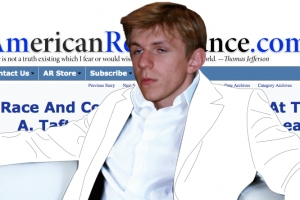
James O'Keefe, photographed at a white nationalist conference by One People's Project.
This story has been corrected since it was originally published.
Many of the conservatives who gleefully promoted James O’Keefe’s past political stunts are feigning shock at his arrest on charges that he and three associates planned to tamper with Louisiana Sen. Mary Landrieu's phone lines. Once upon a time, right-wing pundits hailed the 25-year-old O’Keefe as a creative genius and model of journalistic ethics. Andrew Breitbart, who has paid O’Keefe, called him one of the all-time “great journalists” and said he deserved a Pulitzer for his undercover ACORN video. Fox News’ Bill O’Reilly declared he should have earned a “congressional medal.”
His right-wing admirers don't seem to mind that O’Keefe's short but storied career has been defined by a series of political stunts shot through with racial resentment. Now an activist organization that monitors hate groups has produced a photo of O'Keefe at a 2006 conference on "Race and Conservatism" that featured leading white nationalists. The photo, first published Jan. 30 on the Web site of the anti-racism group One People's Project, shows O’Keefe at the gathering, which was so controversial even the ultra-right Leadership Institute, which employed O'Keefe at the time, withdrew its backing. O'Keefe's fellow young conservative provocateur Marcus Epstein organized the event, which gave anti-Semites, professional racists and proponents of Aryanism an opportunity to share their grievances and plans to make inroads in the GOP.
One People's Project covered the event at the time, sending a freelance photographer to document the gathering. Project director Daryle Jenkins told O'Keefe manned a literature table filled with tracts from the white supremacist right, including two pseudo-academic publications that have called blacks and Latinos genetically inferior to whites: American Renaissance and the Occidental Quarterly. The leading speaker was Jared Taylor, founder of the white nationalist group American Renaissance. "We can say for certain that James O'Keefe was at the 2006 meeting with Jared Taylor. He has absolutely no way of denying that," Jenkins said. O'Keefe's attorney did not respond to a request for comment on his client's role in the conference.
[Subsequent to publication, freelance photographer Isis told Salon she saw O'Keefe helping with the event and believed he staffed the literature table, but her only photograph of O'Keefe was cropped so that the literature table isn't evident. "He was helping Marcus Epstein in the execution of the event," the photographer recalls. "O’Keefe was involved the same way you would be involved if you went to a party and you put out the cups and stocked the cooler.”]
O'Keefe's racial issues can be seen in many of his prior stunts The notorious ACORN videos highlighted images of himself dressed as a pimp, deceptively edited through hidden camera footage as he baited African-American office workers into making statements that could be perceived as incriminating. There were also lesser-known but equally inflammatory spectacles like the “affirmative action bake sale” O’Keefe and his conservative comrades held when they were students at Rutgers University. During the event, O’Keefe stood at a table in the center of campus offering baked goods at reduced prices to Latinos and African-Americans while whites were forced to pay exorbitant amounts. (Native Americans, he announced, would eat free.)
By O’Keefe’s own account, his racial troubles became acute when he entered the multicultural atmosphere of Rutgers University’s dormitory system. In an online diary that has since been scrubbed from the Web (but not before being captured on Daily Kos), he wrote that he was forced to live on an all-black dormitory floor after refusing to live with the gay roommate he was initially assigned. O’Keefe claimed his next roommate was “an Indian midget ... who smelled like shit.” The roommate left, however, and was replaced by “a greek kid.” The new roommate complained to a residential administrator that O’Keefe had called his neighbors “niggers,” prompting the school to expel him from the dorm. He rejected the accusation as a “complete lie,” writing, “I was lead out of the room crying and screaming at him and my situation, no friends, no one one [sic] to talk to, forced to go in front of a black man, Dean Tolbert, to defend myself and help explain that I did not call anyone any names.”
The following year, despite this record, O’Keefe secured a dream job in the conservative movement, employed by the Leadership Institute, a Northern Virginia-based outfit that serves as the movement’s most prolific youth training operation. There, O’Keefe met Marcus Epstein, a fellow ideologue who as editor of a conservative publication at the College of William and Mary assailed Martin Luther King Jr. for “philandering and plagiarism” and challenged his patriotism and Christianity.
In August 2006 Epstein planned an event that would wed his extreme views on race with his ambitions. Epstein invited white nationalist Jared Taylor and homophobic white-grievance peddler John Derbyshire of the National Review to speak at the Leadership Institute’s Northern Virginia headquarters, at a mock symposium called “Race and Conservatism.”
According to a post on the white supremacist Web site Stormfront, Taylor and Derbyshire debated "the role of race in policy decisions and the racial future of the Republican party."
When the Southern Poverty Law Center denounced Taylor’s participation in the event, sparking damaging publicity for the Institute, Epstein shifted it across the street, where he played host under the auspices of a “traditionalist” group he founded called the Robert A. Taft Club. O’Keefe joined him after the last-minute move. A speaker from the right-wing black front group Project 21, led by white conservative David Almasi, was added at the last minute.
According to One People's Project, which dispatched an undercover reporter to the event, about 40 people attended the event, including several white supremacists. They included Michael Hart, a Jewish astrophysicist and advocate of racially partitioning the U.S., who once clashed with David Duke at a conference over the Ku Klux Klan leader's anti-Semitism.
The event’s headline speaker, Jared Taylor, is the publisher of one of the white supremacist movement’s foremost journals, American Renaissance, which seeks to apply an academic gloss to the racialist screeds contained on its pages. According to a report on the conference published in Taylor's magazine, Taylor argued that a taboo against discussing the alleged criminal behavior and lower intelligence of blacks and Latinos twisted political discourse, and he advocated a strong white nationalism to counter it. Derbyshire denounced “this whole rickety apparatus of affirmative action, discrimination lawsuits, corporate shakedowns, profiling protests and 'speech codes.'” But the National Review editor expressed doubt that a sufficiently large white nationalist movement could be mustered to do much about it.
Epstein and O'Keefe moved on from the "Race and Conservatism" conference to better things. After graduating from the Leadership Institute, Epstein held jobs as executive director of both former Republican Rep. Tom Tancredo’s Team America PAC and Pat Buchanan’s American Cause. He also started a group called Youth for Western Civilization that dedicated itself to “defending the West on campus.” An essay featured on the group’s Web site complaining that “largely Jewish intellectual elites have utterly transformed American social and political discourse” suggested that Epstein’s outfit was only his latest attempt to push white nationalism and anti-Semitism into the conservative mainstream.
Epstein’s career unraveled in June 2009, when a violent racial assault he committed two years earlier was disclosed. According to a court affidavit, Epstein had karate-chopped a random African-American woman in the face and called her a “nigger” during a drunken late-night romp bar-hopping on Washington’s M Street in 2007, leading to his arrest by an off-duty Secret Service agent. He signed a plea bargain requiring him to attend alcohol rehabilitation courses and donate $1,000 to the United Negro College Fund as a token of his contrition.
Meanwhile, O’Keefe lost his job at the Leadership Institute in 2007 after a prank call he made to an Ohio-based Planned Parenthood clinic. During the call, O’Keefe offered a donation to the clinic on the condition that it would be earmarked to pay for aborting African-American fetuses. “Because there's definitely way too many black people in Ohio,” O’Keefe remarked to the receptionist. “So, I'm just trying to do my part.” Leadership Institute founder Morton Blackwell said O'Keefe's stunts went beyond the right-wing group's standards. “He wanted to do sting operations that would affect legislation; he made some calls which have been covered in the news media to Planned Parenthood,"Blackwell told the New York Times. "That was beyond the scope of what we had hired him to do. We are an educational organization. We are not an activist organization.” Blackwell told O'Keefe he had to choose between his job and his activism, "and he said he was committed to the activism," according to the Times.
O’Keefe’s termination by the Leadership Institute hardly ended his career as a conservative activist. Right-wing online publicist Andrew Breitbart, hearing of the merry prankster’s exploits, hired him to carry out the ACORN operation that would make him famous. Since his arrest, however, some of O’Keefe’s former associates are scrambling to save face. "I am shocked by the reports of this behavior,” declared O’Keefe’s collaborator on the ACORN operation, Hannah Giles. (Giles had tarted up as a prostitute for the stunt.)
O’Keefe has now hired a defense attorney and is waging a high publicity battle against charges that could land him in prison for nearly a year. Some of his old allies, like Breitbart, remain in his corner. Fox News' Sean Hannity hosted O'Keefe for a sympathetic sitdown Feb. 1, where the young right-winger played victim, claiming he was being persecuted by "flat-out slandering" and "journalistic malpractice."
- Max Blumenthal is a freelance writer based in Los Angeles. More Max Blumenthal
---
$ but no donors named
---
http://en.wikipedia.org/wiki/Morton_Blackwell
---
official bio
Morton Blackwell
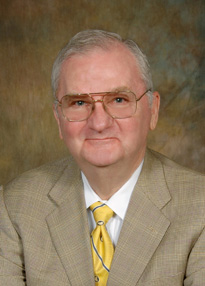 Professionally, Morton Blackwell is the president of the Leadership Institute, a non-partisan educational foundation he founded in 1979.
His institute prepares conservatives for success in politics, government and the news media. Over the years the Leadership Institute has trained more than 86,000 students. It currently has revenue of $8.7 million per year and a staff of 53.
In youth politics, Mr. Blackwell was a College Republican state chairman and a Young Republican state chairman in Louisiana.
He served on the Young Republican National Committee for more than a dozen years, rising to the position of Young Republican National Federation national vice chairman at large.
Off and on for five years, 1965-1970, he worked as executive director of the College Republican National Committee under four consecutive College Republican national chairmen.
He served on the Louisiana Republican state central committee for eight years.
First elected to the Arlington County (Virginia) Republican Committee in 1972, he is a member of the Virginia Republican state central committee and was first elected in 1988 as Virginia’s Republican National Committeeman (RNC), a post he still holds. In 2004 he was elected to the Executive Committee of the RNC and served for four years.
Having worked actively in politics for more than forty years, he has probably trained more political activists than any other conservative. Starting in the 1960s, he has trained thousands of people who have served on staff for conservative and Republican candidates in every state.
Mr. Blackwell was Barry Goldwater’s youngest elected delegate to the 1964 Republican National Convention in San Francisco.
He was a national convention Alternate Delegate for Ronald Reagan in 1968 and 1976, and a Ronald Reagan Delegate at the 1980 national convention.
In 1980, he organized and oversaw the national youth effort for Ronald Reagan.
He served as Special Assistant to the President on President Reagan’s White House Staff 1981-1984.
Mr. Blackwell is something of a specialist in matters relating to the rules of the Republican Party. He served on rules committees of the state Republican parties in Louisiana and in Virginia. He serves now on the RNC’s Standing Committee on Rules and has attended every meeting of the Republican National Conventions’ Rules Committees since 1972.
Morton's Speeches and Writings
==
http://dir.salon.com/story/news/feature/2005/05/25/blackwell/
When the state or national candidate you're backing wins by a suitably large margin, as he or she surely will, have the nonpartisan group that sponsored the election sign off on your prewritten celebratory press release and send it statewide. Reporters will almost certainly ignore it, but after a dozen similar victories, they'll start dashing off articles about the youth phenomenon behind your candidate's campaign -- or better yet, just start plagiarizing your press releases.
There is no better place to master the art of mock-election rigging -- and there is no better master than Morton Blackwell, who invented the trick in 1964 and has been teaching it ever since. Blackwell's half-century career in conservative grass-roots politics coincides neatly with the fortunes of the conservative movement: He was there when Goldwater lost, when Southern voters abandoned the Democratic Party in droves, and when the Moral Majority began its harvest of evangelical Christian voters. In the 1970s, Blackwell worked with conservative direct-mail king Richard Viguerie; in 1980, he led Reagan's youth campaign. Recently, he's been fighting to save Tom DeLay's job.
Yet Blackwell's foundation, the Leadership Institute, is not a Republican organization. It's a nonpartisan 501(c)(3) charity, drawing the overwhelming majority of its $9.1 million annual budget from tax-deductible donations. Despite its legally required "neutrality," the institute is one of the best investments the conservative movement has ever made. Its walls are plastered with framed headshots of former students -- hundreds of state and local legislators sprinkled with smiling members of the U.S. Congress, and even the perky faces of two recently crowned Miss Americas. Thirty-five years ago, Blackwell dispatched a particularly promising 17-year-old pupil named Karl Rove to run a youth campaign in Illinois; Jeff Gannon, a far less impressive student, attended the Leadership Institute's Broadcast Journalism School....
It's an approach, Murray believes, that has long since paid off. "Sure, [Blackwell] has trained Karl Rove and Ralph Reed and Grover Norquist and 223 other legislators and members of Congress," Murray notes, "but more importantly, he's trained 40,000 other local organizers." The institute's graduates, in other words, are part of a movement. "We spent $2 billion trying to win this last election," Murray says of progressives. "They already spent 25 years, and nearly $100 million, building the talent pool that won the election. And which will consistently win them elections for the next several decades."
The structure of Blackwell's Campus Leadership Program is simple. The Leadership Institute trains promising conservative college graduates over the summer and dispatches them to campuses in the fall with a mandate to start conservative student organizations. Need $500 and some ideas to start a combative right-wing campus publication? The institute would love to help you. Is the campus administration discriminating against your Second Amendment club? The institute will help you take your cause to the Internet. No one on campus at your Christian college has ever heard of the institute? Staffers will be glad to drive down, take you to a steakhouse, and talk it up. Last year, the CLP doubled in size, to 418 clubs and counting. By the end of 2006, Blackwell is confident he will have created 1,000 conservative campus organizations.
---
http://www.dkosopedia.com/wiki/Morton_Blackwell
---
Members of the Leadership Institute have been known to promote racist and radical events. Morgan Brooke Wilkins, a former CRNC field representative, was hired by the group as a Campus Services Coordinator. She was fired from the CRNC for promoting the racist "catch an illegal immigrant day" and an activity where students would shoot cutouts John Kerry and other Democrats. Apparently, when she was too extreme for the College Republicans, she fit right in at the Leadership Institute.
---
My right-wing degree [52], Jeff Horwitz, Salon, May 24, 2005
"Yet Blackwell's foundation, the Leadership Institute, is not a Republican organization. It's a nonpartisan 501(c)(3) charity, drawing the overwhelming majority of its $9.1 million annual budget from tax-deductible donations. Despite its legally required "neutrality," the institute is one of the best investments the conservative movement has ever made.
[. . .] Some progressives have come to that conclusion as well. "This was certainly needed 25 years ago," says Peter Murray, of the Center for Progressive Leadership. "Investing beyond any individual election cycle is the way that we're going to develop the progressive movement into a more robust, coordinated, compact force that can win elections." But getting donors to think beyond 2008 is a tough sell."
---
all
From Salon.com
My Right-wing Degree
How I learned to convert liberal campuses into conservative havens at Morton Blackwell's Leadership Institute, alma mater of Karl Rove, Ralph Reed, Jeff Gannon and two Miss Americas.
By Jeff Horwitz
May 24, 2005 | One recent Sunday, at Morton Blackwell's Leadership Institute, a dozen students meet for the second and final day of training in grass-roots youth politics. All are earnest, idealistic and as right wing as you can get. They take careful notes as instructor Paul Gourley teaches them how to rig a campus mock election.
It's nothing illegal -- no ballot stuffing necessary, even at the most liberal colleges. First you find a nonpartisan campus group to sponsor the election, so you can't be accused of cheating. Next, volunteer to organize the thing. College students are lazy, and they'll probably let you. Always keep in mind that a rigged mock election is all about location, location, location.
"Can anyone tell me," asks Gourley, a veteran mock electioneer, "why you don't want the polling place in the cafeteria?"
Stephen, a shy antiabortion activist sitting toward the rear of the class, raises his hand: "Because you want to suppress the vote?"
"Stephen has the right answer!" Gourley exclaims, tossing Stephen his prize, a copy of Robert Bork's "Slouching Toward Gomorrah."
The students, strait-laced kids from good colleges, seem unconvinced. The lesson -- that with sufficient organization, the act of voting becomes less a basic right than a tactical maneuver -- doesn't sit easy with some students at first. Gourley, a charismatic senior from South Dakota and the treasurer of the College Republican National Committee, assures them: "This is not anti-democracy. This is not shady. Just put [the polling place] somewhere where you might have to put a little bit of effort into voting." The rest, Gourley explains, is just a matter of turnout.
When the state or national candidate you're backing wins by a suitably large margin, as he or she surely will, have the nonpartisan group that sponsored the election sign off on your prewritten celebratory press release and send it statewide. Reporters will almost certainly ignore it, but after a dozen similar victories, they'll start dashing off articles about the youth phenomenon behind your candidate's campaign -- or better yet, just start plagiarizing your press releases.
There is no better place to master the art of mock-election rigging -- and there is no better master than Morton Blackwell, who invented the trick in 1964 and has been teaching it ever since. Blackwell's half-century career in conservative grass-roots politics coincides neatly with the fortunes of the conservative movement: He was there when Goldwater lost, when Southern voters abandoned the Democratic Party in droves, and when the Moral Majority began its harvest of evangelical Christian voters. In the 1970s, Blackwell worked with conservative direct-mail king Richard Viguerie; in 1980, he led Reagan's youth campaign. Recently, he's been fighting to save Tom DeLay's job.
Yet Blackwell's foundation, the Leadership Institute, is not a Republican organization. It's a nonpartisan 501(c)(3) charity, drawing the overwhelming majority of its $9.1 million annual budget from tax-deductible donations. Despite its legally required "neutrality," the institute is one of the best investments the conservative movement has ever made. Its walls are plastered with framed headshots of former students -- hundreds of state and local legislators sprinkled with smiling members of the U.S. Congress, and even the perky faces of two recently crowned Miss Americas. Thirty-five years ago, Blackwell dispatched a particularly promising 17-year-old pupil named Karl Rove to run a youth campaign in Illinois; Jeff Gannon, a far less impressive student, attended the Leadership Institute's Broadcast Journalism School.
The institute's classes aren't tickets into an exclusive and shadowy club, however: I am also an institute graduate. In March, I attended its Youth Leadership School, a one-weekend, 28-hour crash course in political organizing. Registration was open to the public and cost $60, which got me a sourcebook, six free meals, up to three nights in a dorm, and a six-hour lecture on political principles delivered by the 65-year-old Blackwell himself. The morning I arrived at the Leadership Institute, I identified myself as a reporter for Salon. "That's great," said communications director Michelle Miller. By the end of the weekend, Blackwell took me on a tour of the headquarters, chatted with me for nearly an hour, and gave me a copy of the institute's antisocialism in-house film, "The Roots of the Ultra Left." The institute is a very friendly place.
Over the last 25 years, more than 40,000 young conservatives have been trained at the institute's Arlington, Va., headquarters in everything from TV makeup for aspiring right-wing talking heads to prep courses for the State Department's Foreign Service exam. Classes are taught by volunteers recruited from the ranks of the conservative movement's most talented organizers, operatives and communicators.
The Leadership Institute has succeeded, in part, because it's had little to no competition from the left. College campuses may still be havens for liberal thought, but the right-wing students are the ones organized enough to win major battles. Perhaps expecting that American youth would organize themselves as they did in decades past, progressive organizations have been outstripped by their conservative counterparts in professionalizing the ragtag world of college activism. "When it comes to campus controversy, from affirmative action to free speech, the right wing pumps in money and expertise and shows [students] how to out-hustle their opponents," says David Halperin of the liberal Center for American Progress.
Still, Blackwell says conservatives are underdogs on college campuses. Conservative students may be better organized, but they're still outnumbered. The Leadership Institute contends that liberal higher education is robbing the conservative movement of new blood -- and thereby handicapping the institute's efforts. "You know, the most conservative students are the freshmen," Blackwell told me. "There is an acculturation there."
And that's where the institute is taking its fight. For most of its 25-year history, it has focused on grooming students to work in conservative politics; it's now increasingly devoting its efforts to making campuses more conservative places. Through its Campus Leadership Program, the institute is leading a growing effort to found and support a national network of conservative student groups and publications capable of permanently altering the intellectual and social environment of universities to conservatives' advantage. That goal alone is a stark rejection of the standard conservative complaint that post-Vietnam War higher education is not just grossly liberal, but irredeemably so. Already, the program has shown considerable success. Asked about his campus initiative, Blackwell simply says, "You're talking about the major project for the rest of my life."
In the wake of the 2004 election, some progressive groups have been working to reinforce their positions on campus. Last February, the Center for American Progress launched Campus Progress, a student activism support center, to combat what Halperin describes as "30 years of effective organizing" by conservative groups like the Intercollegiate Studies Institute, Young Americans for Freedom, and of course, the Leadership Institute. But Blackwell is unfazed by the competition. "If they asked me, which they haven't, I could let them know that it's a lot harder than it appeared on the surface," he told me. "You've got to work years before you see any results."
And Blackwell has put in those years. A young Louisiana Republican in the days when Democrats owned every statewide office, he cut his political teeth on Barry Goldwater's doomed 1964 presidential bid. "Don't fully trust anyone until he has stuck with a good cause which he saw was losing," is an institute maxim rooted in Blackwell's own political education. "After Goldwater's defeat, the number of people who would admit to being movement conservatives could all have fit into an average phone booth," Blackwell said in an interview. "And among us, we didn't have a dime for a telephone call."
That was a long time ago. According to Blackwell, allied "movement conservatives" took the first steps toward outmaneuvering their party's moribund minority leadership in the '70s. More than a test of character, conservatism's formerly abject status provided the key to those gains. With a wealth of political talent but few resources or constituencies, conservatives had no choice but to look beyond the two- and four-year cycles that dictate traditional political strategy. Instead of fighting an intra-party struggle they were certain to lose, they built an infrastructure outside the Republican Party dedicated to promoting talent, not winning the next election.
The Leadership Institute is a perfect example of that strategy, according to Peter Murray, a progressive management trainer who studied the institute's model before launching his own nonprofit political training organization, the Center for Progressive Leadership, last year. "Being a 501(c)(3) not only means they can get tax deductions for their donors and build endowments, but they're forced to look long term," Murray says. "They're not allowed to endorse candidates and get sucked into electoral politics. Year in and year out, all they do is build leaders."
It's an approach, Murray believes, that has long since paid off. "Sure, [Blackwell] has trained Karl Rove and Ralph Reed and Grover Norquist and 223 other legislators and members of Congress," Murray notes, "but more importantly, he's trained 40,000 other local organizers." The institute's graduates, in other words, are part of a movement. "We spent $2 billion trying to win this last election," Murray says of progressives. "They already spent 25 years, and nearly $100 million, building the talent pool that won the election. And which will consistently win them elections for the next several decades."
The structure of Blackwell's Campus Leadership Program is simple. The Leadership Institute trains promising conservative college graduates over the summer and dispatches them to campuses in the fall with a mandate to start conservative student organizations. Need $500 and some ideas to start a combative right-wing campus publication? The institute would love to help you. Is the campus administration discriminating against your Second Amendment club? The institute will help you take your cause to the Internet. No one on campus at your Christian college has ever heard of the institute? Staffers will be glad to drive down, take you to a steakhouse, and talk it up. Last year, the CLP doubled in size, to 418 clubs and counting. By the end of 2006, Blackwell is confident he will have created 1,000 conservative campus organizations.
Unlike chapter-based political organizations, CLP clubs are unaffiliated with either the Leadership Institute or each other. According to Blackwell, this trait offers a serious advantage: "No purges." The clubs' independence also comes with the benefit of plausible deniability. "You can get away with stuff that you would take a lot of flak for doing in the College Republicans," says CLP director Dan Flynn. "Because we're independent, we can do activities that push the envelope," agrees University of Miami senior Sarah Canale, whose CLP-organized Advocates for Conservative Thought threw an affirmative action bake sale last year in which the price of a cupcake varied according to the race of its buyer. That it was controversial, she believes, was a victory in itself.
The Leadership Institute teaches the same principle. Controlled controversy -- making your point in a manner so bombastic that your opponents blow their cool -- is a Blackwell specialty. Before the 2004 Republican Convention, the conservative elder personally went to a drugstore and bought little pink heart stickers, bandages and purple nail polish. At home, he made the "Purple Heart Band-Aids" that he later distributed in Madison Square Garden to mock John Kerry's war wounds. From Blackwell's perspective, the Kerry camp's outrage at the gag was a tactical disaster. Democratic Party chairman Terry McAuliffe, Blackwell says, kept the story alive for days by "running around like a chicken with its head cut off."
A stunt is one way to get press -- but a more effective and sustainable method is to start your own publication. The Leadership Institute trains around 250 students yearly in its student publication workshop, and CLP staff assisted in launching 22 campus publications last year alone.
The Rutgers Centurion is a conservative monthly that got off the ground this fall with institute help. Rutgers student James O'Keefe founded the magazine after coming across a conservative publication at Tufts. "I said, why don't we have this?" O'Keefe remembers. He taught himself a page-layout program and got in touch with the Leadership Institute, which dispatched a staffer to take him and his coeditors to dinner at an upscale local brewery. The institute gave O'Keefe books on starting a publication, awarded him a $500 "Balance in Media Grant," and suggested never-fail places on campus to ferret out liberal excess. "They were really excited," O'Keefe recalls.
The Rutgers Centurion has since analyzed faculty campaign contributions that favored John Kerry over George W. Bush 104 times over, and it accused one of Rutgers' most esteemed alumni, African-American author and actor Paul Robeson, of being a Stalinist. The magazine has published poetry about abortion from a fetus's point of view and run allegations of prejudice against Condoleezza Rice, "The Black Woman Liberals Love to Hate."
The Centurion's favorite subject, however, seems to be people who don't like the Centurion. Rutgers student Tabitha Rice earned the February "Liberal of the Month" title for allegedly defacing copies of the Centurion's previous issue, and in the spirit of Valentine's Day, the editors framed an excerpt from their hate mail -- "'F*** [The editors of The Centurion.] F*** Them till they're dead'" -- in a heart-shaped box.
The Centurion's assertion that campus liberals are intolerant lends its vitriolic criticism of leftists the veneer of the free speech movement. CLP coordinator Flynn, the author of "Why the Left Hates America," recalls that during a speech at Berkeley, he encountered "a Nazi-style book burning" of his work and an attempt to rip his microphone cord from the wall. That might not have quite the allure of Mario Savio's rallying a crowd from a squad car's roof during Berkeley's student protests, but it's a start.
CLP publications play a crucial role in publicizing such run-ins. Right-wing watchdog groups like Accuracy in Media have railed against liberal bias in the classroom for years, but as outsiders, they lack both standing and a direct connection to campus life. CLP publications have both, allowing them to monitor bias in every classroom. In December, the editor of the Louisville Patriot, a CLP-organized publication at the University of Louisville, reported that sociology lecturer John McTighe had made a very, very tasteless joke about how religious conservatives who had voted for Bush ought to be shot. With sufficient outrage, the story jumped from the Patriot to the local media and the Internet, resulting in McTighe's suspension and a thoroughly public debate of liberal bias in, of all places, Kentucky.
Sparking such scandals is "absolutely" a part of CLP's plan, Blackwell says. "In the last year or so, not taking into account the flap over Ward Churchill, you have no doubt noticed more news coverage about complacent leftists' abuses on campus," he says. "Academia is the last unbreached citadel of the left, and I believe we are today over the moat."
There's still plenty to do before then. Chris Stio, an institute staffer who directed the Bush-Cheney field operations in northeast Michigan, warns his students not to buy into second-term crowing about America's irrevocable slide into conservatism. "Enough people were yelling and screaming about the president that if they'd actually picked up the phone book and started calling, they might have won," he says. "They went to concerts, they bashed the president, but they didn't work. If enough people had, maybe we'd have a different president. The election was not inevitable. And too many think it was."
Some progressives have come to that conclusion as well. "This was certainly needed 25 years ago," says Peter Murray, of the Center for Progressive Leadership. "Investing beyond any individual election cycle is the way that we're going to develop the progressive movement into a more robust, coordinated, compact force that can win elections." But getting donors to think beyond 2008 is a tough sell. "Our budget this year will be just over a million. We'd love to be bigger than that," he says. "It's really going to be up to the progressive donor community as to whether they're going to look long term and invest in a superstructure. If they do, we can build it relatively quickly."
In the meantime, the Leadership Institute will continue its work. Blackwell has found plenty of humor in his recent vilification as the evil genius that smoothed fake reporter Jeff Gannon's path to White House press briefings. "If they want to believe that there's a vast conspiracy, and they want to waste their time trying to decide who gives all the orders to the conservative movement, well, let 'em spend their time on that," he says, laughing.
The Leadership Institute has better things to do, Blackwell says, than conspire to put a male escort up to lobbing softballs to White House spokesman Scott McClellan. For example, training the next generation of Karl Roves.
"Everyone knows that for certain breeds of dogs it is customary to cut their tails short when they are a few weeks old," begins Blackwell's lecture to us on the importance of releasing negative information on your opponent incrementally. "Every time you clip the puppy's tail it hurts. It hurts. You might traumatize the puppy for life."
"The moral is that if it's your tail that's being clipped, you want it clipped once," concludes Blackwell. "But if you get a chance to clip your opponent's tail, clip that puppy as often as you can."
It may be hardball, but it isn't cheating, and it would be far less effective if it were. "These are powerful techniques," Blackwell tells the class at the end of his marathon lecture. "So I don't want anyone going out of here and acting unethically. It's not necessary."
---
About the writer Jeff Horwitz, a former editorial fellow at Salon, writes for the Washington City Paper.