Scandanavia
==
see iceland, feminism, andur lost no $ in gt recession, jailed bankers and nat'l bank; 1st woman pres, 1st lesbian
===
an 12 24
According to **The World Happiness Report, the United States fell to #23 in terms of happiness earlier this year — way behind Norway, the Netherlands, Denmark, Iceland and other countries in Europe.
William S. Becker, a former U.S. Energy Department official who now serves as executive director for the Presidential Climate Action Project, lays out a variety of reasons for the United States' declining mental health in a biting op-ed published by The Hill on December 9.
Citing health care, education, inequality and other problems, Becker argues that the United States is failing its people miserably.
READ MORE:[Why Measles, Whooping Cough and worse could roar back under RFK's watch
"The U.S. is the among the wealthiest countries in the world per capita," Becker explains, "but the American people are not happy. The Constitution doesn't guarantee happiness, but the founding documents do say we all have an equal right to pursue it."
Becker points to data from the World Happiness Report, noting that "Nordic nations dominate the top 10 list" in terms of happiness.
"The happiest countries have capitalist economies and democratic governments," Becker argues, "but they provide their people with essential tools for success — tools that American conservatives brand as 'socialist.' Universal health care is one. The United States is the only high-income nation without it."
Becker continues, "Americans pay nearly four times as much for prescription drugs and higher costs for hospitalization and doctors than people in other developed countries. More than 27 million Americans still have no health insurance."
READ MORE:[Kansas Republican slams Louis DeJoy's USPS performance — to his face
The United States' health insurance crisis, Becker warns, will become even worse if the Affordable Care Act of 2010, a.k.a. Obamacare, is overturned during President-elect Donald Trump's second term.
"As of March," Becker observes, "over 45 million Americans were enrolled in Obamacare. Trump tried to kill that option during his first term and says he has 'concepts' to replace it now. According to the Congressional Budget Office, 3.4 million Americans would lose health insurance without Obamacare."
Access to "quality education," according to Becker, also plays a major role in a country's mental wellbeing — and the U.S., he says, falls way beyond Scandinavian countries in that area.
Inequality, Becker adds, is also harming Americans' mental health.
Becker observes, "Income and wealth are more equitably distributed in happy countries such as Iceland, Denmark and Norway.… In 2017, Trump's tax cuts widened the wealth gap by skewing tax policy toward the rich…. Trump has promised to lower corporate taxes even more next year…. Meanwhile, America's middle class is shrinking while its lower class expands. Nearly 38 million Americans live in poverty.
READ MORE:['America will not be made great again': McConnell received ovation after 'swipe' at Trump
*William S. Becker's full op-ed for The Hill is available at this link.
===
sonali 2017
viking econ 15 min
see below
100 years ago exodus, but displaced 1% for workers, but nordic model led to more entrepreneur, even now;
had a vision but sounded practical to broad buy-in;vs protest xy or z; create movement but also cooperatives banks, insurance...
we have to smarts and competence to do those; made country ungovernable by 1% elite; non-coperate: strikes; sweden general strike 1931, called out troops and killed ppl;
// US 60's take streets, CRM, but did not go to next step and take on the economy (tho MLK expanded his vision at end); infl by Bayard Rustin. democratic socialism essential to get rid of recism]; very differnt immigrant policy: we pay you for yr to get job skill and learn language and culture (and live where we ask you to but then go where you want).
==
https://thinkprogress.org/europe-bans-one-of-americas-most-prominent-white-supremacists-34b34726f623/
no lx twt
Europe bans one of America’s most prominent white supremacists
Jared Taylor claims he can no longer travel through the continent.
CASEY MICHEL
MAR 31, 2019, 10:06 AM
American white supremacist Jared Taylor says that he can no longer travel throughout Europe. CREDIT : YOUTUBE
AMERICAN WHITE SUPREMACIST JARED TAYLOR SAYS THAT HE CAN NO LONGER TRAVEL THROUGHOUT EUROPE. CREDIT : YOUTUBE
Jared Taylor, one of the most prominent white supremacists in the U.S., claimed on his website on Friday that he’d been “banned from Europe” until 2021.
The ban came as Taylor attempted to transfer in Switzerland for a flight to Finland. According to Taylor, Swiss police informed him that Polish authorities had barred Taylor from traveling through the Schengen Zone, a 26-country area of Europe allowing visa-free travel.
“I will spend the night at the airport, and tomorrow I will be deported,” Taylor wrote. “I am free to walk around the terminal, I can make phone calls and use the internet, and I have a meal voucher that is supposed to last me for the next 12 hours. The officer kept my passport, though, and won’t give it back to me until I board the flight home.”[twt]
Jason Wilson
?
@jason_a_w
Jared Taylor of American Renaissance says he has been banned from Europe until 2021, seemingly at the instigation of Poland, where he has given talks to nationalist groups (via @FFRAFAction)
36
7:46 AM - Mar 30, 2019
17 people are talking about this
Twitter Ads info and privacy
Taylor had been planning on speaking atwhite supremacist conferences in Scandinavia, including one on Saturday in Stockholm that featured other well-known fascists like Mark Collett and Greg Johnson.
View image on Twitter
Anti-Fascism & Far Right
@FFRAFAction
??MINI-THREAD??
Further evidence of transnational organising on extreme right.
Today in Stockholm Sweden there is an international alt-right/Identitarian conference - Scandza Forum.
This is now an annual event. It was held in Oslo in 2017 & Stockholm last year
4:01 AM - Mar 30, 2019
It’s unclear why Polish authorities issued a blanket ban against Taylor. Taylor attributed the ban to a 2018 trip to the country, where he gave multiple television interviews. During that trip, Taylor said that Polish police said he was “spreading a totalitarian ideology.”
Taylor is best-known for cloaking his white supremacy behind a facade of so-called “race realism,” which claims that intellectual differences between races are inherent. He gained prominence in 2016, when Richard Spencer — one of the most well-known faces of the so-called “alt-right” movement that backed then-candidate Donald Trump — cited Taylor as his mentor.
As it is, Taylor is the latest white supremacist prohibited from traveling to certain other countries to spread his ideology. Spencer has likewise been banned from Europe, also at the request of Polish authorities. Milo Yiannopoulos, who has worked closely with white supremacists in the past, was also recently banned from Australia, and Lauren Southern, who claims she’s not a white supremacist, has been banned from traveling to the U.K..
The move to bar Taylor — and having European countries enforce their borders against unwanted individuals — sent other white supremacists into fits. One, Hunter Wallace, said the “moral rot of Europe can’t possibly get much deeper,” a take echoed by Scott Greer, who wrote for Richard Spencer’s white supremacist journal. Nicholas Fuentes, who attended the 2017 white supremacist rally in Charlottesville, Virginia, described it as a “stab in the back.”
The ban also comes alongside increased scrutiny about trans-national white supremacy, much of which emanates from the U.S. Taylor has long served as one of the most well-traveled mouthpieces, having toured North America, Europe, and Russia to push his brand of hatred. The ban also comes less than a month after a white supremacist shooter killed 50 Muslims in a New Zealand mosque, the most violent act of white supremacist terror in years.
Viking Economics
Viking Economics: How the Scandinavians Got It Right ... - Amazon.com
https://www.amazon.com/Viking-Economics-How-Scandinavians.../B017QLQ8A6
2.
:{ :(style="overflow-wrap:break-word"):}:
:{====:(style="overflow-wrap:break-word"):}:
:{:(style="overflow-wrap:break-word"):}:
###
https://www.youtube.com/watch?v=vsStdNUpc-o
1.
Dec 15, 2016 - Uploaded by 360 North
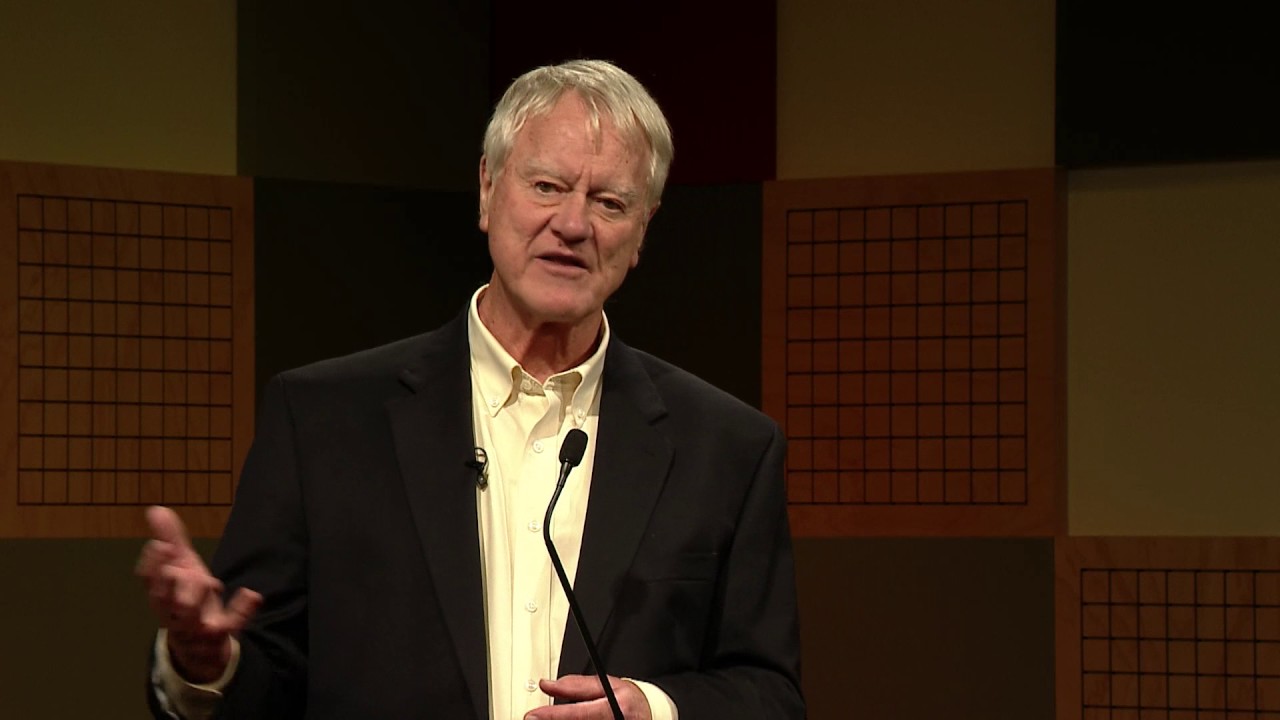
The Juneau World Affairs Council presents George Lakey, author of “Viking Economics: How the ...
###
https://www.youtube.com/watch?v=dqh2wRbSAu4
Oct 11, 2017 - Uploaded by Lake Forest College
George Lakey, 79, recently retired from Swarthmore College. While a professor there he wrote Viking ...
###
https://www.youtube.com/watch?v=9kfMWbfa-Us
1.
Oct 12, 2016 - Uploaded by WGBHForum
In his new book, Viking Economics, veteran organizer George Lakey explores the history of Nordic social ...
Viking Economics: How the Scandinavians Got It Right - and How We ...
https://vimeo.com › Rising Up With Sonali › Videos
Dec 2, 2016 - Uploaded by Rising Up With Sonali
GUEST: George Lakey, former Eugene M. Lang Visiting Professor for Issues in Social Change at Swarthmore ...
==
Lakey How We Win
https://kpfa.org/episode/the-ralph-nader-radio-hour-february-11-2019/
==
==
https://www.alternet.org/world/why-denmark-dominates-world-happiness-rankings-year-after-year
new World Happiness Report again ranks Denmark among the top three happiest of 155 countries surveyed – a distinction that the country has earned for seven consecutive years.
The U.S., on the other hand, ranked 18th in this year’s World Happiness Report, a four-spot drop from last year’s report.
Denmark’s place among the world’s happiest countries is consistent with many other national surveys of happiness (or, as psychologists call it, “subjective well-being”).
Scientists like to study and argue about how to measure things. But when it comes to happiness, a general consensus seems to have emerged.
Depending on the scope and purpose of the research, happiness is often measured using objective indicators (data on crime, income, civic engagement and health) and subjective methods, such as asking people how frequently they experience positive and negative emotions.
Why might Danes evaluate their lives more positively? As a psychologist and native of Denmark, I’ve looked into this question.
Yes, Danes have a stable government, low levels of public corruption, and access to high-quality education and health care. Thecountry does have the the highest taxes in the world, but the vast majority of Danes happily pay: They believe higher taxes can create a better society.
Perhaps most importantly, however, they value a cultural construct called “hygge” (pronounced hʊɡə).
The Oxford dictionary added the word in June 2017, and it refers to high-quality social interactions. Hygge can be used as a noun, adjective or verb (to hygge oneself), and events and places can also be hyggelige (hygge-like).
Hygge is sometimes translated as “cozy,” but a better definition of hygge is “intentional intimacy,” which can happen when you have safe, balanced and harmonious shared experiences. A cup of coffee with a friend in front of a fireplace might qualify, as could a summer picnic in the park.
A family might have a hygge evening that entails board games and treats, or friends might get together for a casual dinner with dimmed lighting, good food and easygoing fun. Spaces can also be described as hyggelige (“Your new house is so hyggeligt”) and a common way of telling a host thank you after a dinner is to say that it was hyggeligt (meaning, we had a good time). Most Danish social events are expected to be hyggelige, so it would be a harsh critique to say that a party or dinner wasn’t hyggelige.
Research on hygge has found that in Denmark, it’s integral to people’s sense of well-being. It acts as abuffer against stress, while also creating a space to build camaraderie. In a highly individualized country like Denmark, hygge can promote egalitarianism and strengthen trust.
It would be fair to say that hygge is fully integrated into the Danish cultural psyche and culture. But it has also become a bit of a global phenomenon – Amazon now sells more than 900 books on hygge, and Instagram has over 3 million posts with the hashtag #hygge. Google trends data show a big jump in searches for hygge beginning in October 2016.
Nor is Denmark the only country that has a word for a concept similar to hygge – the Norwegians have koselig, the Swedes mysig, the Dutch gezenlligheid and the Germans gemütlichkeit.
In the U.S. – which also places a high value on individualism – there’s no real cultural equivalent of hygge. Income is generally associated with happiness; yet even though the country’s GDP has been rising and its unemployment rates have been declining, levels of happiness in the U.S. have been steadily decreasing.
What’s going on?
Income inequality continues to be an issue. But there’s also been a marked decrease in interpersonal trust and trust toward institutions like the government as well as the media. In the end, more disposable income doesn’t hold a candle to having someone to rely on in a time of need (something that 95 percent of Danes believe they have).
At its core, hygge is about building intimacy and trust with others.
Americans could probably use a little more of it in their lives.
This article was originally published on The Conversation. Read the original article.

Marie Helweg-Larsen does not work for, consult, own shares in or receive funding from any company or organization that would benefit from this article, and has disclosed no relevant affiliations beyond their academic appointment
https://www.alternet.org/environment/new-map-reveals-which-countries-are-most-likely-survive-climate-change
Climate change is one of the most pressing crises facing humanity. Caused by an immense and continual buildup of carbon dioxide and other greenhouse gases in our atmosphere as a result of human activity, climate change is already causing a series of alarming environmental events.
Once snowy landscapes are slowly melting away to leave an uninhabitable and barren wilderness, rising sea temperatures are killing thousands of miles of coral reef and marine life, while freak weather events are becoming more common and costing affected nations billions of pounds. For example, early estimates suggest that 2017’s Hurricane Harvey caused between $66 billion and $185 billion worth of damage.
These serve as a worrying indication of the catastrophic effect that climate change could have on our planet in the future if nothing is done to tackle the phenomenon.
While it's clear that no single corner of the globe is safe from the changes that are happening to our climate, we wanted to find out which countries are the most (and least) at risk of the effects of climate change.
To answer this question, we looked at data from the University of Notre-Dame's ND-Gain Index. This report analyzed 181 countries on their vulnerability to climate change and how ready they are to adapt to a warming planet, based on factors such as healthcare, food supply and government stability.
We also scrutinized how much carbon dioxide all 181 countries emit every year to give an indication of each nation's contribution towards climate change. This allowed us to compare a country’s likeliness to survive changes to the global climate against their responsibility for the phenomenon.
So which country is the most likely to survive climate change?
The answer is Norway, thanks to its low vulnerability score and high readiness score. The nation's Nordic neighbors also fared well, with Finland (3rd), Sweden (4th), Denmark (6th) and Iceland (8th) landing 5 out of the 10 top spots for survivability. So we should all flee to the countries of northern Europe and theNorthh Atlantic to live out our final days should our planet become uninhabitable.
Interestingly, the U.K. and U.S. did not make the top 10, ranking 12th and 15th respectively. Both these nations were named among the 10 countries most likely to survive climate change in the 2015 version of this map, but an overall worsening of their vulnerability and readiness scores led to this slip in rank.
Even more surprising is China's position in the ranking: 59th. Despite arguably being the world's biggest contributor towards climate change—emitting a massive 9,040 metric tons of CO2 into the atmosphere every year—the country is somewhat sensitive to the effects of a warming planet. This is largely due to the nation's growing population which is putting a strain on China’s natural resources and public services. Rather ironically, China's vulnerability to climate change, therefore, means that they may eventually reap what they sow.
And who are the biggest losers?
At the other end of the scale, it comes as no surprise that the world's poorest and least developed nations have the lowest chance of surviving climate change. Countries in sub-Saharan Africa fill the bottom 10 spaces for survivability, with Somalia being named the country least likely to survive climate change.
Chad, Eritrea, the Central African Republic and the Democratic Republic of Congo also fared badly, owing to their unstable governance, poor infrastructure, lack of healthcare and a scarcity of food and water.
....
==
===
http://www.ic.ucsc.edu/college8core/c8wiki/index.php/Europe#Scandanavia
Scandanavia
http://www.ecowatch.com/offshore-wind-denmark-no-subsidies-2364911834.html
==
http://www.smithsonianmag.com/innovation/why-are-finlands-schools-successful-49859555/
Norway Becomes World’s First Country to Ban Deforestation 6/16.
Norway first country to divest 2/15.
Denmark Is the Happiest Country on Earth! You'll Never Guess Why 10/13. powerplant doubles as ski slope, how Ecotopian.
Can You Guess the 10 Best Countries For Women? Hint: the U.S. Isn't One of Them 10/13.
Swedish co-op creates a stake for women in wind industry. Qvinnovindar members individually invested anywhere from 500 to 300,000 Krona ($77-46,000) each, giving them an equal vote in how the company is run, regardless of the amount they put in.
Denmark’s Samso Island, in 1998, population 4,000, won a national contest with a bold plan to completely switch to renewable energy. In just ten short years, the island has achieved its goal of becoming carbon-neutral. Residents use wind, sun — and even rapeseed oil — to power their homes and cars.
Bjork's on a quest to see Iceland take back its geothermal resources. see also here.
PBS Global Focus special segment on Denmark, which bought wind energy industry the US abandoned and is now the world leader. Includes segment on Samso Island, which is now carbon neutral after ten year effort. More.