Lawfare Website
belated also dismabig from BS charge
---
DUCK 625 QANON
NPR
https://www.npr.org › 2022 › 07 › 12 › 1111131901 › today-s-jan-6-hearing-examined-the-role-of-q-anon-proud-boys-and-oath-keepers
Today's Jan. 6 hearing looked at the role of Q-Anon, Proud Boys and ...
Jul 12, 2022The committee investigating the Jan. 6 attack on the Capitol held a hearing on Tuesday focused on the role of the conspiracy theory QAnon and extremist groups like the Proud Boys and Oath Keepers.
Author:Tom Dreisbach
bbc.com
Only include results for this siteHide site from these results
Share feedback about this site
BBC
https://www.bbc.com › news › world-us-canada-66169914
The 'QAnon Shaman' and other Capitol rioters who regret pleading ... - BBC
Jul 15, 2023A growing number of Capitol rioters have gone back on their guilty pleas and apologies - including one of the most recognisable faces from 6 January.
time.com
Only include results for this siteHide site from these results
Share feedback about this site
TIME
https://time.com › 6267335 › jan-6-qanon-shaman-jacob-chansley-released-early-prison
Why Jan. 6 'QAnon Shaman' Jacob Chansley Was Released Early | TIME
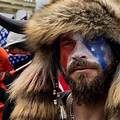
Jacob Chansley, the convicted Jan. 6 rioter who was dubbed the "QAnon Shaman" thanks to viral photographs of his outlandish getup, has been released from prison and transferred to a halfway ...
newsweek.com
Only include results for this siteHide site from these results
Share feedback about this site
Newsweek
https://www.newsweek.com › qanon-shaman-reacts-january-6-pardons-2018840
QAnon Shaman Reacts to Jan 6 Pardons: 'I Regret Nothing'
Jan 22, 2025Jacob Chansley was among more than 1,500 people convicted of crimes related to the January 6, 2021 attack that President Donald Trump pardoned.
apnews.com
Only include results for this siteHide site from these results
Share feedback about this site
AP News
https://apnews.com › article › fact-check-january-6-jacob-chansley-tucker-carlson-193191103193
Posts misrepresent rioter's actions in Jan. 6 Capitol attack
"BREAKING: Never before seen video of January 6 shows Jacob Chansley, the QAnon Shaman, being led through the Capitol by police the entire time that he was in the building," reads a tweet that had received more than 189,000 likes and more than 65,000 shares as of Tuesday. The tweet includes a clip from Carlson's show in which Chansley can be seen calmly walking around the Capitol with ...
lawfaremedia.org
Only include results for this siteHide site from these results
lawfaremedia.org
https://www.lawfaremedia.org › article › what-jan.-6-revealed-about-qanon-and-militias
What Jan. 6 Revealed About QAnon and Militias | Lawfare
Nov 8, 2023What a study of 18 anti-government extremists arrested in connection with Jan. 6 tells us about QAnon and militia fusion.
From flags etched with burning Qs to “Where we go one, we go all” T-shirts and the infamous “QAnon Shaman,” the presence of QAnon at the Jan. 6 Capitol attack was palpable. Also prominent, albeit somewhat less visibly, were various insignia signifying membership in far-right extremist groups like the Oath Keepers, Proud Boys, and Three Percenters.
The affiliations are distinct and without obvious overlap. QAnon adherents and these anti-government extremist groups seem entirely separate. They emerged as independent entities. People who dissected the early “Q drops” on 4chan and 8kun or who reposted QAnon conspiracy theories were not necessarily anti-government extremists, and their activities were primarily online. Oath Keepers, Proud Boys, and Three Percenters, by contrast, were defined by anti-government extremist beliefs and tended to mobilize offline in structured groups. But Jan. 6 brought many of them together. Which raises the question: Did QAnon adherents and far-right extremists turn up at the Capitol through independent motives, or did they share something in common?
The evolution and convergence of the groups’ ideologies has been a significant topic of discussion among researchers. But fewer of them have considered the question in the context of Jan. 6.
With that in mind, I conducted a study of 18 individuals arrested in connection with the Jan. 6 attack. All individuals have alleged links to both QAnon and one of three far-right extremist groups: the Oath Keepers (nine of the 18), the Proud Boys (four of the 18), or the Three Percenters (five of the 18). My review of court documents, social media posts, and reporting about their cases—as well as scholarship on extremism—revealed three shared ideological pillars: a belief in government corruption, apocalypticism, and a responsibility to defend.
QAnon
First emerging on 4chan in 2017, QAnon is an umbrella of loosely connected conspiracy theories that revolve around the central idea “that a cabal of powerful elites controls the world, using their power to covertly abuse children.” QAnon spread mainly across social media, creating communities of the conspiracy’s followers on mainstream platforms. The wide range of conspiracy theories it includes gives QAnon a broad appeal, leading to a diverse demographic of followers: women, non-Republicans, and individuals who are well educated and financially secure.
QAnon has become well known for its conspiracy theories surrounding the coronavirus pandemic and the 2020 presidential election. For instance, QAnon formed the backbone of viral conspiracy theories doubting the origin or existence of the pandemic, which helped inspire a wave of protests across the U.S. against lockdown procedures and other government mandates. Before, during, and after the 2020 election, online QAnon communities latched onto conspiracy theories of a “deep state” interfering in the 2020 election to steal Donald Trump’s election win, including the beliefs that “middle-of-the-night dumps of fake mail-in ballots [swung] red states to blue” and “Republican votes had been changed or thrown out thanks to foreign plots, complex CIA vote-harvesting programs, and the machinations of a truly evil election administrator—the voting-machine company Dominion.”
Oath Keepers, Three Percenters, Proud Boys, and the Militia Movement
:{:{The 18 arrestees I studied all have alleged ties to anti-government groups, including the Oath Keepers, the Three Percenters, or the Proud Boys. Although there is some variation in whether the groups are properly described as militias—for instance, the Proud Boys are sometimes described as “street fighters” rather than a militia—researchers have often considered them in the broader context of what’s known as the “militia movement.” Founded in Lexington, Massachusetts, in 2009 by Elmer Stewart Rhodes III, the Oath Keepers aim to recruit former military and law enforcement personnel, and they operate in local and state chapters scattered across the country. The Oath Keepers seek to uphold their interpretation of the Constitution against perceived federal tyranny. }:
The Three Percenters are a decentralized movement founded in 2008 with multiple organizations that adhere to its ideology. Their name originates from the false historical belief that only 3 percent of American colonists fought against the British, leading to their claim that only 3 percent of Americans are needed to overthrow today’s tyrannical federal government. Finally, the Proud Boys were founded in New York City in 2016 and functioned as a street-fighting group violently opposing those they viewed as threatening the values of “Western culture,” such as Antifa, Black Lives Matter, feminists, immigrants, Muslims, and others. The Proud Boys have collaborated in the past and continue to collaborate with radical anti-government extremist groups, white nationalists, and neo-Nazis in events that frequently result in violence.}:
The Oath Keepers and the Three Percenters have occupied prominent places in the militia movement since their creation because of their ideologies centered around militia conspiracy theories like the New World Orde_r_. The Proud Boys, sometimes referred to as an “alt-lite” street fighting group, have recently taken a clearer place alongside the Oath Keepers and the Three Percenters in the militia movement. In the months leading up to the Capitol attack, the Proud Boys became increasingly connected with numerous militias, and their ideological similarities were on display when they collaborated with the Oath Keepers on Jan. 6.
:{:{For that reason, it is helpful to consider all three groups in the broader context of the modern militia movement in the United States, which dates back to the 1990s. The movement, composed loosely of militias and anti-government extremist groups, formed in reaction to federal gun control measures and deadly standoffs between civilians and federal agents.}:
Groups within the movement continue to be characterized by their emphasis on paramilitary activities and belief that the U.S. government is tyrannical, collaborating with the New World Order to oppress Americans under the rule of a one-world government. The militia movement gained momentum from its inception around 1992 (corresponding with the Ruby Ridge standoff) until the late 1990s. However, after Timothy McVeigh bombed the Murrah federal building in Oklahoma City in 1995—an act that had been reportedly inspired by pro-militia literature and conspiracy theories—the movement’s activity declined significantly. Another wave of anti-government groups in the militia movement emerged after the election of President Barack Obama in 2008. Finally, the militia movement rose in a third wave after the election of President Trump.
With each of these resurgences, the dominant ideology of the militia movement has shifted. Most notably, the focus pivoted away from targeting the federal government after Trump—whose candidacy the militia movement had supported—won the election. Instead, focus moved toward “other perceived enemies, such as Antifa” and opposing “state-level gun control measures, state-level pandemic-related restrictions, and Black Lives Matter protests.”}:
The Militia Movement Meets QAnon
Recently, dominant ideologies within the militia movement have shifted yet again, this time finding a rallying point around QAnon conspiracy theories. As early as 2019, the Southern Poverty Law Center released a report claiming that anti-government extremists “are increasingly subscribing to and propagating the QAnon conspiracy theory, which asserts that pro-Trump forces will soon take down the so-called deep state.” Throughout 2020, as members of extremist groups coalesced in what researchers have termed a “militia-sphere,” their messaging latched on to QAnon conspiracy theories.
The confluence is perhaps not surprising, as both ideologies share three common ideological foundations. The first is a deep belief in government corruption. For the militia movement, the corruption is located in the American federal government, particularly among members of the Democratic Party. Several conspiracy theories that took root decades ago serve to reinforce this belief. For example, the New World Order conspiracy theory, which originated in the 1990s, claims that a cabal of global elites has infiltrated the U.S. government and is actively working to erode American sovereignty with the goal of eventually bringing all Americans under a global government through the United Nations. The militia movement claimed that government corruption was evident from Jewish banking conspiracy theories, alleged communist infiltration into the federal government, and COVID-19 conspiracy theories.
For QAnon adherents, the corruption is also located within the American federal government, where a purported cabal of elites practicing Satan-worshiping rituals and running a child sex-trafficking ring are secretly plotting against Donald Trump. When Trump lost the 2020 presidential election, QAnon adherents extended that theory, decrying an alleged leftist conspiracy to steal the election.
:{:{Suddenly, QAnon election fraud conspiracy theories’ claims aligned quite well with the militia movement’s preexisting ideological foundation of federal government corruption. Arrestees echoed QAnon concepts of the deep state and 2020 election fraud while combining them with militia ideas like communist infiltration of the federal government, with one arrestee claiming that the “country has been SOLD to CHINA,” since “China gave us a god damn virus, they stole our elections, [and] bought our politicians.” }:
Other arrestees interpreted QAnon 2020 election conspiracy theories as further evidence of preexisting government corruption founded in militia ideas of global government takeover, alleging that the election was stolen by a “criminal, corrupt government establishment that has been compromised by foreign nations that are under the control of global, elite technocrats.”}:
The second ideological pillar QAnon and the militia movement share is known as apocalypticism—the belief that the end of society as we know it is imminent. In the militia movement, this apocalyptic theme presents itself through predictions of a future conflict between members of the movement and the federal government (either a second revolutionary war or a second civil war). Militia members believe that they will triumph at the end of this conflict and have an opportunity to rebuild a utopian society from the ashes of the previous American civilization. In QAnon, apocalypticism is most evident in the prophecy of the “Storm,” a day of reckoning in which the agents of the deep state will be revealed and arrested before being shipped off to Guantanamo Bay to face military tribunals and eventual execution.
My review of the 18 Jan. 6 arrestees’ social media posts and digital communications identified apocalyptic rhetoric echoing—and even merging—both QAnon and militia movement ideologies. The arrestees imagined widespread violent conflict against the government in which “patriots” would purge the federal government of “treasonous” political leaders and reconstruct their ideal society, sparked by patriots’ intervention in the political processes of Jan. 6. All of this is consistent with the militia movement’s historical embrace of violent, revolutionary rhetoric, resting largely on the idea that the American people are headed toward an unavoidable “future conflict with the federal government.”
:{:{The third shared ideological pillar is the notion of a responsibility to defend}:. QAnon, in imagining nefarious actors in almost all aspects of public life, built a community of “people who are determined to think you’re in danger, and that it’s their job to protect you, while the only real danger is their protection.” Although notably applied to children, as seen in QAnon adherents’ consistent “save the children” messaging, QAnon’s responsibility to defend also included Donald Trump and his presidency following the 2020 election.
QAnon conspiracy theories about the 2020 election imbued in Q’s followers that “Trump had no chance of losing as long as the election was conducted fairly and legally,” whereas a Biden victory “meant the election was stolen and illegal.” By raising the stakes of Trump’s electoral loss to the destruction of fair government, QAnon election conspiracy theories created a responsibility to defend Trump’s presidency: A Trump loss, as one arrestee stated, meant “we have zero democracy.” Likewise, many of the 18 arrestees alluded to the militia movement’s long-standing self-identification as saviors of the nation. They appeared to view themselves as “patriots” who had legitimate authority to use violence and intervene in political processes to defend the nation and Trump against the corrupt government and Antifa, who were trying to push through a “stolen” election.}:
Implications
:{:{These shared ideological foundations create common ground for otherwise unrelated groups, at least as they pertain to the 18 subjects of the study. The 2020 election and its aftermath revealed a bond between QAnon and the militia movement that is likely to persist because of the Biden administration’s perceived illegitimacy and threat to liberty. QAnon election fraud conspiracy theories may also draw in more extreme groups such as the “boogaloo bois," whose growing presence in the militia-sphere may represent the emergence of “a faction that is particularly receptive to opportunities to conduct violent actions under the umbrella philosophy of accelerationism.”}:
Researchers also fear that QAnon conspiracy theories may attract individuals from the mainstream to the militia-sphere, particularly when they are banned from social media for QAnon-related posts. Such individuals are then more likely to be exploited by organizations in the militia movement and other far-right groups on alternative social media platforms.}:
The confluence of ideas presents opportunities for reciprocal radicalization. There is also a risk of broader ideological convergence, which “confuses counterterrorism defenses, eroding predictability and challenging law enforcement and intelligence categorizations,” making it harder for authorities to “adequately prepare countermeasures, let alone warn and defend potentially targeted communities and sites.”
Now, the 2024 presidential election is approaching, again conjuring images of Q flags waving alongside fatigues-clad extremists in stack formation. In the face of these far-right convergences, was Jan. 6 only a snapshot?
---
PBS
https://www.pbs.org › newshour › nation › jan-6-rioter-known-as-qanon-shaman-sentenced-to-41-months
Jan. 6 rioter known as 'QAnon Shaman' sentenced to 41 months
Jacob Chansley, the spear-carrying Jan. 6 rioter whose horned fur hat, bare chest and face paint made him one of the more recognizable figures in the assault on the Capitol, has been sentenced to ...
usatoday.com
Only include results for this siteHide site from these results
Share feedback about this site
USA Today
Fact check: False claim about QAnon shaman amid Jan. 6 tape reveal
Mar 13, 2023A March 7 Facebook post (direct link, archived link) makes a claim about Jacob Chansley, widely known as the QAnon shaman, and his presence at the Jan. 6 Capitol riot. "Never before seen video of ...
abcnews.go.com
Only include results for this siteHide site from these results
Share feedback about this site
ABC News
QAnon emerges as recurring theme of criminal cases tied to US Capitol ...
On Jan. 6, the influence of QAnon on rioters was evident in the mountain of social media videos and photos depicting their raid on the Capitol complex.
nytimes.com
An abiding sense of loyalty to the fringe online conspiracy movement known as QAnon is emerging as a common thread among scores of the men and women from around the country arrested for their participation in the deadly U.S. Capitol insurrection, court records reveal.
The FBI first labeled QAnon and its fluid online community of supporters as a "dangerous extremist group" in August 2019, and over the past two weeks it has featured prominently in criminal indictments filed against many of those alleged to have participated in the Jan. 6 Capitol riot, including a number accused of egregious crimes.
Among them is Douglas Jensen, the bearded man seen in a viral video wearing a distinctive "Q" T-shirt, menacing a lone black U.S. Capitol Police officer as he led rioters through the halls and pushed the mob deeper into the Capitol building. Jensen later told investigators that he "intentionally positioned himself" toward the front of the mob so his T-shirt would be visible to cameras and "Q" could "get the credit," according to an FBI affidavit.
A man later identified as Douglas Jensen confronts police as Trump supporters demonstrate on the second floor of the Capitol near the entrance to the Senate, Jan. 6, 2021.
Mike Theiler/Reuters
Cleveland Meredith Jr., who the government also believed to be a supporter of QAnon theories, allegedly posted online about his desire to execute House Speaker Nancy Pelosi by "putting a bullet in her noggin on Live TV," according to court records. He went to Washington, D.C., armed with multiple firearms and more than 2,500 rounds of ammunition in his possession, according to prosecutors. He was late to the rally because his car broke down.
At least three more individuals charged on Tuesday are believed to be supporters of the QAnon theory, according to new FBI records.
The high profile of QAnon adherents in the Capitol riots represents what experts describe as a stunning evolution from a harmless fringe forum for people peddling outlandish conspiracies to a gathering space for those intent on plotting domestic terror -- and the transformation could present a vexing new challenge for law enforcement.
"We don't have a good predictor of where it's going to go," said Mary McCord, a former federal prosecutor and expert in homegrown terror groups who called it "extremely troublesome" to see some elected officials fanning the flames of twisted QAnon theories.
### MORE: How Trump obliterated norms and changed the presidency
"You actually have elected members of Congress who, at best, are not condemning Q, and at worst are actually espousing some of the crazy conspiracy theories -- dangerous conspiracy theories," McCord said.
Two newly elected members of the House of Representatives pushed QAnon messages ahead of the 2020 elections. And notably, President Donald Trump brushed aside questions about QAnon when pressed about it before the election in October, saying he knew "nothing" about it.
"I do know they are very much against pedophilia, they fight it very hard," Trump said while refusing to condemn the false theories at an Oct. 15 town hall event.
Just weeks earlier, at a White House press briefing in August, the president said QAnon followers "love the country" and added that he appreciated their support -- which in turn helped embolden belief in the movement.
"He said a whole lot by not saying a whole lot at all. For a lot of us supporters, we knew that he really couldn't come out and say, 'Oh yes, I support it," Gina Sink, 55, a QAnon supporter from Lexington, N.C., told ABC News at a Trump rally in September following the president's comments.
"Following the November 3, 2020 election, many QAnon adherents began pushing false and discredited theories of massive voter fraud and that the 2020 election had been 'stolen' from President Trump," the Department of Justice warned in a new affidavit on Tuesday.
On Jan. 6, the influence of QAnon on rioters was evident in the mountain of social media videos and photos depicting their raid on the Capitol complex. Several rioters were seen wearing "Q" clothing, and chanting slogans tied to the movement. In a Jan. 13 bulletin prepared by the FBI for law enforcement partners, federal agents reported that "symbols associated with QAnon conspiracy theories" were widely displayed by rioters.
In charging documents, federal prosecutors have noted the apparent influence of QAnon among several participants accused of threatening violence during the siege.
Jacob Chansley, the horned helmet-wearing rioter who was one of the most widely recognized from the incident, is also believed to be a supporter of QAnon theories.
Jacob Chansley yells inside the Senate Chamber, Jan. 6, 2021, in Washington, D.C.
Win Mcnamee/Getty Images, FILE
"Chansley is an active participant in -- and has made himself the most prominent symbol of -- a violent insurrection that attempted to overthrow the United States Government on January 6, 2021," government prosecutors said, using some of its bluntest words yet to describe the riot.
The Jan. 6 attack proved deadly to at least two QAnon adherents. Rosanne Boyland, 34, who was reportedly crushed by the crowd at the Capitol complex, had recently started following QAnon conspiracy theories online, her sister later told the Associated Press. And Ashli Babbitt, who was shot and killed by a U.S. Capitol Police officer inside the Capitol, was later characterized in an FBI bulletin as "an alleged QAnon-supporter."
Ashli Babbitt in a driver's license photo from the Maryland Motor Vehicle Administration (MVA).
Maryland MVA/Calvert County Sheriff via AP
QAnon, which first surfaced in 2017, rests on the baseless theory that Trump is fighting against a global network of billionaire pedophiles, devil-worshipping Democrats and baby-eating Hollywood stars and their "deep state" counterparts embedded in the U.S. federal government's sprawling bureaucracy. A growing group of followers consumed and contributed to the false narratives first on the freewheeling social media site known as 4chan, then on other social media sites, fueled by what they thought were cues from "Q," a secret intelligence official they believed was leaving clues about government corruption. It is not clear if "Q" even exists.
Many of the claims are dark and outlandish, and for years adherents to the theory were considered mostly fringe and not a significant threat. They had "keyboard bravado," as one FBI special agent said last week, and were confined to the darkest corners of the web.
But recently, numerous violent incidents have been linked to people who support QAnon theories, and recent polling suggests that the conspiracy theories are reaching wider audiences than previously thought. For example, more than one in three Americans believe a so-called "deep state" is working to undermine Trump -- another unfounded conspiracy commonly peddled by QAnon users -- according to an NPR/Ipsos poll conducted in December.
### MORE: Horn helmet-wearing, painted face Capitol rioter should remain in custody: DOJ
For law enforcement officials seeking to prevent future violent attacks, the rise of QAnon is presenting fresh challenges. Authorities tasked with monitoring online extremism must now grapple with how to evaluate and combat emerging plots without infringing on constitutionally protected free speech.
"We have to separate the aspirational from the intentional and determine which of the individuals saying despicable things on the internet are just practicing keyboard bravado, or they actually have the intent to do harm," said FBI agent-in-charge Steven D'Antuono during a press briefing last week.
In the wake of the Capitol attack, the FBI prepared a document meant to assist law enforcement partners in identifying QAnon "indicators" online, defining phrases and hashtags used by its followers. But the document also notes that "the FBI does not initiate any investigative activity based solely on the exercise of First Amendment activities."
### MORE: The men behind QAnon
In a separate bulletin distributed to law enforcement partners on Jan. 13, the FBI warned that conspiracy-minded followers of QAnon may feel emboldened after the perceived "success" of the Capitol assault.
"Some [domestic violent extremists] view the 6 January event as a success, in conjunction with the potential to exploit follow-on lawful gatherings and ideological drivers -- including conspiracy theories, such as QAnon -- likely will also inspire some [domestic violent extremists] and others to engage in more sporadic, lone actor or small cell violence," the bulletin warned.
Ahead of the inauguration, law enforcement officials are keeping a close watch on the threat posed by QAnon-aligned "lone wolves." The Washington Post reported Monday that the FBI privately warned its partner agencies that QAnon adherents have discussed returning to Washington for Joe Biden's swearing-in, posing as National Guard troops.
*ABC News' Alex Mallin contributed to this report.
---
New York Times
https://www.nytimes.com › 2021 › 11 › 17 › us › politics › qanon-shaman-jan-6-sentenced.html
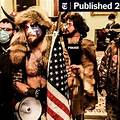
Jan. 6 Defendant Known as QAnon Shaman Sentenced to 41 Months
Nov 17, 2021A version of this article appears in print on , Section A, Page 19 of the New York edition with the headline: Jan. 6 Rioter Known as QAnon Shaman Gets 41 Months.
---
[### How the 'Stop the Steal' movement outwitted Facebook ...

_NPR_
https://www.npr.org › 2021/10/22 › facebook-groups-j...](https://www.npr.org/2021/10/22/1048543513/facebook-groups-jan-6-insurrection)
Oct 22, 2021 — But that only sent Stop the Steal loyalists to other groups on Facebook filled with misinformation and claims the election was stolen. It was a ...
[### How Facebook played a role in the Jan. 6 Capitol riot

The Washington Post
https://www.washingtonpost.com › 2021/10/22 › jan-6-...](https://www.washingtonpost.com/technology/2021/10/22/jan-6-capitol-riot-facebook/)
Oct 22, 2021 — On Jan. 6, Facebook staffers expressed their horror in internal messages as they watched thousands of Trump supporters shouting “stop the steal” ...
[### How the 'Stop the Steal' movement outwitted Facebook ...

NPR
https://www.npr.org › 2021/10/25 › how-stop-the-steal-...](https://www.npr.org/2021/10/25/1048918715/how-stop-the-steal-movement-outwitted-facebook-ahead-of-the-jan-6-riot)
Oct 25, 2021 — Leaked documents from inside Facebook show the social network was caught flat-footed by the "Stop the Steal" movement, which culminated in the Jan. 6 siege on ...
[### January 6 insurrection and Facebook: Internal docs paint a ...

CNN
https://www.cnn.com › 2021/10/22 › business › januar...](https://www.cnn.com/2021/10/22/business/january-6-insurrection-facebook-papers)
Oct 24, 2021 — The analysis does note, however, that once Facebook saw the results of Stop the Steal on January 6th and took action, it was able to deploy ...
[### Facebook Hosted Surge of Misinformation and Insurrection ...

ProPublica
https://www.propublica.org › article › facebook-hosted-...](https://www.propublica.org/article/facebook-hosted-surge-of-misinformation-and-insurrection-threats-in-months-leading-up-to-jan-6-attack-records-show)
Jan 4, 2022 — On Nov. 5, Facebook banned “Stop the Steal,” a hugely viral group created on Election Day itself that quickly attracted over 300,000 members ...
[### Inside Facebook's struggle to contain insurrectionists' posts

Politico
https://www.politico.com › news › 2021/10/25 › facebo...](https://www.politico.com/news/2021/10/25/facebook-jan-6-election-claims-516997)
Oct 25, 2021 — It also had a hard time curtailing groups from the far-right Stop the Steal movement — which alleged the election had been stolen from Trump — ...
[### The untold story of how the January 6 riots were planned ...

Fast Company
https://www.fastcompany.com › Tech](https://www.fastcompany.com/90980346/mark-zuckerberg-facebook-january-6-broken-code)
Nov 13, 2023 — The Stop the Steal Facebook group was born out of a mid-Election Day chat between a mother-daughter duo named Amy and Kylie Kremer, conservative ...
[### Facebook whistleblower documents offer new revelations ...

ABC News - Breaking News, Latest News and Videos
https://abcnews.go.com › Technology › story](https://abcnews.go.com/Technology/facebook-whistleblower-documents-offer-revelations-jan-response/story?id=80694096)
Oct 24, 2021 — Facebook removed the first large "Stop The Steal" group, but copycats and similar groups by other names remained on the platform through the Jan ...
[### Facebook bans all 'stop the steal' content

NBC News
https://www.nbcnews.com › tech › tech-news › faceboo...](https://www.nbcnews.com/tech/tech-news/facebook-bans-all-stop-steal-content-n1253809)
Jan 11, 2021 — "We are now removing content containing the phrase 'stop the steal' under our Coordinating Harm policy from Facebook and Instagram," they said.
[### Facebook 'Supercharged' Stop the Steal Campaign Ahead ...

Business Insider
https://www.businessinsider.com › Tech › Politics](https://www.businessinsider.com/facebook-supercharged-stop-the-steal-capitol-insurrection-congress-mike-doyle-2021-3)
Mar 25, 2021 — A US Representative slammed Facebook for "supercharging" false claims of voting fraud and stolen elections that turned into real-world ...
---
---
an 9 24
Whether former President Donald Trump is ever truly held accountable for his crimes depends entirely upon the outcome of the November election. And as The Atlantic's Quinta Jurecic writes, he largely has the Supreme Court of the United States (SCOTUS) to thank for that.
In her Wednesday essay, Jurecic — a senior editor at Lawfare — laid out how SCOTUS' 6-3 conservative supermajority has consistently been the former president's strongest ally in his efforts to stay out of prison. She posited that Trump may already be behind bars after being found guilty of 34 felonies in New York earlier this year were it not for SCOTUS' assistance in his stalling tactics.
According to Jurecic, the Court signaled that it would be playing a significant role in the former president's efforts to delay criminal accountability when it granted a*writ of certiorari* to hear Trump's argument for absolute broad criminal immunity. The Court's decision to hear the case despite both U.S. District Judge Tanya Chutkan and the D.C. Circuit Court of Appeals agreeing that the president was not above the law meant that the final decision in Trump v. United States wouldn't be announced until just a few months before the election.
READ MORE:'Political and traitorous decision': Experts outraged by SCOTUS taking Trump immunity case
After the 6-3 decision was handed down in July, Trump was then able to leverage that in two or his four criminal cases in New York and Washington, D.C. Jurecic explained that thanks to the decision's vague wording — in which presidents are granted immunity for "official acts" but lower courts have to decide what constitutes an "official act" — Trump's delay campaign is aided by legal murkiness.
Judge Chutkan noted in a recent hearing that her decisions could still be subject to reversal by SCOTUS "no matter what I do." This means that despite given latitude by SCOTUS to decide how the immunity ruling is to be applied in her courtroom, conservatives on the SCOTUS bench could still end up throwing out her decisions if they don't approve of them.
"[H]ow is she to identify the fuzzy line between unofficial and official conduct? The Supreme Court has provided precisely no guidance. According to a scheduling order that Chutkan released following last week’s hearing, the briefing alone on the immunity question will take until October 29, six days before the election," Jurecic wrote. "And, importantly, because the Court also indicates that Trump can immediately appeal any decision from lower courts on these questions—what’s known as an 'interlocutory appeal'—whatever Chutkan does could well be subject to months and months of additional litigation."
Jurecic noted that the original July sentencing date for Trump's felony convictions that was pushed back to September was once again delayed until late November — weeks after the presidential election. She argued this abundance of caution from Judge Juan Merchan is not his own doing, but rather the situation he was forced into thanks to the massive legal grey area created by the Trump v. United States decision.
READ MORE:Donald Trump guilty on all counts in New York criminal trial
"For those who hoped that Trump might finally face criminal accountability before the election, this is a frustrating dodge—another example of the legal system’s apparent inability to hold Trump responsible for his actions," she wrote. "But the real villain here isn’t Bragg or Merchan, who are doing their best to carry out justice under difficult circumstances. It’s the Supreme Court, which created an unmanageable situation that played directly into Trump’s goal of delaying a legal reckoning."
"None of this was preordained. The Supreme Court didn’t need to take up the immunity case to begin with. Once it did, the overwhelming majority of experts and commentators—myself included—expected that, at most, the Court would fashion a rule carving out some limited category of immunized conduct, perhaps creating difficulties in the January 6 case but certainly not creating problems in New York," she continued. "Instead, the conservative justices issued a ruling that not only established a sweeping and poorly defined immunity but also created so many avenues for challenge and confusion that the Court functionally collaborated in Trump’s strategy of delay."
Click here to read Jurecic's full essay in the Atlantic.
READ MORE:'Pared away all official conduct': Expert says Jack Smith's new indictment is immunity-proof
===