shulkin, d va
part of purge of competent to replace with brown-nosers
an 921
Former President Donald Trump empowered associates from his private club to pursue a plan for the Department of Veterans Affairs to monetize patient data,according to documents newly released by congressional investigators.
As ProPublica first reported in 2018, a trio based at Trump's Mar-a-Lago resort weighed in on policy and personnel decisions for the federal government's second-largest agency, despite lacking any experience in the U.S. government or military.
While previous reporting showed the trio had a hand in budgeting and contracting, their interest in turning patient data into a revenue stream was not previously known. The VA provides medical care to more than 9 million veterans at more than 1,000 facilities across the country.
“Patient data is, in my opinion, the most valuable assets [sic] the VA has,"a consultant said in a June 2017 email released Monday by Democrats on the House Oversight Committee. “It can be leveraged into hundreds of millions in revenue" by selling access to major companies, he said.
The consultant, Terry Fadem, ran a private nonprofit for Bruce Moskowitz, a West Palm Beach, Florida, physician who was one of the three Trump associates given sweeping influence over the VA, known to officials as “the Mar-a-Lago crowd."
In response to Fadem's email, Moskowitz told then-VA Secretary David Shulkin that he had discussed the plan with interested companies including Johnson & Johnson, CVS and Apple. Shulkin replied that he liked the idea, according to the documents.
Senior officials scrambled to hire Fadem as a contractor, the emails show, but it's not clear whether his contract was awarded. “I am working on trying to understand why and where [h]is contract is stuck," Poonam Alaigh, then the agency's top health official, said in a June 2017 email. “I agree, having him on board as soon as possible will be critical."
The documents do not show what became of the plan or whether the VA ever sold access to patient data. Nor do the records include evidence that Moskowitz or the other Mar-a-Lago associates were in a position to profit personally.
A spokesman for the trio said as far as they know Fadem was not hired and the VA never acted on the licensing idea. “We were asked repeatedly by former Secretary Shulkin and his senior staff, as well as by the President, to assist the VA and that is what we sought to do, period," the three said in a statement.
Shulkin, Alaigh, Trump's office, the VA, Johnson & Johnson, CVS and Apple did not immediately respond to requests for comment. Fadem died in 2019.
The latest revelation helps complete the picture of the Mar-a-Lago triumvirate's extensive influence over Trump's agenda for veterans, a signature issue in his 2016 campaign. ProPublica's revelations about the men's day-to-day involvement prompted investigations by congressional committees and the Government Accountability Office, as well as a court challenge.
House Oversight Committee chairwoman Carolyn Maloney, D-N.Y., and House Veterans Affairs Committee chairman Mark Takano, D-Calif., said in a statement on Monday that the documents show “the secret role the trio played in developing VA initiatives and programs, including a 'hugely profitable' plan to monetize veterans' medical records."
“Ike Perlmutter, Marc Sherman, and Dr. Bruce Moskowitz, bolstered by their connection to President Trump's private Mar-a-Lago club, violated the law and sought to exert improper influence over government officials to further their own personal interests," the chairs said.
Perlmutter, Sherman and Moskowitz have previously said that they obtained no personal benefits, had no official role and exercised no formal authority.
But the newly released documents show that they did view themselves as an official advisory committee — and disregarded repeated warnings that they needed to comply with a Watergate-era transparency law.
“As the President asked, we can now formally create an official committee," Perlmutter, the group's leader and chairman of Marvel Entertainment, wrote in a February 2017 email after a meeting with Trump. Perlmutter is a Mar-a-Lago member and one of Trump's biggest political donors.
Perlmutter went so far as to rebuke White House staff for holding discussions without him.
“I am shocked and extremely disappointed with the manner in which you have engaged in individual communications with Apple — and intentionally excluded our broader team of subject matter experts," Perlmutter said in a March 2017 email to White House aides. “I understand that these backdoor discussions have apparently been occurring almost daily for weeks, and you have not told anyone and refuse to return phone calls and emails."
Official advisory committees are governed by the Federal Advisory Committee Act. The 1972 law, known as FACA, requires federal agencies to inform the public when they consult outside experts.
Administration officials repeatedly told the Mar-a-Lago trio that they would have to comply with the law. The law compels advisory committees to represent a range of views and disclose their activities to the public.
“It appears FACA may be implicated," a VA lawyer said in a January 2017 email that Shulkin shared with Moskowitz.
That April, White House aide Reed Cordish told Perlmutter directly, “You will need to form a FACA group."
But Perlmutter demurred, replying, “We have been advised that FACA does not apply because we are not a formal group in any way."
Instead, the group took efforts to conceal its activities, documents show. “We are still unsure what can be put in emails and what to discuss verbally," Moskowitz wrote to Shulkin in February 2017.
The group's spokesman maintained they weren't a formal committee and said complying with FACA was the agency's responsibility.
In March 2021, a federal appeals court in Washington held that a liberal veterans group could proceed with a lawsuit to enforce FACA's disclosure requirements around the Mar-a-Lago trio.
lewandowski concerned vets
also hegsdeth
supported by tester, targeted by koch
https://www.axios.com/david-shulkin-new-york-times-op-ed-2716d412-519f-40d5-9619-9793490c8c72.html
Search Results
Web results
David Shulkin, former Veterans Affairs secretary, describes ...
https://www.cbsnews.com › news › david-shulkin-former-veterans-affairs-s...
1.
A Victim of the Shadow Government - The New York Times
https://www.nytimes.com › the-daily › impeachment-inquiry-trump-ukraine
Oct 24, 2019 - Before the career diplomats working in Ukraine discovered a “highly irregular” power structure around President Trump determined to ...
David Shulkin: "It should not be this hard to serve your country ...
https://www.axios.com › david-shulkin-new-york-times-op-ed-2716d412-...
1.
The truth about David Shulkin - Axios
https://www.axios.com › david-shulkin-future-va-veterans-affairs-50b33fb...
1.
David Shulkin: 'shadow government' undermined him ...
https://www.businessinsider.com › david-shulkin-shadow-government-und...
1.
Ex-VA Secretary David Shulkin: Meeting Trump Team Was ...
https://www.thedailybeast.com › david-shulkin-former-va-secretary-meetin...
1.
IG: Former VA Secretary David Shulkin Violated Ethics Rules ...
https://www.thedailybeast.com › ig-former-va-secretary-david-shulkin-viol...
1.
https://www.propublica.org/article/trump-administration-plots-costly-private-care-expansion-for-veterans
Last June, President Donald Trump signed a landmark law on veterans’ health care after months of tense negotiations. At the ceremony in the Rose Garden, Trump said the bill would deliver on his campaign promise to let veterans see private doctors instead of using the Department of Veterans Affairs’ government-run health service: “I’m going to sign legislation that will make veterans’ choice permanent,” he said.
Standing behind him, the leaders of major veterans groups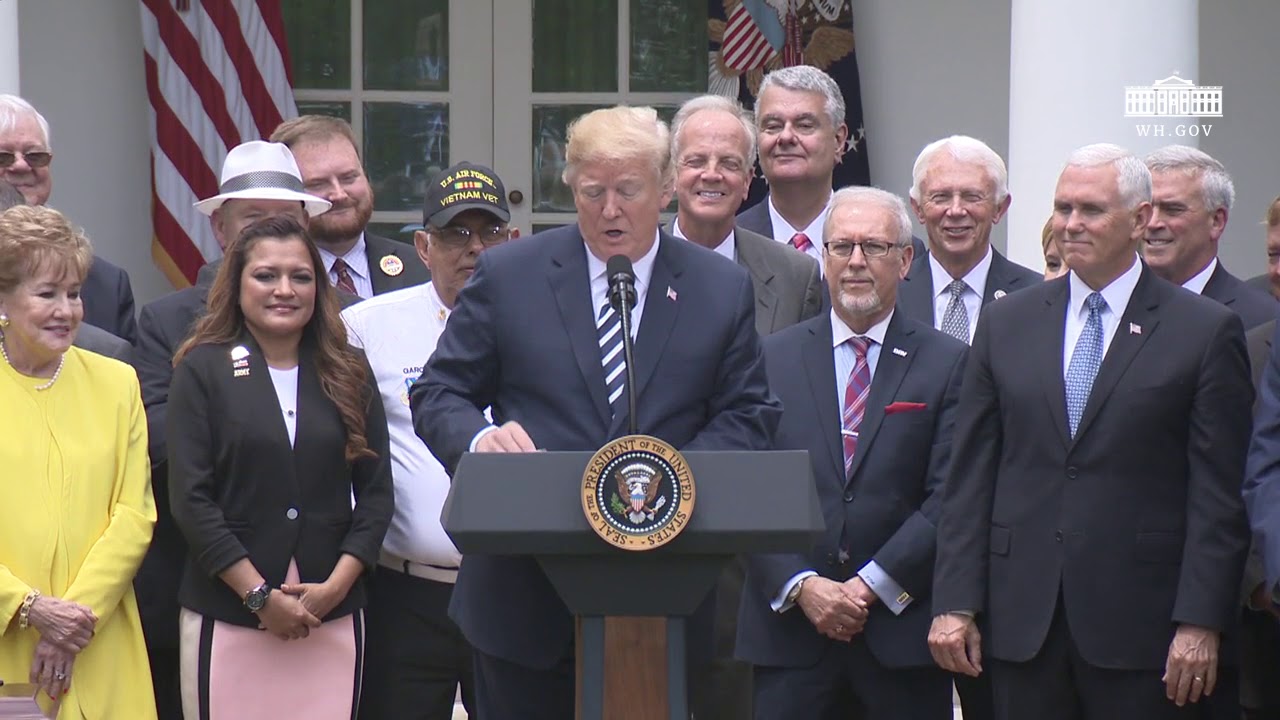 . What Trump called “choice” these veterans groups called “privatization,” and they’d been warning for years that it would cost taxpayers more money and deliver worse care for veterans. The veterans groups had endorsed the bill, but Trump’s description of it was not what they thought they were there to support.
The moment left no doubt that the Trump administration is determined to use the new law to expand the private sector’s role in veterans’ health care. The administration is working on a plan to shift millions more veterans to private doctors and is aiming to unveil the proposal during Trump’s State of Union address in January, according to four people briefed on the proposal. The people spoke on the condition of anonymity because they weren’t authorized to disclose information about the administration’s plans.
The cost of expanding private care is hard to predict, but VA officials have told Congress and veterans groups that it will range from $13.9 billion to $32.1 billion over five years, the four people said. Since the administration opposes lifting overall government spending, Democrats say the increased cost of private care will come at the expense of the VA’s own health system. Some lawmakers said the administration’s plan defies the purpose of the law they passed.
Trump’s first VA secretary said he was forced out by ideologues determined to privatize the department, which he called, in a New York Times op-ed, “a political issue aimed at rewarding select people and companies with profits, even if it undermines care for veterans.” The new secretary has repeatedly denied that privatization is the administration’s goal. But the fact is that Trump is doing exactly what he said he would do: The share of VA care delivered in the private sector has grown to 36 percent from 22 percent in 2014, and the administration is weighing policy changes that would move up to 55 percent of veterans to private providers, according to the people briefed on the deliberations.
VA spokesman Curt Cashour wouldn’t comment on those figures. He said the new policies are still under development but “will ensure that VA delivers veterans the best and most timely care possible with maximum continuity — whether it’s at VA or in the community.”
As a candidate, Trump spoke often about improving veterans’ care, and as president, he has returned often to that rhetoric. At his post-midterm press conference, he said, “I’ve done more for the vets than any president has done, certainly in many, many decades, with choice and with other things.” But he has plunged the VA leadership into turmoil and stirred anxiety over privatization, which many veterans oppose. And just this week, he was criticized for not participating in any public events on Veterans Day.
The White House declined to comment.
Democrats are eager to use their new House majority to stymie the Trump administration’s plans for the VA.“I am deeply concerned about efforts to profiteer off of veterans by undermining VA-administered care and expanding VA’s reliance on private care,” Rep. Mark Takano, a California Democrat who’s hoping to chair the House veterans committee, said in a statement. “It will be extremely important for the new Congress to conduct effective and frequent oversight of VA leadership so that this legislation is implemented properly.”
Despite the VA’s scandal-tainted reputation, studies have shown that the quality of VA health services compares favorably to private providers, and other researchsuggests private doctors are generally not prepared to handle veterans’ complex needs. Yet the politics of health care reform have made the VA a target for conservatives; they have attacked it as the epitome of bloated bureaucracy and held it out as living proof of the dangers of “socialized medicine.”
The VA has been purchasing private care to supplement its health system since 1945, and there’s broad consensus that doing so makes economic and medical sense in many instances. But in recent years, conservatives such as the Koch brothers have made it a political priority to shift more veterans to private doctors, under the banner of choice.
In 2014, after a scandal over long waits for appointments at the Phoenix VA, Congress created a new program, called Choice, to send veterans to private doctors if they would have to wait more than 30 days for a VA appointment or lived more than 40 miles from a VA facility. By the start of the Trump administration, the Choice program was running out of money and suffering from payment and scheduling problems.
...Lawmakers got to work on overhauling the program and consolidating the VA’s various channels for buying private care. Sen. Jerry Moran, R-Kan., wanted to establish across-the-board guidelines, known as “access standards,” for when veterans could see private doctors. When the Senate veterans committee took up the proposed amendment, all the members, Republican and Democrat, voted against it, except Moran.
“The overwhelming majority of veterans in this country, despite a lot of bad media, as I think you understand, believe the VA provides quite good-quality care for them,” Sen. Bernie Sanders, I-Vt., said to Moran before the vote. “I feel a drip-by-drip effort — not by you, but just an overall drip-by-drip effort — to end up moving toward the privatization of the VA.”
Despite the committee’s 13-1 rejection, Moran’s proposal found a key ally in the White House: Darin Selnick, who used to work at a group backed by the billionaire brothers Charles and David Koch called Concerned Veterans for America and had signed onto an infamous proposal to dismantle the VA health system.
Officials in the VA, then led by Secretary David Shulkin, warned in meetings with lawmakers that what Selnick and Moran were seeking to do would explode the government’s costs by $60 billion to $80 billion a year, forcing the VA to cannibalize its own health centers to pay for private care, four people involved in the talks said.
“If you get the access standards wrong, it can have disastrous effects,” Shulkin said in an interview. “Whether intentionally or not, you could end up diluting the ability to maintain a strong VA. If access standards are too broad, the impact on the budget could end up being so significant that it would essentially become a system that’s spending out of control.”
But a bill to overhaul the Choice program couldn’t move forward without the White House’s support. So lawmakers struck a deal, according to four people involved in the negotiations. They adopted the access standards from Moran’s failed amendment, but added the word “designated.” That word meant the VA secretary would have the authority to decide, or “designate,” which access standards would make veterans eligible for private care and which were merely guidelines.
VA officials reassured Democrats that Shulkin would designate only three access standards, limiting the circumstances when veterans would automatically get referred to the private sector, the people said. Moran and Selnick, meanwhile, successfully got access standards into the bill. According to the people involved in the negotiations, both sides walked away thinking they would have their way later on, in the implementation.
The negotiations on the bill repeatedly put Shulkin at odds with other Trump officials, creating confusion about the administration’s position. After Trump fired Shulkin, at the end of March 2018, some VA officials warned that without his moderating influence, the Trump administration would use the bill to dramatically expand private care. “It’s dangerous now, it’s like a loaded weapon — they’re going to take access standards and run with it,” a former official involved in the negotiations said. “But everybody wanted to get a bill.”
With a looming deadline to act before the Choice program ran out of money, the compromise bill, now known as the VA Mission Act, gained the support of traditional veterans groups as well as conservative groups like Concerned Veterans for America. The nonpartisan Congressional Budget Office analyzed the bill’s cost on the assumption that it wouldn’t significantly increase the rate of veterans going to private doctors.
The Mission Act passed the House over the objection of Democrats who said it failed to address how the VA would pay for it, meaning the private care would come at the expense of the VA’s own hospitals. In the Senate, proponents waved off that concern. “We can work through this. This is a lot easier to work through than getting this bill to prime time,” ranking member Jon Tester, D-Mont., said at a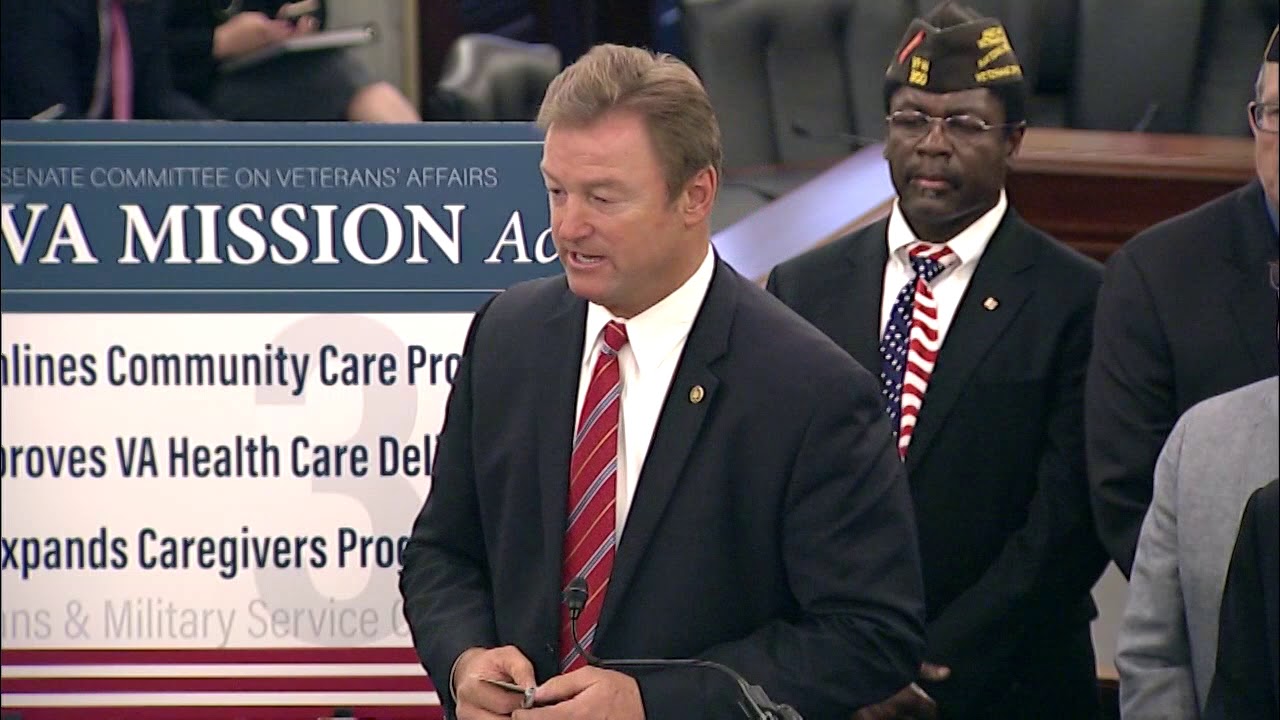 . “This is a minor issue.”
But soon after the Mission Act became law, the White House made clear that it opposed increasing the VA’s funding in order to pay for it — exactly as House Democrats had warned. “This funding can and should be provided within the existing non-Defense discretionary spending cap, and the administration opposes efforts to increase or adjust the cap,” Office of Management and Budget director Mick Mulvaney and then-acting VA secretary Peter O’Rourke said in a July letterto Congress.
Rick Weidman, the policy director for Vietnam Veterans of America, said Trump was breaking his campaign promises to veterans by refusing to fund the law he signed. “He got all the plaudits, then said we’re not going to pay for it,” Weidman said.
The same people who were pushing for more private care during the legislative negotiations are now the people leading the Trump administration’s implementation of the Mission Act.Selnick briefly returned to Concerned Veterans for Americabefore becoming an adviser to the new VA secretary. Selnick was replaced in the White House by Drew Trojanowski, a former aide to the late Sen. John McCain, R-Ariz., who worked closely with Moran on the access standards proposal.
“Darin Selnick is a veterans health care policy expert who helped write the Mission Act,” Cashour, the VA spokesman, said. “There is no one more qualified to advise on the law’s implementation.”
It isn’t surprising, then, that Selnick’s interpretation of the bill has gained the upper hand:The VA is planning to “designate” all the access standards as making veterans eligible for private care, according to veterans groups and congressional staff briefed on the plan. Congressional aides said that would expand the use of the private sector much more than they expected.
...
==
...
==
turmoil in the White House continues, as President Trump fired Secretary of Veterans Affairs David Shulkin and said he’d replace him with White House physician, Dr. Ronny Jackson, a rear admiral in the Navy. Dr. Jackson has no experience running a large agency. The Department of Veterans Affairs is the federal government’s second-largest department, with 360,000 employees. Shulkin had been facing criticism for various ethics violations, including using taxpayer money to pay for his wife’s airfare during a trip to Europe last summer. In a New York Times op-ed published Wednesday,Shulkin says he’s actually being ousted because of his opposition to privatizing the Veterans Affairs agency.He wrote, “They saw me as an obstacle to privatization who had to be removed. That is because I am convinced that privatization is a political issue aimed at rewarding select people and companies with profits, even if it undermines care for veterans.”
==
Trump announced Wednesday that he has tapped David Shulkin, a physician who is currently serving in the Obama administration as VA undersecretary, to lead the Department of Veterans Affairs.
The decision ends a protracted search for a head of the second-largest federal agency and would make Shulkin the first VA secretary who had not served in the military. Trump said he and his transition team had interviewed “at least 100 people” in their search for an executive to carry out multiple promises he has made to improve the care of veterans. In the end, they looked inside.
Shulkin, 57, who would be the first Obama administration holdover for Trump, was confirmed unanimously for his post as undersecretary in charge of the Veterans Health Administration in June 2015, a sign he could breeze through the Senate confirmation process.
[Here are the people Donald Trump has chosen for his Cabinet]
“I have no doubt Dr. Shulkin will be able to lead the turnaround our Department of Veterans Affairs needs,” Trump said at his first news conference since his election, calling him an “incredibly gifted doctor.”
“His sole mandate will be to serve our veterans and restore the level of care we owe to our brave men and women in the military,” Trump said. “Sadly our great veterans have not gotten the level of care they deserve, but Dr. Shulkin has the experience and the vision to ensure we will meet the health-care needs of every veteran.”
Shulkin is an internist who came to government with 30 years’ experience leading private hospitals. He has led the sprawling veterans health system — the country’s largest, with 1,700 clinics and hospitals — for 18 months, working to improve patients’ access to care after a nationwide scandal over fudged wait lists for medical appointments.
During his campaign, Trump called VA a “broken” system that treats illegal immigrants “better than our vets.”
Shulkin is in line to run an agency beset by challenges, including a backlog in disability claims that has shifted in recent years from initial applications to appeals; a rising suicide rate; overuse of opiates; and a shortage of doctors and nurses.
“We are both eager to begin reforming the areas in our Veterans Affairs system that need critical attention, and do it in a swift, thoughtful and responsible way,” Shulkin said in a statement released by the transition team.
In keeping Shulkin, Trump passed over the current secretary, Robert McDonald, a Republican appointed by Obama in 2014 after the wait-times scandal forced out his first VA chief, retired Army Gen. Eric Shinseki. Washington’s large and influential veterans service organizations had pushed Trump unsuccessfully to keep McDonald in the job.
:{
}:
Trump also passed over a favorite of some of his top aides, Fox News Channel contributor and Iraq War veteran Pete Hegseth. Hegseth is a former president and chief executive of Concerned Veterans for America, a conservative group backed by the billionaire Koch brothers. Hegseth had pledged to make it easier to fire poor performers and significantly expand VA medical care to private doctors outside the system. But he had not run a large organization comparable to the veterans system.
[Why Trump still hasn’t named a VA secretary]
Expanding private care is one of Trump’s biggest priorities for veterans, and it is unclear how Shulkin would approach such a change. After some members of the congressionally created commission on VA health care called last year for drastically reducing the federal role in veterans’ medical care, Shulkin told the Daily Press in Virginia the idea was “terrible.”
:{
}:
“This would be a terrible mistake, a terrible direction for veterans and for the country, to essentially systematically implement recommendations that would lead to the end of the VA health-care system,” he said.
A specialist in health-care quality, Shulkin held leadership positions at the Drexel University College of Medicine, Temple University Hospital and the Medical College of Pennsylvania before coming to government. He founded a now-defunct company, DoctorQuality, that provided information for patients on health-care safety and quality.
He received his medical degree from the Medical College of Pennsylvania, completed his internship at Yale School of Medicine and his residency and fellowship at the University of Pittsburgh Presbyterian Medical Center.
[After scandal, Phoenix VA still troubled by long waits for care, investigators say]
His selection drew praise from some of the largest veterans groups as a welcome sign of continuity.
“The VFW is proud to support the nomination of Dr. David Shulkin as the next Secretary of Veterans Affairs, and we are most appreciative of his willingness to continue serving veterans and making the VA better,” Brian Duffy, national commander of the Veterans of Foreign Wars, said in a statement.
Mark Lucas, executive director of Concerned Veterans for America, said in a statement: “It is no secret that the VA has been failing veterans for years. While Shulkin already holds a leadership position at the VA, as Secretary, he will now have ultimate responsibility over the agency and we are hopeful he will take it in a new direction.”
Louis Celli, legislative director for the American Legion, said in an interview that Shulkin has had an open door not just to veterans groups but to his staff at the Veterans Health Administration.
Shulkin’s selection “says to me that Trump has faith in the direction VA is going with health care,” Celli said. “I think this is a huge reality check for a group of people who want to privatize VA.”
Of all the day-to-day operations of government that Trump criticized, VA, with its vast management challenges, came under special scrutiny. Finding the right person for the job was one of the president-elect’s biggest challenges.
In recent weeks, Trump had met with retired military leaders, politicians and health-care executives, some of whom would help diversify a Cabinet he is under pressure from some on his team to make more inclusive. Trump extended preliminary offers to several qualified contenders, but they turned him down, citing other commitments.
https://www.washingtonpost.com/news/powerpost/wp/2017/01/11/david-shulkin-tapped-as-trumps-va-secretary/?utm_term=.d81bc9f9a142
Shulkin, 57, who would be the first Obama administration holdover for Trump, was confirmed unanimously for his post as undersecretary in charge of the Veterans Health Administration in June 2015, a sign he could breeze through the Senate confirmation process.
[Here are the people Donald Trump has chosen for his Cabinet]
“I have no doubt Dr. Shulkin will be able to lead the turnaround our Department of Veterans Affairs needs,” Trump said at his first news conference since his election, calling him an “incredibly gifted doctor.”
“His sole mandate will be to serve our veterans and restore the level of care we owe to our brave men and women in the military,” Trump said. “Sadly our great veterans have not gotten the level of care they deserve, but Dr. Shulkin has the experience and the vision to ensure we will meet the health-care needs of every veteran.”
Shulkin is an internist who came to government with 30 years’ experience leading private hospitals. He has led the sprawling veterans health system — the country’s largest, with 1,700 clinics and hospitals — for 18 months, working to improve patients’ access to care after a nationwide scandal over fudged wait lists for medical appointments.
During his campaign, Trump called VA a “broken” system that treats illegal immigrants “better than our vets.”
Shulkin is in line to run an agency beset by challenges, including a backlog in disability claims that has shifted in recent years from initial applications to appeals; a rising suicide rate; overuse of opiates; and a shortage of doctors and nurses.
“We are both eager to begin reforming the areas in our Veterans Affairs system that need critical attention, and do it in a swift, thoughtful and responsible way,” Shulkin said in a statement released by the transition team.
In keeping Shulkin, Trump passed over the current secretary, Robert McDonald, a Republican appointed by Obama in 2014 after the wait-times scandal forced out his first VA chief, retired Army Gen. Eric Shinseki. Washington’s large and influential veterans service organizations had pushed Trump unsuccessfully to keep McDonald in the job.
Trump also passed over a favorite of some of his top aides, Fox News Channel contributor and Iraq War veteran Pete Hegseth. Hegseth is a former president and chief executive of Concerned Veterans for America, a conservative group backed by the billionaire Koch brothers. Hegseth had pledged to make it easier to fire poor performers and significantly expand VA medical care to private doctors outside the system. But he had not run a large organization comparable to the veterans system.
[Why Trump still hasn’t named a VA secretary]
Expanding private care is one of Trump’s biggest priorities for veterans, and it is unclear how Shulkin would approach such a change. After some members of the congressionally created commission on VA health care called last year for drastically reducing the federal role in veterans’ medical care, Shulkin told the Daily Press in Virginia the idea was “terrible.”
“This would be a terrible mistake, a terrible direction for veterans and for the country, to essentially systematically implement recommendations that would lead to the end of the VA health-care system,” he said.
A specialist in health-care quality, Shulkin held leadership positions at the Drexel University College of Medicine, Temple University Hospital and the Medical College of Pennsylvania before coming to government. He founded a now-defunct company, DoctorQuality, that provided information for patients on health-care safety and quality.He received his medical degree from the Medical College of Pennsylvania, completed his internship at Yale School of Medicine and his residency and fellowship at the University of Pittsburgh Presbyterian Medical Center.
[After scandal, Phoenix VA still troubled by long waits for care, investigators say]
His selection drew praise from some of the largest veterans groups as a welcome sign of continuity.
“The VFW is proud to support the nomination of Dr. David Shulkin as the next Secretary of Veterans Affairs, and we are most appreciative of his willingness to continue serving veterans and making the VA better,” Brian Duffy, national commander of the Veterans of Foreign Wars, said in a statement. Mark Lucas, executive director of Concerned Veterans for America, said in a statement: “It is no secret that the VA has been failing veterans for years. While Shulkin already holds a leadership position at the VA, as Secretary, he will now have ultimate responsibility over the agency and we are hopeful he will take it in a new direction.”
Louis Celli, legislative director for the American Legion, said in an interview that Shulkin has had an open door not just to veterans groups but to his staff at the Veterans Health Administration.
Shulkin’s selection “says to me that Trump has faith in the direction VA is going with health care,” Celli said. “I think this is a huge reality check for a group of people who want to privatize VA.”
Of all the day-to-day operations of government that Trump criticized, VA, with its vast management challenges, came under special scrutiny. Finding the right person for the job was one of the president-elect’s biggest challenges.
In recent weeks, Trump had met with retired military leaders, politicians and health-care executives, some of whom would help diversify a Cabinet he is under pressure from some on his team to make more inclusive. Trump extended preliminary offers to several qualified contenders, but they turned him down, citing other commitments.