Jobs, Steve / Laurene
oddly zombied gore node 2x? 5 22
gore inc truth recs keynote sw
-=-=
MMA 10 26 CBS KILL CLIMATE COVERAGE
EDIT BD?
-=-=
CIA used nsa shell to buy next pc for sat image
books
Valley of Death: How Big Tech Is Fueling the Future of War
Elon Musk, Peter Thiel, and Alexander Karp. These tech titans are fast becoming some of the most powerful figures in the realm of national security, with enormous implications for us all. As Sharon Weinberger reveals in this gripping account, the American military and spy agencies helped to create Silicon Valley as we now know it, and some of its biggest and most valuable companies today owe much of their success to the Pentagon and CIA. Beginning with the War on Terror and accelerating under Donald Trump, however, the old alliance between elected leaders in Washington and the unelected CEOs of Silicon Valley has grown increasingly uneasy as power has shifted to the private sector and Big Tech exerts greater and greater influence over its old patrons. Companies such as SpaceX and Palantir, along with newer entrants to the field such as Anduril, are proudly supporting—and quietly shaping—US national defense, whether by providing spies and soldiers with AI and cloud-computing tools or actual military hardware such as microwave weapons, hypersonic missiles, and advanced drones.
The implications of this historic shift are poorly understood and fraught with peril. What happens when mercurial billionaires like Elon Musk control weapons and technologies that were once the preserve of the US government? How will this new military-industrial complex affect the way wars are fought, or even which wars are fought? That is the urgent question before us today, at the dawn of this new era—and as Weinberger reveals, it is one on which our collective future might well hinge.
-=-=
-=-=
DCK 10 26
Wikipedia
https://en.wikipedia.org › wiki › Laurene_Powell_Jobs
Laurene Powell Jobs - Wikipedia
Laurene Powell Jobs (née Powell; born November 6, 1963) [1][2] is an American entrepreneur, business executive and philanthropist. [3] She is the founder and president of Emerson Collective, lead investor and chair of The Atlantic and co-founder and chair of XQ Institute. [3][4] Powell Jobs also sits on the boards of the Ford Foundation, Council on Foreign Relations, Chicago CRED, College ...
Forbes
https://www.forbes.com › profile › laurene-powell-jobs
Laurene Powell Jobs - Forbes
TodayLaurene Powell Jobs is the founder and president of Emerson Collective, an impact investing, philanthropy and advocacy firm focused on environmental justice, health, immigration and education.
Council on Foreign Relations
https://www.cfr.org › bios › laurene-powell-jobs
Laurene Powell Jobs - Council on Foreign Relations
Laurene Powell Jobs is an entrepreneur and the founder and president of Emerson Collective, a company working to create a world of abundance for future generations. In establishing Emerson ...
Variety
https://variety.com › 2026 › tv › news › laurene-powell-jobs-investment-david-ellison-skydance-1236916605
Laurene Powell Jobs Invested $250 Million in David Ellison ... - Variety
2 days agoLaurene Powell Jobs paid $250 million to acquire shares in Skydance, the David Ellison-led company formed by the merger of Paramount Skydance and Warner Bros. Discovery.
-=-=
https://www.alternet.org/2021/09/erik-prince/
Series: The Secret IRS Files
Inside the Tax Records of the .001%
It's well known, at least among tax lawyers and accountants for the ultrawealthy: The estate tax can be easily avoided by exploiting a loophole unwittingly created by Congress three decades ago. By using special trusts, a rarefied group of Americans has taken advantage of this loophole, reducing government revenues and fueling inequality.
There is no way for the public to know who uses these special trusts aside from when they've been disclosed in lawsuits or securities filings. There's also been no way to quantify just how much in estate tax has been lost to them, though, in 2013, the lawyer who pioneered the use of the most common one — known as thegrantor retained annuity trust, or GRAT — estimated they may have cost the U.S. Treasury about $100 billion over the prior 13 years.
As Congress considers cracking down on GRATs and other trusts to help fund President Joe Biden's domestic agenda, a new analysis by ProPublica based on a trove of tax information about thousands of the wealthiest Americans sheds light on just how widespread the use of special trusts to dodge the estate tax has become.
More than half of the nation's 100 richest individuals have used GRATs and other trusts to avoid estate tax, the analysis shows. Among them: former Democratic presidential candidate Michael Bloomberg; Leonard Lauder, the son of cosmetics magnate Estée Lauder; Stephen Schwarzman, a founder of the private equity firm Blackstone; Charles Koch and his late brother, David, the industrialists who have underwritten libertarian causes and funded lobbying efforts to roll back the estate tax; and Laurene Powell Jobs, the widow of Apple founder Steve Jobs.(Powell Jobs' Emerson Collective is among ProPublica's largest donors.)
More than a century ago amid soaring inequality and the rise of stratospherically wealthy families such as the Mellons and Rockefellers, Congress created the estate tax as a way to raise money and clip the fortunes of the rich at death. Lawmakers later added a gift tax as a means of stopping wealthy people from passing their fortunes on to their children and grandchildren before death. Nowadays, 99.9% of Americans never have to worry about these taxes. They only hit individuals passing more than $11.7 million, or couples giving more than $23.4 million, to their heirs. The federal government imposes a roughly 40% levy on amounts above those figures before that wealth is passed on to heirs.
For her part, Powell Jobs has decried as “dangerous for a society" the early 20th century fortunes of the Mellons, Rockefellers and others. “I'm not interested in legacy wealth buildings, and my children know that," she told The New York Times last year. “Steve wasn't interested in that. If I live long enough, it ends with me."
Nonetheless, after the death of her husband in 2011, Powell Jobs used a series of GRATs to pass on around a half a billion dollars, estate-tax-free, to her children, friends and other family, according to the tax records and interviews with her longtime attorney. By using the GRATs, she avoided at least $200 million in estate and gift taxes.
Her attorney, Larry Sonsini, said Powell Jobs did this so that her children would have cash to pay estate taxes when she dies and they inherit “nostalgic and hard assets," such as real estate, art and a yacht. (At 260 feet, Venus is among the larger pleasure ships in the world.) Without the $500 million or so passed through the trusts, he said, Powell Jobs' heirs would have to sell stock that she intends to give to charity to pay her estate tax bill.
Sonsini said Powell Jobs, whose fortune is pegged at $21 billion by Forbes, has already given billions away to charity and paid $2.5 billion in state and federal taxes between 2012 and 2020. “When you look at an estate that may be worth multiple billions, and all the rest is going to charity, and you put it in perspective, what is the problem we're worried about here?" Sonsini asked. “This is not about creating dynasty wealth for these kids."
In a written statement, Powell Jobs said she supports “reforms that make the tax code more fair. Through my work at Emerson Collective and philanthropic commitments, I have dedicated my life and assets to the pursuit of a more just and equitable society."
Others whose special trusts ProPublica identified, including Bloomberg and the Kochs,declined to comment on why they'd set up the trusts or their estate-tax implications. Representatives for Lauder didn't respond to requests to accept questions on his behalf. Schwarzman's spokesperson wrote that he is “one of the largest individual taxpayers in the country and fully complies with all tax rules."
A typical GRAT entails putting assets, like stocks, in a trust that ultimately benefits a person's heirs. The trust pays back an amount equal to what the trust's creator put in plus a modest amount of interest. But any gains on the investments above that amount flow to the heirs free of gift or estate taxes. So if a person puts $100 million worth of stock in a GRAT and the stock rises in value to $130 million, their heirs would receive about $30 million tax-free.
In 1990, Congress accidentally created GRATs when it closed another estate tax loophole that was popular at the time. The IRS challenged the maneuver but lost in court.
“I don't blame the taxpayers who are doing it," said Daniel Hemel, a professor at the University of Chicago Law School. “Congress has virtually invited them to do it. I blame Congress for creating the monster and then failing to stop the monster once it became clear how much of the tax base the GRAT monster would eat up."
Users of the trusts extend well beyond the top of the Forbes rankings, ProPublica's analysis of the confidential IRS files show. Erik Prince, founder of the military contractor Blackwater and himself heir to an auto parts fortune, used the shelter. Fashion designer Calvin Klein has used them, as have “Saturday Night Live" creator Lorne Michaels and media mogul Oprah Winfrey.
“We have paid all taxes due," a spokesperson for Winfrey said. A representative of Klein did not accept questions from ProPublica or respond to messages. A spokesman for Michaels declined to comment.
Prince also did not answer questions. “Hey if you publish private information about me I'll be sure to return the favor," he wrote. “Go ahead and fuck off."
The GRAT has become so ubiquitous in recent decades that high-end tax lawyers consider it a plain vanilla strategy. “This is an off-the-shelf solution," said Michael Kosnitzky, co-leader of the private wealth practice at law firm Pillsbury Winthrop Shaw Pittman. “Almost every wealthy person should have one."
ProPublica's tally almost certainly undercounts the number of Forbes 100 members who use shelters to avoid estate taxes. ProPublica counted only those people whose tax records or public filings explicitly mention GRATs or other trusts commonly used to dodge gift and estate taxes. But a wealthy person can call their trusts whatever they want, leaving plenty of trusts outside of ProPublica's count.
This month, the House and Senate are hammering out proposals to raise revenue to help pay for the Biden administration's plans to expand the social safety net. The legislative blueprint released by House Ways and Means Committee Chairman Richard Neal, D-Mass., would defang GRATs and other trusts, which would still be legal but no longer be as useful for estate tax avoidance. If the provision makes it into law, “it would put a major dent in GRATs," said Bob Lord, an Arizona attorney who specializes in trusts and estates.
Senate Budget Committee Chairman Bernie Sanders, I-Vt., has proposed going further in undercutting estate tax avoidance tools. But the prospect of any reform is uncertain, as Democrats on Capitol Hill struggle to find the votes to pass the package of spending and tax changes.
:{:(style="background-color:#ffffff;"):}:
GRATs are commonly described by tax lawyers as a “heads I win, tails we tie" proposition. If the investment placed in the GRAT soars in value, that increase passes to an heir without being subject to future estate tax. If the investment doesn't go up, the wealthy person can simply try again and again until they succeed, leading many users to have multiple GRATs going at a time....
early Sunday morning tweet, Donald Trump retweeted a post stating the Laurene Powell Jobs — widow of Apple founder Steve Jobs — donated at least $500,000 to Joe Biden’s campaign this year and urges his followers to contact her and express their displeasure.
According to the president, “Steve Jobs would not be happy that his wife is wasting money he left her on a failing Radical Left Magazine that is run by a con man (Goldberg) and spews FAKE NEWS & HATE. Call her, write her, let her know how you feel!!!”
==
https://thehill.com/homenews/administration/515296-trump-targets-laurene-powell-jobs-in-latest-attack-on-atlantic-report
no lnx twt
trump targets Laurene Powell Jobs in latest attack on Atlantic report
BY ZACK BUDRYK - 09/06/20 08:26 AM EDT 2,180
Just In...
Pelosi: Trump 'engaged in fright and fear' in efforts to 'discredit' voters
HOUSE
— 3M 12S AGO
One cure for an ailing American economy: Legalize cannabis
OPINION
— 31M 53S AGO
Trump says officials will investigate whether California is using 1619 Project in classrooms
ADMINISTRATION
— 39M 56S AGO
Biden lead evaporates in Texas: poll
CAMPAIGN
— 44M 46S AGO
Atlantic editor: Reporting on Trump comments about fallen service members has only just begun
MEDIA
— 1H 24M AGO
The great debate over Russian nuclear doctrine
OPINION
— 1H 31M AGO
Secretaries of states warn Election Day could drag out
CAMPAIGN
— 1H 35M AGO
Judge orders resumption of diversity visas
ADMINISTRATION
— 2H 15M AGO
VIEW ALL
Related News
Sarah Sanders memoir reportedly says Trump joked she should hook up with Kim Jong Un
Sarah Sanders memoir reportedly says Trump…
Records show Postal Service paid millions to DeJoy's former company
Records show Postal Service paid millions…
White House officials deny Trump bears responsibility for social unrest
White House officials deny Trump bears…
by
President Trump targeted billionaire philanthropist Laurene Powell Jobs, the widow of Apple Chairman Steve Jobs, in his latest salvo against The Atlantic for reporting that he disparaged slain American soldiers.
“Steve Jobs would not be happy that his wife is wasting money he left her on a failing Radical Left Magazine that is run by a con man (Goldberg) and spews FAKE NEWS & HATE,” Trump tweeted. “Call her, write her, let her know how you feel!!!”
The president sent the tweet in response to a post by conservative activist Charlie Kirk noting that Laurene Powell Jobs, a co-owner of The Atlantic, has donated more than $600,000 to Democratic presidential nominee Joe Biden.
Trump has vehemently denied the Atlantic story, which alleges that he declined to visit a French cemetery for Americans slain during World War I and called them “losers.”
“If they really exist, if people really exist that would have said that, they’re lowlifes and they’re liars. And I would be willing to swear on anything that I never said that about our fallen heroes. There is nobody that respects them more,” Trump told reporters at Joint Base Andrewsafter a campaign stop in Pennsylvania on Thursday.
Fox News and The Washington Post have since matched parts of The Atlantic's reporting.
Atlantic editor: Reporting on Trump comments about fallen service...
Fox News reporter defends confirming Atlantic piece despite Trump...
On Saturday, Trump attacked the article’s author, Atlantic Editor-in-Chief Jeffrey Goldberg, as a “slimeball.” He separately attacked Jennifer Griffin, the Fox News reporter who backed up parts of the report, saying she “should be fired for this kind of reporting.”
The Biden campaign has also seized on the report, cutting an ad including the alleged remarks.
Former White House national security adviser John Bolton, meanwhile, has claimed he did not hear the alleged remarks, while former White House chief of staff John Kelly has declined to comment.
==
info@ealliance.org
Earth Alliance, a new organization to help address the urgent threats to our planet’s life support systems – born out of the shared passion of its founding co-chairs: environmental activist and Academy Award®-winning actorLeonardo DiCaprio, businesswoman and philanthropist Laurene Powell Jobs,and investor and philanthropist Brian Sheth.
Launched in response to a growing climate crisis and staggering loss of biodiversity threatening the stability of life on Earth, the Alliance marks a shared commitment to addressing these intertwined threats.
For further information, contact us.
==
Leonardo DiCaprio Foundation (LDF), Emerson Collective, and Global Wildlife Conservation have announced the launch of a new organization that will work to address urgent threats to the planet's ecosystems.
Co-founded by DiCaprio, Emerson Collective founder Laurene Powell Jobs, and Global Wildlife Conservation board chair Brian Sheth in response to the growing climate crisis and mounting biodiversity loss, Earth Alliance will work to protect ecosystems and wildlife, ensure climate justice, support renewable energy, and secure indigenous rights to the benefit of all life on the planet. The staff and operations of LDF — which has awarded grants totaling more than $100 million in support of projects across all five oceans and seven continents since 1998 — will be folded into Earth Alliance. Co-chaired by DiCaprio, Powell Jobs, and Sheth and led by an independent management team of scientists and conservationists, the alliance will combine the talents, resources, and expertise of the three organizations to accelerate and scale shared programs and priorities.
==
https://web.archive.org/web/20150606220150/https://networkforpubliceducation.org/wp-content/uploads/2014/11/Tuck-Money-Flowchart-4.pdf
tuck?
==
see charters (poor schools blk the most profitable target?!)
https://www.alternet.org/money-talked-leaks-show-input-wealthy-privatizers-clinton-education-policy
rare peek into the evolution of Hillary Clinton’s education platform is afforded through an overlooked Wikileaks-published document. Entitled “Policy Book— FINAL,” the PDF file was attached to a 2014 email sent to John Podesta, Clinton’s future campaign chair. The education portion of the document runs 66 pages, mostly concentrated on K-12 policy, and captures specific input from billionaire donors looking to overhaul and privatize public education.
Today, Donald Trump seeks a rapid expansion of charter schools and private school vouchers, while his Secretary of Education, Betsy DeVos, touts “school choice” and market competition for public school at every stop. But in private, Hillary Clinton’s donors, dubbed “experts," also sought rapid charter expansion and market-based options to replace public schools.
One of the most connected “thought leaders” discussed is Laurene Powell Jobs, the widow of Apple founder Steve Jobs, and the head of the Emerson Collective, a prominent education reform advocacy group. Powell Jobs who has been close with the Clintons since the late '90s, also sat with Betsy DeVos on the board of Jeb Bush’s Foundation for Excellence in Education. She set up billionaire “roundtables” with Clinton’s campaign advisors through 2015 while donating millions to Priorities USA, Clinton’s main PAC.
Fixing teachers
Notes taken by Clinton aide Ann O’Leary were made in interviews with Powell Jobs and Bruce Reed, CEO of The Broad Foundation (and former chief of staff to Joe Biden). According to the notes, the “experts” were calling for new federal controls, more for-profit companies and more technology in public schools — but first on the menu was a bold remake of the teaching “profession”:
“Elevating the Teaching Profession and Reforming Teacher Training. Every single person from across the spectrum wrote about and talked about the need to improve our schools of education, entry into the teaching profession and our professionalism once teachers make it in . . . there is consensus that you could offer a bold vision for reforming teacher training and professionalizing the teaching profession for those new to the profession.”
In previous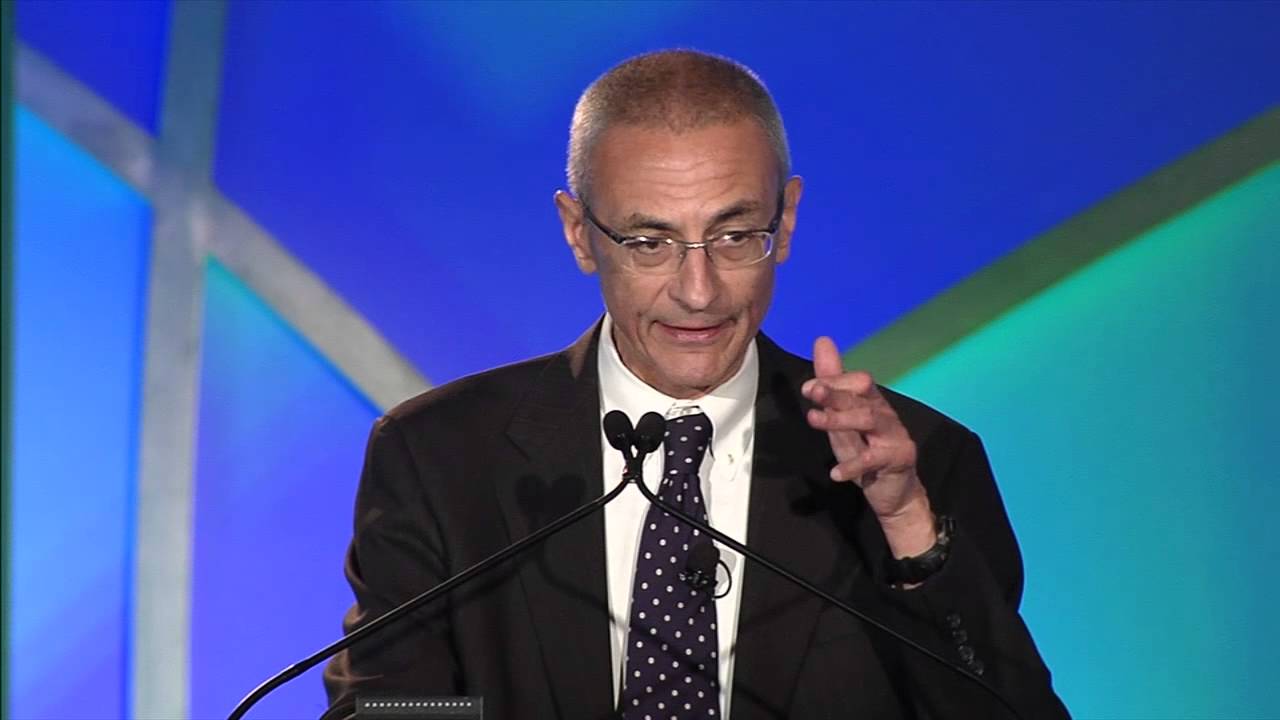 , Clinton campaign manager John Podesta indicated that recruiting and grooming younger, more compliant teachers was the plan to overcome resistance to corporate education reform over the long term. But in the policy book, Bruce Reed also sets his sights on teaching colleges, claiming “they don’t deliver the goods.”
Powell Jobs suggests letting principals “pick their teams," making teachers individually negotiate salary (every teacher—really?), expanding online education offerings like Khan Academy and making teaching universities “truly selective like TFA and Finland.” This comment is perplexing because while Finland has demanding teacher vetting and training, Teach for America places inexperienced teachers in classrooms after a seven-week summer crash course.
A perfect storm
Representing billionaire Eli Broad, Bruce Reed celebrated the paralysis in local governance in post-Katrina New Orleans as key to pulling off the rapid expansion of charter schools, exploiting disaster without oversight by any “central office”:
“New Orleans is an amazing story — when you make it possible to get political dysfunction and sick a bunch of talent on the problem — it’s the one place where grand bargain of charters has been kept the best.”
New Orleans' "amazing" story resulted in the firing of 7,500 mostly black school employees, wiping out a substantial part of the city’s black middle class. Meanwhile, the “miracle” claims of boosters like Reed have fallen apart. A recent editorial in New Orleans’ African American newspaper called out the false promises and lack of results from the charter experiment.
The new normal
But they did more than talk. On June 20, 2015, O'Leary sent Podesta an email revealing the campaign adopted two of Powell Jobs' suggestions, including "infusing best ideas from charter schools into our traditional public schools.” When Clinton announced this policy in a speech to teachers, however, it was the one line that drew boos.Tying campaign donations to a singular issue like expanding charter schools might in days past been seen as a prohibited quid-pro-quo. But in this cycle, Podesta, O’Leary and Tanden all busily raised campaign money from the same billionaire education reformers with whom they were also talking policy specifics.
“Donors want to hear where she stands” John Petry, a founder of both Democrats for Education Reform (DFER) and Success Academy, New York’s largest network of charter schools, told the New York Times. Petry was explicit, declaring that he and his billionaire associates would instead put money into congressional, state and local races, behind candidates who favored a “more businesslike approach” to education, and tying teacher tenure to standardized test scores.
Clinton’s advisors warned her that wealthy donors like Petry, Whitney Tilson, or Eli Broad could walk if she didn’t support charter schools. Broad would indeed threaten to withhold funding from Clinton when she criticized charter schools for excluding difficult students. John Podesta and Ann O’Leary would publicly correct Clinton, reaffirming her commitment to charters.
The revolving door was also in full swing, with top Clinton and Obama administration officials working for “non-profits” run by Powell Jobs and Tom Steyer. In the end, the influence of the various well-connected “experts” advising Clinton could be felt in an official education platform that endorsed a test-centric approach that was becoming unpopular with parents, students and educators.
Warnings ignored
Clinton was also advised to “Stand Up for the Common Core” despite the botched implementation that was then unfolding from coast to coast. By this time, states were already moving to junk the standards, while the Washington Post was asking whether Common Core could sink Jeb Bush’s presidential run. Yet her advisors were nudging her to echo the Bush talking point of “kindler, gentler” tests.
The feuds over testing resulted in Clinton largely avoiding the controversy. Her advisors describe New York as a messy example, where rushed implementation of President Obama’s Race to the Top’s test-based teacher evaluations “fueled opposition”:
“Governor Cuomo had a very heated political battle with the state’s teachers unions in 2013 over the new teacher evaluation system…[t]he use of test scores in teacher evaluation has caused a substantial backlash . . . This backlash caused the Governor (in the midst of his re-election cycle) to agree to a “moratorium” on using the tests for two years. In an effort to win over Common Core opponents, he ran ads saying he supported a delay in the “use [of] Common Core test scores for at least five years…”
In their efforts to steer Clinton towards pro-testing policies, her advisors relied on education reform talking points. Neera Tanden, head of the Clinton-aligned Center for American Progress wrote that “New York has shown positive gains resulting from the implementation of the new higher standards.” But New York’s repeated changes of proficiency thresholds nullified any statistical validity. Tanden was advising Clinton based on a test-centric philosophy that educators, psychometric experts and court rulings have rejected since 2011.
Teacher input?
Under the heading “[g]ood ideas from the AFT crowd” the 2014 document mentions Randi Weingarten’s call for more “full-service community schools.” Clinton would not promote this much on the campaign stump though, outside of a speech made right back to the AFT. To this day, the education section of Clinton’s 2016 website says only vaguely that states should “use federal education funding to implement social and emotional support interventions.”
Behind the scenes, however, O’Leary was pushing for holistic student supports, by March of 2016 suggesting that Clinton’s K-12 platform:
“…focus on the whole child — and acknowledge that toxic stress created by poverty does impact learning and that teachers cannot do this work alone. We need to support parents through two-generation approaches to learning. We need to provide schools the resources to hire guidance counselors and mental health providers, and make sure that children from low-income communities once again have music and art education and opportunities to participate in gymnastics and ballet. These activities cannot be reserved for only those who can pay for them.”
The Clinton campaign did not bring this message forward, falling silent, even when pressed for more specifics on education plans, as detailed in this CBS article. Meanwhile, emails showed that Clinton and campaign staff knew their donors were behind a lawsuit seeking to end teacher tenure, so her plan was to stay quiet about it.
School’s out
Not mentioning education would become important in the general election. This policy book shows a snapshot in time when wealthy donors were pushing Clinton’s and Jeb’s positions together, seeking more of the federal privatization begun under George W. Bush and continued by Obama.
Seeing this, Trump would tell ticked-off voters what they wanted to hear, vowing loudly to “terminate Common Core out of Washington.” He knew (or should have known) that it was already a state-based decision to use the standards by late 2015. After the election, Trump would completely drop the idea.
This was predicted by John Podesta, who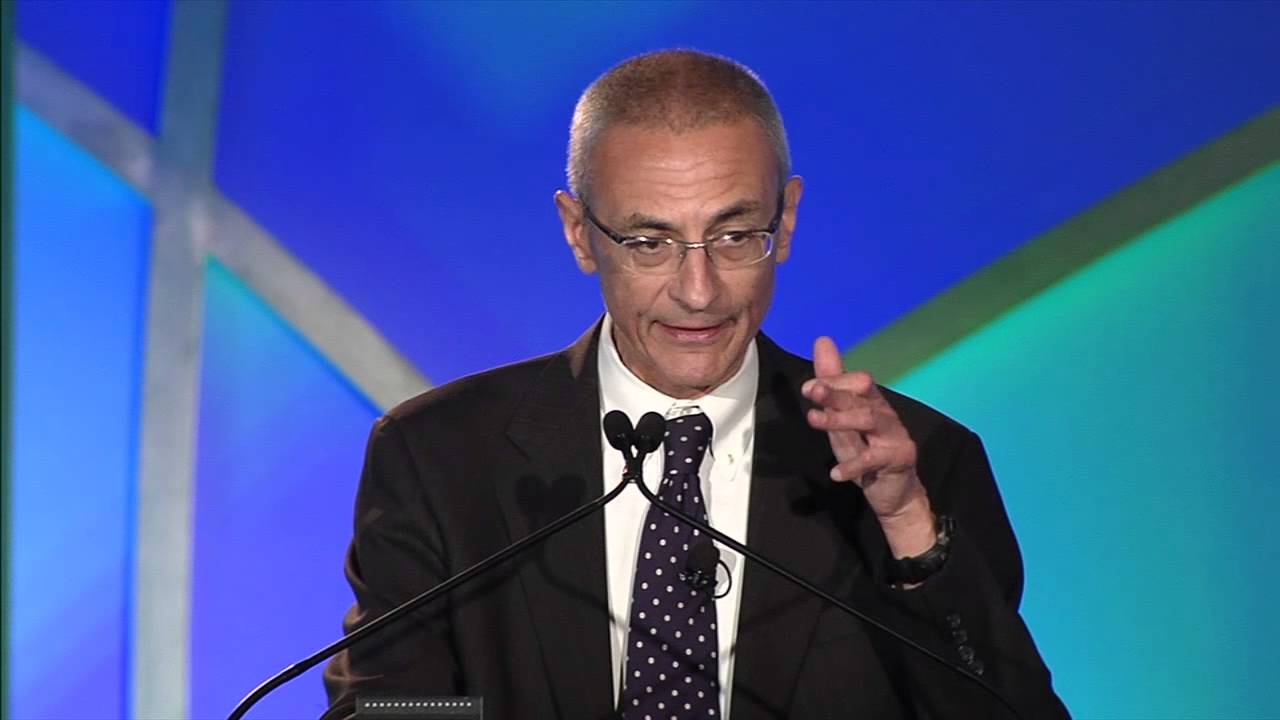 just after the 2012 election about nullifying education policy differences between President Obama and Mitt Romney. Sitting next to Jeb Bush, Podesta proclaimed “ed reform” a bipartisan affair, telling donors “the Obama administration has made its key priorities clear. The Republicans are pretty much in the same place…this area is ripe for cooperation between the center-right and center-left”.
As the reformer money rolled in, Clinton avoided public stances, with articles by 2015 noting she was getting support from both sides yet still unclear on her vision, critical of testing and charters while still supporting them. From Politico:
Clinton will have to walk carefully between both sides of the education reform debate so as not to alienate either side, said a source close to the Walton Family Foundation: "She’ll be able to receive money from both sides of the education reform debate if she plays her cards carefully…”
Reading this, John Podesta wrote in a private email: “Complicated. She won’t back off criticism, but won’t object to taking contributions.”
Both sides now
These pre-campaign deliberations show the Clinton team was well aware of the controversies raging in education, courting wealthy reformers who claimed to support poor students’ “civil rights” while pushing top-down privatization, testing, cookie-cut standards and invasive data mining.
Ann O’Leary would later tell Podesta that Powell Jobs and other education reformers were “pleased with our work” but were “wary of a few issues” like test-based accountability, then being negotiated in the U.S. Senate:
“The reauthorization of the law – spearheaded by Senators Murray and Alexander in the Senate – provides flexibility to states to set their own accountability systems and their own goals for improvement. The civil rights groups and the ed reformers are very concerned that this lack of accountability will leave poor and minority students with no real systems for improving the poor education that they are receiving.
To date, HRC has stayed out of this debate: generally praising the Senate for moving forward with the reauthorization by keeping standards and testing in place and saying little about the accountability system. I do not believe that she should weigh in on this debate, but rather should continue to monitor it closely.”
In reality, wealthy and well-connected education reformers were likely more instrumental in calling for the “accountability” that kept federal testing mandates in place than were civil rights groups. A key player in this was Russlynn Ali, former Assistant Secretary of Civil Rights to US Education Secretary Arne Duncan. Ali would become an intimate advisor to Powell Jobs, and the head of the Emerson Collective, the charter school advocacy group that Powell Jobs founded.
What did we learn?
The same cadre of billionaires that tried to steer Clinton towards unpopular pro-testing policies and controversial school privatization schemes are hard at work today. Powell Jobs, for example, has sought greater influence, funding a lavish and high-profile effort to “rethink high school” and acquiring a majority stake in The Atlantic. In July, Powell Jobs was reportedly contacted by Ivanka Trump on behalf of the administration, seeking "advice on shaping funding approaches" for STEM education in public schools.
While Eli Broad may have stepped down from his foundation, his post-disaster playbook of taking advantage of local government paralysis remains alive and well. Efforts to replicate New Orleans’ “amazing story” appear to be thriving in Puerto Rico, where schools were devastated by Hurricane Maria.
The 2014 policy book reveals some essential lessons about how education policy is crafted: in secret, with the input and influence of billionaire donors seeking more school privatization and testing—regardless of what party is in power. Even as the backlash against testing and the Common Core grew, Clinton’s advisors pushed her to embrace them. Clinton vacillated, then fell silent on K-12 policy, and as a result, education issues were largely left out of the election debate. Today, under Trump, privatization marches on worse than ever.
==
- Laurene Powell Jobs – Estimated worth: $20 billion. Contributions (including those of her deceased husband, Steve) since 1989: $4.2 million
Laurene Powell Jobs, founder of social reform organization Emerson Collective and widow of Apple founder Steve Jobs, gave $2.7 million to mostly Democratic causes in the 2016 election, including $1.5 million to Senate Majority PAC, $400,000 to pro-Clinton Local Voices and gifts to a smattering of state Democratic parties. This is the first year this decade she broke into our top 100 list, spending less than $1 million in each of the last three election cycles.
==
al on apple board
VC?
jobs helped w/ ppt