tax cut 2017 voodoo bak
see voodoo main
promote primary as ad war big in 2018
no raise in wages or re-investment, stock buyback (repatriate $?)
cut kids rx CHIP to pay for!
who was spkr? ryan
mcconn staffers and others rev dr to cash in on windfall bonanza eg brendan dunn akin gump
bak 120
---
---
2 25 an ah
The Tax Cuts and Jobs Act of 2017, which significantly lowered the corporate tax rate in the United States, is due to expire at the end of 2025. President Donald Trump and his GOP allies in Congress favor extending those cuts, but many Democrats are opposed.
The Tax Cuts and Jobs Act, Democrats critics say, was a major gift to millionaires and billionaires but did little or nothing to help the middle class. Moreover, they argue, the 2017 cuts increased the United States' federal deficit.
But Democrats may be unable to stop an extension from passing. Republicans have small majorities in both branches of Congress, and according to NBC News' Sahil Kapur, GOP lawmakers may be able to get around the rules of the Congressional Budget Office (CBO).
READ MORE:**This 'isn't a joke': Critics say Trump's threat of third term no laughing matter**
Kapur, in an article published on February 28, explains, "Extending the Tax Cuts and Jobs Act, which Trump signed into law in 2017, would cost $4.6 trillion over a decade, according to the Congressional Budget Office, the official nonpartisan scorekeeper. That's under the 'current law' metric that has traditionally been used, as the tax cuts are slated to expire at the end of this year. But Senate Republicans want to use a different scoring method called the 'current policy' baseline, which would assume that extending tax cuts costs $0 because they're already law."
Sen. Mike Crapo (R-Idaho), Kapur notes, is among the GOP lawmakers who favors the "currency policy approach," which, Crapo said, "recognizes that extending current law does not change the tax policy, does not reduce tax revenue."
Another supporter of the "currency policy" approach is Sen. Ron Johnson (R-Wisconsin), who told NBC News, "We should be using 'current policy.' We need to avoid a massive, automatic tax increase. That seems like a perfectly rational thing to do, and there shouldn't be a score."
Kapur reports, "Congressional GOP aides say the idea could have a huge impact on what they're able to pass in the budget bill. If they use the current accounting process, they have no chance of making the 2017 tax cuts permanent, because that would require paying for it. And this process would also be key to unlocking Trump's other tax proposals, like slashing taxes on tips and overtime pay. It's a tacit admission that Republican leaders have no expectation of paying for the cost of their tax agenda."
READ MORE:['Going to own it': GOP strategist says this issue may be Trump’s 'canary in the coal mine']
*Read the full NBC News articles at this link.
---==
an 1 25
A right-wing advocacy group founded by the billionaire Koch brothers announced Monday the launch of a $20 million campaign to promote an extension of the 2017 Trump-GOP tax cuts, which disproportionately benefited the rich and large corporations.
[vid]
But in a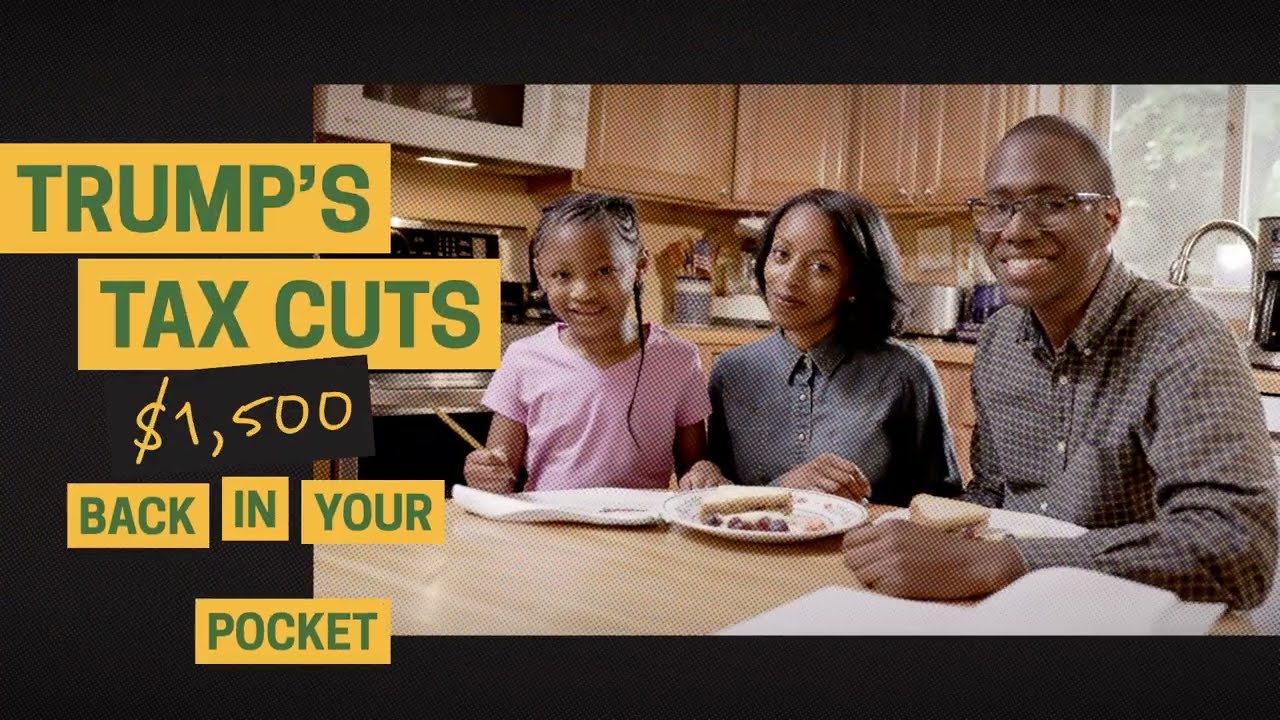 that debuted over the weekend, Americans for Prosperity (AFP) characterizes the 2017 Tax Cuts and Jobs Act as a boon to "hardworking Americans" and small businesses—and warns that allowing provisions of the law to expire at the end of this year as scheduled would be disastrous for the working class.
"This year, Congress is facing a countdown to a crisis that threatens family budgets nationwide," Ross Connolly, AFP's regional state director, said in a statement Monday. "We are proud to partner with the incoming Trump administration to protect prosperity and ensure that Congress acts."
AFP is a 501(c)(4) organization that describes itself as a "grassroots" movement despite being launched by Charles Koch and his late brother, David—two of the most notorious right-wing billionaire in U.S. politics.
The group said its new 50-state campaign represents "the largest effort by a conservative organization" to support President-elect Donald Trump's legislative agenda as he prepares to take office next week. The campaign, according to AFP, will include "over 1,000 meetings" at congressional offices, "in-district events" with activists and lawmakers, and "roundtables with job creators."
The campaign aims to "reach millions of voters on the phone and at their doorsteps," AFP said.
"The Trump tax giveaways passed in 2017 did not help working-class Americans. In fact, the top 1% of corporations received almost all of the benefits."
AFP's description of the impacts of the 2017 tax law flies in the face of resounding evidence showing that wealthy Americans—not ordinary workers—were the chief beneficiaries and are poised to reap most of the rewards once again if Trump and the Republican-controlled Congress extend the measure's soon-to-expire provisions.
"Americans for Prosperity is spending $20 million on a new ad campaign that champions the 2017 Trump tax law as a win for working families," Morris Pearl, chair of the Patriotic Millionaires, told Common Dreams. "But don't be fooled: What this Koch-backed group is really only after is protecting tax cuts for wealthy people like me."
"I'm in favor of tax relief for working people, but not yet another huge and unnecessary windfall for America's rich," Pearl added. "If Congress wants to help working families, they should make tax rates on labor income the same as tax rates on profits made by investors."
AFP is one of a number of right-wing, corporate-tied organizations pushing for an extension of the Trump tax cuts, which Republicans are planning to fund by slashing Medicaid, federal nutrition assistance, and other key programs.
The progressive watchdog group Accountable.US noted in a recent analysis that one of the groups pushing for an extension of the 2017 law is Advancing American Freedom, an organization "run by corporate consultants, lobbyists, lawyers, and executives, including former Trump administration officials who were directly responsible for the TCJA."
Accountable also observes that Club for Growth, a group funded by wealthy conservatives, "has pushed a deeper corporate tax cut plan as an 'opening salvo' in the current tax debate."
"The billionaire funders of the group's action arm have benefited enormously from the TCJA, saving hundreds of millions of dollars from a single obscure tax break for pass-through entities," the watchdog added.
In response to AFP's new nationwide campaign, Accountable.US executive director Tony Carrk told Common Dreams that "a glitzy ad campaign from a far-right organization won't change the fact that the Trump administration and Republican-controlled Congress are paying for giveaways to billionaires, wealthy tax cheats, and price-gouging corporations by cutting critical services for working families, like Medicaid and SNAP."
"The Trump tax giveaways passed in 2017 did not help working-class Americans," said Carrk. "In fact, the top 1% of corporations received almost all of the benefits."
Watch the ad below:
===
an 12 24
The Tax Cuts and Jobs Act, a set of tax cuts Donald Trump signed into law during his first term as president, will expire on Dec. 31, 2024. As Trump and Republicans prepare to negotiate new tax cuts in 2025, it’s worth gleaning lessons from the president-elect’s first set of cuts.
The 2017 cuts were the most extensive revision to the Internal Revenue Code since the Ronald Reagan administration. The changes it imposed range from the tax that corporations pay on their foreign income to limits on the deductions individuals can take for their state and local tax payments.
Trump promised middle-class benefits at the time, but in practice more than 80% of the cuts went to corporations, tax partnerships and high-net-worth individuals. The cost to the U.S. deficit was huge − a total increase of US$1.9 trillion from 2018 to 2028, according to estimates from the Congressional Budget Office. The tax advantage to the middle class was small.
Advantages for Black Americans were smaller still. As a scholar of race and U.S. income taxation, I have analyzed the impact of Trump’s tax cuts. I found that the law has disadvantaged middle-income, low-income and Black taxpayers in several ways.
Cuts worsened disparities
These results are not new. They were present nearly 30 years ago when my colleague William Whitford and I used U.S. Census Bureau data to show that Black taxpayers paid more federal taxes than white taxpayers with the same income. In large part that’s because the legacy of slavery, Jim Crow and structural racism keeps Black people from owning homes.
The federal income tax is full of advantages for home ownership that many Black taxpayers are unable to reach. These benefits include the ability to deduct home mortgage interest and local property taxes, and the right to avoid taxes on up to $500,000 of profit on the sale of a home.
It’s harder for middle-class Black people to get a mortgage than it is for low-income white people. This is true even when Black Americans with high credit scores are compared with white Americans with low credit scores.
When Black people do get mortgages, they are charged higher rates than their white counterparts.
It’s harder for middle-class Black people to get a mortgage than it is for low-income white people. MoMo Productions/Getty Images
Trump did not create these problems. But instead of closing these income and race disparities, his 2017 tax cuts made them worse.
Black taxpayers paid higher taxes than white taxpayers who matched them in income, employment, marriage and other significant factors.
Broken promises, broken trust
Fairness is an article of faith in American tax policy. A fair tax structure means that those earning similar incomes should pay similar taxes and stipulates that taxes should not increase income or wealth disparities.
Trump’s tax cuts contradict both principles.
Proponents of Trump’s cuts argued the corporate rate cut would trickle down to all Americans. This is a foundational belief of “supply side” economics, a philosophy that President Ronald Reagan made popular in the 1980s.
From the Reagan administration on, every tax cut for the rich has skewed to the wealthy.
Just like prior “trickle down” plans, Trump’s corporate tax cuts did not produce higher wages or increased household income. Instead, corporations used their extra cash to pay dividends to their shareholders and bonuses to their executives.
Over that same period, the bottom 90% of wage earners saw no gains in their real wages. Meanwhile, the AFL-CIO, a labor group, estimates that 51% of the corporate tax cuts went to business owners and 10% went to the top five highest-paid senior executives in each company. Fully 38% went to the top 10% of wage earners.
In other words, the income gap between wealthy Americans and everyone else has gotten much wider under Trump’s tax regime.
Stock market inequality
Trump’s tax cuts also increased income and wealth disparities by race because those corporate tax savings have gone primarily to wealthy shareholders rather than spreading throughout the population.
The reasons are simple. In the U.S., shareholders are mostly corporations, pension funds and wealthy individuals. And wealthy people in the U.S. are almost invariably white.
**Sixty-six percent of white families own stocks, while less than 40% of Black families and less than 30% of Hispanic families do. Even when comparing Black and white families with the same income, the race gap in stock ownership remains.
These disparities stem from the same historical disadvantages that result in lower Black homeownership rates. Until the Civil War, virtually no Black person could own property or enter into a contract. After the Civil War, Black codes – laws that specifically controlled and oppressed Black people – forced free Black Americans to work as farmers or servants.
State prohibitions on Black people owning property, and public and private theft of Black-owned land, kept Black Americans from accumulating wealth.

A woman protests outside Trump Tower over the Trump administration’s proposed tax cut on Nov. 30, 2017, in New York City. Spencer Platt/Getty Images
Health care hit
That said, the Trump tax cuts hurt low-income taxpayers of all races.
One way they did so was by abolishing the individual mandate requiring all Americans to have basic health insurance. The Affordable Care Act, passed under President Barack Obama, launched new, government-subsidized health plans and penalized people for not having health insurance.
Department of the Treasury data shows almost 50 million Americans were covered by the Affordable Care Act since 2014. After the individual mandate was revoked, between 3 million and 13 million fewer people purchased health insurance in 2020.
Ending the mandate triggered a large drop in health insurance coverage, and research shows it was primarily lower-income people who stopped buying subsidized insurance from the Obamacare exchanges. These are the same people who are the most vulnerable to financial disaster from unpaid medical bills.
Going without insurance hurt all low-income Americans. But studies suggest the drop in Black Americans’ coverage under Trump’s plan outpaced that of white Americans. The rate of uninsured Black Americans rose from 10.7% in 2016 to 11.5% in 2018, following the mandate’s repeal.
The consumer price index conundrum
The Trump tax cuts also altered how the Internal Revenue Service calculates inflation adjustments for over 60 different provisions. These include the earned income tax credit and the child tax credit – both of which provide cash to low-wage workers – and the wages that must pay Social Security taxes.
Previously, the IRS used the consumer price index for urban consumers, which tracks rising prices by comparing the cost of the same goods as they rise or fall, to calculate inflation. The government then used that inflation number to adjust Social Security payments and earned income tax credit eligibility. It used the same figure to set the amount of income that is taxed at a given rate.
The Trump tax cuts ordered the IRS to calculate inflation adjustments using the chained consumer price index for urban consumers instead.
The difference between these two indexes is that the second one assumes people substitute cheaper goods as prices rise. For example, the chained consumer price index assumes shoppers will buy pork instead of beef if beef prices go up, easing the impact of inflation on a family’s overall grocery prices.
The IRS makes smaller inflation adjustments based on that assumption. But low-income neighborhoods have less access to the kind of budget-friendly options envisioned by the chained consumer price index.
And since even middle-class Black people are more likely than poor white people to live in low-income neighborhoods, Black taxpayers have been hit harder by rising prices.
What cost $1 in 2018 now costs $1.26. That’s a painful hike that Black families are less able to avoid.
The imminent expiration of the Trump tax cuts gives the upcoming GOP-led Congress the opportunity to undertake a thorough reevaluation of their effects. By prioritizing policies that address the well-known disparities exacerbated by these recent tax changes, lawmakers can work toward a fairer tax system that helps all Americans.
Beverly Moran, Professor Emerita of Law, Vanderbilt University
---
AN 11 24
Although coverage of the 2024 election was dominated by the economy, taxes didn’t get much attention in the run-up to the vote. That’s a bit of a surprise, since 2025 will be a major year for America’s tax system – in fact, the fate of the most significant tax reform in three decades hangs in the balance.
*That would be the Tax Cuts and Jobs Act, which Congress passed during President-elect Donald Trump’s first term in office in 2017. If lawmakers don’t take action, the whole package is set to expire at the end of next year. Western Governors University School of Business tax expert Jim Franklin explains what might be in store for the act, and for taxpayers.
What do the election results mean for Republicans’ ability to advance their tax agenda?
We know there will be a Republican president, and it appears the Republican Party will have the majority in both chambers of Congress. That means Republicans will be able to pass a tax bill along party lines, similar to how Democrats passed the Inflation Reduction Act using budget reconciliation.
This would allow Republicans to pass key policies with a simple majority. The Republican majority is narrow, so it will be interesting to see how the leaders unify their constituent groups.
Republicans have traditionally supported lower tax rates for businesses and individuals, as well as tax incentives to help boost economic activity.
What’s next for the Tax Cuts and Jobs Act?
Currently, the act is set to expire at the end of 2025, but Trump and Republicans favor renewing many of its provisions.
The nonpartisan Congressional Budget Office in May 2024 estimated that extending the act would cost the government US$4.6 trillion, and there’s a split within the party, with one bloc of congressional Republicans calling for a full extension and another asking for the balancing of tax policy and annual federal deficits.
Republicans are likely to fight to keep key components in place, including the higher standard deduction, reduced corporate tax rates, individual rate cuts and an increased estate tax exemption.
There’s even talk of lowering the corporate tax rate further, possibly to 15% for domestic production, which would be a significant move.
What other tax measures are Republicans considering?
Trump mentioned a variety of tax relief ideas on the campaign trail, including exempting tips, Social Security benefits and overtime pay from income taxes, and creating an itemized deduction for auto loan interest.
However, Republicans aren’t entirely unified on tax policy. Some deficit hawks are concerned about revenue losses, so there could be internal pushback on all these points. The real question is whether there will be enough opposition within the party to alter or block certain proposals.
But I expect many parts of the act to be renewed, and we may see some additions. For example, there’s been a lot of pressure around increasing the state and local tax deduction cap, also known as SALT, which has bipartisan support in states with higher state income taxes like New York, California and Illinois. It will be interesting to see if that gains any traction. There’s a lot of pressure among representatives, both Republicans and Democrats, to gain some relief in that area.
Where will they find revenue?
Good question. Observers are indicating that Republicans are likely to look at cutting green energy subsidies from the 2022 Inflation Reduction Act. These could be eliminated to help balance out the cost of their new tax proposals.
Another area to watch is tariffs. There’s talk of raising tariffs on Chinese goods — potentially up to 60% — and even imposing a universal tariff on all U.S. imports at a 20% rate. It will be interesting to see how this plays out. Will it be more targeted? For example, will there be continued tariffs on select imports such as automotive imports from China to protect the U.S. electric vehicle market?
What will you be watching between now and Tax Day?
One factor will be Trump’s cabinet appointments. Whoever he nominates for Treasury secretary, for instance, could have a big influence. They can help shape what the tax bill looks like. Another key factor will be who ends up on the congressional tax committees. The composition of key committees will affect the direction of policy and the specific details.
What do you think will happen with tariffs?
Tariffs are unpredictable: They could be applied broadly, or more selectively. It could be similar to the way that Trump and his first administration placed some tariffs on steel, aluminum and solar panels. Interestingly, many of the tariffs were retained by the Biden administration.
Blanket tariffs could slow down the economy, so there is always a risk. Tariffs impact inflation because they affect the cost of imported goods, which would likely reduce consumers’ purchasing power. Domestic political pressure will play a role, as higher tariffs could raise prices on many goods that are imported, including essential products like medications.
Do you have advice for people struggling to keep up with the latest tax news?
Observers often take every policy suggestion on the campaign trail literally — exempting tips, Social Security benefits, overtime pay, etc. — as if all these proposals will pass exactly as stated. But the details matter, and policies are rarely implemented without adjustments. So it’s wise to read beyond the headlines.
Jim Franklin, Director of Academic Programs, Western Governors University School of Business
This article is republished from The Conversation under a Creative Commons license. Read the original article.
---
https://www.alternet.org/2020/11/republicans-planted-a-time-bomb-in-their-2017-tax-cut-bill-that-will-actually-raise-most-peoples-taxes-nobel-economist/
==
==
https://www.alternet.org/2020/01/giant-megabanks-have-saved-billions-of-dollars-thanks-to-gop-tax-cuts-but-have-been-cutting-not-adding-jobs-report/
no lnx
Giant megabanks have saved billions of dollars thanks to GOP tax cuts — but have been cutting, not adding, jobs: report
Written by Alex Henderson January 17, 2020
In late 2008 — when George W. Bush was in the final months of his presidency and the Great Recession was accelerating — the term “too big to fail” was used to describe megabanks that were pleading for bailout money. But many of the megabanks that feared for their survival during the 2008 crash not only survived; they grew even larger. And journalist Dino Rabouin, in an article published by Axios on January 17, reports that for two years in a row, megabanks have been saving billions of dollars thanks to the GOP’s Tax Cuts and Jobs Act of 2017.
Drawing on data from Bloomberg News, Rabouin notes that the GOP tax law “helped power the biggest U.S. banks to record profits for the second straight year.” Yet “struggling workers,” according to Rabouin, are not the main beneficiaries.
“The tax cut was sold as a way to revitalize hiring and spending by American companies to boost the economy and help struggling workers,” Rabouin observes, “but the windfall is largely staying with banks and their shareholders…. Rather than use the money to hire a bonanza of workers or invest in big new capital projects or equipment, the banks used it largely to buy back stock and pad their balance sheets.”
Rabouin notes that “JPMorgan, Bank of America, Citigroup, Wells Fargo, Goldman Sachs and Morgan Stanley announced earnings this week showing they saved $18 billion in 2019, and their average effective tax rate fell to 18% from 20%. Banks had previously paid effective tax rates of around 30%, Bloomberg found.”
But despite all the money they saved in taxes, megabanks haven’t been increasing the size of their workforce. Rabouin writes, “The big banks have actually shed jobs since passage of the tax cut law, collectively reducing their workforce by 1200 people since 2017, Bloomberg reported.”
==
==
1/3
Under Trump’s tax bill, workers pay higher rates than corporations
Nearly 400 profitable Fortune 500 companies paid an effective rate…
https://www.alternet.org/2020/01/under-trumps-tax-bill-workers-pay-higher-rates-than-corporations
==
https://www.alternet.org/2019/12/trump-turns-back-on-workers-as-companies-force-employees-to-train-their-cheaper-foreign-replacements-report/
no lnx
Trump turns back on workers as companies force employees to train their cheaper foreign replacements: report
.
Written by Tom Boggioni / Raw Story December 29, 2019
President Donald Trump’s claims that he is bringing jobs back to America are being called nothing more than hot air in a report stating U.S. companies are instead forcing their employees to train their foreign replacements and they will be out of a job once the training is over.
According to a report at Axios, “Opponents of job outsourcing are making a holiday-season appeal to President Trump: Stop U.S. companies from forcing American workers to train the very same cheaper foreign laborers who will soon replace them.”
The reports states: “AT&T is poised to send thousands into the new year hunting for new jobs after assigning them to train their own foreign replacements, according to conversations with current and former workers and documents obtained by Axios,” adding, “Many have worked for the company for over a decade. They aren’t being offered severance or early retirement, and may not easily find a comparable job elsewhere with similar pay.”
According to Sara Blackwell, a lawyer who represents displaced Americans workers, “American workers are tired of waiting for President Trump to do something on this issue. They’ve gone from great hope in President Trump’s administration, to great discouragement.”
Focusing on AT&T, the report continues, “Despite receiving a $3 billion tax cut last year, AT&T announced new and expanded alliances with big outsourcing companies to replace workers with foreign or cheaper domestic talent. Like many major U.S. companies, AT&T has been shifting jobs for years now — but 2019 was especially noteworthy, as workers claimed that as many as 3,000 finance jobs were being outsourced to Accenture. AT&T denied the 3,000 figure, but declined to provide Axios with its own number.”
Speaking with numerous AT&T workers, many acknowledged they will soon be out of a job, stating they were told “they were needed for a ‘knowledge transfer” — then tapped to train people on work visas or overseas who would replace them.”
That, in turn, changed their plans for the immediate future.
“Folks aren’t going on vacation, they’re cutting back on their Christmas shopping,” one employee confided. “If you know that you’re going to be losing your job, you don’t want to spend the money.”
Axios reports they asked for a comment from the White House of the job transfers and were rebuffed.
You can read more here.
https://www.alternet.org/2019/12/a-mammoth-fraud-trumps-tax-cuts-were-a-giant-bust-heres-how-democrats-need-to-use-it-against-him/
no lnx
‘A mammoth fraud’: Trump’s tax cuts were a giant bust — here’s how Democrats need to use it against him
President Donald J. Trump addresses his remarks Saturday, Dec. 21, 2019, at Turning Point USA’s 5th annual Student Action Summit at the Palm Beach County Convention Center in West Palm Beach, Fla. (Official White House Photo by Shealah Craighead)
Written by Cody Fenwick December 23, 2019
President Donald Trump is preparing to run for re-election by citing the strength of the American economy. But while most Americans do feel relatively at ease with the state of the economy, Trump’s major signature legislation that was supposed to trigger an economic boom — the 2017 tax cuts — is turning out to be a bust. And if Democrats want to undermine Trump’s message on the economy, they would be wise to focus on this massive failure.
Trump signed the Tax Cuts and Jobs Act two years ago now, prompting reflection on how it measures up to the promises made.
The diagnosis is not pretty for the GOP.
Writing for the columnist Chicago Tribune, Steve Chapman recently declared the tax cuts “a mammoth fraud.”
“The 2017 bill cut individual and corporate tax rates, raised the standard deduction, limited deductions for state and local taxes and allowed businesses to immediately write off outlays for new equipment, among other provisions. We were told it would propel economic growth to new heights, unleash a flood of capital investment, turbocharge job creation and boost wages,” he wrote. “But two years later, the evidence of failure is undeniable. Almost every promise made has been a promise broken.”
Catherine Rampbell, an economics writer for the Washington Post, agreed.
Trump, Senate Majority Leader Mitch McConnell, and other defenders of the package made numerous promises for the bill at the time it was passed. Trump said it could help the economy reach a nearly unprecedented 6 percent growth rate. McConnell said the new law would actually raise government revenues, despite the fact that it cut tax rates. It was supposed to prompt a surge in business investment spending. The White House said it would actually “increase average household income in the United States by, very conservatively, $4,000 annually.”
None of this has happened. Growth in 2019 has been a little over 2 percent — in line with, and even a little under, recent trends. The deficit is rising, in part because of the tax cuts and in part because of spending increases Trump has signed into law.
And Rampbell noted that “business investment has shrunk each of the past two quarters,” and “inflation-adjusted wages are rising at about the same year-over-year pace as they were in the couple of years before Trump took office.”
So what does this mean for the 2020 election?
As Vox’s Matt Yglesias argued recently, I don’t think it’s wise for Democrats to pretend that the economy is doing poorly when it isn’t. Polls suggest that most voters just won’t agree, so they may undermine their own case by claiming the economy is worse than it is. It would be worthwhile to point out, as Rampbell does, that “the president always gets too much credit when the economy is good and too much blame when the economy is bad. The president frankly doesn’t have that much control over big macro trends.”
But they should focus on the broken promises. Americans don’t feel like they got the huge tax cut that the Republicans promised. They surely noticed that they’re not suddenly taking home $4,000 more a year. And most Americans think that rich people aren’t paying enough in taxes.
So instead of talking about whether we’re living through a good economy, Democrats should argue that the economy is fair. Sen. Bernie Sanders (I-VT) and Sen. Elizabeth Warren (D-MA) have both focused on this question in their presidential campaigns. They can use the question of the economy’s fairness to slam the Republicans’ continued focus on tax cuts for the wealthy. They could also point out, too, that Trump promised a massive tax cut for everyone before the 2018 midterm elections — a promise he quickly abandoned.
Focusing on the ways in which the economy is unfair — and the ways in which GOP governance makes it even more unfair — could be a winning issue for Democrats. This is especially true if they run on extremely popular ideas like a wealth tax, which is anathema to Republicans And these issues can easily be tied to Trump’s personal corruption: his spending of government funds at his properties, his violations of the emoluments clauses, the Ukraine scandal that has led to his impeachment. All of these narratives feed back into the same central narrative of a fundamental unfairness in society, of powerful people getting more than they deserve, and how Republicans make it worse.
https://www.alternet.org/2019/12/huge-corporations-paid-just-11-3-percent-tax-rate-thanks-to-trump-and-the-republicans-what-did-you-pay/
no lnx
Huge corporations paid just 11.3 percent tax rate thanks to Trump and the Republicans. What did you pay?
Written by Laura Clawson / Daily Kos December 17, 2019
The Trump-Republican tax law is having the intended effect—if you understand that enriching massively wealthy corporations was always the intended effect. Hundreds of profitable corporations paid an average corporate income tax of 11.3%, just over half of the greatly reduced corporate tax rate—and many paid zero, or got money back from the government.
The Institute on Taxation and Economic Policy (ITEP) looked at Fortune 500 companies, identifying 379 of them “that were profitable in 2018 and that provided enough information to calculate effective federal income tax rates, which is the share of 2018 pretax profits they paid in federal income taxes in that year.” Those 379 big companies had an overall 11.3% average tax rate, but 91 paid nothing, and 56 paid less than 5%. We’ve heard a lot about how Amazon paid nothing—and in fact got a rebate—on $10.8 billion in profits, but it’s not the only one. Halliburton, Chevron, and IBM also paid no corporate income tax.
”Video game maker Activision Blizzard had $447 million in profits but received a tax rebate of $243 million, resulting in an effective tax rate of -54.4 percent,” The Washington Post reports. “The company went on to shed 800 jobs in the early weeks of 2019.”
ITEP notes that, in lowering the corporate tax rate, lawmakers could have also eliminated loopholes to ensure that companies did pay the reduced rate. But “Instead, the new law introduced many new breaks and loopholes, though it eliminated some old ones.” That’s how you lower the rate from 35% to 21% and end up with top corporations paying just 11.3% on average—the lowest rate ITEP has found since it started keeping track of this in 1984. This has a massive effect on the U.S. budget, with corporate taxes as a share of federal revenue plunging to just 1%.
This is the world the Republicans want. Democrats are running to make these enormously profitable companies pay their fair share.
==
... five straight years before Ryan took over, deficits had declined. By the time he gave his self-satisfied farewell, they’d increased by $343 billion— a product of Ryan’s tax breaks for corporations and millionaires, which will cost $2 trillion over the next decade...
thanks to the very deficit he created, Ryan then left office warning that Congress needed to cut — you guessed it — Medicare and Social Security. (No doubt he’s still stinging from his 2017 failure to throw 24 million Americans off their health care — a feat of pure sociopathy he actually said he’d been dreaming about since he “was drinking out of kegs.”)
Ryan was never a serious thinker and he didn’t care about debt. He was a frat bro from a wealthy family who read a lot of Ayn Rand, a writer who called it “a disease” to do anything good for “the primordial savages” who made up “the collective” — i.e., the public....
Two years of Republican government has been an incompetent circus — and even worse than we expected
Heather Digby Parton / SalonDecember 24, 2018
So long, Republican Congress, and good riddance.
no lnx
Two years of Republican government has been an incompetent circus — and even worse than we expected
Written by Heather Digby Parton / Salon December 24, 2018
Poor Paul Ryan. The golden boy of the Ayn Rand crowd was once assumed to be a future president, or at least one of the great statesmen of the Republican Party. He was considered a rarity among Republican pols — a policy wonk with the polish and personality of Ronald Reagan. (I know that sounds crazy, but people really did think that.)
When Barack Obama came into office he saw Ryan as a partner in reducing the federal deficit and the White House went out of its way to feature him prominently in various domestic policy "summits" that were held in the early months of that administration. Obama's opinion changed after he tried to negotiate with Ryan and his cohorts in the House Republican leadership, but it took years for the political media to see Ryan for what he really was: a callow ideologue without much character when the chips were down.
Paul Krugman had his number back in 2010:
Mr. Ryan has become the Republican Party’s poster child for new ideas thanks to his "Roadmap for America’s Future,” a plan for a major overhaul of federal spending and taxes. News media coverage has been overwhelmingly favorable; on Monday, The Washington Post put a glowing profile of Mr. Ryan on its front page, portraying him as the G.O.P.’s fiscal conscience. He’s often described with phrases like “intellectually audacious.”
But it’s the audacity of dopes. Mr. Ryan isn’t offering fresh food for thought; he’s serving up leftovers from the 1990s, drenched in flimflam sauce.
But oh, did they love those blue, blue eyes of his.
Ryan never wanted to be House speaker. He wanted to be president. But when John Boehner was finally forced out by the Freedom Caucus and his heir apparent, Kevin McCarthy, tanked his chances with loose talk about using the Benghazi hearings to hurt Hillary Clinton's presidential campaign, Ryan was the only person all Republicans could agree on. He reluctantly signed on. And in doing that he ended up signing his political death warrant.
Ryan's performance as speaker showed him to be feckless, hypocritical and weak in just about every way. He couldn't control his crazies on the one hand and couldn't deal effectively with the crazy in the White House on the other. He ended up being a yes-man for an unfit president who didn't even understand how the three branches of government work. Krugman nailed it again this year upon word of Ryan's retirement. Commenting on the media's surprise, even now, that Ryan and his cohorts have blown the deficit up to unprecedented proportions and happily enabled Donald Trump, Krugman wrote:
[T]he principles they claimed to have never had anything to do with their actual goals. In particular, Republicans haven’t abandoned their concerns about budget deficits, because they never cared about deficits; they only faked concern as an excuse to cut social programs.
And if you ask why Ryan never took a stand against Trumpian corruption, why he never showed any concern about Trump’s authoritarian tendencies, what ever made you think he would take such a stand? Again, if you look at Ryan’s actions, not the character he played to gullible audiences, he has never shown himself willing to sacrifice anything he wants — not one dime — on behalf of his professed principles. Why on earth would you expect him to stick his neck out to defend the rule of law?
Surprise. Paul Ryan is just another partisan hack. Still, I don't think even I expected him to be as terrible at the job as he has been. As he takes his farewell tour, which President Trump generously stepped all over with his silly government shutdown, it pays to recall just what a disaster he has been and the rubble he leaves in his wake.
First, let's recall that when Boehner saw the writing on the wall, he at least made a deal to keep the government open and raise the spending limit for two years as a parting gift to the American people. Granted, he wasn't negotiating with an insane president, but he did have the insane Freedom Caucus in the House, allied with the meddling Ted Cruz in the Senate at the time. He spent every last chit trying to calm things down on his way out the door. Ryan's just rolled along with all of Trump's lurching about on the budget and the wall and is leaving in the midst of total chaos.
We have finally reached the end of this two-year period of total Republican control of the government. It's important to look at what they did when they had it. They managed to pack the courts with unfit, inexperienced extremists in the mold of the man who nominated them. No matter how few people agree with their agenda or vote for them in the future, they will have a strong influence through the extremist right-wing judiciary they have installed in lifetime positions. That's one mission they actually accomplished. Of course, that had nothing to do with Paul Ryan.
They managed to get tax cuts for the wealthy and corporations, their Holy Grail, enacted. That was just a generous gift to their big donors, no strings attached and no expectation that it would benefit average Americans. It hasn't.
They just passed a criminal justice reform package that was backed by the Koch brothers and other big-money libertarian types, one suspects just in time to help a spate of rich white guys heading off to jail. (Presidential son-in-law Jared Kushner pushed this through having lived through his father's incarceration for fraud. What a family.)
They couldn't get Obamacare repealed, although Trump's minions have been working overtime to sabotage it from within. They didn't get Trump's wall. The national debt has exploded and the president is on the verge of being impeached. That's quite a record.
But don't worry. This will work out just fine for them. It's just a more extreme version of what they always do. They wreck the economy and destroy all faith in government. Then when the Democrats win as a result of their malfeasance, they stand on the sidelines and wail about fiscal responsibility and demand that Democrats cut services for average people. Like clockwork, rich media celebrities will undoubtedly stroke their chins and sagely advise the people to "grow up" and "take their medicine" by giving up things like health care and retirement security.
Look for Paul Ryan to be batting those baby blues and wringing his hands on TV over debt and deficits any day now. It's a beautiful scam and it's been working for decades. If you didn't know better you'd almost think they planned it this way.
==
https://www.alternet.org/2019/11/gop-tax-scam-2-0-warnings-as-trump-pushes-another-round-of-tax-cuts-ahead-of-presidential-election
==
seems to be a trend here :(
tax cut is failing spectacularly as the GOP’s predictions go down in flames
“A treasury secretary who can’t count needs to be held accountable.” That was the message progressive advocacy group Americans for Tax Fairness (AFT) directed at Steve Mnuchin Friday, marking the…
https://www.alternet.org/2019/09/trump-administration-seeks-to-unleash-a-pillage-of-arctic-refuge-but-indigenous-groups-vow-to-fight-it/
no lnx
Trump administration seeks to unleash a pillage of Arctic Refuge — but indigenous groups vow to fight it
Written by Andrea Germanos / Common Dreams September 13, 2019
Indigenous leaders vowed Thursday to protect their Alaskan lands from fossil fuel exploitation after the Trump administration moved closer to allowing drilling along the Coastal Plain of the Arctic National Wildlife Refuge—a move the House just tried to block.
“The Gwich’in are protectors,” said Bernadette Demientieff, executive director of the Gwich’in Steering Committee, “and we will not give up.”
The pledge from the Gwich’in—who call the coastal plain “the sacred place where life begins”—came in response to the Final Environmental Impact Statement (FEIS) for oil and gas leasing, which was released Thursday by the Bureau of Land Management.
The announcement, said Interior Secretary David Bernhardt in a press statement, represents “a big step to carry out the clear mandate we received from Congress to develop and implement a leasing program for the Coastal Plain,” referring to Sen. Lisa Murkowski’s (R-Alaska) provision in the “tax scam” of 2017requiring the sales for drilling rights in the area. Bernhardt is a former fossil fuel lobbyist.
In the new analysis, the administration, as The Washington Post reported, chose “the most aggressive development option for an area long closed to drilling.”
“The FEIS unlawfully opens the entire coastal plain to leasing,” wrote NRDC staff attorney Garett Rose. “It fails to even consider an approach that minimizes damage to the refuge’s unique environment, violating our bedrock environmental review law.”
But that choice came to “no one’s surprise,” according to Adam Kolton, executive director of Alaska Wilderness League, who said the Trump administration was “not even pretending that this is about restraint or meaningful protection.”
“With an eye on developing the entirety of the fragile coastal plain,” Kolton continued, “the administration has been riding roughshod over science, silencing dissent, and shutting out entire indigenous communities.”
Demientieff, whose community has highlighted the potential catastrophe the exploitation could unleash on the calving and nursery grounds for the Porcupine caribou herd, also criticized the FEIS for disrespecting “the Gwich’in Nation and all people in the Arctic and world who suffer the impacts of climate change and nonstop exploitation, while formally scratching the backs of those who seek to desecrate land and dishonor human rights to fill their pockets.”
The FEIS, as The Hill noted, is “one of the final steps before leases can be sold,” as bidding may begin after 30 days.
The timing of the release of the environmental impact statement also raised the eyebrows of Kolton, who noted that it came “literally hours” after the Democratic-controlled House voted 225-193 to block the mandate for the ANWR drilling.
Passage of that bill was welcomed by its author, by Rep. Jared Huffman (D-Calif.), who said the measure “reflects a very simple proposition: there are some places too wild, too important, too unique to be spoiled by oil and gas development.”
Huffman praised lawmakers voting in favor of the measure for “protecting not just the beating biological heart of the largest wildlife refuge in the United States, but the Indigenous people who depend on this sacred, natural landscape.”
The vote was also celebrated by Indigenous and environmental groups.
Alex Taurel, head of League of Conservation Voters’ Conservation Program, called the vote “a resounding victory for the Gwich’in people, their sacred traditions, and the invaluable wildlife of the majestic Arctic National Wildlife Refuge.”
“The majority of people in the U.S. oppose oil and gas drilling in the Arctic Refuge—we will continue to stand up against special interest big polluters as long as it takes,” said Taurel, urging the Senate to follow suit.
Democratic Senators including Ed Markey (Mass.) and Michael Bennet (Colo.)took to social media this week to ramp support for their legislation to block the ANWR drilling—though its fate is likely doomed in the Republican-controlled chamber.
Ed Markey
?
@SenMarkey
We can’t let the Arctic Refuge, one of the last pristine wildernesses in America, be permanently destroyed by oil and gas drilling. That’s why today, we’re intro'ing the Arctic Refuge Protection Act to designate this delicate region as wilderness and prevent all future drilling.
Embedded video
==
https://www.alternet.org/2019/09/report-reveals-that-like-everything-else-about-gop-tax-scam-program-purported-to-help-the-poor-really-just-another-handout-to-the-rich/
no lnx
Report reveals that ‘like everything else’ about GOP tax scam, program purported to help the poor really ‘just another handout to the rich’
Written by Jessica Corbett / Common Dreams September 2, 2019
Urban policy experts along with progressive groups and politicians responded with outrage to a New York Times report published Saturday that detailed how the Trump administration’s “signature plan” to help low-income communities across the United States with a multibillion-dollar tax break has “fueled a wave of developments financed by and built for the wealthiest Americans.”
The tax break was part of the legislation critics dubbed the GOP tax scam, which Republicans forced through Congress and President Donald Trump signed into law in December of 2017. Linking to the new report, the progressive advocacy organizationMoveOn tweeted, “Like everything else about the GOP’s 2017 tax scam, a program supposedly meant to benefit poor communities is just another handout to the rich.”
According to the Times:
Among the early beneficiaries of the tax incentive are billionaire financiers like Leon Cooperman and business magnates like Sidney Kohl—andMr. Trump’s family members and advisers.
Former Gov. Chris Christie of New Jersey; Richard LeFrak, a New York real estate titan who is close to the president; Anthony Scaramucci, a former White House aide who recently had a falling out with Mr. Trump; and the family of Jared Kushner, Mr. Trump’s son-in-law and senior adviser, all are looking to profit from what is shaping up to be a once-in-a-generation bonanza for elite investors.
The purpose of the program, as the Times explained, “was to coax investors to pump cash into poor neighborhoods” by allowing them “to sell stocks or other investments and delay capital gains taxes for years—as long as they plow the proceeds into projects in federally certified opportunity zones.”
However, instead of low-income communities reaping the benefits of such investments, “billions of untaxed investment profits are beginning to pour into high-end apartment buildings and hotels, storage facilities that employ only a handful of workers, and student housing in bustling college towns, among other projects,” the Times reported.
Though the report sparked immediate criticism of the program, Yonah Freemark, a doctoral candidate in MIT’s Department of Urban Studies and Planning, noted on Twitter that “we always knew that this was going to happen—it’s how the bill was written.”
Yonah Freemark
?
@yfreemark
Trump's "opportunity zone" tax break—supposedly meant to improve low-income neighborhoods—has actually resulted in luxury development in wealthy communities. But we always knew that this was going to happen—it's how the bill was written. https://www.nytimes.com/2019/08/31/business/tax-opportunity-zones.html …
Work on a parking garage next to the Preston, a luxury apartment development in a new opportunity zone in Houston.
Among those who highlighted the report were 2020 Democratic presidential primary candidates Bill de Blasio, mayor of New York City, and Sen. Bernie Sanders (I-Vt.).
“President Trump has many critics,” tweeted Sanders. “But as a con artist, he is a talent of the highest caliber.”
Bernie Sanders
?
@SenSanders
Even the part of Trump’s tax scam supposedly for low-income neighborhoods is a massive tax avoidance scheme for the ultra-rich.
President Trump has many critics. But as a con artist, he is a talent of the highest caliber. https://twitter.com/EricLiptonNYT/status/1167765126340128768 …
Eric Lipton
?
@EricLiptonNYT
How @realDonaldTrump's signature initiative to help poor communities is fueling a once-in-a-generation bonanza for the wealthiest Americans — including Trump's family and advisers. with @JesseDrucker https://www.nytimes.com/2019/08/31/business/tax-opportunity-zones.html …
3,347
8:29 AM - Sep 1, 2019
Twitter Ads info and privacy
1,061 people are talking about this
Bernie Sanders
?
@SenSanders
Even the part of Trump’s tax scam supposedly for low-income neighborhoods is a massive tax avoidance scheme for the ultra-rich.
President Trump has many critics. But as a con artist, he is a talent of the highest caliber. https://twitter.com/EricLiptonNYT/status/1167765126340128768 …
Eric Lipton
?
@EricLiptonNYT
How @realDonaldTrump's signature initiative to help poor communities is fueling a once-in-a-generation bonanza for the wealthiest Americans — including Trump's family and advisers. with @JesseDrucker https://www.nytimes.com/2019/08/31/business/tax-opportunity-zones.html …
looks like a trend
https://www.alternet.org/2019/08/trumps-tax-cut-was-even-worse-than-we-thought/
no lnx
Trump’s tax cut was even worse than we thought
Written by Cody Fenwick August 22, 2019
From the moment it was proposed, the Republicans’ 2017 tax cut law was criticized for benefiting corporations and wealthy Americans. doing comparatively little for low-income Americans, and needlessly blowing a hole in the federal deficit.
About a year and a half since its passage, the criticisms are looking apt. And none of the supposed benefits promised by Republicans — moderate and extremist alike — have materialized. No boom in business investment, no supercharged wages, and no phenomenal jobs growth.
In fact, as new data from the Bureau of Labor Statistics reveal, the Tax Cuts and Jobs Act appears to have done even less on the “jobs” side of the equation than we previously thought.
This week the bureau announced that it has revised its estimates for the state of U.S. employment in 2018 downward by about 500,000 jobs. That doesn’t mean people had jobs and lost them — it just reflects the fact that statistical analysis usually involves a margin of error, and in this case the bureau overestimated the number of jobs added to the economy in the past year. An error of 500,000 is relatively large for a revision, but not unheard of, and it doesn’t suggest any egregious mistakes or nefarious dealings.
It does mean, however, that the United States in 2018 averaged about 200,000 new jobs a month, down from an estimated 223,000 jobs. The economy was secretly slumping, but it wasn’t quite as strong as we thought.
And while normally this wouldn’t mean a whole lot, it does have serious implications for the Tax Cuts and Jobs Act. Despite its myriad problems, one of the positive claims you could credibly make about the law is that it provided a temporary boost to the economy shortly after it was enacted. This would be a real benefit to the workers who got a hired or got raises because of this boost, even if the size and broader effects of the tax cut still made it regrettable.
But the new data reveals that even this supposed, temporary boost — a “sugar high,” some called it — appears to have been largely illusory.
This comes on top of the recent revelation that, despite prior reports, the economy didn’t grow at a rate of 3 percent in 2018, as President Donald Trump had boasted. The Wall Street Journal reported:
Mr. Trump has touted the prior estimates of economic and job growth in 2018 as a sign that his economic policies—including a 2017 tax cut—were giving the economy a boost after years of lackluster growth. The revised figures show his goal of 3% growth wasn’t achieved in 2018 and that the tax overhaul may have had a smaller short-term impact than his administration previously thought.
Meanwhile, the tax cut is projected to add an estimated $1.5 trillion to the debt over the next decade, despite the fact the Republicans promised it would pay for itself. More recent budget negotiations have also led to an even greater projected deficit in the coming years. While the deficit itself is not necessarily a problem, Republicans will no doubt use it as a bludgeon and a scare tactic as soon as Democrats hold the White House once again. And spending borrowed money on pointless tax cuts while truly needy Americans go wanting exposes the United States as a country that has clearly lost its way.
==
benefits foreigners
https://www.alternet.org/2019/07/paul-krugman-pulls-back-the-curtain-on-trump-shipping-billions-of-taxpayer-dollars-to-foreign-investors/
As he explained, “Basically, shareholders, who have received increased dividends and seen a lot of capital gains as corporations use their windfall not to invest, but to buy back their own stocks. And a big share of these gains to shareholders has gone to foreigners.”
Pointing out the global economy that exists now “in which wealthy investors normally own assets in many countries,” Krugman pointed out that “Overall, foreigners own about 35 percent of the equity in corporations subject to U.S. taxes. And as a result, foreign investors have received around 35 percent of the benefits of the tax cut. As I said, that’s more than $40 billion a year.”
Then he cut to the chase.
“Trump’s giveaway to foreign investors isn’t going to make or break us, although it’s probably enough to ensure that the tax cut will be, overall, a net drain on economic growth,” he wrote. “Still, even in America, $40 billion here, $40 billion there, and eventually you’re talking about real money. Furthermore, it does seem worth pointing out that even as Trump boasts about taking money away from foreigners, his actual policies are doing exactly the opposite.”...
AN 719
The numbers are definitively in: Trump’s tax cuts were an economic dudMarshall Auerback / Independent Media Institute
asn 916
Kerry Eleveld / Daily KosJune 26, 2019
The nonpartisan Congressional Budget Office released a new report Tuesday warning that the federal debt could reach “unprecedented levels,” sparking what it frames as a “fiscal crisis” unless laws are changed to change…
==
==
619 an
Corporations paid $91 billion less in taxes under GOP tax code overhaul: report
Alex Henderson
==
519 an
Garbage’ GOP tax cuts didn’t benefit the economy — according to the Congressional Research Service
"It's done nothing to raise wages and flown right into…
==
From Bernie Sanders to Elizabeth Warren to Kirsten Gillibrand to … lots of others, Democratic candidates in 2020 seem to have plans to lower the cost of education and make it possible for more Americans to attend college without drowning under a mountain of debt. Democrats recognize that education is critical to obtaining a good job, and that the cost of education in 2019 means that students are often saddled with loans that can not only erase the benefits of that education for years, but take those new college graduates out of the market for homes, or restrict their ability to move. In short, high costs for college not only means misery for graduates, it harms American companies at every level by depriving them both of workers and consumers.
So, naturally, Donald Trump is making it worse.