voodoo tax cut deficit
disambiguation
promoted primary 11/17 on kill ACA
SEE VOODOO THREE
no merri
see 2017 voodoo tax cut
see inequality
see fed debt deficit
see laffer reductionism
supply side
see 2 santas SLASH SOCIAL SAFETY NET TO PAY FOR RICH CORP TAX BRK EXTENTION
INCLUDE STATE EG sd 12 23
see 2017 tax cut disambig
---
---
WILL BE BAK
---
---
AN 12 25
An alternative to the GOP is exploding among young people
:{Thom HartmannDecember 24, 2025
The media is freaking out over a new Rasmussen poll that found:
“A majority of voters under 40 want a democratic socialist to win the White House in the next presidential election.“… 51 percent of Likely U.S. Voters ages 18 to 39 would like to see a democratic socialist candidate win the 2028 presidential election. Thirty-six percent (36 percent) don’t want a democratic socialist to win in 2028, while 17 percent are not sure…
“Among the youngest cohort (ages 18-24) of voters, 57 percent want a democratic socialist to win the next presidential election…
“Among those who voted for Kamala Harris in last year’s presidential election, 78 percent would like to see a democratic socialist candidate win the 2028 presidential election…” (emphasis added).
I was on Ali Velshi’s MSNOW show discussing this, along with Michael Green who recently wrote a thought-provoking article about how the official poverty line in America is completely out-of-date and out of touch with the needs of most Americans. I shared a few statistics from my recent book The Hidden History of the American Dream: the Demise of the Middle Class and How to Rescue Our Future:
When, in 1957, my dad bought the house I grew up in, the average cost of a single-family home in America was about 2.2 times the average annual wage. Today it’s more than ten times the average wage.
When my Boomer generation was the same age as today’s Millennials, we owned a bit over 22 percent of the nation’s wealth; Millennials today control only about 4 percent of the country’s wealth (and it’s the same for Zoomers).
From the 1930s right up until the Reagan Revolution, it was possible for seniors to live comfortably on Social Security alone; Reagan undid that with his “reforms” so today that’s nearly impossible.
When I ran my first seriously successful business in the early 1970s, it cost me around $35/month for comprehensive health insurance for each of my 18 employees; at that time hospitals and health insurance companies were required by Michigan law (where I lived; most other states were identical) to be run as non-profits. Today, health insurance can be as much as one-fifth of a company’s payroll expense.
When Reagan came into office in 1981, a single wage earner could support a family with a middle-class lifestyle, and fully 65 percent of us were in the middle class (up from around 20 percent in the 1930s). Today, after 44 years of Reaganomics, it takes two full-time people to achieve the same status, which triggers huge childcare expenses, which is part of why only 43 percent of us are middle class .
FDR’s great — and successful — Democratic Socialist experiment following the Republican Great Depression was to drive the economy from the bottom up, reversing the “Horse and Sparrow” trickle-down economics and deregulation of the Harding, Coolidge, and Hoover administrations that provoked the Great Crash.
He did that by:
Expanding the notion of the commons — the stuff we all collectively own and is administered or funded and regulated by government — to include free public education nationwide (and cheap college), old-age retirement (Social Security), and public power and transportation systems (Tennessee Valley Authority, federal support for local transit, roads and highways).
Legalizing unions, an effort that was so successful that when Reagan came into office fully a third of us had good union jobs and, because they set the local wage floors, two-thirds of Americans had the equivalent of a union wage and benefit package.
Establishing a minimum wage on which a single worker could raise a family of three and still stay above the federal poverty level (today’s federal minimum wage is $7.25: adjusted with the Consumer Price Index, that $1.60 minimum wage in 1968 is equivalent to about $14.90 an hour in 2025 dollars).
In the years since, we’ve continued to expand the commons by establishing national single-payer healthcare systems for low-income people (Medicaid) and retired people (Medicare), both of which came out of LBJ’s Democratic Socialist program that he called The Great Society.
Meanwhile, Republicans and a few neoliberal Democrats have pushed back against these Democratic Socialist programs that made the American middle class the first in the history of the world to exceed more than half the population.
Reagan’s war on unions has cut our union membership down to well under 10 percent in the private sector.
His gutting federal funding for education has exploded college costs to the point where three generations are saddled with over $2 trillion in debt that can’t be discharged by bankruptcy.
Reagan’s tax cuts for the rich (from 74 percent down to 27 percent) and corporations tripled the national debt (from $800 billion to $2.4 trillion) just in his eight years; since then the four GW Bush and Trump tax cuts have, when combined with Reagan’s, produced a $38 trillion national debt so big that we now spend more on servicing their debt than we do on our defense budget or would on administering a national healthcare system.
Back in the 1940s, after the incredible success of the New Deal, President Roosevelt wanted to further expand the commons by expanding the scope of his Democratic Socialist programs. Just before he died, he proposed a “Second Bill of Rights” that included:
“The right to a useful and remunerative job in the nation’s industries, shops, farms, or mines. (Unionization and an above-poverty-level minimum wage.)
“The right to earn enough to provide adequate food, clothing, and recreation. (Ditto and government as the employer of last resort.)
“The right of every farmer to raise and sell products at a return that gives his family a decent living. (Don’t manipulate farm prices with stupid tariff wars, etc., and make the government the purchaser of last resort.)
“The right of every businessperson, large and small, to trade free from unfair competition and domination by monopolies. (Break up the giant corporations and encourage average people to start small businesses, including with loan supports.)
“The right of every family to a decent home. (Today this would mean no more corporations, hedge funds, and foreign billionaires owning single-family homes to squeeze us dry by jacking up rents.)
“The right to adequate medical care and the opportunity to enjoy good health. (FDR favored a single-payer healthcare system like Medicare for All.)
“The right to protection from the economic fears of old age, sickness, accident, and unemployment (i.e., robust Social Security, Medicare, and unemployment insurance).
“The right to a good education.” (Free or inexpensive college, quality public schools in every community.)
Much to the chagrin of my Republican-activist father, my grandfather (a 1917 Norwegian immigrant) frequently and proudly described himself as a socialist. When I asked him what he meant, he always pointed me to FDR, the New Deal, and his proposed Second Bill of Rights.
And here we are again.
My grandfather’s generation saw up-close and firsthand the tax-cutting and deregulation binge of the Roaring 20s (which were only “roaring” for the morbidly rich), and then had the lived experience of watching FDR put the country back together and create the world’s first widespread middle class.
Millennials and Zoomers today are seeing the same thing, between the Bush Housing Crash of 2008, the botched Covid Crash of 2020, and the GOP’s relentless program to drive the wealth of the nation into the money bins of the billionaires who own that party.
They see the example of most European countries, where the commons includes college (many will actually pay you a stipend to attend), healthcare, and daycare/preschool, and union density is often well above 80%. Housing is subsidized or heavily regulated, leading several to have essentially ended homelessness. Giant corporate monopolies are prohibited and local small businesses are encouraged.
Europeans call these programs Democratic Socialism or social democracy, and young Americans clearly are enthusiastic about bringing the “European Dream” to this country.
My sense is that — much like in the 1930s — a significant majority of Americans are sick of the neoliberal “let the rich run things because they know best” b------- that Republicans, “Tech Bros,” and a shrinking minority of on-the-take Democratic politicians embrace.
Meanwhile, nobody’s sure why the Democratic National Committee (DNC) is refusing to release the autopsy they did of the 2024 election, producing speculation it may have uncovered examples of Russian and Republican manipulation of both voters and the vote, but I’m guessing the real reason is that the neoliberals who largely run the DNC saw feedback that reflected the Rasmussen poll I opened this article with.
The exploding popularity of progressive politicians from Zohran Mamdani to Bernie Sanders, Jasmine Crockett, and Alexandria Ocasio-Cortez aren’t an anomaly; they’re a signpost to both electoral and governing success for the next generation of genuinely progressive Democratic politicians.
---
AN 2 25
---
AN 1 25 COMMON DR
Republicans on the House's chief tax-writing committee made clear during [VID] a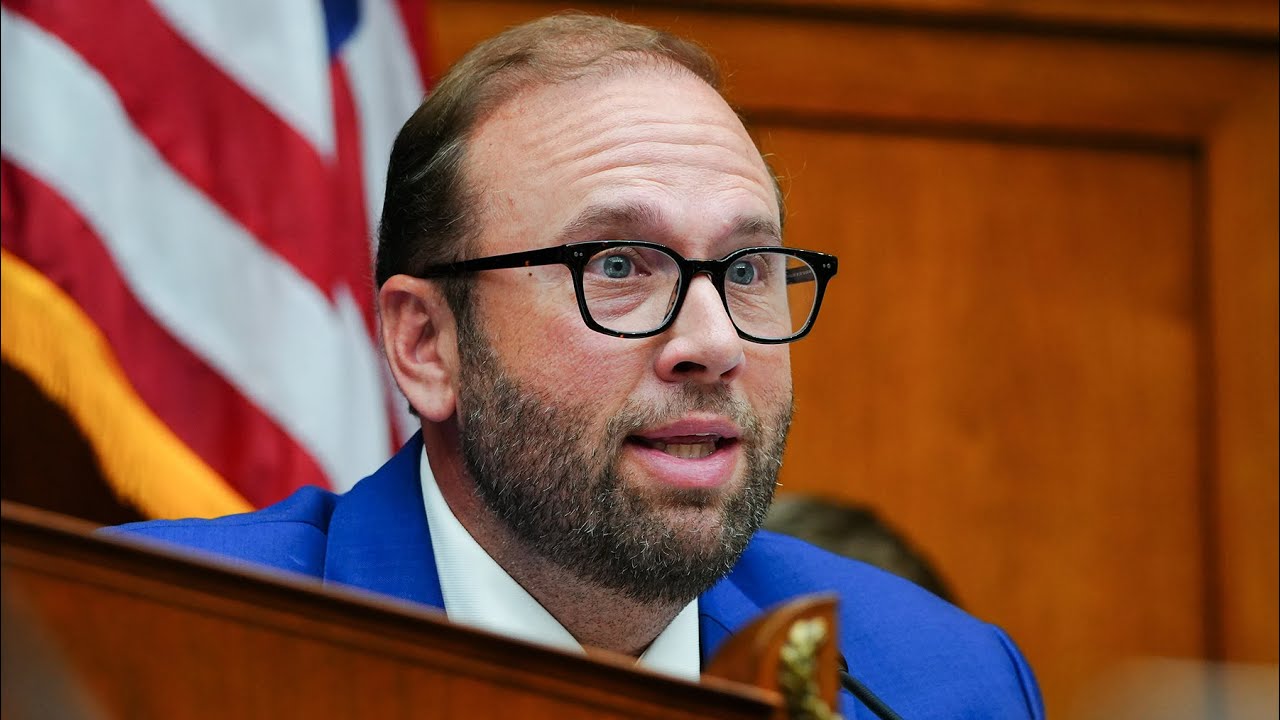 Tuesday that their top priority is making permanent the massive giveaway to the rich that Donald Trump and the GOP pushed through in 2017.}:
Rep. Jason Smith (R-Mo.), chairman of the House Ways and Means Committee, said during his opening remarks at Tuesday's hearing that "we must make the Trump tax cuts permanent as soon as possible."
While most of the corporate tax breaks in the 2017 law were made permanent from the start, provisions impacting individuals—including the cut to the top marginal tax rate—are set to expire at the end of this year without congressional action. Trump and Republicans have also called for a further reduction of the statutory corporate tax rate.
"As of today, we have only 142 legislative days before taxes will go up for every single American if Congress fails to act," Smith declared Tuesday.
Smith characterized the 2017 tax cuts as a boon for ordinary Americans, but the law's benefits were heavily skewed to the wealthiest.
The same would be true of an extension of the individual tax cuts, which is expected to be part of a sprawling party-line reconciliation bill. The Institute on Taxation and Economic Policy noted in a recent analysis that "Trump's plan to make most of the temporary provisions of his 2017 tax law permanent would disproportionately benefit the richest Americans."
"No amount of misinformation can hide the truth: This massive new giveaway to the ultra-wealthy and giant corporations comes at the expense of working and middle-class Americans."
Rep. Richard Neal (D-Mass.), the top Democrat on the committee, said at Tuesday's hearing that "when Republicans inevitably tell you that the GOP tax scam gave everyone in America a tax break, remember this one contextualized fact: Extending the law gives people making over $1 million a year a $78,717 average tax cut—288 times higher than the $273 those earning under $50,000 would receive."
"Those millionaires won't feel the effects of cuts to Medicare or Medicaid, or higher premium costs, but America's working families sure will," Neal added, referring to the GOP's plan to slash key aid programs to help offset the enormous cost of extending the 2017 tax breaks.
Tuesday's committee hearing was overshadowed by the closely watched Senate questioning of Trump's nominee to lead the Pentagon, but it confirmed that Republicans intend to waste no time delivering another round of tax cuts to rich Americans who saw their wealth explode under the 2017 law.
"Last time Trump and the GOP held a trifecta, they moved fast to create new tax breaks rewarding wealthy corporations for moving jobs overseas and harming hard-working families across the country," David Kass, executive director of the progressive advocacy group Americans for Tax Fairness, said in a statement Tuesday. "Now, they're working to pass new tax breaks that will allow these same powerful corporations to evade paying their fair share and eliminate American jobs."
"The disastrous effects of the Trump tax scam are not theoretical—they're reality," Kass added. "It didn't raise wages for everyday people or protect our jobs and it certainly didn't pay for itself. Instead, it doubled billionaire wealth and added over $1.5 trillion to the deficit. No amount of misinformation can hide the truth: This massive new giveaway to the ultra-wealthy and giant corporations comes at the expense of working and middle-class Americans."
Trump and the GOP's aggressive push for a new round of tax cuts received a boost from the deep-pocketed Koch network, which is pumping tens of millions of dollars into a nationwide campaign to build support for a proposal that would predominately reward a small sliver of the U.S. population.
"If asked to choose between healthcare and food for low-income kids or tax cuts for giant corporations, Chairman Jason Smith and the Republicans on the Ways and Means Committee are proving that ten times out of ten, they'll choose the corporate giants," said Tony Carrk, executive director of the watchdog group Accountable.US. "American families are set up to lose because President-elect Trump and his congressional allies are eager to raise our costs in order to help their wealthy donor friends."
---==
an 1 25
A right-wing advocacy group founded by the billionaire Koch brothers announced Monday the launch of a $20 million campaign to promote an extension of the 2017 Trump-GOP tax cuts, which disproportionately benefited the rich and large corporations.
[vid]
But in a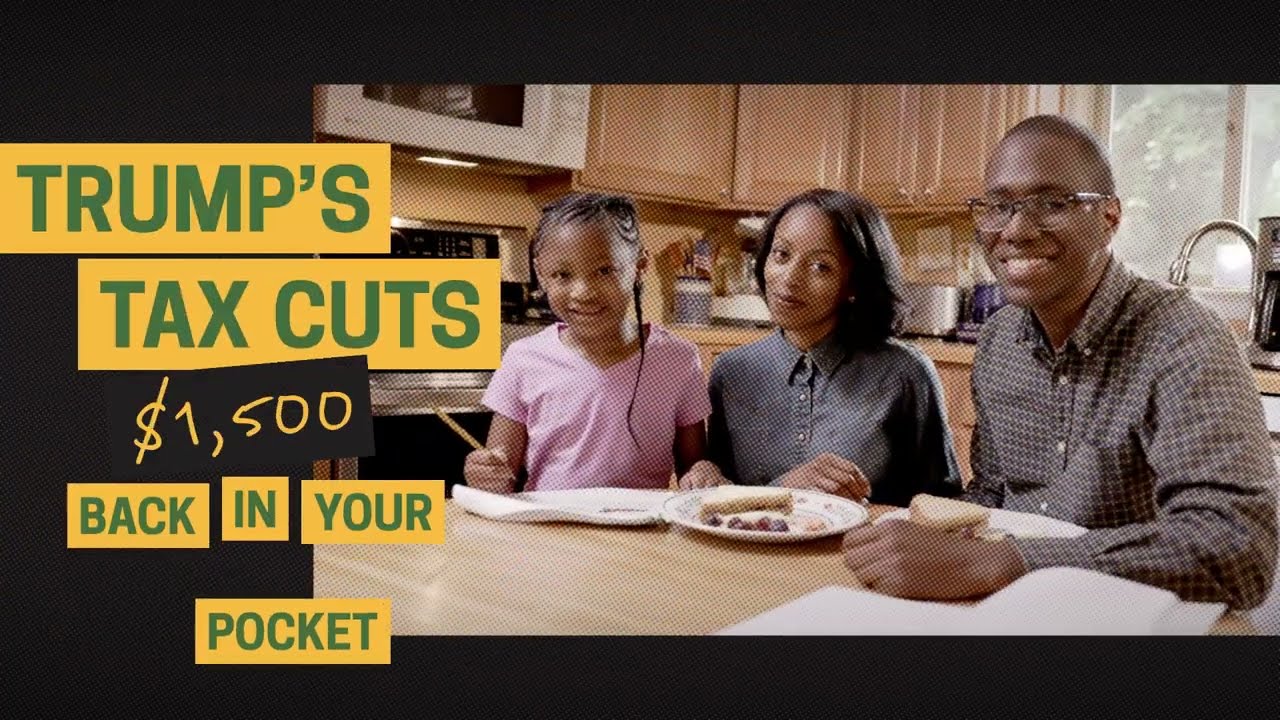 that debuted over the weekend, Americans for Prosperity (AFP) characterizes the 2017 Tax Cuts and Jobs Act as a boon to "hardworking Americans" and small businesses—and warns that allowing provisions of the law to expire at the end of this year as scheduled would be disastrous for the working class.
"This year, Congress is facing a countdown to a crisis that threatens family budgets nationwide," Ross Connolly, AFP's regional state director, said in a statement Monday. "We are proud to partner with the incoming Trump administration to protect prosperity and ensure that Congress acts."
AFP is a 501(c)(4) organization that describes itself as a "grassroots" movement despite being launched by Charles Koch and his late brother, David—two of the most notorious right-wing billionaire in U.S. politics.
The group said its new 50-state campaign represents "the largest effort by a conservative organization" to support President-elect Donald Trump's legislative agenda as he prepares to take office next week. The campaign, according to AFP, will include "over 1,000 meetings" at congressional offices, "in-district events" with activists and lawmakers, and "roundtables with job creators."
The campaign aims to "reach millions of voters on the phone and at their doorsteps," AFP said.
"The Trump tax giveaways passed in 2017 did not help working-class Americans. In fact, the top 1% of corporations received almost all of the benefits."
AFP's description of the impacts of the 2017 tax law flies in the face of resounding evidence showing that wealthy Americans—not ordinary workers—were the chief beneficiaries and are poised to reap most of the rewards once again if Trump and the Republican-controlled Congress extend the measure's soon-to-expire provisions.
"Americans for Prosperity is spending $20 million on a new ad campaign that champions the 2017 Trump tax law as a win for working families," Morris Pearl, chair of the Patriotic Millionaires, told Common Dreams. "But don't be fooled: What this Koch-backed group is really only after is protecting tax cuts for wealthy people like me."
"I'm in favor of tax relief for working people, but not yet another huge and unnecessary windfall for America's rich," Pearl added. "If Congress wants to help working families, they should make tax rates on labor income the same as tax rates on profits made by investors."
AFP is one of a number of right-wing, corporate-tied organizations pushing for an extension of the Trump tax cuts, which Republicans are planning to fund by slashing Medicaid, federal nutrition assistance, and other key programs.
The progressive watchdog group Accountable.US noted in a recent analysis that one of the groups pushing for an extension of the 2017 law is Advancing American Freedom, an organization "run by corporate consultants, lobbyists, lawyers, and executives, including former Trump administration officials who were directly responsible for the TCJA."
Accountable also observes that Club for Growth, a group funded by wealthy conservatives, "has pushed a deeper corporate tax cut plan as an 'opening salvo' in the current tax debate."
"The billionaire funders of the group's action arm have benefited enormously from the TCJA, saving hundreds of millions of dollars from a single obscure tax break for pass-through entities," the watchdog added.
In response to AFP's new nationwide campaign, Accountable.US executive director Tony Carrk told Common Dreams that "a glitzy ad campaign from a far-right organization won't change the fact that the Trump administration and Republican-controlled Congress are paying for giveaways to billionaires, wealthy tax cheats, and price-gouging corporations by cutting critical services for working families, like Medicaid and SNAP."
"The Trump tax giveaways passed in 2017 did not help working-class Americans," said Carrk. "In fact, the top 1% of corporations received almost all of the benefits."
Watch the ad below:
an 1 25
GOP proposes repealing Biden’s student debt relief to fund new tax cuts for the rich
---
an 12 24
Trump and his GOP allies are determined to extend the corporate tax cuts that were enacted in2017 during his first term.
Many Republicans have been downplaying the effect that doing so would have on the United States' federal deficit.
But according to Washington Post opinion columnist Catherine Rampell, they are ignoring the math involved.
:{READ MORE:'Only high-income nation without it': DC insider explains why Americans are so miserable
Rampell, in her December 10 column, argues, "The GOP's first order of business: getting rid of math. The fractious Republican Party can agree on few things these days. But one of them is near-unanimous frustration with the pesky laws of arithmetic. That cutting future taxes would reduce future tax revenue, for instance, perpetually aggrieves them."
Republicans who favor extending the corporate tax cuts, according to Rampell, are ignoring how much it will increase the federal deficit.
"A large chunk of the 2017 Trump tax cuts expires next year, and extending these provisions will be extremely expensive," Rampell explains. "That's why Republicans scheduled them to sunset in the first place: to lower the price tag. The Congressional Budget Office, the legislature’s official scorekeeper, estimates a full extension would add more than $4 trillion to the federal debt over the next decade."
The Post columnist adds, "That's true even after considering any potential growth effects on the U.S. economy. It might also understate the full cost of GOP tax plans, since it doesn't include Trump's other pricey promises: slashing corporate taxes, eliminating taxes on Social Security, overtime and tips. Those would add trillions more in red ink — awkward for a party that fancies itself fiscally responsible."
READ MORE:Experts: Mass deportation will hurt at least one red state's economy
*Catherine Rampell's full Washington Post column is available at this link (subscription required)
---
an 12 24
'Biggest challenge': Even Republicans are nervous about Trump’s new $4.6 trillion tax cut
---
no lnx
:{alternet
US plutocrats $276 billion richer since Trump win—and the GOP wants to give them even more
Elon Musk attends the America First Policy Institute (AFPI) gala at Mar-A-Lago in Palm Beach, Florida, U.S., November 14, 2024. REUTERS/Carlos Barria
Jake Johnson and Common Dreams November 22, 2024
An analysis released Wednesday showed that the United States' 815 billionaires have seen their combined wealth surge by roughly $280 billion since Donald Trump's victory in the 2024 presidential election earlier this month, a finding that came as Republicans continued to lay the groundwork for another massive tax giveaway for the rich.
Citing Forbes data, Americans for Tax Fairness (ATF) noted that the collective net worth of the nation's billionaires jumped $276 billion between November 4—the day before Election Day—and November 12. Elon Musk, the world's wealthiest man and a Trump confidant, accounted for 20% of the total billionaire wealth surge, with his net worth growing by $57 billion in just a week.
ATF found that U.S. billionaire wealth is now at an all-time high of $6.7 trillion—a fact that hasn't deterred Republican lawmakers from pursuing additional tax cuts for the wealthiest Americans, which they want to pay for in part by slashing Medicaid and federal nutrition assistance.
"Among the tax handouts the GOP hopes to offer America's plutocrats is a weakening or elimination of the estate tax, the federal government's only curb on dynastic wealth," ATF noted. "As proof of the party's intent, the new Republican majority in the U.S. Senate has chosen as its next leader the chamber's main champion of estate-tax repeal, John Thune (R-S.D.)."
The group observed that scrapping the estate tax would save billionaire households an estimated $2.7 trillion while depriving "working Americans of the exact same amount of funding for vital public services like Medicare, childcare, education, and housing."
Since the highly regressive 2017 Trump-GOP tax cut that Republicans are looking to extend and expand, U.S. billionaire wealth has risen by $3.8 trillion—over 131%—according to ATF.
"Instead of addressing the nation's growing economic inequality and the growing shortfall in federal revenue, President Trump and congressional Republicans plan to make the situation even worse by enacting a new tax cut package that gives billionaires tax breaks on the backs of working people," the group said Wednesday. "This Republican tax plan will start with extending all the expiring provisions in the 2017 Trump law—which alone will balloon the federal debt by $5 trillion over the next decade—but will likely include new handouts to the very wealthy, such as elimination of the estate tax."
During a hearing on Wednesday, Sen. Elizabeth Warren (D-Mass.) voiced similar concerns about the Trump-GOP tax agenda, which also includes cutting the statutory corporate tax rate from 21% to 15%.
"President-elect Trump has proposed making every single 2017 tax cut for the wealthy permanent," Warren said during the Senate hearing. "In fact, he plans to go further by cutting the corporate tax rate even more, so that giant corporations making record profits off struggling Americans can shovel even more cash to their rich executives and shareholders."
"The tax fight is starting now, and every person in the United States, every person in the Senate, needs to show the American people what side we stand on," said Warren. "Will we sign our names to more giveaways to President-elect Trump's billionaire buddies, or will we fight for tax fairness for the American people?"
---
===
an 10 24
Economist Paul Krugman argues in a Monday, October 28 New York Times column that Donald Trump's "biggest, potentially most consequential con has been political: portraying himself as a different kind of Republican, an ally of working Americans."
Krugman submits that "Americans correctly remember Trump’s prepandemic economy as an era of strong job growth and rising wages — largely, I’d argue, because Republicans in Congress opened the fiscal spigots after austerity during the Obama years slowed recovery from the 2008 financial crisis."
However, "Many also implicitly discount or memory-hole the high unemployment of Trump’s final year in office. And they’re still frustrated about higher prices, the consequence of the inflation surge of 2021-22 — even though this surge was a global pandemic phenomenon, and wages adjusted for inflation are now higher than they were right before the Covid-19 pandemic."

The Nobel laureate emphasized, "What relatively few people realize, I believe, is that if he wins next week, Trump’s anti-worker agenda will be much broader than anything he managed to do in 2017-21."
Noting that during his years as a business mogul, Krugman recalls that Trump "left behind a trail of investors who lost money in failed ventures even as he profited, students who paid thousands for worthless courses, unpaid contractors and more."
Additionally, "Even amid his current presidential campaign he has been hawking overpriced gold sneakers and Trump Bibles printed in China," Krugman continues.
The longtime economist emphasizes:
*[Trump's] 2017 tax cut strongly favored high-income Americans. Now he wants to make that tax cut, many of whose provisions will expire in 2025, permanent. He has also floated the idea of a further large cut in corporate taxes (much of which could, by the way, ultimately benefit foreign investors).
*As president, Trump tried to push through deep cuts in Medicaid, although he didn’t succeed. And while he says that he won’t cut Social Security and Medicare, his policy proposals would undermine these programs’ financial foundations.
READ MORE:[Why 'voters consistently say they trust Trump' with the economy than Harris: expert
"So, no, Trump isn’t a friend to working-class Americans; quite the opposite," Krugman concludes.
*Krugman's full column is available at this link (subscription required).
----
an 10 24
One pillar of Vice President Kamala Harris' economic platform is to increase taxes on the wealthiest Americans, calling on billionaires to "pay their fair share" of federal taxes. Now, the chairman of the House of Representatives committee overseeing taxes is crying foul.
On Wednesday, Rep. Jason Smith (R-Missouri), who chairs the powerful House Ways and Means Committee, complained about Harris' plan to Fox Business host Maria Bartiromo. In the clip journalist Aaron Rupar posted to X (formerly Twitter), Smith defended the historically low tax rates of the richest Americans and called the vice president "ridiculous" for suggesting they should be increased.
"What's so ridiculous is for her statement to say that the rich should pay their fair share," Smith said. "It's just a talking point that she throws out there... Her policies are absolutely atrocious."
READ MORE:'Absurd!' US billionaires pay lower tax rate than working class for first time
However, Harris' argument that U.S. billionaires aren't paying historically low tax rates is backed up by hard data. Earlier this year, French economist Gabriel Zucman wrote in the New York Times that the wealthiest Americans paid just 23% of their income in taxes in 2018. Previously, the top 1% of Americans paid more than 56% of their income in taxes in 1960, and taxes still took up 52.7% of their incomes in 1970.
After Ronald Reagan's inauguration in 1981, the richest saw their tax rates drop precipitously, paying just over 35% of their incomes by the time Reagan left office in 1989. This trend continued after George W. Bush signed new tax cuts benefiting the rich into law in the early 2000s. Barack Obama extended those tax cuts in 2010, and Donald Trump signed even larger tax cuts into law in 2017. By 2018, the bottom half of U.S. income earners paid approximately 24% of their income in taxes, while billionaires paid an even lower rate. Zucman explained that the primary reason for this is that in the United States, work is taxed at a higher rate than assets.
"[W]hile most of us live off our salaries, tycoons like Jeff Bezos live off their wealth," Zucman wrote. "In 2019, when Mr. Bezos was still Amazon’s chief executive, he took home an annual salary of just $81,840. But he owns roughly 10percent of the company, which made a profit of $30 billion in 2023."
"If Amazon gave its profits back to shareholders as dividends, which are subject to income tax, Mr. [Jeff] Bezos would face a hefty tax bill. But Amazon does not pay dividends to its shareholders... Instead, the companies keep their profits and reinvest them, making their shareholders even wealthier," he continued. "Unless Mr. Bezos, Warren Buffett or Elon Musk sell their stock, their taxable income is relatively minuscule. But they can still make eye-popping purchases by borrowing against their assets. Mr. Musk, for example, used his shares in Tesla as collateral to rustle up around $13 billion in tax-free loans to put toward his acquisition of Twitter."
READ MORE:(Opinion) Behind the GOP's new plan to enrich the super-rich — again
This is where the tax plans of the two major parties' presidential nominees come into focus. While Harris is aiming for generating more revenue from assets held by the richest in her call for higher taxes on unrealized capital gains over $100 million, Trump is campaigning on renewing his tax cuts from 2017, which overwhelmingly benefited the rich.
If Trump were to succeed in renewing the tax cuts — which are due to sunset next year — it would amount to a cost of roughly $10 trillion over the next decade. CNN reports that Harris' plan to tax unrealized capital gains on the roughly 10,660 Americans who have net worths of nine figures or more "could be used to pay for social spending programs, like helping families pay for child care or down-payment help for first-time homebuyers."
---
===
mma 8 24
News outlets reported that Vice President Kamala Harris proposed raising the corporate tax rate to 28% if she wins the presidency this November, partially rolling back the Trump-era tax cuts that slashed corporate taxes.
Even though corporate tax revenue plummeted in response to the Trump tax cuts, and American corporations are undertaxed relative to other developed economies in the OECD, conservative media began assailing Harris’ policy with false claims of immediate and “massive layoffs” and higher inflation.
As the Center on Budget and Policy Priorities has explained, Trump’s 2017 tax cut was skewed to the richest Americans, and the corporate tax cut even moreso, with the bottom 90% of workers gaining nothing from the corporate tax rate cut, while corporate executives earning nearly $1 million a year got an average $50,000 earnings boost. A leading reason that Trump's corporate tax changes benefited the wealthy was the imposition of a flat tax of 21% to replace what had been a graduated rate system, ranging from 15% to 35%.
And thanks to Trump’s tax cuts, even as corporate profits went up during most of his presidency, corporate tax revenue dropped until the pandemic and the years after. Corporate tax revenue as a share of the economy remains near historic lows at under 2% of gross domestic product, and it’s also near historic lows as a share of federal tax revenue. :{
Meanwhile, the Organisation for Economic Co-operations and Development (OECD) average showed corporate tax revenue in 2020 at just over 15% of total tax revenue, and 3% of GDP, showing that U.S. corporations have a very light tax burden in comparison. In 2023, the Institute of Taxation and Economic Policy estimated that raising the corporate tax rate to 28% would raise more than $1.3 trillion in revenue over 10 years.
Yet conservative media reacted to Harris’ proposal with hyperbolic doom and gloom. Citing an analysis from the Tax Foundation, Fox News personalities claimed that raising the corporate tax rate would lead to “massive layoffs” “right off the bat.” Yet the Tax Foundation’s analysis projected a loss of only 128,000 “full-time equivalent jobs” by 2034. This is a drop in the bucket of the millions of jobs projected to be created over the course of a decade. Other conservatives claimed that raising the corporate tax rate would be inflationary; in reality, tax increases are broadly considered deflationary.
- Fox Business’ Jackie DeAngelis falsely claimed that if Harris “raises the corporate tax rate to 28%, almost 150,000 people right off the bat are going to lose their jobs.” DeAngelis added: “Ultimately the corporations aren't these big, bad evil entities.” Fox News, *Fox & Friends*, [8/20/24]
- Fox & Friends co-host Lawrence Jones claimed that “you’re gonna have massive layoffs” if Harris raises the corporate tax rate to 28%. Co-host Brian Kilmeade defended the Trump-era rate, saying, “Corporations have people in it,” and claiming that it would make the U.S. uncompetitive with European countries with lower corporate tax rates. Fox News, *Fox & Friends*, [8/20/24]
- Fox Business host Charles Payne: Harris wants to “go to war with corporate America.” Payne then proclaimed Harris will “make the lives of workers harsher,” adding that “there will be fewer jobs.” Fox News, *The Faulkner Focus*, [8/20/24]
* Wash. Times columnist and Trump campaign staffer Tim Murtaugh: “She wants to tax job creators at a higher rate than Chinese communists do.” Murtaugh added: “Who do you think will pay for the tax increase? Do you suppose maybe it’s passed on to consumers like always? Harris is dangerous.” Twitter/X, [8/20/24]
- Fox contributor Jason Chaffetz: “Do you think a 30% increase in the corporate tax rate will increase the cost of your life? Yes, it will. Everything will cost more. That’s VP Harris’ plan. Believe her.” Twitter/X, [8/20/24]
- Right-wing commentator Bill Mitchell: Raising the corporate tax rate is inflationary. Mitchell posted that “corporations will pass costs onto consumers.” Twitter/X, [8/20/24]
related
08/15/24
08/09/24
08/02/24
===
===
JUDD POP INFO YMAIL 7 24
n an interview with Bloomberg Businessweek published earlier this month, Trump said that, if he wins a second term, he would push to slash the corporate tax rate:
I brought the taxes down from 39% to 21%. What’s not to love? I then said, I’d like to round it off to 20 for simplicity reasons, I mean, it is, you know, believe it or not, it sort of makes sense and it’s still a lot of money.
But I would like to get it down to 15 [%], if we could, because that would put us in the absolute lowest in terms of incentive.
Trump correctly stated that he signed legislation in 2017 sharply reducing the corporate tax rate in his first term. The top rate was 35%, not 39% as Trump claimed, but it was still a very large cut. The reduction cost over $1.3 trillion over 10 years. According to the Congressional Research Service, corporations used the windfall mostly for "a record-breaking amount of stock buybacks, with $1 trillion announced by the end of 2018." Stock buybacks are a way of increasing stock prices by reducing supply, which in turn benefits wealthy investors and executives with stock options.
Previously, Trump has been cagey about his plans for the corporate tax rate in a potential second term. Last September, when asked in an interview if it was true he’d cut the corporate tax rate to 15%, Trump responded: “I’d like to lower them a little bit if we could.”
In January, the Trump campaign put out word that he was not interested in cutting the corporate tax rate further. Trump's spokesman, Jason Miller, said Trump's priority was preserving the 2017 cuts and then securing additional tax cuts for the working class. “In my most recent conversations with the president, he said that he really wants to focus more on small businesses than corporations,” Stephen Moore, an economic advisor to Trump, told the Washington Post. “I think he’s fine with the corporate rate where it is. He wants to keep intact the tax cut we did in 2017.”
The campaign's eagerness to shift attention away from corporate tax cuts is understandable; corporate tax cuts are very unpopular. Research shows that just 14% of Americans want to lower corporate taxes. In contrast, 65% of Americans say they are in favor of raising the corporate tax rate. The policy is even unpopular among Republicans — only 23% support lowering the corporate tax rate.
 |
Nevertheless, Trump has confirmed he will push for a 15% corporate tax rate in a second term. Let's look at the impact of such a policy.
A 15% tax rate would mean a multi-billion dollar windfall to the nation's largest and most profitable companies
An analysis by the Center for American Progress (CAP) Action Fund, a progressive non-profit organization, found that reducing the corporate tax rate from 21% to 15% would "[g]ive the largest 100 U.S. companies (the Fortune 100) a total estimated annual tax cut of $48 billion." These companies collectively "reported $1.1 trillion in profits in their last annual report." To put the scope of the tax cut in perspective, the $48 billion cost is "larger than the entire FY 2024 U.S. Department of Education K-12 budget."
The benefits to some individual corporations are stunning. Microsoft, Alphabet (Google), Apple, JP Morgan Chase, Amazon, and Berkshire Hathaway would all reduce their tax bill by $2 billion or more annually.
The annual benefit to the 10 companies that would benefit most exceeds $23 billion. This is more than double the combined annual budget of two critical federal agencies, the National Cancer Institute and the National Center on Aging.
The five largest oil and gas companies — Exxon Mobil, Chevron, Marathon-ConocoPhilips, Phillips 66, and Valero Energy — generated over $93 billion in profits last year. Those companies would get a combined $2.5 billion windfall under Trump's proposal.
The CAP Action Fund analysis was performed by looking at the "federal income tax expense" listed on publicly filed documents. This isn't the exact same as federal taxes paid, but it provides a reasonable proxy. Corporations do not release their annual tax returns.
The Tax Foundation, a non-profit group focusing on tax policy found an even larger cost using a slightly different methodology. The non-partisan group found that lowering the corporate tax rate to 15% would "reduce federal revenue by $673 billion from 2025 to 2034."
===
---
jake j commn dr an 1 24
two new reports published Tuesday by the Roosevelt Institute argue that robust corporate taxation is key to creating a strong economy and improving the well-being of families and children—objectives that have been undermined in the decades since the Reagan era by regressive tax cuts enacted on the false premise that benefits would "trickle down" to the rest of society.
The first report, A Mapping of the Full Potential of U.S. Corporate Taxation to Enhance Child and Family Well-Being, examines what the authors describe as the understudied notion that "increasing corporate taxation will necessarily help children and families by providing additional revenue for essential public services."
That perspective runs counter to what the Roosevelt Institute's second report calls "a 'cut-to-grow' mentality" that rose to prominence in the 1970s and was enthusiastically embraced by the administration of President Ronald Reagan.
"Under this view, the thinking went, it was necessary to reduce the corporate tax rate to grow the economy—and that this growth would allow gains to eventually 'trickle down' from the rich shareholders to the middle class," the report states. "During this time, the corporate tax rate was gradually reduced to 35% before it was dramatically cut to 21% in 2017. These cuts resulted in corporate tax revenues falling to less than 10% of total federal revenues."
"Perhaps more than any other, President Ronald Reagan leveraged mounting backlash to taxation and government spending to dramatically reduce both, regardless of the consequences to American families," the report observes.
"Corporate tax policy since Reagan has been driven by the trickle-down economics narrative that cutting the taxes on 'job creators' will benefit less wealthy U.S. taxpayers."
The decades-long decline in corporate tax rates has severely undermined the federal government's ability to finance critical public goods, from education to childcare.
"Since regressive corporate tax cuts don't significantly increase earnings for working families (through either wage or employment increases), but they do reduce the government's ability to fund family income and care supports, childcare costs—which are already rising—can become a relatively more expensive line item in working parents' household budgets," reads the Roosevelt Institute's first report, authored by Emily DiVito and Niko Lusiani.
"When they can't afford childcare," they added, "parents face the difficult choice of having to cut costs in other places—often on the basic necessities that allow children to thrive, like food, clothing, and enrichment activities—or taking on additional caregiving duties themselves."
At the state and local levels, DiVito and Lusiani noted, "corporations' successful efforts to avoid their full property tax liability devastate public school budgets."
DiVito, deputy director for the corporate power program at the Roosevelt Institute, said Tuesday that "we have a false idea in the U.S. that corporate tax policy is unrelated to equitable social reforms."
"However, strong corporate tax policy is vital to all aspects of a thriving economy," she argued. "And the failing to reimagine a more ambitious and comprehensive use of corporate tax policy prevents us from achieving a more equitable, sustainable, and democratic economy and society for all families."
The new reports come a week after a bipartisan pair of House and Senate negotiators announced a deal to expand the child tax credit (CTC) for three years in exchange for a series of corporate tax cuts. The American Prospect's David Dayen estimated that "in the time period when all the tax credits are actually in place, the business tax changes are five times more costly than the CTC changes."
"Who knows if this deal can pass in time to take effect in the upcoming 2023 tax season, if ever. Sen. Mike Crapo (R-Idaho), the ranking Republican on the Senate Finance Committee, is already asking for changes to make it even more generous to businesses. That's in part a function of the dissembling that there is 'parity' in the deal. The truth is that this is not an equal trade. And it may extend that inequity well into the future."
That warning is in line with the Roosevelt Institute's new research, which argues that a corporate tax code generous to big business fuels inequality by "benefiting capital interests (i.e., business owners, partners, and shareholders) at the expense of workers and their families."
"When corporations enjoy low taxes on their profits, they face a trade-off for how to otherwise disperse them: make investments in the workforce and productive capacity (e.g., raise wages, hire more workers, and/or upgrade buildings, equipment, or technology) or distribute them to shareholders (i.e., pay out dividends and buy back stock to inflate prices). Data shows that executives typically choose the latter."
Reuven S. Avi-Yonah, a professor of law at the University of Michigan and the lead author of the new report on "cut to grow" ideology, said in a statement that "corporate tax policy since Reagan has been driven by the trickle-down economics narrative that cutting the taxes on 'job creators' will benefit less wealthy U.S. taxpayers."
"Such an idea is often offered in tandem with the notion that this is the only way tax policy can help American families," said Avi-Yonah. "But this just isn't true. In fact, this false 'cut-to-grow' narrative has made it very difficult to argue for a more expansive, progressive vision of corporate tax reform—contributing to a decades-long stalemate in efforts toward real comprehensive corporate tax reform."
"Now is the time," he added, "to reverse this trend with a more historically grounded support of the corporate tax."
---
AN 12 23 NO LNX
Kristi Noem in hot water following Trump visit to South Dakota
Alexandria Jacobson
andRaw Story
December 29, 2023
In front of a sea of MAGA hats, bedazzled patriotic gear and “Never Surrender” mugshot t-shirts, former President Donald Trump spent nearly two hours at a South Dakota rally in September bemoaning the current state of America.
“We are a nation that in many ways has become a joke, and we are a nation that is hostile to liberty, freedom and faith. We are a nation whose economy is collapsing into a cesspool of ruin,” Trump said over a melancholy orchestral tune that played for the final 12 minutes of his speech Sept. 8 at the South Dakota Republican Party’s Monumental Leaders Rally in Rapid City, S.D.
Then came a 180-degree vibe shift: R&B duo Sam and Dave’s “Hold On, I'm Comin'” blasting over the speakers to signify the end of the event, prompting a little dance at the podium from Trump before he headed off stage.
ALSO READ: Florida judge’s son is a neo-Nazi patron: data leak
The rowdy, “U-S-A” chant-filled affair held at Rapid City’s The Monument event center would end up costing the city’s taxpayers about $20,000 in public safety-related government expenditures, according to information Raw Story obtained through a South Dakota Sunshine Law request.
Trump’s campaign — in keeping with its standard practice — refused to help offset the costs to taxpayers.
6-3
The situation represents an awkward dichotomy for South Dakota Gov. Kristi Noem, who Trump could consider as a vice presidential running mate upon winning the Republican Party’s 2024 presidential nomination.
On one hand, there’s Noem the MAGA champion who introduced Trump at the Sept. 8 event, giving him her “full and complete endorsement for President of the United States of America.
“To him, every American is worth fighting for. No one is better than anyone else. No one deserves to be treated differently than anyone else, and he will never forget about us, the little people in the little states that are the backbone of this country,” Noem said at the event.
On the other is Noem the anti-tax warrior, who boasts “keeping taxes low” on her official website.
"Public sentiment has shown that South Dakotans want a permanent tax cut," Noem said earlier this year when signing a bill lowering the state’s sales tax.
Noem did not respond to Raw Story’s request for comment about the Trump rally’s cost to taxpayers.
As with other rallies, Trump discussed his own legal troubles during the South Dakota event, which include 91 felony charges spread across four indictments and a separate New York civil trial that threatens to upend his business empire.
“I am being indicted for you. I’m not too thrilled about that, but that's part of the job description. I’m being indicted for you,” Trump said on Sept. 8.
...
10 23 an comm dr
U.S. Treasury Department on Friday released new figures related to the 2023 budget that showed a troubling drop in the nation's tax revenue compared to GDP—a measure which fell to 16.5% despite a growing economy—and an annual deficit increase that essentially doubled from the previous year.
"After record U.S. government spending in 2020 and 2021" due to programs related to the economic fallout from the Covid-19 crisis, the Washington Postreports, "the deficit dropped from close to $3 trillion to close to $1 trillion in 2022. But rather than continue to fall to its pre-pandemic levels, the deficit unexpectedly jumped this year to roughly $2 trillion."
While much of the reporting on the Treasury figures painted a picture of various and overlapping dynamics to explain the surge in the deficit—including higher payments on debt due to interest rates, tax filing waivers related to extreme weather events, the impact of a student loan forgiveness program that was later rescinded, or a dip in capital gains receipts—progressive tax experts say none of those complexities should act to shield what's at the heart of a budget that brings in less than it spends: tax giveaways to the rich.
Bobby Kogan, senior director for federal budget policy at the Center for American Progress, has argued repeatedly that growing deficits in recent years have a clear and singular chief cause: Republican tax cuts that benefit mostly the wealthy and profitable corporations.
In response to the Treasury figures released Friday, Kogan said that "roughly 75%" of the surge in the deficit and the debt ratio, the amount of federal debt relative to the overall size of the economy, was due to revenue decreases resulting from GOP-approved tax cuts over recent decades. "Of the remaining 25%," he said, "more than half" was higher interest payments on the debt related to Federal Reserve policy.
"We have a revenue problem, due to tax cuts," said Kogan, pointing to the major tax laws enacted under the administrations of George W. Bush and Donald Trump. "The Bush and Trump tax cuts broke our modern tax structure. Revenue is significantly lower and no longer grows much with the economy." And he offered this visualization about a growing debt ratio:
"The point I want to make again and again and again is that, relative to the last time CBO was projecting stable debt/GDP, spending is down, not up," Kogan said in a tweet Friday night. "It's lower revenue that's 100% responsible for the change in debt projections. If you take away nothing else, leave with this point."
In his tweet, Kogan offered the following chart to show recent and projected levels of both federal revenue and spending relative to gross domestic product (GDP):
In a detailed analysis produced in March, Kogan explained that, "If not for the Bush tax cuts and their extensions—as well as the Trump tax cuts—revenues would be on track to keep pace with spending indefinitely, and the debt ratio (debt as a percentage of the economy) would be declining. Instead, these tax cuts have added $10 trillion to the debt since their enactment and are responsible for 57 percent of the increase in the debt ratio since 2001, and more than 90 percent of the increase in the debt ratio if the one-time costs of bills responding to COVID-19 and the Great Recession are excluded."
On Friday, the office of Sen. Sheldon Whitehouse (D-R.I.) cited those same numbers in a press release responding to the Treasury's new report.
"Tax giveaways for the wealthy are continuing to starve the federal government of needed revenue: those passed by former Presidents Trump and Bush have added $10 trillion to the debt and account for 57 percent of the increase in the debt-to-GDP ratio since 2001," read the statement. "If not for those tax cuts, U.S. debt would be declining as a share of the economy."
Whitehouse, who chairs the Senate Budget Committee, said the dip in federal revenue and growth in the overall deficit both have the same primary cause: GOP fealty to the wealthy individuals and powerful corporations that bankroll their campaigns.
"In their blind loyalty to their mega-donors, Republicans' fixation on giant tax cuts for billionaires has created a revenue problem that is driving up our national debt," Whitehouse said Friday night. "Even as federal spending fell over the last year relative to the size of the economy, the deficit increased because Republicans have rigged the tax code so that big corporations and the wealthy can avoid paying their fair share."
Offering a solution, Whitehouse said, "Fixing our corrupted tax code and cracking down on wealthy tax cheats would help bring down the deficit. It would also ensure teachers and firefighters don't pay higher tax rates than billionaires, level the playing field for small businesses, and promote a stronger economy for all."
None of the latest figures—those showing that tax cuts have injured revenues and therefore spiked deficits and increased debt—should be a surprise.
In 2018, shortly after the Trump tax cuts were signed into law, a Congressional Budget Office (CBo) report predicted precisely this result: that revenues would plummet; annual deficits would grow; and not even the promise of economic growth made by Republicans to justify the giveaway would be enough to make up the difference in the budget.
"The CBO's latest report exposes the scam behind the rosy rhetoric from Republicans that their tax bill would pay for itself," Sen. Chuck Schumer (D-N.Y.), and now Senate Majority Leader, said at the time.
"Republicans racked up the national debt by giving tax breaks to their billionaire buddies, and now they want everyone else to pay for them."
In its 2018 report, the CBO predicted the deficit would rise to $804 billion by the end of that fiscal year. Now, for all the empty promises and howling from the GOP and their allied deficit hawks, the economic prescription they forced through Congress has resulted in an annual deficit of more than double that, all while demanding the nation's poorest and most vulnerable pay the price by demanding key social programs—including food aid, education budgets, unemployment benefits, and housing assistance—be slashed.
Meanwhile, the GOP majority in the U.S. House—with or without a Speaker currently holding the gavel—still has plans to extend the Trump tax cuts if given half a chance. In May, a CBO analysis of that pending legislation found that such an extension would add an additional $3.5 trillion to the national debt.
"Republicans racked up the national debt by giving tax breaks to their billionaire buddies, and now they want everyone else to pay for them," Sen. Whitehouse said at the time. "It is one of life's great enigmas that Republicans can keep a straight face while they simultaneously cite the deficit to extort massive spending cuts to critical programs and support a bill that would blow up deficits to extend trillions in tax cuts for the people who need them the least."
- We need to stop the GOP's Big Pharma rip off ›
- Dear Republicans: We tried it your way and it doesn't work - Alternet ... ›
- When will Republican voters wake up to their own oppression ... ›
- The shutdown is the two Santa Clauses scam rearing its ugly head again ›
- For the next time some idiot tries to tell you the GOP is 'The Party of ... ›
- Federal budget expert: Blame Bush and Trump tax cuts for the US revenue problem - Alternet.org ›
RELATED ARTICLES AROUND THE WEB
- ICYMI: Center for American Progress: Republican Tax Cuts are ... ›
- If Not for Republican Policies, the Federal Government Would Be ... ›
- Federal Tax Cuts in the Bush, Obama, and Trump Years – ITEP ›
- Extending Trump Tax Cuts Would Add $3.5 Trillion to the Deficit ... ›
- Tax Cuts Are Primarily Responsible for the Increasing Debt Ratio ... ›
---
2x?
thom h sept 2019
no lnx?
https://www.alternet.org/2019/01/the-gops-most-successful-scam-is-about-to-reboot-itself/
Get ready to see it on your TV. The GOP is about to kick back into Two Santa Clausesmode and restart the scam they’ve been running since Reagan.
It’ll predictably begin in the first week or two of January, probably first on “Meet the Press” and other Sunday shows that feature “serious thinkers”and only rarely challenge Republicans. It’ll simultaneously roll out on Fox, on right-wing hate radio, and in the conservative media.
And there are more than a few “Third Way” Democrats eager to go along with it.
At its core, the strategy is simple and elegant: When Republicans are in power, run up as much debt as possible, mostly by borrowing and giving that cash to the Republican donor class through tax cuts and corporate subsidies; when Democrats have political power, Republicans suddenly become hysterical about the debt and demand that Dems keep taxes low while cutting social spending.
If successful, not only will Republicans (and corporate-funded Dems) block any genuinely progressive spending legislation in 2019 or 2020, but they’ll prevent any possibility of debt-free college, Medicare for All, or a Green New Deal in the entire next presidential term, clear through 2024 or beyond.
For this remarkably successful 38-year-long GOP head-fake strategy, you can thank a guy named Jude Wanniski.
Odds are you’ve never heard of Jude, but without him Reagan never would have become a “successful” president, Republicans only rarely would have taken control of the House or Senate, and neither George Bush would have been president.
It all began in 1964, when Barry Goldwater went down to ignominious and massive defeat. Most Republicans felt doomed, among them the then-28-year-old Wanniski. They had to come up with a new message, he knew, instead of just “drugs are bad,” “school segregation is good,” and “Democrats are communists.”
But what? The GOP seemed totally out of ideas. They floated a series of initiatives through the ’60s, mostly previewing Nixon’s “War on Drugs” and their anti-Soviet rhetoric, but nothing caught fire.
Then came 1974, as Nixon went down in flames even harder than Goldwater had, and Ford would soon follow: Jude Wanniski decided he’d had enough.
It’s the Gift Economy, Stupid
Wanniski concluded that if the GOP was to have a new message, it would have to be all about the economy.
The problem for the GOP was that the Democrats, since FDR, had gotten to play Santa Claus when they passed out Social Security and Unemployment checks—both programs of the New Deal—as well as when their “big government” projects like roads, bridges, and highways were built, giving a healthy union paycheck to construction workers.
From the 1930s to the time Wanniski wrote his opus magnum in the Wall Street Journal, Democrats—who almost continuously controlled the House of Representatives where all taxing and spending must originate—kept high taxes on businesses and rich people to pay for things. This kept the national debt in decline, and kept working people happy (working-class wages were steadily going up, in fact faster than the wages of CEOs).
The net effect of these entirely reasonable policies was that the Democrats seem like a party of Robin Hoods, taking from the rich to fund programs for poor and working-class voters. Or, as Wanniski noted, Santa Clauses.
Americans loved it, Wanniski knew. And every time Republicans railed against these programs, calling for cuts to Social Security, blocking infrastructure or cutting aid to education, they lost elections.
Supply-Side Economics
In 1974 he invented a new phrase—“supply-side economics”—and suggested that the reason economies grew wasn’t because people had money and bought things with it but, instead, because wealthy people made things available for sale. And the way to increase “stuff,” he theorized, was to give big tax cuts to corporations and rich “investors.”
In 1976, he rolled out to the Republican Party (through the Wall Street Journal) his “Two Santa Clauses” theory, which would enable the Republicans to take power in America for the next 30-plus years.
Democrats, he said, had been able to be “Santa Clauses” by giving people things from the largesse of the federal government. Social Security, child tax credits, Medicare, Medicaid, unemployment insurance, food and housing assistance, subsidies of college education (student loans were largely unheard of in 1980), infrastructure, new schools and hospitals, airports and Amtrak—the list went on and on. And voters loved all that stuff.
Republicans, Wanniski said, had to come up with their own Santa Claus strategy, or they’d never seriously hold power again.
It was simple, really.
When Republicans are in power, they should be “tax-cut Santas.” Cut taxes radically, and thus drive up the national debt, without ever talking much about the debt (this latter part wasn’t in the article but was adopted later by the GOP).
When Democrats take power, though, everything changes. Republicans should scream so loud about the national debt that they’d intimidate Democrats into shooting their own Santa Claus by cutting all those benefits the American people so loved.
It was a twofer.
If the GOP could pull it off with sufficient discipline—and in the late ’70s and early ’80s their billionaire donors threw big money into think tanks and PR machines to make it happen and keep it going—the American people would always think of the Republicans as the tax-cut Santas, and the Democrats as the scrooges who were trying to keep “average voters” from having their share of the tax-cut toys under the tree.
Horse and Sparrow Economics
This new idea of “trickle-down economics” wasn’t actually new; in the late 19th century it was called “horse and sparrow economics,” on the theory that if one fed more oats to the horses, there’d be more undigested grain left over in the horse poop for the sparrows to eat. (Seriously!) But the “supply side” marketing was pure 20th-century Madison Avenue.
At the same time, Arthur Laffer was taking that equation a step further. Not only was supply-side a rational concept to build a strong economy, Laffer suggested, but as taxes went down, he drew on his napkin, revenue to the government would magically go up!
Neither concept made any sense—and time has proven both to be colossal idiocies—but together they offered the Republican Party a way out of the wilderness.
Wanniski, Laffer, Stephen Moore and their billionaire backers convinced the Reagan campaign to embrace supply-side economics in the 1980 election, and George Herbert Walker Bush—like most Republicans of the time—was horrified. Ronald Reagan was suggesting “Voodoo Economics,” said Bush in the primary campaign, and Wanniski’s supply-side and Laffer’s tax-cut theories would throw the nation into such deep debt that we’d face disaster.
But Wanniski had been doing his homework on how to sell the scam of supply-side economics, and use it to get Republicans elected.
Two Santa Clauses Wins
And it has worked.
The last two presidents to present balanced budgets to Congress (and get them passed) were Jimmy Carter and Bill Clinton. Clinton famously “ended welfare as we know it,” radically cutting back on LBJ’s Great Society programs that had nearly cut in half the U.S. poverty rate in the 1960s and ’70s.
While Obama was able to get through an initial stimulus in 2009 (Republicans were as panicked as Democrats), even his signature Affordable Care Act had to be revenue-neutral, or even cut the deficit, to get it through Congress.
Sunday Show Hosts
Following their Two Santa Clauses script, the GOP was talking debt, debt, debt on nearly every Sunday show, every week, for all of Obama’s eight years.
Of course, these same commentators were silent when Republican presidents were in office, and the Sunday hosts seemed oddly amnesiac.
Reagan, Bush, Bush (and now Trump) all—every one of them—proposed and signed budgets that massively increased the national debt, year after year, relentlessly.
And during their GOP presidencies, like today (until the Dems take control of the House), the “conservative” pundits mostly kept quiet about the debt, focusing instead on feigned outrage over seemingly irrelevant things like the coming “gun confiscation,” the “War on Christmas,” inner-city violence (by black people), and the “immigration crisis” that involved brown people.
Meanwhile, out of sight of the American public, the nation’s total debt grew so high that whenever the Democrats took power, the Sunday-show Republicans started screaming about the “unsustainable debt!!!”
Like Pavlov and his dog, average people would freak out and join the Republicans in demanding that Democrats “cut all that spending!”
And with the cuts, Republicans knew, the Democrats would be shooting their own Santa Clauses.
Year after year, it worked brilliantly.
Wanniski Declares Victory
Looking at the wreckage of the Democratic Party all around Clinton in 1999, in particular the “Gingrich Revolution” of 1994,Wanniski wrote a gloating memo that said, in part:
“We of course should be indebted to Art Laffer for all time for his Curve... But as the primary political theoretician of the supply-side camp, I began arguing for the ‘Two Santa Claus Theory’ in 1974. If the Democrats are going to play Santa Claus by promoting more spending, the Republicans can never beat them by promoting less spending. They have to promise tax cuts...”
Ed Crane, then-president of the libertarian CATO Institute, noted in a memo that year:
“When Jack Kemp, Newt Gingrich, Vin Weber, Connie Mack and the rest discovered Jude Wanniski and Art Laffer, they thought they’d died and gone to heaven. In supply-side economics they found a philosophy that gave them a free pass out of the debate over the proper role of government. Just cut taxes and grow the economy: government will shrink as a percentage of GDP, even if you [Republicans] don’t cut spending.”
The result, in addition to several Republicans winning the presidency, is clear. Today’s national debt is almost entirely the invention of the Republican Party, using Laffer and Wanniski’s strategy.*
If you’re seeing the pattern here, it’s because it’s obvious. Republicans pour on the tax cuts and spending increases, year after year, whenever they have the power to do so, to intentionally inflate the national debt.
When a Democratic president is in office, however, or even (like 2019) when Democrats control part or all of Congress and want to go big, the Republicans in on this long con scream about the debt on every show, every day.
When Jude Wanniski died, conservative George Gilder celebrated the genius of his Two Santa Claus theory in a Wall Street Journal eulogy:
“...Jude’s charismatic focus on the tax on capital gains redeemed the fiscal policies of four administrations. ... He audaciously defied all the Buffetteers of the trade gap, the moldy figs of the Phillips Curve, the chic traders in money and principle, even the stultifying pillows of the Nobel Prize.”
And, indeed, Wanniski’s Two Santa Claus theory defied every tenet of rational economics, including those put forward by Nobel Prize winners.
In simple reality, his tax cuts for the rich did what they have always done over the past 100 years: they initiated a bubble economy that would let the very wealthy skim the cream off the top just before the ceiling crashed in on working people.
Will It Work Again?
The Republicans got what they wanted from Wanniski’s work. They held power for nearly 40 years, skimmed trillions of dollars out of the economy, gutted organized labor, and packed the Supreme Court and the entire federal court system.
Best of all, though, for the Two Santa Claus GOP, the years since 1981 have left such a massive national debt that some misguided “conservative” Democrats will again be clamoring to shoot Santa with cuts to education, infrastructure, health care, and other social programs.
The Two Santa Claus theory isn’t dead, and starting any day now we’ll see the Republicans crank up their debt hysteria. It’s as predictable as the seasons.
Hopefully, though, this time Democrats will point out the massive fraud perpetrated by the GOP since 1981, and begin talking about Two Santa Clauses in the media.
If they don’t, and enough “Third Way” and “New Dem” Democrats get on board with the “deficit hawks” to drag down the New Deal progressives, get ready for the second Trump term.
*For wonks who want the numbers:
The national debt, right now, at about 100 percent of GDP, is large, and servicing that debt costs us hundreds of billions of dollars a year that could find better uses.
That said, though, it’s nowhere near as high as it was after World War II, when we paid it down by raising taxes on corporations and the wealthy, and stimulating the economy with direct-benefit-to-workers programs including infrastructure, union jobs, free college education (the GI Bill), and building a social safety net. We could easily do it again.
For perspective, the national debt first began to explode in the 20th century in the first years of World War II, going from post-Great Depression 48 percent of GDP in 1942 to 70 percent of GDP in 1943.
It hit a peak of 119 percent of GDP in 1946, much higher than today, the first year after the war.
Truman and Eisenhower paid down more than half the national debt, but not by cutting spending. They left in place FDR’s 91 percent top marginal tax rate, with corporate taxes paying about a third of the total federal budget (they now pay about 9 percent).
Truman stimulated the economy with the GI Bill, sending over 7 million vets to college or journeyman training and helping them buy houses. Eisenhower got the debt down to a mere 60 percent of GDP with the stimulus of a national highway system infrastructure program (while, like Truman, keeping taxes high).
Jimmy Carter got the debt-to-GDP ratio went down to 31 percent.
When Ronald Reagan became president in 1981, the nation’s debt was a mere $908 billion. He nearly tripled it, to $2.6 trillion, all while talking about the importance of a balanced-budget amendment and the vital role of “fiscal responsibility.”
And then he rolled out supply-side Reaganomics, with the national debt hitting 50 percent in 1989 with Reagan’s last budget, and exploding up to 64 percent in 1993, the last George H.W. Bush budget year.
Clinton came into office, raised taxes on the rich, and lowered the national debt to 55 percent of GDP in 2000 and 2001.[record econ expansion?]
When George W. Bush came into office, Bill Clinton handed him a budget on the edge of surplus; if Bush had done nothing we would have reduced large percentages of the national debt during Bush’s next eight years.
Instead, following Wanniski’s model, Bush put two multi-trillion-dollar illegal wars and a massive trillion-dollar tax cut for the rich on the nation’s credit card, not only massively jacking the debt but crashing the economy.
Thus, the next president—Obama—had to engage in more deficit spending (in the face of Republican refusal to raise taxes on the rich and corporations), further increasing the debt. And Republicans blocked him from raising taxes.
Trump, of course, made his own $1.5 trillion addition to the national debt, and also massively increased military spending, so that next year our nation’s debt is projected to equal 108 percent of GDP or $22.7 trillion, getting us close to post-WWII levels.
Cue the deficit hawks and concern trolls.
---
an 3 23 new rep
During former President Donald Trump's four years in the White House, most Republicans didn't have a lot to say about the United States' federal deficit. But after President Joe Biden was inaugurated in January 2021, liberal economist and New York Times columnist Paul Krugman predicted that the GOP would magically rediscover fiscal conservatism. Sure enough, many Republicans have attacked Biden as a tax-and-spend Democrat, overlooking the effect that the GOP-sponsoredTax Cuts and Jobs Act of 2017 — a major tax cut for the wealthy and large corporations — had on the federal deficit.
Critics of the Tax Cuts and Jobs Act have argued that while it dramatically reduced corporate taxes and made the rich richer, it didn't help the middle class — and that in some states, it became, in effect, a tax hike for the middle class by taking away various deductions that middle class taxpayers had been relying on.
One of Biden's Republican critics has been Grover Norquist, the 66-year-old founder of Americans for Tax Reform. Journalist Michael Tomasky examines Norquist's influence on GOP tax policy in an article published by The New Republic on March 13, emphasizing that he has been a key contributor to higher federal deficits in the U.S.
"Grover Norquist has been running Americans for Tax Reform since the Reagan era," Tomasky explains. "It was back then, in 1986, that he came up with what I must confess has been an effective — if ruinous — idea: the Taxpayer Protection Pledge that his organization asks political candidates to sign…. Norquist's pledge has done more to destroy policymaking and derail the normal horse-trading of the legislative process than any other single development of the era."
Tomasky notes that since 1990, Republicans in Congress "have not voted for a single tax increase." But the journalist stresses that Republicans in state legislatures are less likely to sign Norquist's Taxpayer Protection Pledge because they "live in the real world."
"It’s only in the fantasyland of Washington that Republicans can be so insanely irresponsible," Tomasky argues. "And make no mistake: It is the Republicans who are fiscally irresponsible. Consider these deficit numbers. Jimmy Carter left office with a deficit of $74 billion, which made conservatives apoplectic. Reagan doubled it. (President George) Bush, Sr. nearly doubled it again. (President Bill) Clinton wiped it all away and left the country with a $236 billion surplus."
Tomasky continues, "(President George W.) Bush, Jr. wiped out the surplus and tacked on $460 billion in deficits — that is, adding those two figures, he finished nearly $700 billion in the red. (President Barack) Obama increased the deficit by about $125 billion after inheriting the biggest financial crisis in 80 years, helped along, again, by Republican-led deregulation. Trump increased the deficit by — wanna guess? Try $2.6 trillion. In sum, in the last half-century, Democratic presidents have actually reduced the deficit, because of the numbers under Clinton, while Republican presidents have increased it by something greater than $3.5 trillion. It’s not even close as to which party is more fiscally sound."
an ah 1 23
Over the years, one of the GOP’s favorite economic talking points has been that “tax cuts pay for themselves.” The argument is that when the wealthy are given tax cuts, they create new jobs and stimulate growth — and the growth makes up for a decrease in tax revenue. That argument was used when Republicans passed the Tax Cuts and Jobs Act of 2017 during Donald Trump’s presidency.
But Washington Post opinion writer Catherine Rampell, in her recent column, argues that someHouse Republicans have unintentionally “admitted” that “tax cuts don’t pay for themselves.”
“The House rules package recently passed by the newly GOP-controlled House included some notable, occasionally troubling things,” Rampell explains. “For example, one set of measures would kneecap congressional ethics probes. Another provision would make it harder to swiftly raise the debt ceiling. But also tucked into the rules package, and attracting somewhat less attention, was a change to how lawmakers treat changes to tax law.”
READ MORE: **GOP planning 'catastrophic default' if Democrats refuse to cut Social Security and Medicare**
Rampell continues, “Specifically, they’ve rigged the system so that tax cuts will be much easier to pass, and tax rate increases harder to pass. On the other hand, investments in the poor and various other kinds of spending increases — on so-called mandatory programs, such as Medicare or food stamps — would be more challenging to get through.”
House Republicans, according to Rampell, have found “ways to stack the deck against raising taxes.”
“Under the new rules package,” Rampell observes, “the budgetary requirements are more one-sided — in favor of tax cuts. Going forward, tax cuts do not need to be offset with any sort of savings elsewhere in the budget. They can add trillions to the debt. No problem.But this is not true of spending programs. Spending program increases still have to be paid for.”
Rampell continues, “Not only that, but the savings to offset expansions of mandatory programs have to come from cuts to other spending programs. They cannot be offset by tax revenue increases. In practical terms: An expansion of food stamps can’t be paid for by raising taxes on the rich — only by cutting, say, Medicaid or disability benefits. So basically, any attempt to provide more support for poor or middle-income people is likely to come from other programs that help those same group. A separate portion of the House’s rules package says that any increase in tax rates would require a three-fifths vote rather than a simple majority, as in years past.”
READ MORE:**Paul Krugman: House Republicans will risk a 'financial crisis' to 'slash Social Security and Medicare'**
On Friday, January 13, U.S. Treasury Secretary Janet Yellen warned, in a letter to House Speaker Kevin McCarthy, that she expects the U.S. to reach its $31.4 borrowing limit on Thursday, January 19. Yellen noted that there is a “limited amount of time” and urged Congress to “act in a timely matter.”
Rampell argues, “If you read between the lines, you’ll learn that even Republicans don’t believe their own longstanding promise that tax cuts will pay for themselves. After all, if the GOP genuinely believed this, they wouldn’t need to make it easier to pass tax cuts that don’t pay for themselves. Because such tax cuts would not exist.”
judd l 11 22
In 2017, with Trump in the White House, Republicans in Congress passed a massive tax cut for corporations, reducing the basic corporate tax rate from 35% to 21%. From there, corporations have an assortment of deductions and credits to reduce their tax bill further. Between 2018 and 2020, the three tax years following the corporate tax rate cut, "39 profitable corporations in the S&P 500 or Fortune 500 paid no federal income tax." Corporations that paid nothing in federal income taxes over those three years include Duke Energy, FedEx, and T-Mobile.
In 2021, more of the nation's largest corporations, including AT&T, Charter Communications, and Dow Inc., are paying nothing in federal income taxes. Other highly profitable corporations are paying very low rates, including General Motors (0.2%), Ford (1%), Exxon Mobil (2.8%), Nike (5.9%), and Amazon (6.1%). While major corporations are paying these low rates, corporate profits are soaring to record highs.
To reduce the enormous cost of the 2017 tax cuts, the law made some technical changes to certain business tax deductions beginning in 2022. The most prominent change involved how businesses could deduct spending on research and development (R&D). Starting this year, businesses cannot deduct the full cost of R&D immediately. Instead, they must spread out the cost over five tax years, a process known as amortization. (A separate tax credit for R&D remains unchanged.)
This change in the R&D tax deductions was put in place by Republicans in Congress (no Democrats voted for the bill) and signed into law by Trump. The overall legislation was enthusiastically supported by corporate America.
But now, the same corporations that cheered the legislation are warning of "grave harm" if the change in how R&D spending goes into effect. A letter to Congressional leaders, signed by the CFOs of 178 companies, says that "the current playing field is tilted against the U.S., and every day this policy continues to be in place makes it harder for the U.S. to remain a global leader in innovation." Several signatories of the letter represent corporations that have paid no income taxes in recent years.
Giving these corporations what they want will cost the federal government $131.3 billion over 10 years. But there is little evidence that the R&D tax deduction meaningfully increases R&D spending or useful innovation. Rather, "[e]vidence suggests that a significant portion of increased R&D spending may be driven by reclassification of existing activity." A 2019 paper in the Journal of Accounting and Public Policy found "found that creative categorization of some corporate spending as qualified R&D expenses can be an effective tax avoidance technique for companies to use."
While corporations are arguing that the immediate deduction of R&D expenditures is necessary to incentivize R&D spending, they are also urging Congress to make the change retroactive. They want the federal government to refund $29.1 billion in estimated taxes corporations paid this year. Since this R&D spending has already occurred, it is not an incentive but a corporate giveaway.
“We’re hoping, again, [that] we’re going to get a tax law change here at the end of the year with tax extenders which, as you know, will give us a refund of the $1.5 billion that we’ve already paid,” Raytheon CEO Gregory Hayes said during an earnings call last month. Raytheon had $3.9 billion in profits in 2021. It is projecting higher sales and profits for 2022.
Last week, the U.S. Chamber of Commerce — which represents virtually every major corporation in the United States — listed its legislative priorities for the remainder of the year. The extension of immediate deduction of corporate R&D spending is prominently featured.The group claims that allowing amortization to take effect "would increase the cost of doing business for American companies at a time when they are suffering persistent, record-high inflation." But large American companies that benefit from favorable tax treatment of R&D spending are not "suffering" from inflation. Rather, they are enjoying record profitability.
Corporations versus kids
The American Rescue Act, passed in March 2021, expanded the child tax credit. It increased the amount of the deduction, made it fully refundable regardless of income, and provided it as a monthly benefit instead of forcing families to wait for a tax refund.
The expanded child tax credit kept 3.7 million children out of poverty. The monthly payments were spent "on basic household needs and children's essentials: the most common item is food." After two months of payments, "2 million fewer adults report[ed] that their children, specifically, did not have enough to eat." Overall, child poverty rates were cut in half to the lowest level on record.
The child tax credit has traditionally "enjoyed bipartisan support." But many Republicans in Congress turned against expanding the credit after Biden embraced it. The U.S. Chamber of Commerce specifically argued against extending the expanded child tax credit, saying it was concerned about "large amounts of transfer payments that are not connected to work." That argument won the day, plunging millions of kids back into poverty.
Earlier this month, a group of 58 progressive members of Congress wrote leadership and urged them not to extend full deduction of corporate R&D spending without also helping families. The signatories describe the change to how R&D spending is deducted as "one of the few provisions that helped level the playing field by increasing corporate taxes." They noted that Biden's original Build Back Better proposal included a 4-year delay of changes to R&D deductions. But that delay was "included as part of a comprehensive framework that provided major economic and tax-related support for working families while pursuing historic advances in the longstanding Democratic priority to make the wealthy and large corporations finally pay their fair share in taxes."
A separate letter by 51 centrist Democrats to Democratic leadership claims allowing the change to R&D expensing to go into effect "will hurt U.S. economic competitiveness [and] stifle the innovation that has powered our economy." But this group also urged leadership to pair any change to R&D expensing with an extension of "the enhanced [child tax credit] so American families and children have the resources and opportunities to flourish."
an 5 22 [covid bailout?]
sixteen months into Joe Biden’s presidency, Republican strategists are doing something they did during Barack Obama’s eight years in the White House: promoting the GOP as the party of fiscal responsibility. But those Republican deficit hawks didn’t do a lot of complaining when Donald Trump was president and the United States’ federal deficit was rapidly increasing. And according to a new report by conservative economist Brian Riedl, Trump did more to increase the deficit than either Obama or the U.S. president who preceded him, George W. Bush.
Riedl’s report, titled “Trump’s Fiscal Legacy: A Comprehensive Overview of Spending, Taxes, and Deficits,” was released on May 12. And he discusses his findings in an op-ed published by the Daily Beast over Memorial Day Weekend on Sunday, May 29.
“Donald Trump’s final tab is in,” explains Riedl, who served as lead research fellow on federal budget and spending policy for the Heritage Foundation from 2001-2011. “Legislation and executive actions signed by former President Trump added $7.8 trillion in ten-year budget deficits. When accounting for non-legislative budget savings, the total projected budget deficits expanded by $3.9 trillion over the decade. These figures appear in my new report, ‘Trump’s Fiscal Legacy: A Comprehensive Overview of Spending, Taxes, and Deficits,’ which analyzes Congressional Budget Office data.”
Riedl notes that his report “begins with the ten-year, 2017-2027, budget baseline that Trump inherited in January 2017” and “then measures all subsequent changes to those ten-year estimates that occurred during his presidency.”
“When President Trump was inaugurated, the CBO projected $10 trillion in deficits over the 2017-2027 decade,” Riedl explains. “By the time Trump left office, CBO’s estimate had grown to $13.9 trillion. Reducing deficits from the $10 trillion projection should have been easy. During Trump’s presidency, faster-than-expected economic growth raised the ten-year revenue projections by $1.3 trillion, and lower-than-expected interest rates shaved the ten-year interest cost projections by $2.6 trillion.”
Riedl continues, “That’s $3.9 trillion in automatic budget savings without lifting a finger. Instead of building on those savings, the president helped enact $7.8 trillion in new initiatives, flipping his total fiscal imprint to a $3.9 trillion net cost.”
Riedl also criticizes Democratic lawmakers in his op-ed, writing that although they “understandably decried the Trump deficits,” they “share much of the responsibility.” But when Riedl makes a Trump/Obama/Bush comparison, he emphasizes that Trump did the most to increase the United States’ federal deficit.
“From a fiscal responsibility point of view, President Trump’s record compares poorly to his predecessors,” the former Heritage Foundation researcher writes.“Using the same methodology, former President Barack Obama added $5 trillion in legislative costs over a decade, while former President George W. Bush added $6.9 trillion.”
Riedl continues, “Not only did Trump sign more ten-year debt into law than his immediate predecessors, he also did it in just a single four-year presidential term, compared to his predecessors’ eight years in the Oval Office…. There is no dispute that President Trump left the federal budget outlook in poor shape. He departed the White House with the largest peacetime budget deficit in American history, and a national debt exceeding 100% of the economy for the first time since World War II.”
https://www.alternet.org/2020/12/trickle-down-economics/
Neoliberal gospel says that cutting taxes on the wealthy will eventually benefit everyone by boosting economic growth and reducing unemployment, but a new analysis of fiscal policies in 18 countries over the last 50 years reveals that progressive critics of "trickle down" theory have been right all along: supply-side economics fuels inequality, and the real beneficiaries of the right-wing approach to taxation are the super-rich.
The Economic Consequences of Major Tax Cuts for the Rich (pdf), a working paper published this month by the International Inequalities Institute at the London School of Economics and written by LSE's David Hope and Julian Limberg of King's College London, examines data from nearly 20 OECD countries, including the U.K. and the U.S., and finds that the past five decades have been characterized by "falling taxes on the rich in the advanced economies," with "major tax cuts... particularly clustered in the late 1980s."
But, according to Hope and Limberg, the vast majority of the populations in those countries have little to show for it, as the benefits of slashing taxes on the wealthy are concentrated among a handful of super-rich individuals—not widely shared across society in the form of improved job creation or prosperity, as "trickle down" theorists alleged would happen.
"Our research shows that the economic case for keeping taxes on the rich low is weak," Hope said Wednesday. "Major tax cuts for the rich since the 1980s have increased income inequality, with all the problems that brings, without any offsetting gains in economic performance."
In their study, the pair of political economists note that "economic performance, as measured by real GDP per capita and the unemployment rate, is not significantly affected by major tax cuts for the rich." However, they add, "major tax cuts for the rich increase the top 1% share of pre-tax national income in the years following the reform" by a magnitude of nearly 1%.
The researchers continue:
Our findings on the effects of growth and unemployment provide evidence against supply-side theories that suggest lower taxes on the rich will induce labour supply responses from high-income individuals (more hours of work, more effort etc.) that boost economic activity. They are, in fact, more in line with recent empirical research showing that income tax holidays and windfall gains do not lead individuals to significantly alter the amount they work.
Our results have important implications for current debates around the economic consequences of taxing the rich, as they provide causal evidence that supports the growing pool of evidence from correlational studies that cutting taxes on the rich increases top income shares, but has little effect on economic performance.
Limberg is hopeful that the research could bolster the case for increasing taxes on the wealthy to fund a just recovery from the coronavirus pandemic and ensuing economic fallout.
"Our results," he said Wednesday, "might be welcome news for governments as they seek to repair the public finances after the Covid-19 crisis, as they imply that they should not be unduly concerned about the economic consequences of higher taxes on the rich."
Progressives have argued that America's disastrous handling of the ongoing catastrophe is attributable to several decades of "free-market" ideology and associated policies that exacerbated vulnerabilities and undermined the government's capacity to respond effectively.
According to social justice advocates, taxing billionaires' surging wealth—akin to the "Millionaire's Tax" passed earlier this month in Argentina—could contribute to reversing the trend of intensifying inequality plaguing the nation.
FROM YOUR SITE ARTICLES
Robert Reich: Coronavirus won't respond to trickle-down economics ... ›
Nobel economist: Trump's 'trickle-down' economic plans are not ... ›
Reich: Every Aspect of Trump's Trickle-Down Economic Plan ... ›
Trickle-down economics is a cruel hoax. Here's the practical alternative Biden must adopt - Alternet.org ›
Lawyer for 'QAnon Shaman' defends client's involvement in Capitol riot as he begs for him to be pardoned - Alternet.org ›
RELATED ARTICLES AROUND THE WEB
Why are we still pretending 'trickle-down' economics work? | Morris ... ›
Trickle-Down Economics: Theory, Effect, Does It Work ›
Trickle-Down Theory Definition ›
new report
https://www.alternet.org/2020/12/trickle-down-economics/
https://www.alternet.org/2020/11/us-economy/
an 1120
The rich are getting richer and everyone else is getting poorer. That is exactly the plaN
the reason everybody is so angst-ridden about the economy is because we all have the wrong idea about what it is supposed to do and how it's supposed to work.
aha: gop voodoo reductionist cut gov't boost economy: but floor needed for innovation/start small biz: se corp coup: trumpistas stick w/ him tho he is clearly hurting them.
https://www.alternet.org/2020/02/financial-writer-explains-why-trumps-proposed-federal-budget-would-be-an-economic-calamity-possibly-pushing-the-us-to-the-brink-of-a-recession/
no lnx
Financial writer explains why Trump’s proposed federal budget would be an ‘economic calamity’ — possibly pushing the US to ‘the brink of a recession’
Written by Alex Henderson February 20, 2020
Whoever the Democratic Party ends up nominating for the 2020 presidential election — whether it’s Sen. Bernie Sanders of Vermont, former New York City Mayor Mike Bloomberg or someone else — President Donald Trump will no doubt be campaigning aggressively on the state of the U.S. economy, claiming that a second Trump term would be synonymous with prosperity and economic growth. But liberal/progressive writer Michael Linden, in a February 20 op-ed for CNN Business’ website, offers a long list of reasons why he believes that the federal budget Trump is proposing would be an “economic calamity.”
Trump’s proposed budget, according to Linden, is “full of outdated ideas that would instantly weaken the economy and undermine our ability to grow and prosper over time.” For example, Linden notes, Trump “proposes massive immediate cuts to the kinds of public services, protections and health care that help propel short-term economic growth by supporting demand for goods and services.”
“Just last quarter,” Linden observes, “the government was contributing the most to GDP than at any other point since the end of the Great Recession. President Trump’s budget would reverse that, withdrawing critical support at a time when growth has already slowed. The cuts are so deep, so massive and so poorly targeted that they could be large enough to even push us to the brink of a recession.”
The CNN Business contributor goes on to point out that “overall economic activity grew by only 2.1% over the last year. Well, Trump’s budget includes roughly $958 billion in total cuts in the first four years. That amounts to about 1% shaved off of total gross domestic product right there.”
Deep cuts to social programs, Linden emphasizes, don’t promote economic growth — they harm it.
“Programs like Medicaid, food stamps and tax credits for low-income families tend to permeate throughout local economies most effectively, and those are exactly the resources that President Trump’s budget envisions cutting to the tune of about $335 billion in the next four years,” Linden explains. “These cuts could reduce overall economic activity by another .3% to .4%.Put it all together, and Trump’s plan would slash the overall economic growth rate down to well under 1% over the next few years — putting us right on the edge of outright economic contraction.”
One of the things liberal presidents of the past understood — including President Franklin Delano Roosevelt in the 1930s and 1940s and President Lyndon B. Johnson in the 1960s — is that when the American middle class prospers and has more money to spend, that money goes into the U.S. economy. 2020 presidential hopefuls Sanders and Sen. Elizabeth Warren clearly understand those principles of New Deal and Great Society economics.
Trump’s proposed federal budget, Linden contends, fails to recognize the vital role that “workers and consumers” play in the economy.
“Workers and consumers are what drive growth and prosperity,” Linden asserts. “When workers have the support and investment they need to do their best work, they innovate, create and do more with less time and fewer resources. When consumers have money in their pockets, they drive demand for goods and services and induce businesses to invest in the future…. Trump’s budget slashes at those very foundations: education, health care, research and development.”
==
==
AHA OMG interaction matthew
https://yyy.theguardian.com/global-development/2020/jan/22/wealth-gap-widening-for-more-than-70-per-cent-of-global-population-researchers-find
guk
Inequality and development
Wealth gap widening for more than 70% of global population, researchers find
Policymakers urged to act on climate and bridge digital divide as study shows soaring inequality is affecting millions
Sam Phan
Wed 22 Jan 2020 07.46 EST
Social and economic disparities have soared even in countries such as Argentina, Brazil and Mexico, where inequality had been falling in recent decades, found the World Social Report.
If nothing is done to address the problem, the prosperity and development of millions of people could be damaged.
“If we don’t act now, the entrenched inequalities that are already there will worsen,” said Elliott Harris, chief economist and assistant secretary general for economic development in the UN Department of Economic and Social Affairs.
But he added: “What is changing now is that there is a greater awareness that this inequality is having consequences and [causing] social upheavals. It’s something we’ve known for some time, but it hasn’t gotten the recognition.”
The report said that while international inequality has declined in relative terms, the absolute gap between the average incomes of people living in high- and low-income countries has doubled since 1990.
Rising inequalities are benefiting the wealthiest. Top income tax rates have fallen in all countries, which have made tax systems less progressive. In wealthier countries, the top income-tax rates have dropped from 66% in 1981 to 43% in 2018.
The income gap has been exacerbated by the climate crisis. The report estimates that the gap between the richest and poorest 10% of the global population is 25% larger than it would be in a world without global warming.
The UN said better use of technology, tackling the climate crisis and improved management of migration and urbanisation could help reduce the inequalities, a target of the UN global goals.
Climate, inequality, hunger: which global problems would you fix first?
Read more
Almost 87% of people living in wealthy countries have internet access compared with 19% in the least developed countries, creating a digital divide that will increasingly marginalise low-skilled workers, said the report.
It added that the impact of the climate crisis threatened to reverse progress on reducing inequality, as the communities most affected by the impact of global heating will find it increasingly hard to escape poverty.
A transition towards greener economies could help combat inequality, said the researchers. Although millions of lower-skilled jobs in carbon-intensive industries will be lost, carefully designed adaptation strategies could create 24m new jobs, they predicted.
Meanwhile, better urban planning and city management could improve the lives of more than 1 billion people who currently live in slums, often with little access to decent sanitation, clean water or energy.
Better migration policies and lower transaction costs for family remittances would also allow millions of people to pursue better opportunities and improve their lives, added the report.
“It is difficult to address inequality, but it can be successfully reduced. We need to agree on the need and the policy, and then address it,” said Harris.
“This is not [our] destiny. If we act now through policy, we can deliver better outcomes.”
==
Two years of Republican government has been an incompetent circus — and even worse than we expected
Heather Digby Parton / SalonDecember 24, 2018
So long, Republican Congress, and good riddance.
no lnx
Two years of Republican government has been an incompetent circus — and even worse than we expected
Written by Heather Digby Parton / Salon December 24, 2018
Poor Paul Ryan. The golden boy of the Ayn Rand crowd was once assumed to be a future president, or at least one of the great statesmen of the Republican Party. He was considered a rarity among Republican pols — a policy wonk with the polish and personality of Ronald Reagan. (I know that sounds crazy, but people really did think that.)
When Barack Obama came into office he saw Ryan as a partner in reducing the federal deficit and the White House went out of its way to feature him prominently in various domestic policy "summits" that were held in the early months of that administration. Obama's opinion changed after he tried to negotiate with Ryan and his cohorts in the House Republican leadership, but it took years for the political media to see Ryan for what he really was: a callow ideologue without much character when the chips were down.
Paul Krugman had his number back in 2010:
Mr. Ryan has become the Republican Party’s poster child for new ideas thanks to his "Roadmap for America’s Future,” a plan for a major overhaul of federal spending and taxes. News media coverage has been overwhelmingly favorable; on Monday, The Washington Post put a glowing profile of Mr. Ryan on its front page, portraying him as the G.O.P.’s fiscal conscience. He’s often described with phrases like “intellectually audacious.”
But it’s the audacity of dopes. Mr. Ryan isn’t offering fresh food for thought; he’s serving up leftovers from the 1990s, drenched in flimflam sauce.
But oh, did they love those blue, blue eyes of his.
Ryan never wanted to be House speaker. He wanted to be president. But when John Boehner was finally forced out by the Freedom Caucus and his heir apparent, Kevin McCarthy, tanked his chances with loose talk about using the Benghazi hearings to hurt Hillary Clinton's presidential campaign, Ryan was the only person all Republicans could agree on. He reluctantly signed on. And in doing that he ended up signing his political death warrant.
Ryan's performance as speaker showed him to be feckless, hypocritical and weak in just about every way. He couldn't control his crazies on the one hand and couldn't deal effectively with the crazy in the White House on the other. He ended up being a yes-man for an unfit president who didn't even understand how the three branches of government work. Krugman nailed it again this year upon word of Ryan's retirement. Commenting on the media's surprise, even now, that Ryan and his cohorts have blown the deficit up to unprecedented proportions and happily enabled Donald Trump, Krugman wrote:
[T]he principles they claimed to have never had anything to do with their actual goals. In particular, Republicans haven’t abandoned their concerns about budget deficits, because they never cared about deficits; they only faked concern as an excuse to cut social programs.
And if you ask why Ryan never took a stand against Trumpian corruption, why he never showed any concern about Trump’s authoritarian tendencies, what ever made you think he would take such a stand? Again, if you look at Ryan’s actions, not the character he played to gullible audiences, he has never shown himself willing to sacrifice anything he wants — not one dime — on behalf of his professed principles. Why on earth would you expect him to stick his neck out to defend the rule of law?
Surprise. Paul Ryan is just another partisan hack. Still, I don't think even I expected him to be as terrible at the job as he has been. As he takes his farewell tour, which President Trump generously stepped all over with his silly government shutdown, it pays to recall just what a disaster he has been and the rubble he leaves in his wake.
First, let's recall that when Boehner saw the writing on the wall, he at least made a deal to keep the government open and raise the spending limit for two years as a parting gift to the American people. Granted, he wasn't negotiating with an insane president, but he did have the insane Freedom Caucus in the House, allied with the meddling Ted Cruz in the Senate at the time. He spent every last chit trying to calm things down on his way out the door. Ryan's just rolled along with all of Trump's lurching about on the budget and the wall and is leaving in the midst of total chaos.
We have finally reached the end of this two-year period of total Republican control of the government. It's important to look at what they did when they had it. They managed to pack the courts with unfit, inexperienced extremists in the mold of the man who nominated them. No matter how few people agree with their agenda or vote for them in the future, they will have a strong influence through the extremist right-wing judiciary they have installed in lifetime positions. That's one mission they actually accomplished. Of course, that had nothing to do with Paul Ryan.
They managed to get tax cuts for the wealthy and corporations, their Holy Grail, enacted. That was just a generous gift to their big donors, no strings attached and no expectation that it would benefit average Americans. It hasn't.
They just passed a criminal justice reform package that was backed by the Koch brothers and other big-money libertarian types, one suspects just in time to help a spate of rich white guys heading off to jail. (Presidential son-in-law Jared Kushner pushed this through having lived through his father's incarceration for fraud. What a family.)
They couldn't get Obamacare repealed, although Trump's minions have been working overtime to sabotage it from within. They didn't get Trump's wall. The national debt has exploded and the president is on the verge of being impeached. That's quite a record.
But don't worry. This will work out just fine for them. It's just a more extreme version of what they always do. They wreck the economy and destroy all faith in government. Then when the Democrats win as a result of their malfeasance, they stand on the sidelines and wail about fiscal responsibility and demand that Democrats cut services for average people. Like clockwork, rich media celebrities will undoubtedly stroke their chins and sagely advise the people to "grow up" and "take their medicine" by giving up things like health care and retirement security.
Look for Paul Ryan to be batting those baby blues and wringing his hands on TV over debt and deficits any day now. It's a beautiful scam and it's been working for decades. If you didn't know better you'd almost think they planned it this way.
==
omg offshore
https://www.alternet.org/2019/11/trumps-treasury-dept-pushes-plot-to-fan-the-flames-of-corporate-tax-dodging/
no lnx
Trump’s Treasury Dept. pushes plot to fan the flames of corporate tax dodging
Written by Jake Johnson / Common Dreams November 1, 2019
President Donald Trump’s Treasury Department on Thursday took the first step toward eliminating remaining regulations designed to prevent corporations from avoiding U.S. taxes by storing profits overseas, a move critics decried as yet another harmful giveaway to big business.
Treasury Secretary Steve Mnuchin, a former Goldman Sachs executive, said in a statement that the 2017 GOP tax law—which disproportionately benefited the rich—rendered Obama-era rules against offshore tax avoidance “obsolete” by significantly reducing the corporate tax rate.
Sen. Ron Wyden (D-Ore.), the top Democrat on the Senate Finance Committee, disagreed with Mnuchin’s assessment, warning in a statement that the Treasury Department’s plan “only provides an opening for corporations to again dodge their taxes.”
“The corporations that got a massive taxpayer handout are getting another gift from Donald Trump,” said Wyden. “The Obama administration had essentially shut down inversion—transactions whose only purpose is to help big multinational corporations move overseas to avoid paying taxes.”
According to Bloomberg, the Treasury Department’s proposal, detailed in a policy guidance (pdf) released Thursday, “could make it easier for firms to use accounting tactics to minimize their U.S. earnings and inflate their foreign profits, which are frequently taxed at rates lower than the current 21 percent domestic corporate levy.”
“The existing regulations were aimed at stopping American companies from moving their headquarters to a lower-tax country, a process known as a corporate inversion,” noted Bloomberg.
Contrary to Mnuchin’s claim that the GOP’s 2017 tax law eliminated incentives for corporations to shift profits overseas, advocacy groups and Democratic lawmakers have argued the law made it easier for businesses to avoid U.S. taxes.
“The Tax Cuts and Jobs Act (TCJA) will allow companies to avoid taxes on $235 billion in profits each year going forward,” a coalition of more than 50 progressive organizations led by Americans for Tax Fairness wrote in a letter (pdf) to Congress last May.
“Moreover, the law created new incentives for multinational corporations to move their real operations offshore,” the groups said. “The law guarantees that U.S. multinational corporations will pay at most one-half the domestic tax rate on their offshore earnings, with many companies paying little or nothing in taxes on these earnings.”
https://www.exposedbycmd.org/2018/05/15/koch-tied-firm-conducts-mass-layoffs-after-trump-tax-cut-bill
last year,
Koch Industries was the second largest, privately held company in the United States. This year it will be the largest; with its acquisition of glassmaker, Guardian Industries, its revenue will surpass agricultural giant Cargill for the number one spot.
Trump’s first year in office has been marked by almost a complete lack of major legislation. The exception was the Tax Cuts and Jobs Act of 2017, the massive corporate tax bill sold to the public as a job creation measure. The bill permanently dropped the corporate tax rate from 35 to 21 percent and temporarily implemented modest tax relief for the middle class.
The Koch brothers made securing the massive tax cuts for themselves and their corporation their top priority for their sprawling political network in 2017, as internal documents revealed. The Kochs’ Americans for Prosperity astroturf group lobbied hard for the bill and spent some $20 million on ads spinning the bill and pressuring recalcitrant politicians.
Tim Phillips, president of Americans for Prosperity, said the tax plan is “about to ignite a new era of growth, and we’re going to make sure that Americans understand how they and their community stand to benefit.”
But as the Center for Media and Democracy reported last week, many companies simply pocketed the cash. Instead of creating jobs, they created layoffs. CMD detailed nine American Legislative Exchange Council (ALEC) companies that implemented layoffs, and ALEC’s private sector board chair, Koch Industries, is no exception.
RAKING IN THE KOCH CASH, LAYING OFF MORE WORKERS
Koch Industries is a privately held company, but it is expected to rake in between $1 billion and $1.4 billion a year due to the tax cuts.
Last year, the Koch brothers made a $650 million investment in Meredith Corp. to help the publishing giant complete its purchase of Time magazine. Now Meredith is announcing the layoff of 1,200 employees for 2018, with cuts at Time, Sports Illustrated, Money, and other subsidiaries, along with closing its office center in Tampa, laying off 500 employees.
Other Koch subsidiaries have announced layoffs as well:
- In November, already knowing there would be some tax cuts, Koch announced that its Georgia-Pacific facility in Camas, Washington, operating for 134 years, would close with the loss of 300 jobs. Koch bought the paper and pulp company in 2005.
- In April, Koch announced it would cut 25 jobs from its gypsum plant in Marysville, Kansas. A Koch spokesperson, Julie Davis, who apparently got to keep her job, said, “This is no reflection on the employees. When the market improves we’d certainly encourage those folks to come back.” She did not say when that would happen.
- Koch Industries has its own commodities trading company, and it has announced layoffs in that subsidiary.
- Invista, Koch’s fiber company, laid off 52 employees at its Athens, Georgia, plant ten days before Congress passed the tax cut bill.
The estimated $1 billion in tax cuts for Koch this year surely could have covered the cost of keeping some of these workers as the company goes through a temporary downturn in sales of some of its products.
https://www.exposedbycmd.org/2018/05/07/take-money-run-trump-tax-cuts-boost-earnings-alec-corps-layoff-workers
Nine major publicly traded corporations that are funders of the American Legislative Exchange Council (ALEC) just reported earnings from the first quarter of 2018. Trump’s recent massive corporate tax cuts were sold as a job creation mechanism, but rather than creating jobs, all nine companies reported layoffs that have recently taken place or are planned for 2018.
At ALEC, global corporations and state politicians vote behind closed doors to rewrite state laws that govern your rights. These so-called “model bills” reach into almost every area of American life and often directly benefit the corporations writing or voting on the legislation.
The federal Tax Cuts and Jobs Act of 2017 — pushed hard by the Koch Caucus in Congress — lowered the federal income tax rate from 35 percent to 21 percent, and the Trump Administration promised that the cuts would cause corporations to invest, expand, and hire new workers, as well as pay bonuses or increase wages.
The Center for Media and Democracy’s analysis of nine companies that are major players in ALEC shows that, even with the tax cut, those corporations have laid off or will lay off employees. Comcast, for example, said it will save $128 million from the tax cut and announced 500 layoffs. Caterpillar reported that it will pay 9 percent less in income taxes, but also announced it is closing facilities.
Eli Lilly reported that it lowered its corporate income tax rate by almost one-third, but announced 3,500 layoffs at the end of 2017, layoffs that are still taking place. Energy companies are expected to be major beneficiaries of the tax cut, but two ALEC energy companies, Chevron and Marathon Petroleum, reported large tax savings as well as layoffs for the year.
The Center for Media and Democracy did not cherry-pick companies to find those that announced both tax savings and layoffs. Excluded were coal companies, for example, such as ALEC members Dominion Resources and Peabody Energy, which are downsizing as coal sales continue to decline. Nor did CMD choose companies that saved money on income taxes because they lost money. The nine companies analyzed below all made large profits.
What the companies did with the profits was a corporate choice. In most cases companies bought back shares, a practice that then increases the earnings per share and the dividends paid to shareholders. The boards of these companies vote for the share repurchases, and directors that own large numbers of shares greatly benefit from this repurchasing.
Warren Buffett’s Berkshire Hathaway has already made an extra $29 billion from the tax cut. Most of that is because his companies boosted dividends by repurchasing shares. Berkshire Hathaway owns the Burlington Northern Santa Fe Railroad, an ALEC company.
CMD has written that ALEC member corporations laid off 12,000 workers in 2017.
Hundreds of billions of dollars in tax savings has not slowed the firings. And economist Dean Baker tells us the firms are failing to invest these tax dollars to expand their operations as promised.
Chevron:Chevron, like most oil companies, greatly benefited from the tax cut. Its earnings have grown, and it has credited the tax cut as one reason for the increase.
So far, Chevron has announced 300 layoffs for this year.
The layoffs are partly due to a decision by the company to repurchase shares, thus boosting the earnings per share for wealthy shareholders. “There’s still little evidence that the corporate tax benefits are finding their way to employees,” the Houston Chronicle reports.
Marathon: Marathon Petroleum increased its earnings in the first quarter and its income taxes declined by almost half. The company, based in Houston, made share repurchases of $1.33 billion, which, like Chevron, reflects a decision to increase dividends rather than expand operations and hiring (or invest in renewable energy).
The Houston Chroniclesays that, “Houston energy companies have reported at least $20 billion in tax benefits from the recently enacted tax overhaul, but whatever savings the firms realize will likely go to well-heeled investors rather than support the local economy through hiring, pay raises and expansions.”
Despite a tax-cut benefit and increased earnings Marathon has announced layoffs of employees.
Comcast:According to a company press release,”1st quarter 2018 net income attributable to Comcast Corporation includes a $128 million net income tax benefit because of federal tax legislation enacted in 2018.”
Before Christmas Comcast laid off 500 salespeople, even though it anticipated a tax savings in the first quarter 2018.
Verizon:Verizon paid $1.39 billion in income taxes in the first quarter 2018, compared to $1.63 billion for the comparable period in 2017. It is not known, based on data provided by the company, how much of that tax savings of $241 million is a result of the new tax cut bill, but Verizon earned substantially more in this year’s first quarter; the taxes should otherwise have been higher, not lower. Company earnings in the first quarter were 23 percent higher than the first three months of 2017.
Verizon is closing some of it calling centers, resulting in the layoff of 3,000 employees.
Pfizer:Pfizer reported a quarterly earnings increase of 23 percent from one year ago, thanks in part to a much lower 2018 tax rate.
Pfizer has abandoned efforts to find drugs related to treating Alzheimer’s and is set to lay off 300 employees.
Times Warner: The company paid substantially lower income taxes in the first quarter 2018 versus first quarter 2017. The company does not report how much was from the tax cut legislation or other factors, except to say it benefited from the cut. In the first quarter of 2018, Times Warner increased its revenue by $261 million and its profit by 15 percent.
Times Warner has announced layoffs at many of its properties, including CNN and Turner Broadcasting, but larger layoffs are expected if its merger with AT&T is approved by a case pending in federal court.
Eli Lilly:Pharmaceutical firm Eli Lilly, a sponsor of ALEC’s 2017 membership meeting, laid off 3,500 workers in the fourth quarter of 2017 (2,300 of whom took a buyout).
In its press release announcing its first quarter 2018 earnings, Lilly told investors, “The effective tax rate was 15.9 percent in the first quarter of 2018, compared with 21.2 percent in the first quarter of 2017. The lower effective tax rate for the first quarter of 2018 was primarily due to U.S. tax reform enacted in December 2017…”
Caterpillar:Caterpillar reported an income tax decline of 9 percent in the first quarter 2018 relative to the same period in 2017.
Caterpillar is expected to close some facilities, with an estimate of 800 layoffs.
Altria:Tobacco giant Altria reported a 30 percent increase in earnings per share for the first quarter 2018 relative to the same period one year ago. The company says, “[I]n the first quarter we benefited from a lower tax rate as a result of Federal income tax reform, something for which we long advocated.” Altria repurchased $513 million in shares.
Altria has announced layoffs in Virginia.
==
==
https://www.alternet.org/news-amp-politics/republican-governors-radical-tax-cut-plan-backfires-exposes-conservative-economics
==
ryan tried to fire chaplin point out hypocrisy
https://www.alternet.org/news-amp-politics/house-chaplain-remain-work-after-issuing-scathing-letter-paul-ryan
==
https://www.alternet.org/holy-grail-republican-tax-cuts-about-paul-ryans-parting-gift-rich
yet another Tax Day in America. Eager to deliver another so-called win ahead of the midterm elections, Republicans are using the occasion to roll out even more tax cuts for the rich.
With fewer than half of Americanscomplaining that their personal tax obligation is too high — the smallest percentage in more than five years — and the recently passed GOP tax bill still significantly underwater, Republican lawmakers somehow think the best way to fend off building Democratic momentum is to reward wealthy GOP donors all over again.
Standing next to anti-tax crusader Grover Norquist (he of "drown government in the bathtub" fame), Sen. Ted Cruz, R-Texas, recently announced his plan to ease the tax burden paid by America’s wealthiest citizens. Mind you, those people have already been helped out tremendously by the GOP’s tax law, which made a 40 percent reduction in the top corporate tax rate permanent while setting a 2025 expiration date on cuts to individual taxes and rates.:{
}:
“When you’re investing more capital in businesses it means you’re hiring more people, it means you’re buying more equipment, it means you’re raising wages and that you’re driving economic growth,” Cruz said of his new proposal to index capital gains for inflation. The Texas Republican's push for a second part of the GOP tax cuts is certain to exacerbate already growing concerns about budget deficits.
Just last week, the nonpartisan Congressional Budget Office (CBO) found that the Republican tax cuts will fuel historic deficits. In March the federal deficit was $208 billion, an increase of $32 billion from last year. The Treasury Department had already said that the deficit increased 18.4 percent in February compared to 2017. GOP tax cuts are estimated to add $1 trillion or more to federal budget deficits over a decade, even after economic growth is taken into account.
Nevertheless, Republicans have stayed calm and carried on with tax cuts.
On Monday, President Donald Trump traveled to Florida where he praised the GOP tax law for driving one of the "greatest booms" to the U.S. economy. But job growth has actually slowed since Trump took office. Introducing his bill to discount capital gains taxes, in effect, to account for inflation, Ted Cruz claimed, “We’re seeing the economic benefits of this tax cut, even just a few months into it. Over four million Americans have already gotten pay raises or bonuses directly as a result of the tax cut.” But most Americans have not noticed a larger paycheck since the law was enacted, according to a CNBC poll released in March. A recent analysis from the pro-reform group Americans for Tax Fairness found that 433 corporations out of the Fortune 500 have not offered any bonuses or wage increase to employees since the passage of corporate tax cuts. Instead, the analysis found, companies spent 37 times as much on stock buybacks.
Even as GOP groups pour money into efforts to sell their tax cuts for the donor class to the voting base, the law remains massively unpopular. (A group linked to the Koch brothers has spent about $30 million in ads focusing on the tax law since August, and plans to run $400 million worth of ads in vulnerable GOP districts leading up to this year’s midterms.) Just 27 percent of Americans think the GOP tax cuts were a good idea, according to a new NBC News/Wall Street Journal poll released on Monday. In other words, the Republican tax plan has actually gotten less popular with voters over time.
ut popularity was never really the goal, was it? The point was to starve the federal government of tax revenue in order to justify slashing the social safety net — something Republicans in Congress and the White House began to address in earnest last week.
Just one day after the CBO released its forecast of a ballooning federal deficit, Trump ordered federal agenciesto conduct a broad review of so-called welfare programs to identify new work requirements to place on recipients. Right on time, House Republicans then introduced the 2018 Farm bill, featuring a stringent new proposal to mandate that adults between the ages of 18 and 59 work part-time jobs or be enrolled in at least 20 hours per week of job training in order to receive food stamps under the SNAP program.
Aside from the fact that SNAP spending is already down — from $79.8 billion in 2013 to about $70 billion in 2017 — the CBO estimates that as many as one million people could be kicked off the program as a result of Republicans’ proposed new rule. Most working-age SNAP recipients who don't receive disability benefits already work, especially those able-bodied, childless adults who House Republicans claim abuse the system.
Meanwhile, the Republican-controlled Congress followed up their corporate tax cuts with a massive omnibus budget that boosts spending past previous budget caps by $300 billion over two years.
On Tax Day 2018, just one week after House Speaker Paul Ryan announced his retirement at the age of 48 — after spending his entire adult life on the government “dole” — Republicans have once again laid bare their true intentions. Passing a deficit-busting tax bill was intended to explode the national debt and thereby endanger future funding for the tattered remnants of the social safety net that survived welfare reform in the 1990s — including Medicare, Medicaid and Social Security.
"We’re looking very strongly at welfare reform, and that’ll all take place right after taxes, very soon, very shortly after taxes," President Trump promised when he was still lobbying members of his own party to pass the tax cuts last year. "People are taking advantage of the system," he insisted.
“That’ll be the defining question in November,” House Ways and Means chair Kevin Brady, one of the architects of the tax overhaul, told Bloomberg, discussing the political effect of the tax cuts. “Do you want to go back to the bad old days where Washington took more of what you earned?”Despite the unpopularity of GOP tax cuts, Republicans remain unwilling to let go of the Reaganite supply-side nonsense so memorably dubbed "voodoo economics" by former president George H.W. Bush. At least officially, they cling to the doctrine that slashing taxes will somehow increase revenues, with literally no evidence that this has ever worked. The only play they have left is to scream that Democrats who are trying to save the social safety net are really just implementing socialism.
==
https://www.desmogblog.com/2018/04/26/gop-tax-law-bails-out-fracking-companies-debt-eog-hamm
Seeking Alpha is now pushing EOG as a good investment and wondering when “the equities market will wake up and smell this opportunity” despite EOG still being over $6 billion in debt. Without the tax overhaul it would be much harder to make this argument. There is one prominent person in the shale industry warning against rosy forecasts for shale oil, and that is Mark Papa, head of independent oil company Centennial Resource Development. Papa’s last job? CEO of EOG Resources. Continental Resources is another of the shale companies being heralded as a good investment in 2018. Continental is run by Harold Hamm who was an advisor to the Trump campaign and has taken the title of “Shale King” that once belonged to Aubrey McClendon. Hamm’s net worth is estimated at over $13 billion. Thanks to the new tax law, Continental took home an extra $700 million because its effective tax rate for 2017 was negative 406 percent. ...Continental needed that money (although Hamm certainly doesn’t). In 2007 Continental had $165 million in debt and paid $13 million a year in interest on that debt. In 2016 its debt had ballooned to $6.5 billion and the annual interest payments rose to $321 million. The GOP tax law essentially pays off two years of Continental’s interest payments, allowing this failing business model to continue because Continental has not been generating enough income to pay even the annual interest on its debt. While the company he leads is drowning in $6.5 billion of debt, Harold Hamm is personally worth twice that amount. He'll be fine. He was easily able to afford one of the most expensive divorce settlementsever. These are just two examples of shale companies receiving an immediate financial lifeline from the GOP tax bill. These companies also will benefit from lowered tax rates in future years. However, this one-time handout simply masks the reality that the shale revolution looks a lot like a Ponzi scheme enriching CEOs and Wall Street financiers by producing oil and gas with borrowed money that is unlikely to be paid back in the future. And Hamm and the Wall Street financiers have no incentive to do anything differently. Sure bankrupt energy companies destroy worker pensions, wipe out investors equity, layoff thousands of workers — but if we use the coal industry as an example — CEOs will still get bonuses after driving their companies into bankruptcy. Tax Bill Especially Beneficial to Oil Companies The benefits of the new tax bill are certainly not unique to oil and gas companies. Utility companies did even better and the big Wall Street banks who are financing the cash-burning shale industry also are awash in new profits thanks to the GOPtax overhaul. However, due to the nature of how oil and gas companies book profits and losses — and the epic money-losing streak the shale industry created over the past few years — these companies benefited more than most. To be clear — this bill which was signed at the end of 2017 was applied to the deferred tax liabilities that were already on the books — thus erasing a large chunk of the liabilities for these companies that had built up while the industry kept borrowing to drill more and ultimately lose more money. Simply a bailout of reckless financial behavior by any other name. And it wasn’t just the companies primarily working in shale that benefited. ExxonMobil raked in a $6 billion benefit from the new tax law, which even CNN Money referred to as a “gift.” Industry Will Use Bailout to Borrow and Drill More In discussing the trade deficit President Trump recently tweeted the following:[twit] Coming from a man whose career includes multiple bankruptcies, this shouldn’t be surprising. The shale oil industry definitely has a kindred spirit in the White House. What happens when you give free money to gamblers on an epic losing streak? In the shale industry, they double down. ExxonMobil has promised to use the billions it gained from the tax bill to … drill and frack more shale oil. Which is likely to result in further discounts of Permian Shale oil, which will lower the price of oil and put more pressure on the heavily leveraged shale companies. While the mainstream media is pushing the industry message that shale companies now are focused on profits instead of just production volume, record U.S. oil production and predictions for even greater increases would appear to reveal the lie in that promise. Just as most sharks must swim to stay alive, shale companies must drill to preserve CEO bonuses, which are often tied to oil production, not profits. So, they drill. Even when that means losing money on nearly every barrel of oil they pump. A graphic from the Wall Street Journal reveals just how much money the shale industry has been losing compared to traditional oil — all while CEOs such as Harold Hamm were amassing billions in personal wealth. The shale oil industry generated free cash flow pumping oil for one brief period in the last seven years. Hamm has done a bit better personally during that time frame. Shortly after President Trump signed the new tax bill, he took another vacation to Mar-a-Lago where he reportedly toldthose in attendance: “You all just got a lot richer.” A rare moment of honesty from the President. And while he wasn’t speaking specifically to shale oil CEOs — it's safe to say they got the message loud and clear. |
|---|

| Finances of Fracking: Shale Industry Drills More Debt Than Profit |
==
https://www.patreon.com/economicupdate
oxfam 2k = bottom 50%
tax cut: 28k 60$, u MC 900$; 3.4 m 200K$ back
https://kpfa.org/episode/economic-update-march-23-2018/
==
// prop 13 sold as tax releif for little ppl, but for rich landlords
==
d horo says 10% tax on pvt univ endowmnt?
https://www.alternet.org/economy/what-gops-tax-bill-really-means-cops-firefighters-teachers-and-non-reimbursed-workers
...Buried in the hastily drafted tax bill’s more than 500 pages are provisions eliminating “miscellaneous” deductions taken by almost 28 million taxpayers in 2015. Those are costs you bore to support your job or an investment you own or to pay a professional to prepare your income tax return.
:{
}:
This year cops and other first responders can write off the costs of buying uniforms and dry cleaning them. But in 2018, cops who buy their uniforms or are required to buy their own guns and ammunition will no longer be able to deduct those costs as reasonable and necessary expenses to support their earning a paycheck, thanks to Trump and Congressional Republicans.
But that’s not all. Cops and anyone else who belongs to a union will no longer be allowed to deduct their union dues. People who must bear travel costs without reimbursement from their employers will just have to suck it up starting in January.
The new law takes special aim at teachers who seek advanced degrees, which typically qualifies them for more pay. Tuition, books and related costs of getting advanced degrees will not be deductible after the end of this year.
Why are Trump and Congressional Republicans dinging first responders, teachers, nurses, traveling salespeople and even those who pay someone to prepare their income tax returns? So the rich can get bigger tax breaks, of course.
This means that the nearly one in five taxpayers who availed themselves of various “miscellaneous deductions” when filing their 2015 income tax returns will get no such tax breaks starting in 2018.
These individuals reported $158 billion of costs to support their jobs, but Congress did allow them to deduct all of those costs. Only $54 billion of that qualified as deductions because Congress has historically limited miscellaneous deductions to amounts greater than 2% of each taxpayer’s income. Thus, someone who earned $50,000 and spent $1,500 on union dues, uniforms and other expenses to support their job got to deduct only $500.
The one good thing is that Trump and Congressional Republicans left intact the $250 tax deduction for teachers who pay schools supplies for their students. An earlier draft of the legislation eliminated this tax break, one of the reasons we reported earlier that the tax cut bill for the rich and businesses should be called the IDIOTS Tax Act of 2017 for Intellectual Destruction Initiative Outrageous Tax Savings.
Because of Senate budget rules, the tax bill had to add no more than $1.5 trillion to the federal debt over the next 10 years. The tax cuts for those at the top cost more than that, so Trump and his allies on Capitol Hill had to take away tax breaks to offset the tax rate cuts.
...
==
history of tax cut for rich going back to carnegie
https://kpfa.org/episode/letters-and-politics-december-20-2017/
https://www.nytimes.com/2017/12/18/opinion/republicans-tax-cuts-rich.html
Photo: Andrew Mellon, U.S. Secretary of the Treasury, laying the cornerstone of the Internal Revenue Building in Washington. Credit Universal History Archive/Getty Images]
If anyone still believed that the Republican Party had become a party of economic populism, the tax bill that the party is set to pass in Congress will burst their bubble. This bill raises taxes on the poor and cuts taxes on the rich. Most of the American people disapprove.
Senate Republicans negotiated in secret at top speed, and then passed the bill at 1:50 a.m. on a Saturday, as if to minimize public scrutiny. The original American populists were the men and women of the Populist Party who demanded open government and income taxes on the rich; this tax bill is exactly the sort of thing that made them howl in outrage.
But the Republican tax strategy has roots in the American populist tradition, too. That strategy is to disregard experts and rile up the base with tax policy arguments that would not survive professional scrutiny.
Populists did this on behalf of the poor. But the man who first put this strategy to work for rich people was Andrew Mellon, the millionaire who became secretary of the Treasury after World War I. Poor veterans of the war were clamoring for expensive public benefits. Rich men wanted their income taxes rolled back.
Mellon squared the circle by inventing a supply-side argument: Cutting income tax rates would actually increase tax revenues. In particular, he said, cutting the top income tax rates would encourage rich people to pull their money out of tax shelters and invest in creating jobs. Or, as Treasury Secretary Steven Mnuchin has said of the current Republican tax plan, cutting income taxes “will pay for itself with growth.”
To sell his tax plan, Mellon copied the rhetoric and tactics of the original populist movement. He took the supply-side argument to the people with a mass-market book called “Taxation: The People’s Business.” The subtitle ripped off a Populist slogan — the Populist leader Charles Macune once said that government “is a business organization for carrying on the public business in a common-sense, businesslike manner” — and Mellon’s writing also mimicked the Populists’ lecture style.
Instead of an economic model, he gave his readers a folksy anecdote about an overtaxed farmer. He also raised money for a grass-roots campaign to mobilize support for income tax cuts in parts of the country where almost no one was rich enough to benefit personally from those tax cuts. These activists did not have to win a majority of the public. They just had to win enough grass-roots support to intimidate members of Congress in a few key districts.
The activists got a tax cut, but more important, they wrote a playbook. Veterans of the campaign for the Mellon plan kept campaigning for income tax cuts through World War II. When runaway inflation put tax reform back on the agenda in the 1970s, conservative activists dusted off those old policy proposals. They copied the old tactics, too, including the recruitment of organizers to run grass-roots campaigns far outside Washington. These conservative activists picked up Mellon’s book and they copied Mellon’s argument: Tax cuts for the rich will pay for themselves with economic growth.
Today’s Republican Party is the party that those activists made. Congressional Republicans who came up in the populist tax revolts of the 1970s abandoned the old party orthodoxy of balanced budgets and rebranded themselves as the tax-cutting party. They embraced the idea that deficits don’t matter as long as those deficits result from Republican tax cuts. They also stopped treating tax policy as a delicate matter for economists to discuss behind closed doors and started treating it as a set of punchy talking points for the public. They built organizations with names like Americans for Tax Reform and Americans for Prosperity that campaigned for income tax cuts with demonstrations and postcards from far outside the beltway. Those organizations eventually grew strong enough to threaten that Republicans would face primary challengers if they ever increased income taxes.
The essence of this strategy is to take tax policy out of the hands of experts and entrust it to activists. These campaigns do not usually have much credibility with card-carrying economists. But the Republicans in Congress do not seem to want that credibility.
Those of us who oppose the present tax bill have sometimes swung too far in the other direction. Some of our complaints make it sound as if we think tax policy should be made by an exclusive club of people with Ph.D.s. Secretary Mnuchin did not commission a thorough economic analysis! The Senate did not wait for a Joint Tax Committee analysis of the bill’s effects!
The idea behind complaints like these is that the bill is bad because it is amateurish. The unspoken afterthought: Tax policy should be left to the experts.
If the original populists were right about one thing, it is that tax policy is too important to be left to the experts alone. The process of drafting this tax bill was outrageous, but the outrage is not that the economists were shut out of the process. It is that almost everyone was shut out of the process.
Democracy does not demand that we defer to experts wielding scientific models that almost no one understands. What it demands is that we have a full and open discussion — in which the people, including experts among us, have access to accurate information about the policies under discussion. In a good process, we would all have an opportunity to educate ourselves and one another, and our elected officials would have access to the best wisdom of a well-informed public. Taxation really is the people’s business.
Opponents of this tax bill should embrace that vision of democracy and reclaim their own populist roots. It will not be hard. The tax bill pays for corporate tax cuts by increasing individual income taxes on poor and middle-class Americans in the long run. That tax increase will make people hopping mad. Another wave of economic populism is coming, and people who favor progressive taxation should not retreat to the seminar room.
Isaac Martin is a sociology professor at the University of California, San Diego, and the author of “Rich People’s Movements: Grassroots Campaigns to Untax the One Percent.”
==
The Republican tax bill, which is likely headed to President Donald Trump's desk in the next few days, has major repercussions for our precious environment.
While the electric vehicle industry and the wind and solar sector can breathe a little easier that the sweeping legislation preserves their tax credits, fossil fuel producers are likely cheering the opening of the Arctic National Wildlife Refuge (ANWR) to oil and gas drilling....
==
https://www.ecowatch.com/job-losses-renewables-tax-plan-2517421811.html
===
https://www.alternet.org/news-amp-politics/us-no-country-older-men-and-women
soc sec medicare
https://www.alternet.org/deeply-immoral-values-todays-republican-leaders
tax voodoo
==
https://www.alternet.org/news-amp-politics/gop-tax-scam-kills-new-deal
==
https://insideclimatenews.org/news/04122017/senate-tax-bill-renewable-energy-credits-solar-wind-electric-vehicles-anwr
The Senate voted early Saturday to approve a major overhaul of the U.S. tax code that critics say would decimate clean energy investments while continuing to hand out tax breaks to the oil and gas industries.
The sweeping tax system overhaul bill—which represents the biggest corporate tax cut in the country's history and would reach into many areas of American lives—also contains language that would open the door for oil and gas companies to drill in the Arctic National Wildlife Refuge.
While the Senate proposal preserves tax credits that have spurred huge growth in the wind and solar industries, it contains an obscure provision that could undercut investment in renewables.
Larger challenges for clean energy lie in the House of Representatives' tax proposal, which passed in mid-November. That version takes a whack at a bundle of clean energy tax credits that were extended in 2015 in exchange for lifting a decades-old ban on crude oil exports.
Now, as the two chambers begin work on reconciling their versions of the bill, the clean energy industry is bracing for a fight.
Here's what the two tax bills, as currently written, would do.
New Hits to Clean Energy Investments
The Senate bill contains a provision that has raised alarm across the clean energy industry: The Base Erosion Anti-Abuse Tax (BEAT) provision would subject tax credits given to companies with operations overseas to a new, 100 percent tax. That provision, according to a letter sent to the Senate by clean energy groups this week, would send investors fleeing and put $12 billion in clean-energy investments at risk. It says the impact would be "devastating."
"The tax equity marketplace would collapse under these provisions, leading to a dramatic reduction in wind and solar energy investment and development," the letter states.
Another last-minute change in the Senate bill, which was still being written just hours before the chamber voted on Dec. 2, could push more corporations to the Alternative Minimum Tax. The change could mean that certain clean energy tax credits could no longer be used and that depreciation for wind and solar projects would be calculated at a lower rate.
"If these provisions are retained, they will result in broad instability and uncertainty for businesses and investors across many sectors, including the clean energy sector," said a coalition of clean energy groups led by the American Council on Renewable Energy.
Solar Power
The Senate proposal says nothing about solar credits, so it would effectively maintain the current timeline on phasing out the Investment Tax Credit for solar developers and homeowners, which remains at 30 percent through 2019, then lowers every year until 2022, when it stays at 10 percent indefinitely. Congress approved this timetable in 2015, with the industry's support.
The House version maintains the current phase-down timetable, but at the end of 2021, the credit for homeowners drops to zero and the credit for developers drops to 10 percent. The 10 percent credit terminates altogether in 2027.
The House proposal also would retroactively change how solar developers qualify for credits, a provision that could stall or halt investments that have already been made. (This applies to wind, too. See below.)
Wind Power
The Senate proposal, which says nothing about wind credits, would effectively maintain the current timeline for phasing out the Production Tax Credit for wind developers, which is currently 2.3 cents per kilowatt-hour and extends through 2019, but begins phasing down in 2017.
The House version maintains the timeline but removes an inflation adjustment, a move that would drop the value of the credit by 40 percent to 1.5 cents per kilowatt-hour.
The House proposal would also retroactively change the rules that dictate how wind developers qualify for credits. This change would mean that developers who started on wind projects that depended on the credits would, in effect, have to eat the costs or abandon the work. The American Wind Energy Association estimates this threatens 60,000 jobs and $50 billion in private investment.
Together, the inflation adjustment and eligibility rule change would mean $12.3 billion less in incentives over 10 years, according to an analysis by Congress's Joint Committee on Taxation.
Electric Vehicles
The Senate bill is silent on electric vehicle tax credits.
The House bill would eliminate the current $7,500 tax credit for purchases of electric vehicles, starting after the 2017 tax year.
Oil and Gas
The House and Senate bills maintain tax provisions for the oil industry, including deductions for drilling costs and preferential accounting rulesthat allow oil companies to reduce their tax burden.
In the Senate bill, an amendment offered by Sen. John Cornyn (R-Texas) and approved by the chamber would also allow some income from oil and gas companies to be taxed at a significantly lower rate. It would let energy companies classified as "master limited partnerships"—many based in Texas—qualify for the reduced rate under the "pass-through" benefit. (The New York Times points out that much of President Donald Trump's income has been taxed in this way.)
The House bill would kill tax breaks for the oil industry on marginal wells—a provision the Joint Committee on Taxation says will have no effect on revenue—and for "enhanced oil recovery," a process designed to extract more oil from old reservoirs, which the committee says will have a $200 million impact.
Drilling in the Arctic National Wildlife Refuge
The Senate bill would allow oil and gas companies to drill in a 1.5 million-acre area of Alaska's nearly 20-million acre Arctic National Wildlife Refuge. Drilling in this pristine wilderness has been a longtime goal of Republicans, and the Senate voted down an amendment on Saturday that would have removed it from the tax bill.
The House bill contains similar language, but environmental groups are hopeful that, with some House Republicans expressing concern, it could be changed as the chambers negotiate the final legislation.
What's Next?
As lawmakers now work to settle differences between the two bills, environmental and clean energy groups are watching closely.
"The fight's not over," said Evan Vaughan, a spokesman for the American Wind Energy Association.
Members of the Senate Finance Committee, which writes tax legislation, have signaled they could also make changes to clean energy tax credits later using spending measures—as they did in 2015.
It's clear, though, that neither chamber is likely to scale back provisions in the tax code that boost the fossil fuel industry.
"If you're actually trying to address the challenges we're facing with the deficit, and how to offset these cuts, the first place you might cut is the $14 billion in subsidies for the oil and gas industry," said Elizabeth Noll, a legislative director with the Natural Resources Defense Council. "Neither the House or Senate did."
==
https://www.ecowatch.com/anwr-drilling-bill-2513765485.html
https://www.ecowatch.com/tax-bill-wind-solar-2514029749.html
Senate Tax Bill Could Be 'Devastating' to Wind and Solar Power
The tax bill heading barreling towards a vote in the Senate already includes a worrisome rider that would open up the pristine Arctic National Wildlife Refuge to oil and natural gas drilling.
Now, renewable energy trade associations are raising the alarm about a eleventh-hour provision called the Base Erosion Anti-Abuse Tax (BEAT) program that "would have a devastating, if unintended, impact on wind and solar energy investment and deployment," according to a letter addressed to the Senate.
The BEAT provisions "undermine our capacity to use renewable energy tax credits, which have value only if they can be monetized," a letter, signed by the Solar Energy Industries Association, the American Council on Renewable Energy, American Wind Energy Association and Citizens for Responsible Energy Solutions, warned.
As Utility Dive explained, while BEAT is meant to make it harder for corporations to dodge taxes, it also renders impractical the monetization of the Production Tax Credit (PTC) for wind power projects and the Investment Tax Credit (ITC) for solar projects.
Tax credits have fueled the renewable energy industry's boom. The current PTC and ITC allows developers to deduct 30 percent of the cost of installing a solar or wind energy system from their federal taxes.
Greg Wetstone, president and CEO of the American Council on Renewable Energy, told Utility Dive that the BEAT provision would affect $50 billion in annual investment in renewable energy projects.
"This should not be happening now," he said. "It came out of nowhere." Apparently, the provision was inserted on Thanksgiving eve during a last-minute markup of the tax bill in the Senate finance committee.
Greentech Media delved further:
That problem is the Base Erosion Anti-Abuse Tax (BEAT) provision, which targets "earnings strippings," where large companies with foreign operations reduce their tax bills through cross-border payments they can then deduct in the U.S. The BEAT provision aims to circumvent that stripping with a minimum tax of 10 percent of taxable income.
BEAT would require every company to do two calculations: one quantifying 10 percent of a company's taxable income, including cross-border payments, and another quantifying the corporation's tax liability, excluding any tax credits the company received from tax equity investments.
The BEAT provision applies to all but R&D; credits. If a company has invested in renewables, the second number could be lower than the first. If that's the case, the company would have to pay the difference in taxes.
"This is Defcon One," Wetstone also told TIME. "It would simply undermine the financial structure that is critical for renewable energy and bring a booming sector to a halt."
Environmental groups have also spoken out against the heavily contested tax bill.
Michael Brune, executive director of the Sierra Club, condemned the House version "for [gutting] incentives for renewable energy and electric cars while ignoring the tens of billions of dollars the government hands out to fossil fuel corporations (which, of course, would also see their taxes slashed)."
Here's the letter from the renewable energy trade groups in full:
We are writing on behalf of the thousands of leading investors, developers, manufacturers, and corporate energy consumers in the U.S. renewable energy sector to alert you to urgent concerns with the Base Erosion Anti-Abuse Tax (BEAT) provisions in the Senate Tax Cuts and Jobs Act. As drafted, the BEAT program would have a devastating, if unintended, impact on wind and solar energy investment and deployment.
While we are grateful that the Senate tax proposal leaves the current phase-down schedules for wind and solar energy tax credits unchanged, the bill's BEAT provisions undermine our capacity to use renewable energy tax credits, which have value only if they can be monetized. For multi-national companies covered under the BEAT provisions, the renewable tax credits would, as drafted, be subject to a new 100 percent tax. Not surprisingly, major financial institutions have indicated that, under such a regime, they would no longer participate in tax equity financing, the principle mechanism for monetizing credits. The tax equity marketplace would collapse under these provisions, leading to a dramatic reduction in wind and solar energy investment and development.
It is important to note that, while the BEAT provisions are intended to promote U.S. investment and job growth, the program's treatment of renewable energy tax credits – which are generated exclusively through investment in U.S. projects – would have the opposite impact, dramatically reducing American wind and solar energy investment and job creation. These sectors are important national economic drivers, generating nearly $50 billion in annual U.S. investment.
It is also extremely problematic that the BEAT provisions apply retroactively to tax credits generated by operating, as well as new, projects, and would penalize companies that have relied on the tax code. Companies holding tax credits would do their best to sell them immediately, even at great discounts, a phenomenon that would flood the marketplace and further damage tax equity markets. We do not believe it fair or appropriate for Congress to reduce the value of tax incentives that have been relied upon in good faith by investors and developers. Such a result is especially concerning in this case, given that the wind and solar power sectors agreed to the phase-down of their own tax credits as part of the bipartisan compromise captured in the PATH Act of 2015.
We respectfully, and urgently, ask that the BEAT program be amended to exempt the production and investment tax credits from the calculation of the base erosion tax, just as the research and development tax credit is exempted from the provision in the current draft. Please feel free to let us know if we can provide additional information regarding any aspect of this issue.
==
https://www.alternet.org/right-wing/blowing-democracy-and-charities-one-fell-swoop
There’s a great deal wrong with the House-passed tax overhaul bill, but its most heinous provision may be one that effectively blows up both the campaign-finance laws and the charitable sector at the same time.
By essentially repealing the so-called Johnson Amendment, a tax provision that bars charities from engaging in partisan politics, the House legislation frees up big donors to funnel even more unlimited, undisclosed money into campaigns, and, for the first time, to deduct that money from their taxes. The bill also threatens the credibility and viability of charitable groups, and would drastically reduce charitable giving—even as it robs education, housing, and health-care assistance from working families who invariably will turn to charities for help.
The Senate tax bill does not repeal the Johnson Amendment, enacted in 1954 at the urging of then–Senate Minority Leader Lyndon B. Johnson, and thousands of charitable and religious leaders are now lobbying to ensure that it stays in the final legislation. The list of those lined up against the repeal is impressive: 5,500 charities and foundations, 4,200 faith leaders, and more than 100 religious and denominational organizations.
So who wants it? Far-right Christian groups were the first to convince authors of the House bill to let churches alone engage in endorsements. But that measure was expanded at the last minute to include all charities, suggesting that big GOP donors, who would like nothing better than to deduct the big donations they funnel through nonprofits to influence elections, are gunning for it, too.
The repeal’s backers say it protects free speech and religious liberty, but these are red herrings. Churches and charities are perfectly free to endorse candidates, they just can’t do it with tax-free money. The government’s bargain with such groups is: We will exempt you from taxes and let you raise tax-deductible contributions, if you stay out of partisan politics. This protects charities from government meddling, and ensures that taxpayers aren’t forced to subsidize endorsements of candidates they oppose.
Campaign-finance watchdogs hate the repeal because it would create incentives for all political money to flow into unrestricted, secret channels. Right now, super PACs may raise unlimited money, but they at least must disclose its sources. Social-welfare and trade groups may raise limitless contributions, which they need not disclose, and they spend hundreds of millions on campaigns under the guise of promoting issues—but at least that money is not tax-deductible.
The House bill creates the very real possibility that political players will create sham “charities” and “churches” to rake in massive, undisclosed, and now tax-deductible campaign donations that will become the new normal in American elections. The campaign-finance system may seem like a world without rules today, but the freewheeling realm of super PACs and politically active social-welfare groups will look like a paragon of accountability and transparency if charities become the new vehicles of choice for political spending.
Even worse, say nonprofit-sector leaders, the bill would erode the public’s trust in charities, lumping them in with unpopular parties and candidates, and driving down contributions. “Charitable nonprofits don’t want to be dragged into the toxic political wasteland,” declared Tim Delaney, president and CEO of the National Council of Nonprofits, when the House unveiled its revised tax proposal earlier this month. Delaney and his allies warn that the House plan would also make churches and charities vulnerable to pressure from politicians.
The House tax bill purports to limit abuses by requiring charities to engage in politics only minimally and “in the ordinary course” of their normal activities. But this ill-defined standard would force the Internal Revenue Service, which has done virtually nothing to enforce political abuses by tax-exempts in any case, into the impossible role of charitable referee. If voters begin to see charities as quasi-political groups, moreover, Congress could face pressure to eliminate the deductibility of charitable contributions altogether.
All this comes on top of several other provisions in both the House and Senate tax bills that are expected to substantially reduce charitable giving. Both bills expand the standard tax deduction, which nonprofit sector advocates say would reduce charitable giving incentives for all but the wealthiest families. The House bill removes the estate tax, which has historically spurred charitable giving. The Senate bill retains the estate tax, but doubles the exemption amount—still threatening charitable donations, but to a lesser degree. The House bill would reduce charitable giving in 2018 by $12 billion to $20 billion, estimates the Tax Policy Center.
This year marks the centennial of the charitable tax deduction, which was first written into the tax code in 1917. Instead of celebrating, the nation’s charities are fighting for their lives. The GOP tax plan not only slashes services to average Americans to underwrite tax cuts for the super-rich, but also makes it harder for churches and other charities to pick up the slack. By erasing the firewall between charity and politics, the House bill doubles the damage. As Delaney, of the National Council of Nonprofits, told The American Prospect: “This is dangerous for democracy, and very harmful to the 501(c)(3) community.”
Eliza Newlin Carney is The American Prospect's senior editor.
==
AN
Right-wing media have been relying on debunked myths and partisan spin in order to defend the Republican tax overhaul efforts, which have passed in the House of Representatives and advanced in the Senate.Conservative media figures are pushing falsehoods about the corporate tax rate and the impact the proposals would have on the wealthiest Americans while downplaying the negative impacts of repealing the Affordable Care Act’s individual mandate.
House and Senate advance bills to reform the tax code
NY Times: House and Senate Republicans advance proposals for a “sweeping tax overhaul.”Republicans in the House of Representatives on November 16 voted to pass “the most sweeping tax overhaul in three decades,” according to The New York Times. TheTimes also noted that members of the Senate Finance Committee voted “to approve their version of the tax package” the same day. Both versions include a reduction in the corporate tax rate, and, as CNN noted, the Senate bill includes a provision to repeal the Affordable Care Act’s (ACA) individual mandate, which states that all Americans are to have health insurance or pay a small tax. From the Times article:
With 227 Republican votes, the House passed the most sweeping tax overhaul in three decades on Thursday, taking a significant leap forward as lawmakers seek to enact $1.5 trillion in tax cuts for businesses and individuals and deliver the first major legislative achievement of President Trump’s tenure.
The swift approval came two weeks after the bill was unveiled, without a single hearing on the 400-plus-page legislation and over the objections of Democrats and 13 Republicans. The focus now shifts to the Senate, where Republicans are quickly moving ahead with their own tax overhaul, which differs in substantial ways from the House bill.
After four days of debate, members of the Senate Finance Committee voted 14 to 12 along party lines to approve their version of the tax package late Thursday night. The approval helps clear the way for the full Senate to consider the bill after Thanksgiving, although it remains to be seen whether it has the support to pass the chamber. *The New York Times*, [11/16/17; CNN, 11/14/17]
Right-wing media praise, spin, and lie about the proposals
Right-wing media figures backed the plan’s repeal of the ACA’s individual mandate
Conservative commentator Art Laffer: “I love getting rid of the mandate.” Conservative commentator Art Laffer, who served as economic adviser under former President Ronald Reagan, praised the plan to repeal the individual mandate, saying, “ I love getting rid of the mandate,” and adding, “I see no downside whatsoever.” From the November 15 edition of Fox News’ America’s Newsroom:
ART LAFFER: Well, I love getting rid of the mandate. It makes no sense, Bill. I mean, what they do is if someone decides they don't want Obamacare -- I don't want it -- then you get taxed. Well, that takes away this tax which allows you free choice. If you want ACA, you can have it. If you don’t want it, you don't have to have it and you don't have to pay a tax. So, I see no downside whatsoever to getting rid of the mandate. I think that’s wonderful. Fox News, *America’s Newsroom*, [11/15/17]
Radio host Rush Limbaugh: “It would be so great to get rid of” the individual mandate. In an interview with Speaker of the House Paul Ryan (R-WI), conservative radio host Rush Limbaugh suggested that “it would be so great to get rid of” the individual mandate, adding, “You get rid of that, and you’ve taken the guts and the heart and the soul out of Obamacare.” From the November 7 edition of Premiere Radio Networks’ The Rush Limbaugh Show:
RUSH LIMBAUGH (HOST): It would be so great to get rid of -- you get rid of that, and you’ve taken the guts and the heart and the soul out of Obamacare.
PAUL RYAN: You have no argument from me. Premiere Radio Networks, *The Rush Limbaugh Show*, [11/7/17]
Wash. Examiner’s Hadley Heath Manning: “We can offer Americans tax relief through repeal of Obamacare’s misguided and unproductive individual mandate.” In an op-ed titled “The individual mandate belongs in the trash heap,” Washington Examiner contributor Hadley Heath Manning claimed that lawmakers “can offer Americans tax relief through repeal of Obamacare’s misguided and unproductive individual mandate.” From the November 15 op-ed:
The individual mandate – the requirement that virtually all Americans obtain government-approved health insurance or pay a penalty — has long been the least popular part of the Affordable Care Act. Narrowly surviving a Supreme Court challenge in 2012, the mandate’s associated penalty has since technically been a “tax,” as it was only by the taxing power that the provision was found constitutional.
It would only be appropriate now for congressional leaders to repeal this mandate, or at least reduce the "tax" amount to $0, via tax reform legislation.
[...]
To really help hardworking Americans get the insurance coverage they need, our approach to healthcare should be very different from the Obamacare approach. We should focus on bringing down costs and offering consumers more options through more vibrant market competition. In the meantime, we can offer Americans tax relief through repeal of Obamacare’s misguided and unproductive individual mandate. *Washington Examiner*, [11/15/17]
RedState’s JD Rucker: Trump should be “pushing legislators over the edge” to repeal the individual mandate. RedState writer JD Rucker suggested that President Donald Trump should be “pushing legislators over the edge” to ensure the individual mandate is repealed. From the November 19 post:
On this one occasion, I’d actually be okay with the President pushing legislators over the edge on a single issue: repealing the Affordable Care Act’s individual mandate as part of the tax cut bill. We’re close enough to the finish line that it wouldn’t be too overbearing for the President and his administration to strongly encourage keeping that component in the Senate version of the tax cut and carry it over to the House for passage. It would be ever-so-slight overreach, but in this one case, I can accept it. RedState, [11/19/17]
Breitbart’s John Carney: Repealing the individual mandate is “a daring, controversial, and politically brilliant idea.” Breitbart writer John Carney called the proposal to repeal the individual mandate through the tax bill -- which was originally proposed by Sen. Tom Cotton (R-AR) -- a “daring, controversial, and politically brilliant idea.” Carney claimed repealing the mandate would help “simplif[y]” tax reform efforts because it would make “room for the expansion of child tax credits, local property tax credits, and small business tax credits without offending the sensibilities of deficit hawks.” From the November 16 Breitbart piece:
Senator Tom Cotton deserves credit for bringing Republicans around to a daring, controversial, and politically brilliant idea: repealing Obamacare’s individual mandate through the Republican tax overhaul.
[...]
Far from complicating tax reform efforts, the inclusion of the repeal simplifies it. According to the Congressional Budget Office, the repeal will save the government $338 billion over the next decade. That made room for the expansion of child tax credits, local property tax credits, and small business tax credits without offending the sensibilities of deficit hawks. Breitbart, [11/16/17]
But repealing the individual mandate would cause millions to lose insurance and premiums to possibly go up
CBO: 13 million people would lose insurance if the individual mandate was repealed. :{The nonpartisan Congressional Budget Office (CBO) estimated that if the individual mandate was repealed in 2019, “the number of people with health insurance would decrease by 4 million in 2019 and 13 million in 2027.” Congressional Budget Office, :(style="background-color:#ffffff;"):}:[11/8/17:{]}:
CBO: Premiums may go up by 10 percent if the mandate was repealed. The CBO also estimated that for some plans, premiums could go up “by about 10 percent in most years of the decade” on average if the mandate was repealed. Congressional Budget Office, [11/8/17]
Conservative media figures denied that the bill would substantially benefit the wealthy
Fox’s Ainsley Earhardt: “If you read the tax plan,” it doesn’t say that “taxes are going to go up for the poorest people and down for the richest people.” Fox & Friends co-host Ainsley Earhardt said that “if you read the tax plan,” it does not say that “taxes are going to go up for the poorest people and down for the richest people.” From the October 16 edition of Fox News’ Fox & Friends:
AINSLEY EARHARDT (CO-HOST): But [Senate Minority Leader] Chuck Schumer [(D-NY)] was the one -- we aired that soundbite last week -- who said with the tax reform deal that taxes are going to go up for the poorest people and down for the richest people. Well, if you read the tax plan, that's not at all what it says. Fox News, *Fox & Friends*, [10/16/17]
Fox News host Sean Hannity: “It is an absolute lie” that the tax reform bill “has anything of any benefit to anybody that is, quote, ‘rich.’” Sean Hannity asserted that it was “an absolute lie” that the tax bill “has anything of any benefit to anybody who is, quote, ‘rich.’” From the November 17 edition of Premiere Radio Networks’ The Sean Hannity Show:
SEAN HANNITY (HOST): I have known [Sen.] Orrin Hatch [(R-UT)] for all these years. I don’t think I’ve ever heard him that animated ever, because it is an absolute lie that this bill that they’re going to hopefully pass in the Senate, the Republican bill, has anything of any benefit to anybody that is, quote, “rich.” Premiere Radio Networks, *The Sean Hannity Show*, [11/17/17]
Fox’s Trish Regan: The tax bill is “actually going to hurt high-income earners.” Fox Business host Trish Regan criticized Democrats for saying that the tax bill “is only going to benefit the wealthy,” claiming that the bill is “actually going to hurt high-income earners.” Co-host Lisa Boothe agreed, adding, “What she said.” From the October 15 edition of Fox News’ Outnumbered:
TRISH REGAN (CO-HOST): Second of all, I would also add the wealthy will pay more under this plan. So, I wish the Democrats would actually try and get their talking points right. The wealthy will pay more. And they're trying to say, “Oh, this is only going to benefit the wealthy.” No, it’s actually going to hurt high-income earners.
LISA BOOTHE (CO-HOST): What she said. Fox News, *Outnumbered*, [11/15/17]
But the tax plans will disproportionately benefit the wealthy
Tax Policy Center: The Senate bill would decrease taxes for the wealthy while “taxes would rise modestly for the lowest-income group.” According to a November 20 analysis from the Tax Policy Center, under the Senate version of the bill, by 2027, “taxes would rise modestly for the lowest-income group, change little for middle-income groups, and decrease for higher-income groups.” Additionally, the analysis estimated, “Compared to current law, 9 percent of taxpayers would pay more in 2019, 12 percent in 2025, and 50 percent in 2027.” From the November 20 analysis:
The Tax Policy Center has released distributional estimates of the Senate version of the Tax Cuts and Jobs Act as passed by the Senate Finance Committee on November 16, 2017. We find the bill would reduce taxes on average for all income groups in both 2019 and 2025. In general, higher income households receive larger average tax cuts as a percentage of after-tax income, with the largest cuts as a share of income going to taxpayers in the 95th to 99th percentiles of the income distribution. On average in 2027, taxes would rise modestly for the lowest-income group, change little for middle-income groups, and decrease for higher-income groups. Compared to current law, 9 percent of taxpayers would pay more in 2019, 12 percent in 2025, and 50 percent in 2027. Tax Policy Center, [11/20/17]
EPI: The tax bill would “deliver 80 percent of its benefits to the top 1 percent.” A report by the Economic Policy Institute (EPI) summarized an analysis from the Tax Policy Center and estimated that by 2027, “the Republican tax cut would deliver 80 percent of its benefits to the top 1 percent.” Economic Policy Institute, [10/2/17]
Business Insider: The House tax bill “gives a few boosts to the wealthiest in the country,” including the repeals of the estate tax and the alternative minimum tax. Business Insider outlined “a few boosts to the wealthiest in the country” in the House version of the bill, including “the proposed repeals of the estate tax and the alternative minimum tax.” The article also said that investment fund managers -- including hedge fund managers -- would benefit from the carried interest provision, which allows them to “pay a lower capital gains tax rate on their share of their fund's profit.” Business Insider, [11/16/17]
Right-wing media figures say corporate tax cuts will increase wages
Fox’s Ainsley Earhardt: The corporate tax cut means employers may give “more raises” meaning “more money in our pockets.” Fox & Friends co-host Ainsley Earhardt speculated that a lower corporate tax rate -- which is a part of the House and Senate bills -- would lead to “more money in our bosses’ pockets and, maybe, they will get more raises and more money in our pockets.” From the November 17 edition of Fox News’ Fox & Friends:
AINSLEY EARHARDT (CO-HOST): But the benefit of this tax plan is corporate tax rate would be lower.
PETE HEGSETH (CO-HOST): Yes.
EARHARDT: That means more jobs. That means more money in our bosses’ pockets and, maybe, they will get more raises and more money in our pockets. Fox News, *Fox & Friends*, [11/17/17; USA Today, 11/17/17]
Fox’s Trish Regan “If you get a corporate tax cut, that’ll help” raise wages. Fox Business host Trish Regan asserted that “if you get a corporate tax cut, that’ll help” to raise wages. From the November 15 edition of Fox News’ Outnumbered:
TRISH REGAN (CO-HOST): We just need to get wages a little higher, which, hopefully, if you get a corporate tax cut, that’ll help. Fox News, *Outnumbered*, [11/15/17]
Fox’s Rich Lowry: Lowering the corporate tax rate should “increase wages” and “economic growth.” Fox contributor and National Revieweditor Rich Lowry asserted that lowering the corporate tax rate “should, all things being equal, increase economic growth” and “increase wages.” From the November 14 edition of Fox News’ America’s Newsroom:
RICH LOWRY: The corporate side is really good. It’s a good reform. It should, all things being equal, increase economic growth -- which is good for everyone -- increase wages. Fox News, *America’s Newsroom*, [11/14/17]
But analyses find that lowering the corporate tax rate does not boost wages for workers
EPI: “American workers should notexpect any noticeable wage boost from cutting corporate income taxes.” An analysis by EPI stated, “Economic logic and evidence argues strongly that American workers should notexpect any noticeable wage boost from cutting corporate income taxes.” Economic Policy Institute, [10/25/17]
CBPP: “Most of the benefits from a corporate rate cut would go to those at the top.” An October 11 report from the Center on Budget and Policy Priorities (CBPP) explained that “most of the benefits from a corporate rate cut would go to those at the top, with only a small share flowing to low- and moderate-income families.” Additionally, the report found that “corporate rate cuts could even hurtmost Americans since they must eventually be paid for with other tax increases or spending cuts.” From the report (emphasis original):
The evidence indicates that most of the benefits from a corporate rate cut would go to those at the top, with only a small share flowing to low- and moderate-income families. Mainstream estimates conclude that more than one-third of the benefit of corporate rate cuts flows to the top 1 percent of Americans, and 70 percent flows to the top fifth. Corporate rate cuts could even hurtmost Americans since they must eventually be paid for with other tax increases or spending cuts. Center on Budget and Policy Priorities, [10/11/17]
Conservative media figures claimed the U.S. has the highest corporate tax rates in the world
Fox’s Chris Wallace: The U.S. corporate tax rate is, “no question about it, the highest in the world.” In an interview with Sen. Chris Van Hollen (D-MD), Fox News Sunday anchor Chris Wallace asserted that the U.S. corporate tax rate is, “no question about it, the highest in the world.” From the November 12 edition of Fox Broadcasting Co.’s Fox News Sunday:
CHRIS WALLACE (HOST): But you certainly have to agree that the U.S. corporate tax rate, which is 35 percent -- which is, no question about it, the highest in the world. What’s wrong with lowering it to 20 percent, which puts it in line with other industrialized nations in the world? Fox Broadcasting Co., *Fox New Sunday*, [11/12/17]
Townhall: The U.S. “has the highest corporate tax rates in the world.” Townhall writer Bruce Bialosky claimed the that U.S. “has the highest corporate tax rates in the world.” Townhall, [11/12/17]
That talking point is misleading
CBPP: U.S. corporate tax rates are “in line with corporate rates in similar countries.” CBPP noted that the comparison between the corporate tax rates of the U.S. and other countries -- used by right-wing media, as well as the Trump administration and congressional Republicans -- is “misleading,” because “after accounting for tax breaks and loopholes, U.S. corporate rates are well below the 35 percent top statutory rate and are in line with corporate rates in similar countries.” From the center’s October 10 report:
The tax framework that the Trump Administration and congressional Republican leaders announced on September 27 would dramatically lower the top corporate tax rate, from 35 percent to 20 percent. President Trump has argued that the U.S. rate is among the world’s highest and makes U.S. companies “uncompetitive.” These comparisons are misleading. Rather than focusing on the top statutory rate, they should focus on what companies actually pay. And they should focus on large, high-income countries, which companies likely view as similar to the United States as potential places to locate and invest in for non-tax reasons. After accounting for tax breaks and loopholes, U.S. corporate rates are well below the 35 percent top statutory rate and are in line with corporate rates in similar countries. Center on Budget and Policy Priorities, [10/10/17]
==
House tax bill is an all-out attack on the future prosperity of America, not that any of the major news organizations are telling you that in plain English. Lost in the dense bureaucratic language of modern news reports is the simple fact that the House bill takes from striving students so that the already rich and major corporations can have more.
This bill is a long-term disaster in terms of what economists call *opportunity costs*. That term refers to a benefit that a person could have received, but gave up, to take another course of action. This tax bill gives up the future wealth from investing in brainpower in favor of permanent tax cuts for the already rich and corporations.
This tax bill should be called the Intellectual Destruction Initiative Outrageous Tax Savings Act, a.k.a. the IDIOTS Tax Act of 2017.
Are we idiots?
What we need is more investment in education and, especially, education of the most serious and scholarly students. I have a name for what we need—the Intellectual Quality General Education National Investment University Scholarship Act or IQ GENIUS Act.
What will we tell our Congress, if anything, about this tax bill and the one being written in the Senate? Hopefully, it’s that we are not idiots and we want to develop more genius minds.
The House bill would eliminate a 2015 law that lets teachers who itemize deduct some of the money they spend on school supplies and materials not provided by their employers. In 2014, almost four million teachers deducted an average $254 each, IRS Table 1.4 shows. Nearly all of the deductions were taken by teachers whose tax returns, which can cover two people if married, had a total income of less than $100,000.
The IDIOTS Act also ends tax-free education benefits for the children of long-term college employees. The House GOP bill would eliminate Internal Revenue Code Section 117(d), which allows these benefits.
“Fifty percent of employees receiving tuition reductions for themselves or family members earned $50,000 or less, and 78 percent earned $75,000 or less,” according to the College and University Professional Association of Human Resources.
In simple terms, here is the bill’s message to the poorly educated person who works in the college cafeteria so that their child may attend college: “Tell your kids plan on a career in the cafeteria.”
Even worse is the plan to eliminate subsection (5), which allows “a graduate student at an educational organization… who is engaged in teaching or research activities for such organization” to get tuition waivers and stipends tax-free.
Taxpayer money now invested in developing knowledge would be shifted to giving massive tax breaks to heirs of the already rich and to the 3,000 corporations (out of 6 million) that own more than 80% of all the business assets in America.
And all so that couples with one family jet can afford, his-and-her private jets, like gambling mogul Sheldon and his wife Miriam with their twin personal Boeing 747s, as I revealed in my book The Fine Print. With their tax savings, the Adelsons would be able to upgrade to personal Airbus A-380s, those double-decker jetliners are built in France....
https://www.propublica.org/article/tax-plan-mega-gift-richest-trump-appointees
...
Combine the rules that cover such sales with terms of the proposed estate tax repeal, and these people get a multilevel, multigenerational bonanza. A gift that would keep on giving (and giving and giving).
I couldn’t believe what I was reading, and figured that I might be overly eager to uncover gifts to the ultra-rich in the House tax cut bill, which is by no means tax reform because it hurts millions of taxpayers in my home state of New Jersey and other places that aren’t reliably Republican, but bestows plenty of breaks on big businesses and the rich. So I asked tax expert Bob Willens of Robert Willens LLC, whom I’ve consulted for decades, to show me where I was making a mistake.
It turned out that Willens couldn’t believe what he was reading, either, when he parsed the proposed estate tax repeal provisions. “I had to read that about eight times,” Willens told me. “It defies description. It’s unheard of. It’s unbelievable.”
Now, let me show you why. And why mega-wealthy Trump appointees and their heirs would get level after level after level of tax goodies, even more than regular rich people would get.
Under Section 1043 of the tax code, enacted in 1989, eligible federal appointees (such as an energy secretary who owns oil stocks) who sell conflict-posing assets and reinvest the proceeds in something permissible, such as an index mutual fund, don’t owe any tax until the replacement asset is sold. At that point, they pay taxes on the total gain in, to use our example, the mutual fund they bought with the proceeds of the assets they had to sell. In other words, the only benefit they get under current law is a deferral in their capital gains taxes. They don’t get to permanently escape taxes.
I have no problem with this tax deferral, by the way. I don’t think people should have to shell out serious money in order to work for the government. If they happen to benefit by being able to diversify their portfolios on a tax-deferred basis, the way former ExxonMobil chief executive Rex Tillerson could diversify out of his Exxon stock and long-time Goldman Sachs executive Gary Cohn could diversify out of his Goldman holdings, that doesn’t bother me, either.
Now, watch where the outrageous part comes in. Under current law, heirs have to pay estate tax based only on the value of the inherited assets on the day the person who bequeathed them died. They don’t have to pay a penny on the assets’ gains while the dearly departed owned them. (The adjustment is known as a “basis step-up” in tax jargon.) But of course, the estate has to pay estate tax of 40 percent of the amount by which the inherited assets exceed the $5.5 million/$11 million threshold. The tax-free basis step-up allows heirs to avoid having to pay both capital gains tax and estate tax on the assets they inherit, which strikes me as a reasonable thing.Besides, until now people who have gotten very large Section 1043 tax deferrals have been almost certain to be wealthy enough to trigger estate tax — no, it’s not a “death tax,” it applies to only about 1 in 500 estates — when they die. Some 99.8 percent of estates don’t pay tax because about $5.5 million of assets are exempt from estate tax for a single person, and about $11 million for a married couple.
However, under the Republican plan’s estate tax repeal, not only would heirs collect everything tax-free, but they would also get a tax-free basis step-up in the assets they inherit. By contrast, when the estate tax was repealed for a year in 2010 as part of the George Bush tax cut bill, the step-up in basis was largely negated, which stopped heirs from getting a mega-windfall.
I assumed that would be the case in whatever plan the Republicans proposed this time. In fact, I predicted that in a January article that I wrote with Cezary Podkul, then a ProPublica colleague, currently a Wall Street Journal reporter.
https://www.alternet.org/trump-trauma/gop-embraces-trumps-business-model-take-other-peoples-money-and-burn-investors-and
rosenfeld
President Trump and congressional Republicans are on course to do to America’s finances what Donald Trump did to Atlantic City—use other peoples’ money to pad their own pockets, while bleeding the surrounding economy dry.
It is indisputable that Trump made sure he was skimming off of his New Jersey casino operations—forcing them to buy Trump bottled water, for example—while Trump’s “casino empire lost more than $1.1 billion,” as Fortune magazine reported in 2016.
Nearly three decades earlier, Trump defaulted on a $245 million loan to start Trump airlines, as Rolling Stone reported in a 2015 piece that listed his “13 biggest” business failures. Trump indisputably paid himself using loans and investor’s money, while failing to deliver on his over-promises.
But now the conman-in-chief is telling Americans that they are on track to get the biggest tax cuts in decades. But Trump’s not saying how his trillions in tax cuts will be paid for—apart from vaporous promises of vast economic growth—just as Republicans in Congress are saying they will ignore their non-partisan fiscal analysts’ reports on its impact across government—reports by professional economists. (On Friday, the GOP Senate's budget blueprint authorized a $1.5 trillion cut.)
Add to that the just-passed Pentagon budget, increased by more than $1 billion a week, and the unknown multi-billion cost for hurricane relief for Texas, Florida and (eventually) Puerto Rico, and a pragmatic question emerges: who will foot the bill when the biggest spending spree of Trump’s life comes to a close?
“You’re correct that he has no sense of fiscal responsibility whatsoever,” said , a Pulitzer Prize-winning investigative reporter who met Trump in 1988 when he moved to Atlantic City to cover the casino industry, and wrote the bestselling biography, The Making of Donald Trump. “If he wasn’t fiscally responsible in his own life—and he has a history of using other people’s money—why would we think he wouldn’t do that here?”
Johnston doesn’t think Trump has the slightest idea of what Congress has in mind for tax cuts, just as it’s another big lie that he would end up paying more to the feds. But what Trump does know about is using other people’s money; in this case, U.S. taxpayers, to foot the trillions his policies will cost. Moreover, while that dynamic may take years before an inevitable sea of red swamps the U.S. economy, Trump—as he did in Atlantic City—is ensuring he is paying himself handsomely, also at taxpayers’ expense.
“Look at the private use of the jets, using [his] Mar-a-Lago [resort] and taxpayers to make him rich, which I believe violates the third Emoluments Clause, the one that is only for the president in Article Two [of the Constitution], look at the tax policies that he’s proposing that will for sure drive up red ink,” said Johnston. “The fundamental thesis is the guy is irresponsible with money, bankers and other people’s money, investors’ money, why wouldn’t he do it with taxpayers’ money?”
If Trump and the GOP succeed with their tax cuts, when will the fiscal reckoning come?
“These things take time,” Johnston said. “First of all, they don’t actually have a tax plan. They just have some more talking points… The military spending will have a positive effect on the economy because there will be some hiring done. But the red ink? The interest rate environment we’re in, that’s not going to have a big negative. They can get away with running up more debt. That’s contradictory to what he said, but their answer will be, ‘Well, that’s because Congress didn’t do the other things to grow the economy; it’s not our fault.’ …It will be several years.”
In the meantime, as Trump and the GOP push their tax cuts, ordinary Americans should look for telltale signs of how the plan could transfer enormous sums to the very top—another way of messing with other people’s money. Look at what’s not in it, starting with the top tax bracket—individuals making $415,050 a year (after taking deductions)—that’s not changed. Neither Trump nor the GOP are proposing higher brackets for people earning $1 million, $2 million, $5 million, $10 million, $50 million and more.
Then people should compare what percentage of their income they pay in federal taxes.
“Just look at your tax return... where it says your total tax,” Johnston said. “Calculate what percentage of your income you gave the federal government. And then remember that under Donald Trump’s plan, he would pay less than three-and-one-half percent. And lots of very rich people pay 10, 15, 16 percent… Why in the hell should anybody who makes a million dollars a day pay a tax rate of 10 percent?”...
https://www.alternet.org/news-amp-politics/how-republican-party-has-conned-america-over-30-years
How the Republican Party Has Conned America for Over 30 Years
Tax cuts initiate bubble economies, not true growth.
By Thom Hartmann / AlterNet September 29 2019
The Republican Party has been running a long con on the American people, and Trump’s new tax cut proposals are just the latest iteration on it. This con involves getting Democrats to shoot Santa Claus (Clinton cutting welfare/Obama proposing the chained CPI cut to Social Security) and using tax policy to put a jolly old Saint Nick outfit on the Republicans.
As Bruce Bartlett – one of the architects and major salespeople for Reagan’s tax cuts in the ‘80s – wrote in USA Today this week: “Virtually everything Republicans say about taxes today is a lie. Tax cuts and tax rate reductions will not pay for themselves; they never have. Republicans don’t even believe they will, they are just excuses to slash spending for the poor when revenues collapse and deficits rise. There is no evidence that tax reform raises growth, although it may improve fairness and tax administration.”
So how do Republicans get away with this lie, and why does the press let them get away with it? It’s a fascinating story.
Odds are you've never heard of Jude Wanniski, but without him Reagan never would have become a "successful" president, Republicans never would have taken control of the House or Senate, Bill Clinton never would have been impeached, and George Bush never would have become president. Ditto for Trump.
When Barry Goldwater went down to ignominious defeat in 1964, most Republicans felt doomed (among them the 28-year-old Wanniski). Goldwater himself, although uncomfortable with the rising religious right within his own party and the calls for more intrusion in people's bedrooms, was a diehard fan of Herbert Hoover's economic worldview.
In Hoover's world (and virtually all the Republicans since reconstruction with the exception of Teddy Roosevelt), market fundamentalism was a virtual religion. Economists from Ludwig von Mises to Friedrich Hayek to Milton Friedman had preached that government could only make a mess of things economic, and the world of finance should be left to the Big Boys – the Masters of the Universe, as they sometimes called themselves – who ruled Wall Street and international finance.
Hoover enthusiastically followed the advice of his Treasury Secretary, multimillionaire Andrew Mellon, who said in 1931: "Liquidate labor, liquidate stocks, liquidate the farmers, liquidate real estate. Purge the rottenness out of the system. High costs of living and high living will come down... enterprising people will pick up the wrecks from less competent people."
Thus, the Republican mantra was: "Lower taxes, reduce the size of government, and balance the budget."
The only problem with this ideology from the Hooverite perspective was that the Democrats always seemed like the bestowers of gifts, while the Republicans were seen by the American people as the stingy Scrooges, bent on making the lives of working people harder all the while making the very richest even richer. This, Republican strategists since 1930 knew, was no way to win elections.
Which was why the most successful Republican of the 20th century up to that time, Dwight D. Eisenhower, had been quite happy with a top income tax rate on multimillionaires of 91 percent. As he explained to his right-wing brother Edgar Eisenhower in a personal letter on November 8, 1954:
"[T]o attain any success it is quite clear that the Federal government cannot avoid or escape responsibilities which the mass of the people firmly believe should be undertaken by it. The political processes of our country are such that if a rule of reason is not applied in this effort, we will lose everything--even to a possible and drastic change in the Constitution. This is what I mean by my constant insistence upon 'moderation' in government.
"Should any political party attempt to abolish social security, unemployment insurance, and eliminate labor laws and farm programs, you would not hear of that party again in our political history. There is a tiny splinter group, of course, that believes you can do these things. Among them are H. L. Hunt (you possibly know his background), a few other Texas oil millionaires, and an occasional politician or business man from other areas. Their number is negligible and they are stupid."
Goldwater, however, rejected the "liberalism" of Eisenhower, Rockefeller, and other "moderates" within his own party. Extremism in defense of liberty was no vice, he famously told the 1964 nominating convention, and moderation was no virtue. And it doomed him and his party. And so after Goldwater's defeat, the Republicans were again lost in the wilderness just as after Hoover's disastrous presidency. Even four years later when Richard Nixon beat Hubert Humphrey in 1968, Nixon wasn't willing to embrace the economic conservatism of Goldwater and the economic true believers in the Republican Party. And Jerry Ford wasn't, in their opinions, much better. If Nixon and Ford believed in economic conservatism, they were afraid to practice it for fear of dooming their party to another 40 years in the electoral wilderness.
By 1974, Jude Wanniski had had enough. The Democrats got to play Santa Claus when they passed out Social Security and Unemployment checks – both programs of the New Deal – as well as when their "big government" projects like schools, hospitals, roads, bridges, and highways were built giving a healthy union paycheck to construction workers and driving economic growth. Democrats kept high taxes on businesses and rich people to pay for things, which worked out just fine for working people (wages were steadily going up, in fact), and made the Democrats seem like a party of Robin Hoods, taking from the rich to fund programs for the poor and the working class.
Americans loved it. And every time Republicans railed against these programs, they lost elections.
Everybody understood at the time that economies are driven by demand. People with good jobs have money in their pockets, and want to use it to buy things. The job of the business community is to either determine or drive that demand to their particular goods, and when they're successful at meeting the demand then factories get built, more people become employed to make more products, and those newly-employed people have a paycheck that further increases demand.
Wanniski decided to turn the classical world of economics – which had operated on this simple demand-driven equation for seven thousand years – on its head. In 1974 he invented a new phrase, "supply-side economics," and suggested that the reason economies grew wasn't because people had money and wanted to buy things with it, but instead, because things were available for sale, thus tantalizing people to part with their money. The more things there were, the faster the economy would grow.
At the same time, Arthur Laffer was taking that equation a step further. Not only was supply-side a rational concept, Laffer suggested, but as taxes went down, revenue to the government would go up!
Neither concept made any sense—and time has proven both to be colossal idiocies—but together they offered the Republican Party a way out of the wilderness.
Ronald Reagan was the first national Republican politician to suggest that he could cut taxes on rich people and businesses, that those tax cuts would cause them to take their surplus money and build factories to make more stuff, and that the more stuff there was supplying the economy the faster it would grow.
In the 1980 GOP primary, George Herbert Walker Bush – like most Republicans of the time – was horrified. Ronald Reagan was suggesting "Voodoo Economics," said Bush in the primary campaign, and Wanniski's supply-side and Laffer's tax-cut theories would throw the nation into such deep debt that we'd ultimately crash into another Republican Great Depression.
But Wanniski had been doing his homework on how to sell supply-side economics. In 1976, he rolled out to the hard-right insiders in the Republican Party his "Two Santa Clauses" theory, which would enable the Republicans to take power in America for the next generation.
Democrats, he said, had been able to be "Santa Clauses" by giving people things from the largesse of the federal government. Republicans could do that, too – spending could actually increase.
Plus, Republicans could be double Santa Clauses by cutting people's taxes! For working people it would only be a small token – a few hundred dollars a year on average – but would be heavily marketed. And for the rich it would amount to hundreds of billions of dollars in tax cuts. The rich, he said, would use that money to import or build more stuff to market, thus increasing supply and stimulating the economy. And that growth in the economy would mean that the people still paying taxes would pay more because they were earning more.
There was no way, Wanniski said, that the Democrats could ever win again. They'd have to be anti-Santas by raising taxes, or anti-Santas by cutting spending. Either one would lose them elections.
When Reagan rolled out supply-side economics in the early '80s, dramatically cutting taxes while exploding (mostly military) spending, there was a moment when it seemed to Wanniski and Laffer that all was lost. The budget deficit exploded and the country fell into a deep recession – the worst since the Great Depression – and Republicans nationwide held their collective breath.
But David Stockman came up with a great new theory about what was going on – they were "starving the beast" of government by running up such huge deficits that Democrats would never, ever in the future be able to talk again about national health care or improving Social Security – and this so pleased Paul Volker, the Fed chairman, that he opened the spigots of the Fed, dropping interest rates from 19 to 9 percent (between 1981 and 1982) and buying government bonds, producing a nice, healthy goose to the economy. Alan Greenspan further counseled Reagan to dramatically increase taxes on people earning under $37,800 a year by doubling the Social Security (FICA/payroll) tax, and then let the government borrow those newfound hundreds of billions of dollars off-the-books to make the deficit look better than it was.
Reagan, Greenspan, Winniski, and Laffer took the federal budget deficit from under a trillion dollars in 1980 to almost $3 trillion by 1988, and back then a dollar could buy far more than it buys today. They and George HW Bush ran up more debt in eight years than every president in history, from George Washington to Jimmy Carter, combined. Surely this would both starve the beast and force the Democrats to make the politically suicidal move of becoming deficit hawks and shoot Santa Claus.
And that's just how it turned out. Bill Clinton, who had run on an FDR-like platform of a "new covenant" with the American people that would strengthen the institutions of the New Deal, strengthen labor, and institute a national health care system, found himself in a box. A few weeks before his inauguration, Alan Greenspan and Robert Rubin sat him down and told him the facts of life: he was going to have to raise taxes and cut the size of government.
Clinton took their advice to heart, raised taxes, balanced the budget, and cut numerous programs, declaring an "end to welfare as we know it" and, in his second inaugural address, an "end to the era of big government." He was the anti-Santa Claus, and the result was an explosion of Republican wins across the country as Republican politicians campaigned on a platform of supply-side tax cuts and pork-rich spending increases.
Looking at the wreckage of the Democratic Party all around Clinton by 1999, Winniski wrote a gloating memo that said, in part: "We of course should be indebted to Art Laffer for all time for his Curve... But as the primary political theoretician of the supply-side camp, I began arguing for the 'Two Santa Claus Theory' in 1974. If the Democrats are going to play Santa Claus by promoting more spending, the Republicans can never beat them by promoting less spending. They have to promise tax cuts..."
Ed Crane, then president of the Libertarian CATO Institute, noted in a memo that year: "When Jack Kemp, Newt Gingich, Vin Weber, Connie Mack and the rest discovered Jude Wanniski and Art Laffer, they thought they'd died and gone to heaven. In supply-side economics they found a philosophy that gave them a free pass out of the debate over the proper role of government. Just cut taxes and grow the economy: government will shrink as a percentage of GDP, even if you don't cut spending. That's why you rarely, if ever, heard Kemp or Gingrich call for spending cuts, much less the elimination of programs and departments."
George W. Bush embraced the Two Santa Claus Theory with gusto, ramming through huge tax cuts – particularly a cut to a maximum 15 percent income tax rate on people like himself who made their principal income from sitting around the pool waiting for their dividend or capital gains checks to arrive in the mail – and blowing out federal spending. Bush even out-spent Reagan, which nobody had ever thought would again be possible.
And it all seemed to be going so well, just as it did in the early 1920s when three consecutive Republican presidents cut income taxes on the uber-rich from over 70 percent to under 30 percent. In 1929, pretty much everybody realized that instead of building factories with all that extra money, the rich had been pouring it into the stock market, inflating a bubble that – like an inexorable law of nature – would have to burst. But the people who remembered that lesson were mostly all dead by 2005, when Jude Wanniski died and George Gilder celebrated the Reagan/Bush supply-side-created bubble economies in a Wall Street Journal eulogy:
"...Jude's charismatic focus on the tax on capital gains redeemed the fiscal policies of four administrations. ... Unbound by zero-sum economics, Jude forged the golden gift of a profound and passionate argument that the establishments of the mold must finally give way to the powers of the mind. He audaciously defied all the Buffetteers of the trade gap, the moldy figs of the Phillips Curve, the chic traders in money and principle, even the stultifying pillows of the Nobel Prize."
In reality, his tax cuts did what they have always done over the past 100 years – they initiated a bubble economy that would let the very rich skim the cream off the top just before the ceiling crashed in on working people.
The Republicans got what they wanted from Wanniski's work. They held power for over 30 years, made themselves trillions of dollars, cut organized labor's representation in the workplace from around 25 percent when Reagan came into office to around 6 percent of the non-governmental workforce today, and left such a massive deficit that some misguided "centrist" Democrats are again clamoring to shoot Santa with working-class tax hikes and entitlement program cuts.
And now Trump and the whole crowd are again clamoring to be recognized as the ones who will out-Santa Claus the Democrats. You'd think after all the damage they've done that the infotainment stars on TV would at least acknowledge this history. But that’s not convenient when you need GOP “stars” to come on your show or you lose your million-dollar job.
Wanniski is gone, but his memo still lives on, particularly where he admonished Ed Crane at CATO to stop talking about cutting the federal deficit and instead promise people the Santa Claus of economic growth. He ended his infamous memo with:
If the Democrats are going to play Santa Claus by promoting more spending, the Republicans can never beat them by promoting less spending. They have to promise tax cuts in order to grow the economy -- not to ‘starve the government of revenue,’ which is Milton Friedman's rationale. Let's shoot Santa Claus? Let's not.” Instead, let’s force the Democrats to shoot Santa!
The Two Santa Claus theory isn't dead, as we can see from today's Republican rhetoric. Hopefully, though, reality will continue to sink in with the American people and the massive fraud perpetrated by Wanniski, Reagan, Graham, Bush(s), and all their "conservative" enablers will be seen for what it was and is.
And the rest of us can get about the business of repairing the damage and recovering the stolen assets of our nation from these cheap hustlers who dare call themselves politician
==