Jack in the Box
see food safety
mebbe kid killer unfair/ vs McD?
singer SF PR crisis mgmt
==
jack accepted sci food safety theno
Fast Food Nation Fast Food Nation: The Dark Side of the All-American Meal is a 2001 book by Eric Schlosser. First serialized by Rolling Stone [1] in 1999, the book has drawn comparisons to Upton Sinclair 's 1906 muckraking novel The Jungle. [2] The book was adapted into a 2006 film of the same name, directed by Richard Linklater . Contents
:{
}:
:{
second section of the text begins with a discussion of the chemical components that make the food taste so good. Schlosser follows this with a discussion of the life of a typical rancher, considering the difficulties presented to the agricultural world in a new economy. Schlosser analyzes the meatpacking industry, which he tags as the most dangerous job in America.[7] Moreover, the meat produced by slaughterhouses has become increasingly more hazardous since the centralization of the industry due to the way cattle are raised, slaughtered, and processed, providing an ideal setting for E coli to spread.[8] Additionally, working conditions continue to grow worse. In the final chapter, Schlosser considers how fast food has matured as an American cultural export following the Cold War and how the collapse of Soviet Communism allowed the mass spread of American goods and services, especially fast food. As a result, the rest of the world is catching up with America's rising obesity rates.[9][10]
}:
on January 1993, doctors at a hospital in Seattle noticed that a large number of children were being admitted with bloody diarrhea. Some were suffering from hemolytic uremic syndrome, a disorder that often causes kidney failure. Health officials soon traced the outbreak of food poisoning to under-cooked hamburgers served at Jack in the Box restaurants. The hamburgers contained a potentially lethal microbe: Escherichia coli O157:H7. Jack in the Box issued an immediate recall of the contaminated ground beef, which had been supplied by the Vons Co. in Los Angeles.Nevertheless, more than 700 people in five different states were sickened by Jack in the Box hamburgers, about 195 were hospitalized, and four died. Most of the victims were children; Jack in the Box accepted responsibility for their medical costs, and the chain was nearly destroyed by the publicity surrounding the outbreak.
But this was not the first outbreak of E.coli O157:H7 linked to fast-food hamburgers. As Nichols Fox reveals in her book on food-borne pathogens, Spoiled, dozens of children were sickened in 1982 by contaminated McDonald's hamburgers in Oregon and Michigan. McDonald's had quietly cooperated with investigators from the Centers for Disease Control and Prevention, providing ground-beef samples that proved to be tainted with E.coli O157:H7. In public, however, the McDonald's Corp. denied that its hamburgers were responsible for any illnesses. Reports on the outbreak never mentioned McDonald's, referring to the chain simply as "Restaurant A."
In the five years since the Jack in the Box outbreak, perhaps 100,000 Americans, the majority of them children, have been made seriously ill by E.coli O157:H7. Every week, on the average, a few Americans die from eating hamburgers. E.coli O157:H7 is a mutated version of a bacterium found abundantly in the human digestive system. The E.coli bacteria in our digestive system help the body synthesize vitamins and ward off dangerous organisms. E.coli O157:H7, on the other hand, releases a powerful toxin that can destroy the lining of the intestine. In most cases, the ensuing bloody diarrhea subsides within a week or so. In about six percent of the cases, however, the toxins produced by E.coli O157:H7 enter the bloodstream, interfering with kidney function and causing hemolytic uremic syndrome. Children and the elderly are the most vulnerable to developing HUS - although perfectly healthy adults can develop it, as well. The illness can cause kidney failure, anemia, internal bleeding and the destruction of vital organs. It can cause anyone to suffer seizures or strokes, or to lapse into a coma. The painful and debilitating symptoms of the illness may last for weeks. About five percent of the people who develop HUS are killed by it. Those who survive often have permanent disabilities, such as blindness or brain damage. E.coli O157:H7 is now the leading cause of kidney failure among American children.
Since the outbreak of food-poisoning from hamburger sold at Jack in the Box outlets here in mid-January left two children dead, the stock of the chain's parent company, Foodmaker Inc., has dropped more than 30 percent. The 60 Jack in the Box restaurants in the state have been barraged by anonymous telephone callers accusing them of being baby killers. Customers are scarce. And local newspapers have carried advertisements by lawyers offering to represent poisoning victims.
"In the last 10 years, we've sold 400 million pounds of hamburger safely and without incident," said Robert Nugent, president of Jack in the Box, the nation's fifth-largest hamburger chain, with 1,170 outlets in 13 states in the West. "Then bang, it hits you. It's your worst, worst nightmare."
Since Jan. 13, nearly 400 people in the Pacific Northwest and a handful in other Western states have been stricken with E. coli 0157:H7, a bacterium that can be fatal, particularly in children. Most of the cases have been linked to hamburgers sold at Jack in the Box restaurants. Tougher State Procedure
wiki 9 22
1993 Jack in the Box E. coli outbreak occurred when the *Escherichia coli* O157:H7 bacterium (originating from contaminated beef patties) killed four children and infected 732 people across four states.[1][2][3] The outbreak involved 73 Jack in the Box restaurants in California, Idaho, Washington, and Nevada, and has been described as "far and away the most infamous food poison outbreak in contemporary history."[4][5] The majority of the affected were under 10 years old.[6][7] Four children died and 178 others were left with permanent injury including kidney and brain damage.[8][9][10][11][12]
On February 10, 1993, newly inaugurated President Bill Clinton participated in a televised town meeting program from the studios of WXYZ-TV in Detroit, Michigan. He fielded questions from the studio audience as well as studio audiences in Miami, Florida, and Seattle, Washington and responded to questions from the parents of Riley Detwiler – the fourth and final child to die in the E. coli outbreak.[13]
The wide media coverage and scale of the outbreak were responsible for "bringing the exotic-sounding bacterium out of the lab and into the public consciousness" but it was not the first E. coli O157:H7 outbreak resulting from undercooked patties. The bacterium had previously been identified in an outbreak of food poisoning in 1982 (traced to undercooked burgers sold by McDonald's restaurants in Oregon and Michigan), and before the Jack in the Box incident there had been 22 documented outbreaks in the United States resulting in 35 deaths.[14]
- :{1:(style="display:table-cell;padding-left:0px;padding-right:0.5em"):}::{Sources:(style="display:table-cell"):}:
- :{2:(style="display:table-cell;padding-left:0px;padding-right:0.5em"):}::{Legacy:(style="display:table-cell"):}:
- :{3:(style="display:table-cell;padding-left:0px;padding-right:0.5em"):}::{See also:(style="display:table-cell"):}:
- :{4:(style="display:table-cell;padding-left:0px;padding-right:0.5em"):}::{References:(style="display:table-cell"):}:
Sources
On January 12, 1993, Dr. Phil Tarr, then a pediatric gastroenterologist at the University of Washington and Seattle's Children's Hospital, filed a report with the Washington State Department of Health (DOH) about a perceived cluster of children with bloody diarrhea and Hemolytic Uremic Syndrome (HUS) likely caused by E.coli O157:H7.[15] Dr. Tarr contacted Dr. John Kobayashi, the Washington State Epidemiologist, who started the epidemiological trace-back, linking these cases to undercooked hamburger patties. Dr. Kobayashi recalled the conversation in an interview: "I knew that, when Phil called me,...for him to say, "this is something that I've never seen before," that was a big red flag."[16]
Health inspectors traced the contamination to Jack in the Box fast food restaurants' "Monster Burger" which had been on a special promotion (using the slogan "So good it's scary!") and sold at a discounted price.[14][17] The ensuing high demand "overwhelmed" the restaurants, and the product was not cooked for long enough or at a high enough temperature to kill the bacteria.[18]
On Monday, January 18, 1993, DOH officials went public with an announcement about the source of the O157 outbreak. This news conference took place during the Martin Luther King holiday weekend at the state lab. After that press conference, Jack in the Box agreed to stop serving hamburgers and quarantine the meat.[16] Only two days later, on the same day of President Bill Clinton's inauguration, a powerful storm swept through the Puget Sound area (Seattle and King County). The storm ravaged the area, knocking out power for hundreds of thousands of residents across three counties, some living in the dark for five days. The power outage would impact proper cooking temperatures, proper refrigeration temperatures, and even proper hand-washing – all critical factors in preventing foodborne illnesses.[16]
At a 1993 press conference the president of Foodmaker (the parent company of Jack in the Box) blamed Vons Companies (supplier of their hamburger meat) for the E. coli epidemic. However, the Jack in the Box fast-food chain knew about but disregarded Washington state laws which required burgers to be cooked to 155 °F(68 °C), the temperature necessary to completely kill E. coli. Instead, it adhered to the federal standard of 140 °F (60 °C). Had Jack in the Box followed the state cooking standard, the outbreak would have been prevented, according to court documents and experts from the Washington State Health Department.[19]
Subsequent investigation by the Centers for Disease Control and Prevention (CDC) identified five slaughterhouses in the United States and one in Canada as "the likely sources of ... the contaminated lots of meat."[20] In February 1998, Foodmaker agreed to accept $58.5 million from Vons and eight other beef suppliers to settle the lawsuit started in 1993.[21]
A total of 171 people required hospitalization.[22] The majority of those who presented symptoms and were clinically diagnosed (but not hospitalized) were children under 10 years old.[6][7]
Of the infected children 45 required hospitalization – 38 had serious kidney problems and 21 required dialysis.[23]
Four children died:
Deaths
- Lauren Beth Rudolph
- Michael Nole
- Celina Shribbs
- Riley Detwiler
- Six-year-old Lauren Beth Rudolph of southern California, who died on December 28, 1992, due to complications of an E. coli O157:H7 infection later tied to the same outbreak.[9][10][11][12][24]
- Two-year-old Michael Nole of Tacoma, WA, who died on January 22, 1993, at Children's Hospital Medical Center in Seattle of heart failure stemming from kidney failure caused by the bacteria E. coli 0157:H7.[25][26]
- Two-year-old Celina Shribbs of Mountlake Terrace, WA, who died on January 28, 1993. She became ill due to a secondary contact transmission from another child sick with E. coli.[27][28]
- Seventeen-month-old Riley Detwiler of Bellingham, WA, who died on February 20, 1993, following secondary contact (person-to-person) transmission from another child sick with E. coli.[16] The 18-month-old boy who infected Riley had spent two days in the daycare center before a clinical laboratory could return the positive test results for E. coli. The first boy's mother suspected her son had E. coli but did not tell the daycare staff for fear that he would be sent home. When the test results came in positive for E. coli, county health officials could not reach the child's parents in the middle of the workday. Both of the first boy's parents worked at Jack in the Box, where they regularly fed their son hamburgers. Riley, on the other hand, had never eaten a hamburger.[8][27] Some experts speculate that, while most media coverage focused on the company and the government – treating the affected as faceless and nameless statistics – the interaction of Riley Detwiler's parents with President Bill Clinton resulted in the national news coverage developing a human face for the events.[29] On Tuesday, February 23, 1993, only three days after Riley's death, the American Meat Institute (AMI) sponsored an industry briefing in Chicago to discuss the E.coli O157:H7 outbreak tied to contaminated hamburgers sold at Jack in the Box. Jim Marsden, AMI's vice president for scientific and technical affairs, started off the meeting by informing the group that "Riley Detwiler, the 17-month-old son of the parents who you just saw featured at the town meeting with President Clinton, died last Saturday."[30]
Legacy
| External video |
|---|
 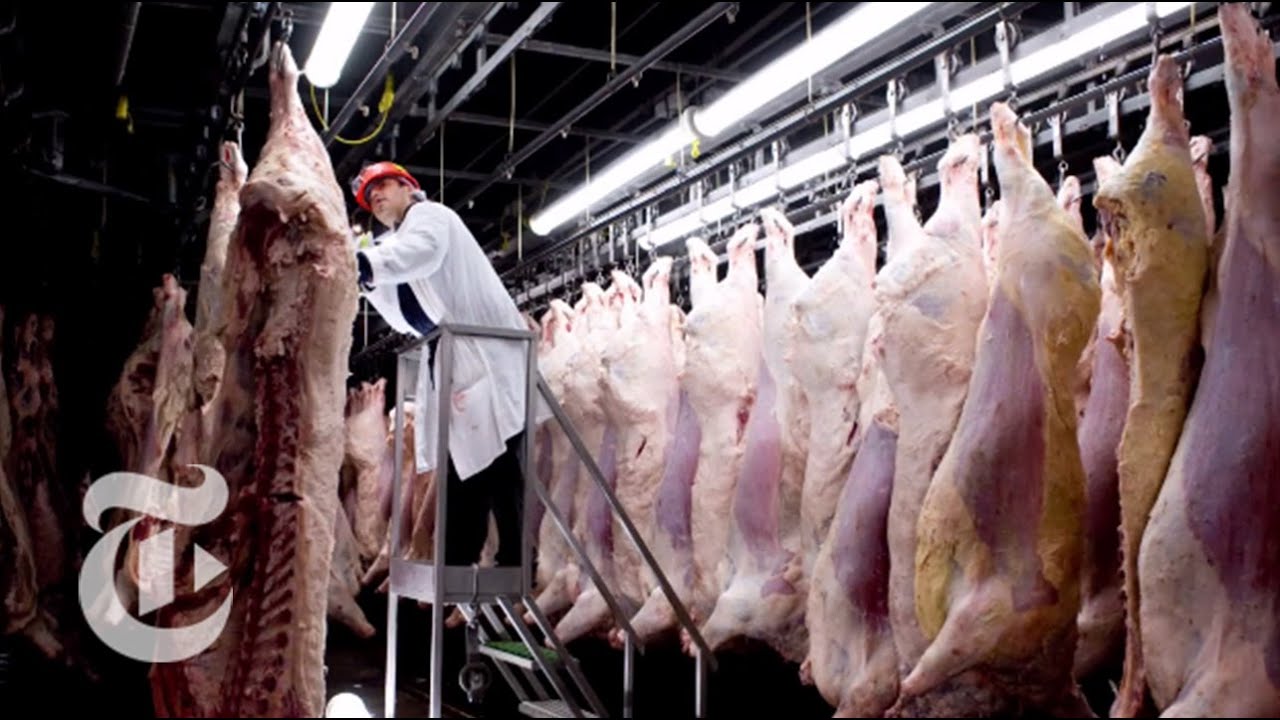 . Retro Report short film dated May 10, 2015, discussing the Jack in the Box outbreak and how it led to major changes in industry practices and government oversight of the food supply. (Duration: 11 mins 8 secs) |
Sen. Richard Durbin (D-IL), addressing a congressional hearing on food safety in 2006, described the outbreak as "a pivotal moment in the history of the beef industry."[31] James Reagan, vice president of Research and Knowledge Management at the National Cattlemen's Beef Association (NCBA), said that the outbreak was "significant to the industry" and "the initiative that moved us further down the road [of food safety] and still drives us today."[32] David Acheson, a former U.S. Food and Drug Administration Associate Commissioner for Foods, recently told Retro Report that "Jack in the Box was a wakeup call to many, including the regulators. You go in for a hamburger with the kids and you could die. It changed consumers' perceptions and it absolutely changed the behaviors of the industry."[33]
As a direct result of the outbreak:
- E. coli O157:H7 was upgraded to become a reportable disease at all state health departments.[34]
- The Food and Drug Administration (FDA) increased the recommended internal temperature for cooked hamburgers from 140 °F (60 °C) to 155 °F (68 °C).[5][34]
- The USDA's Food Safety and Inspection Service (FSIS) introduced safe food-handling labels for packaged raw meat and poultry retailed in supermarkets, alongside an education campaign alerting consumers to the risks associated with undercooked hamburgers. [5][34] The labels and the education campaign came with criticism and objection from the industry.[8]
- The FSIS introduced testing for E. coli O157:H7 in ground meat.[5]
- The United States Department of Agriculture (USDA) reclassified E. coli O157:H7 as an adulterant in ground beef.[35]
- The USDA introduced the Pathogen Reduction and Hazard Analysis and Critical Control Points (PR/HACCP) program.[5][36][35][37]
- The NCBA created a task force to fund research into the reduction of E. coli O157:H7 in cattle and slaughterhouses.[5]
- Jack in the Box completely overhauled and restructured their corporate operations around food safety priorities, setting new standards across the fast food industry.[32]
- Roni Rudolph, mother of Lauren Rudolph, and many other parents of affected children formed STOP Foodborne Illness (formerly Safe Tables Our Priority, or S.T.O.P.), a national non-profit organization dedicated "to prevent[ing] Americans from becoming ill and dying from foodborne illness" by advocating for sound public policy, building public awareness, and assisting those impacted by foodborne illness.[38]
- Parents of the affected children played key roles in spreading awareness and advocating for change – speaking directly to President Bill Clinton, meeting with Vice President Al Gore, testifying before the Clinton Healthcare Task Force, working with the Secretary of Agriculture, and discussing food safety issues with lawmakers in Washington, D.C.[39][40]
- Dr. Darin Detwiler, who lost his son, Riley, to E. coli and hemolytic-uremic syndrome during the outbreak, later served as a regulatory policy advisor to the USDA for meat and poultry inspection. Dr. Detwiler became a professor of Food Policy and the Director of Regulatory Affairs of Food and Food Industry at Northeastern University.[41] In 2018, 25 years after his son's death in the outbreak, Dr. Detwiler received the Food Safety Magazine "Distinguished Service Award" for 25 years of contribution to food safety and policy.[42]
- Jack in the Box launches an ad campaign which brought back original company mascot Jack as savvy no-nonsense businessman who goes to get revenge on the executives that blew him up in 1980. This campaign was intended to convince the public that they were no longer the company plagued by the food safety crisis.
See also


References
- ^ Schlosser 2001, p. 198....
duck 9 22

:{1993 Jack in the Box E. coli outbreak - Wikipedia:(style="margin:0px;padding:0px;border:0px;font-style:inherit;font-variant:inherit;font-weight:inherit;font-stretch:inherit;vertical-align:top;display:inline-block;max-width:100%;overflow:hidden;text-overflow:ellipsis;white-space:nowrap"):}:
However, the Jack in the Box fast-food chain knew about but disregarded Washington state laws which required burgers to be cooked to 155 °F (68 °C), the temperature necessary to completely kill E. coli. Instead, it adhered to the federal standard of 140 °F (60 °C).
:{Fast Food Nation: Chapter 9: What's in the Meat Summary & Analysis:(style="margin:0px;padding:0px;border:0px;font-style:inherit;font-variant:inherit;font-weight:inherit;font-stretch:inherit;vertical-align:top;display:inline-block;max-width:100%;overflow:hidden;text-overflow:ellipsis;white-space:nowrap"):}:
Although fast-food companies like White Castle, on the east coast, helped to destigmatize hamburger meat after the Second World War, problems still arose at fast-food outfits, including the notable Jack in the Box E. coli scandal of 1993, in which Jack in the Box employees accidentally served undercooked hamburgers that were laced with E. coli.
:{Fast Food Nation Summary: 7 Best Lessons From Eric Schlosser - Growth.me:(style="margin:0px;padding:0px;border:0px;font-style:inherit;font-variant:inherit;font-weight:inherit;font-stretch:inherit;vertical-align:top;display:inline-block;max-width:100%;overflow:hidden;text-overflow:ellipsis;white-space:nowrap"):}:
In 1970, Americans spent about $6 billion on fast food; in 2000, they spent more than $110 billion. Americans now spend more money on fast food than on higher education, personal computers, computer software, or new cars. They spend more on fast food than on movies, books, magazines, newspapers, videos, and recorded music—combined.
:{Jack in the Box E. coli Outbreak - Food Safety News:(style="margin:0px;padding:0px;border:0px;font-style:inherit;font-variant:inherit;font-weight:inherit;font-stretch:inherit;vertical-align:top;display:inline-block;max-width:100%;overflow:hidden;text-overflow:ellipsis;white-space:nowrap"):}:
It traced the source of their illnesses back to E. coli O157: H7 bacteria that had contaminated hamburger patties sold at area Jack in the Box restaurants. In the following weeks, Idaho,...
:{Jack in the Box and the Decline of E. coli | Food Safety News:(style="margin:0px;padding:0px;border:0px;font-style:inherit;font-variant:inherit;font-weight:inherit;font-stretch:inherit;vertical-align:top;display:inline-block;max-width:100%;overflow:hidden;text-overflow:ellipsis;white-space:nowrap"):}:
Up until 1993, major players in the beef and fast food industry — including Jack in the Box CEO Robert Nugent — had still never heard of E. coli. "The more I looked into E. coli, the more I...
:{History of Fast Food E. coli Outbreaks is Long and Varied:(style="margin:0px;padding:0px;border:0px;font-style:inherit;font-variant:inherit;font-weight:inherit;font-stretch:inherit;vertical-align:top;display:inline-block;max-width:100%;overflow:hidden;text-overflow:ellipsis;white-space:nowrap"):}:
Food poisoning outbreaks that are linked to fast food have occurred in the past. Most of these outbreaks have been linked to raw vegetables, primarily raw sprouts, although the very first serious...
:{How The Jack In The Box E. Coli Outbreak Changed The Way Food ... - MSN:(style="margin:0px;padding:0px;border:0px;font-style:inherit;font-variant:inherit;font-weight:inherit;font-stretch:inherit;vertical-align:top;display:inline-block;max-width:100%;overflow:hidden;text-overflow:ellipsis;white-space:nowrap"):}:
Mar 15, 2022The HACCP Was Formed To Inspect Meat Better. Following the Jack in the Box E.coli outbreak in 1993, the USDA knew that there had to be a massive change to how meat and meat products were inspected ...
:{Fast Food Nation: The Dark Side of the All-American Meal - eNotes:(style="margin:0px;padding:0px;border:0px;font-style:inherit;font-variant:inherit;font-weight:inherit;font-stretch:inherit;vertical-align:top;display:inline-block;max-width:100%;overflow:hidden;text-overflow:ellipsis;white-space:nowrap"):}:
After a deadly and widespread outbreak of E. coli from Jack in the Box hamburgers in 1993, regulatory procedures were somewhat strengthened; however, the industry placed the blame on those who ...
:{David Theno Character Analysis in Fast Food Nation | LitCharts:(style="margin:0px;padding:0px;border:0px;font-style:inherit;font-variant:inherit;font-weight:inherit;font-stretch:inherit;vertical-align:top;display:inline-block;max-width:100%;overflow:hidden;text-overflow:ellipsis;white-space:nowrap"):}:
David Theno Character Analysis. Hired by Jack in the Box to make food safer after an E. coli outbreak in the 1990s, David Theno advocates a series of small reforms in the meatpacking process and by workers in fast-food restaurants, in order to ensure that beef is clean and is prepared at temperatures high enough to burn off disease-causing ...
:{History of Fast Food E. coli Outbreaks is Long and Complicated:(style="margin:0px;padding:0px;border:0px;font-style:inherit;font-variant:inherit;font-weight:inherit;font-stretch:inherit;vertical-align:top;display:inline-block;max-width:100%;overflow:hidden;text-overflow:ellipsis;white-space:nowrap"):}:
Aug 19, 2022There have been many Salmonella, E. coli, and cyclospora outbreaks associated with those restaurants. The main fast food restaurant chains in this country include Wendy's, McDonald's, Jimmy John's,...