TIPPING POINTS DASHBOARD
Tipping Points Overview
A lot of attention is being devoted to potential climatic “tipping points.” The conversation is not new, as anecdotally demonstrated by this Stephen Hawking quote from 2006:
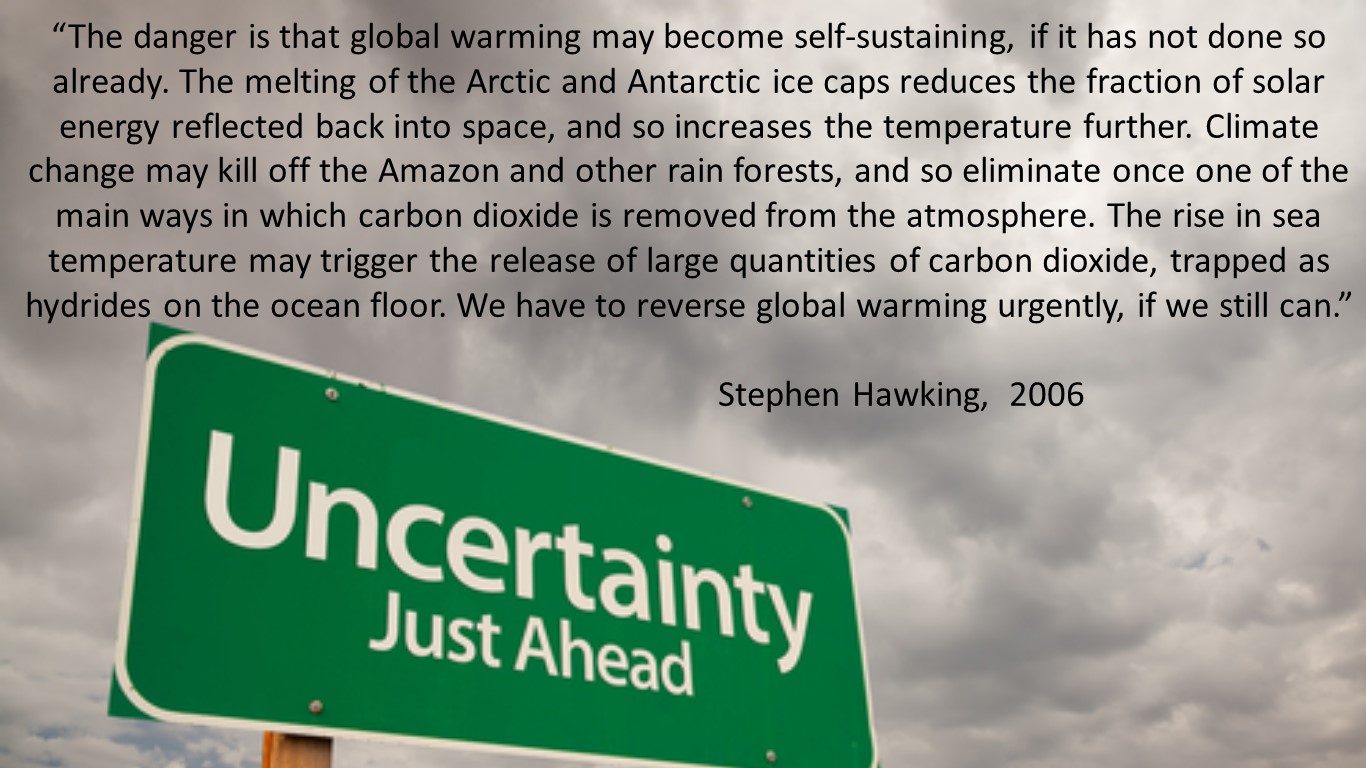
Hawking is using the concept of a “tipping point” in the most conventional way, e.g. as a change that results in a positive feedback that could substantially accelerate the rate of climate change. In addition to Hawking’s list, for example, the melting of under-sea methane clathrates would accelerate warming (potentially catastrophically) via the CH4 and CO2 added to the atmosphere. These are the “macro” tipping points that most commonly show up in lists of tipping points, and which have been considered so poorly understood and uncertain in their timing and impacts that they have been largely left out of climate models. Most “macro” tipping points, for example, were until relatively recently considered unlikely to occur before 3oC of average global temperature change. That is changing.
As the discussion of tipping points grows, the conversation it is getting more granular. The terms “tipping phenomena” and “tipping elements” are more frequently being used as opposed to the more binary “tipping points.” And in a major 2024 paper the authors differentiate between:
- “Macro tipping,” involving inherently large-scale tipping elements like the AMOC.
- “Propagating tipping” in which localized tipping elements can add up to “macro tipping,” e.g. the localized tipping of individual glaciers in Antarctica that ultimately lead to the “macro tipping” of the West Antarctic Ice Sheet.
- “Clustered tipping” involving less spatially linked tipping elements like coral reefs that are responding to the same driving elements, in this case ocean warming, sea level rise, and acidification.
- “Societal impact tipping,” e.g. the loss of Himalayan glacier dry-season runoff and the severe societal impacts that has downstream.
Note that these four categories of “tipping elements” could ultimately include a very long list of such elements, as suggested in this figure from Lenton et. al 2023.
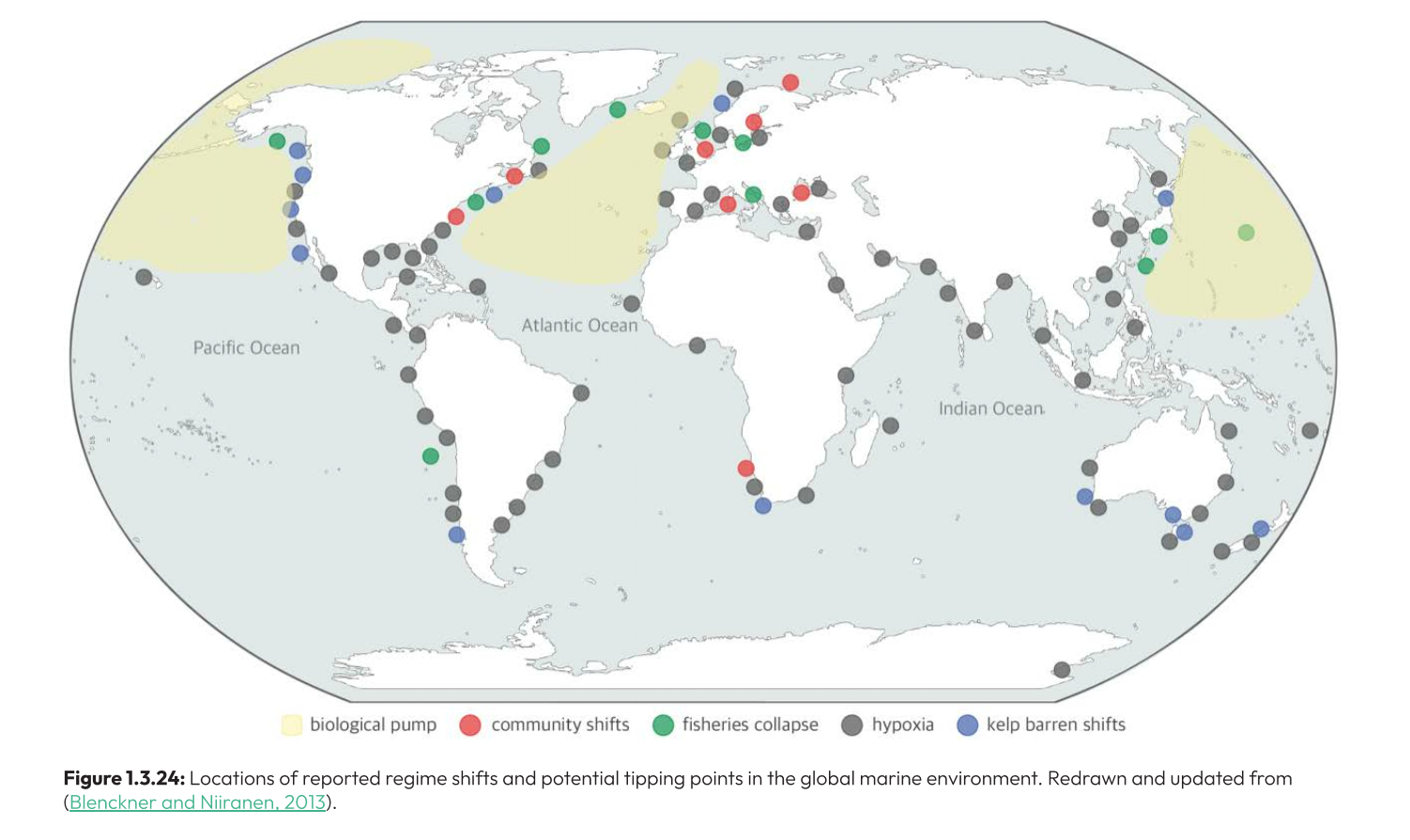
The inclusion of “societal impact tipping” points could substantially confuse the whole meaning of the term.
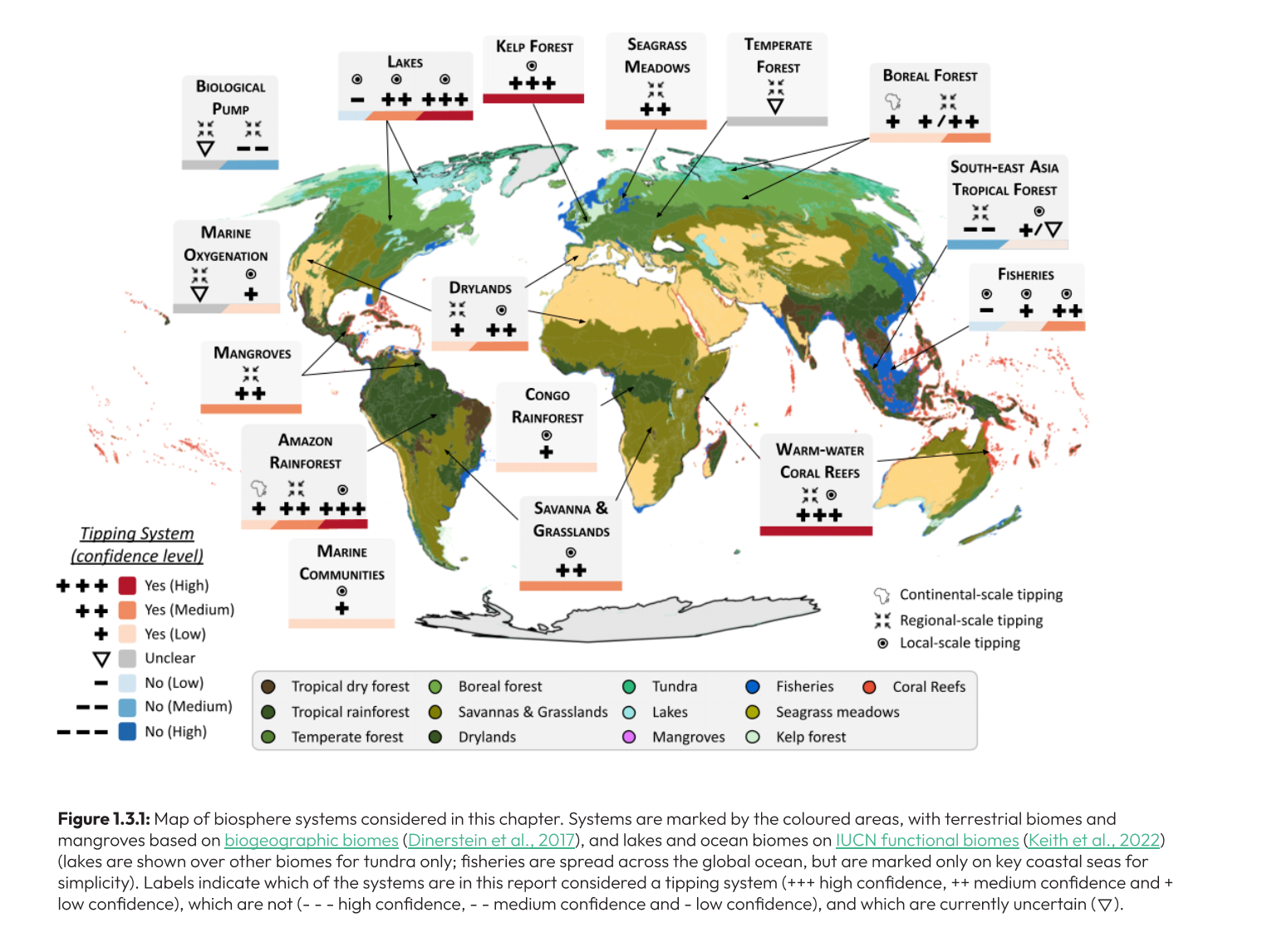
It is worth nothing that there is ongoing evolution with regard to what variables merit being considered “tipping points.” Lenton et al’s 2023 500 page report on tipping points ranks the level of scientific confidence in several categories of potential tipping points, which is likely to significantly impact the “tipping points” conversation going forward:
For the cryosphere:
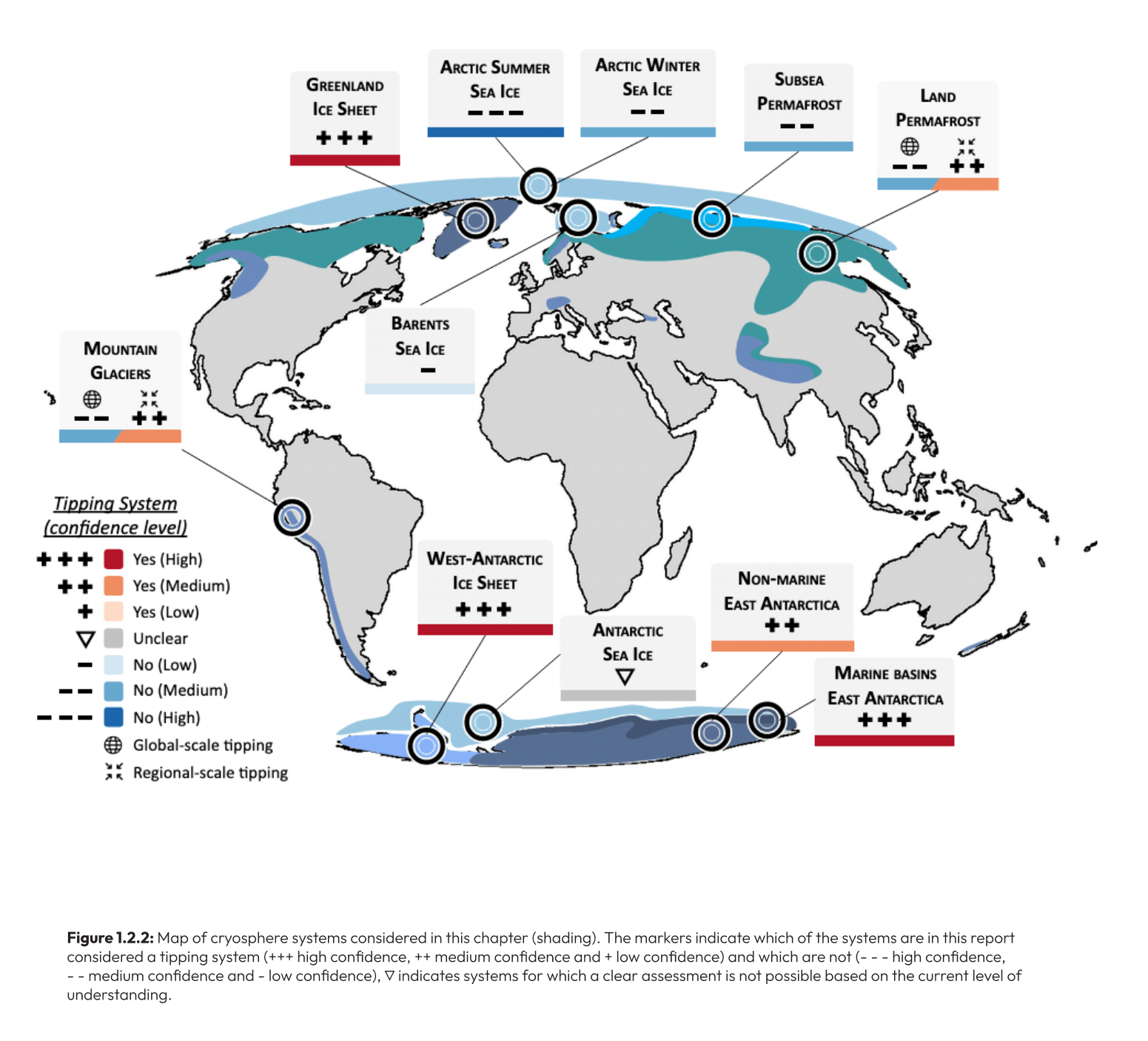
Note that Arctic sea ice is categorized as NOT being a tipping system, reflecting a substantial change in scientific thinking regarding whether an ice-free arctic would substantially accelerate climate change due to albedo and other effects.
For the biosphere:
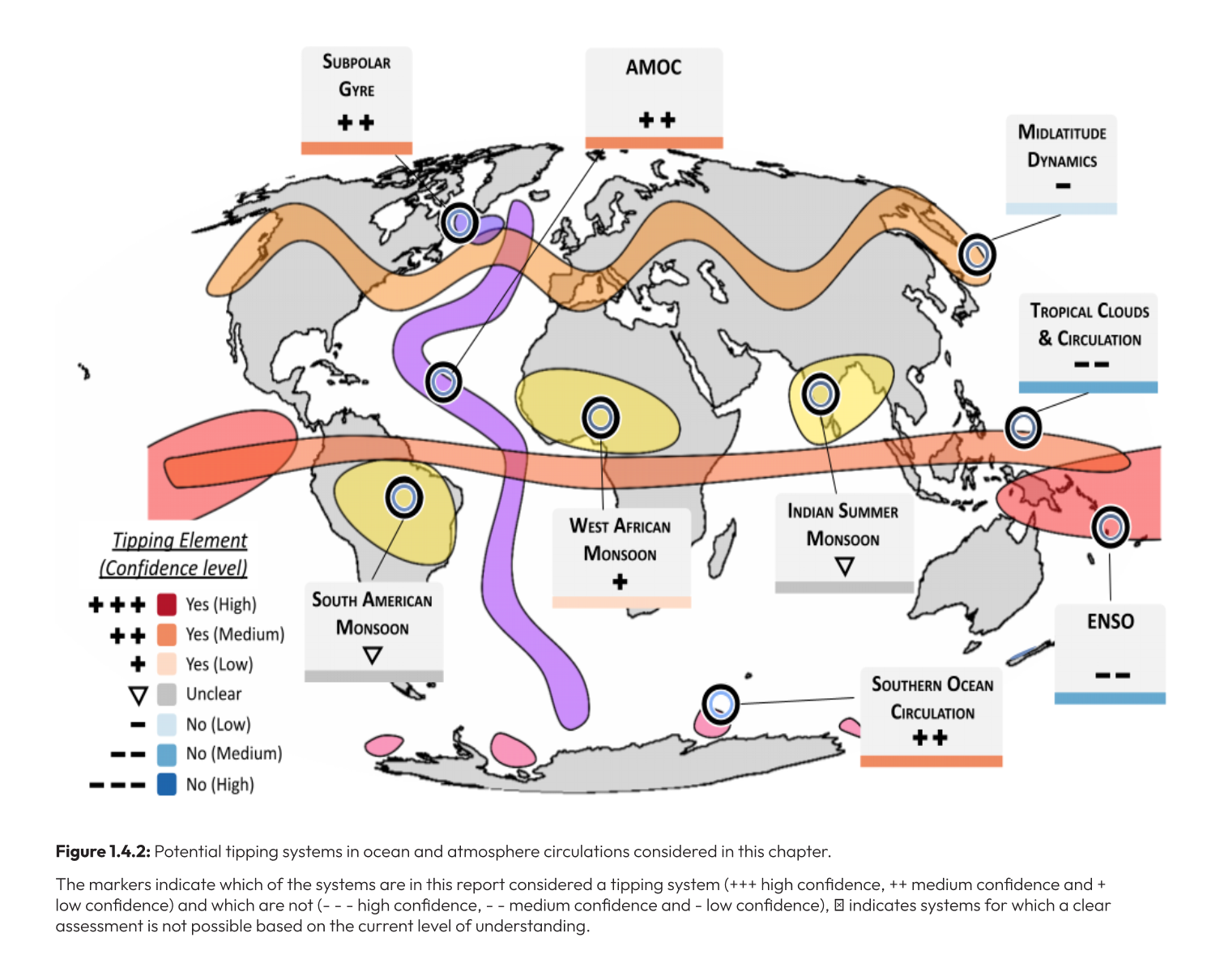
For ocean and atmospheric circulation:
The tipping points conversation remains dominated, however, by graphics like the one below, illustrating 17 tipping points and their potential cascading impacts, from the OECD’s major 2022 report on tipping points. Other graphics in common use range from 12 to 25 tipping points.
:-: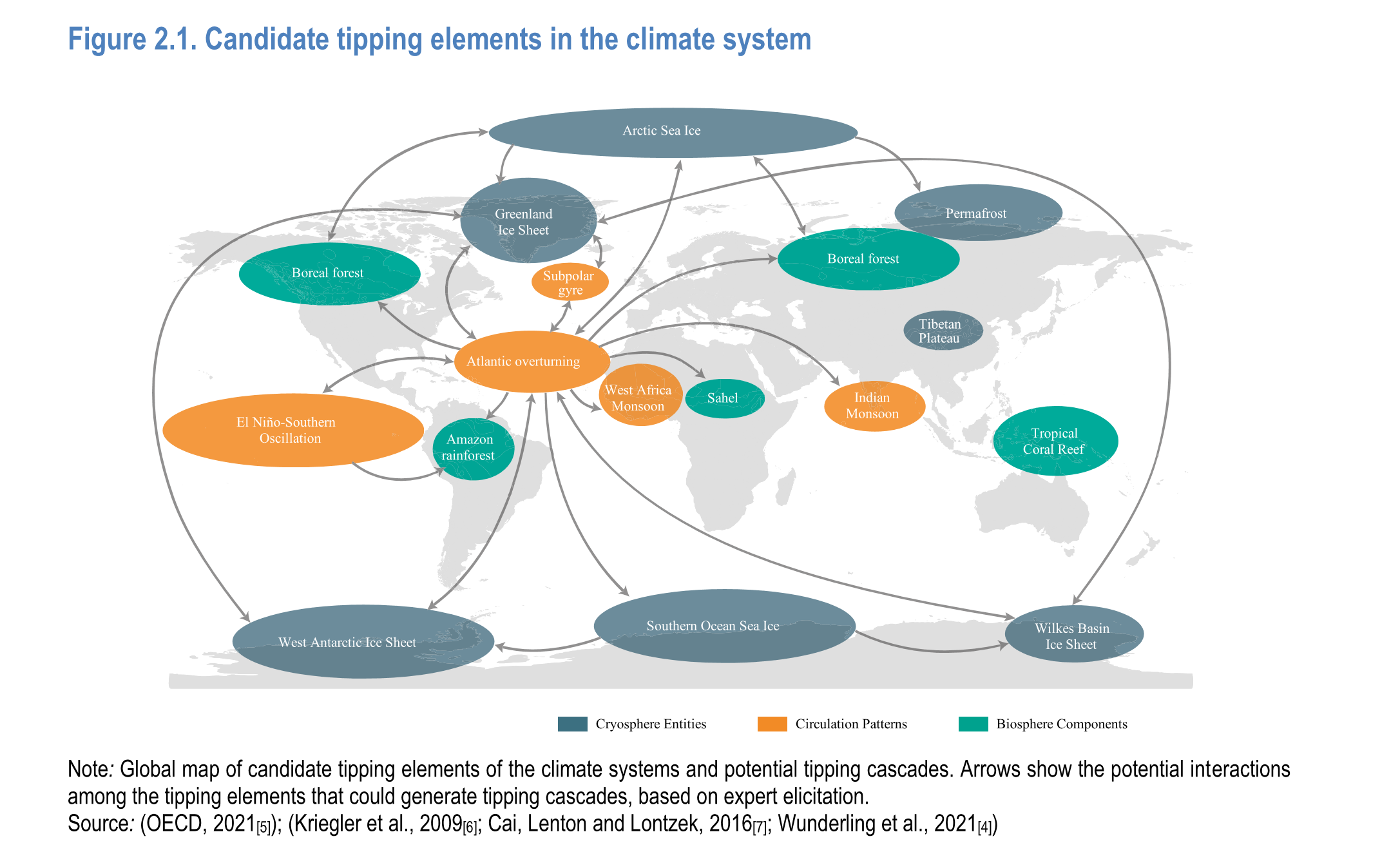
One way to think about the relative importance of individual tipping points to the overall climate system could be by the number of other tipping points a given tipping point is causally linked to via “tipping cascades.” In the case of the diagram above, for example, that would suggest that the “Atlantic overturning,” generally characterized as the AMOC, might be single most important tipping point. In reality, however, any of these tipping points, as per the original definition above, could have big implications for a substantial fraction of the Earth’s human population.
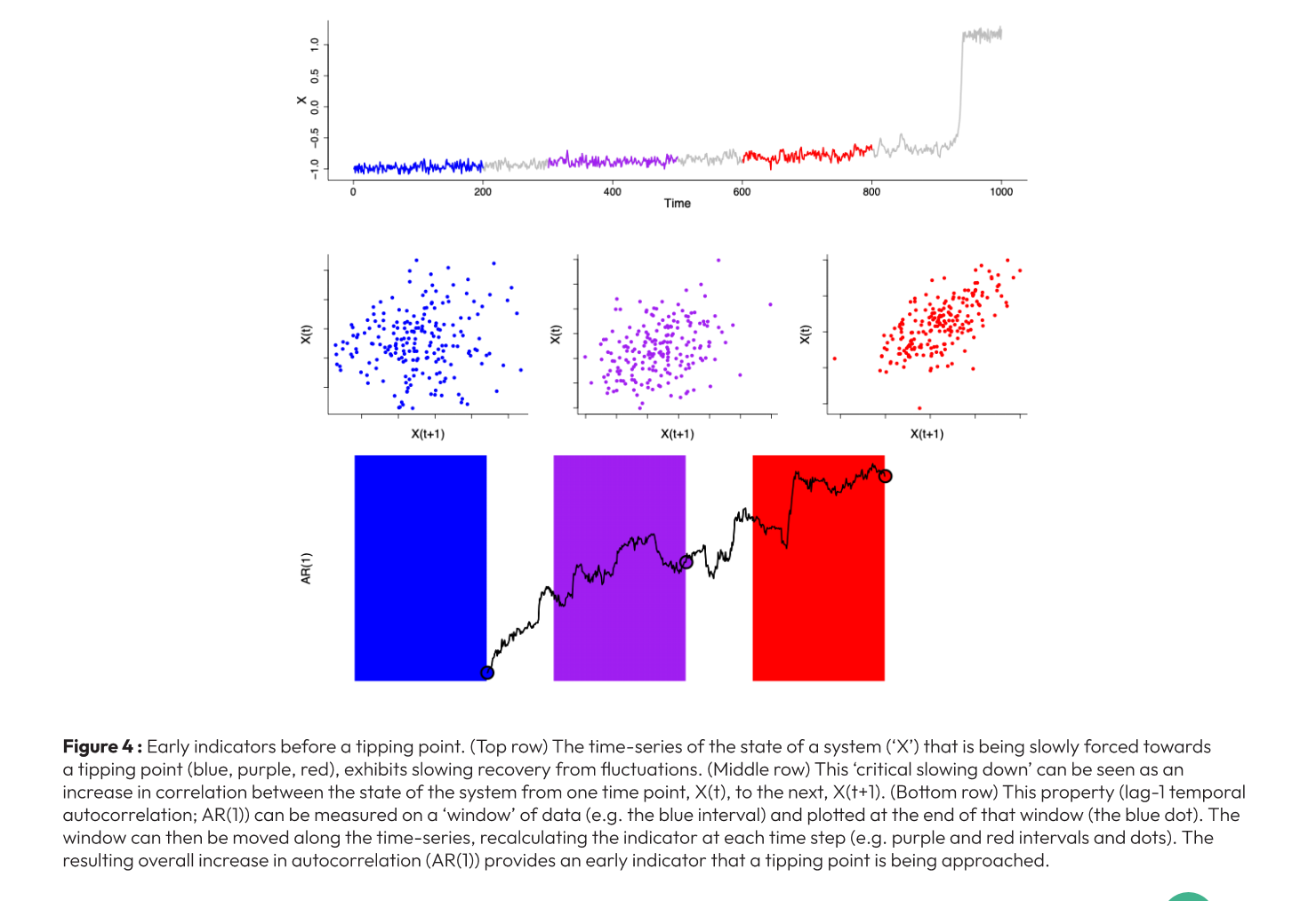
While most of the identified tipping points have a quite different set of drivers and observational metrics associated with them, scientists are looking for common elements that might be observed across tipping points, e.g. and increase in the correlation of observational data as shown in this graphic:
A critical but often forgotten point is that the entire conversation around tipping points ultimately comes back to a question of “climate sensitivity.” The more sensitive the climate to anthropogenic forcing, the more likely and near-term the triggering of tipping points becomes. This is important because there are good reasons to think that we may be systematically under-estimating climate sensitivity, which is generally based on past examples of how average global temperature has responded to “natural” forcings over thousands to tens of thousands over years. But anthropogenic forcing exceeds past examples of natural forcing by up to two orders of magnitude. Under those circumstances, it wouldn’t be at all surprising to find that historically-based climate sensitivity estimates are missing key aspects of how the climate system will respond to such powerful anthropogenic forcing. This is one of the biggest sources of potentially under-estimated climate risks in climate models.
Tipping Point Literature Collections
- I:TippingPoints
- S - Climate Change Tipping Points
- N - Tipping Points
- V - Tipping Points
- I:RelatingAGTtoTippingPoints
- I:Physical/BiologicalTippingPoints
- I:RealTimeTrackingviaEarthObservation
- I:ClimateFeedbacks
- I:PlanetaryBoundaries (Deep Dive)
Profiling Individual Tipping Points
As already noted it’s not intuitively obvious what to include in any given list of tipping points, and many choices exist. For current purposes we’ll focus on this list already introduced above, taken from the OECD’s major tipping points report in 2022:
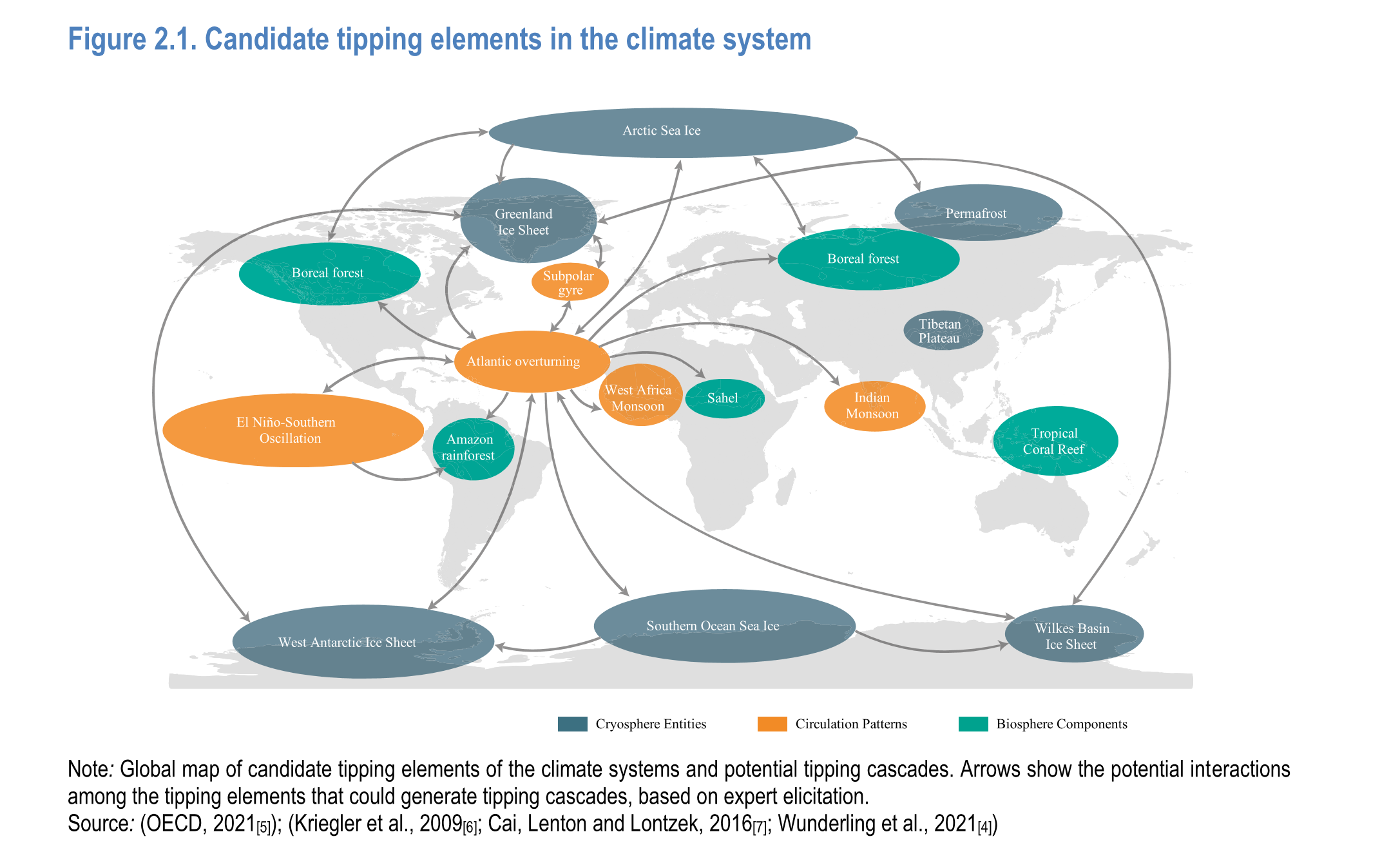
For each tipping point we’ll profile key information including:
- Is it really a tipping point, and why?
- Its potential implications
- Its key uncertainties and questions
- How it is being monitored and evaluated
We’ll also point to a literature collection specific to the tipping point in question.