EARTHLY MINERALS 49mb
ALSO SEE:
49). LINK to
“What are rare earth minerals?”:
https://bra.in/3qZk3d
42). The SILENT Language of CELLS MindMap:
https://bra.in/8jbVkB
738). MindMap:
SECRET Lands and SECRET Maps:
https://bra.in/5j9aAR
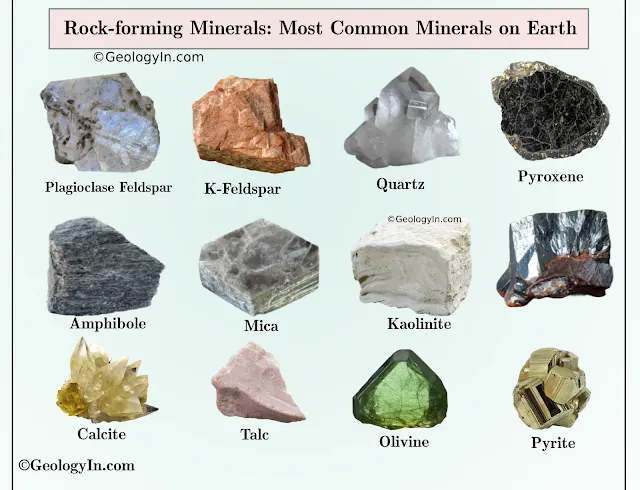
The Earth contains approximately 5,500 to 5,800 recognized mineral species, with the silicate group comprising over 90% of the crust.
The most abundant minerals are
- the feldspars
- (plagioclase and alkali feldspar),
- which make up roughly 52%
- of the crust,
- followed by quartz at 12%,
- pyroxenes at 11%, and
- amphiboles,
- micas, and
- clays
- at lower percentages.
Major Mineral Groups
- Silicates: The dominant group includes
- quartz,
- feldspar,
- olivine,
- pyroxene,
- amphibole, and
- mica.
- These form the bulk of
- igneous,
- metamorphic, and
- sedimentary rocks.
- Carbonates:
- Primarily calcite and
- dolomite,
- these form limestones and
- marble and
- are crucial for sedimentary rock formations.
- Oxides: Include
- hematite and
- magnetite (iron ores),
- as well as corundum (ruby/sapphire) and
- bauxite (aluminum source).
- Sulfides: Common metal-bearing minerals like galena (lead),
- chalcopyrite (copper), and
- pyrite (iron sulfide).
- Halides: Most notably halite (rock salt).
- Native Elements: Pure elements such as
- gold,
- silver,
- copper,
- graphite, and
- diamond.
Abundance by Crustal Layer
In the continental crust, oxygen and silicon are the most abundant elements, driving the prevalence of silicate minerals.
The oceanic crust is rich in basalt minerals like olivine, pyroxene, and plagioclase.
The Earth's core is primarily composed of iron and nickel, though these are not typically classified as surface minerals.
AI-generated answer. Please verify critical facts.
search?q=minerals+of+the+earth&conversation=09d4d69a5d4baab9d56ff4b71953b5f6a0ec
Friday, November 20, 2026, 7:49 PM
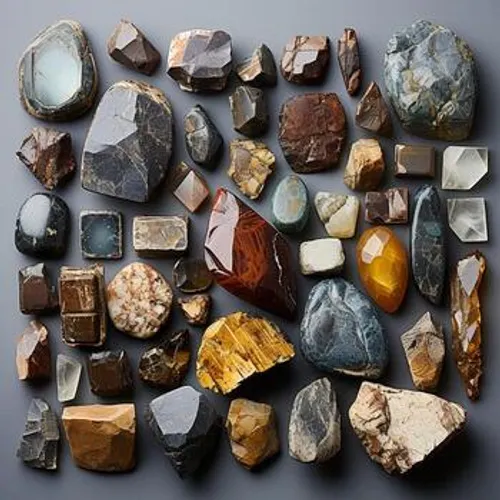
gold, silver, rough diamonds, bauxite, hematite, pyrolusite, galena, pyrite, chromite, lepidolite, and ...
Thursday, November 26, 2026, 9:47 PM