Evolving: ArchiMate 4
Intention
ArchiMate 4 is not just an update—it’s a paradigm shift. It redefines enterprise architecture as:
- Goal-driven, not layer-bound.
- Human-centric, not tool-centric.
- Simple, yet powerful enough for complex, evolving enterprises.
Still Unreleased
No reference implementation yet (i.e. Archi); some third party tool vendors (e.g. Visual Paradigm) are moving forward regardless. Final specification is expected 2H 2026 with additional vendor support expected starting 4Q 2026.
Backwards-Compatible
- Existing models remain editable.
- No forced migration required.
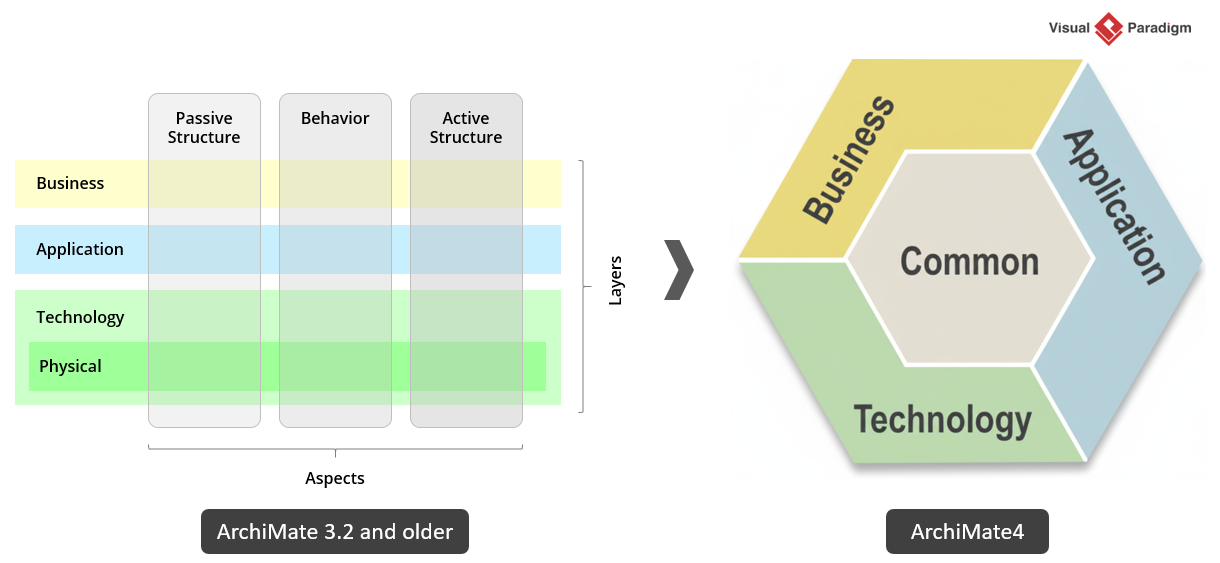
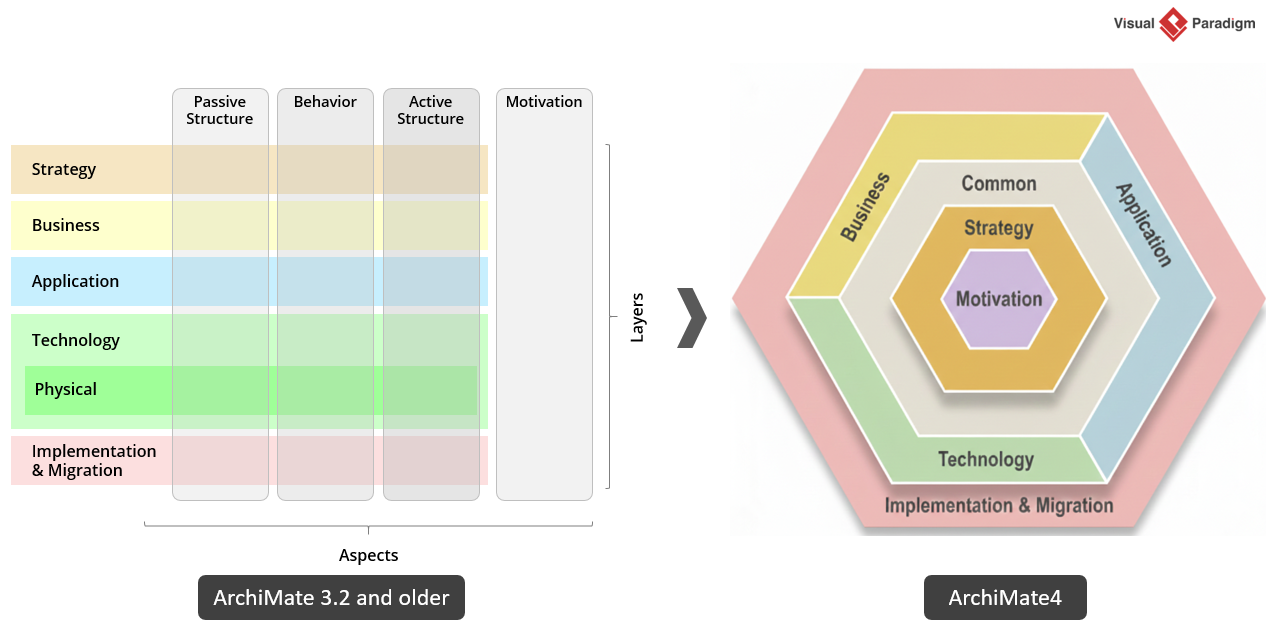
De-emphasizing Layers — Moving to Domains
- “Layer” is replaced by “Domain” – Reflects a more flexible, non-hierarchical view of architecture.
- Motivation Domain is now central—emphasizing that architecture is driven by goals, outcomes, and stakeholder needs.
- Seven Core Domains define the new landscape:
- Motivation Domain (Center) – Stakeholders, goals, drivers, and requirements.
- Strategy Domain – Strategic direction derived from motivation.
- Common Domain – Generic elements usable across all domains (e.g., Service, Process, Event).
- Business Domain – Organizational structure, customer interactions, value delivery.
- Application Domain – Applications, data, and service interactions.
- Technology Domain – Infrastructure, hardware, software platforms.
- Implementation and Migration Domain – Evolution, rollout, and transition planning.
Common Domain: De-emphasizing Business, Application, Technology Layer Distinctions
- Active Structure Elements: Path, Role, Collaboration
- Behaviour Elements: Function, Service, Process, Event
- Composite Elements: Grouping, Location
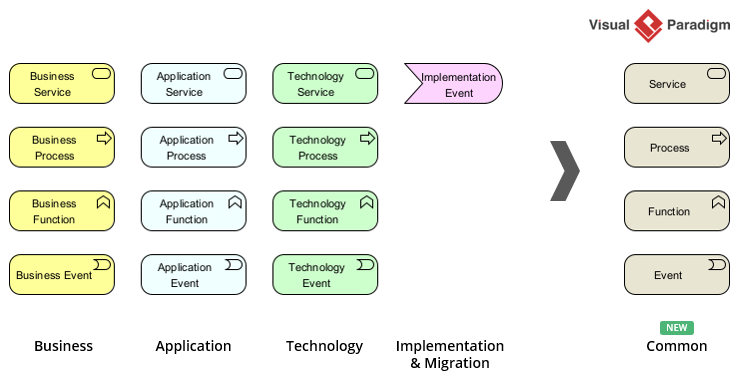
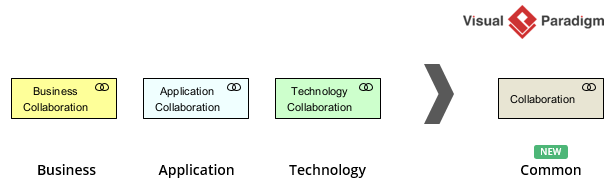
Move to more of a semantic or context-based approach to these elements, putting the focus on the relationships rather than inherent context within the element itself.
Example: A Service can be invoked by a Business Actor, an Application Component, a Technology element, etc. etc. rather than just being, previously, a Business Service or Application Service
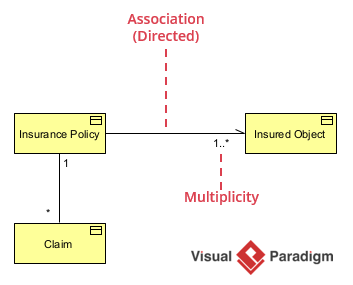
Relationship Multiplicity
A familiar concept in UML and ERD modelling, permitting relationships to define multiplicity / cardinality
Simplification / Deprecations
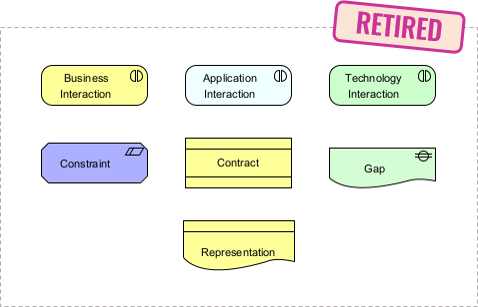
In addition to the moving of key elements to the Common Domain, some syntax / elemtns have been removed completely. The major one is the Composition relationship, which will instead require use of Aggregation (part-of) or Grouping (collections).
This is impactful typically in Capability Modelling, where previously tools defaulted to Collaboration relationships between L1/L2, L2/L3, and L3/L4 Capabilities.
As well, less commonly used elements are also being removed, including:
| Retired Element | Recommended Replacement | Migration Tip |
|---|---|---|
| Business Interaction | Collaboration or Service | Use Collaboration for interaction between roles |
| Application Interaction | Collaboration or Service | Use Service for application-level interactions |
| Technology Interaction | Collaboration or Service | Same as above |
| Constraint | Specialize Requirement | Model as a constraint on a goal or deliverable |
| Contract | Specialize Business Object | Represent as a formal agreement |
| Gap | Assessment outcome or Deliverable | Use to document current vs. target state |
| Representation | Specialize Business Object or Data Object | Model as a data format or artifact |