ISS
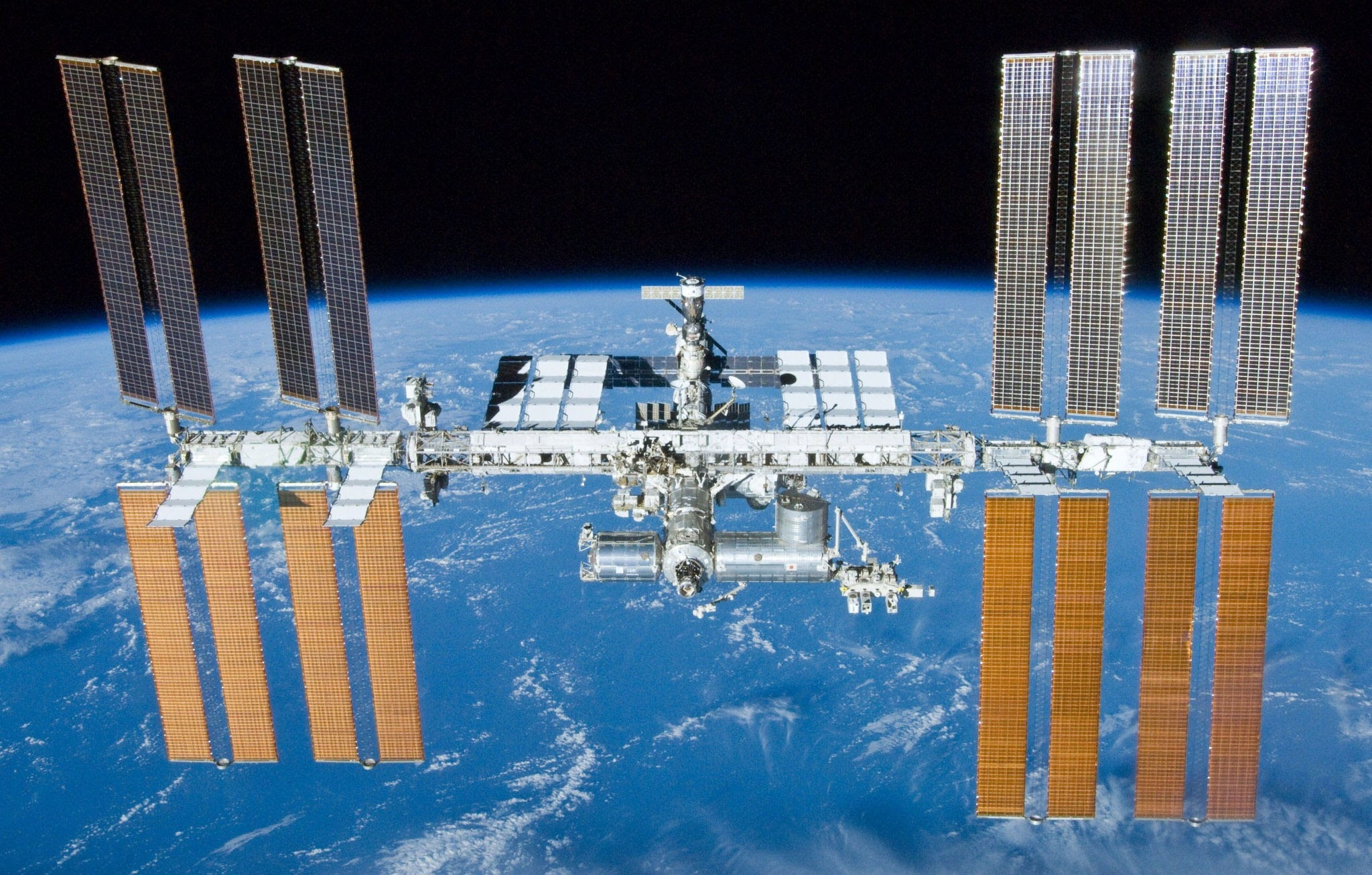
The architecture of the International Space Station (ISS) is a complex and modular design that has evolved over decades of planning, construction, and international collaboration. Here are the key aspects of its architecture:
Modular Design
The ISS is constructed using a modular approach, which allows for the addition or removal of modules to adapt to new requirements and technologies. This modularity provides flexibility and enables the station to be expanded or upgraded over time without disrupting its overall functionality[1][5][11].
Major Modules
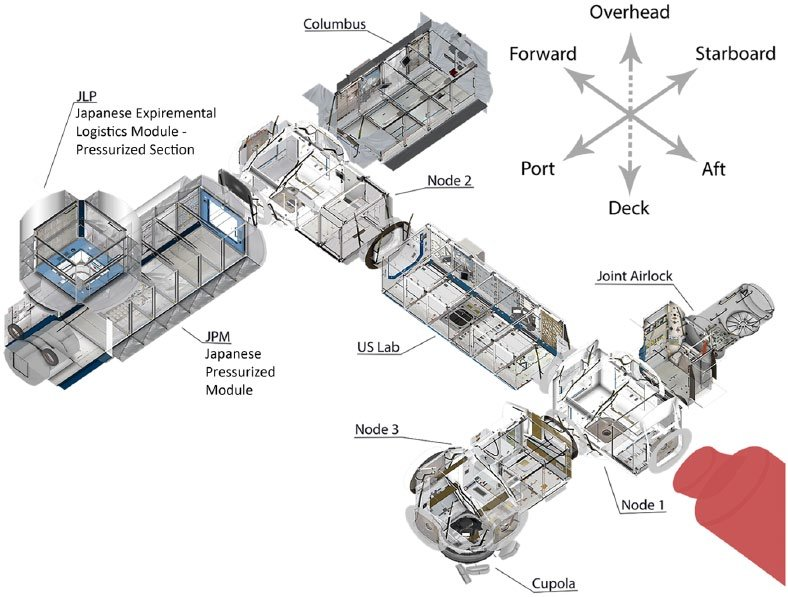
The ISS consists of several major modules, each serving specific functions:
- Zarya: The first module launched in 1998, providing fuel storage, battery power, and docking capabilities[10][11].
- Unity (Node 1): Connects various modules and provides docking ports[10][11].
- Zvezda: A Russian module launched in 2000, providing living quarters and life support systems[10][11].
- Destiny: The U.S. laboratory module launched in 2001, serving as the primary research facility for U.S. payloads[10][11].
- Harmony (Node 2): Launched in 2007, it connects the European and Japanese laboratory modules[10][11].
- Columbus: The European laboratory module launched in 2008[10][11].
- Kibō: The Japanese Experiment Module, launched in multiple flights between 2008 and 2009[10][11].
Truss Structure
The ISS features an Integrated Truss Structure that supports large solar panels and radiators. This truss system provides structural support and houses various systems necessary for the station's operation[11].
Docking and Berthing Ports
The ISS has multiple docking and berthing ports to accommodate visiting spacecraft, such as Soyuz, Progress, and commercial vehicles like SpaceX's Dragon and Boeing's Starliner. These ports facilitate crew rotations, resupply missions, and the addition of new modules[11].
Redundancy and Fault Tolerance
The design of the ISS incorporates redundancy and fault tolerance to ensure uninterrupted operation of critical systems. Essential systems, such as power generation, environmental control, and communication, have backup components to mitigate the impact of equipment failures[17].
International Collaboration
The ISS is a collaborative effort involving multiple space agencies, including NASA (United States), Roscosmos (Russia), ESA (Europe), JAXA (Japan), and CSA (Canada). This international partnership has been crucial in the station's construction, operation, and ongoing research activities[5][11][17].
Assembly and Construction
The ISS was assembled in orbit, piece by piece, over more than 40 missions. This approach was necessary due to the station's size and the limitations of existing launch vehicles. The assembly involved spacewalking astronauts and robotic arms, such as Canadarm2, to connect and install the various modules and components[10][11][13].
Habitability and Human Factors
The design of the ISS also considers the habitability and well-being of its crew. Modules are equipped with living quarters, laboratories, and recreational areas. Windows, such as those in the Cupola module, provide astronauts with views of Earth, which is important for their psychological well-being[7][8].
Future Developments
The ISS continues to evolve, with plans for additional modules and upgrades to extend its operational lifespan. For example, the Axiom Orbital Segment is expected to be added before the station is eventually de-orbited[11].
In summary, the architecture of the ISS is a testament to international cooperation, modular design, and the ability to adapt to new challenges and technologies in space exploration.
Citations:
[1] https://www.re-thinkingthefuture.com/architectural-community/a7505-an-overview-of-space-station-architecture/
[2] https://www.issnationallab.org/expedition-space-lab-design-a-space-station/
[3] https://www.pbs.org/spacestation/station/components.htm
[4] https://www.amazon.com.au/International-Space-Station-Architecture-Beyond/dp/0993072135
[5] https://www.nasa.gov/international-space-station/
[6] https://iss.com/fluorescence/modules-components
[7] https://www.architectural-review.com/essays/books/the-architectural-relevance-of-the-international-space-station
[8] http://www.spacearchitect.org/pubs/IAC-02-IAA.8.2.04.pdf
[9] https://www.space.com/16748-international-space-station.html
[10] https://en.wikipedia.org/wiki/Assembly_of_the_International_Space_Station
[11] https://en.wikipedia.org/wiki/International_Space_Station
[12] https://room.eu.com/community/international-space-station-architecture-beyond-earth
[13] https://www.esa.int/Science_Exploration/Human_and_Robotic_Exploration/International_Space_Station/Building_the_International_Space_Station3
[14] https://bookshopbyuro.com/products/international-space-station-architecture-beyond-earth
[15] https://www.issnationallab.org/about/iss-timeline/
[16] https://ui.adsabs.harvard.edu/abs/2002iaf..confE.841G/abstract
[17] https://newspaceeconomy.ca/2024/03/18/the-international-space-station-a-model-of-best-practices-in-space/