Change Readiness - Ordered v Complex
Change Readiness - Ordered
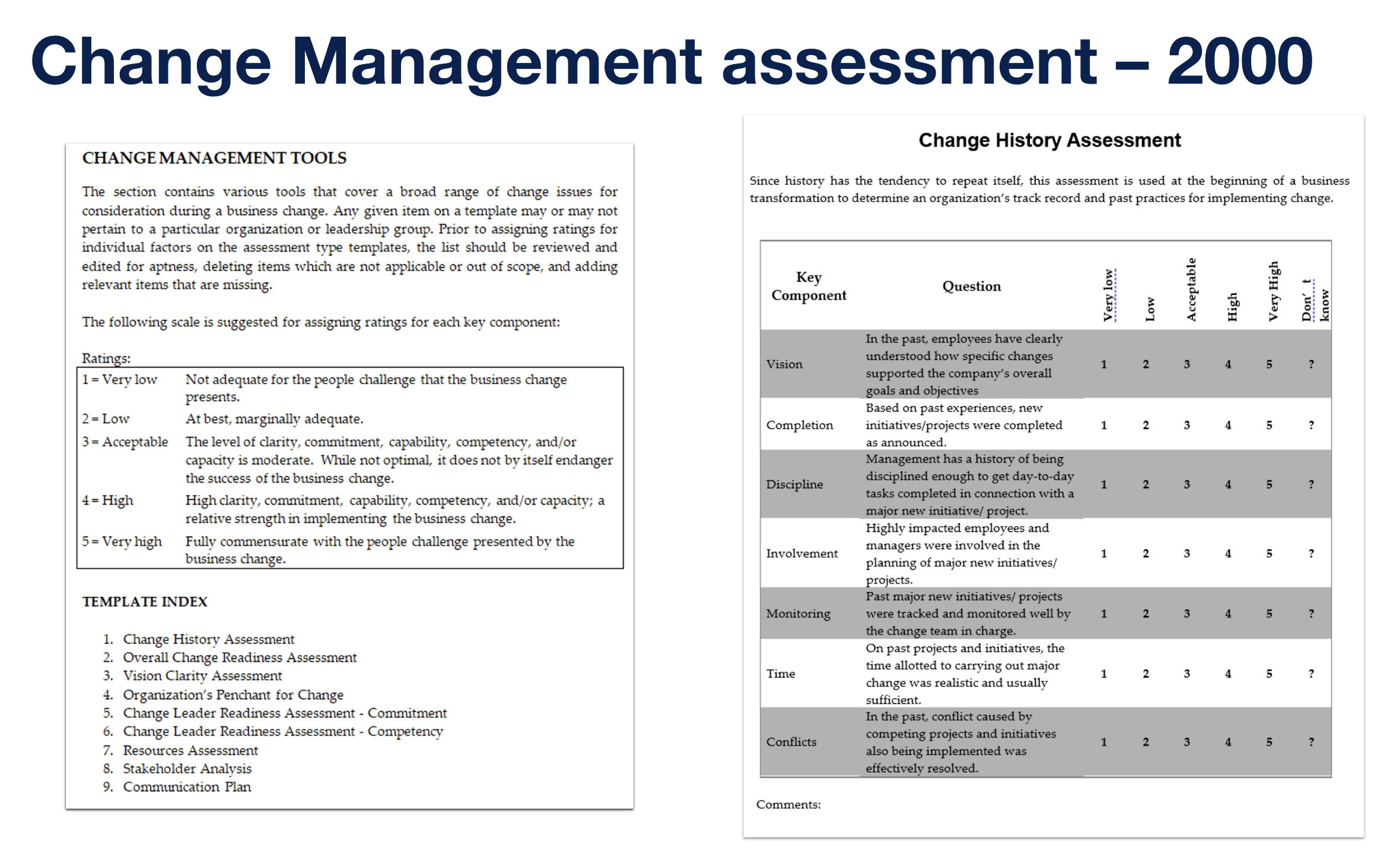
- 20 years ago, these were the templates I used in a Transformation project
- All were designed to collect opinions rated on a Likert scale
- Before initiating an org change, we typically conducted an assessment
- On the right is the Change History assessment form
Click here for enlarged view.
- Weakness of Change History Assessment form
- 7 key components based on biases of the survey designer
- Idealistic statements mean respondents can game the score
- While circled responses offered some indication, we actually paid more attention to the written comments
- They were much more informative and insightful
Change Readiness - Complex
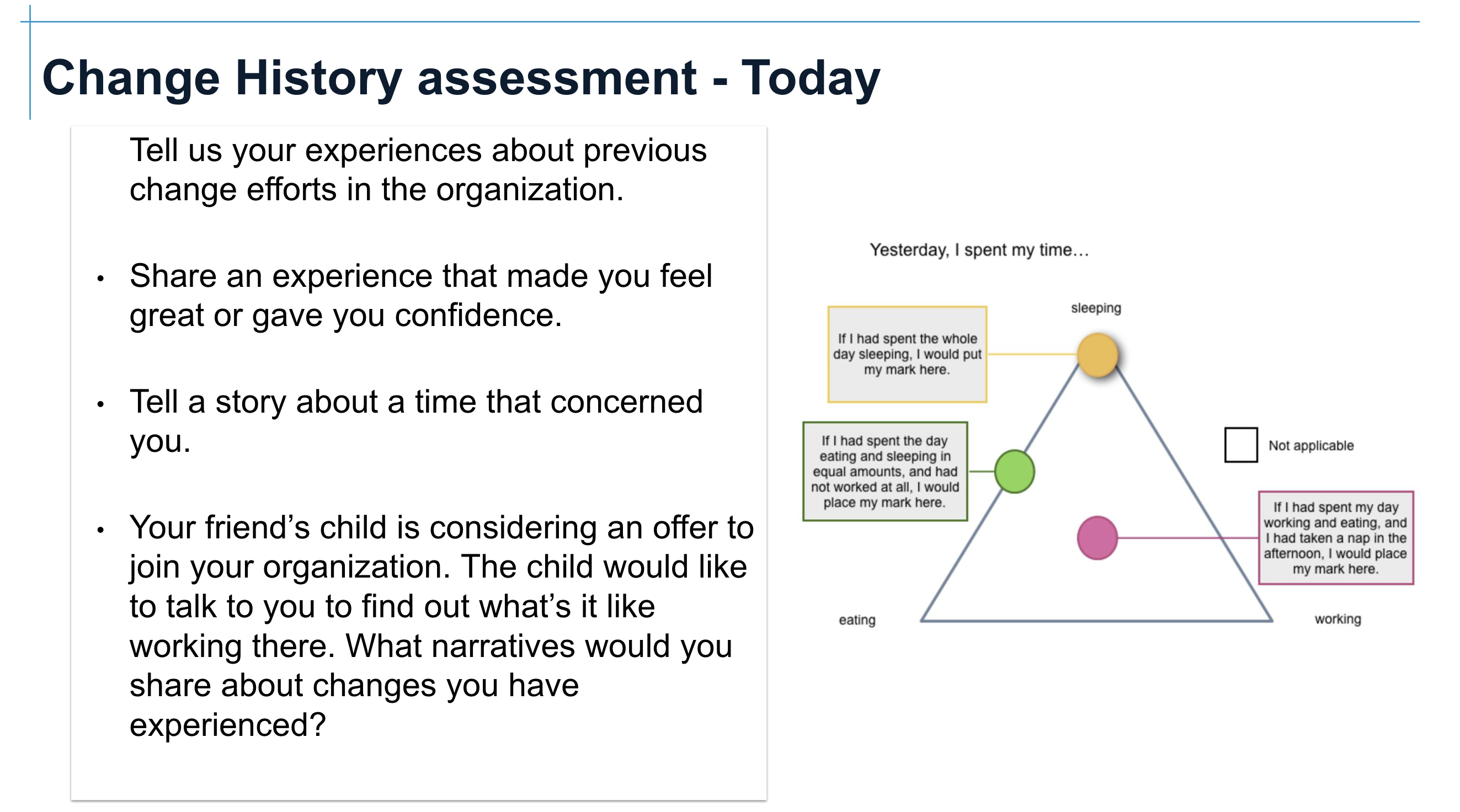
- I simply ask about experiences about previous change efforts
- To get the thinking juices flowing, I provided prompt questions
- The first 2 are straightforward
- The last one is a different way to prompt for a response
- What we get are the useful comments which are written on forms
- Except a lot more of them
- Except a lot more of them
- Respondents provide further meaning (signification) by locating their narrative within triangles
- The 3 elements are equally valued
- There is no preferred choice, no right or wrong answer
- A marker is clicked and dragged to a position in the triad that best reflects the experience
- The closer the marker is to any of the corners, the stronger that element is present in the narrative
- In this example, the marker is moved to denote the amount of time spent yesterday sleeping, eating, and working
- The 3 elements are equally valued
- Data collection is called Distributed Ethnography
- Analyze data using SenseMaker® Dashboard