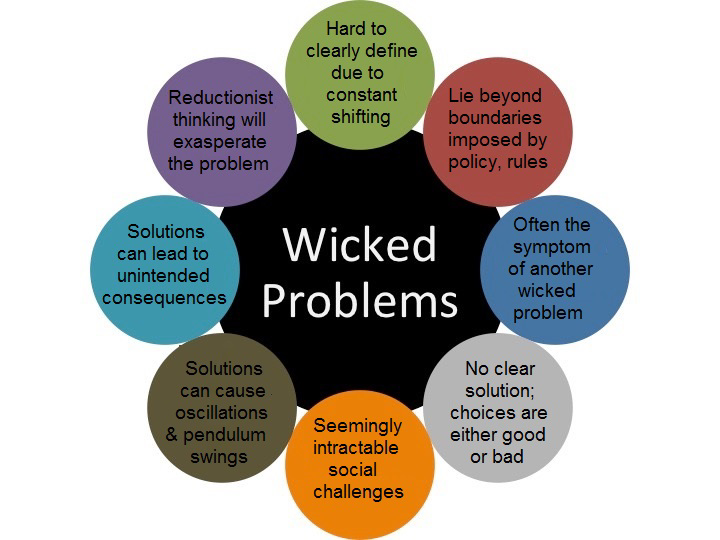
Wicked Problems
A wicked problem is a complex and challenging issue that is difficult to define, has multiple possible solutions, and lacks a clear or definitive answer.
- Coined by design theorists Horst Rittel and Melvin Webber in the 1970s, the term "wicked" is used to describe problems that are intricate, hard to solve, and often have no one-size-fits-all solution.
- A wicked problem resides in the Cynefin Complex system, not in an Order system.
- Inductive and deductive thinking don’t apply since if-then causal relationships don’t exist.
- Abductive thinking is used with diverse perspectives presenting varied and conflicting ideas about what they perceive the problem to be, what is causing it, and how to resolve it.
- Addressing wicked problems typically involves iterative, adaptive, and collaborative processes that acknowledge the limitations of finding a perfect solution.
- Stakeholder engagement, continuous learning, and experimentation are often necessary to make progress toward mitigating or managing wicked problems.
- The goal is not to "solve" them definitively but to develop strategies and approaches that help navigate the complexities and uncertainties associated with these challenging issues.
Characteristics of wicked problems include:
- Complexity: Wicked problems are intricate, involving numerous interconnected factors and variables that make them difficult to fully understand and analyze.
- Uncertainty: Wicked problems often lack clear boundaries, and the information available may be incomplete, contradictory, or uncertain.
- Ambiguity: The nature of wicked problems can be interpreted differently by different stakeholders, leading to varying perspectives and potential solutions.
- Dynamic Nature: Wicked problems evolve and change over time due to shifting circumstances, making it challenging to address them with static solutions.
- Value Conflicts: Different stakeholders may have conflicting values, priorities, and interests, making consensus on a solution difficult to achieve.
- No Clear Solution: Wicked problems do not have a single, definitive solution that can be implemented to solve the issue. Instead, they may have multiple potential solutions, each with their own trade-offs and consequences.
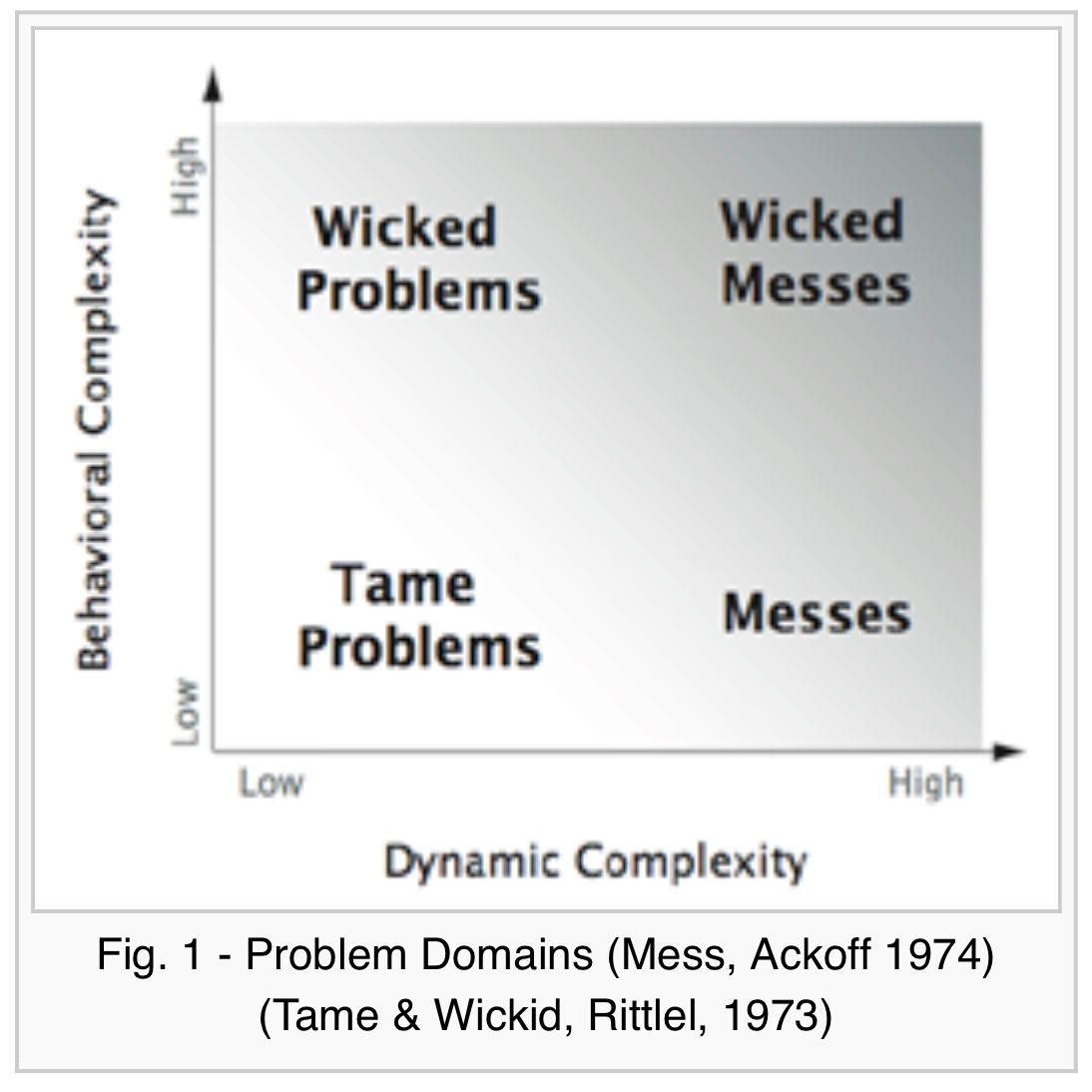
Some problems that science and engineering deal with are “tame” or docile because the mission is clear, the definition is unambiguous, and there is consensus on whether the problem has been solved.