Founding Fathers
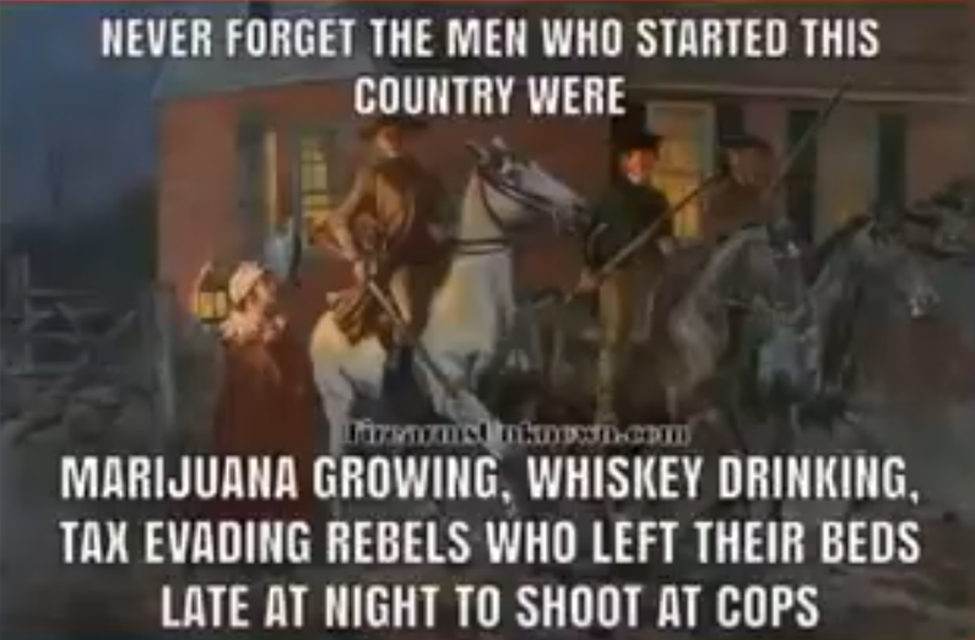
(George Washington was a hemp farmer)
A course on the Founding Fathers
Videos
Founding Fathers - Part 1
Founding Fathers - Part 2
Founding Fathers - Part 3
Founding Fathers - Part 4
Founding Fathers - Part 5
Founding Fathers - Part 6
Founding Fathers - Part 7
Founding Fathers - Part 8
Founding Fathers - Part 9
Founding Fathers - Part 10
Founding Fathers - Part 11
Founding Fathers - Part 12
The Hidden Faith of The Founding Fathers
Dr. Gordon S. Wood at Mercer: 'What Made the Founders Different'
Inventing America: Making a Government
Inventing America: Liberty for All
Age of Revolution: Founding Fathers and Slavery
Slavery and the Founding Fathers, Alvin B. Jackson
The Founding Fathers | Historian E. Ponasenkov
To understand history we have to understand the character of history. One of our greatest problems is this bastardization of putting everybody in one group and calling them the Founders. These people didn’t like each other. They were involved in duels. Some of them killed each other. Samuel Bryon said, the first thing these Federalists will do with this Constitution is to wrap it in the robes of divinity.
Spooner gives a lucid description of the “Founders” and the creation of the government made possible by the constitution.
“… tyrants, living solely on plunder, and on the labor of their slaves, and applying all their energies to the seizure of still more plunder, and the enslavement of still other defenseless persons; increasing, too, their numbers, perfecting their organizations, and multiplying their weapons of war, they extend their conquests until, in order to hold what they have already got, it becomes necessary for them to act systematically, and co operate with each other in holding their slaves in subjection.
But all this they can do only by establishing what they call a government, and making what they call laws.”
Wikipedia: The Founding Fathers of the United States, or simply the Founding Fathers or Founders, were a group of late-18th century American revolutionary leaders who united the Thirteen Colonies, led the war for independence from Great Britain, and crafted a framework of government for the new United States of America.
Historians generally recognize prominent leaders of the revolutionary era such as George Washington, Benjamin Franklin, John Adams, Thomas Jefferson, James Madison, John Jay, and Alexander Hamilton.[2] In addition, signers of the Declaration of Independence and the U.S. Constitution are widely credited with the nation's founding, while other scholars include all delegates to the Constitutional Convention whether they signed the Constitution or not.[3][4] In addition, some historians include signers of the Articles of Confederation, which was adopted as the nation's first constitution in 1781.[5]
Beyond this, the criteria for inclusion vary as historians have come to single out individuals ranging from military leaders during the Revolutionary War and participants in events before the war to prominent writers, orators, and other contributors to the American cause, including both men and women.[6][7][8][9] The debate has also shifted from the 19th century concept of the founders as demigods who created the modern nation-state to take into account contemporary concerns over the inability of the founding generation to remedy issues such as slavery and the treatment of Native Americans.[10][11] More recently, yet another approach has been suggested that recognizes the accomplishments as well as the shortcomings of the nation's founders by viewing them within the context of their times.[
Key Founding Fathers
Historian Richard B. Morris identified seven figures as key Founding Fathers in his 1973 book Seven Who Shaped Our Destiny: The Founding Fathers as Revolutionaries. His selections, based on what Morris called the "triple tests" of leadership, longevity, and statesmanship, included John Adams, Benjamin Franklin, Alexander Hamilton, John Jay, Thomas Jefferson, James Madison, and George Washington.[26]
Morris's selection of seven "greats" has become widely accepted.[8][7] Adams, Jefferson, and Franklin were members of the Committee of Five that drafted the Declaration of Independence. The Federalist Papers, which advocated the ratification of the Constitution, were written by Hamilton, Madison, and Jay. The constitutions drafted by Jay and Adams for their respective states of New York (1777) and Massachusetts (1780) were heavily relied upon when creating language for the U.S. Constitution.[27][28][29] Jay, Adams, and Franklin negotiated the 1783 Treaty of Paris that brought an end to the American Revolutionary War.[30]
Washington was Commander-in-Chief of the Continental Army and later president of the Constitutional Convention.[31][32] All held additional important roles in the early government of the United States, with Washington, Adams, Jefferson, and Madison serving as the first four presidents; Adams and Jefferson as the first two vice presidents; Jay as the nation's first chief justice; Hamilton as the first Secretary of the Treasury; Jefferson and Madison as Secretaries of State; and Franklin as America's most senior diplomat and later governor of Pennsylvania.
There is absolutely no evidence that those Federalists “founders” gave a hoot in hell about the rights of the people. Don’t forget they voted unanimously against the inclusion of a Bill of Rights at the convention. - Michael Gaddy