ADP Biosensor
Optimized screen settings by Maresa
PhD thesis p74
- reaction volume 20ul
- glass bottom plate - 384 Well Plate to test
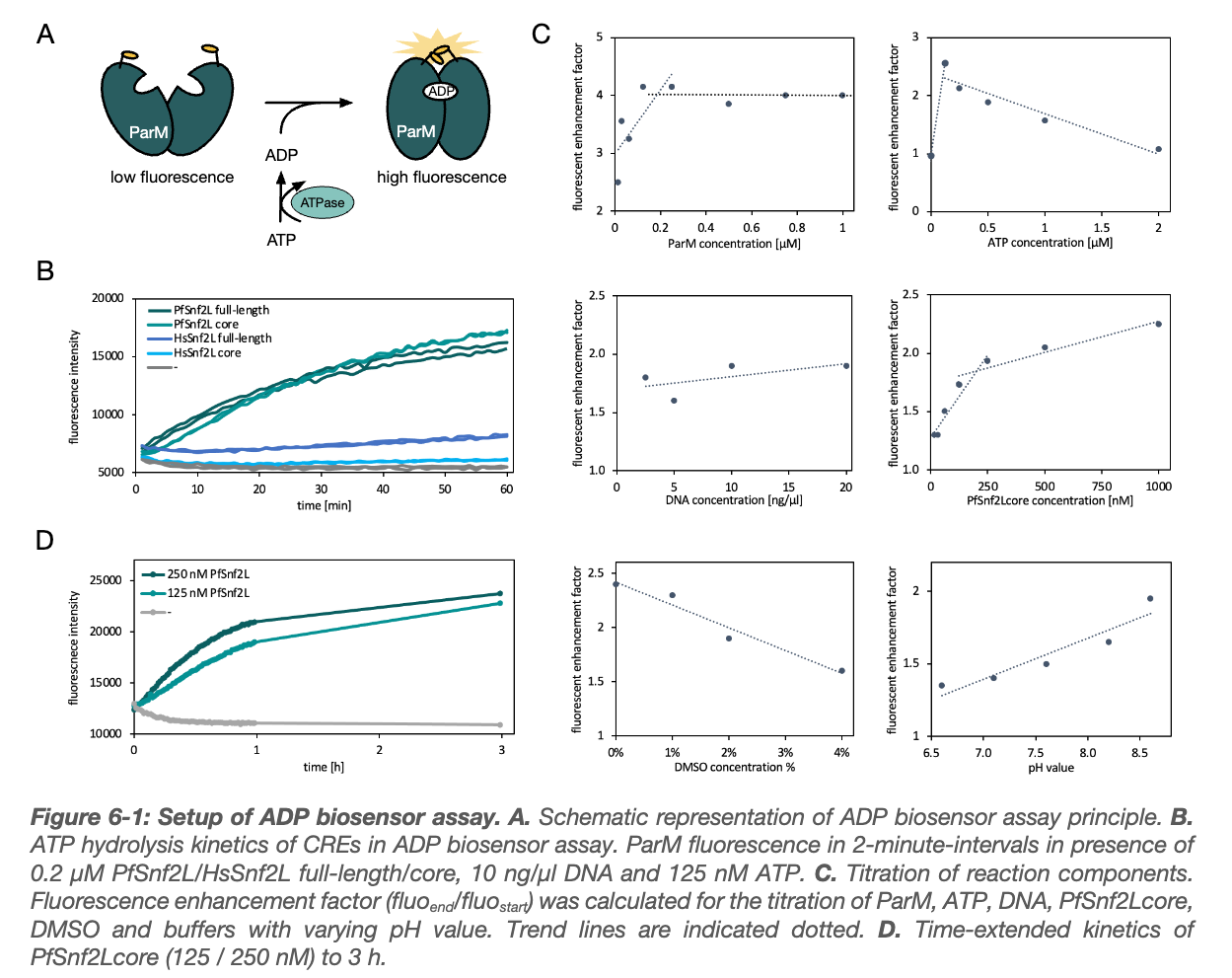
- ParM 200 nM
- 125uM ATP - very high ATP concentrations seem to have a suppressive effect on the fluorescence enhancement
- DNA 10 ng/ul - amounts hve no big effect on assay quality
- 200uM pfSnf2Lcore - the more enzyme the better the assay!
- 1% DMSO has no effect on PfSnf2L activity
- buffer pH8.6 - optimisation
- assay duration 2h
- 384-well plates, leaving 32 wells for positive controls (no compound) and 32 wells for negative controls (no ATPase).
- compound conc: 100uM
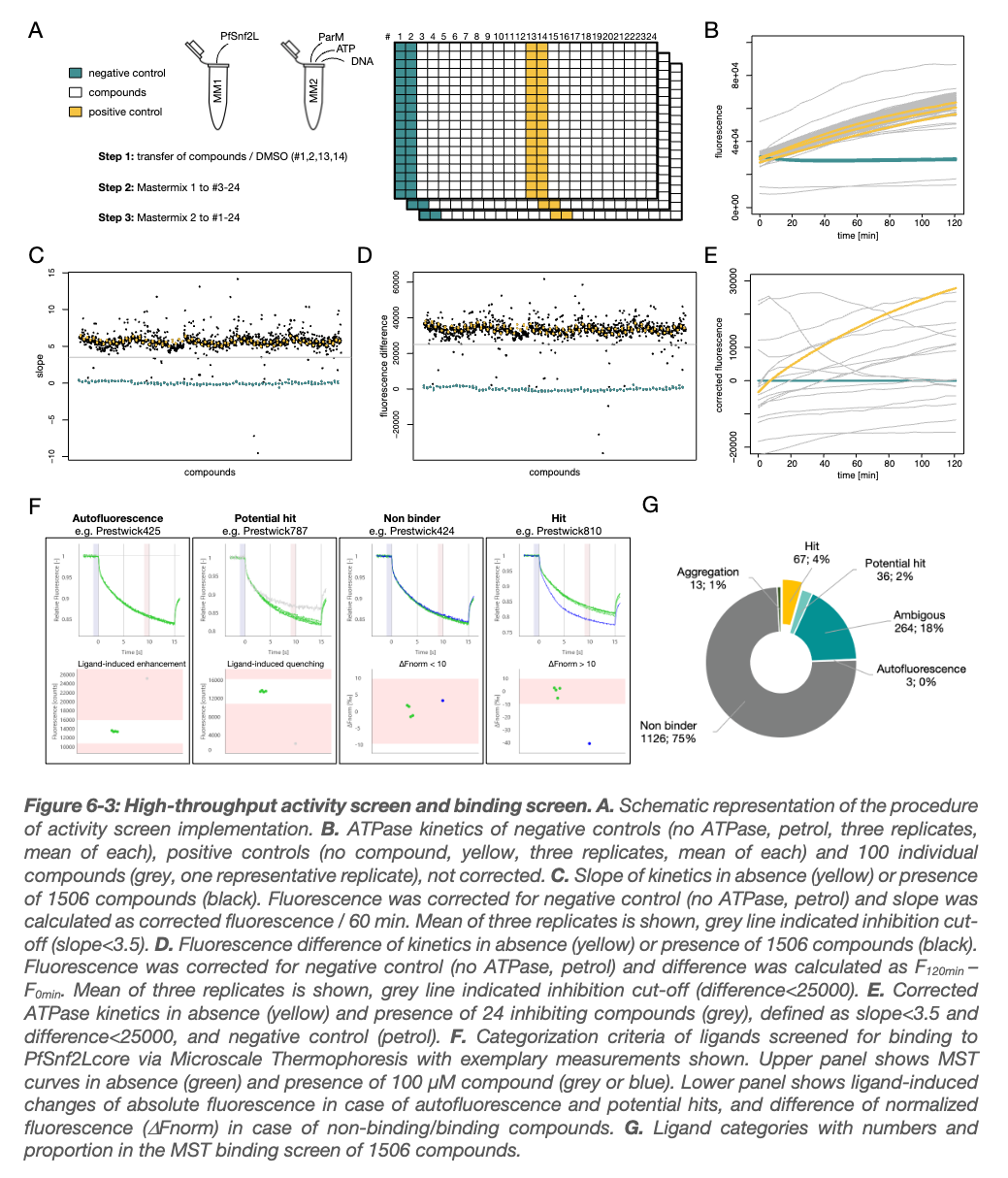
Setup of Screening at Fraunhofer:
Two master mixes were prepared and automatically dispensed into 384-well plates using a Multidrop Combi system, whereby an early ATP hydrolysis was prevented. Readout was performed using an EnVision fluorescence reader, which is capable of measuring multiple plates successively. With that, five plates with 320 compounds and 2x32 controls on each plate were read in parallel at six-minute intervals for two hours.
2 replicates were measured accordingly on different days using the same setup.
The fluorescence values for each compound were corrected for the rection without enzyme of the corresponding replicate (negative control) and the obtained kinetic curve was analyzed for two parameters. The slope of the first 60 min was calculated, as well as the difference between end and start point (Figure 6-3C,D)
Defined Threshhold: 3.5