Curcumin
Videos
Reprogramming Cancer Cell Death
Spice it Up, A New Way to Use Curcumin (video)
From turmeric, anti-inflammatory, antioxidant, hepatoprotective
Plants use it to thwart competitors, pathogens, predators
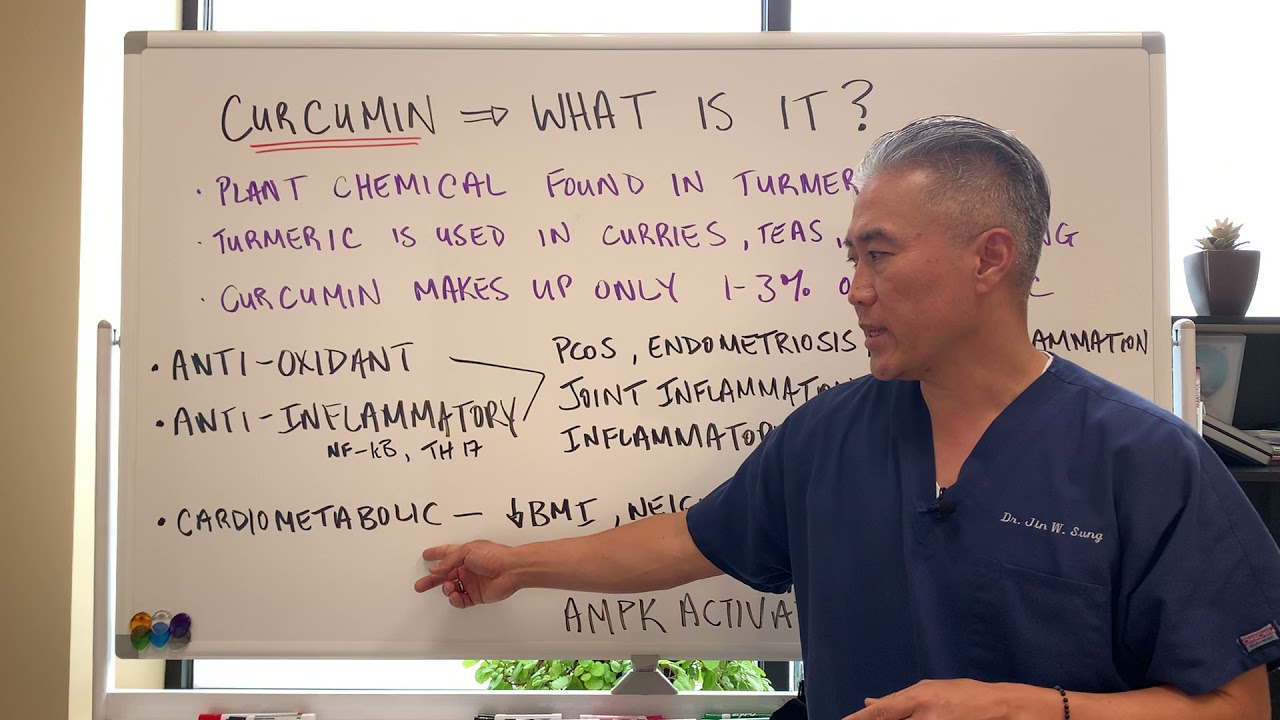
Curcumin is the name given to the chemical that is responsible for the bright yellow and orange color of the turmeric plant in the root and rhizome. Curcumin has been identified as the main active ingredient of this plant. However, three main curcuminoid molecules have been identified in the turmeric plant: Curcumin or diferuloylmethane, demethoxycurcumin and bisdemethoxycurcumin. The naturally occurring content of curcumin has been identified to be between 60 to 70% while demethoxycurcumin is between 20 to 27% and bisdemethoxycurcurcumin is between 10% and 15%. (Nelson KM et al. The Essential Medicinal Chemistry of Curcumin. J Med Chem. 2017 Mar 9; 60 (5): 1620-1637.)
When used orally, curcumin inhibits leukotriene formation, inhibits platelet aggregation and stabilizes neutrophilic lysosomal membranes, thus inhibiting inflammation at the cellular level. Curcumin is reported to possess greater anti-inflammatory activity than ibuprofen. At low levels, curcumin is a prostaglandin inhibitor, while at higher levels it stimulates the adrenal glands to secrete cortisone.
Downregulates the constitutive activity of NF-kappaB, decreases expression of NF-kappaB target genes COX-2 and cyclin D1, and induces apoptosis in mouse melanoma cells in vitro. Significantly inhibits the cellular production of proinflammatory mediators such as TNF-alpha and NO.
Downregulated MMP-2 expression and activity and expression of integrin receptors, FAK and mt1-MMP in Hep2 cells
Curcumin has been described as a pleiotropic molecule with a multiplicity of different and unique biochemical effects. Some other effects include, decreased transcription-3 transductase and activator Wn/beta catenin, and increased peroxisome proliferator receptor gamma and Nrt2 cell signaling pathways, which decrease adipokines, including tumor necrosis factor (TNF), interleukin-6, resistin, leptin, and monocyte chemo-tactic protein-1 and increase adiponectin and other gene products. Curcumin modulates cell survival proteins, histone acetylase, histone deacetylase, protein kinases, protein reductases, glyoxalase I, proteasome, human immune deficiency virus I (HIV1), integrase, HIV proteins, Fts Z protofilaments, carrier proteins, DNA, RNA and metal ions. In light of the complex and varied effects, curcumin has been described as a strong cell signaling molecule. Curcumin inhibits several signaling pathways at multiple levels with effects on cellular enzymes, such as cyclooxygenase and glutathione s-transferase, immunomodulation, and on angiogenesis and cell adhesion. Curcumin was further shown to affect gene transcription and induce apoptosis in preclinical studies.
Curcumin has a notoriously poor absorption profile. Low plasma and tissue levels are due to poor absorption, rapid metabolism, and rapid systemic elimination. Curcumin has been demonstrated to show absorption through active transport mechanism across the small intestine. Curcumin and bisdemethoxycurcumin show concentration-dependent inhibition through active transport, while demethoxycurcumin shows a carrier-mediated saturation pathway.
In humans, curcumin levels were measured to be an average of 11.1 nmol/l or 6 ng/ml one hour after consuming between 4 to 8 grams of curcumin. In another study in humans, consumption of 2 grams of curcumin alone made a very low or undetectable measurement in blood levels. Other reviews show a transient detection in plasma not exceeding 10 nanograms/ml after a single dose of varying strengths of curcumin. Another study shows a blood level ranging from 0.42 to 1.75 micromoles/l after one hour of consuming 4 to 8 grams of curcumin, while a level of 0.01 micromoles/l was noted after consuming 3.6 grams of curcumin.1,3,9,10
To enhance and improve absorption curcumin has been mixed with a variety of compounds, including liposomes, B-lactoglobulin, phospholipid complex, polymer encapsulation, PEG-PEI encapsulation, oil body encapsulation, soy protein isolate, bovine serum globulin, curcumin polymers, hydrogels, hyaluronic acid, organic gel-based nanoemulsions, casein, nano-particles, gold nano-particles, PHEMA nanoparticles, silica nanoparticles, GMO nanoparticles, chitosan nanoparticles, cyclodextrin nanoparticles and other novel chemicals. Other formulations have mixed curcumin with black pepper or a black pepper extract called piperine.
One study compared the absorption of curcumin, demethoxycurcumin, and bidemethoxycurcumin and its metabolite tetrahydrocurcumin after oral absorption of three different curcumin formulations. One product of curcumin mixed with cellulose and natural antioxidants enhanced absorption by 45.9 times. A second product of curcumin mixed with volatile oils enhanced absorption by 34.9 times. And a third product of curcumin mixed with a phytosome enhanced absorption by 5.8 times. Bioperine is believed to inhibit intestinal and hepatic degradation of curcumin by decreasing cytochrome activity and inhibiting glucuronidation and sulfation, which has been shown to increase curcumin levels by 20 times. Adding 20 milligrams of piperine increased levels of curcumin by 20 times at one-hour post-consumption. Improved solubility, stability, and low first pass metabolism have dramatically improved curcumin absorption of up to 100 times compared to unformulated curcumin.3,11-14
While limited systemic bioavailablity has hindered the use of curcumin as a potential therapeutic agent, thousands of studies have demonstrated therapeutic efficacy of curcumin at low doses. Some researchers contend that in view of the overwhelming body of compelling data, it is very possible that curcumin bioavailability may actually not even be a serious issue. Numerous reports suggest that bioavailability could not be a concern. The dose of curcumin recommended varies from as low as 10 milligrams/day of curcumin powder and 80 milligrams/day of curcumin liquid to as high as 12 grams of curcumin per day. Some researchers have concluded that even relatively low doses of curcumin can have clinical benefits. A commonly recommended dose of curcumin appears to be between 500 to 2000 milligrams per day for general anti-inflammatory effect. Read more...
Effects on Digestive Enzymes
- Increased enzyme activity: Curcumin has been shown to improve intestinal digestive enzyme activities. This may be related to an increase in the number of mature intestinal cells, as intestinal digestive enzyme activity is positively correlated with the number of mature cells.
- Enhanced bile production: Curcumin has a choleretic effect, increasing bile production by approximately 62%. Bile aids in the digestion and absorption of fats.
- Improved intestinal morphology: Curcumin supplementation has been observed to increase intestinal fold width and height, as well as the number of goblet cells. These changes in intestinal structure can enhance digestive capacity.
- Antioxidant and anti-inflammatory effects: Curcumin's antioxidant and anti-inflammatory properties may help protect and support the cells responsible for enzyme production.
- Prebiotic-like effects: Curcumin may act as a prebiotic, enhancing the balance of beneficial gut bacteria, which in turn can increase intestinal absorption and digestion.
- Increased expression of conjugation enzymes: Curcumin has been shown to increase the expression of certain conjugation enzymes, which are involved in various metabolic processes.
- Overall digestive system support: By improving intestinal health and function, curcumin creates an environment more conducive to efficient enzyme production and activity.
Antineoplastic Effects
Curcumin has antineoplastic effects through an antiproliferative mechanism. Part of this effect may be due to curcumin's effect on various kinases. It was found to be an inhibitor of highly purified protein Kinase A (Ka), protein kinase C (Kc), protamine kinase (PK), phosphorylase kinase (PHK), autophosphorylation-activated protein kinase (AAPK), and pp60-tyrosine kinase (TK). The amount of inhibition varied, with phosphorylase kinase being the most effected at lower doses of curcumin. A dose of 0.1 mmol of curcumin produced the following reductions: PKH (98%), TK (40%), Kc (15%), AAPK (1%) and PK (0.5%). PHK is a key regulatory enzyme in glycogen metabolism, which may result in antiproliferative effects if it is inhibited. (Reddy & Aggarwal, 1994). Curcumin also inhibits the expression of several proto-oncogenes (c-jun, c-fos, c-myc) in mouse skin cells and transcription factor AP-1 (Sikora et al, 1997). The antiproliferative effect of curcumin on transformed and nontransformed cancer cells was measured in vitro. In all experiments, curcumin caused slight-to-moderate inhibition of the proliferation of leukemia hematopoietic cell types but not fibroblasts (Gautum et al, 1998)
Curcumin I and curcumin III are two antineoplastic chemicals found in curcumin. Curcumin 1 inhibited benzopyrene-induced forestomach and benzopyrene-initiated, tetradeconyl-phorbol-acetate-promoted skin tumors in Swiss mice. Curcumin II inhibited dimethylbenzathracene-induced skin tumors in Swiss bald mice. Both compounds demonstrated in vitro cytotoxicity against human chronic myeloid leukemia in a dose dependent manner. Using in vivo carcinogen metabolism enzyme studies and 3H-benzopyrene-DNA studies, curcumins were shown to inhibit cancer at the initiation, promotion, and progression stages of development. Altering of the activation and/ordetoxification process of carcinogen metabolism was reported (Nagabhushan & Bhide, 1992)
Antioxidant Effects
Curcumin provides an antioxidant and anti-inflammatory effect by inhibiting the binding of transcription factor AP-1 to DNA and activation of NF-kappaB. These two substances control many endothelial genes such as plasminogen activator factor-1, tissue factor, endothelin-1, and interleukin 6 & 8. Via its AP-1 inhibitory activity it inhibits both cell growth and cell death. It inhibits epidermal arachidonic acid metabolism by means of lipoxygenase and cyclooxygenase pathways and reduces the inflammatory effects of arachidonic acid and tetradeconylphorbol-acetate.
The Spice That Prevents Fluoride From Destroying Your Brain
Articles
Turmeric can help regenerate the liver
Curcumin vs. cancer: The scientific evidence continues to flow in
Curcumin Naturally Fights Cancer, Heart Disease, Alzheimer`s Disease and Obesity
Curcumin Reduces Heart Enlargement and May Prevent Heart Failure
Curcumin supplementation is shown to halt the progression of diabetes in pre-diabetics