Science
Science — Endel
The Circadian Rhythm
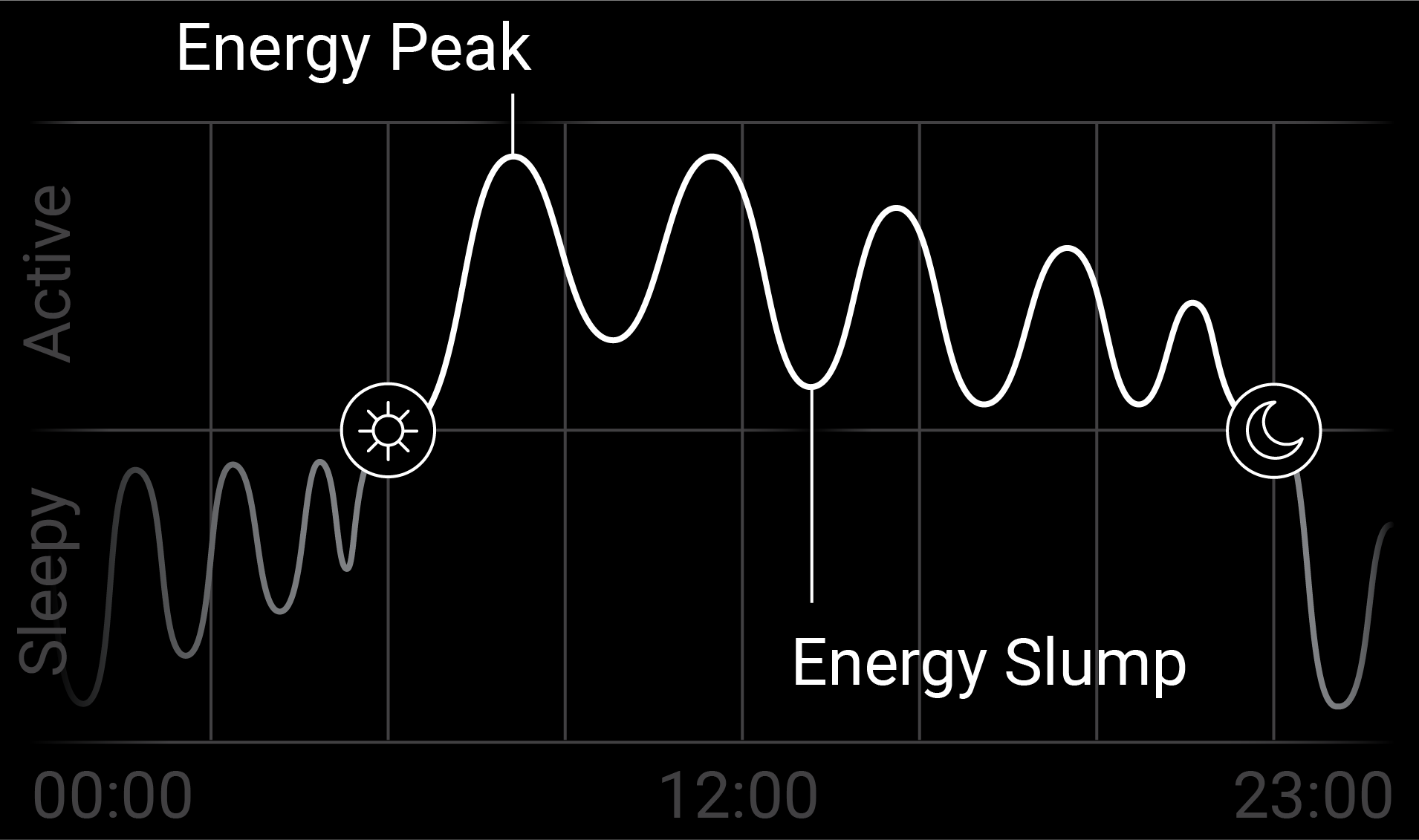
The base input for Endel is the circadian rhythm: the internal biological clock that regulates the body’s sleep and wake cycles — as well as natural energy peaks and slumps — over a 24-hour period.
However, the circadian rhythm can get disrupted by the surrounding environment.
User State
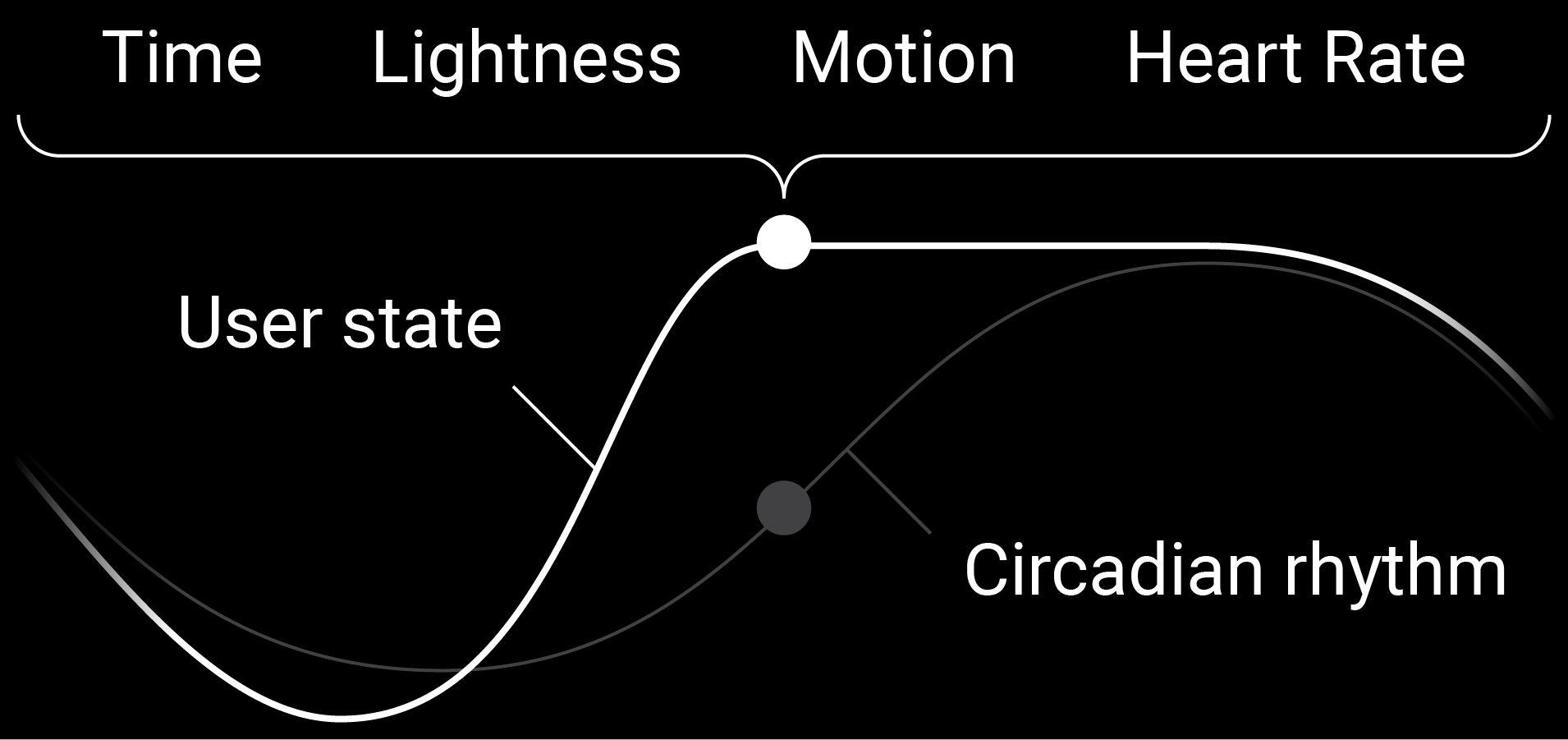
The surrounding environment affects the body throughout the day and can make the circadian rhythm out of sync. Personal inputs (time zone, natural light, heart rate, motion type) are essential for Endel to realign a user’s current state with the circadian rhythm. It is made possible by an adaptive soundscape.
The resulting soundscape adapts to inputs in real-time. The input that currently matters most is shown in the app below the circadian phase.
Natural light
Endel compensates for the lack (or excess) of light outside by adapting the soundscape’s intensity.
Heart rate
Endel adjusts the beat to your real-time heart rate, borrowing it from the Health (Google Fit) app and comparing it with your normal resting HR.
Weather
Endel reacts to the outdoor temperature with variations in sound.
Motion type
Endel alters sound intensity according to the number of steps taken per minute during your walking session.
Sound Engine
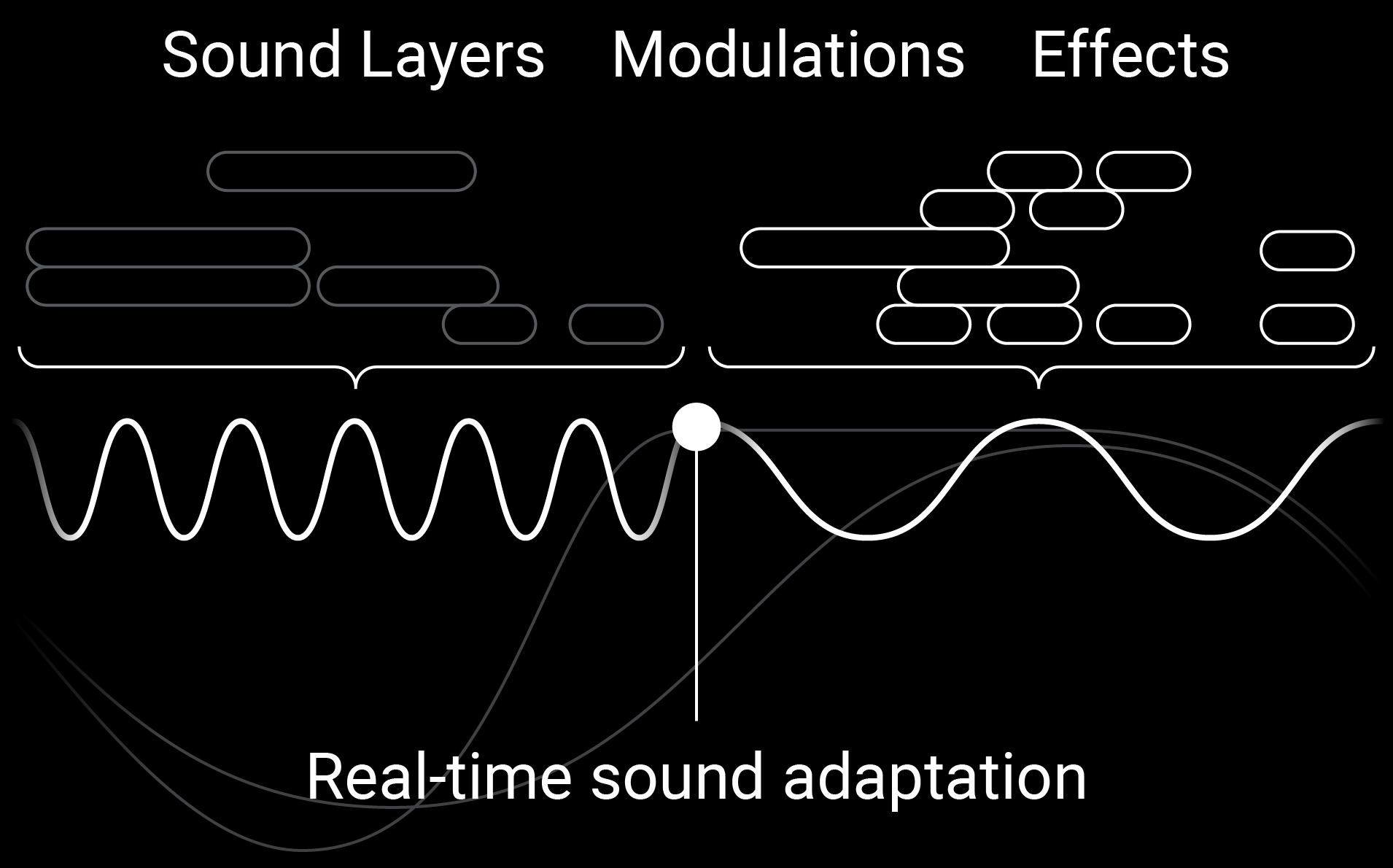
Endel’s sound engine consists of sound layers, modulations, and effects — all created in line with psychoacoustic studies. An algorithm processes user state information and generates a soundscape accordingly — by constructing unique combinations of sound engine components.
This happens on the fly, reacts to changes, and allows Endel to sync a user state with the circadian rhythm.
Sound Generation
Lora
Merriweather
Open Sans
Roboto
- Design: Alexander Starodumov
- Development: Dmitry Dyakonov