KAHUNA DIAMOND PROJECT
Kahuna Diamond Project
Kodiak’s 100% owned, Kahuna Diamond Project in Nunavut, Canada:
- Hosts a high-grade, near surface inferred diamond resource of 4 million carats, in two kimberlite dikes at an average grade of 1 carat per tonne (cpt), with significant expansion potential (see Kahuna Resource Estimate).
- Hosts numerous kimberlite pipe targets, defined in collaboration with the company’s advisor Dr. Chuck Fipke, who discovered Canada’s first diamond mine at Ekati, NWT.
Kodiak acquired the project in 2014 and has benefited from CAD $30 million of exploration work spent on the property by previous owners. Combining this data with Kodiak’s own sampling, trenching and drilling positions the project well for the next major kimberlite pipe discovery. Kodiak is currently evaluating strategic options for the Kahuna project.
Kahuna Project Highlights
- Advanced stage diamond exploration project in Nunavut, Canada
- Large land holding, mineral tenure to 805 km2 and additional diamond rights covering an adjacent 928 km2
- Located in close proximity (26 kilometers northeast) to Rankin Inlet, and adjacent to Agnico Eagle’s Meliadine mine
- High-grade near-surface inferred diamond resource, remains open along strike and at depth
- Exploration advised by diamond legend Dr. Chuck Fipke, discoverer of Ekati
- Outstanding diamond indicator minerals in till sampling have generated multiple new exploration targets for diamondiferous kimberlite pipes
- Initial drilling by Kodiak in 2018, further drill targets identified for testing in follow-up programs
Figure 1: Kahuna kimberlite target areas
[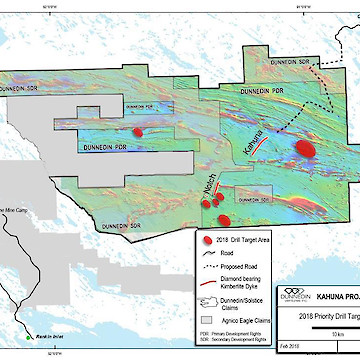
Figure 1: Kahuna kimberlite target areas](https://kodiakcoppercorp.com/site/assets/files/5662/kahuna-2018-drill-target-areas.1024x0.jpg "Figure 1: Kahuna kimberlite target areas")
Figure 2: Diamonds from the Kahuna Project
[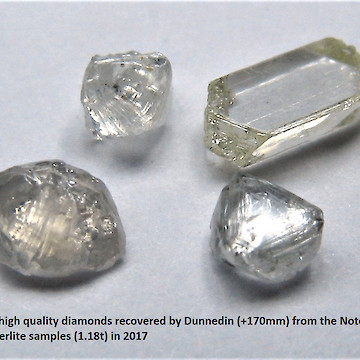
Figure 2: Diamonds from the Kahuna Project](https://kodiakcoppercorp.com/site/assets/files/5662/kahuna-2018-08-30-diamonds.1024x0.jpg "Figure 2: Diamonds from the Kahuna Project")
Jeff Ward, P.Geo, and VP Exploration of the Company is a “Qualified Person” as defined under NI 43-101 has reviewed and approved the technical content of this web page.
Maiden Inferred Resource Estimation
The Company cautions that the inferred resource cannot be used to construct an economic model of the project prior to assembling a package of diamonds for valuation.
In January 2015 Dunnedin released a maiden Inferred Resource estimate from the Kahuna Diamond project, located in Nunavut, Canada. The estimate was prepared by APEX Geoscience Ltd. on the Kahuna and Notch kimberlites based on data from the 2006 – 2008 bulk sampling and drill programs completed by the past operator.
Highlights include:
- A combined Inferred Mineral Resource of 4,018,000 carats of macrodiamonds at a 0.85 mm (+1 DTC sieve size) lower diamond cut-off, with an average grade of 1.01 carats per tonne (cpt), or 101 carats per hundred tonnes (cpht) derived from 3,987,000 tonnes of kimberlite resource.
- The kimberlites in the resource are exposed at surface and remain open to extension along strike and at depth. The average drill intercept at the Kahuna kimberlite was only 80 vertical metres, however kimberlite has been intersected at vertical depths of greater than 120 m and continuity at depth is supported by the available data.
- Indicator mineral trains and geophysics suggest the Kahuna and Notch have the potential to extend along strike into areas of thin sediment cover. Kimberlite has been intercepted in drilling along these potential extensions; however drill spacing was insufficient for inclusion in the resource. These areas will be a focus of future drilling.
- Only 2 of 8 confirmed significantly diamondiferous kimberlites (Kahuna and Notch) have sufficient drilling, bulk sampling and density definition work to be included in the inferred mineral resource at this time. Other drilled, mapped and sampled diamondiferous kimberlites include the PST, Killiq, and 4 additional kimberlite dikes located between the Notch and PST kimberlites (KD-13, 14, 16 and 18).
Drilling, surface bulk sampling, and micro- and macrodiamond data indicate the Kahuna and Notch are both single phase, macrocrystic hypabyssal kimberlite dikes having similar visual and petrographic characteristics throughout. Given their relatively simple internal geology, Kahuna and Notch were modeled as separate bodies and the Mineral Resource Estimate was established by applying average grades from surface mini-bulk samples within each geological model. Sensitivity analyses of the grades at both 0.85 and 1.18 mm cut-offs are presented in Table below:
Table 1: Inferred Mineral Resource Estimate for the Kahuna and Notch Kimberlites
| Classification | Kimberlite | Density (t/m3) | Volume (m3) | Tonnes | Average Grade cpt (+0.85 mm cut-off) | Average Grade cpt (+1.18 mm cut-off) | Total Carats (+0.85 mm cut-off) | Total Carats (+1.18 mm cut-off) |
|---|---|---|---|---|---|---|---|---|
| Inferred | Kahuna | 1.99 | 1,541,000 | 3,066,000 | 1.04 | 0.80 | 3,189,000 | 2,453,000 |
| Notch | 2.12 | 434,000 | 921,000 | 0.90 | 0.83 | 829,000 | 765,000 | 765,000 |
| Total | 2.02 | 1,975,000 | 3,987,000 | 1.01 | 0.81 | 4,018,000 | 3,217,000 | 3,217,000 |
Note: The reader is cautioned that Mineral Resources are not Mineral Reserves and do not have demonstrated economic viability, and might never be converted into Reserves. Figures may not sum due to rounding. Decimal figures do not indicate added level of precision. cpt = (carats-per-tonne)
The potential diamond valuation or mining characteristics of the Kahuna and Notch kimberlites have not yet been determined. However, a 2008 evaluation of Kahuna diamond characteristics by Mineral Services Canada (MSC) describes the Kahuna diamond population as having encouraging value characteristics, with a high abundance of colourless and near colourless varieties with octahedral shapes being the dominant morphology. The Notch kimberlite displays similar diamond characteristics to Kahuna and other significantly diamondiferous kimberlites within the Kahuna Project including the PST and Killiq kimberlites.
The Company cautions that the inferred resource cannot be used to construct an economic model of the project prior to assembling a package of diamonds for valuation.
Target for Further Exploration (“TFFE”)
Preparation of the resource report allowed calculation of a Target for Further Exploration (“TFFE”) that provides additional potential tonnages and contained carats that are not yet included in the Resource. The TFFE is based on projection of the diamondiferous kimberlites below the shallow depths currently included in the Resource. Calculations for a conceptual target indicate there is potential for an additional 4,090,000 to 15,880,000 carats of diamonds within the Kahuna and Notch dikes, as presented in Table 1. The potential quantity and grade of any TFFE is conceptual in nature, there is insufficient exploration to define a Mineral Resource and it is uncertain if further exploration will result in the target being delineated as a Mineral Resource.
To 15,880,000 carats of diamonds within the Kahuna and Notch dikes, as presented in Table 2.
The potential quantity and grade of any TFFE is conceptual in nature, there is insufficient exploration to define a Mineral Resource and it is uncertain if further exploration will result in the target being delineated as a Mineral Resource.
Table 2: Additional potential tonnage and carats at Kahuna and Notch
| Kimberlite | Low Range | High Range | High Range | High Range | High Range | High Range | High Range | High Range |
|---|---|---|---|---|---|---|---|---|
| Depth Range | Tonnage | Grade | Total Carats | Depth Range | Tonnage | Grade | Total Carats | Total Carats |
| Kahuna | 140 – 300 | 3,740,000 | 0.80 | 2,990,000 | 140 – 600 | 10,760,000 | 1.10 | 11,830,000 |
| Notch | 110 – 300 | 1,570,000 | 0.70 | 1,100,000 | 110 – 60 | 4,050,000 | 1.00 | 4,050,000 |
| Total | 5,310,000 | 0.77* | 4,090,000 | 14,800,000 | 1.07* | 15,880,000 |
*Note that bulk sampling has established that Kahuna has a recovered grade of 1.04 cpt and Notch has a recovered grade of 0.90 cpt (at a +0.85 mm lower cut-off) as previously disclosed in the Inferred Resource. As such, the “Low Range” reduces diamond grades by about 23% and the “High Range” increases diamond grades by about 5% for Kahuna and 10% for Notch. Note the tonnes and carats have been rounded to the nearest 10,000 and may not add due to rounding.
The TFFE provides reasonable guidance for additional potential tonnage and diamond grades at Kahuna and Notch to depths of 300 – 600m, but does not include:
Any potential additional tonnage or carats from any of the six other diamondiferous kimberlites that have already been drilled, sampled and mapped on the project, such as the PST, Killiq and KD series of dikes. At PST, grades of 2.18 cpt (at a +0.85 mm lower cut-off) have been reported following bulk sampling and drilling, and a network of diamondiferous dikes has been drilled in this area. The Company believes these represent high priority targets for ongoing work, due to their significant diamond grade potential, and 800 m of additional potential strike length of the Kahuna dike, and 300 m of additional potential strike length of the Notch dike as inferred by field mapping, geophysics and geological sampling. If included, these would proportionally increase the expected volume of diamond-bearing kimberlite at these targets; however drill density remains insufficient at these locations to include these areas in the TFFE at this time.
The TFFE assumes the same kimberlite densities as the Resource Estimate, which average 1.99 t/m3 for Kahuna and 2.12 t/m3 for Notch, and assumes recovery of +1 DTC sieve size macrodiamonds. The TFFE is derived from geological volumes based on projection of the Kahuna and Notch kimberlites to depths of 300 m (low range) and 600 m (high range) vertically from surface below the extent of the current geological model, and assuming a range of potential grades. The TFFE assumes a strike length of 4.7 km for Kahuna and 2.6 km for Notch; and an average width of 2.5 m and 1.5 m, respectively. Given the assumed kimberlite dike method of emplacement, and the presently defined extent of the geological models, both ranges are considered reasonable by the report authors.
Jeff Ward, P.Geo and VP Exploration of the Company is a “Qualified Person” as defined under NI 43-101 has reviewed and approved the technical content of this web page.