EL LIMON GUAJES ELG MINE COMPLEX
The El Limón Guajes Mine Complex (ELG) is comprised of our El Limón, Guajes and El Limón Sur open pits, our El Limón Guajes Underground Mine (including zones referred to as Sub-Sill and El Limón Deep), and our Processing Plant and related infrastructure. Steady state throughput of our Processing Plant is designed to 13,000 tonnes per day (tpd) with gold recoveries of 87%.
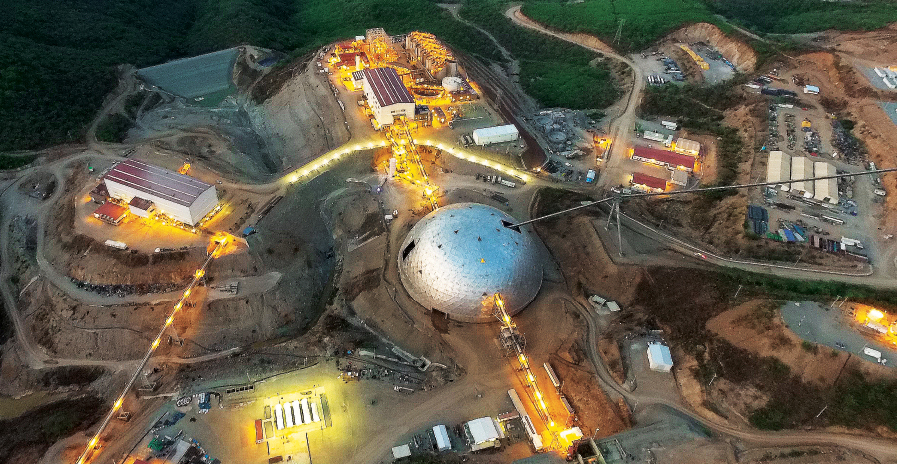
Following the release of a feasibility study in October 2012, construction on ELG started in October 2013, with commercial production declared in April 2016.
Most ore is sourced by the El Limón and Guajes open pits with a smaller portion from our El Limón Sur open pit. The open pits contained 1.51 million ounces of gold in reserves at the end of 2020 at an average gold grade of 2.54 g/t (including stockpiled material). Lower grade ore is being stockpiled and will be processed once active mining in the open pits has ceased, towards the end of 2023, with potential to extend into 2024 should an additional layback in the El Limón open pit prove to be economic. The ELG Underground Mine contained 413,000 ounces of gold in reserves at the end of 2020 at an average gold grade of 6.32 g/t.
The Processing Plant is targeted to operate at an average rate of 13,000 tpd, of which 1,000 to 1,200 tpd of material is expected to be sourced from the ELG Underground.
Starting in 2020, a portion of our El Limón Deep (ELD) underground deposit was committed to testing our propriety Muckahi Mining System, which we believe has the potential to disrupt the underground mining industry.
LOGISTICS & PROCESSING
Ore from the Guajes open pit is trucked directly to a crusher located near our Processing Plant. Ore from the El Limón open pit is crushed and then transported to our Processing Plant using an innovative conveyor system called RopeCon, a Doppelmayr product. The primary reason to employ RopeCon was to reduce the safety risk of driving loaded ore trucks down steep slopes. Another major benefit is that the RopeCon produces almost 70% of the energy it consumes. In fact, in 2019, the RopeCon generated 24,270 kilowatts (kW) for its own operation, limiting stress on the local energy grid and limiting our carbon footprint by reducing energy consumption.
 WATCH
ELG Mine RopeCon Transport TECHNOLOGY by Doppelmayr
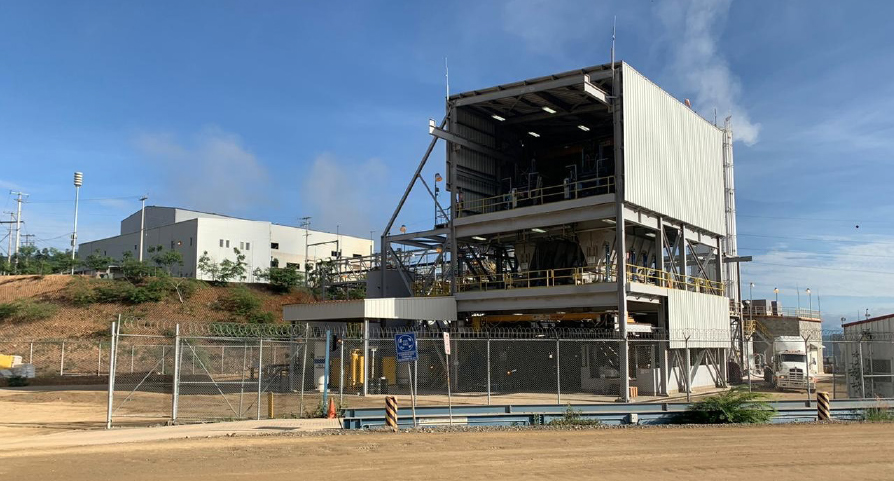
Ore from our mining operations is then treated in our centralized Processing Plant, which utilizes carbon-in-pulp milling technology with an associated cyanide leach to produce gold doré.
A SART plant (sufidization, acidification, recycling and thickening) was commissioned in 2018 to remove soluble copper from the leach circuit. The SART plant reduces consumption of our two most costly reagents (cyanide and metabisulfite) by 20-30%, or approximately $10M/year. It also decreases the cyanide content of our tailings by about 5x and produces a saleable by-product with revenues that more than offset the plant’s operating costs ($5.5M OPEX vs $6.9M revenue).1
1) Average based on 24 months of operation in 2019 and 2020
TAILINGS MANAGEMENT
For any mining operation, tailings management is a key environmental focus. ELG discharges no water to the natural environment and uses industry best practice with respect to tailings management.
Torex Gold has initiated a gap analysis against the Global Industry Standard on Tailings Management (GISTM) that was published in August 2020 by ICMM, the United Nations Environment Program (UNEP) and Principles for Responsible Investment (PRI), which will be completed by the end of 2021. The GISTM is being considered with a view to continuously improving our existing tailings management approach with the ultimate goal of zero harm to people and the environment.
Our filtered tailings storage facility was developed by internal and external experts. Torex has taken considerable care and expense to mitigate the potential for a tailings failure to negatively impact the surrounding environment, including the adjacent Balsas River and Presa Caracol reservoir.
Mitigating the risk to these waterways started with the design of a tailings storage facility to contain the material. In order to reduce the amount of water within the tailings, we filter our tailings in a process which reduces the moisture content to 17%. This conserves water, eliminates the need for tailing embankments and essentially eliminates the risk of dam failure.
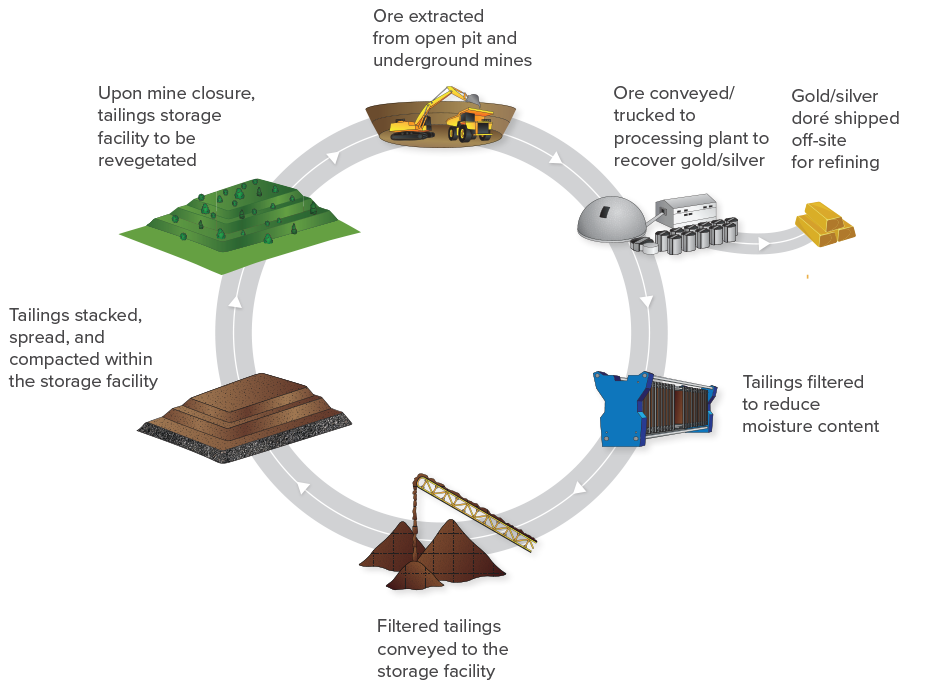
Tailings are conveyed and stacked within the storage facility. A buttress of rock on the downstream side of the storage facility adds additional stability and safety. We have internal technical teams dedicated to monitoring the area daily, and their work is audited by external experts who inspect the site twice a year in both the wet and dry seasons. The facility is also inspected annually by an independent, third-party consultant.
The filtered tailings facility operated through all of 2020 with zero discharge to the downstream environment. In addition, lab results indicated no acid drainage throughout the year.
 DOWNLOAD
2020 Tailings Management Report
EXPLORATION
Torex is evaluating opportunities to extend the mine life at ELG. Exploration activities at ELG are primarily focused on expanding reserves and resources below the El Limón open pit operations, and we are accelerating near-term underground exploration given ongoing drilling success at our Sub-Sill and El Limón Deep (ELD) deposits. In 2021, $13 million has been budgeted for exploration at ELG.
While these deposits are expected to remain the primary focus over the near-term, we plan to begin testing a number of regional targets over the next few years, as we look to discover the next potential mine within the broader Morelos property. In 2021, we are targeting to spend $2.5 million on regional exploration.
A study is currently underway to investigate the potential of extending the life of our El Limón pit, and an updated mine plan for ELG is expected to be released in Q1 2022.
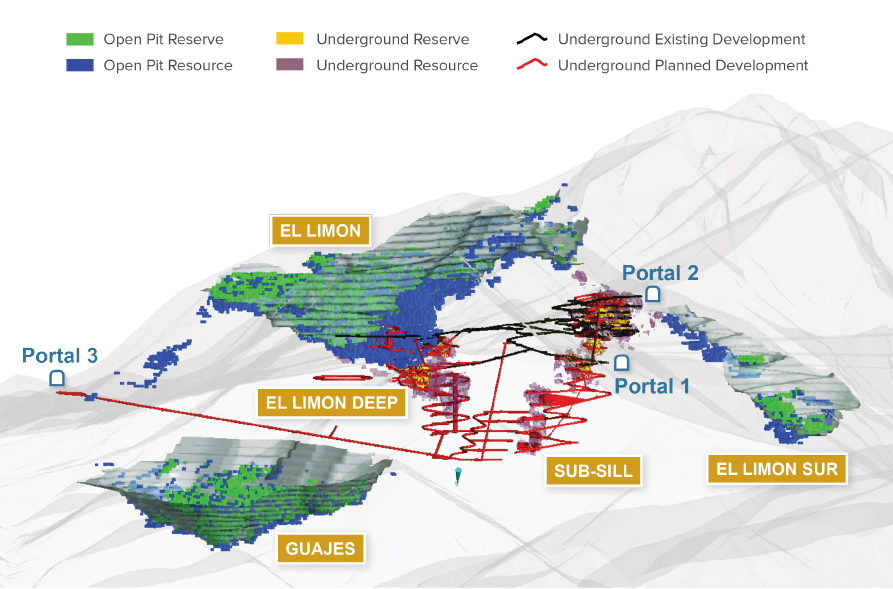
Mineral reserves and resources in section are as of year-end 2019