ELDORADO GOLD CORP, TOCANTINZINHO PROJECT
Tocantinzinho
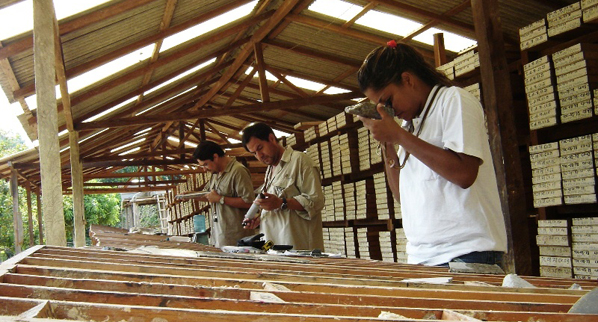
Tocantinzinho is a non-refractory gold project is located in the prolific Tapajos district in northern Brazil.
Key Facts
| Location | Para State, Brazil |
|---|---|
| Mine type | Open pit |
| Metals mined | Gold |
| Employees/contractors | ~65 |
| Expected mine life | ~10 years* |
| Deposit type | Intrusion-hosted, non-refractory gold |
| Ownership | 100% |
| Resources & Reserves | Resources & Reserves |
* Based on current proven and probable reserves.
2019 Outlook
In the second quarter of 2019, an updated technical report was completed for Tocantinzinho with an effective date of June 21, 2019 and filed on SEDAR on August 1, 2019. Highlights of the study at an estimated gold price of $1300 include an IRR of 13.4% and an NPV of $216 million at a 5% discount rate. At an estimated gold price of $1400, IRR is 16.6% with an NPV of $313 million at a 5% discount rate.
Development capital spending in 2019 is expected to be $3-5 million.
Indicative Operating Data
| Estimated Annual | |
|---|---|
| Tonnes milled | 4.3 Mt |
| Au grade (with reprocessed tails) | 1.42 g/t |
| Au recovery | 90% |
| Gold production | 170,000oz |
| C1 – Operating cash cost | $535/oz |
| C2 – Total cash cost | $580/oz |
| Sustaining cash cost* | $615/oz |
*C2 + sustaining capital
Geology and Mineralization
Tocantinzinho is an intrusion-related gold deposit hosted in Paleoproterozoic granites of the south-central Amazon Craton. The deposit is located along a major regional NW trending fault zone which at the deposit scale controls the emplacement of multi-phase intrusions and gold mineralization. A wide range of fractionated granitic phases are recognised including quartz monzonite, syenite, alkali feldspar granite, granite and aplite. The deposit displays spectacular magmatic-hydrothermal transition textures such as unidirectional solidification textures, interconnected miarolitic texture (IMT), rapid grain size variations from pegmatite to aplite, and vein dykes. The bulk of the ore is hosted in two main rock types. “Smokey” granite is pale pink-grey in colour and is mostly distributed in the core of the deposit. It varies from a coarse grained blebby texture (likely IMT) to equigranular granite. “Salami” granite has a strong pink-red colour and is an alkali feldspar granite with a blebby (IMT) texture and commonly transitions into aplite-pegmatite zones. Mineralization is characterized by fine, irregular vein networks of quartz, black chlorite, sulfide (pyrite, molybdenite, chalcopyrite) and calcite. The veinlets commonly develop along grain contacts and their irregular wormy nature suggests that they formed during late crystalllization of the host granite.
Exploration
Exploration outside of the main Tocantinzinho deposit area is directed towards identifying drilling targets that might yield satellite mineralized bodies. To date, this work has included airborne magnetic and radiometric surveys, IP surveys, collection of outcrop and channel samples (mainly from artisanal workings), and extensive grid-based soil sampling programs.
History
| 2019 | Technical Report completed |
|---|---|
| 2016 | Construction decision deferred pending receipt of permits, improved gold price outlook and progress of other priority development projects. |
| 2015 | Positive Feasibility Study completed |
| 2012 | Approval of Preliminary Environment License |
| 2010 | Eldorado acquired Brazauro Resources and the Tocantinzinho Project |
| 2008 | Eldorado takes part in an Option Agreement with Brazauro Recursos Minerais and together with Eldorado’s subsidiary, Unamgen, carried out a drilling program |