LOKKEN PROPERTY
Løkken Copper-Zinc(-Silver-Gold) VMS Project
Capella Minerals 100%
Near-Mine (Brownfields) and Greenfields Exploration in Past-Producing Copper Mining District
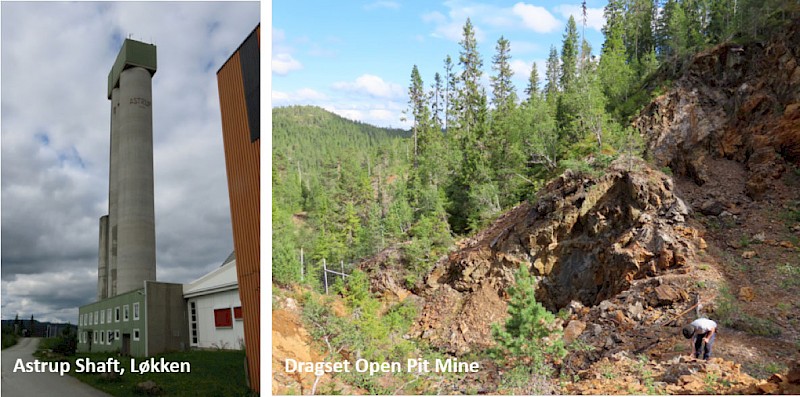
The Company’s Løkken copper-rich massive sulfide (“VMS”) project is located approximately 50km SW of the regional centre of Trondheim in central Norway. The Løkken claim block covers an area of 210 square kilometres (21,000 Ha) and surrounds the former Løkken underground copper mine which closed in 1987 in response to low metals prices. Capella’s claim block covers a significant portion of the old Løkken mine infrastructure (shafts, historical mineral processing facilities, railway loading area for concentrate, etc), in addition to multiple satellite bodies of VMS mineralization with varying degrees of development.
Løkken is considered to be one of the largest ophiolite-hosted Cypress-type VMS deposits (by tonnage) to have been developed in the world and produced an estimated 24Mt @ 2.3% Cu and 1.8% Zn (plus silver and gold credits)1. The old Løkken mine extended over approximately 4km in length, outcropping at its eastern margin and attaining a maximum depth of 1km near its current western limit. Capella’s initial exploration activities at Løkken will be focused on 6 priority, near-surface occurrences of VMS mineralization that dominantly lie along strike from the former mining operations.
General infrastructure in the Løkken area is first-class, and includes an electrified and operational narrow-gauge railway (which joined the old mine to the deep water port at Orkanger, located 25km away), low-cost hydroelectric power, and excellent road and telecommunications networks.
Project Snapshot
| Location | 50 km S of Trondheim, Norway |
|---|---|
| Ownership | 100% Capella Minerals Ltd 2.5% NSR to EMX Royalty, with 0.5% purchasable for USD 1M. |
| Status | Near-mine and greenfields exploration |
| Deposit type | High-grade copper-rich VMS deposits |
| Property Size | 21,000 Ha / 210 sq. km. |
| Host Rocks | Ophiolite sequence |
| Age | Ordovician |
| Commodities | Copper, Zinc, Silver, Gold |
| Access | All weather paved highways and gravel roads |
Løkken - Regional Setting
The Løkken and Røros (Kjøli) massive sulfide (“VMS”) districts in central Norway lie within the so-called Caledonian orogeny, which is interpreted to have extended from the productive VMS districts in NE Canada (Bathurst Mining Camp, New Brunswick; Buchans District, Newfoundland) and the Appalachian US to northern Norway. Mineralization at Løkken is hosted by a sequence of Ordovician-age metabasalts (mixed pillow and massive basalts) within an overturned ophiolite sequence.
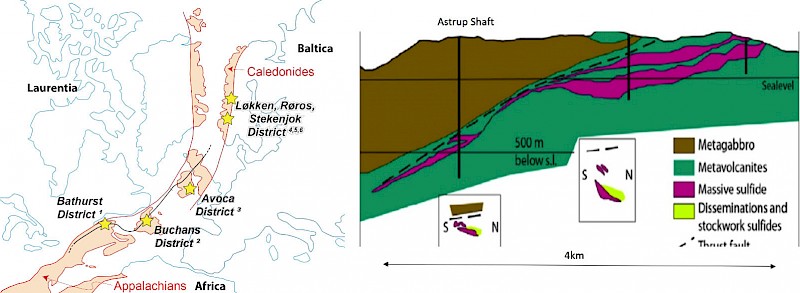
Location of the Løkken deposit with the Caledonian orogeny and mine-scale geology
The former Løkken Mine consisted of a stratiform massive sulfide deposit which was approximately 4km in length, reached a maximum depth of 1km, and had an average thickness of 60m1. Mineralization consisted of massive chalcopyrite, sphalerite, pyrite, and pyrrhotite. Capella’s field activities at Løkken will focus on i) exploring potential extensions to the known mineralization at Løkken, and ii) advancing the 6 priority near-mine targets currently identified (Western Area, Dragset, Hoydal, Northern Targets, Eastern Area / Amot, and Southern Targets) to drilling.
Løkken Claim Block and Priority Exploration Targets
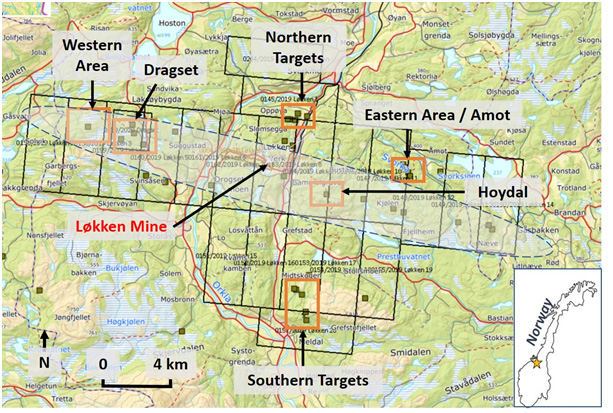
Løkken claim block and priority exploration targets
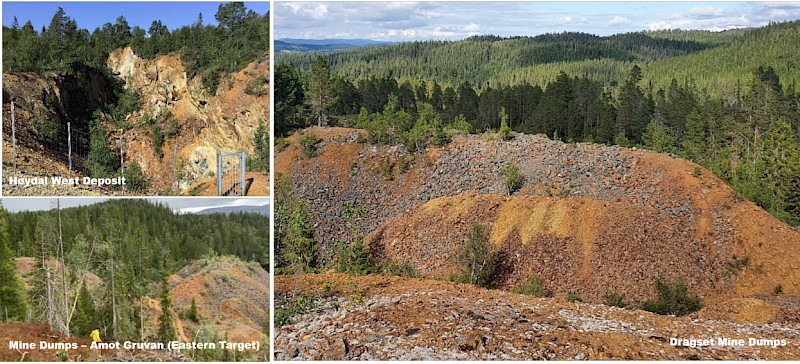
VMS targets on the Løkken claim block – Dragset, Hoydal, Amot Gruvan (Eastern Target)
Capella’s 100%-owned claim block at Løkken is a district-scale (210 sq. km) land holding that surrounds the former Løkken copper mining operations. This claim block covers part of the old Løkken mine, a significant portion of the former mine infrastructure (shafts, historical mineral processing facilities, railway loading area for concentrate, etc), in addition to multiple satellite bodies of VMS mineralization with varying degrees of development. The Norwegian State holds a small relict claim over the mined-out central portion of the old Løkken mine, but this does not affect Capella’s goals of exploring for extensions to known mineralization and drill testing of the 6 near-mine priority target areas currently identified