C. elegans
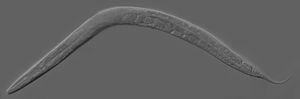
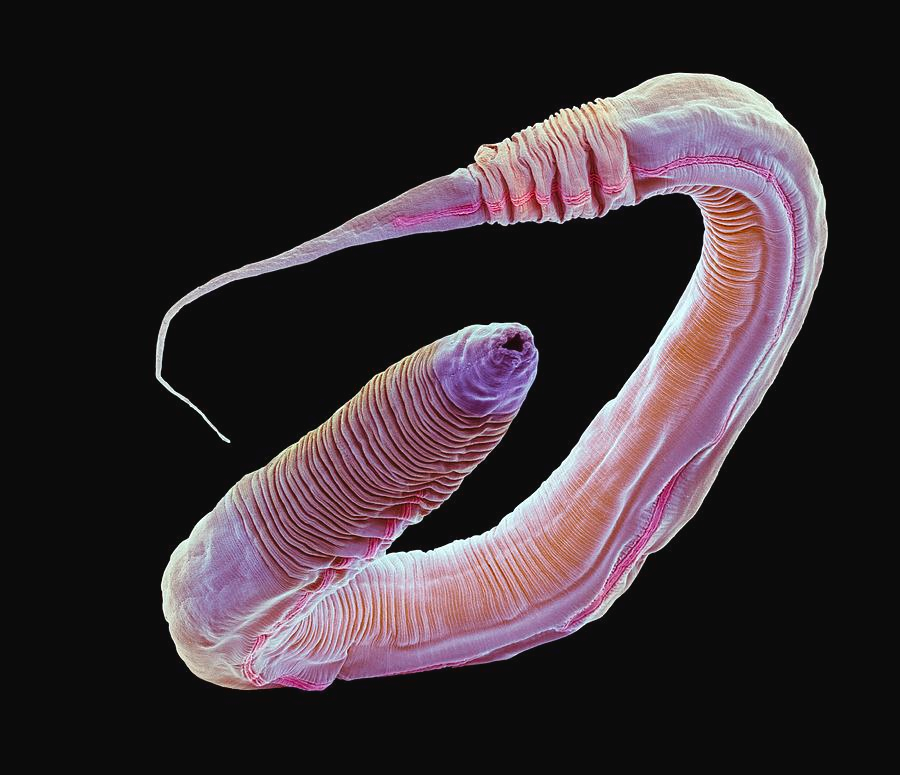
Nagi Bioscience tests drugs on worms using microfluidics-- November 17, 2022, 7:50 AM- see link above.
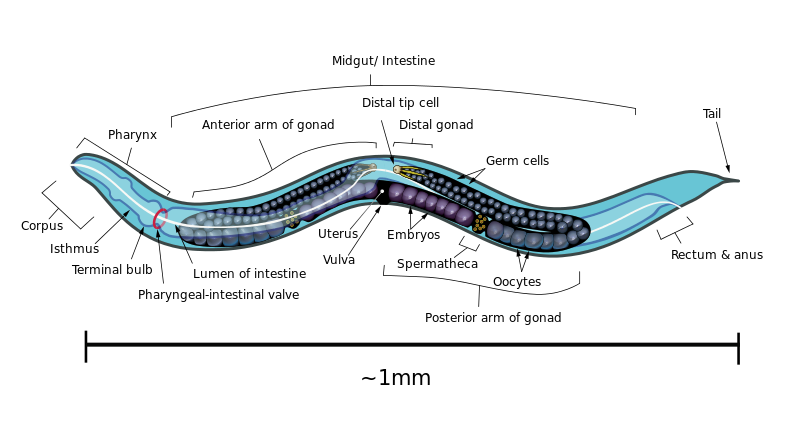
In 1963, Sydney Brenner proposed using C. elegans as a model organism for the investigation primarily of neural development in animals. It is one of the simplest organisms with a nervous system. In the hermaphrodite, this system comprises 302 neurons the pattern of which has been comprehensively mapped, in what is known as a connectome, and shown to be a small-world network. Research has explored the neural and molecular mechanisms that control several behaviors of C. elegans, including chemotaxis, thermotaxis, mechanotransduction, and mating behaviour. Brenner also chose it as it is easy to grow in bulk populations, and convenient for genetic analysis. It is a multicellular eukaryotic organism, yet is simple enough to be studied in great detail. The transparency of C. Elegans facilitates the study of cellular differentiation and other developmental processes in the intact organism. The spicules in the male clearly distinguish males from females. Strains are cheap to breed and can be frozen. When subsequently thawed, they remain viable, allowing long-term storage
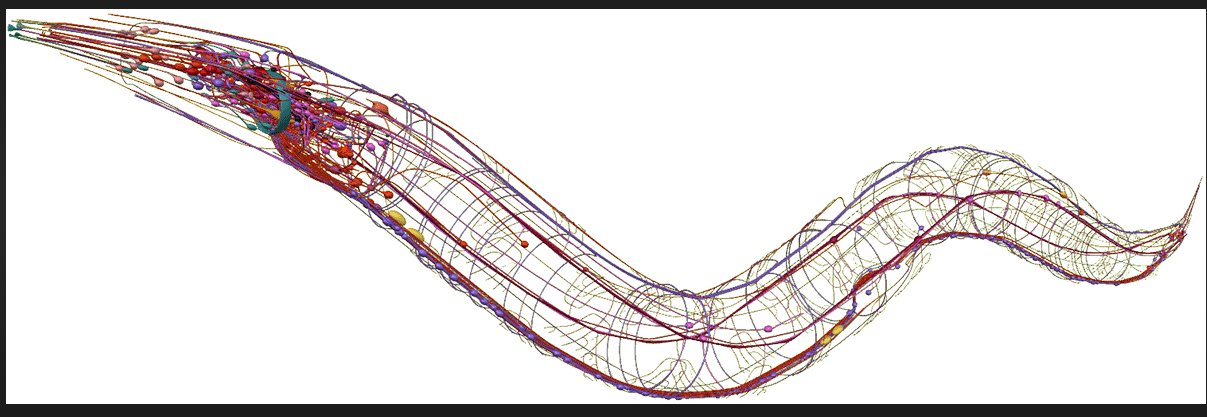
The amazing connectome of the C Elegans
 The Elegans Knockout lab at UBC works on obtaining knockouts for every gene in C elegans --they use CRISPR Cas9 to obtain deletions--see URL Moerman lab.