Blue Wing Olive*
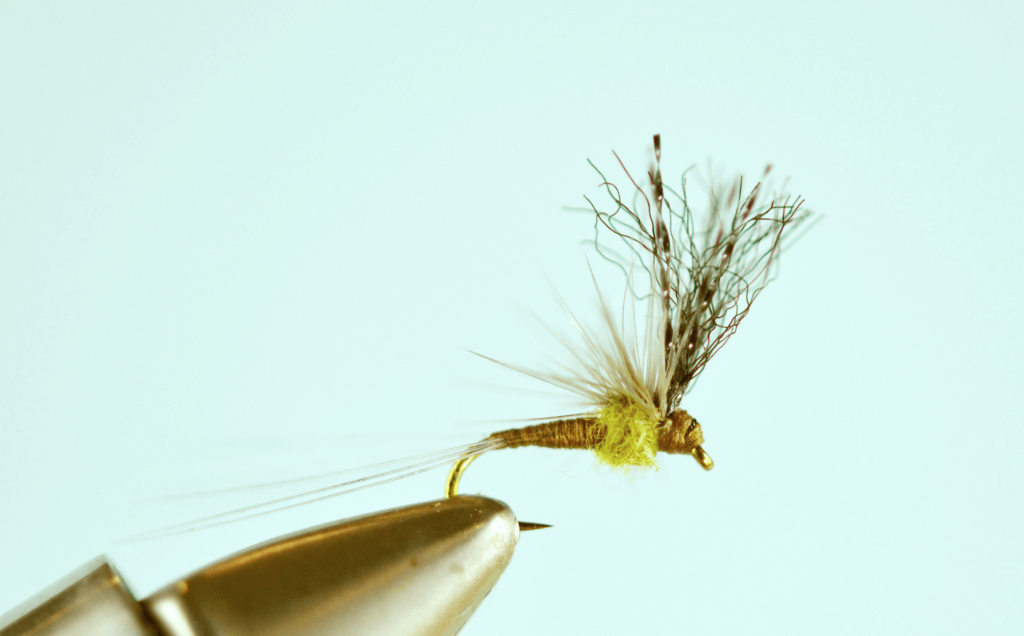
The blue wing olive (BWO) is probably the most common mayfly species across the United States and is extremely active in the fall. BWOs are smaller size 16 to 22 insects usually dark olive or bluish-gray. They’re a bad weather insect, typically hatching during heavy cloud cover, wind and rainstorms. Your best bet for finding them is slower-moving water directly below riffles in the early afternoon and evening. Fall trout feeding on BWO’s can be particular about patterns in low, clear water. It’s often best to fish two different dry fly patterns at once, such as a traditional BWO pattern with a Comparadun or a Crippled Emerger as a dropper, until you key in on exactly what stage of insect the trout are targeting.
Mayflies during winter primarily consist of Blue Wing Olives aka Baetis (BWO). These mayflies hatch when the water temps get above 38 degrees and are best between 40 – 44 F. They will also hatch during the warmest parts of the day 10 – 3 pm and can hatch on sunny days, cloudy days, windy days and snowy days. Water temps and barometric pressure are the most important to predict a hatch. Fish changes in weather with warm water temps and you’ll have the best chance for BWO hatches.
- Species: Only BWO (aka Baetis, Blue Wing Olives)
- Stages: Nymph, Emergers, Dries
- Sizes: #18 – #24
- Nymph/Emerger Colors: Black, Purple, Olive, Dark Olive
- Dry Colors: Olive, Dark Olive, Purple
- Hatch Times: 10am – 3pm – Warmest Part of Day
From <https://thecatchandthehatch.com/winter-bug-guide/?ffst=1it1v9-6kn1>