MAGNESS phillip
---
JAY B COVID BS
GGL
AI Overview
Phil Magness is an economic historian and Senior Fellow at the Independent Institute who became a prominent critic of COVID-19 government lockdowns. He frequently collaborated with scholars like Jay Bhattacharya and frequently wrote about the impacts of the lockdowns and the Great Barrington Declaration. [1, 2, 3, 4, 5]
Magness’s Core Arguments & Contributions:
- The Great Barrington Declaration: Magness became a strong defender of this petition, which advocated for "focused protection" of vulnerable populations while letting the young and healthy resume normal life to build up immunity, arguing this would minimize long-term economic and social damage. [1, 2]
- Lockdown Policy and Mortality: Along with Peter C. Earle, Magness published studies and essays arguing there was "no discernible pattern" between strict government lockdown policies (Non-Pharmaceutical Interventions, or NPIs) and lower COVID-19 mortality rates across various regions. [1, 2]
- Critique of Models: Magness critically reviewed the early epidemiological models used to justify lockdowns (such as those from Imperial College London), arguing they overstated the efficacy of government central planning and resulted in massive, unnecessary economic damage. [1, 2]
- Institutional Censorship: Drawing on historical precedents of censorship in public health, he frequently wrote about how dissenters from the mainstream lockdown orthodoxy were marginalized by institutions and social media. [1, 2, 3]
Where to Read More:
- Read his essay on the economic history and origins of these policies: The Origins and Political Persistence of COVID-19 Lockdowns.
- For a historical perspective on pandemic responses and central planning, see his paper: The Failures of Pandemic Central Planning. [1, 2, 3, 4]
[### Great Barrington, 5 Years On: News Article

Independent Institute
https://www.independent.org › News Article](https://www.independent.org/article/2025/10/06/great-barrington-5-years-on/)
Oct 6, 2025 — Five years after the Great Barrington Declaration, the arguments against Covid lockdowns have stood the test of time.
Missing: B | Show results with: B
---
Jay Bhattacharya at the NIH - Marginal REVOLUTION
Jay Bhattacharya at the NIH
by Tyler Cowen November 27, 2024
Trump has announced the appointment, so it is worth thinking through a few matters. While much of the chatter is about the Great Barrington Declaration, I would note that Bhattacharya has a history of focusing on the costs of obesity. So perhaps we can expect more research funding for better weight loss drugs, in addition to other relevant public health measures.
Bhattacharya also has researched the NIH itself (with Packalen), and here is one bit from that paper: “NIH’s propensity to fund projects that build on the most recent advances has declined over the last several decades. Thus, in this regard NIH funding has become more conservative despite initiatives to increase funding for innovative projects.”
I would expect it is a priority of his to switch more NIH funding into riskier bets, and that is all to the good. More broadly, his appointment can be seen as a slap in the face of the Fauci smug, satisfied, “do what I tell you” approach. That will delight many, myself included, but still the question remains of how to turn that into concrete advances in public health policy. Putting aside the possibility of another major pandemic coming around, that is not so easy to do.
My main worry is simply that NIH staff will not trust their new director. The problem is not so much GBD, which can be compartmentalized as a “political” stance, but rather the earlierclaims that many more people had Covid early than we had thought, and that expected fatalities were going to be quite low, with a maximum of 40,000. We all make mistakes, the question is how those mistakes get processed. If you interrogate Perplexity it will report “Bhattacharya has not publicly acknowledged or confessed to these mistakes in his early predictions.” You don’t have to agree with Perplexity (though contrary cites are welcome!), rather it suffices to say that reflects a common perception of the scientific community. He also seemed to be pushing those low fatality estimates for longer than might have been considered appropriate. And that is indeed a problem for his tenure at the NIH.
The danger is simply that NIH staff will double down on risk aversion, and they may not so readily support any attempt to make the grants themselves riskier, or rooted in the greater discretion of program directors, a’la DARPA and the like. They will fear that their director will not sufficiently follow the evidence, or admit when mistakes are being made and reverse course. Even if you fully agree with GBD and the like, I hope you are able to see this as a relevant problem. Every institutional revolution requires supportive troops on the inside, even if they are only a minority.
I very much hope this works out well, but in the meantime that is my reservation.
---
[### The Origins and Political Persistence of COVID-19 ...

jstor
https://www.jstor.org › stable](https://www.jstor.org/stable/48617833)
by PW Magness · 2021 · Cited by 11 — Phillip W. Magness is senior research fellow at the American Institute for Economic Research. Peter C. Earle is a research fellow at the American Institute for ...Read more
[### On COVID, We Fought the Last War. And Lost.

Fraser Institute
https://www.fraserinstitute.org › default › files](https://www.fraserinstitute.org/sites/default/files/covid-19-lessons-essay7-on-covid-we-fought-the-last-war-and-lost.pdf)
by LWSH Learned · 2023 — Essay Seven. On COVID, We Fought the Last War. And Lost. Jay Bhattacharya and Martin Kulldorff. COVID-19. Lessons We Should Have Learned.Read more
25 pages
[### The Failures of Pandemic Central Planning

SSRN eLibrary
https://papers.ssrn.com › sol3 › Delivery.cfm › S...](https://papers.ssrn.com/sol3/Delivery.cfm/SSRN_ID3934452_code2047488.pdf?abstractid=3934452&mirid=1&type=2)
Oct 1, 2021 — Over a century and a half later, the ostracism directed at John Snow now repeats itself for scientists who dissent from lockdown orthodoxy, and ...Read more
---
ihe
[### Stealth Attack on Liberal Scholar?

Inside Higher Ed
https://www.insidehighered.com › news › 2017/07/12]
https://www.insidehighered.com/news/2017/07/12/historian-alleges-coordinated-criticism-her-latest-book-which-critical-radical-right
Jul 11, 2017 — MacLean's critics alleging inaccuracies and other problems with her book, MacLean in turn alleging a coordinated attack against her by libertarian scholars.Read more
COllusion, alternative facts, shadowy billionaires: the words sound ripped from the political headlines, but they also describe the controversy surrounding Duke University historian Nancy MacLean’s new book, Democracy in Chains: The Deep History of the Radical Right’s Stealth Plan for America(Viking). And story keeps unfolding, with MacLean’s critics alleging inaccuracies and other problems with her book, MacLean in turn alleging a coordinated attack against her by libertarian scholars with ties to dark money, and others still accusing MacLean of trying to dishonestly promote favorable online book reviews.
MacLean declined comment on the matter through her publisher, which said it hopes discussions will soon return to the content of the book. Her named critics, meanwhile, deny any coordination in their takedowns of her work.
“The allegations she raised are fanciful and potentially libelous,” said David Bernstein, University Professor of law at George Mason University, who recently wrote unflatteringly about MacLean’s book in a post on a blog at The Washington Post. No one “urged me, asked me, beseeched me, paid me or otherwise tried to influence me to blog about the book.”
Some nevertheless say they worry that swarm-style attacks on progressive scholars’ works -- especially in an era of online harassment of professors and plummeting public trust in academe -- could become a new normal. MacLean, they say, is the victim of just such an effort.
There’s “absolutely no question that left-wing scholars and scholarly ideas are under attack,” said Jacob Remes, an historian and clinical assistant professor at New York University's Gallatin School of Individualized Study. Citing a recent pattern of threats against liberal professors, Remes said cases involving even more vulnerable faculty members “show how we need to defend scholarly norms and insist that debates over scholarship remain that -- scholarly debates -- and not become Fox News-like partisan free-for-alls.”
Referring to MacLean’s case in particular -- in which she's asked supporters to police websites for seemingly inauthentic comments about her book, and supporters have called out her critics for not disclosing their ties to anti-regulation, libertarian philanthropist Charles Koch -- Remes added, “Voting down one-star reviews from people who clearly haven't read a book, or asking that beneficiaries of Koch largesse identify themselves as such in reviews, seems a small way of doing that.”
A Book for the Times
MacLean, the William H. Chafe Professor of History and Public Policy at Duke, released her new book last month to immediate praise. Democracy in Chainstraces the roots of capitalist libertarianism -- the kind today embodied and funded by the Koch and his brother, David -- back to the late Nobel Prize-winning economist James McGill Buchanan, who taught at George Mason. Her thesis is that Buchanan was the architect of a long-term plan to take libertarianism mainstream, raze democratic institutions and keep power in the hands of the wealthy, white few.
Unsurprisingly, the book resonated with many critics, who tended to describe it as a book for our time (one NPR review called it "2017 Bingo"). But others began to take issue with MacLean’s scholarship, describing it as another symptom of an alternative facts-driven era. One of the first negative reviews, by Russell Roberts, the John and Jean De Nault Research Fellow at Stanford University’s Hoover Institution, accused MacLean of deliberating taking out of context the work of Tyler Cowen, the director of the Koch-funded Mercatus Center at George Mason. (Roberts has taught economics at George Mason, a favored campus of the Charles Koch Foundation, whose growing financial influence in academe is well-documented; George Mason accepted nearly $48 million from Koch from 2011 to 2014 alone, according to a 2016 Associated Press report. The university's law school also was last year renamed after the late, conservative U.S. Supreme Court Justice Antonin Scalia as part of a $30 million deal involving funds from Koch and an anonymous donor.)
“She ignores anything in Cowen’s essay that conflicts with her portrayal of Cowen as a sinister enemy of American institutions and democracy,” Roberts wrote, explaining that MacLean had, for example, suggested that Cowen had once written that the free market would be better off with fewer democratic checks and balances. In fact, Cowen had written that while such a change could lead to good outcomes, it could also lead to “very bad” ones.
MacLean responded to Roberts, accusing him of selectively quoting and misrepresenting statements from her own book (and questioning if he actually read it). Ultimately, she asked, “Is it true that Koch-subsidized libertarian scholars, including Buchanan and Cowen, have posed democracy as a problem for their arch version of capitalism?”
:{:{Soon, though, the criticism came rapid-fire, with a number of academic reviewers with either past or present ties to the Koch Foundation making similar claims against MacLean: misleading quotations; questionable links between people, events and ideas; and a misunderstanding of some of the economic theory underpinning her arguments.}:
Jonathan Adler, the Johan Verheij Memorial Professor of Law at Case Western Reserve University and a graduate of George Mason’s law school and one-time visiting professor there, published a running account of the allegations in a Washington Postblog post on the same day Bernstein published his piece in the Post. Soon even MacLean’s Duke colleague Michael C. Munger, a professor of political science, economics and public policy, called her out.}:
In an article for the *Independent Institute*, Munger said MacLean had crafted a well-written but merely speculative history, such as by including imagined conversations between historical figures that come across as real.
“The problem with history, of course, is that many narratives about a few cherry-picked events and documents are ‘plausible,’” he wrote. “The task of the historian is to try to distinguish among plausible accounts ‘through careful sifting of evidence and respectful encounters with opposing points of view.’ There is none of that here. Even a casual familiarity with the basic facts of James Buchanan’s life and scholarship, and of the growth and success of the public choice movement, reveal far simpler, and more plausible, explanations.”
Many of MacLean's supporters question the critics, however, who they argue are offended by a tough look at libertarian heroes.
Ideological Comment War
Apart from the academic reviews, MacLean and others said, anonymous critics were trolling her online, posting uninformed, biased reviews ofDemocracy in Chainson Amazon. In a social media post that MacLean did not authenticate to Inside Higher Ed, but which has been widely shared online by her supporters, she allegedly asked friends and colleagues to help defend her book against an apparent coordinated attack.
“I really, really need your help,” MacLean is said to have written. “This will sound nutty, I know, but it’s actually happening: the Koch operatives and the riders of their academic ‘gravy train,’ as James Buchanan called it, are working very hard to kill Democracy in Chains -- and to destroy my reputation (as they have done to climate change scientists and others bearing inconvenient truth).”
By using thePostblog posts, the note says, critics "make it appear to the ordinary web surfer that the [newspaper] itself is trashing my book when it’s really the Koch team of professors who don’t disclose their conflicts of interest and the operatives who work full-time for their project to shackle our democracy. The other side was getting top placement because their team was clicking and reclicking and sending embedded links, and the velocity of their activity drove up their links.” (It should be noted that the blogs in question are affiliated with the Post, but authors' views are solely their own.)
The note suggests that supporters can help by googling MacLean and her book and clicking on “real” listings to push them above allegedly paid returns, and promoting as "helpful" Amazon reviews that appear authentic. "The operatives are juking the Amazon stats so that their hit jobs (by people who in nearly every case never read the book) come up first by the number of 'helpful' votes," it says. MacLean also warned readers about a propaganda-style wiki page set up by someone with a pseudonym.
“People: this is real,” the post reads. “I won’t be the last they set out to get."
MacLean did not respond to a request for hard evidence of the Amazon review gaming. But there is an unusual preponderance of top five-star and bottom one-star scores forDemocracy in Chains. Back-and-forth-style comments on the reviews abound, amounting to what Connor Gibson, a research associate for Greenpeace, called an "ideological comment war." MacLean’s Wikipedia page already includes much of the controversy surrounding her book.
"They want her publisher to fear promotion, and that's a real threat, since bookstores are also inclined to drop promo efforts if Amazon reviews are low," Gibson said.
Some academics on social media have said that they support MacLean but question asking supporters to police her online reviews. And it appears that the online review police don’t like it either: Fakespot and Trustwerthy, Amazon review authenticity analytics sites, downgraded the book’s rating, to a D and 1.5 stars, respectively.
Still, it’s not hard to imagine that such a close reading of her book by so many scholars with affiliations to Koch -- largely undisclosed in the critiques -- could be some kind of conspiracy.
Asked why he didn’t disclose the fact that he’s received Koch-funded grants within his review of MacLean’s book, Munger said he’s never hidden the relationship (the grants are included on his faculty webpage, for example). Moreover, he said, he wasn’t defending Koch within the piece, just Buchanan.
No Knowledge of Coordination
“I have no knowledge of any coordination” among MacLean’s critics, Munger said. “My interpretation is that MacLean's near total lack of knowledge of basic political science simply independently offended many different people.”
Phillip W. Magness, a historian and former academic program director at the Koch-affiliated Institute for Humane Studies at George Mason, and another of MacLean’s public detractors, said History News Network invited her to respond tohis critique at that site. (She hasn't.) Magness also said he knew of no coordinated attack, “only that Buchanan was a widely respected scholar who she has misrepresented to the point of caricature. It can't be surprising that his many former students, faculty colleagues and friends would scrutinize a book that makes bombastic and conspiratorial charges against him.”
Gibson, the research associate at Greenpeace, tracks Koch-funded higher education programs. The fact that scholars have not cited their ties to Koch while using their academic affiliations to respond to MacLean is a fundamental problem, he said. And given that Koch money is central to MacLean’s narrative, he added, disclosure would matter in any kind of response to the book.
“This is how these guys get away with a guise of independence when their research hits the public realm, or the policy maker's desk,” he said, noting that many of the critiques he’s read focus solely on MacLean's preface -- the least referenced, most dramatized section of the book. ...
---
---
REASON 2019 A New Study Utterly Fails to Demonstrate the Sinister Effects of Right-Wing Philanthropy at Universities
A New Study Utterly Fails to Demonstrate the Sinister Effects of Right-Wing Philanthropy at Universities
From textbooks to professors, universities remain mostly hostile to free market thinking.
:{:{Brian Doherty | 6.26.2019}:
This month, David Austin Walsh published a report for the Urban Institute called "Conservative Philanthropy in Higher Education" purporting to chart the power of right-wing philanthropy in academia.
What does it do analytically to be worthy of the Urban Institute imprimatur? It names the achievements of some scholars who received support from foundations with free market or small government goals. This includes the Walgreen Foundation at the University of Chicago which gave aid to Richard Posner, who went on to become a judge on the 7th Circuit Court of Appeals and "the most cited legal scholar of the 20th century," Nobel Prize-winning economist Gary Becker, and John McGee, a law and economics scholar whose work on predatory pricing was cited in a 1986 Supreme Court case that Walsh thinks helps undercut antitrust law.
Walsh also gives a quick history of the defunct Olin Foundation's funding of law and economics programs (to duel with the more left-leaning "critical legal studies") and various Koch-funded foundations' support of free market economists at George Mason University.
The section on the Federalist Society concludes with the giveaway that "If placing conservative faculty at top law schools has not totally transformed those institutions into conservative spaces, it has nevertheless normalized right-wing politics in the academy to an extent conservatives could have barely imagined in the 1960s."
The phenomenon that disturbs Walsh, that he thinks will disturb his readers, is the presence of any ideas in academia at all other than leftist or big government ones.
Now, it would make sense for people trying to valorize such foundations to blithely credit anything that happened with any free market thinker, scholar, or apparatchik to the money they received from such foundations. But to implicitly presume that none of their achievements would have happened without such money is to fall back on a frequently unstated background presumption of non-free market oriented institutions and thinkers: that belief in strong government action and mistrust of free markets is natural and normal and correct.
And if you think that, than any idea or scholar outside that consensus is a strange aberration, requiring some sort of interesting explanation (other than that some smart people studying the world could possibly conclude that free market ideas are correct), and couldn't be expected to occur without ill-meaning plutocratic manipulators. It seems unlikely on its face, though, that scholars with the power and reach of Posner or Becker only got anywhere in intellectual culture because of right-wing paymasters.
What the study certainly can't do to defend its value is pretend that, outside the few case studies it mentions, free market money has succeeded in changing the overall ideological bent of the modern university.
Phil Magness over at the American Institute for Economic Research notes that academia, in most significant senses, is still powerfully opposed to the free market-ish trends Walsh notes; indeed, without this background fact about American intellectual life, Walsh's paper wouldn't have a reason for existing, his scraping at what he sees as a dangerous infection of right-wingery in an otherwise healthily left body.
Magness writes that Walsh "offers no empirical control (such as the parallel rise of left-leaning philanthropy on campus)" and "is either unaware of or ignores a vast empirical literature on the subject of politicalideology in the academy."
As Magness "documented previously, survey data point to a sharp and overwhelming leftward shift in faculty political self-identification starting around the year 2000 and persisting to the present day" with "self-identified liberals…a clear 60 percent majority in the last two decades.
"Conservative faculty, by contrast, dwindled away from one-third of the faculty as recently as 1984 to just 12 percent today," he notes. In fact, there was an "explosion in the number of faculty who identify on the far left — a category that includes Marxists, socialists, and adherents of derivative ideological positions such as critical theory."
"If conservatives currently comprise 12 percent of the approximately 813,000 full-time college professors in the United States," Magness writes, "their actual number across all disciplines is likely fewer than 100,000 individuals — a decline of about 35,000 faculty since 1975, even though the total number of people employed as college professors essentially doubled in this same period."
Textbook analysis and survey data on partisan affiliation and ideological positions Magness presents, both overall and in special areas like economics and law where Walsh thinks free market money has upset the apple cart, buttress the point that academia is still strongly left-leaning.
Trying to assess the balance of academic political orientation by looking only at free market or right-leaning foundation money ignores a lot, Magness notes, including that:
Academia is awash with left-leaning faculty, research centers, and even entire degree programs dedicated to overtly political and activist causes — to the advancement of "social justice," to critiques of "capitalism" arising from humanities professors with little to no economic training, to labor-union organizing, to an assortment of environmentalist political causes. Many of these institutions enjoy generous philanthropic contributions by billionaire donors and foundations on the political left that match or exceed similar conservative giving. Many academics on the political left even valorize and champion their own political activism, portraying it as a necessary complement to their scholarly research and even insisting that it should count toward promotion and tenure.
The perspective that Walsh writes from (and expects his readers to read from) is that anything outside that leftist perspective is suspicious and requires some special explanation outside of the simplest explanation—that free market ideas, to some people, seem to explain the world well, and that applying such ideas can make the world richer and more efficient. Walsh's baseline presumption is that, in a world not corrupted by big money, such ideas would appear nowhere and convince no one. The bias underlying that presumption requires no examination of big-money funders to grasp.
---
---
Phillip W. Magness, PhD
Email: philwmagness (at) gmail-dot-com
EDUCATION
2010 Ph.D., Public Policy, George Mason University (Fields: Economic & Policy History, Political Economy, and International Trade)
2004 MPP, George Mason University
2003 B.A., Political Science, University of St. Thomas (Houston, Texas), Minors: Economics & Philosophy
POSITIONS
2024-Present David J. Theroux Chair in Political Economy, the Independent Institute
2022-Present, Profesor Visitante, Universidad Francisco Marroquin
2018-2023 American Institute for Economic Research
F.A. Hayek Chair in Economics and Economic History (2023)
Director of Research and Education (2021-2023)
Senior Research Faculty (2018-2023)
2017-2018 Visiting Assistant Professor of Economics, Berry College
2010-2017 Adjunct Professor of International Commerce and Policy, George Mason University
2010-2017 Academic Program Director, Institute for Humane Studies, George Mason University
2008-2010 Lecturer, School of Public Affairs, American University
RESEARCH AREAS
- Economic History
- Slavery and the U.S. Civil War Era
- International Trade
- Inequality & Taxation
- Higher Education Policy
- History of Economic Thought
JOURNAL ARTICLES
“The Problems with Piketty’s Data.” Journal of Law, Economics, and Policy. Vol. 20 (Spring 2025).
“Consumers’ sovereignty and W. H. Hutt’s critique of the color bar.” Co-authored with Art Carden and Ilia Murtazashvili. Public Choice (2025).
“Did Karl Marx Party in 1891? The Effect of SPD’s Erfurt Program on Karl Marx’s Citations” Co-authored with Michael Makovi. Southern Economic Journal (November 2024). (Data files)
“Gordon Tullock and the Economics of Slavery” Co-authored with Art Carden and Ilia Murtazashvili. Public Choice (Fall 2023)
“The Mainstreaming of Marx: Measuring the Effect of the Russian Revolution on Karl Marx’s Influence” Co-authored with Michael Makovi. Journal of Political Economy (June 2023) (Data files)
“Finding Phocion: The Federalist Campaign of 1796 and the Nationalization of Proslavery Politics.” Virginia Magazine of History and Biography, (June 2023).
“The Hyperpoliticization of Higher Ed: Trends in Faculty Political Ideology, 1969–Present.” co-authored with David Waugh. Independent Review (Winter 2022)
“Teaching the Causes of Great Depression to College Students: Evidence from History, Economics, and Economic History Textbooks” Co-authored with Jeremy Horpedahl and Marcus Witcher. Journal of Economics and Finance Education (Fall 2022)
“Understanding the Exceptional Pre-Vaccination Era East Asian COVID-19 Outcomes” Co-authored with Jay Bhattacharya and Martin Kulldorff. Advances in Biological Regulation(October 2022)
“How pronounced is the U-curve? Revisiting income inequality in the United States, 1917-1960” Co-authored with Vincent Geloso, Philip Schlosser, and John Moore. The Economic Journal (March 2022)
“The Danger of Deplorable Reactions: W. H. Hutt on Liberalism, Populism, and the Constitutional Political Economy of Racism.” Co-authored with Art Carden and Ilia Murtazashvili. Independent Review(Spring 2022)
“Coining Neoliberalism: Interwar Germany and the Neglected Origins of a Pejorative Moniker” Journal of Contextual Economics – Schmollers Jahrbuch. Vol. 141 (2021)
“The Other Knowledge Problem: Public Choice and the Marvels of Modern Medicine Shut Down the World” Co-authored with Max Gulker. Cosmos and Taxis.(May 2021)
“Divided Government and the Bias Against Presidential Restraint.” Co-authored with Vincent Geloso and Frank Garmon. Social Science Journal (Fall 2020)
“The Great Overestimation: Tax Data and Inequality Measurements in the United States, 1913-1943.” Co-authored with Vincent Geloso. Economic Inquiry (April 2020).
“The anti-discriminatory tradition in Virginia school public choice theory.” Public Choice.James M. Buchanan Centennial Issue. (March 2020).
“John Maynard Keynes, H.G. Wells, and a Problematic Utopia.” Co-authored with James Harrigan. History of Political Economy (Spring 2020)
“Detecting Historical Inequality Patterns: A Replication of Thomas Piketty’s Wealth Concentration Estimates for the United Kingdom.” Social Science Quarterly(Summer 2019)
“Social Justice, Public Goods, and Rent-Seeking Narratives.” co-authored with Vincent Geloso. Independent Review (Summer 2019)
“School Vouchers, Segregation, and Consumer Sovereignty.” Co-authored with Chris Surprenant. Journal of School Choice(Spring 2019)
“James M. Buchanan and the Political Economy of Desegregation,” Co-authored with Art Carden and Vincent Geloso. Southern Economic Journal (January 2019)
“Lincoln’s Swing State Strategy: Tariff Surrogates and the Pennsylvania Election of 1860” Pennsylvania Magazine of History and Biography, (January 2019)
“Inequality, Prosperity, and Fiscal Policy: A Case for Caution in Interpreting Income Distributions.” International Trade Journal(September 2018)
“Market-Based Measurement for School Achievement” Co-authored with Chris Surprenant. Journal of Markets and Morality,(Fall 2018)
“Between Evidence, Rumor, and Perception: Marshal Lamon and the ‘Plot’ to Arrest Chief Justice Taney” Journal of Supreme Court History. (July 2017)
“The Economic Eugenicism of John Maynard Keynes,” Co-authored with Sean J. Hernandez. Journal of Markets and Morality.(July 2017)
“Are Adjuncts Exploited?: Some Grounds for Skepticism.” Co-authored with Jason Brennan. Journalof Business Ethics. (Spring 2017).
“Alexander Hamilton as Immigrant.” The Independent Review (Spring 2017)
“For-Profit Universities and the roots of Adjunctification in U.S. Higher Education.” Liberal Education. (Spring 2016).
“Estimating the Cost of Adjunct Justice: A Case Study in University Business Ethics.” Co-authored with Jason Brennan. Journal of Business Ethics.(January, 2016)
“The American System and the Political Economy of Black Colonization.” Journal of the History of Economic Thought, (June 2015).
“Challenging the Empirical Contributions of Thomas Piketty’s *Capital in the 21st Century*.” Co-authored with Robert P. Murphy. Journal of Private Enterprise, (Spring 2015)
“The British Honduras Colony: Black Emigrationist Support for Colonization in the Lincoln Presidency.” Slavery & Abolition, 34-1 (March 2013)
“Mitchell and the Mystery of the U.S. Emigration Office Papers.” Journal of the Abraham Lincoln Association, 32-2 (Summer 2011)
“Morrill and the Missing Industries: Strategic Lobbying Behavior and the Tariff of 1861.” Journal of the Early Republic, 29 (Summer 2009).
“Constitutional Tariffs, Incidental Protection, and the Laffer Relationship.” Constitutional Political Economy, 20 (Winter 2008).
“Benjamin Butler’s Colonization Testimony Reevaluated.” Journal of the Abraham Lincoln Association, 29-1 (Winter 2008).
“Growing Government Demands for Accountability vs. Independence in the University.” Co-authored with A. Lee Fritschler & Paul Weissburg, Liberal Education, 94-4 (2008).
BOOKS
Neoliberal Abstracts.Co-edited with Robert A. Lawson (2025).
The 1619 Project Myth. (Independent Institute, 2025). 2nd edition. (1st edition: The 1619 Project: A Critique, American Institute for Economic Research, 2020)
*Cracks in the Ivory Tower: The Moral Mess of Higher Education*. Co-authored with Jason Brennan. (Oxford University Press, 2019).
What is Classical Liberal History?Co-authored/edited with Michael J. Douma. (Rowman & Littlefield, 2018)
Colonization after Emancipation: Lincoln and the Movement for Black Resettlement. Co-authored with Sebastian N. Page. (University of Missouri Press, 2011)
The Rules of the Game: How Government Works and Why it Sometimes Doesn’t.E-Textbook, co-authored with Paul Weissburg. (The Modern Scholar, 2011)
BOOK & ENCYCLOPEDIA CHAPTERS
“Why the intellectuals are still drawn to socialism: revisiting Hayek’s warning at 75 years” in Alicja Sielska, Joanna Turowska, and Krzysztof Turowski, eds. Hayek’s Living Legacy in Economics, Philosophy and Policy (Edward Elgar, 2026)
“Slavery” in the Elgar Encyclopedia of Public Choice.Co-authored with Art Carden, Ilia Murtazashvili, and John Meadowcroft. (Edward Elgar, 2026)
“Old Lessons for New Protectionists” in Max Rangeley and Daniel Hannan, eds. Free Trade in the Twenty First Century. (Springer, 2025)
“The Problem of the Tariff in American Economic History, 1787–1934” in Scott Lincicome and Clark Packard, eds. Defending Globalization.(Cato Institute, 2024)
“Social Justice, Public Goods, and Rent Seeking in Narratives,” co-authored with Vincent Geloso, in Robert M. Whaples, Michael C. Munger, and Christopher J. Coyne, eds. Is Social Justice Just? (Independent Institute, 2023).
“Situating Southern Influences in James M. Buchanan and Modern Public Choice Economics,” co-authored with Art Carden and Vincent Geloso, in Patrick Gray et al, eds. Standard of Living: Essays on Economics, History, and Religion in Honor of John E. Murray. (Springer 2022)
“The Failures of Pandemic Central Planning” in Ryan Yonk and Ray March, ed. Pandemics and Liberty(American Institute for Economic Research, 2022)
“Gen Eds: Sucker U,” co-authored with Jason Brennan, in Bob Fischer, ed. College Ethics. (Oxford University Press, 2021)
“Taxation and Inequality as Economic History” in G.P. Manish and Stephen C. Miller, eds. Capitalism and Inequality: the Role of State and Market(Routledge 2020)
“New Research Avenues in the Foreign Relations of the Late Antebellum and Civil War Era” in Christopher Dietrich, ed. Companion to the History of U.S. Foreign Relations.(Wiley-Blackwell, April 2020)
“The Myth that School Choice has Racist Origins.” in Neal McCluskey and Corey DeAngelis, eds. School Choice Myths: Setting the Record Straight on Education Freedom.(Cato Institute Press, 2020)
“A Paradox of Secessionism: Slavery and the Confederate Security State” in Joshua Hall and Marcus Witcher, eds. Public Choice Analyses of American Economic History, (Springer, 2018)
“The Changing Legacy of Civil War Colonization” in Beverly Tomek and Matthew Hetrick, eds. New Directions in the Study of African American Recolonization. (University Press of Florida, 2017)
“Empirical Critiques of Thomas Piketty,” Co-authored with Robert P. Murphy, in Emmanuel Martin, ed. Anti-Piketty: Capital for the 21st Century(Libre Echange, 2015; Cato Institute Press, 2017)
“Tariffs and the American Civil War” in the Essential Civil War Curriculum.(May 2017)
“Abraham Lincoln and Colonization” in the Essential Civil War Curriculum.(February 2016)
“Changing Relationships with Governments in Europe and the US: Balancing Quality Concerns with the Desire for Intellectual Independence in the University.” Co-authored with A. Lee Fritschler and Paul Weissburg, in Rovio-Johansson, ed. Essays on Supportive Peer Review. (NOVA Science, 2008)
GRANTS/AWARDS
Research Grant – The Economics of School Choice and Segregation, Center for the Study of Free Enterprise, Western Carolina University (2017-2018)
Research Grant – Origins of Economic Prosperity, Free Market Institute, Texas Tech University (2017)
Best Article Award (with Robert P. Murphy), Journal of Private Enterprise,Association of Private Enterprise Educators (2016)
Benjamin Franklin Research Grant, American Philosophical Society (2012)
Albert J. Beveridge Grant, American Historical Association (2011)
Doctoral Research Grant, George Mason University (2009)
Doctoral Research Grant, George Mason University (2007)
Graduate Instructor Teaching Commendation, George Mason University (2006)
Alexis de Tocqueville Award for outstanding MPP graduate, George Mason University (2004)
BOOK REVIEWS AND REVIEW ESSAYS
“In Covid’s Wake” by Stephen Macedo and Frances Lee. Civitas Outlook(May 2026)
“Capitalism: A Global History” by Sven Beckert. Reason. (December 2025)
“False Dawn: The New Deal and the Promise of Recovery, 1933–1947” by George Selgin.National Review. (September 2025).
“Hayek’s Bastards” by Quinn Slobodian. Reason.(April 2025)
“Economics in America” by Angus Deaton. The Independent Review. (Spring 2025)
“Taking America Back: The Conservative Movement and the Far Right” by David Austin Walsh. Reason. (December 2024)
“The Myth of American Inequality” by Phil Gramm, Robert Ekelund, and John Early. Real Clear Books. (September 2024).
“Lincoln’s Lost Colony” by Boyce Thompson. The Civil War Monitor.(September 2024.)
“Radical Hope: A Teaching Manifesto” by Kevin Gannon. The Independent Review.(Fall 2023)
“The Big Myth” by Naomi Oreskes and Erik Conway. Reason. (April 2023)
“Confederate Exodus” by Alan P. Marcus. Journal of American History.(December, 2022)
“The 1619 Project” by Nikole Hannah-Jones, ed. Reason.(May 2022)
“Maverick: A Biography of Thomas Sowell” by Jason L. Riley. National Review (September 2021)
“Pure America: Eugenics and the Making of Modern Virginia” by Elizabeth Catte. Reason (June 2021)
“The Half has Never Been Told” by Ed Baptist. History: Reviews of New Books, Volume 49, Issue 3 (2021)
“The Adjunct Underclass” by Herb Childress. Journal of Value Inquiry (Summer 2020)
“One Nation Under God: How Corporate America Invented Christian America” by Kevin M. Kruse. The Independent Review.(June 2020)
“Overturning Brown: The Segregationist Legacy of the Modern School Choice Movement” by Steve Suitts. Reason(June 2020)
“Free Enterprise: An American History” by Lawrence Glickman. Law & Liberty (December 23, 2019)
“Lobbyists and the Making of US Tariff Policy, 1816-1861” by Daniel Peart. The Historian (December 2019)
“The Case Against Socialism” by Rand Paul. National Review (December 19, 2019)
“Lincoln and Liberty,” by Lucas E. Morel, ed. in Pennsylvania History (Fall 2019)
“Globalists: The End of Empire and the Birth of Neoliberalism” by Quinn Slobodian. Reason (January 2019)
“The Contradictions of Capital in the Twenty-First Century” by Pat Hudson and Keith Tribe, eds. Economic History Review (October, 2018)
The Progressive Legacy Rolls On: A Critique of Steinbaum and Weisberger onIlliberal Reformers.Econ Journal Watch, Vol. 15-1 (January 2018)
“Democracy in Chains” by Nancy MacLean. Review co-authored with Art Carden. *Regulation* (July 2017)
“Lincoln’s Dilemma,” by Paul Escott, North Carolina Historical Review(October 2016)
“William Wells Brown: An African-American Life” by Ezra Greenspan, Missouri Historical Review(Fall 2016)
“Slavery, Race, and Conquest in the Tropics” by Robert E. May, *Reviews in History* (January, 2015)
“Making the Modern American Fiscal State” by Ajay K. Mehrotra, EH.net (November 2014)
“Lincoln and McClellan at War” by Chester G. Hearn,North Carolina Historical Review (January 2014)
“Slaves for Hire” by John J. Zaborney, Virginia Magazine of History, (Summer 2013)
“Colonization and its Discontents” by Beverly Tomek, *Civil War History,*(March 2013)
“Lincoln and the Border States” by William C. Harris, North CarolinaHistorical Review(July 2012)
EDITED MANUSCRIPTS & PRIMARY SOURCES
“An Interview with Francis Wilson.” Co-authored with Micha Sparks. Research in the History of Economic Thought and Methodology.(October 2023)
G. Warren Nutter. The Strange World of Ivan Ivanov.(American Institute for Economic Research, 2019)
Karl Marx. The Best of Karl Marx. History of Economic Thought Series (American Institute for Economic Research, 2019)
Lysander Spooner. Public Letters and Political Essays. History of Economic Thought Series (American Institute for Economic Research, 2019)
Lysander Spooner [1876]. Two Treatises on Competitive Currency and Banking. History of Economic Thought Series. (American Institute for Economic Research, 2018)
COMMENTARY & POPULAR PRESS
“How a Tariff Fight Created the Income Tax” The Coolidge Review, March 5, 2026
The ArgumentSeries on Postliberalism:
- “The Postliberal War on Economics” February 6, 2026
- “The Nazi philosopher behind the postliberal right” March 9, 2026
- “God, Orban, and JD Vance” April 10, 2026
“Thomas’s Confusion of Terms” Law and Liberty, March 10, 2026
“Collision with Reality” Quillette, March 4, 2026
“No, Mr. President, Section 122 Won’t Work Either” co-authored with Marc Wheat, National Review,March 2, 2026
“Section 122 Can’t Carry Trump’s Tariffs” Wall Street Journal, February 24, 2026
“Neo/Liberal?” The Freeman, January 24, 2026
“The Fed is Flawed, Politicization Makes It Worse” Real Clear Markets, January 16, 2026
“Great Barrington, 5 years On” The Freeman, October 4, 2025
“The American New Right Looks Like the European Old Right” co-authored with Jack Nicastro, Reason,September 26, 2025
“The Trump Administration’s Tariff ‘Plan B’ Has an Ominous History” Co-authored with Marc Wheat. NationalReview, September 20, 2025
“The Anti-Lockdown Imposters of the New Right” Reason,September 6, 2025
“The 1619 Project, Six Years On” The Freeman, August 14, 2025.
“Trump’s Doomsday Tariff Letter“ co-authored with Alberto Mingardi. Wall Street Journal,August 12, 2025.
“A Tariff Waiting Game” Law and Liberty, August 5, 2025.
“The 1619 Project Has Failed. Why do Academics Still Take It Seriously?” National Review, July 15, 2025.
“A Tariff Time Bomb” Quillette. July 15, 2025
“Playing With Economic Fire: The Trump Admin has a NatCon Economics Problem” Quillette. May 14, 2025.
“Trump’s Tariffs Aren’t Reciprocal and Are a Massive Tax Increase on Americans” co-authored with Jeremy Horpedahl, Cato at Liberty, April 3, 2025
“The Nonsense of the Tariff Men” Quillette.April 9, 2025.
“Locking Down American Liberty” Law and Liberty, March 3, 2025
“Synthetic Karl Marx and his Clumsy Critic” Econ Journal Watch, March 2025.
“Don’t Substitute Tariffs for Income Taxes: You’ll Get Both.” co-authored with David Henderson. NationalReview, January 28, 2025
“The Year the World Went Woke.” Institute of Economic Affairs, December 16, 2024.
“Did Modern Monetary Theory elect Trump?” co-authored with Alexander Salter. The Hill, November 19, 2024.
“Marxism is Back – but Marxists cannot shake off the Soviet legacy.” Institute of Economic Affairs, October 3, 2024.
“In Defense of Synthetic Karl Marx: A Reply to Joseph Francis” Econ Journal Watch, September 2024.
“The Truth About Tariffs” Law & Liberty, January 24, 2024.
“Claudine Gay: Critical Plagiarism Theory.” American Conservative, January 14, 2024.
“Biden’s State Department Paid Newsguard to Tar Organizations Like Ours” Co-authored with James Harrigan and Ryan Yonk. The New York Post, December 7, 2023
“‘The 1619 Project’ on Hulu Vindicates Capitalism.” Co-authored with David Henderson. Wall Street Journal, February 20, 2023.
“The 1619 Project’s Confusion on Capitalism.” National Review, February 12, 2023
“Nikole Hannah-Jones’ ‘1619’ docuseries lies about American history — again.” New York Post, January 31, 2023
“Darity, Camara, and MacLean on William H. Hutt” co-authored with Art Carden. Econ Journal Watch,September 2022
“A Lament of Rising Illiberalism on the Right and Left,” co-authored with Alexander Salter. Washington Examiner,September 22, 2022
“A Recession by Any Other Name” Wall Street Journal, July 27, 2022
“The Fed Should Be an Inflation Fighter, Not a Social Justice Warrior.” Co-authored with Alexander Salter. National Review, June 24, 2022
“Is Twitter-famous Historian Kevin Kruse a Plagiarist?” Reason,June 14, 2022
“The Zombie Economics of Inflation and Unemployment” The Hill, May 13, 2022
“Inequality and the Piketty Accounting Error” Co-authored with Vincent Geloso. Wall Street Journal, April 11, 2022.
“Misrepresenting Mises: Quotation Editing and a Rejection of Peer Review at Cambridge University Press” co-authored with Amelia Janaskie. Econ Journal Watch, March 2022.
“Free Markets, not Slave Markets.” National Review,January 2022
“The Fickle Science of Lockdowns” Co-authored with Pete Earle. Wall Street Journal, December 21, 2021
“School Choice’s Antiracist History.” Wall Street Journal, October 18, 2021
“Medice, cura te ipsum” Co-authored with James Harrigan. The BMJ.September 23, 2021
“Constitutional Conundrums and Fiscal Follies: In Defense of the Articles of Confederation.” Co-authored with Alexander Salter. National Review,June 4, 2020
“The Case for Mask Mandates Rests on Bad Data.” Wall Street Journal,November 11, 2020
“Tenured Radicals are Real” Chronicle of Higher Education,September 24, 2020
“Down the 1619 Project’s Memory Hole” Quillette. September 19, 2020
“Interpreted as It Ought to Be” National Review, July 27, 2020
“Sweden’s Lockdown Paradox” Politico, June 9, 2020
“Does Classical Liberalism Need Intersectionality Theory?” Cato Unbound, May 2020.
“The IRS Proves the Left’s Favorite Economists Wrong” co-authored with Stephen C. Miller. Wall Street Journal, March 12, 2020.
“How the 1619 Project Rehabilitates the ‘King Cotton’ Thesis” National Review, August 26, 2019
“William Leggett: Free Trade, Hard Money, and Abolitionism” Online Library of Liberty, July 2019
“School Vouchers and the Inverse-Hirschman Scenario.” Library of Economics and Liberty, December 4, 2017
“No, the Electoral College Isn’t Rigged” Reason.com, November 15, 2017
“The Progressive Tax Myth” U.S. News and World Report, October 31, 2017
“We Can’t Stop Hurricanes, but here’s how to limit the damage” co-authored with Benjamin Powell. CNBC.com September 11, 2017
“Don’t blame sprawl for Houston’s floods” Houston Chronicle, September 4, 2017
“Finding Social Darwinism in the Assault on Sumner’s Laissez Faire” Online Library of Liberty, July 2017
“Are Full-Time Faculty Being Adjunctified? Recent Data Show Otherwise.” James G. Martin Center for Academic Renewal, May 19, 2017
“How libertarians should think about the Civil War,” Newsweek, July 18, 2015
“How we should remember Lincoln,” Daily Caller, July 19, 2013
“The Ile a Vache: From Hope to Disaster,” New York Times“Disunion” series, April 12, 2013
“A Separate Peace,” New York Times“Disunion” series, January 8, 2013
“Wither Liberia? Civil War Emancipation and Freedmen Resettlement in West Africa,” The Civil War Monitor, November 2012
“Mr. Lincoln and Mr. Johnson” Co-authored with Sebastian N. Page. New York Times “Disunion” series, February 3, 2012
“Lincoln and Black Colonization after Emancipation,” Britannica.com, April 11, 2011
“Lincoln and Colonization: Navigating the Evidence.” Co-authored with Sebastian N. Page. History News Network, March 20, 2011
PUBLIC LECTURES
“Marxism and the Intellectuals” 2022 Inaugural Lecture, Universidad Francisco Marroquin, Guatemala City (January 18, 2022)
“How Great Was the ‘Great Leveling’? Improved Measures of Inequality in the US: 1917-60” Colloquium on Market Institutions and Economic Processes, New York University, (February 25, 2019)
“Revisiting the Inequality U-Curve,” Western Carolina University, (March 17, 2018)
“James M. Buchanan and the Economics of School Choice,” Dickinson College, (March 7, 2018)
“The Economics of Inequality and Taxation,” Troy University, (February 9, 2018)
“Income Inequality and Poverty: Is the American Dream in Crisis?” Metropolitan State University of Denver, (November 9, 2017)
“John Maynard Keynes, H.G. Wells, and a Problematic Utopia” Department of Economics – History of Political Economy Seminar, Duke University, (September 29, 2017)
“The Political Economy of Higher Education,” Department of Economics, San Jose State University (October 17, 2016)
“Inequality in Piketty and Beyond,” Department of Political Science, University of Washington (May 6, 2016)
“Slavery, Westward Expansion, and Liberty in Texas: From the Alamo to the Civil War,” Free Market Institute, Texas Tech University (February 6, 2016)
“Slavery and Capitalism: Partners or Antagonists?,” Political Economy Project, Towson University (April 7, 2015)
“Picking Apart Piketty,” Strata, Utah State University (March 3, 2015)
“The Constitutional Havoc of the Income Tax Amendment,” Free Market Institute, Texas Tech University (January 30, 2015)
“Challenging the Legend of Abraham Lincoln: Plans for Colonization after Emancipation,” Centre for the Study of International Slavery, University of Liverpool (October 2, 2014)
Symposium on Alexander Crummell, St. Luke’s Episcopal Church, Washington D.C. (September 10, 2014)
“The Political Economy of Colonization from Mathew Carey to Abraham Lincoln” Symposium on American Political Economy from the Age of Jackson to the Civil War. Bowdoin College (October 19-20, 2013)
“The American Civil War: A Classical Liberal View” Institute of Economic Affairs, London (October 9, 2013)
“Emancipation and its Corollaries: Contextualizing Compensation, Colonization, and Black Soldiers in Lincoln’s Proclamation,” Benjamin P. Thomas Symposium Lecture, Abraham Lincoln Association, Springfield, IL (February 12, 2013)
Speaker, 5th Annual Civil War Study Group Symposium, Abraham Lincoln Presidential Library and Museum, Springfield, IL (September 15, 2012)
“D.C. Emancipation: The Struggle for Freedom,” 150th Anniversary Commemoration of the District of Columbia Emancipation Act, National Archives Lecture Series, Washington, D.C. (April 18, 2012)
“Emancipation, Emigration, and Revolt: John Willis Menard, the American Civil War, and the Jamaican uprising of 1865.” Black History Month Lecture Series, United States Capitol Historical Society, Washington, DC (February 15, 2012)
“African Americans and Lincoln: The Colonization Debate.” Lecture sponsored by the Afro-American History Society, National Archives and Records Administration Annex, College Park, MD (October 19, 2011).”
“Lincoln and Haiti: Colonization and Haitian Recognition During the Civil War,” National Archives Lecture Series, Washington, D.C., (December 2, 2010).
WORKING PAPERS
“Why I Am Not a Neoliberal” (November 2023)
“A Methodologically Consistent Measure of Income Inequality in the United States, 1917 to 2020” Co-authored with Vincent Geloso (September 2023)
“A Comment on ‘Modeling COVID-19 Scenarios for the United States’” (November 2020)
“Racial Determinism and Immigration in the Works of Ludwig von Mises” (November 2019)
“Lincoln, Colonization and Evidentiary Standards: A Response to Allen C. Guelzo” Co-authored with Sebastian N. Page (May 1, 2013)
FILM & TELEVISION
“The Unauthorized History of Taxes.” Documentary series. Fox Business Channel (Aired March 2021)
“1620: A Critical Response to the 1619 Project.” C-Span (Aired February 3, 2021)
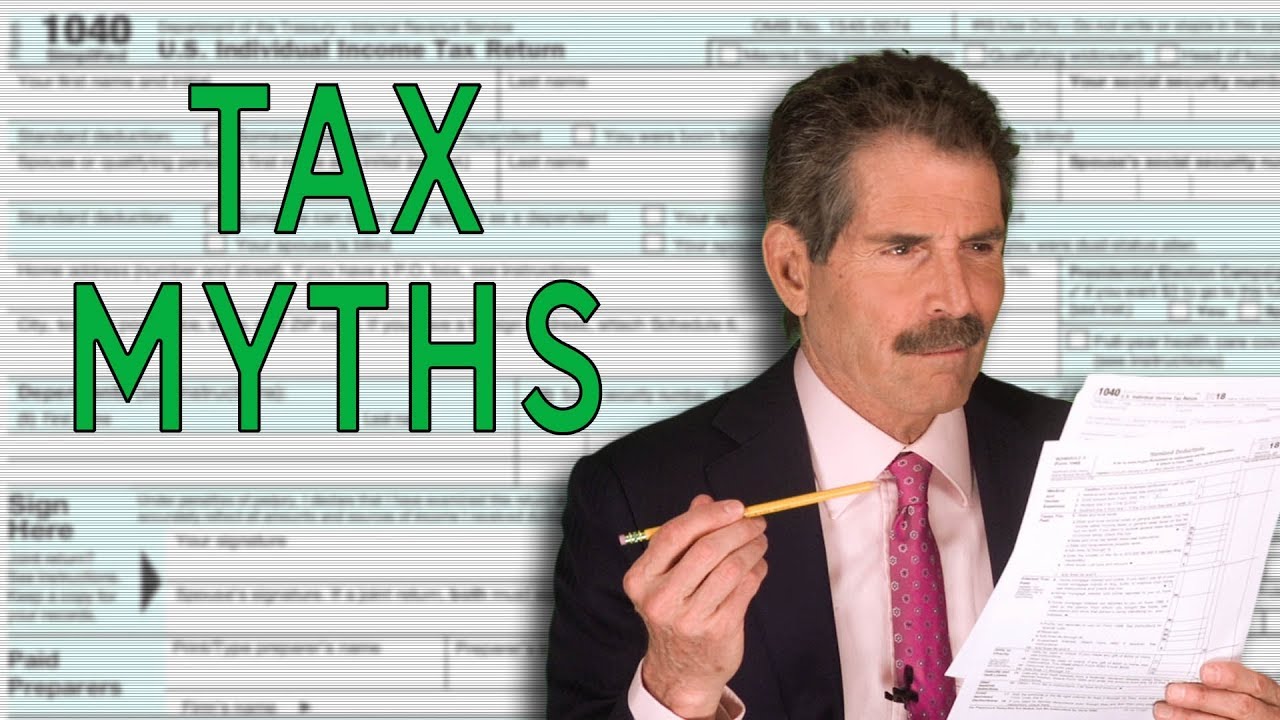 ” John Stossel Reports. (March 12, 2019)
“The Contradictions of Fair Hope,” Documentary Film. Whoopi Goldberg, Narrator, Rockell Metcalf, Writer, and S. Epatha Merkerson, Director/Producer (2012)
“The Career of Abolitionist John Willis Menard,” C-Span American History TV, (Aired March 17, 2012)
TEACHING PROFICIENCIES
- Principles of Economics (Micro & Macro)
- Applied Political Economy/Public Choice
- International Trade/International Economics
- Quantitative Research Methods
- Research Methods for Policy Analysis
- Public Administration
Advanced Topics:
- Economic History/History of Capitalism
- History of Economic Thought
- Slavery, Abolition, and the U.S. Civil War Era
- American Political History
- Administrative History of the United States
RESEARCH, POLICY, & SERVICE POSITIONS
Vice President, Association of Private Enterprise Educators (2026-27)
Trustee, Association of Private Enterprise Educators (2023-2026)
Academic Advisory Council, Vinson Centre, University of Buckingham (2023-present)
Review Panelist, National Endowment for the Humanities
Program Chair, Mont Pelerin Society 2023 Regional Meeting, Bretton Woods, NH
Trustee, the Philadelphia Society (2021-2024)
Board of Advisers, Greater Mekong Research Center
Consultant, Organizational Management, Office of the Inspector General – U.S. Postal Service (2007)
Trade Policy Intern, Committee on Ways and Means, U.S. House of Representatives (2004)
DISSERTATION
“From Tariffs to the Income Tax: Trade Protection and Revenue in the United States Tax System” George Mason University, (Defended October 2009)
Committee:
Jack C. High (Chair)
A. Lee Fritschler
Kenneth A. Reinert
Peter J. Boettke
Thomas K. McCraw
---
OFF BS
Dr. Phillip W. Magness is an economic historian specializing in the “long” 19th century United States, as well as general macroeconomic trends. He is a leading expert on black colonization during the Civil War era, and its sometimes-strained relationship with the African-American emigrationist movement of the same period. He studies the political economy of slavery in the Atlantic world, and particularly its relationship to public policy. His broader research extends to the economic history of the United States and includes historical tariff policy, the federal income tax, and the relationship between taxation and wealth inequality. He also researches the economic dimensions of higher education, and the history of economic thought.
Magness’ research has appeared in multiple scholarly venues, including the Economic Journal, the Journal of Political Economy, the Journal of Business Ethics, the Southern Economic Journal, Social Science Quarterly, Public Choice,the Journal of the Early Republic, the Journal of the Abraham Lincoln Association, Slavery & Abolition, Constitutional Political Economy,the International Trade Journal, the Journal of Supreme Court History,and Liberal Education.
His popular press writings have appeared in the Wall Street Journal, Newsweek, Britannica.com, Politico, the Chronicle of Higher Education, the History News Network, and the New York Times.He has fact-checked Politifact, discussed the economics of higher education on NPR’s Marketplace, and presented on Black Abolitionism for C-Span’s American History TV.
Magness holds a B.A. in Political Science from the University of St. Thomas in Houston, Texas. He obtained his MPP and Ph.D. from George Mason University’s School of Public Policy in Fairfax, Virginia, specializing in economic history and international trade. He has taught at Berry College, George Mason University, and American University in the Washington, D.C. region. He is currently the David J. Theroux Chair at the Independent Institute.
Link to Curriculum Vitae
GGL 6 26
[### Phillip W. Magness

Independent Institute
https://www.independent.org › author › phillip-w-magness](https://www.independent.org/author/phillip-w-magness/)
Phillip W. Magness is a Senior Fellow at the Independent Institute and the David J. Theroux Chair in Political Economy.Read more

Missing: KOCH | Show results with: KOCH
[### Author Phillip W. Magness
https://philmagness.com › philip-magness](https://philmagness.com/philip-magness/)
He obtained his MPP and Ph.D. from George Mason University's School of Public Policy in Fairfax, Virginia, specializing in economic history and international ...Read more

Missing: KOCH | Show results with: KOCH
[### On Blacklists, Harassment, and Outside Funders

Academe Blog
https://academeblog.org › 2017/04/11 › on-blacklists-h...](https://academeblog.org/2017/04/11/on-blacklists-harassment-and-outside-funders-a-response-to-phil-magness/)
Apr 11, 2017 — Here Magness refers to a meeting of the Koch-sponsored Association of Private Enterprise Education in Las Vegas last spring, reported in ...Read more
[### Phillip W. Magness

Google Scholar
https://scholar.google.com › citations](https://scholar.google.com/citations?user=XdyCdHoAAAAJ&hl=en)
The Independent Institute - Cited by 1220 - Economic History - Slavery - American Civil War - Trade - Inequality
Missing: KOCH | Show results with: KOCH
[### Phillip W. Magness

AIER
https://aier.org › people › phillip-w-magness](https://aier.org/people/phillip-w-magness/)
He holds a PhD and MPP from George Mason University's School of Public Policy, and a BA from the University of St. Thomas (Houston). Prior to joining AIER, Dr.Read more
Missing: KOCH | Show results with: KOCH
[### A New Study Utterly Fails to Demonstrate the Sinister ...

Reason Magazine
https://reason.com › Latest](https://reason.com/2019/06/26/a-new-study-utterly-fails-to-demonstrate-the-sinister-effects-of-right-wing-philanthropy-at-universities/)
Jun 26, 2019 — Phil Magness over at the American Institute for Economic Research notes that academia, in most significant senses, is still powerfully opposed ...Read more
[### Phillip Magness - PhD program

Universidad Francisco Marroquín
https://doctorado.ufm.edu › tutor › phillip-magness](https://doctorado.ufm.edu/en/tutor/phillip-magness/)
Phillip Magness. Policy historian and Academic Program Director at the Institute for Humane Studies (IHS) at George Mason University. His research areas ...Read more
Missing: KOCH | Show results with: KOCH
[### Stealth Attack on Liberal Scholar?

Inside Higher Ed
https://www.insidehighered.com › news › 2017/07/12](https://www.insidehighered.com/news/2017/07/12/historian-alleges-coordinated-criticism-her-latest-book-which-critical-radical-right)
Jul 11, 2017 — Phillip W. Magness, a historian and former academic program director at the Koch-affiliated Institute for Humane Studies at George Mason ...Read more
[### Phillip W. Magness | Online Library of Liberty

Online Library of Liberty
https://oll.libertyfund.org › people › phillip-w-magness](https://oll.libertyfund.org/people/phillip-w-magness)
Phillip W. Magness is a Senior Fellow at the Independent Institute and the David J. Theroux Chair in Political Economy. He has served as Senior Research ...
Missing: KOCH | Show results with: KOCH
---
AIER
aier.org › people › phillip-w-magness
Magness works at the Independent Institute. He was formerly the Senior Research Faculty and F.A. Hayek Chair in Economics and Economic History at the American ...

Phillip W. **Magness** | The Daily Economy
thedailyeconomy.org › article › article-author › phillip-w-magness
Magness's work encompasses the economic history of the United States and Atlantic world, with specializations in the economic dimensions of slavery and racial ...
aier.org › people-legacy › phillip-w-magness
Aug 24, 2018 ... Magness works at the Independent Institute. He was formerly the Senior Research Faculty and F.A. Hayek Chair in Economics and Economic History ...
Fake Meat: More Entrée or Agenda? | The Daily Economy
thedailyeconomy.org › Daily Economy
Dec 5, 2023 ... Magness works at the Independent Institute. He was formerly the Senior Research Faculty and F.A. Hayek Chair in Economics and Economic History ...
Phil **Magness** | The Daily Economy
thedailyeconomy.org › article › article-author › phil-magness
“As the study and measurement of inequality progresses, Piketty's (and his team's) main estimates have become obsolete and might be properly consigned to ...
aier.org › aier-speaker-series
Suggested Topics: Tax Policy, Economic Inequality, Economics of Higher Education, United States Economic History ... Phil Magness is Senior Research Faculty at ...
An Open Letter to Phil **Magness**, by Don Boudreaux
thedailyeconomy.org › Daily Economy
Oct 24, 2021 ... An Open Letter to Phil Magness, by Don Boudreaux ... “When long-time columnist Don Boudreaux writes to compliment our own Phil Magness, it seems ...
Slavery and the 1619 Project: Phil **Magness** on Words & Numbers ...
thedailyeconomy.org › Daily Economy
"Phil Magness joins AIER Senior Editor James Harrigan and Antony Davies on the Words & Numbers podcast to discuss how the 1619 Project gets the his ...

The Tooth-Fairy Economics of Slavery Reparations
thedailyeconomy.org › Daily Economy
Mar 7, 2023 ... Magness works at the Independent Institute. He was formerly the Senior Research Faculty and F.A. Hayek Chair in Economics and Economic ...

Phil **Magness** | The Daily Economy
thedailyeconomy.org › Archive for Phil Magness
“We need not indulge the bombastic posturing of Trump, or unlikely legislative efforts to strip funding from schools, to conclude that the 1619 Project is ...
---
2X?
[### Independent Institute Names Phillip W. Magness as the ...

Independent Institute
https://www.independent.org › news-release › 2023/12/14](https://www.independent.org/news-release/2023/12/14/independent-institute-names-phillip-w-magness-as-the-david-j-theroux-chair-in-political-economy/)
Dec 14, 2023 — Phillip W. Magness, Ph.D., was formerly the F.A. Hayek Chair in Economics and Economic History at the American Institute for Economic Research.Read more
[### Phillip W. Magness

John Locke Foundation
https://www.johnlocke.org › about › team › phillip-w-...](https://www.johnlocke.org/about/team/phillip-w-magness/)
Dr. Phillip W. Magness is a Senior Research Fellow at the American Institute for Economic Research and the author of “The 1619 Project: A Critique.”Read more
Images
[### Phillip W. Magness

Google Scholar
https://scholar.google.com › citations](https://scholar.google.com/citations?user=XdyCdHoAAAAJ&hl=en)
Phillip W. Magness. The Independent Institute. Verified email at independent.org - Homepage · Economic HistorySlaveryAmerican Civil WarTrade ...Read more
[### #190 Sidebar Conversation: Phil Magness on The 1619 ...

The History of the Americans Podcast
https://thehistoryoftheamericans.com › sidebar-conversa...](https://thehistoryoftheamericans.com/sidebar-conversation-phil-magness-on-the-1619-project/)
Dr. Phillip W. Magness is an economic historian and the David J. Theroux Chair in Political Economy at the Independent Institute. Magness' research has appeared ...Read more

[### Phillip Magness

CFG Foundation
https://clubforgrowthfoundation.org › Fellow](https://clubforgrowthfoundation.org/fellow/phillip-magness/)
Dr. Phillip W. Magness is an economic historian specializing in the United States. He currently holds the David J. Theroux Chair in Political Economy at the ...Read more

[### Phillip W. Magness

AIER
https://aier.org › people › phillip-w-magness](https://aier.org/people/phillip-w-magness/)
Phillip W. Magness works at the Independent Institute. He was formerly the Senior Research Faculty and FA Hayek Chair in Economics and Economic History.Read more

[### Phillip W. Magness: books, biography, latest update

Amazon.com
https://www.amazon.com › stores › author](https://www.amazon.com/stores/author/B004IA7HBI)
Phil Magness is a political and economic historian of the "long" 19th century US (1787-1920). His work aims to foster our understanding what Tocqueville and ...Read more

[### Phillip W. Magness

Reason Magazine
https://reason.com › people › philip-magness](https://reason.com/people/philip-magness/)
Phillip W. Magness is the David J. Theroux Chair in Political Economy at the Independent Institute.Read more

[### Phillip W. Magness | C-SPAN.org

C-SPAN
https://www.c-span.org › person › phillip-w-magness](https://www.c-span.org/person/phillip-w-magness/64830/)
On the C-SPAN Networks: Phillip W. Magness is a Senior Fellow for the Independent Institute with five videos in the C-SPAN Video Library; the first appearance ...Read more
---
==