butina 2 bak
---
congrats, primary
SEE MAIN
see collusion
see seth abramson bk
SEE MAGA MIKE JOHNSON
---
hero's welcome a posh gig on return, on TV
PENSION?
---
---
:{december 19, 2018 wapo
Russian national Maria Butina recently pleaded guilty to acting as an unregistered agent for her government during the 2016 presidential campaign, revealing how well Russia knows the fault lines of U.S. politics and culture, and the extent to which it will go to divide and conquer American democracy.
Russia’s target was the National Rifle Association, which represents the zenith of discord and dysfunction in U.S. politics. With a stranglehold over Republican officeholders, the organization has stoked the most polarizing cultural fracture in the United States: the gun debate.
The debate is deeply polarizing, even though consensus exists on both the left and the right about the need for greater regulation, evidenced Tuesday by the Trump administration’s ban on bump stocks. Yet the NRA has spent decades inflaming fears of “big government” by pushing the concept that any common-sense gun control represents an attack on the Second Amendment. Russia seized on the gun debate because it is ripe for misinformation that can further polarize Americans, even when Americans agree more than they disagree.
Founded in 1871 by a Union army veteran to encourage greater marksmanship and sports shooting, the NRA has only recently become a powerful, and controversial, political force. The group began to develop an interest in politics during the 1930s, but it was not until 1975 that the NRA created its Institute for Legislative Action (ILA) to defend the Second Amendment from supposed legislative threats.
Although the NRA was influential in forming federal gun laws between the 1930s and 1960s, it was not until the mid-1970s that politics became its raison d’etre. That shift happened just as the politics of the group began to change. Before 1977, the NRA represented the national consensus on common-sense gun regulations, even agreeing with the need for sales of handguns to be subject to background checks. Enter Harlon Carter. Carter took charge of the ILA in its first year of operation and demanded that the NRA become more politically focused, leading to his dismissal in 1976. At the NRA’s annual convention in 1977, however, Carter regained power after being elected executive vice president. From this position, he dictated the NRA’s rise to power as an anti-regulation lobbying force.
The NRA’s political turn transformed it into a prominent partisan group with a highly engaged membership and, eventually, the ability to defeat any meaningful gun-control legislation. There was a clear synergy between the political rhetoric of the NRA and Republicans’ opposition to federal initiatives that supposedly transgressed American liberties. As the NRA became a powerful fundraiser, supporting congressional candidates for the first time in 1980, Republicans became submissive to its demands.
Over time, that left it an increasingly partisan organization, as Democrats sympathetic to the NRA’s agenda and Republican proponents of gun control left office. The NRA gained newfound political might after Democrats muscled the Assault Weapons Ban through Congress in 1994 and lost control of both chambers the same year, with veteran Democrats crediting their defeat to the NRA’s opposition. Party leaders concluded that crossing the NRA in the future would be politically deadly.
The NRA also became an increasing political powerhouse, thanks to prolific fundraising. In the first presidential election cycle following the 1999 Columbine massacre, then the United States’ deadliest school shooting, the NRA raised $20 million for elections on both the federal and state level. By 2016, the NRA dwarfed this figure, disbursing $419 million in an attempt to avoid a continuation of Obama-era gun control advocacy under Hillary Clinton.
The organization also wasn’t shy about working to defeat Republicans in primary elections who crossed its priorities.
As a result, despite tragic and horrific school shootings, like the mass shooting that occurred at Sandy Hook Elementary School in Newtown, Conn., six years ago this month, gun-control measures remain bottled up in Congress. The inability of Congress to protect American citizens through bipartisan legislation at the federal level has resulted in a patchwork of gun regulations across the country, with so many loopholes that states’ stricter laws are rendered largely meaningless as people and guns cross state lines.
In October 2017, following the massacre in Las Vegas, there was a brief moment of bipartisan reconciliation as people became familiar with the accessibility of bump stocks, which allow a semiautomatic weapon to become akin to a fully automatic killing machine, producing the carnage that occurred on the Strip.
And yet even with the support of President Trump, the ban on bump stocks was delayed for almost 15 months, due to the intransigence of some lawmakers and the persistent lobbying of the NRA. Depending on where one stands on this issue, the ban indicates either Trump’s lack of appreciation of the hold the NRA has on his party or the faintest glimmer of moral courage (or at least an ability to read the polls).
Russia’s infiltration of the NRA represents an ingenious maneuver to sow greater disunity among U.S. voters. It’s also instructive to Americans about the danger of the NRA. The group exacerbates fault lines in the ongoing culture wars, even though Americans have far more in common on gun laws than the NRA would like them to believe. The power wielded by the organization distinguishes it as a special interest that contorts democracy, making it the perfect tool for Russia.
Russia understands that the NRA’s ability to polarize Americans are part of a self-destructive tendency within American political debates. The Parkland shooting in Florida earlier this year and the March for Our Lives movement that followed quickly turned into a partisan brawl during this midterm election year.
While checks and balances protect U.S. democracy, there are only limited checks on accessibility to guns. The proliferation of mass shootings and increasing gun violence — just-released Centers for Disease Control and Prevention data revealsthat more people died from guns last year than in any other year since at least 1968 — exposes how the greatest threat to American peace and prosperity is sometimes divisions among Americans themselves. The Russians understand that. It’s past time Americans understand it, as well.
Laura Ellyn Smith teaches at Oxford University while undertaking a second doctorate in U.S. history. She is also an adjunct assistant professor at Richmond the American International University.follow on X @OvalOfferings
==
===
newsweek 2023 oct
Mike Johnson's Campaign Contributions From Company Tied to Russia
a group of Russian nationals were able to donate to newly elected House Speaker Mike Johnson's campaign in 2018 by funneling the money through a U.S. company.
The Texas-based American Ethane company previously donated tens of thousands of dollars to the campaigns of Louisiana Republicans including Johnson, who was voted by the House to replace Rep. Kevin McCarthy as Speaker on Wednesday following three weeks of GOP chaos in the lower chamber.
While American Ethane was run in 2018 by American John Houghtaling, 88 percent of the firm was owned by three Russian nationals—Konstantin Nikolaev, Mikhail Yuriev, and Andrey Kunatbaev.
Johnson's previous Russian campaign donations have been brought up as people criticize the Republican following his election to House Speaker, a position which is second in line to the presidency behind the vice president.
Johnson's office has been contacted for comment via email.
One of the men behind the company, Nikolaev, an oligarch with close ties to Russian President Vladimir Putin, was also found to have financially backed Maria Butina, a Russian citizen who lived in Washington D.C. Butina was sentenced to 18 months in prison in 2019 after admitting to acting as an unregistered foreign agent to infiltrate conservative political groups and influence foreign policy to Russia's benefit before and after the 2016 election.
Johnson's former campaign manager, Jason Hebert, previously told The Advocate that the campaign returned the money given to them by American Ethane in 2018 once it was "made aware of the situation."
Sharing a subpoena issued as part of Special Counsel Robert Mueller's Russia investigation in 2018, Los Angeles-based attorney Ronald Lebow posted on X (formerly Twitter): "Besides being supportive of the attempted coup, Johnson received money from Russian Oligarchs and was known to Marina Butina, the Russian spy/go between funneling money from Putin to the NRA and Republicans like Johnson."
Fellow X user @Davegreenidge57 wrote: "Putin pal Konstantin Nikolaev, who handled Russian spy Maria Butina, was also the principal stockholder in American Ethane Co. when they donated over $37,000 to Mike Johnson's election campaign. Does anyone else think that might be a problem?"
---
---
7 23 y
no lnx pix
Table of Contents
The chapter you are now reading is in bold. Any chapters already published are active links to those chapters as published here at Proof in 2023.
Introduction: A Theory of the Case
Date: October 2018
Chapter 1: Russia and the Trumps
Dates: 1987 to 2012
Chapter 2: Trump and the Agalarovs
Date: 2013
Chapter 3: Kompromat
Date: November 2013
Chapter 4: The Campaign Begins
Dates: 2013 to 2015
Chapter 5: The National Security Advisory Committee
Dates: January to March 2016
Chapter 6: The Mayflower Hotel
Date: April 2016
Chapter 7: The Backchannels
Dates: May to June 2016
Chapter 8: The Republican National Convention
Date: July 2016
Chapter 9: The Hunt for Her Emails
Dates: July to September 2016
Chapter 10: The October Surprise
Date: October 2016
Chapter 11: The Transition
Dates: November 2016 to January 2017
Chapter 12: The Firings of Flynn and Comey
Dates: February to May 2017
Chapter 13: Testimony and Plea
Dates: June to December 2017
Chapter 14: A Nation in Suspense
Date: 2018
Afterword: The Death and Rebirth of America
Date: 2019
Chapter 4: The Campaign Begins
2013 to 2015
Summary
Not long after the 2012 presidential election, the Kremlin begins its preparations for the 2016 election in the United States, dispatching two spies to America with the goal of infiltrating the right-wing National Rifle Association and creating a backchannel between Moscow and national leaders of the Republican Party. At the same time, the Kremlin becomes more aggressive in its efforts to reach out to Donald Trump, as the signs that he is going to run for the U.S. presidency are by mid-2013 unmistakable.
The Kremlin is successful in its plan to infiltrate the NRA, as well as in its efforts to push Trump toward a foreign policy more favorable to Russia by dangling Moscow land-development deals in front of him. It is unclear as of 2015 whether the Kremlin plans to simply influence NRA brass into contributing a record amount of money to Trump’s 2016 presidential campaign or whether it wants to funnel illegal campaign contributions directly to Trump through the organization. In 2018, Special Counsel Robert Mueller will investigate both possibilities. What will be clear by Election Day 2016 is that an unprecedented volume of NRA political contributions was essential to the success of Trump’s 2016 presidential run.
As soon as Trump announces his candidacy on June 16, 2015, at Trump Tower in New York City, he begins lauding Russian president Vladimir Putin, denigrating sanctions on Russia, and harping on the need for better relations with the Kremlin—even as a longtime business partner of his with ties to both the Kremlin and the Russian mafia is trying to help him parlay his pro-Russia foreign policy into a sizable payday in the Russian real estate market. Meanwhile, both Trump and his eldest son Donald Trump Jr. strengthen their bonds with the NRA—which will, in May 2016, issue an unusually early endorsement of Trump.
As the Weekly Standard will note in February 2017, “There are many claimants to the honor of having nudged Donald Trump over the top in the presidential election. But the folks with the best case are the National Rifle Association and the consultants who made their TV ads.”
The Facts
Alexander Torshin, Russian who courted NRA leaders, sanctioned by US Treasury - ABC News
ABOVE: Aleksandr Porfiryevich Torshin.
From 2013 through 2017, Alexander Torshin (a.k.a Aleksandr Porfiryevich Torshin)—a Russian politician with ties to Russian intelligence—and his mentee Maria Butina, a twentysomething Russian student who will eventually be charged with Conspiracy and Acting As An Unregistered Foreign Agent, seek to infiltrate the NRA as part of a plot to create a backchannel between the Kremlin and Republican Party leaders. The tripartite plot involves making a social connection with powerful NRA members and GOP operatives; constructing a bogus “gun rights” organization in Russia to create sympathy of purpose with American gun owners; and finally encouraging the NRA to give generously to one 2016 presidential candidate in particular: Donald Trump.
As related by Rolling Stone in April 2018, Torshin is a member of Putin’s political party with “close ties to Russia’s internal security service, the FSB, which awarded him a medal in 2016.” According to the CIA’s former Russian operations chief Steven Hall, “[Putin] decided Mr. Torshin [was] going to be the guy to do it for him”—“it” being, as Rolling Stone phrases it, “exploit[ing] the American gun lobby.” That exploitation involves “forg[ing] a quick friendship” between NRA president David Keene and a Russian sister organization to the NRA, despite the fact that, as Hall puts it, “the idea of private gun ownership is anathema to Putin.”
As Torshin is working on connecting the Kremlin to powerful NRA members and, later on, Republican politicians, prosecutors in Spain—who, according to Bloomberg, deem Torshin a Russian mafia “boss”—are investigating him for money laundering. In May 2018, Spanish officials, suspecting Torshin of “involvement in money laundering and organized crime”, will turn wiretaps from their investigation to the FBI, saying publicly of the recordings—on which Torshin is referred to by Alexander Romanov, a mob-linked former Russian banker, as “El Padrino”, meaning “godfather”—that “Mr. Trump’s son [Donald Trump Jr.] should be concerned.”
Prosecutors eventually decide not to charge Torshin—not due to lack of evidence, but because they don’t believe the Kremlin would extradite him to Spain.
Lover or cover? Maria Butina and the romance at the heart of an alleged Russian influence operation - ABC News
ABOVE (left): Maria Butina.
In 2013, the then twenty-four-year-old Maria Butina begins a romantic relationship with the then fifty-four-year-old Paul Erickson, an influential GOP operative and NRA member. Per a July 2018 Mother Jones summary of NRA-Russia collusion and subsequent indictments against Butina, Butina was hoping, through Erickson, to establish a backchannel between the Kremlin and Republican leadership. In short order she is cohabiting with Erickson, and Erickson has begun paying many of her expenses through a company established for this purpose called “Bridges, LLC.”
By the fall of 2013, Erickson has assisted Butina in getting close to NRA president David Keene. In November, Butina and Torshin host Keene in Moscow. In January 2014, Keene publishes an essay by Torshin in the Washington Times, where Keene is editor of the opinion pages. Torshin and Butina both then “join Keene for meetings” at the 2014 NRA convention in Indianapolis, Indiana. In the fall of 2014, Erickson travels to Moscow with Butina for a gun-rights event.
Lover or cover? Maria Butina and the romance at the heart of ...
ABOVE: Paul Erickson (left) with Butina. In November of 2019, Erickson pleaded guilty to Wire Fraud and Money Laundering in federal court in relation to an oil development scheme. Erickson would have served seven years in prison beginning in July 2020, but on his last day in office President Trump granted him a full pardon.
In February 2015, Trump declines to renew his contract with the NBC reality show The Apprentice, confirming something that had been an open secret in GOP circles since 2013—that he plans a run for the presidency. The assumption that Trump will seek the White House in 2016 is predicated in part on statements made by Trump to Republican leaders in New York in December 2013, at which point he “predicted he would begin [his presidential run] in 2015.”
In March 2015, Trump and Torshin attend the annual NRA conference in Nashville, Tennessee, and have a “jovial exchange” according to Torshin. Butina is also at the conference and has a “private meeting” with a “political candidate”; it’s not known whether the candidate was Trump. Regardless, Torshin leaves the NRA conference considering himself now an “acquaintance” of Trump’s. On November 8, 2015, he will tweet from his personal Twitter account, in response to allegations of racism against Trump, “I know Donald Trump (through NRA). [He is] a decent person.” In 2017, he will secure an invite to the National Prayer Breakfast and, afterward, a spot on then-President Trump’s schedule for a private audience. According to five Yahoo News sources, Trump’s team cancels the post–Prayer Breakfast Trump-Torshin meeting because Torshin is suspected of being a “godfather” in the Russia mafia. The White House will later say that no such meeting was ever scheduled and—for good measure—Trump will deny having ever met Torshin at the White House or anywhere else.
From the moment Trump formally announces his presidential candidacy on June 16, 2015, he tends to discuss two topics with great regularity: first, how good he will be at “getting along” with the Russians and “making deals” with them; second, how well he knows Vladimir Putin and, moreover, Putin’s perspective on whom he can (and whom he wants to) “make deals” with.
Less than a month after he announces his candidacy, on July 11, 2015, Trump is at a libertarian event in Las Vegas called “FreedomFest” conducting a Q&A session. He calls on a young woman from Russia—as we now know, Maria Butina—who says she would like to know Trump’s position on sanctions, and also what sort of relationship he’d like to have with Putin and Russia if he’s elected president. The press conference is being recorded. Trump answers her question by saying, “I know Putin, and I’ll tell you what, we get along with Putin. Putin has no respect for President Obama. Big problem. Big problem. . . . I believe I would get along very nicely with Putin. . . . I don’t think you’d need the sanctions. I think that we would get along very, very well. I really believe that.” Trump also expresses the view that the United States “has driven [Russia and China] together with the big oil deals that are being made”—the implication being that it would be better for Russian oil to flow westward rather than eastward, and that the anti-Russia policies of the Barack Obama administration have engendered greater Russian-Chinese cooperation.
Trump doubles down on immigration comments in Vegas speech | PBS News Weekend
ABOVE: Donald Trump at FreedomFest in Las Vegas in July 2015.
Ten days after he says at a televised event that he opposes sanctions on Russia, Trump receives an invitation to come to Moscow from Aras Agalarov. The invitation, communicated by Emin Agalarov’s publicist Rob Goldstone to Trump’s secretary, is ostensibly for Aras’s birthday party in November 2015—but contains a promise that Trump can meet with President Putin in person if he comes to the party. Goldstone tells Trump’s secretary Emin will set up the meeting with Putin if Trump agrees to it.
Within sixty days of Trump telling Butina at FreedomFest that he doesn’t see the need for sanctions on Russia, longtime Trump business partner and Russian mafia-linked fixer Felix Sater has approached Trump’s lawyer Michael Cohen with a new business opportunity. Sater has been promising Trump a new Moscow tower deal since 2005 but has been unable to deliver for a decade; now, suddenly, he has a willing investor by the name of Andrey Rozov. Sater and Rozov have both been on the executive board of a Moscow real estate company called Mirax Group since 2008, but until Trump makes his announcement of a presidential run and airs his staunch opposition to American sanctions against Russia, Rozov betrays no interest in partnering with Trump. Now, he agrees to let Sater approach Cohen with the idea.
Trump's Business Partners Allegedly Involved In Human Trafficking, Mafia Matters, Probable Money Laundering
ABOVE: Trump (center) with Aras Agalarov (right) and his son Emin Agalarov (left).
تويتر McAleer & Rushe على تويتر: "Graham talking to Andrey Rozov head of real estate UFG WM Russian investment partners. #IHIF2016 #Berlin https://t.co/Kha3mf0WEk"
ABOVE (right): Andrey Rozov. Per this news report, the Kremlin unexpectedly granted Rozov amnesty on a Negligent Homicide charge just 120 days before he approached Donald Trump with an offer to build a Trump Tower Moscow with him.
Saterfollows a September 2015 email proposing the idea to Cohen and Trump with an October email containing a signed Letter of Intent from Rozov and a note from Sater saying that Trump agreeing to build a Trump World Tower Moscow would “possibly fix relations between the countries [Russia and the United States].” It appears that at least the September communication between Sater and Cohen has been kept from everyone at the Trump Organization but Trump; on September 30, 2015, Alan Garten, the chief legal officer of the Trump Organization, tells ABC News that “there’s really no direct relationship” between Sater and the Trump Organization and “I don’t know that he ever brought any deals.” The statement is false.
In October of 2015—while Cohen is communicating with Sater on a Trump Tower Moscow deal even as his client, Donald Trump, runs for president—Cohen receives yet another offer from Russia (Trump’s third since 2013, at a minimum) to build a Trump Tower in Moscow. This new proposal comes from Russian billionaire Sergei Gordeev, whom the Washington Post calls a “Moscow real estate mogul who served through 2010 as a Russian legislator.” Gordeev indicates, through an intermediary—“an international financier [Gordeev] had worked with in the past, Giorgi Rtskhiladze”, according to the Post—that the deal he’s offering Trump would involve a “Trump-branded residential development.” That month, Gordeev and Rtskhiladze send Cohen a thirteen-page proposal and pictures of the prospective site. Cohen turns down the request, but only because—as he explains to Rtskhiladze—Trump is already working on a deal for a Trump Tower in Moscow.
Businessman involved in Trump Tower Moscow discussions tells his side of the story
ABOVE: Giorgi Rtskhiladze, the Michael Cohen business associate who would eventually write the Trump attorney to confirm that the Kremlin indeed had kompromat material on Trump collected at the Ritz Moscow in November 2013.
Felix Satertells Cohen in his October 2015 note that “we” (Sater and Cohen) “will help [Putin] agree on [the] message” the construction of the tower is intended to embody: “that commerce & business are much better and more practical than politics.” Sater tells Cohen and Trump that the goal of this deal is to “help world peace and make a lot of money.” What exactly Trump must do to “help world peace” in order to “make a lot of money” is not specified in Sater’s note, but when Trump mentions Russia on the campaign trail, much of the time he emphasizes the need to get along with Moscow and—more particularly—to make deals with Putin that would include eliminating all U.S. sanctions against Russia. It is the fifth month of his 2016 presidential campaign.
How a Lawyer, a Felon and a Russian General Chased a Moscow Trump Tower Deal - The New York Times
ABOVE: Trump with Felix Sater. After years of working one-on-one with Sater, Trump will say under oath in a deposition that he can’t picture his face and is not sure he knows him. The Washington Post reports Trump told 30,573 lies as president.
On November 3, 2015, Sater writes Cohen to say, “I know how to play it, and we will get this done. Buddy, our boy can become President of the United States of America and we can engineer it. I will get all of Putin’s team to buy in on this.” By the time he sends this note, Sater has lined up financing for the Trump-Rozov tower with VTB—a then sanctioned Kremlin-owned bank. The next month, however, new sanctions are leveled against VTB, meaning that unless Trump wins the presidency and removes U.S. sanctions on Russia, he won’t be able to get the money Sater has secured for him.
Sater, knowing the connection between Trump’s Russia policy and his ability to get a Trump Tower Moscow approved by the Kremlin, adds in his November 2015 email to Cohen that he is “eager to show video clips to his Russian contacts of instances of Mr. Trump speaking glowingly about Russia, and . . . he would arrange for Mr. Putin to praise Mr. Trump’s business acumen.” “If he [Putin] says it we own this election”, Sater writes Cohen. “America[’]s most difficult adversary agreeing that Donald is a good guy to negotiate [with].” Sater’s view is that Trump announcing—and Putin implicitly blessing—a Trump Tower Moscow in late 2015 or early 2016 will help propel Trump’s presidential campaign forward. It is the most explicit juxtaposition of politics and business that any of Trump’s business associates have proposed to date.
In January 2016, however, this mark will be bested. Cohen contacts Dmitry Peskov, the Kremlin’s spokesman, to directly ask for the Kremlin’s help with Trump’s Trump Tower Moscow deal with Rozov. That Cohen seeks Kremlin assistance on a financial transaction even as Trump is pushing his pro-Russia foreign policy with voters—and that Trump has chosen to hide this transaction not only from voters but from many at his own company—is an indication that Trump and members of his inner circle are working on two simultaneous tracks with the hope that each will reinforce the other.
By late 2015, Alexander Torshinis hosting two dinners in Moscow for a high-level NRA delegation that includes NRA president David Keene, NRA mega-donor Joe Gregory, NRA board member Pete Brownell, and Sheriff David A. Clarke, a Trump supporter who will later become a key Trump surrogate. These men are joined at one of their Moscow dinners by Dmitry Rogozin, a “hardline deputy to Putin” who is at the time (and still is) under U.S. sanctions. During the delegation’s visit, members are also introduced, according to reporting by McClatchy, to other “influential Russian government and business figures.”
In December 2015, retired U.S. Army lieutenant generalMichael Flynn, who has been advising Donald Trump and four other GOP candidates on national security issues for at least two months, goes to a gala in Moscow in celebration of the Kremlin’s media outlet, RT, for whom Flynn works as an analyst. He is seated immediately to the right of Putin. Former U.S. ambassador to Russia Michael McFaul will later tell NBC, “Of course, it is not coincidence that General Flynn was placed next to President Putin. Flynn was considered a close Trump advisor. . . . Why else would they want him there?” Flynn will fail to report any of his income from the event—roughly $40,000.
President Trump Says Michael Flynn Is 'a Very Good Person' | Time
ABOVE: Michael Flynn.
One of the other candidates Flynn is advising is Ben Carson. One of Carson’s national security advisers is George Papadopoulos. Papadopoulos will be hired as a member of Trump’s national security team, after an interview with Trump campaign cochair Sam Clovis and at a time when Flynn and the only just-onboarded Sen. Jeff Sessions (R-AL) constitute the entirety of the Trump campaign’s national security advisory apparatus.
In 2016, the annual NRA conference is held in Louisville, Kentucky, and once again Torshin and Butina attend. Several days before the conference, Butina’s boyfriend, Erickson, writes Trump campaign aide Rick Dearborn to inform the Trump campaign that the Kremlin is “quietly but actively seeking a dialogue with the United States that isn’t forthcoming under the current administration”, adding that “the Kremlin believes that the only possibility of a true reset in this relationship would be with a new Republican in the White House.” Erickson notes that Torshin will attempt to make “first contact” with the Trump campaign at the NRA convention. Erickson adds, “Putin is deadly serious about building a good relationship with Mr. Trump. He wants to extend an invitation to Mr. Trump to visit him in the Kremlin before the election.”
George Papadopoulos asked Trump for a pardon
White House blocks former top Trump aides from testifying - ABC News
TAKEAWAYS: Trump's safe for now, but company's in hot water – Oneida Dispatch
ABOVE (top to bottom): George Papadopoulos, Rick Dearborn, and Alan Futerfas.
At the same time that Torshin approaches Dearborn through Erickson, he also uses Rick Clay, whom the New York Times describes as “an advocate for conservative Christian causes”, to get the same message to Dearborn: Putin wants to meet with Trump, and Torshin wants to meet with Trump first to set up the meeting. Dearborn sends the email from Clay on to Jared Kushner, who nixes the idea, according to two sources interviewed by the New York Times. It’s unknown who else if anyone Dearborn or Kushner pass the email to after reading it, but what is certain is that in fact Torshin does end up dining with Donald Trump Jr. at the NRA convention just a few days later.
Per Vanity Fair, Trump Jr.’s attorney Alan Futerfas says the two men engaged in no more than “gun-related small talk”, but according to McClatchy and the New York Times, Torshin was in fact trying to set up a one-on-one meeting between himself and candidate Trump at an event honoring wounded veterans being hosted at a location near the convention; he even told the campaign he was bringing a gift to the event for Melania Trump.
NRA expenditures on the 2016 presidential primaries and general election were far higher than the NRA initially reported, and will eventually reach and possibly exceed $70 million according to a McClatchy report in January 2018. The figure is a record-shattering one for the NRA. Trump, who had originally promised voters he would spend $1 billion of his own money on his campaign, by the end of the primary season has spent only about 6.5% of that total—while paying his own companies $12 million from his campaign coffers in reimbursements for travel, lodging, meals, and other services. In May 2016, upon clinching the nomination, he announces that he will not be financing his general election campaign and will take funds from the Republican National Committee (RNC) instead. Massive spending by the NRA and the RNC on Trump’s behalf make it possible for him to abandon his self-funding promise from the primary and nevertheless be adequately funded for the November election.
In the end, the NRA spends more than the billionaire Trump does on his own election.
The FBI and Special Counsel Robert Mueller will eventually reveal they have initiated an investigation into whether Torshin and Butina affected the NRA’s historic outlay of funds on Trump’s behalf. Torshin will be sanctioned by the U.S. Treasury Department and Butina will be indicted, imprisoned, and deported. As noted by Vanity Fair in June 2018, “The FBI and special counsel Robert Mueller are investigating meetings between NRA officials and powerful Russian operatives, trying to determine if those contacts had anything to do with the gun group spending $30 million [in direct support] to help elect Donald Trump—triple what it invested on behalf of Mitt Romney in 2012. Use of foreign money in American political campaigns is illegal.”
On October 4, 2016, just a month before the presidential election, Paul Erickson writes an email to an acquaintance that reads, “Unrelated to specific presidential campaigns, I’ve been involved in securing a VERY private line of communication between the Kremlin and key [GOP] leaders through, of all conduits, the NRA.”
Annotated History...
---
---
new
https://www.finance.senate.gov/ranking-members-news/wyden-requests-treasury-investigate-sanctioned-nra-linked-russian-arms-manufacturers
oCTOBER 04,2019
Press Contact:
Ashley Schapitl/Keith Chu (202) 224-4515
Wyden Requests Treasury Investigate Sanctioned NRA-Linked Russian Arms Manufacturers
Washington, D.C. – Senate Finance Committee Ranking Member Ron Wyden, D-Ore., today referred the findings of the report, The NRA and Russia: How a Tax-Exempt Organization Became a Foreign Asset to the Treasury Department’s Office of Foreign Asset Control (OFAC) and requested the agency review and investigate state-linked Russian weapons manufacturers, including those visited by the NRA during a 2015 trip to Moscow.
In 2018, Senator Wyden asked OFAC to investigate whether some of the Russian weapons manufacturers, including some the NRA delegation ultimately met with, have evaded U.S. sanctions by utilizing domestic shell companies. The department failed to respond to his 2018 letter.
Wyden wrote, “The report found that these Russian nationals [Maria Butina and Alexander Torshin] working for the benefit of the Russian Federation enticed NRA officials and representatives to travel to Russia with offers of personally lucrative business deals with Russian arms manufacturers, including entities that appear to be wholly or partially owned subsidiaries of entities your office has listed as Specially Designated Nationals and Blocked Persons (SDNs).
“In particular, the report documents meetings between NRA officials and SDNs, including Dmitry Rogozin and Igor Shchyogolev. It further reports on the meetings of NRA officials with employees, officers and other representatives of certain designated entities or entities owned or controlled by SDNs, including Kalashnikov Concern, Molot-Oruzhie, and Tula Cartridge Works.”
---
https://coloradotimesrecorder.com/2018/12/kroenke-executive-paid-russian-spy-maria-butina-to-create-pro-putin-tv-show/12512/
head of a major Colorado media company hired now admitted Russian spy Maria Butina to help him create a television show starring Vladimir Putin as a conservation-minded outdoorsman.
With Butina changing her plea to guilty last week, it’s now official: a Kroenke executive hired a Russian spy to help him pitch a pro-Putin television show starring the Russian President himself.
Jim Liberatore, CEO of Outdoor Sportsman Group (OSG), a division of Kroenke Sports and Entertainment (KSE), met Butina through their shared ties to the National Rifle Association. KSE purchased the Outdoor Channel, with Liberatore at its head, in 2013. He was promoted to CEO of OSG in 2017.
Butina invited Liberatore and his wife to Moscow in 2015 as part of a National Rifle Association delegation she organized along with her Russian handler Alexander Torshin.
Butina’s goal, which has since been detailed by federal prosecutors and in numerous media reports, was establishing a back-channel means of communication to the Trump campaign (and subsequently the administration) via the NRA....
---
new
https://www.alternet.org/2019/06/vetting-disaster-here-are-the-details-behind-the-mind-blowing-connection-between-former-pence-security-advisor-and-admitted-russian-agent-maria-butina/
MSNBC’s Rachel Maddow has had much to say this week about Republicans and the vetting process. And having chastised the GOP over domestic violence allegations involving former Acting Defense Secretary Patrick Shanahan, Maddow turned her attention to Vice President Mike Pence and another “vetting disaster” on Wednesday night — taking him to task for failing to vet his former national security advisor, Andrea L. Thompson (now serving as undersecretary of state for arms control and international security affairs).
Maddow noted that Thompson has had close relationships with admitted Russia agent Maria Butina as well as with Butina’s boyfriend, veteran GOP activist Paul Erickson — and that Thompson’s connection to Butina and Erickson was detailed by the Washington Post’s Josh Rogin in a June 19 report.
“The Marina Butina story is just nuts,” Maddow asserted, describing Butina’s connection to Russian government officials and her efforts to infiltrate and influence the National Rifle Association (NRA) and the Republican Party in favor of Russia. Maddow, describing Rogin’s Post report, noted that in June 2017, Butina “turned up at the wedding of Mike Pence’s national advisor” — and Erickson “was officiating the wedding."
In the spring 2018, Maddow recalled, the U.S. Senate held confirmation hearings for Thompson, who had been nominated for undersecretary of state for arms control and international security affairs. And despite the fact that former Special Counsel Robert Mueller’s Russia investigation was in full swing and Erickson was being investigated for allegedly trying to establish “secret backchannels to the Kremlin,” Maddow explained, Thompson’s connection to Butina and Erickson wasn’t even discussed at the confirmation hearings.
Maddow explained that as part of the position Thompson was nominated for, “you negotiate with Russia. You negotiate with the Russians on arms control treaties. That’s your job.” And Thompson, Maddow added, “never disclosed” to the Senate her ties to Butina or her husband, Wilbert H. Frazier’s Russian ties.
In his Washington Post article, Rogin pointed out, “To be clear, Thompson’s connections with Erickson are not a crime, and Erickson is innocent until proven guilty.”
Butina has been sentenced to 18 months in prison and will be deported back to Russia after serving her time.
---
NEW
https://www.alternet.org/2019/04/the-bizarre-link-between-wisconsin-and-russia/
no lnx
Daily Kos Staff / Daily Kos April 22, 2019
The Mueller Report had plenty of information as to how Russians worked to subvert our elections and gained influence in our current US government. But what jumps out to me is how much of that story and related Russian affairs connected back to Wisconsin.
Our state appears in the Mueller Report as one of a handful in the Midwest that former Trump campaign chair Paul Manafort passed information about to a Russian intelligence agent. The report indicates that this was done to tell the Russians the best way to boost Trump’s chances in those states.
View image on Twitter
Bob Cesca
?
@bobcesca_go
Jesus! Mueller: "Michigan, Wisconsin, Pennsylvania and Minnesota" were discussed between Manafort and GRU operative Kilimnik.
7,595
9:01 AM - Apr 18, 2019
And you may recall that Trump did surprisingly well in all of those states in November 2016. Funny, that.
One of the biggest assists Trump got was in the form of a record investment by the National Rifle Association. Keep that NRA support in mind when you hear about this story from Friday night.
Maria Butina, who has admitted to working as a Russian agent to infiltrate an influential U.S. gun rights group and make inroads with conservative activists and Republicans, asked the court to sentence her to time served ahead of her April 26 sentencing, according to court documents.
Butina, 30, a former graduate student at American University who publicly advocated for gun rights, pleaded guilty in December to one count of conspiring to act as a foreign agent for Russia. She has remained in custody since her arrest in July 2018.
Prosecutors filed a memo on Friday ahead of this week’s sentencing. And check out this segment of that report, which might be familiar to you.
Soon after [Butina] drafted the Diplomacy Project proposal, in April 2015, she traveled to the United States to attend the Gun Rights Organization (aka the NRA) annual meetings with the Russian Official, where she highlighted her experience as a gun-rights advocate in Russia and was introduced to influential members of Political Party 1, one of whom announced his Presidential campaign shortly thereafter. Statement of Offense at 3. She did so in furtherance of the conspiracy’s goal to establish the back channel of communication as laid out in the Diplomacy Project. Id. at 3. Butina attended this announcement event in July 2015 and, after being tasked by the Russian Official to do so, wrote a report to him in which she emphasized the fact that she was introduced to one of that candidate’s three advisors for matters concerning international politics. A copy of the Twitter chats, along with the report, is attached hereto as Exhibit 4. According to her notes from a meeting with then-Russian Ambassador Sergei Kislyak in May 2015, she said she would “send the name of the advisor [to the candidate whose announcement event she later attended] who can come to Moscow.”
Looks like those Twitter chats will be released when the Butina file is redacted, likely after the sentencing happens on Friday.
But who was this candidate that Butina and Putin-appointed central banker Alexander Torshin met up with, and whose presidential announcement event did she go to in July 2015?
After Walker washed out of the 2016 election race, the sentencing memo describes how Butina organized a meeting with the NRA back home in Mother Russia.
In December 2015, Butina invited powerful members of the Gun Rights Organization to Moscow as part of the conspiracy’s plan to establish the unofficial channel of communication. Statement of Offense at 3. She actively sought out meetings for this group with high-level Russian government officials, as arranged by the Russian Official. Id. As part of this endeavor, the defendant sought information from U.S. Person 1 about the degree of political influence held by the Gun Rights Organization members in the United States and stressed the need for a “political program” as part of the Gun Rights Organization trip to Moscow. Id. at 3-4.
Following the Gun Rights Organization trip to Moscow, the defendant and the Russian Official discussed the need to “hold the spot” now that “everyone has realized that [the Gun Rights Organization] is a valuable contact,” and she noted that there will be “attempts to seize the initiative.” Exhibit 2. Butina has since confirmed that she was worried about others within the Russian government or a political group or activist noticing that the contacts she had built with the Gun Rights Organization were valuable and cutting her and the Russian Official out of the loop. Just days later, Butina noted to the Russian Official that they would “quietly press” or “put pressure on [members of the Gun Rights Organization] later.”
Guess who was in Russia in December 2015?
View image on Twitter
David A. Clarke, Jr.
@SheriffClarke
Red Square near the Kremlin with a Russian officer. Met earlier with Russian Foreign Minister who spoke on Mid East.
1,078
11:42 AM - Dec 10, 2015
Also don’t forget that a couple of Wisconsin politicians knew about these Russian efforts before the 2016 election, but hid it from unsuspecting Wisconsin voters. In late Summer 2016, President Obama organized a “Gang of 12” to let them know about potential Russian hacking and interference, and 2 of the members of that meeting were then-House Speaker Paul Ryan, and Senate Homeland Security Chair Ron Johnson. That meeting that was kept from public knowledge before the elections after complaints from Senate GOP Leader Mitch McConnell.
I’ve referenced this Bruce Murphy article in Urban Milwaukee from January 2017 in the past, and that’s because it continues to link back to developments in the Trump-GOP-Russia connection. It also points to Johnson being complicit in keeping Wisconsinites from knowing about the Russian garbage that was being sent to their computers, and flat-out lying later on about what intelligence agencies told him.
Russia’s interference with the American elections fit the pattern of a country engaged in disinformation and destabilization efforts across the globe, as Johnson has described it. And Russia’s leader was someone Johnson already suspected of nefarious acts. Johnson had previously sponsored resolutions calling for a full investigation into the murder of a Russian political opposition leader and for an investigation of Russia’s attacks on the Ukraine.
Johnson, in short, had an opportunity to be a patriot and condemn the fact that Russia was now engaged in such activities in the United States. But he issued no resolutions — in fact, not one word — on Russian’s cyber attacks on America.
Worse, he has engaged in his own pattern of misinformation on the subject. After the CIA publicly released a report in January concluding that Russia meddled in the presidential election to help Republican presidential candidate Donald Trump win the election, Johnson issued a statement to the Wisconsin State Journal saying he would “would need more definitive information before drawing further conclusions.” Johnson did not reveal that he had been informed back in September this was happening.
Johnson went on to complain to CNBC that the CIA refused to brief him on Russian hacking, saying “I have not seen the evidence that it actually was Russia,” while failing to note the CIA report’s echoed the briefing he’d received from other intelligence leaders in September.
In addition, Ron Johnson was 1 of several GOP Senators who decided last year’s US Independence Day was a great time…to visit the Russians.
Sounds like investigative media might want to ask some questions of these Sconnie Republicans, why many seem to have no problem hanging out with high-level Russian officials, and ask what’s being done to prevent Wisconsinites from being targeted and propagandized against in 2020. The (non)-answers they give might be quite illuminating.
I’d also like to see Walker, Clarke, Paul Ryan, ex-Trump Chief of Staff Reince Priebus (named several times in the Mueller Report) and Ron Johnson go before Congress and answer some pointed questions in the coming months. They have a lot to answer for in how they’ve allowed our democracy to be threatened over the last few years, and why they don’t seem too willing to do much about it.
---
new cat resurrection:
omfg
https://thinkprogress.org/green-new-deal-jack-abramoff-opposition-trump-ocasio-cortez-mcconnell-a9015688f09a/
Opposition to the Green New Deal is swiftly taking shape, with disgraced lobbyist Jack Abramoff now attached to an effort targeting progressive initiativesincluding the sweeping resolution to combat climate change.
A new political action committee (PAC) was launched on Feb. 7 — the Protect American Values PAC— according to Federal Election Commission (FEC) filings. The New Jersey-based PAC was created by Elizabeth Curtis, whose LinkedIn describes her as a “political compliance associate.” Abramoff is listed as the PAC’s “honorary chairman.”
According to the PAC’s FEC description, it “supports/opposes more than one Federal candidate.” And the PAC has already begun fundraising via emails to supporters.
The effort to fight the Green New Deal through a serious PAC fundraising push comes as conservatives mobilize against the resolution. Senate Majority Leader Mitch McConnell (R-KY) has moved to call for a vote on the proposal in an effort to weaken Democratic support.a
and Abramoff is wasting no time sending emails attacking the Green New Deal and other progressive agenda items on behalf of the PAC.
“Thesesocialists are so confused, and their messaging is getting worse by the minute. They seem to think that cows and airplanes are a threat to our future,” wrote Abramoff in a Feb. 18 email to subscribers, first shared by E&E. He went on to argue that the “radical Left” is working to “force their Green New Deal down your throat” in addition to other proposals, like a 70 percent marginal tax rate.
‘Radical socialism’ and ‘cow farts’: Green New Deal opponents lash out as resolution gains momentum
“Alexandria Ocasio-Cortez wasn’t even in diapers when I started fighting the Left, and I’m about to teach her and her cronies a few things they are going to wish they never learned,” Abramoff wrote in his Monday email.
In reaction to the email, Green New Deal supporter Sen. Brian Schatz (D-HI) pointed to the lobbyist’s scandal-ridden past in a tweet on Tuesday. “If you are undecided on the Green New Deal one data point is that Jack Abramoff has started a super PAC against it,” Schatz wrote.
Indeed, the move marks a dramatic return to the public eye for Abramoff, who pleaded guilty to charges including fraud, conspiracy, and tax evasion over a decade ago. A lifelong conservative who built strong ties with Republican lawmakers and other officials, Abramoff infamously over-billed Native American tribes for casino lobbying, in addition to conspiring to bribe public officials, actions that ultimately led to his imprisonment.
After a six-year prison sentence, Abramoff railed against lobbying and began working as an accountant at a kosher pizza restaurant — a move he touted as an effort to distance himself from money and politics.
But he soon returned to lobbying, working to arrange meetings between President Donald Trump and international officials in countries like the Republic of Congo. He has also been linked to alleged Russian spy**Maria Butina— her partner, Paul Erickson, is a long-time friend and business partner of Abramoff. [vid]
and while Abramoff’s Twitter still describes him as a “former” lobbyist, he is currently registered as one— and now appears to be turning his attention to fighting efforts like the Green New Deal.
Daniel Auble, a senior researcher with the nonpartisan nonprofit Center for Responsive Politics, told ThinkProgress on Wednesday that Abramoff’s history is likely to attract heightened scrutiny.
“Obviously, his past political fundraising was not just problematic but criminal so we will keep a close eye on whatever he does,” Auble said. “Coordination is always a concern with super PACs meaning any return to lobbying activities would warrant even further scrutiny.”
Introduced two weeks ago by Rep. Alexandria Ocasio-Cortez (D-NY) and Sen. Ed Markey (D-MA), the Green New Deal resolution serves as a blueprint for what many climate activists hope will be a host of policy efforts to massively decarbonize the U.S. economy within a decade.
The resolution is backed by progressive groups like the youth-led nonprofit Sunrise Movement, who say the proposal is currently the only roadmap being offered to help the United States avoid a dangerous threshold of global warming. The U.N. Intergovernmental Panel on Climate Change (IPCC) warned in 2018 that the world only had about 12 years left before reaching that tipping-point.
When it was a progressive talking point during the 2018 primaries, conservative figures largely ignored the Green New Deal. But since the resolution’s introduction, opposition has grown rapidly.
Much of that hinges on the bungled release of a “frequently asked questions” document circulated by Ocasio-Cortez’s office. The fact sheet called for dramatically reducing air flights and scaling back “farting cows” in agriculture — both significant sources of greenhouse gases.
While Ocasio-Cortez’s office has downplayed the document and removed it from the representative’s website, Green New Deal opponents seized on its contents immediately, with even Trump tweeting that the proposal would “permanently eliminate all Planes, Cars, Cows, Oil, Gas & the Military[.]”
And now Abramoff’s email on behalf of Protect American Values — entitled “More cows, less Democrats” — also draws on the contents of this document.
It’s unclear whether labeling the Green New Deal a “socialist” effort aimed at hurting farmers and prioritizing train travel will prove a winning strategy. But it is proving an easy messaging tactic. A number of Republican lawmakers have already seized on the furor over the fact sheet and are working to make the Green New Deal a losing issue for supporters.
Part of this effort came last week when McConnell called for a vote in the Senate on the Green New Deal resolution. The move is widely understood to be intended to force Democrats into an uncomfortable position of clarifying their support for the climate initiative. Support for the Green New Deal has ranged among Democrats, with some enthusiastically backing it and others expressing more tepid backing.
Green New Deal’s path forward could lie in infrastructure legislation, experts say
A number of 2020 presidential contenders, including Sens. Elizabeth Warren (D-MA), Kirsten Gillibrand (D-NY), and Kamala Harris (D-CA), co-sponsored the resolution but its specifics remain vague as does what support could ultimately entail. Some Democrats have moreover expressed skepticism about components of the resolution, something McConnell wants to make clear with a Senate vote, one that could fracture the opposition party in the Republican-controlled chamber.
While only 12 senators have endorsed the Green New Deal, Democrats have largely united in critiquing McConnell’s vote effort and slamming the majority leader’s threats. And Ocasio-Cortez has dismissed it as an attempt to “stop this freight train of momentum” powering the Green New Deal.
==
---
cf trms email says trip to give conduit to djt
https://www.alternet.org/2019/02/leaked-documents-incriminate-gop-russia-ties-with-nra-as-a-common-denominator/
Leaked emails obtained by several news outlets contradict the NRA’s denials that it had nothing to do with its members traveling to Moscow to meet top Russian officials on a 2015 trip organized by admitted Russian agent Maria Butina.
Butina, who recently pleaded guilty to federal conspiracy charges after she was accused of working as a Russian agent to infiltrate conservative circles, organized a 2015 trip to Moscow for top NRA officials. While there, they met with Russia’s then-foreign minister, Sergey Lavrov, and other prominent figures as part of an apparent Russian campaign to gain influence with American conservatives.
Several NRA officials told the New York Times on Monday that NRA chief executive Wayne LaPierre “was opposed to the trip” and ordered members not to go. “Given Mr. LaPierre’s power within the organization, it is unclear how such a trip would have proceeded at all despite his opposition to it,” the Times noted.
ABC News reported that internal NRA documents and emails, as well as photos on social media, appear to show that theNRA “was significantly involved in planning” the trip.
Among those who went on the trip was former NRA president David Keene.
An email obtained by the Daily Beast written by Paul Erickson, Butina’s boyfriend and longtime Republican operative, said that Russian Central Bank official and Butina’s handler Alexandr Torshin offered Keene, who was also a columnist for the Washington Times, an interview with Russian President Vladimir Putin.
“[I]mpressing the NRA’s Russian hosts is also the quickest way to secure a private interview with President Putin on behalf of David Keene and the Washington Times— a plum that was dangled in front of Keene by Torshin himself during a recent Torshin visit to Washington, DC,” Erickson, wrote according to the Daily Beast. “High stakes all around.”
Erickson’s email also said that the trip could ease tensions between the U.S. and Russia and pave the way for relations with a future Republican president.
“As we discussed over lunch in Iowa, Russia believes that high level contacts with the NRA might be the BEST means of neutral introduction to either the next American President OR to a meaningful re-set in relations with the Congress under a (God forbid) President Clinton,” he wrote. “This simple good will trip would have enormous diplomatic consequences for a future U.S. / Russia bilateral relationship to the world.”
The emails show thatKeene played a large part in organizing the trip with Butina, and was angry when another NRA official dropped out of the trip, putting Keene’s plans in jeopardy. Despite LaPierre’s claims, the NRA paid for Keene’s travel expenses, at least, and also bought official NRA “gifts” for the Russian delegation, according to the Times.
Among the members who accompanied Keene were Joseph Gregory, co-chair of the NRA’s Golden Ring of Freedom, a group for donors of $1 million or more; and Pete Brownell, the group’s vice president, who later became its president. Brownell also paid for former Milwaukee Sheriff David Clarke, an NRA member, to go on the trip.Brownell later abruptly resigned from the NRA.
Sen. Ron Wyden, D-Ore.,who is leading at least four investigations into the NRA’s ties to Russia, told ABC News that “it’s not credible for the NRA to claim that they played no official role in the 2015 Moscow trip.”
“Americans would rightly be outraged if they learned that officers of a powerful, taxpayer-subsidized organization were offered personal incentives by the Kremlin in exchange for access to elite Republican circles,” Wyden later told The Daily Beast. “That question is right at the heart of my inquiry.”
After the meeting, Butina wrote to Torshin about the successful trip she organized.
“We should let them express their gratitude now, we will put pressure on them quietly later,” she wrote.
Around the same time, Erickson wrote, in an email obtained by the FBI, that he was “involved in securing a VERY private line of communication between the Kremlin and key [unnamed political party] leaders through, of all conduits, the [unnamed gun-rights organization].”
When FBI agents raided Erickson’s South Dakota home, they found a note in whichErickson mused, “How to respond to FSB offer of employment?” The FSB is the Russian state intelligence agency, successor to the infamous Soviet-era KGB.
During this same period, the NRA, relying on an arm of the organization that is not required to disclose its donors, spent a record $30 million helping to elect President Trump, which was nearly three times the $12.5 million it spent to help Mitt Romney’s 2012 campaign. The NRA and the Trump campaign went as far as coordinating their ad buys for maximum impact, The Trace reported.
All this has caught the eye of special counsel Robert Mueller, whose team has been “raising questions about the relationship between the campaign and the gun group,” according to CNN.
Despite mounting suspicions and eyebrow-raising emails, William Hurd, a lawyer for Erickson, dismissed the reports even as his client faces his own possible charges.
Hurd told the New York Times, “Anyone who thinks that a freedom-loving group like the NRA is going to get all cozy with Vladimir Putin is living in Fantasyland.”
==
https://www.alternet.org/2019/01/nra-desperately-backpedaling-from-russia-as-investigators-look-closer/
==
==
no lnx
https://www.thedailybeast.com/maria-butina-pleads-guilty-agrees-to-cooperate-with-us
RED HANDED
Maria Butina Agrees to Cooperate With U.S.
Butina has inked an agreement with prosecutors and becomes the first Russian since the 2016 election to confess to a crime connected to efforts to influence American politics.
Betsy Woodruff
12.10.18 6:10 PM ET
Trump Russia Probe
AP
Maria Butina, a Russian national who cultivated relationships with powerful American conservative activists, agreed Monday to plead guilty to conspiring to violate laws prohibiting covert foreign agents. As part of her agreement, which was reviewed by The Daily Beast, she has promised to cooperate with American law enforcement.
As a result of the deal, Butina will become the first Russian national since the 2016 election to plead guilty to a crime connected to efforts to influence American politics. After running a gun rights organization in Russia, she moved to the United States, where she spent years building relationships with conservatives in hopes of influencing a future Republican presidential administration. During the campaign season, she questioned then-candidate Donald Trump about sanctions; built relationships in the upper echelons of the American gun rights community; arranged for NRA leaders to travel to Moscow; and bragged that she was a channel between Team Trump and the Kremlin, as The Daily Beast first revealed.
She also struck up a romance with Paul Erickson, a longtime Republican gadfly close to NRA leaders. He sang Disney songs with her on camera, called her his “Siberian princess” in emails reviewed by The Daily Beast, and—since her July arrest—has visited her regularly in jail.
In March 2015, according to the plea deal, Butina worked with an unnamed U.S. person—known to be Erickson—to draft a proposal for a diplomatic endeavor. Given the fraught relationships between the governments of Russia and the United States, she “cast herself as a possible unofficial transmitter of communications” between the two countries.
RED MENACE
Cyber, Seduction, and Bumbling: Maria Butina’s Spy Career
Adam Rawnsley
Noting that she had recently attended the conference of an unnamed gun rights group—known to be the NRA—she said she had “laid the groundwork for an unofficial channel of communication with the next U.S. administration,” which she predicted would be Republican. And she asked for a Russian billionaireto give her $125,000 to fund efforts to attend conferences and befriend political power-brokers. She sent the proposal to several people, including an official on the Russian central bank known to be Alexander Torshin. The central bank official told her the proposal “would be supported, at least in part.”
Butina helped arrange a trip to Moscow for NRA leaders in December 2015. She pushed for those Americans to visit with senior Russian politicians, according to the plea deal. The Americans on the trip met with Sergey Lavrov, Russia’s powerful minister of foreign affairs;and Dmitry Rogozin, a deputy of Vladimir Putin and a subject of U.S. sanctions.
After the trip, Butina sent a message to the central bank official in Russian that has two translations in the plea agreement.
RELATED IN POLITICS
Maria Butina’s Beau Finally Lawyers Up
Feds Target Butina’s GOP Boyfriend in ‘Espionage’ Case
All the Witnesses Who Misled Congress’ Russia Probes]
“We should let them express their gratitude now, we will put pressure on them quietly later,” reads the first translation.
:{:{}:
}:
“We should allow them to express their gratitude now, and then quietly press,” reads the second.
Butina also befriended a wealthy, well-connected American who invited her to a “friendship dinner” where he and his peers would discuss U.S.-Russia relations. The deal does not name that American. Before going to the dinner, she emailed its host to say Torshin “is very impressed by you and expresses his great appreciation for what you are doing to restore the relations between the two countries. He also wants you to know that Russians will support the efforts from our side.”
Butina attended several of these “friendship dinners,” according to the plea deal, where she built relationships with powerful Americans and honed her abilities to influence them.
She also helped arrange for a group of Russians to attend the National Prayer Breakfast, which was held on Feb. 2, 2017, according to the plea deal. She emailed Erickson with a list of attendees and said they were coming to the breakfast “to establish a back channel of communication.” Erickson later emailed the list to another person. “Reaction to the delegation’s presence in America will be conveyed DIRECTLY” to Russian President Vladimir Putin and Foreign Minister Sergey Lavrov, he wrote. He cc’d Butina on that email.
During her time in the U.S., Butina updated Torshin on her meetings and conversations. At one point, she asked him whether the Russian “government” was ready to meet with certain, unnamed people.
GREEN BACK
Accused Russian Spy Told American CEO: Send Cash to Moscow
Betsy Woodruff
In July of this year, Butina was arrested and charged on two counts: acting as a covert agent of a foreign government, and conspiring to break federal law by doing so. The specific charge for acting as a foreign agent is colloquially known as Section 951. It’s often confused with the Foreign Agents Registration Act (FARA), but the two are separate. FARA bars secret foreign lobbying, while DOJ lawyers refer to Section 951 as “espionage-lite.” She has only pleaded guilty to the second count, conspiracy. The defense’s estimated sentence for this conviction, according to the plea deal, is up to six months. She has already spent almost five months in jail.
Butina, who turned 30 while incarcerated at the Alexandria Detention Center just south of Washington, has become a figure of geopolitical consequence and international intrigue. The Russian Ministry of Foreign Affairs’ Twitter account made her picture its avatar, along with the hashtag #FreeMariaButina. They claimed she was a political prisoner and a victim of Russophobia. Some Americans—includingKentucky Republican Rep. Thomas Massie—gave credence to that view.
Earlier this week The Daily Beast reported Erickson has received a “target letter” from federal investigators which says they are considering bringing charges against him under Section 951 of the U.S. code—the law barring people from secretly acting as agents of foreign governments.
Butina had once hobnobbed with the stars of the Republican firmament, getting pictures of herself with Gov. Scott Walker, Donald Trump Jr., NRA chief Wayne LaPierre, former Gov. Bobby Jindal, former Sen. Rick Santorum, and former NRA president David Keene. On July 11, 2015, Butina was in Las Vegas at an early rally for Trump’s embryonic presidential campaign, and asked the future president a question about Russian sanctions. Trump gave a surprisingly detailed answer. A year and a half later, she attended the invitation-only Freedom Ball after Trump’s inauguration.
In jail, the quasi-glamor of Washington turned to a nightmare. Like thousands of incarcerated Americans, she struggled with depression and claustrophobia, according to court filings from her lawyers, who say that jail officials never clearly explained why they placed her in solitary confinement for a second stint that began late last month. She was still in solitary when she signed the plea deal.
Feds Target Butina’s GOP Boyfriend in ‘Espionage’ Case
Betsy Woodruff,
Erin Banco
As part of her deal, she has committed to cooperating with American law enforcement “in any and all to matters as to which the Government deems this cooperation relevant.”
Her future is hazy. She may be welcomed in her home country as a celebrity, as a spy named Anna Chapman was after she was deported from the U.S. in 2010. But Butina could also face a darker homecoming; by the time she returns, if she keeps the deal, she may have spent hours sharing information with the FBI. And Torshin has left his central bank post––meaning her closest known ally has lost most of his power.
Without Butina, Erickson’s future looks rough. He remains a target of the feds, and sources close to him tell The Daily Beast he’s struggling to keep up with his legal bills.
Betsy Woodruff
@woodruffbets
betsy.woodruff@thedailybeast.com
Got a tip? Send it to The Daily Beast here.
---
https://www.thedailybeast.com/maria-butina-pleads-guilty-agrees-to-cooperate-with-us
==
no lnx
Accused Russian spy Maria Butina cooperating with federal prosecutors as part of plea deal
By Sara Murray and Katelyn Polantz, CNN
Updated 8:54 AM ET, Tue December 11, 2018
Plea hearing scheduled for accused Russian spy
Plea hearing scheduled for accused Russian spy 02:51
Washington (CNN)Maria Butina, an accused Russian spy who nuzzled up to the National Rifle Association before the 2016 election, has begun cooperating with federal prosecutors after agreeing to a plea deal in recent days, according to a source familiar with the matter.
News that Butina had seemed to reach a deal with federal prosecutors first broke earlier Monday when her attorneys and prosecutors filed a two-page request on Monday for a "change of plea" hearing before a federal judge. "The parties have resolved this matter," the filing in DC federal court said Monday morning. Butina's case was brought by federal prosecutors in DC and not by Robert Mueller's team in the special counsel's office.
Her cooperation will mainly focus on telling investigators about the role of her boyfriend Paul Erickson and her interactions with her Russian handlers. A spokesman for the US Attorney's office in DC declined to comment. Butina's lawyer declined to comment for the story. A lawyer for Erickson also did not immediately respond to a request for comment.
According to the agreement, revealed to CNN, Butina "agreed and conspired, with a Russian government official ('Russian Official') and at least one other person, for Butina to act in the United States under the direction of Russian Official without prior notification to the Attorney General."
ABC News was first to reportButina agreed to cooperate.
A plea hearing has been set for 3:15 p.m. Wednesday where a judge will need to sign off on the deal. The developments on Monday come after several weeks of hints that Butina might negotiate an end to her case -- and after bumps in the case where federal prosecutors, at the height of attention on Russia's influence in American politics, accused the former graduate student of infiltrating Republican organizations in order to advance Russian interests.
Until now, Butina, 30, maintained her innocence and insisted she was simply a foreign student interested in bettering relations between the US and Russia. Butina previously pleaded not guilty to one count of conspiracy and a second count of acting as an agent of a foreign government when she was arrested in July.
Plea deal detailed
The draft filing of the plea deal notes that Butina relied on assistance from Erickson and took direction from her handler -- former Russian banker Alexander Torshin -- as she "sought to establish unofficial lines of communication with Americans having power and influence over US politics. Butina sought to use those unofficial lines of communication for the benefit of the Russia Federation."
Neither Erickson or Torshin is identified by name in the draft but their details make them identifiable based on previously known information.
Butina kept Torshin apprised of her activities and her "assessment of the political landscape in the United States in advance of the 2016 election," according to the draft filing.
At one point, Torshin asked her to provide a note justifying his attendance at the 2016 NRA national meeting. Butina "did as he directed, encouraging his attendance partly because of the opportunity to meet political candidates," according to the document.
Even though the draft court filing takes pains to outline her efforts to make inroads in conservative political circles, it also waters down other allegations prosecutors made in court.
After previously casting her studies at American University as little more than a cover, the draft statement of offense notes: "All available evidence indicates that Butina had interest in a graduate school education."
There's no mention of the sex-for-access allegations prosecutors once laid out in court filings -- only to them walk back later.
Butina's plea offer indicates she will plead guilty to one count of conspiracy, according to a copy of the document obtained by CNN.
Prosecutors estimated a sentence between zero and six months. Butina has already been incarcerated for five months, so the judge could decide to sentence her to time already served.
Her cooperation agreement calls for her to turn over any evidence of crimes she is aware of, submit a full accounting of her financial assets, sit for interviews with law enforcement (and waive right to counsel during those interviews) and testify before grand juries or in trials in DC or elsewhere.
It also notes that, due to her plea, she will likely be deported.
A politically charged case
Her case first became public amid a furor of US-Russia developments. She was arrested two days after the Justice Department separately indicted Russian military intelligence for hacking the Democratic Party, and her case became public the same day President Donald Trump met with President Vladimir Putin in Helsinki, Finland, and declined to endorse US intelligence findings that Russia interfered in the 2016 election.
Butina's case at first appeared to allege she attempted to do just that -- with prosecutors suggesting she offered sex to gain political access and sought out Trump campaign officials. But prosecutors later admitted they made an error in interpreting the text messages they used as evidence to support their claim that she was trading sex for access, drawing a rebuke from the judge overseeing the case.
At a bail hearing in July, in which a judge determined she should be jailed to avoid her fleeing to Russia with the help of Russian diplomats, her attorney argued that her case shouldn't be a proxy fight for US-Russian relations.
It is still unclear if Butina fits into a broader picture of investigations into Russian infiltration in US politics, however, or if she will agree to cooperate in other federal investigations as part of her plea deal.
Prior to her arrest, Butina signaled she would be willing to cooperate with investigators on other probes, such as a fraud investigation in South Dakota into Erickson, who is an American conservative activist. Immediately after her arrest, she became unwilling to help.
Prosecutors in their criminal complaint accused Butina of ingratiating herself with politically powerful Americans and groups, including the NRA, and exploiting those connections to try to advance Russian interests. They alleged she was in regular contact with her Russian backers, including Torshin, a Kremlin-linked banker who has been sanctioned by the US Treasury and that she made contact with Russian intelligence. At one court hearing, prosecutors showed a photo of her dining with a Russian diplomat just north of the embassy just before that man, a suspected intelligence officer, left the US amid a purge of Russian agents.
Prosecutors said Torshin compared her to Anna Chapman, another accused Russian spy who was deported from the US in a prisoner swap in 2010, and that she tried to establish "back channel" lines of communications with American politicians and met Republican leaders as "a representative of informal diplomacy" before the 2016 election.[so did a bunch of others incl eric the dark prince]
The contacts with Americans involved in politics lasted throughout her tenure as a graduate student at American University, according to prosecutors. They had cast her studies as little more than a cover for her spy work.
By changing her plea, Butina will likely be forced to return to Russia upon release from jail. She is currently being held in solitary confinement in a northern Virginia jail. She and her lawyer have repeatedly, and unsuccessfully, argued that she should be released on house arrest or at least moved out of solitary confinement.
Even under scrutiny from federal investigators, Erickson has continued to visit Butina in jail. He has not been charged with a crime.
This story has been updated.
==
12/10 trms did not have new info?
==
https://www.alternet.org/news-amp-politics/maria-butina-pleads-guilty-admits-details
Butina, the Russian gun rights activist who was arrested earlier this year amid questions about her attempts to influence U.S. politics on Moscow's behalf, has changed her plea to guilty on charges of conspiracy, according to a new report from ABC News.
Butina, who has been dating longtime GOP strategist Paul Erickson, is the founder of the Russian organization "Right to Bear Arms." She has long been suspected of trying to influence the National Rifle Association and draw together American and Russian gun rights groups. But according to ABC News, the latest revelations out of her plea deal obtained by the outlet reveal new details about this influence operation:
Butina was arrested in July and accused of ensnaring Erickson in a "duplicitous relationship," using him for cover and connections as she developed an influence operation designed to “advance the agenda of the Russian Federation.” She pleaded not guilty to charges of conspiracy and failure to register as a foreign agent.
But now, according to the agreement, Butina has acknowledged that with U.S. Person 1's assistance, she drafted a proposal called "Description of the Diplomacy Project" in March of 2015 which was later sent to the Russian Official, in which she said that she had already "laid the groundwork for an unofficial channel of communication with the next U.S. administration" and requested $125,000 from a Russian billionaire to attend conferences and meetings to further develop those ties. The Russian Official, the agreement said, confirmed that her proposal would be at least partially supported.
The government has alleged that U.S. Person 1 "worked with Butina to arrange introductions to U.S. persons having influence in American politics," including high-ranking members of the National Rifle Association and organizers of the National Prayer Breakfast, that would ultimately give her a surprising level of access to conservative politicians, including — in one memorable interaction captured on video — to then-candidate Donald Trump.
"U.S. Person 1" is speculated to be Erickson, who is also facing investigation by the U.S. Attorney for the District of Columbia, for acting as an unregistered Russian agent.
It is hardly a surprise at this point that Trump would be close to Russian influence agents. But this information suggests that the plan, at least from Butina's perspective, went deeper than Trump. The revelation that Butina was not only close to major GOP-aligned interest groups, but also attempted to establish a future backchannel between Russian oligarchs and a future U.S. presidency before Trump had even won the GOP nomination, is stunning. And it raises questions about how much knowledge the NRA and conservative politicians had of what was going on.
The public deserves answers on how deep Butina's operation went.
==
NEW
https://www.alternet.org/news-amp-politics/paul-erickson-investigated-maria-butina-russia-nra
==
https://www.desmogblog.com/2018/07/30/american-ethane-nikolaev-trump-russian-spy-maria-butina
---
https://www.rollingstone.com/politics/politics-features/inside-the-decade-long-russian-campaign-to-infiltrate-the-nra-and-help-elect-trump-630054/
November 2013, the president of the National Rifle Association, David Keene, was introduced as an honored guest at the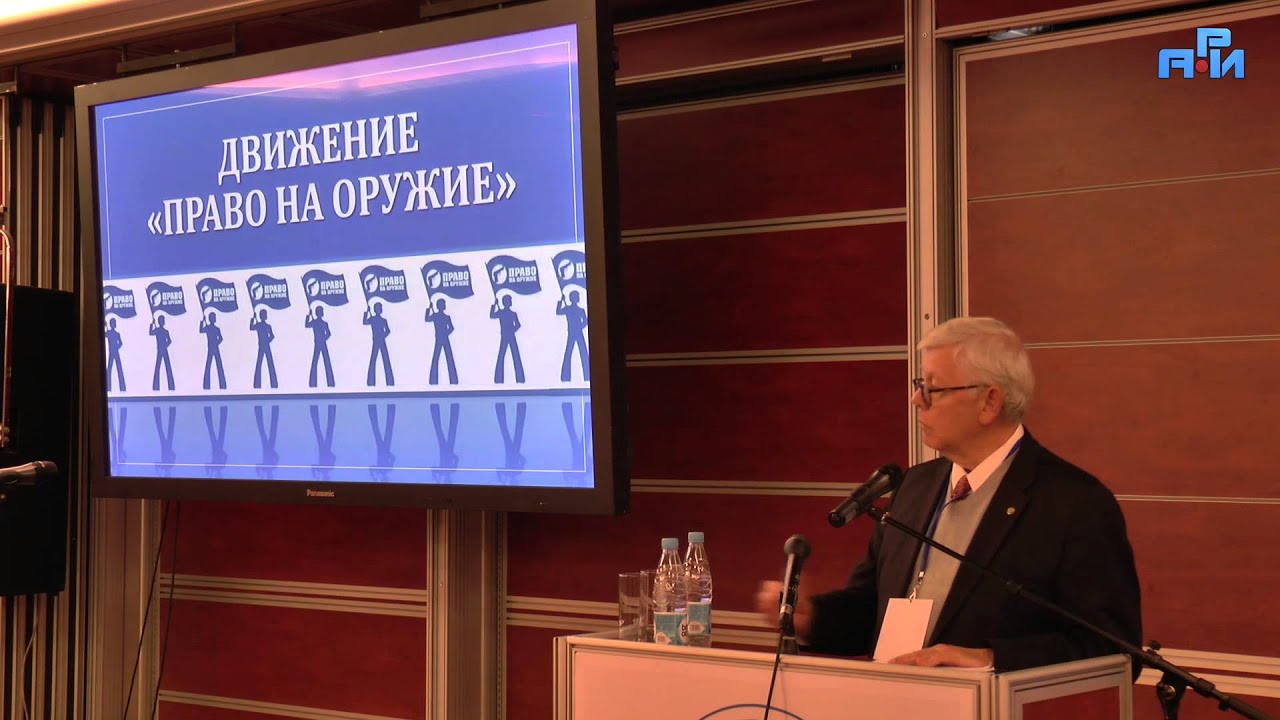 , a gun lobby in Moscow. “There are no peoples that are more alike than Americans and Russians,” Keene said. “We’re hunters. We’re shooters. We value the same kinds of things.” Keene underscored his friendship with Alexander Torshin, a top politician in the ruling party of Vladimir Putin; for the past three years, Keene said, “I’ve hosted your senator Alexander Torshin at the National Rifle Association’s annual meetings.” In words that now carry a darker connotation, Keene insisted, “We need to work together.”
Torshin, now 64, is a roly-poly politician, perhaps five feet six, with thick glasses and a passion for borscht – “like medicine!” he once tweeted. A member of Putin’s right-wing United Russia party, he served in the Russian senate for more than a decade, forging close ties to Russia’s internal security service, the FSB, which awarded him a medal in 2016. His embrace of Keene, says Steven Hall, who served as chief of Russian operations for the CIA until 2015, was about more than forging “an international brotherhood of the NRA.”
As part of Putin’s “active measures,” Hall says, Russia has attempted to influence right-wing and populist factions abroad, preaching unity around social conservatism: “‘We’re both religious-based countries – we have the Orthodox Church that’s a big deal for us.’ ” The Russians, Hall believes, “made a natural transition in the United States to the NRA”; over time Putin became determined to exploit the American gun lobby “and decided Mr. Torshin is going to be the guy to do it for him.”
Keene proved an easy mark.A career lobbyist who advised presidential candidates from Ronald Reagan to Mitt Romney, he was a longtime chair of the American Conservative Union, which organizes the annual CPAC convention. NRA board member Grover Norquist has praised Keene as “a conservative Forrest Gump” who’s been at “the center of all things conservative for decades.” Keene, with a sweep of white hair, owlish glasses and a patrician bearing, might move in cutthroat political circles, but friends say his personality runs against type. “He’s like a teddy bear,” says Alan Gottlieb, founder of the Second Amendment Foundation, who has known Keene for decades. “He’s not hard-edged at all. He’s a gentleman.” (Keene did not respond to multiple interview requests.)
Torshin and Keene forged a quick friendship. “Just a brief note to let you know just how much I enjoyed meeting in Pittsburgh during the NRA annual meeting,” Keene wrote in a 2011 letter later obtained by anti-corruption activists in Russia. Extending a personal invitation to the following year’s event, Keene added, “If there is anything any of us can do to help you in your endeavors . . . please don’t hesitate to let us know.”
RELATED

A Key Russian Figure with Connections to Trump and the NRA Faces Sanctions
Russiagate’s Second Smoking Gun
Torshin’s “endeavors” included a plan to back a gun-rights group in Moscow. “We will start organizing our own Russian NRA,” Torshin soon tweeted. The NRA president seemed flattered, seeing Torshin as a powerful Russian eager to build a gun organization that mirrored his own, and even secured a Russian translation of the NRA charter.
But Russia experts believe Torshin’s interest in U.S. gun culture masked a dark, ulterior motive. “It’s all a big charade, basically,” Glenn Simpson, founder of the research firm behind the infamous Steele Dossier, testified to the House Intelligence Committee. Much of what passes for civil society in modern Russia is, in fact, controlled by Putin. The Senate Foreign Relations Committee published a January 2018 report on “Putin’s Asymmetric Assault on Democracy,” which describes how the Kremlin has “sought to co-opt civil society by ‘devot[ing] massive resources to the creation and activities of state-sponsored and state-controlled NGOs.”
Some of these faux grassroots groups buttress the Kremlin’s domestic agenda. Others are projections of Putin’s foreign policy.Sen. Ben Cardin, the ranking Democrat on the committee, says it is common for Russian groups that “appear to be independent” but are “really Putin groups” to build relationships with civic groups in Western democracies, like the NRA – “to have tentacles,” Cardin says, “to try and influence public opinion here in the United States. It is certainly part of Putin’s MO.”
Hall agrees. “The idea of private gun ownership is anathema to Putin,” he says. “So then the question is, ‘Why?’ ” Why was a pro-gun campaign being hatched by a leader in Putin’s own party? The answer, according to Hall, is that Putin was baiting a trap. “He’s reaching out to attract the NRA, specifically, over to Russia.”
The FBI is now investigating whether Torshin, the current deputy governor of the Russian central bank, illegally funneled cash to the NRA to support the election of Donald Trump, according to a report by McClatchy that has sparked a probe by the Federal Elections Commission. Moscow’s NRA connections have also become a focus of House and Senate Russia investigators. In his House testimony, made public in January, Simpson pointed to “Russian banker-slash-Duma-member-slash-Mafia-leader” Torshin and his “suspicious” protégé, a young gun activist named Maria Butina. “It appears the Russians,” Simpson said, “infiltrated the NRA.”
The NRA spent an unprecedented $30 million to install Trump in the White House. Putin has a long track record of illegally financing nationalist opposition groups in the West. If the Kremlin’s NRA outreach culminated in pumping vast sums into the group’s coffers, America’s lax campaign-finance regulations would have posed no obstacle. “There are so many ways that a group like the NRA could be used to channel Russian money into a race, it’s shocking,” says Robert Maguire, who investigates “dark money” for the Center for Responsive Politics. In a letter to Congress, theNRA has denied wrongdoing; it has not denied accepting Russian money.
The notion that the flag-waving NRA of Eddie Eagle has allied itself with the Russian bear, and the government of former KGB colonel Vladimir Putin, can be hard to fathom. But an investigation by Rolling Stone establishes deeper ties between the NRA and Russia than previously reported. The record reveals this union was the product of a sophisticated Russian influence campaign nearly a decade in the making. By November 2016, Torshin greeted Trump’s election victory as a foregone conclusion, specifically pointing to his and the president-elect’s joint connection to the NRA. “This striking personality has fascinated me for a long time,” he tweeted, in Russian. “Was sure of his victory.”
By Torshin’s own account, his affiliation with the American gun lobby began around 2010, when he became a member of the NRA. His passion for firearms is genuine; Torshin counted Gen. Mikhail Kalashnikov, the inventor of the AK-47, as a friend, and has tweeted, “I love guns.” Nearly as soon as Torshin joined the NRA, he began targeting the gun lobby’s leadership, leaning on a friend, a Nashville lawyer named G. Kline Preston IV. “I’ve probably known him 10 years,” Preston says of Torshin. “He’s one of the finest people I know. He’s a very capable, intelligent, honest man, a very devout Orthodox Christian, very serious about his faith.”
Preston is a jovial Russophile. He studied abroad in Soviet Leningrad in the late Eighties on his way to an undergraduate degree in Russian language and literature. He has moonlighted as a vodka importer and a trader on the post-Soviet stock exchange. In 2006, Preston opened a sister law office in St. Petersburg, where his practice areas included “lobbying members of government bodies in the United States and the Russian Federation.” Torshin met Preston through mutual Russian contacts, and he invited the lawyer to speak to the Russian senate in 2009. “I’m very pro-Putin, honestly,” Preston says in a rich Southern drawl. “He’s been fantastic for Russia.”
A campaign banner from Putin’s 2012 election hangs in Preston’s Nashville office, also decorated with Russian nesting dolls of the Trump family. Preston believes Russia shares the values of the American South, but his own views are reactionary. He calls the Civil War “the War for Southern Independence“; the Confederate Constitution “an improvement“; and has blasted Lincoln as “a terrorist and awar criminal!” In 2013, he posted a meme on Twitter of Barack Obama looking unmanly in comparison to the buff, shirtless Russian leader. Preston wrote, “As long as U.S. is electing foreign-born presidents, I propose Vladimir [Vladimirovich] Putin.”
The Nashville lawyer saw nothing odd about his Russian friend’s desire to meet the NRA president: “Torshin is a gun enthusiast,” he says. And although Preston attends the annual NRA meetings, he didn’t know Keene personally. “I just called him out of the blue,” Preston says. “I told him, ‘Hey, I got a friend who is interested in the NRA, gun rights, that kind of stuff. Happens to be a Russian senator.’ ”
The NRA welcomed the outreach. “Russia’s essentially a gun-free zone since Bolsheviks took power,” Preston explains. (Rifles and shotguns are commonly owned; handguns are tightly restricted.) “You have Russian politicians and other citizens working to change that. Senator Torshin is one of those people.” He adds, “The obvious place to look, to see a successful gun-rights organization, is the United States and the NRA.”
Speaking on the phone from Tennessee and Moscow, where he traveled in March to act as an observer of the presidential election of Putin – which independent monitors have called “a sham” – Preston flatly denies that his Russian friends were meddling in the U.S. election. “These allegations are laughable,” he says. “I have no knowledge of it, never saw any indications. It’s a red herring, man. Like when we were kids, they sent us on snipe hunts – a bird that doesn’t exist.”
But as early as 2012, when Torshin attended the NRA convention as a “VIP” guest of “the NRA President,” his fascination with U.S. gun culture was twinned with an interest in presidential politics. That November, he was in Nashville as an observer of the contest between Obama and Romney. “I set that up,” says Preston, but Torshin’s bona fides with the rifle association smoothed his path: “My NRA card,” he boasted on Twitter, “opened the doors to any polling stations for me.” Torshin inspected electronic voting machines and election queues. Spotting posters of Obama hanging in one precinct – a violation of election norms – “Torshin, I think, snapped pictures and sent them to Moscow immediately,” Preston recalls.
Torshin also traveled to D.C., making two intriguing stops: one at the headquarters of the NRA, the other at the residence of Sergey Kislyak, the Russian ambassador to the United States whose frequent contacts with Trump campaign figures have raised red flags with investigators.
Over the next year, Torshin’s access and influence in the NRA continued to grow. At the 2013 convention in Houston, Gottlieb recalls, Torshin was presented with the gift of a rifle. “3 thousand delegates of the NRA Congress, greeted me with an ovation!” Torshin tweeted. He also snapped photos of a ceremony for the “Golden Ring of Freedom,” the NRA’s high society for million-dollar lifetime donors, many of them gun executives. The group breaks bread in golden dinner jackets with elaborate crests embroidered on the breast pockets. They ring a replica of the Liberty Bell.
Outside the NRA bubble, however, senator Torshin was becoming infamous. Spanish authorities reportedly sought to arrest him at a 2013 birthday party for Alexander Romanov, a member of the Russian Taganskaya mob, now serving prison timefor laundering money through real estate on the Spanish island of Mallorca. According to judicial documents reviewed by *El Pais*, Romanov referred to Torshin as “boss” and “godfather” on intercepted phone calls; Spain suspected Torshin had laundered 14 million euros through the purchase of a hotel on the island.
The birthday sting was foiled when Torshin didn’t show up to the island. Charges were never filed. “Calling on Russia to arrest him would have been useless because Russia does not cooperate,” a judicial source told El Pais. In a statement to the paper, Torshin denied any wrongdoing, insisting he’d never done business with Romanov or owned Spanish real estate. Torshin has acknowledged only social connections to the mobster; for example, he is the godfather of Romanov’s teenage son. (Torshin did not respond to interview requests.)
In Moscow, Torshin had partnered with Maria Butina, who would become the face of gun rights in Russia. She gained national prominence in 2011, competing in the Youth Primaries of the Young Guard of United Russia – a political competition sponsored by the Kremlin to cultivate fresh political talent. Tall and poised, with a spiky brown haircut, Butina, then 22, had grown up with guns, learning to hunt with her father in her home region of Altai, in southern Siberia. Her platformin the contest included liberalizing Russia’s gun laws. Torshin was captivated. He hired Butina as a special assistant. That same year, she became the founding chair of Russia’s new gun group: the Right to Bear Arms.
For an upstart organization, the Right to Bear Arms’ conference was crawling with Russian government officials. Torshin delivered the keynote address, and Butina presented him and a half-dozen other Russian politicians – including the ultra-nationalist Vladimir Zhirinovsky– with honorary memberships. (Butina has denied taking even “one coin” in government money.) Leading the American cohort was the NRA’s president, Keene, who delivered his address promoting Russo-American unity. In pictures, Keeneposed next to Butina – now sporting long red hair – grinning like a schoolboy.In late 2013, Torshin and Butina hosted an NRA delegation, along with other American gun-rights activists, at a Right to Bear Arms convention in Moscow. A lavish affair, staged in an upscale convention center, the event doubled as a coming-out party for Torshin’s young protégé. They arranged private meals for American guests, who feasted on Russian delicacies and downed flavored vodkas. Leggy models in mini-skirts put on a fashion show, flashing garter belts that doubled as conceal-carry gun holsters. “I was impressed with the grassroots movement they created,” says Gottlieb, of the Second Amendment Foundation. “I wish we had as many good-looking young ladies involved in our gun-rights movement here in the United States.”
Putin did not attend, but those in the audience felt his influence. “I make the assumption that they have the blessing of more than just Alexander Torshin, because he’s an upper-ranking member of Putin’s party,” Gottlieb says. “He’s not going to do things that are going to upset Putin.” (Despite this cleareyed assessment, Gottlieb rejects the notion that the Russians and the NRA were in cahoots in 2016.)
Right to Bear Arms’ international outreach extended to John Bolton, the former U.N. ambassador and longtime NRA activist, who now serves as President Trump’s national security adviser. In late 2013, a video appeared online of Bolton delivering an address to Right to Bear Arms, as the group was pursuing a gun-rights amendment to the Russian constitution. (That campaign – like much of Right to Bear Arms’ political agenda – has foundered.) Through his bushy mustache, Bolton praised Putin’s autocratic country as a “force for democracy in the world,” and encouraged the Russian activists. “Good luck on your journey,” he said, “into a new century of freedom.”
Torshin feted Butina, calling her “very young and talented. She is the youngest prominent public figure in the Russian Federation.” Torshin also praised more than her political acumen, saying she had become “more beautiful” and “ideally slim.” Hall, the former CIA officer, says Butina fits a mold: “The Russians are not stupid. It’s a safe bet that there’s more men in leadership positions on the conservative side of American politics in places like the NRA. If you are looking to attract people to your cause, guys would be more interested in talking to somebody like her. It’s one of the old plays out of the KGB handbook.”
Butina, he says, “reminds me of Anna Chapman – the fiery redhead who was one of the illegals who was kicked out of the United States back in 2010.” Chapman had lived in New York before being unmasked as a spy by the FBI; she pleaded guilty to acting as a foreign agent and was deported in a spy exchange – for the Russian double agent recently poisoned with a nerve agent in the U.K. Chapman now has a popular Instagram account in which she poses in revealing outfits, often with weapons. Butina has flashed a similar sex appeal, stripping down for a 2014 profile in *GQ* Russia– wielding a pair of pistols, wearing stilettos, a black leather jacket, and lingerie from Dolce & Gabbana – and posing as the cover model for the Right to Bear Arms glossy in-house magazine.
In early 2014, U.S.-Russia relations were cratering, following the invasion of Crimea. Torshin helped steer the legislation that officially annexed the territory, appearing with Putin at a Kremlin signing ceremony. But his relationship with the NRA was sunnier than ever. “Republicans are the bones of the NRA,” Torshin tweeted in February. “Great political victories are ahead of you!” At the 2014 convention in Indianapolis, Butina met with the highest-ranking officers of the NRA – including, Rolling Stone can report, Wayne LaPierre, the NRA’s executive vice president. She presented a plaque from Right to Bear Arms to then-NRA president Jim Porter, tweeting, “Mission accomplished.” Her tour through the conservative elite included snapping selfies with former GOP presidential candidates Bobby Jindal and Rick Santorum.
As a guest of Keene, Butina joined the rituals of the Golden Ring of Freedom, even ringing the NRA’s liberty bell. “To the right to bear arms for citizens of the whole world,” she said as the bell sounded. Her first American trip, she blogged, culminated in “an experience at the Washington office of the NRA.” Standing before the group’s blue-glass headquarters, she posed for a photo with Keene.
Butina and Torshin soon began leveraging their NRA connections to gain personal access to GOP presidential contenders. Not yet a declared candidate, Trump addressed the NRA’s 2015 convention in Nashville. “We need strength,” Trump said. “We need people that are respected. Putin has no respect for our president.” Torshin has claimed he met Trump in Nashville, and that Trump ribbed him: “ So, you’re from Russia – when are you going to invade Latvia?” The Trump White House has denied this encounter took place.
The Russians also rubbed elbows with Scott Walker, then a viable candidate, and the beneficiary of more than$3.5 million from the NRA over his career.Walker charmed Butina when they first met, she blogged, greeting her in Russian. “We talked about Russia,” she wrote. “I did not hear any aggression towards our country, the president or my compatriots.” Two months later, Butina traveled to Waukesha, Wisconsin, to attend Walker’s official presidential launch.
Butina was not keeping a low profile. In June, she wrote an English-language op-ed about U.S-Russia relations for The National Interest, the foreign-policy magazine founded by neoconservative Irving Kristol. Butina staked out a case for regime change in America: “It may take the election of a Republican to the White House in 2016 to improve relations between the Russian Federation and the United States,” she wrote. “As improbable as it may sound, the Russian bear shares more interests with the Republican elephant than the Democratic donkey.” Citing the GOP’s coalition of social conservatives, businessmen and anti-terrorism hawks, Butina wrote, “These are values espoused by United Russia, the current ruling political party in Moscow.” The magazine identified Butina as the founder of “a Russian version of the NRA.” Not included in her bio: Butina was still on the government payroll, as special assistant to Torshin, who by now was deputy governor of the Russian central bank.
Butina soon appeared in Las Vegas for Freedom Fest, a libertarian conference where Trump spoke. Barely a month into his candidacy, Trump had said little formally about Russian relations. “I am from Russia,” in lilting English from a microphone in a ballroom at the Planet Hollywood casino. “If you would be elected as the president, do you want to continue the politics of sanctions?”
“I know Putin,” Trump replied. “I believe I would get along very nicely with Putin. OK?” Then Trump gave an answer that was music to Kremlin ears: “I don’t think you’d need the sanctions.”
Butina’s intelligence, drive and charisma won her powerful friends in the NRA. But she became remarkably close with one lifelong GOP activist in particular: Paul Erickson. Six-feet-four, with a bald crown ringed by graying curls, Erickson has a skier’s build and greets fellow Yalies with a fight-song-inspired “Boola, Boola.” A member of the same cohort of college Republicans that produced Norquist, Christian Coalition head Ralph Reed and disgraced super-lobbyist Jack Abramoff, Erickson has enjoyed a vivid and varied career. A rabid anti-communist, he spent the summer of 1983 sending supplies to insurgents battling the USSR in Afghanistan. He has lobbied on behalf of Zairean strongman Mobutu Sese Seko, mounted the “Love Hurts” media tour for celebrity penis amputee John Wayne Bobbitt and was credited as an executive producer on Abramoff’s 1989 B-movie Red Scorpion, starring Dolph Lundgren.
...
Like Keene, with whom he served on the board of the American Conservative Union, Erickson is a low-profile everywhere man, described by one friend as a “secret master of the political universe.” He has helped run a number of GOP presidential campaigns, serving as national political director for nativist Pat Buchanan’s 1992 run. (Erickson did not respond to repeated interview requests.) In 2013, Erickson joined the NRA’s first visit to the Right to Bear Arms conference in Moscow – the following September, according to Butina’s blog, he returned to Russia, solo, to address her group on behalf of the NRA.
As she tracked GOP presidential candidates in 2015, Butina touched down, repeatedly, in South Dakota, where Erickson lives. In July, she lectured at a camp for young Republicans with Erickson by her side. That same month, the duo appeared on a podcast in Manhattan. Erickson regaled the audience with a creation myth about Right to Bear Arms worthy of a Silicon Valley startup. “Maria is very humble,” Erickson said. “She started the Right to Bear Arms in the Russian version of McDonald’s with friends, and her work became noticed by the highest levels of the Russian government.” In September, the pair partied by the graveside of F. Scott Fitzgerald in Maryland. Butina wore a flapper’s silver headband and a long string of pearls; Erickson carried a bottle of rum and a copy of The Great Gatsby.
At the close of 2015, Torshin and Butina invited a new delegation of NRA members to a Right to Bear Arms convention in Moscow. The crowd included faces familiar and new, including Keene; Pete Brownell, CEO of one of America’s largest gun-sellers who is now the NRA’s president; Joe Gregory, the chair of the NRA’s Golden Ring of Freedom; as well as Trump surrogate and then-Milwaukee Sheriff David A. Clarke. Erickson reportedly also attended.
The Russians put on a wintry spectacle – replete with ornate Christmas trees and white chairs tied up like presents with red ribbons. Arnold Goldschlager, a major NRA donor who also attended, would tell McClatchy, “They were killing us with vodka and the best Russian food.” In a public filing, Clarke estimated Right to Bear Arms spent $6,000 on his hotels, meals, excursions and transportation around Moscow.
In these same days, Putin himself was pursuing other angles of influence with the American right. The Russian president met with right-wing pastor Franklin Graham for a 45-minute exchange. And on December 10th, Putin infamously sat next to Gen. Michael Flynn, Trump’s future national security adviser, at an RT gala in Moscow.
As they lived the high life in Moscow, the NRA delegation kept crossing paths with top Putin cabinet officials. Clarke tweeted about a meeting with “the Russian Foreign Minister” – who is Sergey Lavrov. NRA members also convened with Dmitry Rogozin, the deputy prime minister of Russia who is in charge of the defense industry, and a subject of U.S. sanctions. But for the representatives of the NRA, geopolitics seemed a distant concern. This trip was all fun and guns. Sheriff Clarke tweeted photos from Russian gunmaker Orsis, delighting, “I test fired one of their sniper rifles.”
The Russians, Hall believes, were seeking a “mechanism by which they can, sort of, control the NRA.”
If NRA members were having a carefree good time, the Russians were almost certainly watching their every move, seeking leverage, says Hall. “The FSB is set up first and foremost to collect compromising information on people who might later be useful to the Russian government,” he says. “It’s not always that,” he adds. “A lot of it involves establishing personal relationships that then could be leveraged into something different. That’s where a lot of the dinners, and the toasting, and the private meetings start. This is something the Russians have done for decades.”
The Russians, Hall believes, were seeking a “mechanism by which they can, sort of, control the NRA.” They might start with the “friendly route,” he says, “pulling the wool over the organization’s eyes, getting them to buy into: ‘Hey, we’re both real conservatives at heart. Russia is actually a friend of the United States. Why can’t we get past all of this ugliness?” The question is where the camaraderie ends. “Do they end up with a senior NRA guy who they formally recruited, who can now work clandestinely for them?”
Many recruits are oblivious of Russian influence – until it’s too late. “They’ll start it off with something seemingly innocuous,” Hall says. “And then they’ll move it as far as they possibly can. If they start hitting resistance, they might very well say, ‘Let’s not forget that trip to Moscow you took six months ago, where you had a few too many drinks and got a little too friendly with somebody.’ That’s there as well.”
At the beginning of 2016, Butina and Erickson were taking their relationship to a new level. Back in South Dakota, they became partners in a limited-liability corporation called Bridges; in legal documents, Butina and Erickson list their address at the same suite in Sioux Falls, but the purpose and activities of Bridges remain opaque. According to a conversation between Erickson and reporters for McClatchy, the corporation, founded in February 2016, “was established in case Butina needed any monetary assistance for her graduate studies.” (Months later, Butina would enroll in a master’s program at American University.) McClatchy deadpanned this would be “an unusual way to use an LLC.”
The timing of Bridges’ founding is notable. Three days later, Torshin tweeted from Russia, sharing news of the Republican presidential race: “Maria Butina is now in the U.S. She writes to me that D. Trump (a member of the NRA) is really for the cooperation with Russia.”
That spring, Erickson would attempt to broker a meeting between the GOP candidate and Torshin, with the hope that it would lead to a future sit-down between Trump and Putin. Erickson sent an e-mail to a top member of the Trump campaign in May, with the subject line “Kremlin Connection.” (The message, obtained by Congress, was shared with The New York Times.) Erickson explained that “happenstance” and NRA connections had enabled him to “slowly begin cultivating a back-channel to President Putin’s Kremlin.” He informed the campaign that “Putin is deadly serious about building a good relationship with Mr. Trump” and wished candidate Trump “to visit him in the Kremlin.”Erickson implied that Moscow saw Hillary Clinton as “beyond redemption.”
Referring to “President Putin’s emissary on this front” – who The New York Times determined was Torshin – Erickson proposed an initial meeting would be possible between Trump and Torshin in Louisville, Kentucky. Timed with the 2016 NRA convention, Erickson wrote, the event weekend could be used by Torshin to “make ‘first contact.’ ”
The NRA officially endorsed Trump in Louisville on May 20th, marking the gun lobby’s earliest-ever presidential endorsement. Accepting the NRA’s backing, Trump vowed, “I will never let you down.” Torshin watched in the audience, later tweeting, “He was not simply endorsed at the NRA Congress at Louisville, it was unanimous. . . . the applause!”
Torshin, it seems, did not secure the face-to-face meeting with Trump. But the Russian banker did meet with the president’s son, lifetime NRA member Donald Trump Jr., at a dinner during the convention. (Outreach from Russia was coming strong: Weeks later, in early June, Trump Jr. would sit down with another cast of Russians promising “dirt” on Clinton at Trump Tower.) In July, Torshin received his medal from the FSB.
Through Election Day, the NRA would spend more than $30 million in federally recorded funds on behalf of Trump. Citing two sources close to the gun lobby, McClatchy reporters Peter Stone and Greg Gordon suggest the true total may be far greater –$70 million or more – noting that Internet advertising, field work and get-out-the-vote campaigns are not documented in federal disclosures.
The source of the millions spent by the NRA is untraceable; the organization is a dark-money giant that can hide its benefactors. This privilege of secrecy is granted to “social welfare” organizations, whose primary purpose is not political. Despite its prodigious power in our elections, the NRA spends most of its money on other activities – from magazine publishing to gun education to NRATV.
“TheNRA is routinely used as a conduit” for “sketchy” money spent on Republican politics, says Maguire, the investigator for the Center for Responsive Politics. “We’ve seen some of the groups in the Koch network give large, six- and seven-figure grants to the NRA – knowing that the NRA is going to spend that money on ads in an election,” Maguire says. “They get away with it.”
The Russians, Maguire says, could easily have funneled money into the NRA’s coffers, using a similar pathway: “It is not surprising that the NRA would be used in that way.” It might even have been legal, he says. The NRA is allowed to accept foreign cash; it’s only forbidden from spending that money directly on U.S. elections. But in an organization as vast and varied as the NRA, cash is fungible. A legal, ostensibly apolitical donation to the NRA by Russia could have freed up other, unrestricted funds to spend on politics. It’s also possible the gun lobby was duped. “The NRA may have been used without even knowing it,” Maguire says. “Russians could easily set up a Delaware corporation, with a name like ‘Americans for Gun Freedom LLC,’ and give the NRA a $5 million check. The NRA would just say, ‘Hey great, it sounds like our kind of people,’ ” and spend the cash.
The NRA did not respond to numerous requests to comment for this piece. In letters to Ron Wyden, the ranking member of the Senate Finance Committee, a lawyer for the NRA wrote that the organization is committed to “raise and spend our funds within the bounds of the law” and that it works to vet “significant contributions from unknown entities.”However, the lawyer admitted that the NRA accepts donations from “foreign persons” to accounts not dedicated to elections – adding that money moves between election and nonelection accounts “as permitted by law.”
Wyden tells Rolling Stone that “money in these accounts could be used to pay for ad campaigns and voter mobilization efforts,” insisting that “the NRA has a public responsibility to disclose where their foreign donations are coming from.” Understanding how “outside actors are directly or indirectly influencing the U.S. political debate,” the Oregon Democrat says, “is critical to the preservation of our Democracy.”
Torshin has blasted the accusations in the McClatchy exposé as “gossip from the media,” taunting critics on Twitter to “produce concrete proof of my financing of the NRA (amounts of money, account numbers, dates). . . . I’m waiting!” On social media, Butina has argued her gun advocacy should be taken at face value, and not as evidence of the “long arm of the Kremlin” in the 2016 election. “Sometimes,” she wrote, in a nod to Freud, “a cigar is just a cigar.”
Some members of Congress see the apparent Russian effort to turn the NRA as part of a larger, ongoing Kremlin offensive. “The tentacles of Russian enterprise in this country are deep and ubiquitous,” says Rep. Jackie Speier,a California Democrat on the House Intelligence Committee. “The Russians are as close to being warlike as you can imagine, without bullets being fired.” Putin, says Sen. Cardin, “uses an asymmetric arsenal in order to undermine our democracy and our institutions of democracy” – noting that “part of his game plan is to finance entities that he believes disrupt the unity of our country.” Pointing to the gun lobby’s polarizing role in our political culture, Cardin adds, “The NRA would be perfect.”
---
==
risen
https://theintercept.com/2018/07/21/maria-butina-indictment-russia-investigation/
FEDERAL INDICTMENT of Maria Butina, the 29-year-old gun rights activist charged with being a Russian agent, has attracted plenty of media attention this week — but mostly for the wrong reasons.
Many stories about her case have been filled with salacious allegationsabout her sex life and have been rife with superficial comparisons to the television show “The Americans.” What has been missing in the media narrative is the indictment’s ominous significance. The Butina case is almost certainly the opening move in a brand new front in the Trump-Russia investigation.
Butina is just a minor figure in what appears to be a broader ongoing inquiry into the relationships between Russia, conservative American organizations like the National Rifle Association, and Donald Trump’s presidential campaign. For months, federal investigators have been looking into whether the NRA or other conservative organizations were used by the Russian government or Russian oligarchs to funnel money to the Trump campaign during the 2016 election.
Investigators working with special counsel Robert Mueller have repeatedly questioned Russian oligarchs traveling to the United States about whether they made cash donations directly or indirectly to Trump’s campaign or his inauguration, CNN reported earlier this year. In at least one case, they stopped a Russian oligarch when his private plane landed in New York.
Butina has attracted the attention of federal investigators mainly because of her connections to this shadowy intersection of powerful Russians and right-wing Americans. In fact, it was Butina’s work for Alexander Torshin, a close political ally of Russian President Vladimir Putin, that made her a target of federal investigators. Torshin — not Butina — is the Russian figure whose involvement with the NRA and American conservatives brings the Trump-Russia case closer to Russian organized crime and Putin.
Torshin, now a top official at the Russian central bank and a former Russian senator, has been identified by Spanish authorities as the “godfather” of Taganskaya, a Russian organized crime group. Spanish police sought to arrest Torshin in 2013 for a scheme to launder money through the purchase of hotels in Mallorca.
But the police plan to catch him at a party for Alexander Romanov, another Russian organized crime figure, fell through when Torshin was apparently warned by Russian authorities not to travel to Spain, El País, a Spanish newspaper, reported. (In 2016, Romanov pleaded guilty to money laundering in a Spanish case. Torshin told El País that he knew Romanov in the 1990s, but that he “never intended to visit” him.)
Shockingly, Torshin was able to travel to the United States and develop close and long-standing relationships with prominent figures in the American conservative movement for years after Spain’s failed attempt to catch and arrest him.
Spanish officials have reportedly now provided information to the FBI about Torshin, and earlier this year the Treasury Department levied sanctions against him. In January, McClatchy reported that the FBI was investigating whether Torshin illegally funneled money to the NRA in order to help Trump’s campaign in 2016. But even given this recent flurry of activity, it is clear that American law enforcement officials were very late to picking up on what the Spanish knew about him.
While the Spanish were trying to put him behind bars, Torshin was making himself at home in the United States, where he grew close to the leadership of the NRA. His romance with the gun rights movement led him to write a strange op-ed in 2014 in the right-wing Washington Times, mourning the death of his “friend and colleague” Mikhail Kalashnikov, the Russian inventor of the Kalashnikov AK-47 assault rifle, while also mentioning that he “had the pleasure of attending the National Rifle Association’s annual meeting in Houston” the previous year. (David Keene, who was president of the NRA from 2011 to 2013, was named the opinion editor of the Washington Times in July 2013 and currently serves as the paper’s editor at large.)
Butina, who has been pursuing a master’s degree at American University in Washington, previously worked for Torshin as his special assistant at the Russian Central Bank. Prosecutors now allege that while Butina was working as a Russian agent in the United States from 2015 until at least early last year, she was being directed by a Russian official. The court documents do not name the official, but appear to describe Torshin.
Under Torshin’s direction, Butina worked assiduously to develop relationships with leading American conservative organizations and political figures. Like Torshin, Butina made the NRA the focus of many of her efforts. Both Butina and Torshin became NRA life members.
Butina gained a reputation in American conservative circles as a young spokesperson for gun rights in Russia – a country where citizens have few gun rights. She formed a group called Right to Bear Arms in Russia, which promoted a video of John Bolton, now Trump’s national security adviser, advocating for Russian gun rights.
One key question in the Butina case is whether the Right to Bear Arms in Russia was created under orders from Torshin or other Russian officials to serve as a front organization to help her gain access to American conservative groups like the NRA.
Butina showed her ability to forge relationships with American political players by forming a company in South Dakota with Paul Erickson, a longtime Republican operative who did fundraising for the NRA. But Torshin’s inroads into American conservative circles were even more impressive. At the NRA’s annual convention in May 2016, he met and spoke with Donald Trump Jr. At about the same time, Torshin sought to set up a meeting between then-candidate Trump and Putin. An American Christian political activist emailed a Trump campaign aide passing on Torshin’s suggestion for a Trump-Putin meeting.
Butina’s role as an assistant and protege of Torshin would be of obvious interest to the FBI as part of that broader investigation into Torshin’s activities. The charges brought against her may be part of an effort to get Butina to cooperate with federal prosecutors and share what she knows about Torshin.
---
https://www.motherjones.com/politics/2018/07/nra-maria-butina-spying-charges-trump-campaign/
For decades, the National Rifle Association has promoted its hardline politics with appeals to patriotism, freedom, and the staunch defense of the Second Amendment. But now, the controversial gun lobbying group finds itself deeply caught up in a wide-ranging effort to sabotage American democracy by an enemy foreign power.
Federal prosecutors unsealed charges this week against 29-year-old Russian national Maria Butina, a self-styled gun activist with long-running ties to the NRA who worked for Alexander Torshin, a high-level Russian government and banking official from President Vladimir Putin’s party. Butina, who was a graduate student at American University until this spring, began traveling to the United States in 2014 and operated as a “covert Russian agent,” according to an FBI affidavit. She acted as an unregistered foreign agent and participated in a multiyear conspiracy to infiltrate conservative political groups including the NRA, federal prosecutors say, in order to “advance the interests of the Russian Federation.”
Butina and Torshin—who for years also traveled to America for NRA events and were among Russian officials sanctioned by the Treasury Department in April—worked together in attempts to cultivate Republican politicians and eventually Donald Trump’s presidential campaign. Under Torshin’s direction, “the covert influence campaign involved substantial planning, international coordination, and preparation,” according to court documents, which detail some of the evidence gathered by the FBI on Butina’s connections to a Russian intelligence agency and Russian oligarchs. Torshin is referred to only as a “Russian official” in the court documents, but his identity has since been confirmed in multiple news reports, and he appears with Butina in both the United States and Russia throughout several years’ worth of social-media posts previously documented by Mother Jones.
---
---
https://www.rollingstone.com/politics/politics-features/maria-butina-russia-spy-fbi-860256/
... story seems too outlandish to be real. However, parts can be confirmed. At minimum, Byrne’s story raises questions about Butina’s prosecution.
Butina, now 30, was arrested last summer. A flurry of breathless reports depicted her as a real life “Red Sparrow” who traded sex for information in an effort to “infiltrate Republican circles.”
However, the government never made an espionage case, charging her with an obscure technicality: acting as an unregistered foreign agent. Special Counsel Robert Mueller declined to take her case and didn’t interview her until “briefly” at the end of his probe, suggesting federal authorities never expected to find much under this rock. Was Butina really a spy, or was this a Burn After Reading-style farce — a parade of half-smart Americans outthinking themselves?
Byrne’s story suggests the latter.
He definitely had the affair. A source unconnected to Byrne confirmed months ago that he and Butina did indeed have a series of “trysts” across a period of years, beginning in July of 2015. Robert Discoll, Butina’s lawyer, confirmed the romance to the New York Times. But to weigh the rest of his story, readers first need to be acquainted with Byrne’s unique persona.
Imagine a pro-weed-legalization Bruce Wayne, and you’re close to picturing Patrick Byrne. Tall and square-shouldered with shaggy blond hair, the CEO is a famed eccentric, given to dressing in tieless Asian suits and quoting philosophy texts while surrounded, seemingly always, by attractive women and mysterious dudes with defense backgrounds.
Byrne’s father, Jack, helped build the GEICO empire and was known as “the Babe Ruth of insurance.” Patrick emerged from a cancer scare in his twenties with new ambition and founded Overstock.com. A carpe diem mentality and heavy partying appetite led him into friendships with celebrities, including former NBA player Brian Williams, a.k.a. Bison Dele.
When Dele was killed in a triple homicide at sea off Tahiti in 2002, Byrne says he helped the FBI attempt to reel in the suspect, Dele’s brother, Miles Dabord. This was, Byrne says, the beginning of a decade-plus arrangement with law enforcement.
Byrne aroused the ire of Wall Street in the mid-2000s when he complained about naked short selling, a little understood form of securities settlement corruption.
Byrne’s flair for conspiratorial asides and far-flung literary allusions (he’ll describe fraud schemes using both Alice in Wonderlandand The Matrixas metaphors) often leads reporters to think he’s crazy.
He’s not — he’s a rich bachelor with strange hobbies — but he does speak like a man pitching or living out a movie script. The problem is, his life is somewhat like a movie, a difficult starting point for reporters.
While his hyperbolic storytelling needs to be sorted with care, Byrne’s stories tend to be directionally correct. He was denounced as a loon and conspiracy theorist in his campaign against naked short-selling; the New York Posteven put a picture of a UFO over his head. Still, many of his complaints proved correct, and the SEC ended up having to rewrite some of its rules after 2008.
This is necessary preface to the Butina tale, which Byrne says began when he met an “attractive, intelligent” young Russian woman in Las Vegas in July, 2015.
The venue was FreedomFest, a forum for libertarian/conservative thinkers. Byrne was a speaker. Also speaking at that conference? Presidential candidate Donald J. Trump.
As reported in The Daily Beastin February of 2017, Maria Butina asked Trump a question at the event. Then 28, she asked a question in Byrne’s speech as well and approached him afterward. She said she represented a Russian gun rights group called Pravo Na Oruzhiye (“Right to Bear Arms”), while also being a special assistant to the deputy governor of the Russian Central Bank, Alexander Torshin.
He says he reached out to an FBI contact after that encounter to say there might be “something funny going on” with Butina. Initially, he says, the bureau was not responsive.
Later, Butina and Byrne made an arrangement to meet in New York. “We became intimate,” he says. Byrne says Butina impressed him as a being “one in a million” in terms of her drive and ability.
Byrne says Butina spoke like someone representing business interests who, while living in the present, were also trying to prepare for a post-Putin future. He could not discern whether Butina represented an “opportunity” for backchannel dialogue with Russia, or a threat.
Soon, though, “she was talking less about philosophy, and she started talking about things that made me uncomfortable,” he says. “She was basically schmoozing around with the political class.”
At one point, he says, “She said to me, ‘I want to meet anyone in the Hillary campaign, or Cruz, Rubio, or Trump.” Byrne insists she asked about both major political parties.
Byrne, who sits on the Council on Foreign Relations, had the ability to connect her with either side, but her interest in presidential politics unnerved him.
“I told Maria, this isn’t Russia,” he says. Referring to the FBI, he says he added: “If you’re reporting to a Russian official, and not disclosing yourself, they have these Men in Black here, and they don’t give a shit who you know.”
On this front, Byrne says, Butina is “not completely blameless,” saying she should have announced herself to the government somehow. Still, Byrne says he was never able to learn anything that proved she was more than what she said she was, i.e. a grad student in over her head.
Butina ended up getting into a photo with Donald Trump, Jr. in May of 2016. Byrne says he provided times and dates of her visit to Louisville in advance to authorities, but no one cared. “They said, ‘Patrick, this is just some grad student.”
“That sounded not right,” he said. “It sounded fishy. You don’t just let something like that happen.”
Byrne began to become concerned he wasn’t seeing the whole picture. He says his concern redoubled when law enforcement came back to him in 2016.
“Trump was the presumptive nominee,” Byrne says. “Federal agents showed up back in my life, and said, ‘Boy, did we make a mistake before.’”
Byrne says he was told to re-engage a relationship with Butina. “The gloves are off,” he says he was told. “Anything you can find.” The assignment, according to Bryne: Figure out what her intentions are, who she’s seeing.
The unconfirmable nature of this part of Byrne’s tale is what makes reporting it complicated. According to multiple sources I spoke with earlier this summer, Byrne in the past indeed worked with several government bodies, including several congressional committees, on enforcement issues.
However, the extent of any more recent relationship with the FBI in particular is not clear. Bureau spokeswoman Carol Cratty said simply, “The FBI has no comment.”
Byrne’s claims would be explosive if true in the smallest part. For instance, the government asserted in Butina’s sentencing memorandum that her “actions had the potential to damage the national security of the United States.”
If Byrne told authorities about Butina in July, 2015, and no real action was taken for nearly a year, that would fly in the face of the government’s assertions at sentencing about the threat she posed.
Byrne says his perception of the case was changed by two events: the congressional testimony of FBI agents Lisa Page and Peter Strzok, and the arrest of Butina on July 15. She was among other things accused of trading sex for “a position in a special interest organization.”
Byrne was chagrined by depictions of Butina as a cold-blooded temptress. At one point later in their acquaintance, he says she was reluctant to reconnect with him, because she had a boyfriend in Republican consultant Paul Erickson. “She said to me, ‘Patrick, I’m not a Russian prostitute,” he says.
Byrne was also disillusioned by the seemingly politicized behavior of Page and Strzok, and upset the complaint against Butina was filed the day before Donald Trump met Vladimir Putin in Helsinki. He felt this was politically motivated.
“That’s not right,” he says. Stressing that he’s not particularly a fan of the current administration, he adds, “The constitution does not say, ‘Unless Trump.’”
After Butina’s arrest, the judge in the case threw out the sex charge, saying “five minutes” of review revealed the accusation was based on a joke Butina made about how to repay a friend for helping renew her car insurance.
Butina’s attorney, Robert Driscoll, says the issue of whether or not Byrne was an FBI source did come up in Butina’s prosecution last year, before Byrne went public.
Driscoll suspected Byrne was one of a number of undisclosed confidential informants in her case. He was suspicious of numerous business offers Butina received. These included $20,000 by *The Outdoor Channel* to set up an interview with Vladimir Putin, and an effort by Donna Keene, wife of the former N.R.A. president, to secure 5 million barrels of Russian jet fuel.
“They ask this grad student, ‘Hey, do you know anyone who can get a ton of Russian jet fuel?” says Driscoll. “And with the interview, she basically emailed the [Russian] equivalent of whitehouse.gov to try to set it up. And failed. It was absurd.”
Driscoll wrote Assistant U.S. Attorney Erik Kenerson last October asserting, “the government conducted more than one unsuccessful ‘dangle’ operation against Maria Butina.” He asked for reports from those operations as part of pre-trial discovery.
“Orally, the defense confronted the government about whether or not [Byrne] was a [confidential informant],” says Driscoll. “We received a blanket denial.”
When Byrne came forward this summer, Driscoll wrote a letter to John Durham, the Connecticut federal prosecutor appointed by Attorney General Bill Barr to look into the origins of Russiagate. Driscoll wrote to Durham, Justice Department Inspector General Michael Horowitz, and the DOJ’s Office of Professional Responsibility, summarizing Byrne’s story and asking each office to look into his allegations.
After Butina was sentenced to 18 months, Byrne decided to go to the press. That Butina was in solitary confinement was a factor. Before talking, Byrne consulted with longtime mentor Warren Buffett, who said in a statement:
“I’ve known Patrick and his family for more than 40 years. His father, Jack Byrne, saved GEICO in 1976 and I met his three boys when they were teenagers. Both Mark, the middle son, and Patrick, the youngest, worked for Berkshire Hathaway. Patrick helped the company without pay in solving a difficult business problem.
“Patrick is very intelligent and patriotic. He comes by Omaha periodically to see me. At the most recent visit – a few weeks ago – though I know nothing about the subject he was describing, I told him to follow his conscience.”
Byrne is a dramatic and unusual personality, but he’s also shown a decent and generous side over the years, even a naïveté. It’s gotten him in trouble. When Byrne launched his campaign against naked shorting, his expectations for a happy ending nearly did him in.
I thought the world was like The Pelican Brief,” he says now. “When Julia Roberts figures out the scheme and she types it up and puts it on the internet, all the good guys swoop in. What I learned … is no, what happens is [the power structure] reveals itself.”
Reporters are finding it easy to laugh him off. Marketwatchsuggested investors have indulged his weirdness before, but this tale is strange “even from him.”
Maybe, but Byrne has been right about enough things in the past that he deserves a hearing. The FBI should at least have to explain exactly what was its relationship with Byrne. Moreover, the public should note that the American who knew Maria Butina better than all but a few believes she was railroaded, and just gave up his career in an effort to make amends.
“She spent the last year in a box the size of a shower stall,” Byrne said. “I’m sorry, Maria, that I was part of a process that landed you in that stall.”
---
Overstock C.E.O. Takes Aim at 'Deep State' After Romance ...www.nytimes.com › 2019/08/15 › business › overstock-p...
Aug 15, 2019 - Patrick Byrne said in an interview that he was still “quite fond” of Maria ... and that she “should go home and be president of Russia one day.''
Overstock CEO Patrick Byrne's Maria Butina Story Merits ...www.rollingstone.com › politics › politics-features › m...
Sep 4, 2019 - Founder and CEO of Overstock.com Patrick Byrne attends ... Hackers from Russia, China, Iran Are Attacking U.S. Election, Microsoft Warns ... who, while living in the present, were also trying to prepare for a post-Putin future.
Overstock CEO says he's still 'quite fond' of Russian agent ...www.sltrib.com › news › politics › 2019/08/15 › overst...
Aug 15, 2019 - ... says he's still 'quite fond' of Russian agent Maria Butina, thinks she should take Putin's job ... Al Hartmann | Tribune file photo Overstock.com CEO Patrick Byrne says he had a relationship with Russian agent Maria Butina.
Former Overstock CEO Patrick Byrne Claims Maria Butina ...www.thedailybeast.com › patrick-byrne-former-oversto...
Former Overstock.com CEO Patrick Byrne claimed in a blog post on Tuesday ... to arrange a meeting between her beau and Russian President Vladimir Putin.
Overstock CEO Patrick Byrne: What to Know About His Claims ...time.com › Business › Russia Investigation
Aug 23, 2019 - Patrick Byrne issued a bizarre statement through Overstock criticizing ... him to Russian officials and oligarchs, and that she asked to be put in ...
Overstock CEO Patrick Byrne's Odd Fling With Maria Butinanymag.com › intelligencer › 2019/08 › overstock-ceo-pat...
Aug 27, 2019 - After resigning as Overstock's CEO, Patrick Byrne published over ... in his hotel room, the two discussed Soviet history, a post-Putin Russia, and ...
Former Overstock CEO claims Maria Butina offered to arrange ...www.dailymail.co.uk › news › article-7401629 › Form...
Aug 28, 2019 - Patrick Byrne claimed that Russian agent Maria Butina offered to arrange a private meeting between him an Russian President Vladimir Putin.
Overstock CEO Patrick Byrne claimed he's an FBI operative: a ...www.businessinsider.com › News › Retail
Aug 24, 2019 - Overstock.com's now-former CEO and founder Patrick Byrne's reputation has a ... involved in a web of intrigue that involved a Russian spy and the FBI ... suspicious when Butina began asking about being put in contact with ...
Patrick Byrne | Trump/Russiatrump-russia.com › tag › patrick-byrne
Nov 10, 2019 - Maria Butina and former Overstock.com CEO Patrick Byrne. ... to explain that they were loyal Russian people, “President Putin is our president, ...
Overstock CEO Patrick Byrne resigns after saying he aided in ...www.washingtonpost.com › business › 2019/08/22 › o...
Aug 22, 2019 - Patrick Byrne resigned Thursday as CEO of Overstock.com. ... into the 2016 election and was romantically involved with a Russian agent.
Missing: putin ?| Must include: putin
---
The pair of Russians spent years building ties with the NRA, as we reported in our recent investigation. And according to a New York Times report this week, the NRA “repeatedly brought Butina from her native Russia to the United States for events until she obtained a student visa in August 2016.”
Beginning back in 2013, Butina developed a relationship with an unnamed “American political operative” described in the court documents, who has been identified in media reports as GOP activist andNRA member Paul Erickson. In her private communications with Erickson, Butina spoke of the key influence of the NRA on the Republican Party, noting that the gun group is “the largest sponsor of the elections to the US congress.” Through Erickson and her connections with the NRA, Butina sought to establish “‘back channel’ lines of communication” to influential political figures. In photos that she posted to her Facebook page, she posed with Republican politicians, including former presidential candidates Scott Walker and Bobby Jindal, and former US Sen. Rick Santorum.
:{:{Butina at an NRA shooting range in Fairfax, Virginia, posted to her VK page in May 2014}:
}:
As the putative founder of a Russian group called The Right to Bear Arms, Butina forged connections with NRA executives, including former NRA President David Keene, whom she was in extensive contact with over several years. Keene traveled to Moscow in November 2013 at the invitation of Butina and Torshin to attend a Right to Bear Arms event. That same month, future Trump national security adviser John Bolton—then a member of the NRA’s “international affairs subcommittee”—recorded a video address talking up gun rights at Keene’s request, which Right to Bear Arms purportedly used to lobby the Russian legislature. (Private gun ownership is relatively minimal in Russia.)
The following January, Torshin published a gun appreciation piece in the Washington Times, where Keene was the op-ed editor at the time. That April, Torshin and Butina attended the NRA convention in Indianapolis, where Butina joined Keene for meetings. In the fall of 2014, Erickson traveled to Moscow to attend a Right to Bear Arms meeting with Butina.
Then in late March 2015—two days before Butina emailed Erickson a plan for further building political connections—she posted on Facebook that she was again headed for the NRA annual convention. Butina and Torshin both traveled to Nashville for the event that April, one of multiple NRA annual conventions that the pair of Russians attended between 2012 and 2016. There, Butina and Torshin met Scott Walker. According to a report in Bloomberg, Torshin also met and had a “jovial exchange” with Trump.
Butina’s American contact noted that the “international reach of the NRA placed me in a position a couple of years ago to slowly begin cultivating a back-channel to President Putin’s Kremlin.”
Three months later, in July 2015,Butina went to Wisconsin to attend Walker’s presidential campaign launch. The Wisconsin trip came just two days after Butina had traveled to Las Vegas for FreedomFest, an annual conservative event where Trump was speaking. Trump, who had announced his White House run in June, fielded questions from the audience. Butina took a turn at the microphone: “I am visiting from Russia,” she said.
“Ahhhhh, Putin!” Trump interjected, prompting laughter from the crowd as he added a mocking riff about the current president: “Good friend of Obama, Putin. He likes Obama a lot. Go ahead.”
“My question will be about foreign politics,” Butina said, and then asked Trump if he would continue “damaging” economic sanctions against Russia as president. Trump appeared not to know who Butina was. After going off on Obama and digressing into trade talk, he responded that he would “get along very nicely” with Putin. “I don’t think you’d need the sanctions,” Trump said.
When senior Trump campaign aides later saw video of the exchange (first highlighted in the national media by our investigation published in March), they found it strange and disconcerting.
The NRA junket to Moscow
In December 2015, an NRA delegation including Erickson, Keene, NRA Vice President Pete Brownell, major NRA donor Joe Gregory, and Milwaukee Sheriff David Clarke traveled to Moscow, where they met with Kremlin officials—including Deputy Prime Minister Dmitry Rogozin, one of the first Russians sanctioned by the Obama administration after Putin annexed Crimea in 2014. The delegation dined on lavish meals and visited a Russian gun manufacturer. Butina and Torshin participated in and helped host the gathering.
Sheriff Clarke, who has served on NRA subcommittees and spoken at NRA political events dating back to 2014, filed an ethics report showing that The Right to Bear Arms, Butina’s group, had paid $6,000 for his trip expenses. The report also noted that Brownell, who became NRA president in 2017, personally paid nearly $14,000 for Clarke’s airfare and visa expenses for the Russia trip.
The NRA has tried to downplay the junket. This May, NRA national spokeswoman Dana Loesch, who speaks directly for the NRA leadership, commented on a story from my colleague David Corn about a Russian sniper rifle that the NRA helped promote by participating in a video recorded at the gun manufacturer during the Moscow trip.Loesch asserted in a tweet that “there was no NRA trip.” But when I raised that exchange again after the news of Butina’s arrest this week, Loesch confirmed the NRA delegation’s visit to Moscow—though she now claimed it was an unofficial one. “I said it wasn’t an official trip,” she tweeted at me.
The gun manufacturer’s promotional opens with a title card reading, “The delegation of National Rifle Association of America (NRA), headed by the first vice-president of the association Pete Brownell, visited the Moscow firearms factory ORSIS on December 11, 2015.” The video shows the NRA leaders and representatives in talks with the Russians, touring the premises, and enthusiastically firing various weapons. In one segment, Butina can be seen sitting just behind Clarke.
Butina and Clarke (right); screen shot from video recorded at the December 2015 gathering in Moscow
The NRA has not commented publicly so far about the federal case against Butina. Two NRA spokespersons declined to respond to a detailed inquiry from Mother Jones. David Keene and Paul Erickson also did not respond to multiple separate requests for comment.
Targeting the 2016 election
When the NRA annual convention kicked off in May 2016 in Louisville, Kentucky, Torshin met Donald Trump Jr. during a private dinner the night before his father gave a much anticipated speech. (“The only way to save our Second Amendment,” his father told the crowd the next day, “is to vote for a person that you all know named Donald Trump.”) A lawyer for Don Jr. later said the exchange between his client and Torshin at the dinner “was all gun-related small talk.” The Washington Post reported this week that Butina also met Don Jr. briefly at the convention.
Butina and Torshin are both “lifetime members” of the NRA, according to Torshin, who posed for photos in Louisville armed with a large rifle, an NRA “Ring of Freedom” donor ID badge hanging around his neck.
Torshin at the 2016 NRA annual convention in Louisville
That same month, as the New York Times previously reported, Erickson emailed a high-level Trump campaign official with the message that “Russia is quietly but actively seeking a dialogue.” He noted that the “international reach of the NRA placed me in a position a couple of years ago to slowly begin cultivating a back-channel to President Putin’s Kremlin.”
Three months earlier, Erickson and Butina had formed Bridges LLC; Erickson later told *McClatchy* that they created the South Dakota-based company for Butina to get financial assistance for her graduate studies—“an unusual way to use a LLC,” as McClatchy dryly noted.
After Trump won, Butina contacted Torshin. “I am ready for further orders,” she told him.
After Trump won the presidential election, according to the court documents made public this week, Butina contacted Torshin. “I am ready for further orders,” she told him.
A lawyer for Butina has denied the federal charges, calling them “overblown.” Butina appeared at a hearing in federal court on Wednesday in Washington, where her lawyer said she had cooperated with an FEC inquiry in March regarding contributions to a political committee (no further details of which were specified at the hearing). The latest court filing from prosecutors on Wednesday alleged that Butina offered sex to another American, whose identity is unknown, in “exchange for a position within a special interest organization.”
According to a report earlier this year from McClatchy, the FBI has been investigating whether Torshin illegally funneled money to the Trump campaign through the NRA. (The FBI would “neither confirm nor deny” the investigation to Mother Jones.)
The Butina case is being prosecuted by the US Attorney’s Office for the District of Columbia and the National Security Division of the Justice Department; it is unclear to what degree the case may relate to the ongoing investigation by special counsel Robert Mueller. But a near certainty is that additional significant details from the case will emerge.
Butina in Moscow with former NRA President David Keene; posted November 2013
The NRA seemed emboldened by the 2016 election. Sheriff Clarke gave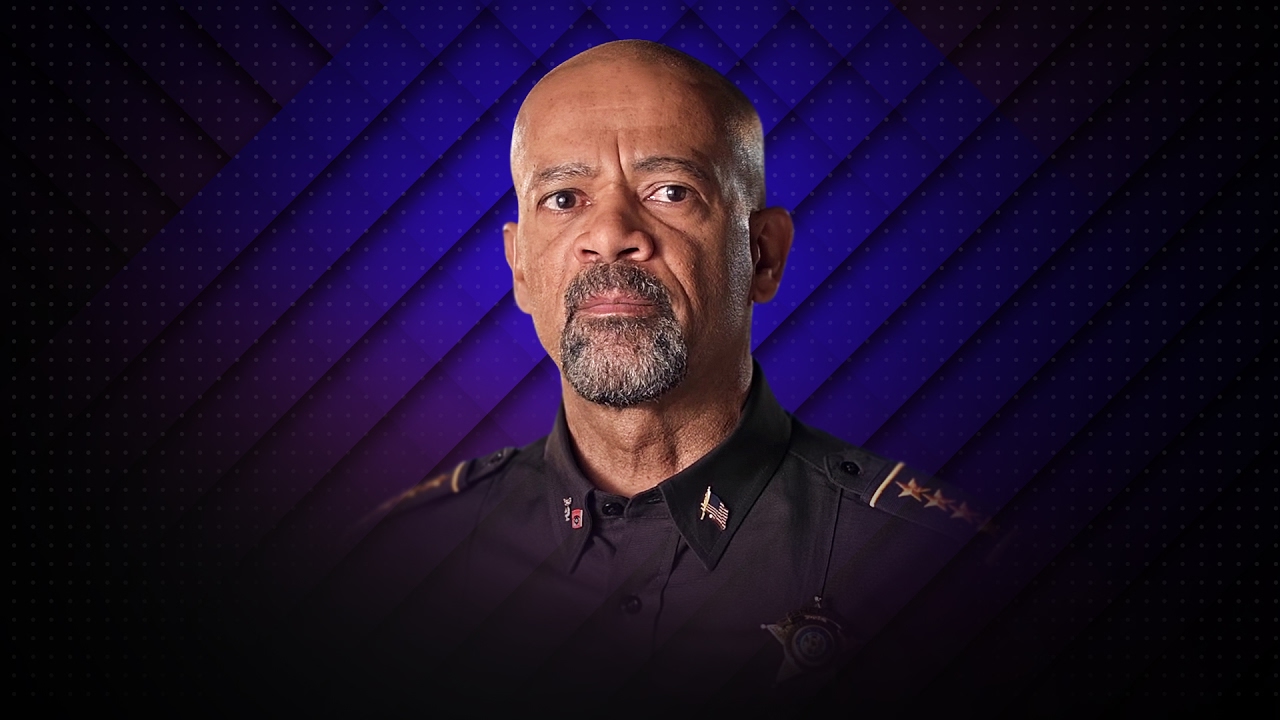 for the political arm of the organization at the 2017 annual convention in Atlanta, where he boasted, “You know I worked hard to get Donald Trump elected president of the United States.” As the crowd applauded, he added, “You see, these rat bastards on the left never give up. For them, election defeats don’t matter. It’s simply a time to regroup and continue their assault on our constitution, the rule of law, liberty, and American exceptionalism.”
Two weeks after the high school massacre this February in Parkland, Florida, NRA Executive Director Chris Cox met privately in the Oval Office with Trump and Vice President Mike Pence, and then announced, “POTUS & VPOTUS support the Second Amendment, support strong due process and don’t want gun control. #NRA #MAGA.”
Yet, as the federal government prosecutes an alleged Russian spy whose mission flourished thanks to her deep ties with the NRA, the gun group may no longer be able to so easily declare itself a patriotic defender of America.
==
---
https://thinkprogress.org/here-are-all-the-republicans-and-conservative-activists-maria-butina-met-134988a75bbb/
tp
many pix, lnx doc
Here are all the Republican leaders and conservative activists Maria Butina met
And is this the unnamed American who helped Russia infiltrate the NRA?
CASEY MICHEL
JUL 17, 2018, 12:19 PM
Butina (right), accused by the DOJ of infiltrating the NRA on behalf of Russia, with former NRA head Wayne LaPierre.
MARIA BUTINA (RIGHT), ACCUSED BY THE DOJ OF INFILTRATING THE NRA ON BEHALF OF RUSSIA, WITH FORMER NRA HEAD WAYNE LAPIERRE.
Monday’s bombshell Department of Justice complaint accusing Maria Butina, a Russian national, of secretly infiltrating the National Rifle Association (NRA) was full of remarkable detail, and even more remarkable implications.
All told, the DOJ complaint accused Butina and Russian official Alexander Torshin — himself previously accused by Spanish authorities of massive money laundering and mob ties — of building ties with the NRA to get close to to Republican leadership.
As one of the unnamed Americans listed in the complaint wrote in October, a month before the U.S. presidential election, Butina and Torshin had helped build a “VERY private line of communication between the Kremlin” and Republican party leaders, describing the NRA as a “conduit.”
The ties between Torshin, who was sanctioned by the U.S. in April, and the NRA have been scrutinized for the past few months — all the more as Torshin said he and Butina were the only two Russian nationals he knew of who were lifetime NRA members.
?.?. ??????
?
@torshin_ru
- Nov 9, 2016
...
Indeed, a glimpse through Butina’s photos show just how successfully she managed to woo Republican leaders and activists alike.
There’s no indication any of them were aware Butina was, at least by 2015, coordinating her activities with Torshin — or that Torshin, according to Butina’s emails unearthed in the DOJ complaint, had relayed information to Russian President Vladimir Putin directly. Rather, they appear to have acted as unwitting dupes in Torshin’s and Butina’s bid to build what the DOJ described as a “back channel” between Republicans and Russia. (We know that Torshin first made contact with NRA higher-ups as early as 2011.)
Butina, for instance, asked then-candidate Donald Trump about sanctions on Russia in 2015 — a policy Trump hinted he would do away with.
Later, Butina posted a photo from the exchange, which took place at an event called FreedomFest. “So much for Republicans being supposedly against Russia,” Butina wrote of Trump’s response.
But Trump was by no means the only Republican hopeful Butina met and spoke with in the run-up to the election. For instance, both she and Torshin met with Wisconsin Gov. Scott Walker (R). Butina wrote that Walker even greeted her in Russian.
For good measure, Butina also crossed paths with outsiders for the GOP nomination, including former Sen. Rick Santorum (R-PA) and former Louisiana Gov. Bobby Jindal (R).
But it wasn’t only Republican nominees Butina, who positioned herself as someone looking to expand gun rights in Russia, met with in her time trying to woo conservatives to Russia’s positions.
For instance, Fox News contributor Katie Pavlich interviewed Butina for TownHall.com, with Pavlich describing Butina as “the woman working with the NRA and fighting for gun rights in Russia.” Butina also appeared on the popular radio show of Religious Right activist Eric Metaxas — alongside Paul Erickson, whom the Washington Post named yesterday as one of the unnamed Americans Butina and Torshin worked with in their infiltration efforts.
For good measure, Butina also acted as one of the funders for the notorious 2015 trip in which numerous NRA higher-ups — such as Keene, NRA mega-donor Joe Gregory, and current NRA President Pete Brownell— traveled to Moscow to meet with Russian officials under U.S. sanction. Also on the trip: notorious ex-Sheriff David Clarke.
Clarke (second from the right in back) stands over Butina (fifth from the right in front).
CLARKE (SECOND FROM THE RIGHT IN BACK) STANDS OVER BUTINA (FIFTH FROM THE RIGHT IN FRONT).
And, of course, there are the higher-ups at the NRA who grew close to Butina over the past few years. Former NRA President Wayne LaPierre (pictured above) was spotted with Butina at one point, and longtime NRA head David Keene took such a liking to Butina that she acted as his special guest at the NRA’s 2014 annual meeting.
Photo Illustration by Adam Peck. CREDIT: AP Images/Maria Butina
Why has the NRA been cozying up to Russia?
Unnamed Americans
But Butina’s photo-ops and group trips to Moscow don’t represent the entirety of her interactions with influential Americans. According to the DOJ complaint, a pair of Americans specifically helped Butina’s efforts along — as evidenced by emails the DOJ complaint unearthed.
One, as aforementioned, has already been identified:Paul Erickson, a conservative activist who has worked on numerous presidential campaigns, including Mitt Romney’s. As the New York Times reported last year, in 2016 Erickson reached out to Rick Dearborn, one of Trump’s campaign advisers, and said, “Putin is deadly serious about building a good relationship with Mr. Trump.” Erickson also wrote that he had been “slowly cultivating a back-channel” to the Kremlin for years — via, as is now clear, the NRA.
The identity of the second unnamed American is unclear. This American had multiple interactions and emails with Butina, especially just after Trump’s inauguration. We know, for instance, that this American was “among the participants in a series of email communications… that reveal [Butina’s] efforts” to arrange meetings between Russian nationals and influential Americans.
We also know that the American — well before the actual election — wanted Butina’s and Torshin’s “Russian-American project” to succeed.
Perhaps most damning, though, is that this unnamed American apparently helped organize Butina’s and Torshin’s events surrounding the 2017 National Prayer Breakfast. As Butina wrote to “a National Prayer Breakfast organizer,” “I have important information for you to further this new relationship” between Russia and the U.S.
Butina wrote to the second unnamed American thatPutin “has received ‘the message’ about your group initiatives and your constructive and kind attention to the Russians.”
While the American remains unidentified, all of the information in the complaint matches the descriptions of George O’Neill Jr., a Rockefeller scion and conservative activist.In early February 2017, O’Neill hosted a luxurious dinner for, as he later wrote, “former and current Russian officials” and “a number of prominent U.S. Republicans and conservatives,” among others.
The four-hour dinner included, unsurprisingly, Rep. Dana Rohrabacher (R-CA), the most outspoken pro-Putin member of Congress, as well as Rep. Thomas Massie (R.-KY). Also confirmed in attendance? Torshin, Butina, and Erickson.
O’Neill, for good measure, has also been outspoken in publicly pushing conservatives to support Russia. In The American Conservative last year, O’Neill wrote that he supports using conservatives’ efforts to build a “good relationship” with Russia. Among the voices O’Neill recommended listening to: Stephen Cohen, who is now writing for Russian propaganda channel RT; Pat Buchanan, who has written that Putin has God on his “side”; and writers for anti-Semitic sites like Russia Insider and Unz Review.
Russians and the American right started plotting in 1995. We have the notes from the first meeting.
That wasn’t all, though. For O’Neill, any suggestion that conservative activists were acting as unwitting dupes of Russians was laughable. As he wrote, “the suggestion that American conservatives might be susceptible to manipulation by foreign officials certainly betrayed a lack of understanding[.]”
Given that we now know just how many conservative activists and Republican leaders have been caught up in Butina’s and Torshin’s infiltration efforts — to say nothing of the efforts from other Russian nationals, official or otherwise — O’Neill may want to rethink his claims.
This post has been updated.
---
---
https://www.alternet.org/indictment-russian-femme-fatale-spells-trouble-putins-favorite-congressman-dana-rohrbacher
c feinstein slaon
one week ago, Maria Butina's name and face were almost unknown, except to a few hardcore political observers – a low-profile that Butina was surely banking on keeping. Over the past week, however, Butina made international headlines after being charged with operating as an unregistered Russian agent and forming close relationships with politicians to infiltrate the United States political system. And after federal prosecutors alleged in court on Wednesday that Butinatraded sex for political gain and influence, the exact U.S. politicians she got cozy with is starting to become of greater import.
Rep. Dana Rohrabacher, R-Calif., called the charges against Butina “bogus,” Politico reported.
According to the Department of Justice’s application for a criminal complaint, Butina worked to “arrange introductions to U.S. persons having influence in American politics, including an organization promoting gun rights” and sought to “infiltrate those groups.” The Justice Department claims Butina has been in contact with Russian intelligence since her arrival in the U.S. and that she conspired with a Russian politician and banker to push Moscow’s agenda into the American political system. While the Russian official isn’t named in the affidavit, it is said to fit the description of the deputy governor of Russia’s central bank, Alexander Torshin. The federalindictment also notes that Butina and the official believed to be Torshin had plans to “meet with a U.S. Congressman during a Congressional Delegation trip to Moscow in August 2015." That congressman is widely believed to be Rohrabacher.
READ MORE: Donald Trump, Brexit and the Russians: A dangerous turning point in "World War IV"
“There’s two people I think Putin pays: Rohrabacher and Trump,” Republican Majority Leader Kevin McCarthy infamously remarked on an open mic in 2016, according to theWashington Post.
For his part, Rohrabacher admits to having dinner with Butina and a visiting delegation from Russia back in 2015. “It’s ridiculous, it’s stupid. She’s the assistant of some guy who is the head of the bank and is a member of their Parliament. That’s what we call a spy? That shows you how bogus this whole thing is,” the congressman said.
“This is an attempt to undermine the president’s ability to have better relationships with Russia,” Rohrabacher insisted.
After starting Right to Bear Arms, a Russian “gun rights” group, Butina began reaching out to American gun lobbyists in 2013 and soon hosted National Rifle Association (NRA) executives in Moscow. In 2015, during a libertarian political event, she asked Trump publicly, “What will be your foreign politics, especially in the relations with my county?” Rohrabacher has been connected to various figures in the Mueller investigation – he once took a meeting organized by the now-indicted Paul Manafort and Russian lawyer Natalia Veselnitskaya, two pivotal figures in the investigation.
She told the Washington Post in 2017 that her question to Trump was “happenstance” and she was not employed by the Russian government. But Butina also wrote a column, after Trump announced his candidacy, expressing hope that a Republican president could improve U.S.-Russian relations, as the Washington Post has reported. And Donald Trump Jr. met Torshin briefly at the 2016 NRA convention in Louisville.
In 2018, Torshin’s suspicious behavior led to a federal investigation of his involvement in the NRA and its relationship to the Kremlin. The NRA reportedly spent $30 million supporting the Trump campaign. In April 2018, Torshin, along with more than 20 other Russian nationals, was sanctioned by the U.S. Treasury department– their assets were frozen and they were barred from entering the country.
Butina moved to the U.S. on a student visa in 2016 and attended classes at American University in Washington, graduating this past May. While her motivations for moving to the U.S. have been viewed with official suspicion for some time, she was arrested on Sunday after prosecutors became aware that she had wired nearly $5,000 to Russia, ordered moving boxes for her apartment and had not renewed her apartment lease in Washington, which which expires on July 31.
Butina pleaded not guilty to charges of conspiracy and acting as an illegal foreign agent in the U.S. on Wednesday. Prosecutors argued she should be held in custody until trial because her life in the U.S. has been predicated on deception, including attempts to exchange sex for political access, CNN reports. The judge agreed and ordered Butina held without bail until a trial is held. No date has been set for what is sure to be a high-drama spectacle, if no plea bargain is reached before then.
==
==
https://www.alternet.org/news-amp-politics/nras-alleged-russian-spy-offered-sex-job-special-interest-organization-us-attorney
...To back up this assertion, the FBI goes on to claim that “on at least one occasion, Butina offered an individual other than U.S. Person 1 sex in exchange for a position
within a special interest organization.”
It is not known from the filing what job Butina was seeking or whether her offer of sex in exchange for the job was accepted, however.
Butina, who was arrested this week on charges of being an unregistered foreign agent, has worked for years to forge ties between Russia and the National Rifle Association.
==
nyt no lnx
Mariia Butina, Who Sought ‘Back Channel’ Meeting for Trump and Putin, Is Charged as Russian Agent
Image
Mariia Butina in 2013 in Moscow. She was charged Monday with carrying out a secret Russian effort to influence American politics.CreditItar-Tass/Zuma Press
By Matt Apuzzo, Katie Benner and Sharon LaFraniere
July 16, 2018
WASHINGTON — A Russian woman who tried to broker a secret meeting between Donald J. Trump and the Russian president, Vladimir V. Putin, during the 2016 presidential campaign was charged Monday and accused of working with Americans to carry out a secret Russian effort to influence American politics.
At the behest of a senior Russian government official, the woman, Mariia Butina, made connections through the National Rifle Association, religious organizations and the National Prayer Breakfast to try to steer the Republican Party toward more pro-Russia policies, court records show. Privately comparing herself to a Soviet Cold War propagandist, she worked to infiltrate American organizations and establish “back channel” lines of communication with American politicians.
“These lines could be used by the Russian Federation to penetrate the U.S. national decision-making apparatus to advance the agenda of the Russian Federation,” an F.B.I. agent wrote in court documents.
The charges were filed under seal on Saturday, the day after 12 Russian intelligence officers were indicted on a charge of hacking Democratic computers during the 2016 campaign. Ms. Butina, 29, was arrested Sunday and appeared Monday in court. The records were unsealed hours after Mr. Trump stood beside Mr. Putin in Helsinki and said that he saw no reason the Russian leader would try to influence the presidential election.
Mr. Trump’s own intelligence chiefs have concluded otherwise, and the two sets of charges served as jarring bookends to Mr. Trump’s summit meeting with Mr. Putin. As Mr. Trump disparaged the investigation, the Justice Department painted a picture of a multifaceted Russian effort to sway the election through computer espionage, personal overtures and the assistance of American intermediaries.
While Mr. Putin denied any involvement Monday in such activities, court documents showed that Ms. Butina told associates that her covert efforts were approved by Mr. Putin’s administration.
Trump Trusts Putin’s Denial, but Seven U.S Intelligence Groups Blame Russia for Election Meddling
On Monday, President Trump continued to cast doubt on Russia’s interference in the 2016 presidential election, the consensus position of American intelligence agencies and both parties on Capitol Hill.
July 16, 2018
Ms. Butina, whose first name is more commonly spelled Maria, was involved in two failed efforts to set up meetings between Mr. Trump and Mr. Putin in 2016. The charges announced Monday do not name Mr. Trump, but they make clear Ms. Butina’s overtures were part of a carefully crafted Russian intelligence operation.
Ms. Butina is the 26th Russian — and the first one arrested — to face charges related to interference in the presidential election. In February, the Justice Department charged 13 Russians and three companies with stealing the identities of American citizens, posing as political activists and using the flash points of immigration, religion and race to manipulate the 2016 campaign.
“Maria Butina is not an agent of the Russian Federation,” her lawyer, Robert N. Driscoll, said in a statement. He described the charges as overblown, saying that arranging dinners and making friends were being mischaracterized as nefarious. “There is simply no indication of Butina seeking to influence or undermine any specific policy or law,” he added.
The charges were filed by Justice Department national security prosecutors, not the special counsel, Robert S. Mueller III. The investigation into Ms. Butina has been proceeding for some time and was carried out parallel to Mr. Mueller’s investigation, a former official said. F.B.I. agents raided her home in April, her lawyer said.
Ms. Butina entered the United States on a student visa in 2016, but the scheme she was working on dated to 2013, prosecutors said. At that time, politicians like former Gov. Jeb Bush and Senator Marco Rubio, both of Florida, who have shown no willingness to align themselves with Russian interests, were seen as likely Republican presidential front-runners. Court records describe an effort to shift the party’s views on Russia.
As Mr. Trump’s unusual candidacy gained steam, the Russian government came to favor him over Hillary Clinton, then a Democratic presidential candidate, and worked to support his candidacy, prosecutors and intelligence officials have said.
The Justice Department said that Ms. Butina worked at the behest of an unidentified high-level Russian government official. He has been previously identified as Alexander Torshin, the deputy governor of the Russian central bank who has been linked both to Russia’s security services and organized crime. Mr. Torshin is among the nearly two dozen Russian officials or oligarchs who were sanctioned this year for actions including trying to subvert Western democracies.
How Republican Lawmakers Responded to Trump’s Russian Meddling Denial
Reports of the president’s comments prompted outcry from some lawmakers, but they were followed by notable silence from others.
July 16, 2018
Mr. Torshin is a leading figure in Mr. Putin’s political party, United Russia, and has spoken glowingly of Mr. Trump. He has described Mr. Trump as a “supporter of traditional family values” and “a real man” who “really is for cooperation with Russia.”
Ms. Butina viewed the N.R.A. as a powerful force for shifting Republican policies, court records show. She described the group as “the largest sponsor of the elections to the U.S. Congress” and as a sponsor of the Conservative Political Action Conference. The N.R.A. is not named in court records, but its ties to Ms. Butina and Mr. Torshin have been previously reported. The N.R.A. did not respond to a message seeking comment.
In May 2016, Mr. Torshin and Ms. Butina proposed a meeting between Mr. Trump and Mr. Putin during the annual N.R.A. convention in Louisville, Ky. Jared Kushner, Mr. Trump’s son-in-law, shot down the proposal. But Donald Trump Jr., the president’s eldest son, did meet Mr. Torshin and Ms. Butina at an N.R.A.-sponsored dinner, although Mr. Trump’s lawyer has called the encounter brief. Congressional investigators have obtained a photograph of the three at the event, people familiar with the inquiry said.
Prosecutors said that an American political operative helped Ms. Butina identify political, news media and business officials to target. Ms. Butina met the operative in Moscow, prosecutors said. Quoting from emails, prosecutors laid out the most explicit evidence to date that Americans knowingly aided the Russian influence effort.
In one email, the American said he had given Ms. Butina a map for how to proceed. “I and your friends in America can’t make it any easier for you than that,” the political operative wrote.
Ms. Butina and Mr. Torshin attended several events hosted by groups affiliated with Republicans, including two National Prayer Breakfasts in 2016 and 2017. In one email, Ms. Butina wrote that Mr. Torshin had suggested that Mr. Putin attend the February 2017 breakfast, at which Mr. Trump spoke.
“Pres. Putin did not say ‘no’!” Ms. Butina wrote in the email.
Though the American operative is not identified, The New York Times has previously reported that Ms. Butina developed a close relationship with Paul Erickson, an N.R.A. member and a longtime conservative activist who was part of the effort to arrange a meeting between Mr. Putin and Mr. Trump. Ms. Butina has publicly described hosting Mr. Erickson at an event in Moscow. Mr. Erickson and his lawyer did not respond to messages seeking comment. He is not identified in court records and has not been charged.
Ms. Butina also worked with a second unidentified American, prosecutors said.
After the November 2016 election, Ms. Butina wrote to Mr. Torshin on Twitter, prosecutors said: “I am ready for further orders.”
Nicholas Fandos contributed reporting.
==
wapo no lnx
Public Safety
Maria Butina, Russian gun-rights advocate who sought to build ties with NRA, charged with acting as a covert Russian agent
By Rosalind S. Helderman, Tom Jackman and Devlin Barrett
July 16 at 8:46 PM
A Russian woman with ties to a senior Russian government official was charged in Washington on Monday with conspiracy to act as an agent of the Russian Federation, including by building ties to the leadership of the National Rifle Association and other conservative political organizations.
Maria Butina, 29, who recently received a graduate degree from American University, was arrested Sunday in the District and made her first appearance in U.S. District Court before Magistrate Judge Deborah A. Robinson, where she was ordered held without bond.
Butina is accused of trying to cultivate relationships with American politicians to establish “back channel” lines of communication and seeking to infiltrate U.S. political groups, including an unnamed “gun rights organization,” to advance Russia’s agenda. Descriptions in court papers match published reports about Butina’s interactions with the NRA.
The case, which is not part of the special counsel investigation into Russian interference, lays out the strongest allegations to date of American involvement in Russia’s influence operations.
Butina was allegedly assisted in her efforts by a U.S. political operative who helped introduce her to influential political figures. That person was not charged and is not named in court papers, but the description matches that of Paul Erickson, a GOP consultant who sought to organize a meeting between then-candidate Donald Trump and Alexander Torshin, Butina’s Russian colleague and a former Russian senator, at a May 2016 NRA convention.
NRA officials and Erickson did not respond to requests for comment.
Russian gun rights activist Maria Butina at a Las Vegas conservative political event in July 2015. (FreedomFest/FreedomFest)
[Trump hands Putin a diplomatic triumph by casting doubt on U.S. intelligence agencies]
Butina’s attorney, Robert Neil Driscoll, denied that she is a Russian agent and said she was merely networking to develop relationships with Americans.
He told the judge that she had testified before the Senate Intelligence Committee in a closed session several months ago and had offered before her arrest to cooperate with the government.
Butina did not speak during the brief hearing, other than to state her name. A detention hearing and preliminary hearing were set for Wednesday.
The Russian Embassy said in a statement to the Interfax News Agency that it is “seeking consular access” to Butina “with the aim of defending her legal rights.”
A former furniture store owner from Siberia and gun-rights activist, Butina was the first to publicly quiz President Trump about his views on Russia when she asked him a question at a town hall in July 2015.
She also briefly met Donald Trump Jr., the president’s eldest son, at the NRA convention in May 2016, according to a person familiar with the encounter.
Court filings do not mention her interactions with Trump and his son, but do recount Butina’s other contacts regarding the NRA convention and the National Prayer Breakfast, an annual event attended by government and political leaders in Washington.Erickson sought to arrange a meeting for Torshin with Trump at the February 2017 breakfast, according to a person familiar with the event.
After attending the event with a large Russian delegation, Butina wrote to an organizer to offer “important information for you to further this new relationship” with Russia, according to court filings. The nature of the information is not described.
[Read the affidavit about Maria Butina]
The charges against Butina were announced days after the Justice Department unveiled an indictment against 12 Russian intelligence officers for allegedly conspiring to hack Democrats in 2016 and just hours after Trump cast doubt on Russia’s involvement in an extraordinary joint news conference with President Vladimir Putin.
Over the weekend, law enforcement officials became increasingly concerned that Butina appeared to be planning to leave the Washington area, according to people familiar with the matter. Investigators were concerned such a trip could pose operational challenges for their work and decided to make an arrest, these people said.
Although special counsel Robert S. Mueller III is aware of the details of the Butina case, the investigative work began before he was appointed to that job, and it has continued to be handled by federal agents and prosecutors outside of his office, these people said.
In an affidavit filed with the court, FBI Special Agent Kevin Helson outlined a two-year alleged effort by Butina to penetrate and influence the U.S. political system for Russia’s benefit by building ties to the American conservative movement.
Butina’s efforts in the United States came as a number of Republicans began rethinking the party’s traditional hostility to Russia, forming new bonds with Putin’s government around conservative social views on religion and same-sex marriage. That shift culminated with the November 2016 election of Trump, who had argued throughout his campaign that the United States should seek warmer relations with Russia.
[Guns and religion: How American conservatives grew closer to Putin’s Russia]
As early as March 2015, Butina emailed the American political operative about her belief that the Republican Party would likely win the White House in 2016, according to court papers. She proposed a special project to use the NRA to build relations with the GOP.
She wrote that “the resulting status needs to be strengthened” before the 2016 election and asked for a $125,000 budget to help her attend “all upcoming major conferences” of the Republican Party.
According to the affidavit, the FBI found evidence on Butina’s computer that she kept an unnamed Russian official closely apprised of her activities. Descriptions of the official in the complaint match Torshin, a Russian central banker who has also built ties with the NRA.
In one March 2016 email to an unnamed American, Butina described Torshin’s “desire in our Russian-American project” and indicated that a Putin representative had expressed support “for building this communication channel.”
Butina began reaching out to NRA members and other American gun enthusiasts in 2013 and hosted delegations of NRA executives and gun activists in Moscow. She and Torshin also attended a series of NRA events in the United States starting in 2014.
In June 2015, as Trump announced his candidacy, Butina wrote a column in the National Interest, a conservative U.S. magazine, suggesting that only by electing a Republican could the United States and Russia hope to improve relations.
The next month at FreedomFest, a libertarian political event in Las Vegas, she asked Trump at a public event: “What will be your foreign politics, especially in the relations with my country?”
“I know Putin and I’ll tell you what, we get along with Putin,” Trump responded, in the first of his many campaign statements about his desire to build better ties with Russia.
Butina told The Washington Post in April 2017 that her question to Trump was “happenstance” and that she has never been an employee of the Russian government.
Butina also attended an NRA convention in May 2016, where Erickson worked to get Torshin a meeting with Trump. In an email to the campaign, Erickson referred to Torshin as “Putin’s emissary” in an effort to improve relations with the United States, The Post and other media organizations previously reported.
The meeting did not happen, but Torshin had an interaction at the event with Trump Jr., who has said it was brief and not memorable. Trump Jr. also interacted with a woman described as Torshin’s assistant who he later came to believe was Butina, according to a person with knowledge of the episode.
Butina also accompanied Erickson to Trump’s inauguration, one of a number of Russians who attended the festivities and toasted to better relations between Russia and the United States.
Tom Hamburger, Shane Harris and Carol D. Leonnig in Washington and Anton Troianovski in Helsinki contributed to this report.
==
no lnx
Timeline: The odd overlap of Maria Butina, the gun-rights movement and the 2016 election
By Philip Bump
July 16 at 7:06 PM
Email the author
An attendee holds a Smith & Wesson revolver at the company’s booth during the National Rifle Association annual meeting in Dallas on May 5. (Daniel Acker/Bloomberg News)
Another criminal allegation against another Russian national who was involved in the 2016 election was announced by the Department of Justice on Monday — but the circumstances are far different from what we’ve seen in the past.
To date, the investigation by special counsel Robert S. Mueller III into Russian interference in the 2016 election has resulted in indictments against 25 Russian nationals and three Russian businesses. The criminal complaint filed against Maria Butina, the founder of a pro-gun group in Russia, comes not from Mueller but from the Justice Department directly. Butina is accused not of trying to influence the 2016 election or having colluded with the campaign of President Trump but, instead, of having conspired to act as an agent of the Russian government.
This doesn’t mean, though, that Butina had no connection to the campaign. In fact, she worked closely with a former Russian politician named Alexander Torshin, who was sanctioned by the U.S. government earlier this year. Torshin actively sought to build a connection with the Trump campaign in 2016, according to various reports that have emerged over the past year, including leveraging his lifetime membership with the National Rifle Association to build a relationship with Donald Trump Jr., the president’s eldest son.
It’s not clear how significant the criminal complaint against Butina might be. But it’s worth fleshing out the timeline presented in that case in order to show where Butina, Torshin and 2016 politics overlapped. This timeline includes several points first presented in a very good report from Mother Jones.
Maria Butina attends a rally at Krasnopresnenskaya Zastava Square in support of legalising the possession of handguns. (ITAR-TASS/ZUMAPRESS.com)
- Maria Butina forms “Right to Bear Arms” in Russia. The aim of the organization mirrors that of the NRA: Broadening Russians’ access to firearms.
April 15, 2012. Alexander Torshin, a former Russian senator and lifetime member of the NRA, tweets about Butina’s group, comparing it to the NRA.
His longstanding relationship with Butina and biographical descriptions including in the complaint make clear that the “RUSSIAN OFFICIAL” identified in the document is Torshin.
- Per the complaint, Butina allegedly makes contact with an American political operative (“U.S. Person 1” in the complaint), who agrees to introduce her to influential figures in American politics. That includes a “gun rights organization,” identified contextually within the complaint as the NRA.
November 2013. White House national security adviser John Bolton, then a former U.S. ambassador to the United Nations, records a video promoting an expansion of gun rights in Russia that’s later used by Right to Bear Arms for promotion.
April 2014. Butina and Torshin attend the national NRA convention.
March 24, 2015. Butina allegedly emails Person 1 to propose a project titled “Diplomacy.” (The email subject line apparently makes reference to a former KGB propagandist.) She writes that the Republican Party (identified only as [POLITICAL PARTY 1] in the complaint) will likely gain power in 2016 but is “traditionally associated with negative and aggressive foreign policy, particularly with regards to Russia.”The time was right, she wrote, to build a relationship with the party, using the “[c]entral place and influence” in the Republican Party of the NRA.
She noted her relationship with the NRA and past interactions with Republican officials in the email, anticipating a $125,000 budget to be spent on major political conferences. Person 1 responded with suggestions about people with whom she should meet and some strategic recommendations.
April 24, 2015. Butina attends the NRA convention in Nashville. There she and Torshin meet Gov. Scott Walker (R-Wis.), who reportedly greets her in Russian.
June 12, 2015. Writing for National Interest, Butina argues that a Republican president might be the only way to improve relationships with Russia. After the article published, she sent it to Torshin, who approved.
July 11, 2015. Butina asks Trump a question at FreedomFest, a libertarian event held that year in Las Vegas. As president, she asked, would Trump continue the sanctions imposed against Russia in 2014?
“I know Putin, and I’ll tell you what, we get along with Putin,” Trump replied. “Putin has no respect for President Obama. Big problem. Big problem. And Russia has been driven — you know I’ve always heard, for years I’ve heard, one of the worst things that can happen is if Russia ever gets driven to China. We have driven them together, with the big oil deals that are being made. We’ve driven them together. That’s a horrible thing for this country. We have made them friends because of incompetent leadership. I believe I would get along very nicely with Putin, okay? And I mean where we have the strength. I don’t think you’d need the sanctions.”
July 13, 2015. Butina attends Walker’s presidential campaign launch event.
August 2015. Butina allegedly assists Torshin in preparing for a congressional delegation to Moscow. It’s not clear who participated in this trip.
Dec. 8, 2015. An NRA delegation arrives in Moscow to meet with Butina’s group. Right to Bear Arms covers some of the trip’s costs. Included in the group is former Milwaukee County sheriff David Clarke.
2015 and 2016. Butina allegedly exchanges emails with another American (“U.S. Person 2”) in an effort to arrange a series of dinners in New York and Washington to introduce Russians to people influential in American politics.
Jan. 19, 2016. Butina allegedly contacts Torshin about logistics for the upcoming National Prayer Breakfast.
Feb. 4, 2016. The National Prayer Breakfast is held with Torshin in attendance. He regularly attended the event.
Feb. 14, 2016. Torshin tweets that Butina is in the United States where she reports that Trump is “for cooperation with Russia,” according to Mother Jones.
March 14, 2016. Butina allegedly emails Person 2 and indicates that Torshin had informed her that “Putin’s side” had approved of her outreach plan to high-profile political figures.
March 30, 2016. Butina allegedly emails an organizer of the prayer breakfast to suggest that Putin might attend in 2017, given certain conditions. He did not, but the organizer offered 10 spots at the 2017 event for Putin.
May 2016. Through two different individuals close to the Trump campaign, Torshin tries to set up a meeting with Donald Trump Jr. when the two are at the NRA convention in Kentucky later that month. In one of the emails, adviser Rick Dearborn explained that Russia was “quietly but actively seeking a dialogue with the U.S.”
May 10 and 11, 2016. Butina allegedly contacts Persons 1 and 2 to set up a series of dinners with influential political figures later that month.
At some point this month, Butina is allegedly part of a group seeking a meeting with the campaign to discuss persecutions against Christians, according to Post reporting.
May 20, 2016. At a dinner on the sideline of the NRA convention, Torshin and Trump Jr. are seated near each other and meet each other briefly.
August 2016. Butina allegedly arrives in the United States on an F-1 student visa.
Sept. 16, 2016. Butina allegedly emails Persons 1 and 2 to express an urgent need for another dinner with prominent figures in Washington out of concern that those urgently looking for Russia expertise would turn to the “currently popular radically oppositional to Russia crowd of experts.”
Oct. 4, 2016. Person 1 allegedly emails an acquaintance.
“Unrelated to specific presidential campaigns,” he writes, “I’ve been involved in securing a VERY private line of communication between the Kremlin and key POLITICAL PARTY I leaders through, of all conduits, the [NRA].”
Oct. 5, 2016. Over Twitter, Butina allegedly messages Torshin, who is in the hospital receiving treatment.
“We made our bet. I am following our game. I will be connecting the people from the prayer breakfast to this group. … Yesterday’s dinner showed that American society is broken in relation to Russia,” she allegedly writes. “This is now the dividing line of opinions, the crucial one in the election race. [The Republicans] are for us, [Democrats] — against- 50/50. Our move here is very important.” (The complaint obscures the identity of the parties.)
They also allegedly discussed whether or not Butina should serve as an election observer, but decide against it. “Right now everything has to be quiet and careful,” Butina writes. Torshin had served in that capacity in 2012, according to Mother Jones.
Oct. 17, 2016. Butina allegedly asks Torshin if he has recommendations for the prayer breakfast seats.
Nov. 8, 2016. Trump wins the presidency. The NRA spends more than $30 million on supporting his campaign.
Nov. 8 and 9, 2016. Butina and Torshin allegedly discuss the election results.
“Think about in which areas of life we could go towards bringing us closer. ISIS- understandably, what else we need to look at the American agenda,” Torshin allegedly writes. She suggests a phone call, but he worries that their phones are tapped. In May, Yahoo reported that Torshin’s phones were tapped — by Spanish authorities.
Nov. 11, 2016. Butina allegedly sends Torshin a proposal for a conference including a number of members of Congress focused on Russia.
Nov. 12, 2016. Torshin allegedly rejects the plan, saying that “they” won’t go for it — a message that prosecutors allege signal instruction from the Russian government to Butina.
Nov. 30, 2016. Butina allegedly emails Person 1 about the prayer breakfast, assuring Person 1 that the people included in the Russian delegation, handpicked by Torshin and herself, were “coming to establish a back channel of communication.”
Dec. 1, 2016. Person 1 allegedly explains to Butina how to book the hotel for the Russian delegation to the breakfast and suggests that Torshin cover the cost.
Dec. 26, 2016. Torshin allegedly explains who will and won’t be attending, as per the Ministry of Foreign Affairs.
Jan. 20, 2017. President Trump is inaugurated.
Butina attends one of the inaugural balls, according to Post reporting.
Feb. 2, 2017. Butina and Torshin attend the prayer breakfast.
Feb. 6, 2017. Butina allegedly thanks a prayer breakfast organizer for meeting with her and suggests she has “important information” for the organizer. She asks for a follow-up meeting.
Feb. 8, 2017. Butina allegedly emails Person 2 to thank him.
“My dearest President has received ‘the message’ about your group initiatives and your constructive and kind attention to the Russians,” she writes.
Jan. 18, 2018. McClatchy reports that Mueller’s team is investigating the NRA’s role in the 2016 election. In a letter released several months later, the group indicates having received only about $2,500 from “people associated with Russian addresses.”
April 6, 2018. Torshin is one of more than 20 Russians sanctioned by the American government in response to Russian interference in 2016, among other incidents.
==
https://www.alternet.org/news-amp-politics/nra-insiders-are-bracing-themselves-potential-investigation-their-russian-ties
... NRA's precautions could be little more than due diligence as the group faces inquiries from congressional investigators and the media about its relationship with Torshin. But the feeling among some officials internally is that the group appears to be readying for an investigation.
"True believers to the cause are getting very antsy," said a person privy to the NRA's internal deliberations. "They were definitely preparing, they were bracing themselves."
The gun advocacy group has admitted previously that some of its funding in recent years has come from numerous Russians or people living in Russia, but it described these as "routine payments." But McClatchy has reported that the FBI is investigating whether Kremlin-linked sources used the NRA to financially support President Donald Trump's campaign, which would likely violate federal election law.
...
==
ref april 11
https://www.npr.org/2018/04/11/601534305/nra-in-new-document-acknowledges-more-than-20-russian-linked-contributors
...One high-profile Russian NRA supporter, state bank official Alexander Torshin, has cultivated a years-long relationship with the organization — but he was placed under sanction by the United States with other Russians last week.
The NRA acknowledged that Torshin, a Kremlin-linked politician, is a life member of the NRA, and has been since 2012. "He has paid membership dues, but has not made any contributions," NRA general counsel John Frazer wrote to Wyden.
Now, however: "Based on Mr. Torshin's listing as a specially designated national as of April 6, we are currently reviewing our responsibilities with respect to him," Frazer wrote.
NATIONAL SECURITY
The Russia Sanctions Saga: Weapons Dealers, Mobsters And Suitcases Full Of Cash
McClatchy has previously reported that theFBI is investigating whether Torshin may have funneled money to the NRA
Frazer told Wyden in his letter that he believed the NRA has been more than cooperative with Wyden's questions and that this would be the last response he'll send to the senator's office.
"Given the extraordinarily time-consuming and burdensome nature of your requests, we must respectfully decline to engage in this beyond the clear answers we have already provided," Frazer wrote.
The NRA has been revising its statements on the question of foreign donations. StevenHart, an outside counsel for the NRA, had said previously in an interview with ABC News that the NRA had received just one contribution from a Russian individual between 2012 and 2018.POLITICS
NRA Says It Receives Foreign Funds, But None Goes To Election Work
Since then, it has emerged there have been more. A Wyden aide, who asked not to be identified discussing the office's investigation, said the NRA's shifting statements would prompt Wyden to consider how he might continue his questioning.
"After three letters, the NRA continually, and specifically avoided detailing what measures it takes to vet donations, including from shell companies, a known means for Russians to funnel money into the United States," the aide said.
"Sen. Wyden will be referring his correspondence with the NRA to the Federal Elections Commission to contribute to their inquiry ... As ranking member of the Finance Committee, he is considering additional oversight actions in light of this response."
==
ref mcclathy
...
Mueller’s office declined comment.
Disclosure of the Torshin investigation signals a new dimension in the 18-month-old FBI probe of Russia’s interference. McClatchy reported a year ago that a multi-agency U.S. law enforcement and counterintelligence investigation into Russia’s intervention, begun even before the start of the 2016 general election campaign, initially included a focus on whether the Kremlin secretly helped fund efforts to boost Trump, but little has been said about that possibility in recent months.
The extent to which the FBI has evidence of money flowing from Torshin to the NRA, or of the NRA’s participation in the transfer of funds, could not be learned.
However, the NRA reported spending a record $55 million on the 2016 elections, including $30 million to support Trump – triple what the group devoted to backing Republican Mitt Romney in the 2012 presidential race. Most of that was money was spent by an arm of the NRA that is not required to disclose its donors.
Two people with close connections to the powerful gun lobby said its total election spending actually approached or exceeded $70 million. The reporting gap could be explained by the fact that independent groups are not required to reveal how much they spend on Internet ads or field operations, including get-out-the-vote efforts.
During the campaign, Trump was an outspoken advocate of the Second Amendment right to bear arms, at one point drawing a hail of criticism by suggesting that, if Clinton were elected, gun rights advocates could stop her from winning confirmation of liberal Supreme Court justices who support gun control laws.
“If she gets to pick her judges, nothing you can do folks,” Trump said at a rally in August 2016. “Although the Second Amendment people, maybe there is, I don’t know.”
Spanish authorities tag Torshin for money laundering
Torshin, a leading figure in Putin’s party, has been implicated in money laundering by judicial authorities in Spain, as Bloomberg News first revealed in 2016. Spanish investigators alleged in an almost 500-page internal report that Torshin, who was then a senator, capitalized on his government role to assist mobsters laundering funds through Spanish properties and banks, Bloomberg reported
A summary obtained by McClatchy of the still-secret report links Torshin to Russian money laundering and describes him as a godfather in a major Russian criminal organization called Taganskaya.
Investigators for three congressional committees probing Russia’s 2016 operations also have shown interest in Torshin, a lifetime NRA member who has attended several of its annual conventions. At the group’s meeting in Kentucky in May 2016, Torshin spoke to Donald Trump Jr. during a gala event at the group’s national gathering in Kentucky in May 2016, when his father won an earlier-than-usual NRA presidential endorsement.
An FBI spokesman declined to comment on the investigation.
"We have not been contacted by the FBI about anything related to Russia," said Steven Hart, an outside attorney for the NRA, in a statement provided to McClatchy five days after publication of this story.
Torshin could not be reached for comment, and emails to the Russian central bank seeking comment from Torshin and the bank elicited no response.
Mueller’s investigation has been edging closer to Trump’s inner circle. This week, The New York Times reported that Mueller had negotiated an agreement under which Steve Bannon, who was recently ousted from his post as a senior White House adviser, would fully respond to questions about the Trump campaign. Bannon headed the campaign over its final weeks.
Since taking over the investigation last May, Mueller has secured guilty pleas from two former Trump aides, former National Security Adviser Michael Flynn and former campaign foreign policy adviser George Papadopoulos, both of whom agreed to cooperate with prosecutors; and criminal charges against two other top campaign figures, former campaign Chairman Paul Manafort and his deputy, Rick Gates.
...
year ago, three U.S. intelligence agencies signed off on a joint assessment that was the basis for the expulsion of 35 Russian diplomats and other sanctions against the Kremlin. The intelligence agencies concluded that what began as a sophisticated Russian operation to undermine Americans’ faith in democracy morphed into a drive to help Trump win.
Torshin is among a phalanx of Putin proxies to draw the close attention of U.S. investigators, who also have tracked the activities of several Russian billionaires and pro-Russian Ukrainian oligarchs that have come in contact with Trump or his surrogates.
Torshin was a senior member of the Russian Senate and in recent years helped set up a Moscow gun rights group called Right to Bear Arms.He not only spoke with Trump Jr. at the NRA convention, but he also tried unsuccessfully to broker a meeting between Putin and the presidential candidate in 2016, according to the Times. He further sought to meet privately with the candidate himself near the 2016 NRA convention.
Torshin’s ties with the NRA have flourished in recent years. In late 2015, he hosted two dinners for a high-level NRA delegation during its week-long visit to Moscow that included meetings with influential Russian government and business figures.
In their internal report, Spanish prosecutors revealed a web of covert financial and money-laundering dealings between Torshin and Alexander Romanov, a Russian who pleaded guilty to money-laundering charges in 2016 and was sentenced to nearly four years in prison.
The prosecutors’ evidence included 33 audio recordings of phone conversations from mid-2012 to mid-2013 between Torshin and Romanov, who allegedly laundered funds to buy a hotel on the ritzy island of Mallorca. Torshin had an 80 percent stake in the venture, the Spanish report said.
In the phone conversations, Romanov referred to Torshin as the “godfather” or “boss.” Torshin has denied any links to organized crime and said his dealings with Romanov were purely “social.”
The Madrid-based newspaper El Pais last year reported that Spanish police were on the verge of arresting Torshin in the summer of 2013, when he had planned to attend a birthday party for Romanov, but a Russian prosecutor tipped the banker to plans to nab him if he set foot in Spain, and Torshin canceled his trip.
Congress looking at Torshin, too
The House and Senate Intelligence Committees and Democrats on the Senate Judiciary Committee also have taken an interest in Torshin as part of their parallel inquiries into Russia’s interference in the 2016 elections.
In questioning Donald Trump Jr. at a closed-door hearing in mid-December, investigators for the Senate Intelligence Committee asked about his encounter with Torshin at the NRA convention, according to a source familiar with the hearing.
Alan Futerfas, a lawyer for Trump Jr., said his client and Torshin talked only briefly when they were introduced during a meal.
“It was all gun-related small talk,” Futerfas told McClatchy.
California Sen. Dianne Feinstein, the ranking Democrat on the Senate Judiciary Committee, sent letters in November to two senior Trump foreign policy aides, J.D. Gordon and Sam Clovis, seeking copies of any communications they had with or related to Torshin; the NRA; veteran conservative operative Paul Erickson; Maria Butina, a Torshin protege who ran the Russian pro-gun group he helped launch, and others linked to Torshin.
Erickson has raised funds for the NRA and is a friend of Butina’s. Shortly before the NRA’s May 2016 convention, he emailed Trump campaign aide Rick Dearbornabout the possibility of setting up a meeting between Putin and Trump during the campaign, according to the Times.
Erickson’s email to Dearborn bore the subject line “Kremlin Connection.” In it, Erickson solicited advice from Dearborn and his boss, Sen. Jeff Sessions of Alabama, a top foreign policy adviser to Trump’s campaign, about the best way to connect Putin and Trump.
Both Dearborn and Butina, who has been enrolled as a graduate student at American University since mid 2016, have been asked to appear before the Judiciary Committee, but so far Erickson has not, sources familiar with the matter said.
Bridges LLC, a company that Erickson and Butina established in February 2016 in Erickson’s home state of South Dakota, also is expected to draw scrutiny. Public records don’t reveal any financial transactions involving Bridges. In a phone interview last year, Erickson said the firm was established in case Butina needed any monetary assistance for her graduate studies — an unusual way to use an LLC.
Erickson said he met Butina and Torshin when he and David Keene, a former NRA president, attended a meeting of Right to Bear Arms a few years ago in Moscow. Erickson described the links between Right to Bear Arms and the NRA as a “moral support operation both ways.”
Torshin’s contacts with the NRA and the Trump campaign last year also came to the attention of Jared Kushner, Trump’s son-in-law and key adviser. When Torshin tried to arrange a personal meeting with Trump near the NRA convention site last May, Kushner scotched the idea, according to emails forwarded to Kushner.
On top of Torshin’s efforts to cozy up to the Trump campaign, the Moscow banker has forged ties with powerful conservatives, including Republican Rep. Dana Rohrabacher, the Californian whom some have deemed Putin’s best friend in Washington. In a phone interview in 2016, Rohrabacher recalled meeting Torshin in Moscow a few years earlier and described him as “a mover and shaker.”
Last February when Torshin visited Washington, Rockefeller heir and conservative patron George O’Neill Jr. hosted a fancy four-hour dinner for the banker on Capitol Hill, an event that drew Rohrabacher, Erickson and other big names on the right. Rohrabacher has labeled Torshin as “conservatives’ favorite Russian,” Torshin was in Washington at the time to lead his country’s delegation to the National Prayer Breakfast, where Trump spoke. The banker also was slated to see the presidentat a meet-and-greet event prior to a White House breakfast, but Torshin’s invitation was canceled after the White House learned of his alleged mob connections, Yahoo News reported.
Torshin’s involvement with the NRA may have begun in 2013 when he attended the group’s convention in Houston. Keene, the ex-NRA leader and an avid hunter, was instrumental in building a relationship with the Russian, according to multiple conservative sources.
Keene also helped lead a high-level NRA delegation to Moscow in December 2015 for a week of lavish meals and meetings with Russian business and political leaders. The week’s festivities included a visit to a Russian gun company and a meeting with a senior Kremlin official and wealthy Russians, according to a member of the delegation, Arnold Goldschlager, a California doctor who has been active in NRA programs to raise large donations.
Others on the trip included Joe Gregory, who runs the NRA’s Ring of Freedom program for elite donors who chip in checks of $1 million and upwards, Milwaukee Sheriff David Clarke and Pete Brownell, a chief executive of a gun company and longtime NRA board member.
In a phone interview, Goldschlager described the trip as a “people-to-people mission,” and said he was impressed with Torshin — who, he noted, hosted both a “welcoming” dinner for the NRA contingent and another one.
“They were killing us with vodka and the best Russian food,” Goldschlager said. “The trip exceeded my expectations by logarithmic levels.”
==