RAND
===
- Aetna
- American Academy of Family Physicians
- Asian Development Bank
- BOTEC Analysis Corporation
- Brown and Caldwell
- Econometrica, Inc.
- Ethicon Endo-Surgery Inc.
- The Export-Import Bank of Korea
- General Electric
- GlaxoSmithKline
- Guardians of Honor, LLC
- Health Services Advisory Group
- HNTB Corporation
- IMPAQ International
- Institute for Mobility Research
- Inter-American Development Bank
- James Bell Associates
- Juniper Networks
- KeyLogic Systems, Inc.
- Khalifa Fund for Enterprise Development
- Mathematica Policy Research
- MWH Americas
- NC Healthcare Innovation, LLC
- NuStats
- PepsiCo. Inc.
- Philips Lifeline
- Policy Studies Associates, Inc.
- Reckitt Benckiser
- Resolution Economics
- Risk Management Solutions
- Silatech
- SurveyMETER
- TeleTracking
- Truven Health Analytics
- WellPoint Health Network Inc.
The RAND Corporation, according to the corporate web site, is a "nonprofit institution that helps improve policy and decisionmaking through research and analysis" and maintains that pursuing its core objectives of "quality" and "objectivity" requires it to be nonpartisan. It was started in 1945 as Project RAND by the Douglas Aircraft Company to offer research and analysis to the U.S. Air Force. RAND separated to form a free standing organization in 1946, ostensibly to advance its brief but ambitious articles of incorporation : “To further and promote scientific, educational, and charitable purposes, all for the public welfare and security of the United States of America.”[1]
"Covert foreign policy became the standard mode of operation after World War II, which was also when Ford Foundation became a major player for the first time. The institute most involved in classified research was Rand Corporation, set up by the Air Force in 1948. The interlocks between the trustees at Rand, and the Ford, Rockefeller, and Carnegie foundations were so numerous that the Reece Committee listed them in its report (two each for Carnegie and Rockefeller, and three for Ford). Ford gave one million dollars to Rand in 1952 alone, at a time when the chairman of Rand was simultaneously the president of Ford Foundation."[2]
"Throughout its history it has conducted innumerable studies, often with world-changing results, involving technologies both military and civilian. Some of its most exceptional work, though, has gone unsung, for a number of reasons.... As a result, a certain mystique has always surrounded the RAND Corporation, with both supporters and detractors attributing to it virtually limitless influence and achievements. What is undeniable is that RAND has played a central role in the creation of critical technological developments since World War II, most prominently during the nail-biting era of the Cold War."[3]
"Two-thirds of Rand's research involves national security issues. This is divided into Project Air Force, the Arroyo Center (serving the needs of the Army), and the National Defense Research Institute (providing research and analysis for the Office of the Secretary of Defense, the Joint Chiefs of Staff, and the defense agencies). The other third of Rand's research is devoted to issues involving health, education, civil and criminal justice, labor and population studies, and international economics."[4]
More recent sources such as RAND’s 2005 annual report show less than one-half of RAND's research involves national security issues with clients ranging from fortune 500 corporations to other non profit institutions.[5] Their research is frequently cited by the media and is ranked fifth in the latest survey of think tank media citations by FAIR (Fairness & Accuracy in Reporting) which categorizes RAND as "Centrist".[6]
- James A. Thomson, President and Chief Executive Officer (2011)
- Michael D. Rich, Executive Vice President (2011)
Contents[hide] |
Trustees
Accessed February 2011: [7]
- Paul G. Kaminski (Chairman), Chairman and Chief Executive Officer, Technovation, Inc.; Former U.S. Under Secretary of Defense for Acquisition and Technology
- Philip Lader (Vice Chairman), Chairman, The WPP Group; Former U.S. Ambassador to the Court of St. James's
- Barbara Barrett, President and Chief Executive Officer, Triple Creek Ranch; Former U.S. Ambassador to Finland
- Richard J. Danzig, Chairman, Center for a New American Security; Former U.S. Secretary of the Navy
- Francis Fukuyama, Olivier Nomellini Senior Fellow, The Freeman Spogli Institute for International Studies, Center on Democracy, Development, and the Rule of Law, Stanford University
- Richard Gephardt, President and Chief Executive Officer, Gephardt Group Government Affairs; Former U.S. Congressman
- Pedro José Greer, Jr., M.D., Assistant Dean of Academic Affairs, Florida International University College of Medicine
- John W. Handy, Vice Chairman, American Shipping and Logistics Group; General, United States Air Force, Retired
- Bonnie Hill, President, B. Hill Enterprises, LLC
- Lydia H. Kennard, Former Executive Director, Los Angeles World Airports
- Ann McLaughlin Korologos, Chairman Emeritus, The Aspen Institute; Former U.S. Secretary of Labor
- Peter Lowy, Chief Executive Officer, Westfield, LLC
- Michael Lynton, Chairman and Chief Executive Officer, Sony Pictures Entertainment
- Ronald L. Olson, Partner, Munger, Tolles & Olson LLP
- Paul H. O'Neill, Former U.S. Secretary of the Treasury
- Michael K. Powell, Former Chairman, Federal Communications Commission; Senior Advisor, Providence Equity Capital; Chairman, MK Powell Group
- Donald B. Rice, Retired President and Chief Executive Officer, Agensys, Inc.; Former U.S. Secretary of the Air Force
- James E. Rohr, Chairman and Chief Executive Officer, The PNC Financial Services Group
- Hector Ruiz, Former Chairman, GLOBALFOUNDRIES; Former Chairman and Chief Executive Officer, Advanced Micro Devices, Inc.
- Carlos Slim Helú, Honorary Life Chairman, Grupo CARSO, S. A. de C.V.
- Donald Tang, Chief Executive Officer and Founder, CITIC Securities International Partners Group (CSIP Group)
- James A. Thomson, President and Chief Executive Officer, RAND Corporation
- Robert C. Wright, Former Vice Chairman, General Electric; Former Chairman and Chief Executive Officer, NBC Universal; Chairman and Cofounder, Autism Speaks; Senior Advisor, Lee Capital
Trustees Emeriti
- Harold Brown, Counselor, Center for Strategic and International Studies; Former U.S. Secretary of Defense
- Frank C. Carlucci, Chairman Emeritus, The Carlyle Group; Former U.S. Secretary of Defense
Trustees (2009)
The following are listed as RAND's Board of Directors.[8]
- Ronald L. Olson, Chairman
- Arl Bildt
- Harold Brown
- Frank Charles Carlucci III
- Lovida H. Coleman, Jr.
- Robert Curvin
- Pedro Jose Greer, Jr.
- Rita E. Hauser
- Karen Elliott House
- Jen-Hsun Huang
- Paul G. Kaminski
- Bruce Karatz
- Lydia H. Kennard
- Ann McLaughlin Korologos
- Philip Lader
- Arthur Levitt
- Lloyd N. Morrisett
- Paul H. O'Neill
- Amy B. Pascal
- Patricia Salas Pineda
- John Edward Porter
- John S. Reed
- Donald B. Rice
- James E. Rohr
- Jerry I. Speyer
- James A. Thomson
- James Q. Wilson
Advisory Boards
Profiles
The following is according to the Wikipedia article on the RAND Corporation.[9]
Project RAND
RAND was set up, in 1945, by the USAAF as Project RAND, under contract to the Douglas Aircraft Company, and in 1945 they released the Preliminary Design of an Experimental World-Circling Spaceship. In May 1948, Project RAND was separated from Douglas and became an independent organization.
Locations
"RAND has four principal locations, Santa Monica, California; Arlington, Virginia (just outside Washington, D.C.); Pittsburgh, Pennsylvania; and RAND Europe headquarters in Leiden, The Netherlands. RAND Europe also has offices in Berlin, Germany, and Cambridge, the United Kingdom." Since 2003, RAND has also operated the RAND-Qatar Policy Institute in Doha, Qatar.
Critical Books
- Alex Abella, Soldiers of Reason: The RAND Corporation and the Rise of the American Empire (Harcourt, 2008) see review
Contact information
General information:
RAND
P.O. Box 2138
1776 Main Street
Santa Monica, CA 90407-2138
E-mail: correspondence AT rand.org
Web: http://www.rand.org/about/
Resources and articles
Related SourceWatch articles
References
- ↑ http://www.rand.org/about/history/
- ↑ Rene Wormser, Foundations: Their Power and Influence, p65-66 (Sevierville TN: Covenant House Books, 1993), 412 pages. First published in 1958 by Devin-Adair in New York, and reprinted in 1977 by Angriff Press, from "Philanthropists at War by Daniel Brandt," NameBase NewsLine, No. 15, October-December 1996.
- ↑ Virginia Campbell, "How RAND Invented the Postwar World", Invention and Technology Magazine, Summer 2004, Volume 20, Issue 1
- ↑ 1994 Annual Report, NameBase.org.
- ↑ RAND 2005 Annual Report pdf" rand.org
- ↑ Michael Dolny, "Right Ebbs, Left Gains as Media 'Experts", Extra!, Fairness and Accuracy in Reporting, September 3, 2009.
- ↑ Trustees, RAND Corporation, accessed February 8, 2011.
- ↑ [http://www.rand.org/about/briefing.pdf "An Introduction to the RAND Corporation"], RAND Corporation, undated, accessed September 2009.
- ↑ RAND Corporation, Wikipedia].
External articles
- RAND Electronic Documents. Search by category.
- Rand Corportation, NameBase.org.
- Karen DeYoung, "The Pentagon Gets a Lesson From Madison Avenue. U.S. Needs to Devise a Different 'Brand' to Win Over the Iraqi People, Study Advises," Washington Post, July 21, 2007.
- Chalmers Johnson, "A Litany of Horrors: America's University of Imperialism", TomsDispatch, April 29, 2008.
===
he Frederick S. Pardee RAND Graduate School (PRGS) is a private, higher-education institution that offers doctoral studies in policy analysis and practical experience working on RAND research projects to solve current public policy problems. Its campus is co-located with the RAND Corporation, a nonprofit research institution in Santa Monica, California. Most of the faculty is drawn from the 950 researchers at RAND.[1] The 2011-12 student body includes approximately 100 men and women from more than 20 countries around the world.[2]
Contents
- 1 History
- 2 Academics
- 3 On-the-Job Training
- 4 Admissions
- 5 Accreditation
- 6 Dissertations
- 7 References
- 8 External links
History:{:(style="margin-left:-0.25em;margin-right:0.25em;color:#555555;"):}:[edit source:{ | }:edit:{beta:(style="vertical-align:top;padding-left:0.5em;background-image:none !important;display:inline !important"):}::{]}:
The school was founded in 1970 as the RAND Graduate Institute (RGI).[3] The name of the school has been changed twice: in 1987, RGI became the RAND Graduate School. In 2004, the present name was adopted to honor the contributions of Frederick S. Pardee, a former RAND researcher and philanthropist.[4]
Academics:{:(style="margin-left:-0.25em;margin-right:0.25em;color:#555555;"):}:[edit source:{ | }:edit:{beta:(style="vertical-align:top;padding-left:0.5em;background-image:none !important;display:inline !important"):}::{]}:
PRGS offers the Doctor of Philosophy (Ph.D.) degree in policy analysis. The Master of Philosophy (M.Phil.) degree is awarded to students after two years of coursework and partial completion of the Ph.D. requirements. The first doctorate was awarded in 1974. As of January 2012, PRGS has awarded 281 Ph.D. degrees. PRGS is the largest policy Ph.D. program in the United States.
The PRGS curriculum includes courses in economics, statistics, political science, and the behavioral and social sciences. Public policy courses focus on issues such as social determinants of health, arms control, the U.S. Constitution, criminology, national security strategy and planning, and international development.
On-the-Job Training:{:(style="margin-left:-0.25em;margin-right:0.25em;color:#555555;"):}:[edit source:{ | }:edit:{beta:(style="vertical-align:top;padding-left:0.5em;background-image:none !important;display:inline !important"):}::{]}:
PRGS students gain practical experience and earn their fellowships through on-the-job training as members of RAND's interdisciplinary research teams, initially as apprentices and later in roles of increasing responsibility and independence. PRGS students can apply to work on current projects with clients in the public, private, and non-profit sectors.[5] RAND's research areas include: children and families, education and the arts, energy and environment, health and health care, infrastructure and transportation, international affairs, law and business, national security, population and aging, public safety, science and technology, and terrorism and homeland security.[6]
Admissions:{:(style="margin-left:-0.25em;margin-right:0.25em;color:#555555;"):}:[edit source:{ | }:edit:{beta:(style="vertical-align:top;padding-left:0.5em;background-image:none !important;display:inline !important"):}::{]}:
PRGS selects up to 25 doctoral fellows each year who can participate full-time in its combined research-and-study program. Because the courses are taught in sequence, students must begin their study in the fall quarter. All applicants must have completed at least a bachelor's degree from an accredited institution, and possess superior communication, logical reasoning, and quantitative skills. An advanced degree is not required, but is highly desirable. The application period for entering fall classes is September 1st through January 10th.
Accreditation:{:(style="margin-left:-0.25em;margin-right:0.25em;color:#555555;"):}:[edit source:{ | }:edit:{beta:(style="vertical-align:top;padding-left:0.5em;background-image:none !important;display:inline !important"):}::{]}:
PRGS is accredited by the Western Association of Schools and Colleges (WASC). The school received its first accreditation in 1975 and was reaccredited in 2011 for 10 years.[7]
Dissertations:{:(style="margin-left:-0.25em;margin-right:0.25em;color:#555555;"):}:[edit source:{ | }:edit:{beta:(style="vertical-align:top;padding-left:0.5em;background-image:none !important;display:inline !important"):}::{]}:
Dissertations of PRGS students are published online.[8]
References:{:(style="margin-left:-0.25em;margin-right:0.25em;color:#555555;"):}:[edit source:{ | }:edit:{beta:(style="vertical-align:top;padding-left:0.5em;background-image:none !important;display:inline !important"):}::{]}:
- ^ Pardee RAND Graduate School Celebrates 40th Anniversary
- ^ PRGS Student Body Profile
- ^ 60 Ways RAND Has Made a Difference
- ^ Former RAND Employee Frederick S. Pardee Donates $10 Million to RAND Graduate School
- ^ Major Clients and Grantors of RAND
- ^ RAND Research Areas
- ^ Western Association of Schools and Colleges Statement of Accreditation Status
- ^ PRGS Dissertations
External links:{:(style="margin-left:-0.25em;margin-right:0.25em;color:#555555;"):}:[edit source:{ | }:edit:{beta:(style="vertical-align:top;padding-left:0.5em;background-image:none !important;display:inline !important"):}::{]}:
- Frederick S. Pardee RAND Graduate School
- PRGS courses
- Dean Susan L. Marquis
- RAND website
- RAND's own history page
- Educational institutions established in 1970
- RAND Corporation
- Universities and colleges in Los Angeles County, California
- Public policy schools
Frederick S. Pardee, a former RAND researcher, recently contributed $3.6 million to support the Pardee RAND Graduate School and to create its Pardee Initiative for Global Human Progress. This initiative draws on the talent and innovation of Ph.D. candidates and RAND research staff while advancing RAND's work in international development.
“I care about future generations—making sure that individuals live, with dignity, in a safe, sustainable, and secure world,” said Mr. Pardee. “I'm particularly interested in what's in store for humankind over the next 35 to 200 years. We must create innovative, multiregional solutions for a range of social and economic challenges, from poverty and education to food distribution and public health. The Pardee RAND Graduate School encourages the best and brightest students from throughout the world to think outside the box and to confront the big issues. I know that, with students and RAND researchers working together, we can help improve the future human condition.”
“Fred Pardee's generous gift will seed projects that help those in developing countries—many from which our students originate—and also help researchers develop new, innovative approaches to problem-solving,” said Susan L. Marquis, dean of the graduate school. “Our students are interested in doing field work in Africa and Asia, on topics such asfood security; higher education; and how to shape cities as engines of innovation, growth, and development.”
Mr. Pardee worked as an economic analyst at RAND from 1957 to 1971. After leaving RAND, he founded aprivately held investment firm that owns and operates apartment complexes in and around Los Angeles. In 2001, he donated $5 million to RAND to create the RAND Frederick S. Pardee Center for Longer Range Global Policy and the Human Condition. Later, in 2003, he donated $10 million to support the RAND Graduate School's endowment for core student support. The gift allowed the graduate school to expand and today more than 100 students are pursuing their PhDs in policy analysis. The school was renamed in Mr. Pardee's honor in 2003.
1965: Former RAND Analyst Gathers Young, Nascent Neoconservatives
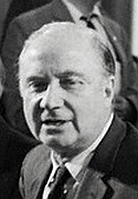 Albert Wohlstetter in 1969. [Source: Bettmann / Corbis]Albert Wohlstetter, a professor at the University of Chicago, gathers a cadre of fiery young intellectuals around him, many of whom are working and associating with the magazine publisher Irving Kristol (see 1965). Wohlstetter’s group includes Richard Perle, Zalmay Khalilzad, and Paul Wolfowitz. Wohlstetter, himself a protege of the Machiavellian academic Leo Strauss, is often considered the “intellectual godfather” of modern neoconservatism. Formerly an analyst at the RAND Corporation, Wohlstetter wielded a powerful influence on the US’s foreign policy during the heyday of the Cold War. Wohlstetter, who is believed to be one of several analysts who became a model for director Stanley Kubrick’s title character in the 1968 film Dr. Strangelove, added dramatic phrases like “fail-safe” and “second strike” capability to the US nuclear lexicon, and pushed to increase the US’s military might over what he saw as the imminent and lethal threat of Soviet nuclear strikes and the Soviet Union’s plans for global hegemony. He was such a powerful figure in his hundreds of briefings that he projected far more certainty than his facts actually supported. Though his facts and statistics were often completely wrong, he was so relentless and strident that his ideas gained more credence than they may have warranted. By 1965, he is known in some circles as a “mad genius” who is now collecting and molding young minds to follow in his footsteps. Author Craig Unger writes in 2007, “To join Team Wohlstetter, apparently, one had to embrace
unquestioningly his worldviews, which eschewed old-fashioned intelligence as a basis for assessing the enemy’s intentions and military capabilities in favor of elaborate statistical models, probabilities, reasoning, systems analysis, and game theory developed at RAND.” An analyst with the Federation of Atomic Scientists will write in November 2003: “This methodology exploited to the hilt the iron law of zero margin for error.… Even a small probability of vulnerability, or a potential future vulnerability, could be presented as a virtual state of emergency.” Or as one-time Wohlstetter acolyte Jude Wanninski will later put it, “[I]f you look down the road and see a war with, say, China, twenty years off, go to war now.” Unger will observe, “It was a principle his acolytes would pursue for decades to come—with disastrous results.” [*The Fall of the House of Bush: The Untold Story of How a Band of True Believers Seized the Executive Branch, Started the Iraq War, and Still Imperils America\'s Future* (New York City: Scribner, 2007)., 42-46.')">Unger, 2007, pp. 42-46]