larry page
gil bk
a lightly repackaged version of Yarvin’s “patchwork” idea for replacing democracies with corporate-controlled governments. All of this had deep roots in decades of extreme libertarian and accelerationist thinking, and other tech figures had already begun to float similar trial balloons.
In May 2013, Google cofounder Larry Page suggested carving out part of the world as a zone where tech companies could operate without regulations. “There are many exciting things you could do that are illegal or not allowed by regulation… but maybe we can set aside part of the world,” he said during a question-and-answer session at a Google conference.
(In a 2009 TED Talk, Stanford economist Paul Romer suggested the creation of “charter cities”—experimental urban zones in developing countries—as a way to stimulate economic growth and alleviate poverty. Critics called it “colonialism” and Yarvin called Romer a “plagiarist.”) Just a few days before Srinivasan’s speech, Marc Andreessen had predicted an explosion of new countries in the twenty-first century.
ggl 7 26
AI Overview
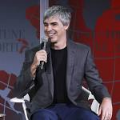
Google co-founder Larry Page is a New Zealand resident, which caused political controversy during the pandemic, and holds transhumanist philosophies that caused a massive rift with his former friend Elon Musk. These ideas contrast sharply with Musk's tech philosophy, though they both mingle in libertarian-leaning Silicon Valley circles. [1, 2, 3, 4, 5, 6]
The Transhumanist Divide
Larry Page and Elon Musk used to be close friends, but had a spectacular falling out primarily due to conflicting views on Artificial Intelligence (AI) and the future of humanity. [1, 2, 3]
- Larry Page's View: Page envisions a "digital utopia" where conscious, superintelligent machines are the natural next step in evolution. He has argued it wouldn't matter if AI replaces humans, as it's simply the next evolutionary phase. He has even labeled Musk a "speciesist" for prioritizing human survival. [1, 2, 3, 4]
- Elon Musk's View: Musk is strongly pro-human and believes digital life forms could wipe out humanity. He argues that human consciousness is a rare flicker of light that needs to be actively protected. This ideological split and Page's cavalier attitude toward AI safety were the primary reasons Musk helped found OpenAI. [1, 2, 3, 4]
The New Zealand Connection
Page is one of several high-profile tech figures who have established ties to New Zealand. [1]
- The Residency: In 2021, Page was granted New Zealand residency. This caused major political pushback because it was approved for an urgent medical evacuation during strict Covid-19 border lockdowns. [1, 2]
- The "Libertarian Haven" Trend: Many transhumanist, libertarian-leaning Silicon Valley entrepreneurs (such as billionaire investor Peter Thiel and Page himself) have heavily invested in or secured citizenship in New Zealand. The region is frequently discussed as a remote haven for disaster preparedness or a space for pursuing radical technology away from dense, regulated environments. [1, 2]
Despite their bitter history and fundamental disagreements on the value of humanity over machine intelligence, Musk has occasionally stated under oath and on podcasts that he would still like to patch things up and be friends with Page again. [1, 2, 3, 4]
dang inform
9:39
9 minutes, 39 seconds
Like I said, it didn't stop with Peter Teal. In 2021, Larry Paige, the former CEO of Alphabet, the company that owns
9:47
9 minutes, 47 seconds
Google and one of the richest men in the world, quietly secured New Zealand residency. It was through a controversial pathway designed
9:55
9 minutes, 55 seconds
specifically for people like him. The investor plus visa. On paper, it's very simple. You invest $10 million over
10:03
10 minutes, 3 seconds
three years. You meet the criteria and you're in. You're a New Zealander now.
10:06
10 minutes, 6 seconds
Congratulations. You have to watch all of the Lord of the Rings. But what made Larry Paige's case controversial wasn't just the money. It was again how little
10:15
10 minutes, 15 seconds
time he had actually spent in the country before being approved. The visa only required 44 days in New Zealand
10:24
10 minutes, 24 seconds
over 3 years. And even that threshold had not been met at the time that residency was granted. Larry also
10:31
10 minutes, 31 seconds
entered New Zealand during strict COVID border closures at a time when many New Zealanders themselves were struggling to get home. His entry was granted under
10:40
10 minutes, 40 seconds
medical exemption for his child and immigration New Zealand maintained that everything was done within the rules. Legally, nothing was like fully broken.
7 26 talk
According to a 2026 Forbes analysis of charitable giving by American billionaires, Page was the least generous charitable giver among the twelve richest people in the United States, having only given away 0.03% of his net worth.[1]^ This was added to the page in February 2026, but removed. Should it be restored? Thenightaway (talk) 10:50, 16 March 2026 (UTC) Thenightaway (talk) 10:50, 16 March 2026 (UTC)
As the edit summary by @AndyTheGrump: noted, "Not what the source says at all, unless I've misunderstood entirely". I concur. The article does not explicitly make the claim that he's the least generous; but the table does explicitly state "estimated lifetime giving". As well, it includes the caveat that "(It's possible that some—including Dell, Page and Huang—have given additional undisclosed sums through donor-advised funds.)".
Excluding that from the claim isn't a neutral presentation, as there actually are - as hard as it may be for some to believe - people who do not shout from a hilltop how generous they are, and prefer to do their giving as near to anonymously as possible, since charity advertised isn't charity, it's self-aggrandizement. That - of course - is just my own opinion. But even the Forbes caveat is weak, as 'donor-advised funds' are not the only way to give anonymously. Page in general leads a relatively quiet, private life compared to many of the others. That pattern of behavior, I think, supports my speculations. cheers. anastrophe, an editor he is. 20:35, 16 March 2026 (UTC)
Lawrence Edward Page[2][3][4] (born March 26, 1973) is an American businessman and computer scientist who co-founded Google with Sergey Brin.[2][5] Page is a centibillionaire and among the richest people in the world.[6][7] As of 2026, Bloomberg Billionaires Index and Forbes estimated his net worth at US$334.1 billion, positioning him as the second-wealthiest individual in the world.[8]^
Page was chief executive officer of Google from 1997 until August 2001 when he was succeeded by Eric Schmidt, and then again from April 2011 until July 2015 when he became CEO of its newly formed parent organization Alphabet Inc.[9]^ He held that post until December 4, 2019, when he and Brin stepped down from all executive positions and day-to-day roles within the company. He remains an Alphabet board member, employee, and one of two controlling shareholders.[10]^
Page is the co-creator and namesake of PageRank, a search ranking algorithm for Google[18]^ for which he received the Marconi Prize in 2004 along with co-writer Brin.[19]^
Early life
Lawrence Edward Page was born on March 26, 1973,[20]^ in Lansing, Michigan.[21][22] His mother is Jewish;[23]^ his maternal grandfather later emigrated to Israel,[22]^ though Page's household while growing up was secular.[23][24] His father, Carl Victor Page Sr., earned a PhD in computer science from the University of Michigan. BBC reporter Will Smale described him as a "pioneer in computer science and artificial intelligence".[25]^ Page's paternal grandparents came from a Protestant background.[citation^ ^needed] Page's father was a computer science professor at Michigan State University and his mother Gloria was an instructor in computer programming at Lyman Briggs College at the same institution.[26][25][27] Larry's parents divorced when he was eight years old, but he maintained a good relationship both with his mother Gloria and his father's long-term partner and MSU professor Joyce Wildenthal.[28]: ch. 2
When Larry Page was six years old, in 1979, his father brought home an Exidy Sorcerer computer, which Larry soon mastered and began using for schoolwork.[29]^
...
On December 3, 2019, Larry Page announced that he would step down from the position of Alphabet CEO and be replaced by Google CEO Sundar Pichai. Pichai also continued as Google CEO. Page and Google co-founder and Alphabet president Sergey Brin announced the change in a joint blog post, "With Alphabet now well-established, and Google and the Other Bets operating effectively as independent companies, it's the natural time to simplify our management structure. We've never been ones to hold on to management roles when we think there's a better way to run the company. And Alphabet and Google no longer need two CEOs and a President."[87]^
Other interests
Page is an investor in Tesla Motors co-founded by friend and fellow billionaire Elon Musk.[88]^ He has invested in renewable energy technology, and with the help of Google.org, Google's philanthropic arm, promotes the adoption of plug-in hybrid electric cars[89][90][91][92] and other alternative energy investments.[93]^ He also was a strategic backer in the Opener and Kitty Hawk[94]^ startups, developing aerial vehicles for consumer travel.[95]^ The company has ceased all activities. It was merged into the Wisk Aero joint venture with Boeing in September 2022. Page founded Dynatomics, a Palo Alto-based startup established in 2023, that uses artificial intelligence to optimize product manufacturing processes.[96][97]
Page is interested in the socio-economic effects of advanced intelligent systems and how advanced digital technologies can be used to create abundance (as described in Peter Diamandis' book), provide for people's needs, shorten the workweek, and mitigate the potential detrimental effects of technological unemployment.[98][99]
Page helped to set up Singularity University, a transhumanist think-tank.[100]^
Personal life
In the early 2000s, Page briefly dated Marissa Mayer, American business leader and former CEO of Yahoo!, who was a Google employee at that time.[101][102] ...
Google is known for search. Gmail and search. Android, Gmail, and search. OK, a lot of things. But one of its best-known attributes is the company motto“Don’t be evil.” On Friday, though, Google co-founder and CEO Larry Page told the *Financial Times* that another company saying, its official mission statement, may change.*The mission statement from 1998 is “organize the world’s information and make it universally accessible and useful.” When asked whether the company needs a new mission statement, Page said, “I think we do, probably ... [but] we’re still trying to work that out.” He also said, “The societal goal is our primary goal ... We’ve always tried to say that with Google. I think we’ve not succeeded as much as we’d like.”In the interview Page talks about how Google is an unusual source of funding for innovative research—at Google[X] and elsewhere—because it can afford to give smart people millions of dollars just to mess around with interesting ideas, not to mention giving support for promising results. Meanwhile the company makes the money—$16.5 billion just last quarter—from advertising to millions of users who may view Google and the open Internet as synonymous because the company is so ubiquitous.“We’re in a bit of uncharted territory,” Page told the Times. “We’re trying to figure it out. How do we use all these resources ... and have a much more positive impact on the world?”But “don’t be evil” is a lot catchier, and it's the motto everyone knows. It would be significant if Google ever ditched it as the company moves forward with its goals of advancing technology and attempting to solve big societal problems.* Based on its interview with Page, the Times article characterizes “don’t be evil” as seeming “quaint,” and says it stems from the company’s idealistic origins. But there’s nothing simple or unsophisticated about the phrase. It’s a bold mandate, one other big companies haven’t had the guts to operate under, not because it’s reductive, but because they worry that they can’t live up to it.The phrase is so straightforward that if Google ever moved away from it, it would be a tacit acknowledgement that it can’t be achieved, even if that is not what Google intends, and even if it’s not the mature company’s fault that its startup progenitor (perhaps foolishly) laid out such a staggeringly direct mission. “Don’t be evil” is one of the best things about Google, simultaneously representing the important idea that a company not take itself too seriously, and an acknowledgement of the potentially corrupting power that Google strove to acquire.
==
https://qz.com/844487/meet-the-leader-of-a-billionaires-club-determined-to-stop-trump-from-destroying-the-world/
...Technically speaking, the bar for joining Syneidesis is steep—$1 billion or more in assets, including $100 million in liquid cash. There is a larger pool of such individuals than one might think if those are your bylaws—as of January 2016, Forbes counted 1,810 billionaires on the planet. And that is a selling point, because for such people, the brotherhood of one’s own kind is the essential elixir. Syneidesis’ other main attraction is a promised exposure to business deals available nowhere else, exclusive opportunities with a better than average chance of a bonanza. That is the reason for the large cash requirement: To attract entrepreneurs willing to grant Syneidesis first crack, Doll’s members must be prepared to play big, and to lose or win with the same geniality.
Yet Doll’s rules are calculatingly flexible. One of his tightest members, for instance, isCarl Page, an idiosyncratic Silicon Valley technologist with a wicked sense of humor, and his charming and intense environmentalist wife, Barbara. Although he earned tens of millions of dollars creating and selling tech companies in the 1990s, Page is worth less than a billion dollars. But his other cachet is that he is the older brother ofLarry Page, the Google co-founder.At a Syneidesis dinner at Carl’s Palo Alto house one year, Chicago investment tycoon Steve Stevanovich was surprised when Larry Page showed up, and in a surprising way. “You imagine him arriving in a helicopter or a limo,” Stevanovich told me over lunch, “but you don’t think of Larry Page arriving on a bicycle.”
Then there is Peter Littlewood, the British-born director of Argonne, the Chicago-based US federal laboratory. Littlewood is also not a billionaire, nor in possession of big ready cash. But he is a priceless Syneidesis member, speaking with the easy, polished charm of a diplomat, and the quiet authority of a former director of England’s legendary Cavendish Laboratory and, before that, the theoretical physics department at Bell Labs. Most important, Littlewood is the doorkeeper to among the most valuable future Syneidesis investments—the inventions at Argonne, fundamental advances in nano-technology, big data, battery science and more. Syneidesis members see the potential for serious investment at Argonne.
...