GOOGLE 2
see social media
owns youtube monetize disinfo eg vax
see ban deplat 3 demonitize ~ denier misinfo
see google ads see monopoly duopoly w fcbk?
merri ok
?: paste fail:
5/17 sub-category, mostly on trump resistance (and allies)
see tAX DODGE/OFFSHORE
html fix 820 last word local resistance
funds cei and heritage
Jerry Brown announced and hired eric holder, boosted CA AG becerra budget for fight, own dammed satellites
see alphabet corp
see also sister regional, see also local
see also CITIES
see spn, alec/ stinktanks
---
---
an 5 26
A Canadian critic of President Donald Trump is fighting to block the Department of Homeland Security (DHS) from obtaining their personal and location information from Google.
A press release from the American Civil Liberties Union (ACLU) said that DHS issued an "administrative demand" after "John Doe" posted criticisms of the death of Renee Nicole Good and Alex Jeffrey Pretti. The individuals were killed earlier this year by federal officers who shot them during the so-called "Operation Metro Surge," in which agents were sent into Minneapolis and faced protests.
Doe's posts on X received over 100,000 views. The X account is connected to a Google account, which identifies who the individual is. However, he isn't a U.S. resident and hasn't even been in the U.S. for over a decade.
Google told the man that it can't hold out forever, but it's raising questions about the Trump administration using the power of the federal government to go after critics.
The ACLU’s complaint said that the demand for information is “a transparent gambit to chill speech the government doesn’t like.”
“I have long admired the United States for its commitment to free speech,”the plaintiff said. “Never in a million years did I think that, after criticizing the US government, I would be targeted with a summons seeking to find out who I am, where I live, where I go and what I read online.”
The ACLU's senior staff attorney, Michael Perloff, attacked the DHS effort, saying that "consequences of its potential release go beyond one individual, whether they are in the United States or elsewhere.”
Trump and his allies are known for doxing individuals, but it doesn't scare them into compliance. It has happened to federal judges who rule against the Trump administration. In one case, Trump pal Rudy Giuliani targeted two Fulton County, GA vote counters who faced death threats and harassment. They won a lawsuit, forcing Giuliani to pay millions in damages.
So far, DHS has demanded information on individuals from Google, Reddit, Discord and Meta, the New York Times reported in February, citing four people who are aware of the requests. In each case, the requests were sent directly to the tech companies, and there was no court order granting a warrant. In the past, DHS and ICE have been known to use what's called "Administrative subpoenas," which are simply written up by the departments and not issued by a court.
*The Washington Post* reported earlier this year that DHS is increasingly relying on the use of administrative subpoenas to get such personal information from companies. The report cited former officials and experts who estimate there have been thousands, possibly even tens of thousands of these kinds of subpoenas that are approved by mid-level staff who have no public accountability.
One such subpoena was issued for an individual who emailed an ICE attorney asking that they "[a]pply principles of common sense and decency" in immigration cases. The individual who sent the email filed a motion to quash, saying that the administrative subpoena was motivated by his speech and violated his First Amendment rights.
“Not satisfied with trying to suppress speech at home, the Trump administration is now targeting dissenters abroad,” the ACLU's Perloff said of the latest case of the Canadian.
Google said it requires that government requests not be overly broad.
“When we receive a subpoena, our review process is designed to protect user privacy while meeting our legal obligations,” a spokesperson told CBC News. “We inform users when their accounts have been subpoenaed, unless under legal order not to.”
Google didn't comment on whether it requires the subpoenas to come from a court or whether it accepts the made-up subpoenas issued by DHS.
---
bb
2 25
reCAPTCHA: 819 million hours of wasted human time and billions of dollars in Google profitsMark Frauenfelder
---
an 2 25
Since the election of President Donald Trump — who ran on mass deportations of undocumented immigrants — immigrant communities have feared increased crackdowns by the new administration. A quick Google search for arrests by U.S. Immigration and Customs Enforcement (ICE) results in pages of press releases from the agency announcing arrests and raids.
But many of those articles, *Guardian*tech reporter Dara Kerr found, were outdated. For example, an operation in Colorado happened in 2010, and arrests in Wisconsin happened in 2018. AlterNet found a press release about arrests in Idaho is from 2010 as well, but the date on the Google result says January 24, 2025.
Indeed, the outdated press releases all had a note at the bottom of the page: “Updated: 01/24/2025.”
READ MORE:'Barbaric act': Trump slammed for sending immigrants to 'black hole' facility at Guantánamo
“There was a lot of noise online,” an immigration lawyer who noticed the pattern told the Guardian. “And it was creating terror in the community.” She remained anonymous out of fear of retaliation by the Trump administration.
“Every article was updated on the 24th, which was causing the Google SEO to interpret that as a recently updated article, and therefore rank it higher,” a tech expert who also chose to remain anonymous said.
“It’s ICE’s made-for-TV moment,” Kerr writes.
“[With ICE] these are old articles that are now appearing at the top of the Google and Bing search results as recent headlines, where no other government agency is doing this,” she said. “As someone in tech, I would interpret that as an intentional play to get more clicks, essentially on these misleading headlines."
READ MORE:Major GOP-led immigration measure passed by U.S. Senate, heads to House
A Google spokesperson told the Guardian: “When people do these searches on Google, they’ll find a range of sources and information, including recent news articles.”
She further explained that Google aims to “reflect the last time a page was updated.” Its “systems,” she said, “are not designed to boost a page’s ranking simply because they update their timestamp.”
Lindsay M. Harris, a law professor at the University of San Francisco who specializes in immigration law, told the Guardianthe media blitz is part of a deliberate strategy.
“All of that is intended to send a message to immigrants to be afraid and that they’re coming for you,” she said. “Regardless of the actual numbers, the optics of these mass arrests throughout the country have very real ramifications.”
READ MORE: Trump’s war on migrants could make an enemy of the country he needs most
Click here to read the Guardian's full report.
---
an 10 24
alternet-no lnx
Revealed: Deceptive political ads thrived on Facebook in run-up to 2024 election
Craig Silverman, Propublica, And Priyanjana Bengani, Tow Center For Digital Journalism October 31, 2024
Reporting Highlights
Deceptive Political Ads: Eight deceptive advertising networks have placed over 160,000 election and social issues ads across more than 340 Facebook pages in English and Spanish.
Harmed Users: Some of the people who clicked on ads were unwittingly signed up for monthly credit card charges or lost health coverage, among other consequences.
Spotty Enforcement: Meta removed some ads after first approving them, but it failed to catch others with similar or identical content — or to stop networks from launching new pages and ads.
These highlights were written by the reporters and editors who worked on this story.
In December, the verified Facebook page of Adam Klotz, a Fox News meteorologist, started running strange video ads.
Some featured the distinctive voice of former President Donald Trump promising “$6,400 with your name on it, no payback required” just for clicking the ad and filling out a form.
In other ads with the same offer, President Joe Biden’s well-known cadence assured viewers that “this isn’t a loan with strings attached.”
There was no free cash. The audio was generated by AI. People who clicked were taken to a form asking for their personal information, which was sold to telemarketers who could target them for legitimate offers — or scams.
Klotz’s page ran more than 300 of these ads before ProPublica contacted the weather forecaster in late August. Through a spokesperson, Klotz said that his page had been hacked and he was locked out. “I had no idea that ads were being run until you reached out.”
Klotz’s page had been co-opted by a sprawling ad account network that has operated on Facebook for years, churning out roughly 100,000 misleading election and social issues ads despite Meta’s stated commitment to crack down on harmful content, according to an investigation and analysis by ProPublica and Columbia Journalism School’s Tow Center for Digital Journalism, as well as research by the Tech Transparency Project, a nonpartisan nonprofit that researches large tech platforms. The organizations combined data and shared their analyses. TTP’s report was produced independently of ProPublica and Tow’s investigation and was shared with ProPublica prior to publication.
The network, which uses the name Patriot Democracy on many of its ad accounts, is one of eight deceptive Meta advertising operations identified by ProPublica and Tow. These networks have collectively controlled more than 340 Facebook pages, as well as associated Instagram and Messenger accounts. Most were created by the advertising networks, with some pages masquerading as government entities. Others were verified pages of people with public roles, like Klotz, who had been hacked. The networks have placed more than 160,000 election and social issues ads on these pages in English and Spanish. Meta showed the ads to users nearly 900 million times across Facebook and Instagram.
The ads are only a fraction of the more than $115 billion Meta earns annually in advertising revenue. But at just over $25 million in total lifetime spend, the networks collectively rank as the 11th-largest all-time advertiser on Meta for U.S. elections or social issues ads since the company began sharing data in 2018. The company’s failure to block these scams consistently highlights how one of the world’s largest platforms struggles to protect its users from fraud and deliver on its nearly decadelong promise to prevent deceptive political ads.
Most of these networks are run by lead-generation companies, which gather and sell people’s personal information. People who clicked on some of these ads were unwittingly signed up for monthly credit card charges, among many other schemes. Some, for example, were conned by an unscrupulous insurance agent into changing their Affordable Care Act health plans. While the agent earns a commission, the people who are scammed can lose their health insurance or face unexpected tax bills because of the switch.
The ads run by the networks employ tactics that Meta has banned, including the undisclosed use of deepfake audio and video of national political figures and promoting misleading claims about government programs to bait people into sharing personal information. Thousands of ads illegally displayed copies of state and county seals and the images of governors to trick users. “The State has recently approved that Illinois residents under the age of 89 may now qualify for up to $35,000 of Funeral Expense Insurance to cover any and all end-of-life expenses!” read one deceptive ad featuring a photo of Gov. JB Pritzker and the Illinois state seal.
More than 13,000 ads deployed divisive political rhetoric or false claims to promote unofficial Trump merchandise.
Meta removed some of the ads after initially approving them, the investigation found, but it failed to catch thousands of others with similar or even identical content. In many cases, even after removing the violating ads, it allowed the associated Facebook pages and accounts to continue operating, enabling the parent networks to spawn new pages and ads.
Meta requires ads related to elections or social issues like health care and immigration to include “paid for by” disclaimers that identify the person or entity behind the ads. But its rules for verifying advertisers and publicly disclosing who paid for such ads are less stringent than those of its main competitor, Google, ProPublica and Tow found. Many of the disclaimers on Facebook ads listed nonexistent entities.
A Meta spokesperson said it invests heavily in trust and safety and uses a mix of humans and technology to review election and social issues ads.
“We welcome ProPublica’s investigation into this scam activity, which included deceptive ads promoting Affordable Care Act tax credits and government-funded rent subsidies,” spokesperson Margarita Franklin said in an emailed statement. “... [A]s part of our ongoing work against scams, impersonation and spam, our enforcement systems had already detected and disabled a large portion of the Pages — and we reviewed and took action against the remainder of these Pages for various policy violations.”
Our analysis showed that while Meta had removed some pages and ads, its enforcement often lagged or was haphazard. Prior to being contacted by ProPublica and Tow, Meta had taken action against roughly 140 pages affiliated with these eight networks, representing less than half of the total identified in the investigation.
By then, the ads on those pages had been shown hundreds of millions of times, resulting in financial losses for an untold number of people.
Meta ultimately removed a substantial portion of pages flagged by this investigation. But after that enforcement, ProPublica and the Tow Center found that four of the networks ran more than 5,000 ads in October. Patriot Democracy alone activated two pages a day on average in the first half of this month.
“Their enforcement here is just super spotty and inconsistent, and they’re not actually attacking root problems,” said Jeff Allen, the chief research officer of the Integrity Institute, a nonprofit organization for trust and safety professionals.
He said networks like Patriot Democracy exploit the fact that a single Facebook page can be connected to multiple ad accounts and user profiles, creating a complex challenge for enforcement. “But these cracks have existed for the past eight years,” said Allen, a former Meta data scientist who worked on integrity issues before departing in 2019.
“There are a lot of gaps in the system, and Facebook’s overall strategy is to play Whac-A-Mole.”
Franklin noted that scammers use a variety of tactics to conceal their activity. Meta constantly updates its detection and enforcement systems and works with industry and law enforcement partners to combat fraudulent activity, she said.
“This is a highly adversarial space, and we continue to update our enforcement systems to respond to evolving scammer behavior,” Franklin said. She added that Meta has taken legal action against several operators.
Meta’s Rules
Misleading election ads have posed a challenge for Meta since at least 2016, when Russian trolls purchased thousands of Facebook and Instagram ads targeting Americans ahead of the 2016 presidential election.
Amid public outcry and pressure from Congress, Meta has created special rules for political and social issues advertisers, launched a public Ad Library to archive such ads and hired additional people to review ads. An integrity team has been tasked with enforcing Meta’s community and advertising standards.
In 2022 and 2023, Meta laid off over 20,000 employees, including members of its integrity team. The company said it has more than 40,000 people working on safety and security around the world, an increase since 2020. It declined to say whether it has more people working on election ad reviews this cycle compared with the last presidential election.
One of the team’s key responsibilities is to verify that election and social issues advertisers are who they say they are, and that their ads adhere to the company’s rules. Since 2019, Meta has required political and social issues advertisers to submit an Employer Identification Number, a government or military website and an associated email address, or a Federal Election Commission registration number.
Meta also allowed state and local organizations and candidates who aren’t federally registered to run ads by providing a corresponding website and email address, a “valid” phone number and a mail-deliverable address. It later relaxed the rules to allow advertisers to simply display the name of their Facebook page as the entity that paid for the ad.
Google, Meta’s main U.S. election ads competitor, doesn’t have similar carve-outs for ad disclaimers. It accepts only an FEC registration number, state elections ID or EIN to verify an organization. Google’s political ad disclaimers list the organization name or the name of a person who completed the ID verification process.
Franklin said Meta has rules to ensure that page name disclaimers aren't abused. The company’s guidelines say that regardless of how much information advertisers disclose, the ads must “Accurately represent the name of the entity or person responsible for the ad.” But more than 100,000 ads identified by ProPublica and the Tow Center did not.
Patriot Democracy
The “paid for by” disclaimers on the ads that mysteriously started appearing on weather forecaster Klotz’s hijacked page listed “Klotz Policy Group” as the advertiser. Klotz Policy Group is not affiliated with Adam Klotz, and the email and website address in the disclaimer do not point to a dedicated website. The group is also not listed in OpenCorporates or other business registration databases.
The advertiser disclaimer information for Klotz’s page listed the email admin@patriotdemocracy.com and the website patriotdemocracy.com/klotzpolicygroup. That URL led to a page that promoted dental coverage for Medicare recipients and used the branding of a site called Saving Tips Daily. Similar URLs with the patriotdemocracy.com domain appeared across other pages in the network, which enabled ProPublica, Tow and the Tech Transparency Project to link them to the same network. (For more details on how the ads and networks were identified, see the methodology section at the end of this story.)
Patriot Democracy is the biggest of the eight networks identified during the course of the investigation and has been active on Meta’s platforms for nearly five years. It includes 232 pages that have spent more than $13 million on more than 110,000 ads.
Allen said operations like Patriot Democracy spend millions on Meta ads because it helps them find victims.
“If they gave over $10 million to Facebook, then they may have extracted $15 million from American seniors with this garbage,” he said. “The harms add up.”
The pages often have official-sounding names such as “Government Cash Program,” “US Financial Relief” and “USA Stimulus Fund,” and their ad disclaimers list organization names that do not correspond to registered entities or websites.
Meta also allowed the page owners to falsely identify themselves as affiliated with the federal government. If a user looked up the page details of “Government Cash Program,” they would see a notation showing that it’s a “Government Website.” US Financial Relief is listed as a “Government organization.” More than 20 pages claimed to be a “Public Service.”
One of the most common types of ads run by Patriot Democracy pages is for Trump merchandise, including coins, flags and hats.
One of these ads ensnared Sam Roberson, a 57-year-old Texas resident, last month. While browsing Facebook, Roberson was drawn to an offer for a Trump coin from a page called Stars and Stripes Supply. The coin was embossed with an image of the former president raising his fist after the assassination attempt in Pennsylvania. One click took him to the site patriotprosnetwork.com, where Roberson paid $39.99 for 11 coins that he planned to give to his grandkids. He received the coins. But two weeks later, his card was charged another $29.99.
Roberson told ProPublica that he didn’t realize that he had signed up for a subscription. He contacted customer support to request a refund, but is skeptical the company will follow through.
“With these knuckleheads and how deep they are dug in, I may end up having to cancel the card,” he said.
When ProPublica called the site’s customer service line, a person who did not give their name said that customers who choose the “VIP” checkout option receive a discount on their purchases and are automatically enrolled in a monthly membership. The spokesperson said that customers are informed on the site and by email “how they got involved [in the membership] and how they can cancel.”
They said that someone else from the company could answer questions about advertising but hung up when asked how often they receive customer complaints about the membership fee.
ProPublica also sent an email with detailed questions about the coin offer and the subscription but did not receive a response.
The Stars and Stripes Supply page spent over $700,000 on Meta ads for Trump merchandise and ran ads as recently as Sept. 28 before it was removed by Meta. The page and the store have received online complaints about the billing scheme. It’s unclear who controls the page or the store, or how they are connected.
In addition to the billing schemes, the Trump merchandise ads often draw clicks with false claims and divisive language. Stars and Stripes Supply ran ads for Trump and JD Vance yard signs that falsely claimed “liberal activists are ripping Trump-Vance yard signs from the ground, sparking a wave of controversy across the nation.”
A page called Truly American ran a video ad for a “free” Trump flag and coin offer that was narrated by a female voice claiming to be Melania Trump. “Today we see free thinkers and independent voices like gay conservatives and Log Cabin Republicans silenced, censored and bullied by cancel-culture mobs. Donald stood against this and they tried to silence him for good,” the voice intoned, as the ad showed an image of Trump with his bloodied ear.
It’s unclear who ultimately controls the Patriot Democracy pages and associated Instagram accounts or who paid for the ads. Along with listing fake advertiser names, Patriot Democracy ad disclaimers show addresses that often correspond to WeWork co-working spaces or UPS stores. And the phone numbers, which are shared among multiple pages, led to generic voicemail messages — with one exception.
A man who answered one number said he’d never run ads on Meta and didn’t know why his phone number was listed. He said he was on his way to court and asked the reporter to call back later. He did not answer a subsequent call, and the phone number was soon disconnected.
The ownership information for patriotdemocracy.com and its related domains is also private, making it impossible to know who registered the domain. Meta did not answer specific questions about the network.
Before ProPublica and Tow reached out, Meta had removed less than half of Patriot Democracy pages for violating its advertising standards. It also failed to take action against the larger network, even after some of its pages were exposed in earlier reports by Forbes and researchers at Syracuse University.
Of the more than 110,000 ads on Patriot Democracy pages identified by ProPublica and Tow, Meta stopped just over 7,000, or roughly 6%, from running for violating standards. These ads were shown nearly 60 million times before Meta took action. Meta also consistently failed to detect and remove copies of ads it had previously banned due to policy violations, according to the analysis.
Franklin said Meta uses a variety of automated approaches to detect and remove duplicate ads. This includes training systems to recognize the images and videos used in previously removed ads in order to prevent them from running again. It also looks at a variety of signals, including user and payment information and the devices used to access accounts, to restrict or ban people who break its rules, she said.
One of the most popular lures used by Patriot Democracy and other networks is the promise of free government cash.
More than 30,000 ads across the networks identified by ProPublica and Tow falsely claimed that nearly all Americans could receive government subsidies or are eligible for a “FREE Health Insurance Program.” People who clicked were often directed to unethical insurance agents who altered their existing ACA plan details or signed them up for plans they weren’t eligible for, pocketing a commission in the process. These ads were shown to users at least 38 million times.
The scheme has caused victims to lose their existing ACA health insurance or to be hit with unexpected tax bills from the IRS. In those cases, the agent falsely reported a lower income to enroll clients and secure a commission. In response to the surge in fraudulent enrollments, the Centers for Medicare & Medicaid Services, the federal agency that administers the ACA, implemented stricter rules this summer for insurance agents.
A CMS spokesperson declined to comment on specific ads or platforms. But insurance marketers and other industry experts told ProPublica that Facebook ads are a scammer’s preferred method for ensnaring victims. Meta declined to comment on whether it’s in touch with CMS.
“It’s clear from speaking with a lot of different consumers that were ripped off that the Facebook ads played a big part,” said Jason Doss, an Atlanta lawyer who filed a class-action suit against a group of companies and individuals who allegedly used online ads, high-pressure insurance call centers and other methods to commit mass ACA enrollment fraud. The companies have moved to dismiss the case, citing a lack of jurisdiction and failure to show that any laws were broken, among other defenses. “We deny the allegations made and will be defending the case,” the CEO of one company named in the suit told ProPublica. The suit is ongoing.
Since 2021, Google has required U.S. health insurance advertisers to verify their identity and license status prior to running ads. Meta does not have this requirement. The company did not respond to questions about health insurance advertisers.
Taking on a Network
Meta’s failure to stop deceptive ads about government programs has forced some state and local officials to step in.
In January 2023, investigators in the Alaska Division of Insurance received complaints from consumers who said they were shown misleading ads on Facebook.
The ads used the state seal of Alaska and in some cases a photo of the governor to falsely claim that the state was offering new funeral and burial benefits. “The State of Alaska approved NEW affordable Funeral programs, designed to cover 100% final expenses up to 25,000 or more. Not just a portion,” read one ad.
As with other types of deceptive ads, the burial ads tricked people into filling out a form. In this case, they often ended up on the phone with someone trying to sell life insurance.
Alex Romero, Alaska’s chief insurance investigator, was alarmed. There weren’t any “new” state benefits. It’s also illegal in Alaska, and just about every state, to use a state seal without permission.
Searching the Meta Ad Library, he found hundreds of deceptive ads that used state seals. Romero warned his fellow state insurance investigators on a scheduled conference call soon after his discovery. “There was a proliferation of advertising using the same deceptive marketing,” Romero told ProPublica.
Around the same time, officials in Ventura County, California, were alerted to the unauthorized use of its county seal in Facebook ads. A local news outlet sent the county examples of burial insurance ads that used the Ventura County seal. Tiffany North, the county counsel, began an inquiry. She and Romero connected last spring and realized the same person was connected to the Facebook ads: a lead-generation marketer and insurance broker named Abel Medina.
Public records show that Medina, 35, owns companies such as Heartwork Global and Kontrol LLC, which have run election and social issues ads on several Facebook pages.
Romero said his research showed that Kontrol LLC was a key source of Facebook ads with state seals and images of governors. “Practically every state, a bunch of counties, several cities, they’re all getting tagged by this guy Medina,” he said.
Two other companies, Final Expense Authority LLC and American Benefits & Services LLC, ran similar ads on some of the same Facebook pages, ProPublica and Tow found. Their websites had text that was nearly identical to text on Heartwork Global’s site.
Corporate records show that Final Expense Authority LLC is registered to Tiffani Panyanouvong, a 24-year-old former insurance broker. She told ProPublica that Medina registered the entity in her name without her permission when they were dating.
American Benefits & Services LLC is registered in Delaware and does not publicly list an owner. Panyanouvong said that Medina used that company and Final Expense Authority to run ads on Meta and that she “had nothing to do with his lead-generation services.”
“This is all because of him, and I was just his girlfriend at the time,” Panyanouvong told ProPublica in a WhatsApp message. “And he used me as another person to hide behind to get through the Facebook advertising loop holes.”
On his LinkedIn profile, Medina touts his Facebook ad expertise. He says he generated “$1.6 Million in sales in under eight months with only Facebook Final Expense Media Buying and growing other verticals.”
He’s also teaching others how to do it — for a fee. His profile points to a website, Scale Kontrol, which promises to help clients create a “cash cow advertising machine” by using Facebook ads to generate customer leads. The site also assures customers that it knows “work arounds” to avoid having ads “flagged, banned, restricted.”
Medina did not respond to phone messages or to a detailed list of questions sent to three email addresses, his Facebook account and a home address.
ProPublica and Tow found that the four companies have operated at least 40 Facebook pages and spent $2.1 million on more than 21,000 election and issues ads. Thousands of ads reviewed by ProPublica and Tow across pages linked to the companies made deceptive claims and appeared to break one or more Meta rules.
The pages used deepfake audio of Biden to make false claims about government subsidies, ran deceptive auto insurance ads that promoted nonexistent “Biden Gas Relief Checks” using images of a U.S. Treasury check, and falsely claimed that “The State has approved a NEW Mortgage Protection Plan that protects your home and family in the event of an unexpected tragedy.” No such state plan exists.
Prior to being contacted by ProPublica, Meta had removed about half of the pages. Ten pages connected to these companies ran ads in the last three months.
In March 2023, North sent a cease-and-desist letter to Final Expense Authority. “Your use of the County’s official seal and your actions in misleading the public are unauthorized and unlawful,” she wrote.
The following month, Romero sent a similar letter to Medina, Panyanouvong and three of the companies. It cited five criminal and civil statutes that the state of Alaska believed they had violated and demanded they stop running ads with the state seal and images of the governor.
North and Romero said the ads with their respective seals stopped soon after the letters were sent. (Neither contacted Meta directly, telling ProPublica they focused on the companies running the ads.)
Final Expense Authority, the company registered to Panyanouvong, is the subject of an ongoing investigation by the Monterey County district attorney’s office over its use of the California county’s seal. Emily Hickok, Monterey County’s chief deputy district attorney, confirmed the investigation to ProPublica and said her office reported the ads to Meta in February. She declined to comment further, citing the ongoing investigation.
Panyanouvong’s California insurance license was revoked in January. An attorney for the state Department of Insurance cited the use of Ventura County and Alaska seals in ads, among other alleged violations, state records show. Due to a prior criminal conviction for petty theft, records show that in 2019 Medina received a California insurance license on a probationary basis. It has been inactive since last November. He holds an active license in Texas.
Panyanouvong, who now works as a waitress, said she hopes to get her license back. “I’m pretty disheartened about this matter constantly haunting me,” she said.
The California Department of Insurance declined to comment on any investigations into the companies. “While we do not comment on open investigations, deceptive advertising on social media platforms can be a cause for licensing action or criminal prosecution,” it said in a statement to ProPublica.
Meta removed all of the active pages linked to the four companies after ProPublica and Tow shared them. It declined to say whether it had taken additional action. But as recently as early October, an ad from American Benefits & Services offered $100K to homeowners: “Claim cash back with these new home owners benefits programs that just became available.”
Still Locked Out
After ProPublica emailed Klotz, the meteorologist, in August to ask about the ads running via his page, his employer, Fox News, contacted Meta to get the ads removed and to restore his access. His verified page continued running ads promising easy money to Americans until early October. As of this week, he still doesn’t have access to his page.
“As far as I know the account is still hacked and in their control,” Klotz said.
Methodology
...
---
---
mma 7 24
google demonetized The Heartland Institute in June. Here are 4 more channels that appear to violate its misinformation policy.
Special ProgramsClimate & Energy
Written by Ilana Berger
Published 07/31/24
- Even after demonetizing the YouTube channel of climate-denial think tank The Heartland Institute in June, other large channels still contain climate-denial content that seemingly violates the platform's policies. We found four examples.
- ## YouTube demonetized the Heartland Institute after it frequently posted climate denial videos
- On June 14, Heartland wrote that YouTube demonetized its channel because it posted videos that were harmful to viewers, violating community guidelines. As climate journalist Dave Vetter explained in another thread on X (formerly Twitter), this means that Heartland can no longer earn revenue from its YouTube videos. Twitter/X, [6/14/24, 6/14/24]
- The decision comes after years of researchers and journalists pointing out that Heartland’s content amplifies climate deniers.The think tank is known for lobbying against climate legislation while receiving funding from the oil and gas industry. Heartland started its YouTube channel in 2007. The Washington Post, [2/23/20; Grist, 2/6/23; DeSmog, 8/6/18; YouTube, accessed 7/25/24]
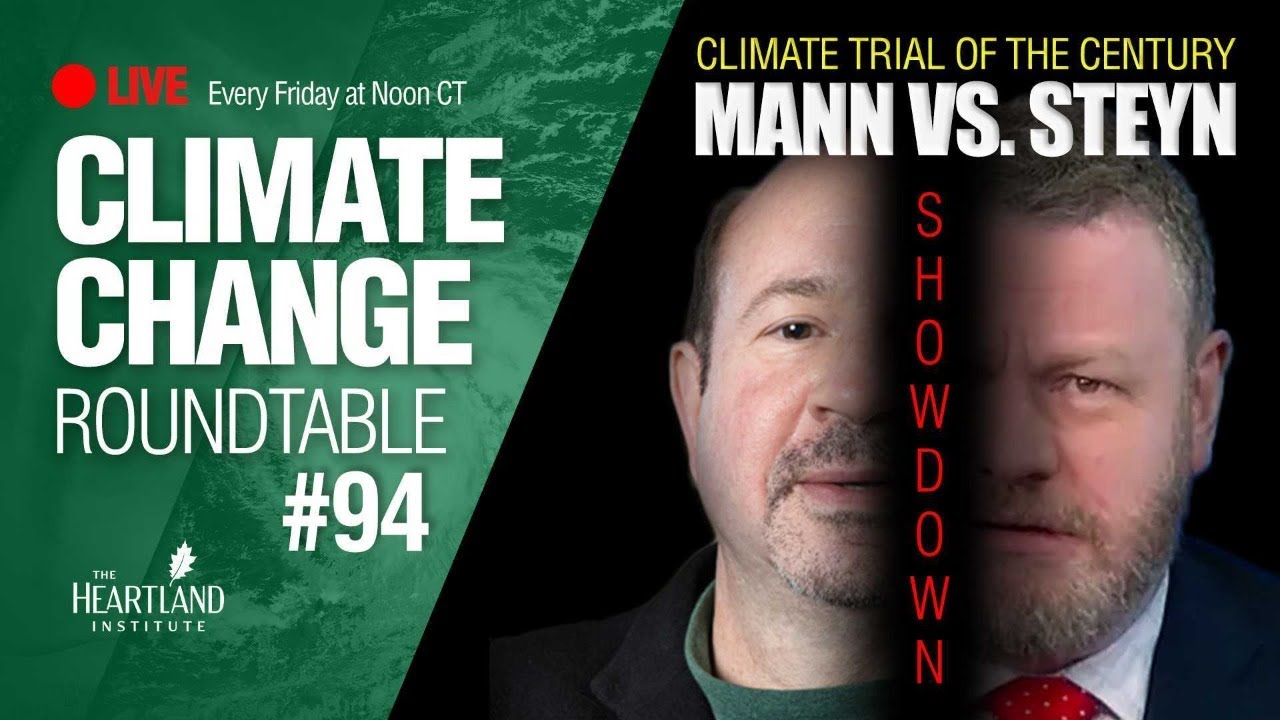
- After the announcement, Heartland still had an ad running on at least one of its videos. As of July 3, at least one video from the Heartland Institute was still being monetized by YouTube. The ad from Pacific Rim Athletics, a company that provides strength training programs, appeared on a January 19 video from Heartland attacking climate scientist Michael Mann. YouTube[
 , accessed 7/3/24]
- After the announcement, Heartland still had an ad running on at least one of its videos. As of July 3, at least one video from the Heartland Institute was still being monetized by YouTube. The ad from Pacific Rim Athletics, a company that provides strength training programs, appeared on a January 19 video from Heartland attacking climate scientist Michael Mann. YouTube[
- Google announced in 2021 that YouTube would prohibit “ads for, and monetization of, content that contradicts well-established scientific consensus around the existence and causes of climate change,” but researchers have found large channels that violate this policy.A 2023 study from the Climate Action Against Disinformation Coalition identified 100 different videos amplifying climate disinformation that have ads, including videos from Heartland. The Verge, [3/2/23; Google, 10/7/21]
- ## Channels run by Tony Heller, PragerU, John Stossel, and Jordan Peterson are still being monetized while seemingly violating YouTube’s misinformation policies
- Tony Heller
- Like the Heartland Institute,Tony Heller regularly posts YouTube videos that attempt to delegitimize scientific consensus on climate change. In January 2024, the Center for Countering Digital Hate published a report that highlighted Tony Heller as one figure still promoting the false narrative that Arctic sea ice isn’t melting. Since CCDH published its report, which analyzed videos from January 1, 2018, to September 30, 2023, Heller has posted well over 100 videos, many of which promote the idea that the warming we are currently experiencing is not being driven primarily by burning greenhouse gases. For example, Heller posted the documentary Climate: The Movie, which promoted “more than 2 dozen long-debunked myths” according to Skeptical Science, a blog that was launched by academic and disinformation expert John Cook. One such myth is that climate change is caused by the sun; in fact, the sun’s energy has decreased while the Earth warms. Heller also relies on an outdated theory suggesting that a warming period that occurred around 6,000 years ago debunks the idea of man-made climate change. Skeptical Science, [3/23/24; YouTube,
 ,
[7/25/24;](https://youtu.be/ktLIUVEaaQ0&t=1s)7/25/24;Center for Countering Digital Hate, 1/16/24; NOAA,10/21]
- Like the Heartland Institute,Tony Heller regularly posts YouTube videos that attempt to delegitimize scientific consensus on climate change. In January 2024, the Center for Countering Digital Hate published a report that highlighted Tony Heller as one figure still promoting the false narrative that Arctic sea ice isn’t melting. Since CCDH published its report, which analyzed videos from January 1, 2018, to September 30, 2023, Heller has posted well over 100 videos, many of which promote the idea that the warming we are currently experiencing is not being driven primarily by burning greenhouse gases. For example, Heller posted the documentary Climate: The Movie, which promoted “more than 2 dozen long-debunked myths” according to Skeptical Science, a blog that was launched by academic and disinformation expert John Cook. One such myth is that climate change is caused by the sun; in fact, the sun’s energy has decreased while the Earth warms. Heller also relies on an outdated theory suggesting that a warming period that occurred around 6,000 years ago debunks the idea of man-made climate change. Skeptical Science, [3/23/24; YouTube,

- Media Matters found a pro-Trump election ad featuring Republican vice presidential nominee JD Vance running on a May 11 video from Heller.The video included a clip of comedian Bill Maher mocking adult film actress Stormy Daniels and was posted during Trump’s New York hush money trial, where he was ultimately found guilty on 34 felony charges. YouTube,[
 , accessed 7/30/24]
- Media Matters found a pro-Trump election ad featuring Republican vice presidential nominee JD Vance running on a May 11 video from Heller.The video included a clip of comedian Bill Maher mocking adult film actress Stormy Daniels and was posted during Trump’s New York hush money trial, where he was ultimately found guilty on 34 felony charges. YouTube,[
- According to Social Blade, Heller’s estimated monthly earnings from YouTube are $33 to $528.Social Blade, accessed [7/25/24]
- PragerU
- PragerU videos receive millions of views, and the channel has a history of posting videos that feature climate change denial.Media Matters recently identified six videos on PragerU’s website that dismiss the scientific consensus that the changes we are currently experiencing are primarily being driven by burning fossil fuels. These videos can also be found on PragerU’s YouTube channel, and they have over 14.7 million views combined. Media Matters, [4/16/24; YouTube,
 ,
 ,
 ,
 ,
 ,
 ]
- PragerU videos receive millions of views, and the channel has a history of posting videos that feature climate change denial.Media Matters recently identified six videos on PragerU’s website that dismiss the scientific consensus that the changes we are currently experiencing are primarily being driven by burning fossil fuels. These videos can also be found on PragerU’s YouTube channel, and they have over 14.7 million views combined. Media Matters, [4/16/24; YouTube,
- Recently, PragerU uploaded a video in which the narrator claims that it’s unclear whether climate warming is “larger than natural climate variability.” In an April video, a scientist who reportedly does climate forecasting for fossil fuel companies Judith Curry suggests that humans may not not be causing the rapid warming we have been experiencing in the 21st century, saying we don’t know “how much warming is associated with our emissions.” According to a Carbon Brief summary of the International Panel on Climate Change’s 2023 report, humans have likely caused “100% of the long-term global warming to date.” Curry concludes that “we can’t predict the future climate. It’s simply not possible. … We can’t control the climate.” PragerU, [4/15/24; Carbon Brief, 3/23/23; DeSmog, 5/15/23]
- On June 28, PragerU posted a video claiming that the June heat wave impacting the mid-Atlantic and central U.S. was “nothing out of the ordinary'' and that heat waves are not becoming more frequent. The video shows a clip of meteorology student Chris Martz saying temperature data collected by NOAA contradicts the claims that “these events are becoming more frequent and more common here in the United States.” Meanwhile, according to NASA’s Earth Observatory website, “Heat waves like the June event have become more frequent in the United States in recent decades, according to researchers at NASA’s Goddard Space Flight Center.” YouTube,[
 ; X/Twitter, accessed 7/26/24; NASA, 6/19/24]
- On June 28, PragerU posted a video claiming that the June heat wave impacting the mid-Atlantic and central U.S. was “nothing out of the ordinary'' and that heat waves are not becoming more frequent. The video shows a clip of meteorology student Chris Martz saying temperature data collected by NOAA contradicts the claims that “these events are becoming more frequent and more common here in the United States.” Meanwhile, according to NASA’s Earth Observatory website, “Heat waves like the June event have become more frequent in the United States in recent decades, according to researchers at NASA’s Goddard Space Flight Center.” YouTube,[
- According to Social Blade, PragerU’s estimated monthly earnings from YouTube are $7,000 to $112,700.Social Blade, accessed [7/25/24]
- Jordan Peterson
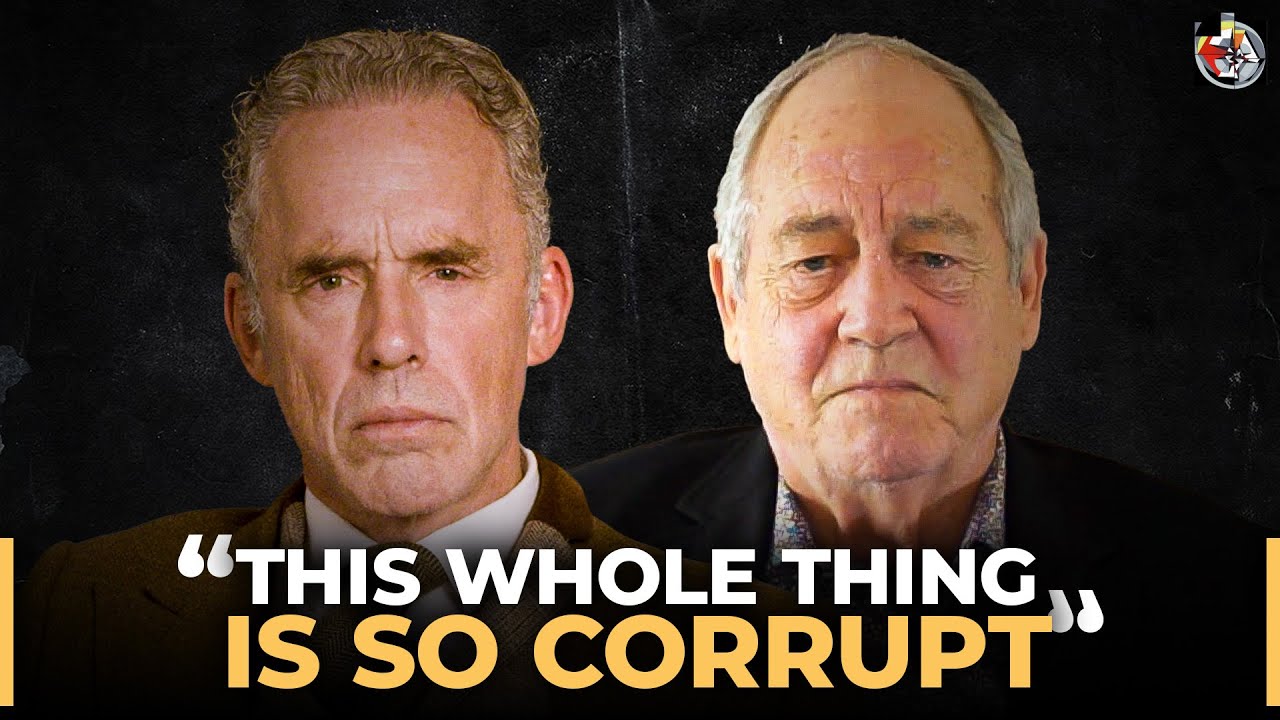
- While Peterson does not post videos about climate change denial as often as other influencers or organizations devoted entirely to the topic, his videos have a much larger reach than Heartland’s, amplifying their impact. After the Center for Countering Digital Hate released a report about YouTube climate deniers, Peterson uploaded an interview with climate denier Dr. Patrick Moore, who falsely claims to be a co-founder of Greenpeace. The April 11 video is titled Climate Lies, referring to Moore’s views on the scientific consensus on climate change. The video has over 253,000 views, far more than the 10 most recent videos from the Heartland Institute combined. Greenpeace, [7/6/10; YouTube,
 , accessed 7/25/24]
- While Peterson does not post videos about climate change denial as often as other influencers or organizations devoted entirely to the topic, his videos have a much larger reach than Heartland’s, amplifying their impact. After the Center for Countering Digital Hate released a report about YouTube climate deniers, Peterson uploaded an interview with climate denier Dr. Patrick Moore, who falsely claims to be a co-founder of Greenpeace. The April 11 video is titled Climate Lies, referring to Moore’s views on the scientific consensus on climate change. The video has over 253,000 views, far more than the 10 most recent videos from the Heartland Institute combined. Greenpeace, [7/6/10; YouTube,
- According to Social Blade, as of July 16, Peterson’s estimated monthly YouTube earnings are $5,700 to $91,500.Social Blade, accessed [7/25/24]
- John Stossel
- Former Fox Business host John Stossel sued Meta after it said that two of his videos about climate change were missing context.In 2021, Stossel sued Meta (then Facebook), claiming the company defamed him by adding a fact-checking label to these videos. The lawsuit was ultimately dismissed and the court found that Facebook’s labels were protected under California’s anti-Strategic Litigation Against Public Participation (SLAPP) statute. One of the videos included excerpts from an event Stossel moderated at the Heartland Institute. This video can also be found on YouTube. In it, one climate denier on the panel claimed that climate change is not causing sea level rise because “water has been rising for approximately 20,000 years and probably will continue.” He also claimed that hurricanes are not becoming more intense. E&E News, [9/28/21; Courthouse News, 10/13/22; Climate Change Litigation Databases, 10/11/22;YouTube,
 ]
- Former Fox Business host John Stossel sued Meta after it said that two of his videos about climate change were missing context.In 2021, Stossel sued Meta (then Facebook), claiming the company defamed him by adding a fact-checking label to these videos. The lawsuit was ultimately dismissed and the court found that Facebook’s labels were protected under California’s anti-Strategic Litigation Against Public Participation (SLAPP) statute. One of the videos included excerpts from an event Stossel moderated at the Heartland Institute. This video can also be found on YouTube. In it, one climate denier on the panel claimed that climate change is not causing sea level rise because “water has been rising for approximately 20,000 years and probably will continue.” He also claimed that hurricanes are not becoming more intense. E&E News, [9/28/21; Courthouse News, 10/13/22; Climate Change Litigation Databases, 10/11/22;YouTube,
- Stossel has been involved with the Heartland Institute for years. In addition to moderating the 2019 panel, Stossel has participated in Heartland Institute benefits, including one in September 2023. Heartland Institute, [9/8/23, 2/3/04]
- On May 24, Stossel posted an interview with Judith Curry in which she said there is no “true scientific consensus” on climate change and called it a “manufactured consensus.” While Curry admitted that fossil fuels are warming the planet, she also falsely said that “we still don’t know” how “much of the recent warming is caused by fossil fuels” or if a warming planet is dangerous for humans. YouTube,[
 ; NASA, February 2021]
- On May 24, Stossel posted an interview with Judith Curry in which she said there is no “true scientific consensus” on climate change and called it a “manufactured consensus.” While Curry admitted that fossil fuels are warming the planet, she also falsely said that “we still don’t know” how “much of the recent warming is caused by fossil fuels” or if a warming planet is dangerous for humans. YouTube,[
- At least two of Stossel’s videos related to climate change, including his interview with Curry, had ads as of July 30.Media Matters found an election campaign ad featuring presumptive Democratic presidential nominee Kamala Harris running on Stossel’s video with Curry and an ad for SunValue, a solar project developer, running on his video titled “Juice: Why Wind and Solar Make Our Power Grid Less Reliable.” YouTube, [7/30/24, 7/30/24]
- On May 24, Stossel also posted an interview with pro-fossil fuel activist Alex Epstein, who suggested it’s not “all bad” or “catastrophic” that fossil fuels are driving global warming.“You have to admit it leads to a lot of greening, because CO2 is plant food,” Epstein said. “And you also have to admit that warming is generally desirable in the world.” He also complained that “people do not acknowledge that today we are masters of climate and that any negatives of rising CO2 have been totally overwhelmed by the benefits of fossil fuels.” YouTube,[
 ]
- On May 24, Stossel also posted an interview with pro-fossil fuel activist Alex Epstein, who suggested it’s not “all bad” or “catastrophic” that fossil fuels are driving global warming.“You have to admit it leads to a lot of greening, because CO2 is plant food,” Epstein said. “And you also have to admit that warming is generally desirable in the world.” He also complained that “people do not acknowledge that today we are masters of climate and that any negatives of rising CO2 have been totally overwhelmed by the benefits of fossil fuels.” YouTube,[
- According to Social Blade, as of July 25, Stossel’s estimated monthly YouTube earnings are $395 to $6,300.Social Blade, accessed [7/25/24]
---
kirk ~ brin and page funders
pro pub 7 24
...“There’s a perceived gap of ‘We aren’t getting the support from big-name, big-dollar donors that we deserve and want and need.’”
That’s where Ziklag comes in.
Speaking late last year to an invitation-only gathering of Ziklaggers, as members are known, Charlie Kirk, who leads the pro-Trump Turning Point USA organization, named left-leaning philanthropists who were, in his view, funding the destruction of the nation: MacKenzie Scott, ex-wife of Amazon founder Jeff Bezos; billionaire investor and liberal philanthropist George Soros; and the two founders of Google, Larry Page and Sergey Brin.
“Why are secular people giving more generously than Christians?” Kirk asked, according to a recording of his remarks. “It would be a tragedy,” he added, “if people who hate life, hate our country, hate beauty and hate God wanted it more than us.”
“Ziklag is the place,” Kirk told the donors. “Ziklag is the counter.”
...
---
---
mma
Google and Apple are hosting an app dedicated to TheDonald and other far-right forums that were banned from Reddit](
https://www.mediamatters.org/donald/google-and-apple-are-hosting-app-dedicated-thedonald-and-other-far-right-forums-were-banned)
06/05/24
==
===
3 24
cory doc new bk tech monopoly
*The Internet Con: How to Seize the Means of Computation.
UpFront - March 7, 2024 | KPFA
text interview
---
---
an 6 23
no lnx
canada’s Parliament recently passed Bill C-18, the Online News Act, which would require social media platforms to pay news organizations for posted articles. In response, Meta announced that it was going to ban article sharing in Canada rather than pay up.
The Online News Act received Royal Assent on Thursday, meaning it’s all set to become law after Parliament passed it. The law is expected to go into effect in six months. The Canadian government says that the bill asks social media companies to “bargain fairly with Canadian news businesses” for having their articles posted.
“[The Online News Act] levels the playing field by putting the power of big tech in check and ensuring that even our smallest news business can benefit through this regime and receive fair compensation for their work,” Pablo Rodriguez, Minister of Canadian Heritage, said in a statement.
READ MORE: Facebook’s Zuckerberg Won’t Ban Holocaust Deniers Because He Thinks They Don’t ‘Intentionally’ Get Facts Wrong
The government says social media outlets are getting a clear benefit from users sharing articles. The companies not only sell advertising that appears near the articles, but sharing stories also boosts engagement and the value of the platform to users. In addition, the platforms can find out more about their users based on the type of stories they click on, obtaining their data for targeted advertising. With the Online News Act,smaller outlets are allowed the opportunity for collective bargaining with the tech giants.
Meta, the company that owns Facebook and Instagram, responded by saying Canadian news stories wouldn’t be available to Canadians on its platforms.
“The changes affecting news content will not otherwise impact Meta’s products and services in Canada. We want to assure the millions of Canadians on our platforms that they will always be able to connect with friends and family, grow their businesses and support their local communities,” Meta said in a statement.
Meta threatened to do this earlier this month, and Prime Minister Justin Trudeau panned the company, according to the CBC.
:{:{}:
}:
“The fact that these internet giants would rather cut off Canadians’ access to local news than pay their fair share is a real problem, and now they’re resorting to bullying tactics to try and get their way. It’s not going to work,” Trudeau said.
Meta is not the only outlet to consider such a drastic action. Google has suggested on Thursday it may do something similar, the CBC reported.
“Every step of the way, we’ve proposed thoughtful and pragmatic solutions that would have improved the bill and cleared the path for us to increase our already significant investments in the Canadian news ecosystem,” Google said. “So far, none of our concerns have been addressed. Bill C-18 is about to become law and remains unworkable.”
Canada’s Online News Act is not the first of its kind. It’s based on a 2021 Australian law, the News Media Bargaining Code. Nor is Meta’s response the first of its kind—in August 2020, when the NMBC was proposed, the company blocked news in Australia. In early 2021, Facebook reached an agreement with the Australian government and removed the block.
A similar act could even come to America. California is reportedly considering its own version of the Online News Act, according to The Hill. And, as the Hill reports, Meta has made similar threats to the state if the Journalism Preservation Act goes forward.
FROM YOUR SITE ARTICLES
Mental health expert lays out 10 thought patterns that trip up former Christians ›
Senate votes to end President Biden resolution making it harder for immigrants 'to obtain legal status' ›
The deplorable work conditions behind Harrods’ $7,000 'Ambootia Snow Mist' Darjeeling tea ›
RELATED ARTICLES AROUND THE WEB
Facebook to end news access in Canada over incoming law on ... ›
Meta threatens to remove US news content if new law passes - BBC ... ›
Meta to pull plug on news sharing in Canada - POLITICO ›
---
---
6 23
Media Matters Vice President Julie Millican released the following statement after Axios reported that YouTube has reversed its election integrity policy and will no longer prohibit “content that says fraud, errors or glitches occurred in the 2020 presidential election and other U.S. elections.”
YouTube’s announcement today that they will resume allowing bad actors to lie about the 2020 presidential election result comes as no surprise. YouTube was one of the last major social media platforms to keep in place a policy attempting to curb 2020 election misinformation. Now, it’s decided to take the easy way out by giving people like Donald Trump and his enablers free rein to continue to lie without consequence about the 2020 elections.
YouTube and the other platforms that preceded it in weakening their election misinformation policies, like Facebook, have made it clear that one attempted insurrection wasn’t enough. They’re setting the stage for an encore.
YouTube initiated its election integrity policy in December of 2020, beginning to prohibit claims of widespread fraud in that election. The platform did not employ similar policies prohibiting such claims for the 2022 midterms.
---
---
https://www.mediamatters.org/clay-travis/youtube-has-done-nothing-stem-tide-covid-19-misinformation-outkicks-clay-travis
---
---
3 23
https://www.mediamatters.org/facebook/trump-called-protests-meta-profited-his-newly-reinstated-facebook-page
---
---
2 23
Department of Justice (DOJ) just announced a massive antitrust case against Google that, if successful, will significantly break up Google. It would force the tech giant to separate its digital advertising business.1
We need the DOJ to keep at this, enforce antitrust law, and break up the dangerous tech giants to protect consumers and competition. Amazon, Meta, Google are all too big and powerful.
Sign the petition to the DOJ: Break up Big Tech corporations like Google, Amazon, and Facebook.
Reports say this could be a case that even expands the power of antitrust law in the United States.2 With antitrust champions like Jonathan Kanter and Lina Khan in the Biden administration, we may have the chance to not only break up Google, but also Amazon, Facebook, and other tech companies.
Antitrust enforcement is a critical check on the power of corporations, and a check we desperately need on tech companies in control of so much of our data, the information we consume, the social media we use, and the goods we buy. It’s time to break up Big Tech. demand progress
---
https://cleantechnica.com/2019/10/23/google-spends-millions-on-climate-denial/
---
no lnx
https://www.businessinsider.com/google-donates-to-climate-change-denying-organizations-2019-10
Google has been funding organizations which deny climate change and actively lobby against climate legislation, the Guardian reports.
Google has been funding organizations which deny climate change and actively lobby against climate legislation, the Guardian reports.
Google donates to the Competitive Enterprise Institute, an organization that was reportedly key to President Trump's decision to pull out of the Paris Climate Accord.
A spokesperson told Business Insider that just because Google donates to these groups, it does not mean the company endorses their "entire agenda."
no lnx
Google has been funding think tanks and lobbying organizations which actively fight against climate change legislation, The Guardian reports.
Google has been a vocal champion of climate change initiatives, and last month following a series of protest walkouts CEO Sundar Pichai announced the company's "biggest renewable energy purchase ever." Google has been trying to offset its carbon footprint by purchasing more renewable energy than it consumes as a company, not solely to power its own data centres and offices but also to boost clean energy development.
Despite making noises about becoming more environmentally friendly, Google has been quietly funding organizations which say climate change isn't real.
As highlighted by The Guardian, Google's list of beneficiaries for "substantial contributions" include numerous organizations which have been active in denying climate change exists and lobbying against legislation to combat it.
One organization funded by Google describes the 'climate delusion'
One of these organizations is the Competitive Enterprise Institute (CEI), which has referred to climate change as "climate delusion."
The CEI's director Myron Ebell was also reported as being instrumental in Donald Trump's decision to pull out of the Paris Climate Accord in 2017.
For its part the CEI appears to generate positive press coverage for Google. Last month a senior fellow at the CEI published an op-ed in the Atlantic arguing against the antitrust probe launched by 50 state attorneys general into Google.
Another organization named on the list is the right-wing think tank the Heritage Foundation. Google's involvement with the Heritage Foundation came under heavy fire earlier this year when it announced the appointment of Kay Coles James, the foundation's president, to its AI ethics council which collapsed after a week.
Kay Coles James Donald Trump
Kay Coles James sits next to Donald Trump during a meeting of conservative leaders in January. Chip Somodevilla/Getty Images
The decision sparked a fierce employee backlash because of James' history of anti-immigrant, anti-LGBTQ and climate change-denying rhetoric. Over a thousand employees signed a petition to have James ousted, and the following week Google disbanded the council entirely.
"We're hardly alone among companies that contribute to organizations while strongly disagreeing with them on climate policy," a Google spokesperson told the Guardian. The company declined to tell The Guardian how much it had donated to these groups.
When contacted by Business Insider, a Google spokesman said:
"We sponsor organisations from across the political spectrum that advocate for strong technology policies. We've been extremely clear that Google's sponsorship doesn't mean that we endorse that organization's entire agenda — we may disagree strongly on some issues. Our position on climate change is similarly clear. Since 2007, we have operated as a carbon neutral company and for the second year in a row, we reached 100% renewable energy for our global operations."
Do you work at Google? Contact this reporter via email at ihamilton@businessinsider.com or iahamilton@protonmail.com. You can also contact Business Insider securely via SecureDrop.
===
---
https://www.dailykos.com/stories/2022/10/24/2130859/-Google-s-Selling-Climate-Disinfo-Ads-Despite-Policy-Against-It-YouTube-Too-Still
Google's Selling Climate Disinfo Ads, Despite Policy Against It. YouTube, Too. Still.
Daily Kos
Hate speech test case Mark Steyn interviewing pro-J6-insurrection Marc Morano and debunked-by-deniers Monckton about their recent invitation to be ...
...In October of 2021, Google announced that it was banning climate disinformation from its advertising system, including on YouTube. That (should have) meant videos denying the scientific reality that fossil fuels are causing climate change shouldn't have ads on them, and websites that publish such false claims would also be barred from using Google's ad services.
In October of 2022, it's still all too easy to find climate disinformation on YouTube that's selling ads.
FoxNews clips that get fact checked? Still monetized. UK's version of Fox, GBNews, having a PR exec turned professional denier on to say the "'UK Government has been taken over by sleeper agents"? Making ad money. Hate speech test case Mark Steyn interviewing pro-J6-insurrection Marc Morano and debunked-by-deniers Monckton about their recent invitation to be a laughing stock? Monetized! Amateur that depends on professionals Tom Nelson's podcast videos, Alex Epstein on Glenn Beck, John Stossel tapping deceased denier Pat Michaels to deny hurricane science, and our favorite, the canonically bad climate denial video, the Great Global Warming Swindle, that Avaaz called out in 2020, are all monetized.
And that's just on YouTube! There's also Google's sprawling advertising display business. Google gets paid to place ads on websites across the internet. Its policy against climate disinformation should mean that it doesn't place ads on websites that publish climate disinformation. And the company should care about that, because big name advertisers are very clear about not wanting their products to appear next to the casual bigotry, hatred and lies found on websites that carry climate disinformation.
But apparently a year is still not enough time for Google to actually enforce its demonetization policy, because a new report from Dewey Square Group found Google "is by far the most significant advertising supplier on websites that promote climate disinformation both in terms of the share of sites they enable and the ad traffic they monetize."
Using weekly visits as the metric, of the total 113 websites analyzed, Google ads accounted for 97.7% of the projected weekly visits. Assuming an average price, "Google would potentially have pulled in $7.6 million in display advertising revenue over the past year from such sites" the report states.
Of the top 50 climate disinfo websites by traffic, like Breitbart and The Dailies Wire and Caller, Dewey analysts found that Google was serving ads on 39 of them.
Not only is Google still monetizing climate disinfo, it's the biggest player in the game, and it's working with the biggest, most obvious publishers of harmful climate denial.
Despite its own rule saying it explicitly would not do that. Apparently it’s less of a policy, and more of a request...
---
---
mma 10 22
New data shows Google is earning revenue directing traffic to fringe right-wing platforms and websites
Google is responsible for nearly half of U.S. display ad traffic used by fringe social media platforms to drive traffic and new users to their extremism-filled sites
WRITTEN BY KAYLA GOGARTY
PUBLISHED 10/21/22
New analysis provides some insight into the extent to which far-right social media platforms — such as Truth Social, Gab, Parler, Gettr, and Rumble — use Google’s enormous advertising network to expand their audience. In the past 12 months, these fringe platforms have spent roughly $258,000 on ad networks including Google, likely just a fraction of their full spend and a sum that Google’s $210 billion advertising business could surely do without.
Media Matters and others have reported on Google’s history of letting far-right actors monetize extremism, such as helping the monetization of racist and dangerous anti-Muslim articles from the fake news website Freedom Daily, allowing anti-abortion centers to target women with misleading and unlabeled ads, and letting former Trump aide Steve Bannon monetize his website even as he was banned on Google-owned YouTube.
This week, Media Matters reported that a Dewey Square analysis of data from traffic analytics company Similarweb found that Google’s ad network is driving traffic and new users to fringe video-sharing platform Rumble, while also monetizing some of its traffic. Notably, Rumble had 622 million U.S. visits in the last year (from October 2021 through September 2022), and nearly 48% of U.S. display ad traffic driving users to Rumble during that time came from Google Display Network ads.
Additional analysis from Dewey found that Google is similarly generating revenue from other fringe platforms and far-right websites that are filled with extremism. In fact, Google’s ad network promotes traffic to multiple fringe platforms, monetizes visits to the platforms with ads to third-party sites including far-right websites, and then monetizes visits to those websites with ads to other sites.
Google’s ad network generates revenue and promotes traffic to these alternative far-right social media platforms grx]
In addition to Rumble, Dewey’s analysis found that Truth Social, Gettr, Gab, and Parler — fringe platforms that boast minimal content moderation policies and allow hate speech, misinformation, and conspiracy theories — had over 124 million U.S. visits combined in the last year (from October 2021 through September 2022).
Google’s ad network is responsible for some of the traffic to the fringe platforms. In the last year, more than 46% of U.S. display ad traffic driving users to these fringe platforms came from Google Display Network ads. Of this traffic, 63% went to Rumble and 20% went to Gettr, while another 11% went to Gab, and 6% went to Parler.
Dewey traced the estimated sums of money that Gettr, Parler, Gab, and Rumble spent on U.S.-based advertising over the last year and found that they spent at least $397,000 and earned at least 108 million ad impressions combined. More than 65% of this advertising spend, or over $258,000, was through ad networks, including Google.
Here is an example of display ads used to drive new traffic to the fringe platforms:
fringe platforms' google ads
Far-right platforms use Google’s ad network to monetize traffic
While some of the platforms do try to earn revenue by selling merchandise or offering paid account upgrades, advertising monetization is another source of income.
Dewey’s analysis found over 246,000 U.S. display ad visits monetizing the fringe platforms in the last year (from October 2021 through September 2022). Of these visits, Google Display Network made up more than 65%, with 220 advertisers using the network.
:{:{}:
}:
These advertisers on fringe platforms using Google Display Network include right-wing media outlets, such as Washington Examiner and The Epoch Times, and right-wing websites, such as the American Center for Law & Justice, Republican fundraising website WinRed, and the National Republican Senatorial Committee. (Notably, Dewey found that the NRSC was the largest advertiser on Rumble over this last year, spending over $577,000 on ads on the platform.) These right-wing sites also used Google’s display ad network to monetize their sites.
Additionally, these large companies are advertising on fringe platforms through Google’s ad network:
Amazon
Lending Tree
Chevrolet
Subaru
Walmart
Ancestry.com
:{:{}:
}:
Google is providing a valuable source of revenue to these still relatively small and fringe far-right social media platforms that are allowing the spread of harmful content and extremism. They need Google far more than Google needs them.
Related
Google’s ad network is driving and monetizing traffic to the fringe video-sharing platform Rumble
10/20/22 6:28 PM EDT
Google Play approved the Truth Social app, even though nothing has changed since it was initially rejected
10/17/22 1:43 PM EDT
Parler promised Apple and Google it would change, but harmful content still plagues the platform
10/18/22 3:58 PM EDT
---
---
https://theintercept.com/2022/05/18/google-amazon-israel-military-nimbus/
palestine surveil? might be working for pvt corp vs cty? still a contractor?
---
---
posted on realclear investigations oct 2021
https://www.axios.com/googles-climate-denial-crackdown-misinformation-e0925b26-76ff-4c1d-8b11-c498cc8527d9.html
interesting this is axios, good news [for planet anyway] tho they think it will be read as big tech censorship?!
google's new policy of demonetizing climate denial content marks a significant step in its efforts to rein in climate misinformation.
Why it matters: Videos promoting clear falsehoods about the existence of global warming or its causes have long found a home on YouTube, which Google owns.
- Meanwhile, on search, ads for climate contrarian websites have consistently appeared next to search listings for sites offering politically neutral and scientifically rigorous evidence.
Driving the news: The company's announcement Thursday that the new policy takes effect Nov. 1, during the UN Climate Summit in Glasgow, could cool the political polarization around climate in the U.S.
How it works: Per a Google statement, the policy affects the monetization of "content that contradicts well-established scientific consensus around the existence and causes of climate change."
- "This includes content referring to climate change as a hoax or a scam, claims denying that long-term trends show the global climate is warming, and claims denying that greenhouse gas emissions or human activity contribute to climate change."
- Google plans to use "automated tools and human review" to put the policy into practice.
- The system does not seek to limit policy debate, making Google's job easier but potentially allowing the promotion of partisan assaults on established science.
- Discerning denial can be tough. Google says it will "look carefully at the context in which claims are made, differentiating between content that states a false claim as fact, versus content that reports on or discusses that claim."
Our thought bubble, from Axios' Scott Rosenberg: Facebook and Google have both faced censorship accusations from conservatives who object to measures that have sought to limit misinformation on COVID, elections and other topics.
- YouTube's move on climate is likely to encounter similar objections, given the politically polarized views on this issue, especially in the U.S.
Between the lines: The policy also brings Google's ad revenue strategy more in line with its sustainability agenda.
- The company aims to run on 100% carbon-free energy by 2030.
- On Wednesday, Google rolled out new features to help travelers limit the carbon footprint of their flights via Google Flights.
What's next: The policy will immediately be put to the test with COP26 taking place.
- Spikes in social media activity around climate change over the last six months coincided with major news events, according to data from Keyhole.
- Peaks in search activity also tend to occur around news events, including climate summits, according to Google Trends.
What we're watching: Whether Google's move boosts pressure on Facebook to modify its efforts to limit climate misinformation.
- Facebook expanded its Climate Science Center last month and steers users there when they search for climate-related terms. Facebook also pledged $1 million to a grant program to combat misinformation.
- But activists say the platform still allows denial to flourish.
---
---
SUBSTX --> NYT
Emily Sanders is the Center for Climate Integrity’s editorial lead. Catch up with
...Just days after the Big Oil hearing, the Center for Countering Digital Hate, an international nonprofit that “seeks to disrupt the architecture of online hate and misinformation,” released areport finding that posts linking to content from just ten publishers account for 69 percent of Facebook users’ interactions with climate denial content.
Dubbed the “Toxic Ten,” those publishers are:
- Breitbart
- The Western Journal
- Newsmax
- Townhall Media
- Media Research Center
- The Washington Times
- The Federalist
- The Daily Wire
- Russian State Media
- The Patriot Post
Examples of viral climate denial content included aWashington Times article claiming there is a “cult of ‘climate change’” whose “worship” is based on unproven science, a Breitbart piece promoting conspiracy theories that climate legislation involves “lockdown decrees,” and a Newsmax article telling readers not to “worry too much about CO2 baking the planet.”
This type of content didn’t emerge on its own. CCDH’s CEO, Imran Ahmed, said the fossil fuel industry has “shown its willingness to embrace new technologies and every tool available to it to create harm — and climate denial is harm.” Social media, he says, is the last frontier for Big Oil to cultivate opposition against climate action that might threaten their bottom line.
“If they can’t win the battle on legislation, they’re going to seek to undermine the consensus, the self-preservatory consensus that underpins the push for legislation. They know that you can’t possibly get political agreement if we can’t even agree on the basic facts,” Ahmed said. “And all they have to do is simulate the appearance of dissent, of debate.”
According to the report, Facebook and Google, which have portrayed themselves as “green” and allies in the fight for climate action, are doing business with denial. CCDH’s research found that Facebook failed to label 92 percent of the Toxic Ten’s climate disinformation, despite the company’s pledge to start placing information labels on posts about climate change. It found that eight of the Toxic Ten have received a combined $5.3 million in revenue from Google ads in the last six months alone. Google promised to stop attaching ads to climate denial content in October, setting its own deadline of November 9 — but it hasn’t acted on that promise yet.
[twt]
...CCDH isn’t alone in calling this out: online climate disinformation has been identified as an urgent and emerging issue in pieces published in The New York Times, The Conversation, and The Nation within the past week.
CCDH’s research was released during COP26, this year’s United Nations climate summit, where at least 503 fossil fuel lobbyists — more than any country’s delegation — were present, according to an analysis by Corporate Accountability and other advocacy groups.
Go figure: the industry’s attempts to halt climate action through third parties have been simultaneously occurring online, where, thanks to internet trolls, right-wing publications, and the cooperation of social media platforms, they can now reach exponentially more members of the public. At least two of the Toxic Ten have historic ties to funding from ExxonMobil:
- Media Research Center, a self-described watchdog against “leftist bias in the news media and popular culture,” received at least $50,000 from ExxonMobil directly in between 2000 and 2003, and another $50,000 in 2009, along with more than $4.5 million from the Scaife Foundations, which themselves are financed in large part by the oil industry.
- Townhall, a right-wing media group originally founded by the Heritage Foundation, a conservative think tank that has received at least $870,000 in grants from ExxonMobil, according to the Climate Investigations Center.
Digital platforms make that particularly easy through frequency bias — a fundamental psychological characteristic that causes humans to believe that something must be true or at least popular if we see it frequently enough. And disinformation, whether about vaccinations or climate change or electoral processes, is “sticky,” or “chewy,” in Ahmed’s words — it gets people talking.
Ben Decker, CEO of Memetica, a firm that works to investigate disinformation across digital media platforms, called climate disinformation “the legacy disinformation narrative plaguing America,” and fossil fuel companies the “historical purveyors” of that disinformation.
“The content itself becomes a space where fossil fuel companies can advertise themselves,” said Decker, who says policies to address climate change, not necessarily the science itself, are now the greatest target for these kinds of attacks.
Both Decker and Ahmed referred to the “asymmetry” of these so-called debates, which are manufactured with the help of the fossil fuel industry’s immense resources, and enabled by social media platforms that profit from publishers who advertise climate denial content on their sites.
So how do we tackle the climate disinformation crisis?
CCDH’s report calls on social media companies to stop monetizing and profiting from climate denial, and to comprehensively label climate disinformation on their websites. “It is amazing that the regulatory framework for a bodega in Manhattan is more onerous than that for a company like Facebook, which has literally caused at least one genocide,” Ahmed said, in reference to the violence in Myanmar.
In Decker’s view, it’s important for social media companies to codify exactly what images and words constitute climate disinformation if they’re going to prevent its spread. “They’re coy and smart around the words that they use,” he said of publishers and bad actors that facilitate harm over these platforms.
Growing wells of academic and journalistic research on evolving climate disinformation, and now the ongoing House Oversight investigation, could help define and identify harmful content. But if you ask Ahmed, the problem goes deeper than a lack of consensus or standards.
“We get too tied up in the technology of algorithms, automated moderation, AI and machine learning,” Ahmed said. “It’s a moral choice to gaslight the earth, and that’s what social media companies are doing. They’re making a moral choice to do business with climate denial. These are rapacious companies willing to sell out their communities, nations, and the planet, for their own wealth.”
---
ICYMI News Roundup
- The forgotten oil ads that told us climate change was nothing
- Biden Highlights Electric Vehicles While Asking for Inquiry Into High Gas Prices
- How Exxon duped "The Daily"
- How 'Low Carbon' Energy Became the New 'Low Tar' Cigarette
- US auctions off oil and gas drilling leases in Gulf of Mexico after climate talks
- Top Gas Exporters Say They're Victims of 'Cancel Culture'
---
ref
substx-->
https://www.nytimes.com/2021/11/12/opinion/climate-change-facebook-glasgow.html
GREG BENSINGER
Social Media Is Polluted With Climate Denialism
Nov. 12, 2021
Greg Bensinger
Mr. Bensinger is a member of the editorial board.
:{:{}:
}:
This fall, Exxon Mobil started targeting New Yorkers with Facebook advertisements that warned about a proposed law that would require electric-only appliances in some buildings. “If your household was required to go full electric, it could cost you more than $25,600 to replace major appliances,” one ad reads.
:{:{}:
}:
But the ad doesn’t tell the whole story: The law would apply only to new buildings, making Exxon’s cost claims specious at best. Other advertisements, among roughly 1,200 placed by the fossil fuel giant found by the artificial intelligence outfit Eco-Bot.Netthis year, claimed oil pipelines are necessary to keep “energy affordable and accessible” and that natural gas helps customers “meet their environmental goals.”
These are examples of so-called greenwashing, or corporate attempts to underplay companies’ true impact on the environment. Along with other climate misinformation on social media, such ads have become a potent threat to efforts to combat global warming.Researchers for the environmental group Stop Funding Heat found that climate misinformation is viewed as often as 1.36 million times daily on Facebook.
Social media companies simply aren’t rising to the challenge of rising sea levels. Climate change is an urgent threat, but the companies are treating misinformation around it with far less urgency than other issues like political conspiracy theories, hate speech and lies about Covid vaccines. Climate content can be considered opinion and is therefore exempt from standard fact-checking procedures, which climate change deniers have seized on to push misleading information onto the sites.
The largest social media firms demonstrated in last year’s presidential election that they can effectively combat some misinformation by appending warning labels, using algorithmic suppression and adding links to more reliable news sources. But such work requires sustained effort, and Facebook, for one, dismantled its well-intentioned civic integrity group overseeing election misinformation shortly after the 2020 presidential vote.
“The results from the American presidential election show that the social media companies have the capacity to address misinformation on a broad scale,” said John Cook, a postdoctoral research fellow at the Climate Change Communication Research Hub at Monash University who is advising Facebook on its climate misinformation efforts. “But they’ve not put the resources or effort behind this that are necessary.”
Even with the rapid shift in public opinion and the outward signs of global warming in recent years, social media companies have been slow to adapt, allowing sometimes blatant disinformation to flourish unchecked on their sites. Under Facebook company guidelines, climate content may be categorized as opinion and subject to no more scrutiny than peer-reviewed scientific research.
Social media companies have a standard playbook for addressing many online falsehoods: add warning labels, push them lower in an algorithmically driven news feed, remove them or penalize their creators by suspending or barring them from using the site. But often misleading posts, such as one that claims combating climate change “involves Americans giving up their freedom and way of life,” carry an incongruous and wishy-washy Facebook label about local average temperatures. Compare that to the labels appended to former President Donald Trump’s voting misinformation posts, which Facebook called “disputed” or “misleading.”
Posts featuring conspiracy theories around Texas’ February power grid failure that left many residents freezing in the dark racked up millions of views on YouTube, Facebook and Twitter, particularly ones falsely suggesting that frozen wind turbines or President Biden’s energy policies were to blame. The companies did little to intervene. Representative Lauren Boebert, Republican of Colorado, falsely alleged in a tweet that Mr. Biden’s energy policies were “leaving millions of Texans freezing to death.” Twitter never appended a clarifying label.
Employees at Facebook have wrestled internally with how to approach climate change misinformation since at least 2019, according to documents released by the former Facebook employee Frances Haugen. According to one exchange, an employee seemed flummoxed by the company’s refusal to remove posts featuring climate change denial, because global warming is not a matter of opinion. Another employee said Facebook removes posts when “content may lead to imminent harm against people offline.”
[Opinion Conversation The climate, and the world, are changing. What challenges will the future bring, and how should we respond to them?
What does climate change look like around the world?
From “Postcards From a World on Fire,” these 193 stories show how climate change is reshaping reality.
What should our leaders be doing?
Al Gore, the 45th vice president of the United States, finds reasons for optimism in the Biden presidency.
What are the worst climate risks in your country?
Select a country, and we'll break down the climate hazards it faces.
Where are Americans suffering most?
Our maps, developed with experts, show where extreme heat is causing the most deaths in the U.S.]
Facebook said its policy of not fact-checking or labeling posts from politicians was justified because the company doesn’t “want to limit political speech on the platform” — despite evidence it has that politicians are more likely to be believed than regular users and their posts are more widely shared.
:{:{}:
}:
Facebook, which has called climate change the “greatest threat we all face,” has established only a sparsely visited section on its main site, known as the Climate Science Center, with occasional articles addressing rising global temperatures.
Climate skeptics are simply altering tactics from outright climate change denial to discrediting evidence and shifting blame from corporations to individuals, said Michael Mann, the author of “The New Climate War.”
On YouTube, the nonprofit Heartland Institute, known for attacking climate science, has backed the German influencer Naomi Seibt, who has posted videos denying climate change “hysteria” and encouraging viewers to live carefree lives. But YouTube rarely appends warning labels directing users to more reliable information, even as her videos garner thousands of views.
YouTube says it uses software to make debunked climate content less likely to show up in people’s recommendation feeds, but the climate activism nonprofit Avaaz found last year that the algorithm still prompted millions of views of questionable videos. The group also found that YouTube was selling ads to run alongside them.
As a result, Google, YouTube’s parent company, recently took a baby step, announcing it will no longer allow websites and YouTube creators to make money off advertising that denies humans’ contributions to climate change or denies global warming. Similarly, Facebook said climate change and global warming were on a list of topics that could no longer be used by marketers to target advertising, starting next year.
But spreading false information on the sites remains as easy as making a few keystrokes.
With the public shifting toward acceptance of climate change, corporate strategies are also evolving, including companies’ use of paid influencers on Instagram and TikTok who embark on idyllic road trips to Joshua Tree National Park using Shell gasoline or who snack on chips from Phillips 66 stations.In an effort to combat legislation to ban natural gas hookups, the fossil fuel industry also is paying Instagram stars to post videos of anodyne tasks like cooking tacos over gas stoves. The aim is to conjure good feelings about the brands, known to be significant contributors to carbon emissions, and perhaps even to convince consumers that they are stylish.
Elsewhere on the web, pages have sprung up with names like Climate Change Is Crap and Climate Change Is Natural to spew denialism on social media — no targeted ads needed. One headline from Climate Realism: “Evidence Indicates Climate Change Doesn’t Threaten Human Health.”
Social media could be a forum f or healthy debate about climate action, but the companies’ flimsy policies around policing climate change misinformation stand in the way. Automated software systems are simply not enough to combat misinformation about an unalterably changing Earth.
Facebook, YouTube and other companies have shown they have the power to amplify facts and suppress lies — will they use that to help protect Earth from its most dire threat?
The Times is committed to publishing a diversity of letters to the editor. We’d like to hear what you think about this or any of our articles. Here are some tips. And here’s our email: letters@nytimes.com.
Follow The New York Times Opinion section on Facebook, Twitter (@NYTopinion) and Instagram.
---
---
ads basis of foodchain for facebook AND GGL
an 11 21
click eyeballs even mainstream media
In an article published by Mother Jones on Thanksgiving 2021, journalist Monika Bauerlein describes Americans as feeling mentally "exhausted" because of **all the bad newson top of bad news that they are being inundated with. And media outlets, Bauerlein stresses, are creating that climate of exhaustion because it is good for business.
Bauerlein, in her Mother Jones article, writes, "Are you part of the exhausted majority?.… So many people are tired of feeling like everything is a disaster, everything is at risk, and we'll never be done fighting with unvaccinated relatives over who gets to come to Thanksgiving. And tired, too, of the news. I'm a journalist who lives and breathes news, and I get tired. So many headlines that want to get your attention. So much to worry about. Democrats in disarray, inflation, the climate — it's all at 11, all the time."
Bauerlein acknowledges that "there are a lot of crises out there," but she is quick to add that the world has always had crises. The difference in 2021, she argues, is media outlets have a financial stake in promoting "outrage."
"This is obviously not the only time of crisis the world, or America, has ever been through," the journalist explains. "It is, however, the only one in which we have lived in a 24/7 media ecosystem that depends for a significant part of its business on instant reaction and instant outrage. If you've been reading Mother Jones for a little while, you know about the basic problem: Advertising revenue for publishers and broadcasters depends in large part on both quantity — clicks, eyeballs, video views — and engagement: how long you stick around, whether you share, whether you comment. And all of those metrics are juiced when content tugs at your emotions, especially fear and outrage."
Bauerlein continues, "That can take the form of sensational headlines about simple news stories, or it can take the form of opinionatedhot takes. Even for newsrooms that depend less on advertising than subscriptions, as the New York Times and the Washington Post do, quick-turnaround opinion content is key in getting people to subscribe. That's why you're seeing these prestige outlets add more and more columnists and associated newsletters." wapo pow roger pal
---
===
921
apple and gOOgle pull navalny vote aggregator caved
---
Marc Morano
Weekly update · October 8, 2021
NEWS
Google's Climate Crackdown: A conversation with Marc Morano | Washington Examiner
Washington Examiner
In this interview, ClimateDepot.com founder Marc Morano tells Doug McKelway, the tactic is another step that big tech and its progressive allies have ...
Facebook Twitter Flag as irrelevant
Marc Morano Debunks #COP26 Climate Extortion in "Green New Deal: The Great Regret ...
Canada NewsWire
Marc Morano will debunk COP26 climate extortion in his presentation "Green New Deal: The Great Regret" on Oct. 6, 2021, at 7 p.m. MDT for part two of ...
Facebook Twitter Flag as irrelevant
Marc Morano, who is anti-vax, anti-mask and pro-insurrection, is suddenly worried about (left ...
Red, Green, and Blue
Marc Morano, who is anti-vax, anti-mask and pro-insurrection, is suddenly worried about (left) political violence? 0. Published on October 4th, 2021.
Facebook Twitter Flag as irrelevant
Representatives, sparked by critical federal report, express frustration with leaders of ...
Yahoo News
7h ago. More From. Washington Examiner. Washington Examiner. Google's Climate Crackdown: A conversation with Marc Morano. 31m ago. Washington Examiner ...
Facebook Twitter Flag as irrelevant
White House wants Central America to step up as new wave of migrants heads north - Yahoo News
Yahoo News
Google's Climate Crackdown: A conversation with Marc Morano. 29m ago. Washington Examiner. Most of world agrees to set 15% global minimum tax as holdouts ...
Facebook Twitter Flag as irrelevant
EXCLUSIVE: Experts BASH Big Tech for Reported Demonetization of So-Called 'Climate Denial'
NewsBusters
Climate experts Steven Milloy and Marc Morano bashed Google/YouTube for reportedly vowing to prohibit ads on videos questioning climate change.
https://www.newsbusters.org/blogs/free-speech/catherine-salgado/2021/10/08/exclusive-experts-bash-big-tech-reported
no lnx
EXCLUSIVE: Experts BASH Big Tech for Reported Demonetization of So-Called ‘Climate Denial’
Catherine Salgado
October 8th, 2021 12:48 PM
The atmosphere for content creators with Google just reached a new freezing point. YouTube and parent company Google reportedly plan to demonetize all content from so-called “climate deniers.”
Climate experts Steven Milloy and Marc Morano bashed Google/YouTube for reportedly vowing to prohibit ads on videos questioning climate change. “This is Big Tech Collusion with the government,” Morano stated. “Google’s demonetization is an admission that we are winning, a treasure far more valuable than Google ad revenue,” Milloy said.
Climate Depot publisher Morano said, “Google is simply doing the bidding of the federal government and global groups like WHO and the UN. Google is implementing a policy that says you officially cannot disagree with the claims of your government or quasi-government organizations. This is Big Tech collusion with the government.”
Morano compared the Google/YouTube climate video ban to recent COVID-19 restrictions: “They have labeled as ‘misinformation’ any COVID claims that were not in line with WHO, and now they will do the same with any climate claims that are not in line with the UN climate panel.” Morano said, “For decades the progressive movement has tried to impose and sought a one-party state in America.Climate activists [like] Tom Friedman on the pages of The New York Times extolled the virtues of China’s one-party system.”
He continued: “When COVID came along, they were able to achieve their long-sought vision of no dissent under essentially a one-party state in the once free West. John Stossel has already faced the wrath of the climate censors of Big Tech.” Morano warned, “Big Tech has shut down COVID lockdown dissent [and] vaccine mandate dissent, and now they have their sights set on climate ‘denial.’” Morano also indicated he fears his video series, the Morano Minute, will soon be banned.
Milloy, founder of JunkScience.com, told MRC Free Speech America, “Demonetization of websites that expose the climate hoax does nothing but validate what climate realists have been saying for years: It’s not about the climate; it’s about the political power. If what we were saying was wrong, we would have been laughed off the Internet long ago. Instead, reality is validating us and public support for climate idiocy is going nowhere.”
Milloy even added that “Google’s move will have no effect on climate realist web sites for the simple reason that the ad revenue is pretty trivial.” “We do it because we oppose the abuse of science, especially as it is being used to advance totalitarianism.”
Google and YouTube will no longer allow ads or creator payments which allegedly contradict “‘well-established scientific consensus around the existence and causes of climate change,’ the company’s ads team said in a statement,” reported Axios. Google promised to consider “context” and said it consulted “experts,” including from the United Nations, Axios wrote. Axios called the move “one of the most aggressive measures any major tech platform has taken” regarding climate change.
Google and YouTube are increasing censorship through demonetization. YouTube has also reportedly demonetized fishing and hunting videos. Grabien, “which provides a suite of tools for newsmakers and curates its own original news content,” had its channel on YouTube demonetized in August. Google also demonetized a Daily Mail column from Piers Morgan criticizing gymnast Simone Biles for abandoning her fellow U.S. gymnasts at the Tokyo Olympics in August.
Conservatives are under attack. Contact YouTube here or send feedback and contact Google at (650) 253-000 and demand that Big Tech be held to account to mirror the First Amendment. If you have been censored, contact us using CensorTrack’s contact form, and help us hold Big Tech accountable.
---
---
torres -sp
Chapter 7 · Avoiding the Taxman 143
TJ: "Merchants have no country"
taxes are test of allegiance
local tax breaks rarely produce much in terms of jobs (bail for better deal); NASCAR has own tax break;corps can write off legal fees when do crimes 147;
Int'l BK Canada tim horton; Double Irish with Dutch Sandwich;Apple avoided 9B$ in taxes in 2012; OECD says 100-240B$/yr. GGl Dutch 99.8%; many #; 2014 Farm Bill 50% for food aid on US ships
---
---
see soc media bias BS
Unhinged' GOP congressman claims Google 'absolutely' changed its algorithm to 'move 15 million votes' to Biden
David Badash The New Civil Rights Movement
July 09, 2021
U.S. Rep Ken Buck (R-CO) says Google flipped 15 million votes away from Donald Trump to Joe Biden. Buck last year, on tape, as the chair of the Colorado GOP, allegedly tried "pressuring an El Paso County GOP official to falsify election results in the State Senate District 10 race."
"Google, by the way, changed its algorithm, in ...
---
---
2014
https://www.businessinsider.com/why-did-google-support-alec-one-of-the-most-controversial-organizations-ever-2014-9
Why Did Google Support ALEC, A Giant Organization That Denies Climate Change?
Dave Smith Sep 22, 2014, 1:30 PM
Google on Monday announced it would pull its support from The American Legislative Exchange Council (ALEC) due to the organization’s ongoing denial of climate change.
"The facts of climate change are not in question anymore, everyone understands that climate change is occurring, and the people who oppose it are really hurting our children and our grandchildren and making the world a much worse place, and we should not be aligned with such people,” Google chairman Eric Schmidt said in a statement.
But some people might be wondering: Why did Google support this organization in the first place?
For those who don’t know, ALEC was founded in 1973 as “the Conservative Caucus of State Legislators,” but its current goal is to further “the fundamental principles of free-market enterprise, limited government, and federalism.”
Among its various campaigns, ALEC has previously focused on opposing insurance coverage for birth control
in the US; opposing the individual health insurance mandate enacted by the Affordable Care Act; expanding the “Stand Your Ground” laws that allow citizens the right to self-defense if they feel their property is under attack; prohibiting cities from building public broadband networks; urging state legislatures to demand voters produce state-issued IDs; and much more.
Last October, Google (and Facebook, too) joined ALEC, a group that has initiatives to give tax cuts to tobacco companies, privatize schools and for-profit education companies, repeal state taxes for the wealthy, and oppose renewable energy efforts.
But Google didn't just join ALEC; it also funded it.
According to the watchdog group Common Cause, "In addition to paying to be a member of ALEC ($12,000 - $25,000 per year), Google and Facebook both pay to be a member of ALEC’s Communications and Technology Task Force ($5,000 per year). If they sponsor a workshop, training, or party during ALEC’s conferences, that is an additional amount (somewhere around $40,000 per event), plus conference fees to send their lobbyists/executives to ALEC conferences, plus any additional funding they give to ALEC or ALEC scholarship accounts. All of this funding is considered charitable contributions to a 501(c)(3). Google may write it off as a tax write-off."
In a column for The Huffington Post, author Norman Solomon cited a book by Robert McChesney in hopes to explain why Google had aligned itself with ALEC:
“Any qualms about privacy, commercialism, avoiding taxes, or paying low wages to Third World factory workers were quickly forgotten,” McChesney writes. “It is not that the managers are particularly bad and greedy people — indeed their individual moral makeup is mostly irrelevant — but rather that the system sharply rewards some types of behavior and penalizes other types of behavior so that people either get with the program and internalize the necessary values or they fail.”
Solomon believed Google joined ALEC so it could remain in a position of power, which would allow the company to impact — or at least know about — future changes to national policies and legislation.
“Google’s involvement in ALEC is consistent with the company’s mega-business model that relentlessly exploits rigorous data-mining of emails, online searches and so much more,” Solomon writes.
Another theory from Todd O’Boyle, director of Common Cause: “[Google] might be concerned about right-of-way and video franchising related to Google Fiber, or maybe they want to work on state tax issues.”
It’s unclear why Google initially joined ALEC — there are theories, but the company offered no official statement. That said, it’s pretty clear why Google decided to back out of its deal with ALEC on Monday.
On Sept. 3, more than 50 different labor, watchdog and advocacy groups wrote a letter to Google asking to cut its ties with ALEC. A Google spokesperson initially told Ars Technica, “We aren’t going to be commenting on this letter.” However, with Microsoft cutting its ties with ALEC just weeks prior, Google may have foreseen a bigger controversy stirring, and severed ties in an attempt to save face.
We’ve reached out to Google for an official explanation for its change of heart — besides the statement produced today by Schmidt — and we’ll update this story when we learn more.
Update: We received the following statement from ALEC CEO Lisa B. Nelson: “It is unfortunate to learn Google has ended its membership in the American Legislative Exchange Council as a result of public pressure from left-leaning individuals and organizations who intentionally confuse free market policy perspectives for climate change denial.”
---
fail on neg attack ads
https://www.alternet.org/2020/11/trump-won-florida-after-running-this-false-ad-tying-biden-to-venezuelan-socialists/
In Florida, where President Donald Trump gained crucial support among Latino voters, his campaign ran a in Spanish making the explosive — and false — claim that Venezuela's ruling clique was backing Democratic nominee Joe Biden.
YouTube showed the ad more than 100,000 times in Florida in the eight days leading up to the election, even after The Associated Press published a fact-check debunking the Trump campaign's claim. Actually, Venezuelan President Nicolás Maduro expressed opposition to both presidential candidates.
The video was part of a broader Trump campaign strategy in heavily Latino South Florida that sought to tie Biden to Socialist leaders like Maduro and the late Cuban President Fidel Castro. Trump won Florida by about 375,000 votes, the largest margin in a presidential election there since 1988. He carried about 55% of the Cuban American vote, according to exit polls by NBC News.
“Latinos who live here in the U.S. have left socialist or communist regimes," said Diego Scharifker, a Venezuelan American lawyer, former city councilor in Caracas and co-founder of the pro-Biden group Venezolanos Con Biden. “There is of course a big impact or fear or scarring in the Latino community in the U.S. from communism. Trump with his false accusations and false information was fearmongering and playing on the pain to promote his agenda."
The ad illustrates gaps in the policing of misinformation by Google, which owns YouTube. While Google nominally prohibits all false claims in advertising, it rarely takes down political ads. In addition, shortcomings in its transparency tools make it harder for watchdogs and fact-checkers to scrutinize ads.
Google's political ad rules are “trying to have it both ways" with respect to fact-checking, said Bridget Barrett, a political communication researcher at the University of North Carolina. “In reality, basically everything stands." Google sees claims like the one about Maduro as being “within the public arena that should be contested by Biden's campaign or fact-checked by journalists," Barrett added.
YouTube approves ads by both human and machine review. Its policies prohibit any advertiser from making “a false claim — whether it's a claim about the price of a chair or a claim that you can vote by text message, that election day is postponed, or that a candidate has died."
Charlotte Smith, a company spokeswoman, told ProPublica in an email that “we don't make any special exceptions for politicians." Nevertheless, YouTube takes down only a “very limited" number of political ads making “demonstrably false claims that could significantly undermine trust in democratic or electoral processes," she said.
The Trump campaign ad “doesn't meet that bar," she said. “This video does not violate our policies. ... Political ads are known for being hyperbolic, and we're not going to attempt to adjudicate every claim or counterclaim."
Other platforms are at least somewhat more restrictive.While Facebook doesn't fact-check campaign ads, it banned new ones within a week of the election. (The Trump ad does not appear to have run on Facebook, according to its ad library. If it had, the ban may not have applied to it, because it began running on YouTube on Oct. 26, eight days before the Nov. 3 election.) Facebook's fact-checking partners do vet ads by political action committees and other third-party groups, some of which get removed.Twitter banned all political advertising. Although broadcast television stations aren't allowed to choose candidate ads by content, cable networks can, and sometimes do, reject ads. The Trump ad didn't appear on TV, according to Advertising Analytics, an ad-tracking firm.
The Trump campaign saw YouTube as a key to its strategy, according to a Politico report in September. It ran more than 18,000 video ads on YouTube this year. The campaign spent $106 million, including $37.2 million in the last month of the campaign, on Google's platform, including both YouTube ads and Google search ads.
The questionable video begins by describing Biden as “the candidate of Chavismo," referring to the brand of socialism associated with Hugo Chávez, the late leader of Venezuela, and Maduro's government. It then shows Diosdado Cabello, a Maduro ally and Venezuela's second-most powerful politician, saying on his television program that the “brisa Bolivariana," or the “Bolivarian breeze" of Latin American socialism, “is blowing, blowing, blowing, blowing. ... Let's see what happens. Maybe the Bolivarian breeze will reach the United States. In how much time? In 13 days until the elections." The term “Bolivarian" is an allusion to Simón Bolívar, the 19th-century revolutionary, claimed as an inspiration for many Latin American socialist movements.
Then the text on the screen reiterates that “the Chavistas" — the political party that controls Venezuela — “want Joe Biden to win." The video concludes with a statement that it was paid by the Trump campaign and Trump saying that he approved the message.
There's little doubt that the relationship between the Trump administration and the Maduro government is tense. Trump has imposed sanctions on Venezuela and on Maduro and Cabello personally. The U.S. government indicted both Maduro and Cabello on narco-terrorism and drug trafficking charges in March. Venezuelan state-run television has struck a “completely anti-Trump" tone, said Daniel Acosta-Ramos, an investigative researcher at First Draft, a nonprofit that tracks misinformation and an Electionland partner.
Yet Maduro said in late September that he didn't care who was elected. “If Trump wins the elections, we will confront him and defeat him, and if Biden wins, we'll confront him and defeat him too," he said. An AP fact-check of a video that resembles the one in the Trump campaign ad concluded that neither Biden nor Maduro “has declared that there is any kind of affinity between them or between their national projects."
In the television segment from which Cabello's “Bolivarian breeze" remark was clipped, he didn't explicitly mention Trump, Biden or the Democratic or Republican parties. While the remark could be interpreted as hoping that Biden would be elected and promote the agenda of his party's progressive wing, Cabello has a reputation for being a provocateur and saying unclear things on purpose, according to Acosta-Ramos. “That ambiguity creates an environment ripe for misinfo," he said.
The ad, Acosta-Ramos said, was “micro-targeted for people who know what the 'brisa Bolivariana' means. Not just Venezuelans, but also Cubans and Colombians."
Other YouTube ads from the Trump campaign reinforced the false message. They showed clips of Maduro referring to Biden as “Comrade Biden" in a 2015 speech. Although it was only a passing reference, and Maduro accused Biden shortly afterward of plotting to overthrow him, Donald Trump Jr. framed it as evidence that Biden was weak on socialism.
The Trump campaign's official bilingual Twitter account also claimed that Maduro's regime supported Biden. A tweet from President Trump called Biden a “PUPPET of CASTRO-CHAVISTAS." Trump ads on Facebook called Biden a “socialist" and pictured him with Rep. Alexandria Ocasio-Cortez and Sen. Bernie Sanders, both of whom refer to themselves as democratic socialists.
“There was a concerted effort by the Trump campaign and their allies to misrepresent Joe Biden and his values because they knew they couldn't win on Trump's disastrous record," a Biden campaign official told ProPublica.
Florida's Venezuelan population has grown to about 200,000, of whom an estimated 50,000 are registered to vote. In Doral, a city in Miami-Dade County that's home to many Americans of Venezuelan, Cuban and Colombian descent, Trump pulled in roughly 49% of voters in 2020, up from 29% in 2016. Overall, in Miami-Dade, Trump garnered nearly 200,000 more votes than he had in 2016, shaving the Democratic margin from 29% to 7%.
The Trump campaign, the White House and the Venezuelan Embassy did not respond to requests for comment.
The Trump ad may have attracted relatively little notice during the campaign because of inadequacies in the political ad report that Google established in 2018 to improve transparency. Unlike Facebook's political ad archive, Google's doesn't group identical ads together if, for instance, they were shown over different time periods. Google's transparency tools showed three different copies of the “brisa Bolivariana" ad, giving separate data for each. Google also doesn't make videos searchable or any ad content downloadable in bulk.
The design doesn't allow opponents, journalists or watchdogs to meaningfully analyze the 263,000 political video ads (and 361,000 other ads) that Google sold in 2020, Barrett said.
“You're just drowning in content and overwhelmed by these individual pieces of advertising content, and really many of them are the same, you're stuck trying to swim through this overwhelming sea of ads," Barrett said. Ads “can disappear into the depths of the ad library."
Google has said that it only allows advertisers to target political ads by users' location, age and gender, and that it discloses these targeting choices on its transparency website. The three copies of the “Bolivarian breeze" ad were targeted by location to Florida users.
Although it's not disclosed in Google's transparency tools, YouTube ads also may be targeted by language, for example to Spanish speakers, Smith said.
It's unclear exactly how much the Trump campaign spent on the ad and how many times it was shown. Google's data show that the Trump campaign spent between $1,000 and $5,000 on one copy of the ad; between $100 and $1,000 on another; and less than $100 on the third. Two of the copies were shown fewer than 10,000 times, and the third was shown between 100,000 and 1 million times. Facebook publishes more precise information.
Trump supporters amplified the campaign's message, professing to connect Biden and other Democrats to “Castro-Chavismo," a term linking Venezuelan socialism to Cuba's. False posts on social media, of undetermined origin, purported to show Jill Biden, Joe's wife, standing next to Fidel Castro. It was actually Jacqueline Beer, the wife of a Norwegian explorer.
“We saw a huge number of WhatsApp messages being shared in Venezuelan, Cuban groups, saying the governments of these countries that we escaped, [they] want Biden — so we should vote Trump," Acosta-Ramos said.
What a Biden staffer described as a flood of information put the Democrat's campaign on the defensive. The Biden campaign mounted its own fact-checking effort to push back against the claims about Biden and socialism.It invested heavily in outreach to Florida Latinos, including six-figure media buys in the last two weeks of the campaign targeting the community, a staffer said. At an early October rally in Miami, Biden said, “Maduro, who I've met, is a dictator, plain and simple, and he's causing incredible suffering among the Venezuelan people."
---
an 1020
justice Department and 11 states sue Google in antitrust case: 'Long overdue'
---
oct 3 3, 2020
What you need to know about the “Google for spies”
If you know the name Palantir, you probably know that it’s associated with Peter Thiel, that it contracts with defense and law enforcement agencies, and that it works with data somehow, including data from surveillance systems. You might get that it’s named, creepily enough, after the magical “seeing-stones” in *Lord of the Rings*.
But what exactly it is that Palantir doeshas not always been clear from media coverage. That’s partly because the company has intentionally cultivated an air of secrecy and mystery around its work. But it’s also partly because the actual nature of its work is somewhat murky and hard to pin down, even once you know what it is.
On Thursday, Palantir went public in a direct listing, completing a transition from a shadowy Silicon Valley unicorn to one that must answer quarterly to investors and regulators. Its shares dipped just a bit from their initial price but left the company with a hefty valuation on the order of $20 billion, per the Wall Street Journal. That’s remarkable for a company that has just 125 customers.
Enterprise software companies tend to stay out of the spotlight; their products are not used, let alone beloved, by the masses, as are those of consumer software giants such as Google. But Palantir in particular is worth knowing about, because it embodies a vision of technology’s role in society that carries profound implications for all of us. And the Google comparison is more instructive than it might seem: Palantir is, in some ways, the yin to Google’s yang.
The Pattern
Palantir is a tech company built for our emerging dystopia.
- To understand what Palantir does, there’s no better starting point than this New Yorkmagazine profile by Sharon Weinberger, published on the day the company went public. Palantir’s promise, she notes, is “to ingest the mountains of data collected by soldiers and spies and police — fingerprints, signals intelligence, bank records, tips from confidential informants — and enable users to spot hidden relationships, uncover criminal and terrorist networks, and even anticipate future attacks.”
- In short, Palantir is “a sort of Google for spies,” although it now serves corporate and public health clients as well as soldiers and spooks. This is consistent with Palantir’s self-description, in its public filing, as a purveyor of software that “enables our customers to transform massive amounts of information into knowledge that reflects their world.”
- What makes Weinberger’s piece so valuable, however, is how it interrogates the margins between what Palantir promises and what it delivers. For Palantir to realize its vision at scale, it would have to largely automate the process of combining and converting vast, messy data sets into actionable insights about the world. That’s a very high bar for artificial intelligence, and Weinberger’s reporting suggests that Palantir isn’t particularly close to meeting it. Instead, like many of today’s ambitious automation tools, its platform requires what one intelligence-community source called “RFOP,” or “rooms full of people” working behind the curtain to clean, label, and interpret the data. Palantir also sends employees that it calls “forward-deployed**engineers” to work permanently onsite with clients, helping them tailor the platform to their needs. (You can learn more about the quotidian mechanics of the work by reading Quora posts from current and former Palantir employees.)
- More than any crystal-ball wizardry, Palantir has won over big clients such as the U.S. Army through white-glove customer service and consulting, plus a user interface much slicker and friendlier than the often-outdated systems it seeks to replace. It has been helped along the way by clever sales tactics, Thiel’s relationship with the Trump administration, and a willingness to lose piles of money in pursuit of future growth. (Palantir has never turned a profit.)
- As a business, then, Palantir is very different from Google. One provides free, heavily automated tools to the masses in exchange for data to power targeted ads. The other provides expensive, labor-intensive data modeling tools and data consulting services on an exclusive basis to a limited number of huge organizations, whose data it promises to keep private. (Palantir has struggled to tap the local law enforcement market, with a few notable exceptions, because it’s simply too expensive.) Palantir’s rift with Silicon Valley is not merely abstract; it’s actually relocating to Denver from Palo Alto.
- Palantir CEO Alex Karp defines his company’s values in opposition to Google’s. In Palantir’s S-1 filing, he took an implicit shot at Google for walking away from its Project Maven military contract in response to employee backlash, while continuing to invade its own users’ privacy. “Our software is used to target terrorists and to keep soldiers safe,” Karp wrote. “We have chosen sides.” At Davos in January, he acknowledged that Palantir has helped ICE find and deport immigrants (as Motherboard had previously uncovered), and defended the company’s government contracts. “The core mission of our company always was tomake the West, especially America, the strongest in the world, the strongest it’s ever been, for the sake of global peace and prosperity,” he said in an interview there.
- That sort of muscular rhetoric, along with Thiel’s Trump ties and Palantir’s business model, would seem to belie Karp’s own claim to be politically progressive. (To the extent these men’s ideologies matter, by the way, it’s because Palantir’s governance structure as a public company keeps almost all the power in its founders’ hands In fact, Karp identified as neo-Marxist in his grad school days, when he earned a doctorate in “neoclassical social theory” at Germany’s Goethe University, home to the famous philosopher Jurgen Habermas.
- For a deeper dive into Karp’s philosophy, and an attempt to reconcile it with the politics of both Thiel and Palantir itself, you can read this fascinating critique of his dissertation by the historian and media theorist Moira Weigel, published in July in the journal boundary 2. (You could also try reading the dissertation itself, I suppose, provided you can read German and have a lot of time on your hands.) In Weigel’s reading, despite their ideological differences, both Karp and Thiel “regard the desire to commit violence as a constant, founding fact of human life.” And while Karp engages with critical theory, his account of aggression’s primary role in language, culture, and socialization is fundamentally analytical rather than normative. That is, he takes it as a given rather than a problem to be overcome.
- In a phone interview for this newsletter Friday, Weigel expanded on how Karp’s philosophy relates to his work with Palantir. “When you take up the tradition of what he calls neo-Marxism and take away the emancipatory impulse that animated it — that the point is to make society less violent— what you get is a very pessimistic view of modernity and society,” she said. That dark worldview helps to explain why Karp might regard the appropriate response as being to simply “choose a side,” as he put it in Palantir’s S-1 — and keep a vigilant watch on what the other side is up to.
- Here again, the contrasts with Google are striking. Google’s aesthetic is sunny and whimsical — think of its colorful logo, its doodles, its dessert-themed Android operating systems — and its products often reflect a worldview that is optimistic to a fault. Its tools promise to put the world’s information in everyone’s hands, for free; it speaks of information as empowering and democratizing, and implicitly assumes that people will use it for good. That’s a convenient assumption for Google’s business model, because a world in which information is unlikely to be abused is one in which people freely share their data, which can in turn be leveraged to show them relevant ads. If Palantir’s world is zero-sum, Google’s is win-win; Palantir runs on suspicion, Google on trust.
- Zoom out far enough, though, and Palantir and Google start to look like flipsides of the same coin. Ultimately, both promise to harness machine learning and computing power to bring together and organize disparate sources of information and make it searchable. The customers and revenue models are different, but the value proposition is the same — to allow people to quickly surface and synthesize information that would otherwise remain disjunct and obscure. (That’s one reason they so often compete for the same engineering talent; according to the New Yorkprofile, early Palantir employees wore t-shirts that said “Google is our backup job.”) And while each might point fingers at the other, surveillance is integral to both models. In one, the customers are doing the surveilling; in the other, the customers are the ones surveilled.
- Privacy theorists sometimes talk about “privacy through obscurity” — the idea that the average person’s everyday privacy resides not in a lack of available information about them, but in the difficulty of tracking it down. Your ISP might know what websites you visit; the DMV knows your license plate number; your next-door neighbor knows what time you leave the house each day; the local newspaper may have an old article about you somewhere in its archives. But as long as no single entity has ready access to all of that information, a semblance of privacy remains intact.
- To see how Palantir explodes that obscurity, consider its partnership with the Los Angeles Police Department. In a *BuzzFeed News*investigation this week, Caroline Haskins detailed how the company trained officers to use its tools to stitch together every piece of data they can get their hands on. “At great taxpayer expense, and without public oversight or regulation, Palantir helped the LAPD construct a vast database that indiscriminately lists the names, addresses, phone numbers, license plates, friendships, romances, jobs of Angelenos — the guilty, innocent, and those in between.”
- There are, of course, benefits and downsides to obscurity: It can empower activists to challenge governments, protect stalking victims from their stalkers — or enable criminals to evade detection. Google and Palantir think about those risks and tradeoffs very differently, with one insisting your data is safe in its hands, the other pledging to only track the bad guys on behalf of reputable clients. Yet by building tools to automate the integration of disparate data sources about people, both Google and Palantir are fundamentally anti-obscurity — and, by extension, anti-privacy. If neither has yet built anything quite like the all-seeing stone from Lord of the Rings, it isn’t for lack of trying.
- Google and Palantir aren’t the only companies automating the connection of informational dots, of course. The Softbank-backed startup Banjo AI — whose now-ousted founder was a former neo-Nazi — seeks to combine real-time data from various feeds, including surveillance video, to detect events such as emergencies as they happen. I wrote last week about how the surveillance tech built by Ring, Amazon’s home security subsidiary, empowers people to spy on each other. There’s a way of looking at today’s tech industry in which its business is essentially to eliminate society’s frictions: the obstacles to interaction, to information, to instantaneous fulfilment of desires. But the friction involved in tracking anyone you find suspicious, for any reason, is one we might be better off holding onto.
---
==
GUK 2009?
Some positive changes in the past eight years were inadvertent. The Bush administration's refusal to cap carbon dioxide emissions acted as a catalyst, with 24 states acting on their own to put in place regional cap and trade networks. Some 27 states enacted renewable portfolios, mandating local power companies to produce more of their electricity from sun, wind and solar power. "A lot of things happened because the Bush Administration was so negative about a lot of things," said Claussen.
==
---
horner
~ Brown CA gov climate summit, sub-national
"off the books" experts? refugees from Obama admin?
https://cei.org/governorsclimatescheme
Government for Rent
How Special Interests Finance Governors to Pursue Their Climate Policy Agenda
Christopher C. Horner • September 11, 2018
Executive Summary
FROM SEPTEMBER 12 TO 14, 2018, California Governor Jerry Brown (D) will host a “Global Climate Action Summit,” an official state event using public positions and taxpayer resources to make climate change an issue of greater political concern before the 2018 elections.1 This three-day event is budgeted at $10 million, provided by “strong support from individuals, foundations, governments and businesses. Supporters will be able to engage Summit leaders”—e.g., elected office holders—“and shape an event that will catalyze [government] climate action worldwide.”
Open record productions reveal that this summit is part of an enormous climate industry that funnels donor money through nonprofit organizations to staff up politicians’ offices. This is doneoff the books, and the nonprofits take a handsome percentage for serving as middlemen. The September event is just one component of a sprawling enterprise that underwrites “support functions” for politicians to advocate the parties’ aligned policy agenda...
Implementation of the Paris agenda requires domestic policies, and implementing those policies is the principal objective of the campaign detailed in this paper. The Competitive Enterprise Institute (CEI) recently revealed a similar model in the report, “Law Enforcement for Rent,” that is used to provide off-books staff members for state attorneys general to investigate opponents of the climate agenda.6 This approach raises serious questions about transparency of and restrictions on gifts to elected officials under various state laws:7 Is this provision of outside consultants on a donor’s tab a gift? Does it violate gift limits? Are the gifts properly reported? Is this private provision of government services unlawful in that jurisdiction? It would be at the federal level under the Antideficiency Act, which was enacted to prevent a variety of abuses, including bestowing private benefits and having officials avoid incurring obligation to private parties.8...
The objective of all this effort is to advance a narrative through supportive media coverage of campaigns such as a governors’ U.S. Climate Alliance (USCA) and events such as Governor Brown’s San Francisco Summit, which is supposedly the product of public officials’ work, if courtesy of consultants and public relations agents provided by donors and through activist groups underwritten by donors using a nonprofit as the pass-through.
Privately Funded Government
The modus operandi revealed in the documents excerpted in this report entails seeding local and statewide elected offices with privately funded in-house staff members (governors’ staffs called them “refugees” from the Obama administration).17 The objective is to house former National Security Council and State Department appointees to, as one email put it, “resume shaping the U.S. position on” the energy and climate change agenda.18
Those emails lay out the inducements of an outside network of privately funded consultants and public relations assistance for elected officials who agree to lend their offices to a donor-funded advocacy campaign for the donors’ climate agenda.
Documents suggest politicians are now using nonprofits and consultants as pass-throughs for donors to support politicians with resources that the relevant legislatures will not provide and that donors cannot legally provide directly. Emails such as Dan Carol’s pitch and others obtained under state open records laws reveal a campaign initiated immediately after the 2016 elections. The campaign assembled “some collection of former Obama staffers” teaming with nonprofit, 501(c)3 policy, and grant-making groups to put some portion of thatannual billion dollars to work directly at the disposal of elected officials.19
Those officials’ staff members took the lead in designing, proposing, obtaining off-the-books funding for the plan, and initially executing it. Their rationale was “[I]t can’t always be us staff” performing the work of government.20 Any public or legal expectations to the contrary took a back seat to their bosses’ and donors’ expectations.
The program involves not just running the money through “pass-through” charities. Given the pass-throughs’ often exorbitant fees for performing this service (up to 24 percent, depending on what function they are serving), donors also directly pay for still more consultants, including media promoters. Among the work that the PR firm promotes are reports produced for the officials by outside consultants. The donor’s cost for those can be $100,000 per report, a report plainly given to elected officeholders to tout their leadership and to advance an aligned policy agenda.
I. MODEL A—DONOR-FUNDED IN-HOUSE STAFF...
==
==
Ohio’s Right-Wing Buckeye Institute Goes National
By Don Wiener and Arn Pearson | January 27th, 2020 at 12:01 PM (CST)
The Ohio-based Buckeye Institute has nearly doubled its revenues in recent years and is increasingly taking its pro-corporate fights to other states.
---
States Vowed to Uphold America’s Climate Pledge. Are They Succeeding?
BY: MARIANNE LAVELLE
https://insideclimatenews.org/news/24122019/states-paris-climate-pledge-100-percent-renewable-energy-lawsuits-trump-california
States set ambitious renewable energy goals in 2019. Can they meet the nation's Paris pledge?
A cadre of states sought to keep alive U.S. efforts to fight climate change in 2019, in the face of the Trump administration's full-throttled retreat.
They set ambitious goals to get to 100 percent clean energy and launched lawsuits and multi-state initiatives to try to counteract the federal government's push for unrestrained fossil fuel expansion.
The most significant obstacle of all may be the sheer enormity of the task of making a significant dent in the pollution from the world's second-biggest carbon polluter when only a portion of the nation is engaged in the effort.But it also became apparent how difficult it is for state and local players to fight the climate battle without support from the federal government. The fossil fuel industry and its allies wielded their influence to beat back progress in state capitals from Richmond, Virginia, to Salem, Oregon. And the Trump administration made clear it is not content with just ending federal climate policies—it wants to stop states from taking action, too. Its battle with California could well curtail state efforts to fill the climate leadership void.
At the United Nations climate talks in Madrid in December, the America's Pledge coalition released a sobering progress report from the state and local governments and businesses and institutions that are trying to fulfill the U.S. commitment under the Paris climate agreement.
With the actions taken so far by 25 states, 534 cities, counties and tribes and thousands of businesses and organizations, emissions could fall 25 percent below 2005 levels by 2030. That's just under the Obama administration's original Paris commitment, and five years later than the original 2025 deadline.
Still, the analysis included an optimistic calculation. If other states adopt the progressive policies of the nation's climate leaders, and the federal government gets back in the game in 2021, the U.S. could cut emissions 49 percent by 2030, a level of ambition that would be in line with the Paris Agreement's goal of keeping the global temperature increase below 1.5 degrees Celsius (2.7°F).
...
"The big factor is the presidential election between this year and next year,>Carla Frisch, a principal at the nonprofit think tank Rocky Mountain Institute (RMI), which co-led the analysis along with the University of Maryland Center for Global Sustainability.
U.S. states, local governments, businesses and other institutions in 2019 were like troops holding ground in the difficult fight for climate progress, while waiting for reinforcements. The outcome of their efforts will depend on the political and legal battles in the year ahead—especially whether Donald Trump wins a second term as president.
Big Wins for Renewables, But Also Setbacks
It was another election—the midterm of 2018—that set the stage for a run of climate action by the states this year.
Following gains by Democrats in state legislatures and governors' offices across the country, Maine, Nevada, New Mexico, New York and Washington, as well as territory of Puerto Rico, all enacted laws committing to 100 percent clean energy. Together with California, Hawaii, and the District of Columbia, which previously made such commitments, they account for 16 percent of U.S. electricity demand. Governors in six other states (Colorado, Connecticut, Minnesota, New Jersey, Wisconsin and Virginia), accounting for 11 percent of U.S. power demand, have proposed similar 100 percent goals.
"These developments could make a significant dent in emissions in the future," an analysis by the Rhodium Group found, although it doesn't see a meaningful impact before 2025.
"I think renewable energy standards have been a huge story," said Jeff Mauk, executive director of the National Caucus of Environmental State Legislators. "Just a few years ago, 100 percent seemed huge pie in the sky. Now, they're making real plans to get there." For example, New York's electric grid operator is proposing to incorporate carbon pricing into its wholesale energy markets, a move that should boost demand for cleaner sources of electricity.
But the fossil fuel industry and its allies also had success in curbing state climate action in 2019:
- Washington state, even with the leadership of climate champion Gov. Jay Inslee, could not pass legislation to tackle highway emissions: the proposed low-carbon fuel standard was opposed by the oil industry and others. The win came on the heels of last year's successful effort led by oil giant BP to block carbon pricing legislation.
- In an extraordinary standoff in Oregon, Republican lawmakers left the state during the legislative session to deny the Democrats the quorum they needed to pass a carbon tax bill.
- And in Ohio, a state once seen as a renewable energy leader, a bailout of the state's struggling nuclear energy plants morphed into legislation that also subsidized coal power while cutting state support for renewable energy and energy efficiency—with the state's ratepayers footing the bill. [SHILLENBERGER!]
300 Lawsuits Aim to Stop Trump's Rollbacks
The biggest fights on the horizon for the states are with the Trump administration, which is seeking to rein in their authority to act on climate change—especially throughan unprecedented withdrawal of California's authority to set vehicle standards that are tougher than the federal standards. This could upend progress on clean passenger vehicles not only in California but in the states that follow its standards. Twenty-three states, the District of Columbia and the cities of New York and Los Angeles have sued to overturn the Trump administration's move.
It is just one of 300 lawsuits and other actions taken over the past three years by state attorneys general against the Trump administration's rollback of environmental rules, according to the State Energy and Environmental Impact Center at New York University School of Law. In judgements rendered so far in such cases, there have been 27 wins against the Trump administration and only one loss, according to a tally by NYU Law School's Institute for Policy Integrity.
But the most consequential cases are yet to be decided, including the California car fight and the states' challenge of the Trump administration's weak replacement for the Obama administration's Clean Power Plan, involving power plant emissions.
...The cases will come before a federal judiciary that is being transformed by Trump, who with the help of congressional rule changes instituted by Senate Majority Leader Mitch McConnell (R-Ky.), has named a quarter of the judges now sitting on the appellate courts—more than any other president since President Jimmy Carter expanded the courts in 1980.
Legal scholars who have analyzed Justice Brett Kavanaugh's rulings since Trump elevated him to the Supreme Court believe that he will vote to strike down EPA's authority to regulate greenhouse gases under the Clean Air Act. For the federal government to curb greenhouse gas emissions under Kavanaugh's narrow reading of the law, Congress would have to pass legislation for the explicit purpose of addressing climate change.
More States Join Northeast's Carbon Market
With Congress dormant thus far on climate and the Obama administration's attempted executive action legacy unraveling, the most durable climate policies so far in the United States have been crafted by the states—especially when working together.
The Northeast's carbon market, the Regional Greenhouse Gas Initiative (RGGI), has helped to cut emissions from electricity generation in the nine states involved by 47 percent in the past decade. The revenue generated by the carbon market has also allowed the states to invest in energy efficiency and utility bill assistance for low-income families.
[nice map]
Building on the success of RGGI, a dozen northeastern states hope to finalize plans in early 2020 to launch a Transportation Climate Initiative, tackling their now-largest source of carbon emissions—cars and trucks. RGGI is now set to expand, with New Jersey Democratic Gov. Phil Murphy bringing the state back into the fold in 2020, reversing the 2011 decision by his Republican predecessor Chris Christie. Partisan division in Virginia's state capital stalled the plan by Gov. Ralph Northam to join RGGI in 2019, but after Democrats flipped the Legislature in November, regional cap-and-trade is likely to extend its reach into the Old Dominion soon. The biggest development for RGGI is Pennsylvania Gov. Tom Wolf beginning the process of joining, since his state's electricity market is larger than most of the other northeastern states combined.
Pollution allowances will be auctioned to fuel suppliers in the region, with a declining cap on the number of allowances each year and the proceeds invested in electric vehicle infrastructure, mass transit, and other improvements designed to curb carbon emissions. As with RGGI, three Republican governors are on board—Massachusetts' Charlie Baker, who is chairing TCI; Maryland's Larry Hogan and Vermont's Phil Scott.
"It's very bipartisan, and I think that it just shows you that rational behavior is still alive in dealing with the threat of climate change," said Vicki Arroyo, executive director of the Georgetown Climate Center at Georgetown Law School, which is providing research and other support for the TCI.
Several of those states joined California and Oregon in December in committing to accelerate the shift to zero-emissions trucks and buses. California's Air Resources Board is considering regulations that would require an increasing percentage of heavy-duty truck sales to be zero-emissions.
Who's Missing?
But can the United States fight climate change with only half the states engaged? America's Pledge stresses that, yes, it has the potential. The states, cities, businesses and other institutions in its coalition represent 68 percent of U.S. GDP, 68 percent of the population, and 51 percent of U.S. greenhouse gas emissions.
But the most carbon-intensive economies in the U.S. are still not part of the fight.
Sixty-five percent of the remaining U.S. coal power capacity, for example, is located in the 25 states that arenot part of America's Pledge, led by Texas, Indiana and Kentucky. The America's Pledge analysis found that the U.S. could still make progress without the help of these states. It calculated that if just a handful of the states that have already shown some willingness to act adopted stronger policies, like those set by climate leaders like California, the U.S. could cut emissions up to 37 percent by 2030, even if the most carbon-intensive states and the federal government refuse to act. But that's not where the U.S. needs to be if it hopes to reach net zero emissions by mid-century, as the science says is necessary to stave off climate change's worst ravages.
"None of the states who are climate leaders would say that what they're doing is enough," said Arroyo. "But you've got to start to do what you can do, and prove the concept that you can do this without breaking the bank, and in fact you can do it while growing your economy, creating jobs and enhancing the quality of life."
RMI's Frisch said the real lesson of the state and local climate effort so far in the United States is that it is essential, but not sufficient.
"The states are the reason for the progress that we've had so far," she said. "And their effort will still be fundamental going ahead. But we can't get where we need to be without the federal government, and the federal government can't do it without the states. We need to have both."
---
Great: major automakers and California defy Trump rollback, make an agreement to curb auto pollution
...The deal will create “much-needed regulatory certainty,” the automakers say, and avoid “a patchwork of regulations while continuing to ensure meaningful greenhouse gas emissions reductions.”
- The automakers are referring to two things here:
- The lawsuit that over a dozen states and DC filed last year, charging that Trump arbitrarily and capriciously junked the Obama-era standards.
- The Trump EPA’s stated intention to revoke California’s power (written into the Clean Air Act) to set its own standards, which the state has vowed to fight.
- California is now calling on more automakers to join the deal.
- ...according to Bloomberg News.
- “Some environmental groups criticized the slower pace and expanded loopholes the deal awarded the automakers,” The Times reports.
- But it’s considerably stronger than what the Trump administration intends: freezing the tailpipe standard at its 2021 level of 37 mpg.
reports The Verge, “and said it won’t change the administration’s rollback plans.”
- Background:
- Trump’s EPA and Department of Transportation announced their plan to replace the Obama-era standards a year ago, “with only desultory gestures at justification,”...as Vox wrote at the time.
- The auto industry, fearing the regulatory chaos that years of litigation over the rollback will cause, wrote directly to the president to urge him to roll back the rollback,...as The Detroit Free Press reported in June.
==
---
'Huge Victory' for Grassroots Climate Campaigners as NY Lawmakers Reach Deal on Sweeping Climate Legislation
https://www.ecowatch.com/grassroots-climate-campaign-new-york-2638905712.html
Julia Conley
Grassroots climate campaigners in New York applauded on Monday after state lawmakers reached a deal on sweeping climate legislation, paving the way for the passage of what could be some of the country's most ambitious environmental reforms.
The legislature reached an agreement just before midnight Sunday on the Climate and Communities Protection Act (CCPA), one of several climate bills state lawmakers have pushed in recent months since progressives gained momentum in their push for a federal Green New Deal.
New York's CCPA — like those passed in recent months in California, Hawaii, New Mexico, Nevada and Washington — offers a path forward for the implementation of Green New Deal-like laws at the state level, proponents say.
"This is going to be a huge victory for the environmental justice movement in New York," author Naomi Kleintweeted, adding that some far-reaching parts of President Franklin Roosevelt's New Deal grew out of state legislation.[n klein twet[
New York's CCPA calls for zero fossil fuel emissions from utilities by 2040.By 2050, 85 percent of all energy in the state will be from renewable sources under the legislation, with the remaining 15 percent being off-set or captured.
"By and large, this is a very big victory," Arielle Swernoff of New York Renews, a coalition that pushed to pass the bill,toldthe Huffington Post. The group counts more than 100 groups in its membership, including national groups like 350.org and Friends of the Earth as well as local organizations like Saratoga Unites and Syracuse United Neighbors....
---
==
chevron takes lead in defense (city/state level lawsuits for damage agw) b/c exxon and others KNEW; using 1st amend defense cf drilled season 2
---
==
idaho gov little 2018
==
---
https://insideclimatenews.org/news/09012019/pennsylvania-greenhouse-gas-reduction-target-natural-gas-fracking-climate-change
In Pennsylvania, a coal-mining state where the fracking boom has also pushed natural gas production to the second highest levels in the nation, Gov. Tom Wolf is launching into his second term with a conspicuous move on climate change.
Wolf issued an executive order on Tuesday to set the state's first economy-wide targets for reducing greenhouse gas emissions.
His goal to cut greenhouse gas emissions 26 percent by 2025 compared to 2005 levels mirrors the commitment the U.S. made as part of the Paris climate agreement. And his longer-term target—an 80 percent reduction by 2050—is in line with the decarbonization that scientists have said will be needed to keep global temperatures from rising 2 degrees Celsius above pre-industrial levels.
But meeting that target is easier said than done with Republicans in control of both chambers of the legislature, as the Democratic governor pointed out.
The governor can set energy efficiency targets for state agencies, take steps to increase the number of electric cars in state fleets, and increase purchases of renewable energy, but those moves would be insufficient on their own to curb Pennsylvania's emissions.
Pennsylvania now ranks fourth in the country, behind Texas, California and Florida, in carbon emissions. Methane, a short-lived climate pollutant, is also an issue. The state is second behind Texas in natural gas production and the third-largest coal producer after Wyoming and West Virginia.
'Not Too Much, But Not Too Little'
Wolf cautioned that it was unlikely that legislative action would be forthcoming to accomplish his greenhouse gas reduction goals. He also said he did not have any regulatory actions in mind and did not want to be punitive to industry.
"What I try to make sure is that what I do is not too much, but not too little," he said. Wolf used the signing event at the Heinz History Center in Pittsburgh to hail a local utility, Peoples Natural Gas, for a commitment to cut its methane emissions in half, calling it a model for industry and government cooperation.
By setting the targets, Pennsylvania joins 16 other states that as part of the U.S. Climate Alliance have pledged to meet the U.S. climate commitment despite President Donald Trump's vow to exit the Paris accord.
States Stepping Up on Climate Policies
The announcement comes at a time when states are stepping up on a wide variety of fronts to counter Trump's moves to promote fossil fuels and end climate action.
On Tuesday, legislators in nine coastal statesannounced they would introduce legislation to try to block Trump's plan for a major expansion in offshore drilling.
Pennsylvania joined eight eastern states and Washington, D.C., late last year in committing to cut transportation emissions in the region by designing a new cap-and-trade system.
Pennsylvania Hasn't Joined RGGI
But Pennsylvania has been out of step with neighboring states when it comes to power plant emissions.
When New Jersey rejoins the Regional Greenhouse Gas Initiative (RGGI) later this year, Pennsylvania will be the only northeastern state led by a Democratic governor not to be a part of the market-based program to reduce utility emissions.
More than 60 Pennsylvania businesses, communities and faith groups in November petitioned Pennsylvania's Environmental Quality Board to initiate an economy-wide "cap-and-trade" program. Although the board rejected a similar petition before, the new effort relies on a 2017 state Supreme Court ruling that upheld a broad interpretation of the Environmental Rights Amendment in the state's constitution.
PUBLISHED UNDER:
PARIS CLIMATE AGREEMENT
SHORT-LIVED CLIMATE POLLUTANTS
==
==
PI philipines typhoon guy called mtg a trade show on how to make $ on agw?!
==
note polarization less b/c mayors have to be pothole practical/accountable.
---
icn
4 Groundbreaking Announcements From the Global Climate Action Summit
Over the past three days, more than 4,000 people have gathered in San Francisco for the Global Climate Action Summit (GCAS) convened by California Governor Jerry Brown to mobilize regional, local and business leaders around climate change.
Seventeen states and 400 cities, representing together the world's third largest economy, have now joined Brown and summit co-chair and UN special envoy for climate action Michael Bloomberg's "We're Still In" commitment to honor the terms of the Paris agreement despite President Donald Trump's decision to withdraw, and Bloomberg announced at the summit Thursday that the group was making progress, The Nation reported.
"Today, we announce that this 'bottom up' movement will put us within striking distance of the US commitment to the Paris Agreement, even with zero support from our federal government," Bloomberg said, according to The Nation.
That announcement was based on a report written by researchers at the University of Maryland and the Rocky Mountain Institute that found that business, regional and local efforts have taken the U.S. nearly halfway towards meeting its 2025 Paris goal and will carry it two-thirds of the way by 2025 without federal support, according to a GCAS press release.
But that was only one of the many announcements made by cities, states and businesses as they celebrated their progress and reaffirmed their commitment to fighting climate change.
Here is a roundup of some of the highlights.
1. 27 Cities Have Reached Peak Carbon
Scientists have warned that global greenhouse gas emissions need to peak in 2020 and then rapidly decline in order to avoid catastrophic warming.
Luckily, on Thursday, Paris mayor and chair of the C40 network of cities committed to climate action Anne Hidalgo announced that 27 major cities, representing 54 million people, had already passed this milestone, according to a GCAS press release.
Barcelona, Basel, Berlin, Boston, Chicago, Copenhagen, Heidelberg, London, Los Angeles, Madrid, Melbourne, Milan, Montréal, New Orleans, New York City, Oslo, Paris, Philadelphia, Portland, Rome, San Francisco, Stockholm, Sydney, Toronto, Vancouver, Warsaw and Washington, DC have all seen their emissions fall over the last five years to at least 10 percent below peak levels while their economies have continued to grow.
"It is an incredible achievement for these 27 cities, including Paris, to have peaked their emissions," Hidalgo said. "As the greatest custodians of the Paris Agreement, mayors of the world's great cities have once again shown that cities are getting the job done."
2. NYC Puts Its Money Where Its Mouth Is
It is not enough for cities to rest on past accomplishments.
New York City Mayor Bill de Blasio followed up an earlier commitment to divest the New York pension fund from fossil fuels with a new commitment to double the fund's investments in climate change solutions to $4 billion within three years, a GCAS press release reported.
Ahead of the summit, de Blasio had joined with London Mayor Sadiq Khan to call on other cities to divest from fossil fuels and invest in solutions like renewable energy.
De Blasio was joined in his announcement by Comptroller Scott Stringer and other fund trustees.
"New York City leads from the front when it comes to the fight against climate change," de Blasio said. "We're taking a stand for generations to come with our goal to double our pension investments in job-creating climate solutions. I know that other cities will look to our example, and I implore them to join us."
3. West Coast Represents
The Pacific Coast Collaborative (PCC), representing the states of California, Oregon, Washington, the Canadian province of British Columbia and the cities of Los Angeles, Oakland San Francisco, Portland, Seattle and Vancouver, renewed its commitment to working together against climate change and towards a growing renewable energy economy.
Commitments included reducing carbon emissions, developing a low-carbon, regional transportation system, improving building efficiency and reducing food waste 50 percent by 2030.
"The West Coast represents the world's fifth largest economy and we are creating a blueprint for other regions," Washington Governor Jay Inslee said. "We are building a thriving, innovative economy that combats climate change and embraces a zero-emission future. Our efforts aren't just building a clean energy economy, they're also creating great places to live. Our communities are growing healthier and more prosperous, and attractive to new businesses and workers."
4. EV Innovators Charge Forward
Business leaders made commitments as well, including ChargePoint, one of the world's largest networks of electric vehicle chargers, according to Reuters.
The company announced a pledge to add 2.5 million charging points to its network within the next seven years on Friday, according to a press release emailed to EcoWatch.
The commitment represents a nearly fifty-fold expansion of its charging network, would prevent two million tons of greenhouse gas emissions from entering the atmosphere and would help establish infrastructure for a future in which EVs are expected to represent more than 50 percent of new car purchases by 2040.
ChargePoint President and CEO Pasquale Romano said in a press conference that the company had done the math, and the commitment meant the company was "going to grow in line with the adoption rate of EVS."
The commitment actually only covers a "subset" of ChargePoint's business, Romano said.
ChargePoint has developed a business model of going from business to business and installing chargers in company parking lots, and this is the network it is committed to expanding.
Its home and transportation fleet charging efforts are not included and will represent additional greenhouse gas savings.
Romano said that policy decisions by individual governments, such as Trump's reversal of Obama-era fuel efficiency standards, could be "speed bumps" in the growth of EVs, but policies already established in California and the EU, as well as the quality and falling price of EVs, meant that their use would continue to expand.
"In the long term, this is an unstoppable train," he said.
Massachusetts' highest court on Tuesday resoundingly upheld the state's power to impose limits on carbon emissions from power plants.
It's the latest example of states establishing their authority to fill the regulatory void the Trump administration is creating as it moves to roll back the Clean Power Plan and other federal climate regulations.
The Massachusetts Department of Environmental Protection finalized rules last year to require power plants within the state's borders to reduce their emissions annually, amounting to a 7 percent reduction in greenhouse gas emissions from current levels by 2020 and an 80 percent reduction by 2050. It is one of a suite of clean energy and pollution control policies state officials have put into place under the Global Warming Solutions Act, signed into law by then-Gov. Deval Patrick in 2008. The law's "name bespeaks its ambitions," Justice Scott Kafker wrote for the unanimous seven-member Massachusetts Supreme Judicial Court. It "was passed to address the grave threats that climate change poses to the health, economy, and natural resources of the Commonwealth."
"The act is designed to make Massachusetts a national, and even international, leader in the efforts to reduce the greenhouse gas emissions that cause climate change," he wrote. Since the electric power sector is one of the largest sources of greenhouse gas emissions within the state, Kafker, who was appointed last year by Republican Gov. Charlie Baker, said, it would make "little to no sense" for the Legislature to have excluded it from the requirements of the law.
The court dismissed the arguments of the electric power industry (represented by the New England Power Generators Association and GenOn Energy) that the sector is subject to other state regulations and therefore can't be subject to the carbon emissions rules. Kafker said the environmental regulations don't conflict, but complement each other.
He also brushed aside the industry's contention that the new rules could have the unintended consequence of increasing carbon emissions if Massachusetts seeks additional power from out of state that ends up being dirtier. Kafker noted that the state has a renewable energy standard in place that is designed to force power providers to rely on an increasing amount of clean energy.
"Far from causing increased greenhouse gas emissions from out-of-State generators," Kafker wrote, state environmental officials had provided convincing evidence that "the two regulations together will send a market signal that Massachusetts' neighbors should invest in clean energy development in order to satisfy the Commonwealth's increasing demand for renewable energy."
Massachusetts' Push Away from Fossil Fuels
The decision comes at pivotal moment for Massachusetts, as it transitions to cleaner energy.
The state's last coal plant, Brayton Point in Somerset, closed last year, and the state has been investing in the infrastructure to support an offshore wind industry. The Vineyard Wind project, an 800 megawatt offshore wind farm planned off the coast of Martha's Vineyard, is expected to soon start the state toward its goal of having 1,600 megawatts of offshore wind energy by 2027.
"It spells the end of fossil fuel electricity in Massachusetts," said David Ismay, an attorney with the Boston-based Conservation Law Foundation, arguing the standards will mean a gradual phase-down in the natural gas generation, which dominates the state's electricity mix.
"It solidifies the shift to clean energy."
States Leading the Way Toward Cleaner Energy
The Massachusetts plan to reduce carbon emissions from power plants is just one example of states seizing the initiative to force reductions in greenhouse gases over the past year as President Donald Trump has made clear his intention to abandon the U.S. commitment to reduce emissions. California lawmakers last week voted to require that state's utilities to use 100 percent carbon-free power by 2050. Hawaii has a similar requirement. Other states have increased their renewable portfolio standards for clean energy.
Massachusetts is also part of the nine-state Regional Greenhouse Gas Initiative, which last year updated its cap-and-trade program to achieve a 30 percent reduction in carbon pollution from the region's power plants by 2030. (In 2016, the Massachusetts high court said that state officials could not rely on RGGI alone to achieve the goals of the state's Global Warming Solutions Act, since it did not guarantee Massachusetts-based emissions reductions. The rules upheld on Tuesday were written in response to that ruling.)
Governors of a dozen states have committed to reduce emissions in line with the U.S. goals under the Paris Agreement even though Trump has announced his intention to withdraw. The climate action commitments made by states, cities and businesses will be the focus of a Global Climate Action Summit scheduled for next week in San Francisco.
Ismay said he believed the Massachusetts court decision will resonate beyond the state.
"We can't solve it alone," he said. "But we can have an impact by pointing a way forward, and passing strong laws that are upheld."<">CLIMATE CHANGE
===
===
https://www.alternet.org/environment/could-be-moment-world-governments-chart-path-toward-tackling-climate-change
...">President Donald Trump announced plans to withdraw the U.S. from the Paris climate agreement. His action spurred Syria and Nicaragua, the only two holdout countries, to join the landmark deal to limit warming well below the dangerous threshold of 2°C.
While the federal government falters, scores of businesses, institutions, cities and states across the nation are bucking Trump and remain committed to the goals of the global climate accord.
Today, the governors of sixteen states and Puerto Rico that make up the U.S. Climate Alliance recommitted their pledges to the Paris agreement and announced a new wave of initiatives to accelerate and scale up climate action.
"The U.S. Climate Alliance now represents 40 percent of the U.S. population and a $9 trillion economy, greater than the third-largest country in the world, and U.S. Climate Alliance states are on track to meet their share of the Paris Agreement emissions target by 2025," the states reported.
The bi-partisan alliance, formed on the same day Trump announced the Paris retreat, includes the governors of California, Colorado, Connecticut, Delaware, Hawaii, Maryland, Massachusetts, Minnesota, New Jersey, New York, North Carolina, Oregon, Puerto Rico, Rhode Island, Vermont, Virginia and Washington.
In an op-ed published in USA TODAY, alliance co-chairs and Democratic Govs. Jerry Brown of California, Andrew Cuomo of New York and Jay Inslee of Washington explained that climate goals and economic growth can be met at the same time.
"President Trump's announcement last year centered on his allegation that the Paris Agreement hurts the U.S. economy. The fact that our collective economies are stronger than non-alliance states proves just the opposite," they wrote. "Alliance states are not only reducing emissions more rapidly than the rest of the country, but we are also expanding ourper capita economic output twice as fast. Alliance states are attracting billions of dollars in climate and clean energy investments that have created 1.3 million clean energy jobs. The Alliance states are not alone: meeting the most ambitious goals of the Paris Agreement is projected to save the world...;in avoided economic damages."
Some of the governors' new measures include a commitment to reduce super pollutants such as methane, hydrofluorocarbons and black carbon. Among other initiatives, they intend to create their own "green bank" to fund sustainable infrastructure projects, a Solar Soft Costs Initiative to reduce the costs of solar projects, and a plan to accelerate deployment of zero-emissions vehicles and expand and improve mass transit.
Even though the U.S. cannot formally exit the Paris agreement until 2020, the Trump administration's love of fossil fuels is already pushing the country's Paris target of reducing greenhouse gas emissions 26-28 percent from 2005 levels by 2025 out of reach, the New York Times reported.
It's clear that non-federal entities will have to continue working to fill this void. As Brown, Cuomo and Inslee wrote in their op-ed, "We will work in lockstep with the nations of the world and continue our work to uphold the Paris Agreement. However, it is clear that we cannot meet the climate challenge alone. We need commitment from every U.S. state and we need the federal government to get back in the game."
"We invite others to join us and mark June 1 not as an anniversary of retreat, but as the moment when a bold, new movement of climate action took root in America."
---
https://insideclimatenews.org/news/21022018/clean-power-plan-repeal-cities-climate-change-epa-emissions-rules
Hundreds of U.S. mayors, representing one in seven Americans, have told EPA Administrator Scott Pruitt that they need the Clean Power Plan's emissions rules in order to fight climate change and protect their cities.
In a letter released on Tuesday, 236 mayors from 47 states urged Pruitt not to repeal the plan, which was a centerpiece of President Obama's effort to tackle climate change by cracking down on emissions from electric power plants. The rule has been in limbo during litigation, and President Trump wants it revoked, as Pruitt has proposed to do.
"We strongly oppose the repeal of the Clean Power Plan, which would put our citizens at risk and undermine our efforts to prepare for and protect against the worst impacts of climate change," the mayors wrote.
The group included the mayors of cities like Orlando, Houston and New Orleans that have suffered the ravages of storms and floods linked to a warming climate. It also included the mayor of Kansas City, Missouri, who was hosting Pruitt's latest hearing on the rules Wednesday.
On Twitter, Kansas City Mayor Sly James said the Clean Power Plan "benefits communities across the country."
The rules, which were imposed in 2015, aimed to reduce carbon dioxide emissions from power plants by 32 percent by 2030. Pruitt, who had fought the proposal in court for years, began working to overturn it shortly after being confirmed as EPA administrator. The EPA is collecting public comment until April 26 about how and whether to replace the regulations.
...
===
==
Former New York City Mayor Michael Bloomberg was also a notable influencer of 2017, representing the U.S. at COP23 where he, alongside Governors Jerry Brown of California and Jay Inslee of Washington introduced the We Are Still In coalition, a network of U.S. politicians who support climate action despite Trump's withdrawal from the Paris agreement. In October, Bloomberg also announced that his charity would donate $64 million to the retirement of U.S. coal plants, greatly impeding Trump's efforts to revive the American coal industry.
==
The Failure: Abandoning the Social Cost of Carbon
The social cost of carbon, or SCC, is a calculation that estimates the long-term economic impact of carbon dioxide emissions. It's a highly significant number—lawmakers use the SCC to figure out whether rules that tackle pollution are worth the investment. In 2009, the Obama administration established a group called the Interagency Working Group on the Social Cost of Greenhouse Gases that eventually set the cost of one ton of CO2 emissions at $41, which is why the former president estimated the Clean Power Plan would ultimately yield up to $54 billion a year in health and environmental benefits.
Just a couple of months after taking Obama's spot in the White House, Trump disbanded the Interagency Working Group with his Promoting Energy Independence and Economic Growth Executive Order. He said its findings were "no longer representative of governmental policy." Trump decided the SCC should be calculated differently, with each government agency determining its own dollar figure. This could mean interagency inconsistencies as well as an increased emphasis on the domestic, rather than global, impact of CO2—pivots that would make the emissions seem far less costly than they actually are. The Trump U.S. Environmental Protection Agency (EPA) proposal to repeal the Clean Power Plan, for example, calculated that the SCC would be just $1 to $6 by 2020.
But some courts find fault with this plan. In cases across the country, judges are ruling that the SCC is necessary, and fossil fuel projects like coal mines and pipelines are now tied up as a direct result of the administration's failure to consider the climate costs.
Meanwhile, numerous states, including Colorado, Illinois, Minnesota and New York, are ignoring Trump's moves and still using an SCC above $40 to guide policy decisions.
==
https://www.americaspledgeonclimate.com/
Pittsburgh's mayor, Bill Peduto, was quick to issue a rebuttal in Trump's preferred language (Tweet), saying he would follow the Paris agreement's guidelines. He and Parisian Mayor Anne Hidalgo then doubled down on their joint commitment to climate action in a New York Times op-ed titled "We Have Our Own Climate Deal."
Perhaps Trump forgot that all the groups he mentioned in his withdrawal announcement can speak for themselves, and plenty of them loudly and plainly rebuked his stance by saying, ..." A coalition of businesses, cities, states, universities, indigenous peoples and faith groups that are committed to upholding the agreement is 2,500 leaders strong and growing.
Former New York City Mayor Michael Bloomberg and California Gov. Jerry Brown went a step further and launched the America's Pledge initiative, which unites private and public sector leaders devoted to reducing carbon emissions so that the U.S. can still deliver on the goals of the Paris agreement. The coalition recently presented a report to United Nations Framework Convention on Climate Change's executive secretary, Patricia Espinosa, showing that if these U.S. institutions still committed to the Paris agreement were a country, its economy would be the third-largest in the world.
They can't make up for the absence of federal leadership, but they won't stand on the sidelines while our Denier in Chief attempts to trump decades of hard-won climate progress. Make America Great Again? Challenge accepted.
===
https://www.ecowatch.com/schwarzenegger-trump-climate-change-2469141263.html
Schwarzenegger Unveils Legislative 'Blueprint' to Challenge Trump on Climate
,..."I'm pumped to unveil the Environmental Digital Legislative Handbook today, a resource for legislators around the country to find the blueprints on policies for energy efficiency, reducing pollution, recycling—you name it," Schwarzenegger announced on Facebook.
According to POLITICO, the website contains an extensive collection of legal and legislative research, voting records, and bill language and data to assist legislators in preparing bills on a vast range of environmental issues.
"There's no reason why we shouldn't have a digital legislative handbook—and make it available to people who wanted to create environmental action now—because of the situation with Trump,'' Schwarzenegger told POLITICO. "With his decision on the Paris agreement, it is even more so important to make this information available because it shows the kinds of wonderful things states can do without waiting for the federal government."
"The message to legislators with the project is now 'you have the power to do it yourselves,''' he added. "The reality is each state now goes to work and passes great legislation that helps them ... make great decisions."
The initiative is an joint effort of the USC Schwarzenegger Institute and the National Caucus of Environmental Legislators.
"We hope to assist legislators who are interested in advancing smart environmental policies by sharing best practices and actual legislation that is working successfully in a number of states already," the website states. "Governor Schwarzenegger has long insisted that voters aren't interested in Republican air or Democrat air but instead simply want clean air. That belief has guided our thought process when choosing the legislation to include in this database"
Schwarzenegger, a Republican, has emerged as a prominent environmentalist and renewable energyproponent. Last month, he threw his weight behind an extension of California's cap-and-trade program signed by his successor, Democratic Gov. Jerry Brown.
During remarks, the former action star criticized Trump's decision to withdraw from the Paris agreement.
...
==
==
Former Obama administration environmental staffers are preparing for combat against the officials in their former jobs.
President Trump's victory in November threw many Obama aides out of jobs and dramatically changed career prospects for those hoping to work on energy policy in a Hillary Clinton administration. Now, as they prepare to fight Trump's environmental agenda for the next four years, many former Obama staffers are flocking to new gigs on Capitol Hill and in state governments.
E&E SERIES
People to Watch 2017 logo
E&E News rounds up key players on energy and environmental policy. Click here to view the series.
Since taking office in January, Trump has made rolling back President Obama's environmental agenda central to his policy goals. Last week, Trump issued a sweeping executive order that knocked down some of Obama's most significant actions on climate change.
And the left, forced to rewrite its playbook, is increasingly looking to state leaders and members of Congress to play defense.
Democrats' multipronged approach to fighting Trump from outside the executive branch includes states attorneys general banding together to fight the administration in court (Greenwire, March 1), lawmakers beefing up their oversight on Capitol Hill and state officials aiming to advance aggressive environmental policies despite a retreat by the federal government.
"[T]he political power that can make the biggest difference resides with the governors, mayors and other elected officials who can pick up the climate-change mantle abandoned by the Trump administration and help the United States lead by example," John Podesta, who was chairman of Clinton's presidential campaign and Obama's top environmental adviser, wrote in a recent op-ed in The Washington Post.
"Working together, these leaders can serve as a powerful counterbalance to the lack of climate policy ambition that the Trump administration is demonstrating at the national and international levels."
'Gravitating toward states'
A spate of former Obama officials have landed in state government gigs since leaving the administration.
"It's not surprising that a lot of folks are gravitating toward states," said Ali Zaidi, a former energy official in the Obama White House who's now a senior adviser at Morrison & Foerster LLP.
Those jobs are attractive to Obama energy staffers because "it's an opportunity to ensure that some of the actions being contemplated and undertaken by this administration don't have the impact that the rhetoric would suggest that they might," Zaidi said.
Liz Purchia, who was a U.S. EPA communications aide under Obama, said work in the states will be similar to what happened under the George W. Bush administration, when California and a consortium of Northeastern states advanced their own aggressive climate change policies.
John Blair
John Blair. Photo courtesy of LinkedIn.
"There will be exponentially more than that happening at the state and local level now that the threats of climate change are better understood and more severe," said Purchia, who recently helped launch a communications firm that's been countering the Trump administration through messaging.
In New Mexico, former Interior Department official John Blair was named deputy secretary of state late last year. Blair was Interior's director of intergovernmental and external affairs after working in the House for Democratic Reps. Dan Kildee of Michigan and Martin Heinrich of New Mexico. Even though the governor of New Mexico, Susana Martinez, is a Republican, Secretary of State Maggie Toulouse Oliver is a Democrat who was elected independently.
Former energy and transportation aide Shoshana Lew started this week as chief operating officer at the Rhode Island Department of Transportation, the agency announced. Lew was chief financial officer and a deputy assistant secretary at the Transportation Department under Obama; she was also a senior adviser at the Interior Department and a White House energy and climate adviser.
Shoshana Lew
Shoshana Lew. Photo courtesy of LinkedIn.
In Montana, former Obama aide Patrick Holmes was appointed natural resource policy adviser to Democratic Gov. Steve Bullock in January. Holmes worked at the Agriculture Department under Obama as chief of staff to the undersecretary for natural resources and environment.
Shara Mohtadi has joined the New York State Energy Research and Development Authority as a senior adviser. She previously worked on energy and natural resources in the White House Office of Management and Budget.
Brad Crowell, who was the Energy Department's top congressional liaison, was appointed director of Nevada's Department of Conservation and Natural Resources last year by Republican Gov. Brian Sandoval. Crowell's hire came prior to the November presidential election.
Oversight on Capitol Hill
Meanwhile, Democratic lawmakers on Capitol Hill are packing their offices with former Obama energy aides as they prepare for four years of Trump administration oversight.
For example, Sen. Tom Carper (D-Del.), the new ranking member of the Senate Environment and Public Works Committee, has hired alumni of the Obama EPA for key committee posts.
They include Joe Goffman, who was the lead attorney in EPA's air office and one of the chief architects of the Obama administration's air rules. Goffman is now chief counsel on Carper's EPW Committee staff, according to the congressional database LegiStorm.
Another recent Carper hire is Christophe Tulou, who was senior adviser to EPA Administrator Gina McCarthy on the Chesapeake Bay. Tulou is now the EPW Committee's minority chief counsel, according to LegiStorm.
Other former veterans from the Obama EPA, White House and other federal agencies are also landing energy policy jobs on Capitol Hill.
Kristina Costa, who worked on the Clinton campaign and as an aide to Podesta in the White House, is now a legislative assistant for Senate Minority Leader Chuck Schumer (D-N.Y.).
Jon Monger, who was a policy adviser in EPA's transportation and air quality office, has started as Democratic counsel on the House Energy and Commerce Subcommittee on Oversight and Investigations, according to LegiStorm.
Trent Bauserman
Trent Bauserman. Photo courtesy of LinkedIn.
Former leader of EPA's congressional and intergovernmental relations shop Nichole Distefano has been hired as legislative director for Sen. Claire McCaskill (D-Mo.).
Will Niebling, former senior adviser for congressional and international affairs at EPA, is now legislative counsel for Sen. Kamala Harris (D-Calif.). Prior to joining EPA, Niebling worked for then-Delaware Democratic Sens. Ted Kaufman and Joe Biden.
Trent Bauserman, who worked at the White House Council on Environmental Quality and as Obama's legislative affairs liaison to the House, is now a senior policy adviser to House Minority Whip Steny Hoyer (D-Md.). He's taken on the energy and environmental portfolio previously held by Mary Frances Repko, who recently moved over to Carper's EPW office. Bauserman was formerly an energy policy adviser to Sen. Jeanne Shaheen (D-N.H.).
For Bauserman and other Capitol Hill veterans, "it was a natural fit to go right back" after the Obama administration left office, he said.
Candace Vahlsing
Candace Vahlsing. Photo courtesy of LinkedIn.
With the Trump administration in the executive branch, "providing a level of oversight and accountability of the administration is certainly an important role that I think Democrats on the Hill will undertake."
Candace Vahlsing, former White House senior policy adviser for energy and climate change, has landed as a senior adviser to Colorado Democratic Sen. Michael Bennet.
Former CEQ Associate Director of Legislative Affairs Stephenne Harding is now a legislative assistant for Sen. Tom Udall (D-N.M.), according to LegiStorm.
Blake Androff, who headed communications at the Interior Department, is executive director at the Democratic Policy and Communications Committee, which is charged with developing House Democrats' caucuswide messaging strategy (E&E Daily, Feb. 2).
==
see ALEC, SPN, state thinktanks
increasingly there are two americas, red and blue states, despite BO's famous speech; in some ways the South won the civil war, eventually. Southern strategy by Nixon after racist Dixiecrats defected to gop (they had set up anti-commie freedom schools to avoid desegregation). GOP is making it harder to vote, gerrymander to make minority vote less important, attacking unions and green.
The increasing polarysis and expense of attack ads in federal elections (driven up by CU tsunami of cash), RWI are looking at state level candidates, and even local. This may have begun with Rove judicial elections in Texas, later GA etc; AG scandal was attempt to purge those who would not do ideological will vs law; JCN/RAGA now working to elect, eg CO which was hard fought by ATI, much local resistance on local vs corp rights.
ian