Scott Mason Iv
---
GGL 6 26
[### Project 2025 adviser takes the reins at EPA region ...

The Texas Tribune
https://www.texastribune.org › 2025/02/10 › texas-epa-...](https://www.texastribune.org/2025/02/10/texas-epa-region-6-administrator-environmental-protection-agency/)
Feb 10, 2025 — Scott Mason IV will lead the Environmental Protection Agency's region covering some of the country's hot spots for oil and gas production and industrial ...Read more
Missing: KOCH | Show results with: KOCH
AI Overview


+4

Scott Mason IV is the President Trump-appointed Administrator for the U.S. Environmental Protection Agency (.gov) (EPA) Region 6, overseeing Oklahoma, Texas, Louisiana, New Mexico, Arkansas, and 66 tribal nations. A former energy adviser, he served on the EPA chapter transition team for  The Texas Tribune’s Project 2025 initiative and maintains deep ties to Oklahoma's political and energy sectors.
The Texas Tribune +1
Background & Oklahoma Roots
- Mary Fallin Administration: Mason served on the staff of former Oklahoma Governor Mary Fallin and worked as the state's deputy secretary of energy.
U.S. Environmental Protection Agency (.gov) +1
- Energy Industry Ties: His extensive background in Oklahoma politics and energy includes work that aligns closely with industry-friendly environmental policies.
www.ehn.org +2
EPA Region 6 Leadership
- Appointment: Mason was appointed by President Trump to lead Region 6, a major hub for the U.S. petrochemical, oilfield, and liquid natural gas (LNG) industries.
U.S. Environmental Protection Agency (.gov) +3
- Project 2025: Mason advised the author of the EPA chapter for Project 2025.
The Daily Climate +1
- Policy Priorities: His administration emphasizes regulatory clarity, economic growth in the energy sector, and a collaborative approach with state agencies.
KSAT +2
Koch & Industry Influence
- Industry Deregulation: Mason's policy approach generally favors reducing the federal regulatory burden, aligning with the deregulatory objectives advocated by conservative and free-market groups, such as the Koch-backed network and similar energy interests.
- Environmental Backlash: Mason's ties to the fossil fuel industry and conservative transition blueprints have sparked alarm among environmental groups. Advocates worry his leadership will roll back pollution enforcement and eliminate
 Inside Climate News’s environmental justice programs in highly polluted regions like Louisiana's "CaNCER ALLEY
SET UP ZELDIN DECAPITATION STRIKE?
EAND E THE GOOD ONE
Inside the Project 2025 plan to gut climate regs
By Jean Chemnick | 07/18/2024
The conservative outline for a second Trump presidency offers detailed steps for weakening EPA.
A paint-by-numbers plan to weaken EPA has been prepared for former President Donald Trump by his past advisers. Francis Chung/POLITICO
There’s a playbook for how a second Trump administration could pull back climate regulations.
The EPA chapter of the much-vaunted Project 2025 blueprint is stocked with ideas for how political appointees could use a second Trump term to remake agency org charts, defang enforcement and disperse Washington-based staff to regional offices. But the document — spearheaded by the conservative Heritage Foundation — also catalogs tactics for relaxing regulation in ways that might reverberate beyond the next four years.
Former President Donald Trump has distanced himself from the initiative — a sprawling guide on how executive branch authorities and agencies could serve a conservative agenda. But many of its authors served in the first Trump administration and are likely candidates for a second one.
Dave Banks, a former Trump climate adviser, said the document would serve more as a wishlist for past and future officials than a reflection of the president’s own priorities.
“I think the big question is, are the people who wrote it going to be back in?” he said. “And I think there’s a strong likelihood that a lot of the folks who worked on Project 2025 will end up in a Trump 2.0, if that happens.”
Mandy Gunasekara, the Trump EPA chief of staff who penned the project’s chapter on EPA, left open the possibility that she might return to the William Jefferson Clinton Building that serves as the agency’s headquarters.
“That’s a question for the president to ask, and an answer for me to give with my husband and family,” she said. “And we’re not there yet.”
Most of the regulatory policies included in her 28-page chapter seem cut from the same cloth as those EPA attempted in the first Trump administration. They were rescinded under President Joe Biden or overturned in court.
But some are new, like a proposal to shrink the pool of industries required to report their greenhouse gas emissions each year to EPA.
Just the fact that the policies are being explored in a widely circulated document marks a departure from 2016. The Trump EPA transition team that formed after his surprise victory eight years ago was famously long on infighting and short on planning. Political appointees were slow to arrive and key components of Trump’s deregulatory agenda were thrown out in court.
Project 2025 would revive some of those rules. For example, the EPA chapter advises the agency to “make public and take comment on all scientific studies and analyses that support regulatory decision-making.” That dovetails with a Trump-era “secret science” rule that was vacated in 2021.
Gunasekara said an incoming EPA team could avoid similar outcomes by “applying lessons learned” from the first Trump term.
“It’s very different regulating from the inside versus applying oversight from the outside,” said Gunasekara, one of several Trump EPA officials who came to EPA from congressional committees. Gunasekara was a staffer on the Senate Environment and Public Works Committee under the late Sen. James Inhofe (R-Okla.), as was Trump’s second EPA Administrator, Andrew Wheeler.
Mandy Gunasekara, former EPA chief of staff, left open the possibility of working for Trump if he wins the election. | Rogelio V. Solis/AP.
Gunasekara blamed first term policy failures in part on resistance from career staff — something Project 2025 would take pains to root out through extensive structural and workforce changes. She also acknowledged that the Trump administration sometimes cut corners — something she said wouldn’t be repeated.
“The biggest difference is we have a plan from Day One, we’re going to start implementing it, and we won’t be as susceptible to process problems that really sunk a couple of those final regulatory proposals and actions we took at the tail end of the administration,” said Gunasekara, who spoke by phone with POLITICO’s E&E News as she attended the Republican National Convention in Milwaukee.
Gunasekara said four Trump-era political appointees helped write the chapter: David Harlow, Scott Mason IV, Justin Schwab and Clint Woods. AFP Schwab declined to comment, and the others did not respond to requests for interviews.
The bulk of the chapter is devoted to reshaping EPA — “an agency that has long been amenable to being coopted by the Left for political ends” — into an entity suited to carry out a “conservative vision.”
The sections devoted to regulation ricochet between improbable suggestions and superspecific head-scratchers.
“It does have this kind of spaghetti-against-the-wall approach,” said James Goodwin, policy director at the Center for Progressive Reform. “Literally everything and the kitchen sink is in there.”
For example, the chapter proposes that EPA “update” the 2009 finding that greenhouse gases endanger public health and the environment. That’s the bedrock finding behind all Clean Air Act climate regulations, and has been targeted by some of the conservative groups behind Project 2025 — such as the Heartland Institute — since the finding’s inception.
But reversing it would be a legally tricky — and potentially more complicated after last month’s Supreme Court decision curtailing agency authority.
The Trump administration’s own EPA lawyers rejected a petition by a conservative think tank to reconsider the endangerment finding. They noted in emails obtained by E&E News that it remained consistent with scientific assessments by federal research bodies.
“If they were to revisit the endangerment finding based on the latest science, it is only more dire,” said Rachel Cleetus, climate policy director at the Union of Concerned Scientists.
“If anything, the 2009 endangerment finding is softballing the kind of impacts that are now already clear around us,” she said, referring to the effects of climate change.
But the chapter also provides a menu of wonky-sounding proposals that could narrow the scope of regulations, including for climate pollutants.
“This goes beyond many of the things that they did in the first Trump administration,” said Stan Meiburg, a former EPA acting deputy administrator. “It certainly is a very ambitious document, and incorporates ideas that go all the way back to the Reagan administration.”
Maximizing cost, minimizing benefits
Many of the regulatory proposals target EPA practices around cost-benefit analysis. There’s a reason for that: It’s generally harder for an agency to justify standards if their costs exceed their benefits.
Meiburg said the Reagan-era move to embrace cost-benefit analysis gave cost considerations the upper hand.
“Costs are specific and tend to be more quantifiable, and benefits tend to be more diffuse and less quantifiable, even though, in aggregate, they are larger,” said Meiburg.
Project 2025 proposes that EPA issue a rule to ensure “consistent and transparent consideration of costs.” Gunasekara said this would likely be a “very similar rule” to one introduced by the first Trump EPA, which was later voided by the Biden administration.
The rule promulgated under Wheeler was the first of its kind, and some experts say it could face longer odds now, when courts defer less to agencies on policy.
The EPA chapter also instructs the agency to “use appropriate discount rates, focus on the benefits of reducing the pollutant targeted by Congress, identify ‘co-benefits’ separately, and acknowledge the uncertainties involved in quantifying benefits.”
Discount rates are applied to future benefits that come at a present cost — such as avoided climate risk stemming from near-term emissions reductions.
“Basically, the higher the discount rate, the less argument there is for making investments now, because why would you spend money on this when you could make that money get a higher return doing something else?” said Meiburg.
During the Trump administration, discount rates were high, so the value of avoiding future climate change was low — somewhere between $1 and $7 per ton of carbon dioxide.
Project 2025 urges the agency to “revise guidance documents” for the so-called social cost of carbon, while another chapter proposes ending its use altogether.
Co-benefits — a rule’s health and environmental advantages that aren’t tied directly to reducing a targeted pollutant — have been persona non grata with conservatives for years. But the Trump EPA did count them in its climate rules — which showed minuscule benefits due in part to low social cost values for greenhouse gases.
Jason Schwartz, policy director at the Institute for Policy Integrity, said sidelining benefits could make rules less legally durable.
“I think that the court says have been clear in a number of cases that it would actually be arbitrary for an agency to ignore — or to really treat differently — co-benefits or indirect costs,” he said.
Gunasekara said co-benefits would still be analyzed.
“But it should be very clear, if EPA is going after one pollutant, what are the relative costs and benefit of [reducing] that one pollutant?” she said.
The goal, she said, should be “to ensure that there is increased transparency and understanding to the American public about cost-benefit justifications for the reduction of various pollutants.”
Transparency
Transparency is one of the chapter’s prevailing themes. That’s how the document frames its bid to require the data from all scientific studies underpinning regulation to be made public — effectively barring research that utilizes anonymous datasets.
But critics warn that many of its suggestions would create information gaps that would make it harder for EPA to maintain inventories of the greenhouse gas emissions — and ultimately to regulate them.
“It’s basically like two blades of a scissors,” said Goodwin of the Center for Progressive Reform. “These cost-benefit analysis rules are demanding more information. But the other blade is making it harder for EPA to get that information in the first place. And you can see how they come together.”
EPA currently requires 41 high-emitting sectors to report their greenhouse gas emission each year. About 8,000 facilities within those sectors — chosen because they exceed certain emissions thresholds — is the basis of EPA’s annual greenhouse gas inventory. The data has numerous purposes, including as an input for EPA regulatory decisions.
But Project 2025 would limit reporting to the few sectors currently being regulated for greenhouse gas emissions — such as power plants and oil and gas production. It would exempt major emitters in other sectors, such as municipal landfills, iron, steel and cement manufacturing, and carbon capture and storage.
The chapter said this would eliminate costly requirements borne by small businesses.
“This is either a pointless burden or a sword-of-Damocles threat of future regulation, neither of which is appropriate,” the document states.
But suspending annual greenhouse gas reporting for the four years of a second Trump term could delay regulation of new sectors during a subsequent administration by depriving it of needed data. It would reduce the scope of information available to scientific agencies that track emissions.
It could also make it impossible for the U.S. to fulfill its obligations as a party to the United Nations Framework Convention on Climate Change (UNFCCC), which requires an annual accounting of emissions and carbon sinks. The Senate formally ratified the treaty in 1992 and the U.S. remained a party to it under Trump, even as the administration moved to withdraw from the Paris Agreement.
Gunasekara said she’d urge “the next conservative administration” to withdraw from the UNFCCC as well as Paris, which she said required the U.S. to make painful cuts while giving other countries “a free pass.”
---
ICN
Scott Mason IV will lead the Environmental Protection Agency’s region covering some of the country’s hot spots for oil and gas production and industrial pollution, including Louisiana’s Cancer Alley, the Gulf Coast and the Permian Basin.
Mason advised the author of the EPA chapter in Project 2025, the conservative Heritage Foundation’s blueprint for remaking the agency in sync with industry priorities.
“Regional Administrator Mason believes that every American should have access to clean air, land, and water,” said Region 6 spokesperson Jennah Durant. “And he will ensure that EPA Region 6 is fulfilling its mission to protect human health and the environment in Texas, Louisiana, New Mexico, Arkansas, Oklahoma, and 66 Tribal Nations.”
But for environmentalists, his appointment raises alarm bells for environmental justice efforts in the region. Mason comes to the role after serving as the deputy secretary of energy of Oklahoma, his home state. Most of his career has been in Oklahoma politics and higher education. He is a member of the Cherokee Nation.
Durant did not respond directly to whether Mason will work to implement Project 2025 recommendations.
Regional Office Changes Hands
While much environmental regulation is delegated to the states, EPA regional offices administer programs under federal jurisdiction. The ten regional offices are also closely involved in monitoring new permitting programs that have been handed off to state regulators.
Under the Biden administration, the regional offices played an active role in deploying funding from the Inflation Reduction Act and other federal programs and made environmental justice a priority, targeting funding on low-income areas and communities of color disproportionately harmed by climate change and pollution.
Jen Duggan, executive director of the nonprofit watchdog Environmental Integrity Project, said that regional offices are “where the rubber meets the road.”
“The Regional Administrator is responsible for implementing EPA programs and providing critical oversight of state environmental agencies,” she said. “Without strong leadership in these roles, people are more at risk of being exposed to dangerous air and water pollution.”
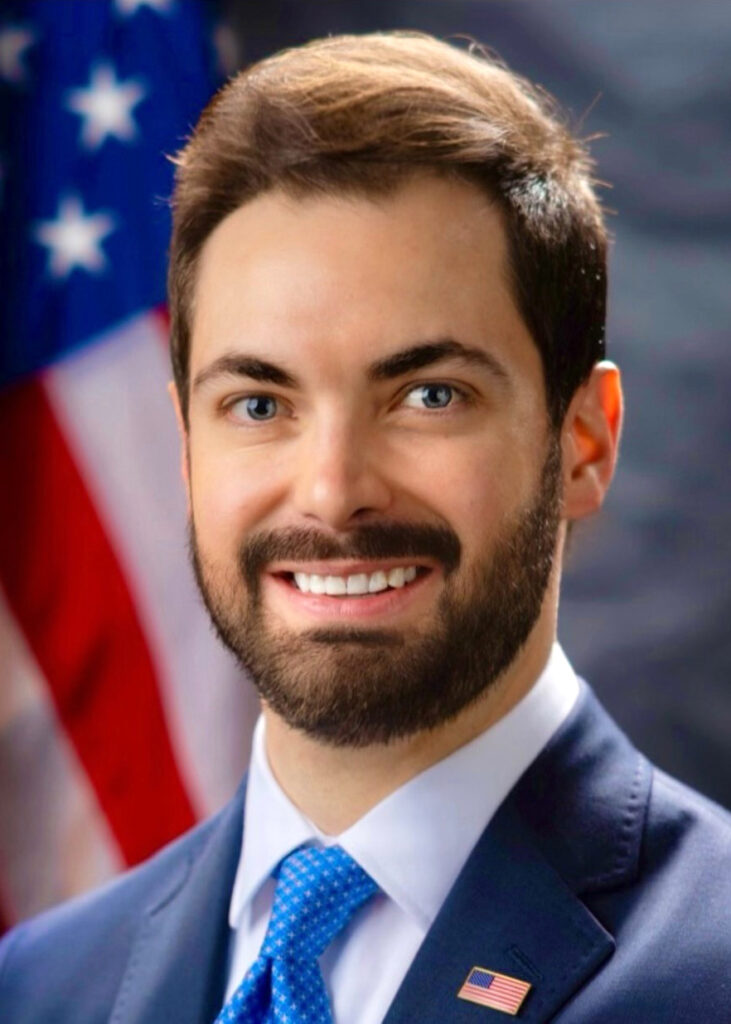 Scott Mason IV is the new administrator EPA Region 6. Credit: EPA
At Region 6, Mason replaces Earthea Nance, a civil engineer and former Texas Southern University professor with decades of experience in disaster recovery. Nance used her role to shine a light on persistent pollution problems in the region and promote the Biden administration’s climate and environmental justice programs.
She criss-crossed the vast region, from Dallas to observe fracking emissions, to El Paso to promote electric school buses, to Tulsa to visit urban farms. Nance posted on LinkedIn in January expressing thanks to the regional staff.
“Serving as Regional Administrator for EPA Region 6 has been the experience of a lifetime,” she wrote. “I want to express my deep gratitude to the 772 civil servants in Region 6 who work with integrity and professionalism to ensure clean air, land, and water.”
Those civil servants may now be fearing for their jobs, as layoffs loom at the agency. The New York Times has reported that the Trump administration has notified more than 1,100 EPA employees that they could be fired immediately, and late Thursday, the EPA press office said that 168 agency employees working in environmental justice programs had been placed on administrative leave.
Mason grew up in rural Cordell, Oklahoma, and studied political science at the University of Oklahoma, according to alocal news report. He told News 9 in Oklahoma City in 2018 that meeting George H. W. Bush at a young age inspired him to enter politics.
Mason served as EPA director for the American Indian Environmental Office during the first Trump administration. In his home state, he led federal programs for the University of Oklahoma and served on the staff of Oklahoma Governor Mary Fallin.
“Regional Administrator Mason is committed to working hard each and every day to make a difference in the lives of the people we serve by implementing the President’s agenda and Administrator Zeldin’s ‘Powering the Great American Comeback’ Initiative,” Durant said.
Mason Tapped for Project 2025
Mason maintained a relatively low-profile throughout the first Trump administration and during his subsequent years in Oklahoma. But as the 2024 presidential race neared, Mandy M. Gunasekara, EPA chief of staff in the first Trump administration, tapped him to help with the EPA chapter of Project 2025. The Heritage Foundation and former Trump staffers authored the playbook for conservative governance, which Trump disavowed during the campaign but has seemingly embraced since taking office on Jan. 20.
---
NOT EVIL
GMU
By Paul Bubbosh, Adjunct Professor
*The views expressed in this article are the author’s own and do not necessarily reflect the views of George Mason University.
Overview
:{:{Heritage Foundation’s Project 2025, specifically its chapter on the Environmental Protection Agency, presents policy recommendations that can best be described as extreme but not altogether unexpected from Heritage. This is kind of their thing. The chapter recycles familiar themes from Heritage acolytes, such as claiming that EPA is waging war on the coal industry and alleging that there are ‘deep state’ activists within the agency hell-bent on a globalist agenda. The core problem with this chapter is, well, it is boring. It is simply the go-to playlist of an organization that desires to appease wealthy funders and powerful politicians supporting the far right.}:
It is not fair to blame Heritage alone for such a tactic, which is all too common among partisan think thanks. They all suffer from the same ‘do-the-opposite-of-the-other-guy’ syndrome which basically means you identify the policies of your opposition, and you recommend the opposite. It does not matter if the policy actually helps your guys. That’s not the point. Heritage and its brethren must stake their reputation, fundraise, and cull favor with political elites to climb the ladder to positions of power—all based on offering a different vision. Otherwise, all the money, notoriety, and power would evaporate. I have great admiration for those think tanks that do not lower themselves to these standards; those who offer genuine and productive policy recommendations. Unfortunately, the Heritages of the world tend to suck all the air out of the room.}:
At the end of the day, Project 2025’s section on EPA is simply useless partisan posturing. In my courses on environmental and energy law and policy, I discuss the historical whipsaw effect across administrations. One administration does it one way and the next reverses these gains and sets a different path. Rinse and repeat. The consequence of whipsaw policies is lack of consistency, great uncertainty, and ultimately, lack of progress. This would all seem futile except for the fact that we are dealing with public health and welfare. This has real consequences for our lives, livelihood, and well-being of our country.
Our country has not always been stuck in the quagmire of environmental whipsaw polices. There was a time of bipartisan support on environmental policies. The rise of extreme and partisan think-tanks with their network of fundraising and lobbying has created a phenomenon by which these elites dictate party belief and orthodoxy. Their influence flows up to its party leaders, who then adopt these extreme policies, and then these extreme policies flow back down to the regular folk. If you stop and ask the regular folks in communities around our country if they really believe in these recommendations (after you peel away the rhetoric) you will be surprised to learn that they disagree with such policies, but alas they are beholden to party affiliation. It’s a vicious cycle and we’re lost in its vortex. The only way to break this cycle is to somehow separate the blowhards from the regular folk. I don’t have the secret sauce for this, but one means might involve slowing things down, paying close attention, questioning everything, and making an effort to listen to people.
Project 2025 Themes on EPA
The Heritage Foundation published Project 2025 as a roadmap for a Republican presidential administration. The chapter on the Environmental Protection Agency (EPA) was written by Mandy M. Gunasekara, who previously served in high-level positions at the EPA during the Trump Administration. The Heritage Foundation’s Project 2025 has garnered news of late due to Donald Trump’s support, and then rejection, of the publication. Apparently, according to reporting, Trump finds some of Project 2025’s recommendations as politically inconvenient.
:{:{The chapter on the EPA follows a familiar playbook from Heritage Foundation’s past policy recommendations. The themes roughly fall into five categories: (1) EPA is engaged in a war on coal and other fossil fuels; (2) EPA’s science must be controlled; (3) EPA career “activists” control the agenda and ignore EPA’s mission; (4) EPA regulations kill jobs; and (5) changes in EPA organizational structure from the last administration must be reversed. }:
Apparently, this all falls under the rubric of “conservative” policies, as Ms. Gunasekara intones throughout her chapter, but there is nothing here that resembles “conservative” in any historical sense. It is most appealing to someone who knows little about environmental policies but knows these recommendations can serve as rhetoric for the masses. Project 2025’s section on EPA fails to advance any meaningful engagement on issues.}:
(1) EPA’s War on Coal, Oil, & Natural Gas:“*This approach is most obvious in the Biden Administration’s assault on the energy sector as the Administration uses its regulatory might to make coal, oil, and natural gas operations very expensive and increasingly inaccessible while forcing the economy to build out and rely on unreliable renewables.”
:{:{Ms. Gunasekara recycles the GOP’s mantra that Democrats are waging a ‘war on coal’ and other fossil fuels. This was a Trump 2016 campaign pitch, which is re-packaged here (I assume) to appeal to Trump. The fact that coal is more expensive than other energy sources, such as natural gas, wind and solar energy, is a consequence of market fundamentals. To blame the economic outcome on EPA is largely misguided. For sure, environmental regulations require expensive pollution control equipment and this increases costs for polluters.}:
The “polluter pays” principle arrived when Congress enacted the Clean Air Act over 50 years ago and delegated authority to EPA to set emission limits. EPA’s delegation compels action when it finds that a pollutant may “cause or contribute to air pollution which may reasonably be anticipated to endanger public health or welfare.” Coal and other fossil fuels emit pollutants which endanger public health and welfare, therefore EPA is legally obligated to do something to protect our health. If Ms. Gunasekara has a problem with this, she should advocate for changes to the law, which requires Congressional action, instead of taking the cudgel to EPA. I have never quiet understood why conservatives expect EPA to shirk its legal duties. Is it simply to delay, litigate, and hope the courts find in your favor? If so, at what cost to our health?}:
The obvious questions to pose to the author are about energy prices, health care costs, and job training and transition. For example, would Ms. Gunasekara rather have people pay more for higher-cost energy, such as coal? Does she prefer that people breathe dirty air, get sick, increase their medical bills, and live a lower quality of life? Why is she not focusing on resources to train and transition workers for new job opportunities? These are all legitimate policy questions to ask Ms. Gunasekara when she claims that EPA is waging a war on fossil fuels. Instead of the old tactic of scaring people into thinking Democrats are waging a war on coal or advocating for ignoring the law, I would recommend that Heritage develop and implement policies to ensure that fossil fuels are cleaner.
The real issue that Ms. Gunasekara has with EPA is its legal obligation to follow the law and this brings us to the second theme, which involves why EPA updates its regulations with more stringent emissions limits.
(2) EPA’s science must be controlled: *“True transparency will be a defining characteristic of a conservative EPA. This will be reflected in all agency work, including the establishment of opensource science, to build not only transparency and awareness among the public, but also trust.”
To understand what this benign-sounding desire for “opensource science” means you need to understand EPA’s mandate from Congress, in laws such as the Clean Air Act. Many federal environmental laws require establishing pollutant limits based on health-based criteria. This is not an EPA requirement—it is a Congressional requirement. This requires understanding how pollutants affect our bodies and setting a safe limit for human health and public welfare. The limits must be reviewed every few years for possible updates to ensure they reflect the latest science. EPA has several scientific advisory committees comprised of experts in specific areas to determine an “adequate margin of safety to protect the public health,” specifying the maximum pollutant quantity that should be permitted in the air.
During the Trump Administration, EPA tried to change these regulations to reflect a more lenient standard—in other words, to allow more pollutants into the air beyond the scientific and medical recommendations. But to survive legal challenges, EPA had to change the underlying science. It is not easy to hide the science, but Trump’s EPA administrators tried their darndest to do so. Their tactics included firing the experts or censoring them, replacing them with partisan allies, slashing their budgets, or (wait for it) simply removing offending information from public records (abracadabra, no longer there)[[1]](https://cesp.gmu.edu/review-of-project-2025s-chapter-on-the-environmental-protection-agency/#_ftn1).
:{:{Ms. Gunasekara’s intent here is to resurrect the Trump Administration’s “Strengthening Transparency in Regulatory Science” rule from 2018. This rule was intended to prevent EPA from relying on studies whose underlying data are not publicly available due to privacy and ethical considerations. This rule was adopted by Trump and rescinded by Biden. Not surprisingly, the rule would give the EPA Administrator discretion over which studies to use. The absurdity of protecting scientific integrity and transparency by handing it over to a political appointee was not lost on the scientific and medical community which ridiculed the rule.[[2]](https://cesp.gmu.edu/review-of-project-2025s-chapter-on-the-environmental-protection-agency/#_ftn2),[3]}:
One possible explanation for this recommendation is that Ms. Gunasekara knows that science does not support more lenient standards, so her policy recommendation is to simply finds ways to bury these studies. Whatever the reason, this policy is simply a round-about way to try to dismantle environmental regulations by cherry-picking science and it is anathema to sound scientific methodology. I would recommend that Heritage consider assigning weighting factors to studies, with higher points for studies that reveal participant data, if this is so desired. This way we are not ignoring relevant data and cherry-picking only favorable reports.}:
Another explanation for this recommendation is the rather bizarre notion that there is a cabal of scientists driven to hoodwink conservatives, and this brings us to our next theme.
(3) Career “activists” control the agenda and ignore EPA’s mission: “Embedded activists have sought to evade legal restraints in pursuit of a global, climate-themed agenda, aiming to achieve that agenda by implementing costly policies that otherwise have failed to gain the requisite political traction in Congress….”*And *“The EPA under the Biden Administration has returned to the same top-down, coercive approach that defined the Obama Administration.”
:{:{To build support for undercutting science, it helps to conjure the trope of ‘deep state’ actors running amok in EPA’s corridors controlling everyone. This one is a bit difficult to follow, but I believe Ms. Gunasekara suggests that there are special interests influencing a globally aligned policy within the EPA, which has distracted the agency from meeting its domestic obligations. What proof does Ms. Gunasekara offer? Back in the Obama Administrations there were two domestic disasters involving EPA employees, the Flint, Michigan water crisis and the Gold King Mine spill, in Colorado.}:
How Ms. Gunasekara ties embedded global activists with these two domestic disasters is not explained. She just says it is so. She conveniently forgets that Trump’s EPA was heavily criticized for its handling of the cleanup at Gold King Mine and its refusal to fully compensate affected communities, particularly the Navajo Nation, for the damage caused by the spill. In fact, in 2019, the EPA re-contaminated the Animas River, the same river affected by the 2015 Gold King Mine spill, when a water treatment plant operated by the agency released untreated mine wastewater, which included heavy metals, into the river.}:
But this kind of misses the point. Ms. Gunasekara suggests that Biden’s EPA is neglecting its core mission. This is a laughable comment coming from a former EPA official who was part of an effort to dismantle environmental regulations (for example, weakening protections for smaller waterways, weakening carbon dioxide emissions from power plants, cars and trucks, as well as mercury emissions from power plants). What I would recommend to Heritage is to drop the hyperbole about ‘deep state’ actors because it does a disservice to the career employees. Ms. Gunasekara should know better—she worked with these career employees during her tenure at EPA and I believe she knows better to disparage their work and intentions.
Let’s address the claim that the Biden administration is engaged in coercion. The single-largest environmental achievement in the Biden Administration is the Inflation Reduction Act (IRA). The IRA is the opposite of coercion. It offers economic incentives (grants, loans, tax benefits) to change behavior. No one is forced to do anything. As much as Ms. Gunasekara wishes this was some draconian command-and-control legislation, the IRA is about motivating people to save money with cleaner and cost-saving energy technology and practices. The other inconvenient fact is that the IRA does offer incentives for fossil-fuel interests to emit less harmful pollutants, such as carbon capture and storage. The Biden Administration has landed on an industrial policy which is in-line with past U.S. efforts to support nascent energy industries. What goads the author the most here is the focus on clean energy technology which is not an ally of hers.
(4) Job Killing Environmental Regulations: “*As a consequence of this approach, we see the return of costly, job-killing regulations that serve to depress the economy and grow the bureaucracy but do little to address, much less resolve, complex environmental problems.”
You must go all the way back to 1980, during Ronald Reagan’s campaign, to hear about the origins of job-killing environmental regulations. His acolytes picked this up and have been running with it ever since. It sounds great on the campaign trail. The only problem is that it has no support. The number of economic studies that have refuted the contention that environmental regulations result in a net loss of jobs is too lengthy to recount here.
Interestingly, Bill Clinton recently emphasized the following fact: Since the end of the Cold War (1989), Democratic Presidents have created more than 50 million new jobs, while Republican Presidents have created 1 million new jobs. During that period, there were 3 Democratic Presidents (Clinton, Obama and Biden) and 3 Republican Presidents (George H.W. Bush, George W. Bush and Trump).[[4]](https://cesp.gmu.edu/review-of-project-2025s-chapter-on-the-environmental-protection-agency/#_ftn4) So much for environmental policies as job killers.
(5) Reverse organizational changes from the previous administration
The remainder of the EPA chapter is an audacious attempt to recommend office-by-office changes and reversals from the Biden administration. Why? Because these changes are from the Biden administration. Why again? Because the “other guys” came up with this so it must be bad. I’m sorry, why again? Because we (Heritage) must recommend the opposite to fundraise and get political appointments in a Republican administration.
- “Returning the environmental justice function to the Administrator Office, eliminating the stand-alone Office of Environmental Justice and External Civil Rights.”*
- :{:{My hunch is that if you eliminate an office devoted to environmental justice, your intention is to probably take away its budget and re-distribute its staff. I am not sure why conservatives have a beef with EJ issues. The historical record is clear on past injustices of placing environmentally harmful facilities and pollution sources near low-income and minority populations. I learned that Ms. Gunasekara is from Mississippi, and interestingly EPA’s Inspector General recently issued a report about how the state of Mississippi ignored elevated lead levels in the drinking water of Jackson, MI for half a year, allowing its residents to drink contaminated water.}:
The state failed to share this information with EPA. EPA had to conduct its own tests, and afterwards issued an emergency order. By the way, EPA’s testing was in 2015 when Trump was President. Apparently, the Mississippi Department of Health had re-directed federal funds that were intended to address Jackson’s water problems. Independent reports have identified failures in communication, financial reporting, and technical capacity, among other issues.[[5]](https://cesp.gmu.edu/review-of-project-2025s-chapter-on-the-environmental-protection-agency/#_ftn5) I believe a strong and independent office devoted to EJ issues may have prevented this environmental and human health crisis from happening.}:
- {“Returning the enforcement and compliance function to the media offices (air, water, land, and emergency management, etc.) and eliminating the stand-alone Office of Enforcement and Compliance Assistance, which has created a mismatch between standard-setting and implementation.”*}:
- :{:{If there is one thing Republicans do not like about EPA it is enforcement actions. The Trump administration was no exception. Enforcement actions, civil cases, fines, and inspections all dropped to a two-decade low during Trump’s presidency.[[6]](https://cesp.gmu.edu/review-of-project-2025s-chapter-on-the-environmental-protection-agency/#_ftn6) The preferred “conservative” means to accomplish enforcement of Federal laws is to defer to the states to get this done, under the guise of “cooperative federalism.” The problem is that in some states there might not be a strong desire to police its industries, and this is where EPA must step in.}:
EPA enforcement is also needed in complex cases involving multi-state violations. Further. Ms. Gunasekara’s recommendation to devolve enforcement to EPA media offices (air, water) is another attempt to weaken EPA’s hand. The saddest part is that there are many good actors who comply with the law. I am all in for regulatory flexibility and working on ways to encourage compliance instead of enforcement, but let’s face the facts—there are bad actors out there. When you essentially announce that once we take over we are backing off on enforcement, this signals those bad actors to violate the law. And what happens when they violate the law without consequences? One, people get sick and die. Two, you punish the good actors who comply with the law and the criminals get away with not spending funds.}:
- “Determine the opportunity to downsize by terminating the newest hires in low-value programs and identify relocation opportunities for Senior Executive Service (SES) positions.” And ”reduce the number of full-time equivalent (FTE) positions.”*
- I do not know what “low-value programs” means, but I would venture to guess that these are Biden administration programs, or the various “hit list” she conjures up in this chapter (offices related to international programs, public engagement and environmental education, children’s health protection, small and disadvantaged businesses, and environmental justice and civil rights). Republicans tend to slash EPA payrolls by not back-filling retirements and freezing all new hires, and when Democrats increase hiring to make up for the losses Ms. Gunasekara and her allies claim, as she does in this report, that “agency costs and staffing have increased significantly”. Yep, that’s what happens when you gut the workforce during your watch.
The remainder of the chapter is both breathtaking and alarming in its yearning to exert maximum control and prevent EPA from doing its job. As stated in the beginning, this is expected from Heritage and the report’s author. I will conclude with one example about how I view the differences between policies in the GOP and Democratic EPA administrations. I believe this example represents what is most wrong about Project 2025’s chapter on EPA.
:{:{During the final days of the Obama Administration, EPA proposed to ban the use of methylene chloride in paint strippers. Dozens of people have died from inhaling the fumes from paint strippers. Trump’s EPA administrator, Scott Pruitt, shelved the rule when he took over. Then, the families of those who died from exposure to methylene chloride met with Mr. Pruitt and pleaded with him to ban the chemical. Their stories were heartbreaking. But Mr. Pruitt just couldn’t go as far as a total ban. He narrowed the restriction of methylene chloride by banning it from consumers who might purchase products at hardware stores, but he allowed commercial operators to continue using the product if they underwent training. The problem with this was that even with training people died.}:
In fact, the mother of one victim explained that her son did receive training and still died. Of course, Biden’s EPA administrator, Michael Regan, banned methylene chloride in paint strippers for all. What I can’t shake from my mind is the reluctance of Mr. Pruitt to do the right thing. I imagine there was a small voice in his head saying “yes, it’s lethal and dangerous, but these industry guys are telling me they will have to fire people, and I don’t want to be seen as harming industry.” I have no idea what was going on in Mr. Pruitt’s head when he made this decision, but I just can’t get over his failure to do what was obviously the right thing to do. And this is how I view Project 2025—the failure to do the right thing.}:
---
[[1]](https://cesp.gmu.edu/review-of-project-2025s-chapter-on-the-environmental-protection-agency/#_ftnref1) Webb RM, Kurtz L. Politics v. science: How President Trump’s war on science impacted public health and environmental regulation. Prog Mol Biol Transl Sci. 2022;188(1):65-80. doi: 10.1016/bs.pmbts.2021.11.006. Epub 2022 Jan 27. PMID: 35168747; PMCID: PMC8793038.
[[2]](https://cesp.gmu.edu/review-of-project-2025s-chapter-on-the-environmental-protection-agency/#_ftnref2) Rose Z, Taylor CL. The politicization of regulatory science: Science transparency at the trump Administration’s EPA. Case Studies in the Environment. 2022;6(1).
[[3]](https://cesp.gmu.edu/review-of-project-2025s-chapter-on-the-environmental-protection-agency/#_ftnref3) Condon, Madison E, Michael A Livermore, and Jeffrey G Shrader. “Assessing the Rationale for the U.S. EPA’s Proposed ‘Strengthening Transparency In Regulatory Science’ Rule.” Review of environmental economics and policy 14.1 (2020): 131–135. Web.
[[4]](https://cesp.gmu.edu/review-of-project-2025s-chapter-on-the-environmental-protection-agency/#_ftnref4) “Bill Clinton and the wide gap in job gains by presidential party,” Philip Bump, Aug 22, 2024, Washington Post.
[[5]](https://cesp.gmu.edu/review-of-project-2025s-chapter-on-the-environmental-protection-agency/#_ftnref5) “Mississippi officials saw the Jackson water crisis coming — and did nothing,” Lylla Younes, Grist, Aug 23, 2024.
[[6]](https://cesp.gmu.edu/review-of-project-2025s-chapter-on-the-environmental-protection-agency/#_ftnref6) “New EPA Enforcement Data Show Continued Downward Trend During Trump Administration.” Environmental Integrity Project, Jan 14, 2021.
---
GGL 6 26
[### Project 2025 adviser takes the reins at EPA region ...

The Texas Tribune
https://www.texastribune.org › 2025/02/10 › texas-epa-...](https://www.texastribune.org/2025/02/10/texas-epa-region-6-administrator-environmental-protection-agency/)
Feb 10, 2025 — Scott Mason IV will lead the Environmental Protection Agency's region covering some of the country's hot spots for oil and gas production and industrial ...Read more
[### Project 2025 Advisor Takes the Reins at EPA Region 6

Inside Climate News
https://insideclimatenews.org › News](https://insideclimatenews.org/news/07022025/project-2025-advisor-new-administrator-for-epa-region-6/)
Feb 7, 2025 — Scott Mason IV is the new administrator for the EPA region covering Arkansas, Louisiana, New Mexico, Oklahoma, Texas and 66 Tribal Nations.
Missing: GINASERKA | Show results with: GINASERKA
[### Review of Project 2025's Chapter on the Environmental ...

George Mason University
https://cesp.gmu.edu › review-of-project-2025s-chapter...](https://cesp.gmu.edu/review-of-project-2025s-chapter-on-the-environmental-protection-agency/)
The chapter on the Environmental Protection Agency (EPA) was written by Mandy M. Gunasekara, who previously served in high-level positions at the EPA during the ...Read more
Missing: IV GINASERKA
[### Regional Administrator for EPA's South Central ...

U.S. Environmental Protection Agency (.gov)
https://www.epa.gov › aboutepa › regional-administrato...](https://www.epa.gov/aboutepa/regional-administrator-epas-south-central-region-region-6)
Jan 26, 2026 — Scott Mason is the 14 th regional administrator of the US Environmental Protection Agency's South Central Region.Read more
Missing: PROJECT GINASERKA
[### Inside the Project 2025 plan to gut climate regs

E&E News by POLITICO
https://www.eenews.net › Articles](https://www.eenews.net/articles/inside-the-project-2025-plan-to-gut-climate-regs/)
Jul 18, 2024 — Gunasekara said four Trump-era political appointees helped write the chapter: David Harlow, Scott Mason IV, Justin Schwab and Clint Woods.Read more
Missing: GINASERKA | Show results with: GINASERKA
[### Regional Administrator Scott Mason explains EPA's approach ...

Facebook · U.S. EPA South Central Region
30+ reactions · 3 months ago](https://www.facebook.com/EPASouthCentral/videos/epa-back-to-basicsmp4/1406707564292401/)
[
0:37](https://www.facebook.com/EPASouthCentral/videos/epa-back-to-basicsmp4/1406707564292401/)
Russell Vought literally said one of the Project 2025 purposes was to restrict the EPA's '"bandwidth" so it could not enforce environmental ...
Missing: IV GINASERKA
[### Project 2025 adviser now with EPA

PressReader
https://www.pressreader.com › usa › 20250210](https://www.pressreader.com/usa/san-antonio-express-news/20250210/281711210357607?srsltid=AfmBOopvHBgAVvGql_DJ2A-iWdzVK4wQxTb24yJQu87qD8QrkqsAraxJ)
Feb 10, 2025 — Scott Mason IV will lead the Environmental Protection Agency's region covering some of the country's hot spots for oil and gas production ...Read more
Missing: GINASERKA | Show results with: GINASERKA
[### Project 2025 Advisor Takes the Reins at EPA Region 6

https://www.linkedin.com › posts › marthapskowski_proj...](https://www.linkedin.com/posts/marthapskowski_project-2025-advisor-takes-the-reins-at-epa-activity-7293774509013118976-UC2a)
Feb 7, 2025 — EPA Region 6 has a new administrator. His name is Scott Mason IV. He was previously Oklahoma Deputy Secretary of Energy and he advised on ...
Missing: GINASERKA | Show results with: GINASERKA
[### Cherokee Nation Citizen Appointed as EPA South Central ...

Substack · Hammer and Anvil
2 likes · 1 year ago](https://nathanhammer.substack.com/p/cherokee-nation-citizen-appointed)
Scott will be responsible for 5 states and 66 tribal nations.
Missing: GINASERKA | Show results with: GINASERKA
[### EPA Region 6 overseen by Scott Mason, former advisor on ...

Facebook · Environmental Integrity Project
10+ reactions · 1 year ago](https://www.facebook.com/EnvIntegrity/posts/last-week-it-was-announced-that-scott-mason-iv-will-oversee-the-environmental-pr/1015828260593291/)
Mason was an advisor on the EPA chapter in Project 2025, a Heritage Foundation initiative aimed at reshaping the agency to align with ...Read more
Missing: GINASERKA | Show results with: GINASERKA
---