permian
---
see permian proud chevron greenwash
---
ref 2
Oil and ink mix as Chevron reports the ‘news’ in Texas, New Mexico
In the fossil fuel-rich Permian Basin, a major producer runs a regional website that combines industry perspective with feel-good local stories.
Felicia Alvarez/Floodlight
Aug 19, 2024 — 8 min read
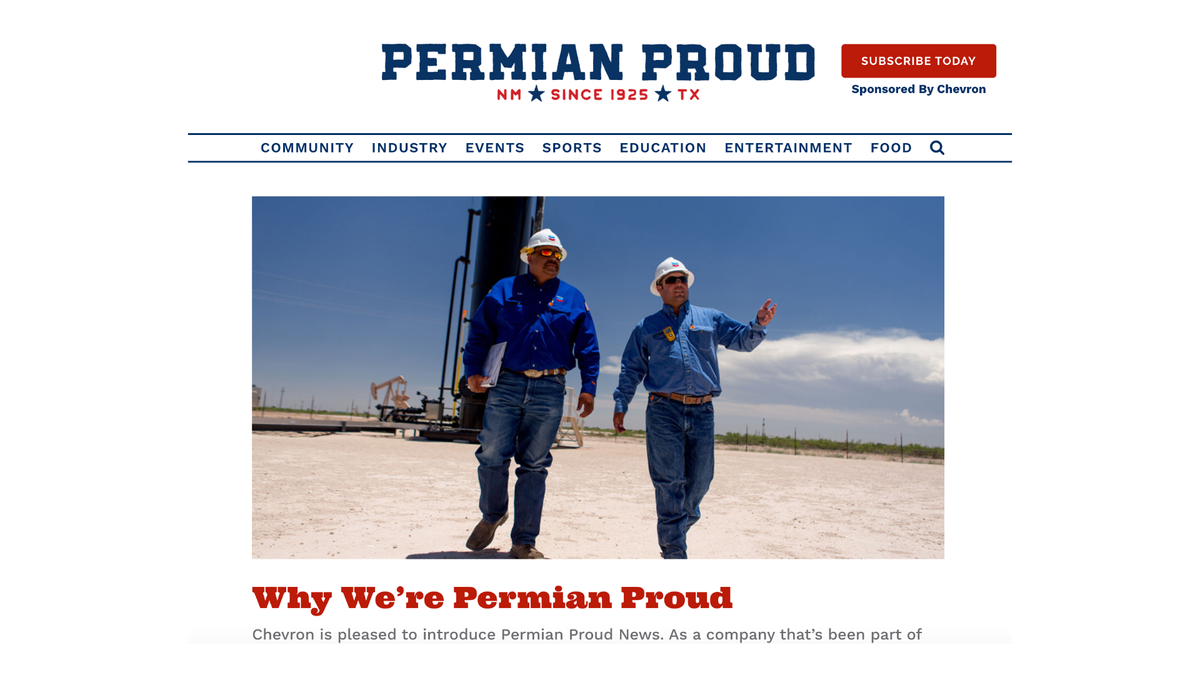 Chevron launched the Permian Proud website in 2022 to provide positive news to the residents of West Texas and southeastern New Mexico — and a positive spin on the company. The oil and gas giant runs similar “news” websites in California and Ecuador where it operates.
Published by the*Louisiana Illuminator*,*Texas Climate News*,*Santa Fe New Mexican*
Across West Texas’ Permian Basin, the oil industry’s presence seeps into many facets of life. Businesses from hotels to veterinary clinics display oil pump jacks on their signs. An oil derrick is part of the logo for the city of Midland.
And there’s another way the industry influences local communities: Since 2022, one of the largest oil producers in the Permian Basin has run its own local news website. The Chevron-operated site, Permian Proud, provides local news coverage for a region with a dwindling number of local news outlets, while inserting articles with a positive spin about the company.
The news site doesn’t have staff reporters or editors like traditional news media, and instead is written by a San Francisco public relations firm and a Chevron public and government affairs adviser.
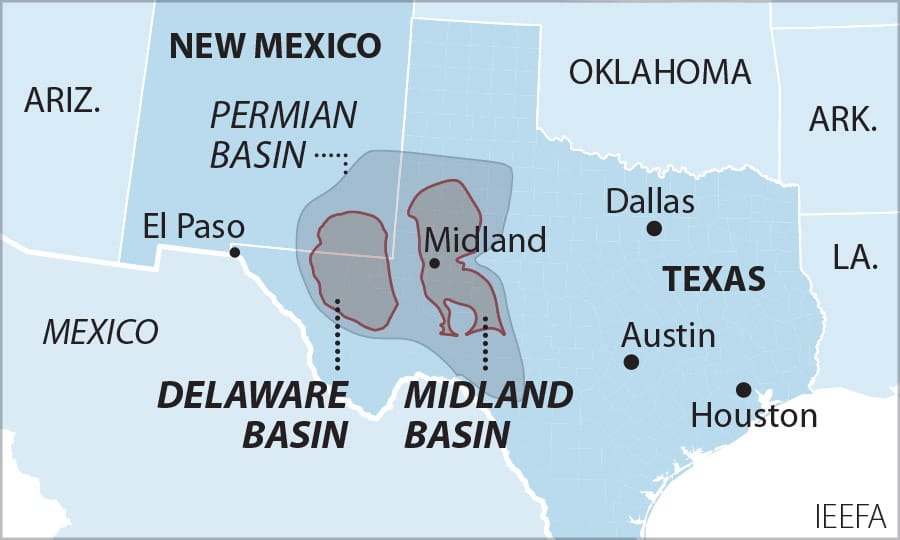
The Permian Basin covers a 250-mile by 300-mile swath of eastern New Mexico and West Texas. It is one of the most oil-rich areas in the world, producing more than 10 million barrels per day of oil and natural gas, the latter composed primarily of methane.
The founding of Permian Proud comes at a time when the oil and gas industry is under increasing fire for its dominant role in creating the climate crisis, and states and the federal government seek to replace fossil fuels with low- or no-emission sources of energy.
Subscribe to Floodlight
Floodlight is a nonprofit newsroom that investigates the powers stalling climate action.
Subscribe
It is also part of a network of Chevron-owned news outlets amplifying the company’s viewpoint while publishing feel-good stories about local events and people. The same San Francisco public relations firm that provides content for Permian Proud runs the Richmond Standard news site in Richmond, California. It also operates an English-language website in Ecuador, where the energy giant has fought back decades of litigation.
Chevron created the site to highlight the activities “in a region that plays an important role in providing the energy that makes modern life possible,” Chevron spokesperson Ross Allen said in a written statement. Allen added that the site is a “community benefit” to the residents, businesses and employees in the region.
In a 2023 email interview, Greg Connell, an Odessa City Council member, said he wasn’t familiar with Permian Proud. Today, he is now familiar with the site — and unsurprised by Chevron's entrance into local news.
“Chevron showing interest in the communities and not just the oil, that is nothing new. Always a positive for the Permian Basin,” Connell said.
During his time living in the Permian Basin, he said he often sees Chevron and other oil businesses donate money for local community programs, a practice that he welcomed. After reviewing the site, Connell said Permian Proud seems to diversify the media in the region.
“As you know there are always two sides or perspectives to any story. This publication appears, simply, just the news, supporting the Permian Basin,” Connell said.
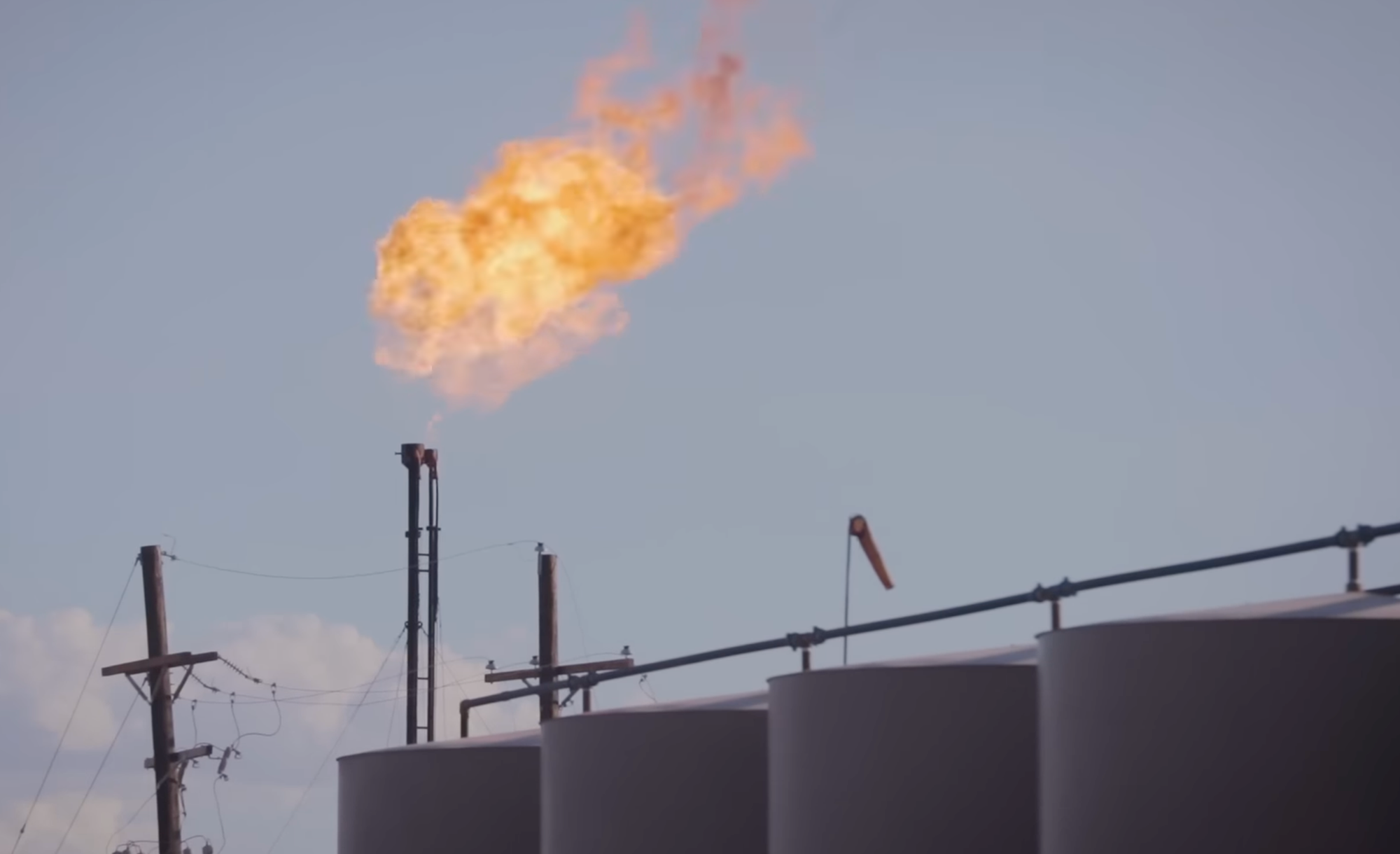 The oil and gas industry dominates West Texas and southeastern New Mexico. It is also where Chevron runs a “news” website that amplifies the company’s viewpoint while publishing feel-good stories about local events and people. (Courtesy of Miguel Escoto)
Countering the oil and gas narrative
Miguel Escoto, an environmental advocate from El Paso, is familiar with the narratives spun by the oil and gas industry in West Texas. Escoto previously ran his own platform, Mesquite Media, to counter the heavy oil and gas industry influence he sees in the Permian Basin.
Escoto said the purpose of Mesquite Media, which largely hosted podcasts, was to “amplify voices of resistance to fossil fuel corporate power” and to show how connected the people of the Permian Basin are — culturally, socially and economically — despite their differences.
Escoto now works with Oilfield Witness, a citizen journalism website and documentary producer that investigates fracking and air emissions in the Permian Basin.
Miguel Escoto is an environmental advocate from El Paso. He works for Oilfield Witness, a citizen journalism website and documentary producer that investigates fracking and air emissions in the Permian Basin. (Courtesy of Miguel Escoto)
“Permian Proud is a blatant, naked attempt by industry to have their side of the story be told,” Escoto said.
At the same time, the website “is not that much different than how oil and gas is covered by local channels,” across West Texas, Escoto said.
He cited the example of an Odessa oil field worker and his wife who died in 2019 from a poisonous gas leak while inspecting a work site. Local news outlets covered the incident, but framed it as “an inevitable tragedy” like a car crash or lightning strike, rather than investigating “why we have to live in this situation to begin with,” Escoto said.
Miguel Escoto films a documentary about the oil and gas industry in West Texas. Escoto says it’s frustrating pushing for climate action in a place where the industry that helped cause the climate crisis is so dominant. “The attitude is often that it’s inevitable. It’s too big to move so why even try?” he says. “A lot of people have given up on the idea that the Permian Basin can exist without the oil and gas industry.” (Courtesy of Miguel Escoto)
The oil field worker’s employer, Aghorn Operating Inc., and a company executive were later indicted by the U.S. Department of Justice.
“The attitude is often that it’s inevitable. It’s too big to move so why even try?” Escoto said. “A lot of people have given up on the idea that the Permian Basin can exist without the oil and gas industry.”
Local officials defend industry influence
Mayor Sam Cobb of Hobbs, New Mexico, is very open about his support for the oil and gas industry.
“I’m very glad that Chevron is part of our community,” Cobb said.
Cobb remembers the 1980s when oil and gas companies largely left the Permian Basin in pursuit of oil extraction abroad. Over the last decade, production in the region boomed due to fracking, which unlocks previously inaccessible fossil fuel deposits. Cobb said he welcomes the resurgence — and the dollars that those corporations put towards local communities.
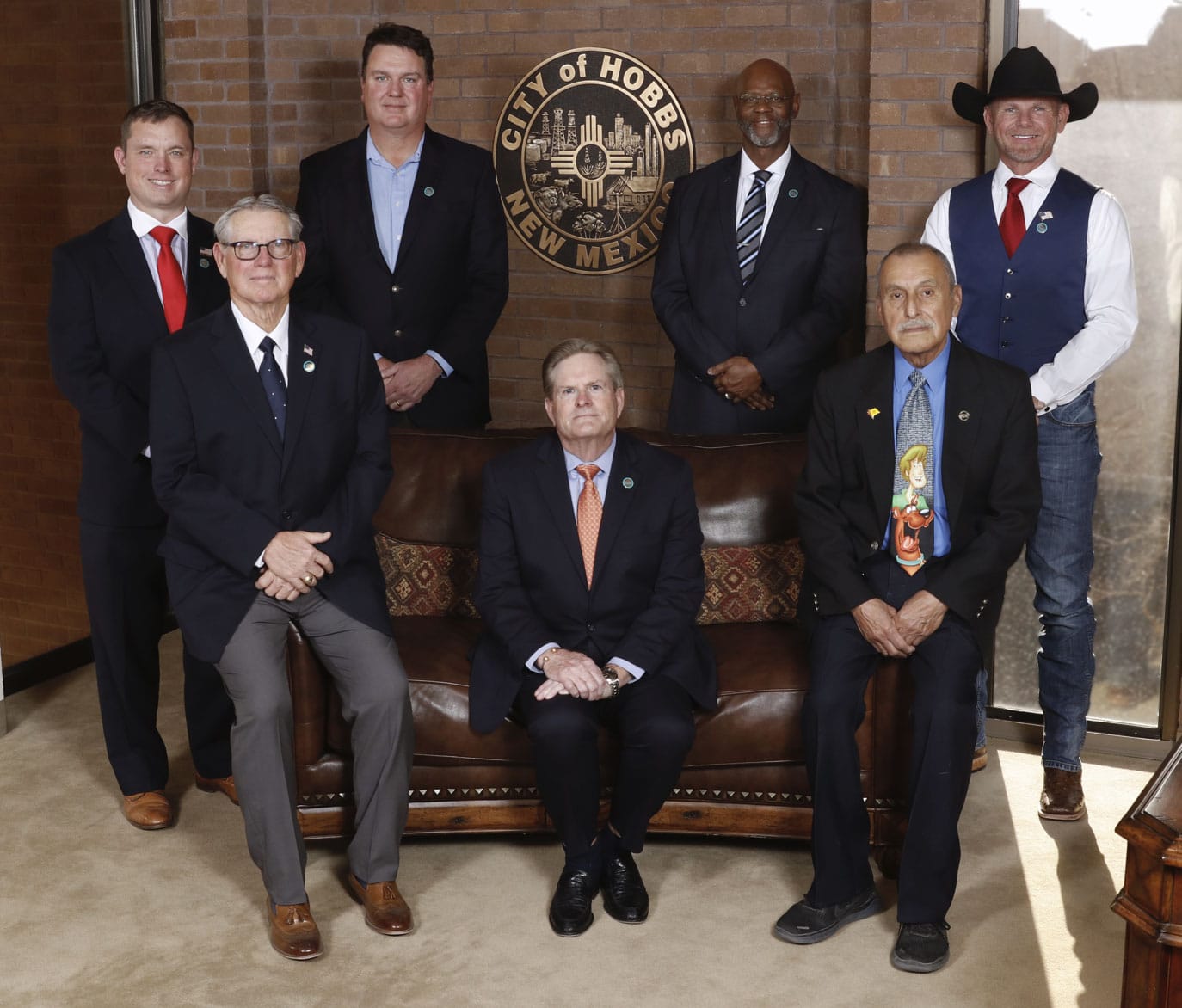 Mayor Sam Cobb of Hobbs, New Mexico, center, is very open about his support for the oil and gas industry, which dominates his community and the region. He says Chevron’s website, Permian Proud, is just another example of how the company gives backs to the communities where it operates. (City of Hobbs, New Mexico website)
In recent years, Lea County, where Hobbs is located, has been regularly ranked among the highest producing oil counties in the nation. The oil industry and companies that provide services for the industry are the largest employers in his city, Cobb said.
He acknowledged that some of those dollars arrived amid larger statewide pushes for New Mexico to go green. Cobb said he prefers that these multinational oil companies have a community presence rather than come in only to extract.
“We encourage the investment and continue to be partners with them,” Cobb said.
On Permian Proud, Cobb said the site seems to promote “positive things” in the places where Chevron has business activities.
“This website is new to me, but their activity in the community is not,” Cobb said.
‘We’re impartial … they’re obviously not’
Permian Proud headlines include celebrating the lunches that Chevron sponsored for a Martin Luther King Day event — which Cobb helped deliver alongside Chevron employees. The Hobbs News-Sun also regularly covers the oil giant’s donations to local schools and nonprofits.
Blake Ovard, editor of the Hobbs News-Sun, said he isn’t worried about potential competition with Permian Proud’s entrance into the local news market.
“I look at it as being more of a way of getting information that they wouldn’t have normally given out,” Ovard said. “As journalists we’re impartial, and they’re obviously not.”
Oil and gas news is among the top coverage in the News-Sun. Ovard said the newspaper does not shy away from the negatives — or the benefits — of the industry in the region.
That includes coverage that ranges from environmental impacts to the $10 million that the Permian Strategic Partnership donated to found a new vocational high school in Hobbs, Ovard said. Chevron is one of 31 members of the partnership, which funds philanthropic projects across the Permian Basin. The oil and gas industry also advertises in the News-Sun.
“I never operate my newsroom out of fear of advertising doing anything,” Ovard said. “Our whole thing is that we’re a news organization that will tell the real story. We cover just about anything that touches or has benefited from oil and gas.”
Permian Proud planted in a news desert
Many of the counties within the Permian Basin are considered “news deserts,” or areas with limited access to local, credible news sources.
Of the 61 counties considered part of the Permian Basin region in Texas, 13 counties had no local newspapers, and the majority had only one newspaper, according to the news desert map maintained by the University of North Carolina. The map only denotes newspapers and does not include TV or radio coverage in these areas.
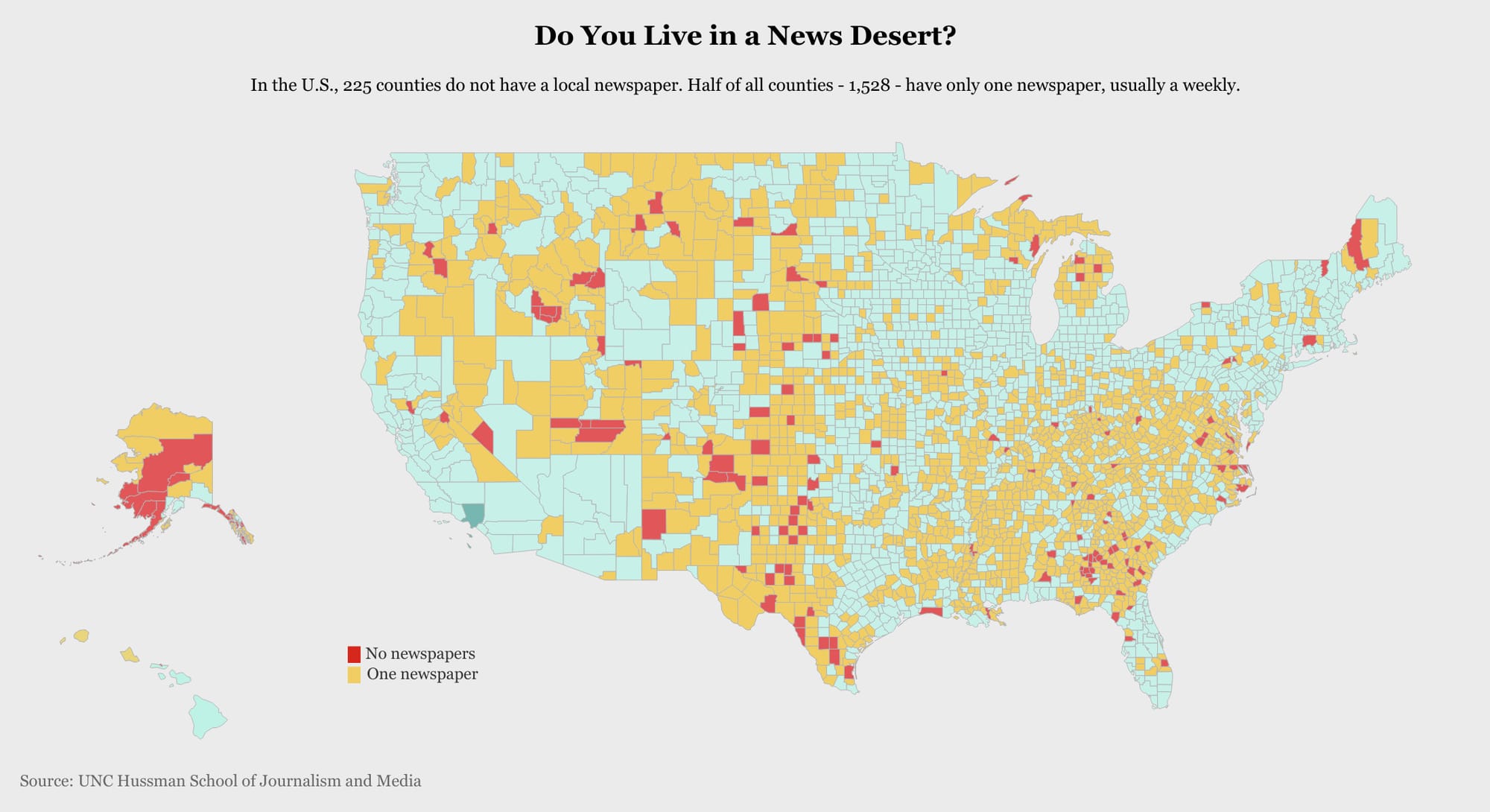 This map from the University of North Carolina shows the Permian Basin in West Texas and southeastern New Mexico is among many “news deserts” in the United States lacking local newspapers. Corporations and special interests in recent years have filled these news vacuums with websites that push their own messages while providing “news” about local communities.
Among Texas’ larger media players — Dallas Morning News, Texas Monthly, Houston Chronicle, Texas Tribune — the coverage of the Permian Basin includes stories about climate change, air quality concerns, the environmental damage caused by abandoned oil wells and the complicated economic relationship between these communities and the oil industry.
A search of the Permian Proud’s two-year-old website shows just a smattering of stories about climate change or greenhouse gas emissions — despite the oil and gas industry’s leading role in causing the climate crisis. As of Aug. 12, there were two stories mentioning climate change; one is a recap of a Texas Tribune series about training oil and gas workers and the other quotes a Chevron official about new techniques for measuring methane emissions.
The site has plenty of articles boasting of the importance of the Permian Basin and Chevron, sprinkled in with coverage of events, sports and awards given to local residents.
One story reported on Chevron receiving the highest environmental rating in the Permian Basin. Another announced that Chevron plans to boost its production to meet U.S. energy needs.
And the site reported on a $145,000 company donation to help students in Carlsbad, New Mexico — to pursue careers in energy and natural resources.
Cobb, the mayor of Hobbs, acknowledged it’s rare to find any criticism of the region’s dominant industry in the local media — even outside Permian Proud.
“The oil and gas industry,” he said, “doesn’t get much negative coverage out here.”
Felicia Alvarez's initial reporting on this story came through the Investigative Reporting Program at the University of California-Berkeley.
WE NEED YOUR SUPPORT
Before you go, would you consider supporting Floodlight’s climate accountability investigations?
The United States — and the world — are at a critical juncture for the climate crisis. Watchdog journalism from Floodlight illuminates who is fighting climate progress and helps the public and professionals understand what is at stake.
That's why we need your help.
Your support enables us to produce unique investigative and public-service reporting that demands accountability and strengthens democracy. Quality reporting is a public good. That's why we share it — at no cost — with partner newsrooms across the country.
Our readers keep us independent, beholden to no outside influence and accessible to all. Consider making a tax-deductible contribution now to enable this work to continue, or better yet, support us with a sustaining monthly gift.
With gratitude,
Emily Holden
Founder & Executive Director
Floodlight
---
cbi 10 23
In the span of two weeks, ExxonMobil made its largest oil acquisition in two decades, Chevron increased its oil production capacityby 10%, and Shell cut 200 clean energy jobs. It’s clearer than ever that Big Oil companies are doubling down on the fossil fuels driving the climate crisis, while they continue to mislead the public about the harm they are causing. Communities around the nation are seeing the industry’s ongoing deception for what it is and taking Big Oil companies to court to make them pay for their climate lies.
In a $60 billion deal, Exxon acquired Pioneer Natural Resources, an oil producer in the Permian Basin. The massive merger — which more than doubles the company’s Permian production to 1.3 million barrels of oil per day — comes after Exxon spent years claiming to support taking action to limit global warming per the Paris Agreement. The oil giant, however, just made a $60 billion bet that it will be able to continue business as usual despite the urgent calls for energy transition.
The greenwashing and deception isn’t surprising; Exxon and other major oil companies are being sued by communities across the country for knowingly lying to the public about their product’s role in advancing climate change and launching a climate science denial campaign to avoid public scrutiny.
Chevron is also doubling down on its oil production, acquiring competitor Hess for $53 billion — a consolidation that will increase Chevron’s existing daily oil production of three million barrels by 10%. Meanwhile, Shell — after one of its most profitable years on record — is reducing its low-carbon workforce by 200 positions just one month after Shell employees penned an open letter to CEO Wael Sawan expressing their concern with the company’s movement away from renewable energy investments.
There is overwhelming scientific consensus that the world needs to urgently pivot to renewable fuels in order to avoid worsening impacts of the climate crisis. In 2021, the International Energy Agency declared that all oil and gas infrastructure development must stop immediately in order for the world to meet its goal of net zero emissions by 2050. Earlier this year, the United Nations report on climate change concluded the planet will be pushed past the point of catastrophic warming in the next 10 years without an immediate transition away from fossil fuels.
Despite those warnings, oil giants continue to put profit over public safety and double down on fossil fuel investments — just like they have done for decades. It’s clearer than ever that Big Oil will only continue to act in its own self interest; it’s time to hold these companies accountable for their climate destruction.
---
https://www.desmogblog.com/2020/05/03/keystone-xl-future-pipeline-permits
On April 15, Judge Brian Morris nullified water-crossing permits in Montana that were granted for the Keystone XL, a major setback for the long-embattled tar sands oil pipeline. The ruling came just days after Keystone XL owner TC Energy, formerly known as TransCanada, obtained billions of dollars in subsidies from the Alberta government as global oil prices plummeted.
The oil and gas industry has taken notice. Seemingly just a ruling on Keystone XL — the subject of opposition by the climate movement for the past decade — the ruling could have far broader implications for the future of building water-crossing pipelines and utility lines.
In his decision, Judge Morris cited a potential violation of the Endangered Species Act when he ordered the U.S. Army Corps of Engineers to do a deeper analysis of potential impacts to protected species. Morris required the Corps to demonstrate whether or not it could construct the pipeline without harming endangered species, such as the Pallid Sturgeon or the American burying beetle. Instead, the Army Corps “failed to consider relevant expert analysis and failed to articulate a rational connection between the facts it found and the choice it made,” Morris ruled, when the Corps gave Keystone XL the initial green light.
The original July 2019 complaintin that case — filed by Northern Plains Resource Council, Bold Alliance, Sierra Club, Natural Resources Defense Council, and Center for Biological Diversity — also argued that the Army Corps had violated the National Environmental Policy Act (NEPA) in using an obscure regulatory lever to fast-track the review process.
Known as Nationwide Permit 12, the permit only requires a short environmental analysis compared to the more robust environmental impact statement required under NEPA for other major infrastructure projects. But Morris also wrote that the decision applied not just to Keystone XL, but to all major federal projects aiming to utilize Nationwide Permit 12, calling for it to be “vacated pending completion of the consultation process and compliance with all environmental statutes and regulations.”
Just two days after this decision, Army Corps regulatory program Chief Jennifer Moyer wrote in an email obtained by the Associated Press that the agency should suspend the program indefinitely “out of an abundance of caution” until the issue is resolved legally.
The Trump administration has already requested a procedural halt on implementing Morris’ decision until its potential appeal weaves its way through the legal system.
“The Court has eliminated Nationwide Permit 12 for use by any utility line project anywhere in the country, which has extraordinary and immediate implications for numerous projects,” the U.S. Department of Justice attorneys wrote on behalf of the Army Corps.
The American Petroleum Institute (API), the lobbying and advocacy voice of the oil and gas industry, has also filed an affidavit in favor of putting a procedural halt to Morris’ ruling.
“The ability to provide reliable energy is even more important now during this sensitive and challenging time brought on by COVID-19,” Robin Rorick, Vice President of Midstream and Industry Operations for API, wrote in the affidavit. “The Court’s Order could threaten API’s members’ ability to continue numerous energy and infrastructure projects, affecting the health of numerous companies and job security in an already-strained economy.”
API also joined North America’s Building Trades Unions and Interstate Natural Gas Association of America in denouncing the ruling along similar lines.
'Single and Complete'
Nationwide Permit 12 historically was used for small “single and complete” projects crossing water parcels half an acre in size or smaller.
But in the aftermath of protests and civil disobedience actions taken against Keystone XL, the Obama administration began using that permitting process to split pipelines into hundreds or thousands of half-acre pieces. The process was a way around the more robust and democratic National Environmental Policy Act (NEPA) regulatory process, which involves both a public commenting and public hearing phase. Nationwide Permit 12 was also used to push through the Dakota Access pipeline, as well as the southern leg of the Keystone XL, both greenlighted by President Barack Obama.
During the Obama era, environmental groups decried this as a form of “segmentation” and a way out of complying with NEPA, which they routinely challeneged in court with some success—though not enough to undo the legal lever. The bedrock environmental law is now under further attack by President Donald Trump, with the administration trying to remove climate change contribution as a factor analyzed under the law for major projects and aiming to narrow the scope of and time it takes to complete these environmental impact reviews.
[vid]
Since March 2017, the Trump administration has utilized Nationwide Permit 12 over 37,000 times, the AP reported. As it stands today, the Army Corps’ decision to halt use of the Nationwide Permit 12 fast-track tool has put 360 permit applications on hold.
“The reason that matters is that the public and the communities and everybody that lives there has the chance to get involved in the process,” Eric Huber, Senior Managing Attorney with the Sierra Club's Environmental Law Program, told DeSmog. “Otherwise, these special permits just allow a pipeline company to go out and start construction without notice to anybody or to take private property and just proceed and blast this through regardless of how the local community thinks of it.”
External corporate attorneys, too, have taken notice and expressed their own concerns about the ruling.
“The decision puts in limbo thousands of infrastructure projects nationwide that rely on [Nationwide Permit] 12 for the construction, maintenance, or repair of utility lines and poses particularly acute problems for the oil and gas industry, which relies on the permit to facilitate projects ranging from large interstate pipelines to smaller gathering lines at exploration and production sites,” wrote attorneys fromBrownstein Hyatt Farber Schreck, a firm with close ties to the Trump administration, in one such reaction to the ruling.
Brownstein Hyatt Farber Schreck’s fossil fuel industry lobbying clients include the American Petroleum Institute, American Public Power Association, Freeport LNG, Talos Energy, Jordan Cove LNG, WPX Energy, and the New Mexico Oil and Gas Association.
Another firm heavily involved in fossil fuel industry litigation and lobbying,Steptoe & Johnson, also weighed in on the ruling and wrote that it could have the impact of “extending permitting time frames for these types of projects” going forward. The firm’s fossil fuel industry lobbying clients include American Gas Association, Gas Technology Institute, and Peabody Energy.
Permian Highway Pipeline in Texas
The legal precedent set in the Keystone XL case is already playing out in federal courts.
On April 30, the Sierra Club filed a lawsuitin the U.S. District Court for the Western District of Texas against the Army Corps of Engineers over another controversial pipeline. The complaint says the Army Corps did not comply with NEPA in issuing a Nationwide Permit 12 to the 428-mile Permian Highway gas pipeline. It also argues the agency is not currently in compliance with the order in the Keystone XL case because it has continued to allow pipeline construction under the contested Nationwide Permit 12 program.
“It is outrageous that the Corps approved this project without public notice or opportunity to comment on their permits,” Rebecca McCreary, a Sierra Club attorney, said of the Permian Highway pipeline in a press release. “Nationwide Permit 12 allows for no public hearings or participation by the local communities before the Corps permits construction to start, nor is there public notice or comment on the U.S. Fish and Wildlife Service permits allowing harm to the endangered species along the route. The Corps should stop this project immediately.”
Owned by Kinder Morgan, Permian Highway is a pipeline slated to carry gas obtained via hydraulic fracturing (“fracking”) in Texas’ Permian Basin east across the state. Kinder Morgan told DeSmog it was aware of the lawsuit, but declined to comment on it and the broader Nationwide Permit 12 issue.
Permian Highway has already seen issues with spills into water systems, with one late March incident spilling 36,000 gallons of drilling slurry — including a carcinogenic additive — into groundwater.
[twt]
Responding, the Hays County Commissioners Court voted on April 22 to rescind road permits given by the Texas county to allow Kinder Morgan to drill underneath county roads as it builds the pipeline. And Kinder Morgan, too, has suspended construction on this portion of the pipeline as it “determines the best path forward” in the aftermath of the spill, the company told Houston Chronicle.
The City of Austin, City of San Marcos, Hays County, Travis County, and others also filed their own Endangered Species Act lawsuit in February,arguing that the pipeline could threaten protected Golden Cheeked Warblers, two salamander species, and their habitats.
Keystone XL Decision Looms
In the Keystone XL case in Montana, Morris recently deniedthe Army Corps a procedural stay in the case. TC Energy, for its part, wants the decision struck down as it applies both to its own pipeline and for the permitting program at large.
“If TC Energy does not receive authorization from the Army Corps by early July, its construction plans will be significantly impacted,” Gary Salsman, a TC Energy vice president for the Keystone XL project, wrote in his April 29 affidavit. “Currently, TC Energy is evaluating potential options that would be available to it in that circumstance, each of which have significant adverse consequences.”
Those “potential options,” Salsman wrote, include a potential construction delay across Montana, South Dakota, and Nebraska; a change in construction plans this year to avoid the waters it is currently slated to cross that are impacted by the vacating of Nationwide Permit 12; or ending construction all together. He added that if construction does not begin in 2020, it could cost the company $750 million to $1.3 billion.
Morris could make a decision on how broadly his Nationwide Permit 12 decision applies as soon as May 8. Regardless of the outcome, Morris' next move will likely face an appeal from either side.
TAGS:
Brownstein Hyatt Farber Schreck
National Environmental Policy Act
---
==
chevron got outbid by occid, walked away w/ 1 billion free? : chev pi, exxon want no bailout covid for small co's so they can buy cheap
==
icn 420
super-Polluting Methane Emissions Twice Federal Estimates in Permian Basin, Study Finds
BY: PHIL MCKENNA
The methane is a byproduct of fracking for oil, often burned off at well heads or emitted into the atmosphere instead of being captured for use as fuel.
==
https://www.desmogblog.com/2020/03/16/exxon-write-rules-regulating-methane-emissions
no lnx many
exxon Now Wants to Write the Rules for Regulating Methane Emissions
By Justin Mikulka • Monday, March 16, 2020 - 12:13
ExxonMobil is a company capable of contradictions. It has been lobbying against government efforts to address climate change while running ads touting its own efforts to do so.
And while the oil giant has been responsible for massive methane releases, Exxon has now proposed a new regulatory framework for cutting emissions of this powerful greenhouse gas that it hopes regulators and industry will adopt. As Exxon put it, the goal is to achieve “cost-effective and reasonable methane-emission regulations.”
So, why is Exxon asking to be regulated?
The answer may be simply that Exxon is very good at public relations. As industry publication Natural Gas Intelligence reported, this announcement “comes as energy operators face increasing pressure from lenders and shareholders to engage in decarbonization by following environmental, social, and governance standards.”
Exxon's proposed regulations have three main objectives: finding and detecting leaks, minimizing the direct venting of methane as part of oil and gas operations, and record keeping and reporting.
Casey Norton, Exxon's Corporate Media Relations Manager, explained to DeSmog that Exxon's proposal was not expected to be adopted as-is by regulatory agencies. “This is a starting point for conversations with policy makers and other regulators,” he said. “For example, New Mexico, Argentina, the EU, who are all considering new regulations for methane emissions.”
Under President Trump, the federal government last year rolled back Obama-era rules for oil and gas companies to report methane emissions and for restricting these emissions during drilling on public lands.
This isn’t Exxon’s first foray into voluntary regulations of methane.The corporation's natural gas subsidiary XTO started a voluntary methane emissions program in 2017. In June 2018, XTO noted that the voluntary program, which was mostly about replacing leaking valves, had reduced methane emissions by 7,200 metric tons since 2016.
However, leaking valves are not the biggest source of methane emissions. In February 2018, four months before XTO was touting the success of its methane reduction program, the company experienced the second largest methane leak in U.S. history. A gas well it operated in Ohio suffered a blowout, releasing huge amounts of the heat-trapping gas.
Did XTO’s voluntary program accurately report this? As The New York Times reported, “XTO Energy said it could not immediately determine how much gas had leaked.”
But a group of scientists using satellite data eventually did pin down the amount released — 120 metric tons an hour for 20 days. That adds up to roughly 50,000 metric tons more released than the 7,200 metric tons in reductions XTO was claiming months later. That one leak was estimated to be more than the methane emissions of the total oil and gas industry of countries like Norway.
As DeSmog reported, XTO is also flaring the most natural gas of any company in the Permian oil field (natural gas is almost 90 percent methane). While flaring isn't as bad for the climate as directly venting the methane into the atmosphere, it is increasing the levels of carbon dioxide and toxic air pollutants and is another problem the industry is saying it will address even as the practice continues on a large scale.
And now the same company is recommending that the rest of the industry and regulators adopt their approach to regulating methane emissions.
“It is not target-based, it is not volume-based,” Exxon's Norton said. “Again, it's starting a conversation, saying these are things that you can look at.”
Robert Howarth, a biogeochemist at Cornell University whose work focuses on methane emmissions in the oil and gas industry, drew attention to areas of Exxon's framework he thought were lacking. For starters, he pointed out that the proposed framework does not mention emissions from “imperfect well casings and from abandoned wells,” which Howarth says “can be significant.” He also noted that the proposal does not describe “a methodology for characterizing any of these emissions; there are techniques for doing so, but there is not much demonstrated use of these techniques by industry.”
Finally — and this is the real danger with any sort of industry self-regulation — Howarth said there must be some type of independent oversight to assess actual emissions instead of relying on the industry to self-report. XTO's well blowout in Ohio is an excellent example of why this third-party verification is critical. Without oversight, the “system is ripe for abuse,” according to Howarth.
Sharon Wilson of environmental advocacy group Earthworks documents the oil and gas industry's current widespread practices of flaring and venting methane. Sharing her concerns about Exxon's methane emissions proposal, she told DeSmog,”Exxon’s recent announcement is too little too late when it comes to the climate crisis they’ve help cause and are still making worse. Reducing methane emissions by any percentage is not enough when Exxon continues to expand sources of the same climate pollution.”
Wilson called for the company to support federal and state rules to cut methane.
Trump Administration Reversed Existing Methane Regulations
Methane emissions have become a much bigger issue in the last decade since the U.S. boom in shale oil and gas produced by fracking. Despite overseeing a huge rise in oil and gas production, the Obama administration acknowledged the methane problem and proposed and adopted new methane emissions regulations, which the Trump administration has since repealed.
The Trump administration has staffed regulatory agencies with former industry executives and lobbyists who have been quite successful at rolling back environmental, health, and safety rules.
Last August former coal lobbyist and current administrator of the Environmental Protection Agency (EPA) Andrew Wheeler explained the reasoning for removing the Obama methane rules.
“EPA’s proposal delivers on President Trump’s executive order and removes unnecessary and duplicative regulatory burdens from the oil and gas industry,” Wheeler said. “The Trump administration recognizes that methane is valuable, and the industry has an incentive to minimize leaks and maximize its use.”
The problem with this free-market assumption is that Wheeler is wrong about the industry's financial incentive to limit methane emissions.
There is too much natural gas, aka methane, flooding world energy markets right now.Current prices to buy it are lower than the costs to produce it. The methane currently produced in Texas' Permian Basin spent a good portion of last year at negative prices. There is no financial incentive for producers in the Permian to voluntarily cut methane emissions in the current market environment.
That is why Permian producers are flaring (openly burning) it at record levels as well as directly releasing (venting) methane into the rapidly warming atmosphere. So much for letting the free market address the issue.
Even the Remaining Regulations Are Controlled by Industry
While the Trump administration has rolled back many regulations for the oil and gas industry, the regulatory system in the U.S. was already designed to protect industry profits — not the public or environment. When the federal government creates regulations, the process can be heavily influenced by industry lobbyists, and if they don’t agree with the regulations, there are many ways they can get them revised to favor their companies.
While Exxon did publicly say in 2018 that it didn't support repealing the existing methane regulations, the company also wrote to the EPA voicing support for certain aspects of the American Petroleum Institute's (API) comments on the issue, and the API approved removing the regulations. In that letter Exxon used the same language it is now using with its propsed regulations, saying any rules need to be “cost-effective” and “reasonable.” But if the regulations are cost-effective, will they actually be effective in reducing methane emissions in a meaningful way?
Excerpt from Exxon letter to EPA about methane regulations. Source: ExxonMobil
The Wall Street Journal recently highlighted the influence that the oil and gas industry and its major U.S. trade group the American Petroleum Institute can have over regulations. After the deadly 2010 Deepwater Horizon explosion and oil spill in the Gulf of Mexico, the federal government put into place new safeguards known as the “well control rule” in order to prevent another disaster during deepwater offshore drilling.
In 2019, the Trump administration revised the rule, weakening it, even though, as the Journal reported, federal regulatory staff did not agree “that an industry-crafted protocol for managing well pressure was sufficient in all situations, the records show.” The staff was ignored. (And the move is undergoing a legal challenge.)
Industry crafted protocol. Just the thing Exxon is now proposing.
This type of industry control over the regulatory process was also brought to light after two Boeing 737 MAX planes crashed and killed 346 people. Boeing had fought to make sure that pilots weren’t required to undergo expensive and lengthy training to navigate the new plane.
Reuters reported on internal communications at Boeing which revealed the airplane maker simply would not let simulator training be required by regulators:
“I want to stress the importance of holding firm that there will not be any type of simulator training required to transition from NG to MAX,” Boeing’s 737 chief technical pilot said in a March 2017 email.
“Boeing will not allow that to happen. We’ll go face to face with any regulator who tries to make that a requirement.”
Boeing got its way. And 346 people died.
For the past six years, I have reported on the failed regulatory process governing the moving of dangerous crude oil by rail (and even wrote a book about it). The only meaningful safety regulation that resulted from a multi-year process was requiring oil trains to have modern electronically controlled pneumatic brakes.
As I reported, shortly after this regulation was enacted, Matthew Rose, CEO of the largest oil-by-rail company BNSF, told an industry conference that “the only thing we don’t like about [the new regulation] is the electronic braking” and “this rule will have to be changed in the future.” As per the wishes of Matthew Rose, that rule was repealed despite the substantial evidence clearly showing this modern braking system greatly increases train safety.
A recent op-ed from an editor at the trade publication Railway Age referred to these oil trains as a “clear and present danger.” Nevertheless, these trains hauling volatile oil through North American communities are still operating with braking systems engineered in the late 1800s.
Exxon Touts 'Sound Science' Despite Its History
Exxon’s methane proposal states that any regulations should be based on “sound science.” This statement is coming from a company whose scientists accurately predicted the impacts of burning fossil fuels on the climate decades ago and yet has spent the time since then misleading the public about that science.
The current regulatory system in America does not protect the public interest. Letting Exxon take the lead in the place of regulators doesn't seem like it's going to help.
Megan Milliken Biven is a former federal analyst for the U.S. Bureau of Ocean Energy Management, the federal agency that regulates the oil industry’s offshore activity. Milliken Biven explained to DeSmog what she saw as the root cause of the regulatory process's failure.
“Regulatory capture isn't really the problem,” Milliken Biven said. “The system was designed to work for industry so regulatory capture isn't even required.”
===
https://www.desmogblog.com/2020/04/03/shale-oil-war-permian-exxon-occidental-anadarko
At the same time a price war is raging in the global oil markets, a regional price war is playing out in the shale fields of Texas. The Texas oil war is between the major oil companies ExxonMobil and Chevron and the many independent shale oil producers.
In an unusual move this week, the CEOs of the shale oil companies Pioneer and Parsley sent a letter to the Texas Railroad Commission, asking the state oil and gas regulator to take an active role in limiting Texas oil production — a move Commissioner Ryan Sitton recently has endorsed.
Parlsey CEO Matt Gallagher explained the reasoning behind the request.
“If we keep producing until we hit a wall, with no proactive decisions, we’re going to see single-digit prices across the country,” Gallagher told the Wall Street Journal.
That's a much different tone from earlier this year when Gallagher predicted 2020 would finally be the year shale oil companies became profitable, highlighting just how much has changed in the U.S. oil business — and, of course, the world — in a few short months.
This request to limit oil production looks like another sign of desperation setting in for independent shale producers, who are feeling squeezed by corporations like Exxon and Chevron reportedly trying to thwart efforts to help the smaller companies.
The Wall Street Journal reported that both of these oil majors oppose any sort of production limits. Their strategy appears to be: Ride out the low prices, watch smaller companies go bankrupt, and then buy up the assets at a big discount.
...
===
.dmagazine.com › publications › d-ceo › may › how-exxonmobi...
1.
Missing: desomg | Must include:desomg
The Future of Exxon and the Permian's Flaring Crisis | DeSmog
www.desmogblog.com › 2020/03/11 › future-exxon-permian-flaring-...
1.
Missing: oddidental | Must include:oddidental
The Oil War in the Permian May Not Have Any ... - DeSmog
www.desmogblog.com › 2020/04/03 › shale-oil-war-permian-exxon-...
1.
Drilling Down: Exxon Mobil aims to keep dominant status in ...
www.houstonchronicle.com › business › energy › article › Drilling-D...
1.