curtis, john r SEN 5%
---
COP 30
FAKE GOP GREEN BS
see CCC BS
MORMON?
Kalshi predict gamble schiff
---
https://scorecard.lcv.org/moc/john-curtis
17* 5%
tribe buff
2021
427Supporting Tribal Management of BisonWildlife, Environmental Justice, Public Lands/Forests
2021385Transformative Climate, Jobs, and Justice Investments (2x Score)Climate Change, Air, Clean Energy, Environmental Justice, Transportation, Public Lands/Forests, Water, Other
2021385Transformative Climate, Jobs, and Justice InvestmentsClimate Change, Air, Clean Energy, Drilling, Environmental Justice, Public Lands/Forests, Transportation, Water, Other
2021379Censuring Paul GosarJustice and Democracy
2021272Taking Action on PFAS ContaminationToxics/Public Right to Know
2021260Restoring the Voting Rights ActJustice and Democracy
2021247Pro-Environment Funding PackageOther, Climate Change, Clean Energy, Clean Air, Clean Water, Environmental Justice
2021217Protecting People from PFASToxics/Public Right to Know; Water
2021208Investing in Transportation and Water InfrastructureClimate Change, Transportation, Water, Clean Energy, Environmental Justice
2021206Building Climate-resilient Wastewater InfrastructureWater, Climate Change
2021201Investing in Climate-Smart and Pro-Wildlife InfrastructureTransportation, Climate Change, Wildlife
2021196Removing Confederate Statues from the U.S. CapitolLands/Forests, Justice and Democracy
2021185Repealing Assault on Methane Pollution SafeguardsClimate Change, Dirty Energy
2021169Corporate Climate Risk Disclosure RequirementsClimate Change; Other
2021145Increasing Awareness and Reporting of Hate CrimesOther, Justice and Democracy
2021132Washington, D.C. StatehoodJustice and Democracy
202191Protecting Dreamers and Immigrants Fleeing DisastersJustice and Democracy, Other
202170Protecting the Rights of Workers to OrganizeOther, Justice and Democracy
202162Voting Rights and Democracy ReformsJustice and Democracy
202145Protecting Public Lands and Waters Across the WestPublic Lands/Forests
202117Impeachment for Incitement of InsurrectionJustice and Democracy
202111Certifying Pennsylvania’s Electoral VotesJustice and Democracy
202110Certifying Arizona’s Electoral VotesJustice and Democracy
2020242Phasing Out Harmful Fishing GearOceans, Wildlife
2020203Increasing Funding for Renewable Energy Research & DevelopmentClean Energy, Climate
2020182Protecting the U.S. Postal ServiceJustice and Democracy
2020166Pro-Environment Funding PackageOther, Environmental Justice, Water, Dirty Energy, Drilling, Lands/Forests
2020164Slashing EPA FundingOther, Water, Air, Environmental Justice
2020163Blocking Trump’s Inadequate Soot StandardAir, Environmental Justice
2020156Removing Confederate Statues from the U.S. CapitolOth
-=-=
-=-=
9 26 https://globalextremism.org/post/project-2025-comes-for-public-lands/
No Accident: Project 2025 Comes for Public Lands
September 23, 2026
William Perry Pendley wrote the Interior Department chapter of Project 2025. Doug Burgum now runs the Interior Department, and he is carrying it out. Endangered species, America’s public lands, and the sacred places on them are paying the price.
Key Takeaways
Project 2025 wanted wild horses disposed of. The government sold 3,700 of them last year, many for as little as $25, through a loophole that for some ends at a slaughter plant.
Project 2025 complained that Trump’s first-term monument cuts didn’t go far enough. He has now cut Bears Ears and Grand Staircase-Escalante national monuments, both in Utah, by about 90 percent each.
Project 2025 wanted the Endangered Species Act kept out of the way of “economic development.” The wildlife agencies didn’t wait for Congress. They rewrote the rules, and 20 states and the District of Columbia sued on September 9. Five days later, Fish and Wildlife told its field offices that killing an endangered animal breaks no law unless the killing was the point.
Project 2025 called for “aggressively building the border wall system on America’s southern border.” Homeland Security has waived cultural and environmental laws to build it, and crews are blasting Kuuchamaa, a Kumeyaay sacred mountain on the U.S.-Mexico border.
The mustangs had waited years in an Idaho feedlot, penned there since helicopters ran them down off the range. In March, the Bureau of Land Management finally shipped 68 of them out. The trailers went 1,800 miles east to Brandon Jones, an Ohio livestock trader who had paid the government $25 a head. Around midnight the next day, two double-decker cattle trucks came for the horses. Jones won’t say where they went.
Jones told The New York Times, which ran the investigation on its front page in August, that he has nothing to do with Fred Bauer. Bauer is one of the largest exporters of slaughter horses to Canada, where they are processed into meat for human consumption and sold abroad.
William Perry Pendley, who wrote Project 2025’s Interior chapter, once ran the bureau now selling those horses. A federal judge ruled in 2020 that he had served unlawfully as its acting director for 424 days. His chapter asked Congress to repeal the Antiquities Act and to rein in the Endangered Species Act. Congress has done neither. Interior, under Secretary Doug Burgum, has found other ways, and the horses show how.
Project 2025’s section on wild horses ends by telling Congress to pass a law letting the bureau “dispose humanely of these animals.” Congress never did, and it still bars the bureau from spending money to kill healthy wild horses. A 2017 survey of 556 registered voters, commissioned by wild horse advocates, found 80 percent of respondents, including 86 percent of Trump voters, opposed killing them.
Livestock inspection records show some of the government’s mustangs on trucks bound for Canadian slaughter plants.
The bureau posts wild horses on its online adoption site, and after three one-week listings with no takers, it labels a horse unadoptable and can sell it. Once sold, the horse loses its protections. The buyer promises in writing not to slaughter it or knowingly sell it to someone who will. The middleman signs nothing, and the horses go to Canada. The government can spend more than $3,000 to capture a mustang and bring it to market, then sell it for $25.
Slaughter plants pay up to $750 per horse.
Clare Staples runs Skydog Sanctuary, a rescue for wild horses and burros with ranches in California and Oregon. She wrote to Burgum the day the Times story ran, demanding the sales program be shut down. She had spent more than a year combing the bureau’s own sales records and standing at the kill pens. Her count runs 19 months, a longer stretch than the government’s one-year figure: 6,331 wild horses sold, against a historic average of about 1,200 a year. More than half were one to four years old, prime adoption age, and nearly three-quarters sold for $25 or less. Staples has tracked 333 wild horses and burros into kill pens this year alone. Selling protected animals for $25 to be butchered abroad, she said, is “a betrayal of the law and the American people.”
Sacred Lands
Trump signed the monument orders in the Oval Office on July 13, 2026, with Utah’s senators, Mike Lee and John Curtis, Gov. Spencer Cox, and state House Speaker Mike Schultz lined up behind him. The proclamations took effect September 11, and Bears Ears was reduced from 1.36 million acres to 121,000, a 91 percent cut. Grand Staircase-Escalante lost about the same share. Conservation groups sued on September 2.
The proclamation itself acknowledges the twin buttes known as the Bears Ears, “which are considered sacred by the Native American tribes that call this area their ancestral home.” The same document lists “critical minerals such as silver, copper, molybdenum, lead, uranium, vanadium, and zinc.”
The proclamation also ended the Bears Ears Commission (BEC), through which the Hopi Tribe, the Navajo Nation, the Ute Mountain Ute Tribe, the Ute Indian Tribe of the Uintah and Ouray Reservation, and the Pueblo of Zuni had co-managed the monument with the federal government. In its place is an advisory committee whose named seats number 15: five for the tribes, four for San Juan County and its towns, and six for people recommended by Utah’s governor. The secretaries of the Interior and Agriculture now have no “obligation to engage, consult, or coordinate with the BEC or a comparable entity,” the proclamation states, though it still requires them to consult tribes under other laws.
Pendley has fought over sacred ground before. In 1996, Mountain States Legal Foundation, the Denver firm he then led, sued the Park Service over a voluntary June climbing ban at Devils Tower in Wyoming, a site many Northern Plains tribes hold sacred. A federal appeals court tossed the case in 1999, ruling that the climbers had no standing to sue.
In his Project 2025 chapter, Pendley wrote that Trump’s first-term review had been “insufficient” because only two Utah monuments were cut. The next administration, the chapter says, “must seek repeal of the Antiquities Act of 1906.” The law protects “cultural and natural resources of historic or scientific interest on federal lands,” and it confines each monument to the “smallest area compatible with proper care and management of the objects to be protected.” Whether that clause lets a president carve down a monument a predecessor created is the question the conservation groups have asked a federal court to answer.
The day the cuts took effect, mining companies filed 16 new claims on land stripped from Bears Ears.
What Counts as Harm
Since 1975, wrecking an animal’s habitat has counted as harming the animal. The Fish and Wildlife Service and the National Marine Fisheries Service deleted that definition in a rule published July 14, 2026, and wrote nothing to replace it. The rescission took effect September 14. Logging the last of an owl’s nesting ground no longer harms the owl. Two more rules followed a week later. Newly listed threatened species lost their automatic protection. Critical habitat can now be trimmed when a company makes a credible case about the cost of preserving it.
Twenty states and the District of Columbia sued in federal court in California on September 9, five days before the harm rescission was due to take effect. The rules “are wrong on the merits, the morals and the law,” Washington Attorney General Nick Brown said. The complaint calls the harm rescission “a reversal of staggering proportions.” The rescission’s own preamble invites companies holding “take” permits to hand them back “in order to not have to continue spending resources to mitigate.”
Brian Nesvik, director of the Fish and Wildlife Service, signed the memo on September 14 and sent it to every one of the agency’s field offices. The New York Times obtained a copy. It turns on one word. Until now, “take” has covered killing or injuring a listed animal whether or not anyone meant to. Now it covers only the killings someone intended. Wildlife advocates say that lets a logging company knowingly cut down a forest full of endangered bats, as long as it was after the timber.
Most endangered animals that die at human hands are killed by accident, in the course of somebody’s business, the Times reported. Because those deaths have counted as take, developers seek permission first. A builder who wants to put houses where an endangered salamander lives traditionally applies for an incidental take permit promising to protect a few of them, or pays to conserve some elsewhere, and the government forgives the rest. The memo appears to upend that arrangement. If an accidental death breaks no law, nobody needs the permit.
Andrew Mergen argued endangered species cases for the Justice Department and teaches law at Harvard now. Everyone has understood the act to mean one thing, he told the Times: “Don’t kill endangered species.” The memo drains it of that meaning. People are held responsible all the time for harm they never intended but should have seen coming, Mergen said.
Interior’s press office wouldn’t say why it adopted the new reading, or whether the memo is already in force, and sent an unsigned statement saying the act “continues to prohibit take of endangered wildlife.” Stateline reported on September 21 that the memo’s instructions to staff take effect immediately.
Pendley’s chapter asks Congress to keep the Endangered Species Act from being used to “seize private property, prevent economic development, and interfere with the rights of states.” Interior got there with a rule and a memo. Pendley cheered the result. The new reading, he told Cowboy State Daily, “will shield innocent people from litigation by the country’s largest law firm, the Department of Justice.”
The Border
Kuuchamaa, a 3,885-foot peak that straddles the border near Tecate, is sacred to the Kumeyaay. In their creation story, a shaman became the mountain. It has been on the National Register of Historic Places since 1992, and the listing itself states that disturbing its natural state would be sacrilegious. Contractors have been blasting it anyway, and the explosions send rock tumbling down its Mexican side.
From a park in Tecate, Baja California, about half a mile away, Norma Meza Calles can hear the crews breaking boulders. Kumeyaay from both sides of the border have climbed the mountain for generations to sit on those boulders, Meza Calles, a Kumeyaay leader who works as a guide, told KPBS. “They’re destroying it,” she said in Spanish. “No one ever consented or supported the use of dynamite on the mountain,” Emily Burgueno, a Kumeyaay Nation member in California, told the Associated Press. The Department of Homeland Security waived cultural and environmental laws to speed the work.
Project 2025’s Homeland Security chapter directs the Pentagon to “assist in aggressively building the border wall system on America’s southern border.” Congress has since put more than $46 billion behind construction. The waiver power Homeland Security is using comes from a 1996 immigration law that Congress broadened in 2005, long before Project 2025 existed.
In Southern Arizona, the wall has reached O’odham country, which straddles the border. In April, a Homeland Security contractor damaged the Las Playas Intaglio, a 1,000-year-old fish-shaped geoglyph in the Cabeza Prieta National Wildlife Refuge that pointed toward the Gulf of California. The Tohono O’odham Nation sued Homeland Security in June to stop a 30-foot wall in three places along the stretch of border that crosses its reservation. Tribal leaders posted No Trespassing signs on August 7. U.S. District Judge Richard J. Leon denied the Nation’s request to halt construction a week later. On August 25, according to the Nation, contractors entered the reservation with about 20 masked, armed Border Patrol agents. Homeland Security says the work sits inside the Roosevelt Reservation, a 60-foot federal strip along the border. The Nation appealed on August 26.
About 30 miles west of the reservation, a second fence is planned 150 feet from the existing wall through Organ Pipe Cactus National Monument. Crews have already cleared ground a few miles east of Quitobaquito Springs, a desert oasis where O’odham families have held ceremonies for generations and where the endangered Quitobaquito pupfish and the Sonoyta mud turtle live. Lorraine Marquez Eiler, a Hia-Ced O’odham elder whose great-great-grandparents walked about 50 miles through the Sonoran Desert to the springs, called the wall “another slap in the face” to her ancestors. “This is not ours to own. It is ours to protect,” Verlon Jose, chairman of the Tohono O’odham Nation, said at the springs.
Nobody Home
The National Historic Preservation Act requires federal agencies to weigh what a project will do to historic places, and to consult tribes, before they build. Pendley’s chapter asked Interior to revive a first-term order “clarifying” those reviews. Hiring rules under the Trump administration cap the agencies at one new employee for every four who leave, so most vacancies stay open.
Landscape Architecture Magazine combed Office of Personnel Management data and counted about 6,700 Park Service departures, close to three in 10 of the people who worked there in 2024.
The White House wanted deeper cuts. Its 2026 budget asked Congress to take nearly $4 billion from the land agencies. Appropriators balked and held Park Service funding roughly level, but a budget line can’t rehire a ranger who took the buyout. This year’s request targets the Historic Preservation Fund, which pays for state and tribal historic preservation offices. It would cut the fund by 95 percent.
What Hasn’t Happened Yet
Pendley’s complaint about Trump’s first term was that the cuts to protected lands stopped at the Utah line. The new list doesn’t. In April 2025, a senior Interior official told E&E News the department was weighing cuts to at least six monuments: Bears Ears, Grand Staircase-Escalante, Ironwood Forest, Chuckwalla, Organ Mountains-Desert Peaks, and Baaj Nwaavjo I’tah Kukveni-Ancestral Footprints of the Grand Canyon. Burgum said the monuments were under review but “not a top priority of the administration.” Two are done. Baaj Nwaavjo I’tah Kukveni covers 917,618 acres around Grand Canyon National Park, takes in Red Butte and land the 13 tribes of the Grand Canyon Tribal Coalition fought to protect, and keeps new uranium mining out. It is still on the list.
The horses never needed a vote. The ban on killing them rides in the spending bill nearly every year, and the White House left it out of its 2027 budget request, as it did the year before. Congress put it back last time.
-=-=
---
020155Great American Outdoors ActLands/Forests
2020147Protecting the Grand Canyon and Colorado’s public landsPublic Lands/Forests, Dirty Energy
2020142Maintaining Suspension of Nuclear Weapons TestingDirty Energy
2020138Investing in Climate-Ambitious InfrastructureClimate Change, Clean Energy, Transportation, Water, Environmental Justice
2020136Eliminating Lead Service Lines to Protect Public HealthWater, Environmental Justice
2020135Harming Workers by Rolling Back Wage ProtectionsOther
2020122Washington D.C. StatehoodJudiciary, Justice and Democracy
2020109Heroes Act COVID-19 Relief PackageOther
202069Protecting Wilderness Across the WestLands/Forests
202054Emergency and Climate Disaster Aid for Puerto RicoClimate Change
202050Protecting the Rights of Workers to OrganizeOther
202036Great Lakes Restoration InitiativeWater
202013Protecting People from PFAS PollutionToxics/Public Right to Know; Water
202011Closing the PFAS Clean Water LoopholeToxics/Public Right to Know, Water
2019701USMCA Trade DealClimate Change, Other
2019666Attack on Marine Mammal Protections from Harmful Air Gun BlastingWildlife, Oceans, Drilling
2019654Protecting the Right to VoteOther, Justice and Democracy
2019634Shark Finning BanOceans, Wildlife
2019609Protecting Colorado's Public LandsLands/Forests
2019602Protecting the Grand Canyon from Toxic Uranium MiningDirty Energy, Lands/Forests
2019597Protecting Chaco Canyon from Oil and Gas DevelopmentDirty Energy, Drilling, Lands/Forests
2019530Restoring Protections for the Arctic RefugeDirty Energy, Lands/Forests, Drilling
2019525Banning Offshore Drilling in the Atlantic and Pacific OceansDirty Energy, Drilling, Oceans
2019521Stopping Future Drilling in the Eastern Gulf of MexicoDirty Energy, Drilling, Oceans
2019408Pro-Environment Funding BillClimate Change, Lands/Forests, Clean Energy
2019395Preserving the Mercury & Air Toxics StandardsClean Air, Toxics/Public Right to Know
2019390Eliminating EPA's Chemical Hazard Assessment Program, IRISToxics/Public Right to Know, Clean Water, Clean Air
2019385Methane Pollution SafeguardsClimate Change, Dirty Energy, Drilling
2019384Halting Oil Drilling in the Arctic RefugeDrilling, Dirty Energy, Lands/Forests, Wildlife
2019383Blocking the EPA from Reducing Carbon PollutionClimate Change
---
---
mma
Kalshi is aggressively advertising on TikTok, seemingly targeting young people while promising a “money hack”
Leading expert on gambling behavior tells Media Matters: “The younger you are when you start and the more frequent you do these activities, that’s where the likelihood of addiction and harm go up”
Written by Olivia Little
Updated 03/30/26
Update (3/30/26): Following publication of this article, Kalshi spokesperson Elisabeth Diana notified Media Matters that the company no longer works with any of the influencers in the advertisements featured below. Diana added: “We don't 'skirt regulation' — we're federally regulated by the CFTC. On Kalshi, unlike with sportsbooks and casinos, there is no 'house,' which means our revenue doesn't come from incentivizing people to lose. It's fairer and less predatory than gambling.”*
Kalshi has been flooding TikTok with advertisements seemingly targeting young people. The ads, which often promote using the platform regularly as a type of “side hustle,” set off alarm bells for a leading expert, who tells Media Matters that they could increase the likelihood of gambling addiction.
Kalshi is a prediction market platform that allows users to buy positions on the outcome of nearly any “economically relevant event.” Like Polymarket, the other major player in prediction markets, Kalshi is regulated by the Commodity Futures Trading Commission as a derivatives exchange listing futures contracts, which were traditionally reserved for major commodities, stock indexes, or interest rates. On Kalshi, prediction options range from the innocuous — who will win Survivor 50 — to more politically charged and morally dubious subjects — like how many deportations will occur this year.
Prediction markets have entered a “hypergrowth phase,” generating nearly $64 billion in trading volume last year — an increase of more than 400% from 2024. Sporting event contracts accounted for more than 80% of prediction market activity in 2025, though Kalshi fervently denies that trading on sports is the same as gambling.
Sports gambling is primarily regulated at the state level, and in most states the minimum legal age to gamble is 21. However, prediction market platforms have skirted these regulations by offering sports event contract trading to any user 18 years or older, even in states where sports gambling is illegal.
Dr. Timothy Fong, a clinical professor of psychiatry and co-director of the UCLA Gambling Studies Program who has worked in the field for more than 20 years, told Media Matters that there is functionally very little difference between Kalshi and traditional gambling — and sometimes no difference at all.
“So I know when I download Kalshi and I want to put money on the Super Bowl — Kalshi gives me the option, I put my own real money on an event of uncertain outcome in the hopes of winning a larger reward at the expense of potentially losing my initial expense — that’s gambling,” said Fong. “It feels like gambling, it smells like gambling, and I think for some of the contract events it is identical.”
Now, TikTok users are being bombarded with ads suggesting Kalshi is a “money hack” that will enable them to make hundreds or even thousands of dollars from their phone.
Kalshi is flooding TikTok with ads that seem to target young people
Media Matters manually retrieved and documented Kalshi advertisements on TikTok because, unlike in the EU where TikTok is required to provide advertising repositories, the United States has no transparency mandates. It is impossible to know the full extent of Kalshi’s TikTok campaign, but our research helps piece together a glimpse into its advertising strategies. (This particular research focuses on TikTok, although Kalshi’s advertising wave has also hit other major social media platforms such as Instagram, Reddit, and YouTube.)
First, it is significant to note that Kalshi’s advertisements appear to predominantly feature and target young people. “We made a pact in this world where we said gambling is a 21-and-over activity, and yet these [ads] are clearly geared toward under-21 or right at that 21 level,” said Fong.
Nearly every advertisement we found features a young man or woman hyping up Kalshi’s platform and services. Often young men are featured in videos promoting sports trading and young women are featured in videos promoting Kalshi’s culture market.
:{Video
According to Fong, normalizing frequent engagement at a young age is a key contributor to future addiction. “When you borrow from the other lanes of addiction, the whole idea that this isn’t really harmful is what leads to early engagement and frequent engagement. And why that matters is that the younger you are when you start and the more frequent you do these activities, that’s where the likelihood of addiction and harm go up.”
Cait Huble, director of public affairs at the National Council on Problem Gambling, reviewed Kalshi advertisements documented by Media Matters and expressed concern about their framing. “In terms of some of the language that they’re using — if this was a regulated gambling operator, this would never pass a regulator’s test,” explained Huble. “The way they are positioning the expectation that you’re going to win, that there’s no clear explanation of the odds, things like what kind of skill it is.”
“This is functionally gambling,” Huble said.
One advertisement described Kalshi as a “money hack” and seemed to be trying to drive young people to its service by exploiting a sense of FOMO, or fear of missing out. “I don’t know why more people aren’t doing this, like, I literally made $761 and 7 cents last night,” a woman claimed. “I woke up this morning and it paid out. Why aren’t you guys doing this? It felt stupidly easy.”
:{Video
“The implication is that if you don’t bet on these things, you are missing out,” said Fong. “If you don't bet on this thing, you’re slow to uptake, you’re not cool. There’s kind of a Joe Camel kind of thing, with the smoking, where by association if you don’t do it you’re being left off the train.”
Another advertisement framed making weather predictions on Kalshi as a “side hustle” users can participate in from the comfort of their own home. The video shows a young woman on a couch lounging under a blanket, with on-screen text claiming to have “made $270 this week from my bed.”
:{Video
Of course, trading on Kalshi is fundamentally different from actual employment. “The side gig and the hustle [are] obviously very concerning — this is not a job,” said Fong. “That’s false advertising. The idea that, oh, there’s all this magic and partying and spectacular financial success, that this is a roadmap for you to have freedom financially is completely false.”
That doesn’t stop Kalshi’s advertisements from promising an easy way to earn money. “Trying to explain to myself how i just made $170 this week doing literally nothing but checking if it would rain (2026 is different),” read one, adding that the platform is “legal in all 50 states.”
But Kalshi is facing mounting legal challenges, particularly around allegations of sports betting. Arizona’s attorney general recently filed criminal charges against the platform over “illegal gambling,” a Massachusetts judge last month banned Kalshi from offering sports contracts without a state gaming license, and Nevada won a temporary restraining order on March 20 preventing Kalshi from offering event contracts related to sports, elections, and entertainment.
On March 23, Sens. Adam Schiff (D-CA) and John Curtis (R-UT) introduced a bipartisan bill that would ban prediction markets from accepting or listing sports events and casino-style games. “Sports prediction contracts are sports bets — just with a different name,” said Schiff. “These contracts are currently offered in all fifty states in clear violation of state and federal law.”
And the industry’s controversies don’t end with sports gambling. Prediction market users placing suspicious bets on the capture of Venezuelan President Nicolás Maduro and the start of the war in Iran have heightened scrutiny about the possibility of insider trading, leading the company to announce new efforts to crack down on market manipulation.
Meanwhile, Kalshi has a partnership “to incorporate real-time prediction data into CNBC’s editorial coverage,” a data integration agreement with CNN featuring “a new Kalshi-powered real-time news ticker that will run during segments that feature Kalshi data,” and a deal with The Associated Press ahead of this year’s midterms to “help campaigns and everyday citizens track market expectations for election outcomes.”
---
===
morano gmaIl 10 25
no lnx
Audrey Streb
DCNF Energy Reporter
October 13, 2025
Republican Utah Sen. John Curtis is reportedly planning to co-lead a delegation to the annual U.N. climate change conference, which some critics told the Daily Caller News Foundation clashes with President Donald Trump’s energy agenda.
Curtis told E&E News Friday that he and Democratic Delaware Sen. Chris Coons will lead a delegation to Brazil together for this year’s COP30 and that three other unnamed Republicans are also interested in joining the troop. The U.N. climate change conference is set to host several youth-led climate forums and discuss the Paris Agreement that Trump directed the U.S. to abandon through a day-one executive order.
“RINOs like Sen. Curtis are trying to snatch defeat from the jaws of MAGA victory by going to the annual UN climate confab in Brazil,” Steve Milloy, Senior Fellow at the Energy & Environment Legal Institute told the DCNF. “There, they will conspire with China and Europe in trying to subvert President Trump’s agenda of defeating the climate hoax, terminating the Green New Scam and making America energy dominant.” (RELATED: John Curtis Has History Of Raking In Thousands From Green Energy Donors)
U.S. Senator-elect John Curtis (R-UT) arrives for the Senate Republican leadership elections at the U.S. Capitol on November 13, 2024 in Washington, DC. (Photo by Kevin Dietsch via Getty Images)
U.S. Senator-elect John Curtis (R-UT) arrives for the Senate Republican leadership elections at the U.S. Capitol on November 13, 2024 in Washington, DC. (Photo by Kevin Dietsch via Getty Images)
A spokesperson for Curtis’ office told the DCNF that “plans are not finalized yet for the Senator’s travel,” though E&E News reported Friday that Curtis said “we have an agenda that is really coming together nicely. We’re super happy with it.”
The Trump administration has not announced that it will send a delegation to the November conference and Trump recently called climate change policy the “greatest con job ever perpetrated on the world” in front of the United Nations General Assembly in September. Trump has moved to ax federal support for green energy sources like wind and solar that the Biden administration favored while bolstering conventional resources like coal.
“Leave it to ‘Mitt Romney’ style Republicans like Sen. Curtis to try to snatch defeat from the jaws of victory. … The UN climate agenda and the UN’s COP30 meetings should be disbanded, not given credibility by GOP senators,” Marc Morano, author and Climate Depot executive editor, told the DCNF. “This is a pathetic throwback to the pre-Trump Republicanism of George H. Bush, George W. Bush, John McCain, and Mitt Romney. … The UN climate agenda has quite literally overseen the outsourcing of the West’s once dominant industries to China, India, and the developing world. The U.S., Canada, and Europe have boasted about emission accounting tricks, while China builds two new coal plants a week and benefits from the West’s attempts at a ‘green transition.’ The U.S. does not need ‘a seat at the table’ at the UN climate summit, we need to knock the table over.”
Curtis has historically split with many Republicans over climate change policy and has notably advocated against a wholesale repeal of Biden-era green energy tax credits that Trump railed against. Earlier this year, Curtis told Secretary of State Marco Rubio that it is “really important” to have a “Republican voice at that table,” in reference to COP30.
The Senator pointed to nuclear specifically as an energy resource Republicans could elevate at COP30.
Critics like Milloy, Morano and President of the Heartland Institute James Taylor told the DCNF that COP30 should not be endorsed by Republican participation as it runs counter to Trump’s energy policies and suggests that the left-leaning climate talking points the president has fought hold legitimacy.
“Republicans who attend COP30 for any reason other than to mock it are hypocrites and grandstanders,” Taylor told the DCNF. “How much carbon dioxide are they going to spew into the atmosphere merely so they can have a ‘photo op’ at a portion of the Amazon rainforest that was destroyed in order to create a venue for this vacation conference of UN bureaucrats?”
Notably, developers razed portions of the Amazon rainforest to construct a road for COP30, and a 2024 study released right before COP29 showed that emissions rise sharply during major conferences due to private jet travel.
Coons’ office did not respond to the DCNF’s multiple requests for comment.
All content created by the Daily Caller News Foundation, an independent and nonpartisan newswire service, is available without charge to any legitimate news publisher that can provide a large audience. All republished articles must include our logo, our reporter’s byline and their DCNF affiliation. For any questions about our guidelines or partnering with us, please contact licensing@dailycallernewsfoundation.org.
Tags : brazil climate change cop 30 john curtis rinos trump administration
LNX
Republican Utah Sen. John Curtis is reportedly planning to co-lead a delegation to the annual U.N. climate change conference, which some critics told the Daily Caller News Foundation clashes with President Donald Trump’s energy agenda.
Curtis told E&E News Friday that he and Democratic Delaware Sen. Chris Coons will lead a delegation to Brazil together for this year’s COP30 and that three other unnamed Republicans are also interested in joining the troop. The U.N. climate change conference is set to host several youth-led climate forums and discuss the Paris Agreement that Trump directed the U.S. to abandon through a day-one executive order.
“RINOs like Sen. Curtis are trying to snatch defeat from the jaws of MAGA victory by going to the annual UN climate confab in Brazil,” Steve Milloy, Senior Fellow at the Energy & Environment Legal Institute told the DCNF. “There, they will conspire with China and Europe in trying to subvert President Trump’s agenda of defeating the climate hoax, terminating the Green New Scam and making America energy dominant.” (RELATED: John Curtis Has History Of Raking In Thousands From Green Energy Donors)
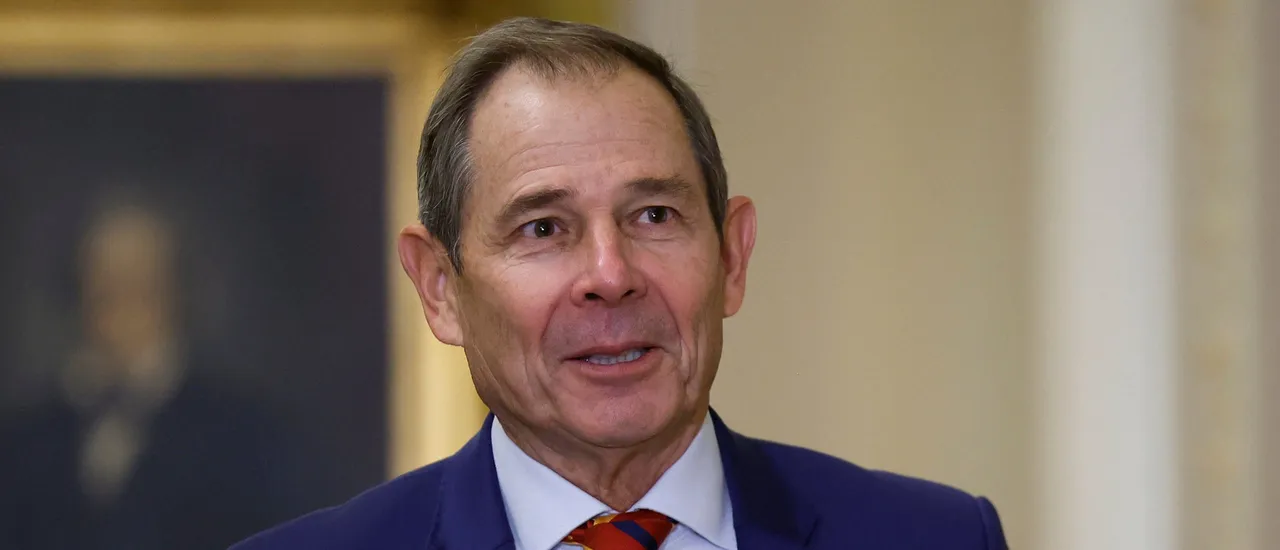
U.S. Senator-elect John Curtis (R-UT) arrives for the Senate Republican leadership elections at the U.S. Capitol on November 13, 2024 in Washington, DC. (Photo by Kevin Dietsch via Getty Images)
A spokesperson for Curtis’ office told the DCNF that “plans are not finalized yet for the Senator’s travel,” though E&E News reported Friday that Curtis said “we have an agenda that is really coming together nicely. We’re super happy with it.”
The Trump administration has not announced that it will send a delegation to the November conference and Trump recently called climate change policy the “greatest con job ever perpetrated on the world” in front of the United Nations General Assembly in September. Trump has moved to ax federal support for green energy sources like wind and solar that the Biden administration favored while bolstering conventional resources like coal.
“Leave it to ‘Mitt Romney’ style Republicans like Sen. Curtis to try to snatch defeat from the jaws of victory. … The UN climate agenda and the UN’s COP30 meetings should be disbanded, not given credibility by GOP senators,” Marc Morano, author and Climate Depot executive editor, told the DCNF. “This is a pathetic throwback to the pre-Trump Republicanism of George H. Bush, George W. Bush, John McCain, and Mitt Romney. … The UN climate agenda has quite literally overseen the outsourcing of the West’s once dominant industries to China, India, and the developing world. The U.S., Canada, and Europe have boasted about emission accounting tricks, while China builds two new coal plants a week and benefits from the West’s attempts at a ‘green transition.’ The U.S. does not need ‘a seat at the table’ at the UN climate summit, we need to knock the table over.”
Curtis has historically split with many Republicans over climate change policy and has notably advocated against a wholesale repeal of Biden-era green energy tax credits that Trump railed against. Earlier this year, Curtis told Secretary of State Marco Rubio that it is “really important” to have a “Republican voice at that table,” in reference to COP30.
The Senator pointed to nuclear specifically as an energy resource Republicans could elevate at COP30.
Critics like Milloy, Morano and President of the Heartland Institute James Taylor told the DCNF that COP30 should not be endorsed by Republican participation as it runs counter to Trump’s energy policies and suggests that the left-leaning climate talking points the president has fought hold legitimacy.
“Republicans who attend COP30 for any reason other than to mock it are hypocrites and grandstanders,” Taylor told the DCNF. “How much carbon dioxide are they going to spew into the atmosphere merely so they can have a ‘photo op’ at a portion of the Amazon rainforest that was destroyed in order to create a venue for this vacation conference of UN bureaucrats?”
Notably, developers razed portions of the Amazon rainforest to construct a road for COP30, and a 2024 study released right before COP29 showed that emissions rise sharply during major conferences due to private jet travel.
Coons’ office did not respond to the DCNF’s multiple requests for comment.
---
REF
John Curtis Has History Of Raking In Thousands From Green Energy Donors | The Daily Caller
Mary Lou MastersContributor
January 14, 2024
- Utah GOP Rep. John Curtis, who splits with many on the right on the issue of climate change, has received thousands in campaign donations from green energy donors, according to Federal Election Commission filings.
- Curtis recently jumped in the race for outgoing Sen. Mitt Romney’s seat in 2024 after initially opting against such a bid, adding to the crowded Republican primary field.
- “The Republican primary voters [sic] will have a choice to pick somebody as their nominee who is either more like Sen. [Mike] Lee, who I would argue is a true conservative, or more like Sen. [Mitt] Romney, who has never really been much of a conservative especially on these issues,” Tom Pyle, president of the American Energy Alliance, told the Daily Caller News Foundation.
Republican Rep. John Curtis of Utah, who recently jumped into the race for outgoing Sen. Mitt Romney’s seat, has raked in thousands of dollars in donations for his congressional bids from the green energy industry, according to campaign finance records.
Curtis launched a campaign for Senate on Jan. 2 after previously ruling it out shortly after Romney announced he would not seek another term in the upper chamber, adding to the primary already chock-full of prominent Republicans. The congressman, who has split from many on the right about climate change, brought in thousands from green energy organizations and companies’ affiliated political action committees (PACs) during his four House bids, Federal Election Commission (FEC) filings show.
“Congressman Curtis is one of the leaders of a small but vocal minority in the Republican Party that thinks that the Republicans need to capitulate on the issue of climate change for fear of losing younger voters, and the survey data simply just doesn’t bear that out,” Tom Pyle, president of the American Energy Alliance, told the Daily Caller News Foundation.
Curtis is the chair of the Conservative Climate Caucus, which states its goal is to reduce emissions while not limiting consumer choices. The caucus aims to inform members of “climate policies and legislation consistent with conservative values.”
The congressman believes that curbing climate change will bolster the economy rather than hinder it through promoting energy innovation in the private sector, like carbon capture, according to Politico.
The Bipartisan Climate Action’s political arm has given $13,500 in donations to the congressman’s campaign from 2021 to 2023, FEC data shows. The group is focused on reelecting members who push “significant, enduring, and bipartisan legislation to reduce greenhouse gas emissions.” (RELATED: Rep Considering Bid To Replace Romney Has Long History Of Timely Stock Trading While In Office)
Between 2020 and 2022, the Environmental Defense Action Fund’s affiliated PAC donated $5,500 to Curtis’ congressional campaign, according to FEC filings. The nonprofit’s political arm, which is committed to “electing climate champions,” encourages the Biden administration to promote electric vehicles and reduce emissions.
Sunnova Energy’s corporate PAC contributed $1,000 to Curtis’s efforts in May 2023, along with another $1,000 donation in late September, just after he announced he was considering running for Senate, according to FEC filings. The company allegedly took advantage of elderly customers who were near-death by convincing them to sign expensive multi-decade rooftop solar contracts, according to The Washington Free Beacon.
“A lot of those companies are looking for a way to try to create a sense of bipartisanship in the sort of climate agenda. And when you have a member in the Republican Party that makes overtures about climate change, naturally, they will gravitate towards him,” Pyle said.
The campaign also brought in donations from the Solar Energy Industries Association’s affiliated PAC to the tune of $12,500 between 2022 and 2023, FEC records show. The trade association hopes that solar will “achieve 30% of U.S. electricity generation by 2030.”
Aligned PACs for SunPower and SunRun, two solar energy companies, have both given $2,500 to the congressman’s campaign in 2022 and 2023, respectively, according to FEC data.
Other affiliated PACs for green energy companies like NextEra Energy, Sempra Energy and Noble Energy have also donated thousands to Curtis’ campaign, to the tune of a combined $11,500 since 2018, according to FEC filings.
I just left the Lt Governor’s office where I filed to run for U.S. Senate! 🇺🇸 I’ll keep working hard to get things done for Utah & make our state an even better place. Together, we can ensure America has a bright future. Join me by donating/volunteering at https://t.co/U6Yw5H2k4H pic.twitter.com/1x9rSQndqx
— John Curtis (@CurtisUT) January 3, 2024
Curtis has been critical of the Biden administration’s costly green energy efforts, including the president’s signature climate law, the Inflation Reduction Act, according to Politico. The congressman hosts the “Conservative Climate Summit” on college campuses to engage with younger voters on the issue, and has travelled abroad to the last three U.N. climate summits.
“Being a marginal Republican, he will be a very popular candidate with Republican front groups, like [Citizens for Responsible Energy Solutions] and Clear Path. He will also be popular with formerly Republican-leaning operations like the [American Petroleum Institute] and the Chamber,” Mike McKenna, GOP strategist and former Trump administration energy adviser, told the DCNF. “He may be one of the few people in Utah who would not be an upgrade from Sen. [Mitt] Romney.”
Curtis, former mayor of Provo, Utah, used to be a Democrat and served as his county party chair in the early 2000s, according to Deseret News.
Brent Orrin Hatch, son of the late Sen. Orrin Hatch who was succeeded by Romney, jumped into the race on the same day as Curtis. State House Speaker Brad Wilson launched a Senate bid in late September, and Riverton Mayor Trent Staggs has been running for Romney’s seat since May.
The Cook Political Report characterizes Romney’s seat as in the “Solid R” category. The GOP primary will be held on June 25.
A Guidant Polling and Strategy survey released in mid-December found Curtis with 40% support among the crowded Republican primary field, followed by Wilson at 11% and Staggs at 6%. The remaining 43% of likely primary voters were not yet sure of their choice.
“Voters of Utah will have a choice,” Pyle said. “The Republican primary voters [sic] will have a choice to pick somebody as their nominee who is either more like Sen. [Mike] Lee, who I would argue is a true conservative, or more like Sen. [Mitt] Romney, who has never really been much of a conservative especially on these issues.”
Curtis’ campaign did not respond to the DCNF’s request for comment.
All content created by the Daily Caller News Foundation, an independent and nonpartisan newswire service, is available without charge to any legitimate news publisher that can provide a large audience. All republished articles must include our logo, our reporter’s byline and their DCNF affiliation. For any questions about our guidelines or partnering with us, please contact licensing@dailycallernewsfoundation.org.
Tags : elections 2024 john curtis mitt romney senate utah
---
2020 Scorecard Vote
Great Lakes Restoration Initiative
House Roll Call Vote 36
Issue: Water
Representatives David Joyce (R-OH) and Marcy Kaptur (D-OH) sponsored H.R. 4031, the Great Lakes Restoration Initiative Act of 2019, which reauthorized the Great Lakes Restoration Initiative through fiscal year 2026 and increases funding to $475 million by 2026. Since 2010, the Great Lakes Restoration Initiative has been critical in helping to clean up the Great Lakes by reducing pollution like phosphorus that contributes to harmful algal blooms, keeping out invasive species like Asian carp, restoring the coastline, and preventing future contamination. On February 5, the House approved H.R. 4031 by a vote of 373-45 (House roll call vote 36). YES IS THE PRO-ENVIRONMENT VOTE. The Senate approved H.R. 4031 by unanimous consent on December 20 and President Trump signed it into law on January 5, 2021.
rgb
no lnx
Citizens’ Climate Lobby: Conservative climate event pushes for congressional action
Published on March 17th, 2022
TAGGED: CARBON FEE, CITIZENS CLIMATE LOBBY, CONGRESS, CONSERVATIVE, ECORIGHT
At the end of this month, conservative voters from across America will come to D.C. to build Republican support for a carbon price. This conservative climate leadership conference is hosted by Citizens’ Climate Lobby (CCL) and will be attended by more than 60 people who identify on the political right.
Citizens' Climate Lobby: Conservative climate event pushes for congressional action By Flannery Winchester
On Tues., March 29, attendees will hear from CCL staff, business leaders, other organizations on the eco-right, and members of Congress. Invited speakers from the Hill include Rep. John Curtis (R-UT-03), Rep. Nancy Mace (R-SC-01), Sen. Kevin Cramer (R-ND), among others.
“Today, we see Republicans in Congress getting engaged on the climate issue and bringing conservative solutions to the table. This event will show them that their voters are behind them and eager for them to do even more,” said Drew Eyerly, Conservative Outreach Director for CCL.
On Wed., March 30, attendees will be split between two tracks to receive training in lobbying and climate communications. The two tracks are based on age, offering tailored content for climate advocates who are over age 40 and those who are under 40. According to an Ipsos/Newsy poll, 77 percent of young Republicans say climate change is a serious threat.Research shows that 75 percent of Republicans under 40 support a specific policy of putting a price on carbon pollution and giving regular dividends to households, which CCL is pushing for.
“It’s especially important that representatives hear from younger conservatives, who we know are more than twice as likely to say this is an important issue to them, than older conservatives,” said Nate Abercrombie, CCL’s Conservative Outreach Coordinator in a recent interview.
The advocates at this month’s event are yet another wave in the tide of grassroots advocates pushing Congress for climate action. Each June, more than a thousand volunteers of all political stripes attend CCL’s annual conference and hold hundreds of meetings with congressional offices.
“Citizens’ Climate Lobby is a nonpartisan organization, and we believe that the best way to achieve strong, lasting climate legislation is with support across the political spectrum,” explained Madeleine Para, CCL’s Executive Director. “We’re grateful to these conservative volunteers for making their voices heard at this event. With every conversation, they’re showing elected Republicans that climate change should be a bridge issue that we all work together on.”
Flannery Winchester has put her words to work for magazines, for marketing agencies, and now for our earth as the Communications Director for Citizens’ Climate Lobby . She is grateful to spend every day working to preserve this beautiful planet.
three bills currently moving through Congress:
- The No New Parks Bill (H.R. 3990): Since 1906, presidents of both parties have used the Antiquities Act to safeguard public lands, waters, and historic sites. But H.R. 3990 would gut the Antiquities Act, ending that tradition and weakening future presidents' abilities to preserve our national heritage.
- The Bears Ears Elimination Act (H.R. 4532): This bill undermines the wishes of tribal communities who have advocated for years to protect the sacred sites and cultural resources of Bears Ears National Monument. H.R. 4532 would not only roll back existing protections for Bears Ears, it would also silence the voices of key tribal leaders and local communities who want this sacred land protected.
- The Grand Staircase Giveaway Act (H.R. 4558): Much like H.R. 4532, this bill would cement the Trump administration's massive cuts to the Grand Staircase-Escalante National Monument into law. By codifying Trump's attacks on Grand Staircase, H.R. 4558 robs the meaning and the value of the protections over this land.
We need your help to show Congress we will not stand for these attacks
11 22
UN will double down on Agenda 2030 and Sustainable Development Goals: Marc Morano
Rebel News
Marc Morano from Climate Depot joins the show to explain how despite the energy crisis facing the world, the UN will still push forward with its ...
no lnx
Opposing Republicans Debate Best Alternative to the Socialist's Green New Deal
The Epoch Times
(L-R) Marc Morano, founder and executive director of ClimateDepot.org, Met Club Treasurer John Sweeney, and Quill Robinson, vice president of ...
MENU ABOUT US MAKE A DONATION
The Epoch Times
SEARCH
EpochTV US Politics Opinion World China Hong Kong Health Business & Markets Bright Arts Premium Games Sports Livestream More
Prominent Georgia Democrat Breaks With Party to Endorse Republican Brian Kemp Over Stacey Abrams
1d share1228comments
TSA to Continue Requiring COVID-19 Vaccine Proof for Non-US Citizens to Enter Country 2
Elon Musk Threatens to ‘Name and Shame’ Advertisers Boycotting Twitter
1d share1152comments
Read More
(L-R) Marc Morano, founder and executive director of ClimateDepot.org, Met Club Treasurer John Sweeney, and Quill Robinson, vice president of government affairs with the American Conservation Coalition, debate in New York on Oct. 26, 2022. (Juliette Fairley/The Epoch Times)
(L-R) Marc Morano, founder and executive director of ClimateDepot.org, Met Club Treasurer John Sweeney, and Quill Robinson, vice president of government affairs with the American Conservation Coalition, debate in New York on Oct. 26, 2022. (Juliette Fairley/The Epoch Times)
Republicans
Opposing Republicans Debate Best Alternative to the Socialist’s Green New Deal
By Juliette Fairley
November 1, 2022 Updated: November 1, 2022
0:003:54
Republicans are divided when it comes to climate change, but the issue is likely to be brought into unified focus after the mid-term elections, according to Metropolitan Republican Club (Met Club) panelists.
“If Republicans take both Houses of Congress, that will throw a wrench in Biden’s climate agenda and the question will become, ‘What will the climate action items be that the 73-person strong Conservative Climate Caucus will come to the table with,’” asked Met Club Treasurer John H. Sweeney.
Sweeney was the moderator between two panelists debating opposing GOP views on the issue this week at the Met Club’s tiny East 83 Street townhouse on Manhattan’s Upper East Side.
“It’s a debate that more Republicans wish was happening,” Sweeney told The Epoch Times. “They would like to see a substantial policy discussion on what we actually support as a party rather than just hearing what we’re against.”
The “Stopping the Socialist’s Green New Deal” debate pitted Marc Morano, founder and executive director of ClimateDepot.org, against Quill Robinson, vice president of government affairs with the American Conservation Coalition (ACC), which encouraged Utah Congressman John Curtis to form the Conservative Climate Caucus (CCC).
Founded in 2017, ACC’s mission is to motivate young conservatives on the belief that economic and environmental success go together while ClimateDepot.org is a project stemming from the non-profit, Committee for a Constructive Tomorrow (CFACT), which rejects the theory that human activity causes climate change.
“The Democratic Party will pay a price for their all-in philosophy on climate in the mid-term elections,” Morano said. “All they talked about was green energy, net zero, and climate and what it’s going to get them is a massive repudiation at the polls.”
The CCC characterizes itself on their website as a coalition that educates Republicans about conservative climate proposals while fighting policies that hurt the U.S. economy, American workers, and national security.
“The Caucus is not driving a policy agenda,” Robinson said. “What we’ll be pushing for is permitting reform; that’s the number one priority.”
Permitting reform, which is expected to shake loose some $3 trillion in clean energy investments between now and 2032, is one of the few environmental narratives that Morano and Robinson agreed on, along with clean water and clean air.
“Permitting reform makes it easier for us to get better American energy, cheaper and quicker, and to compete with foreign countries,” said Morano; the author of ‘The Politically Incorrect Guide to Climate Change,’ ‘Green Fraud,’ ‘Why the Green New Deal Is Even Worse Than You Think,’ and ‘The Great Reset: Global Elites and the Permanent Lockdown.’
Overall, the speakers differed in view on the costs of climate change impacts and what policies are actually effective to deal with any of these impacts.
“Just because we don’t like the Green New Deal doesn’t mean we should toss out climate change as an issue,” Robinson said.
Morano, on the other hand, doesn’t see climate change presenting any significant danger above existing natural disasters that require big government mandates to address. Instead, he believes that the U.N.-led climate agenda itself is the greatest threat to progress. He wants the Republican party to craft an American energy policy that promotes homegrown energy regardless of the varying views on climate.
Read More
Climate Change Narrative Driven by Agenda of Political Control: Myron Ebell]
“Wealth creates cleaner environments and technology creates lower emissions,” Morano said. “If you’re worried about climate, this is the way to go forward.”
Robinson argued that the GOP must cater to young conservatives who do believe that climate change is a threat, while Morano strongly opposes that approach.
“I don’t look at Greta Thunberg or the Youth Climate Movement that way,” he said. “I look at it as propagandizing kids and the last thing we want to do is legitimize it so that they’ll vote for us. I don’t buy that.”
Juliette Fairley
Juliette Fairley is a graduate of Columbia University’s Graduate School of Journalism. Born in Chateauroux, France, and raised outside of Lackland Air Force Base in Texas, Juliette is a well-adjusted military brat. She has written for The New York Times, The Wall Street Journal, TheStreet, Time magazine, Newsmax, and many other publications across the country. Send Juliette story ideas at JulietteFairley@gmail.com
Epoch TV
Featured Channels
American Thought Leaders
Counterculture
Facts Matter
Crossroads
The Larry Elder Show
...
How Rob Bishop Plans to Gut the Antiquities Act | Outside Online
https://www.outsideonline.com/2248866/how-rob-bishop-plans-gut-antiquities-act
1.
No More Parks? | Sierra Club
https://www.sierraclub.org/lay-of-the-land/2017/10/no-more-parks
1.
House considers bill to prohibit national monuments that protect ...
https://thinkprogress.org/house-bill-limit-presidential-authority-monuments-b44751ce...
1.
Testimony of the Bears Ears Inter-Tribal Coalition ... - gov.house.docs
docs.house.gov/meetings/II/II10/.../HHRG-115-II10-Wstate-ChapooseS-20180109.pd...
1.
Redrock Headlines - Southern Utah Wilderness Alliance
https://suwa.org/redrock-headlines/
1.
Stop Rep. Stewart's Grand Staircase Giveaway Bill!
https://suwa.org/stop-rep-stewarts-grand-staircase-giveaway-bill/
1.
H.R.4558 - 115th Congress (2017-2018): Grand Staircase Escalante ...
https://www.congress.gov/bill/115th-congress/house-bill/4558
1.
Cosponsors - H.R.4558 - 115th Congress (2017-2018): Grand ...
https://www.congress.gov/bill/115th-congress/house-bill/4558/cosponsors
1.
| Rep. Bishop, Rob [R-UT-1]* | 12/06/2017 |
|---|---|
| Rep. Love, Mia B. [R-UT-4]* | 12/06/2017 |
| Rep. Curtis, John R. [R-UT-3]* | 12/06/2017 |