Core rope memory
Core rope memory is a form of read-only memory (ROM) for computers, first used in the 1960s by early NASA Mars space probes and then in the Apollo Guidance Computer (AGC) and programmed by the Massachusetts Institute of Technology (MIT) Instrumentation Lab and built by Raytheon.
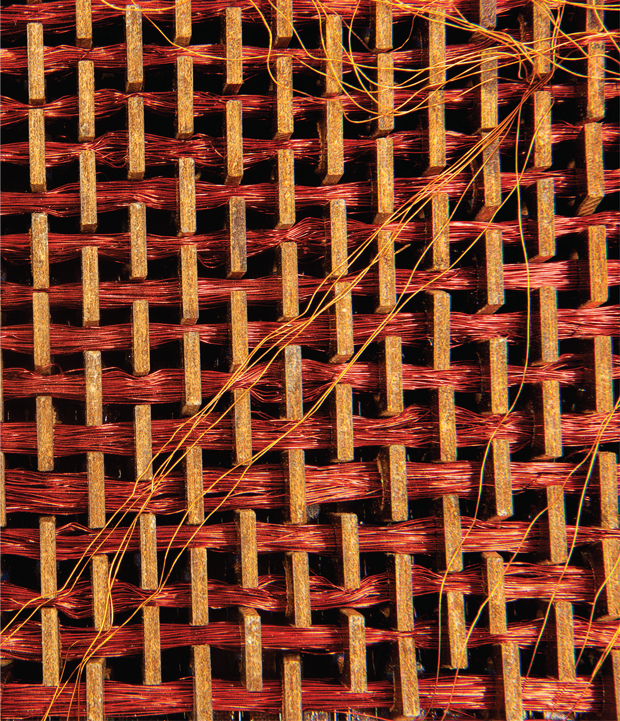
A hard-wired, read-only computer program woven in conductive fibers
Software written by MIT programmers was literally woven into core rope memory (in the form of conductive fibers) by female workers in factories. Some programmers nicknamed the finished product LOL memory, for Little Old Lady memory.[2]
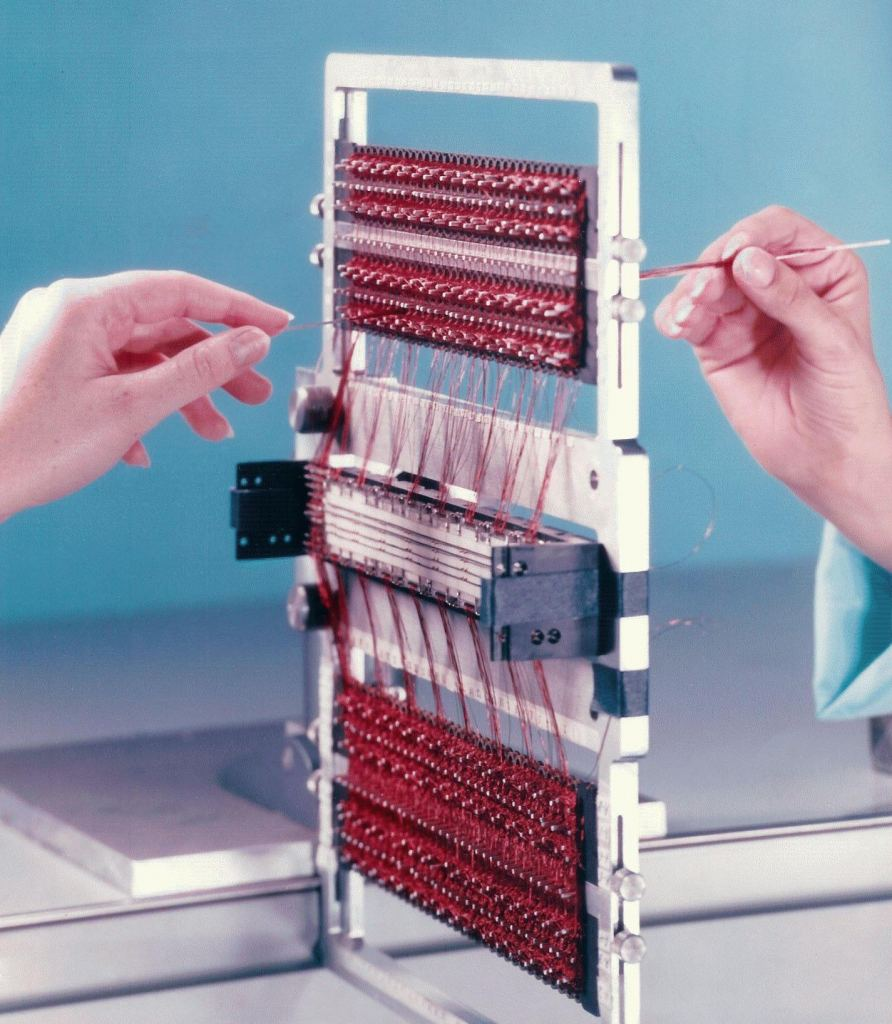
A worker weaving a computer program with Core rope memory
In the 1960s, most computers (including the AGC) used magnetic core memory for RAM storage, but core ropes were unusual and operated differently.
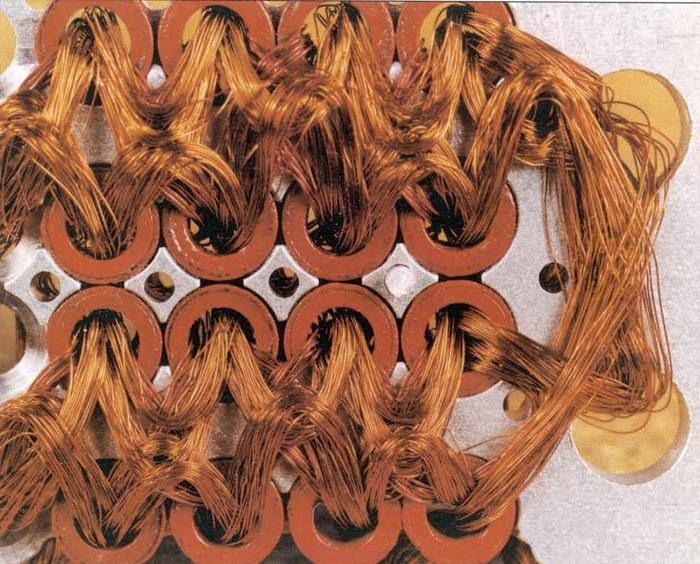
The trick was to put many wires through each core (as shown above), hardwiring the data: a 1 bit was stored by threading a wire through a core, while the wire bypassed the core for a 0 bit. Thus, once a core rope was carefully manufactured, using a half-mile of wire, data was permanently stored in the core rope.
By the standards of the time, a relatively large amount of data could be stored in a small installed volume of core rope memory: 72 kilobytes per cubic foot, or roughly 2.5 megabytes per cubic meter. This was about 18 times the amount of data per volume compared to standard read-write core memory: the Block II Apollo Guidance Computer used 36,864 sixteen-bit words of core rope memory (placed within one cubic foot) and 4,096 words of magnetic core memory (within two cubic feet)
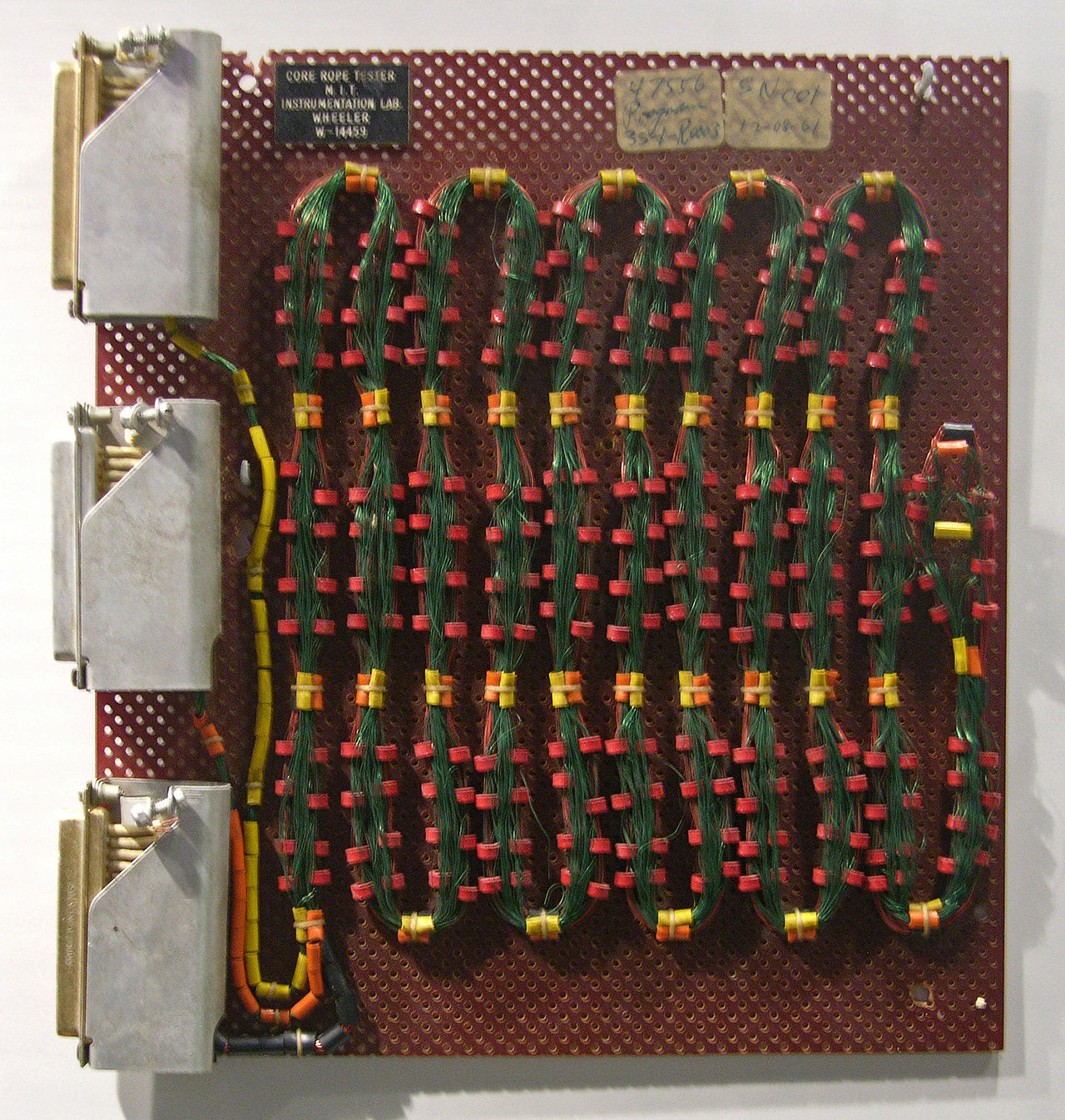
Core rope memory test sample from the Apollo program