Path Rush
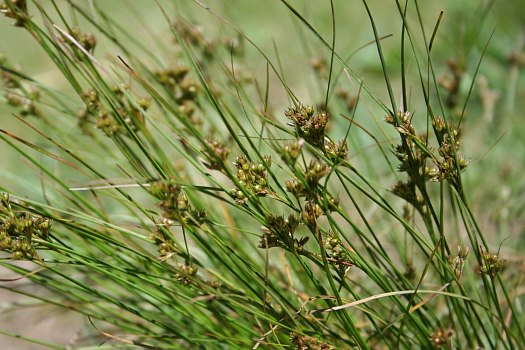
Path Rush, scientifically known as Juncus tenuis, is a perennial herbaceous plant belonging to the Juncaceae family. This plant is commonly found in North America and is known for its resilience and adaptability to various environmental conditions. It is often seen in disturbed areas such as paths, hence the name "Path Rush."
Identification
Path Rush is relatively easy to identify due to its distinct characteristics:
- Stems: The stems are slender, erect, and can grow up to 50 cm tall. They are typically green and cylindrical, with a smooth texture.
- Leaves: The leaves are basal, meaning they grow from the base of the stem. They are narrow, grass-like, and can be up to 20 cm long.
- Flowers: The flowers are small, greenish-brown, and clustered in loose, open inflorescences. Each flower has six tepals (three sepals and three petals that look alike).
- Fruit: The fruit is a small, dry capsule that contains numerous tiny seeds.
Habitat and Distribution
Path Rush is highly adaptable and can thrive in a variety of habitats. It is commonly found in:
- Disturbed Areas: Such as paths, trails, and roadsides.
- Wetlands: Including marshes, swamps, and wet meadows.
- Grasslands: Often in areas with poor soil quality.
- Woodlands: Particularly in open, sunny spots.
This plant is native to North America but has also been introduced to other parts of the world, including Europe and Asia.
Ecological Importance
Path Rush plays a significant role in its ecosystem:
- Soil Stabilization: Its extensive root system helps prevent soil erosion, especially in disturbed areas.
- Habitat: Provides habitat and food for various insects and small animals.
- Water Filtration: In wetland areas, it helps filter and purify water by trapping sediments and absorbing pollutants.
Uses
While Path Rush is not widely known for its economic uses, it has some practical applications:
- Erosion Control: Due to its ability to stabilize soil, it is sometimes used in erosion control projects.
- Gardening: It can be used in naturalistic garden designs, particularly in rain gardens and wetland areas.
- Traditional Uses: Indigenous peoples have used various parts of the plant for medicinal purposes, although these uses are not well-documented.
Growth and Care
Path Rush is a low-maintenance plant that can thrive in a variety of conditions:
- Soil: It prefers moist, well-drained soil but can tolerate poor soil conditions.
- Light: It can grow in full sun to partial shade.
- Water: While it prefers moist conditions, it can tolerate periods of drought once established.
- Propagation: It can be propagated by seed or division. Seeds should be sown in the fall or early spring, while division can be done in the spring or fall.
Challenges and Considerations
While Path Rush is generally a hardy plant, there are a few challenges to consider:
- Invasiveness: In some areas, Path Rush can become invasive, outcompeting native vegetation.
- Pests and Diseases: It is relatively resistant to pests and diseases, but overwatering can lead to root rot.
- Maintenance: In garden settings, it may require occasional trimming to keep it from spreading too aggressively.